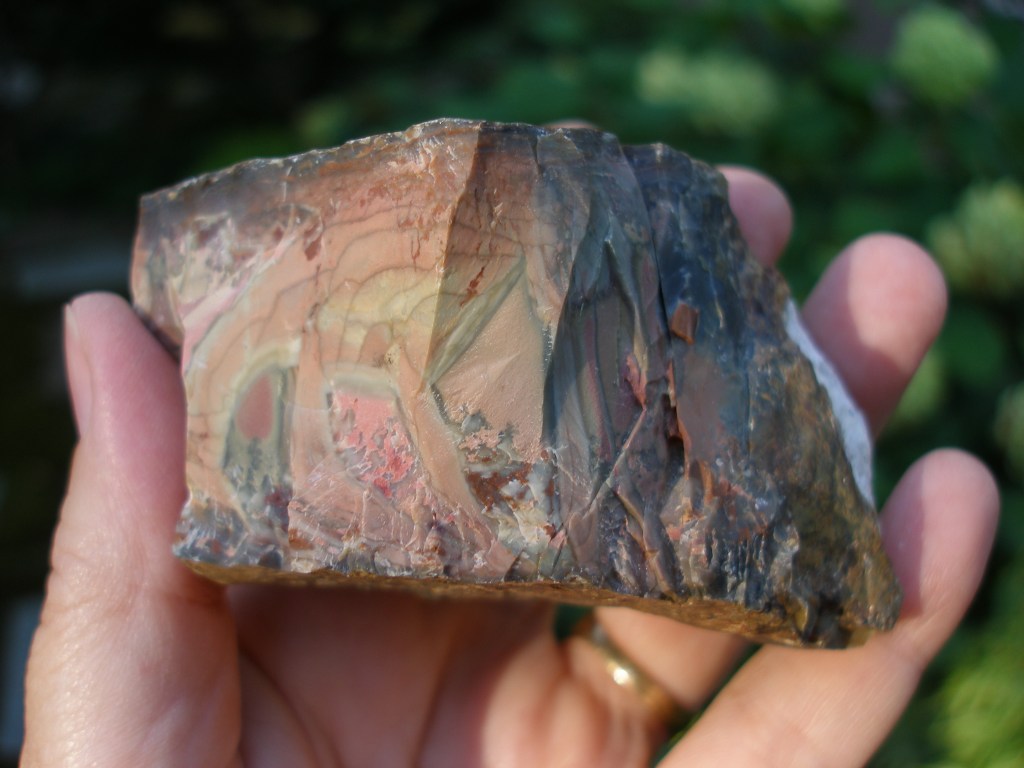
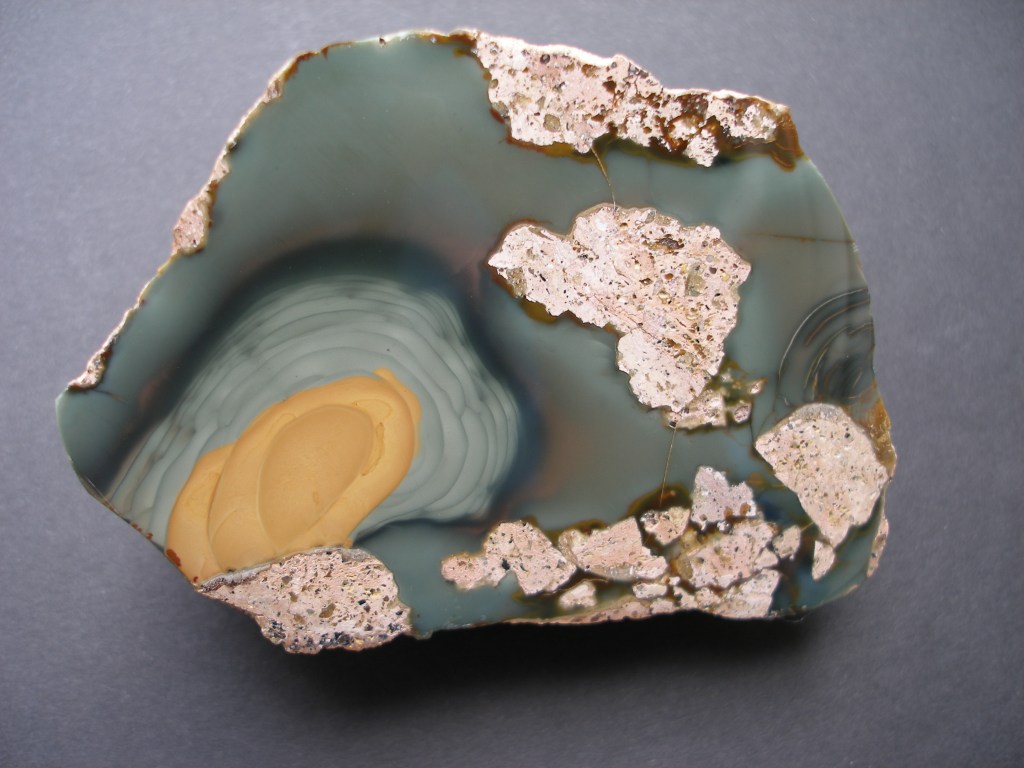
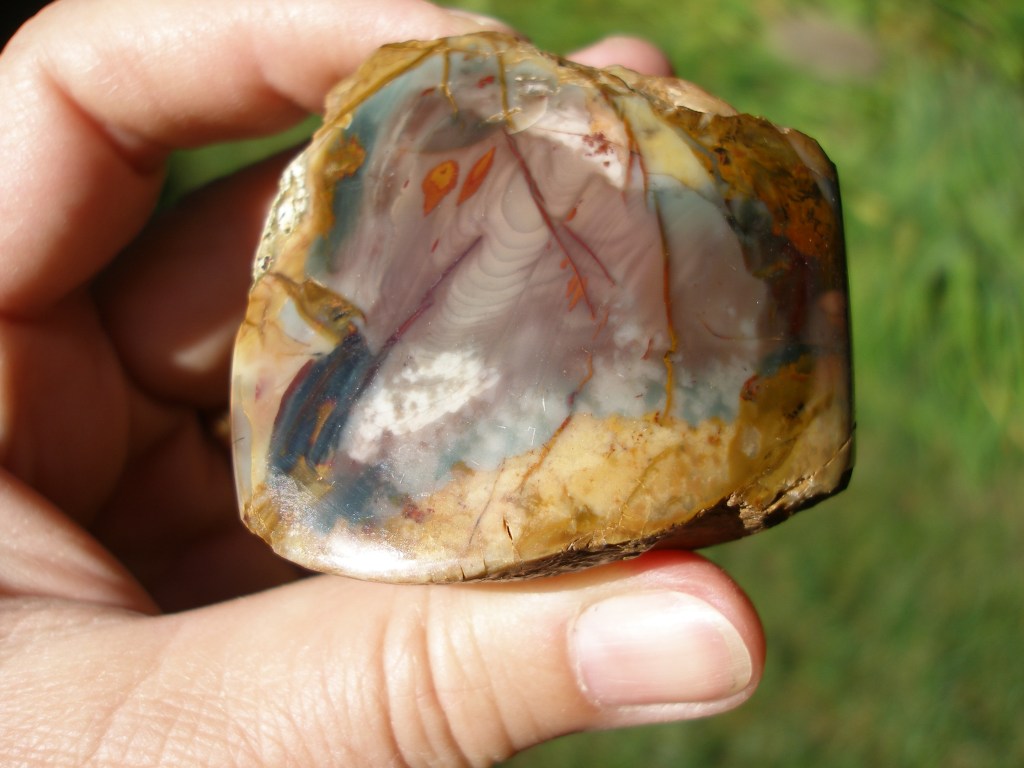
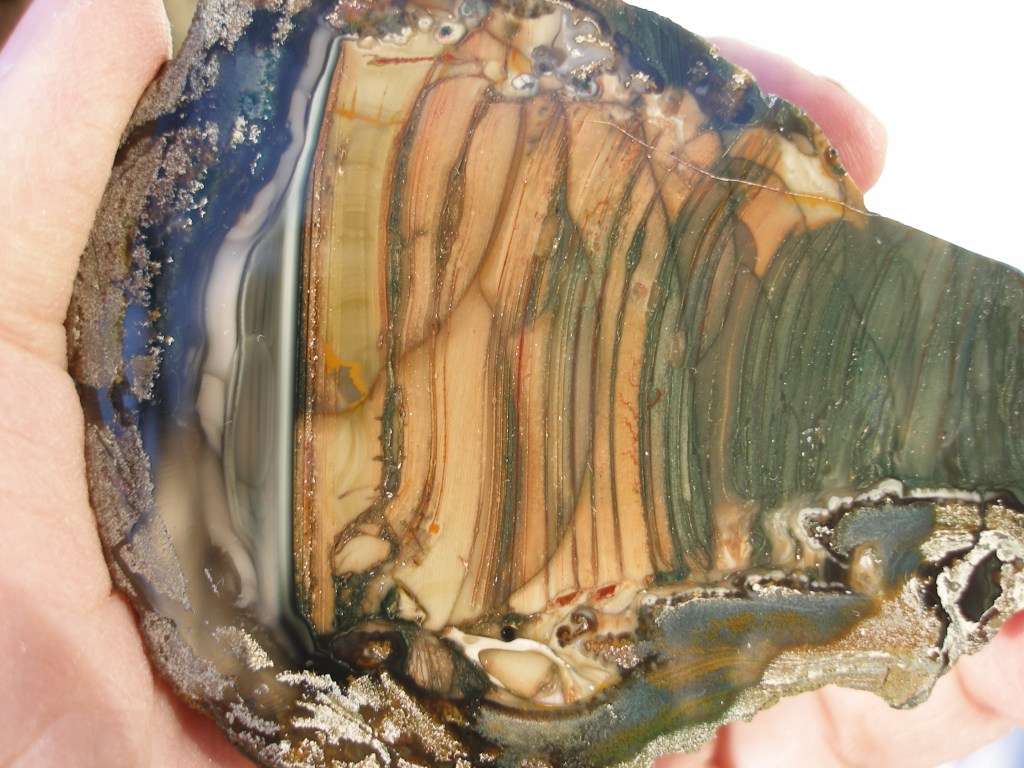
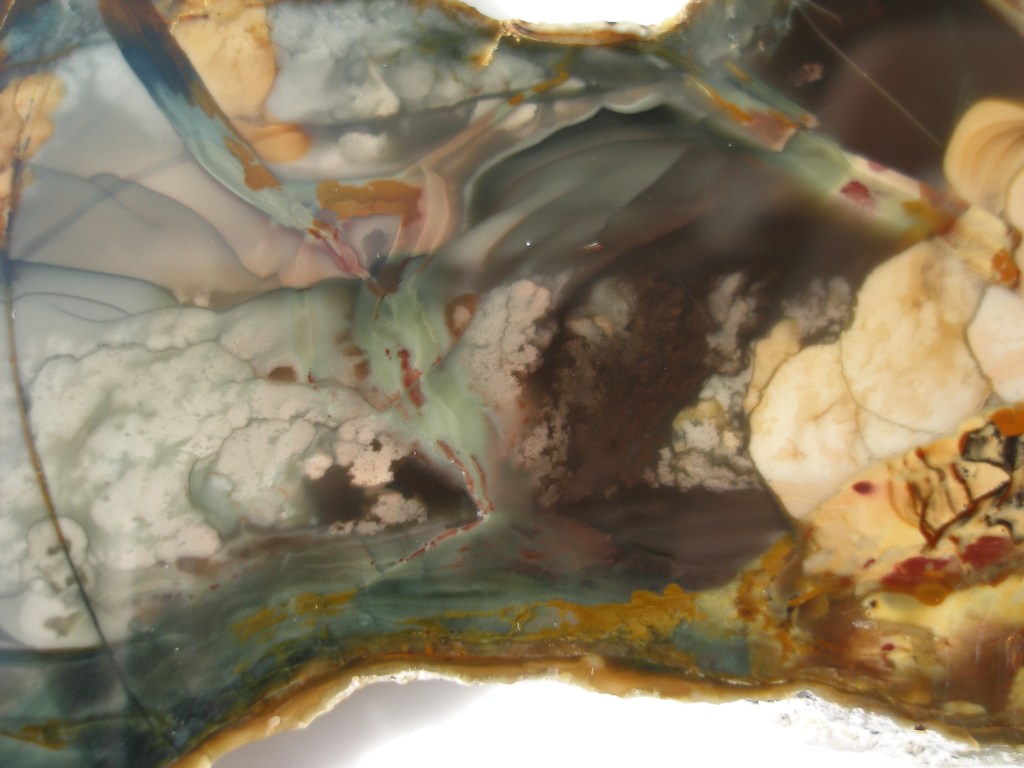
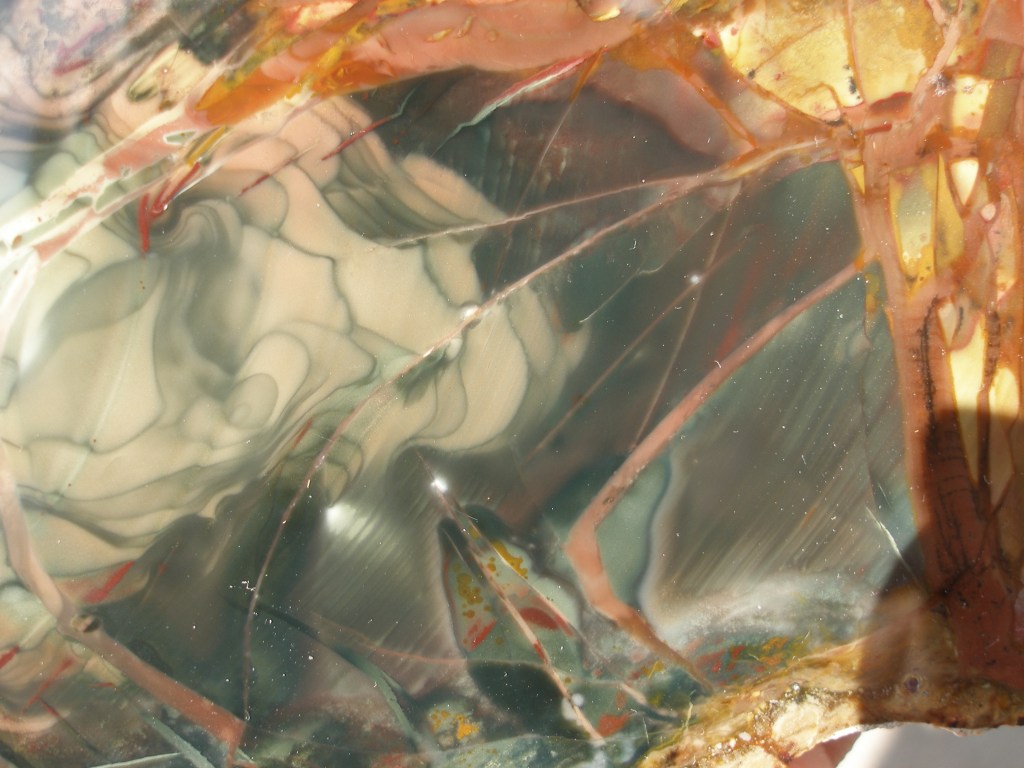
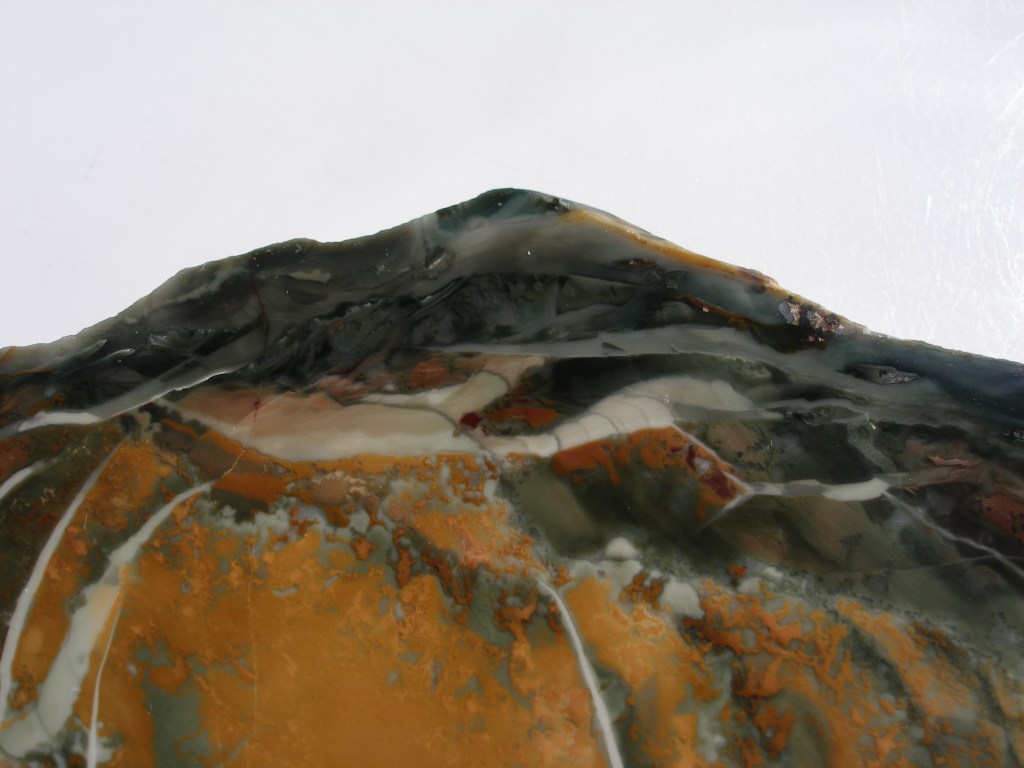
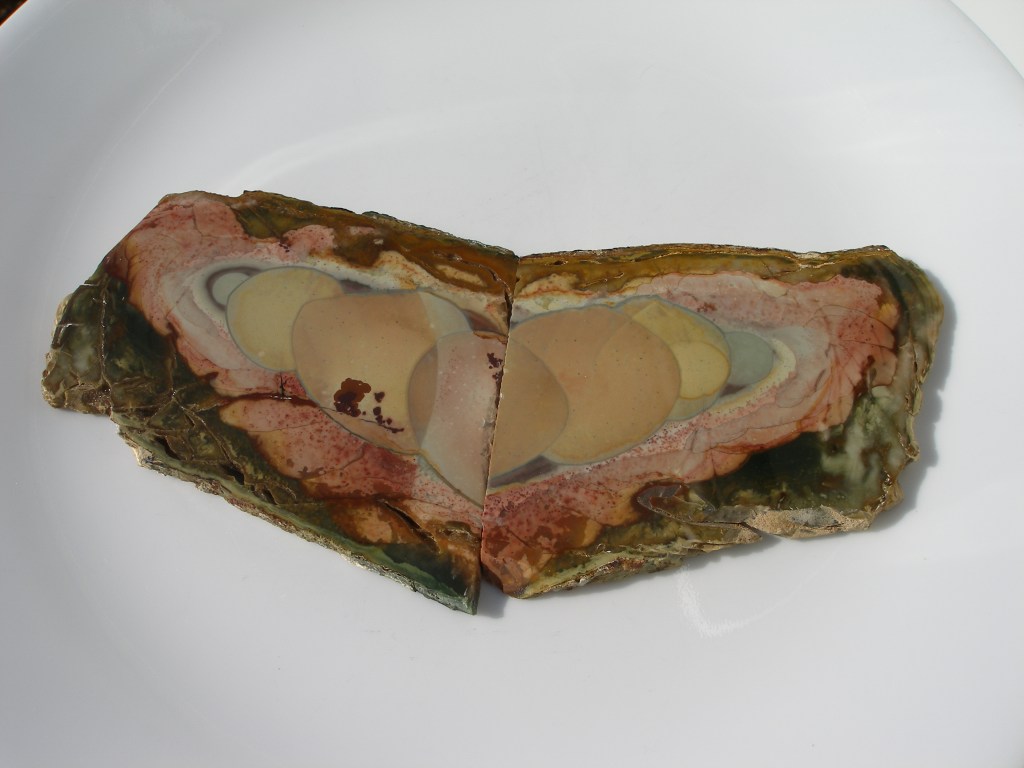
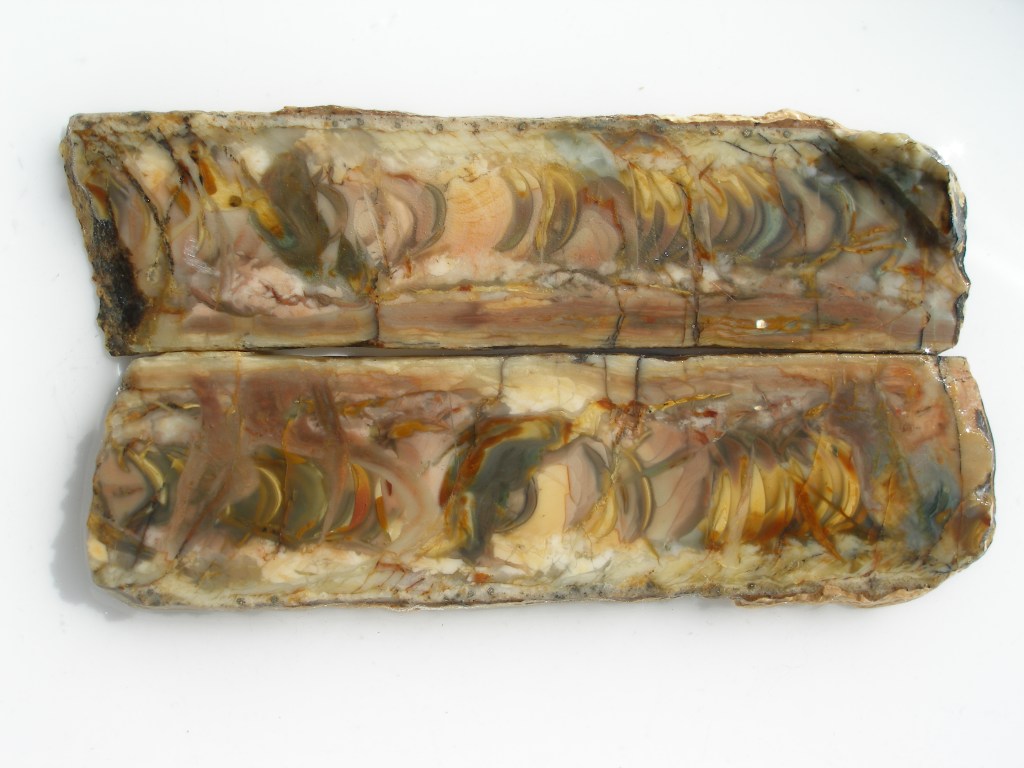
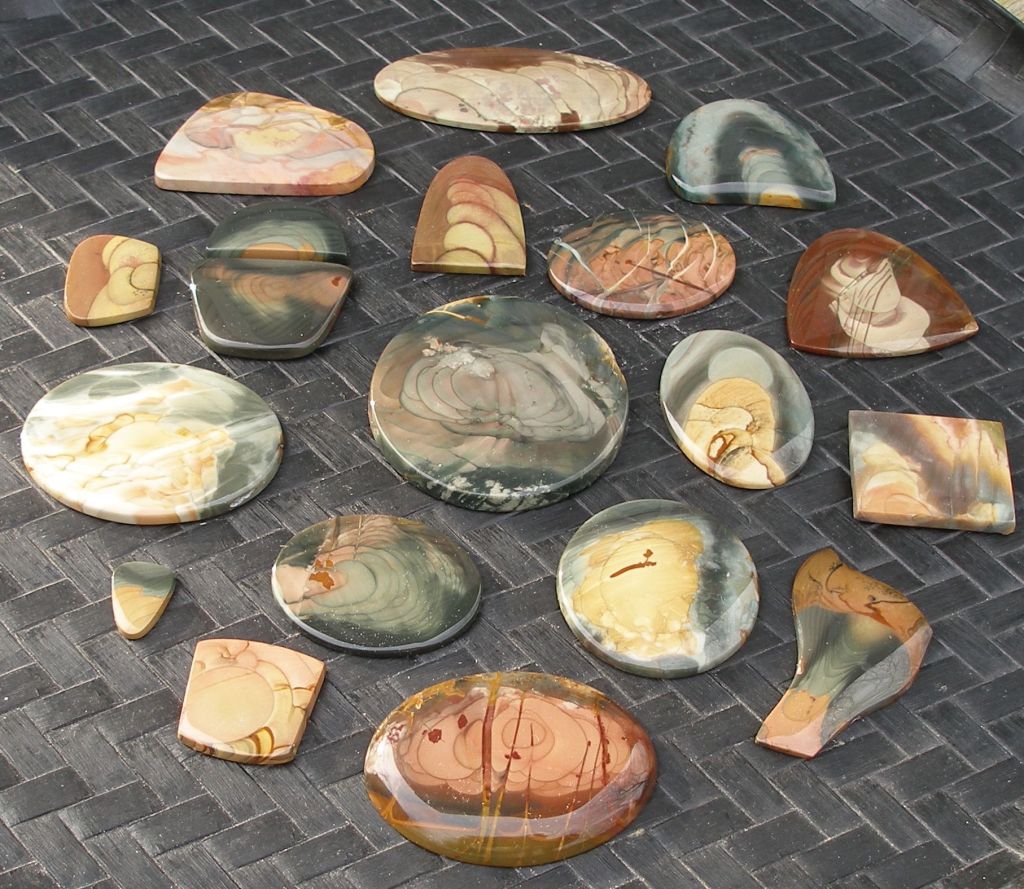
Morrisonite’s patterns flow in three dimensions, creating an interesting challenge for lapidaries. Depending upon how the rough jasper is cut, egg shapes may appear piled or lined up in a row. The eggs may be plain in pink, blue, yellow or tan or filled with pattern. Sometimes lines cross the eggs. Those without eggs can also be quite spectacular. The possible variations seem endless.
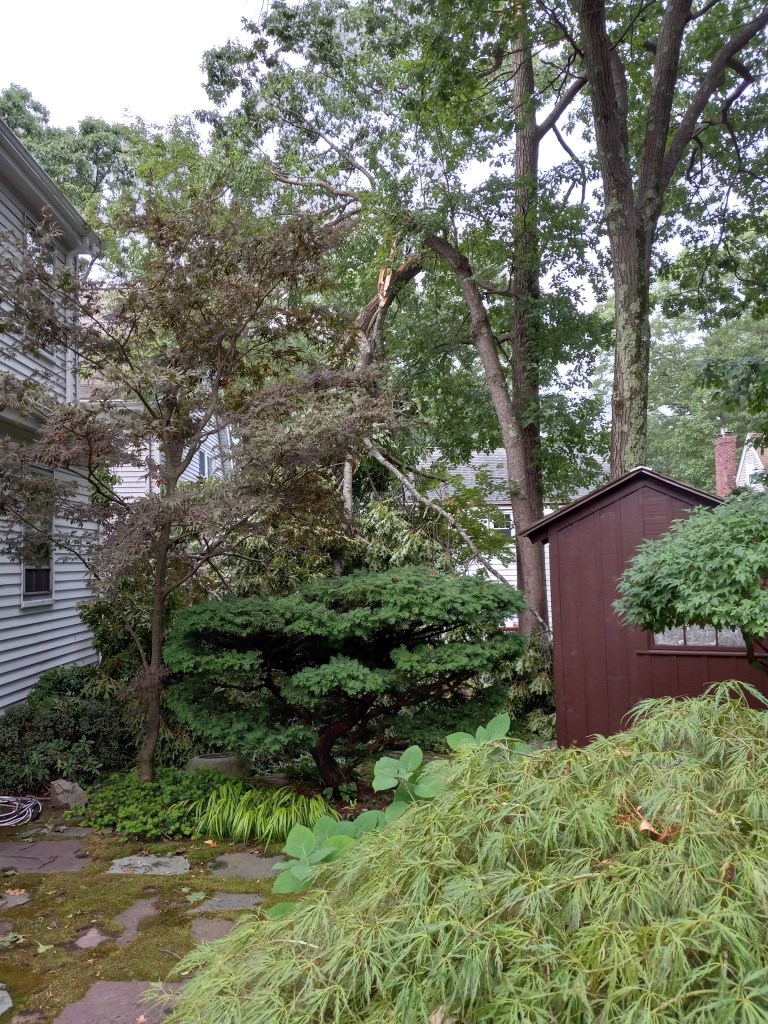
I was working in my upstairs office when I heard a loud cracking sound. Large branches passed by my window on their way down followed by a thump. Top sections of two large trees had landed in my tea garden.
A tree company came out early the next morning with what they called a “spider.” This bright red machine seemed perfectly designed to do minimal damage to my neighbor’s yard as it raised a man up to cut sections that were secured with ropes and carefully lowered to the ground. The logs were then taken to a chipper, and the chips loaded into a truck to be hauled away.
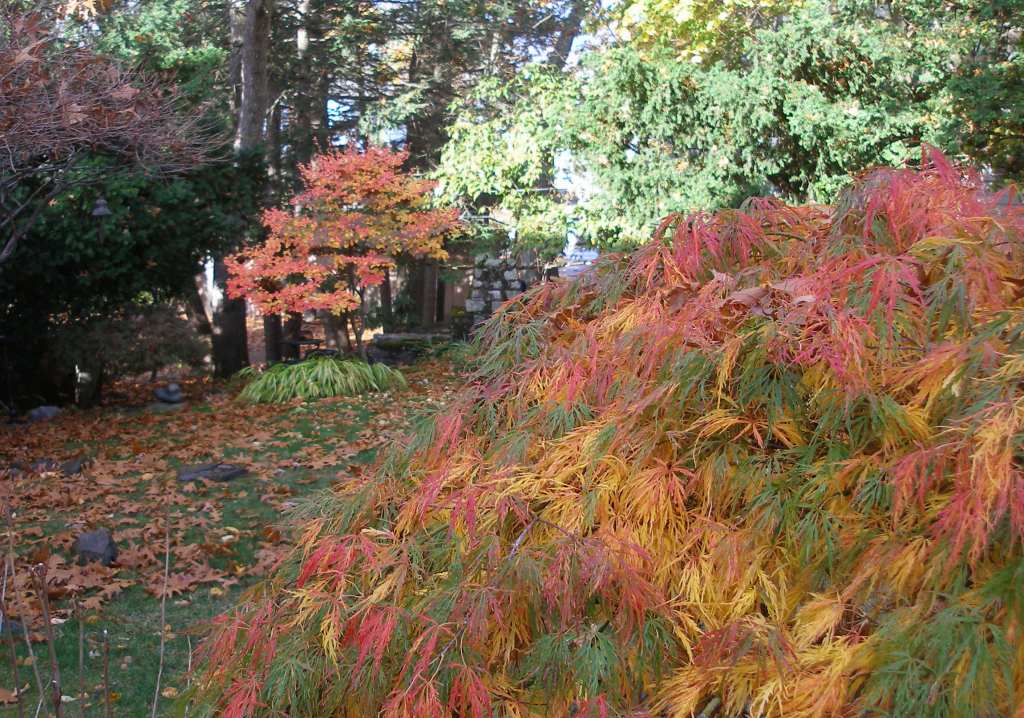
After all of the noise, drama, and removal of a great deal of biomass, there was surprisingly little damage – just an easily-fixed bent corner gutter. The crushed ground cover would recover. So would the moss with a bit more water while it got used to having more light in the afternoon.
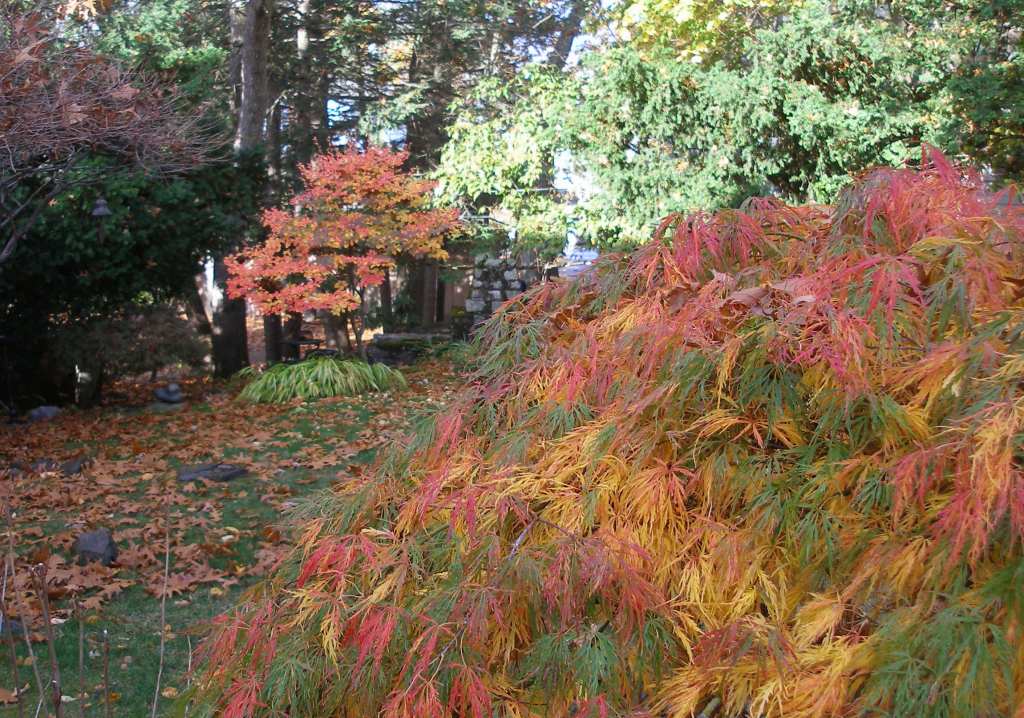
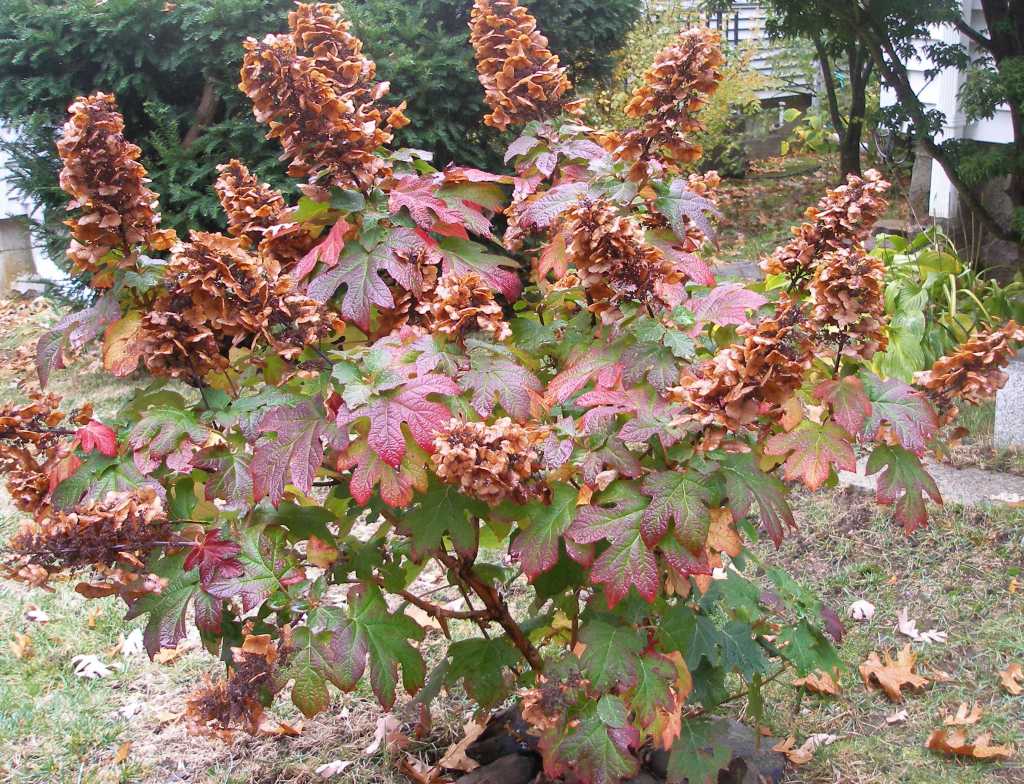
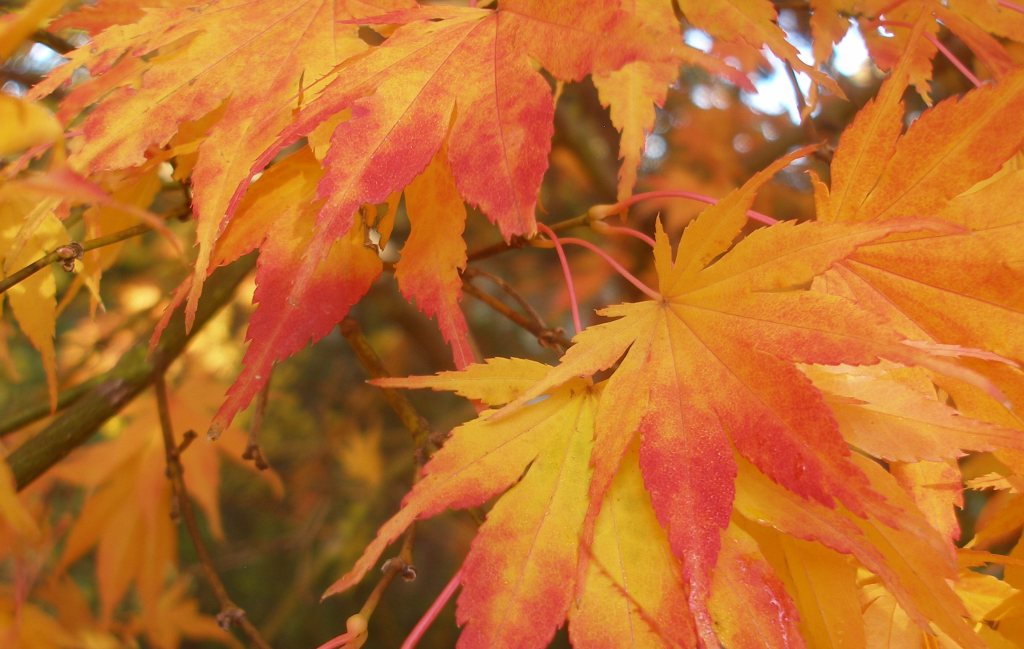
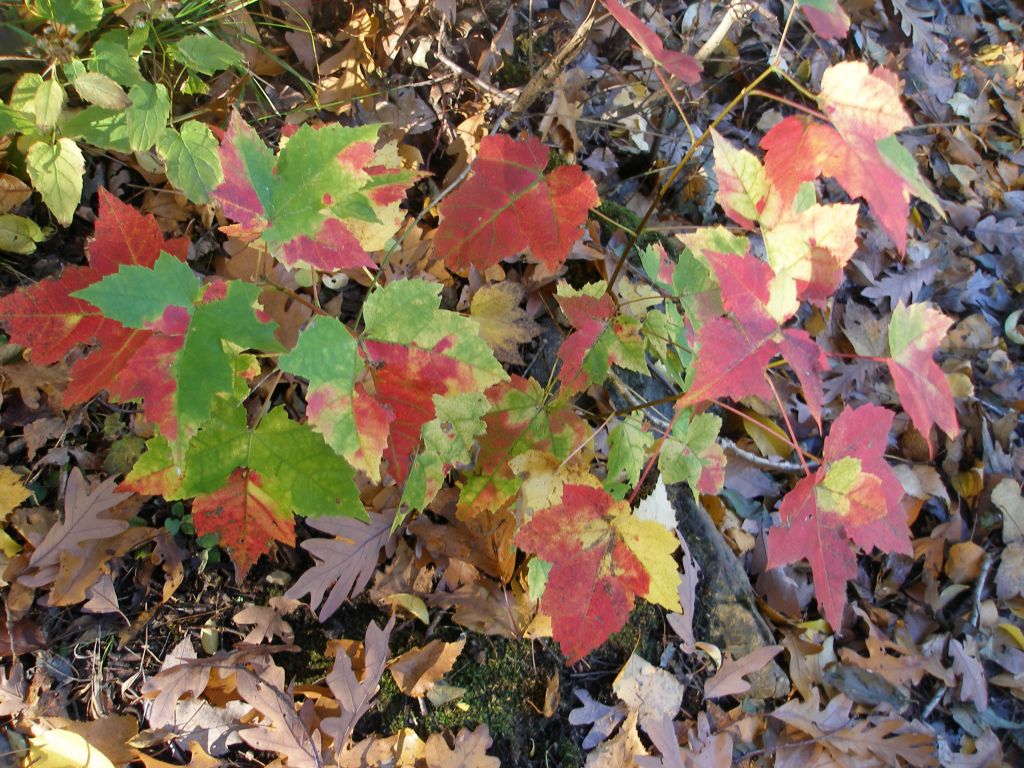
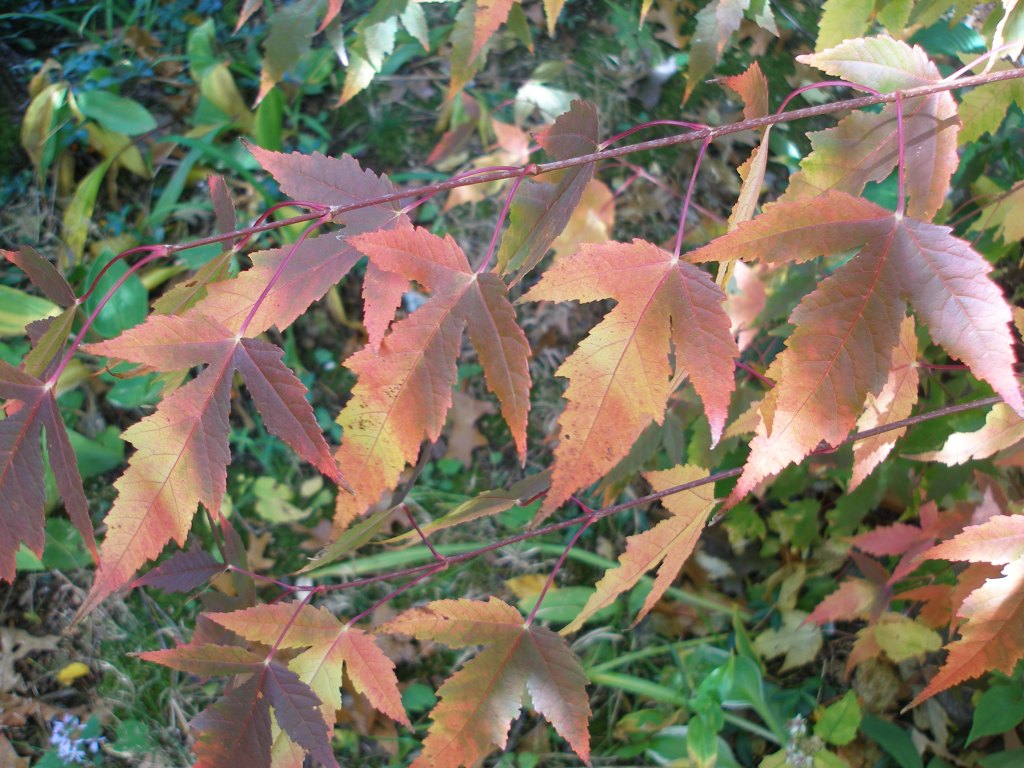
The fall colors were brighter in my garden after that. In fact, two plants put on a spectacular show as if to say, it’s about time someone noticed that we like more sun.
Periods of walking meditation alternated with silent seated practice during a silent 7-day women’s retreat. Christina Feldman suggested that we might find it easier to sustain concentration during walking meditation as that was closer to our experience in the West. But, for some reason, I did not expect that to apply to me.
At first I walked all over the place to familiarize myself with the layout of the corridors and buildings of the retreat center. When I came across some stairs leading down to the laundry facilities, I decided I might as well get some exercise. Then I remembered – walking meditation is not supposed to be goal-oriented.
I noticed women walking back and forth in a lovely light-filled “walking meditation room” with many windows and lovely polished wood floors. I joined them walking in my lane by a large potted plant.
Suddenly, it was as if somebody turned up a dial; the newly felt intimacy with moment to moment experience had a quality like floating through space and time. Perhaps this was what Goldstein meant in describing an awareness that was “inwardly steadied, composed and unified. This is … concentration that is calm and refined, achieving increasing levels of mental purification” (page 276, Mindfulness; A practical guide to awakening).
As I walked to the meditation hall for the next period of silent sitting, it occurred to me that it might be possible to simply let go. Later I shared my dawning awareness that, “All we need to do is let go into the present moment” with one of the retreat teachers. Pointing a finger at me, she said “That’s it! It is simple but not so easy, as we all know.” Goldstein notes, “liberation is not about becoming or getting, not about holding on or craving or clinging, but about letting go and letting be” (p. 306).
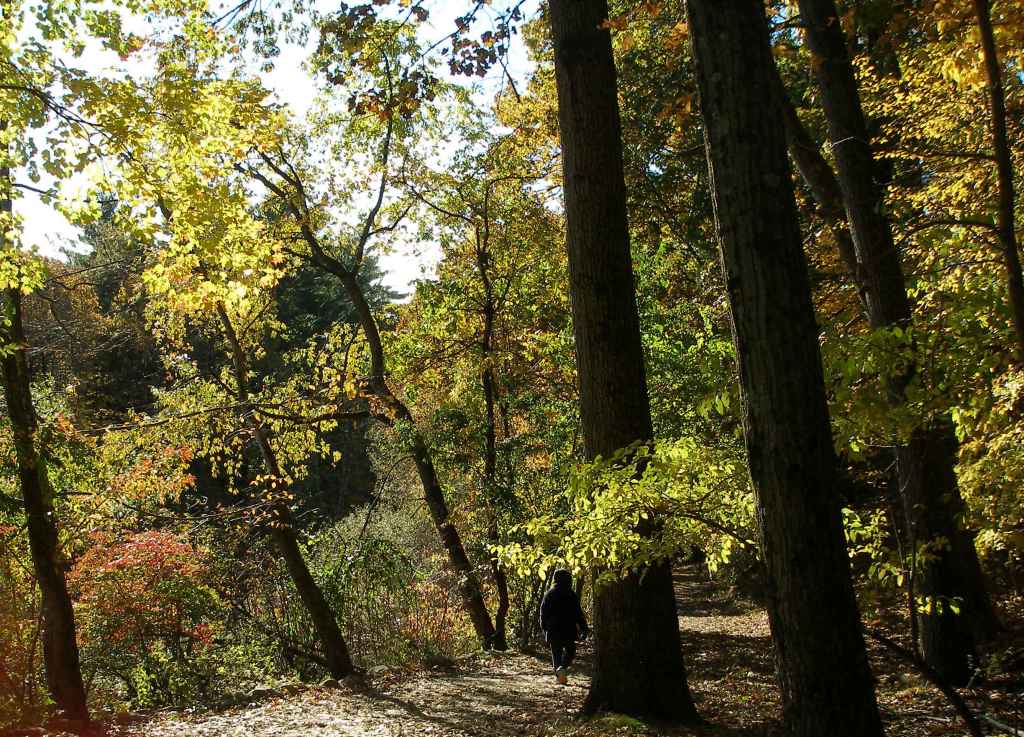
Although I often get lost in planning and dreaming during my nightly sitting meditation, it is clear that this way to weed my “garden” has benefits that show up in daily life – greater openness, softness, and acceptance as well as appreciation and gratitude. I find it easier to sustain attention during more active relational mindfulness practices such as Insight Dialogue. And there is something special about bringing all the “let go” awareness I can muster to my daily walks in a nearby woodsy park where I find wonder in how much we can relate to other life forms and for that matter, to whole ecosystems, which have their own valuable lessons to teach us.
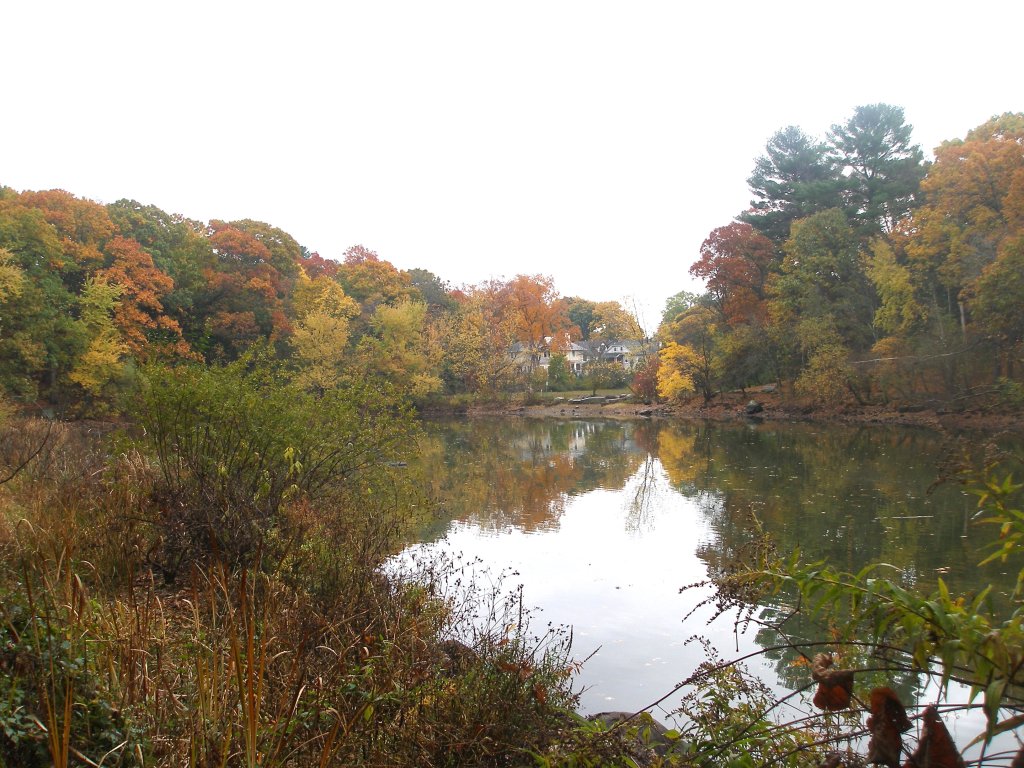
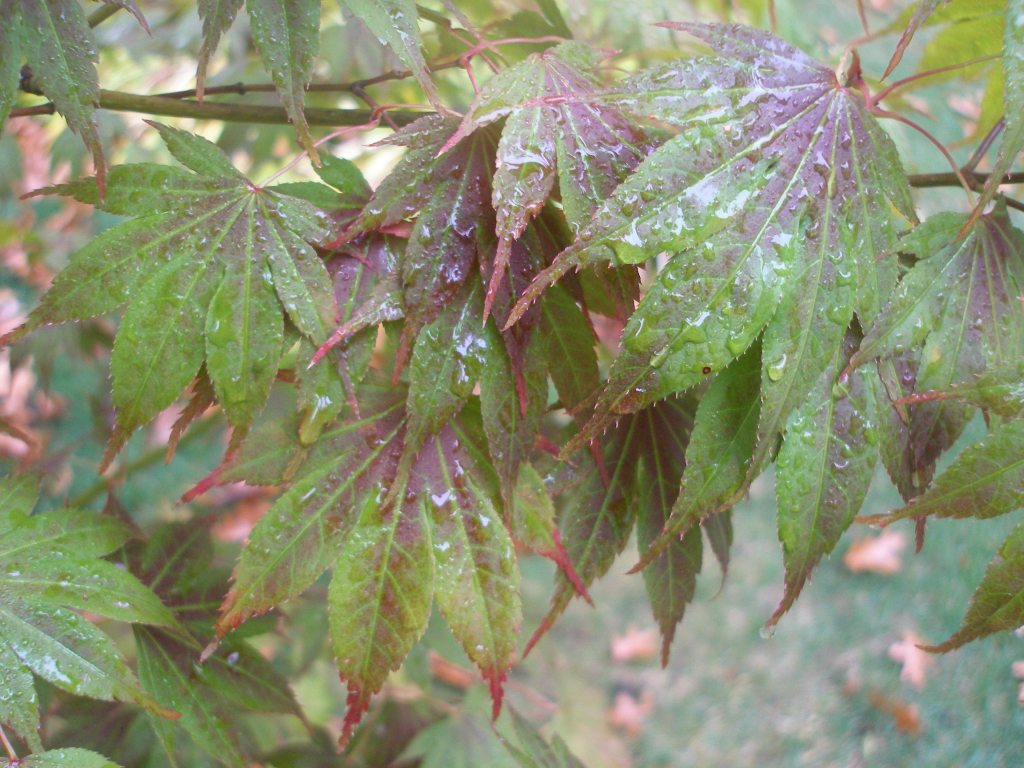
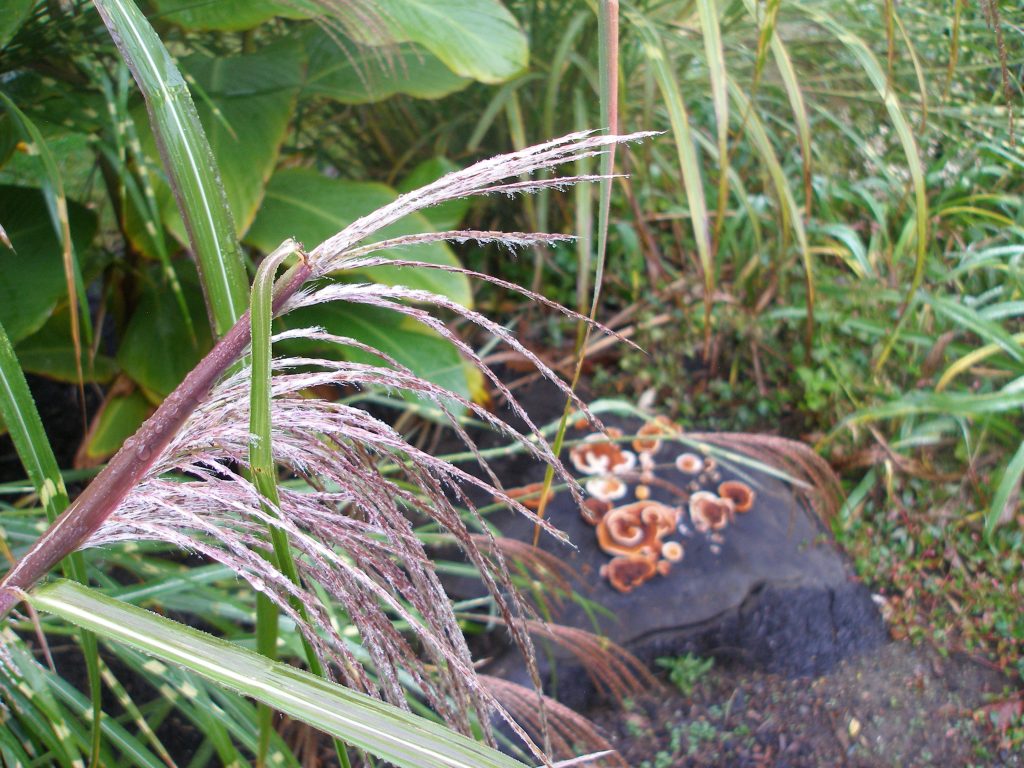
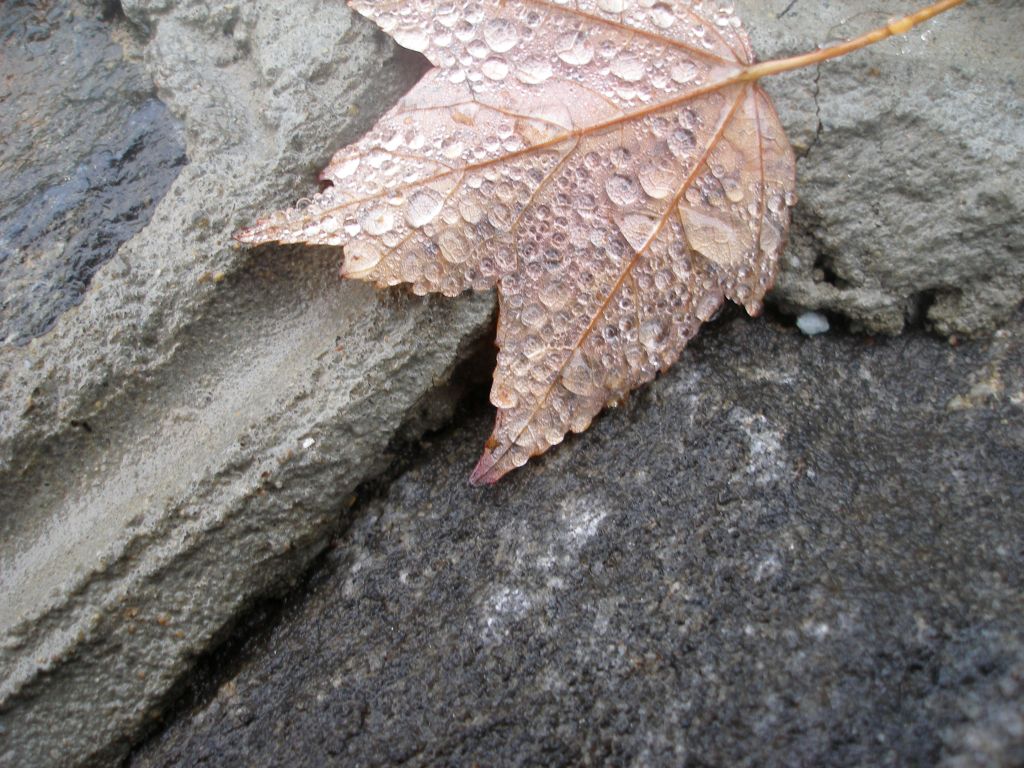
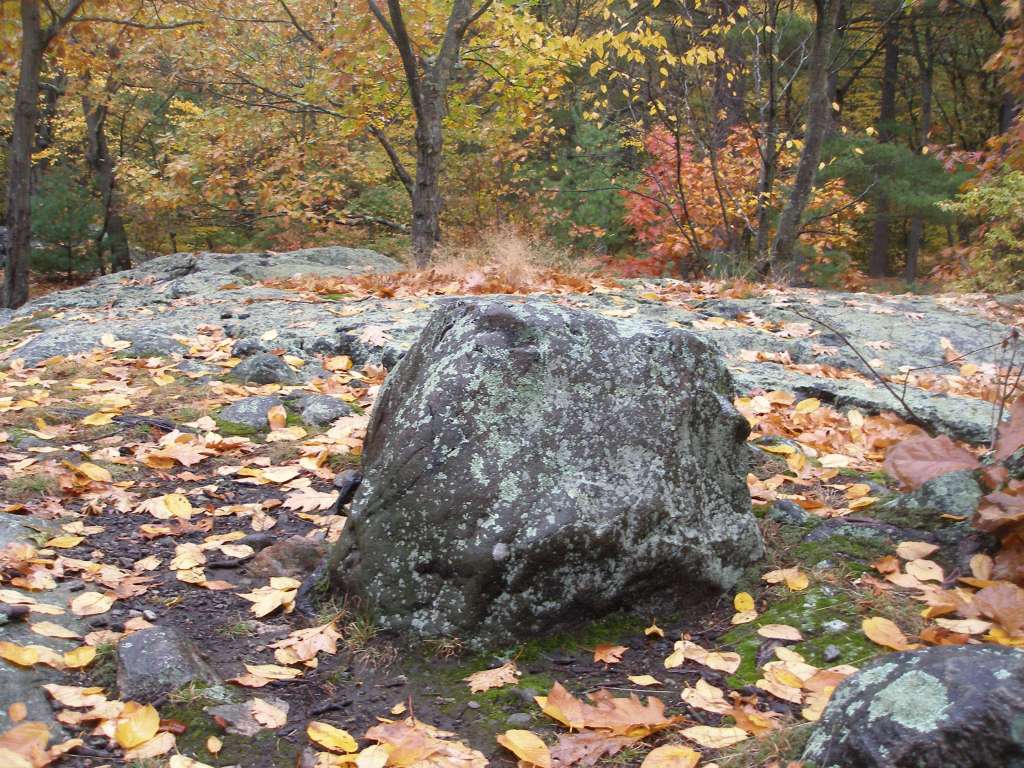
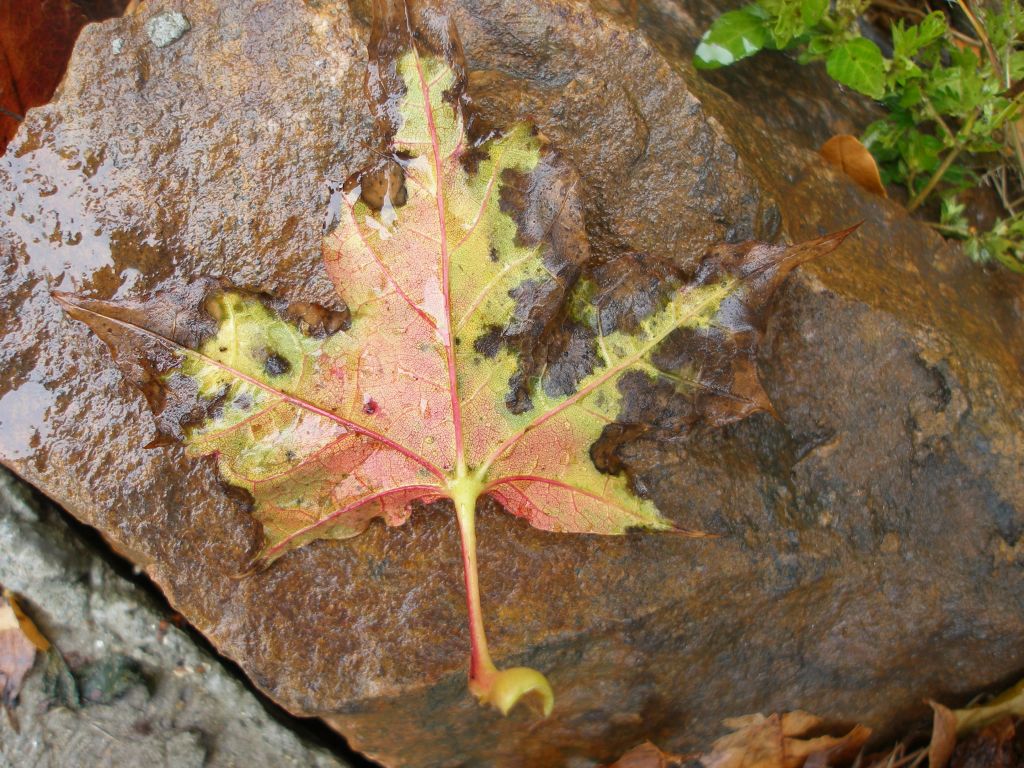
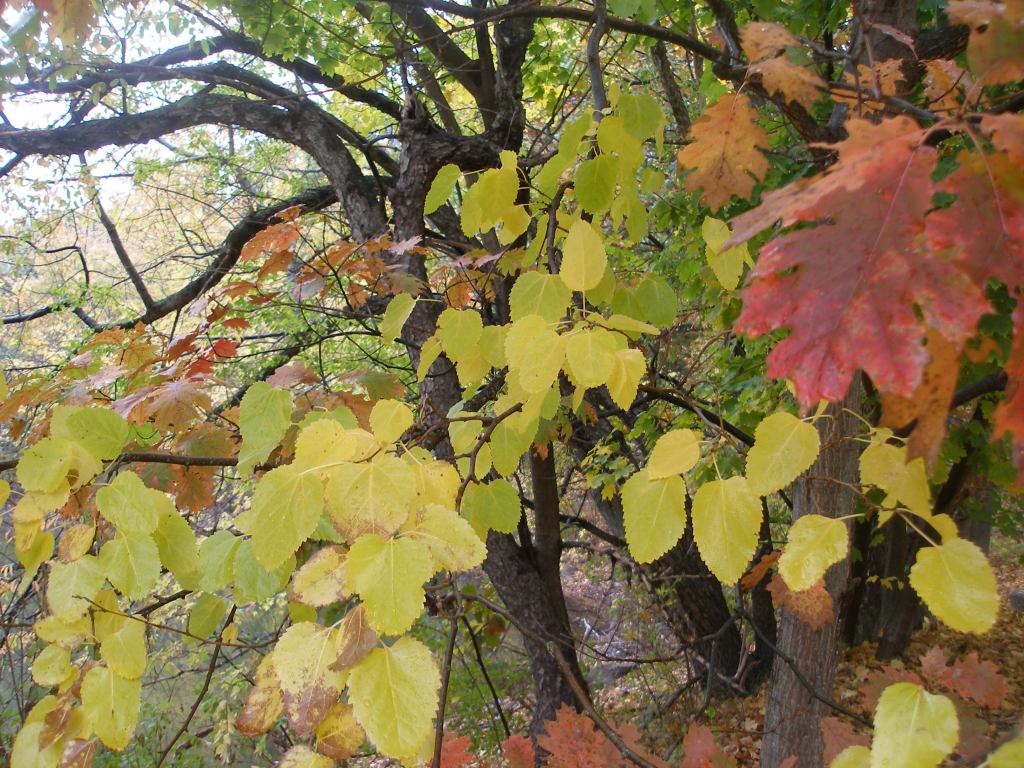
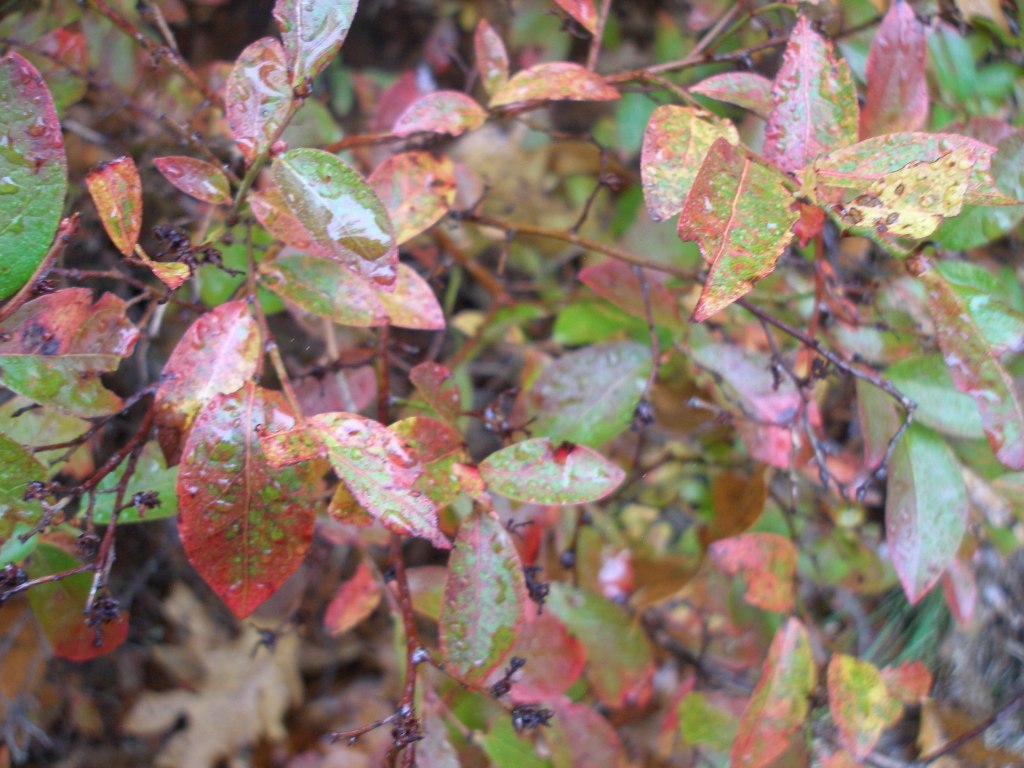
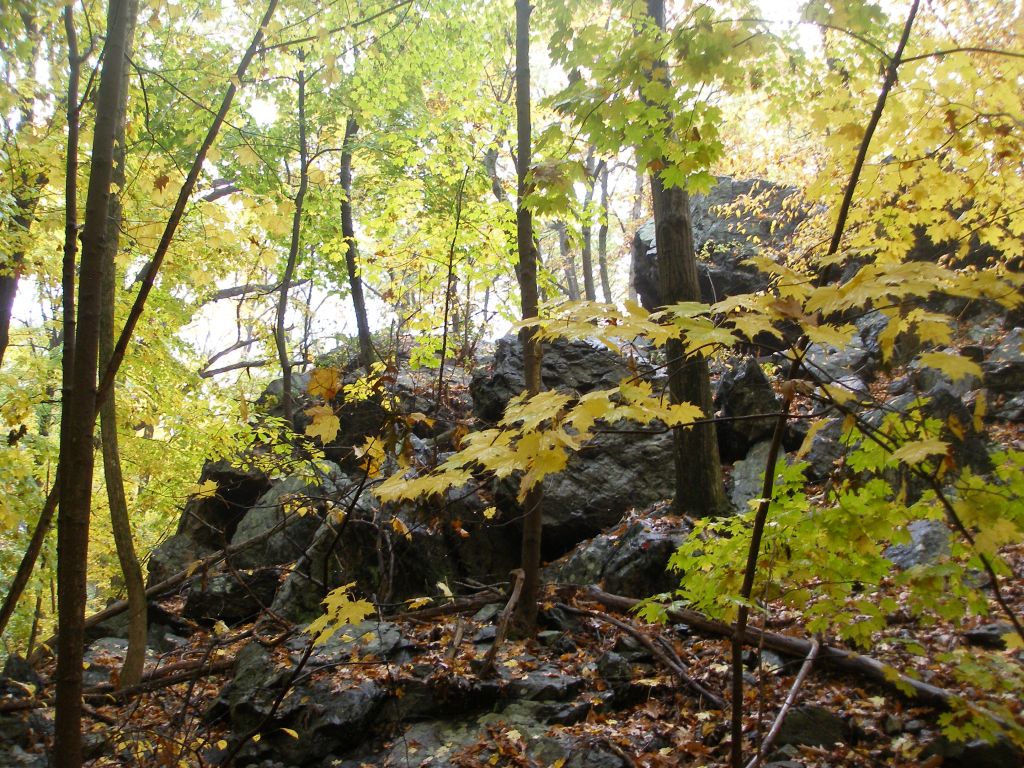
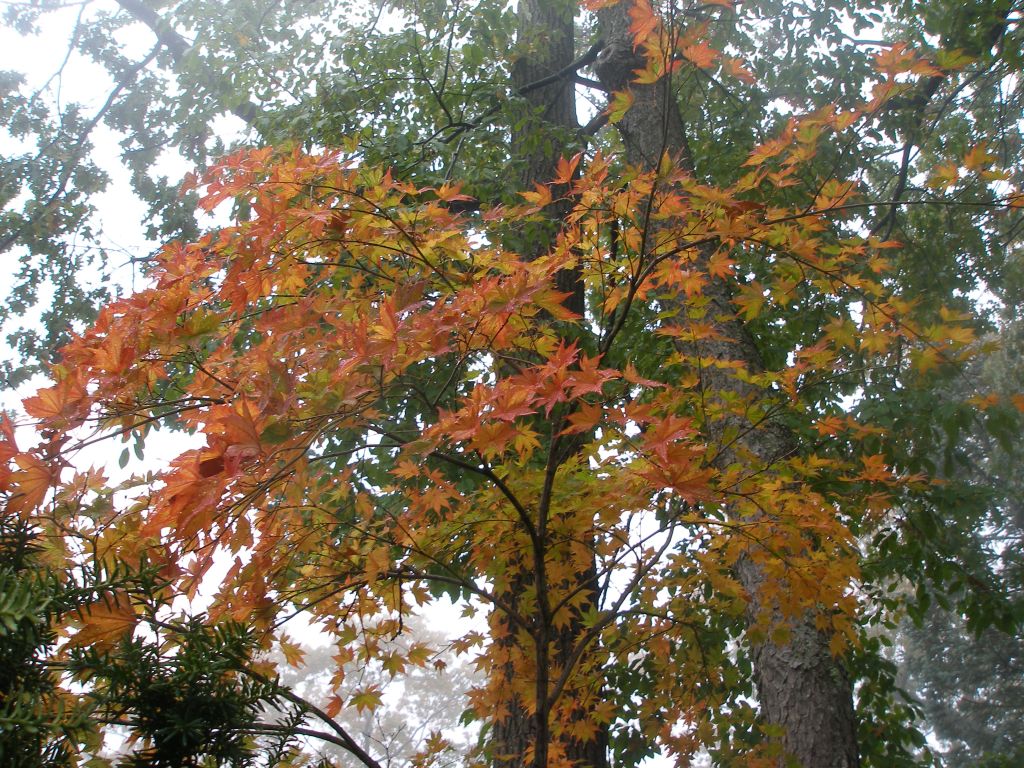
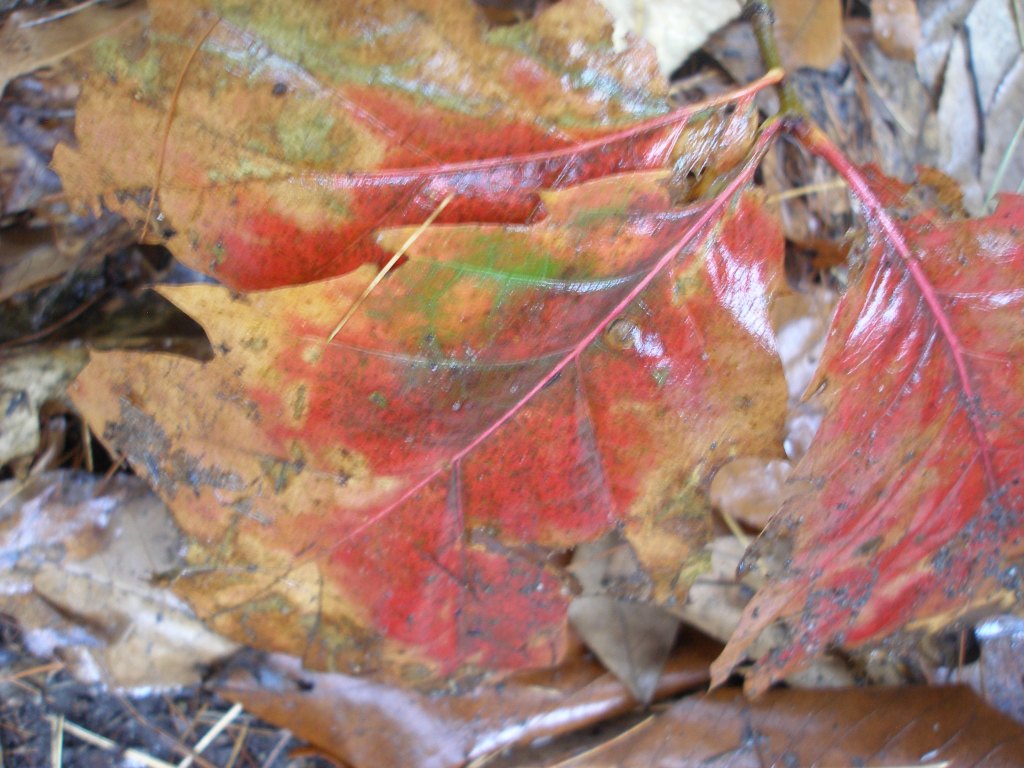
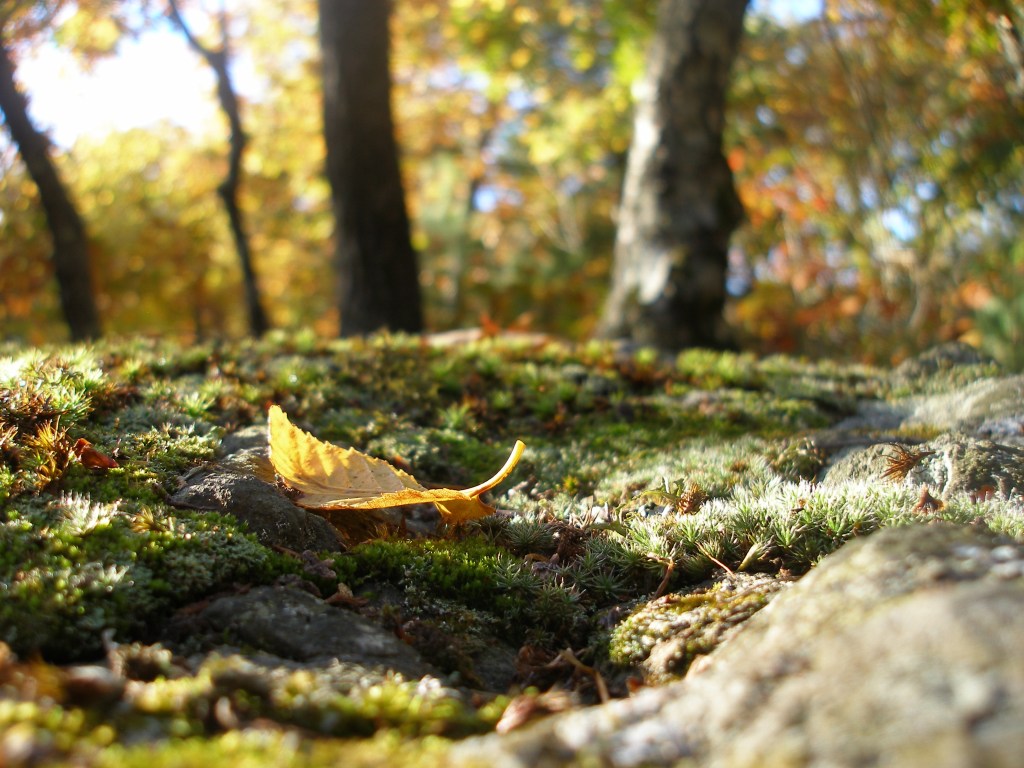
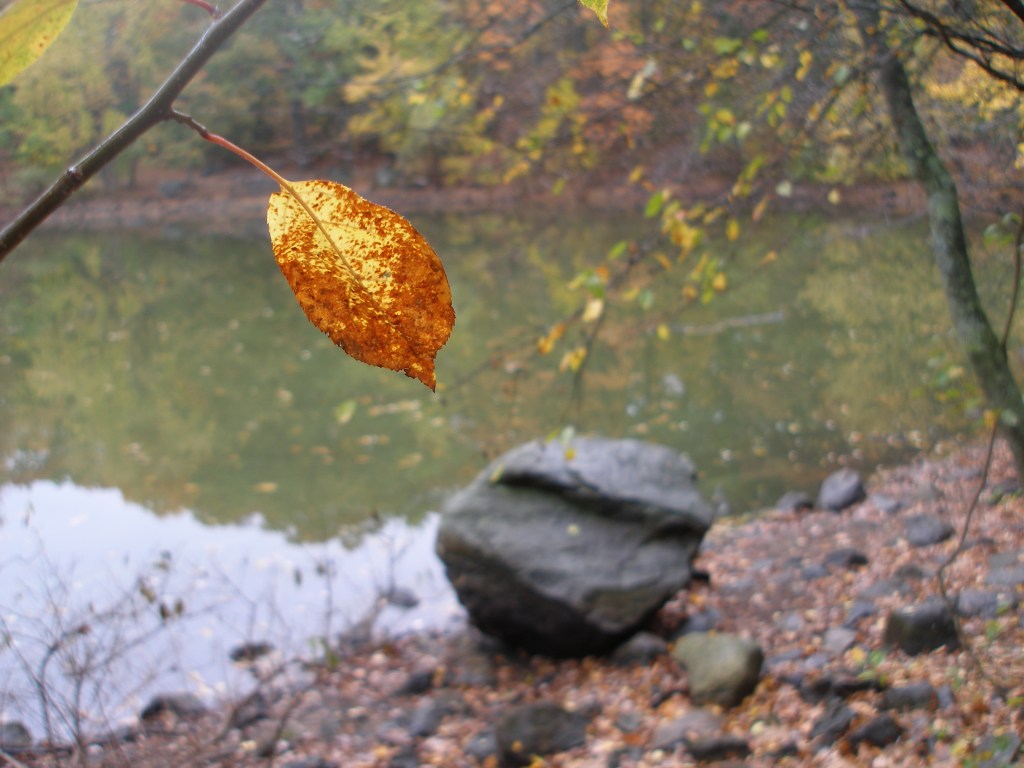
Many appreciate how sunlight can light up the colorful leaves in New England at this time of year. But wise photographers know that wonderful things can happen in all kinds of weather conditions.
A cloudy sky can make the colors pop. Rain can highlight the patterns in a single leaf, or add jeweled beads. Dreamy scenes enveloped by fog can provide a moment of respite in this troubled world. Mystery can catch us by surprise.
As it turned out “mindful dishwashing” became a “thing” when I was a student in Lesley University’s Mindfulness Studies graduate program. Several of us independently discovered that we liked mindfully doing the dishes and decided that it was quite a viable mindfulness practice. There was something about the warm water and suds as scrubbing restored a squeaky-clean shine. In fact, hand washing dishes at home could be quite soothing. But washing dishes for over 100 people at a silent retreat I attended was another thing entirely. I did not know what I was getting into when I elected “dinner dishwashing” as my volunteer task to keep costs down for those attending the retreat.
Early on the first day those who had elected to do the dishes for one of our meals crowded into a tiny stainless steel bound room that was clearly designed for one purpose. We were shown how to use the hose with hot water mixed with detergent as well as how to refill its reservoir. We watched as the professional dishwasher was taken apart and put back together again, and we learned that it was necessary to wash the silverware three times because of health regulations. We were not allowed to take any notes, and I hoped we had absorbed enough to avoid any major disasters. I considered that those doing this demonstration had considerable experience orienting new recruits. Then I noticed a list of instructions posted on the wall, and we were told we could talk as needed to coordinate our efforts with our dishwashing partner.
We definitely had an opportunity for “careful noting of a greater number of objects” (Goldstein, 2013, p. 147) which can be useful to “stay aware in the midst of sloth and torpor” (Goldstein, 2013, p. 147). The large number of dirty dishes piling up on a counter beside us certainly woke me up fast. There was much laughter as we figuring out how to avoid getting sudsy hose water on ourselves and everywhere else. As we began to keep up with the growing pile of dishes, bowls, cups and silverware, we were also adjusting to each other’s preferred way of doing things.
In the sauna-like steamy atmosphere, the exertion and our playful and sometimes hilarious efforts at coordinating with each other provided a welcome change from alternate sessions of silent sitting and walking. I realized I no longer resented having to miss an after-dinner meditation session.
As we learned by doing, we began to “act and move with awareness, clearly knowing, being embodied rather than distracted” (Goldstein, p. 65). We still laughed often and I learned that was functional – As Funes (2000) writes, “As we use laughter to release emotions, we are able to…focus on the sensory experience of the present and we become able to perceive our environment more fully. We can therefore deal more effectively with new stimuli” (p. 77).
By the third day, we had it down “clearly knowing the purpose of doing an action before doing it, and understanding…it is of benefit to self and others” (Goldstein, 2013, p. 62). In the dining room, one of the cooks struck a bell three times to indicate everything was ready. That was answered by a strike of a triangular gong to invite folks to line up to get dinner. The two of us came up with our own dishwashing completed ritual – solemnly bowing to each other after the last clean dish was put away.
At the end of the retreat, I was asked to write on a slip of paper what I wanted to leave behind. I wrote “Being afraid of being silly.” I wondered what the teachers would make of that. They would not know about the marvelous playful and laughter-filled experience we had while mindfully washing dinner dishes. Still, I realized that not being afraid of being silly at times certainly makes sense. It makes one approachable. It cuts through barriers and takes us back to the open wonder at being alive of childhood. H. H. Dalai Lama’s tendency to tickle people is mentioned in a video made at a Seeds of Compassion presentation in Seattle and the depth of his playful relationship with Demond Tutu was such a joy to witness.
References:
Funes, M. (2000). Laughing matters, Live creatively with laughter. Dublin: Gill & Macmillan.
Goldstein, J. (2013). Mindfulness; A practical guide to awakening. Boulder, CO: Sounds True.
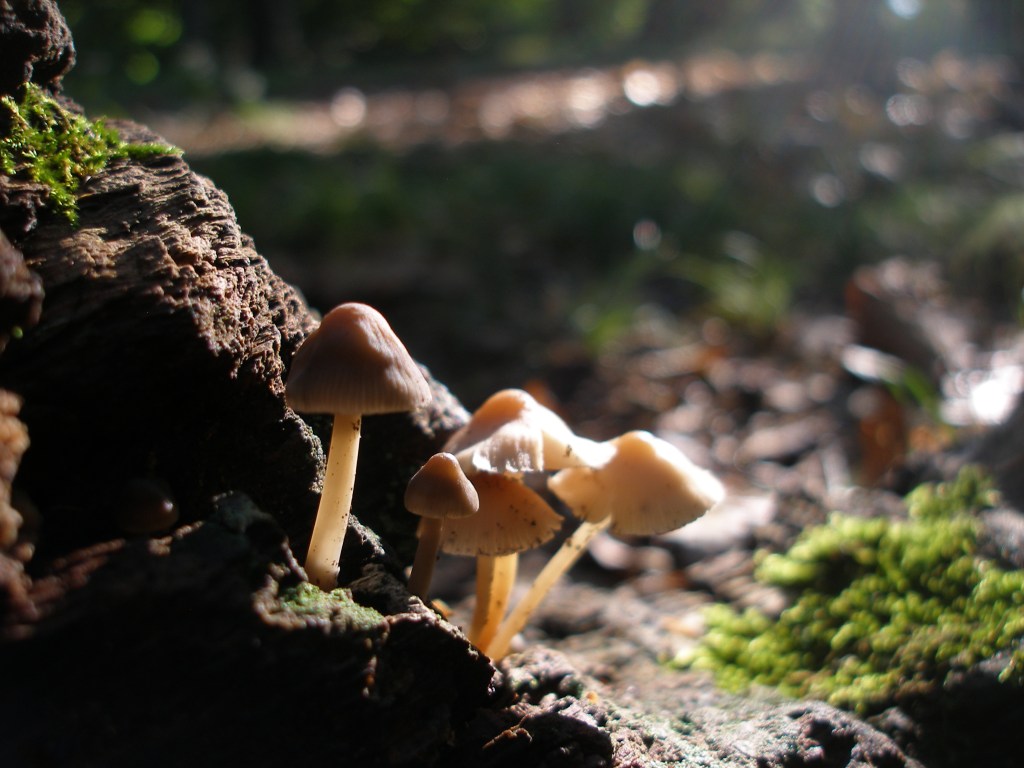
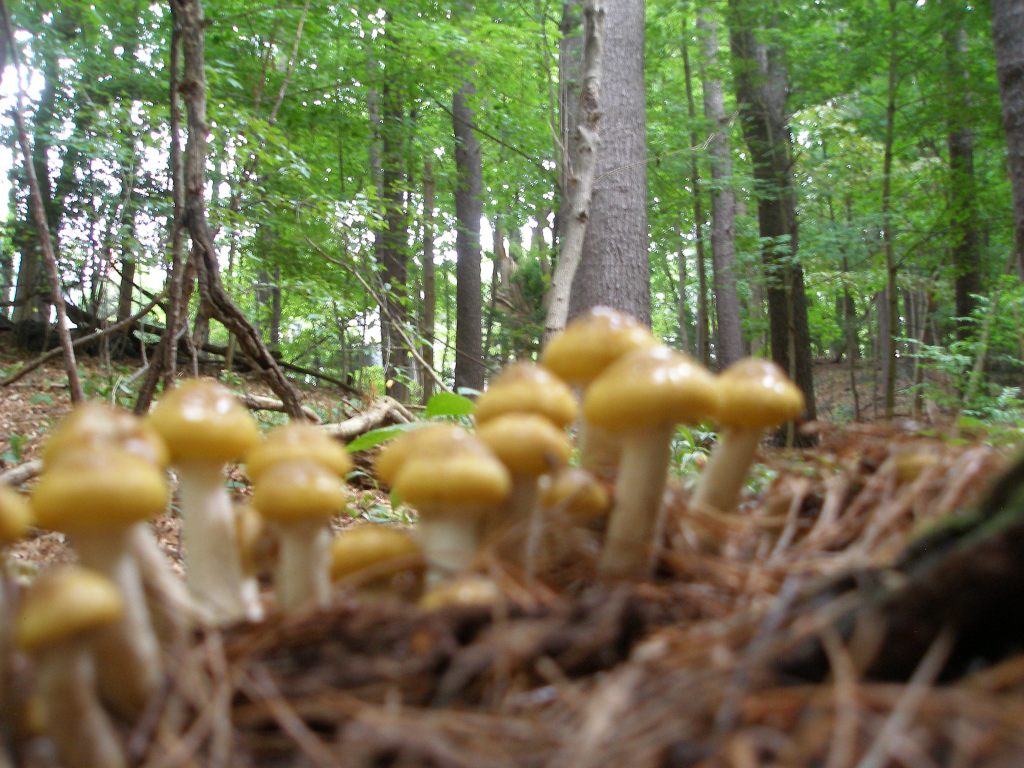
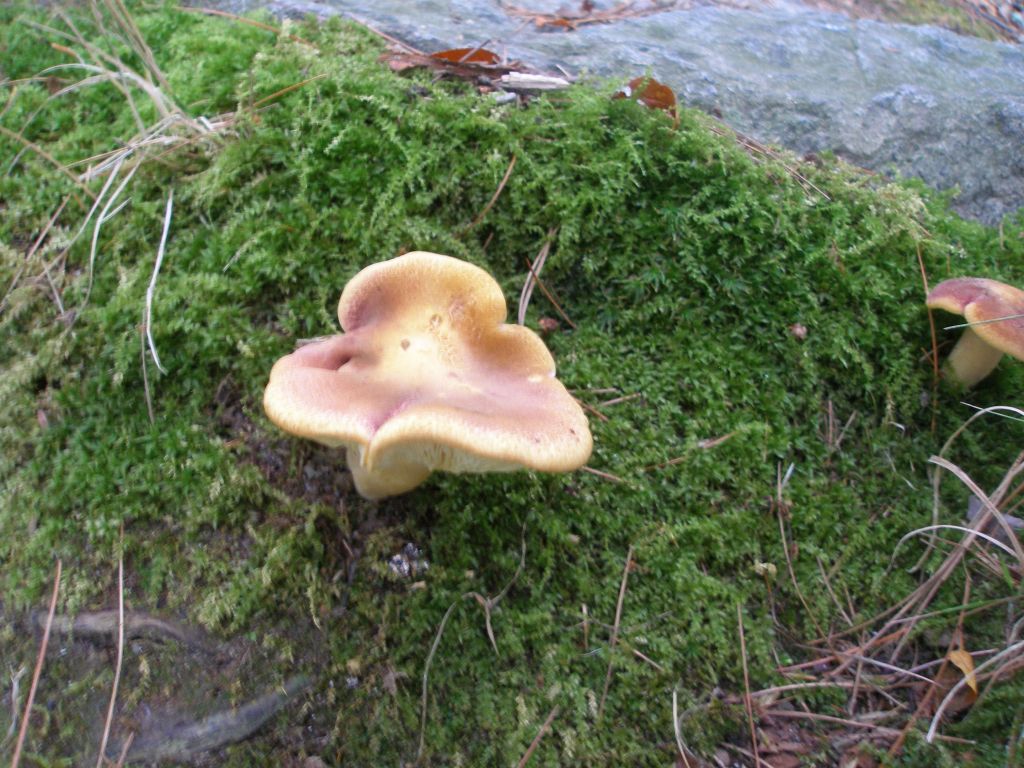
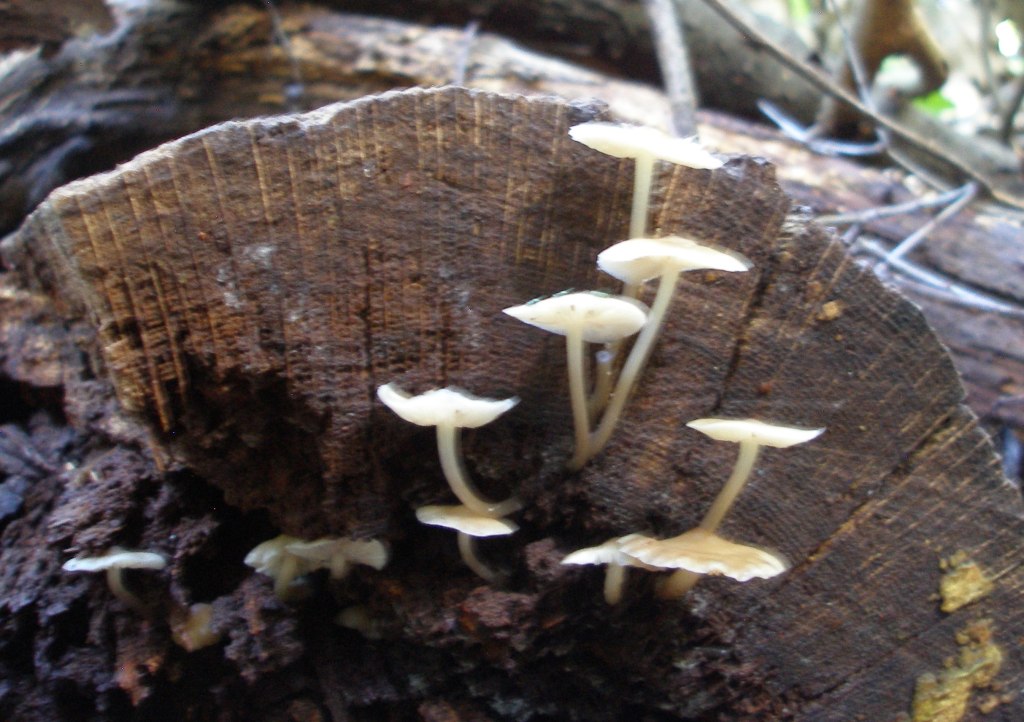
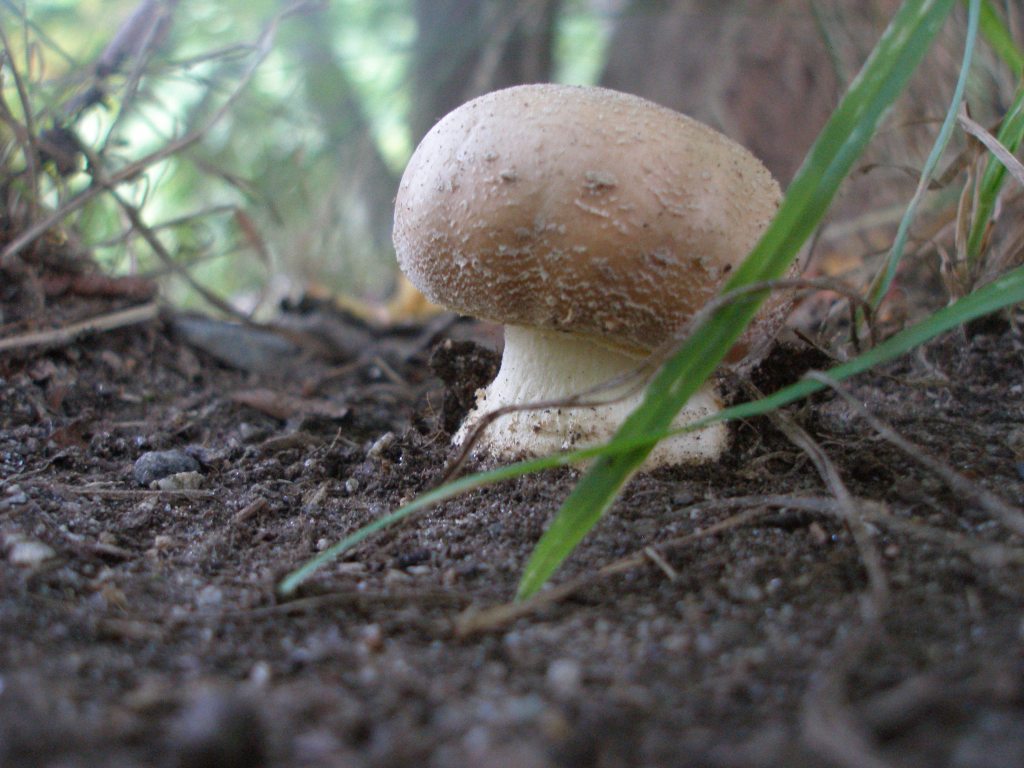
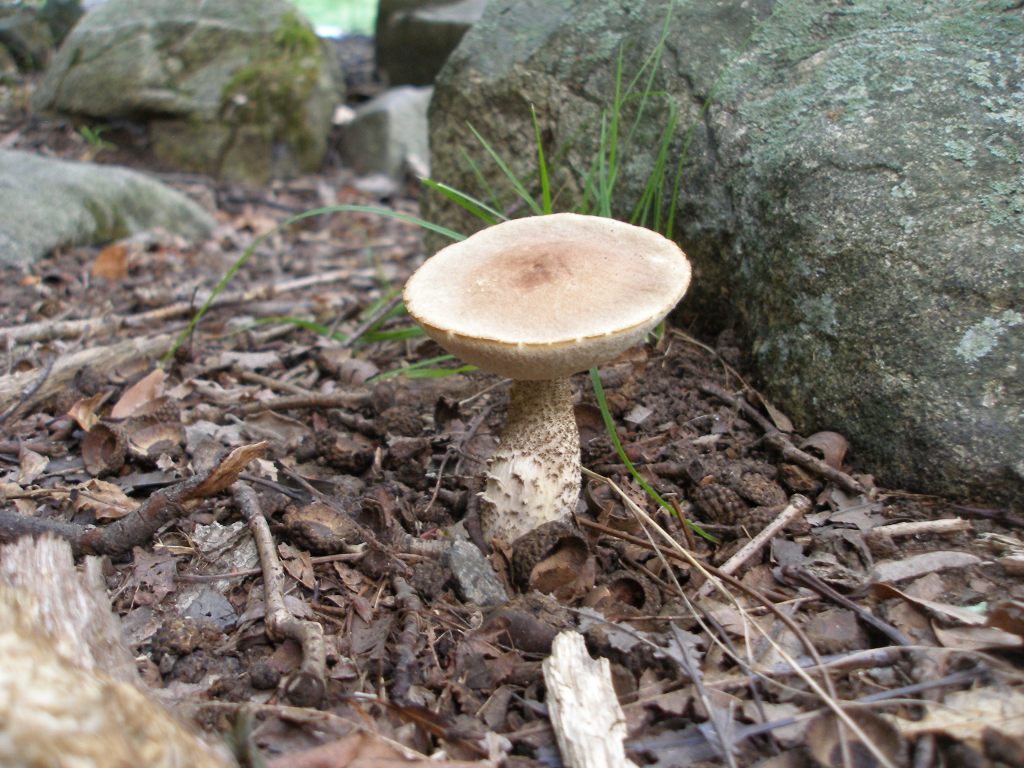
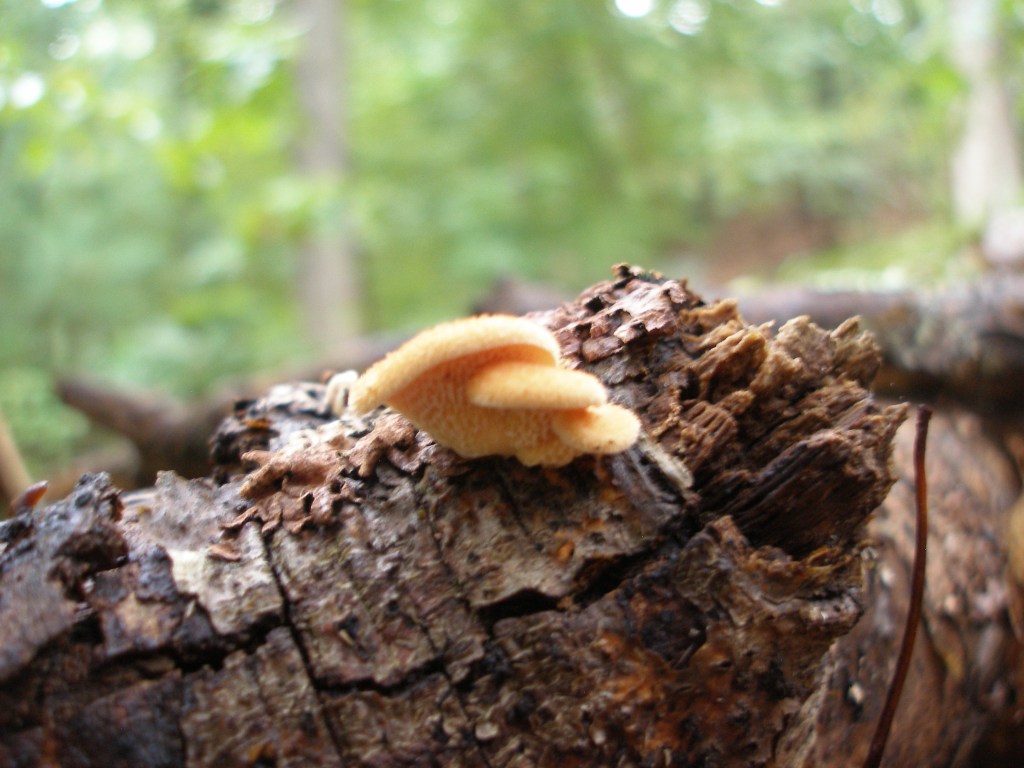
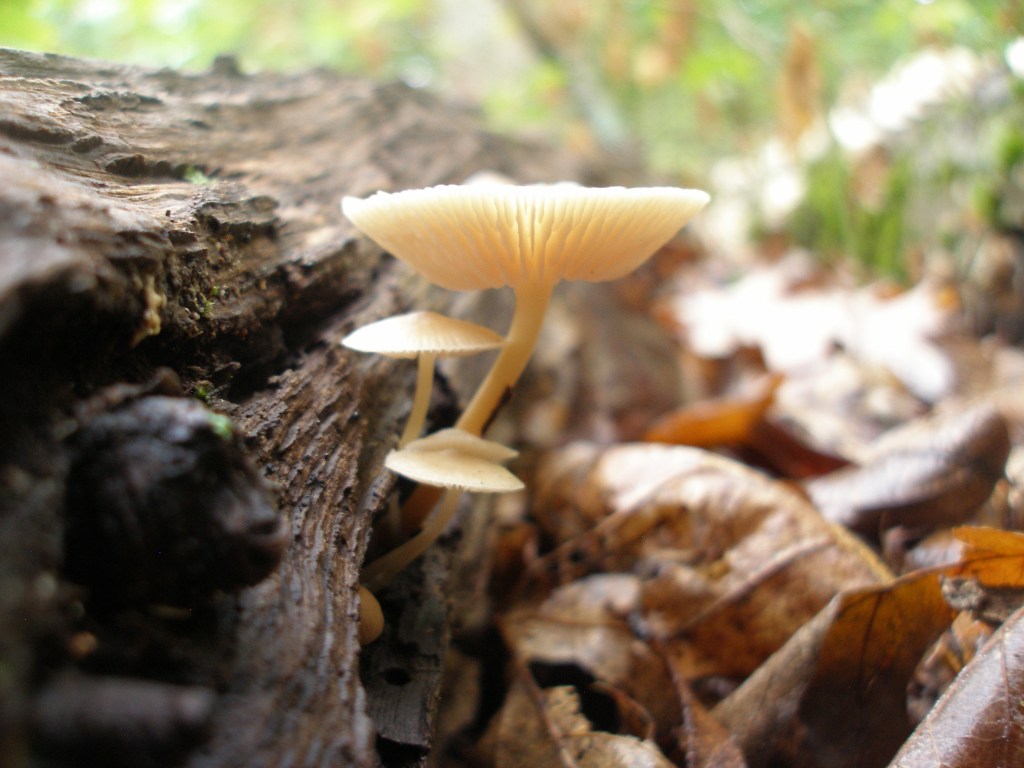
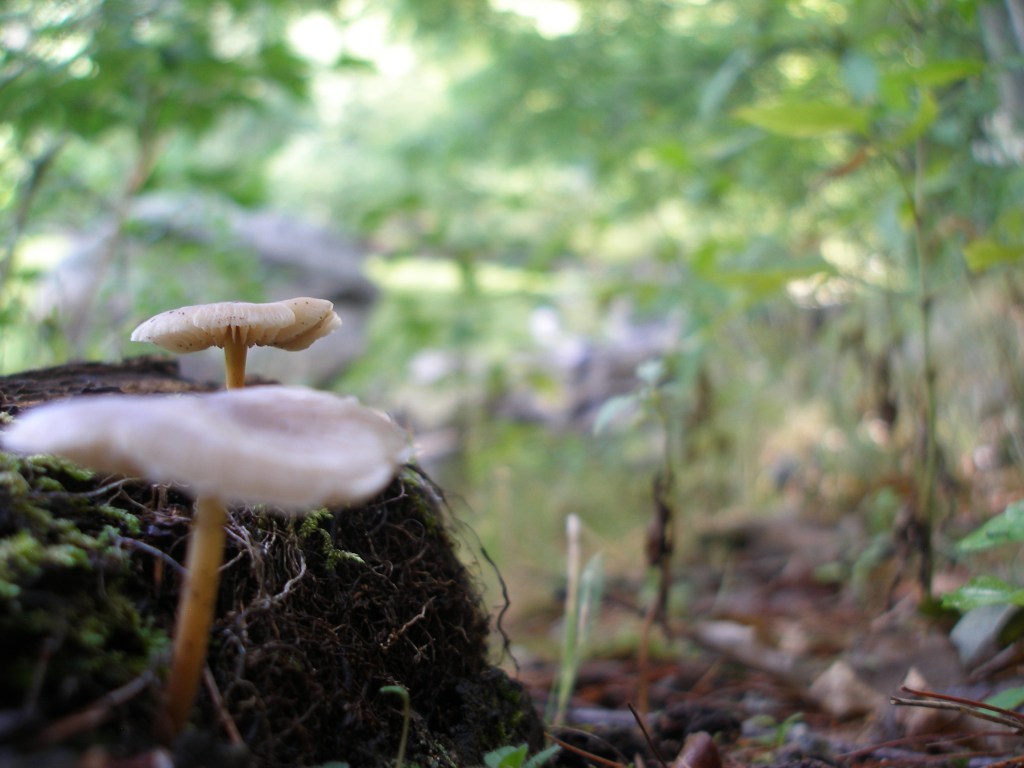
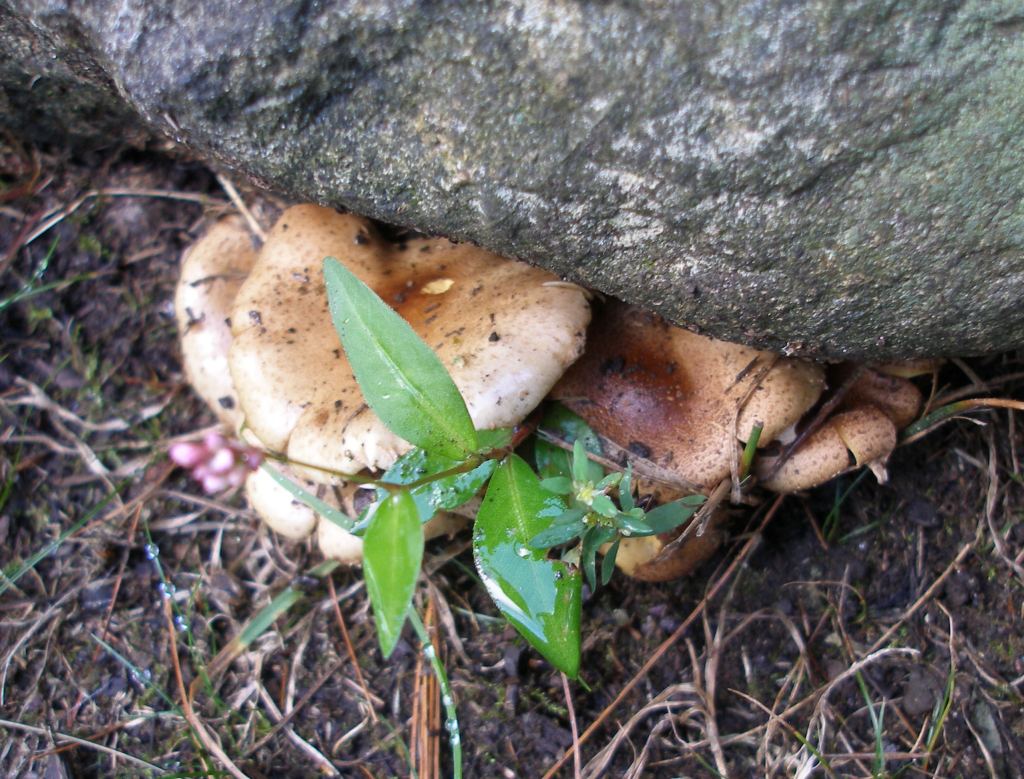
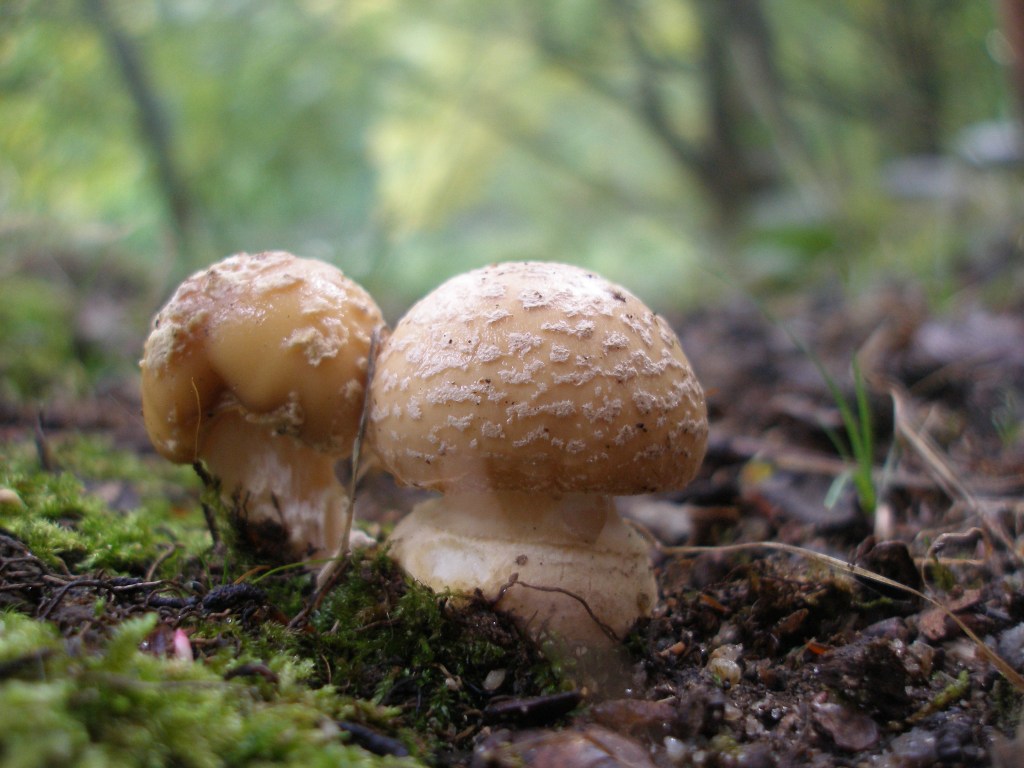
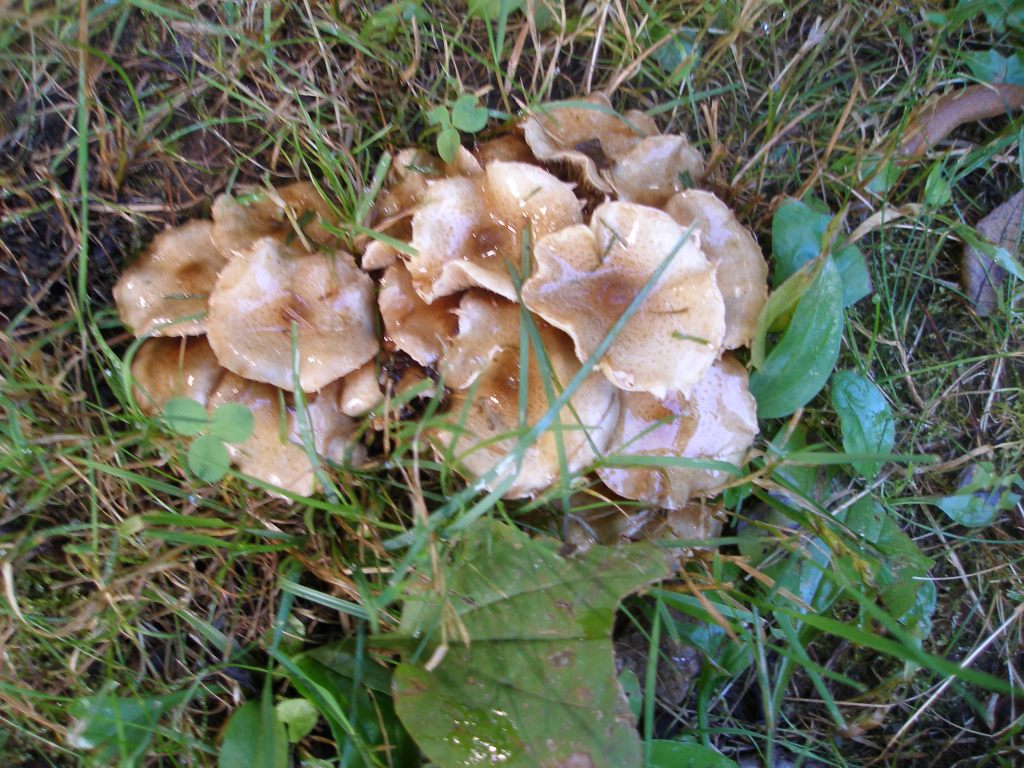
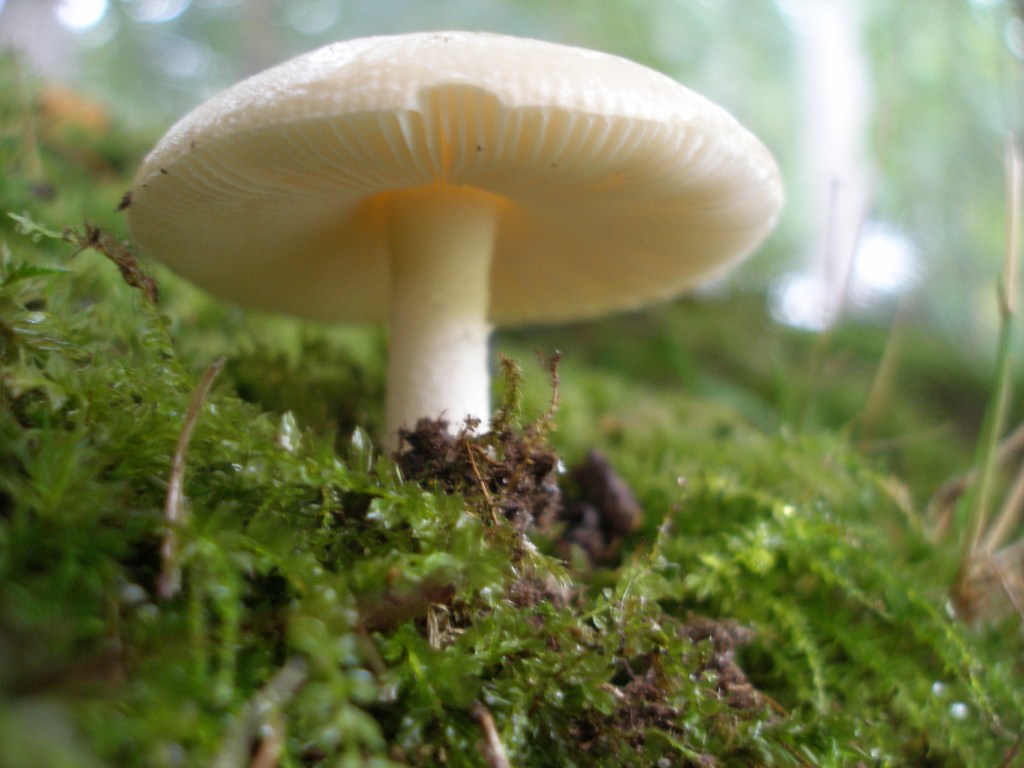
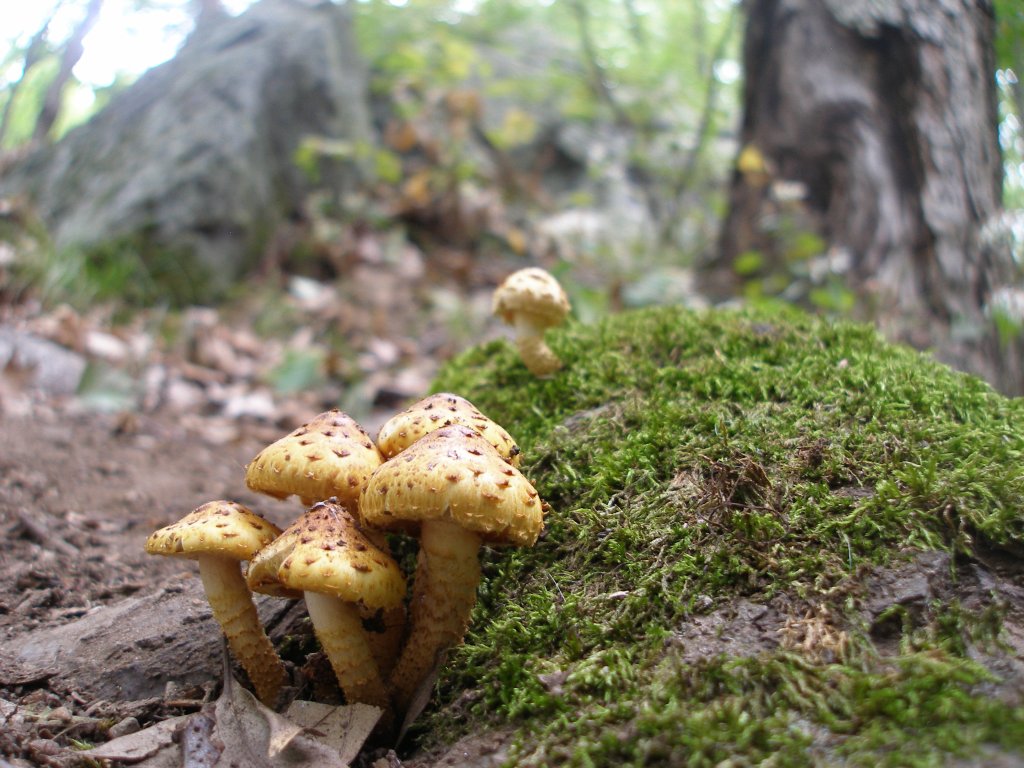
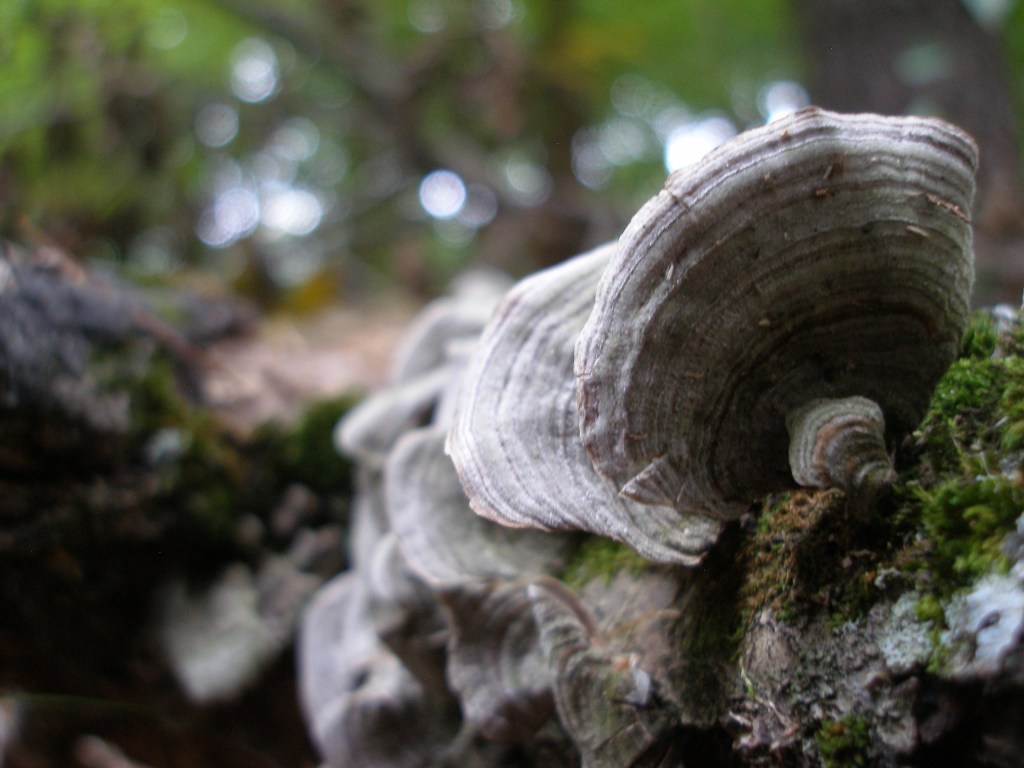
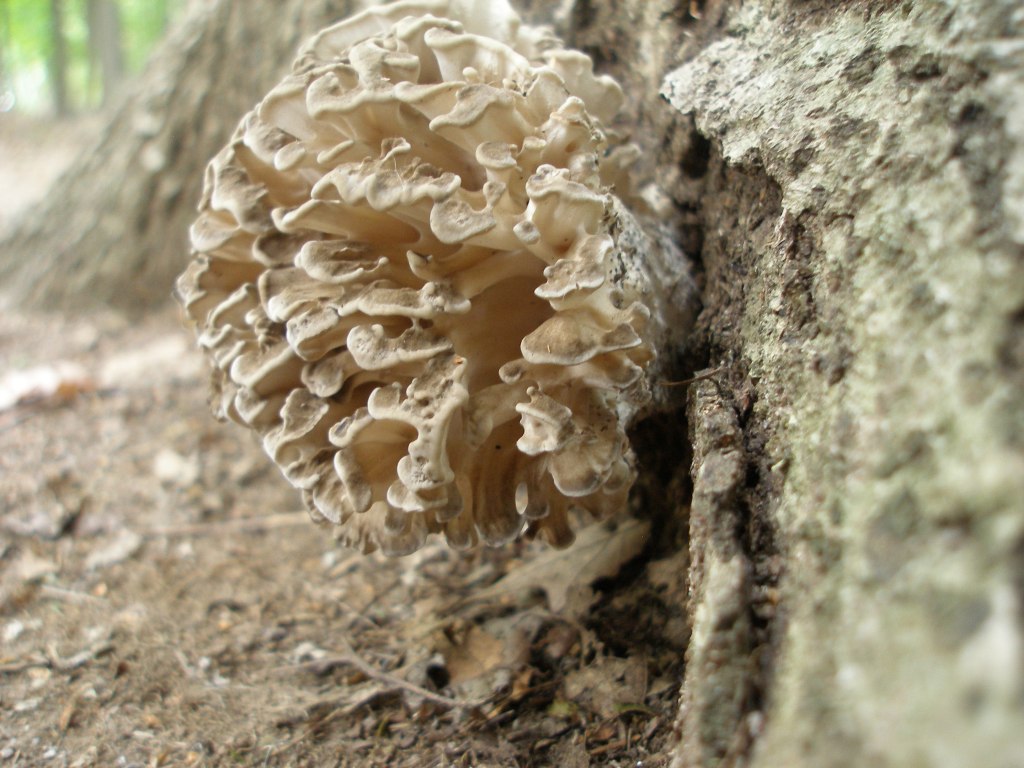
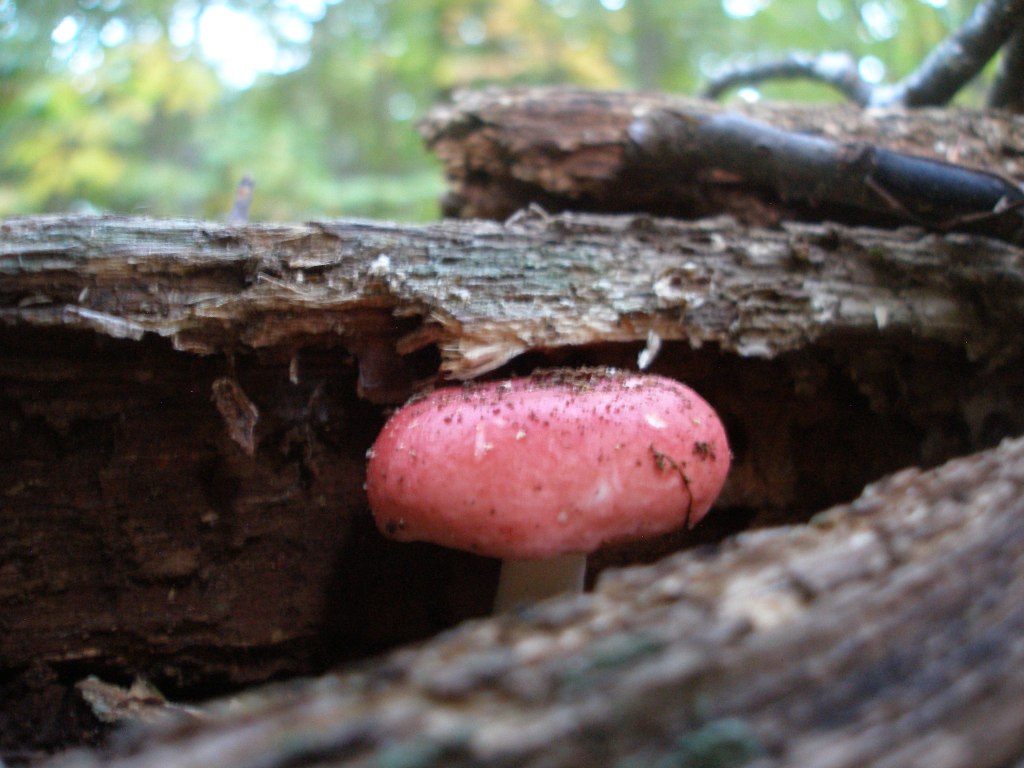
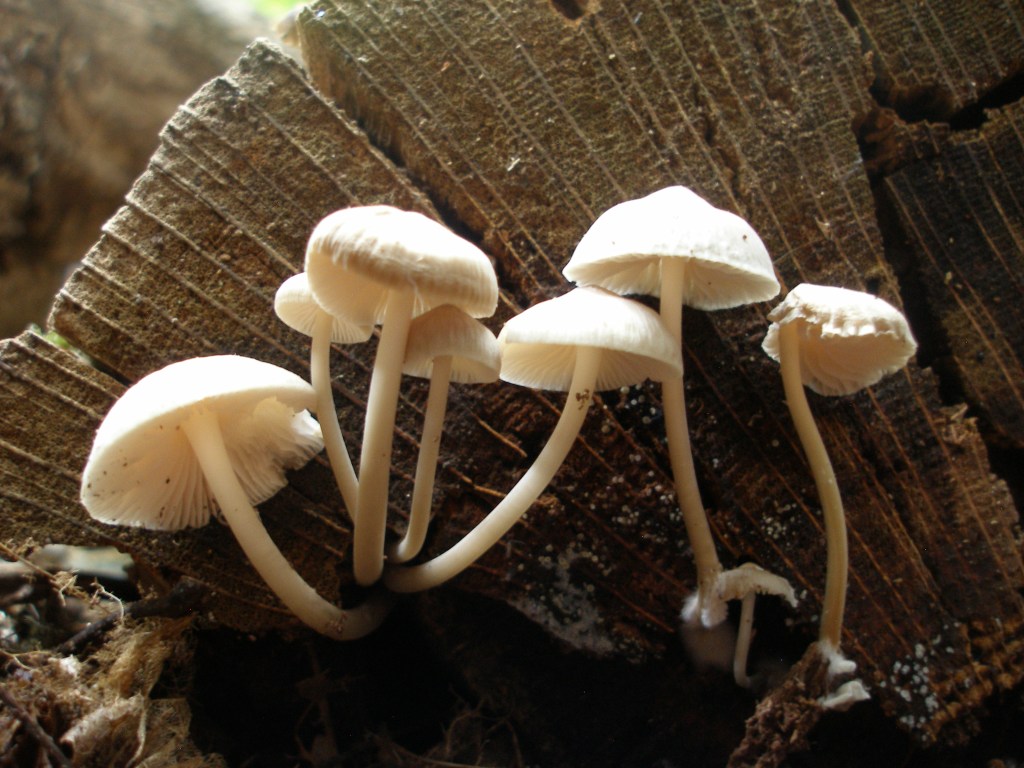
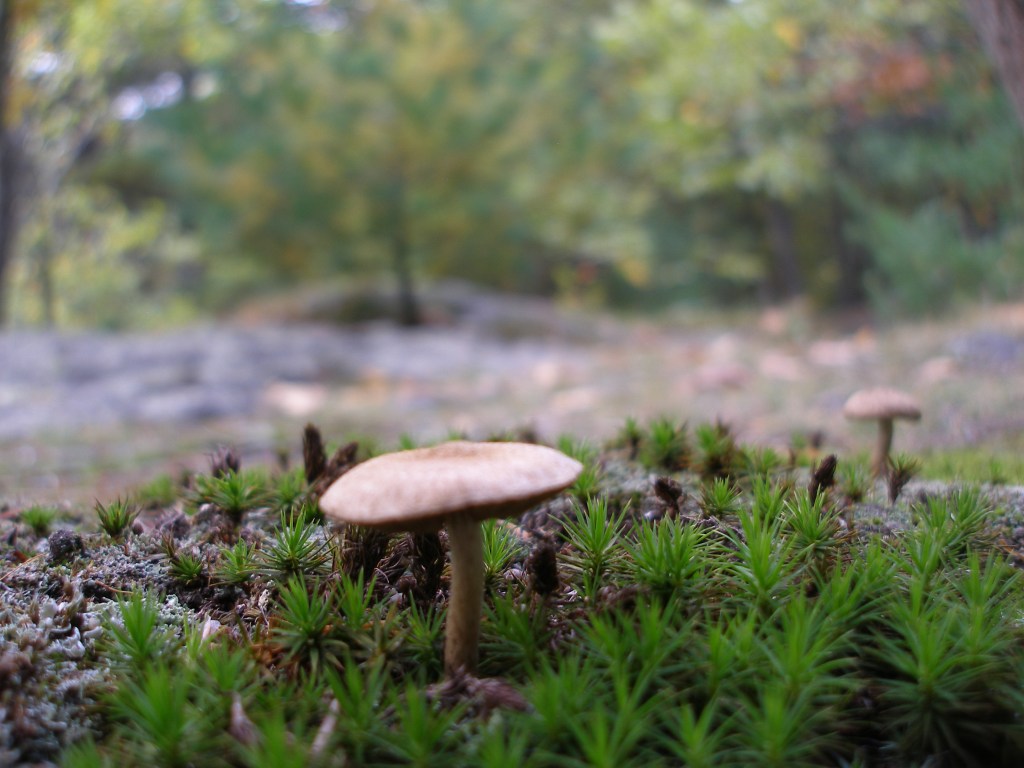
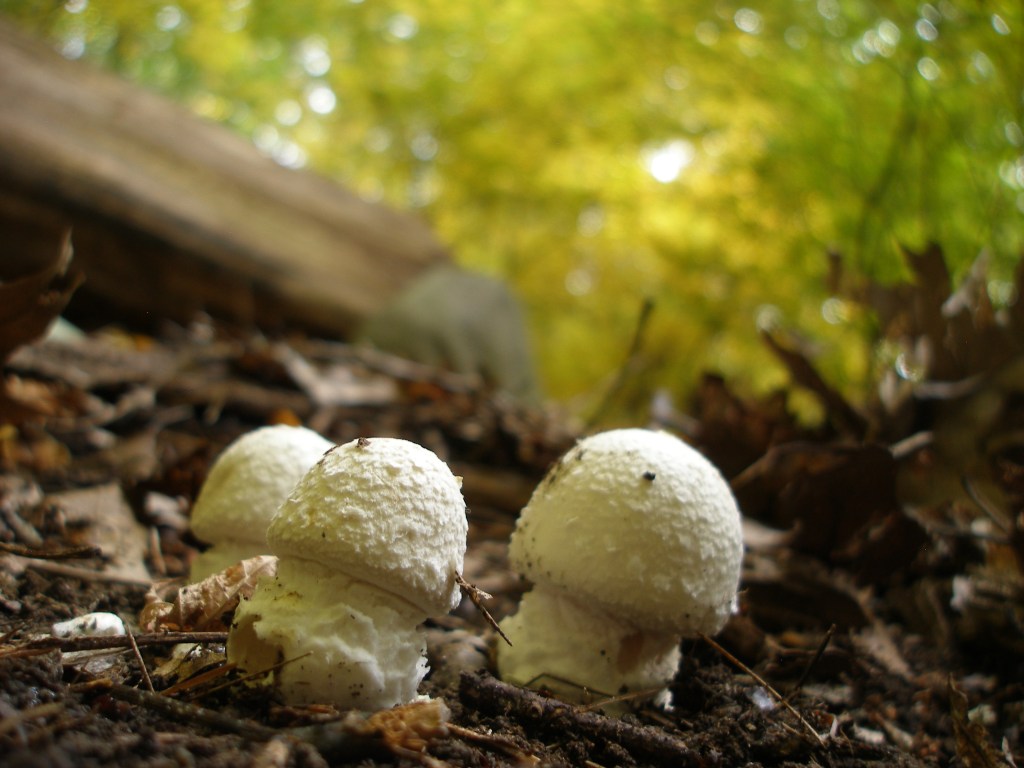
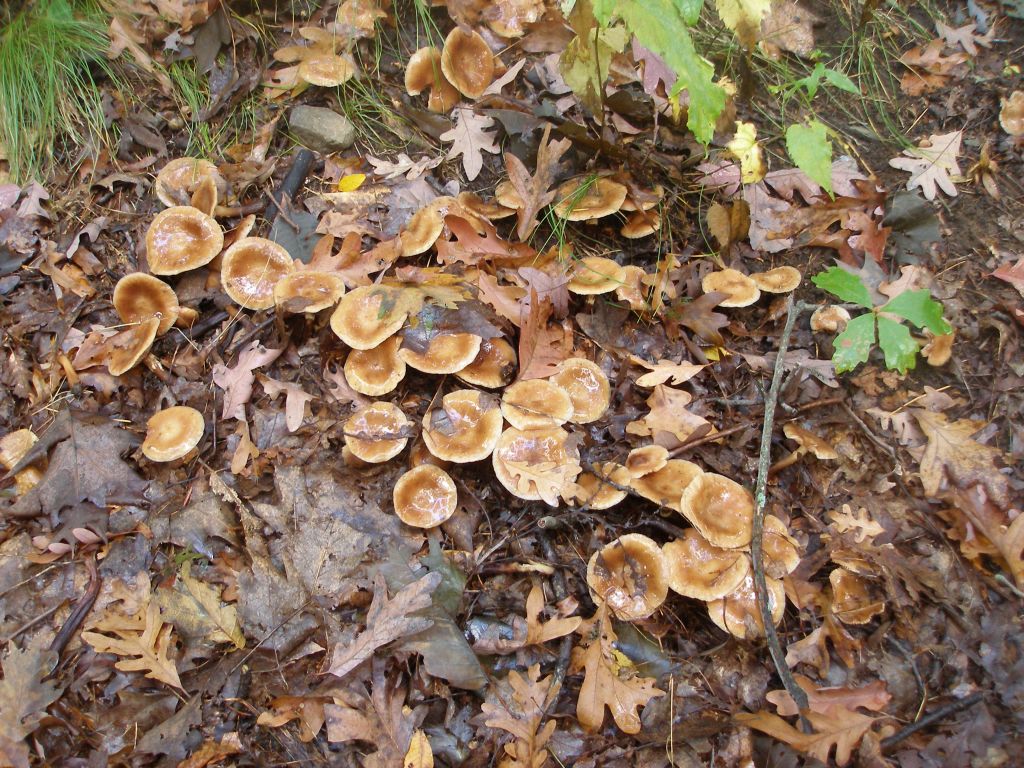
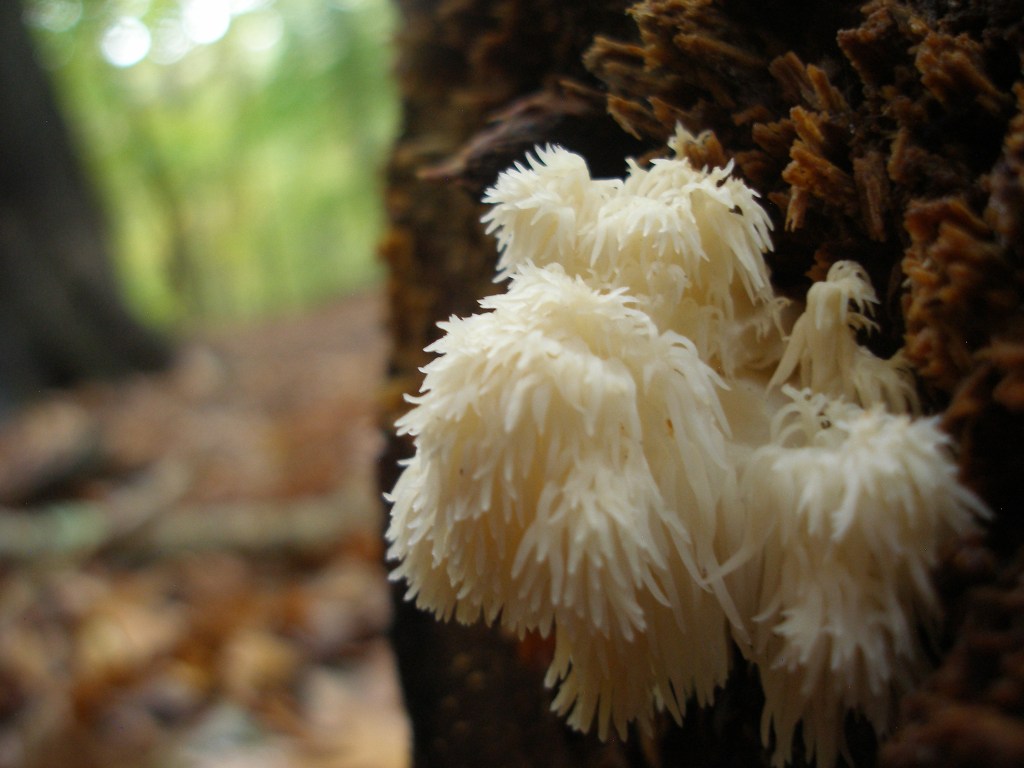
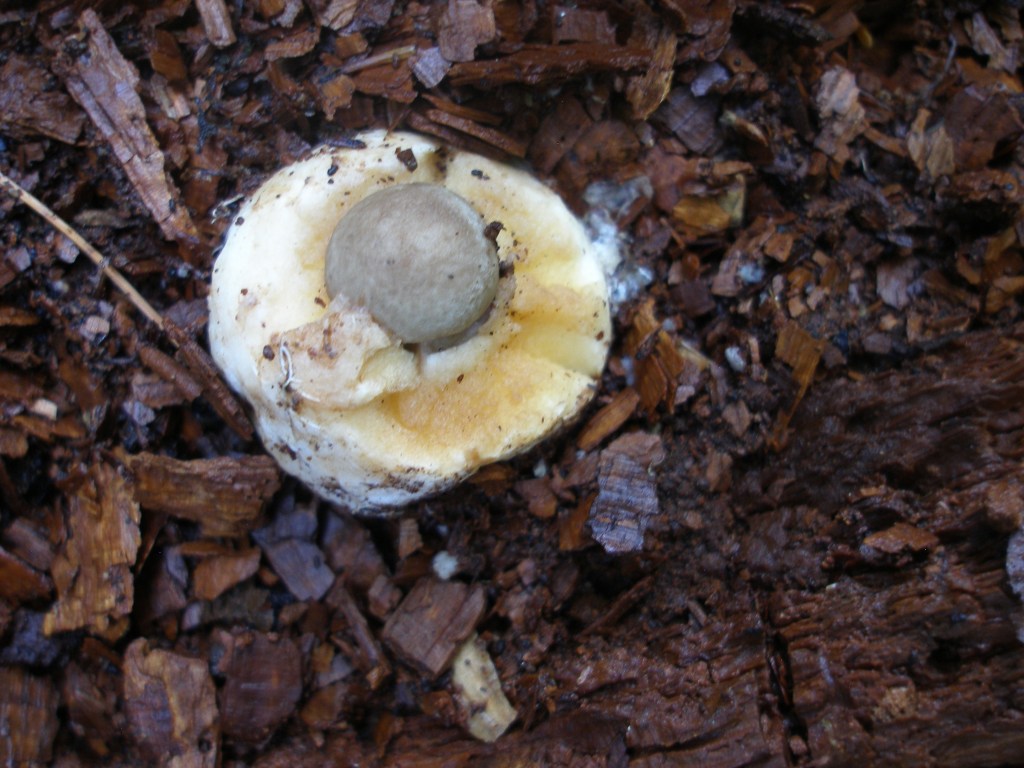
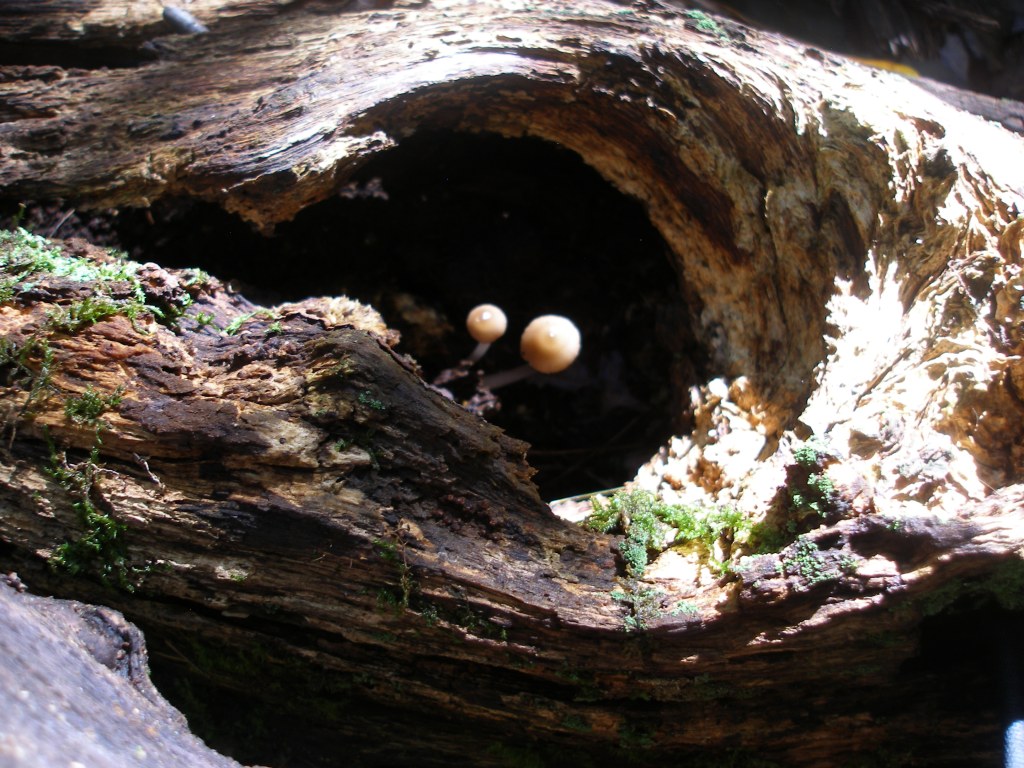
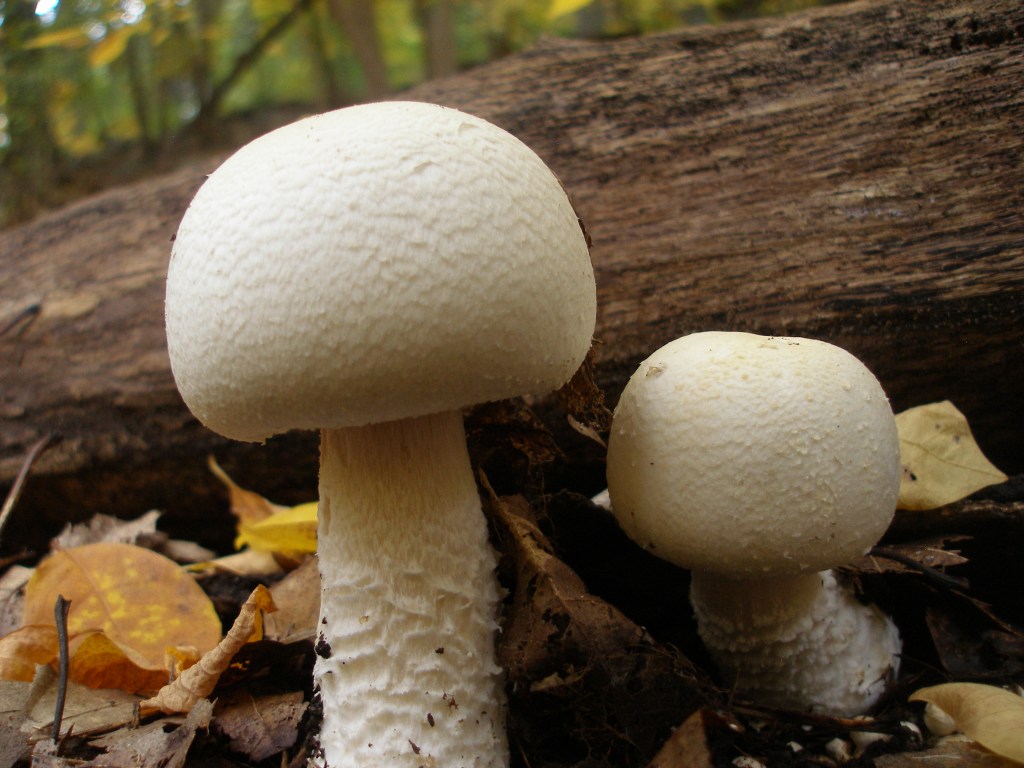
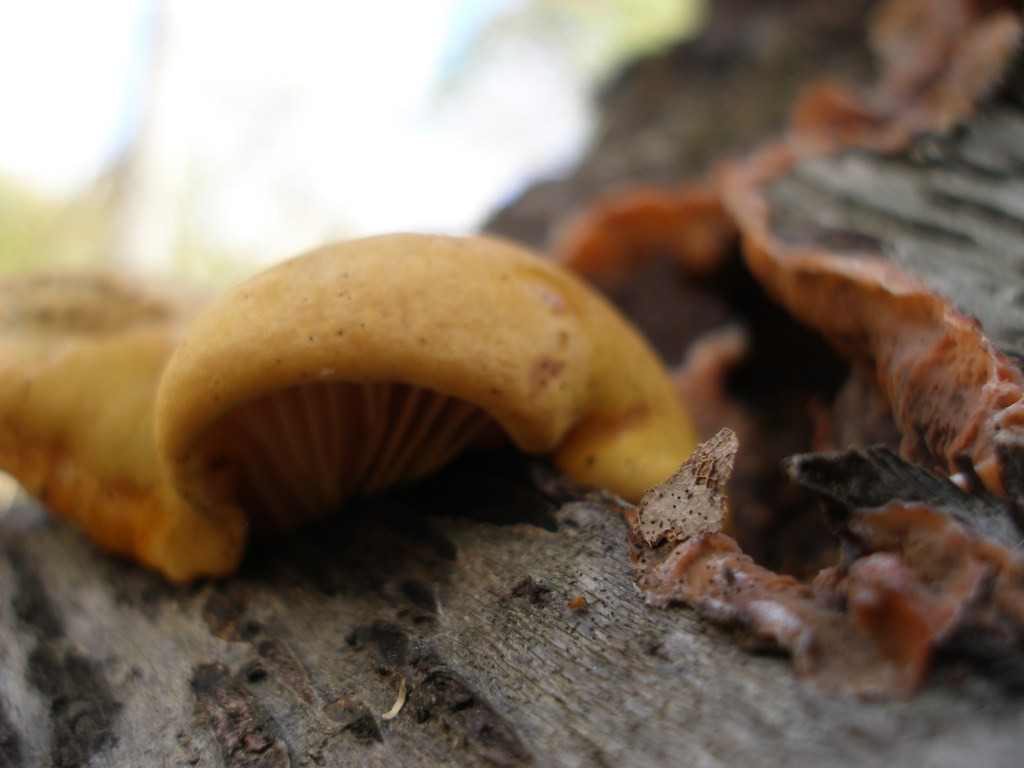
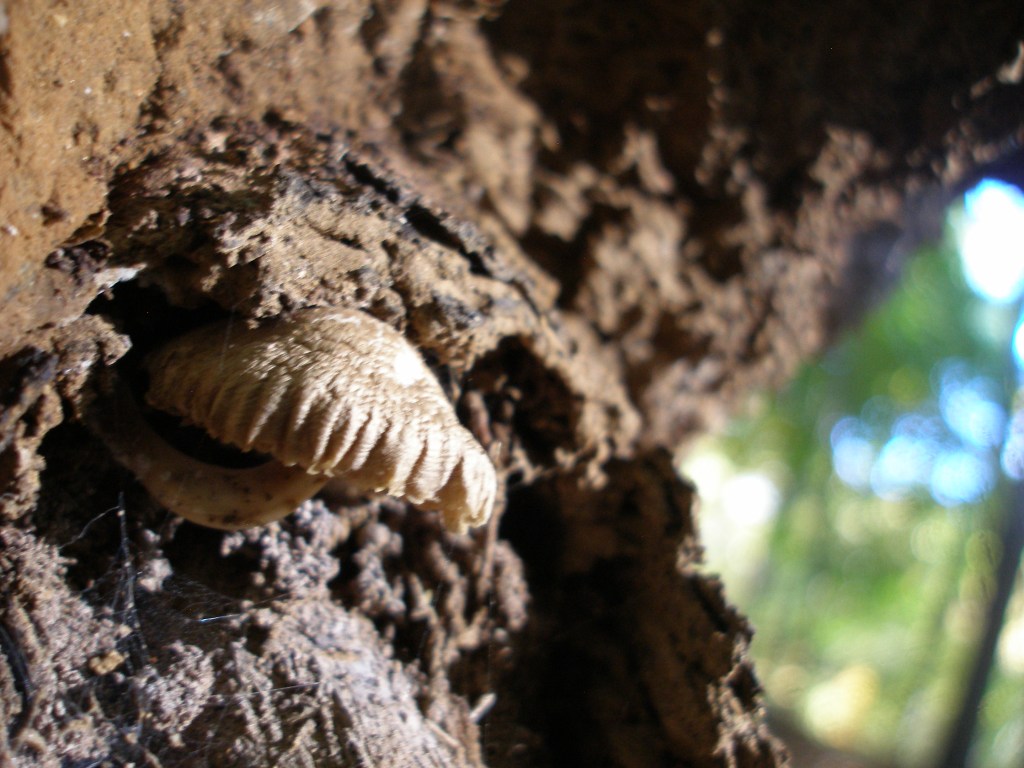
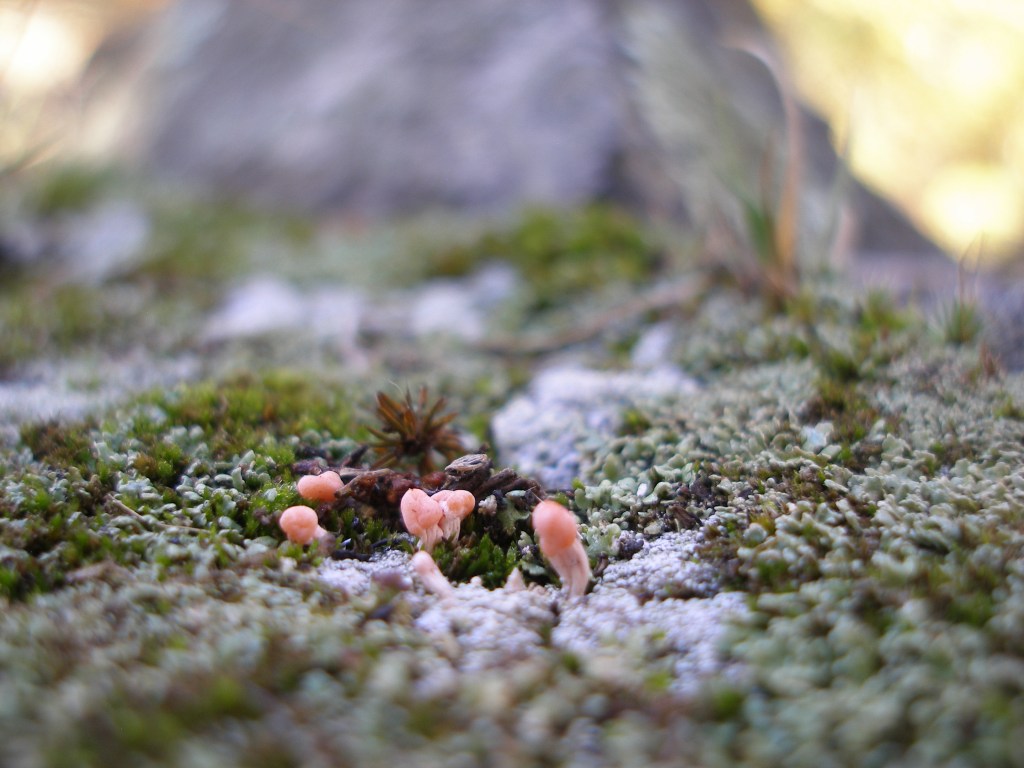
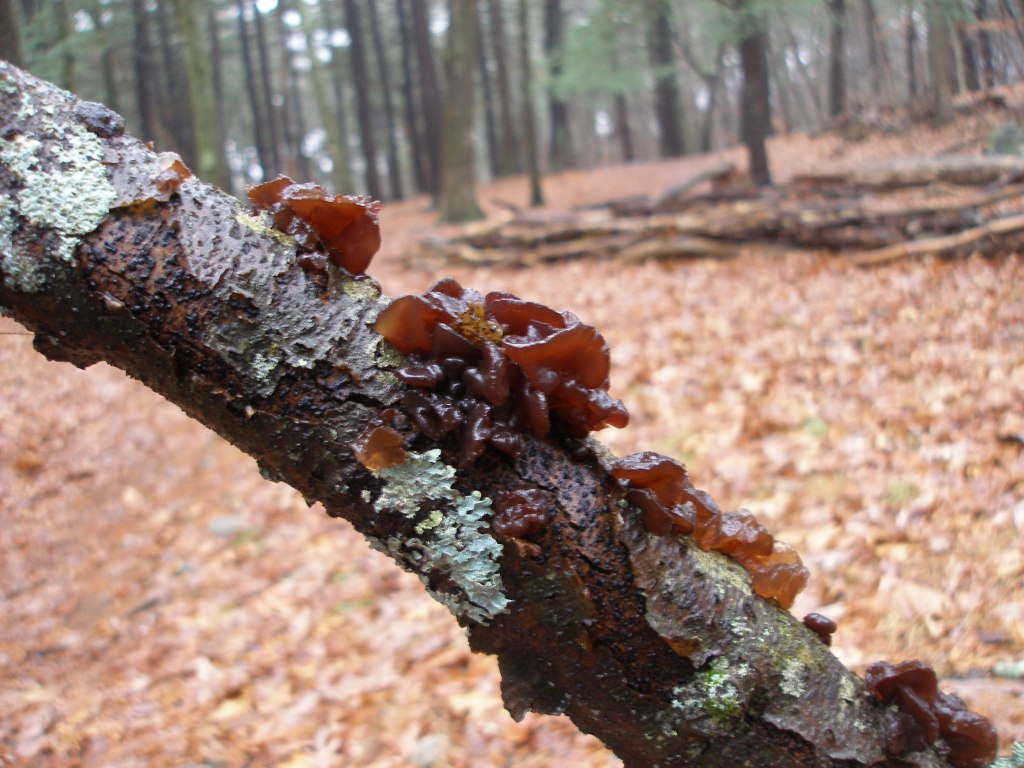
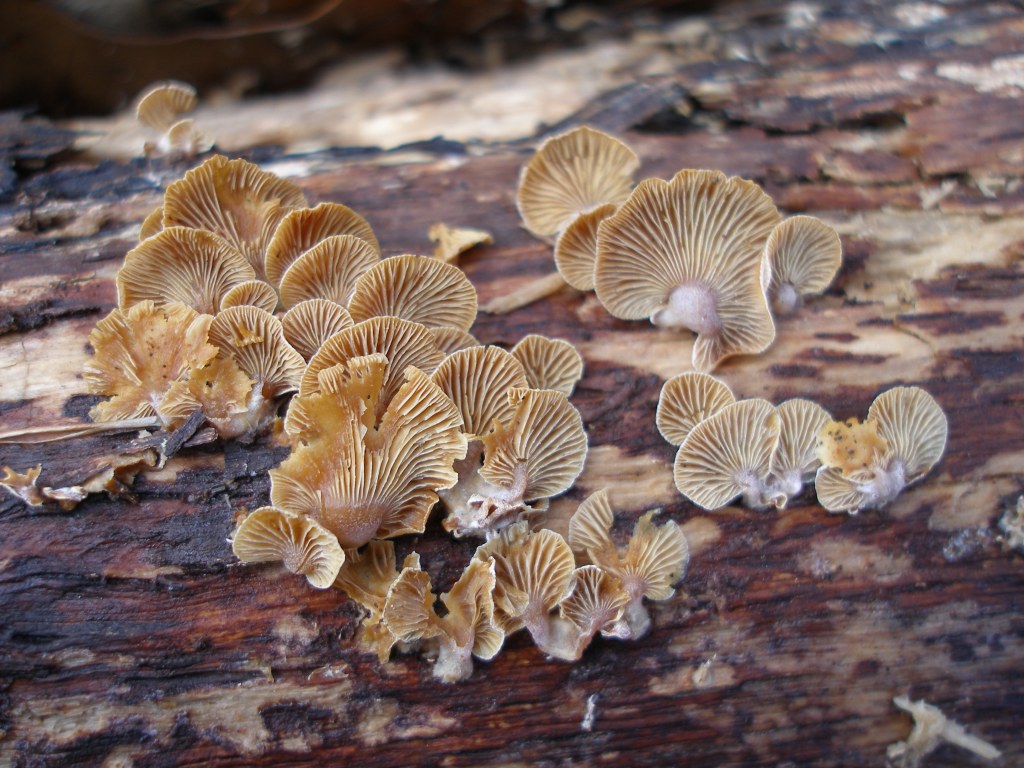
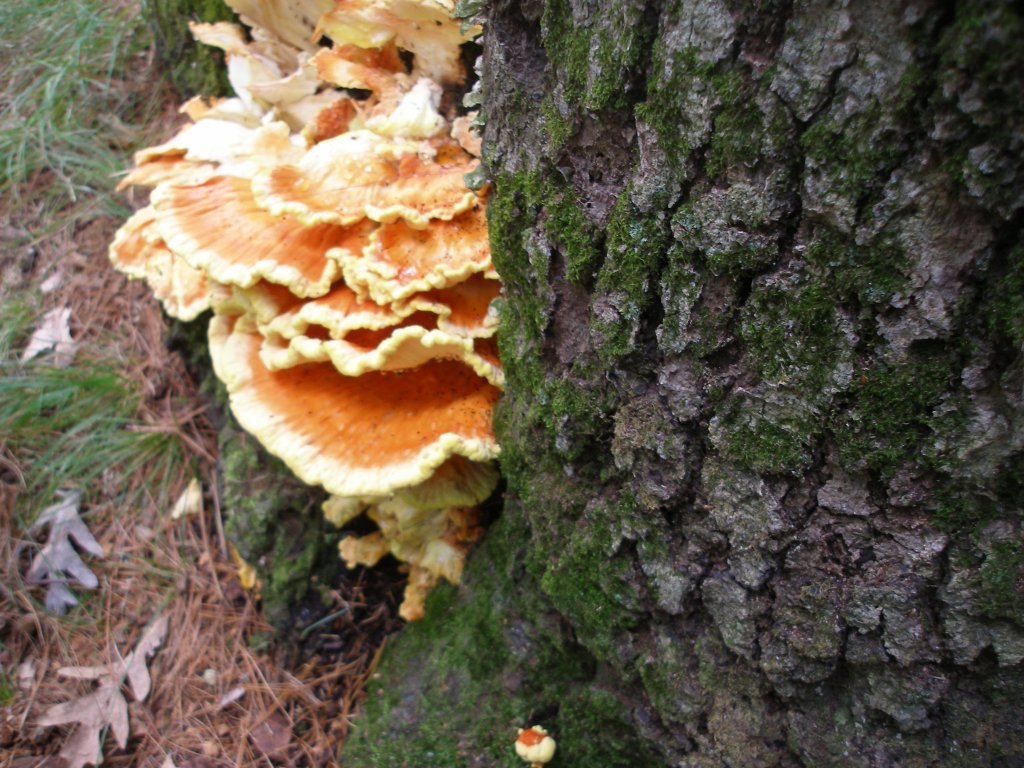
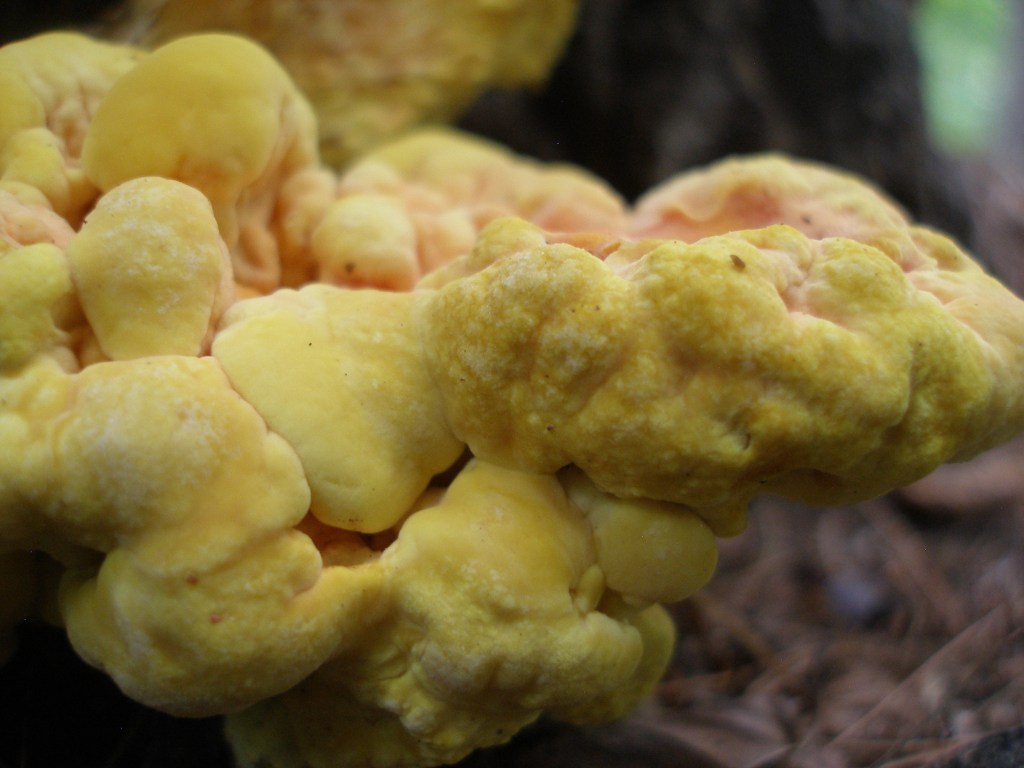
Last summer it rained nearly every day followed by a rather spectacular crop of mushrooms popping up in Menotomy Rocks Park.
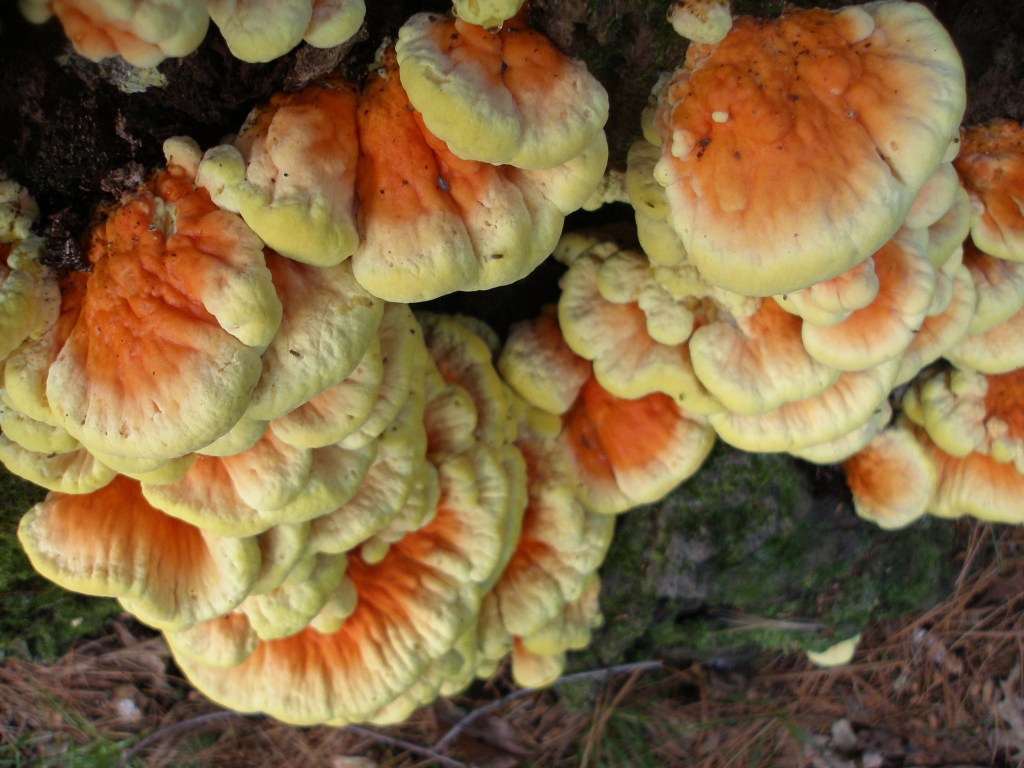
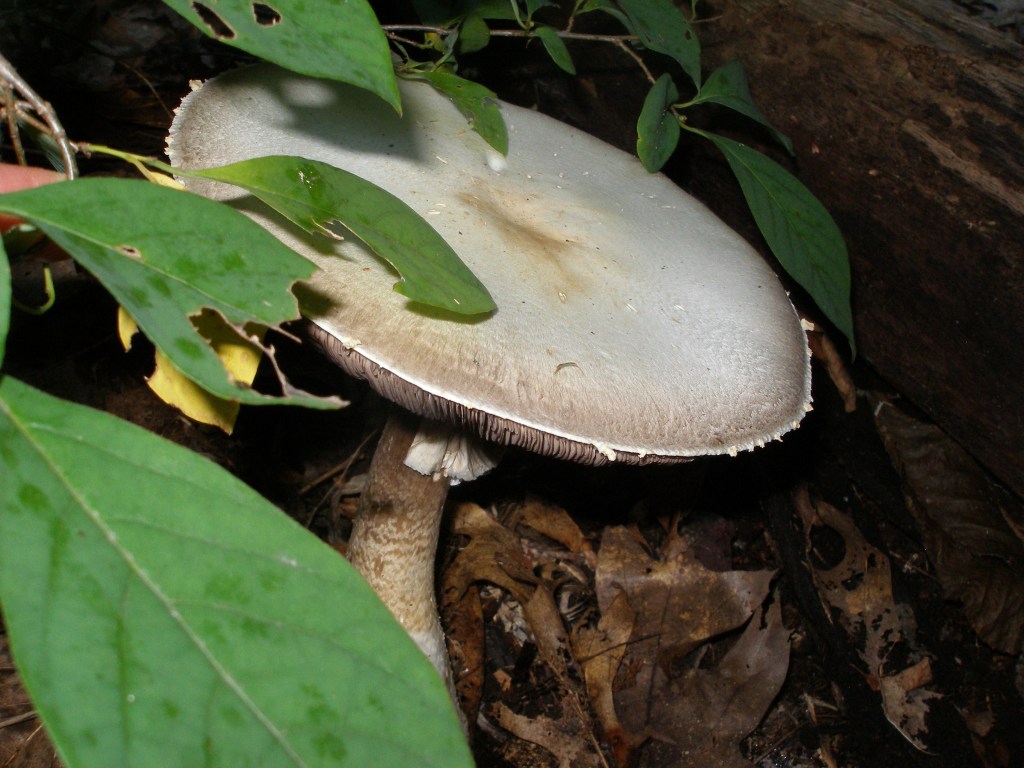
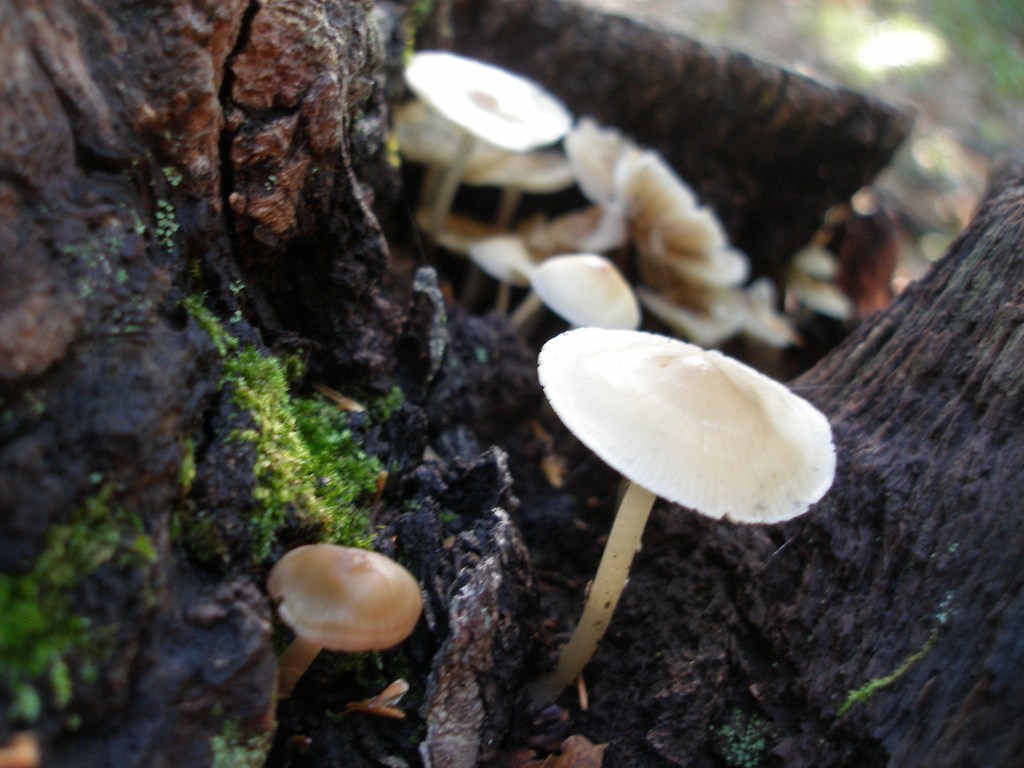
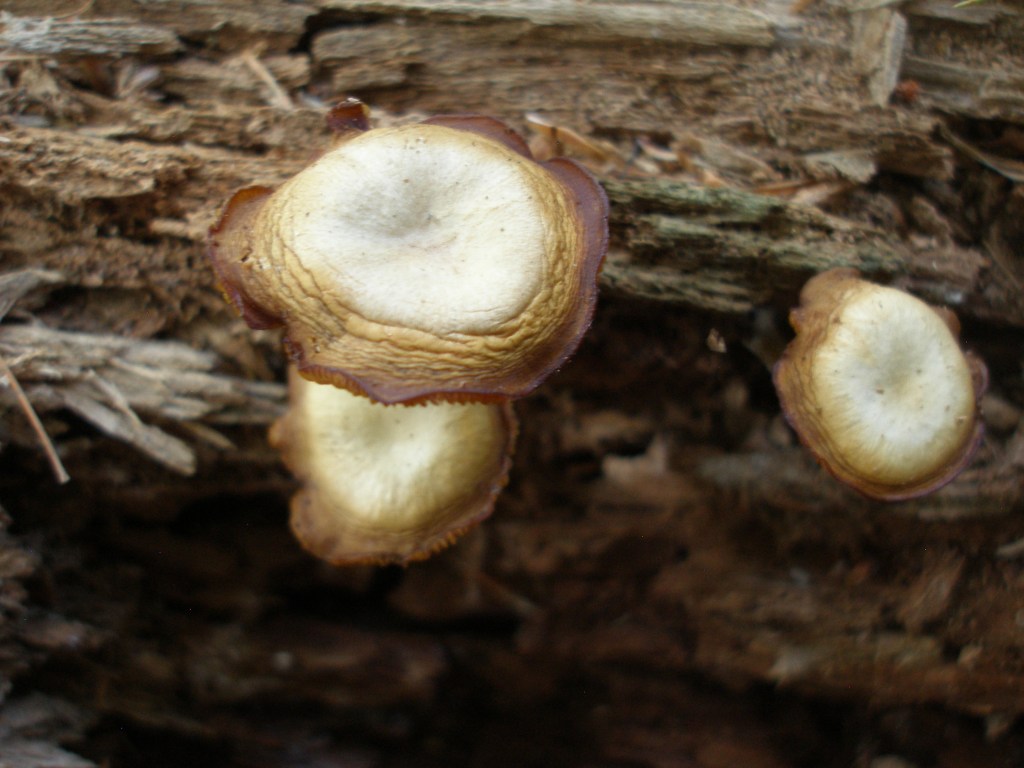
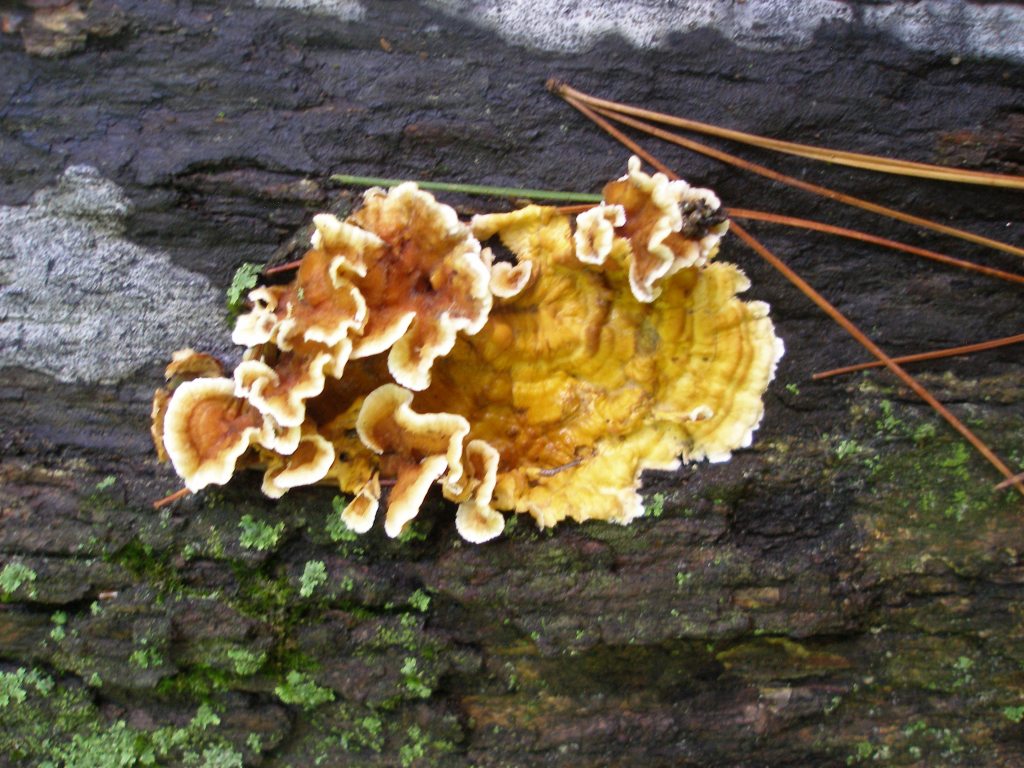
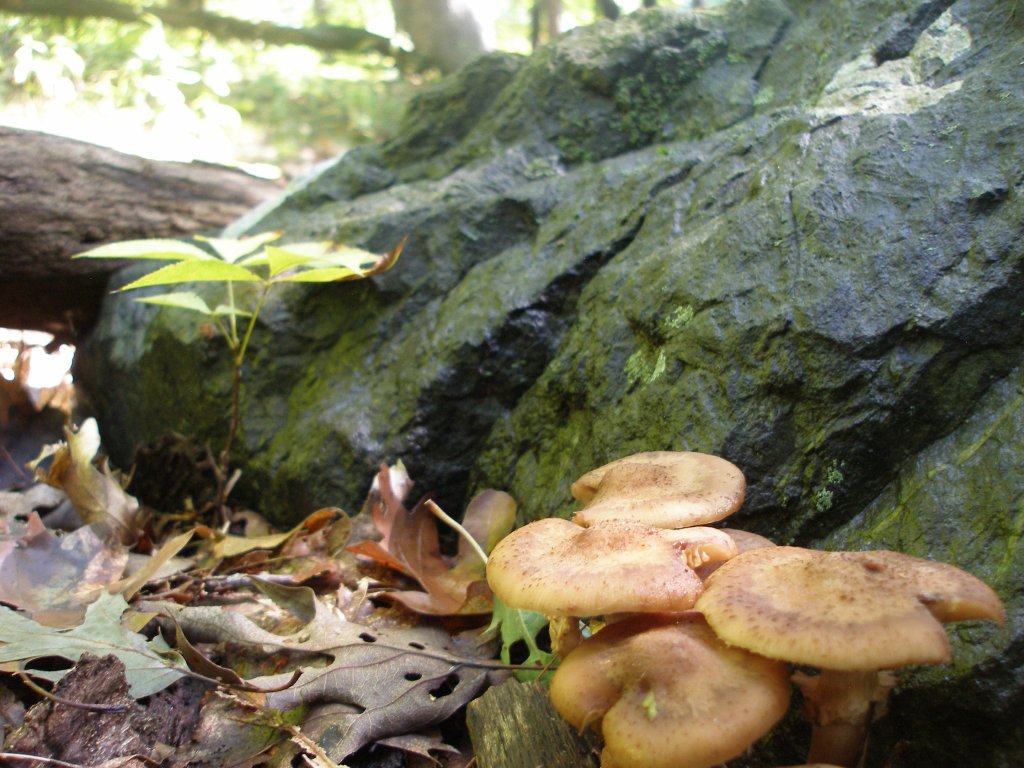
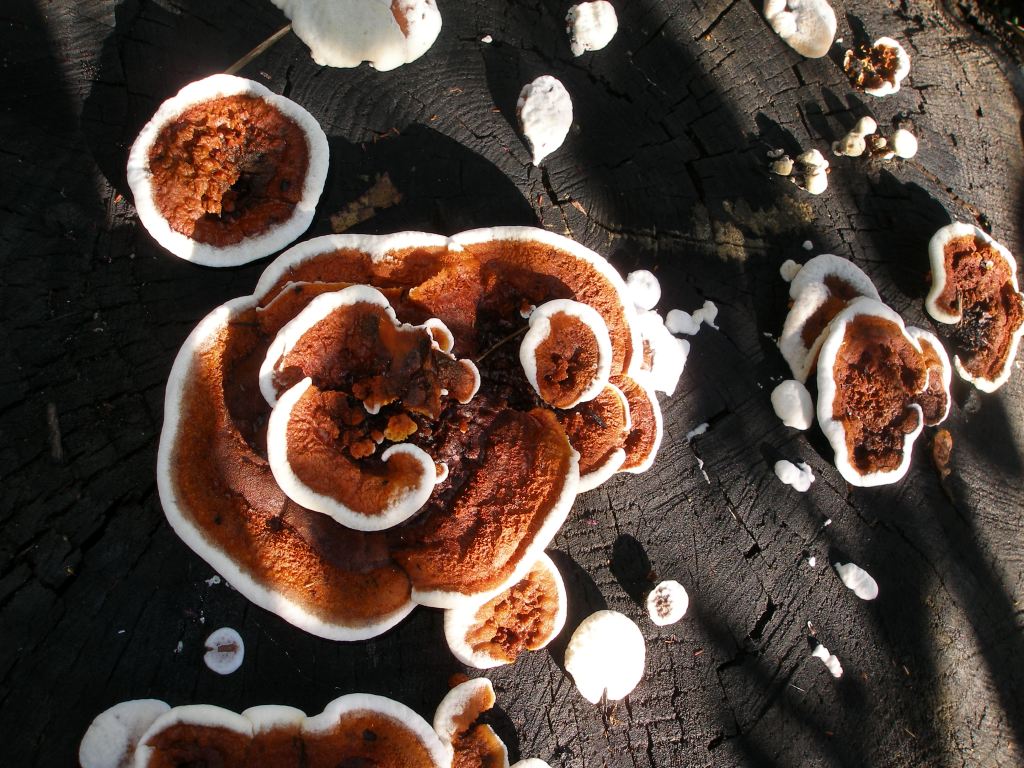
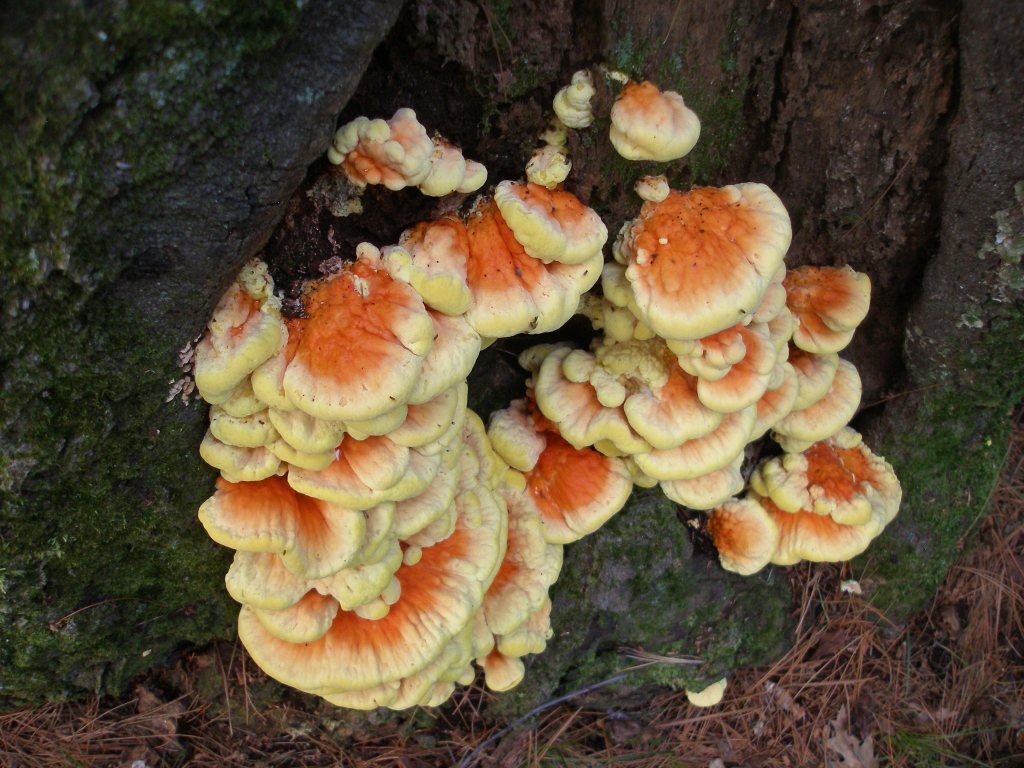
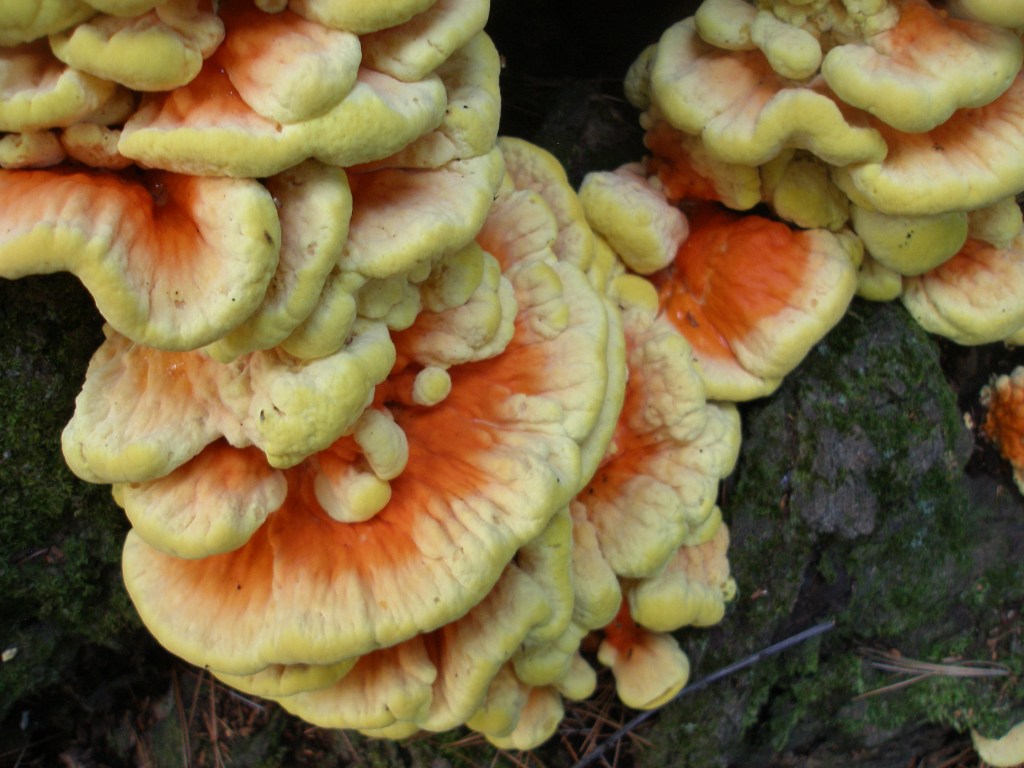
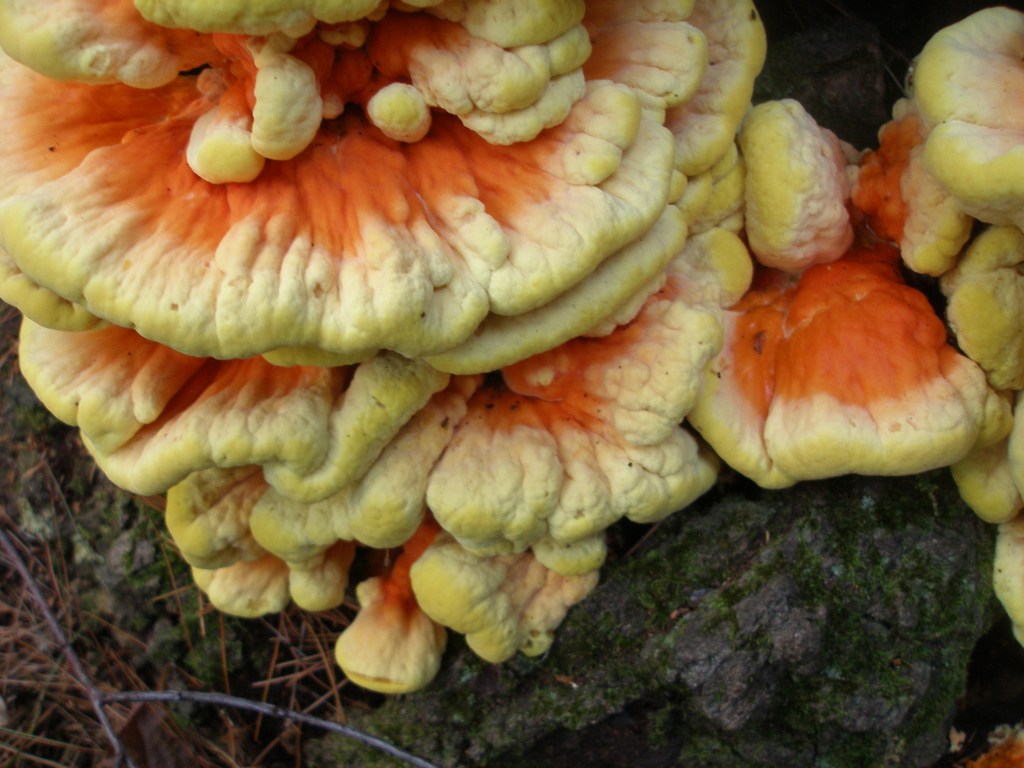
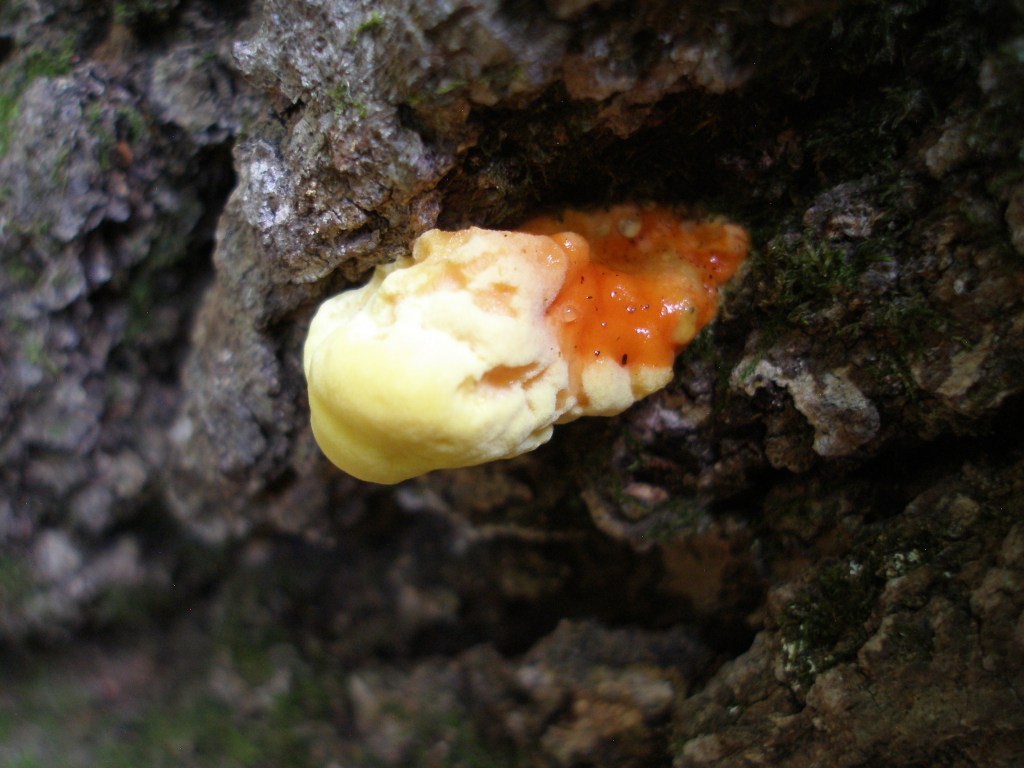
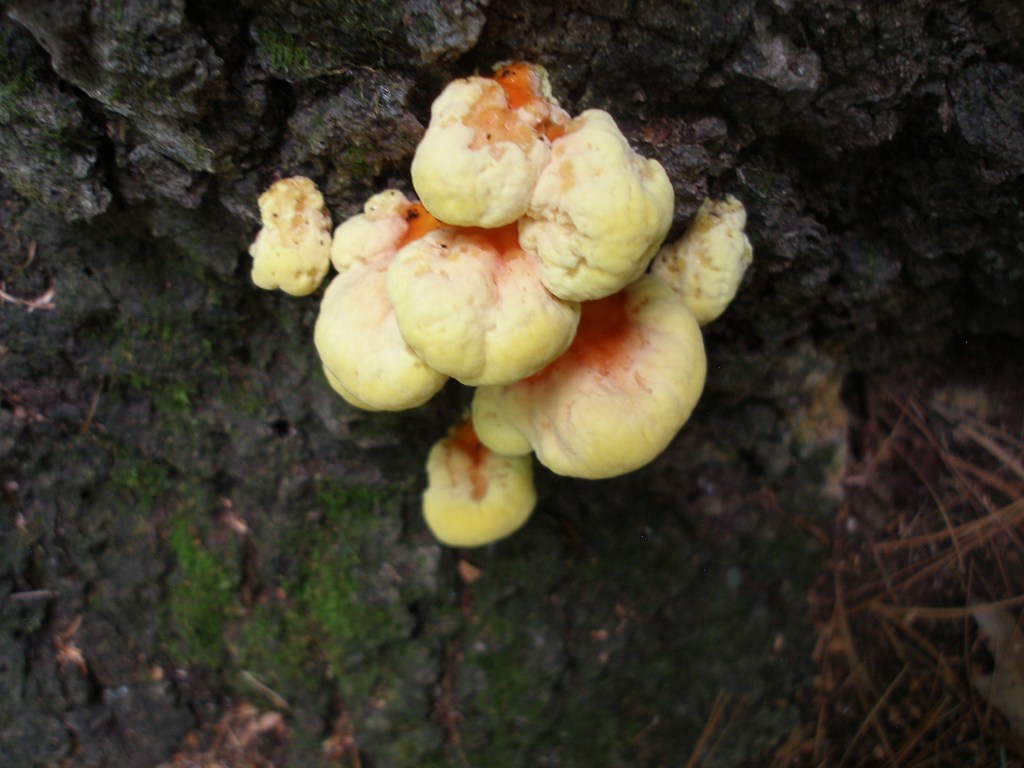
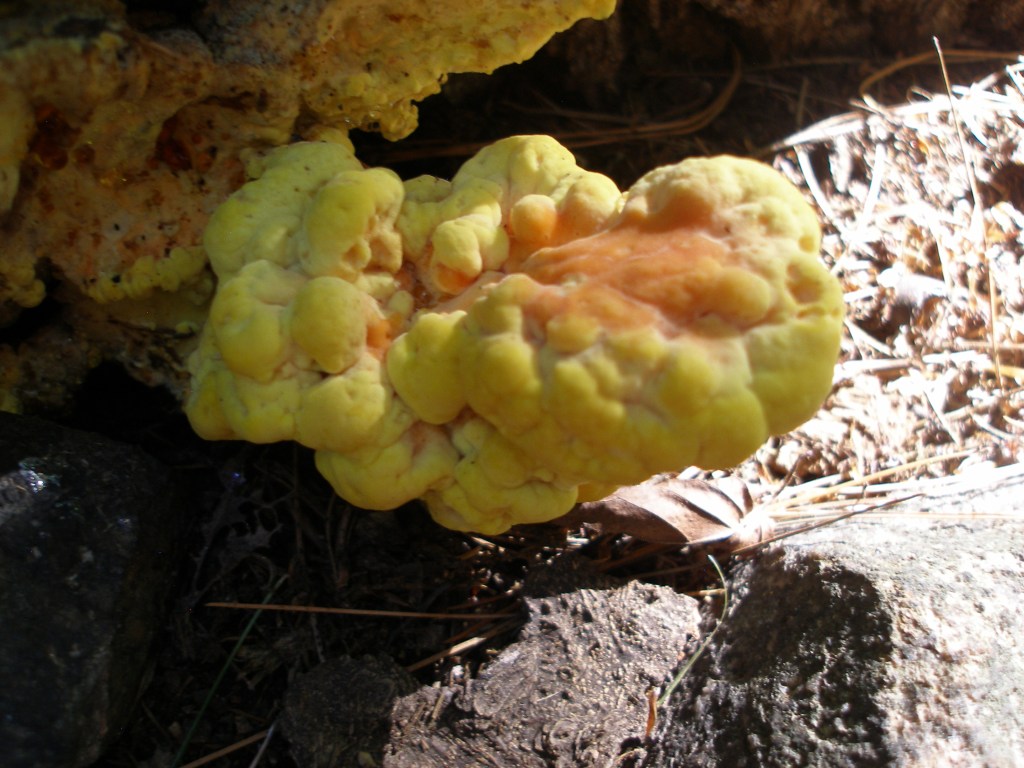
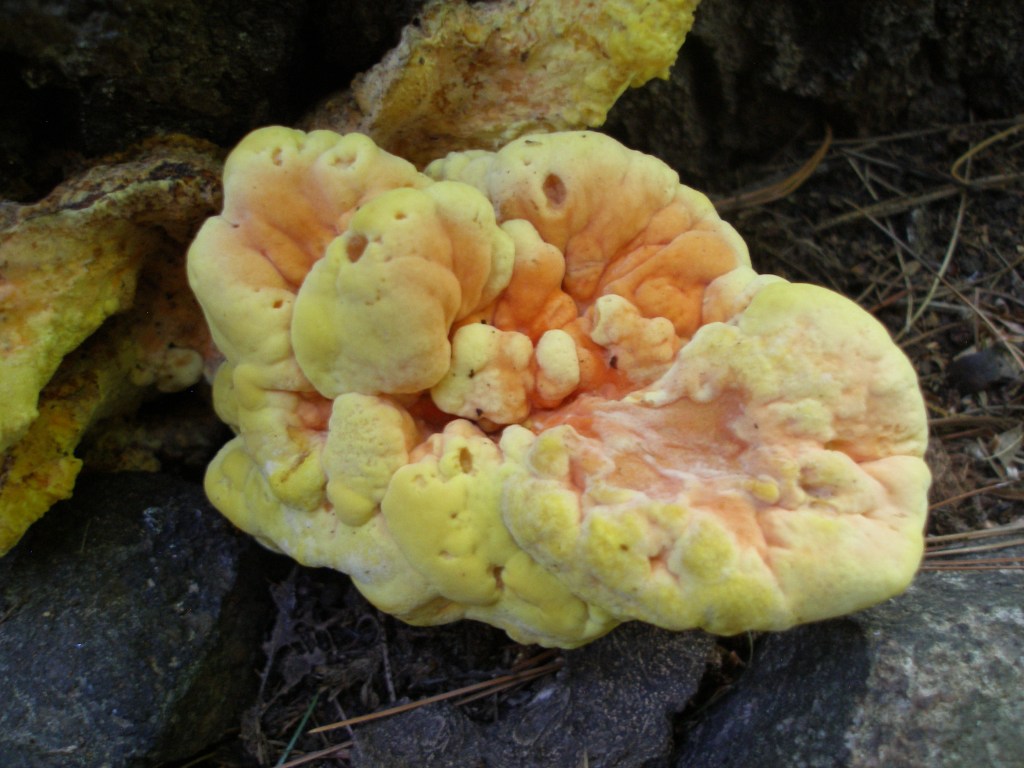
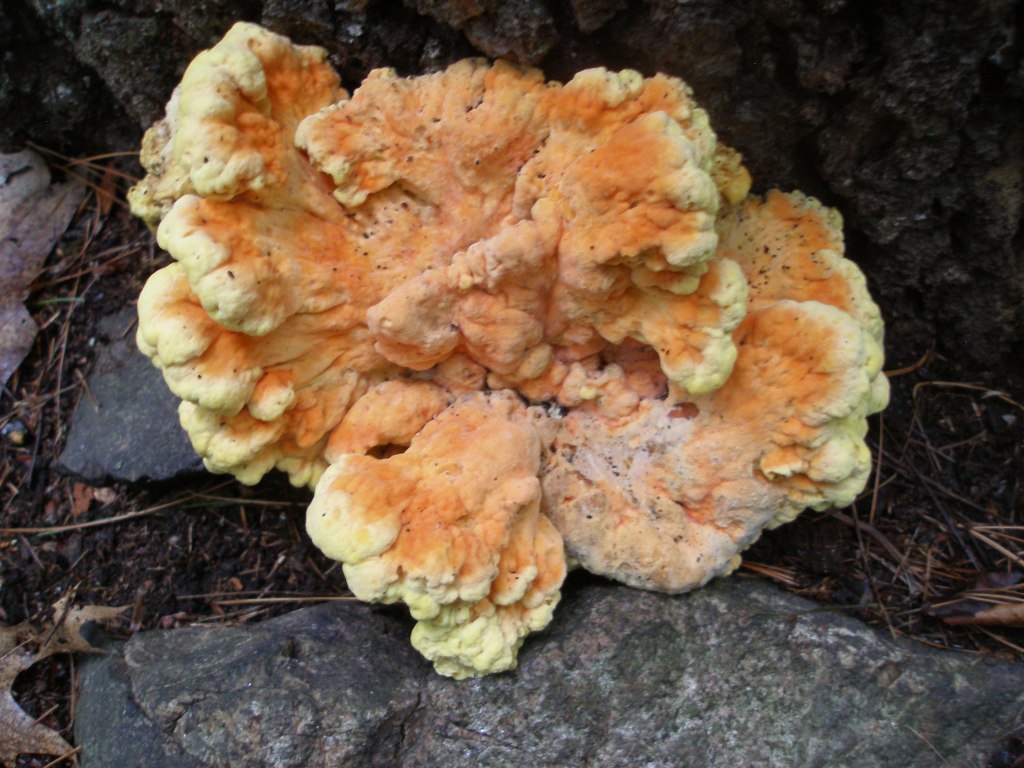
This year the rains have started again after a prolonged draught. I came across yellow and orange Chicken of the woods brackets where I found them last year as this video suggests I might. And there were a few other interesting fungi, mostly in shades of white, tan and brown. As the season is not yet over, I will add additional examples below.
I am told that besides tasting rather like lemony chicken with a great deal of protein, chicken of the woods also has many health benefits. Although hard to miss and relatively easy to identify, as with all mushrooms growing in the wild, it is best to seek expert guidance on which are safe to eat and to prepare them carefully. Certain people are allergic to chicken of the woods and other mushrooms, so care is needed when eating them for the first time.
With so little rain last summer, I did not expect an abundance of amazing mushrooms like last fall. I was lucky to come across this colorful cluster the day before it was taken by eager foragers.
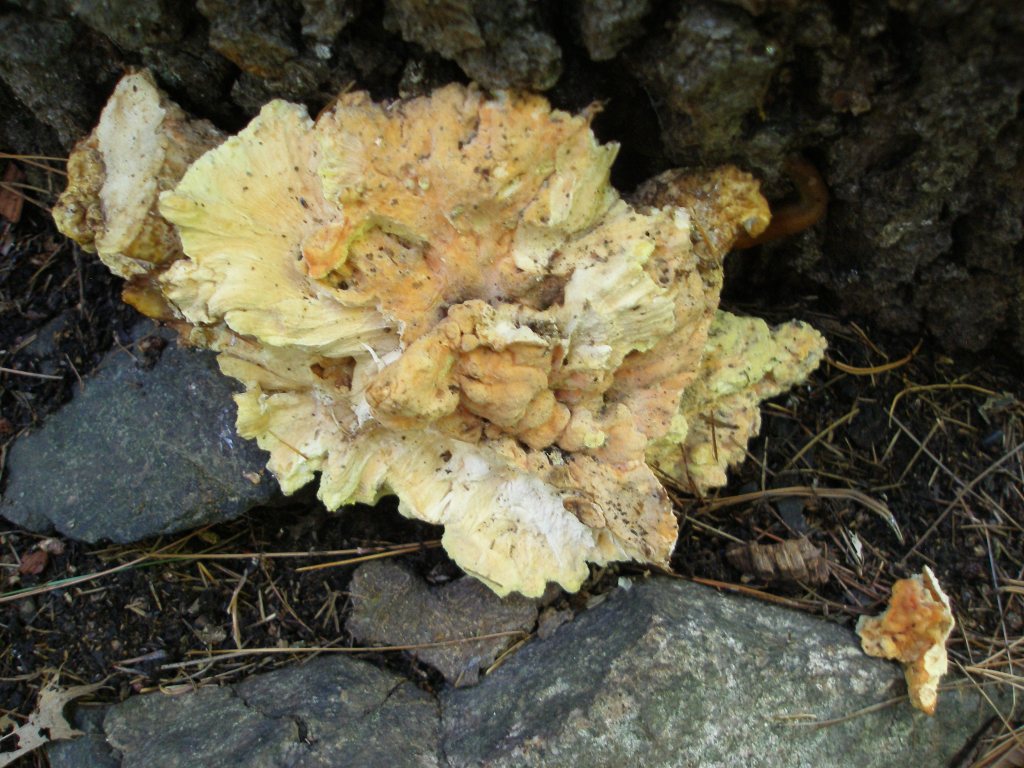
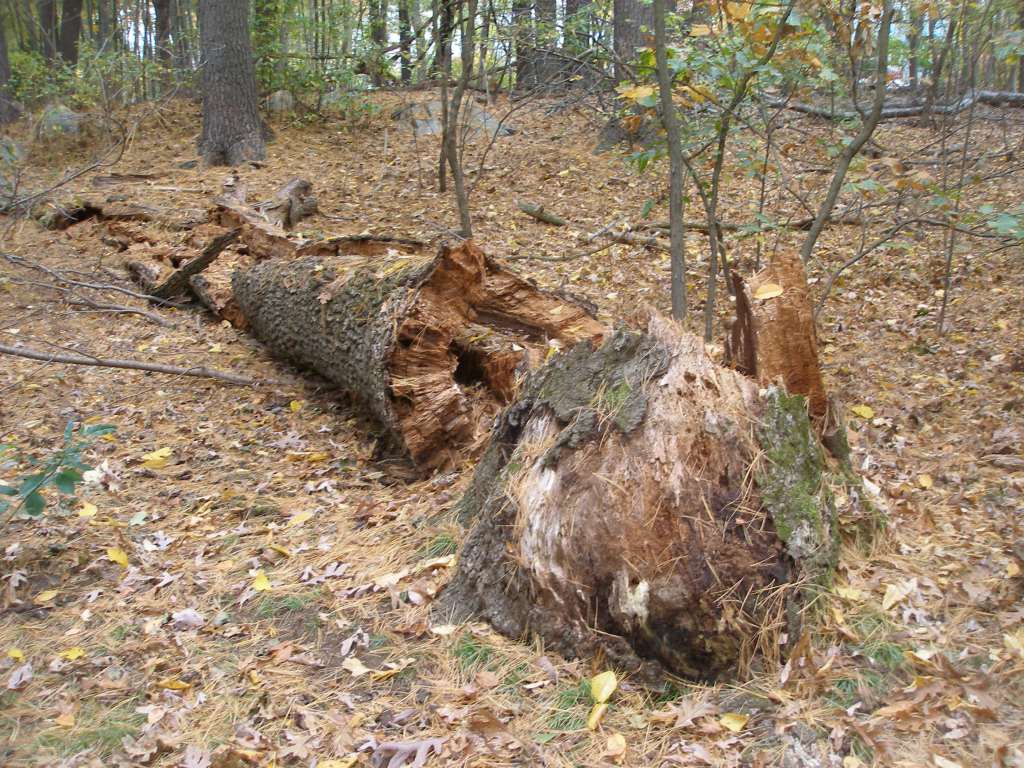
The central protrusion below evolved before someone cut it and it dried out.
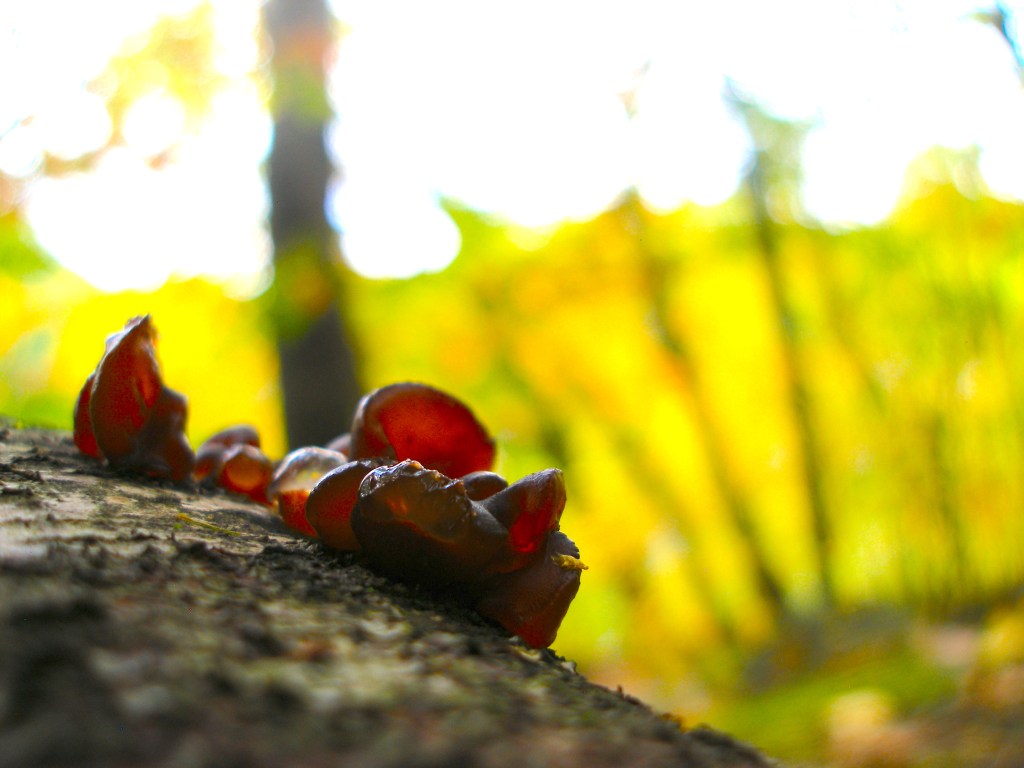
And finally, the now fallen tree that this fungus had been feeding on as in appeared in October 2025:
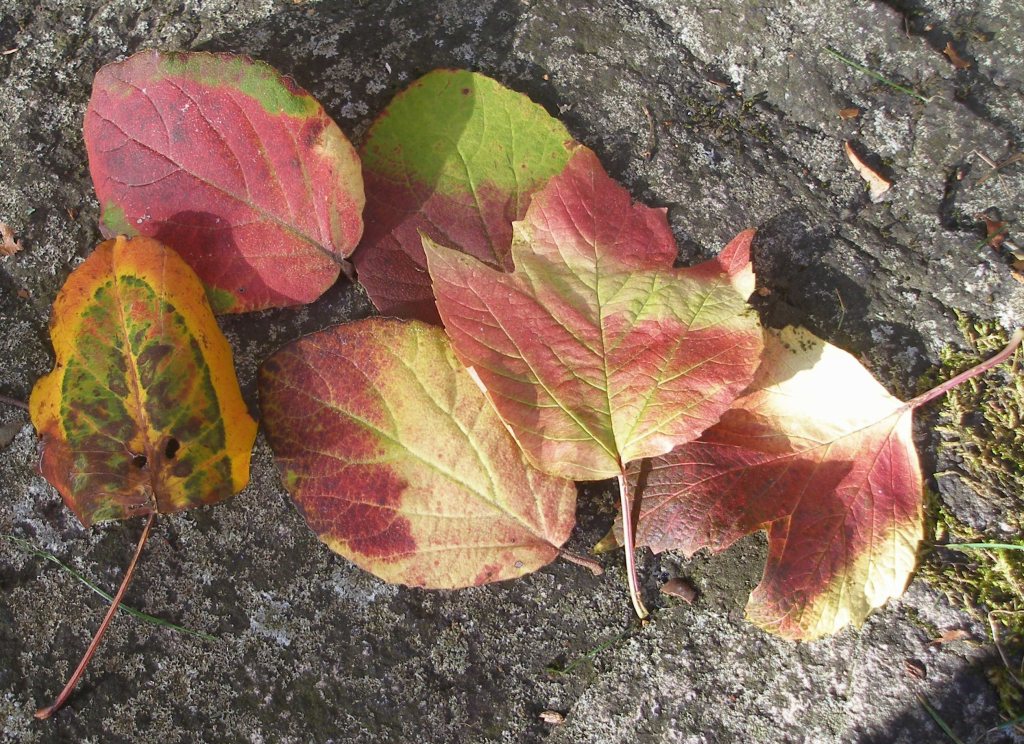
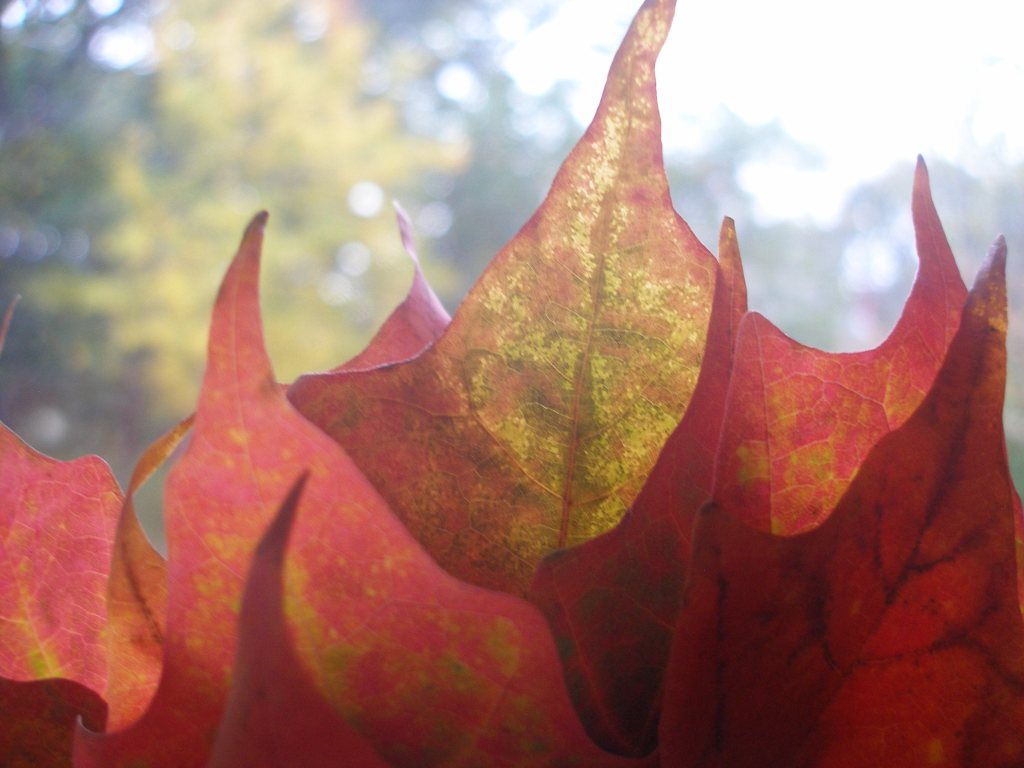
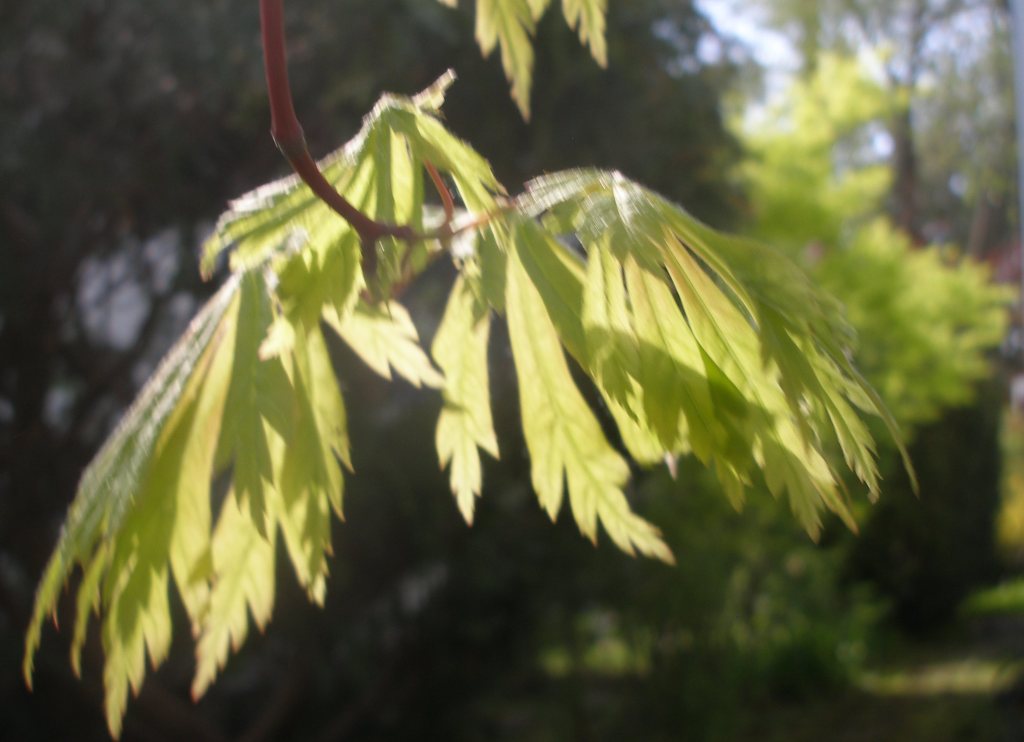
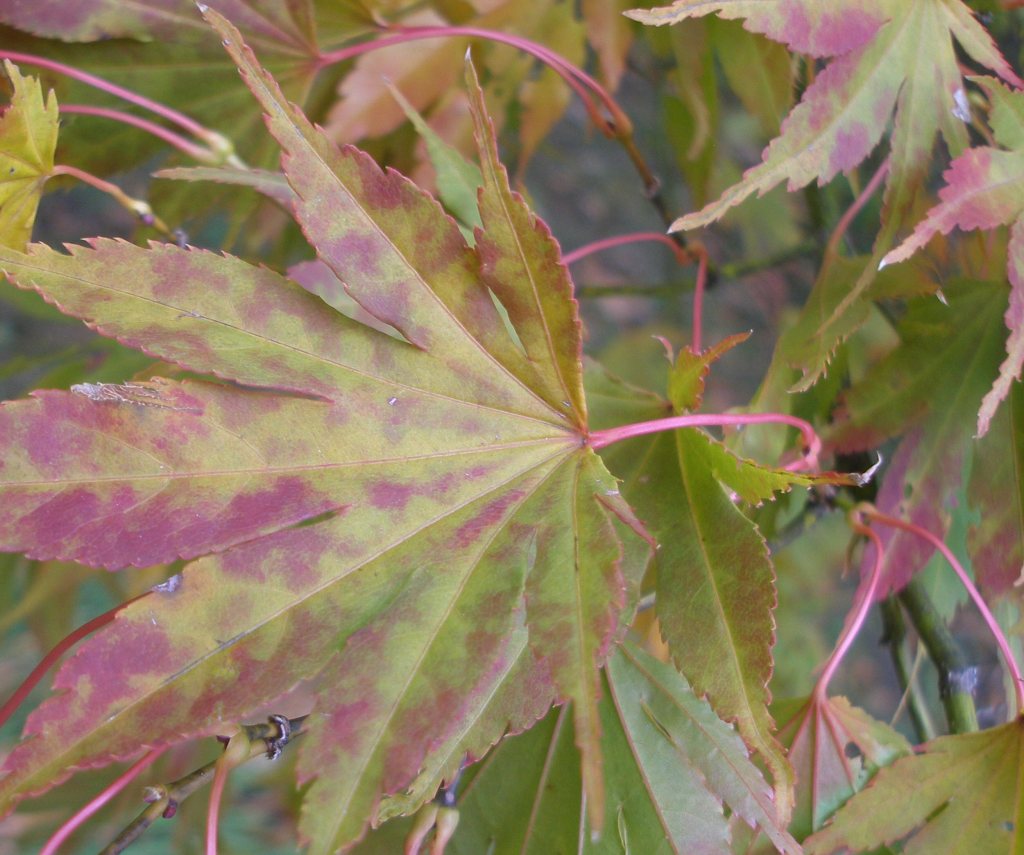
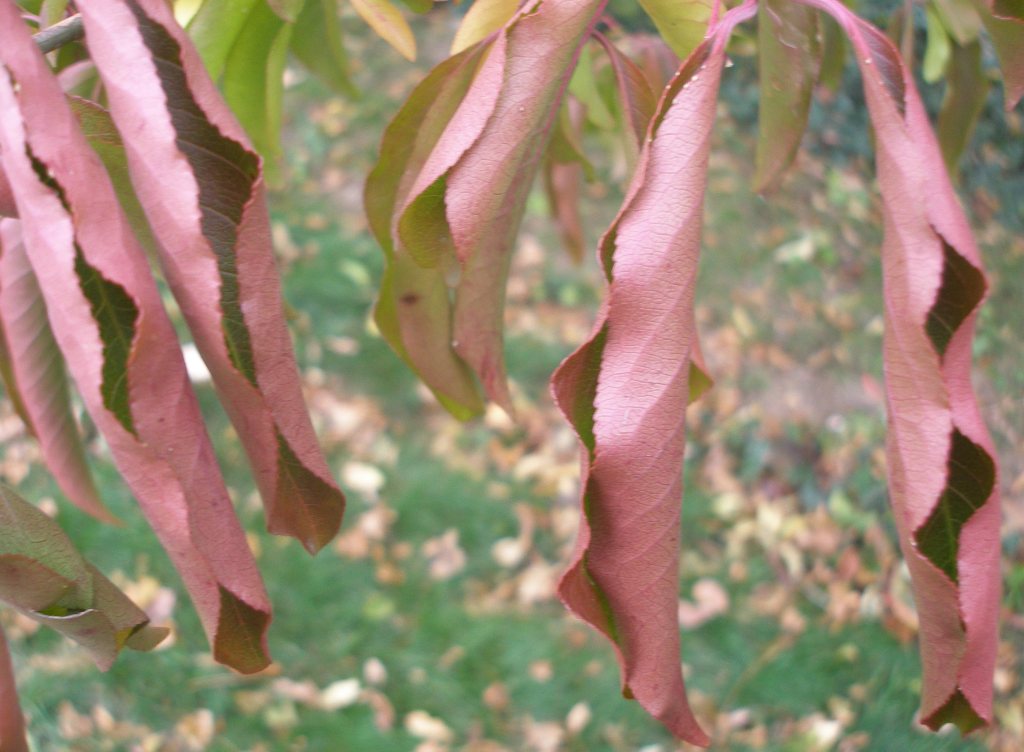
It has been dry where I live. That means there may be a particularly colorful fall. But these days it seems impossible to predict what will happen. After all the rain last summer, colorful mushrooms sprang up everywhere.
In 2010, bright leaf colors sometimes created stained glass patterns where the light shown through overlapping leaves. We can be thankful such glory is still here to marvel at even as things become more unpredictable.
The Heart Sutra calligraphy on this plate called out to me. This sutra is central to the Mahayana Buddhist tradition that still flourishes in Japan, Korea, Vietnam, Tibet, Mongolia, Bhutan and China as well as parts of India and Nepal. In more recent times, Mahayana Buddhism has also spread to the Americas and Europe.
Commentaries suggest the Heart Sutra’s wisdom fosters compassion and harmony, and that it can make fear drop away. I like this modern chanted version very much: https://www.youtube.com/watch?v=958qchBNs60&t=56s. One of many English translations appears below:
Heart SutraTranslation by the Kuan Um School of Zen.
Avalokitesvara Bodhisattva when practicing deeply the Prajna Paramita perceives that all five skandhas are empty and is saved from all suffering and distress.
Shariputra, form does not differ from emptiness, emptiness does not differ from form. That which is form is emptiness, that which is emptiness form.
The same is true of feelings, perceptions, impulses, consciousness.
Shariputra, all dharmas are marked with emptiness; they do not appear or disappear, are not tainted or pure, do not increase or decrease.
Therefore, in emptiness no form, no feelings, perceptions, impulses, consciousness.
No eyes, no ears, no nose, no tongue, no body, no mind; no color, no sound, no smell, no taste, no touch, no object of mind; no realm of eyes and so forth until no realm of mind consciousness.
No ignorance and also no extinction of it, and so forth until no old age and death and also no extinction of them.
No suffering, no origination, no stopping, no path, no cognition, also no attainment with nothing to attain.
The Bodhisattva depends on Prajna Paramita and the mind is no hindrance; without any hindrance no fears exist. Far apart from every perverted view one dwells in Nirvana.
In the three worlds all Buddhas depend on Prajna Paramita and attain Anuttara Samyak Sambodhi.
Therefore know that Prajna Paramita is the great transcendent mantra, is the great bright mantra, is the utmost mantra, is the supreme mantra which is able to relieve all suffering and is true, not false. So proclaim the Prajna Paramita mantra, proclaim the mantra which says:
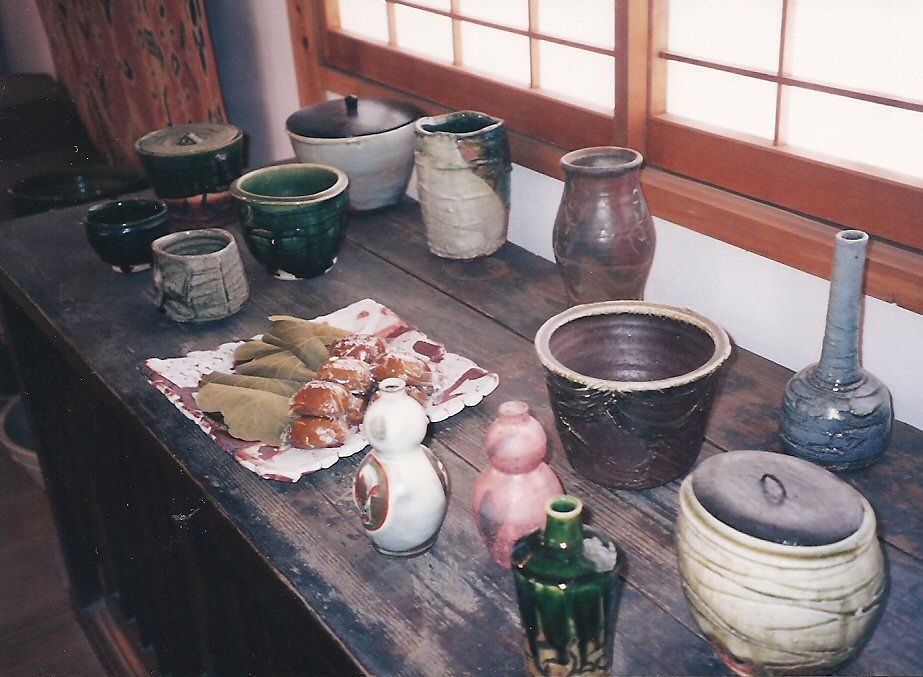
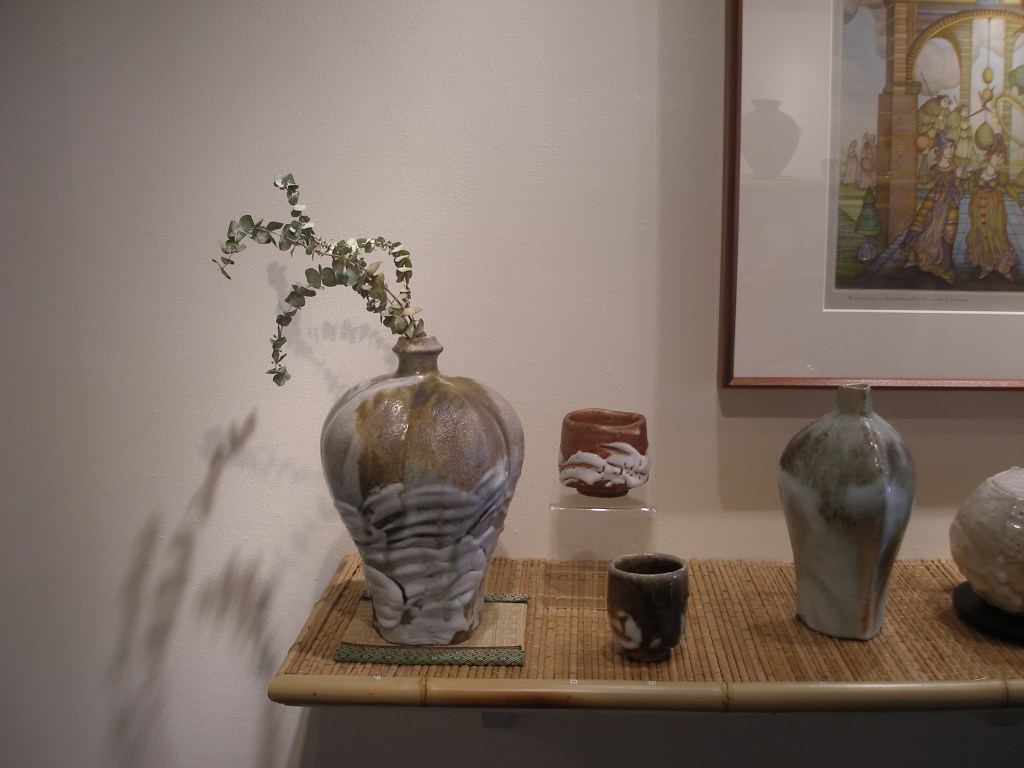
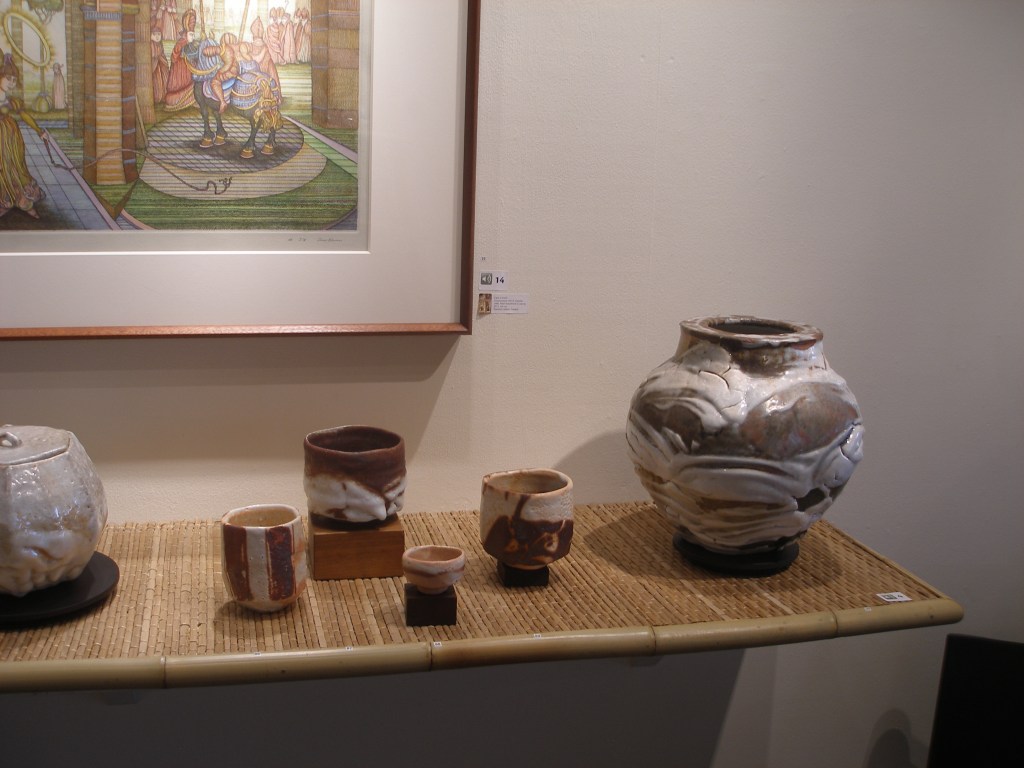
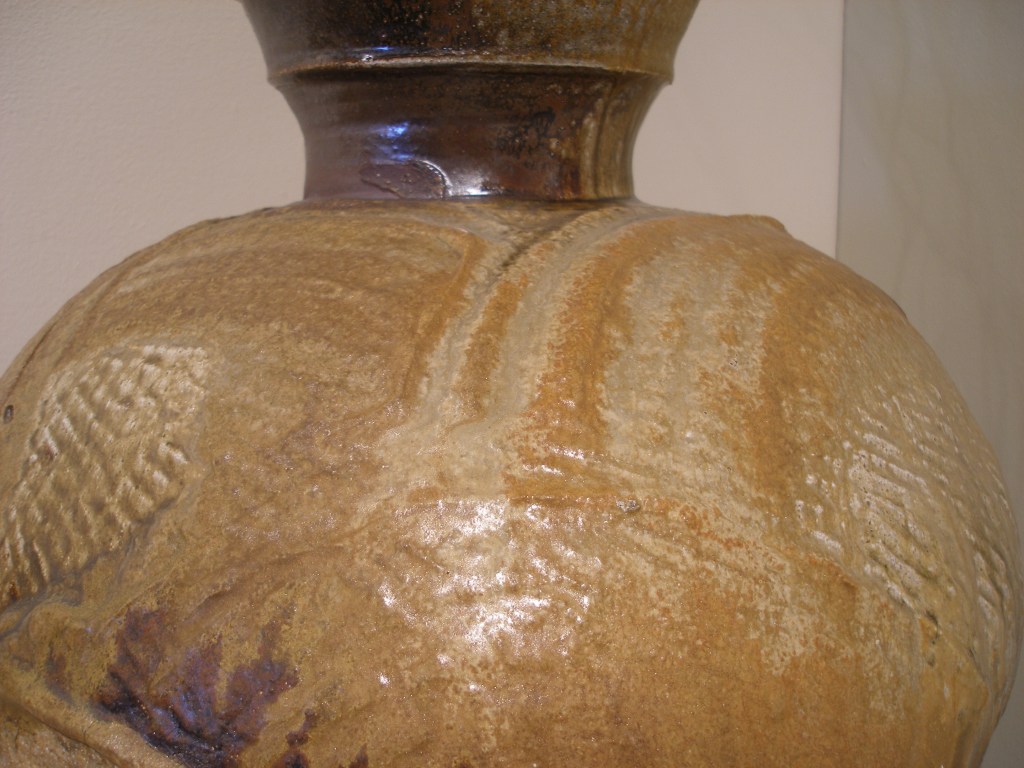
I first met Ken Matsuzaki on a trip to Japan. The first photo is of his pottery on display when I visited in 1997. After I returned, I was delighted to see Ken again, as well as examples of his latest work in Boston at the Pucker Gallery, which continues their long-term relationship with the master potter.
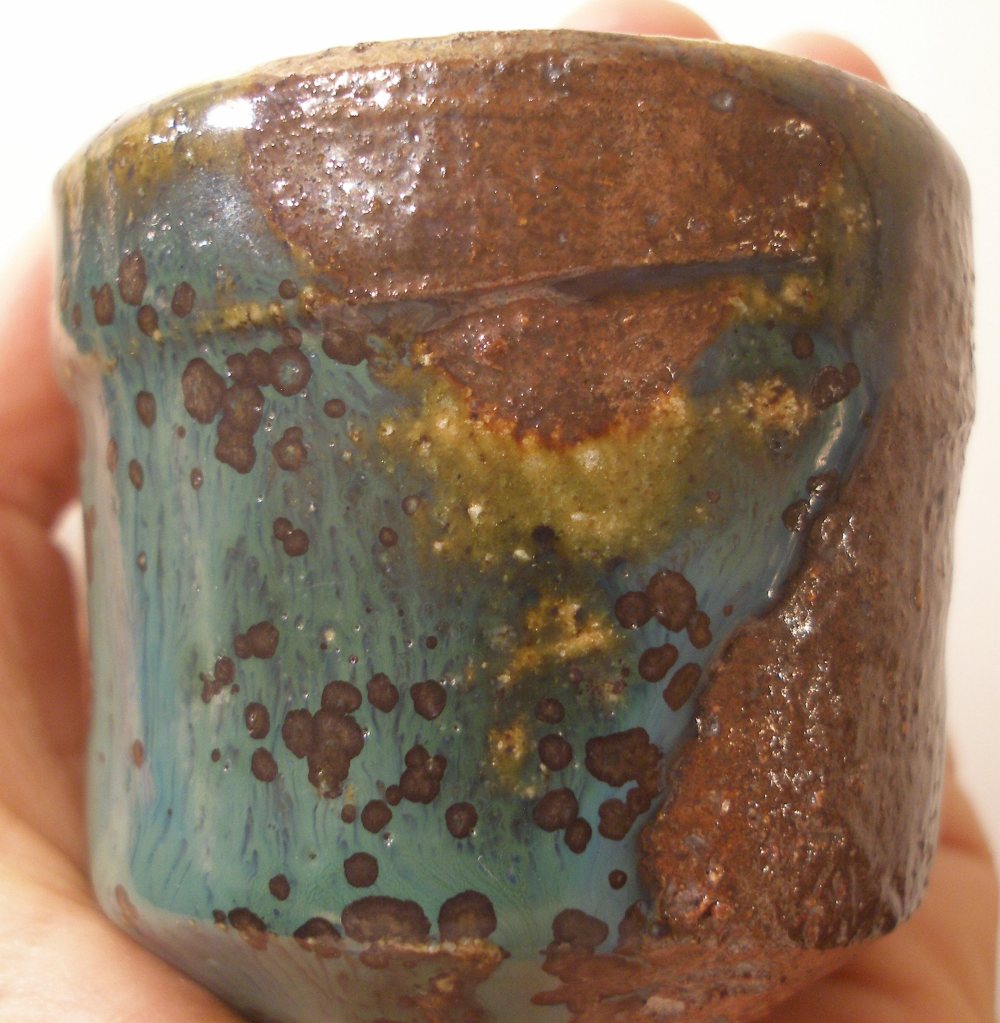
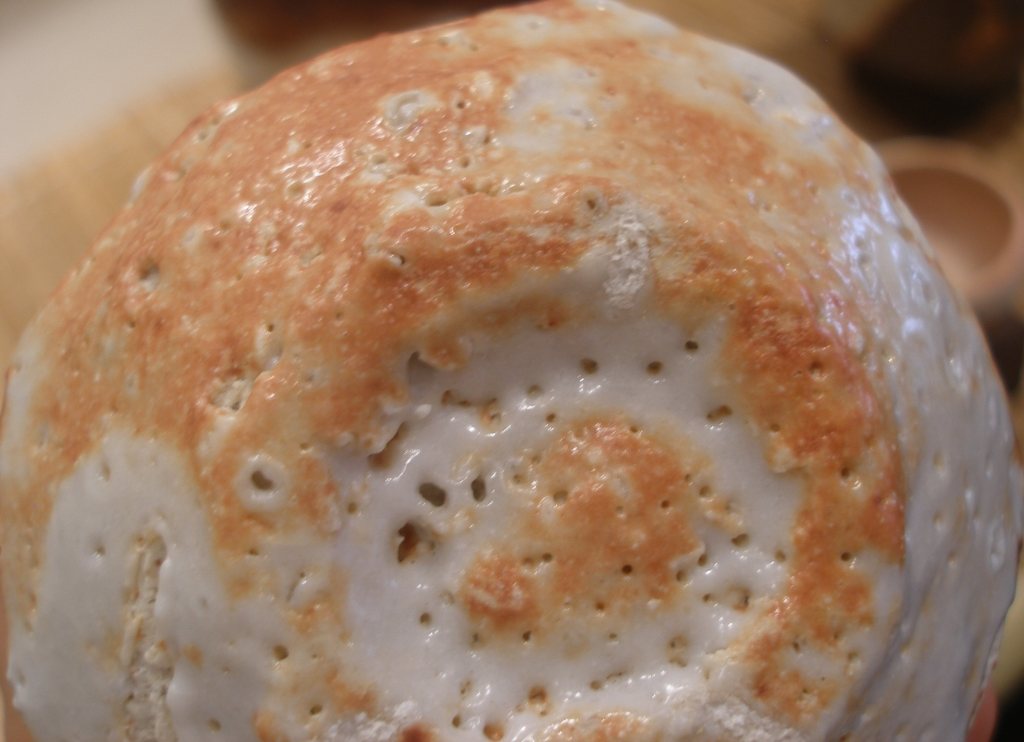
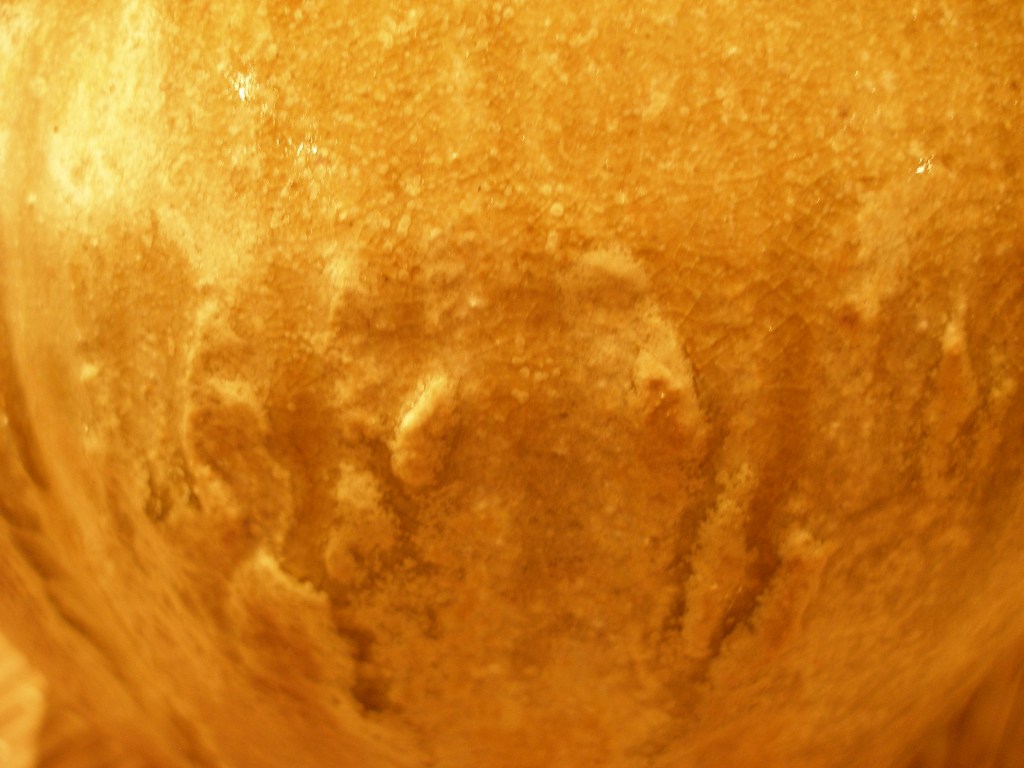
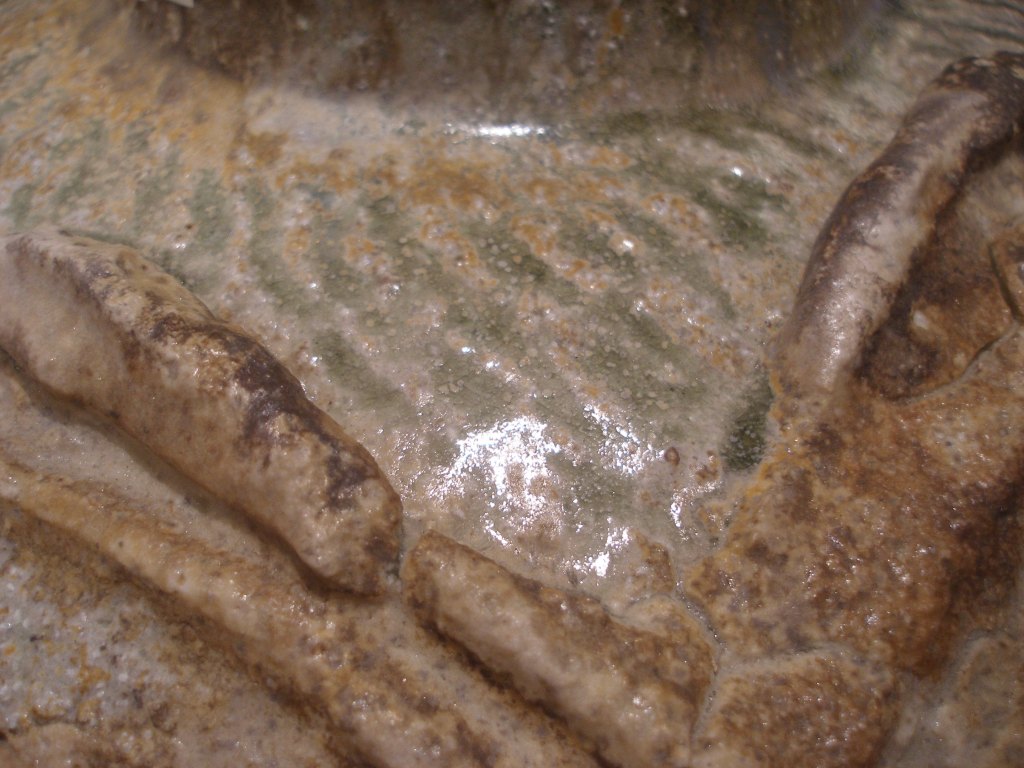
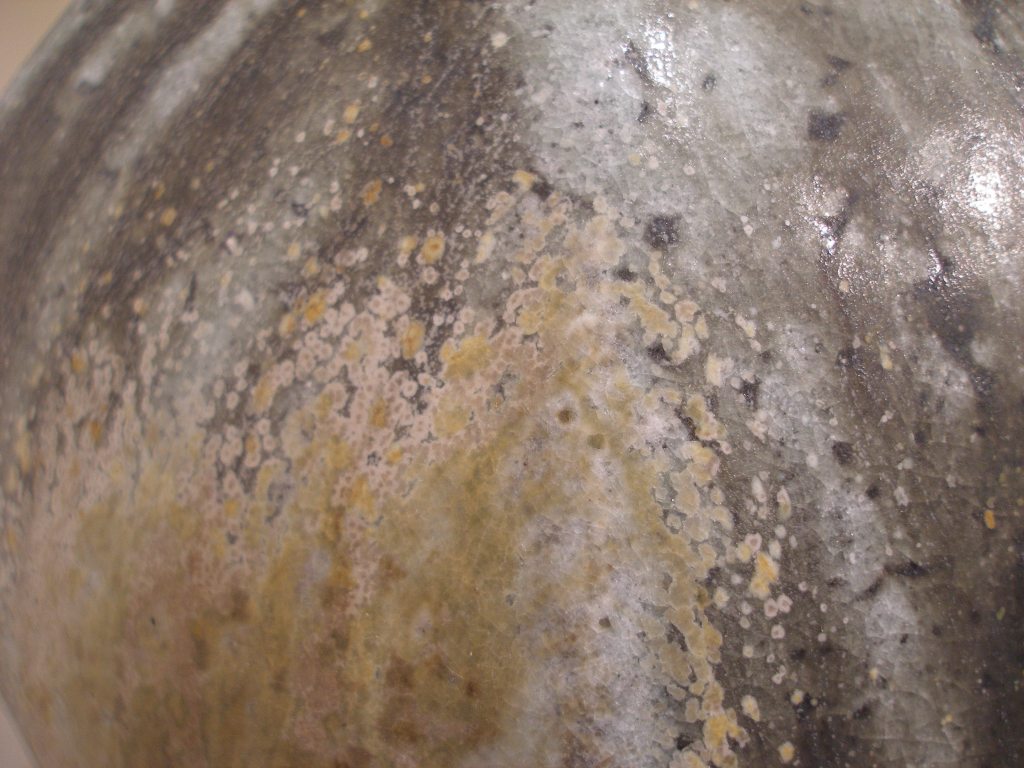
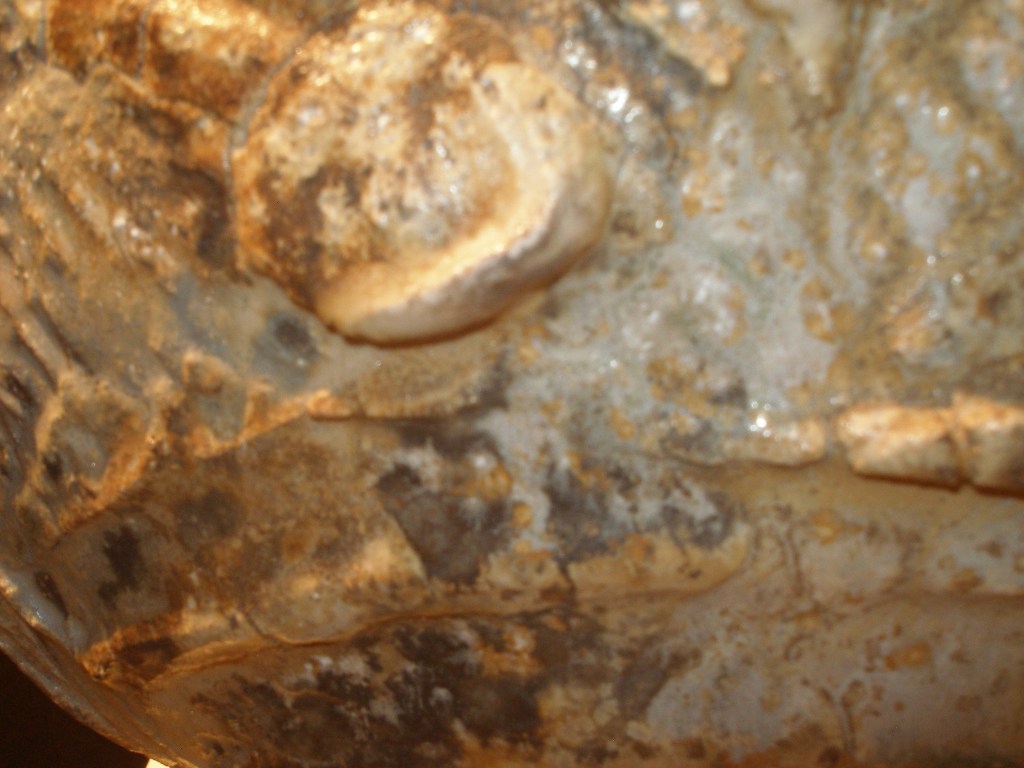
Entranced by the exuberant surfaces of the works on display in 2010, I asked and was granted permission to take closeups. I hope the photos below convey some sense for the joyful adventure of looking closely at their remarkable diversity.
































 Radiant Refuge