The Strange Attraction of a Stop & Shop Marty Toy

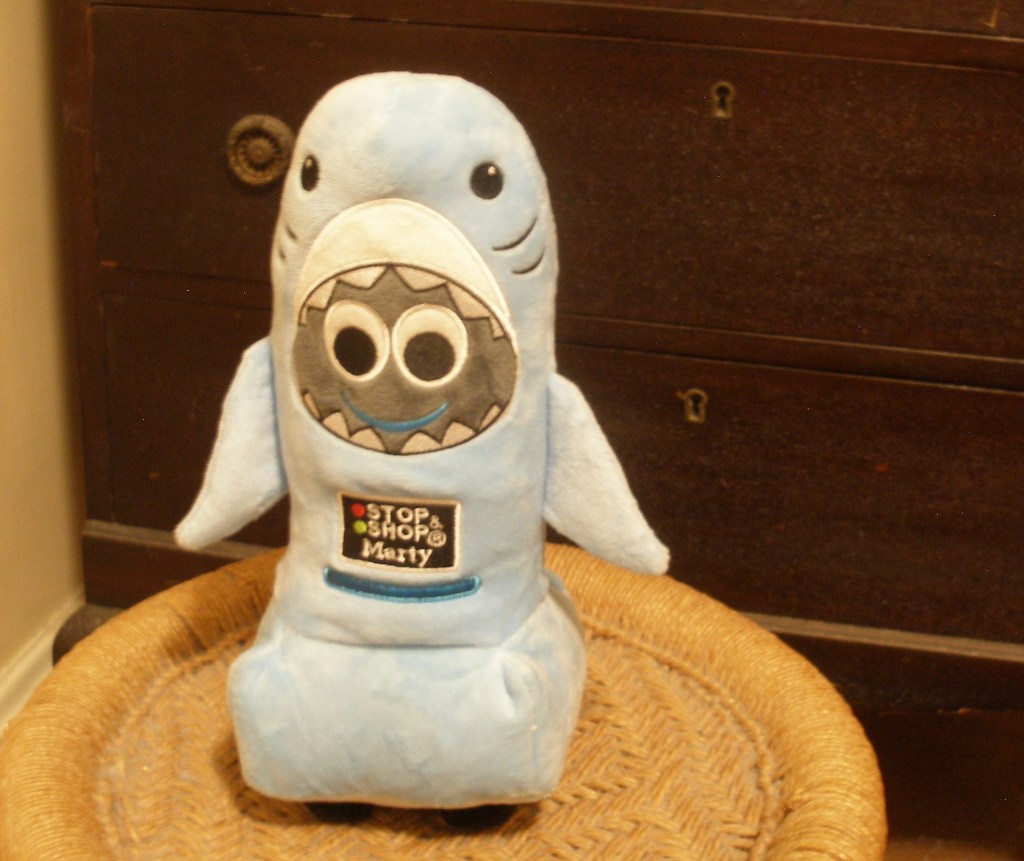
A bunch of these were leaning on each other in a cardboard box up high near the checkout counters. There was no explanation that I could see, just the $10 price. Knowing my 5-year old nephew provided a plausible excuse, I popped one into my grocery cart. Truth be told, they were so cutely odd I couldn’t resist. There seemed to be a story here, but perhaps one that only makes sense in the way that brutal fairytales do. The “Stop & Shop Marty” front and center on its belly gave me hope I could learn more with a little online research.

I already knew a bit about Marty. The original robots glide very slowly and smoothly around grocery store aisles. They will even stop for a picture. That is me with one below.
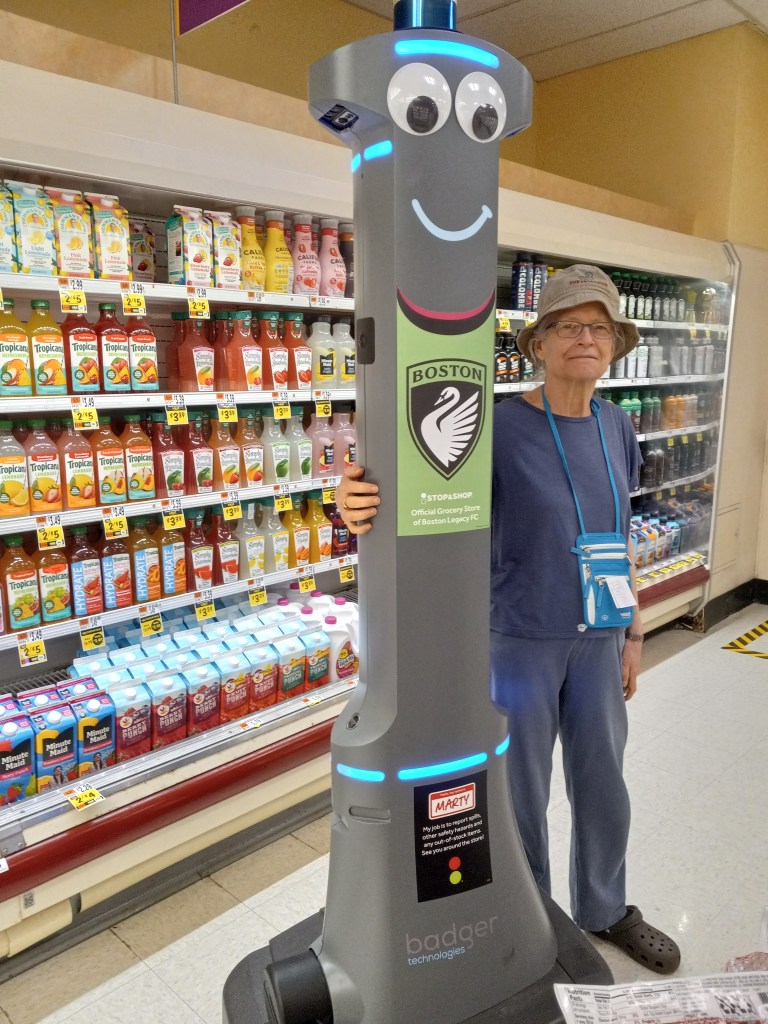
The first time one of these things crept up on me, it spooked me a bit. I found out that Marty makes note of spills and items missing on shelves and communicates that information electronically to staff for follow up.

Evidently, Marty is an acronym for “Mobile Autonomous Robot Technology.” The missing word beginning with “y” led me to believe that the name was added after the fact, as I learned was the case for the googly eyes and the drawn-on mouth. This article provides insight into this history, and notes that Marty seems popular with children. There are, in fact, a variety of Marty toys.

As for the one I bought, 20% of the sales go to the Atlantic White Shark Conservancy in Chatham, Massachusetts, USA a group that advocates for protection of white sharks and educates people on ways to stay safe from them.

I can see how finding a way to put a robot and shark together in the general configuration of a Marty stuffed toy might prove challenging. But a shark eating a Marty robot would not be very good for the shark, nor for the robot.

Here are two scary things put together – hungry sharks and intelligent robots can both feel threatening. But in this unusual case, Marty is smiling and the shark also seems OK. We can certainly hope that the natural world upon which we depend and our rapidly evolving technology will both prove more beneficial than harmful.

In “Robot Revolution” in the July 6th and 13th edition of New Yorker, Stephen Witt describes how humanoid robots while still of interest, are raising a number of serious concerns. They can be heavy and pose safety risks; both arms and legs might not be needed or worth the additional cost. In addition, “physical AI that runs a robot remains underdeveloped” (p. 22) and there is always the concern that humanoid robots might take jobs away from humans.

Somehow I cannot fault this strange shark Marty toy. It may be a bit on the dramatic side, but this fruit of the arrangement between Stop & Shop and the Atlantic White Shark Conservancy draws attention to what is already here and what it is worth taking care with dangers, benefits and all.
Mythical Stones

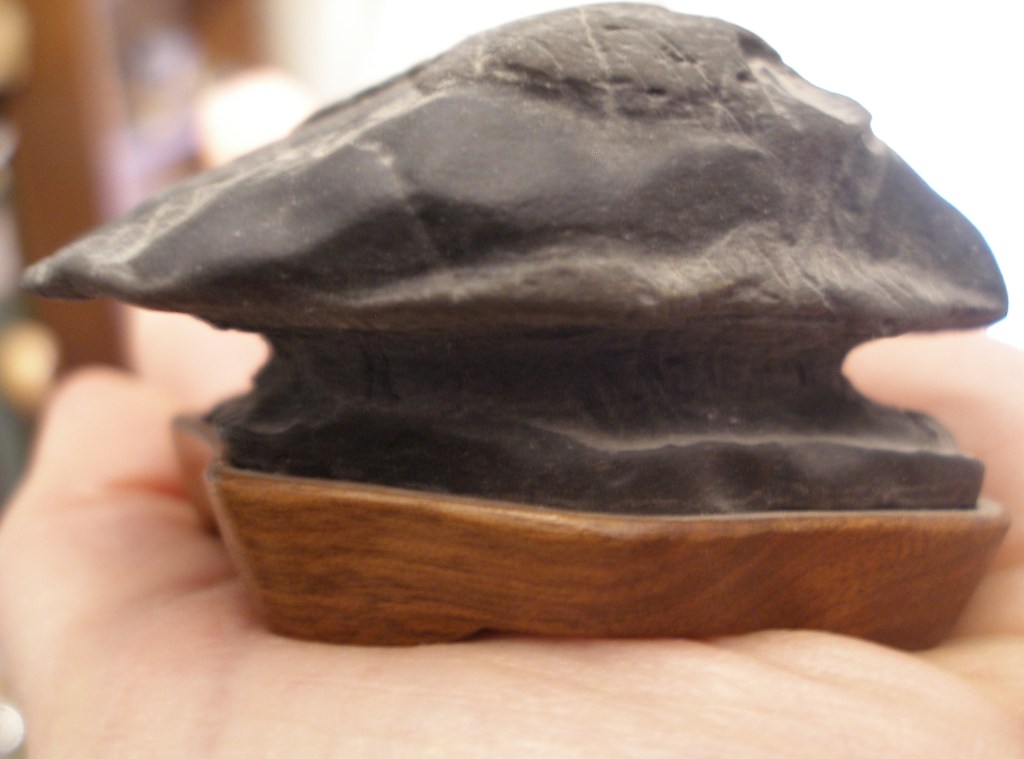
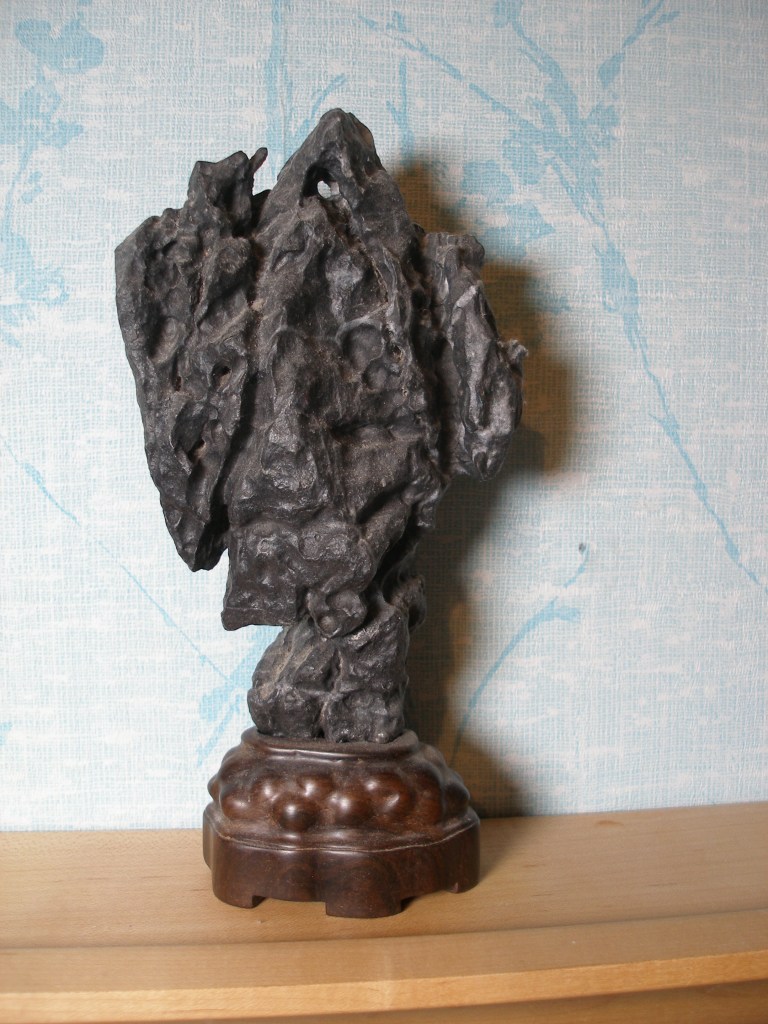
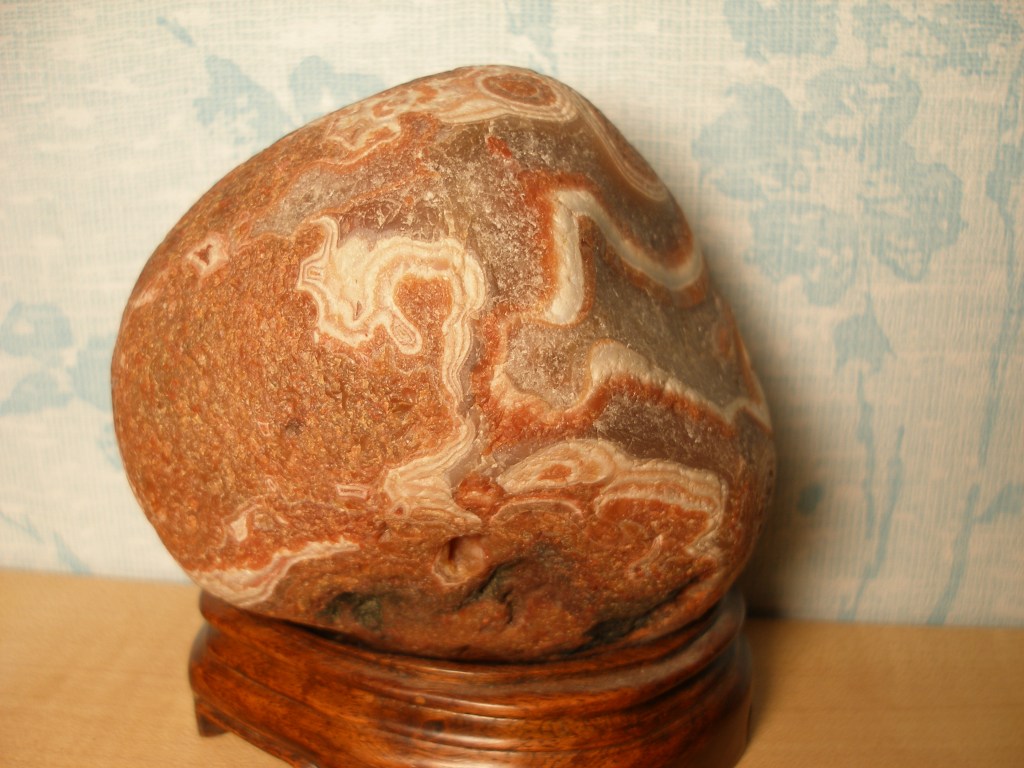
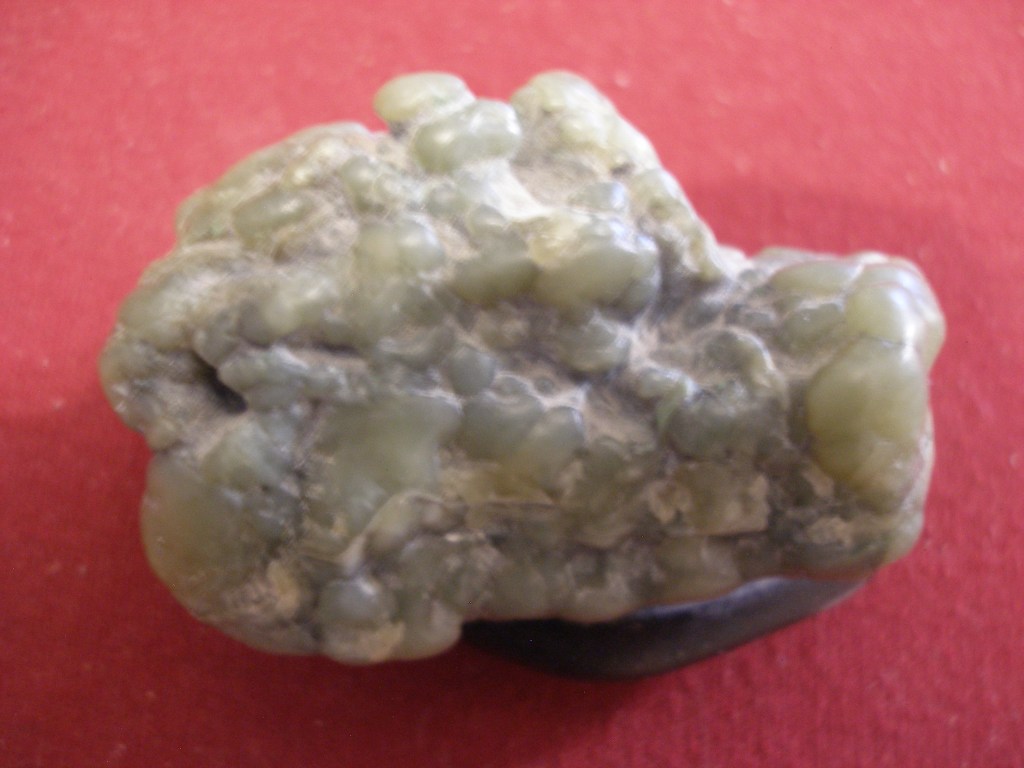
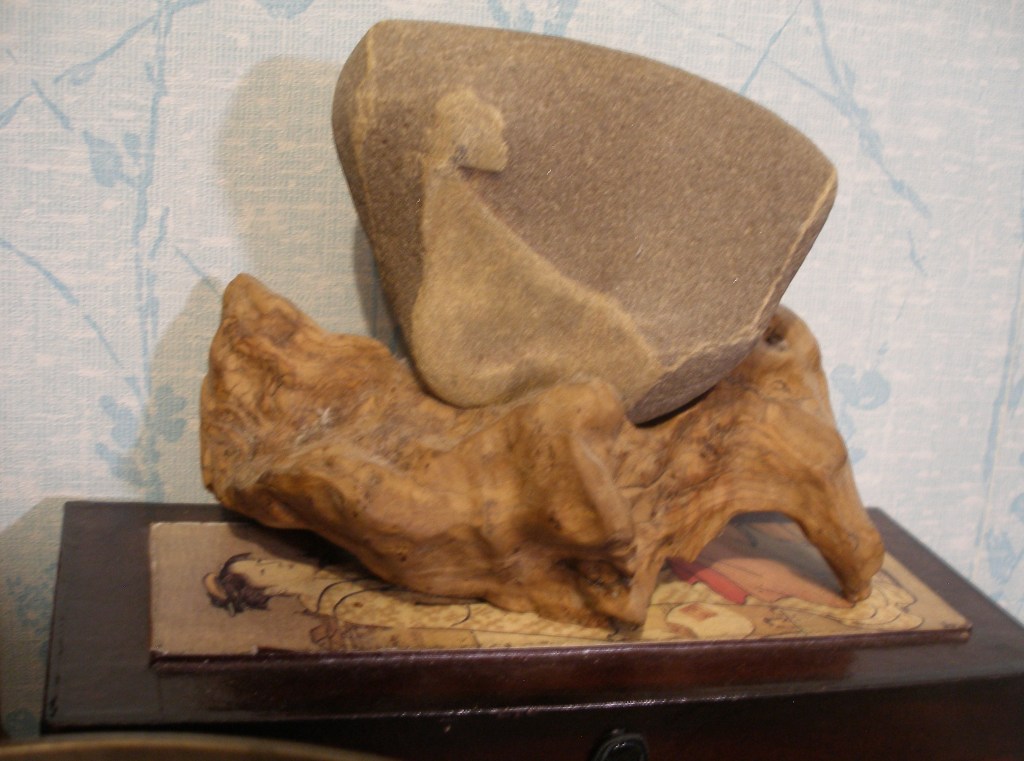
After many years of collecting evocative stones, somehow I managed to acquire an oriental princess, 3 hut stones, a pontificating wizard holding his book of spells, and no less than 4 dragons. The ones on stands are viewing stones. In two cases, I noticed “mythical” images in polished jasper slabs.
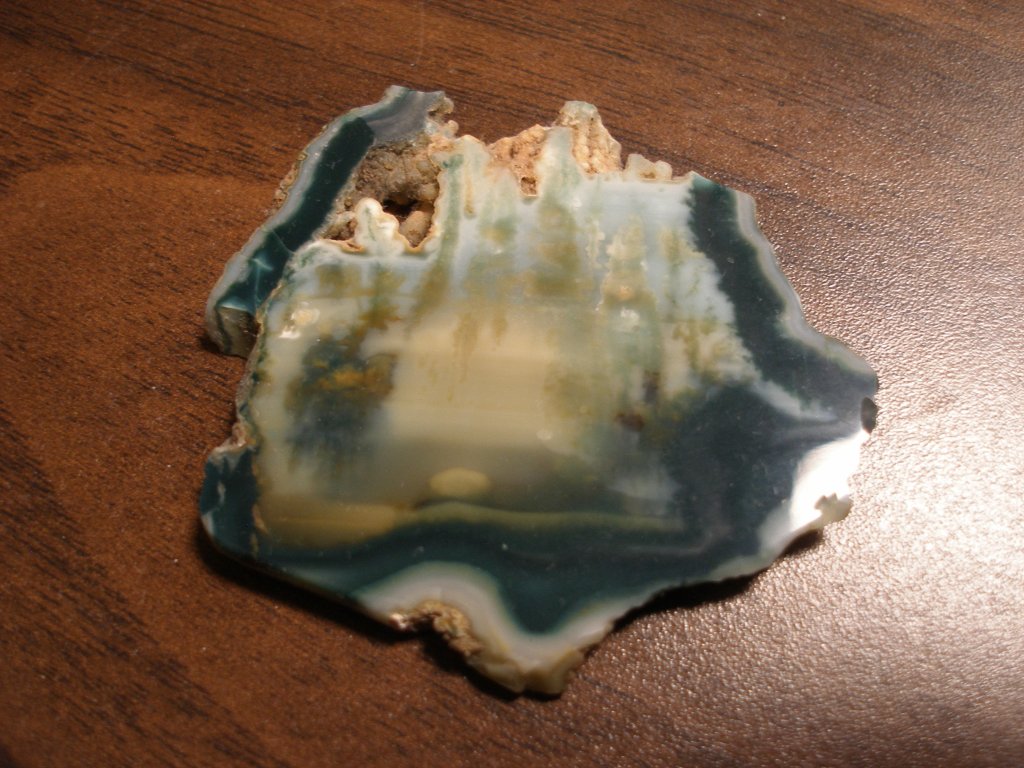
A small Blue Mountain jasper slab has a whole scene – a hut beneath some trees on the lower right and an oval (dragon egg?) by what appears to be a body of water.

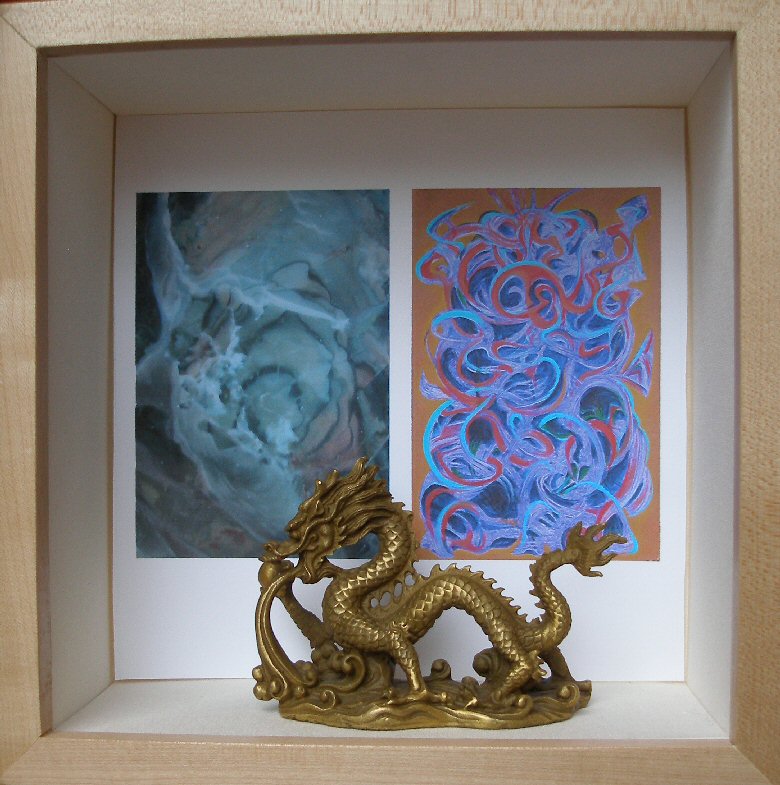
Thom Lane created a painting inspired by the dragon energy he found in a Morrisonite slab. A closeup of the dragon image in the slab and a photo of Thom’s painting were used side by side in a shadow box that I created for an article I wrote on using shadow boxes to tell stories about stones.


The Joy of Being Older

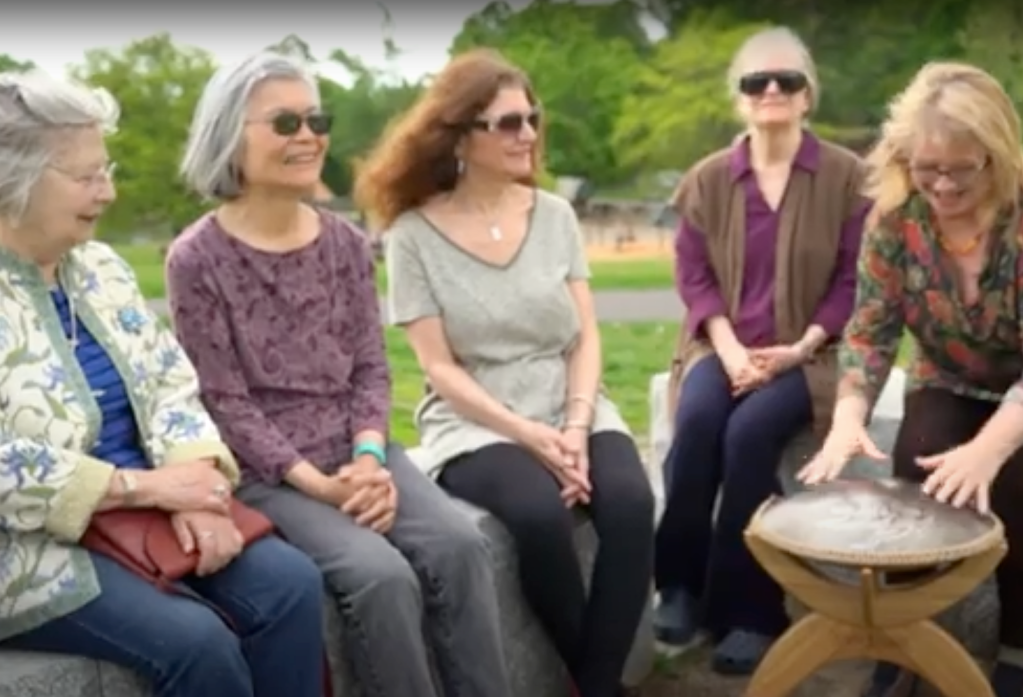
Photo by Jeff Klein

The Arlington, MA Council on Aging (COA) offers many opportunities for social connection. During my internship there while working on a Masters in Mindfulness Studies at Lesley University, I realized many elders are naturals at mindful connection. With time more precious, perfection and things matter less. What does matter is time spent together. They understand that deep listening and honesty both support the kind of heartfelt aware connection that amplifies wellbeing.

As I learned, many of the 200+(!) or so Arlington COA volunteers are elders themselves. When I asked what they were most grateful for, several of them told me it was the opportunity to support others. That kind of wise appreciation is both rare and badly needed. It should not take a natural disaster or realizing there are few years left for us to understand we have the tools to honor each other’s dignity in ways that are mutually supporting.

My experience offering mindful tea and dialogue workshops to elders confirmed my sense that they might be well positioned to create and promote opportunities for the caring connection that is so badly needed in these increasingly lonely times.

During these tea and dialogue sessions, I observed: (1) caring support, (2) appreciation that deep listening powerfully benefits both the speaker and the listener, (3) growing trust and openness, (4) delight in sharing natural objects and stories (5) playful and joyous creativity, and not least (5) satisfaction from being able to support each other in ways that truly matter.

Constructions in the Woods

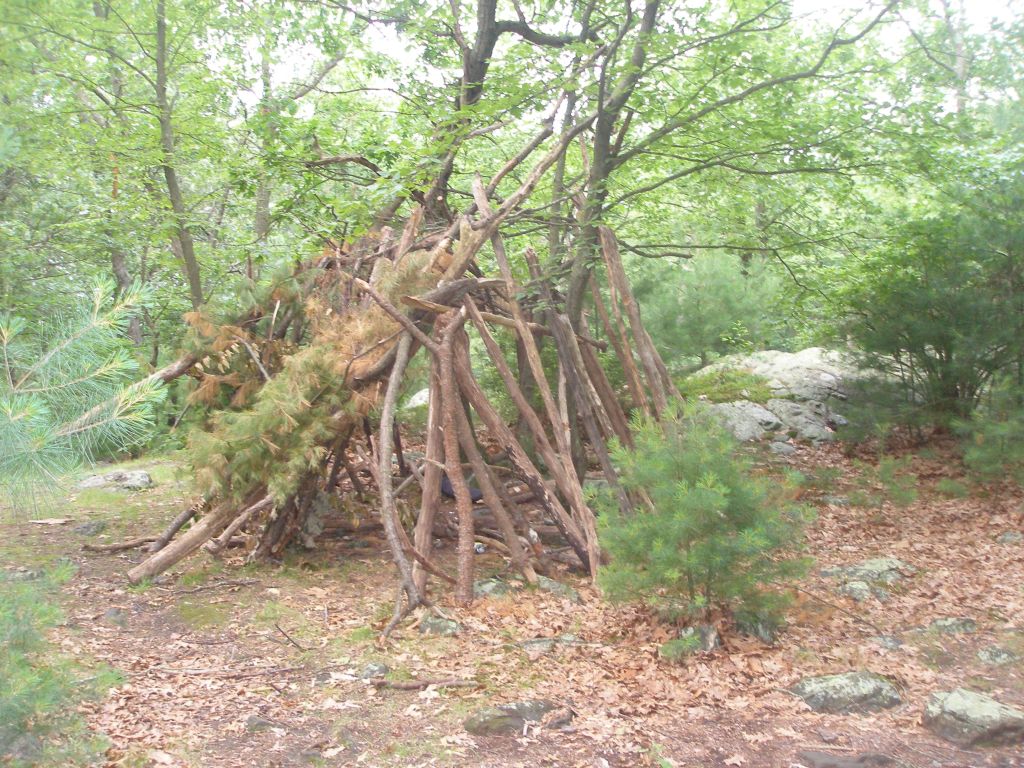
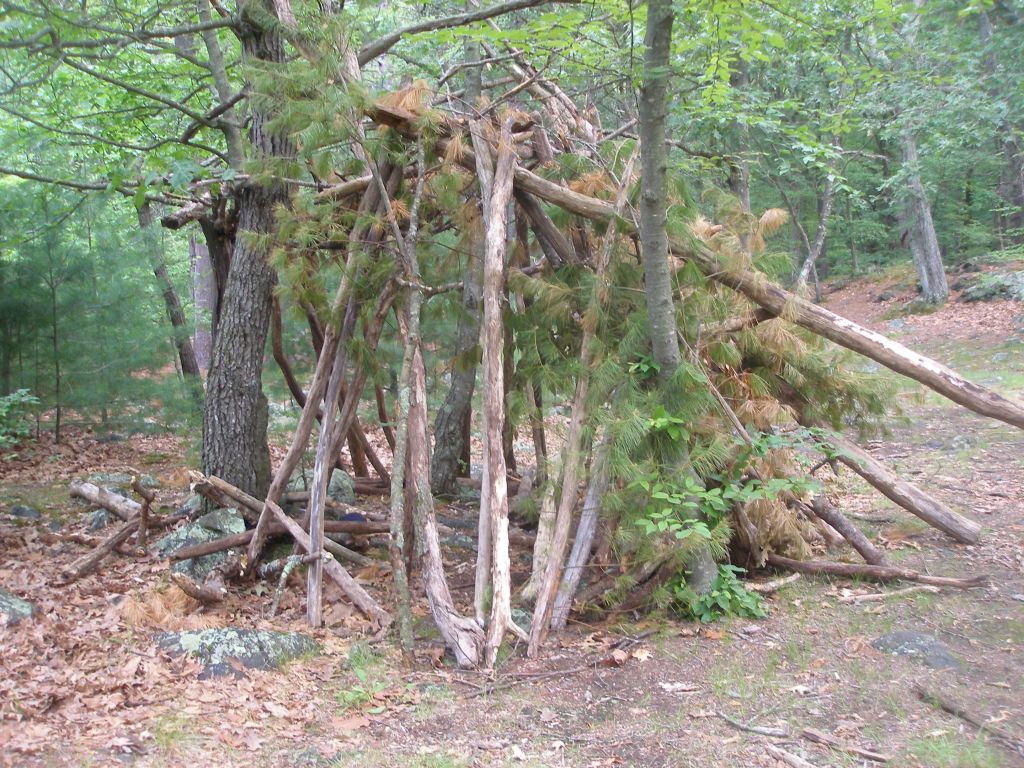
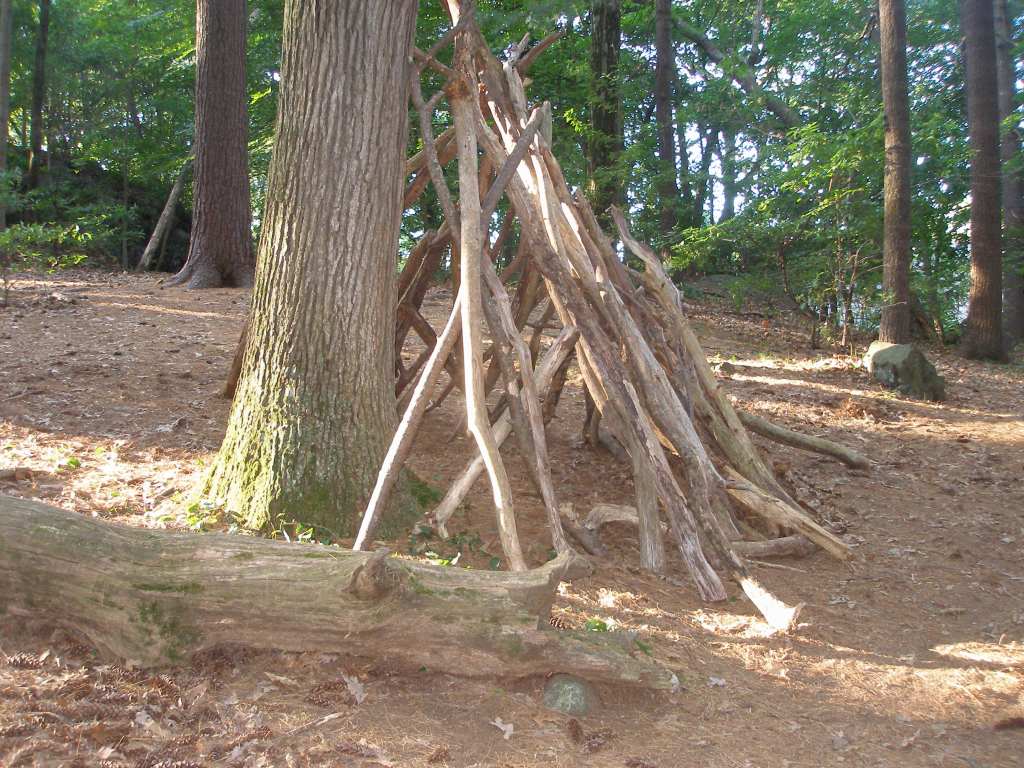
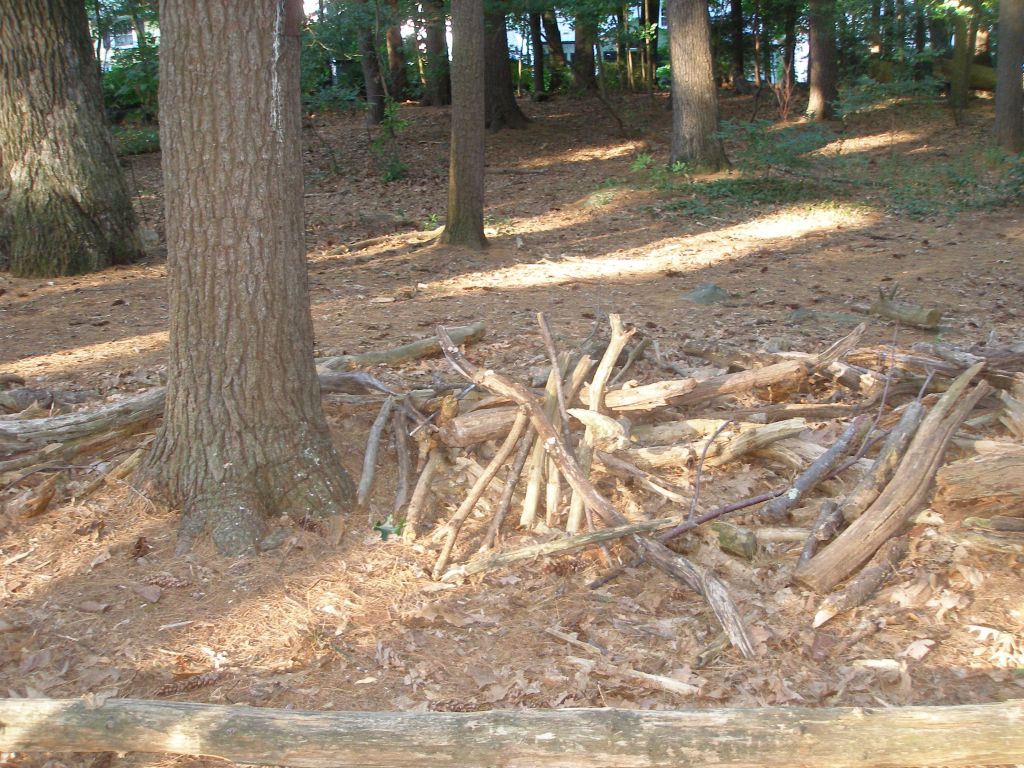
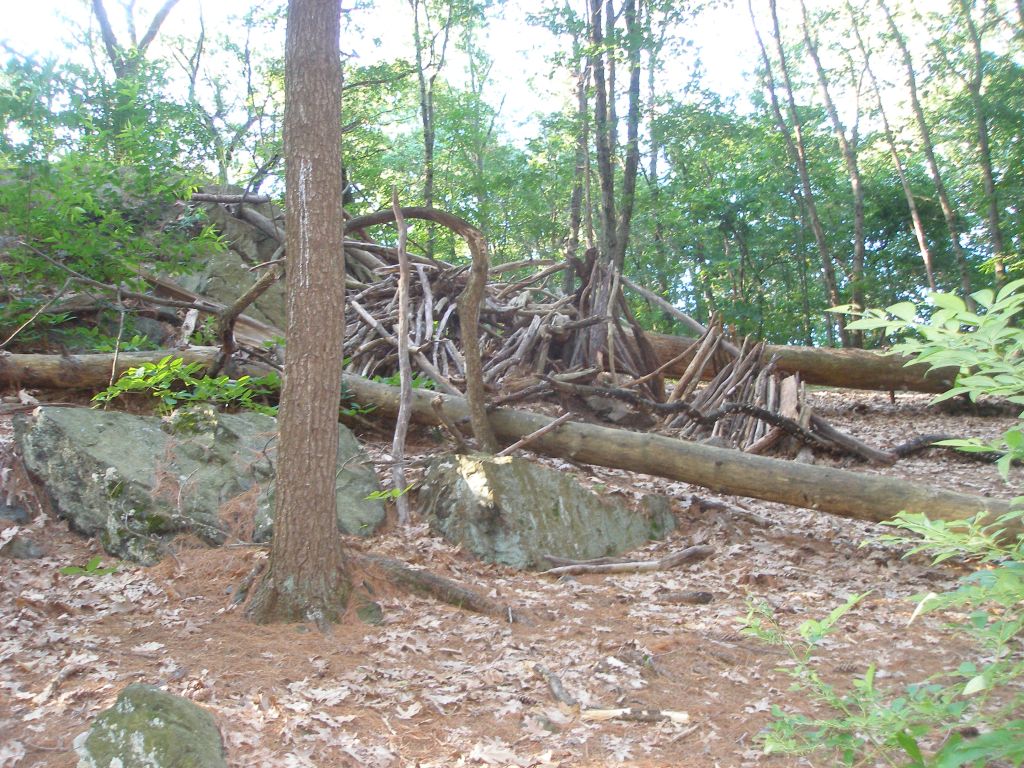
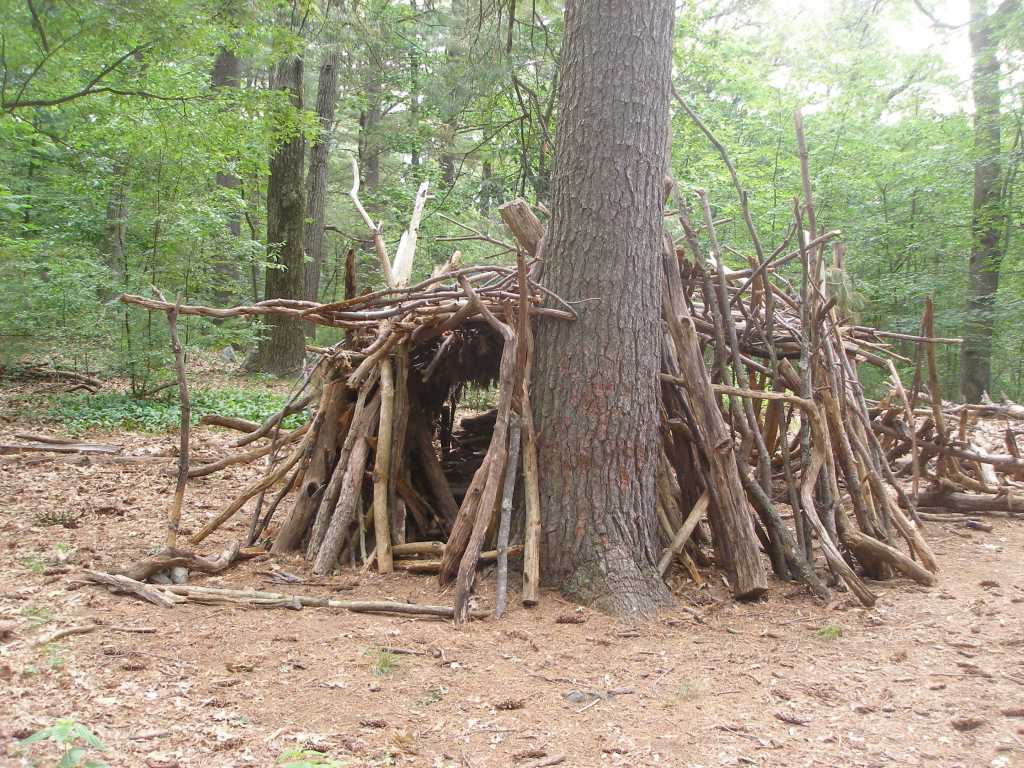
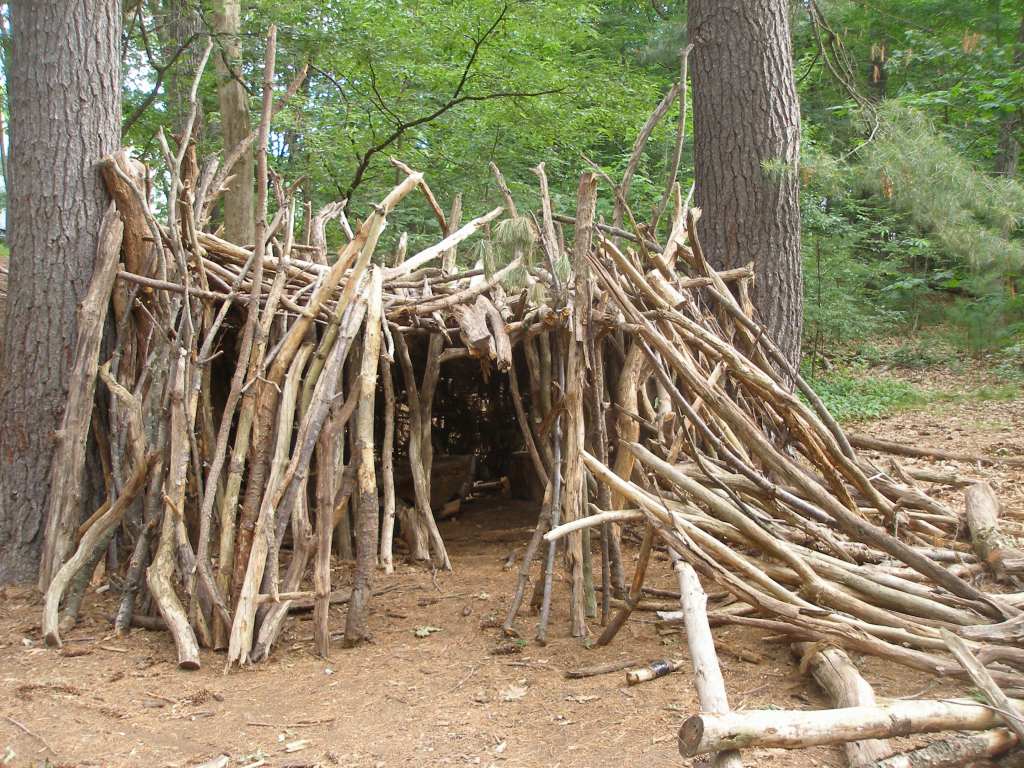
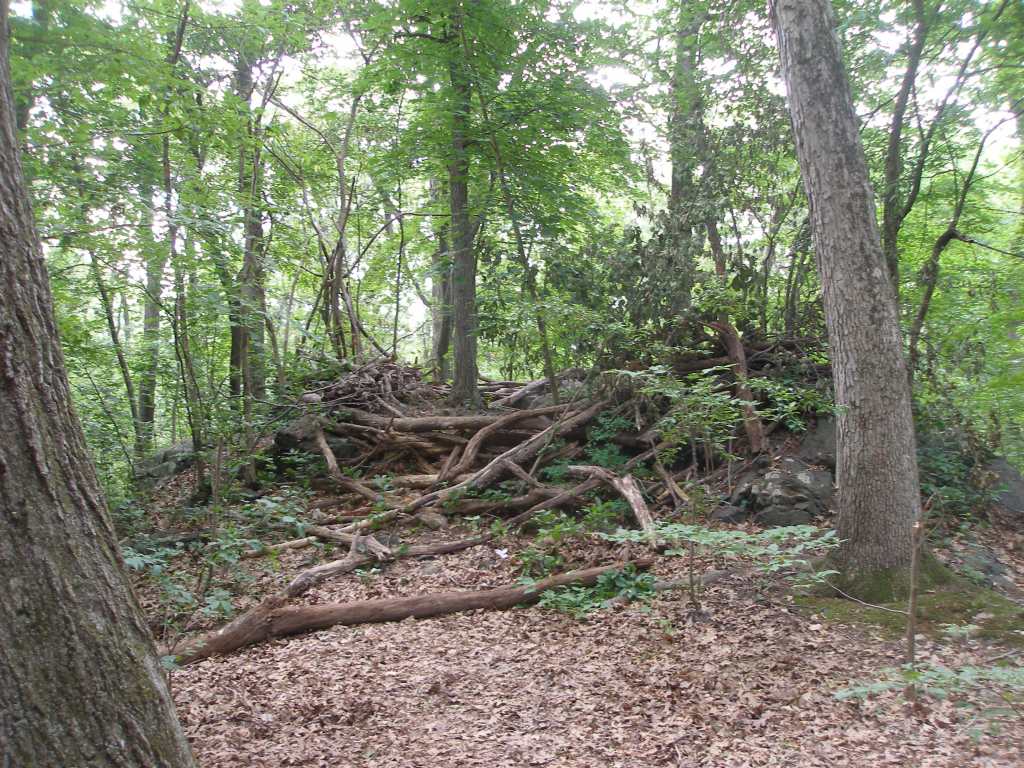
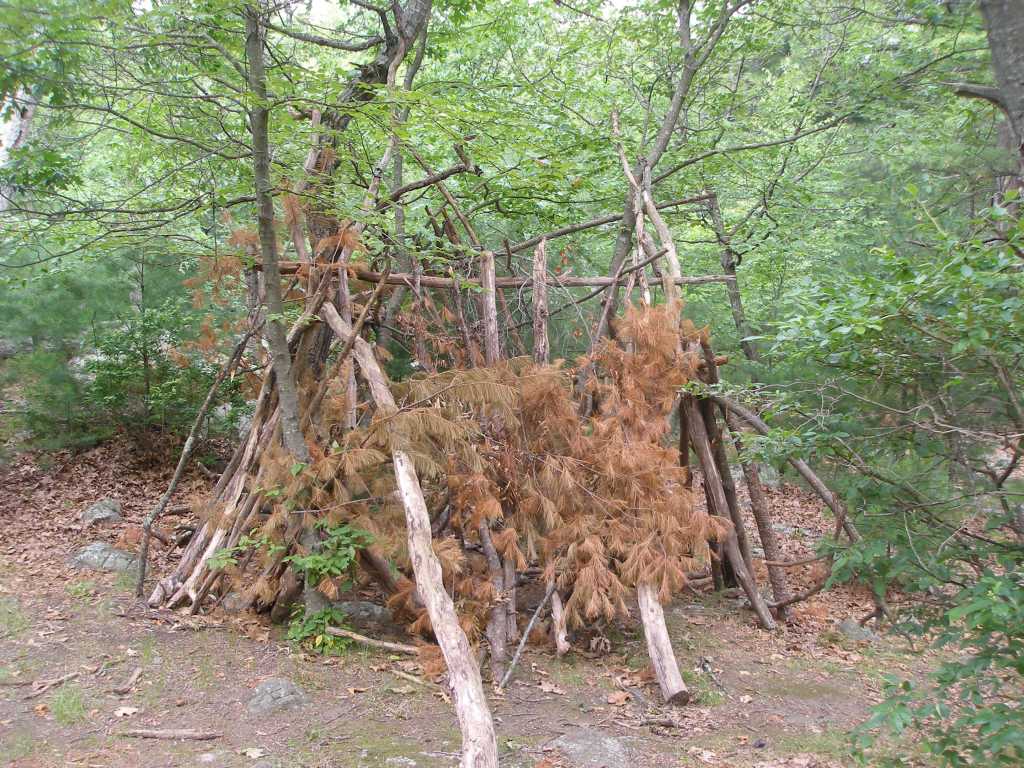
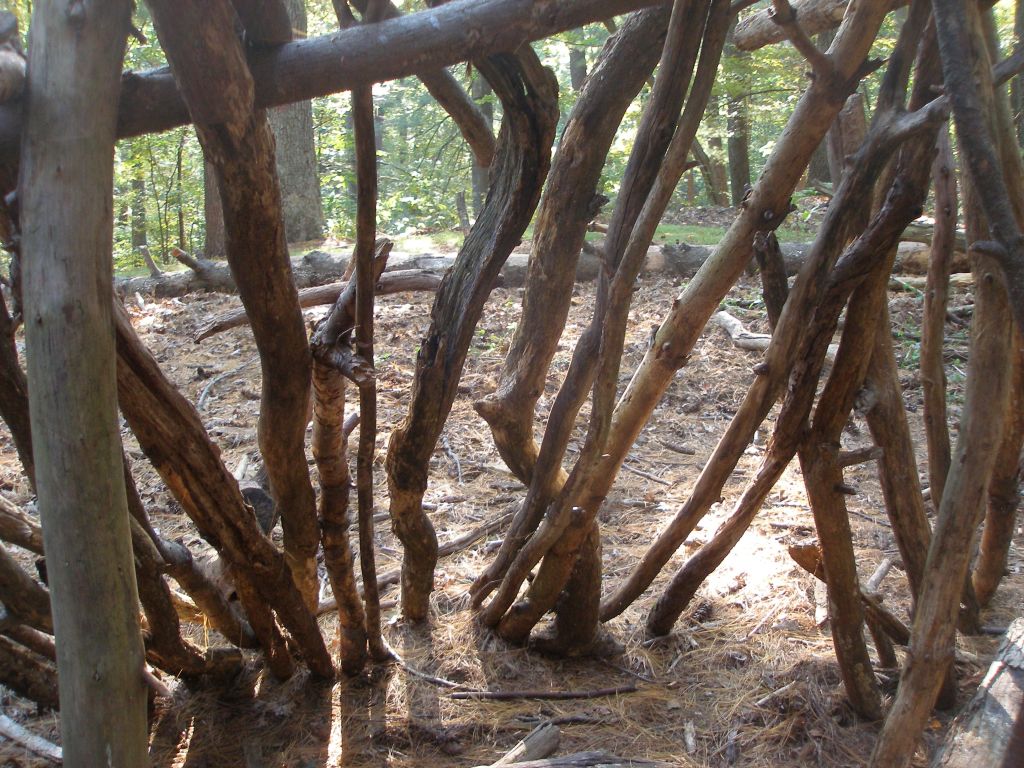
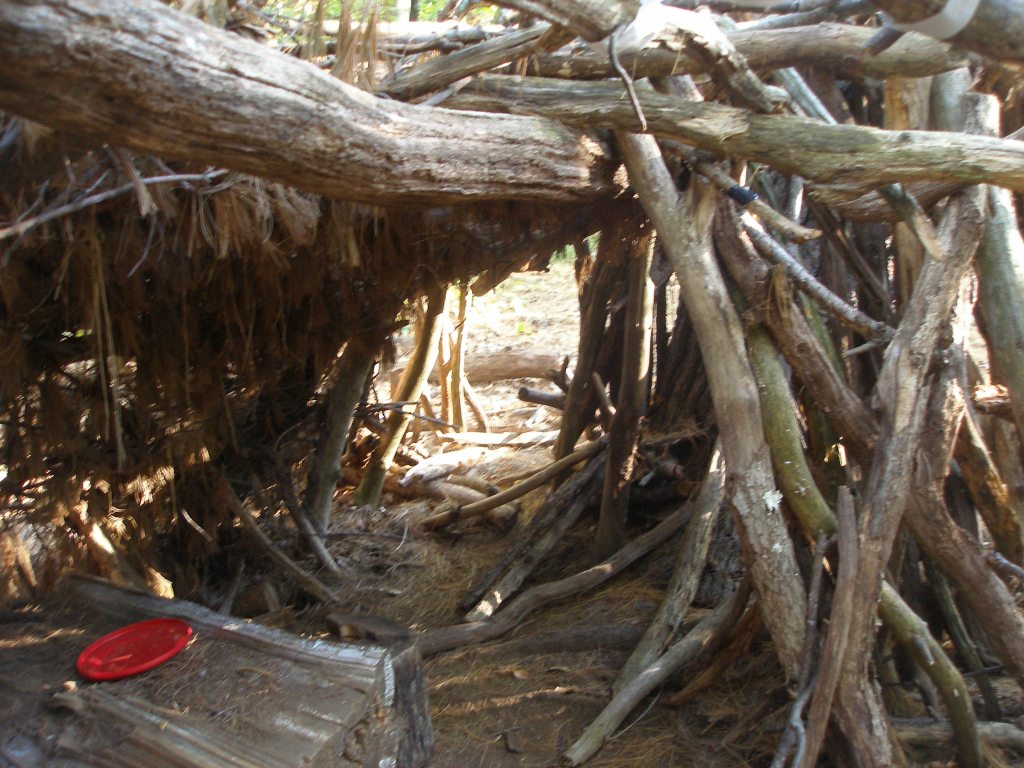
It is not uncommon to come across lean-tos, hideaways, and other constructions made with fallen twigs and branches in Menotomy Rocks Park near my home. Some are quite large and some are tiny “fairy houses.”

Our species tends to play with whatever natural materials are available. I understand that in the remote mountains of Nepal, children play with rocks. We learn that way. It seems to me we must have been creating structures like those below for a very long time.

Does that make these improvised constructions a legitimate part of nature – an appropriate part of the natural landscape?

I know some want them removed, but I have mixed feelings about these intriguing sculptures. They seem to have stories to tell and strike me as so much better suited to their natural environment than those mass produced molded plastic playhouses. What do you think?


Photo taken on 10/29/25

A Playground for Everybody

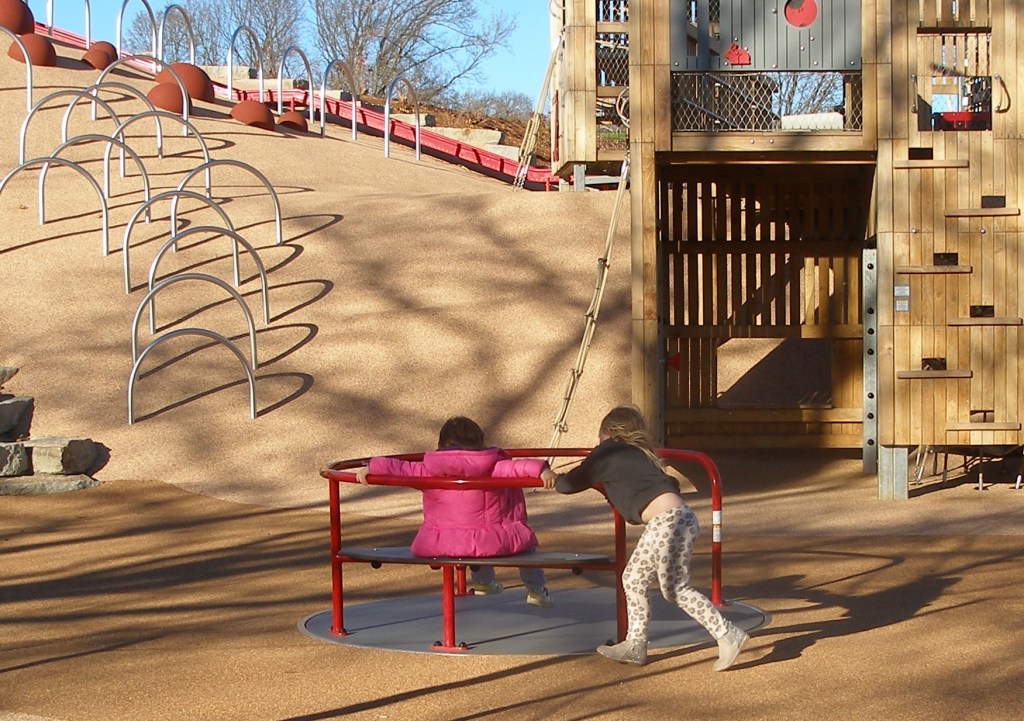
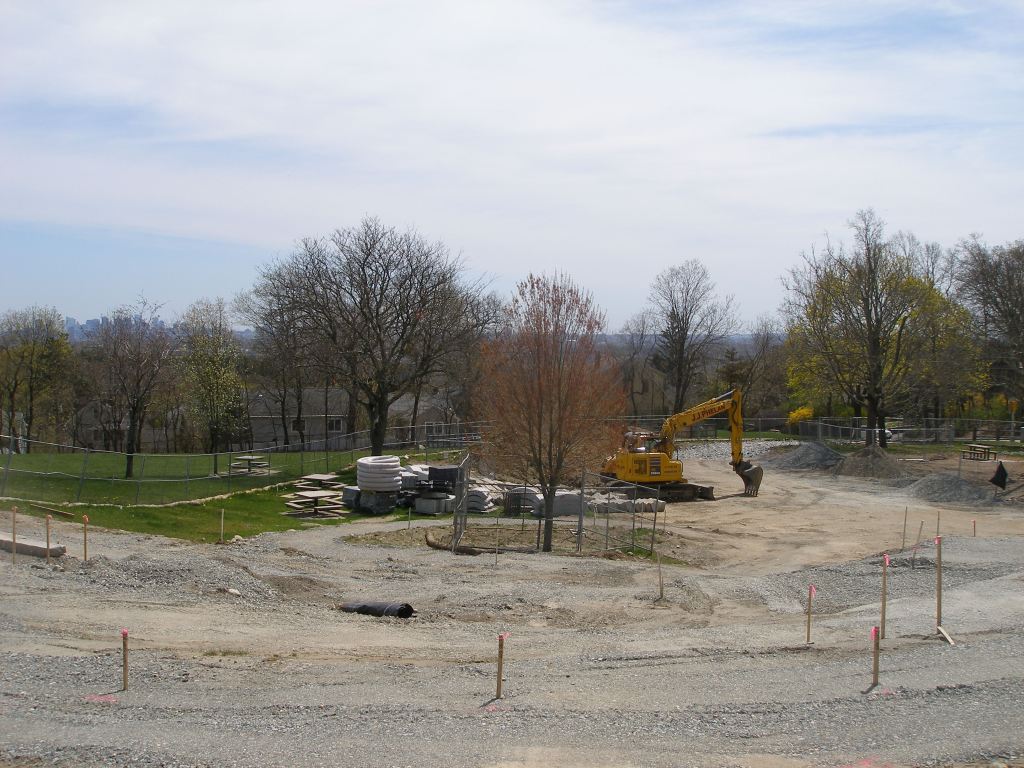
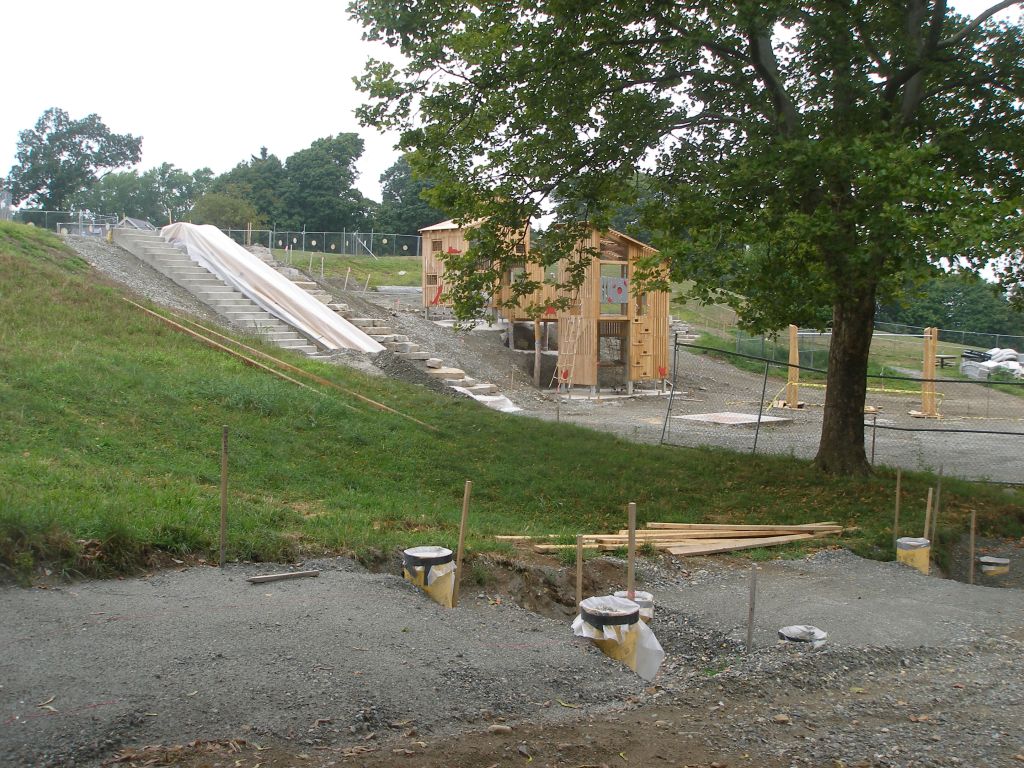
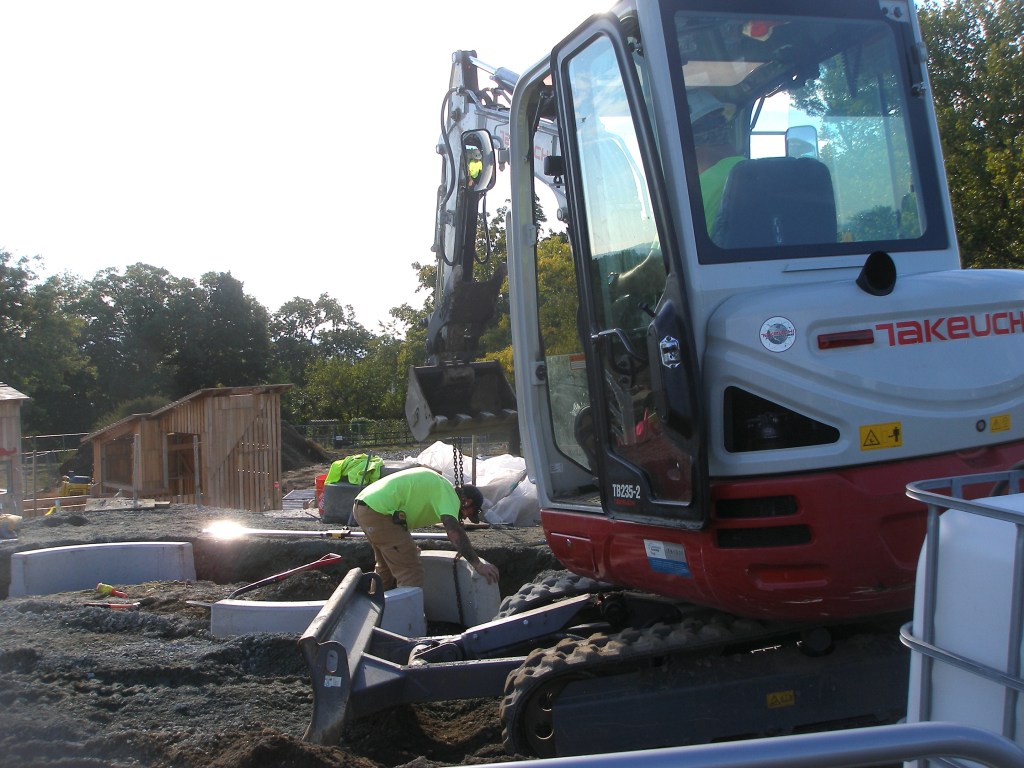
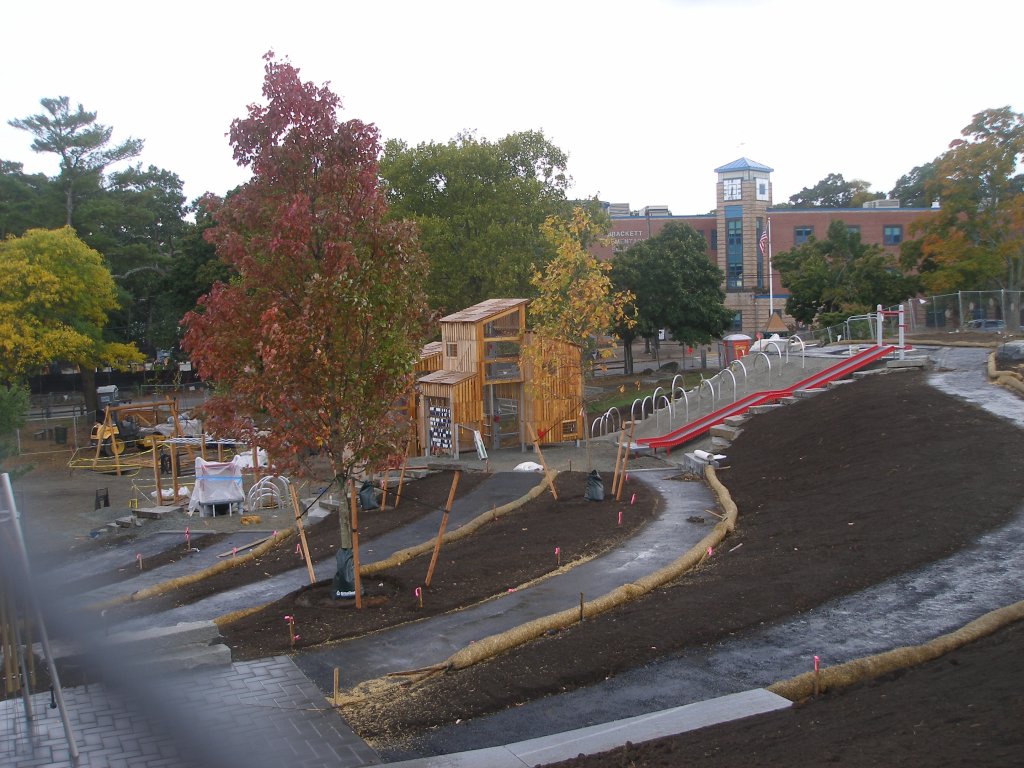
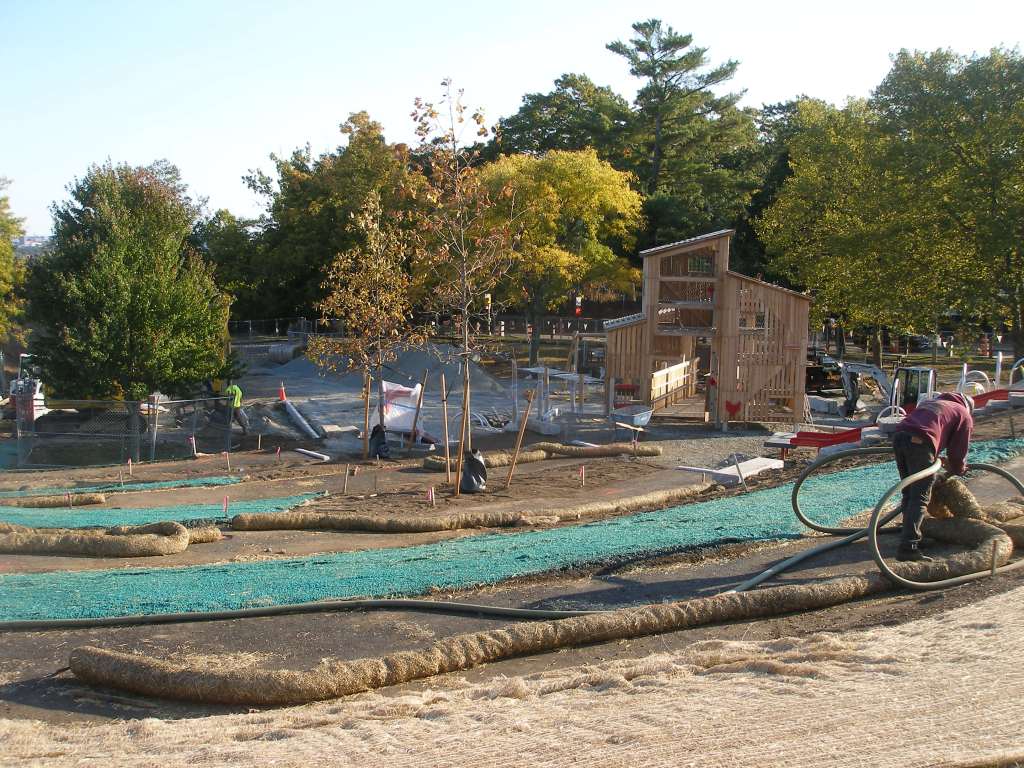
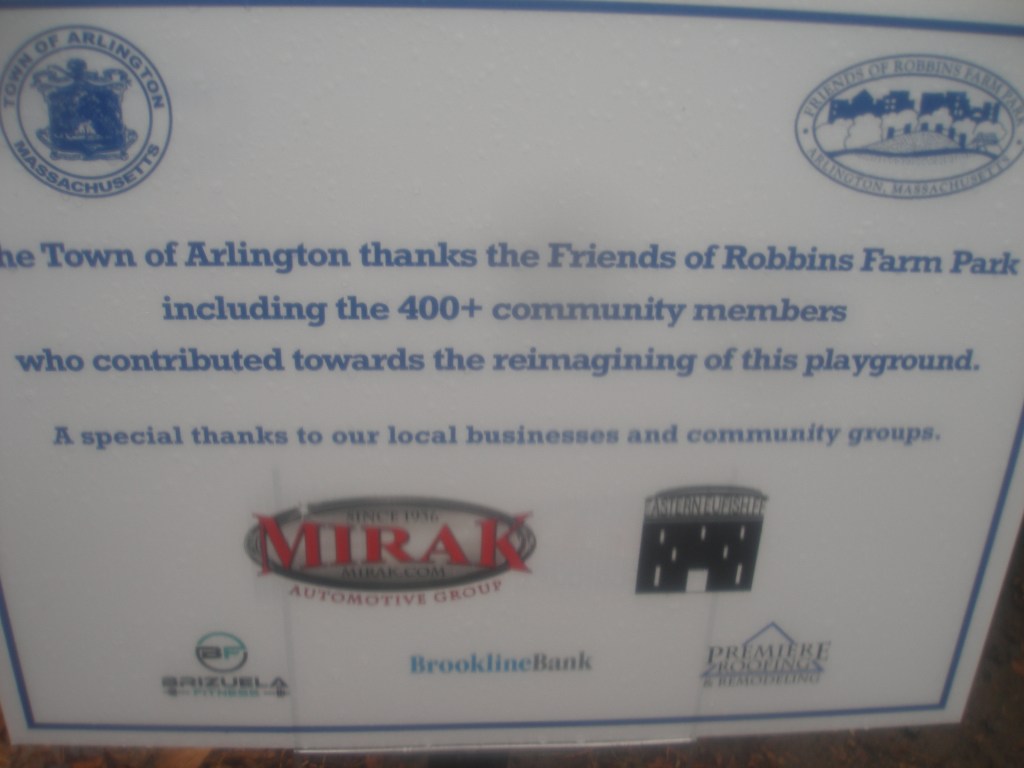
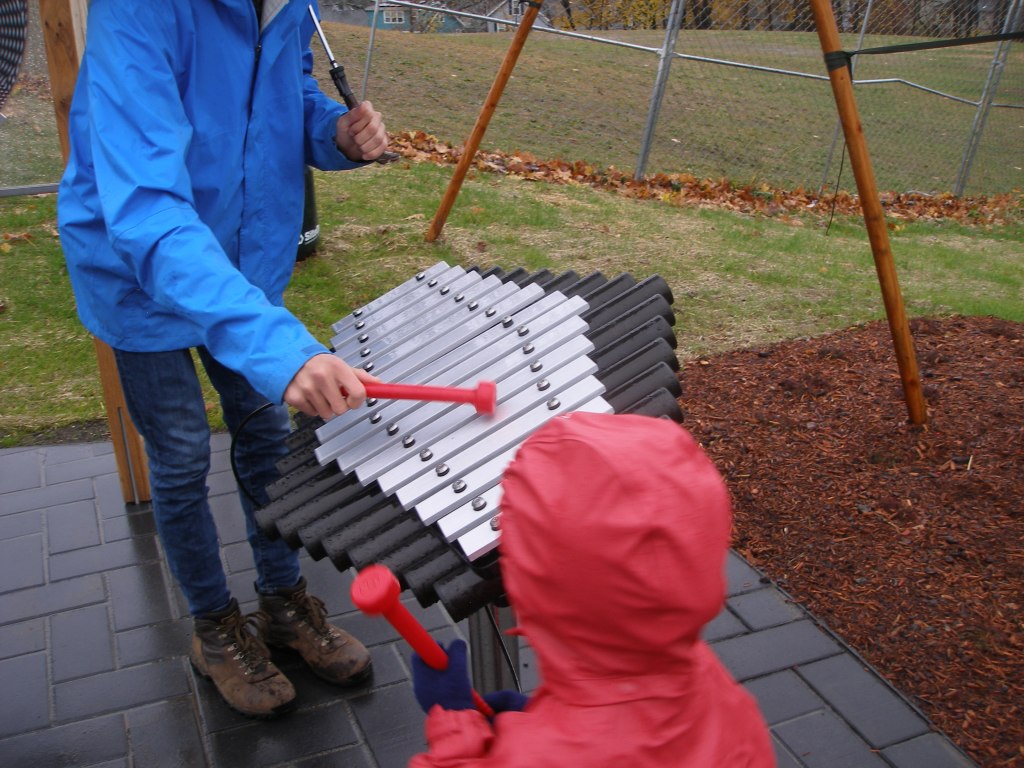
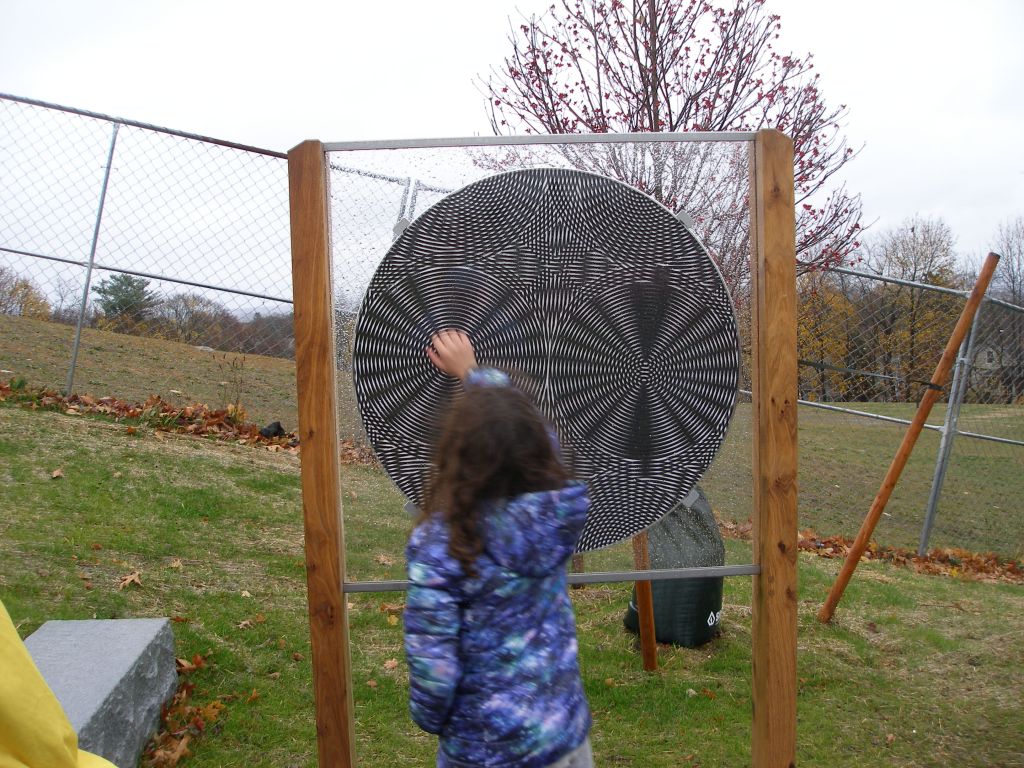
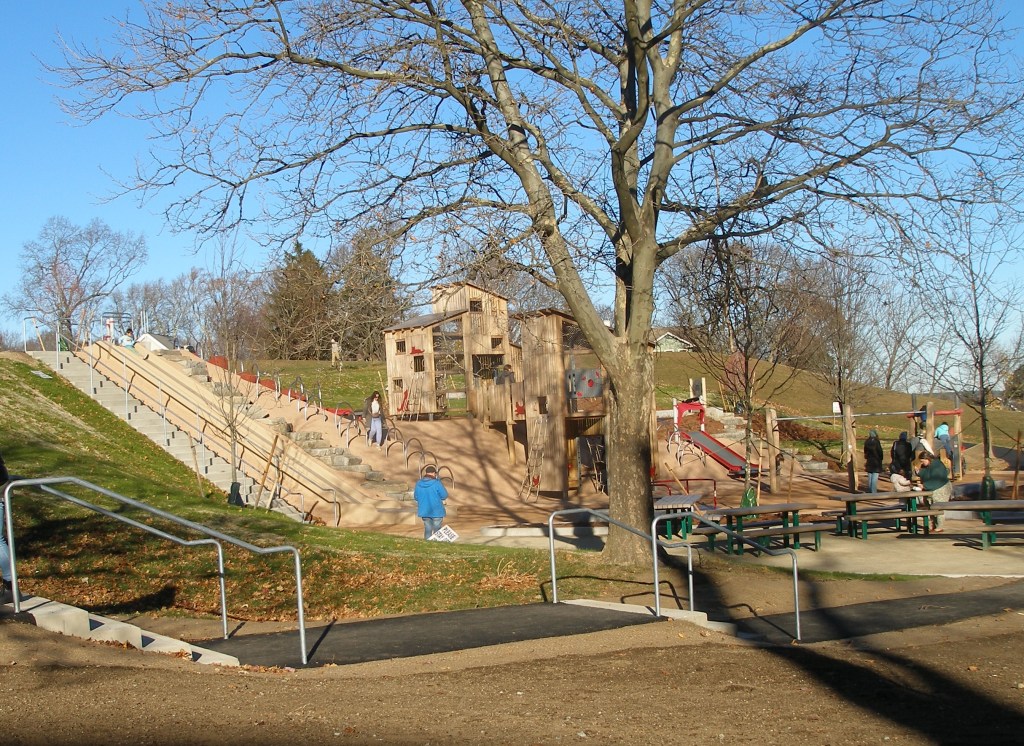
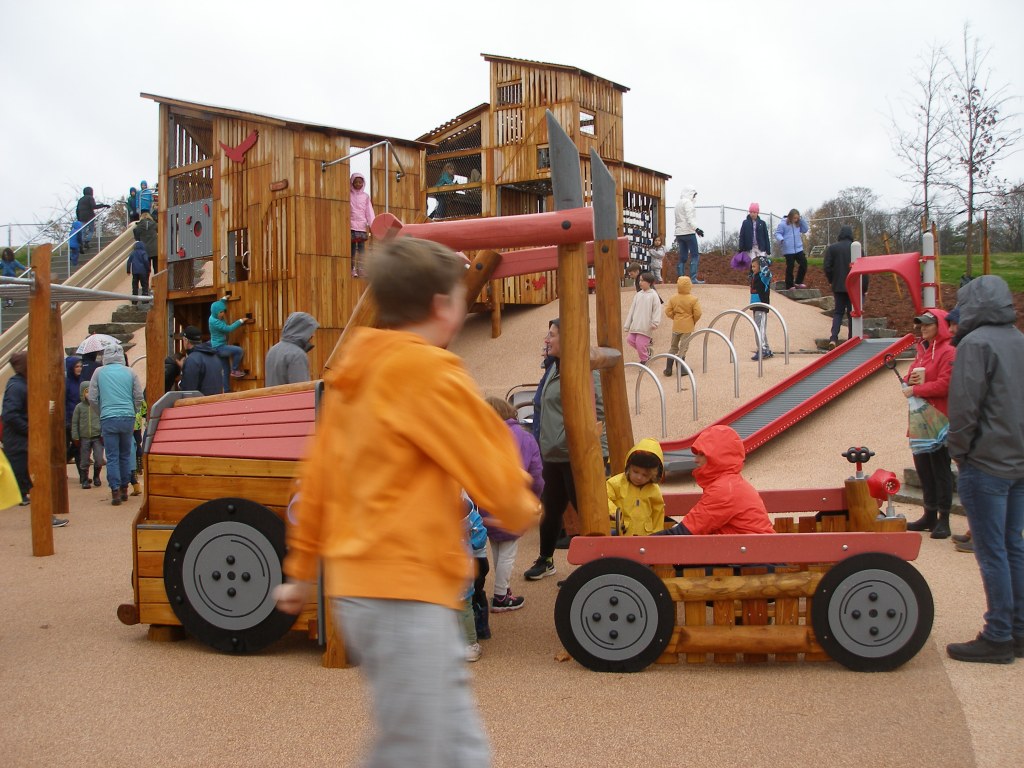
Playgrounds, even lovely ones, can become unsafe with age. When that happened in Arlington, Massachusetts, funding was secured, and a design team met to plan a new playground at Robbins Farm Park that would work even for kids who might not be able to use ordinary playgrounds. In the end, many residents of Arlington contributed. That along with funding from the state, and a number of organizations made it possible for several musical instruments and other fun features to be included.

At the ribbon cutting ceremony, a mother explained that her child had a rare neurological disorder. He could play and communicate in nonverbal ways and clearly has a sense of humor, but there was only one “accessible” playground nearby that would work for him. One day, the mother heard her older boy explaining to the other kids that his younger brother could not walk or talk, but he could play.

When she checked a bit later, she saw the two of them happily playing with the other kids. This was good for her two boys, but it was also good for the other kids, helping them to see that disabilities need not be barriers to play, and hopefully, other forms of interaction as they got older.

In her role as consultant to the project, this mother made use of her intimate understanding of what works for her son to help make the playground truly accessible.

If you are in the area, please come and check our this new Robbins Farm playground on Eastern Avenue, opposite the Brattle elementary school in Arlington Heights, Massachusetts, USA with its multiple tactile and sensory delights.

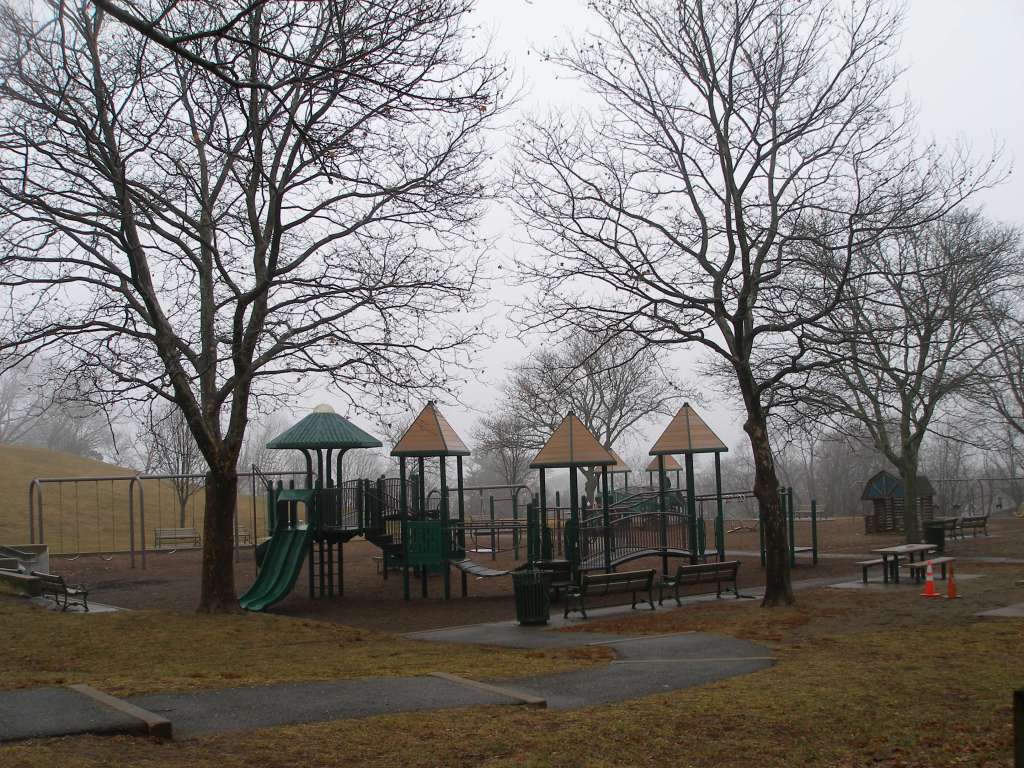
Although lovely to view in the various seasons, the old playground had the swings taken out as they had become unsafe.


The start of the new playground project involved reshaping the slope where a long slide had been. I was glad they would replace that slide as it was well loved by the kids who used it.


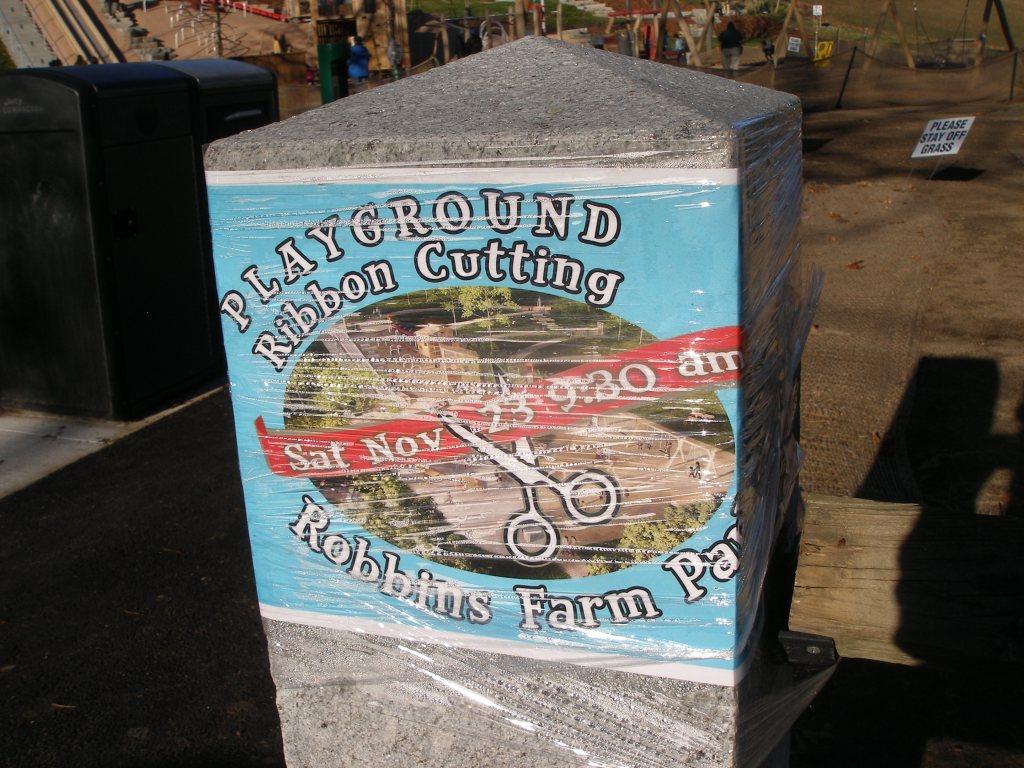
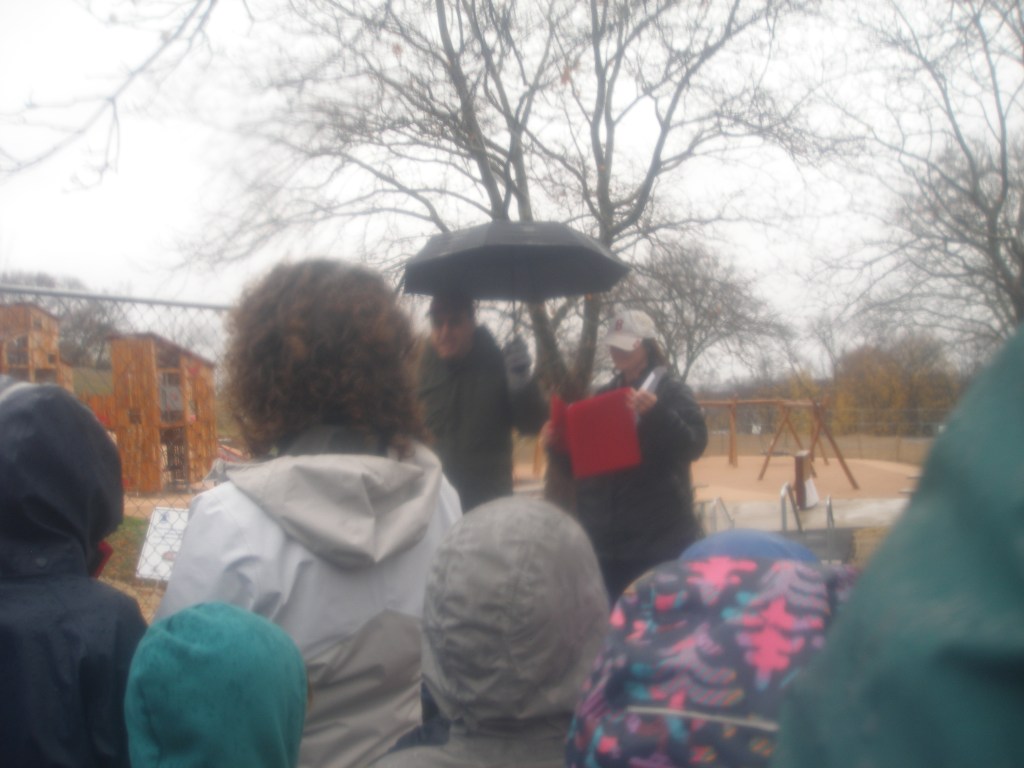
The Ribbon Cutting Ceremony brought out quite a large crowd even though it was raining. The kids chanted “Cut the ribbon. Cut the ribbon,” and there was considerable noise and glee as they scrambled in to explore their new playground.


And a few days later, there were fewer people. It will be interesting to see how it settles in, how the kids use the playground’s various features, and how the new plantings look in the spring.


An Experiment with Magical Musical Fishpond Storytelling

It was 9:30 AM on Friday, February 16th, 2019 as I arranged items on the conference room table at the Arlington MA Senior Center. I thought with excitement that I was finally getting a chance to try “magical musical fishpond storytelling.” Although children are naturals at making up stories together, many adults enjoy that as well with elders being the keepers of wisdom stories in many cultures.

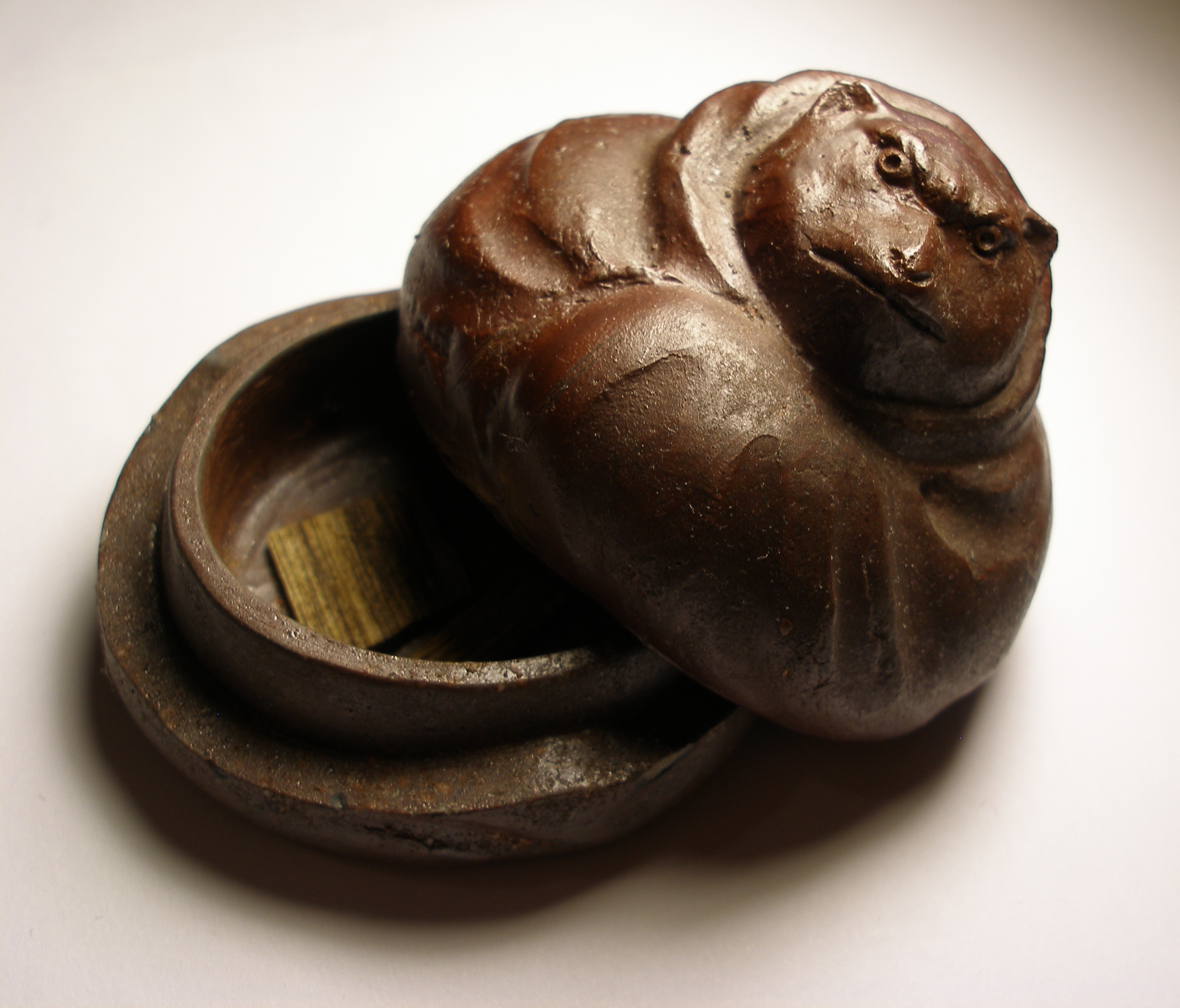
In the center of the table was a tiny incense-holder box (kogo in Japanese). This rather grumpy looking badger box represented the central character of the story we were to create. Although our Mr. Badger was gruff on the outside, all of us who would play his animal friends knew that he was actually quite caring.

OLYMPUS DIGITAL CAMERA

As we did for all our sessions, we used the Insight Dialogue guidelines – pause into awareness, relax and accept what cannot be relaxed bringing compassion to any remaining tension, open to mutual awareness and really seeing each other, attune to emergence to present thoughts and feelings as they arise and fade, listen deeply releasing thoughts about what to say next, and speak the truth about what is arising in the moment. I have found that pausing to access a place of deep stillness is very useful when accessing creative fictional truth.

OLYMPUS DIGITAL CAMERA

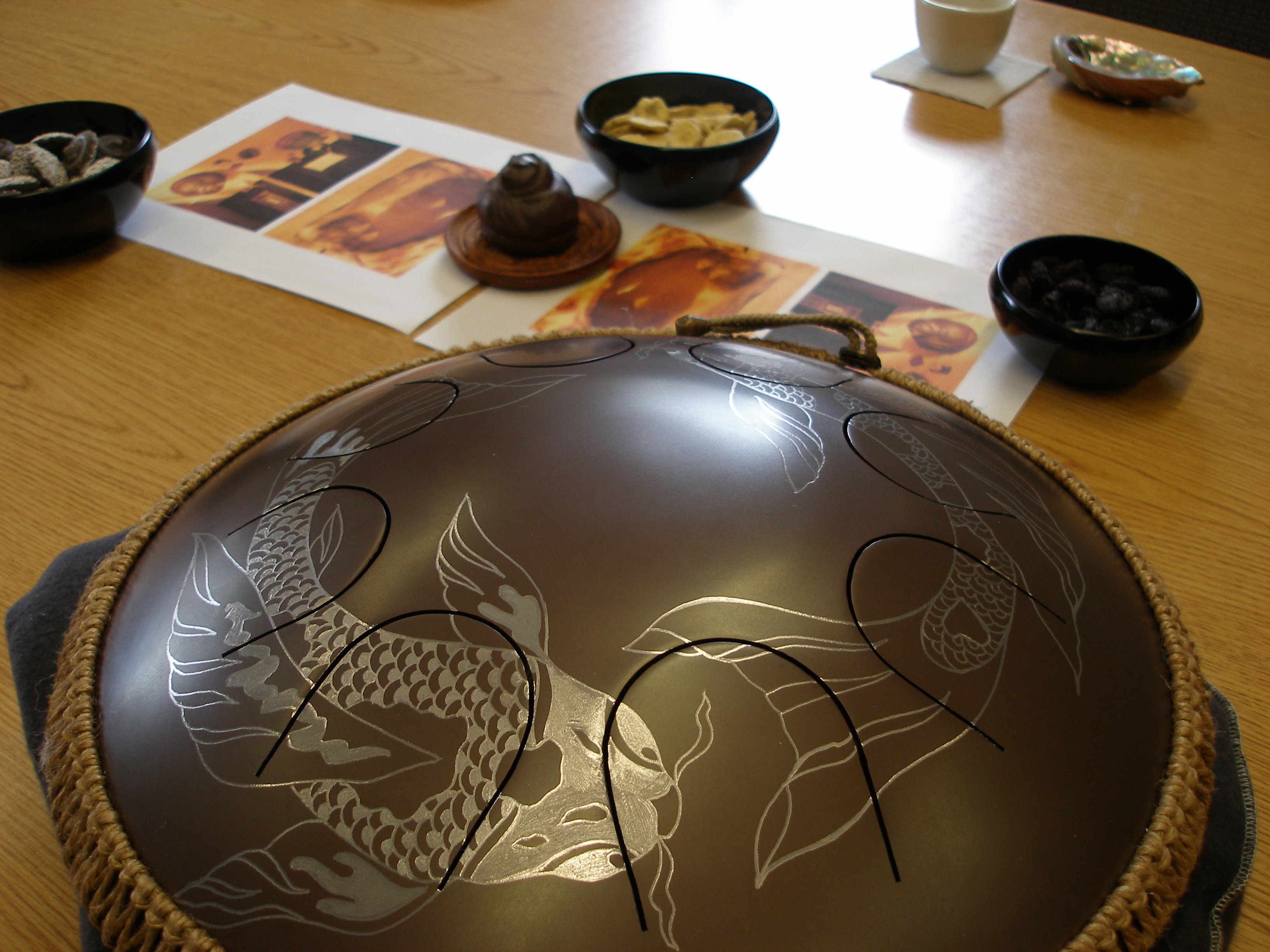
After drinking the tea while acknowledging all that went into it, we pushed the tea things to the center of the table so we could pass the tongue drum for our story telling. Each of us would offer our contribution and then tap the drum for emphasis before passing the drum on to the next person.

While Mr. Badger was away, a flood had swept everything from his cozy abode. Each of us as his animal friends would bring an object to create a nice place for Mr. Badger to return to as an act of compassion.

First, we introduced our animals and what they each brought:

-Kathy the Kangaroo brought two Persian carpets.
-Daun the Deer brought two comfortable pillows.
-Alan the Dachshund brought a flag sign on a pole.
-Maggie the Robin sang and constructed a nest.
-Aurora the Golden Snake brought a quilt.
-Barbara the Bunny brought carrots, brown rice and a rice cooker.
-Meg the Monkey brought a platform bed.
-Maya the Panda brought leaves and bamboo.
-Tracy the Love Bird brought smudge sticks.

Then we went around the table again explaining how Mr. Badger had used our gifts in unexpected ways:

-The carpets were used to sop up mud at Mr. Badger’s entrance.
-The pillows were emptied of feathers so Mr. Badger could play with them.
-The flag pole was stuck in the ground to be used as a coatrack.
-The nest had a blue egg which Mr. Badger gently sat on until it hatched.
-The lovely quilt went on the table but it might become a sail for his boat.
-The rice cooker was used to heat water to clean up his place.
-The platform bed was used for sleeping (not where badgers normally sleep).
-The bamboo and leaves were used to make a covering over his entrance.
-The smudge sticks were used to purify his new home and bring in positive energy.

As we continued the story, Mr. Badger opened his home to other animals affected by the storm. A workshop participant mentioned that Dachshund means badger hound in German; the Dachshund’s act of compassion toward Mr. Badger was particularly notable as they were normally enemies. Since Snakes love eggs, it was a good thing that the Robin egg hatched without the Snake noticing it. With time, Mr. Badger made his home larger and started taking in animals as guests and he used his lovely carpets to make a safe cozy bed for the Dachshund’s new puppies.

This experiment gave me a greater appreciation of the vision of the National Storytelling Network to bring about conditions where “all people value the power of storytelling and its ability to connect, inspire and instill respect within our hearts and communities.”

Later, workshop participants helped with another version of this practice. This time we went to a park with a dog statue so the dog could be the hero of the story. A short  video of this practice in the park was created with the help of videographer, Jeff Klein. Visit his website for more examples of his work.

Addendum: This post was updated to include the video of the later practice.