It was 9:30 AM on Friday, February 16th, 2019 as I arranged items on the conference room table at the Arlington MA Senior Center. I thought with excitement that I was finally getting a chance to try “magical musical fishpond storytelling.” Although children are naturals at making up stories together, many adults enjoy that as well with elders being the keepers of wisdom stories in many cultures.
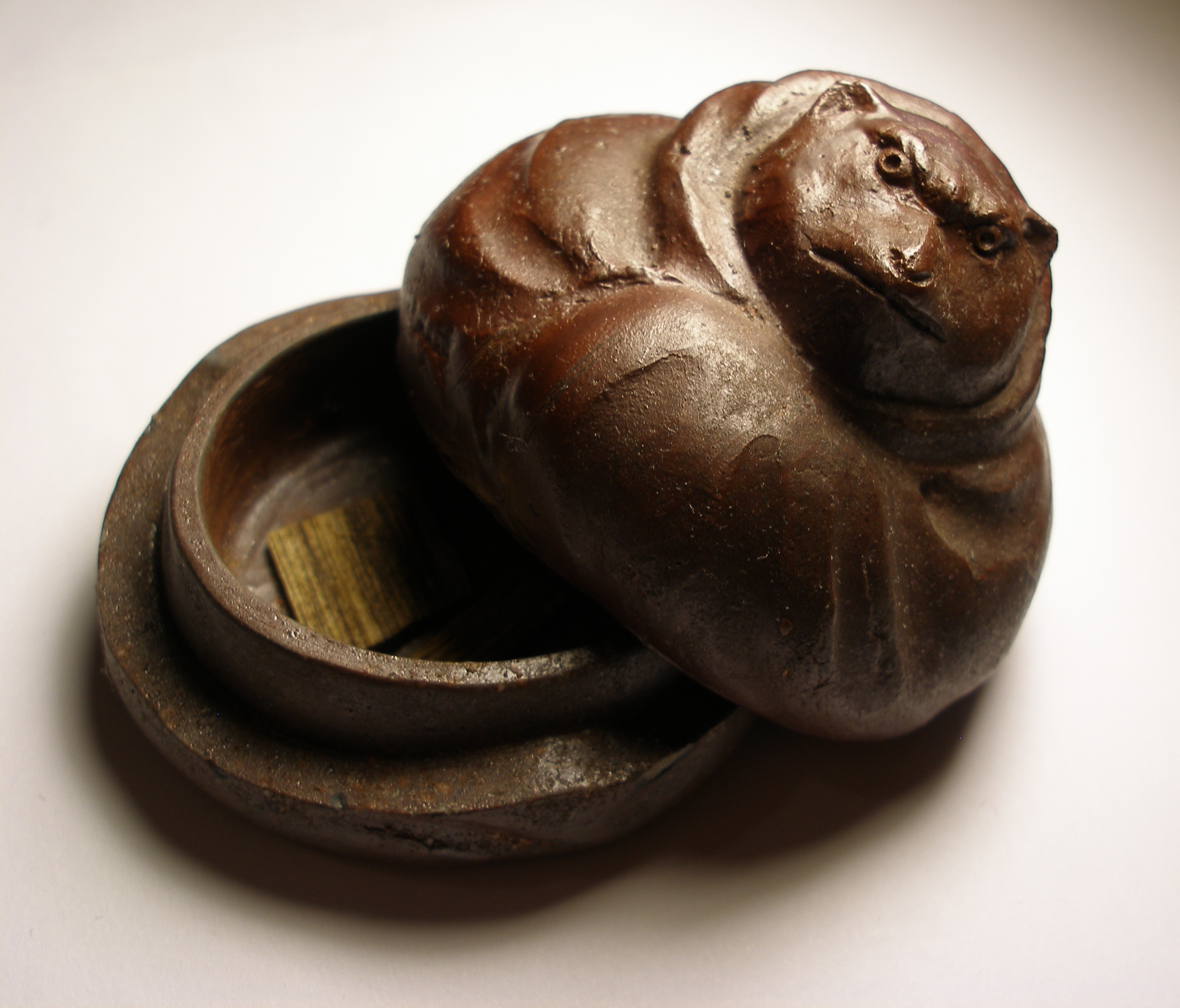
In the center of the table was a tiny incense-holder box (kogo in Japanese). This rather grumpy looking badger box represented the central character of the story we were to create. Although our Mr. Badger was gruff on the outside, all of us who would play his animal friends knew that he was actually quite caring.
As we did for all our sessions, we used the Insight Dialogue guidelines – pause into awareness, relax and accept what cannot be relaxed bringing compassion to any remaining tension, open to mutual awareness and really seeing each other, attune to emergence to present thoughts and feelings as they arise and fade, listen deeply releasing thoughts about what to say next, and speak the truth about what is arising in the moment. I have found that pausing to access a place of deep stillness is very useful when accessing creative fictional truth.
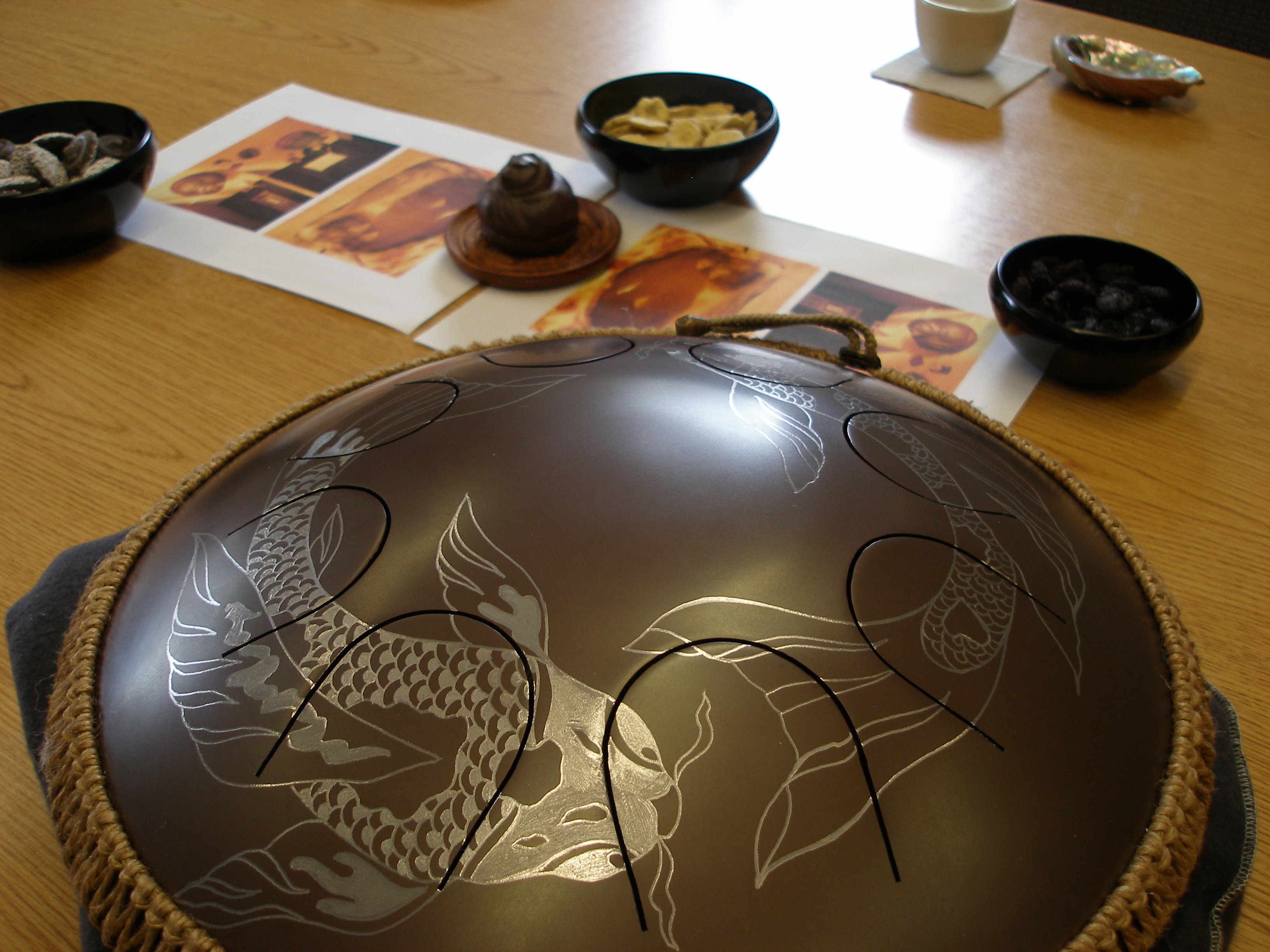
After drinking the tea while acknowledging all that went into it, we pushed the tea things to the center of the table so we could pass the tongue drum for our story telling. Each of us would offer our contribution and then tap the drum for emphasis before passing the drum on to the next person.
While Mr. Badger was away, a flood had swept everything from his cozy abode. Each of us as his animal friends would bring an object to create a nice place for Mr. Badger to return to as an act of compassion.
First, we introduced our animals and what they each brought:
-Kathy the Kangaroo brought two Persian carpets.
-Daun the Deer brought two comfortable pillows.
-Alan the Dachshund brought a flag sign on a pole.
-Maggie the Robin sang and constructed a nest.
-Aurora the Golden Snake brought a quilt.
-Barbara the Bunny brought carrots, brown rice and a rice cooker.
-Meg the Monkey brought a platform bed.
-Maya the Panda brought leaves and bamboo.
-Tracy the Love Bird brought smudge sticks.
Then we went around the table again explaining how Mr. Badger had used our gifts in unexpected ways:
-The carpets were used to sop up mud at Mr. Badger’s entrance.
-The pillows were emptied of feathers so Mr. Badger could play with them.
-The flag pole was stuck in the ground to be used as a coatrack.
-The nest had a blue egg which Mr. Badger gently sat on until it hatched.
-The lovely quilt went on the table but it might become a sail for his boat.
-The rice cooker was used to heat water to clean up his place.
-The platform bed was used for sleeping (not where badgers normally sleep).
-The bamboo and leaves were used to make a covering over his entrance.
-The smudge sticks were used to purify his new home and bring in positive energy.
As we continued the story, Mr. Badger opened his home to other animals affected by the storm. A workshop participant mentioned that Dachshund means badger hound in German; the Dachshund’s act of compassion toward Mr. Badger was particularly notable as they were normally enemies. Since Snakes love eggs, it was a good thing that the Robin egg hatched without the Snake noticing it. With time, Mr. Badger made his home larger and started taking in animals as guests and he used his lovely carpets to make a safe cozy bed for the Dachshund’s new puppies.
This experiment gave me a greater appreciation of the vision of the National Storytelling Network to bring about conditions where “all people value the power of storytelling and its ability to connect, inspire and instill respect within our hearts and communities.”
Later, workshop participants helped with another version of this practice. This time we went to a park with a dog statue so the dog could be the hero of the story. A short video of this practice in the park was created with the help of videographer, Jeff Klein. Visit his website for more examples of his work.
Addendum: This post was updated to include the video of the later practice.






 Radiant Refuge