Insight Dialogue

09 Sept ME

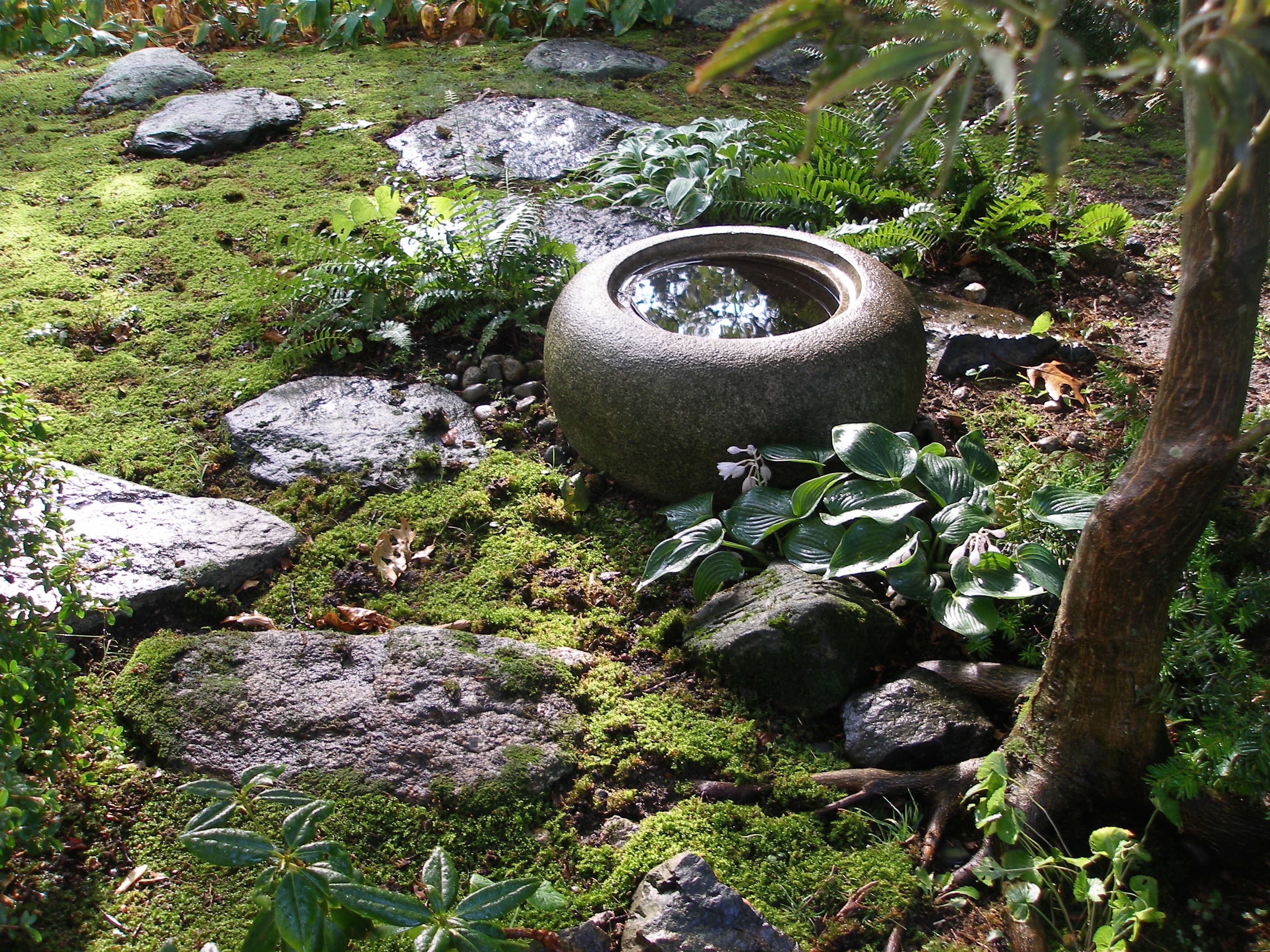
Most of us have experienced relaxed conversations that just seem to flow, perhaps in a setting where nature is on view like the one in the photo or around the kitchen table. Peace descends and we feel whole and seen.

Often, we are distracted or caught up in immediate concerns.  We lose track of that potential to warmly connect and relate. Avoiding cycling on issues that concern us can be difficult enough when we are on our own. Maintaining calm awareness while interacting with others can be particularly challenging.

Insight Dialogue practice provides support to bring tranquil awareness to the interpersonal domain. First one person speaks what is arising in the moment on a designated topic while the other listens silently without commenting and then the roles are reversed. There may be an additional timed period with no separate speaker and no separate listener. Pausing allows time to discern what would be beneficial to say as well as time to deeply take that in and gain new understanding from what is shared.

Insight Dialogue’s guidelines create the safety needed for evolving trust and authentic sharing from the heart: Pause, Relax, Open, Attune to Emergence, Listen Deeply and Speak the Truth. It becomes clear we are all vulnerable and that we also have great power to support each other just by how we listen.

This video of Phyllis Hicks facilitating an Insight Dialogue practice shows this supportive energy. You can see the openness, authenticity and caring connection in the responsive body language of the participants. More of Jeff Klein’s sensitive videography can be seen at his website.

Gregory Kramer developed Insight Dialogue. His website, InsightDialogue.org, includes information on each of the Insight Dialogue guidelines as well as opportunities to experience it for yourself.

The Insight Dialogue guidelines honor dignity; attentive listening meets disclosure for all participants. That makes it easier to truly show up and pay attention to what is said including by oneself. Participants are better able to perceive the preciousness of our sensitivity to each other and learn how to bring greater compassion and creativity to all interaction.

Because of the vulnerable investigation of experience, difficult emotions may arise at times. David Treleaven provides guidance for recognizing and addressing adverse reactions that can arise with any form of mindfulness practice.

In my experience, most of those who try Insight Dialogue appreciate the careful attending that goes well beyond the rushed and distracted quality of much everyday interaction. With practice, I found I could bring that same supportive energy to any conversation, and that brought a whole new ease and joy to my life.

Creating Welcome

Bringing in peace as you prepare for a gathering will affect you in ways that cannot help but benefit your guests – Pause, Relax, and Open, Attune to Emergence and Listen Deeply. Then Speak the Truth in creating an environment that conveys warmth and welcome. The Insight Dialogue guidelines work well in so many applications including this one.

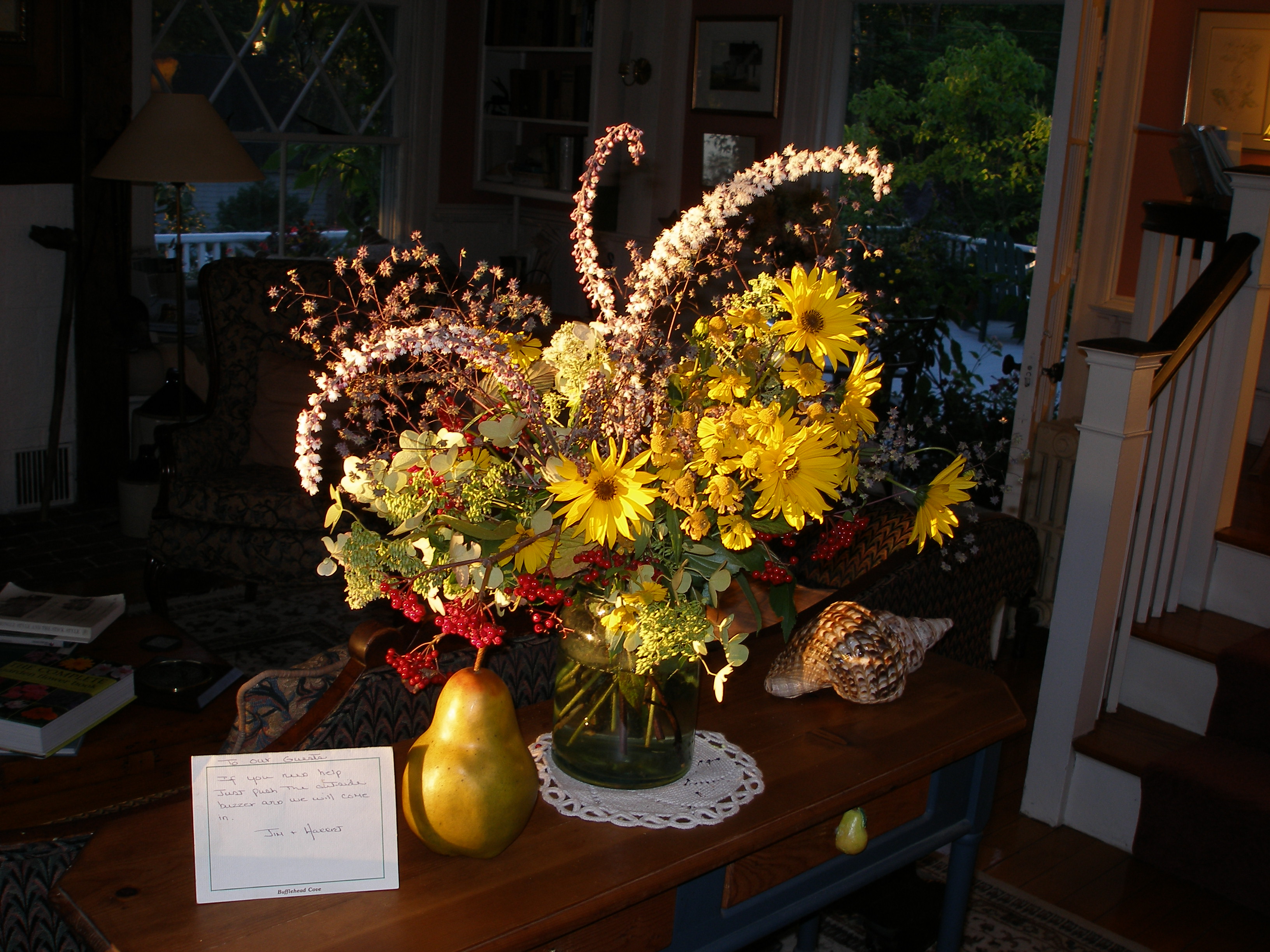
Perhaps you will include a reminder of nature displayed in a place of honor with space around it. Using a light touch, see what happens. Relying on a heart connection without words can open us to wonderful small surprises and an understanding that with a little care, life can be lived more like a work of art.

OLYMPUS DIGITAL CAMERA

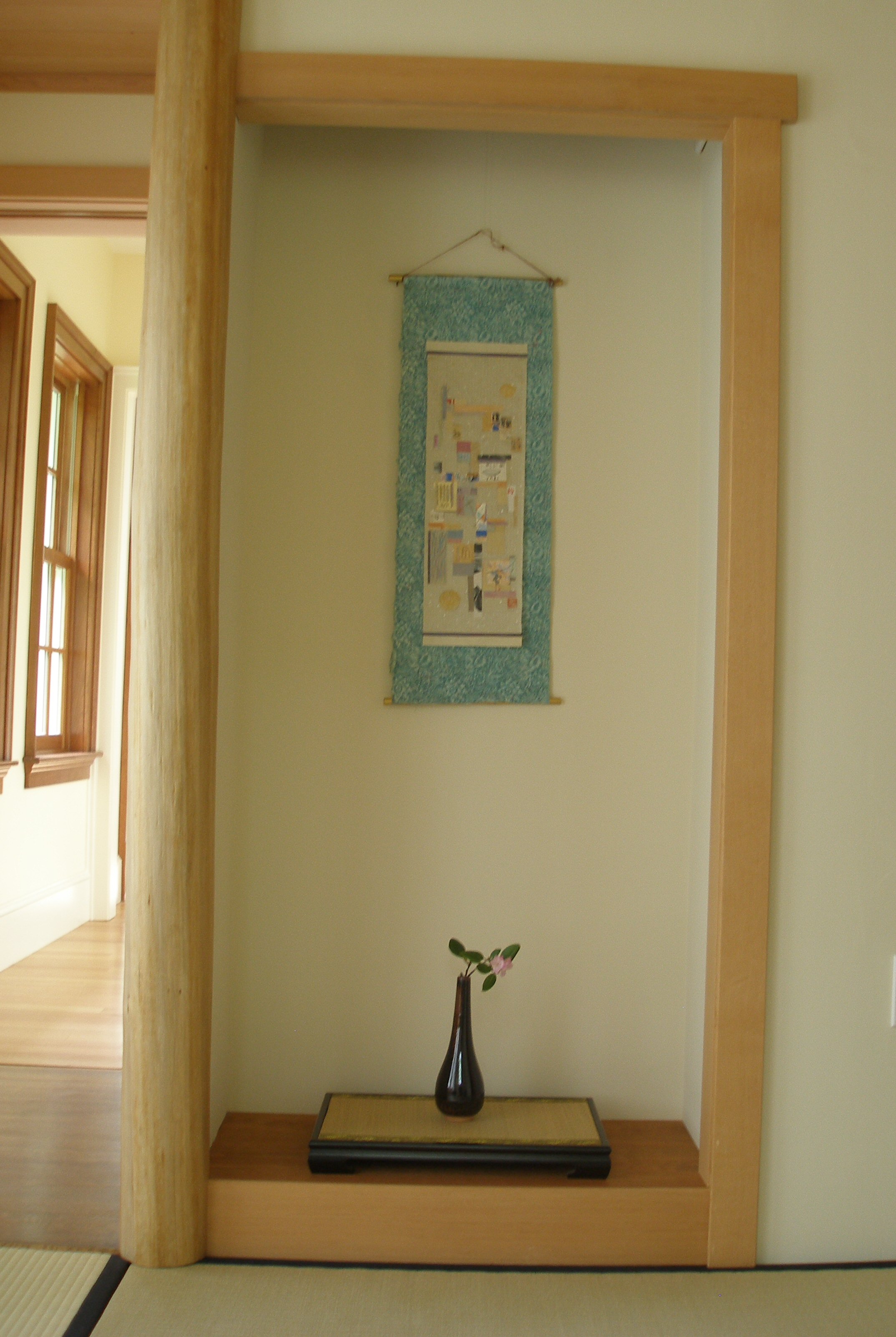
You can bring to it all the sensitivity and freshness used to create a tokonoma alcove arrangement for a tea ceremony. This one includes a collage by my tea ceremony teacher, Giselle Maya:

OLYMPUS DIGITAL CAMERA

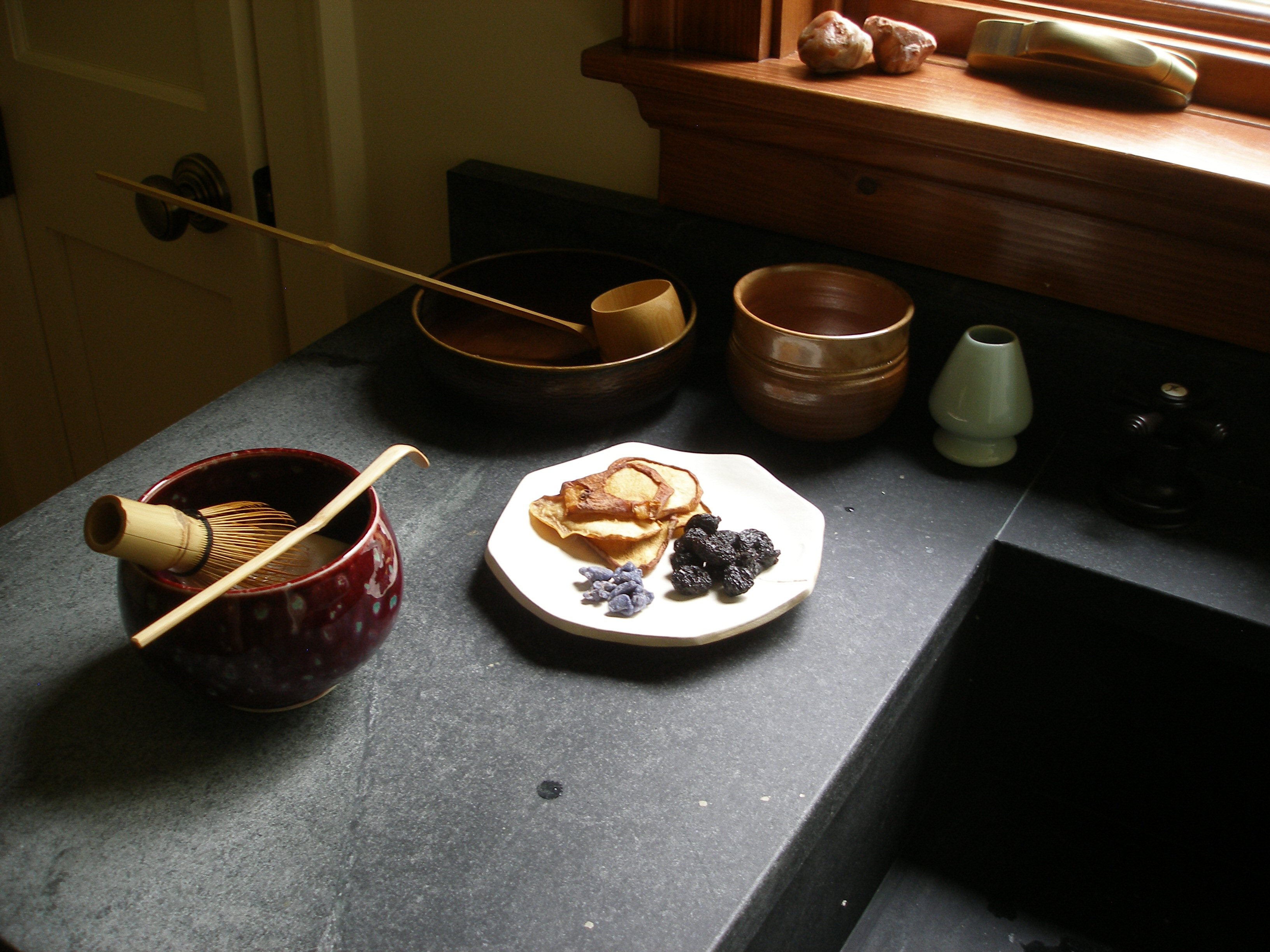
You may also wish to keep in mind the Japanese tea ceremony values of harmony, purity, respect and tranquility. While it is important to ensure that what touches food or drink is scrupulously clean and that edibles are pure and safe, purity also dictates that anything not needed be eliminated. Care taken with objects and supplies implies respect for your guests.

Ideally, the result will be supportive of a sense of peace and wellbeing as well as openness. It takes a bit of effort, but this approach to preparing for guests is an important mindfulness practice in its own right.

OLYMPUS DIGITAL CAMERA

The Unending Sea of Blessings

OLYMPUS DIGITAL CAMERA

The below contemplation was used for several tea and dialogue sessions with an explanation that “The unending sea of blessings,” a phrase used on scrolls hung in Zen temples and during tea ceremonies is not a closed concept. It tells us what we can sense when we remove the obstacles we put in our own way. Wilson discusses it in The One Taste of Truth, Zen and the Art of Drinking Tea on page 135.
The ability to experience pain is necessary for biological beings. We need to recognize and avoid what is dangerous in order to survive. But humans can easily get stuck cycling in stressful worry and doubt. We can forget that compassion also comes naturally to us.

Compassion is. It matters as much to us as sensing pain. That understanding is common to spiritual traditions the world over. We are born with an instinct for compassion. Even babies too young to speak will pick up something that is dropped and hand it back to you.

Bringing in self-compassion when it is needed makes it easier to see the caring generosity from others and nature all around us. It shows us the unending sea of blessings. Research provides evidence that when we offer support to others, we benefit our own wellbeing, health and resilience.

We can open to the preciousness, the beauty of the transient tides we swim in. We dance the unending sea of blessings as much as it dances us. We have the capacity to do small acts of kindness as simple and important as a smile. We can recognize the light in each other that shines through our uniqueness.

We belong to the source of all waves
Colors never seen before
Floating and becoming and blinking out of existence
Only to well up again with
All the moldy, composted, and fertile mysteries
That make up our days
And the recognition when we see
Our own water light colors in others’ eyes
Facing waterfalls and the ocean, we recognize
The call in our sea salt blood ever coursing
We answer our cries for compassion
From no-thought belonging

Solitary Peace or Loneliness?

Nantucket

It is amazing to me how different the states of solitary peace and loneliness are. The gift of mindfulness is the ability to bring compassionate awareness to them both.

While moments of transcendent peace can show us our belonging with all that is, a study found that mindful wisdom can combat the common human experience of loneliness with all its devastating effects.

We face a global epidemic of loneliness. In a 2017 article in The Atlantic, loneliness expert John Cacioppo was reported to say, “When you look across studies, you get levels anywhere from 25 to 48%.” Loneliness is gaining attention in the media as research demonstrates its serious adverse health effects which have been found to be as bad as smoking.

But just as we do not intuitively grasp the health threat from loneliness, we tend to have no idea how much we have to give and receive by tapping into and drawing upon our fundamental interconnection.

Traditional farmers needed close social coordination to raise animals and grow crops. Large families meant more helping hands. Elders taught grandchildren important skills and wisdom while their parents were engaged in the demanding physical labor necessary for survival.

Now the majority of humans live in urban settings. Packages magically arrive at door steps. Many of us spend long hours working at computers. Family members can, and often do live far apart from each other.

The incredible popularity of social media demonstrates how much we long for connection. But a recent study found that negative comments on social media can lead to felt social isolation. But even with no negative comments, social media did not increase participants’ sense of being connected with others.

Fortunately, we are not powerless in the face of the rising tide of loneliness. Caring interaction provides our species with vitality, resilience, joy, creativity and hope. Our brains provide neural rewards for generosity. Supporting others provides significant health benefits not only for the person receiving the support but the person giving it.

A Cat Kindred Spirit

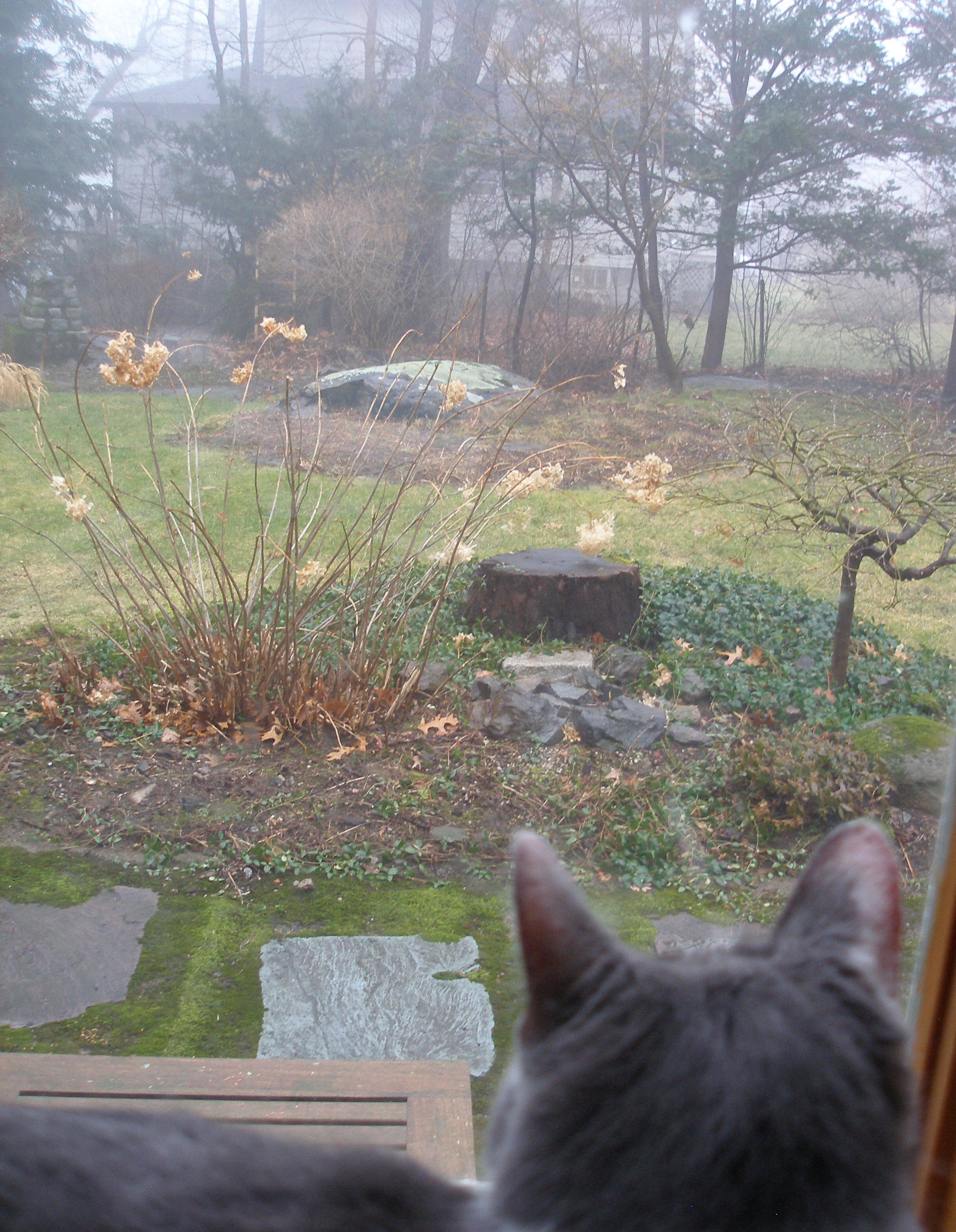
Jude needed a new home. When Shah Hadjebi told me she was a special cat, I knew I could believe him. As it turned out, that cat and I were kindred spirits. When I was home she was always with me. Unlike most cats, she liked to be carried. Since she loved looking out the large kitchen window, I began to carry her for daily walks in my garden. She could be playful and active at times, loved catnip, and when she wanted to go somewhere she let you know it.

I cuddled her under a blanket “cave” when I knew her days were numbered. I told her, “All we have is the present moment.” Cats understand that. They live their whole lives that way. A year after she died, I asked Shah to paint her portrait. He used the photo of her looking up at a blue jay through the kitchen window, a most fitting way to celebrate the life of a cat we both loved.

OLYMPUS DIGITAL CAMERA

OLYMPUS DIGITAL CAMERA

OLYMPUS DIGITAL CAMERA

OLYMPUS DIGITAL CAMERA

OLYMPUS DIGITAL CAMERA

OLYMPUS DIGITAL CAMERA

Jude

Listening to a Special Place

Turning places into radiant refuges requires understanding what creates welcome and peace. The owners who ran the Bufflehead Cove Inn supplied both in abundance with a sensitivity to the spirit of that particular place. In converting their family home on the tidal Kennebunk River into an inn, they made full use of generations of experience and memories. It was alive with what it means to be home in a way that was at once now and timeless.

The inside and the outside were not a division but a collaboration. You could see the ducks gathering at dawn from the porch. There was the smell of wood burning in the fireplace in the evening. You would hear the slight creak of the old steps as you climbed up to your room to see reflections from the river dancing on the ceiling. Even the easy walk along the rustic road into town by ponds in the woods seemed just right.

OLYMPUS DIGITAL CAMERA

porch chairs

OLYMPUS DIGITAL CAMERA

OLYMPUS DIGITAL CAMERA

OLYMPUS DIGITAL CAMERA

OLYMPUS DIGITAL CAMERA

OLYMPUS DIGITAL CAMERA

OLYMPUS DIGITAL CAMERA

OLYMPUS DIGITAL CAMERA

OLYMPUS DIGITAL CAMERA

8 lily on the porch copy

Music of the Spheres and Your Brain

Because I am taking a course on meditation and the brain, I have been thinking about how miraculous our continually changing human brains really are. I try to remind myself that even though we have names for parts of the complex brain, that does not mean we understand all that is going on. Could it … Continue reading “Music of the Spheres and Your Brain”

OLYMPUS DIGITAL CAMERA

Because I am taking a course on meditation and the brain, I have been thinking about how miraculous our continually changing human brains really are. I try to remind myself that even though we have names for parts of the complex brain, that does not mean we understand all that is going on.

Could it be that our brains are singing meaning along with the universe?

For example, articles make broad claims about the benefits of singing, and my experience would agree. But studies also make clear that a better understanding of specific aspects might lead to useful practical applications. I began to wonder about whether the rhythms and compositions I intuitively frame in my close-up photos make use of skills enhanced by neuronal connections formed during many years of singing. My ability to detect and relate to subtle nuances in tone of voice certainly grew over that time.

Recently while meditating, I had the feeling that the fact that everything is constantly changing is not just an annoyance. It seemed a fundamental building block of reality and, in fact, worthy of awe. I had the odd thought that when our sun consumes our planet, that transience will still be vitally “alive.” I found that oddly reassuring.

Toward the end of this talk on the brain, Keith Kendrick mentions that the time series of activity in the brain carries meaning, not just the structure or individual signals. This resonated with the musical quality that physicists seem to find at all scales including the probability waves at the heart of quantum theory.

Of all the problematic human undertakings, we can be proud of the music we make using our miraculous brains and bodies. As this article on modern physics and music describes: “Music resonates, it pulses, it leaps into our psyches. It offers a safe space for scientists and musicians alike to work through the paradoxes of modern physics.”

Noticing Stones

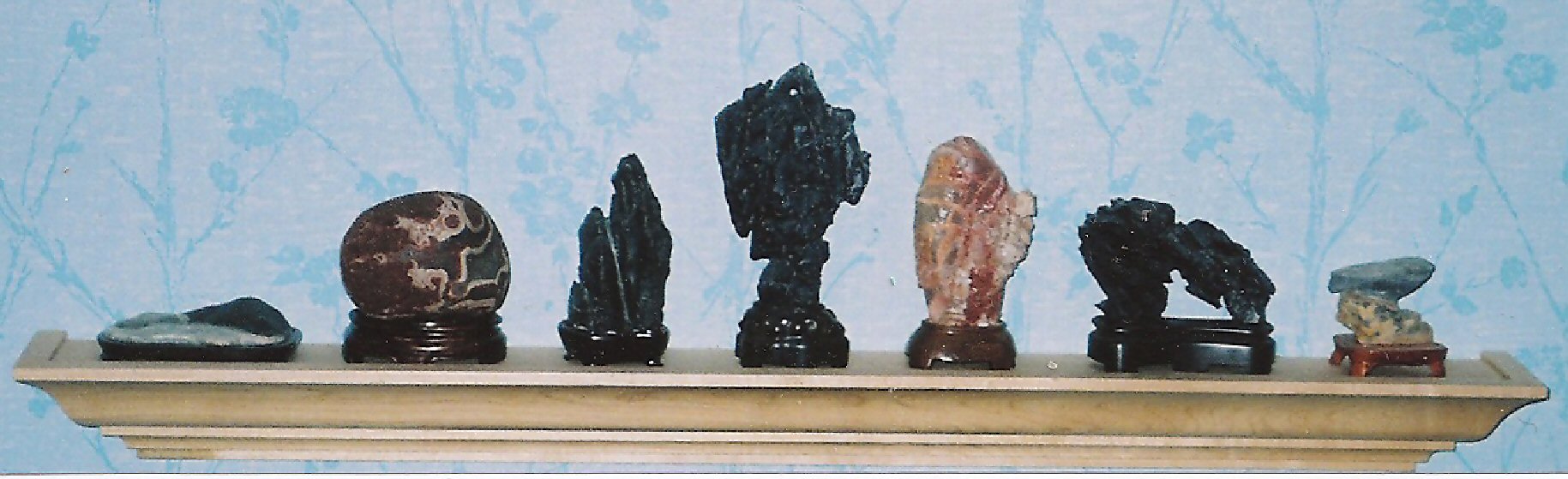
It is the rare child who does not like stones. Some of us never stop picking them up. It is not just the stones but the process – the adventures involved in finding them and the friendships.

These evocative examples lined up above my monitor speak of the larger natural world, a quality that is much appreciated by the Asian scholar.

Viewing stones on shelf

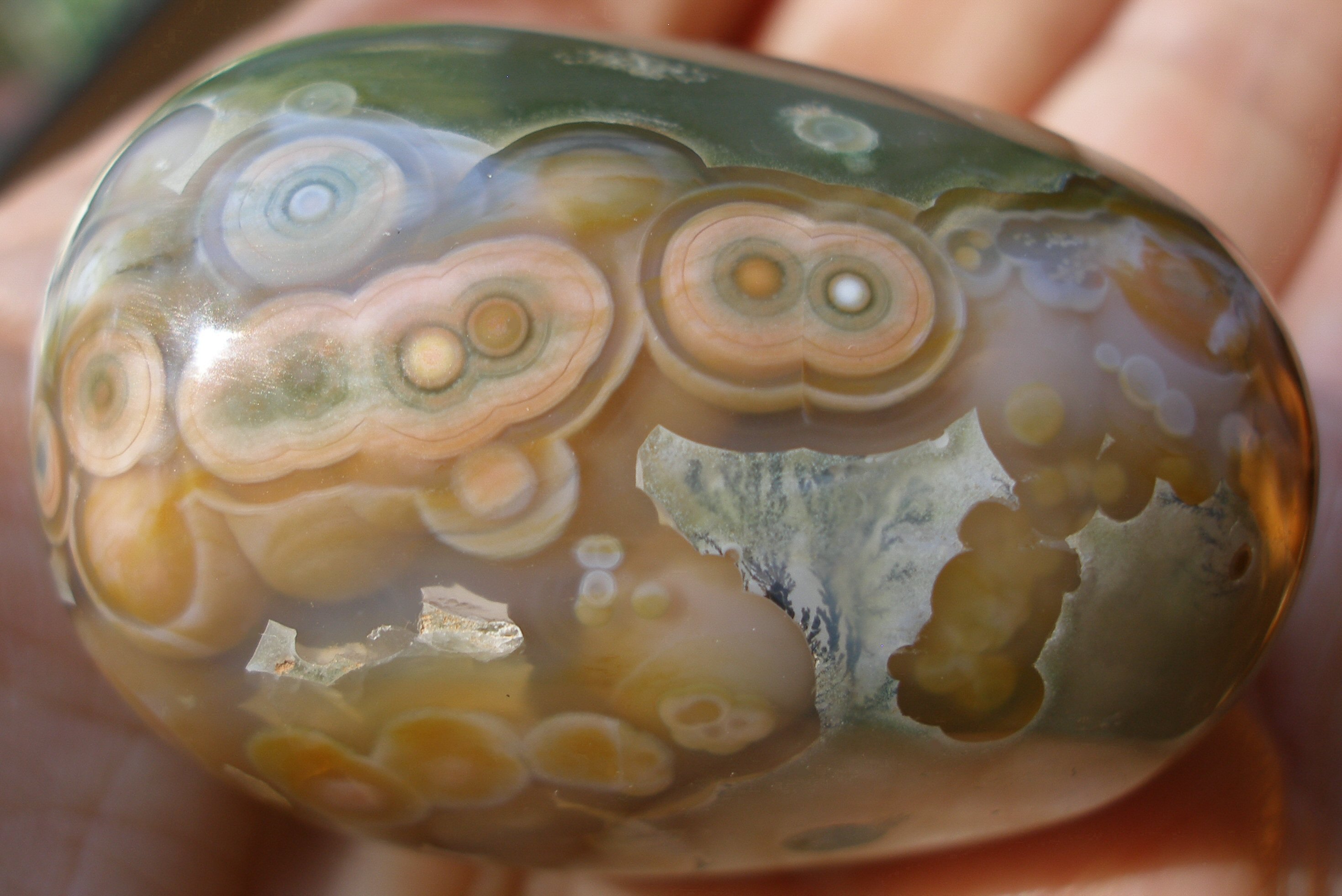
A close looks provides access to amazing colors, details and dreams:

OLYMPUS DIGITAL CAMERA

OLYMPUS DIGITAL CAMERA

OLYMPUS DIGITAL CAMERA

OLYMPUS DIGITAL CAMERA

OLYMPUS DIGITAL CAMERA

Freedom of Speech in the Age of the Internet

Salt Marsh, ME

Given our love for communicating with each other and our creative and technical talents, the development of the internet may have been inevitable for our species. However, powerful tools can be used for many purposes.

A New York Times article discusses the role social media played in riots in Sri Lanka. Karsten Muller and Carlo Schwarz conducted research on the relationship between social media and hate crime – “To establish causality, we exploit exogenous variation in major internet and Facebook outages, which fully undo the correlation between social media and hate crime.” (p. 1).

Leaders of several high-tech firms have begun to remove online content that is deemed harmful. That has resulted in questions about who should be doing the monitoring and what standards should apply given the sensitive boundary between free speech on the one hand and controlling the harm speech can do on the other.

Humans in general are subject to harmful mind-tendencies that influence our behavior. And there will always be those who are congenitally incapable of caring about what happens to others.

We need to pay attention and learn how to protect ourselves from ourselves even as we collaborate to make use of our many talents in solving the complex problems we face.

The internet may be just the incentive we need to actively work at building in a level of global culture that supports human thriving while protecting us from our worst tendencies. In essence, that amounts to moving to the next evolutionary stage for our species.

Floating Flower Petals

OLYMPUS DIGITAL CAMERA

Floating flower petals took on special meaning during our video conference to share tea and dialogue on May 23rd, 2018.

At my suggestion, the other two contributed tea flowers:

Flowers 052318

And I hung a tea scroll with an image of floating flower petals within camera range:

OLYMPUS DIGITAL CAMERA

Given we were actually in separate locations, each of us would need to act as both host and guest in preparing tea for ourselves. That is quite possible. It can be important, especially in cultures where taking time to offer oneself both respectful nurturing and gratitude is not given priority. In the context of our virtual meeting, listening for the sound as we poured hot water would connect us in generosity as much as if we were pouring for each other.

Remembering that humans tend to take things in best in sound bites, I paused frequently as I read aloud from William Scott Wilson’s wonderful book on tea scroll sayings, The One Taste of Truth, Zen and the Art of Drinking Tea:

Ichigo ichi’e ‘Each meeting a once-in-a-lifetime event’…is included among the fundamental concepts…because it is the guiding life not only of Tea but of Zen Buddhism and the martial arts as well. Ichigo refers to a person’s life, from birth to death – something never to be repeated – while ichi’e is a coming together or an assembly of people. The world is transient, and it is natural that whomever you meet, you will part from. Every meeting is special and unique, and will never happen again in the same way. Thus, you should put your entire body and spirit into the encounter, whether it be in the tea room, a chance meeting in the street, in martial conflict, or in your own solitary thought. The message extends to everyday behavior: one should pay attention to things and events as though none will ever be repeated. Let happiness as well as sorrow be complete, and experienced with attention and nonattachment” (p. 19-20).

I suggested we focus on the “Pause” guideline from Gregory Kramer’s powerful Insight Dialogue guidelines as the pause brings one home to present moment awareness.

Once they had their tea in hand, I made my tea using traditional Japanese tea ceremony utensils holding them up so they could see:

OLYMPUS DIGITAL CAMERA

I opened the container and placed two scoops of tea powder into the bowl. After pouring in hot water, I whisked the bright green matcha tea into suspension.

As we drank, I spoke of the warmth, the look, and the smell of the tea as well as how the taste is different with each sip. I gratefully acknowledged the energy of the sun captured by the tea leaves, the sustaining waters flowing through the tea plant and through us, and the effort of all those who planted, tended, plucked, dried, processed, packaged and transported the tea. Then there were also others who supported them, the ones who supported those others and so on…

After drinking our tea, we spoke making use of all of the Insight Dialogue guidelines – Pause, Relax, Open, Trust Emergence (since changed to Attune to Emergence), Listen Deeply and Speak the Truth. One of them commented on how rarely we slow down to really pay attention but when we do, we can notice so many sensory details. Another comment was about all the moments involved in the causes and conditions that led up to our being able to share tea. I mentioned how slowly time seemed to be passing.

As we approached the time limit for a meeting with a free Zoom account, I requested that these two experienced Insight Dialogue facilitators send me their comments via email. But they wanted to provide feedback right away and had the time, so we signed out and signed back in again for another meeting. I expressed my deep appreciation for any comments they cared to share.

One of them said that the “relaxed friendliness” stood out the most for her. To me it had a quality like the direct simplicity and freedom of children playing. They told me I had managed to bring in the meditative, relational and wisdom elements of Insight Dialogue. I was glad to receive confirmation that phrases used for the Zen art of Japanese tea ceremony are appropriate.

When I asked what I could improve, one of them told me she had felt the giving as host and the receiving as guest in her body as I spoke about each of us performing both roles as we served ourselves tea. She would have liked a reminder about that before we drank our tea. The other suggested it would be better to invite participants to continue the practice as we moved into dialogue rather than using the words, “commence dialogue.” I can definitely make use of both those improvements for future virtual tea and dialogue sessions.

I was not surprised when one of them spoke about her impression that Japanese tea ceremony is about perfection. I explained that while there are practical reasons for the order of the procedures, the true spirit of Japanese tea ceremony transcends perfection. Its values of harmony, purity, respect and tranquility ideally make it possible for all participants to be truly present forgetting “the dust of the world.” I thought of how sharing tea is used as a focus for convivial interaction in many cultures.

The short video,“A Tea Gathering at San Francisco’s Urasenke Society” explains there is freedom in Japanese tea ceremony’s structure, and the focus on process serves a number of important purposes including bringing participants very close to each other.

As I watched that film again, I noticed that rapidly-fading flowers were mentioned as appropriate for display during tea ceremony. I thought of the petals on the flowers in their vases, and those floating downstream in the image on the scroll we used (see photos above).

We truly connected for a time even as the three of us, like petals ourselves, floated downstream. Sharing tea and dialogue via video conference seemed to work – opening a whole world of interesting possibilities for sharing that way…