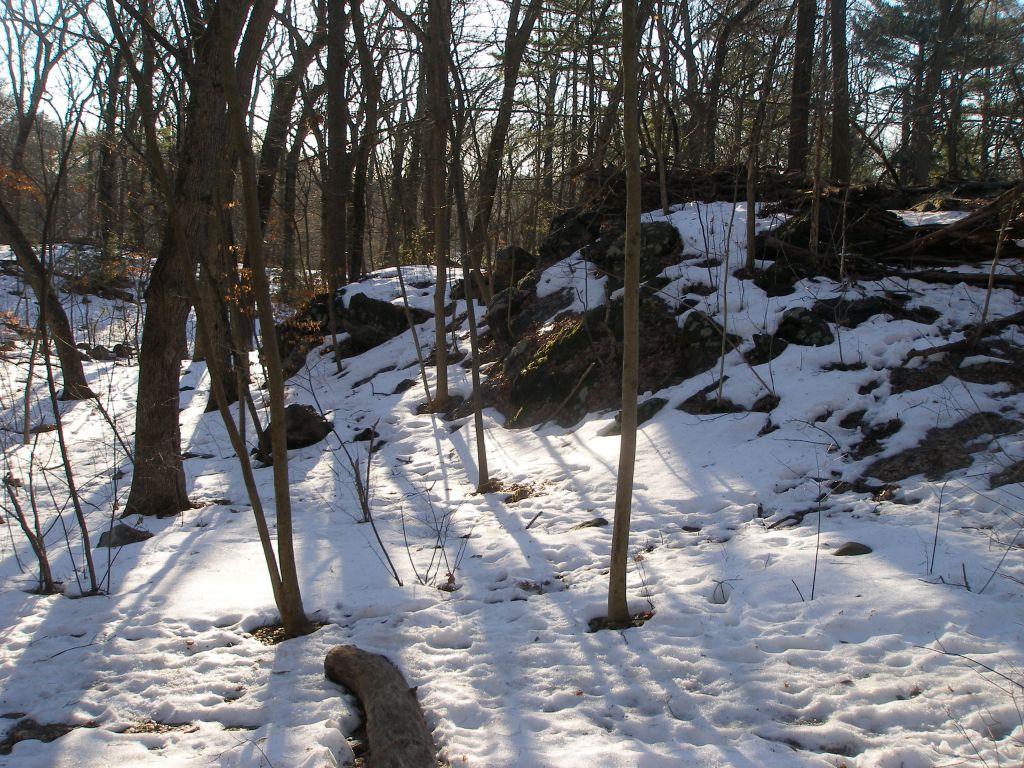
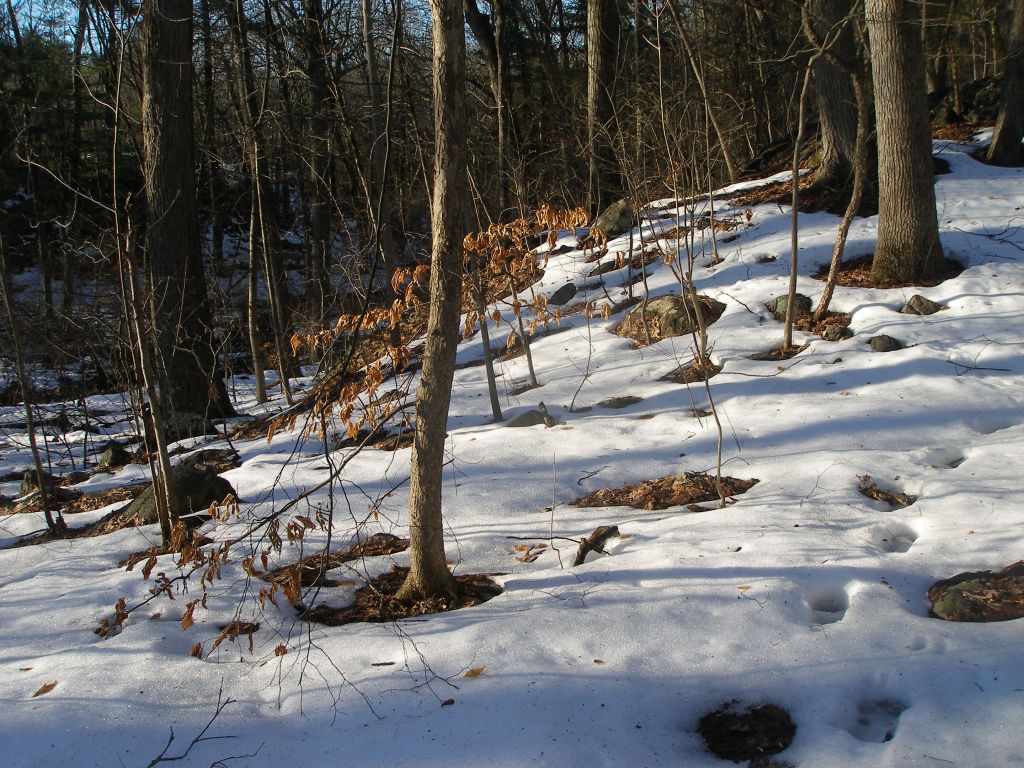
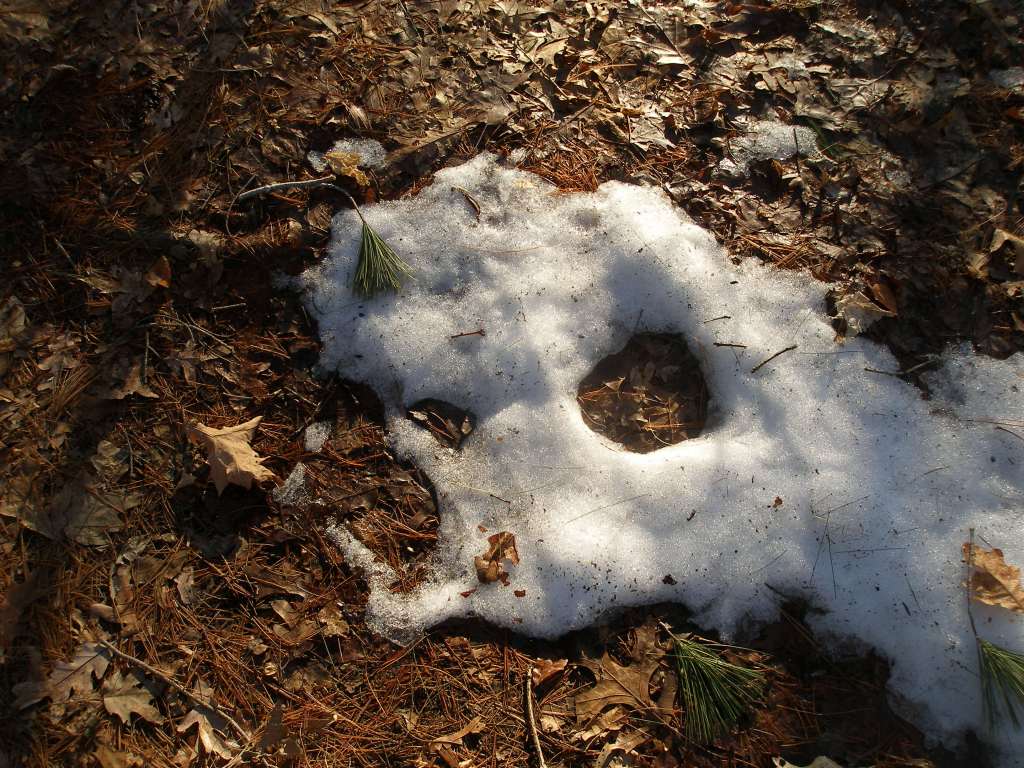
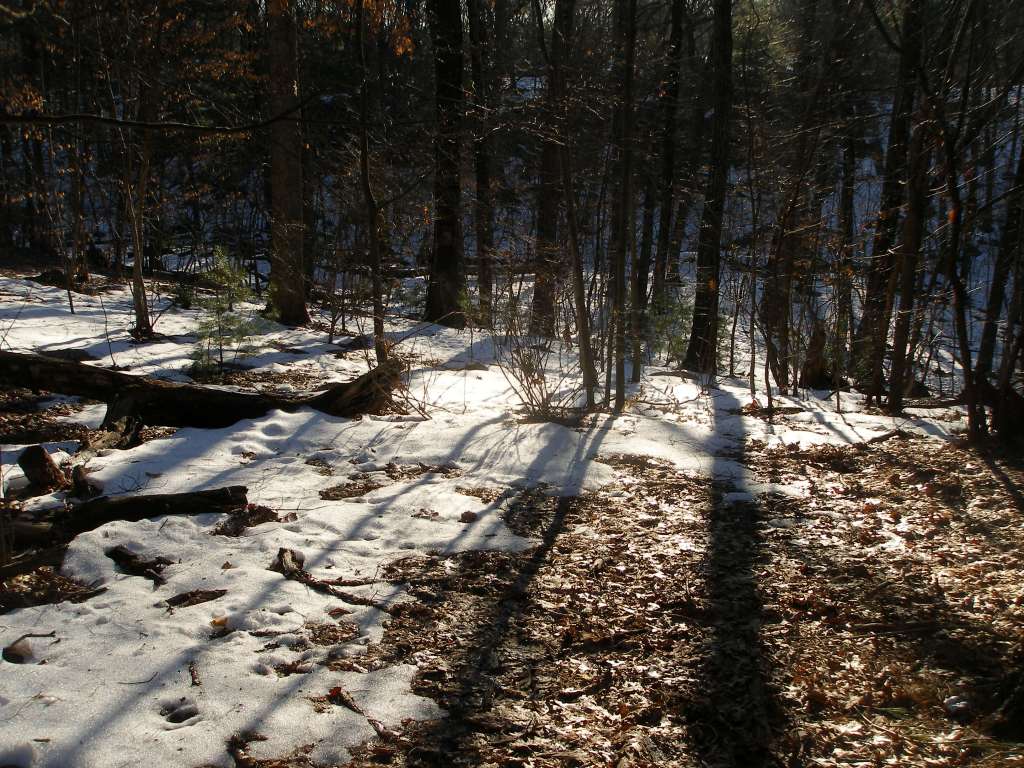
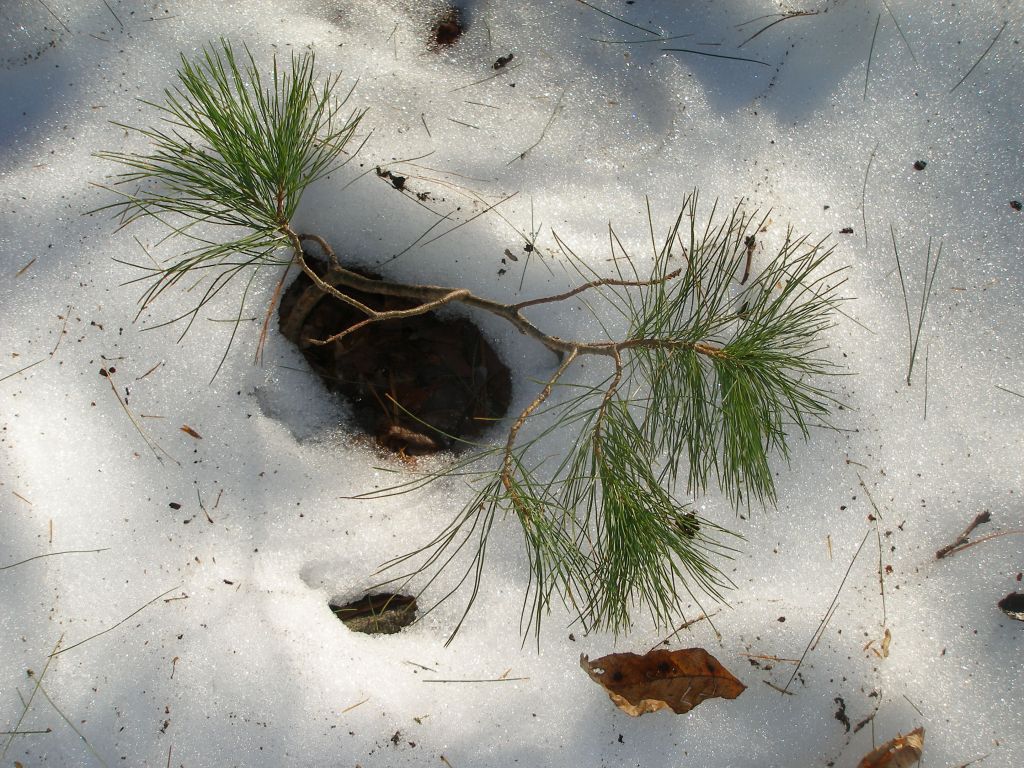
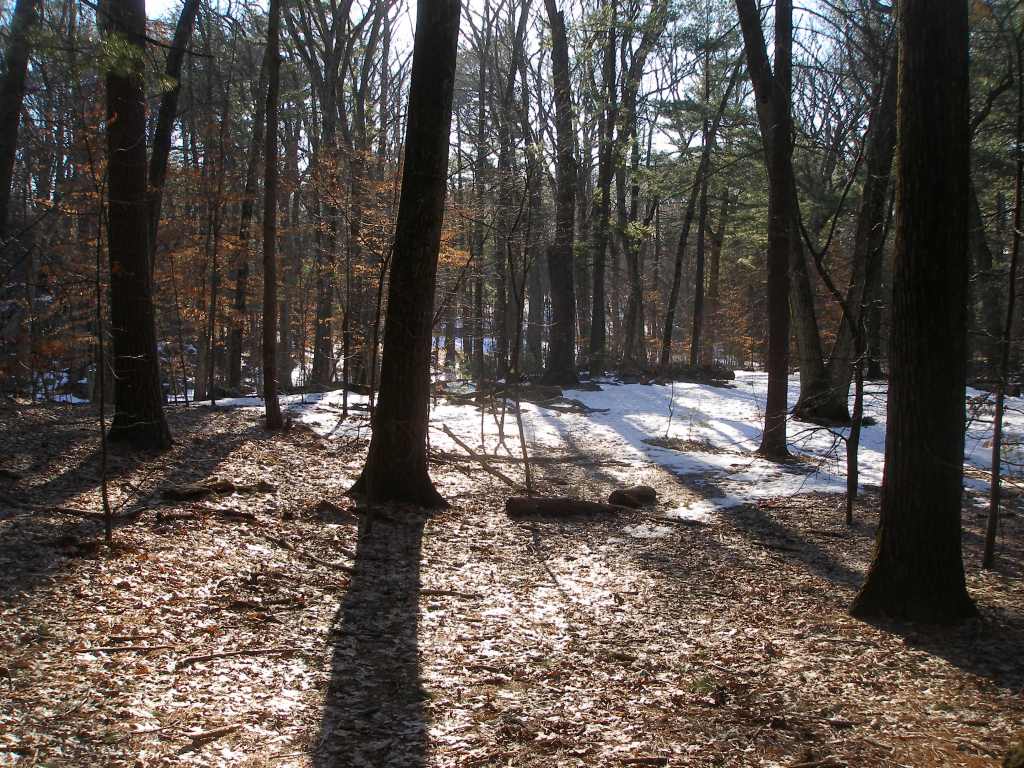
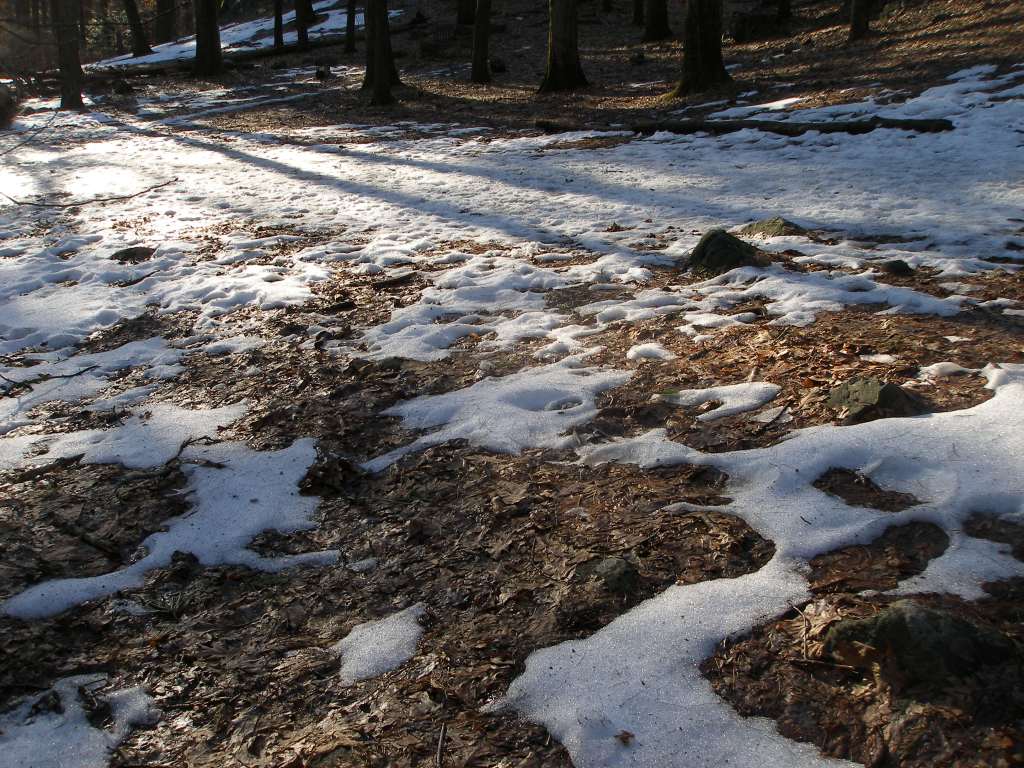
The snow had piled on snow this unusually cold winter. I wondered if I might find interesting patterns in the woods or at the pond now that it had finally started to melt.
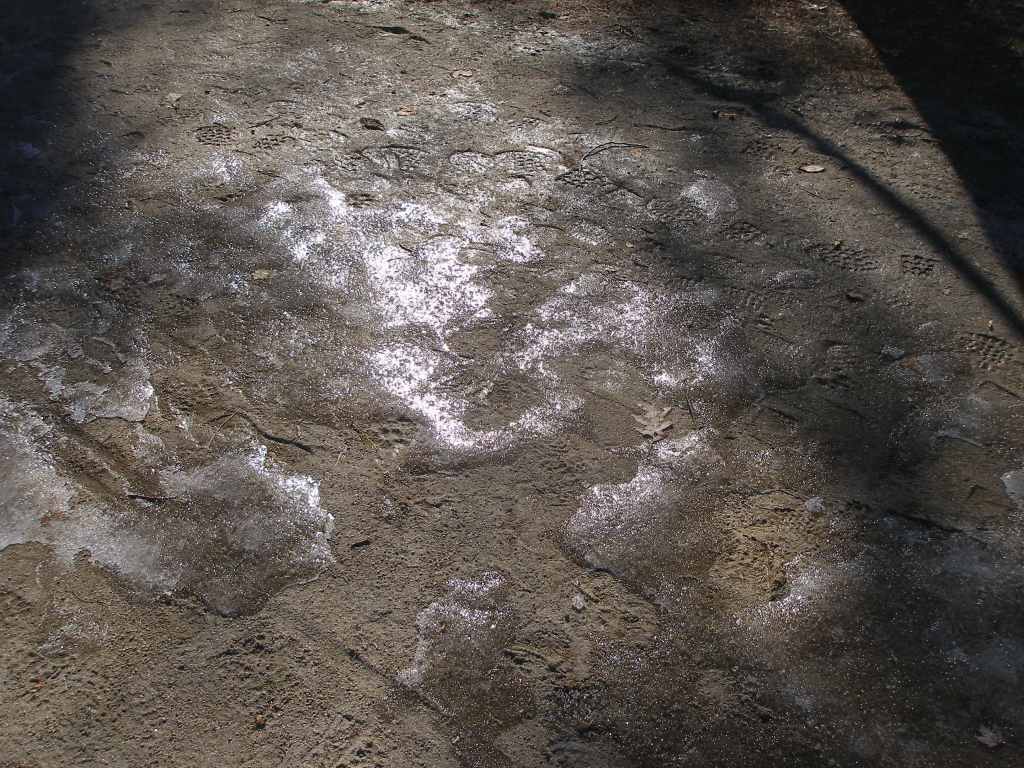
Slick icy paths could be treacherous, but this year the inches-deep snow was mostly hard and crusty. I did not sink in as I added my prints to those left by dogs, people, rabbits and others.
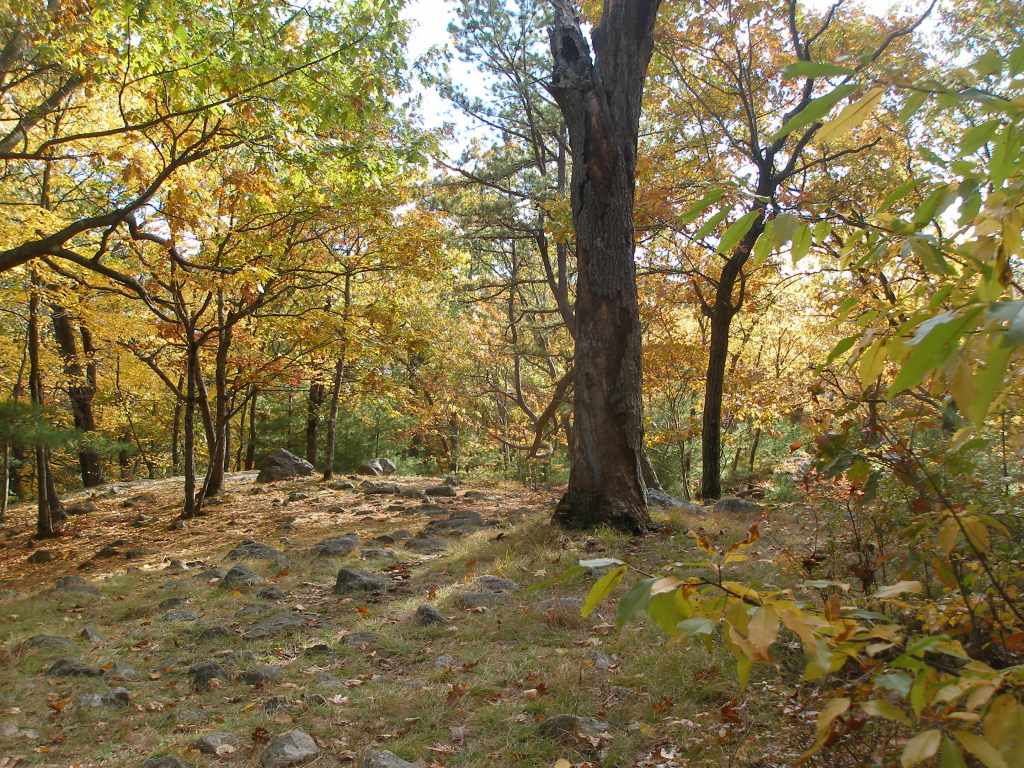
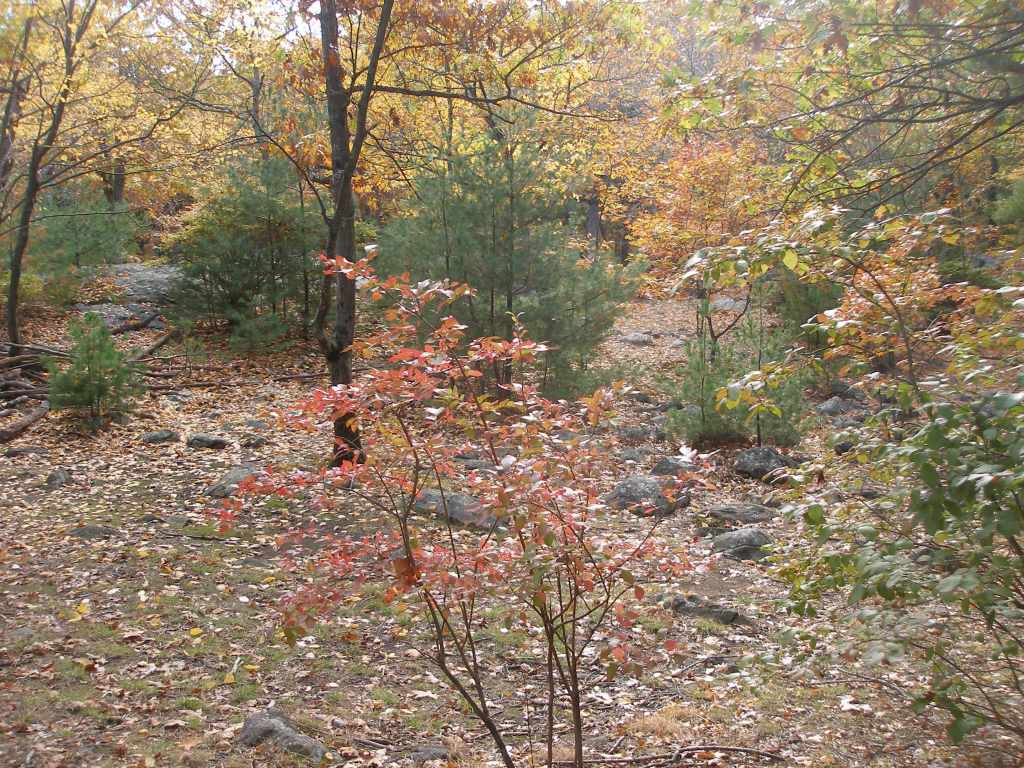
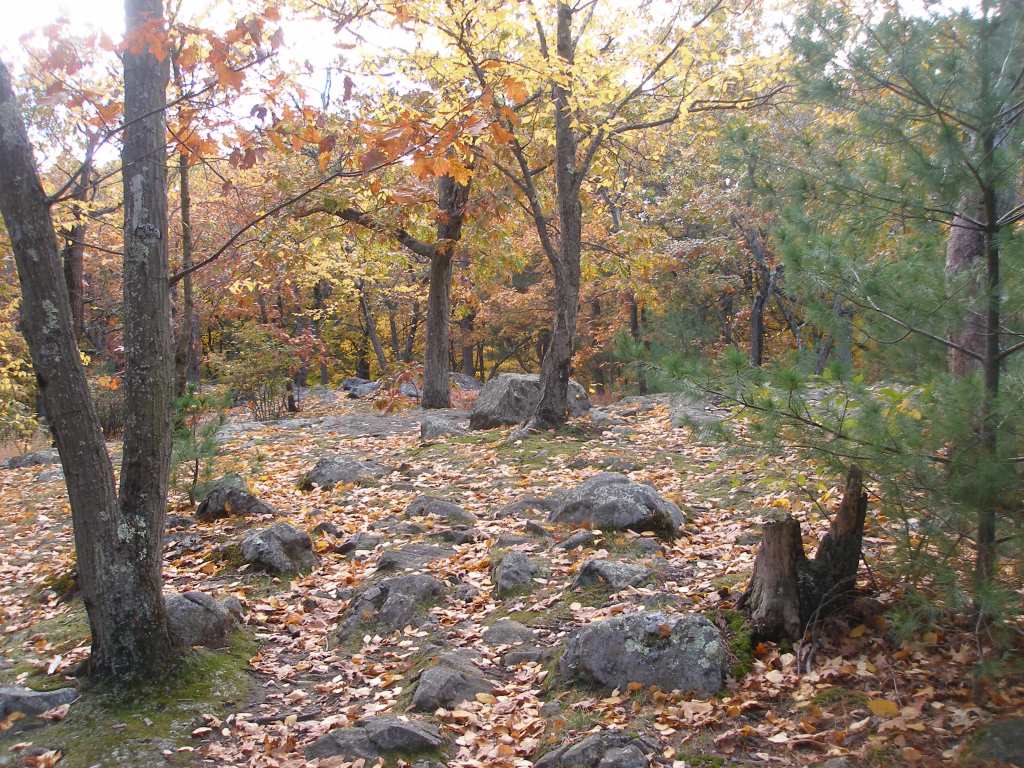
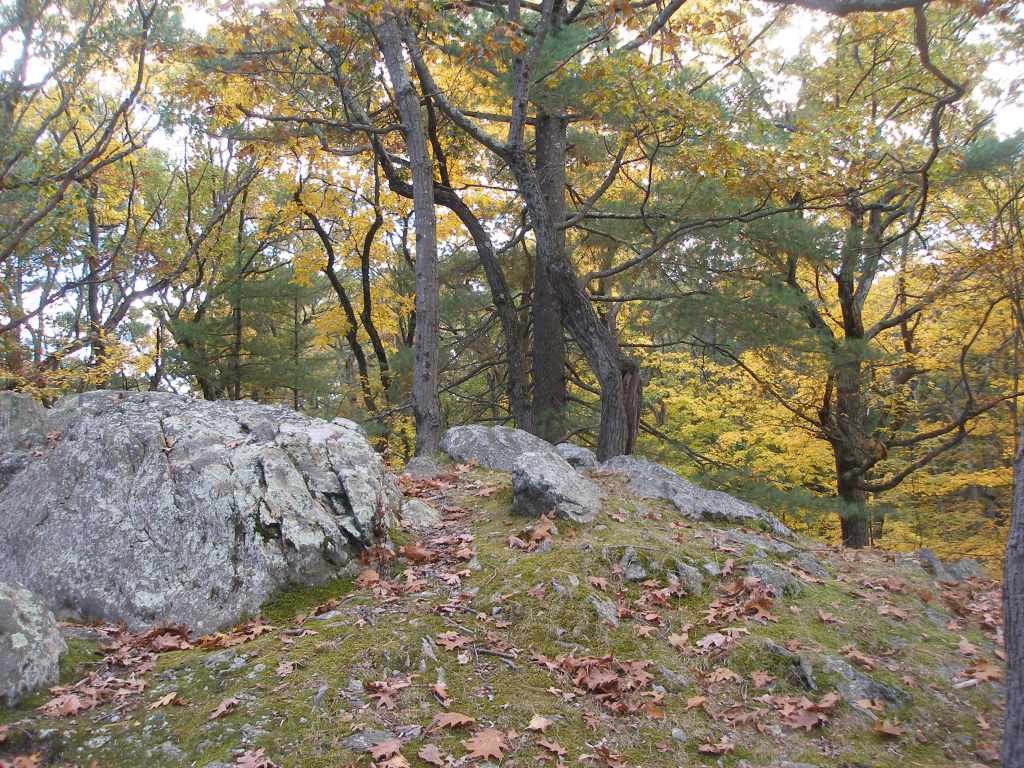
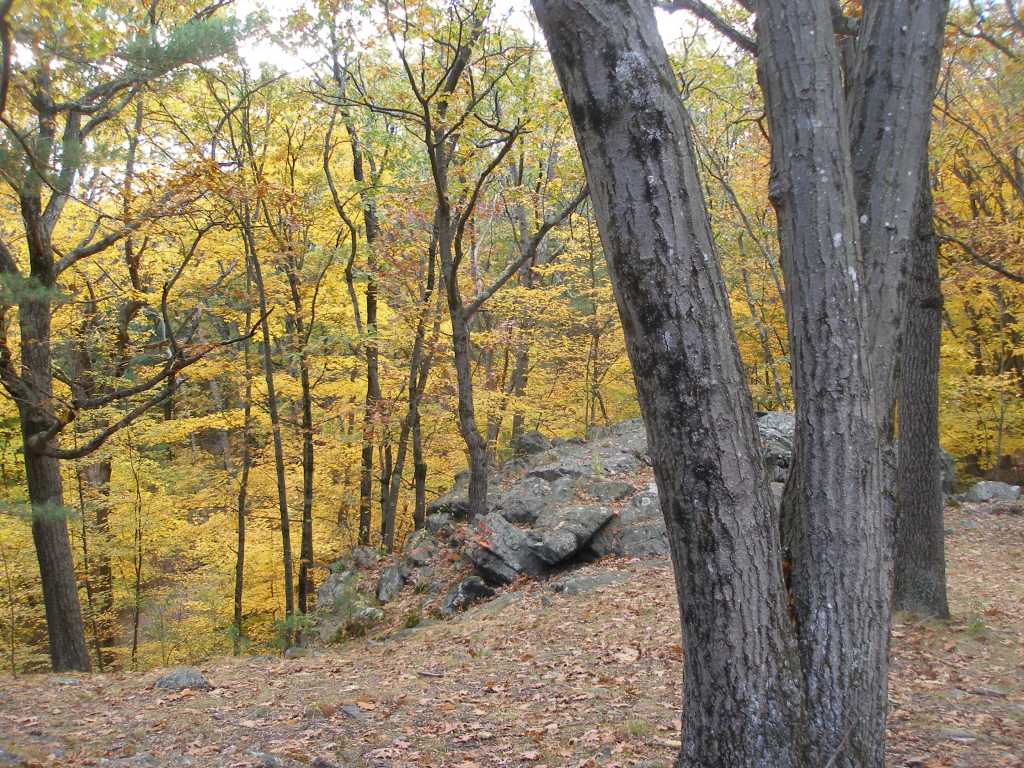
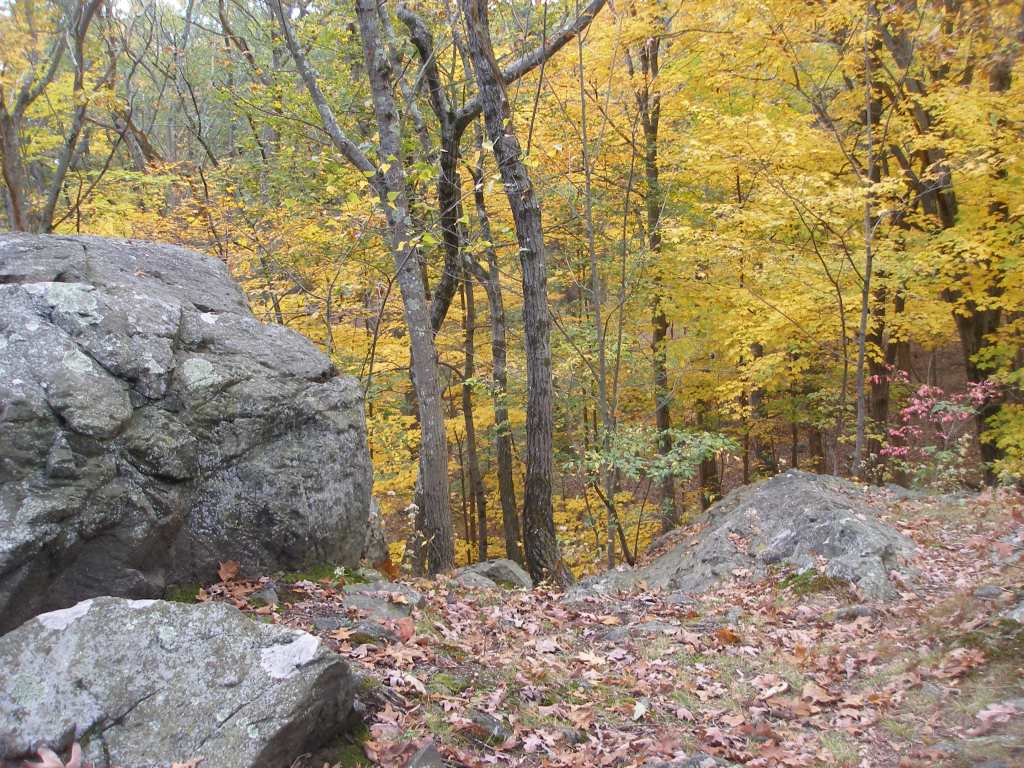
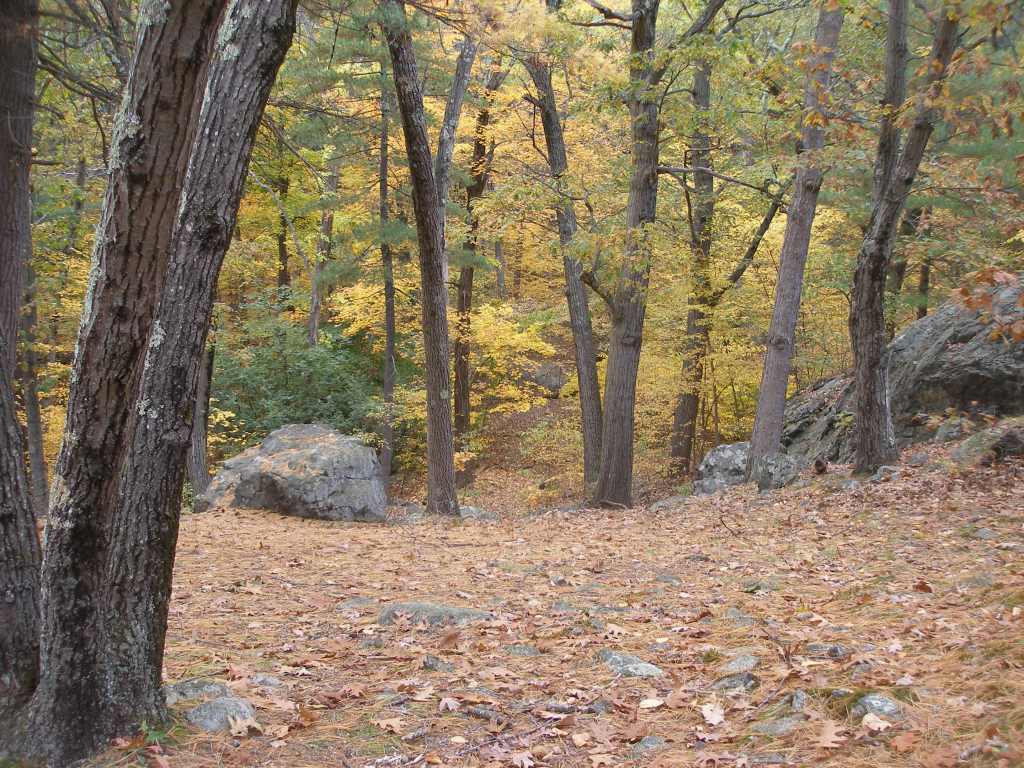
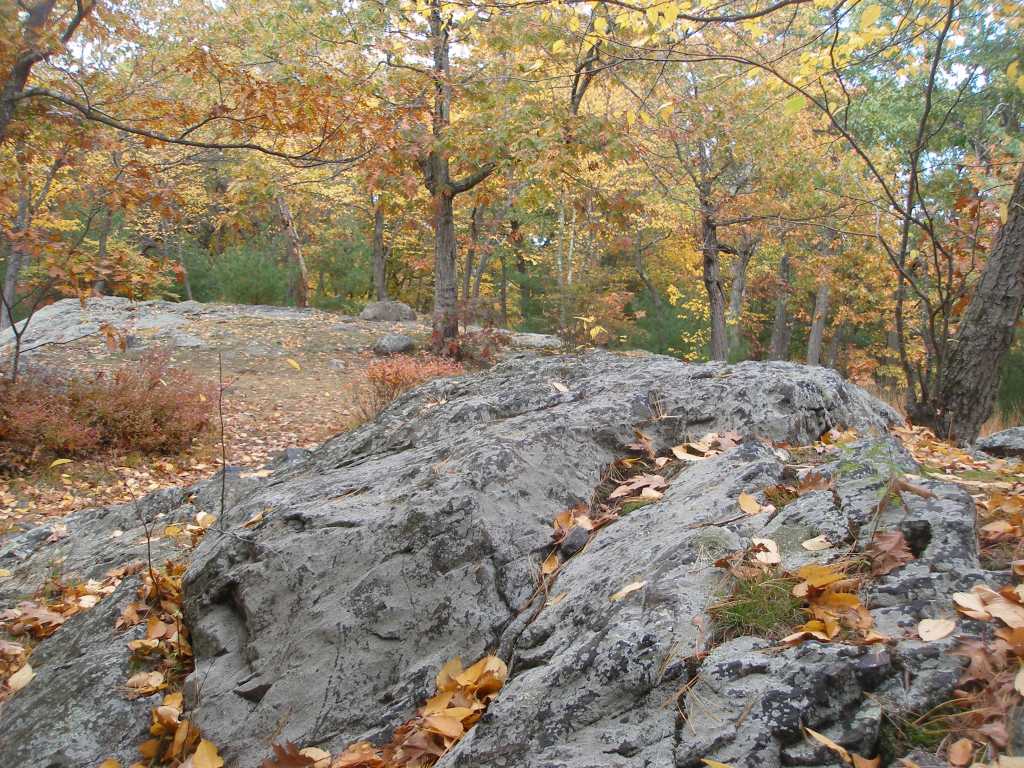
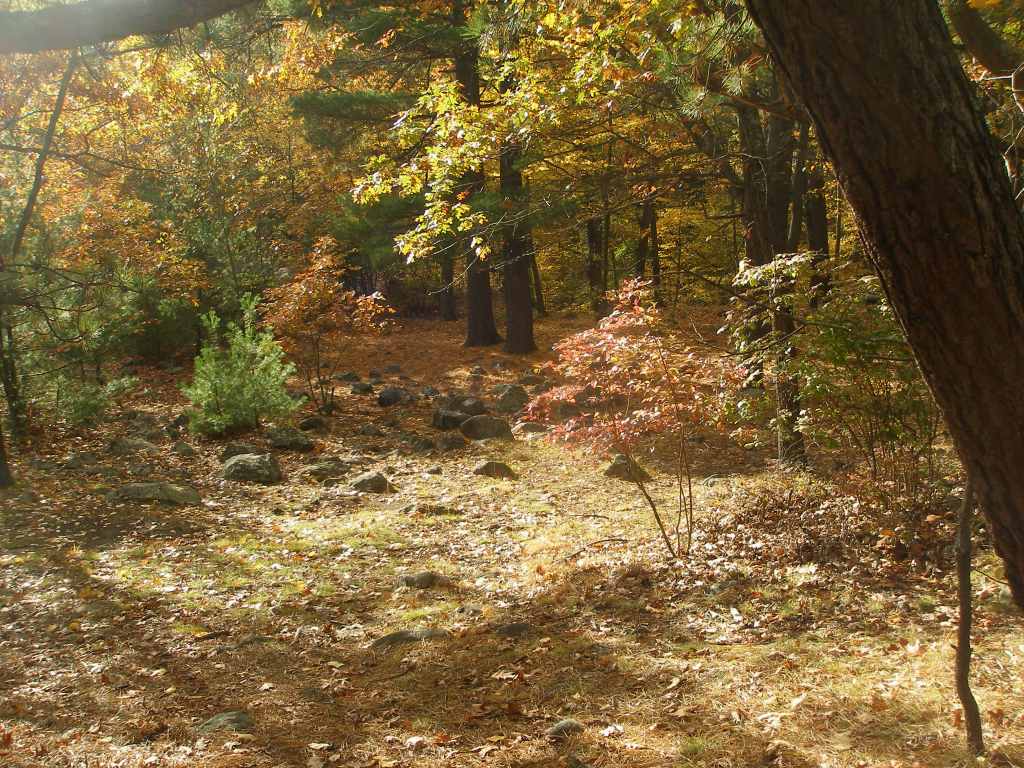
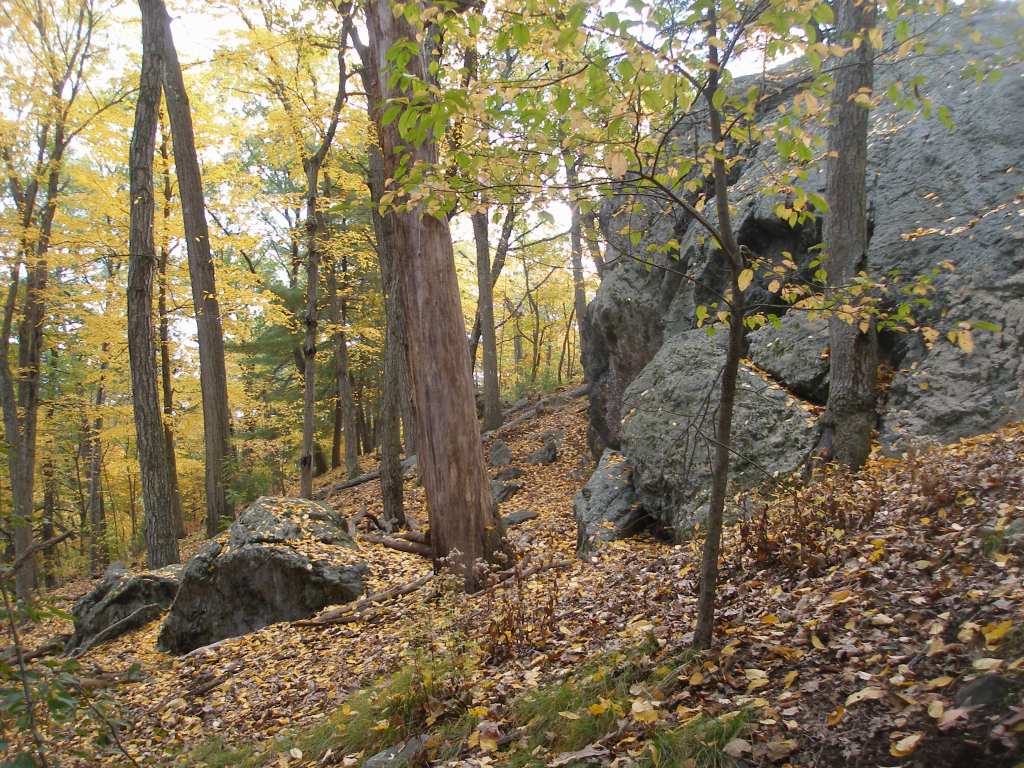
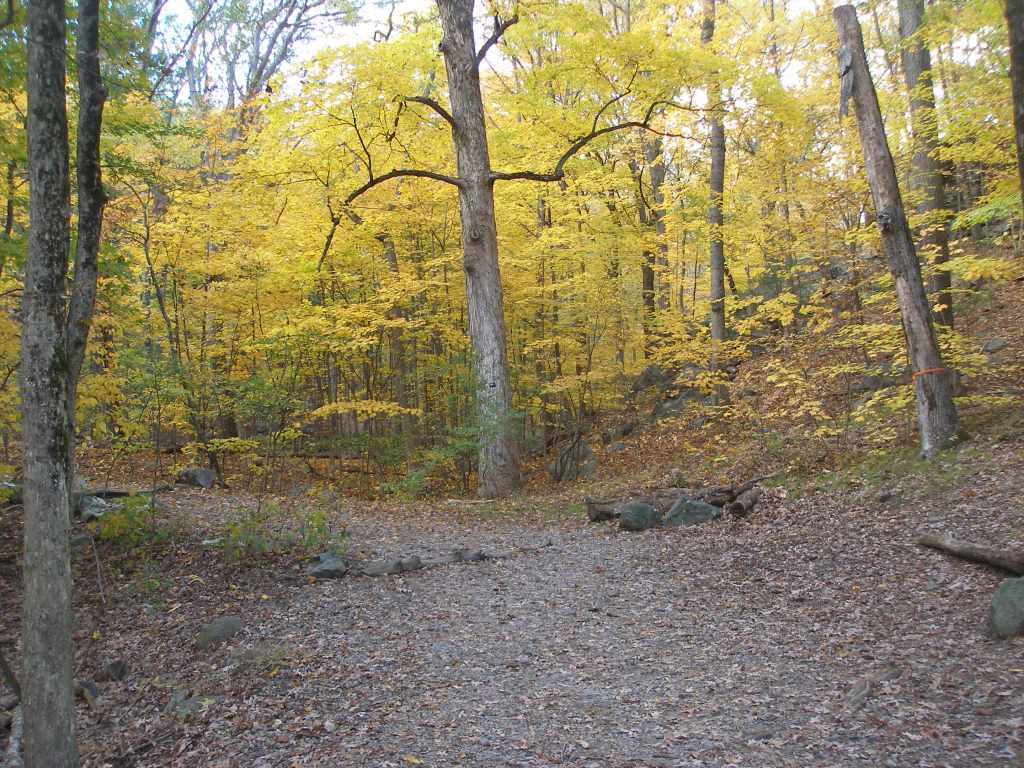
Although I expected a range of yellows in Menotomy Rocks Park at this time of year, the yellows had a clarity and depth to them as if they were saying, “We do not care that it has been dry until recently, we are going to do our yellow thing anyway so as to knock you socks off.”
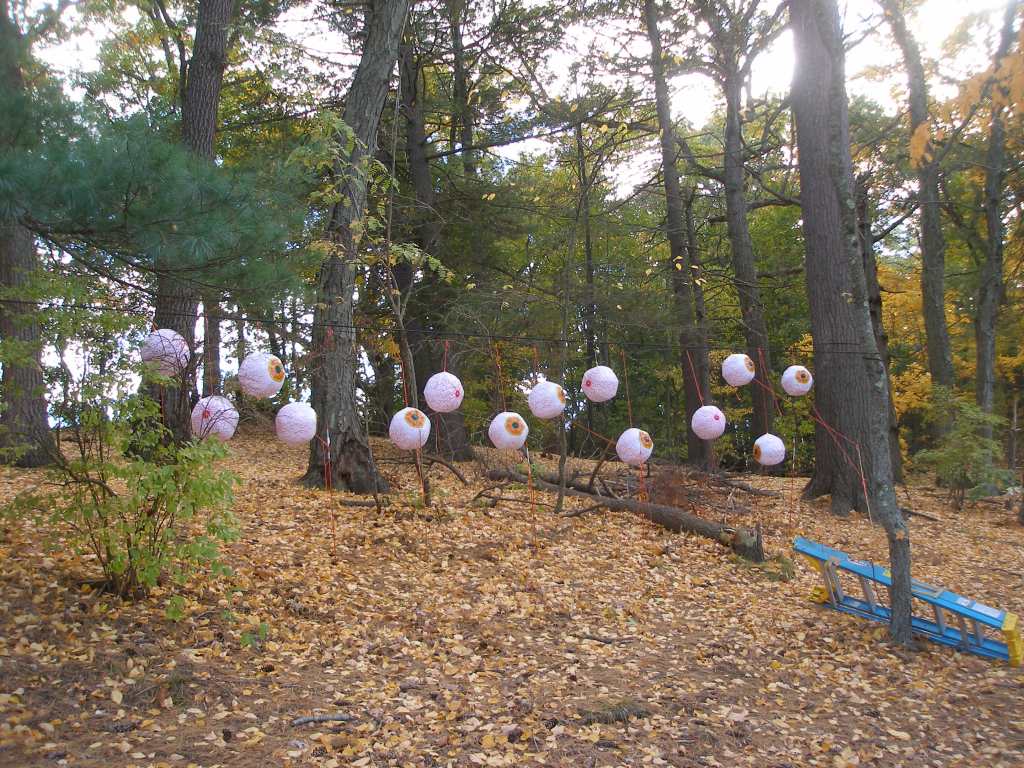
As I wandered down to the pond, folks were setting up for the “Spooky Walk” that would take place after it got dark. The mood was very different here, but I decided to included a few photos of their preparations, just for the fun of it.
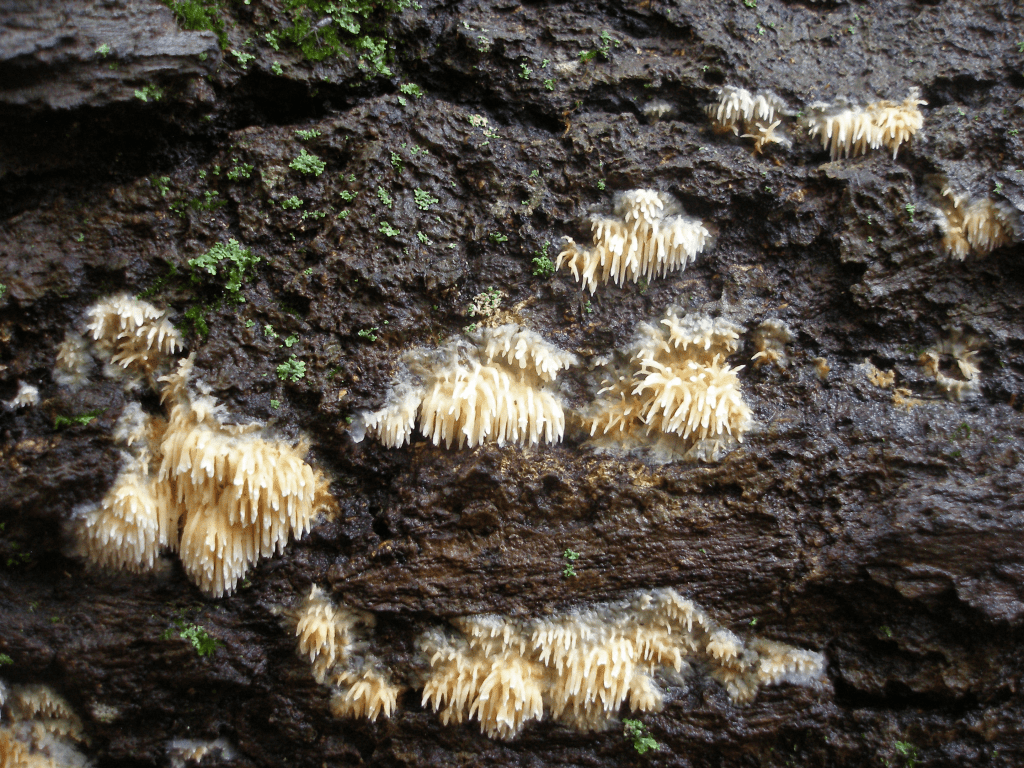
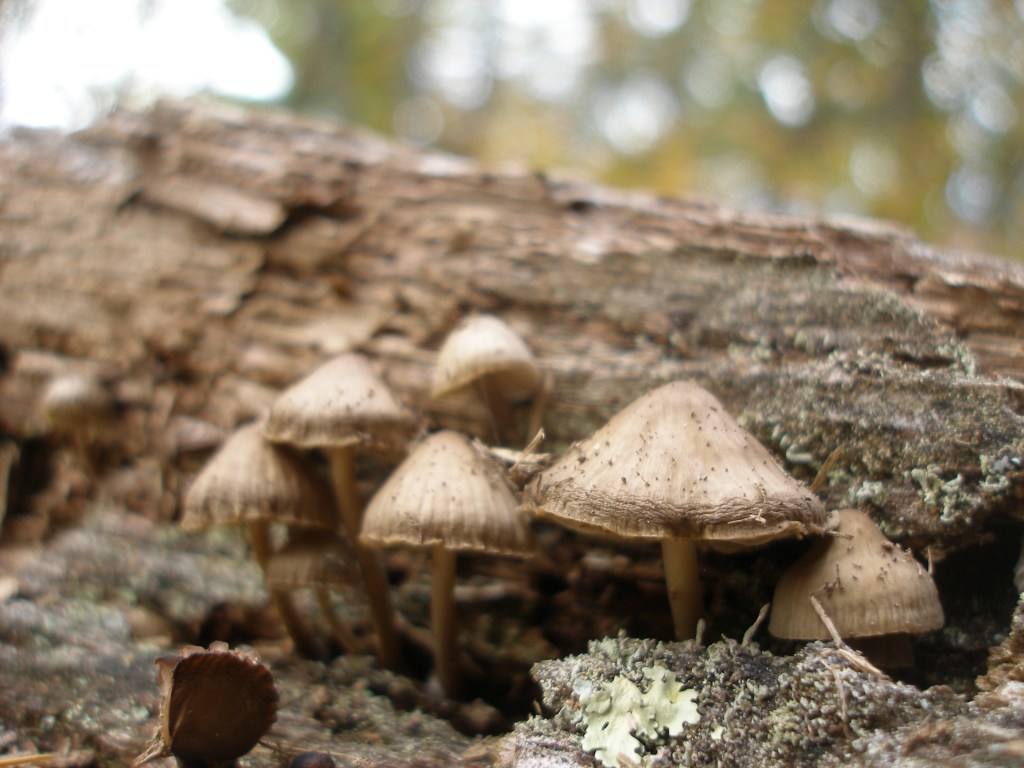
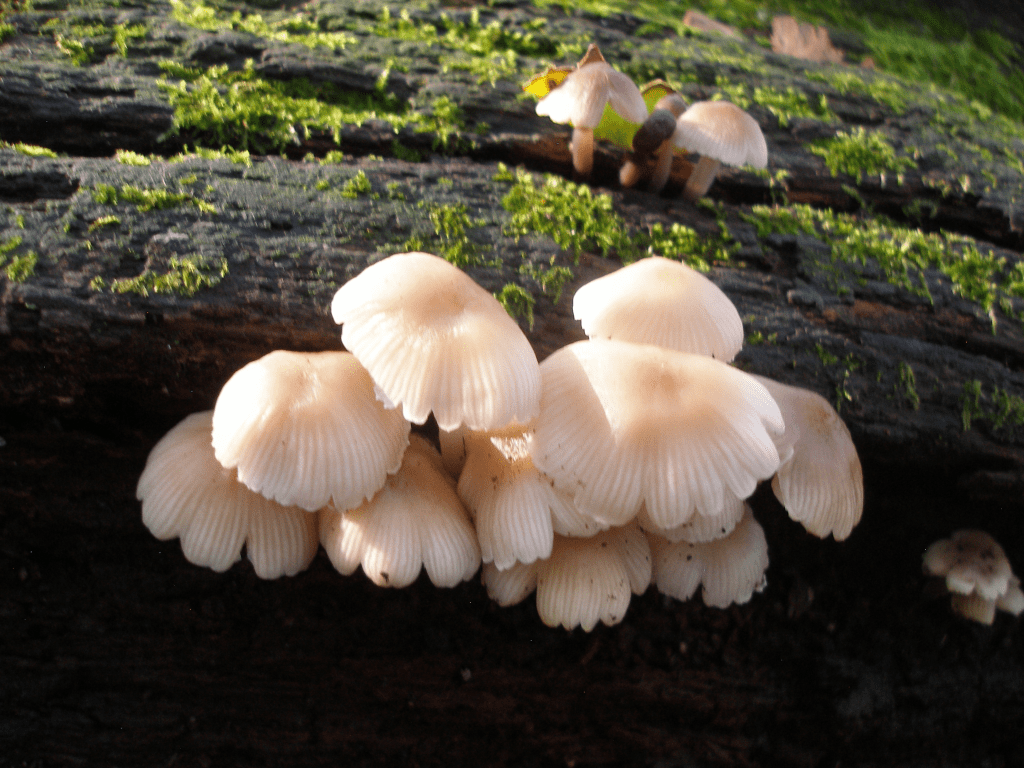
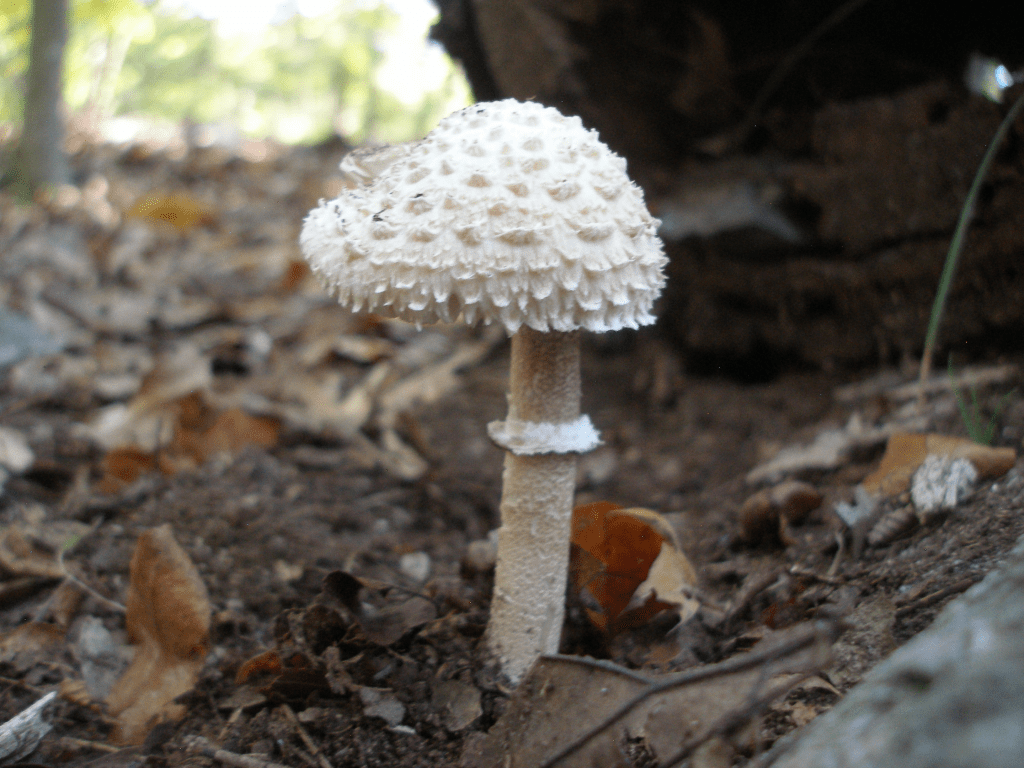
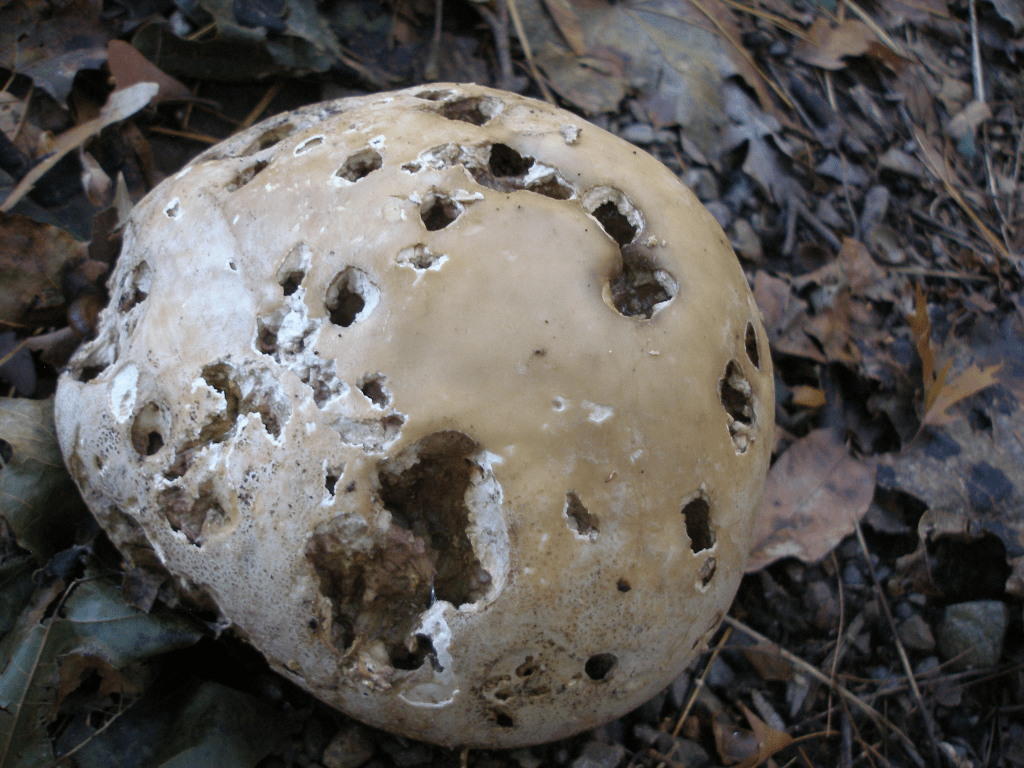
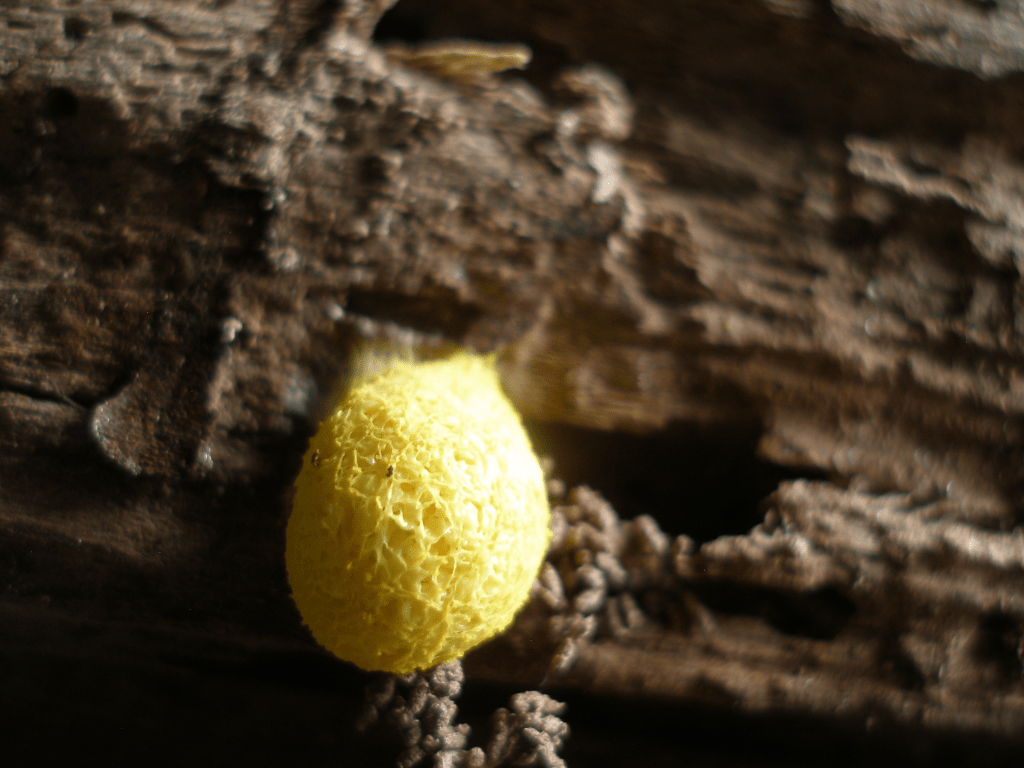
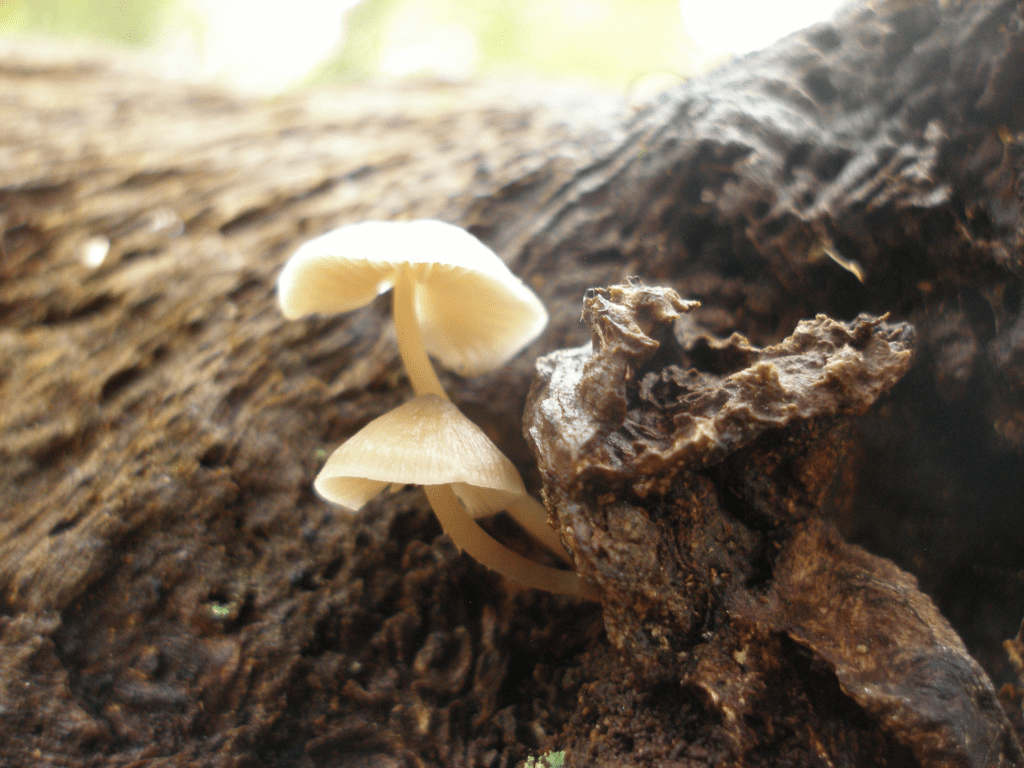
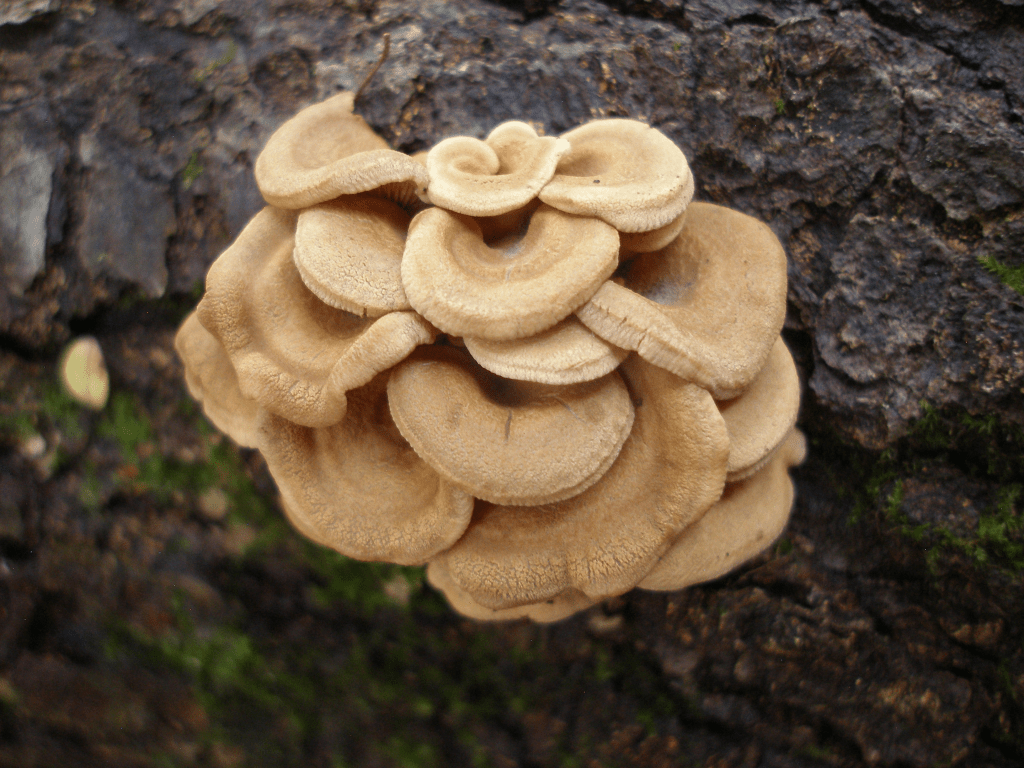
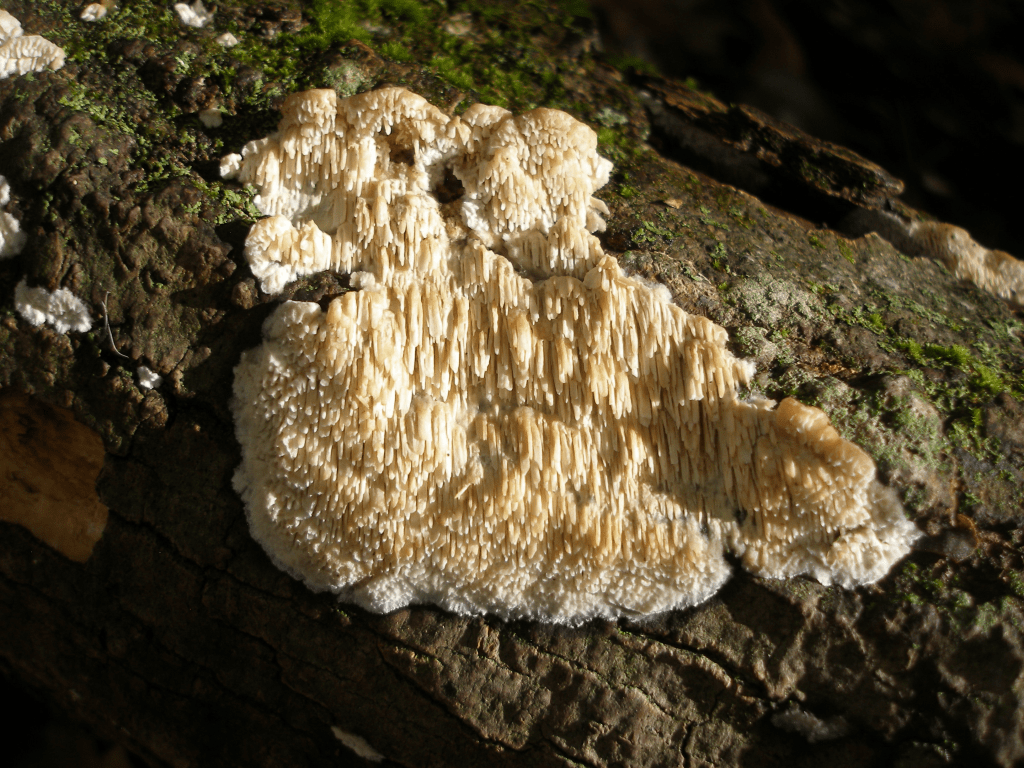
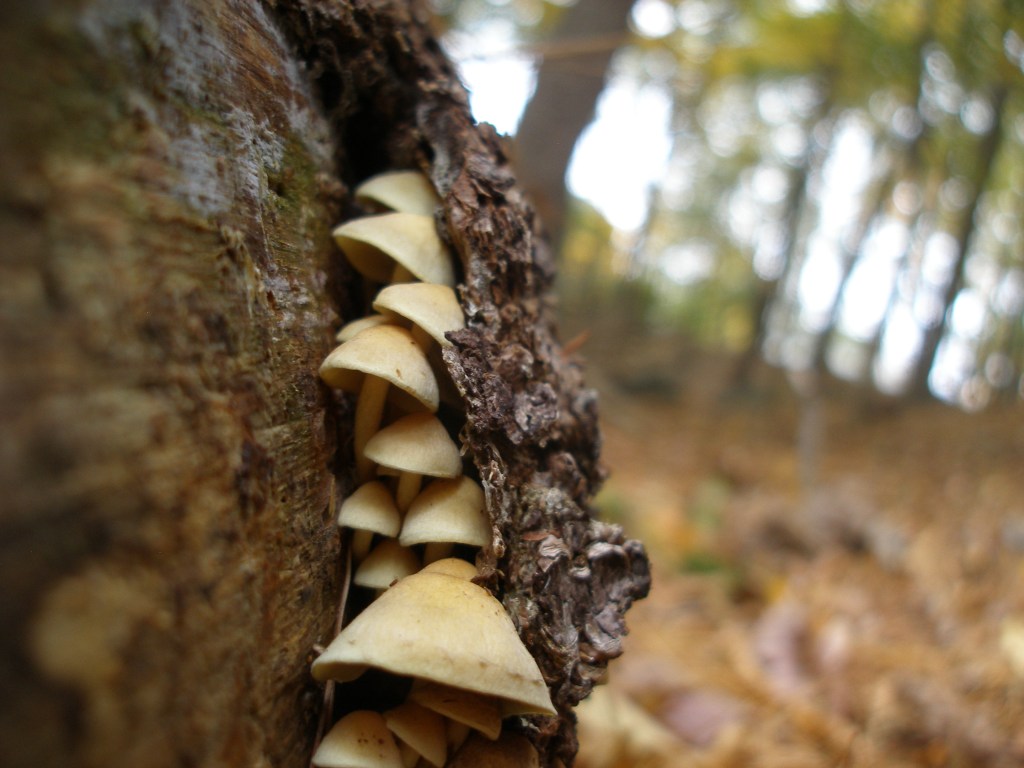
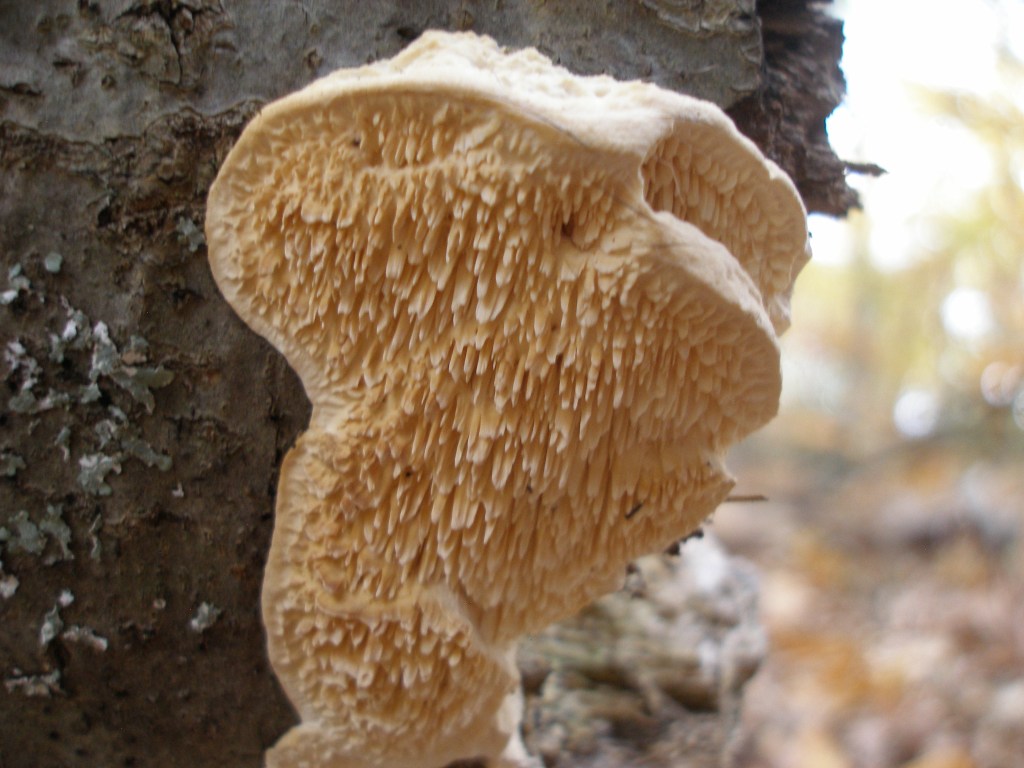
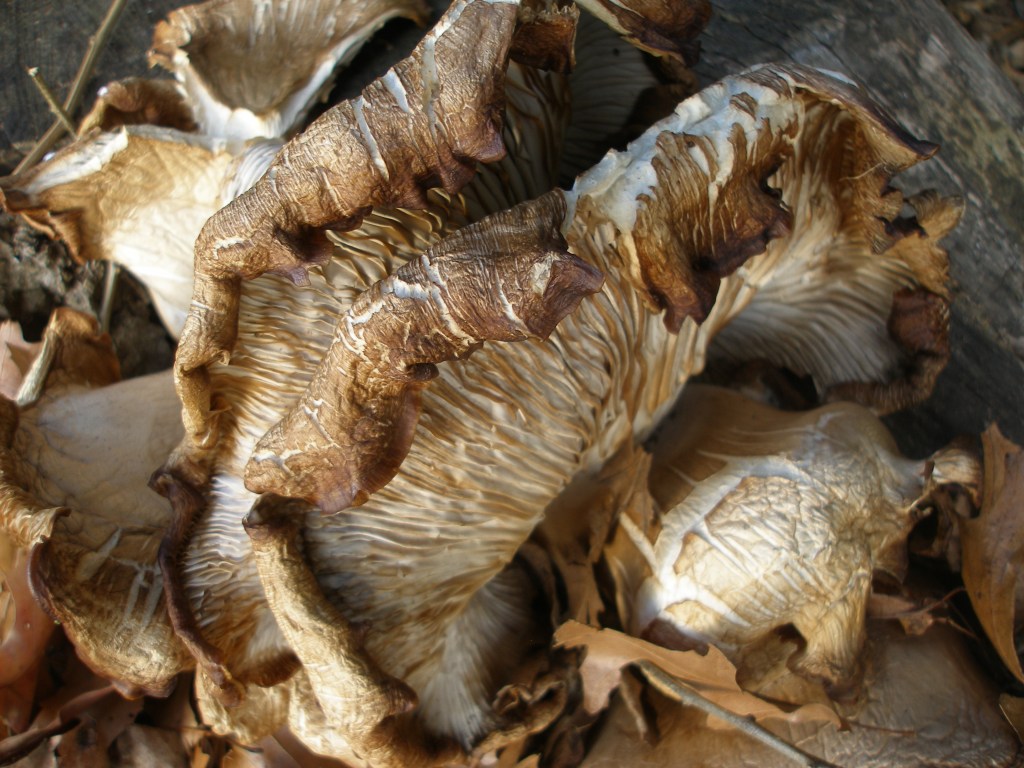
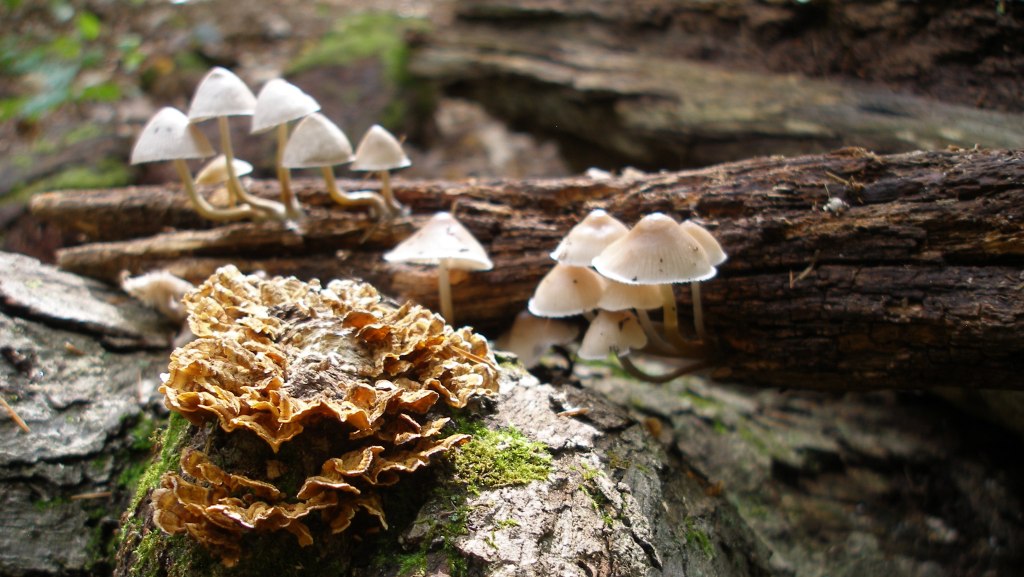
It has been a disappointing mushroom season -bland really, compared to the mushrooms in 2021. Still there were some interesting shaggy characters, crimped edges, jellies and a slime mold or two.
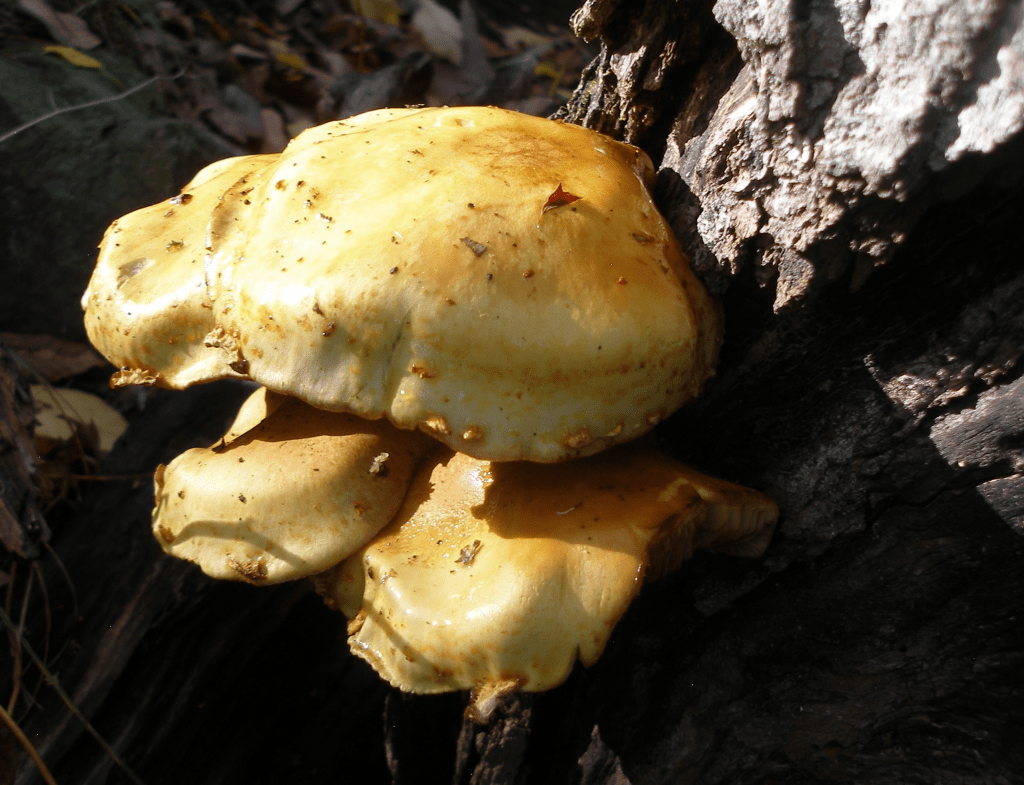
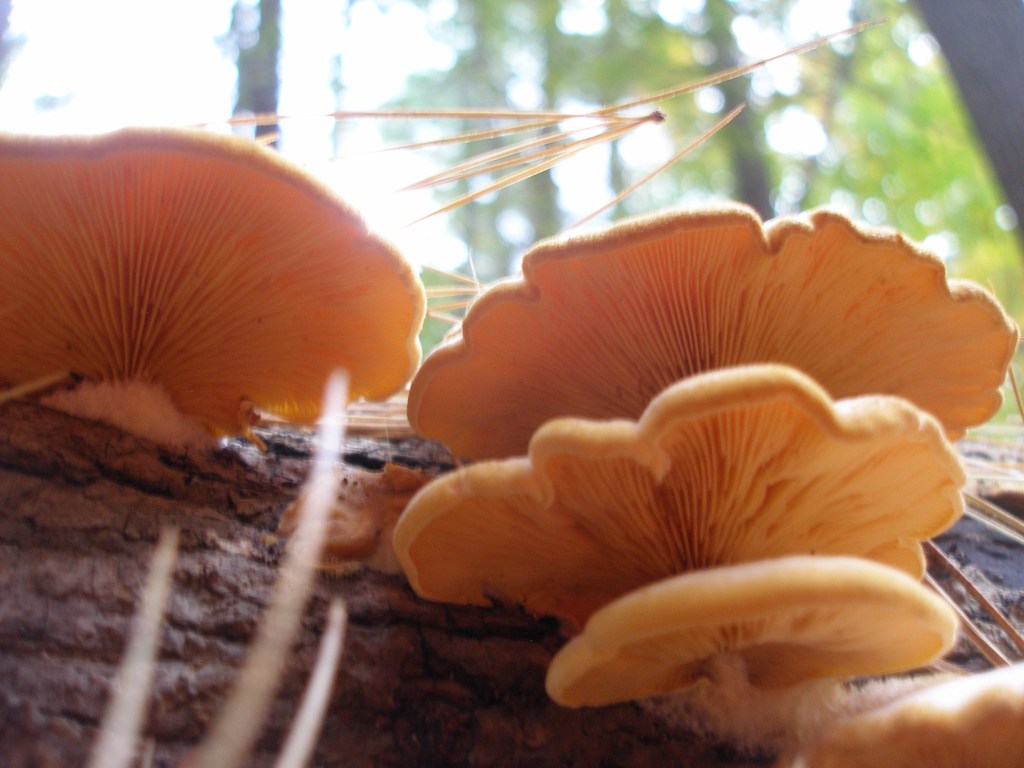
I saw none of the bright orange and yellow Chicken of the Woods mushrooms that were so abundant in the last few years despite the dryness. I missed them and hope they were just taking a break.
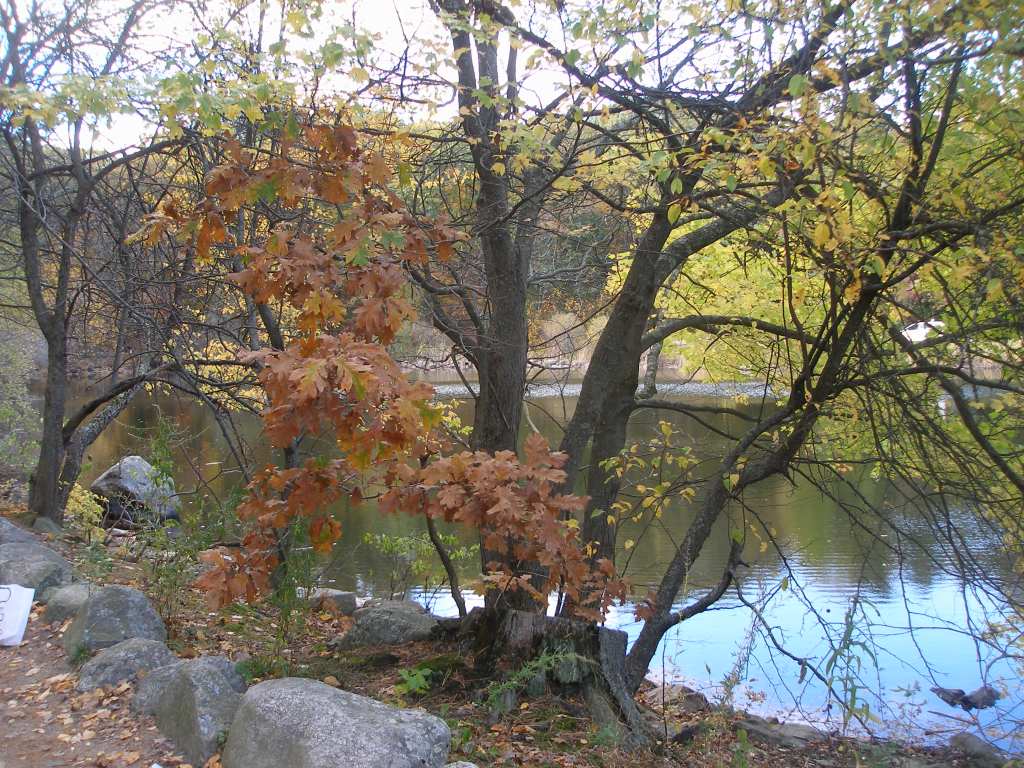
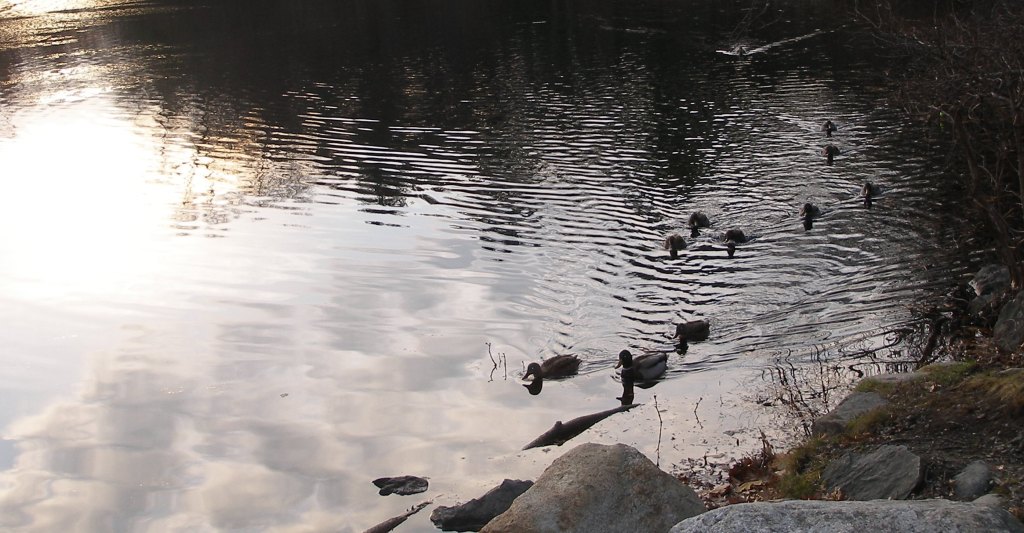
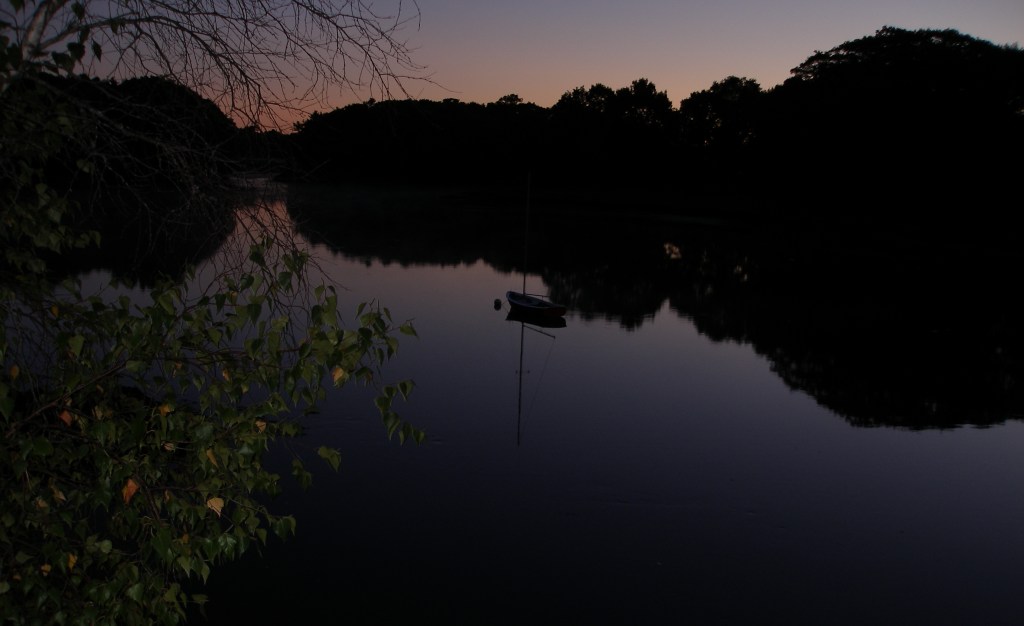
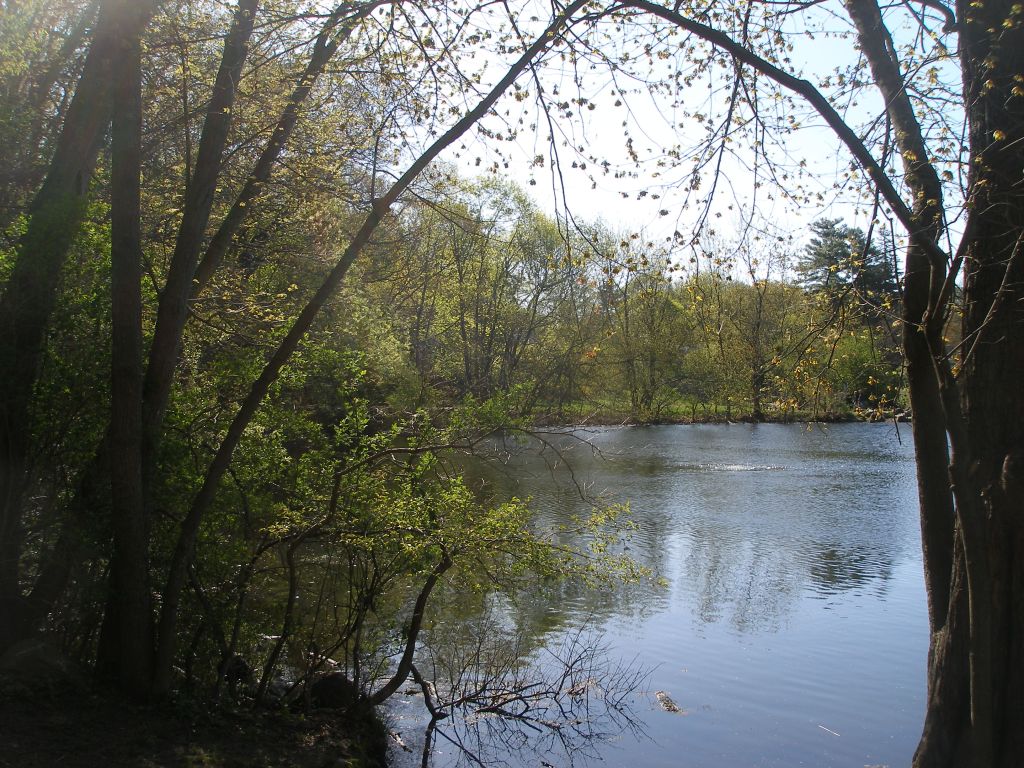
A while ago I tried changing to a river image on my computer screen. It did not feel right that nothing was moving and I went back to what is there now (first photo below). I used to change the wallpaper on a fairly regular basis.
I am not saying I will never change that image. But for some reason this one is proving remarkably sticky – it seems to want to stay put right where it is, thank you.
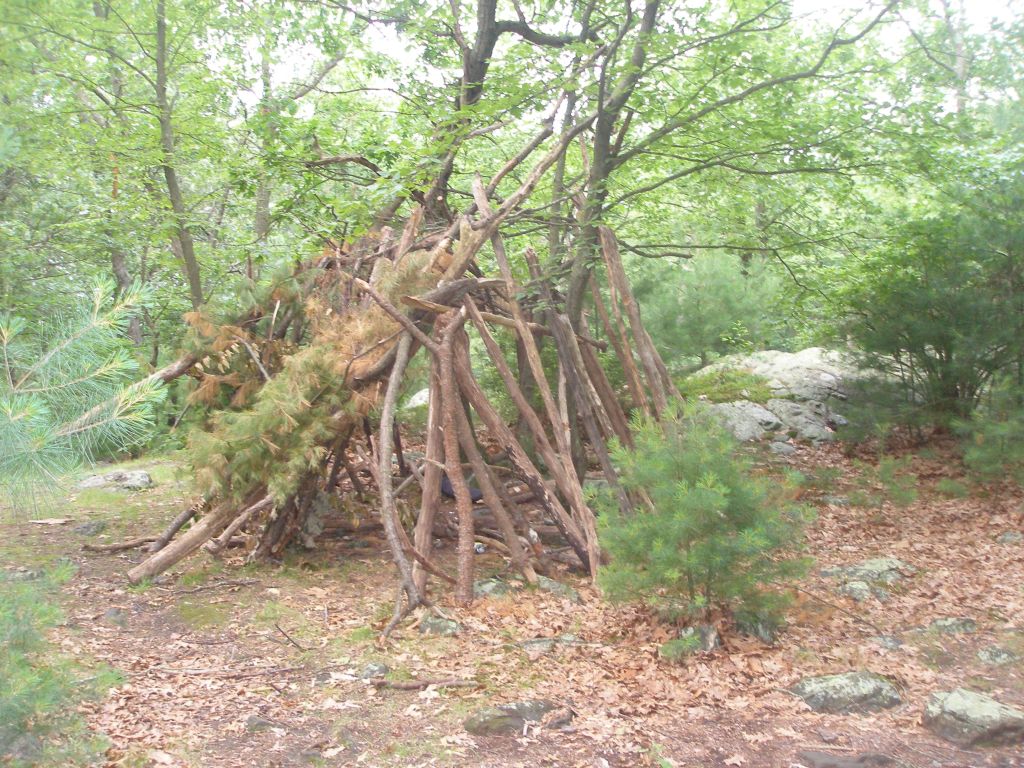
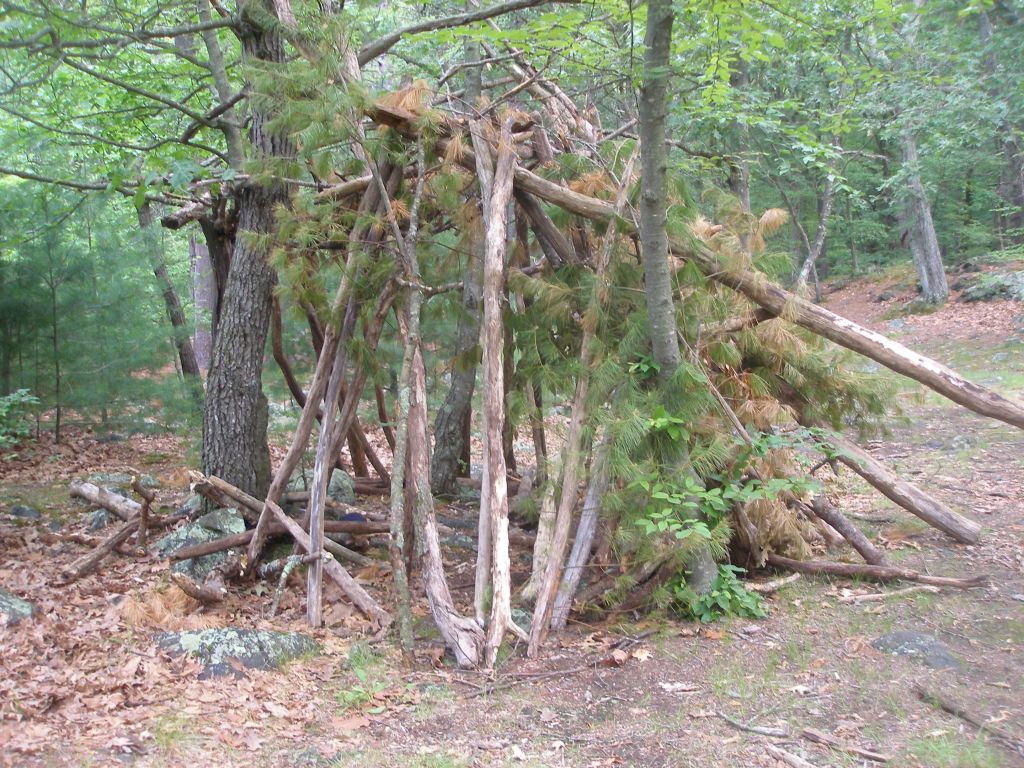
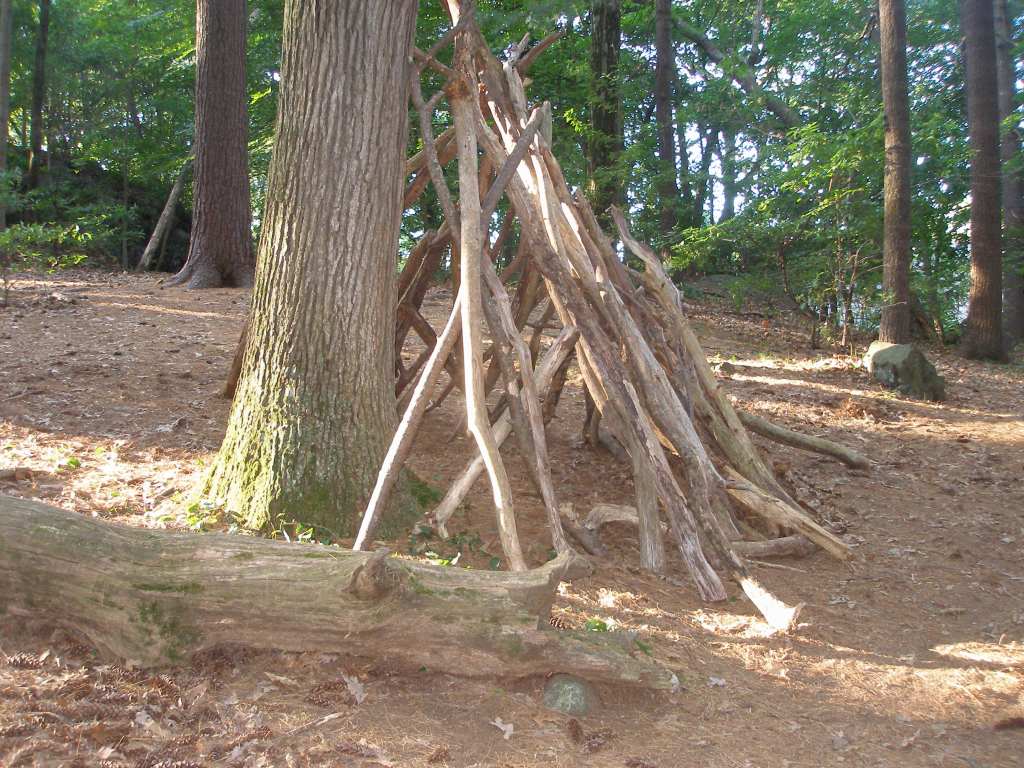
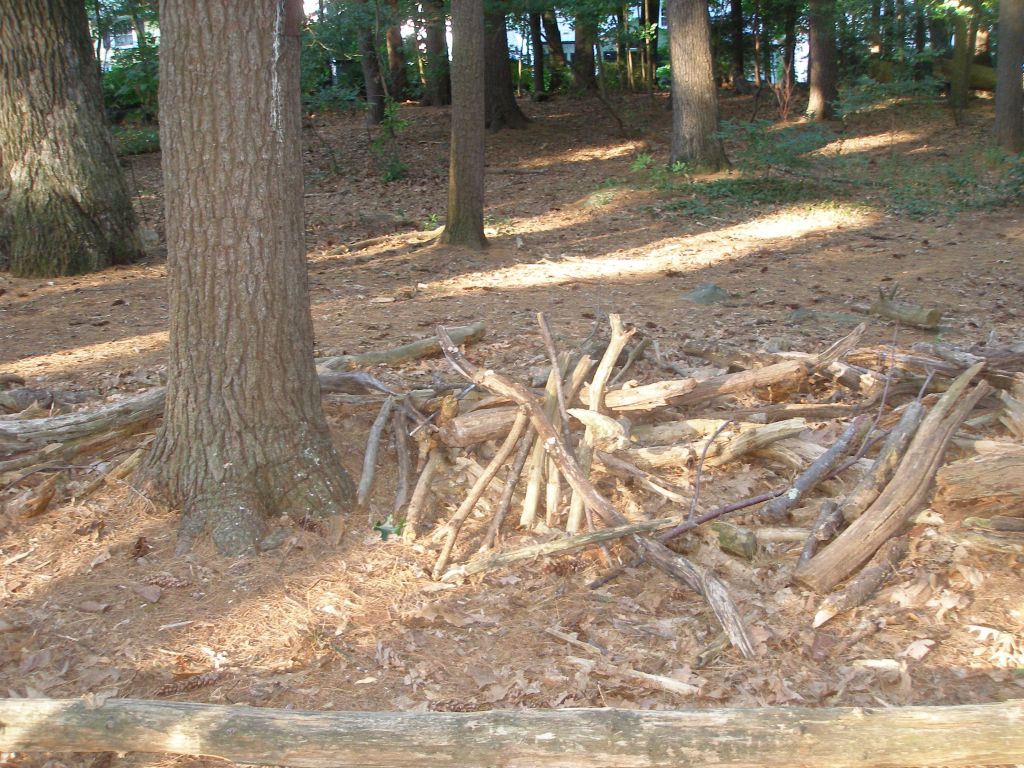
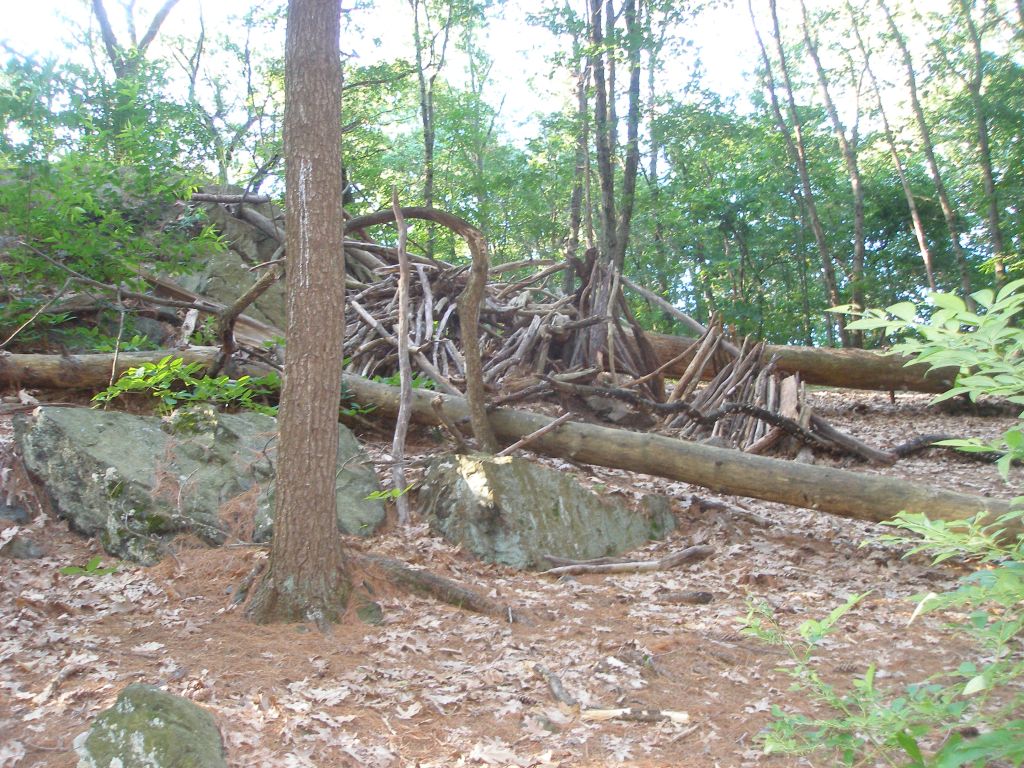
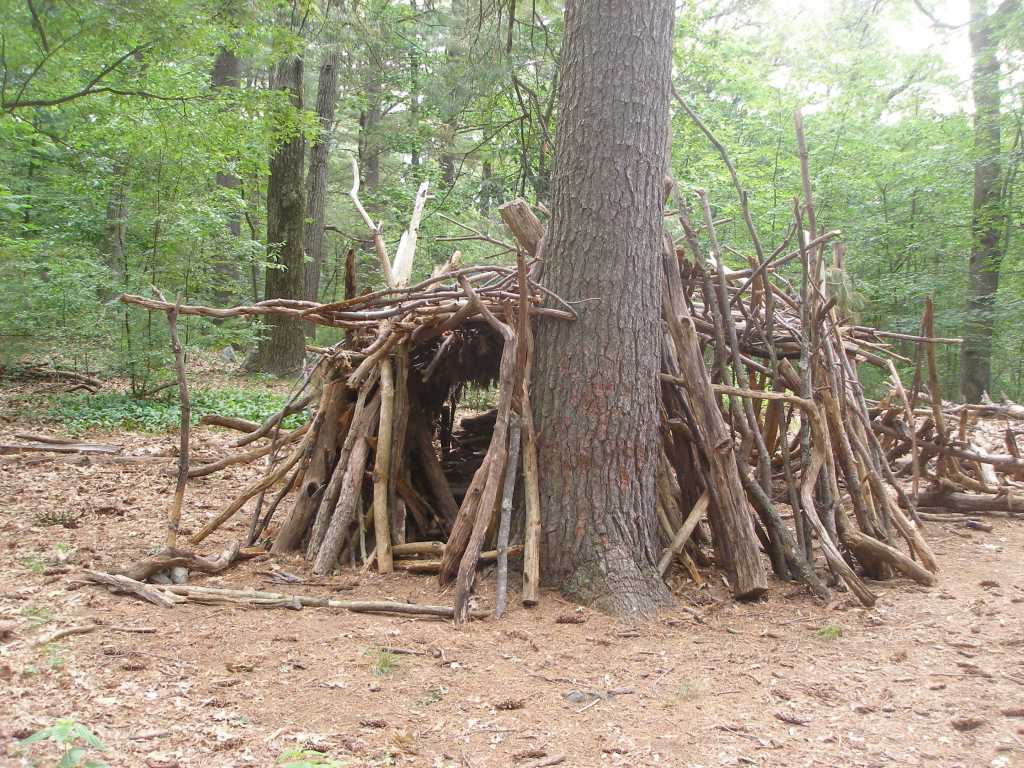
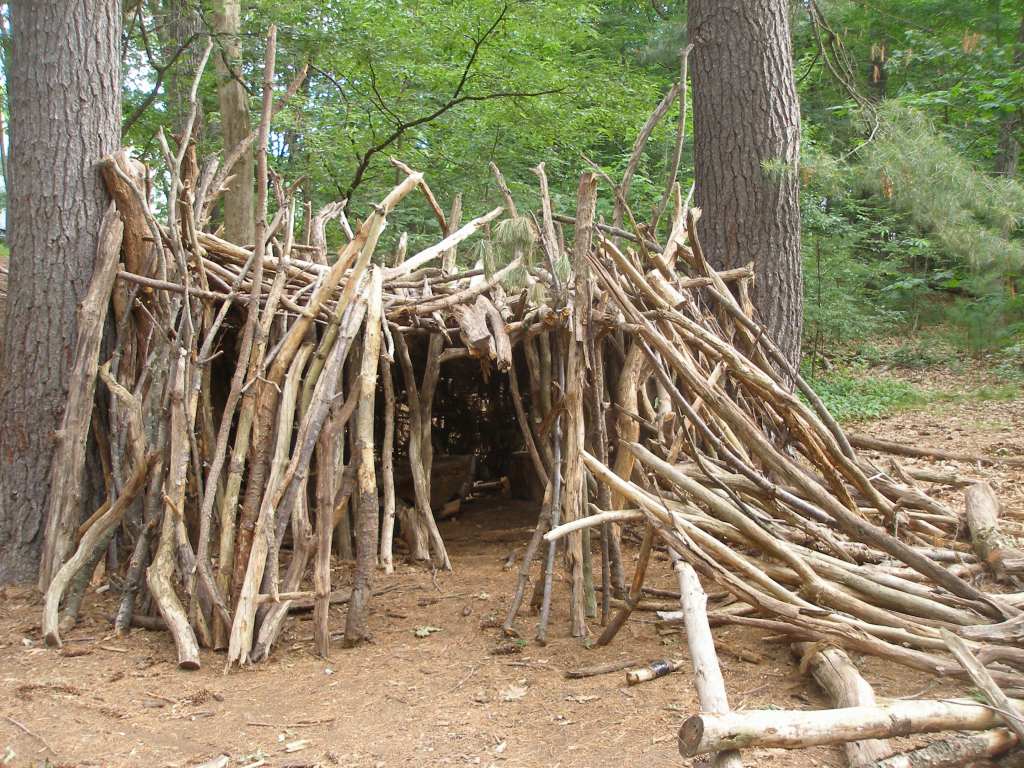
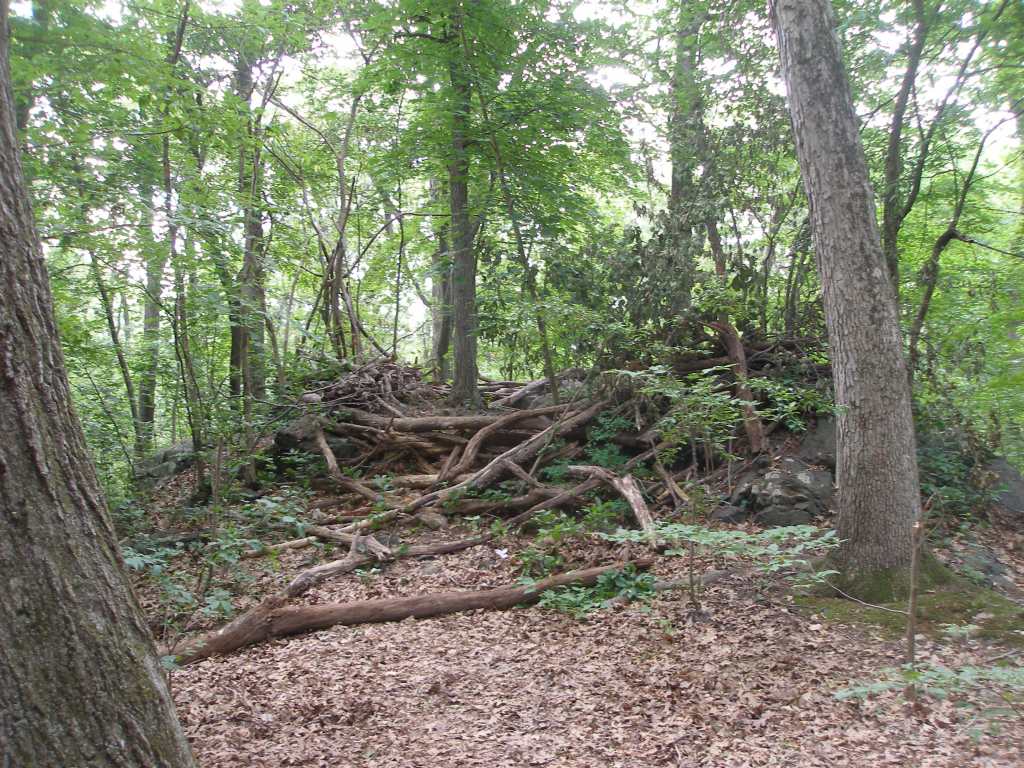
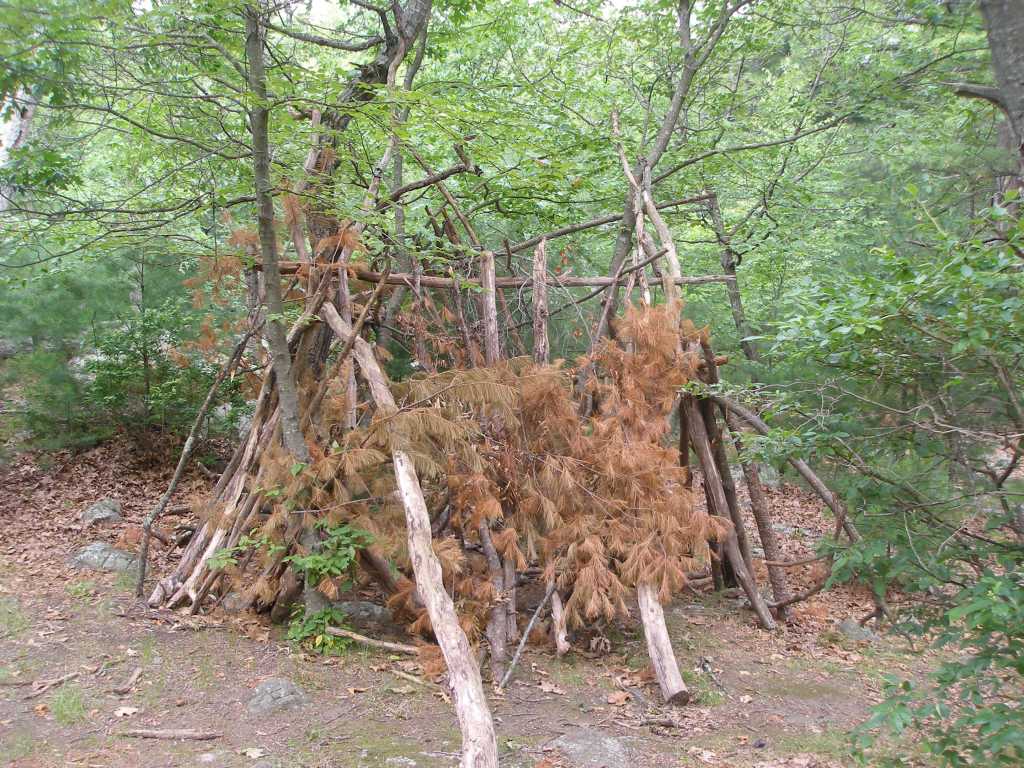
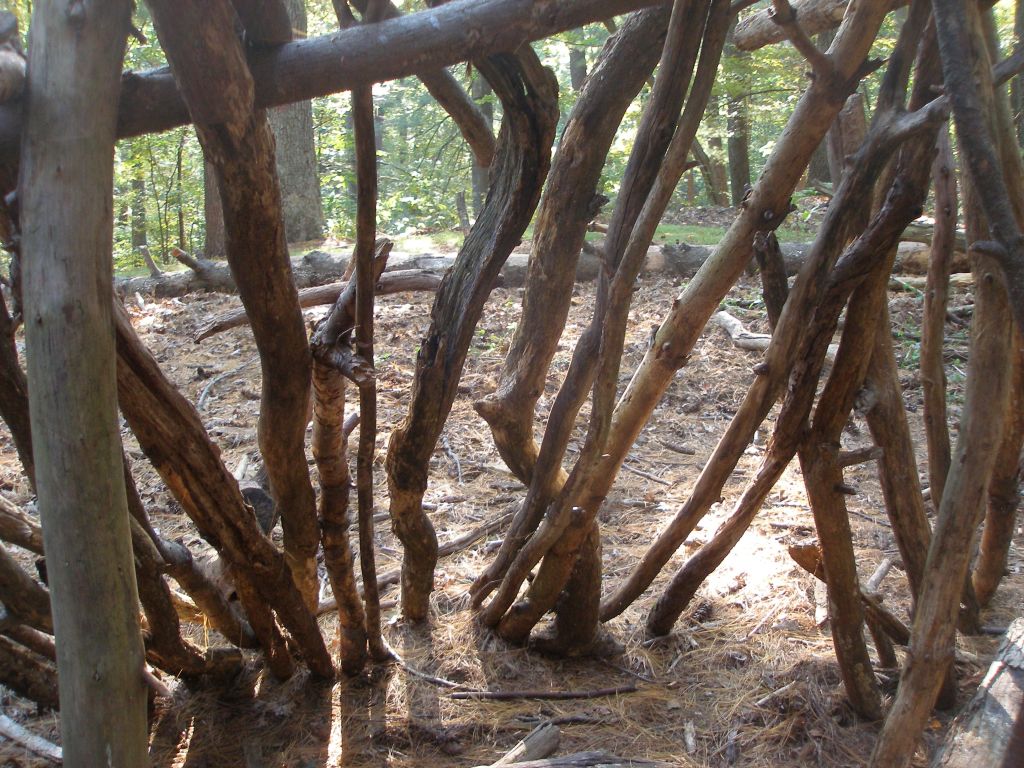
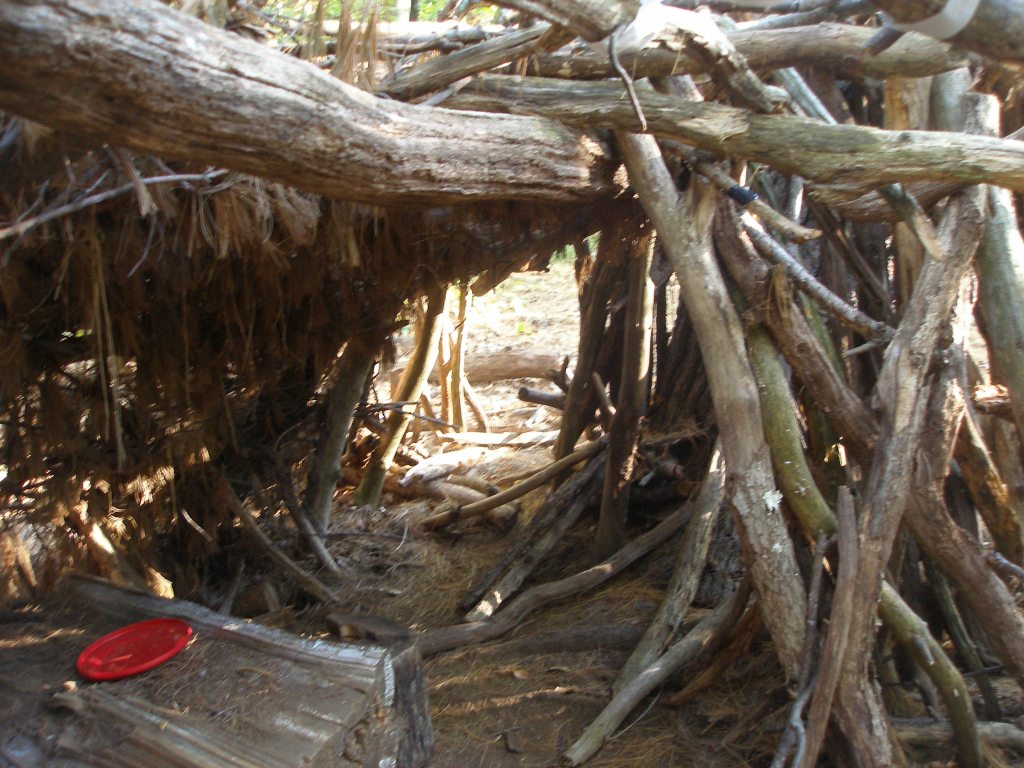
It is not uncommon to come across lean-tos, hideaways, and other constructions made with fallen twigs and branches in Menotomy Rocks Park near my home. Some are quite large and some are tiny “fairy houses.”
Our species tends to play with whatever natural materials are available. I understand that in the remote mountains of Nepal, children play with rocks. We learn that way. It seems to me we must have been creating structures like those below for a very long time.
Does that make these improvised constructions a legitimate part of nature – an appropriate part of the natural landscape?
I know some want them removed, but I have mixed feelings about these intriguing sculptures. They seem to have stories to tell and strike me as so much better suited to their natural environment than those mass produced molded plastic playhouses. What do you think?
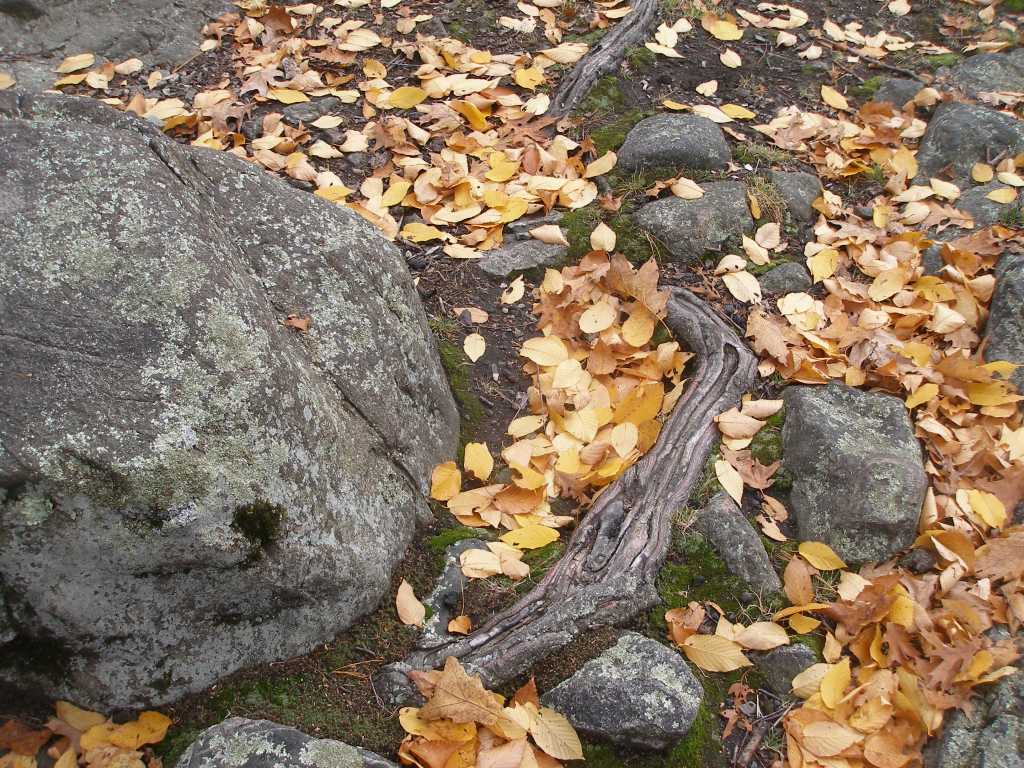
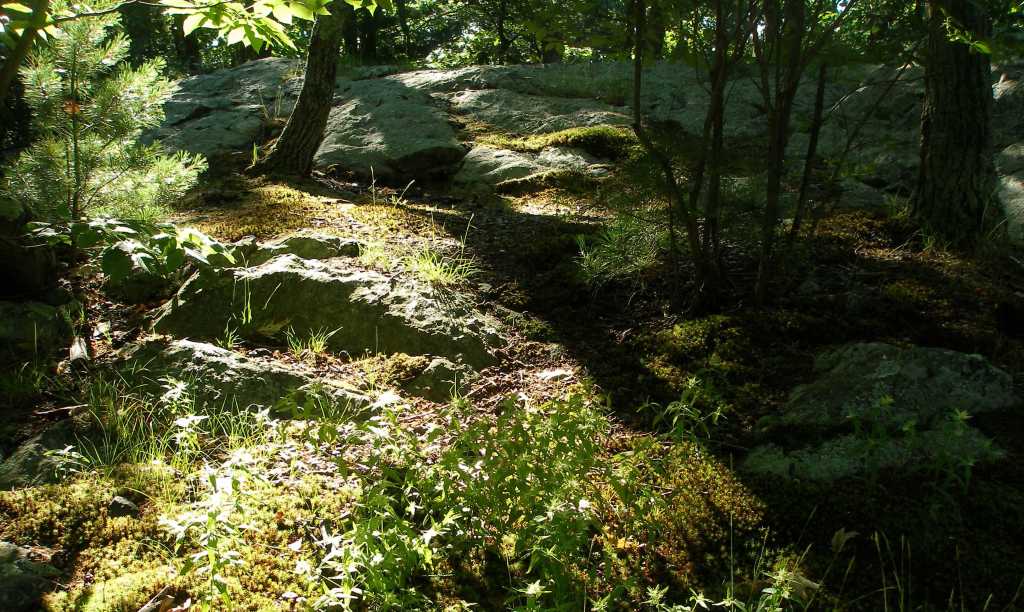
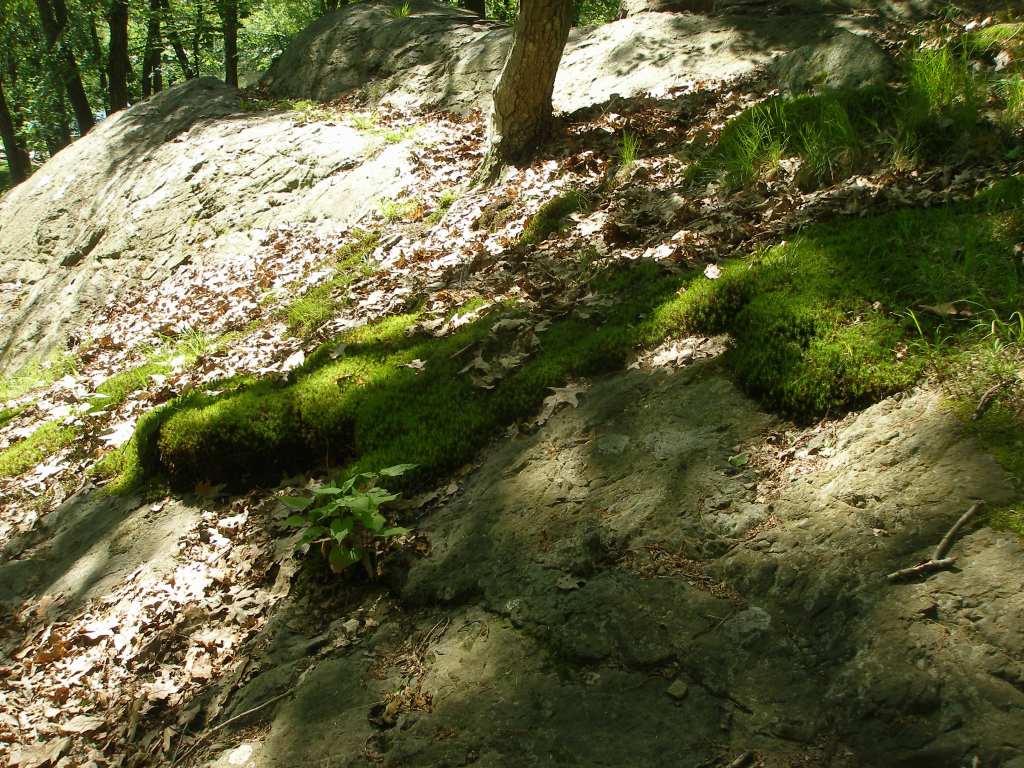
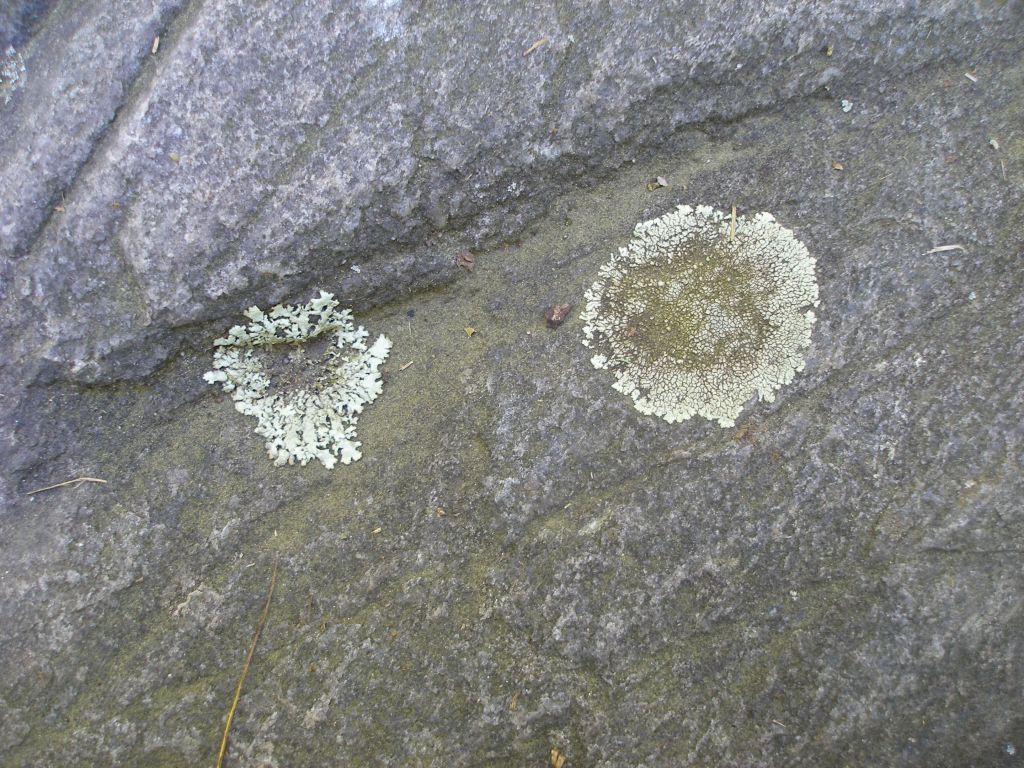
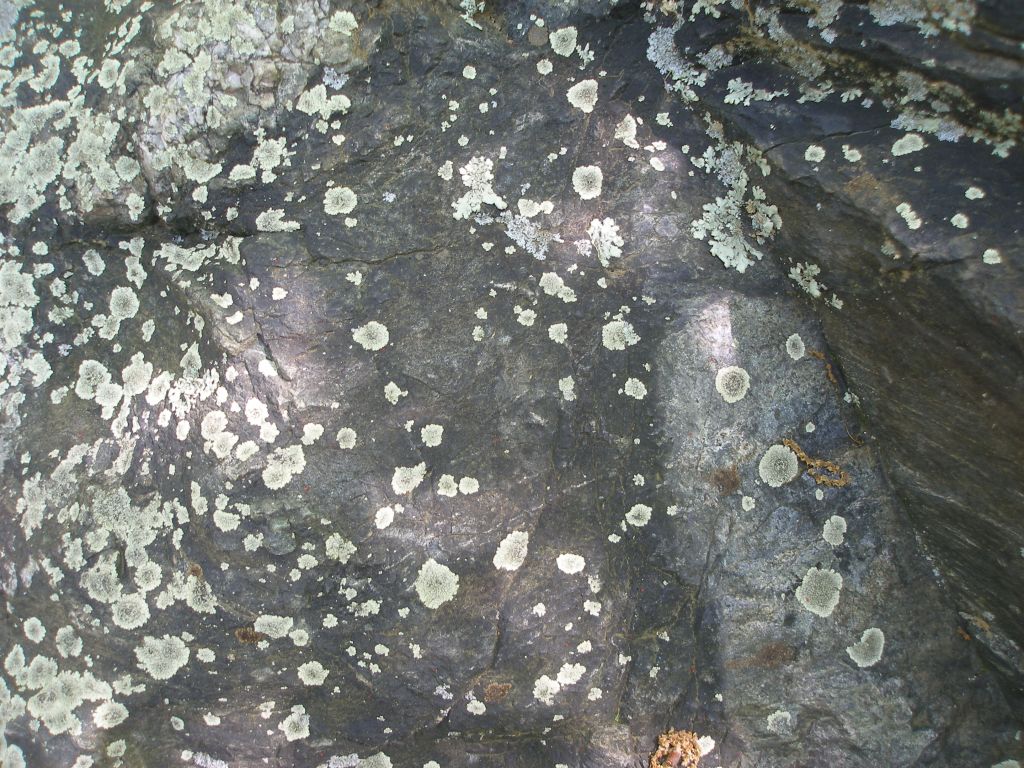
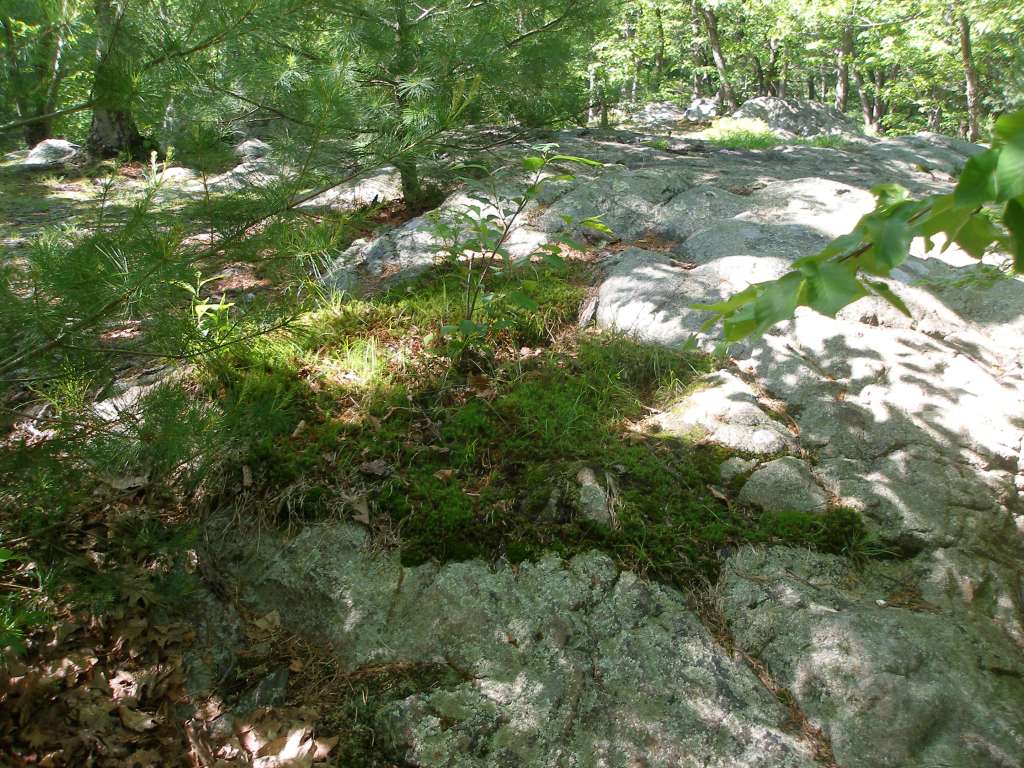
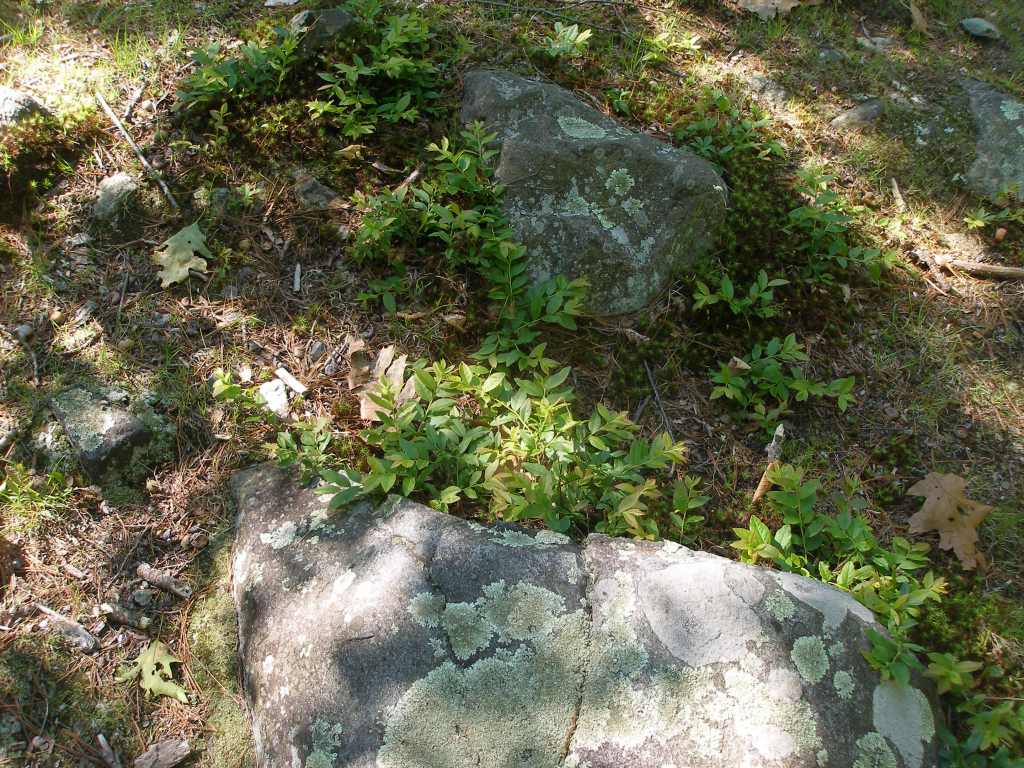
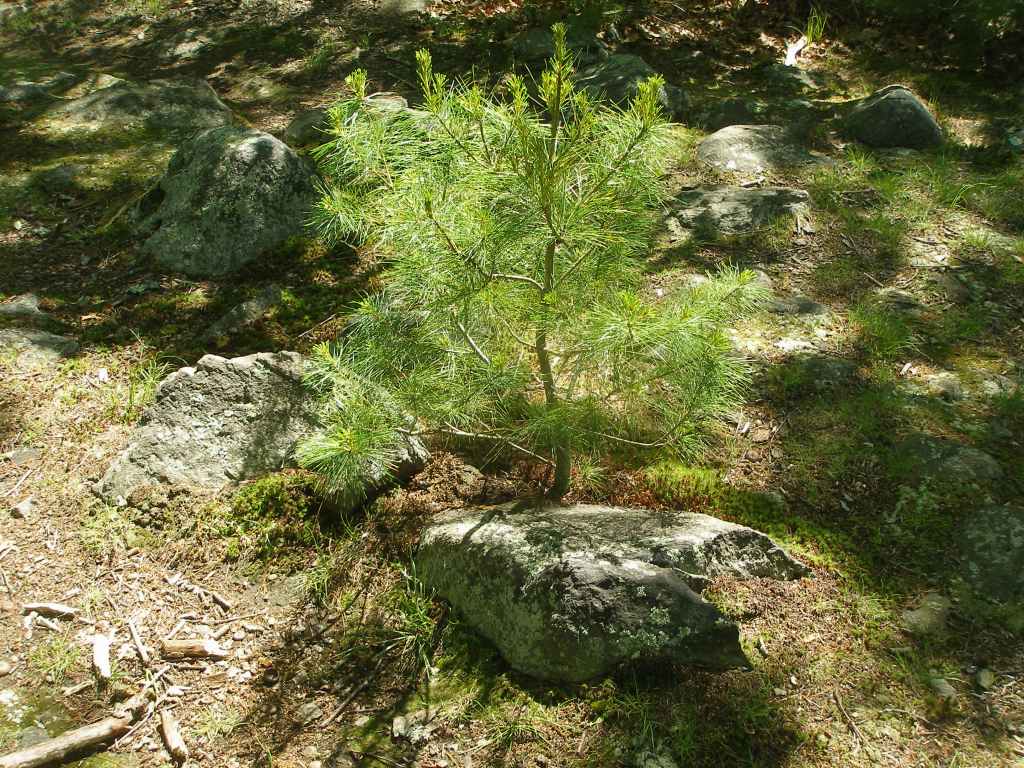
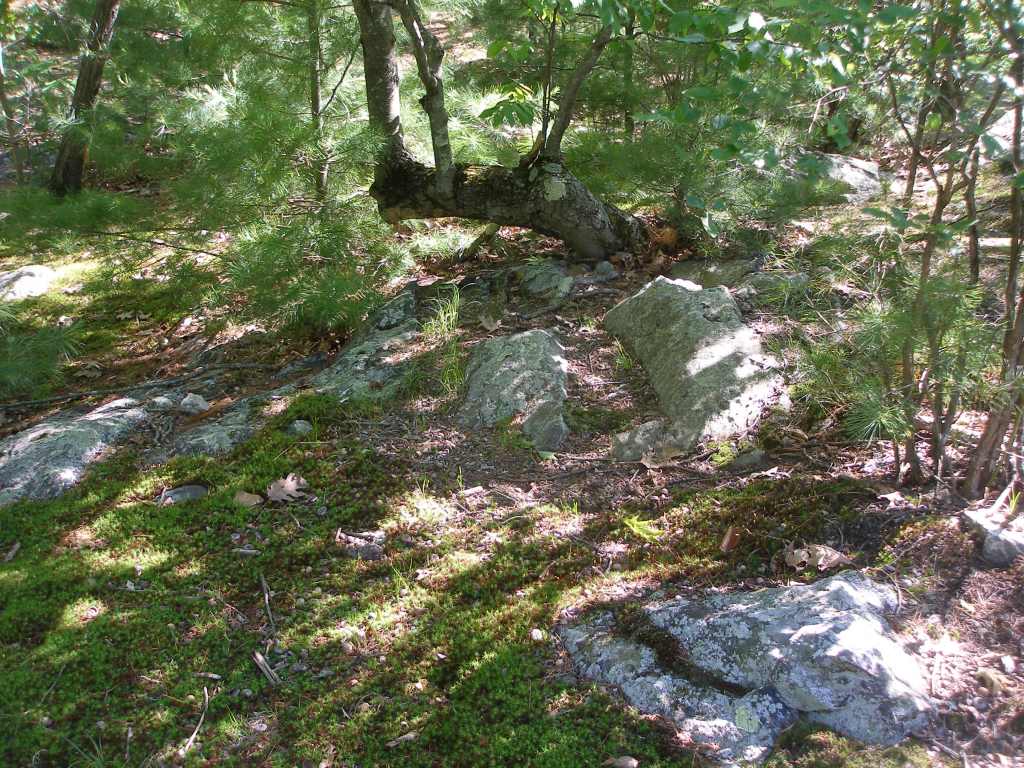
It can happen so slowly we do not pause to notice and tend to take things growing on rocks for granted. Lichens take hold with no need for nourishment. Seeds fall into cracks. Mosses huddle around and move up onto damp places. Blueberries thrive in rocky barrens.
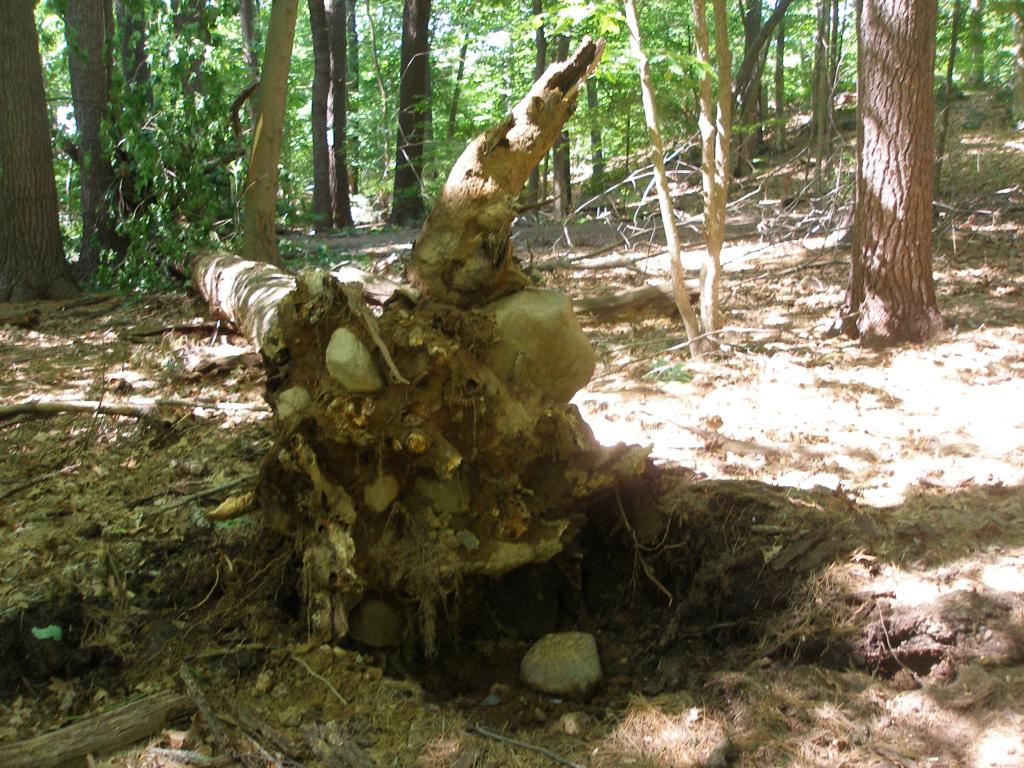
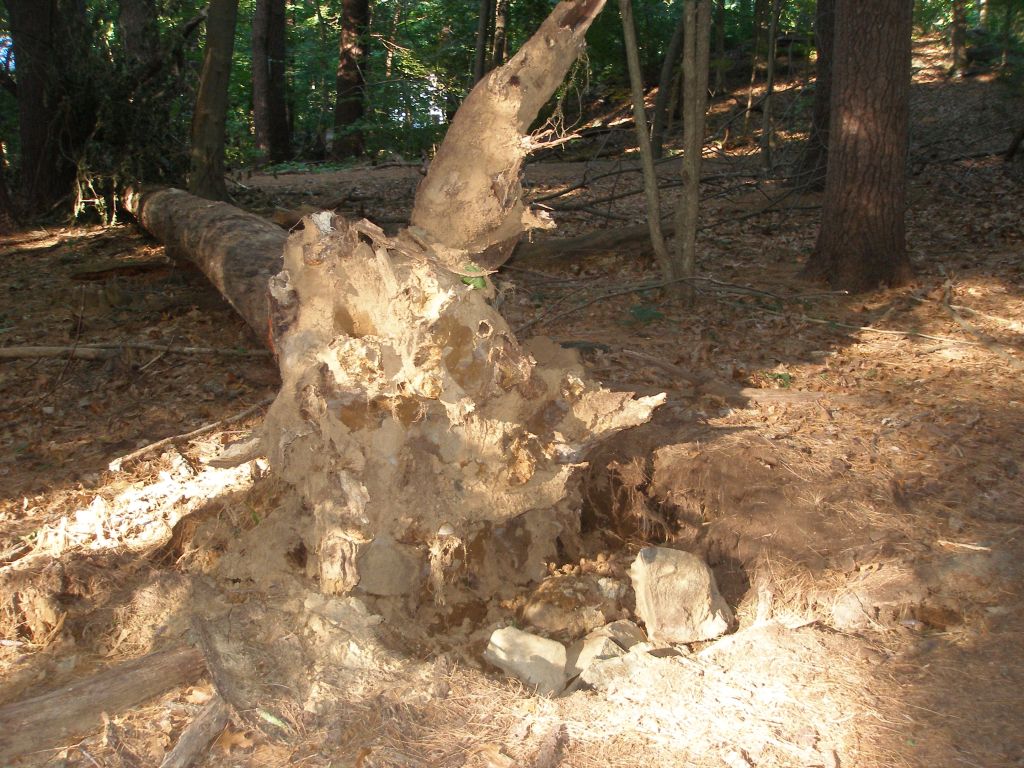
Over time dying biomass builds up in hollows where young trees can take root. And when a storm topples an older tree that managed to grow, its roots may release a number of rocks it once held in intimate embrace.
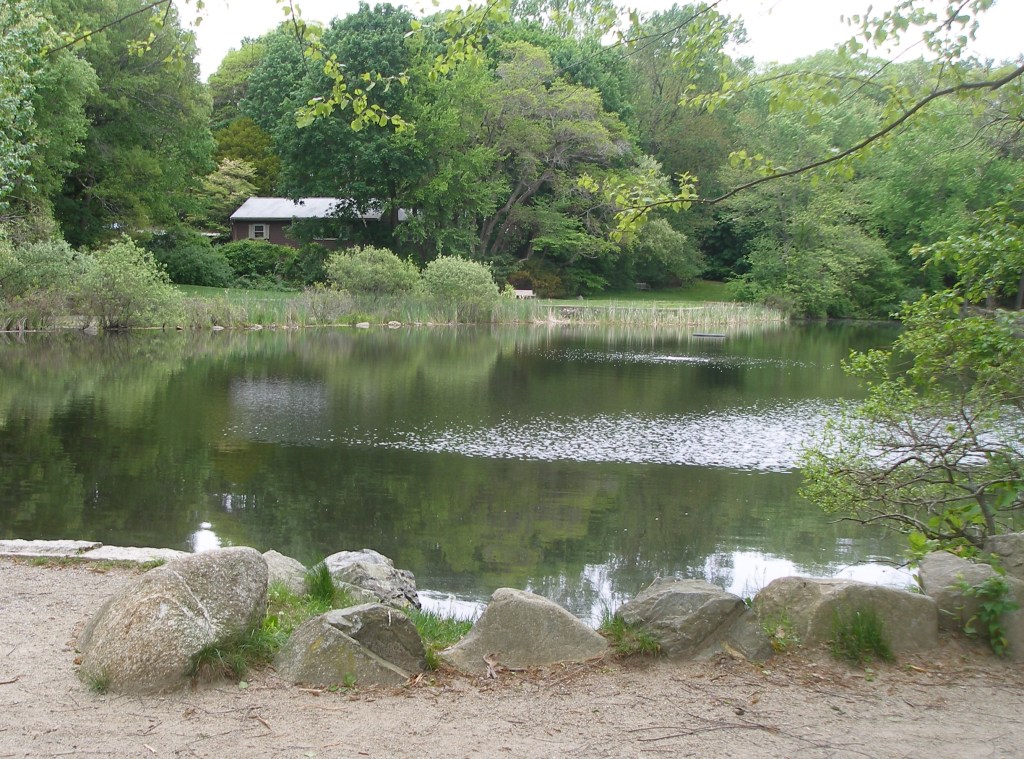
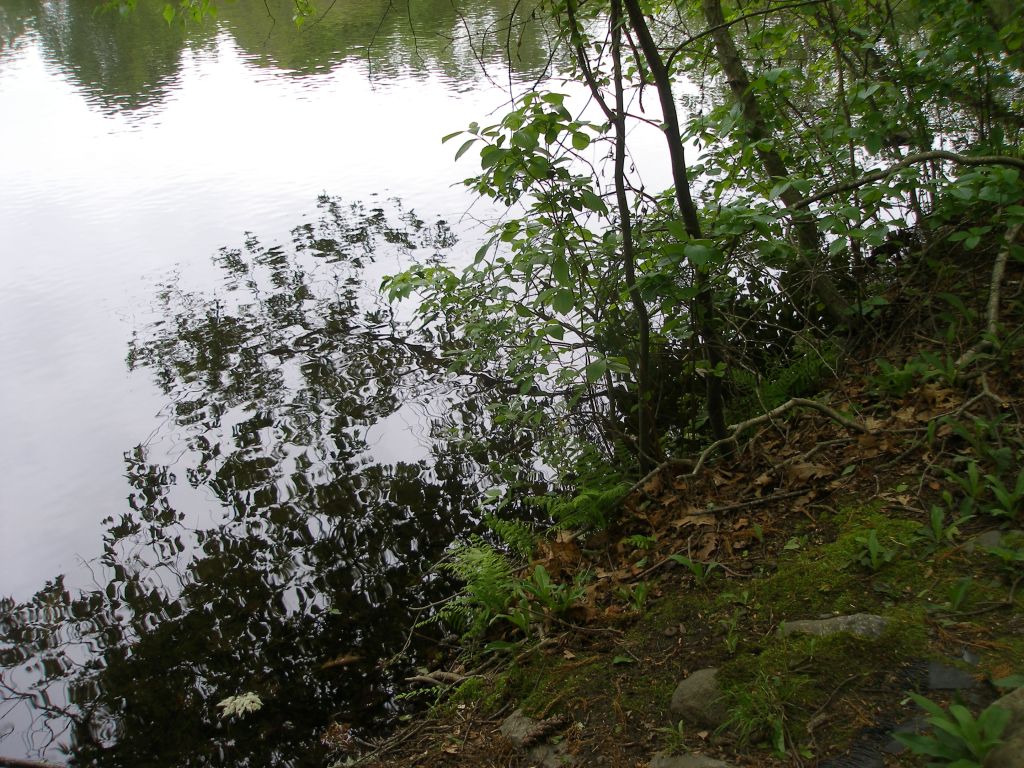
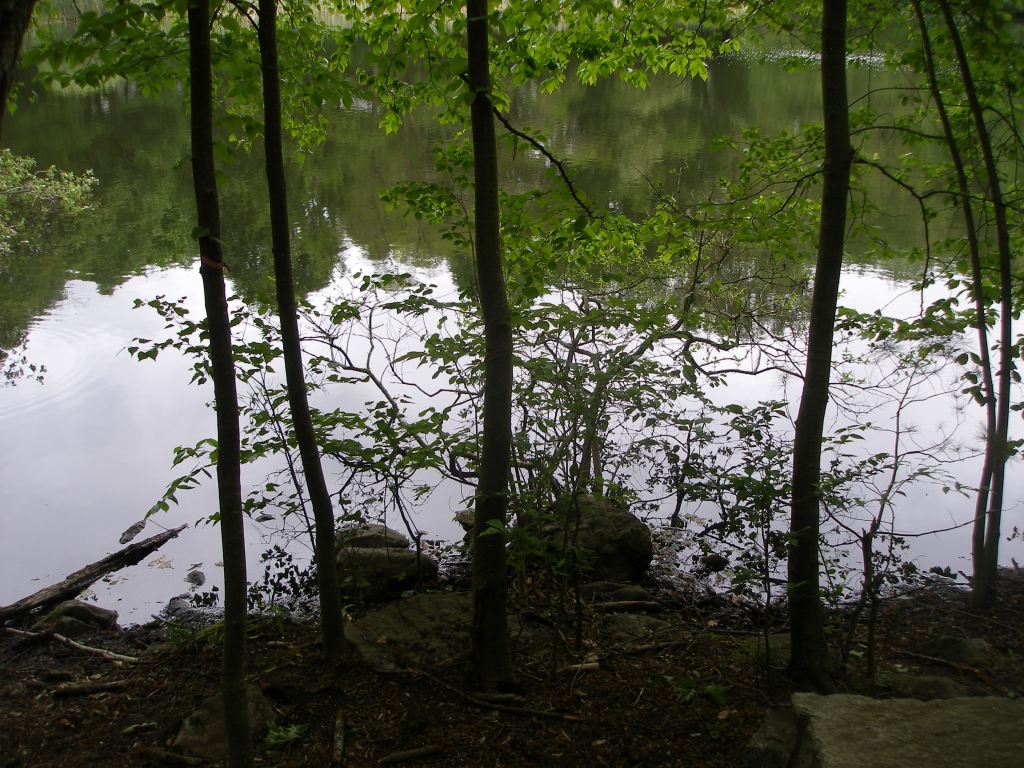
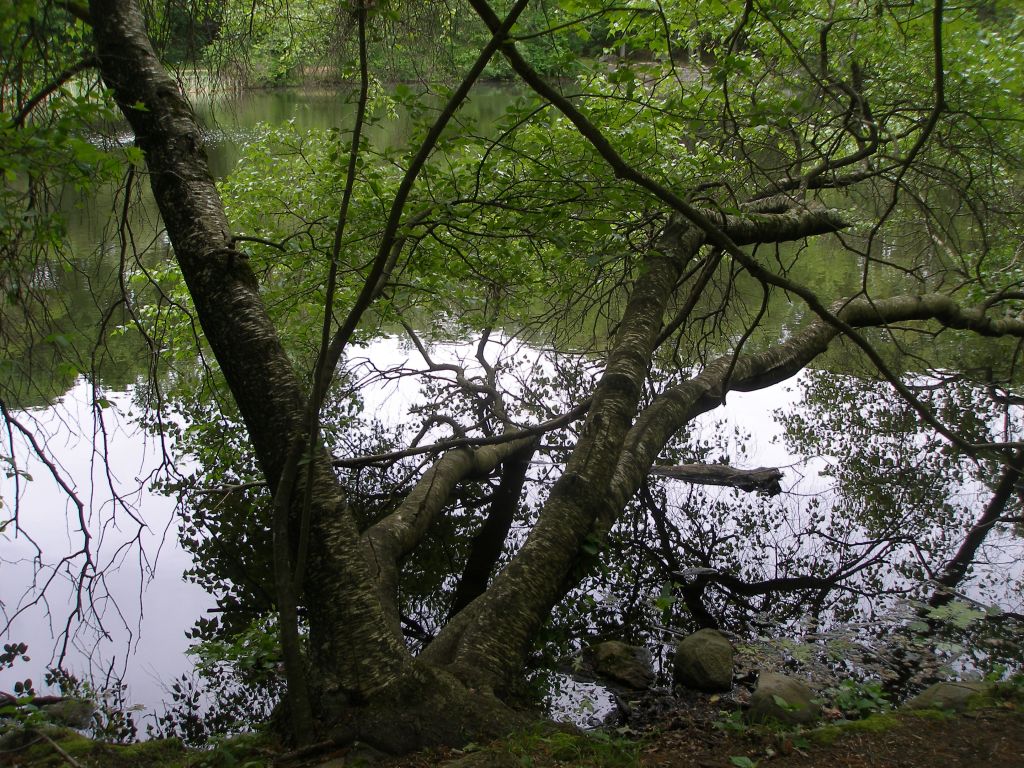
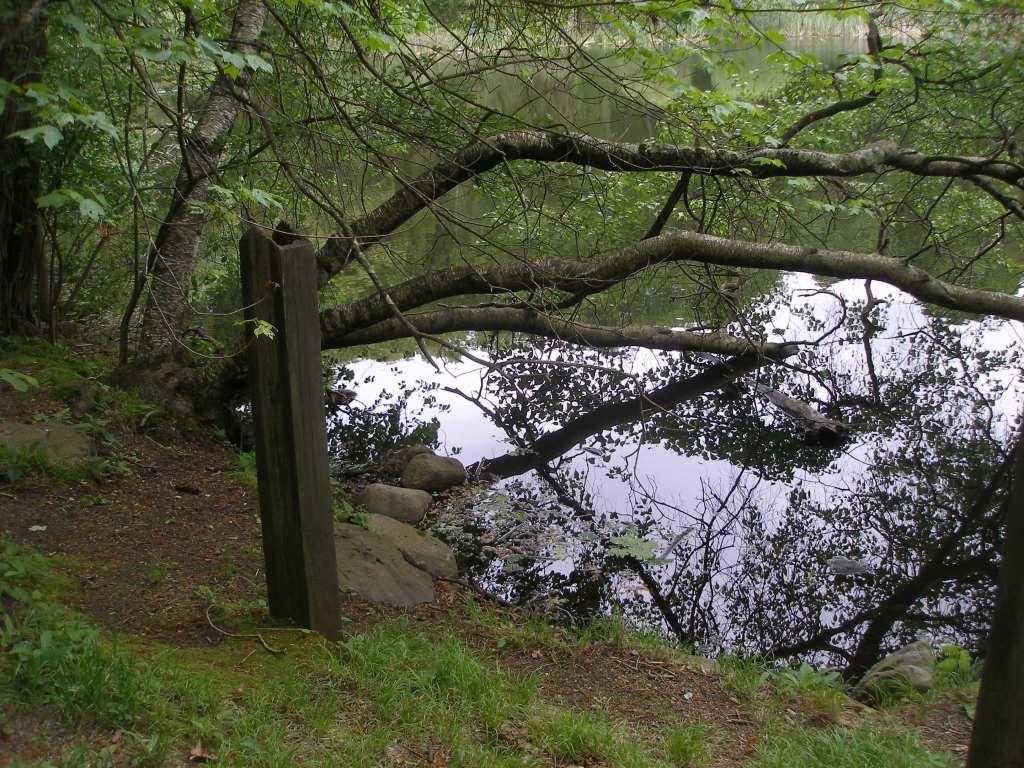
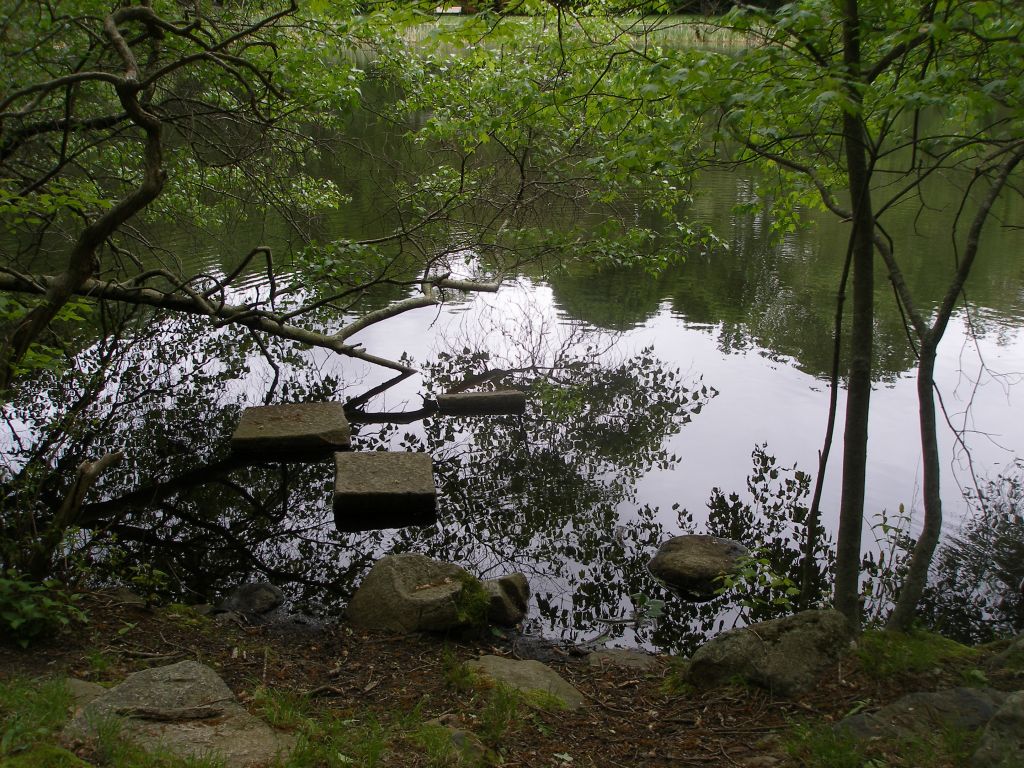
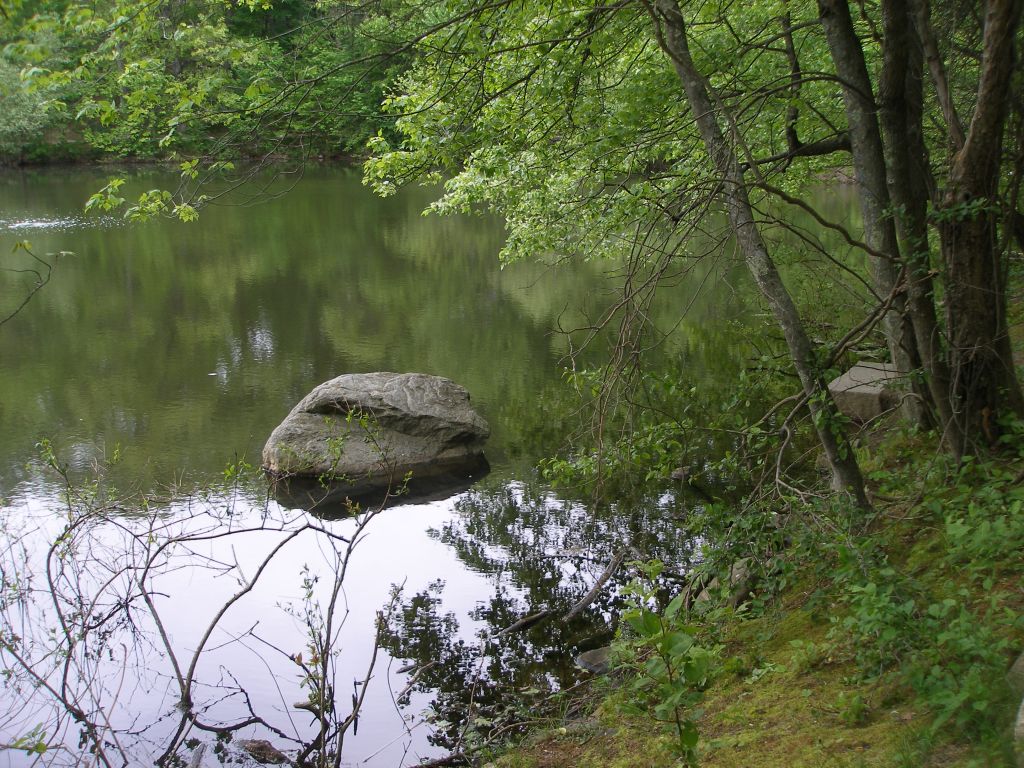
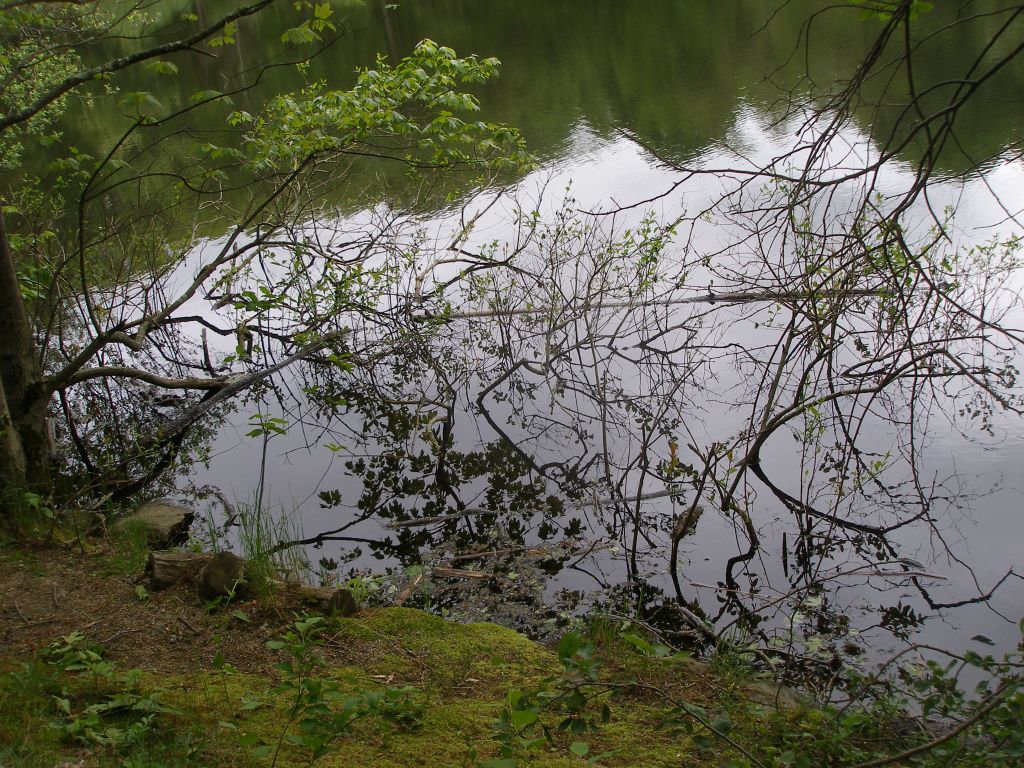
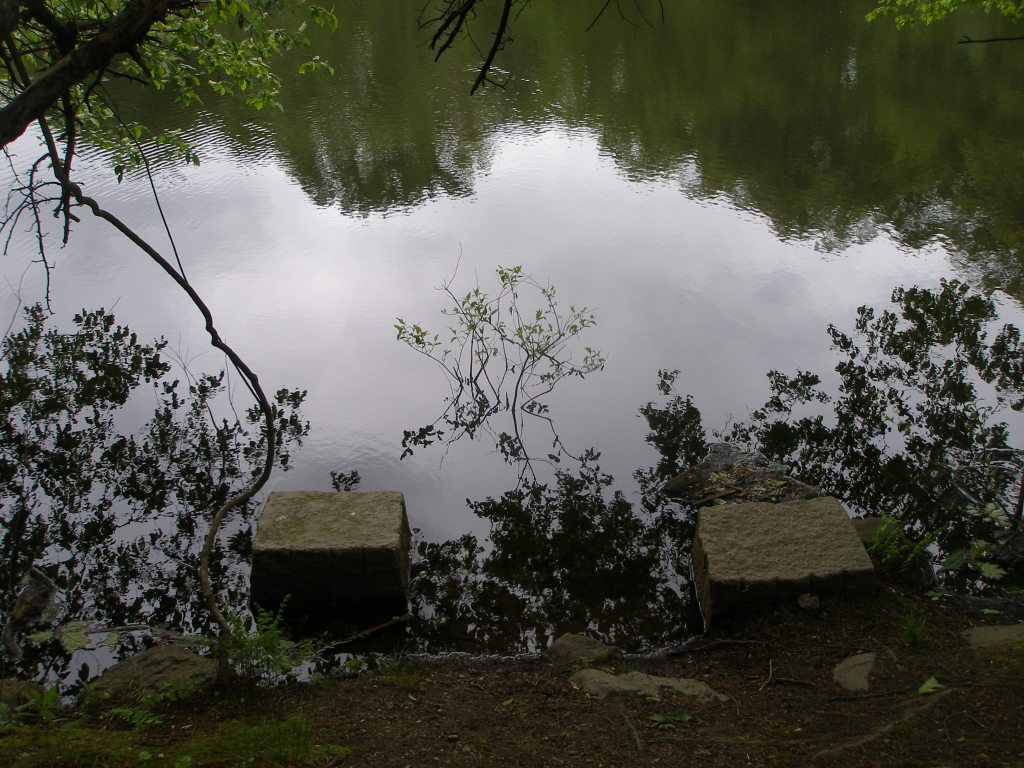
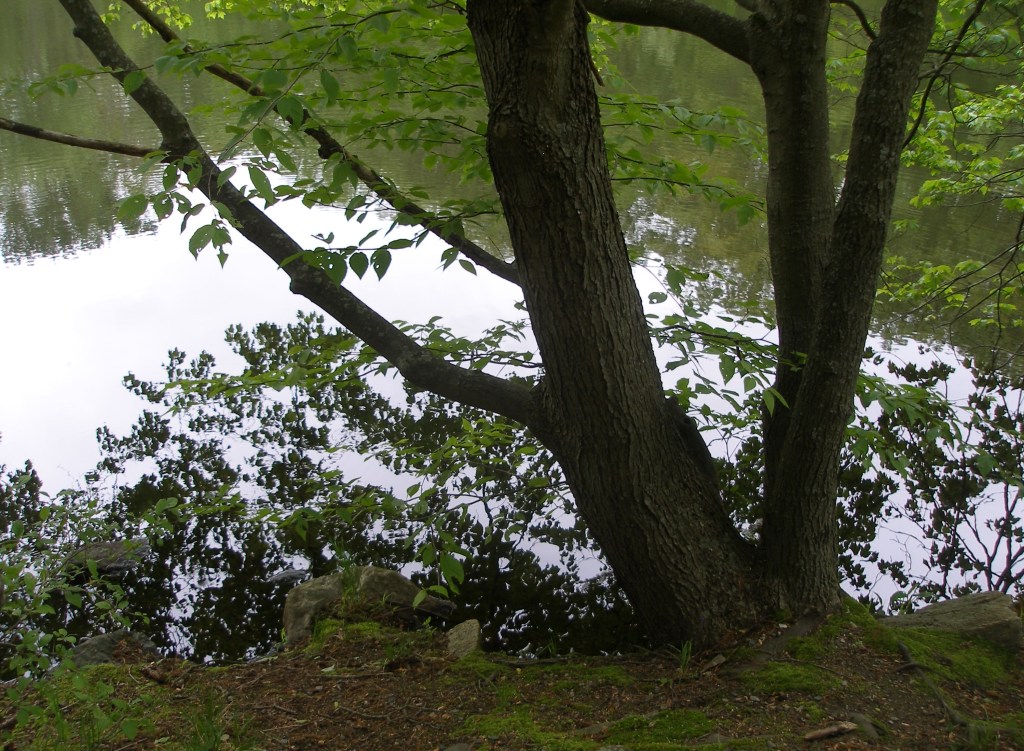
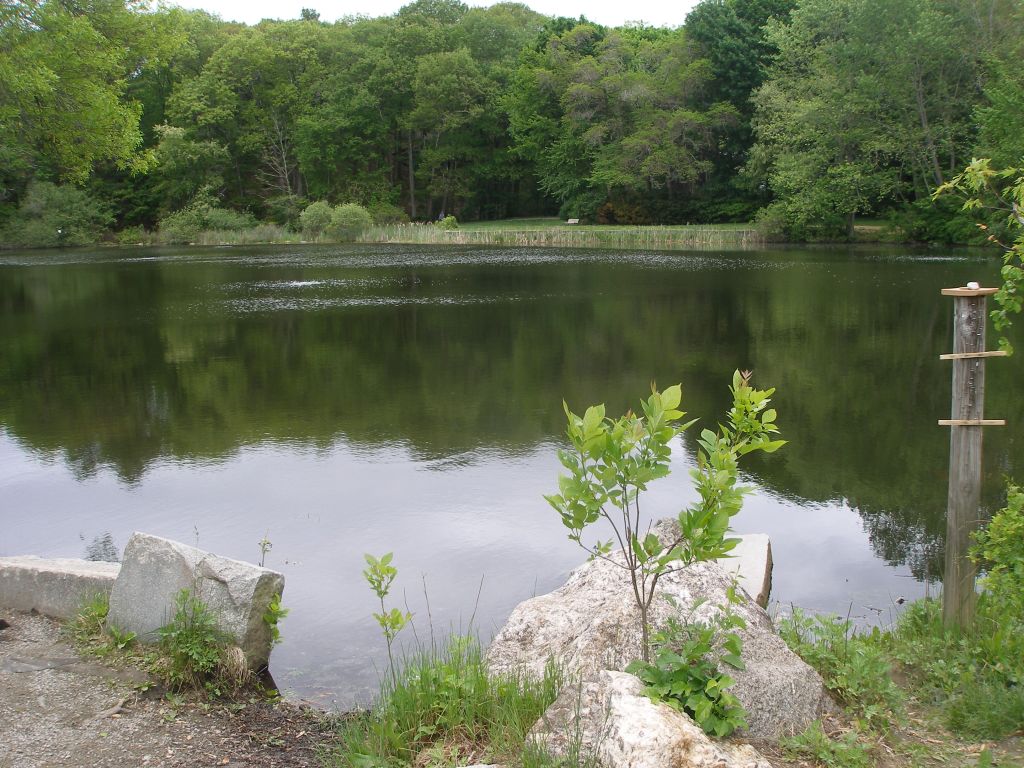
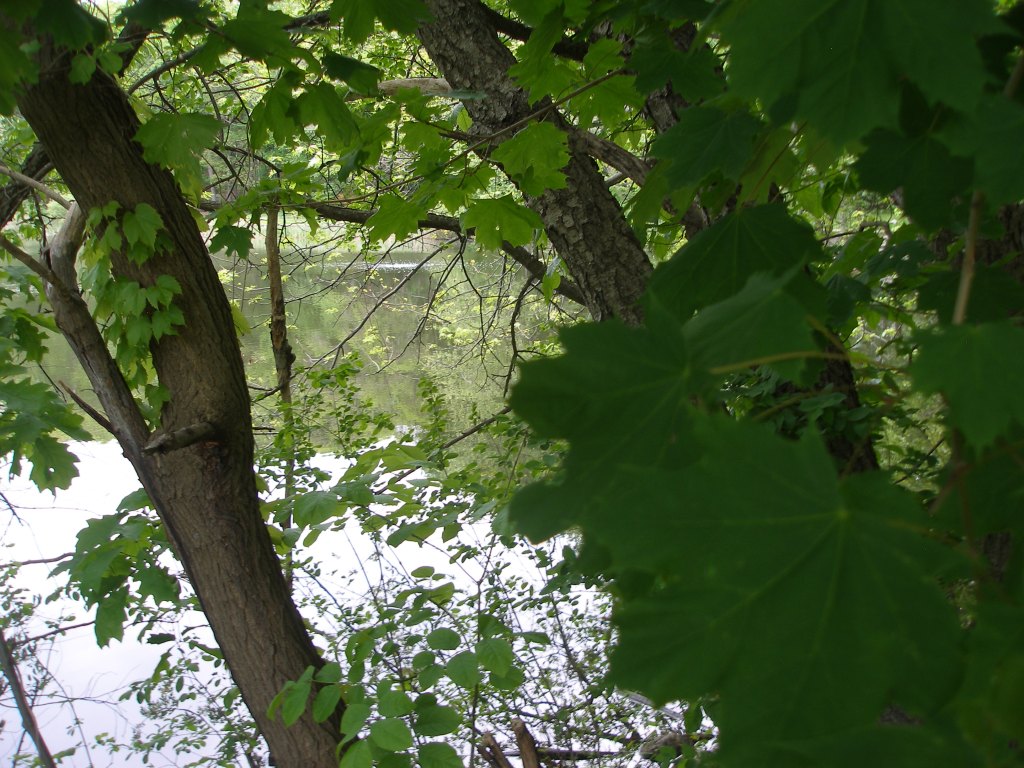
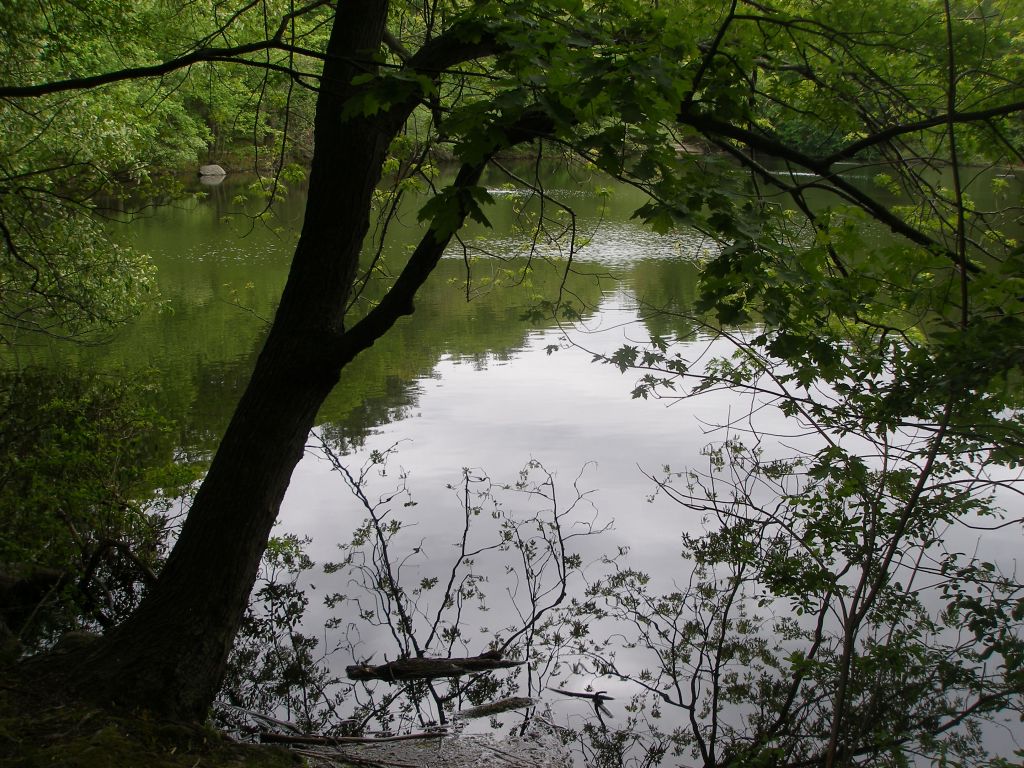
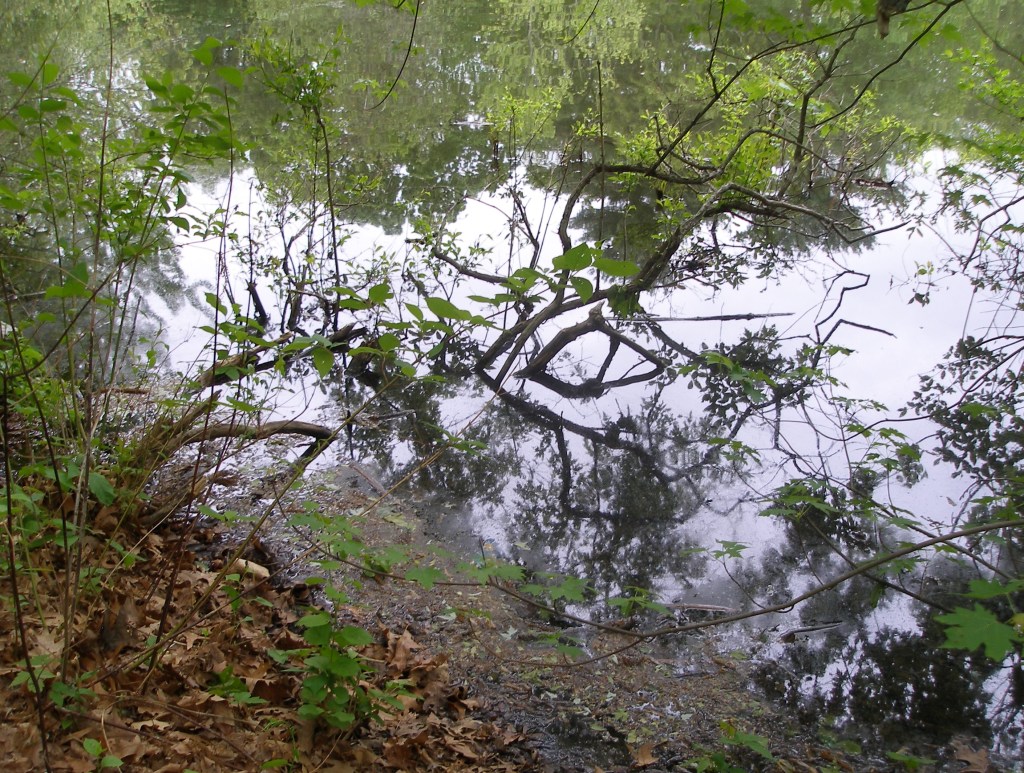
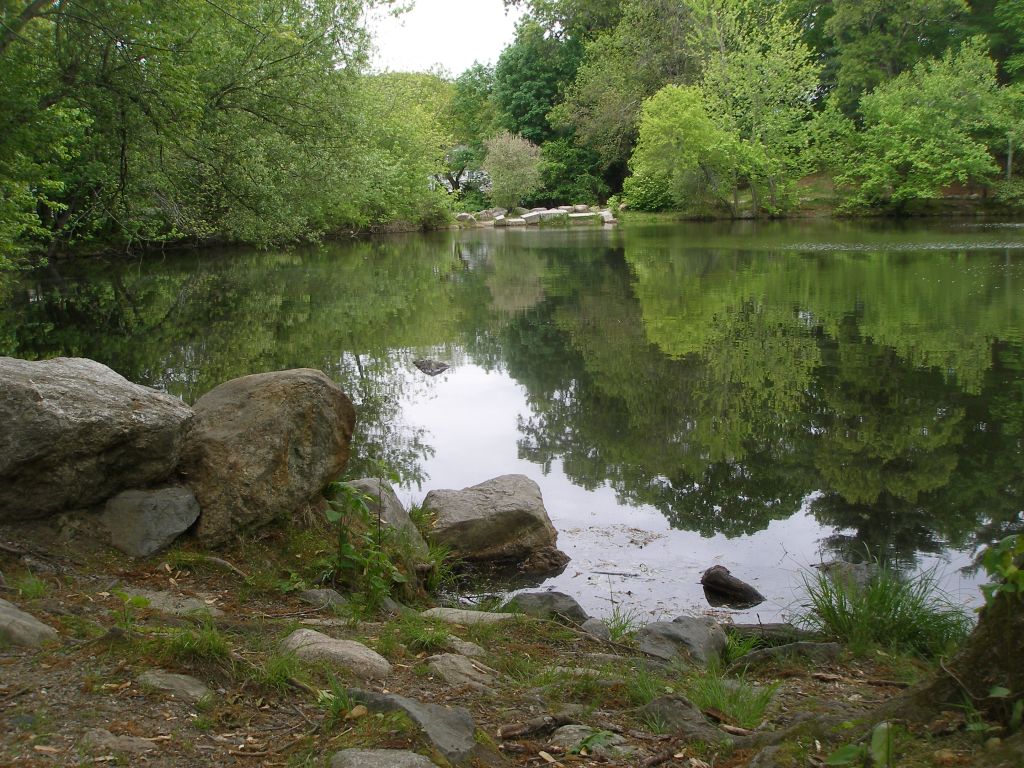
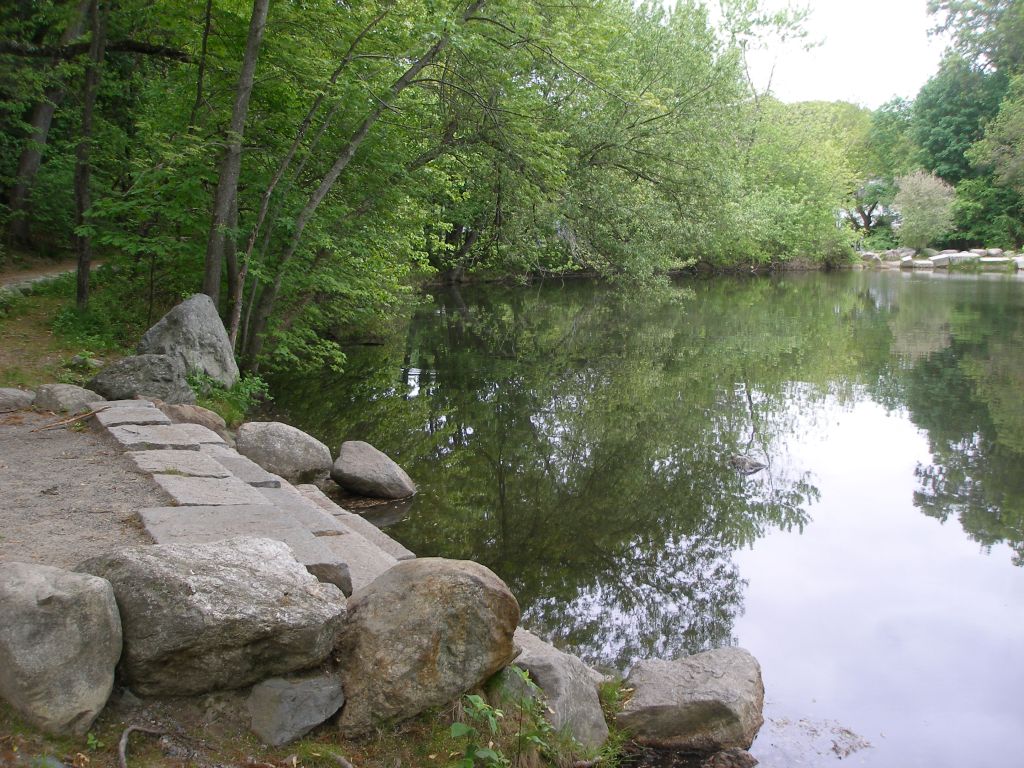
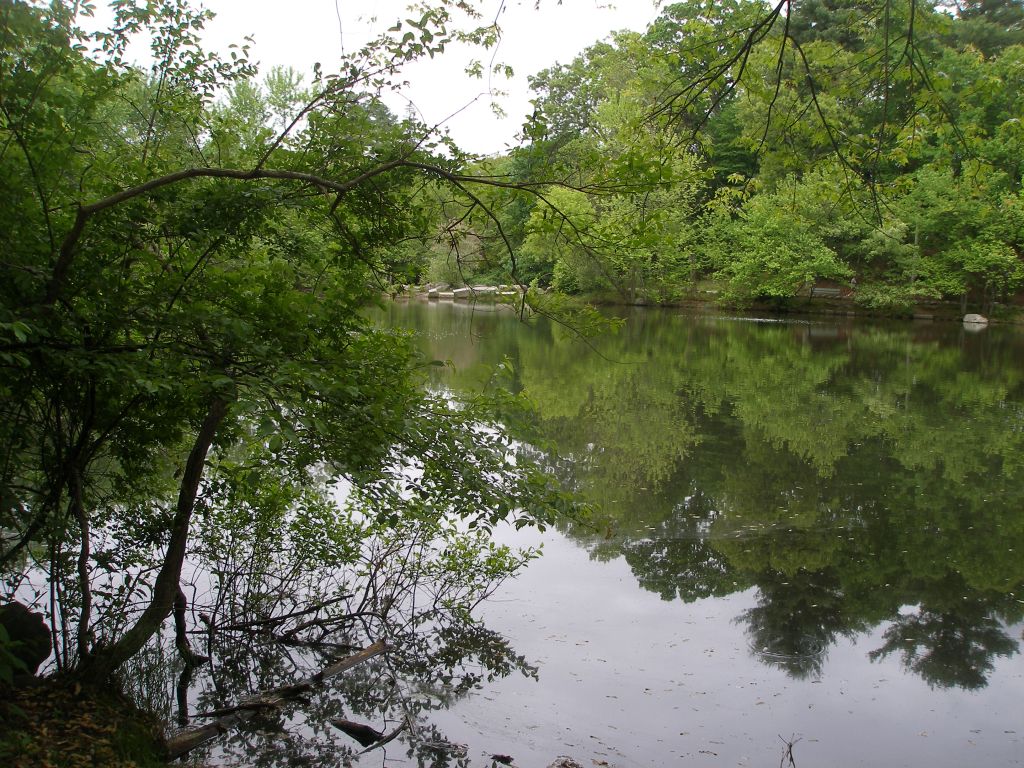
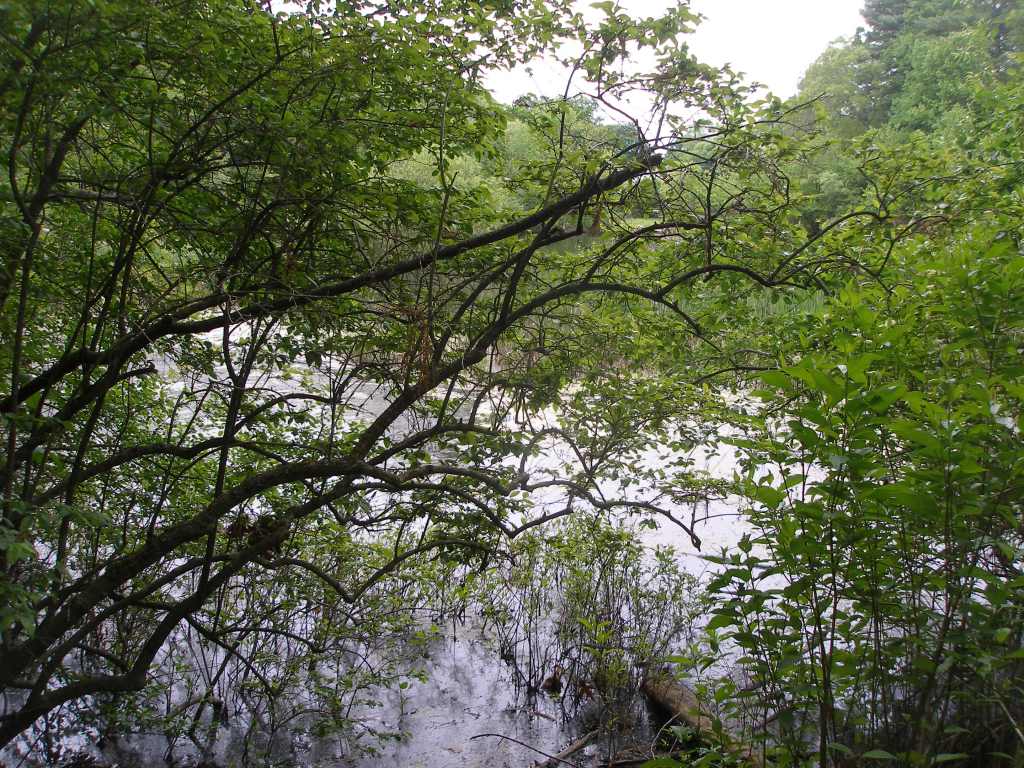
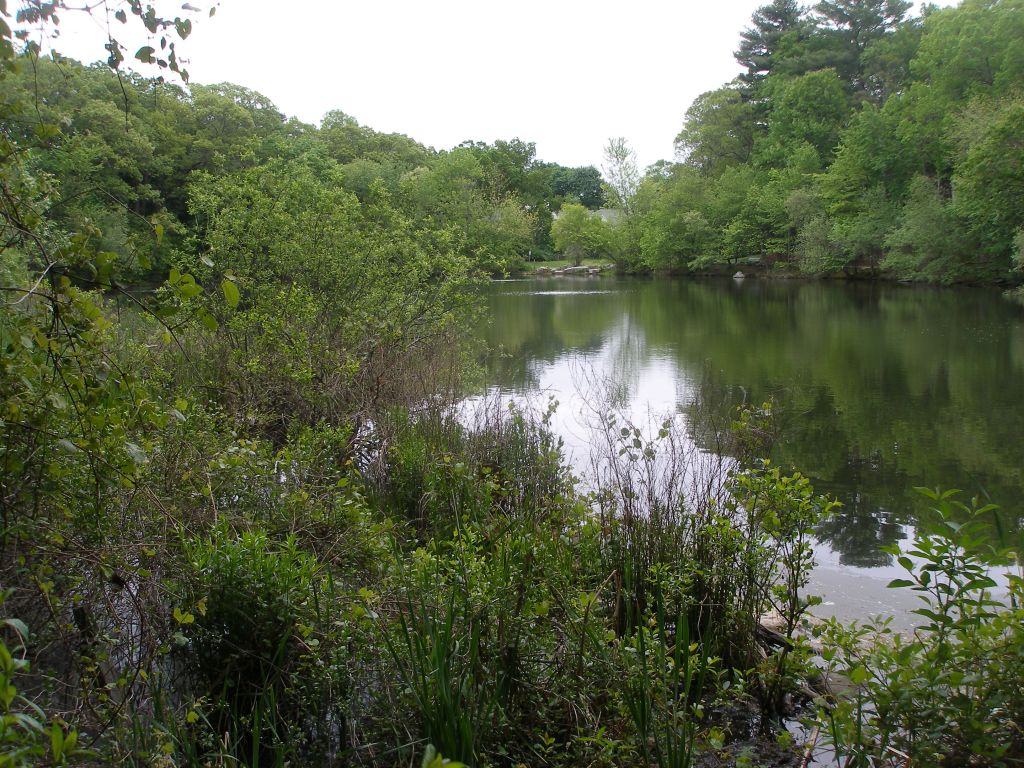
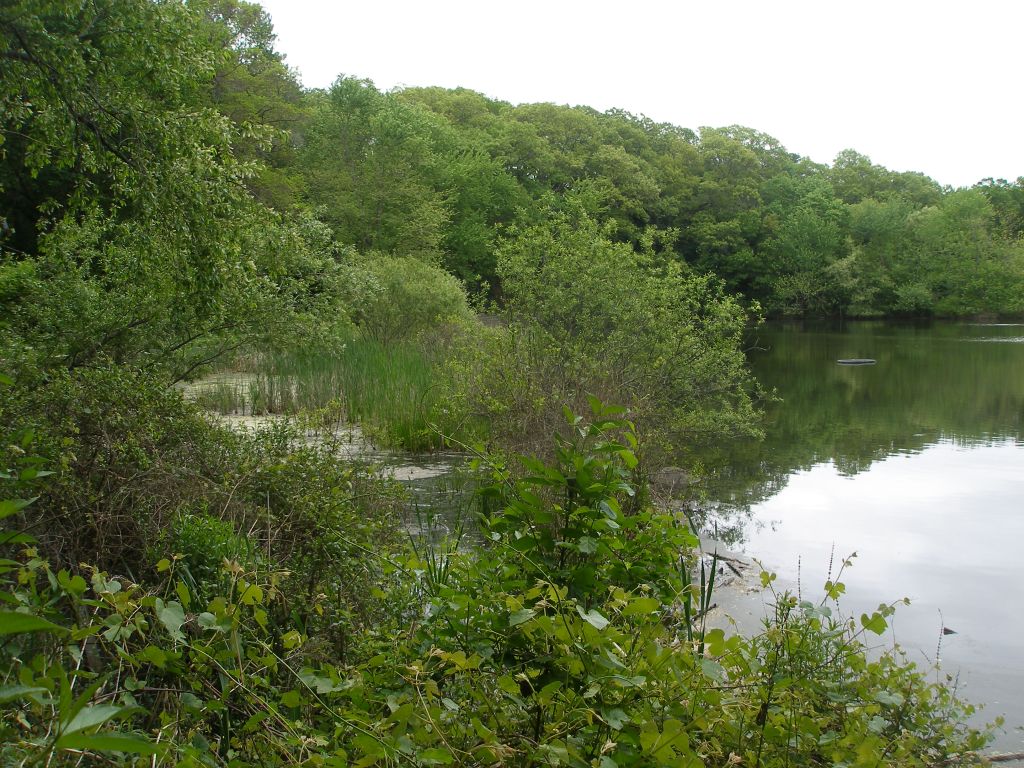
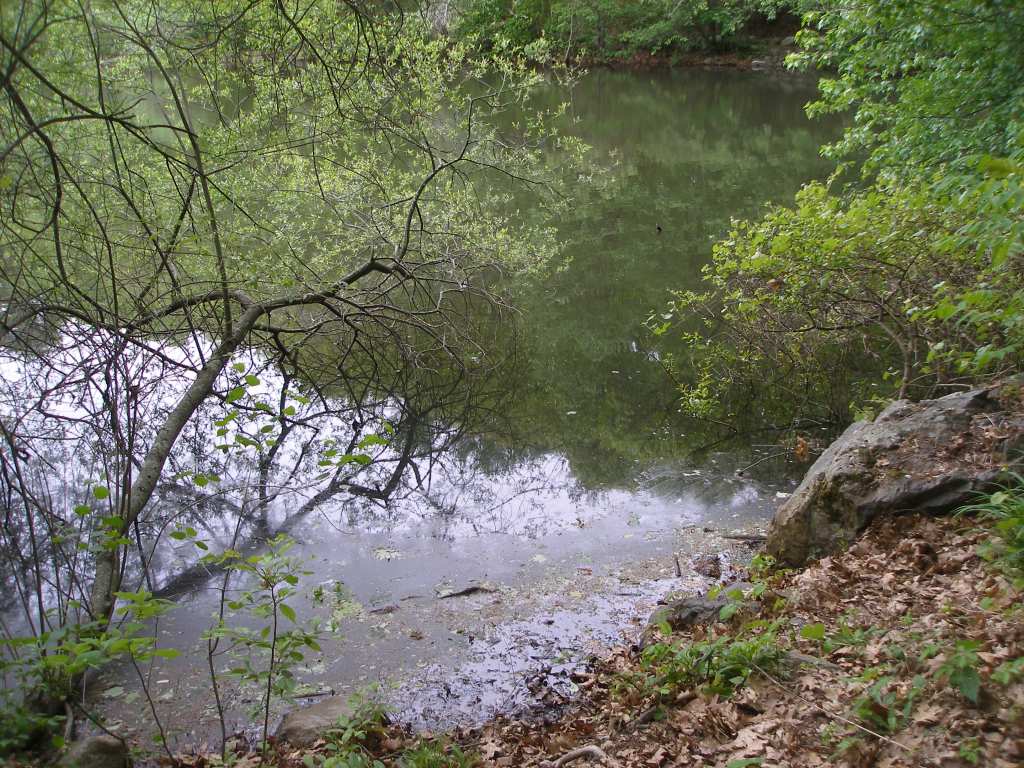
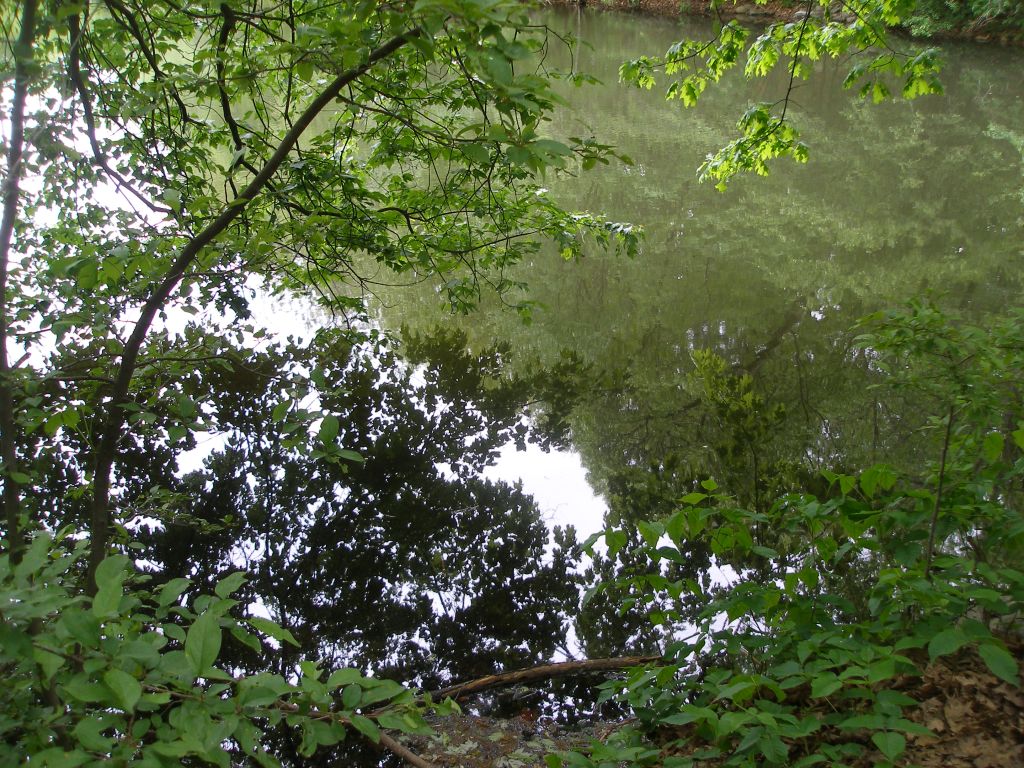
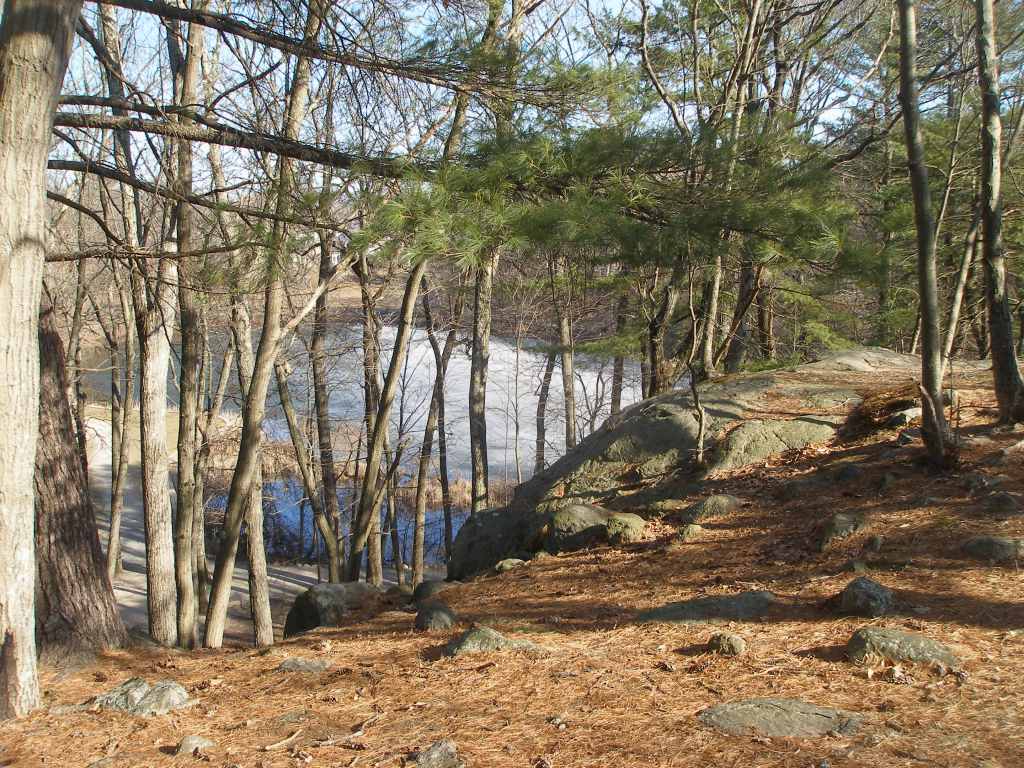
It was one of those days when it could go either way. One of those in between seasons. But as it turned out, I am glad I brought my camera so I can share this walk around Hills Pond with you.
Cloudy days make for fewer shadows and contrasts. In this case, the shapes just sang out, and the greens all worked together. Even though I was not expecting anything special, I found a quiet beauty all around me.
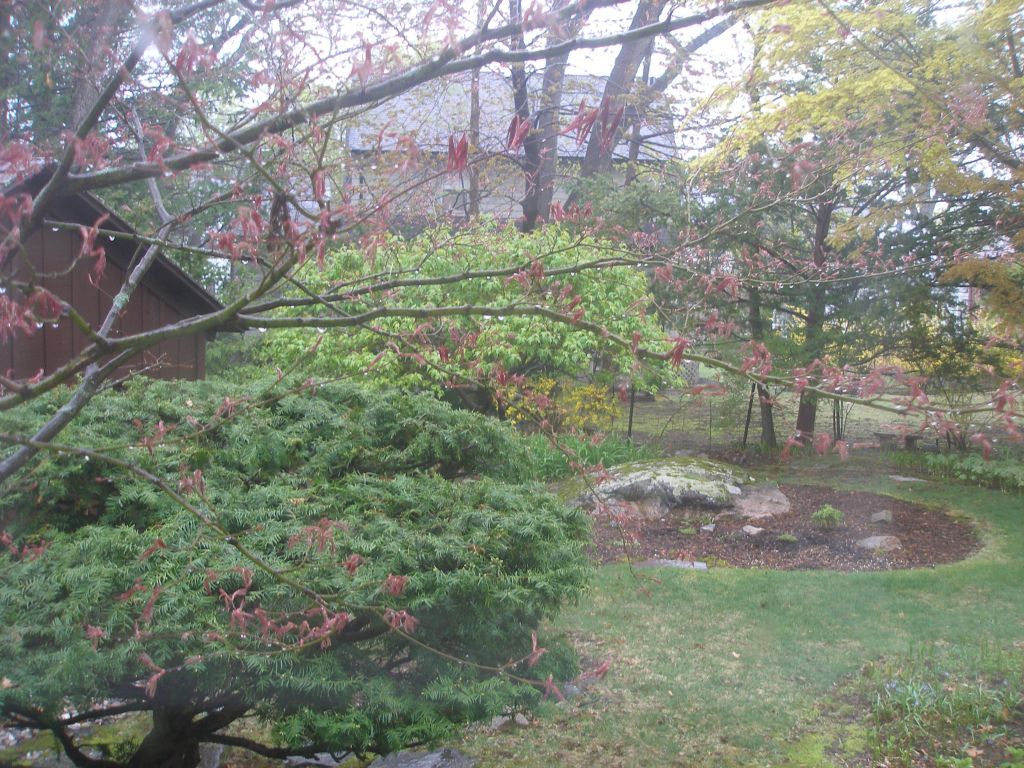
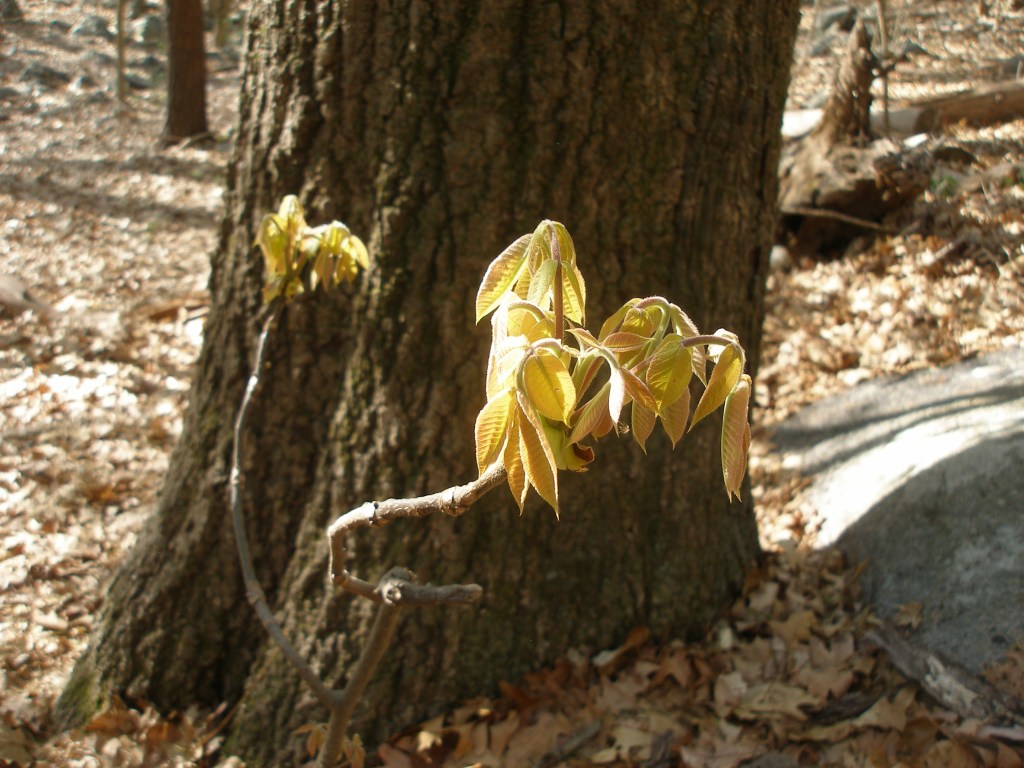
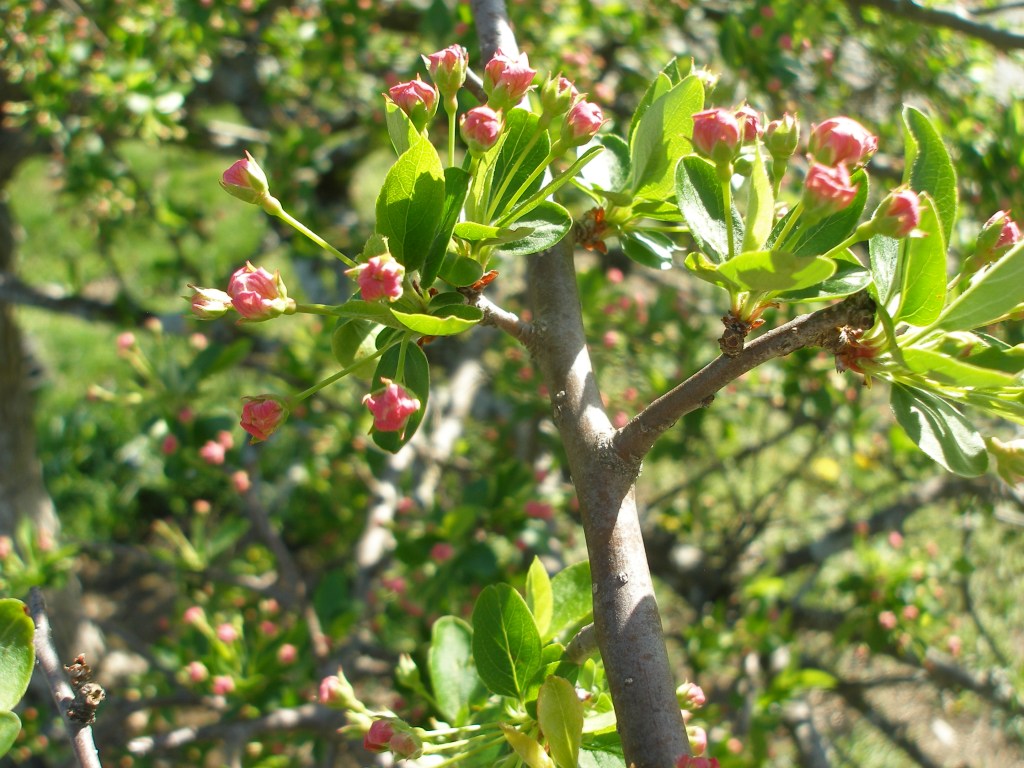
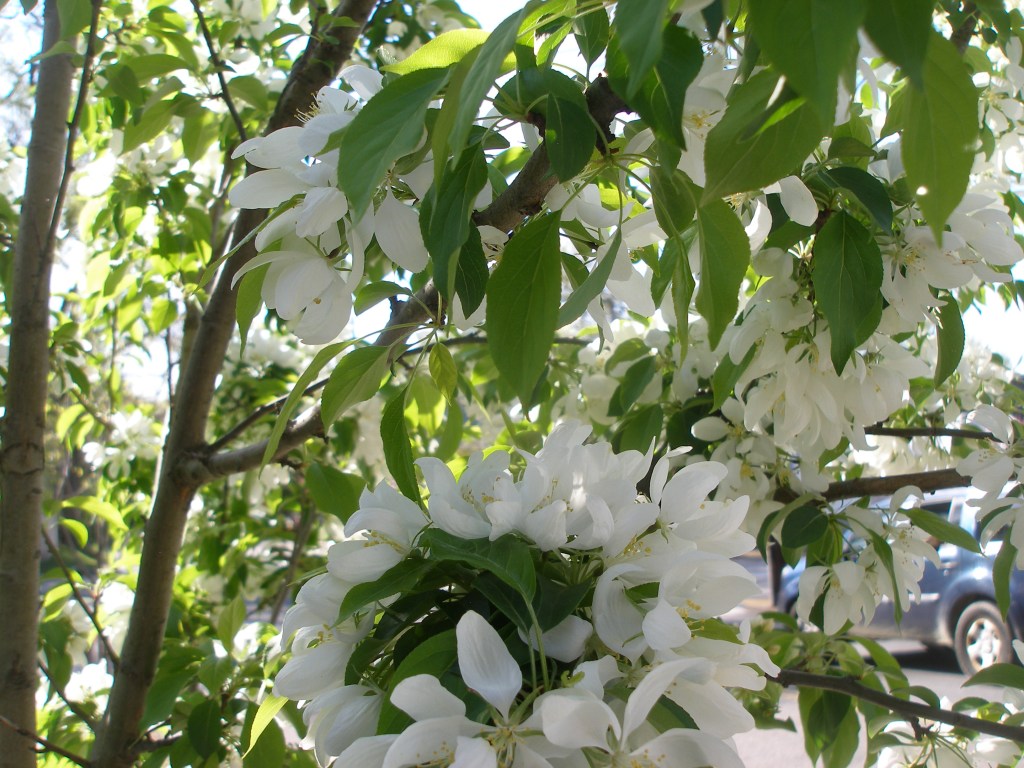
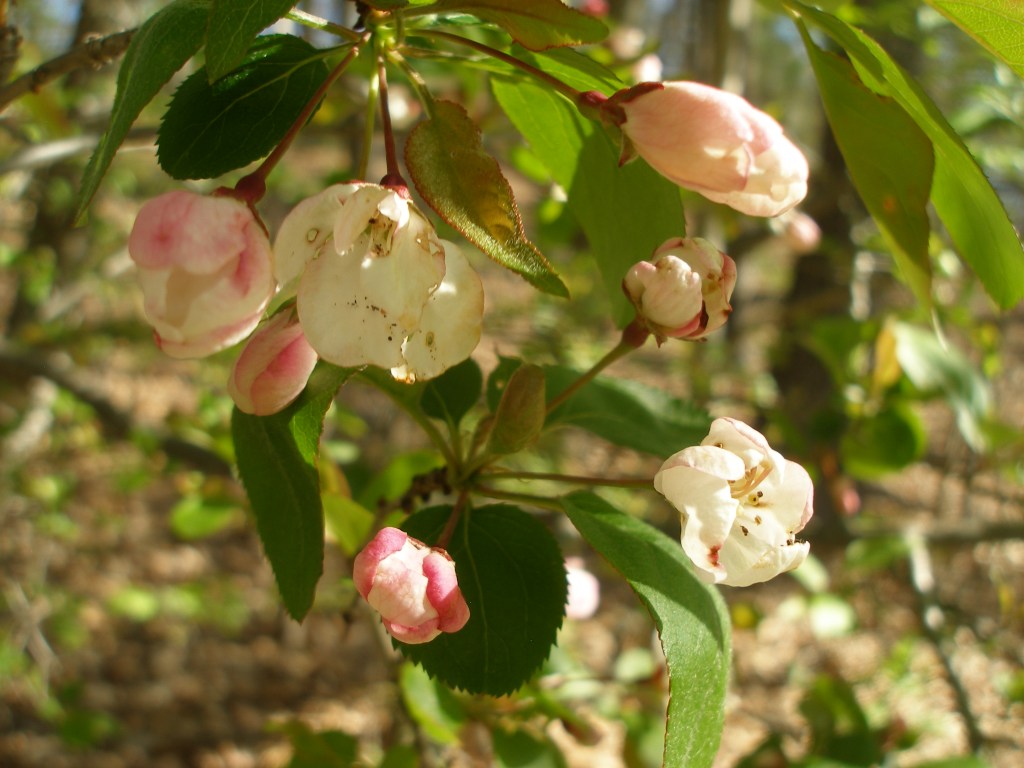
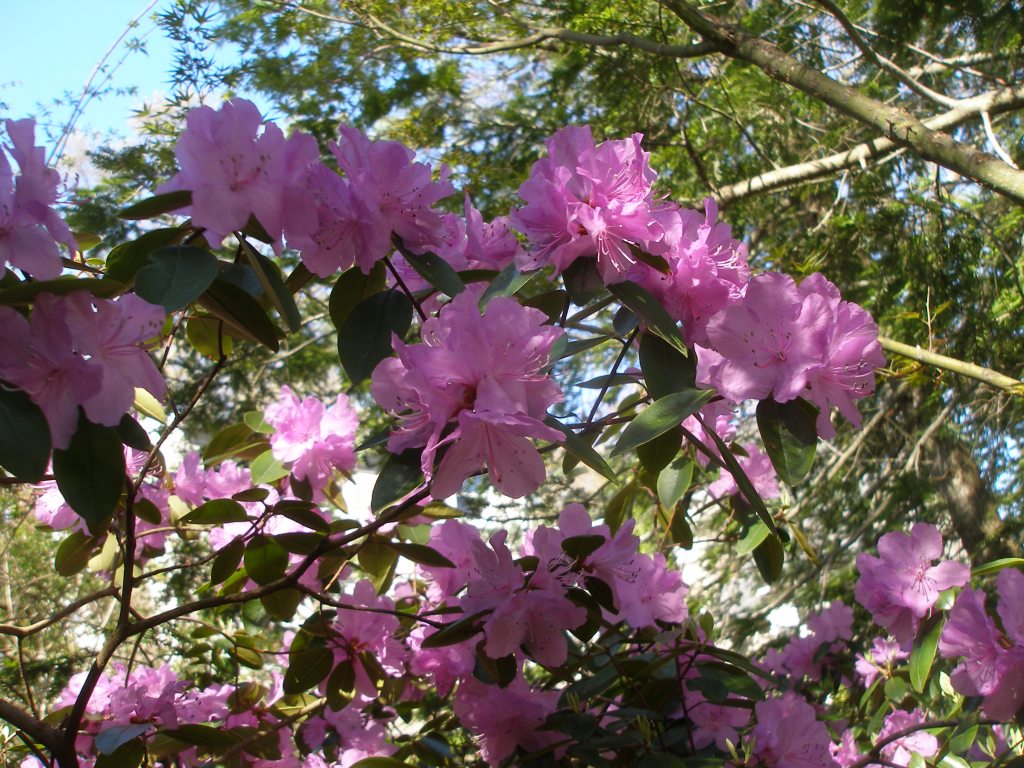
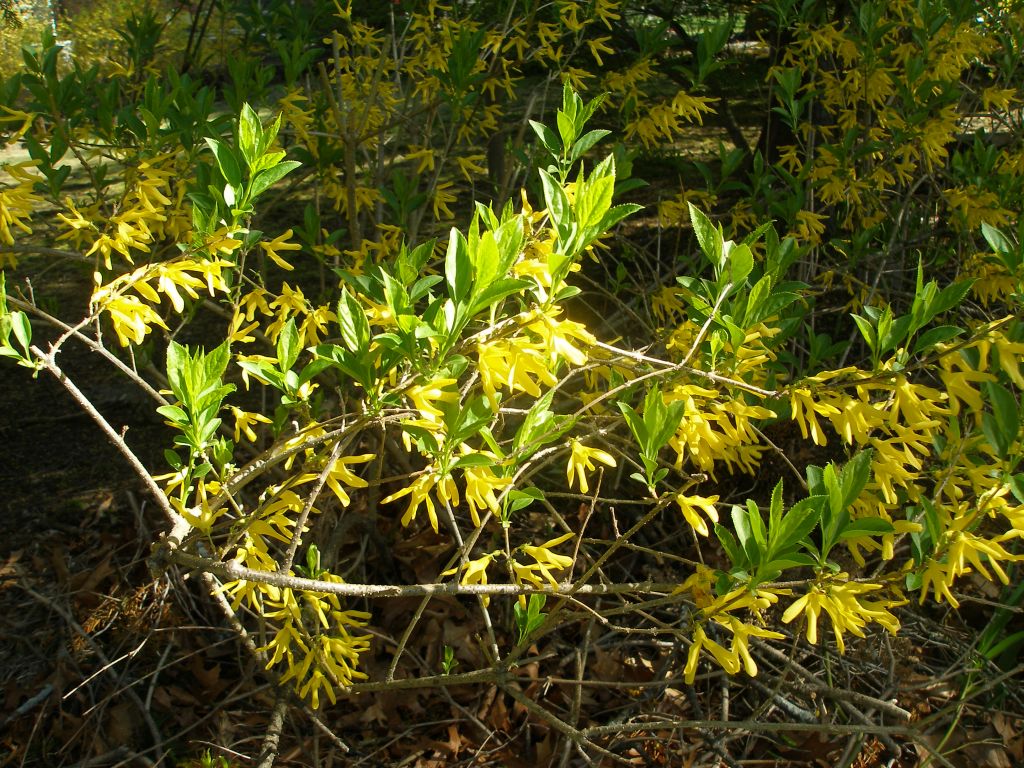
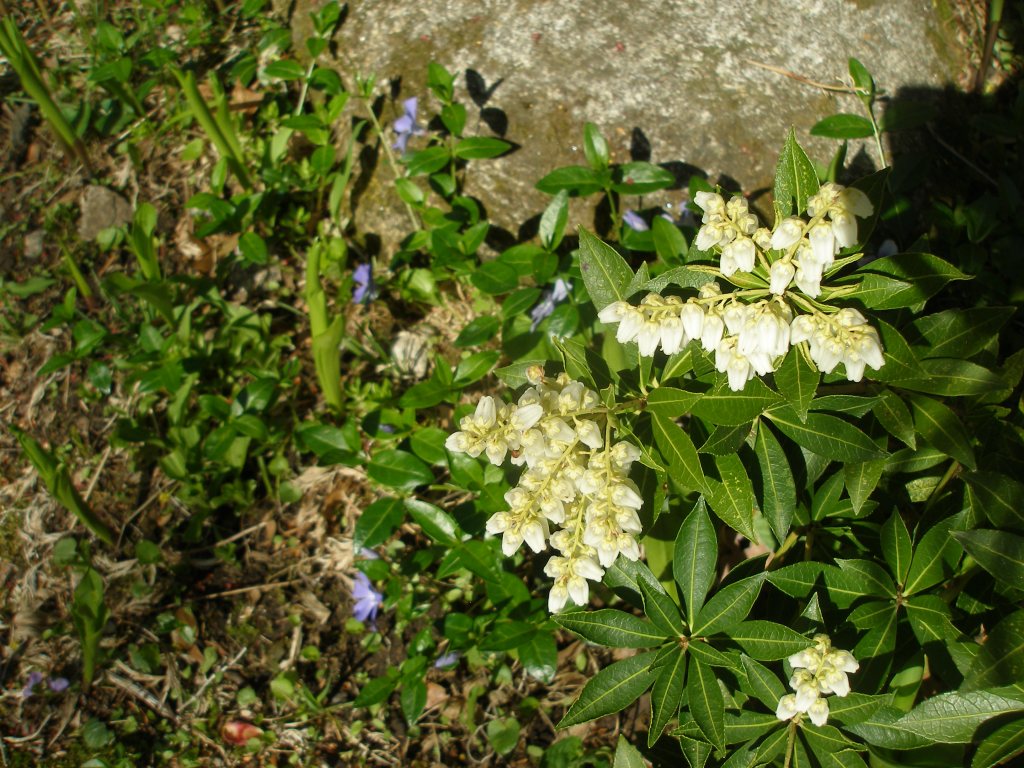
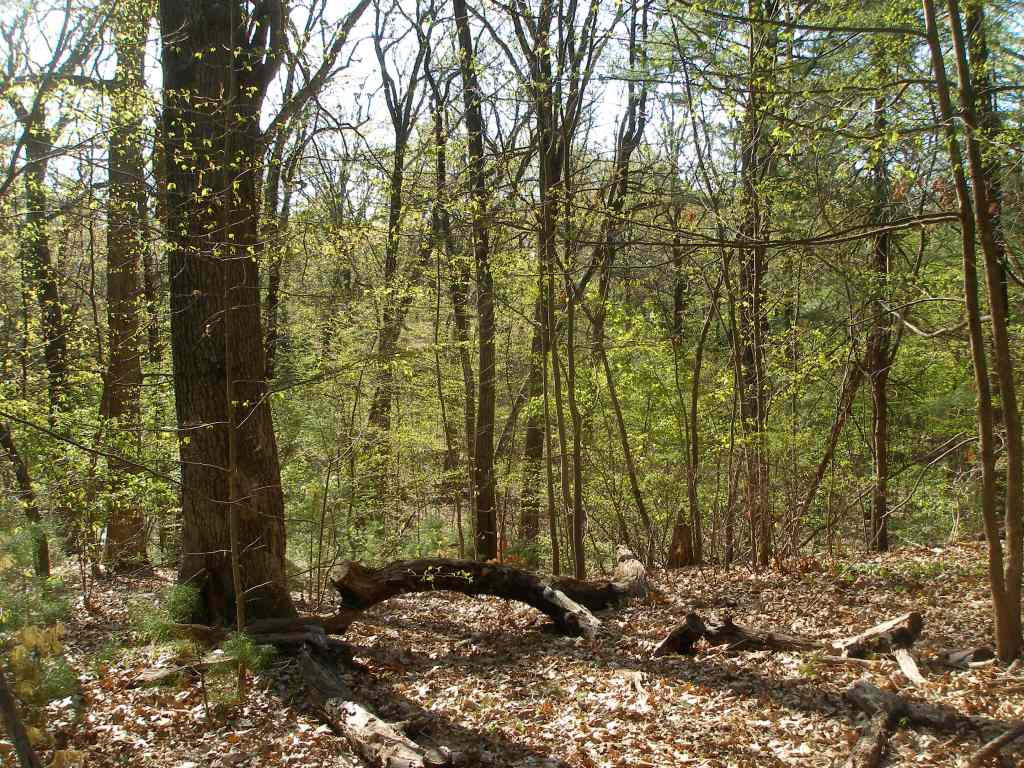
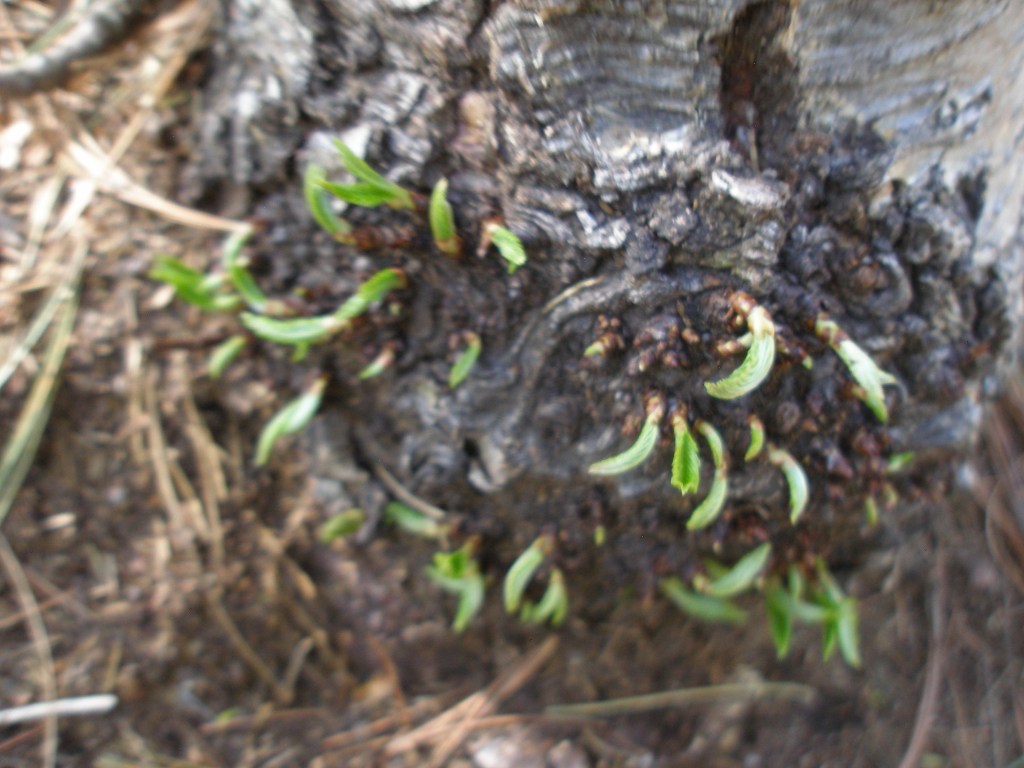
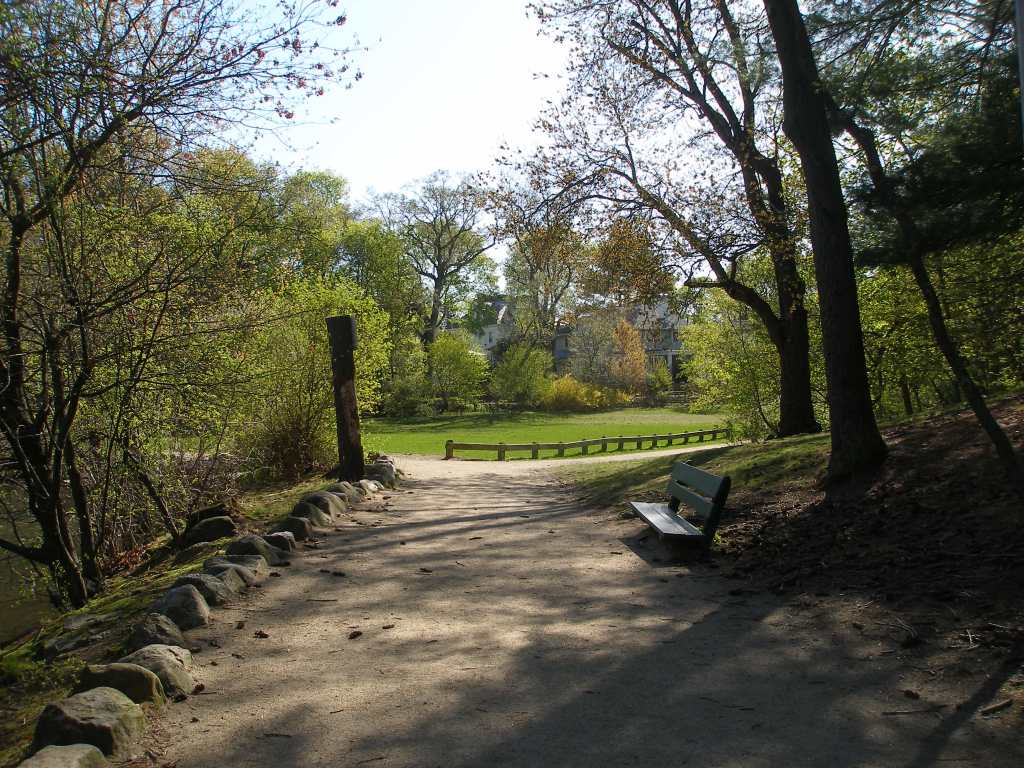
It had started raining on a more regular basis near Boston, so after a few days of warmer than usual weather, spring began to unfold step by step instead of all at once like last year.
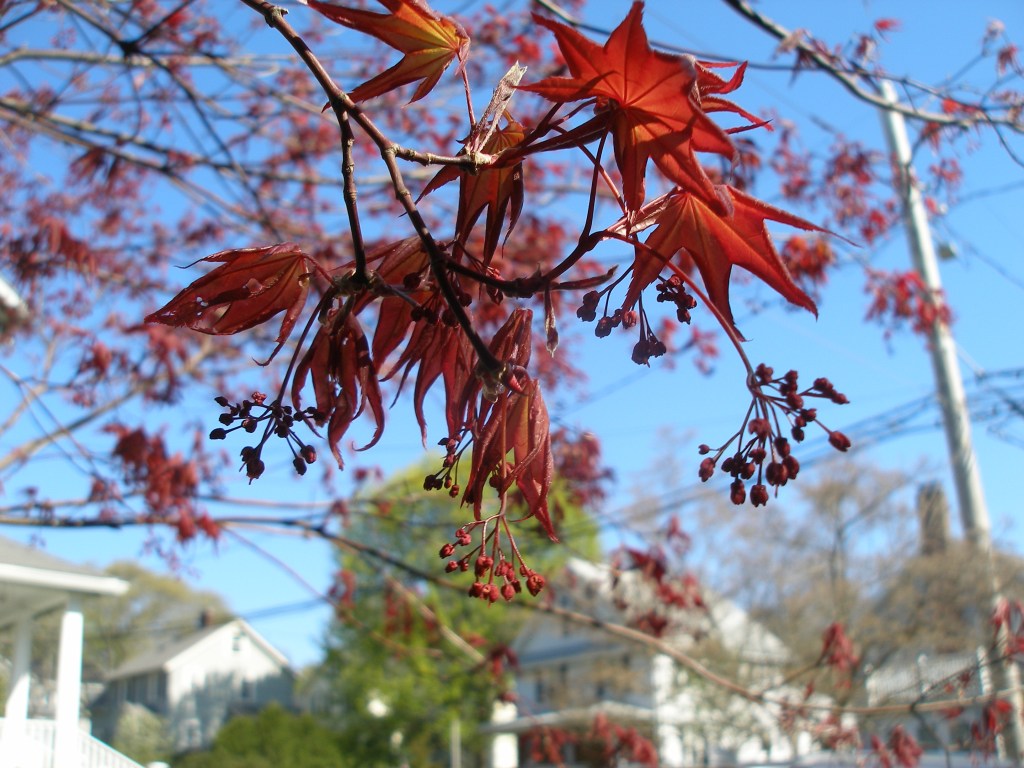
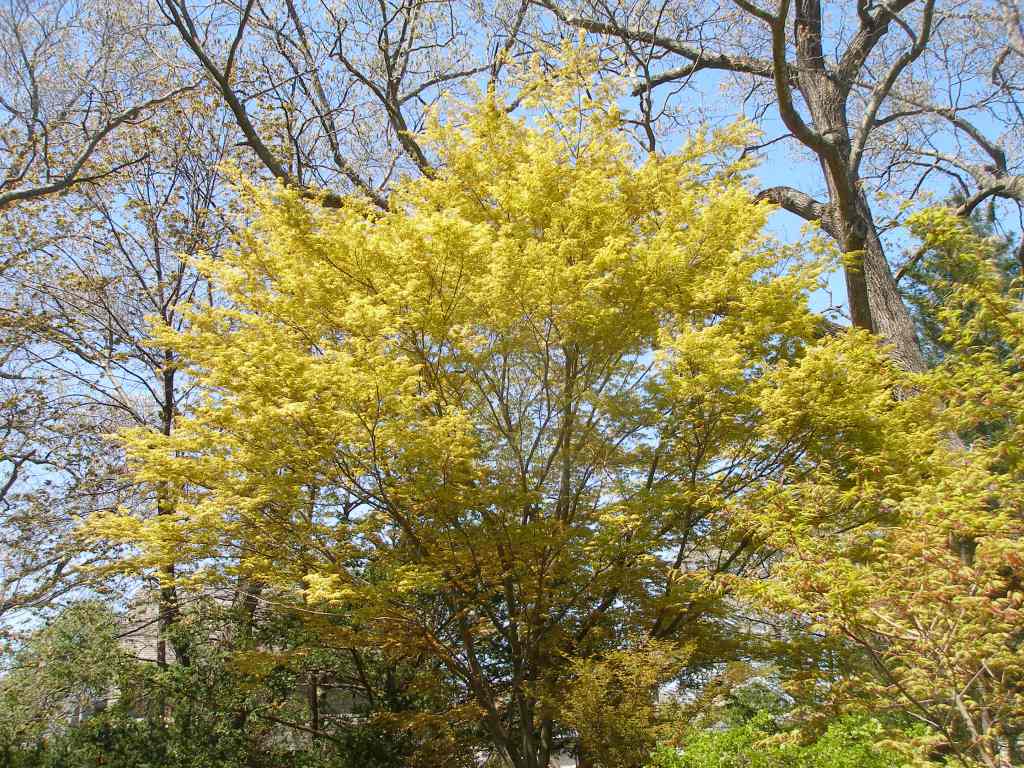
The photos below will give you a sense for what I noticed in the last few days of April; new leaves, blossoms, greening undergrowth, and my Katsura maple larger than ever as it goes through its color changes at this time of year.
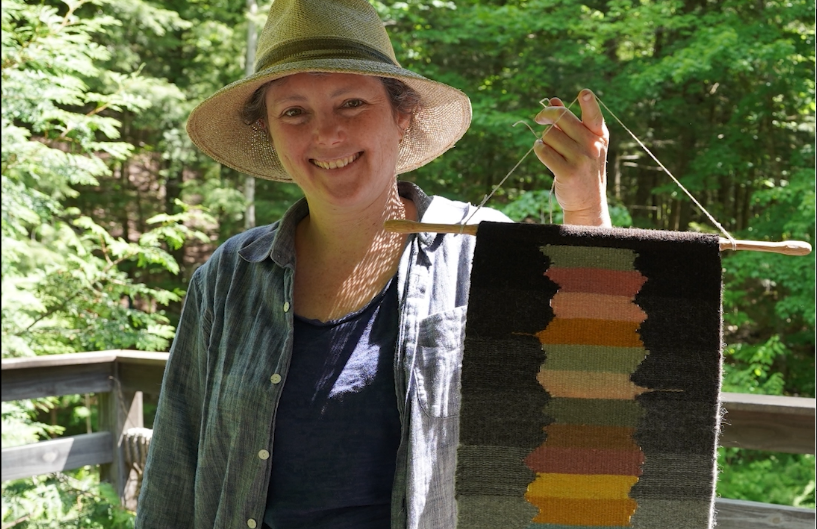
Hannah Regier with her “Color Harvest Moon” weaving. Photo by Jeff Klein.
This short documentary shares the world of Hannah Regier, who struck me as someone who truly lives by Japanese Tea ceremony’s core principles – Harmony, Respect, Purity and Tranquility.
I felt them in where and how Hannah lives, in the care she takes with her fabric art made using natural dyes gathered from the nearby fields and woods, as well as in her efforts to work with others to protect and share the lessons of natural places. There were other aspects of the the Way of Tea as well including creativity, generosity, and a deep appreciation for subtle aspects of the passing seasons.
Japanese tea ceremony was brought to its peak in times of war and great uncertainty. My trust in the worth of the art’s timeless values of harmony, respect, purity and tranquility provided a much appreciated anchor when things started to fall apart in my own life. But experiencing Hannah’s world made clear to me just how much those values can help to foster joy, connection and meaning, all of which are powerful antidotes to the helplessness and hopelessness it is all too easy to feel in these particularly challenging times.
Hannah Regier (her website), and videographer Jeff Klein (his website) both contributed their considerable artistic skills to this project. I am also most grateful for how Jeff Klein wove the sound of the stream behind Hannah’s studio throughout, an appropriate reminder of the importance of nature in the Way of Tea, in Hannah’s world, and, in fact, in all of our lives.
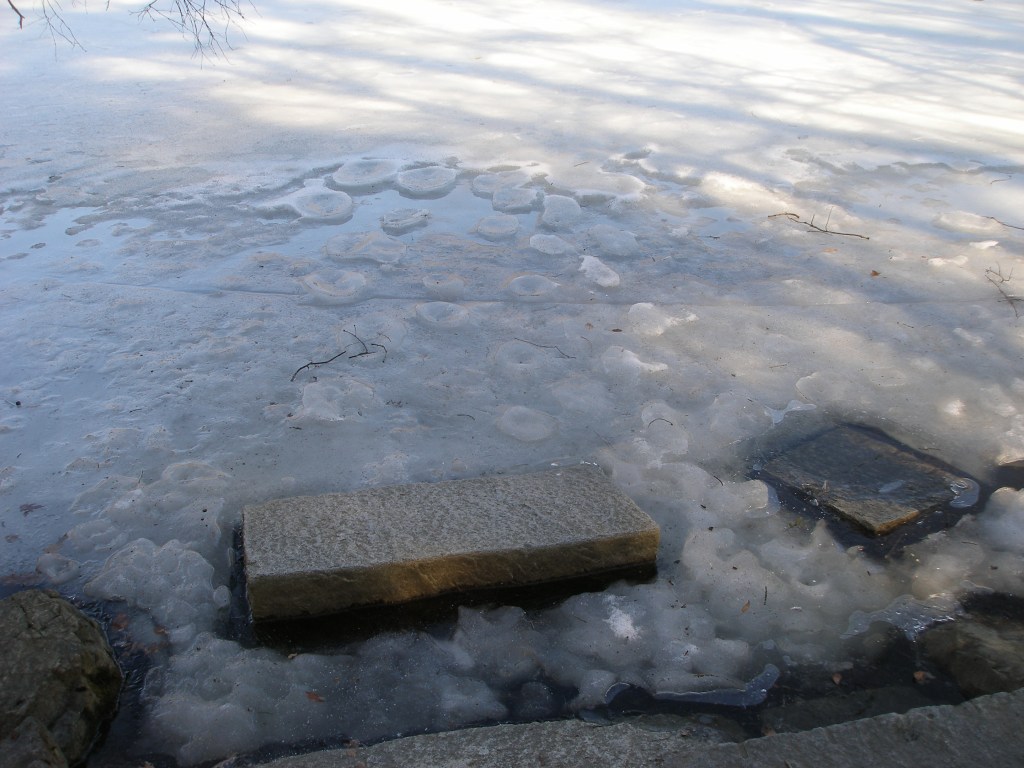
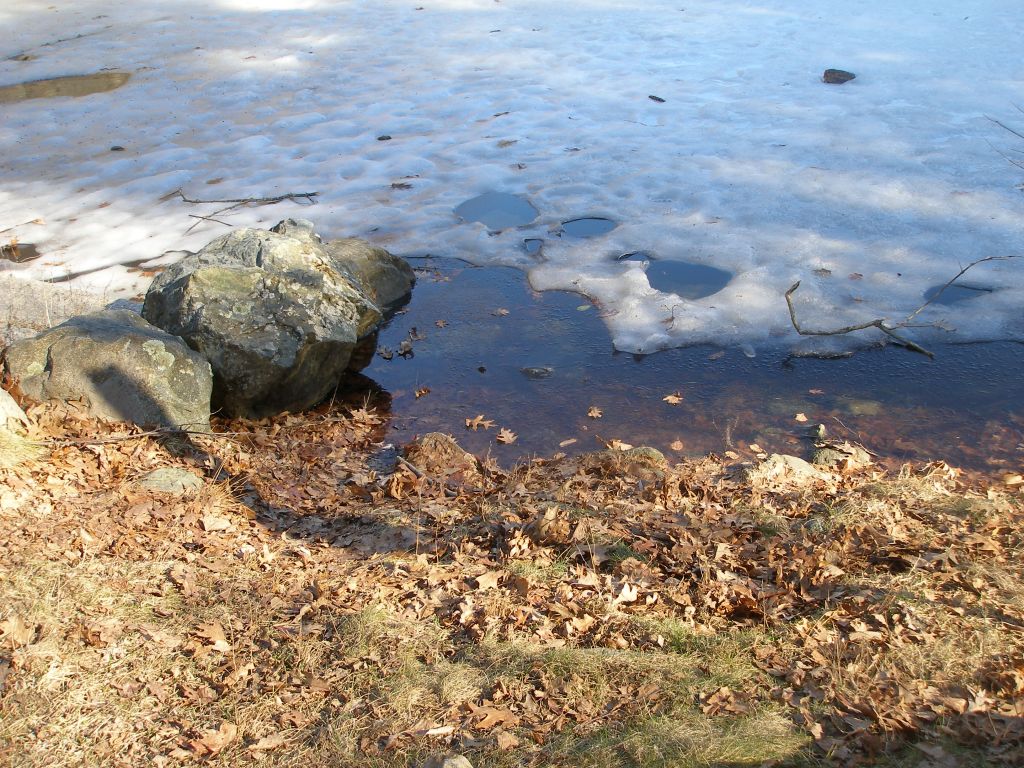
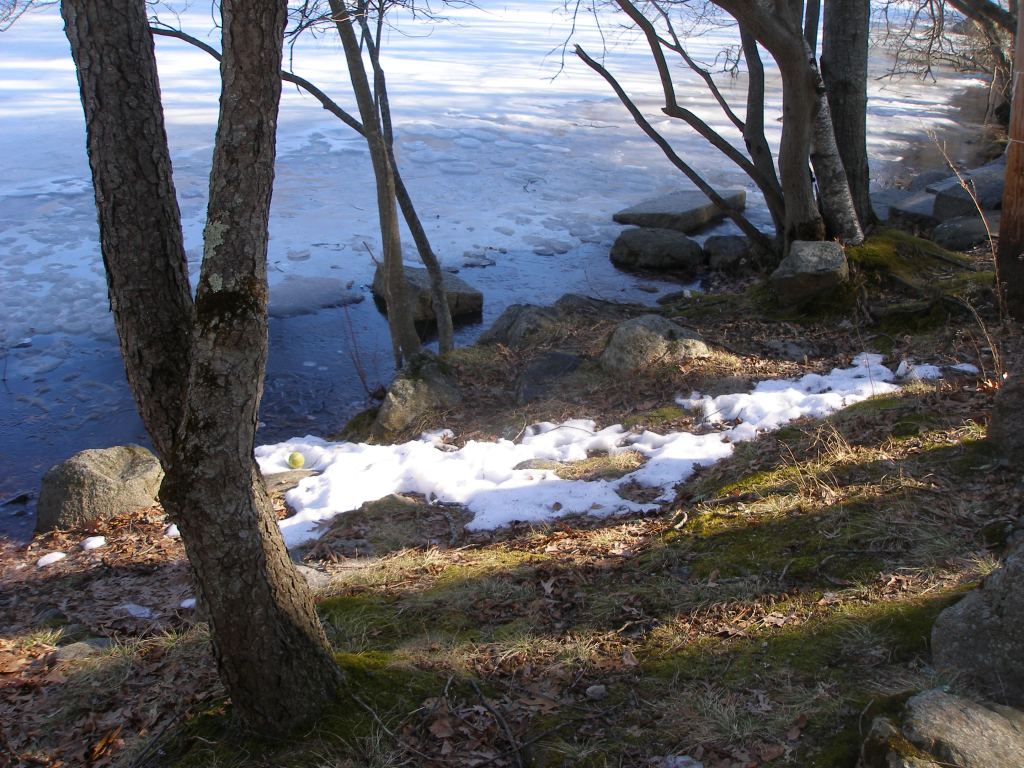
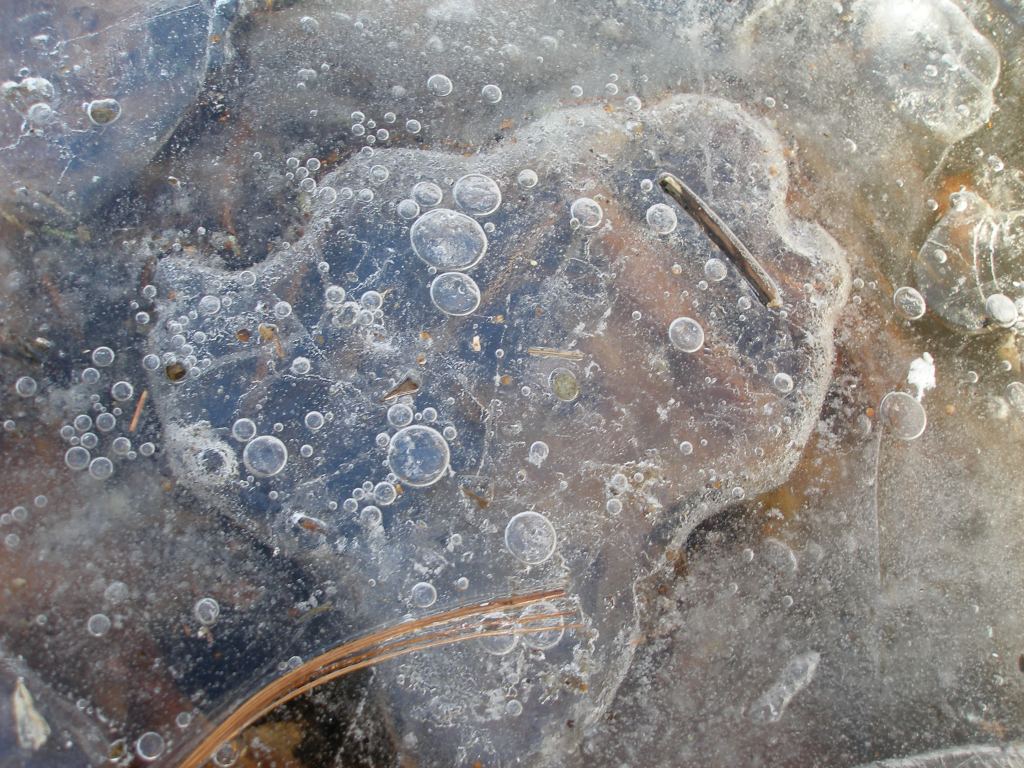
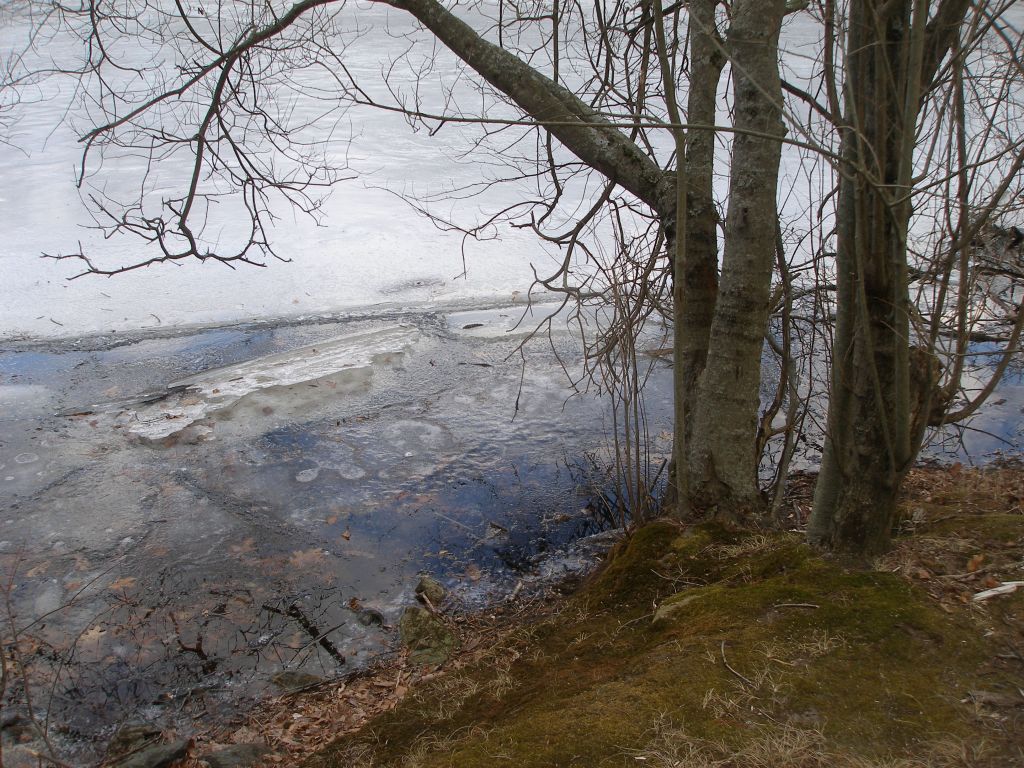
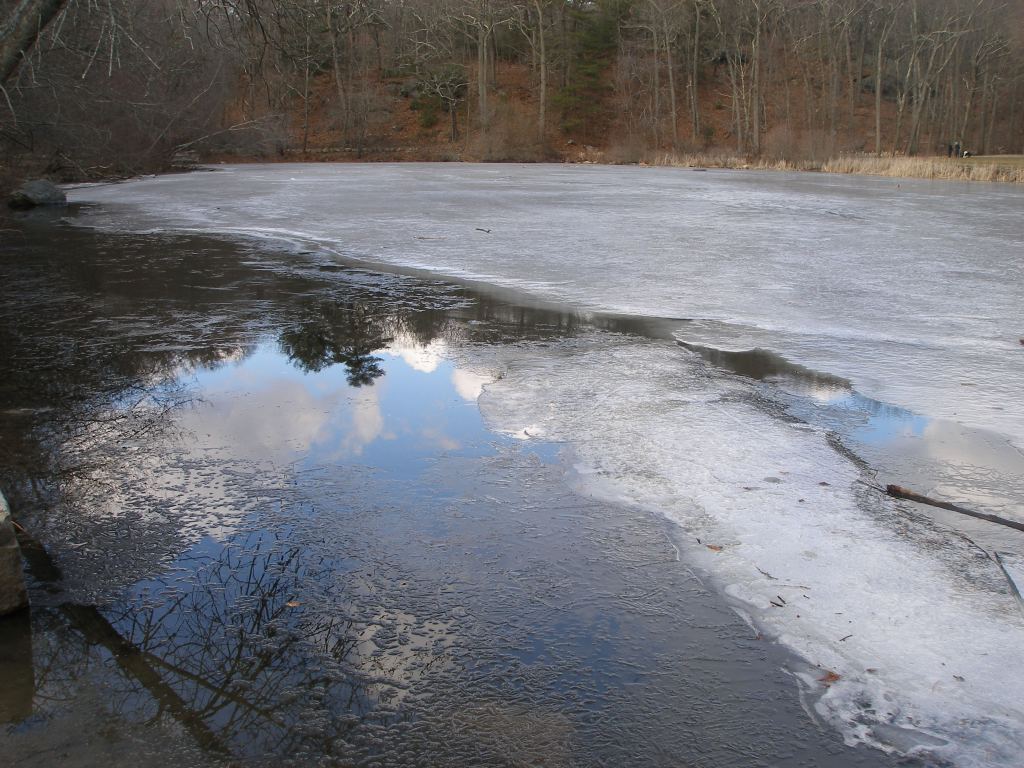
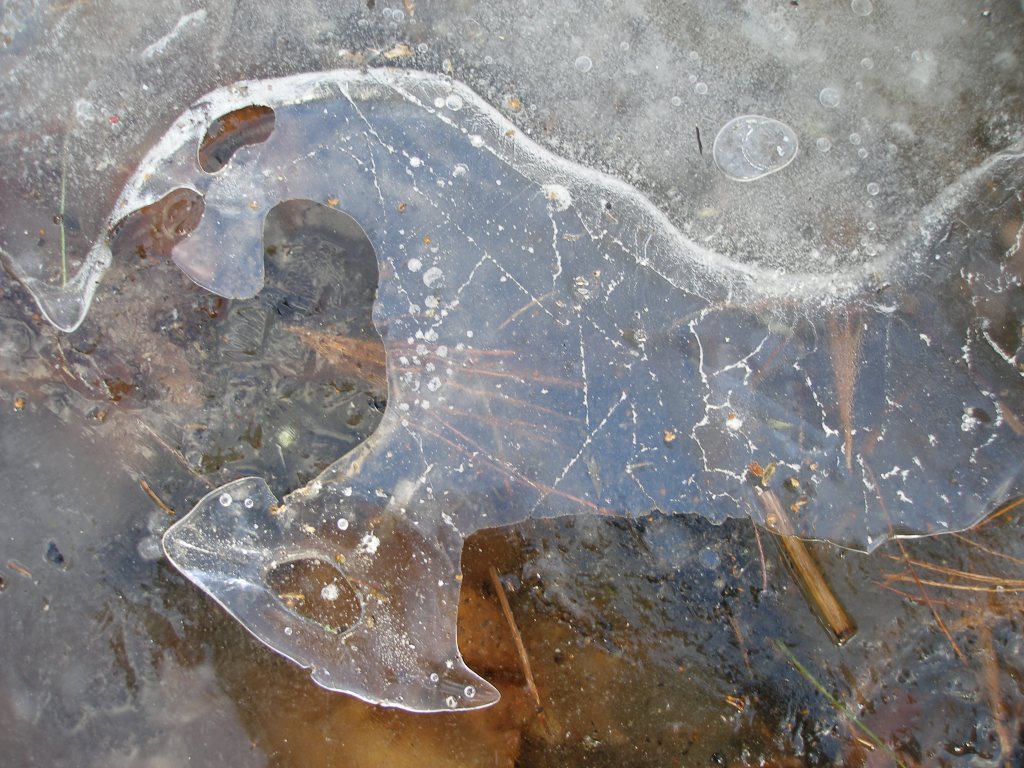
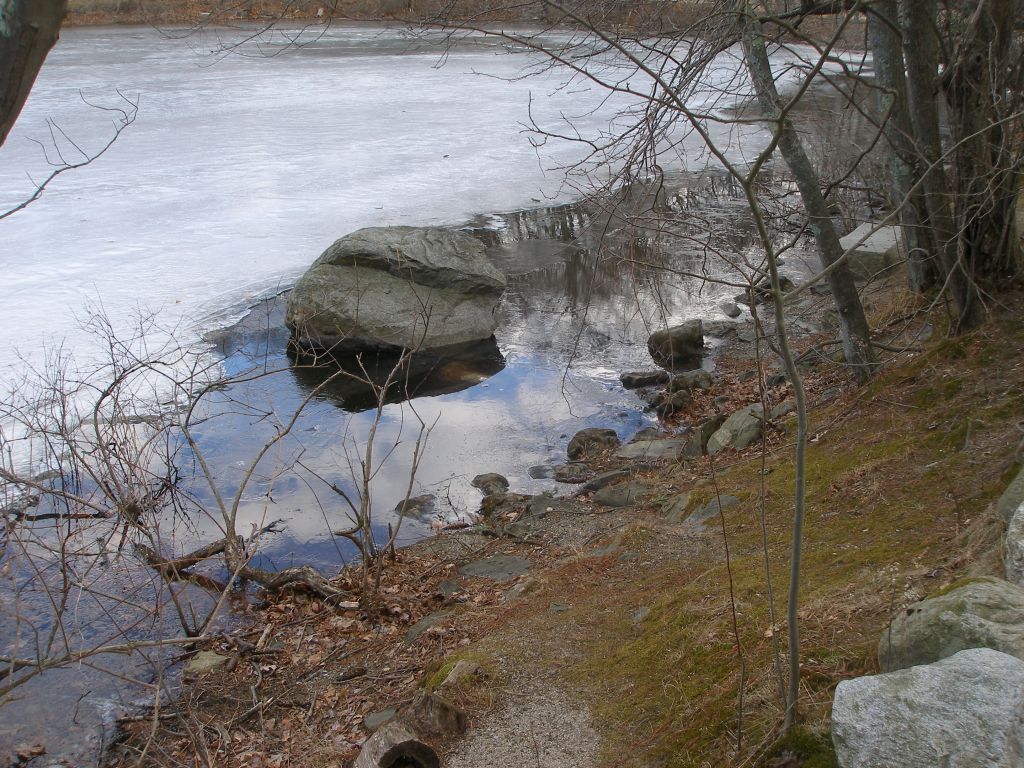
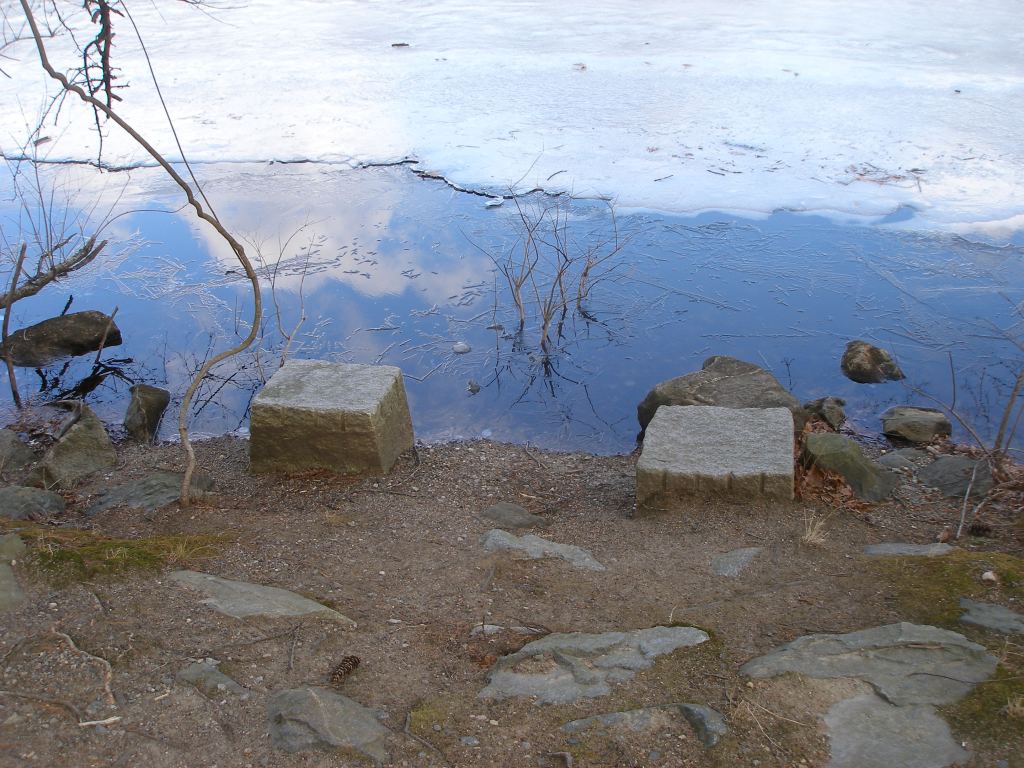
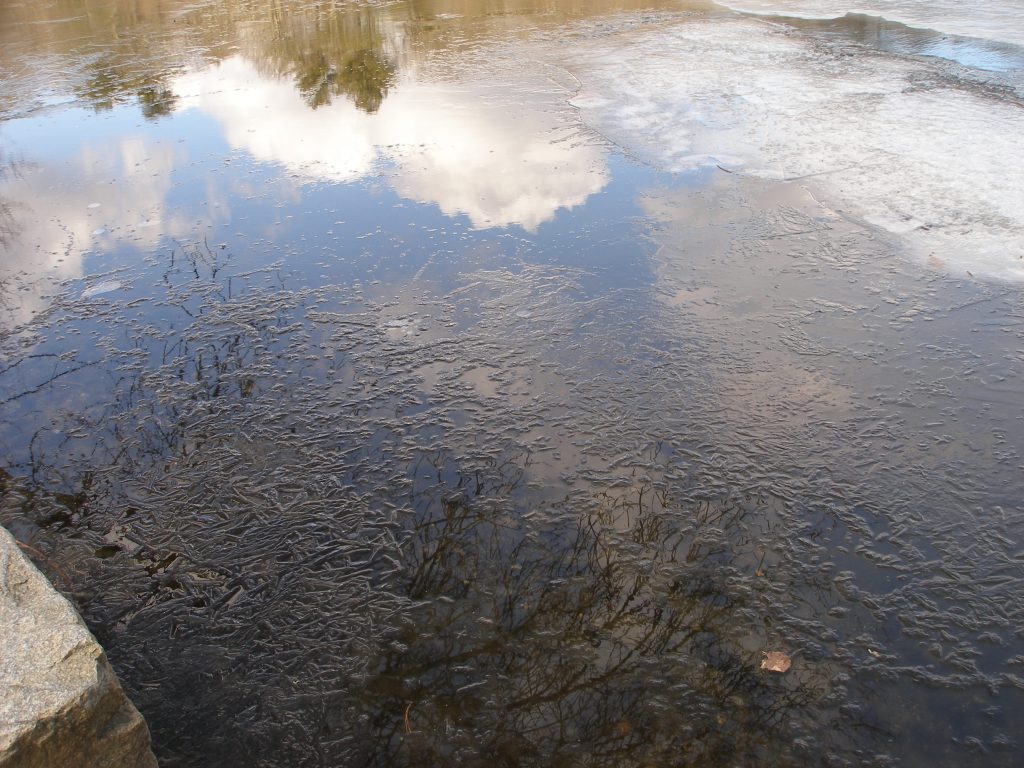
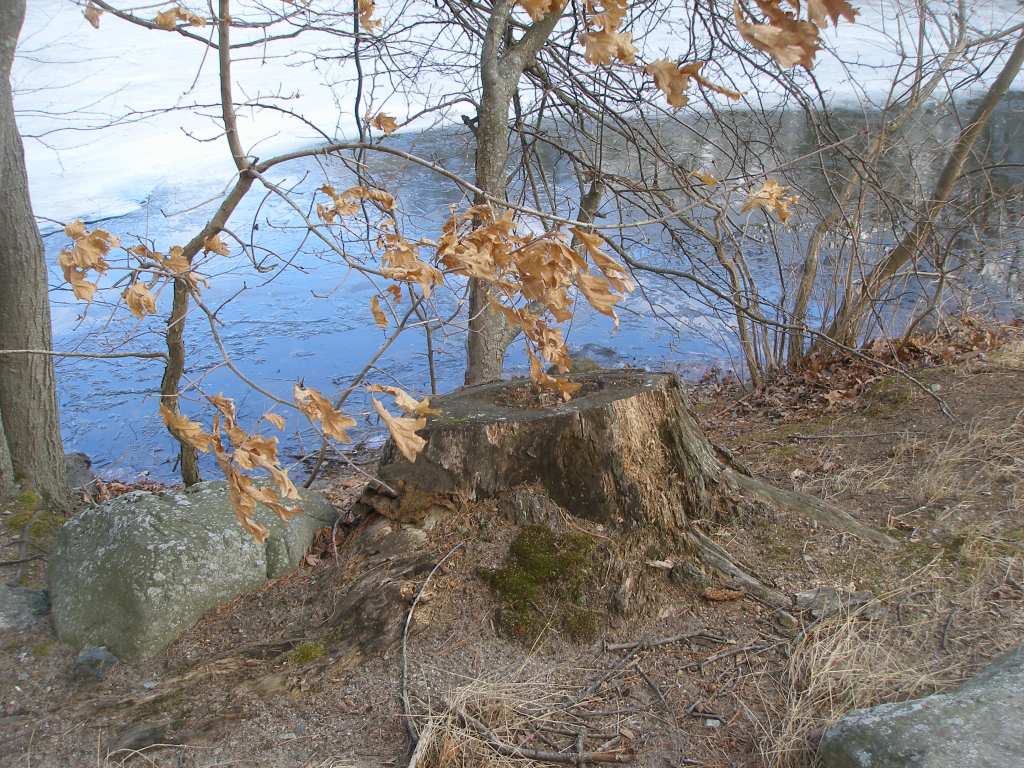
I like to look around the edges of Hills Pond when the ice is just forming or better yet, when it melts with warmer days and freezes again during the night.
Sure enough, there were crystal clusters and bubbles in the ice yesterday as well as a wonderful curving sculpture.
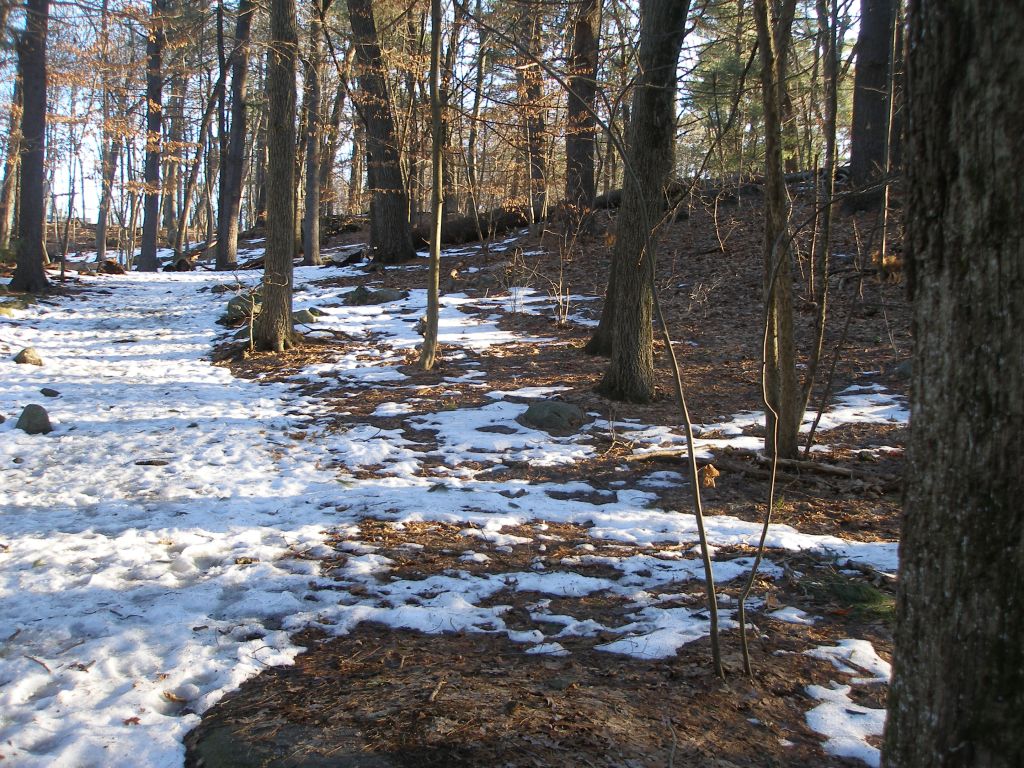
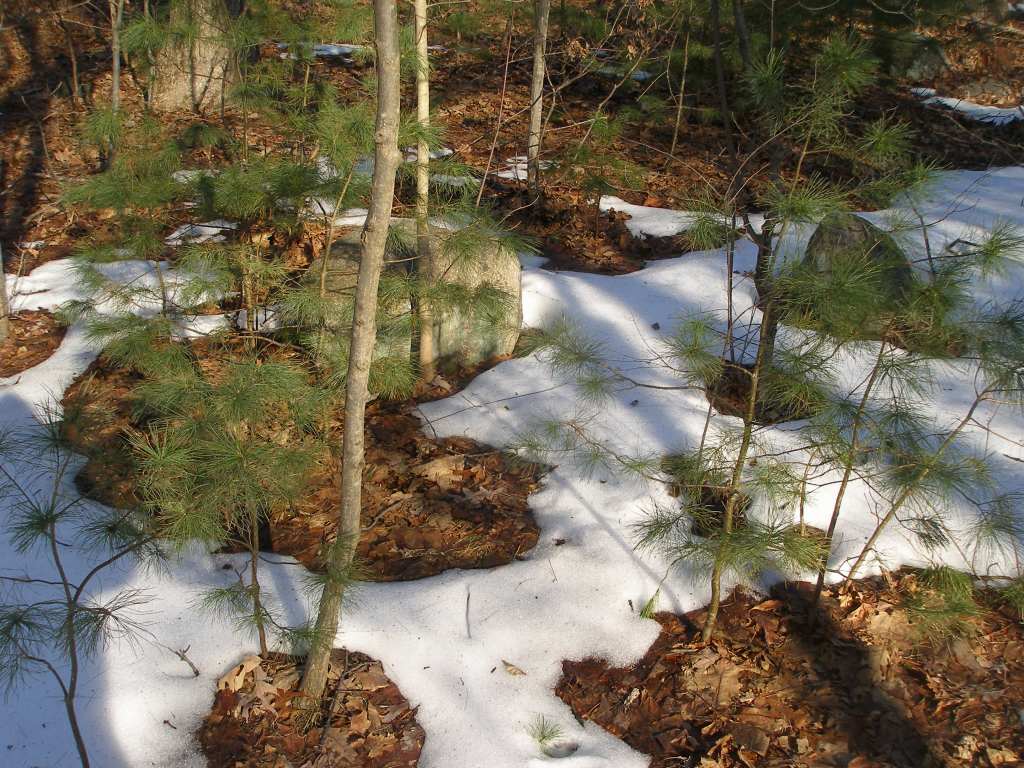
When I returned the next day, the mushy paths were lit by reflecting patches of ponding water. Snow on the pond had slumped into quilted softness, with all trace of the icy precision gone. I took solace in my knowledge that there is a regular rhythm to it, how the melting feeds the slow unfolding of green on our tilted panet.
























 Radiant Refuge