The Arlington, MA Council on Aging (COA) offers many opportunities for social connection. During my internship there while working on a Masters in Mindfulness Studies at Lesley University, I realized many elders are naturals at mindful connection. With time more precious, perfection and things matter less. What does matter is time spent together. They understand that deep listening and honesty both support the kind of heartfelt aware connection that amplifies wellbeing.
As I learned, many of the 200(!) or so Arlington COA volunteers are elders themselves. When I asked what they were most grateful for, several of them told me it was the opportunity to support others. That kind of wise appreciation is both rare and badly needed. It should not take a natural disaster or realizing there are few years left for us to understand we have the tools to honor each other’s dignity in ways that are mutually supporting.
My experience offering mindful tea and dialogue workshops to elders confirmed my sense that they might be well positioned to create and promote opportunities for the caring connection that is so badly needed in these increasingly lonely times.
During these tea and dialogue sessions, I observed: (1) caring support, (2) appreciation that deep listening powerfully benefits both the speaker and the listener, (3) growing trust and openness, (4) delight in sharing natural objects and stories (5) playful and joyous creativity, and not least (5) satisfaction from being able to support each other in ways that truly matter.
In our most troubled world, there is very good reason to remember Mr. Rogers’ wise words, “Look for the Helpers.” We humans can be very destructive, but there are also the helpers. Even though they often do not get the recognition they deserve, caretakers are everywhere, including caretaker animals like bees.
There is no doubt that the caretaker role can be extremely exhausting, and relentless as well as having potential for real and meaningful rewards. Still there can sometimes be toxic aspects and in those cases, limits must be set. It does no good for anyone if the caretaker is seriously undermined.
Recently, I needed emergency surgery and went to Mount Auburn Hospital in Cambridge, Massachusetts, USA. There I met an extraordinary caretaker named Rosie – hence the rose above. Her role as Patient Care Assistant, was not highest in the formal hospital hierarchy, but to me she was at the very top.
Rosie is one of those no nonsense, hard-working, get down to business people who move with great vigor as well as knowledgeable authority. Yet when it came to caring for me, she radiated such an air of deep respect. I found myself telling her, “I love you Rosie.” She answered right back, “I love you too.” I said, “I bet you love all of the patients you care for.” She said that was true. I told her I was a member of the Rosie fan club for sure.
I knew there would be others. A nurse told me that Rosie worked incredibly hard and had been at Mount Auburn for 20 years. He added that Rosie was the one who kept that hospital floor “revolving.” Shelly, a CAT scan technician, encouraged me when I told her I was thinking of giving Rosie a gift.
I asked my husband, Mark, to take out my collection of 7 jade bangles, and tie then with a ribbon. They flopped about too much so he put them on a cardboard towel tube, bent in a bit at the ends, and covered the whole with plastic wrap.
I asked Rosie to stop by when Mark came by to visit the next day as I had a small gift for her. The bangles were of many colors -black carved with flowers, lavender, dark green, and combinations like the one below.
I apologized for the informal packaging when I gave them to Rosie, but she said the package was beautiful. I told her that Jade is tough, durable, honest, beautiful, and protective. The circle shape can represent enlightenment, or wholeness and to me that has the flavor of love.
I hoped some of them might fit her, but she could hang them up or put them in a bowl. As I spoke, Rose ran one finger along the colorful bangles and indeed touch is an important part of the experience of jade. I told her that the collection was valuable and might provide a bit of financial security as these would keep their value unlike stocks or our crazy economy.
When I was preparing to leave, Rosie said, “Thank you for everything.” I told her that it was such a great pleasure meeting her. It was my great luck to be able to give Rosie a bit of the recognition that she (and so many others) truly deserve. She lives in my heart as I heal both mentally and physically and her inspiration will continue to help me channel and radiate that amazing powerful love that passes all understanding but is really there for us when we need it.
I still love you Rosie, and always will, oh so very much!
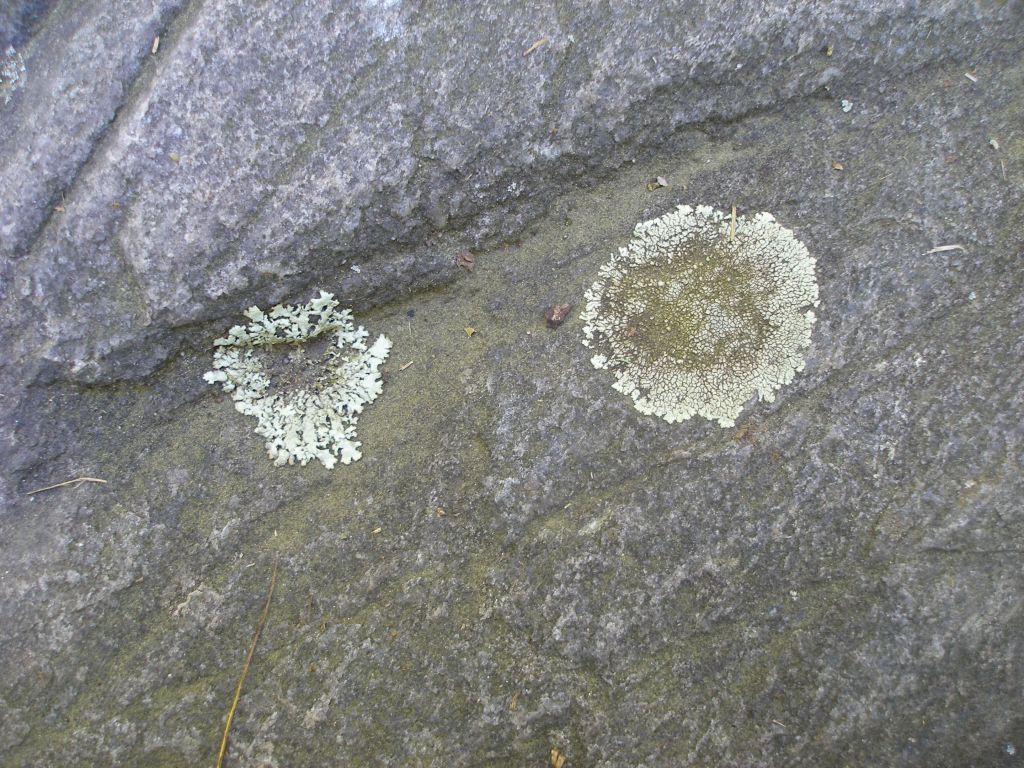
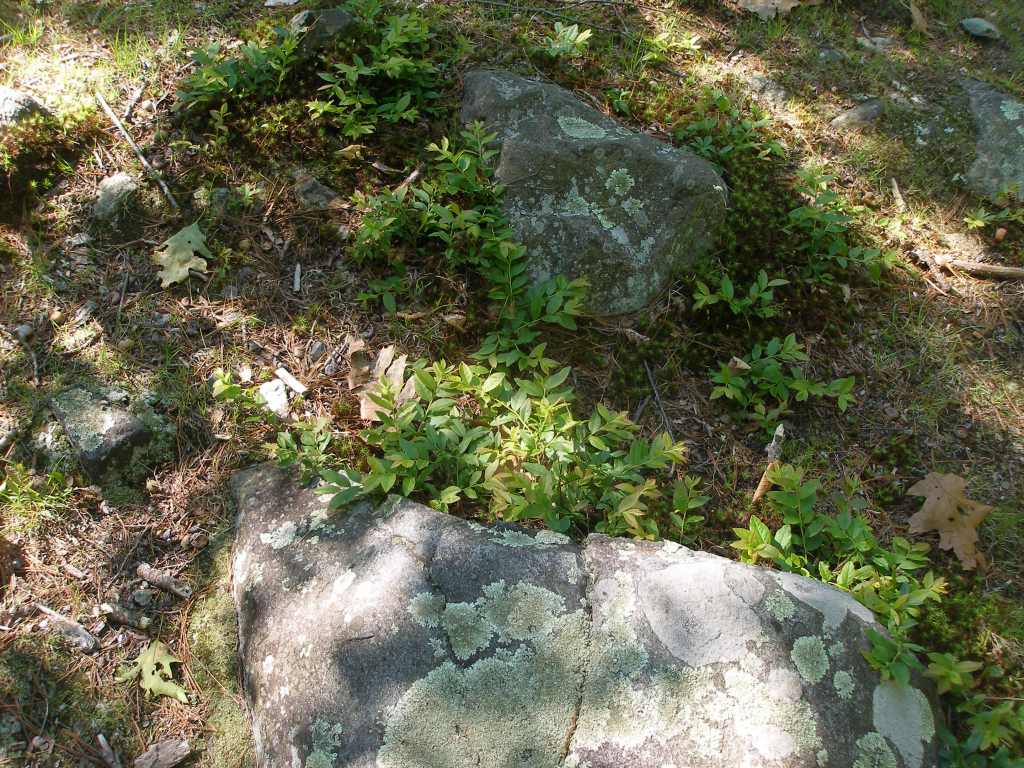
It can happen so slowly we do not pause to notice and tend to take things growing on rocks for granted. Lichens take hold with no need for nourishment. Seeds fall into cracks. Mosses huddle around and move up onto damp places. Blueberries thrive in rocky barrens.
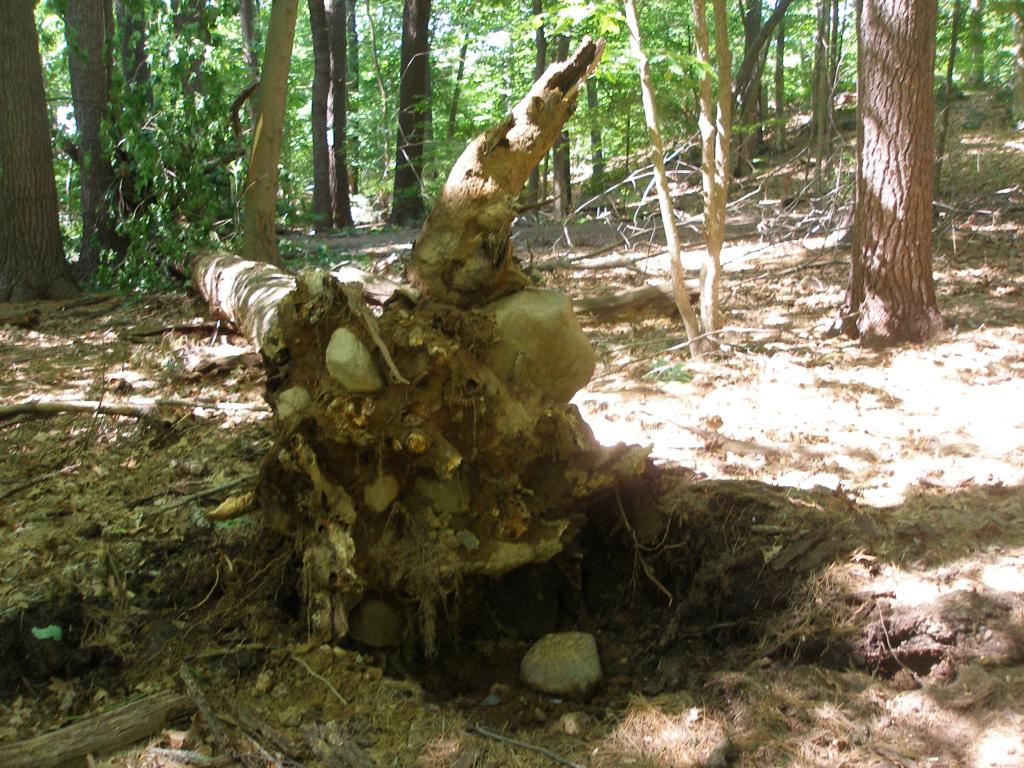
Over time dying biomass builds up in hollows where young trees can take root. And when a storm topples an older tree that managed to grow, its roots may release a number of rocks it once held in intimate embrace.
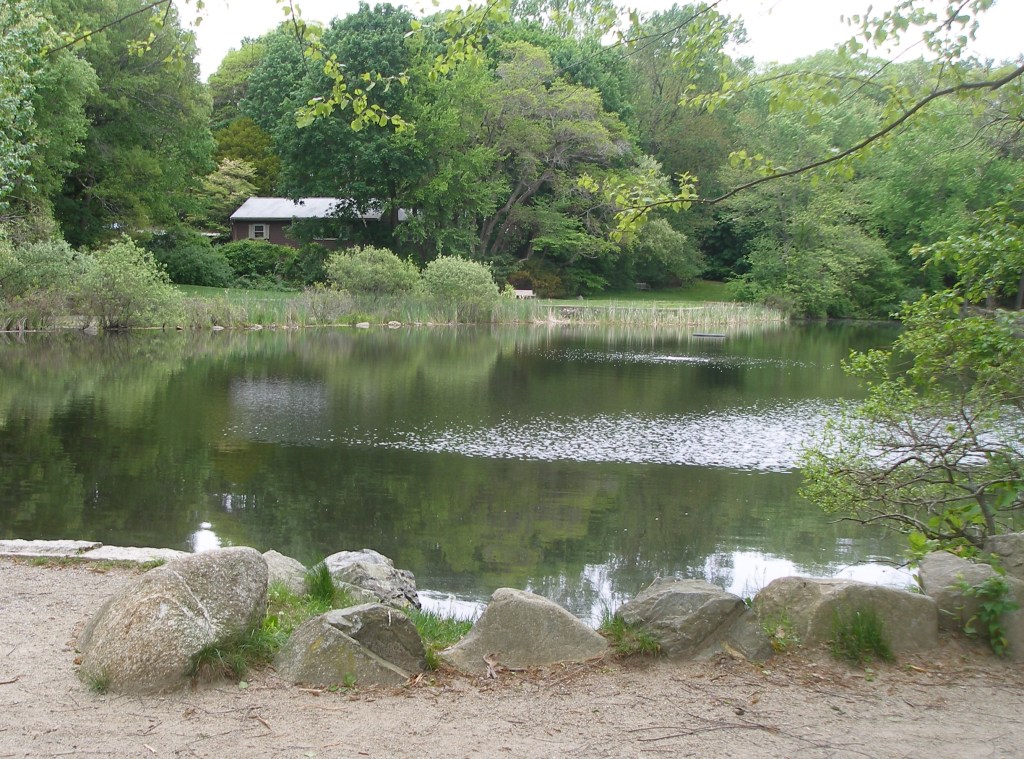
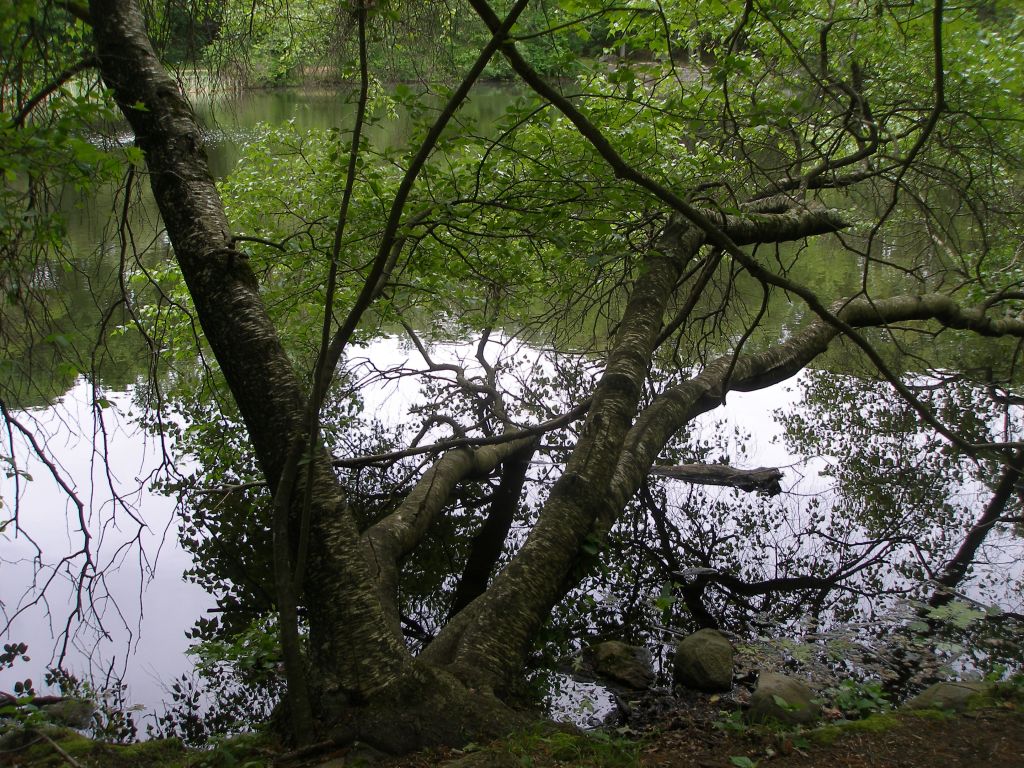
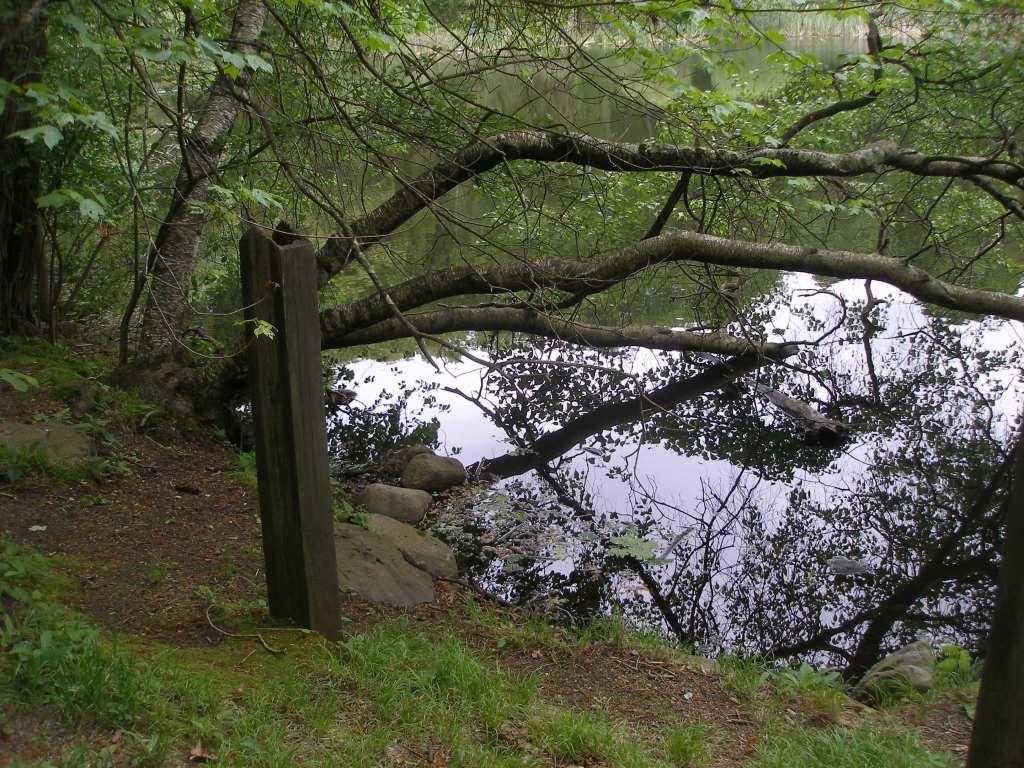
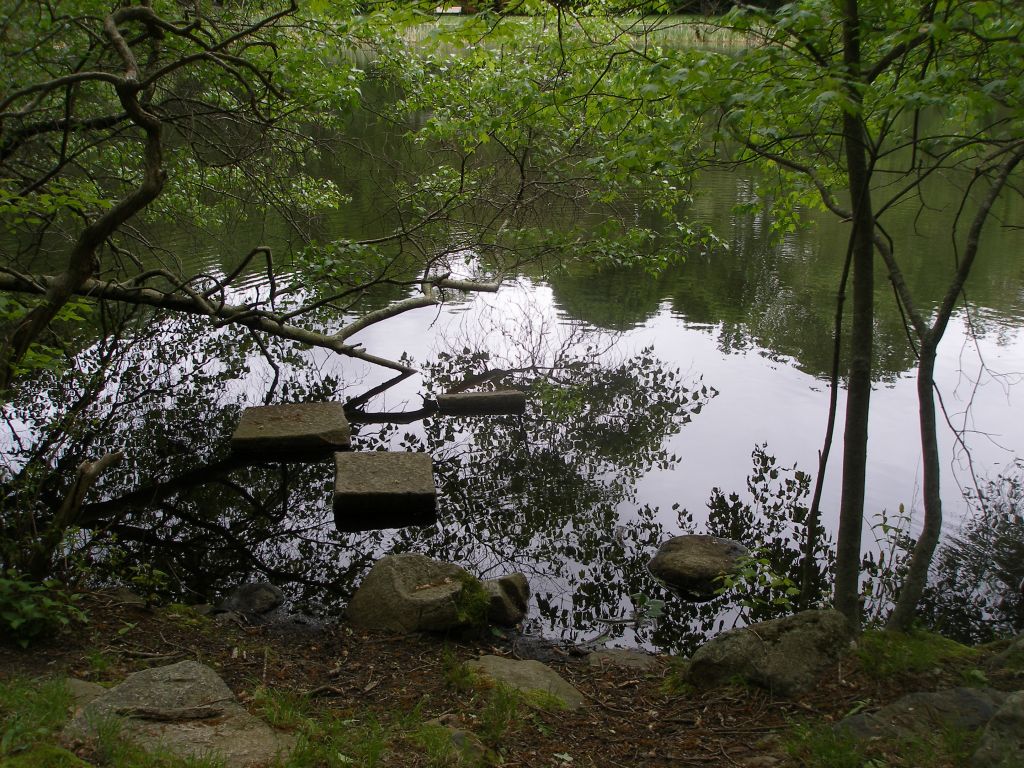
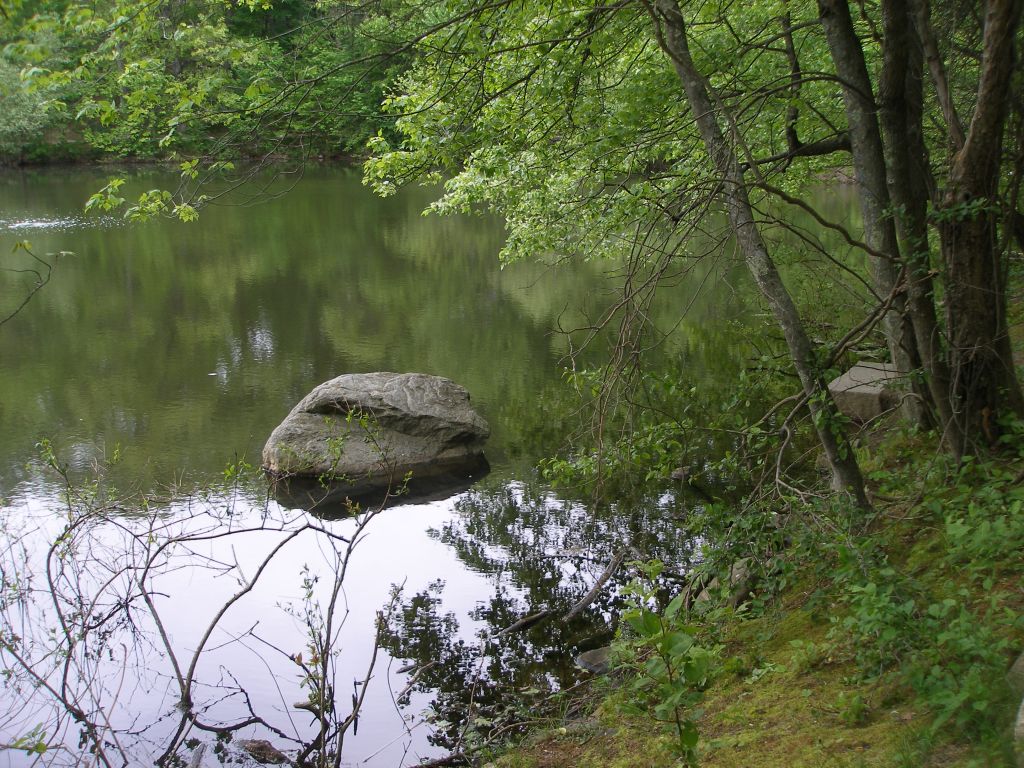
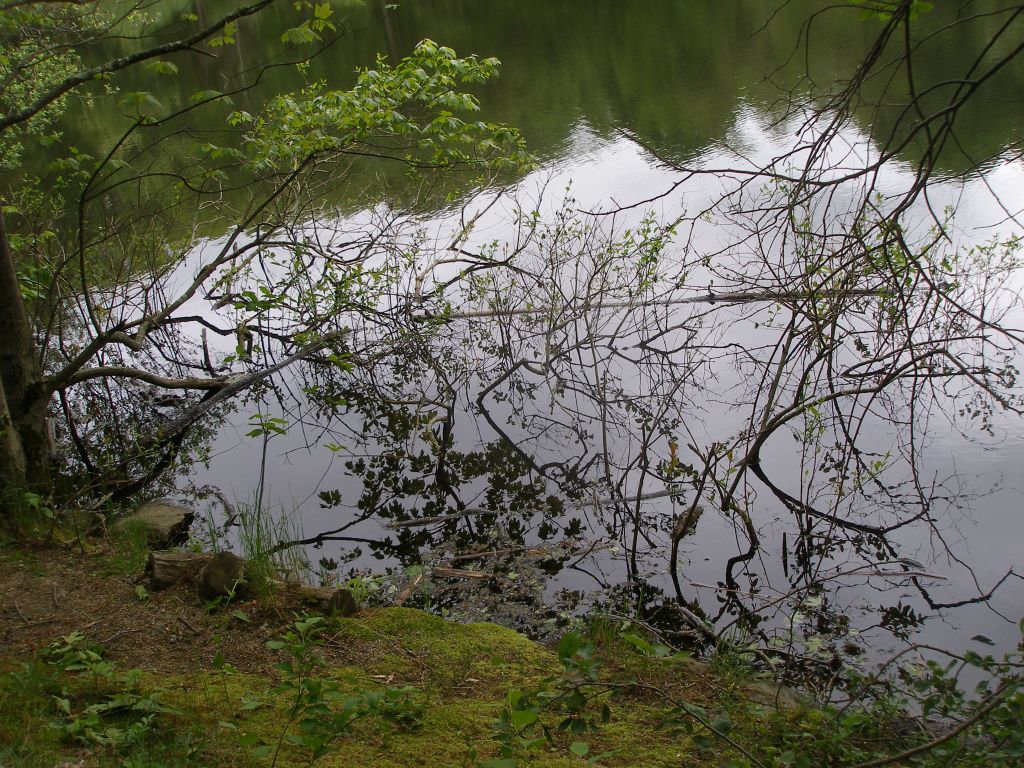
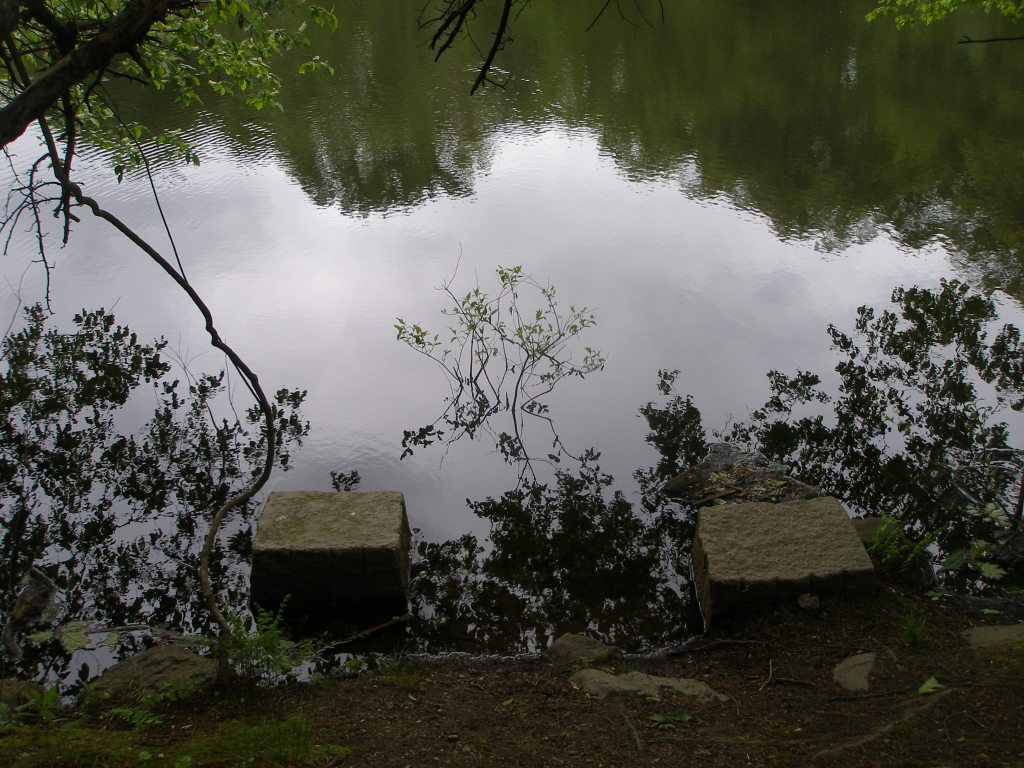
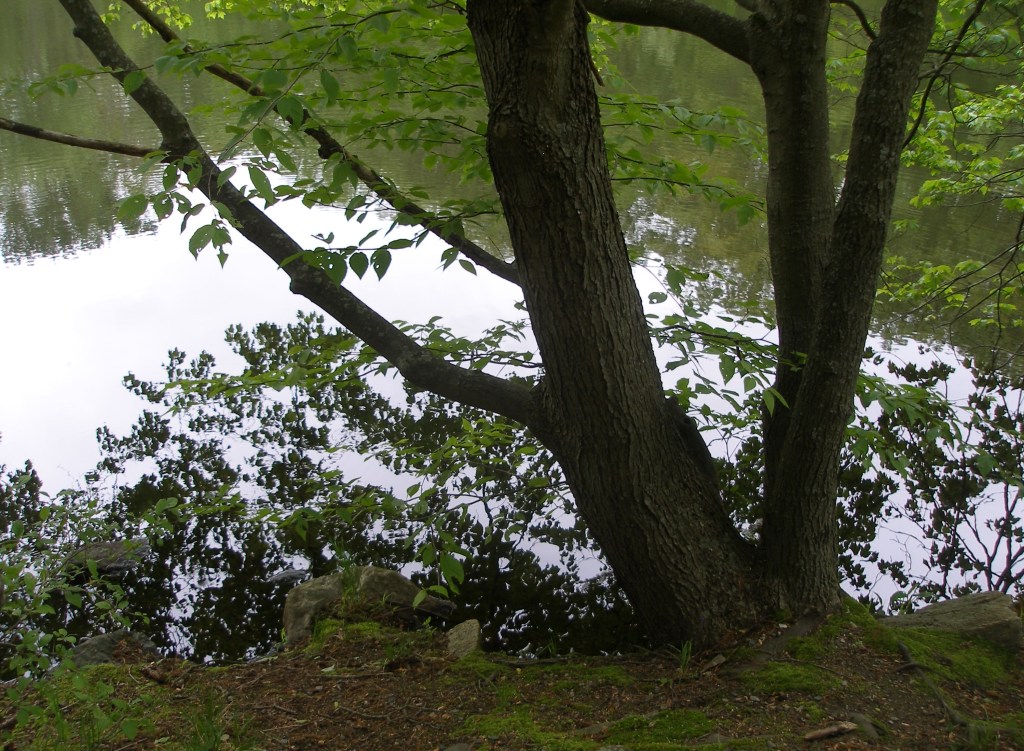
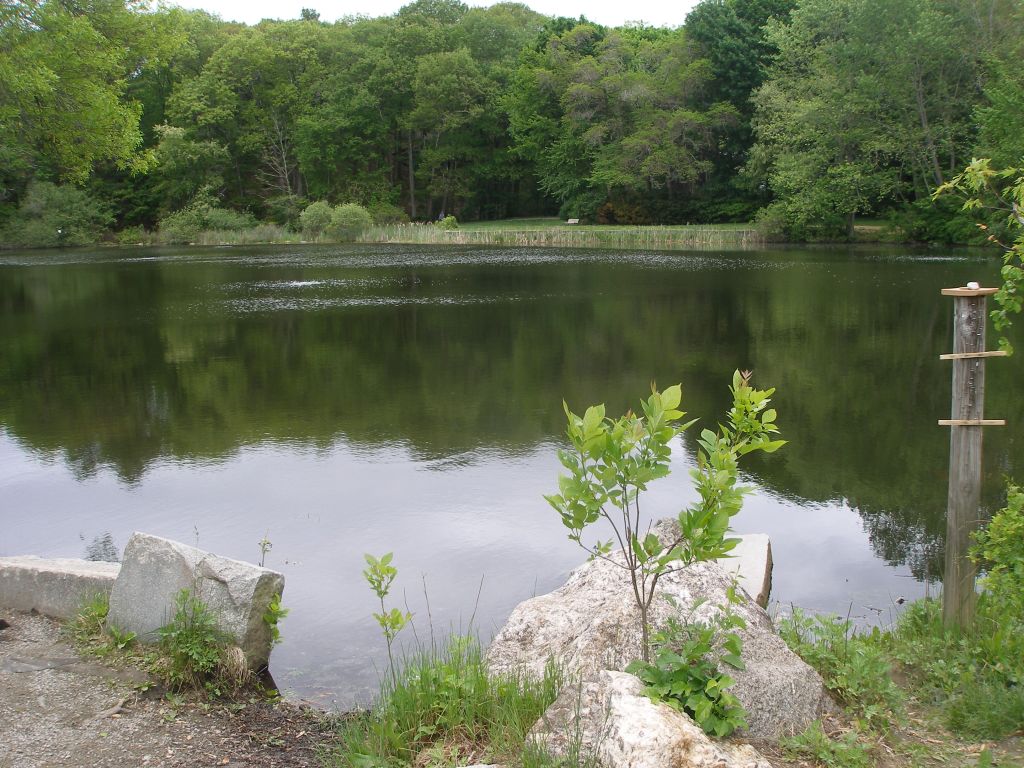
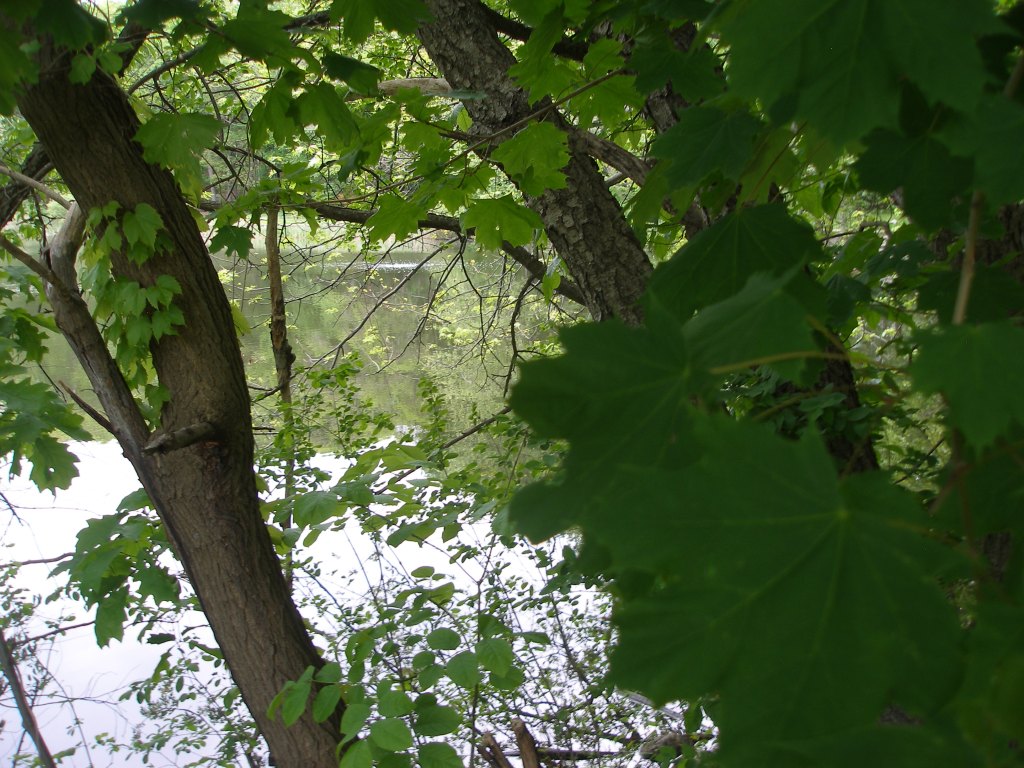
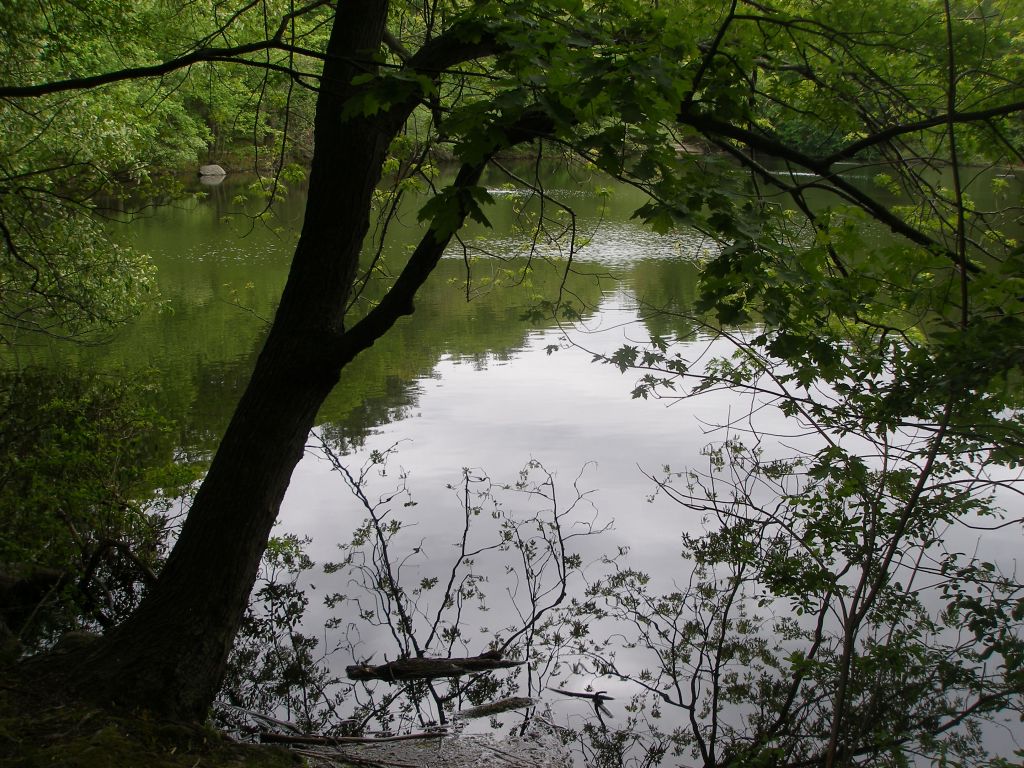
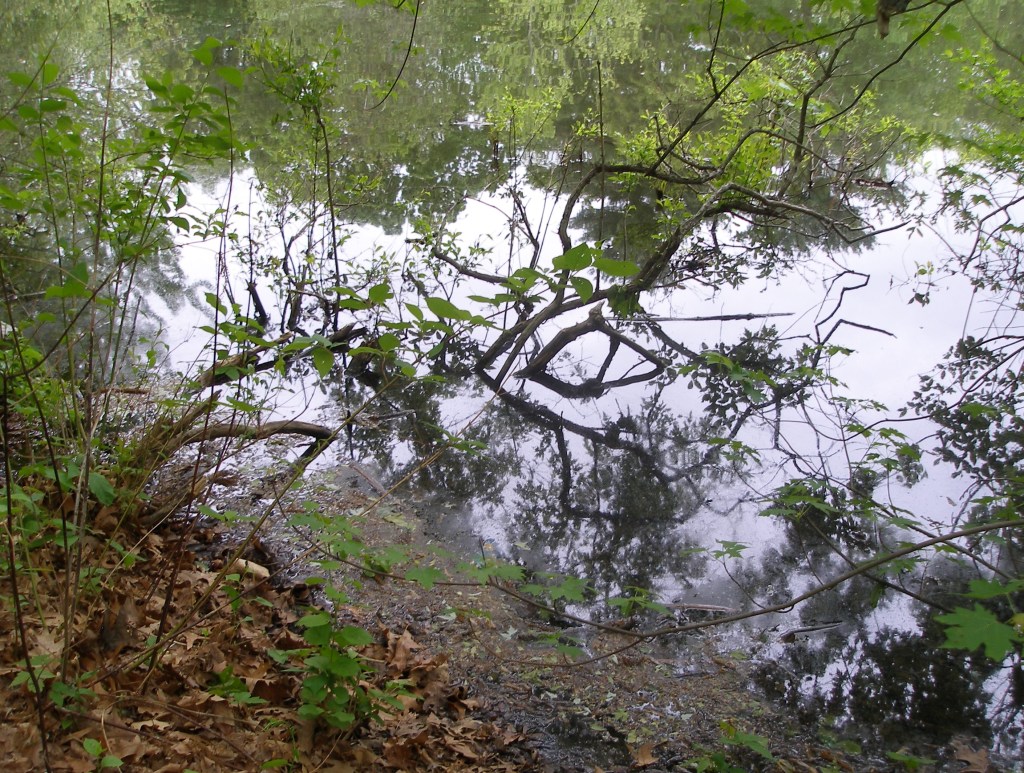
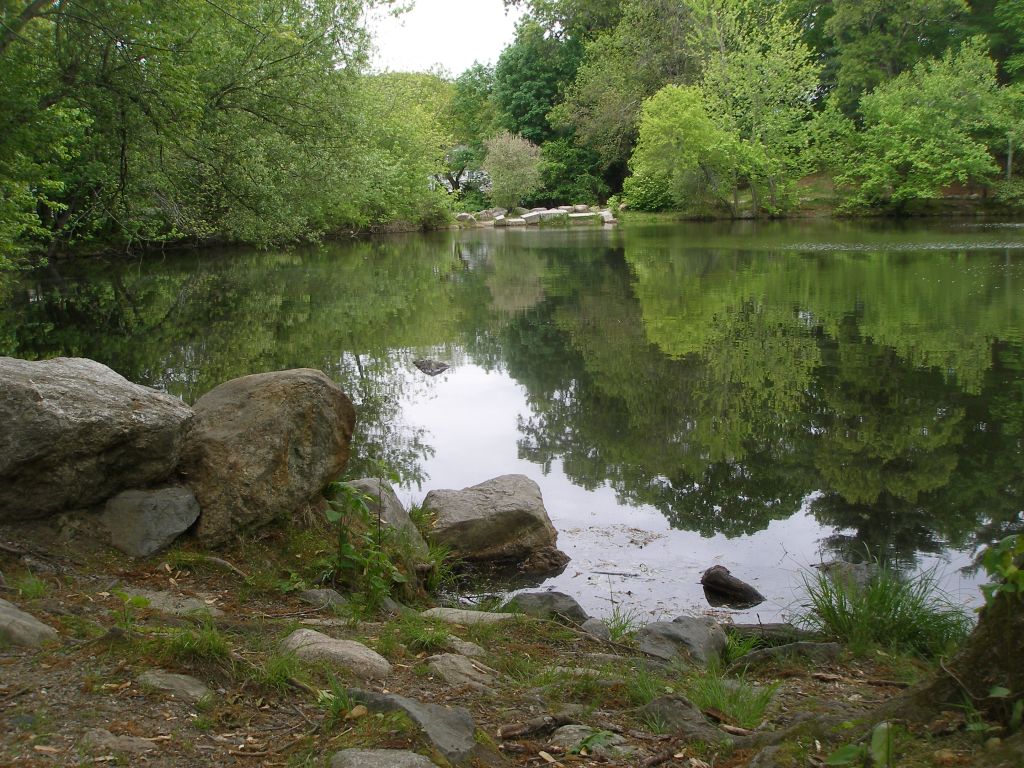
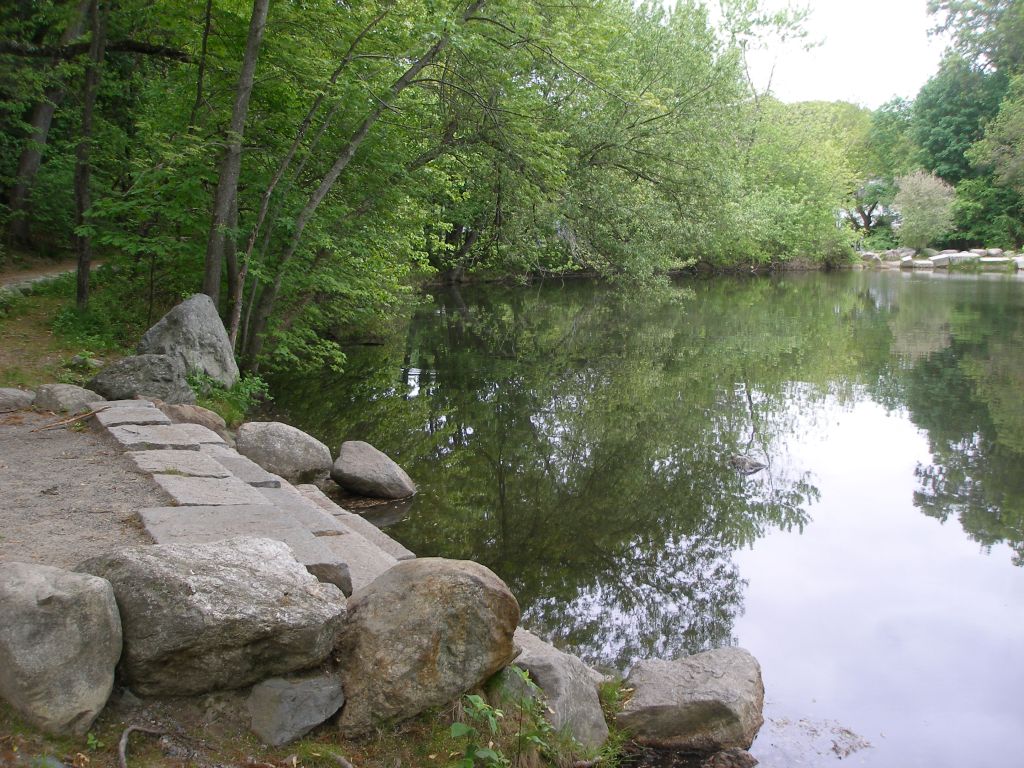
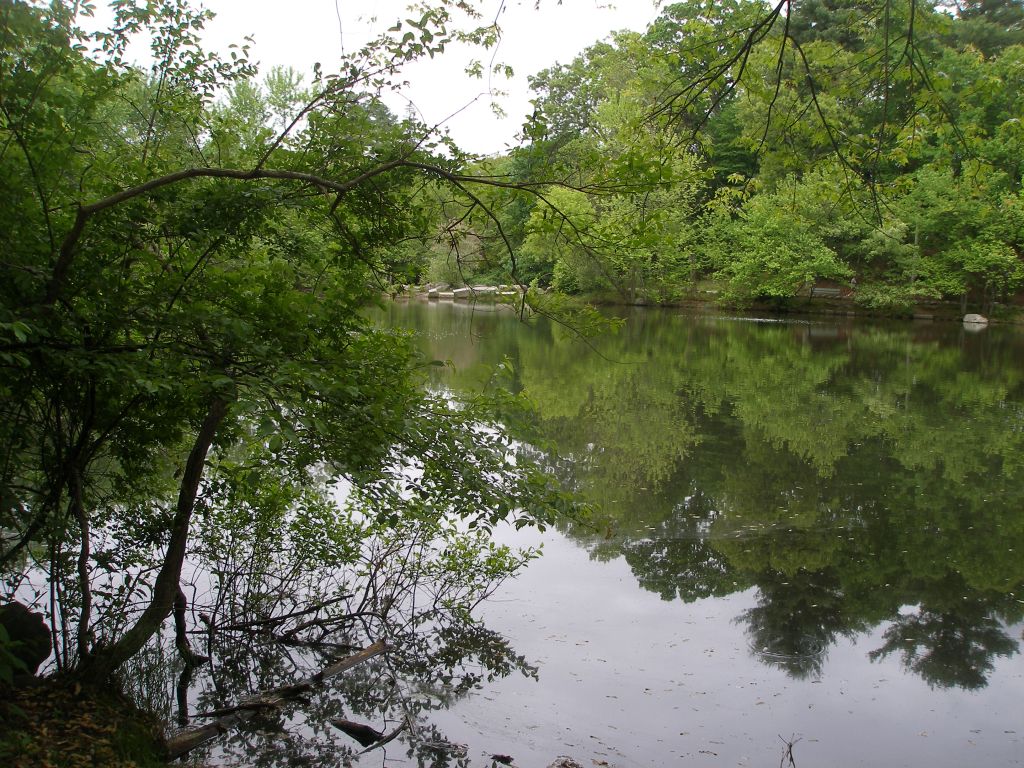
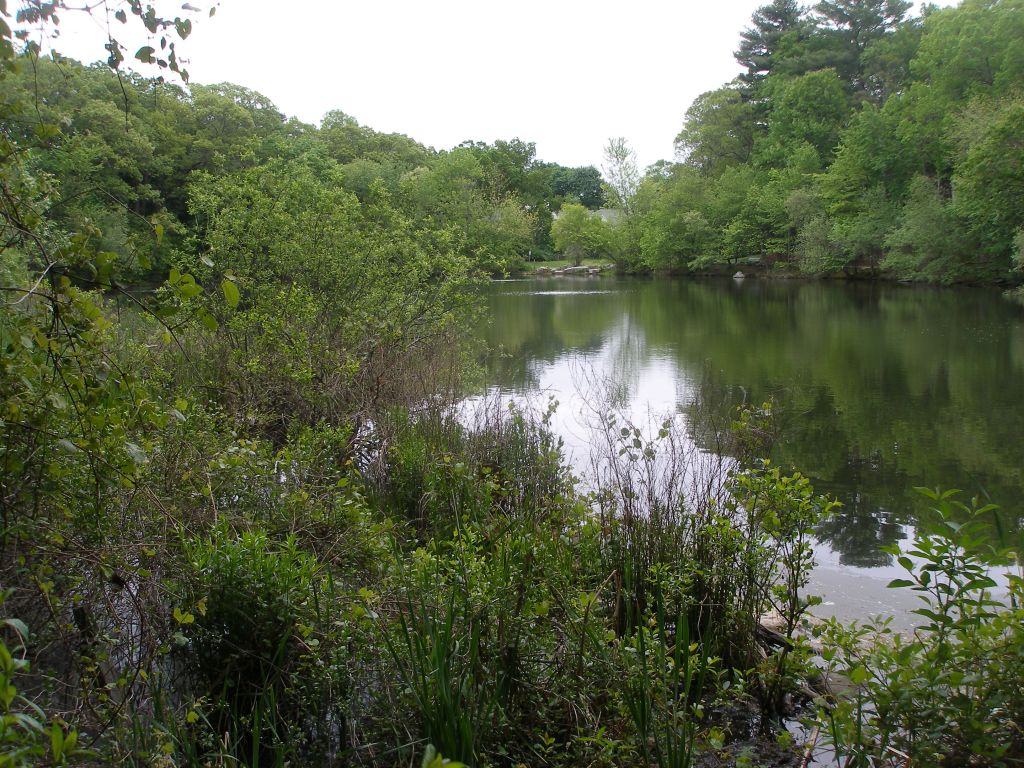
It was one of those days when it could go either way. One of those in between seasons. But as it turned out, I am glad I brought my camera so I can share this walk around Hills Pond with you.
Cloudy days make for fewer shadows and contrasts. In this case, the shapes just sang out, and the greens all worked together. Even though I was not expecting anything special, I found a quiet beauty all around me.
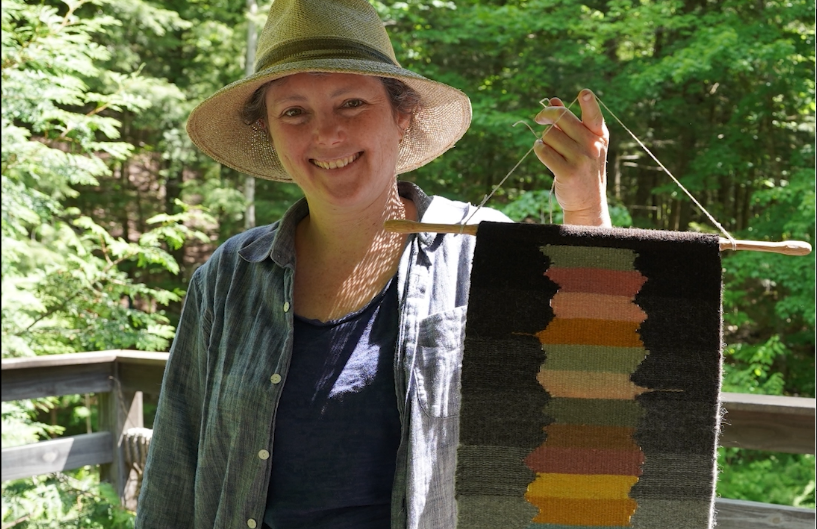
Hannah Regier with her “Color Harvest Moon” weaving. Photo by Jeff Klein.
This short documentary shares the world of Hannah Regier, who struck me as someone who truly lives by Japanese Tea ceremony’s core principles – Harmony, Respect, Purity and Tranquility.
I felt them in where and how Hannah lives, in the care she takes with her fabric art made using natural dyes gathered from the nearby fields and woods, as well as in her efforts to work with others to protect and share the lessons of natural places. There were other aspects of the the Way of Tea as well including creativity, generosity, and a deep appreciation for subtle aspects of the passing seasons.
Japanese tea ceremony was brought to its peak in times of war and great uncertainty. My trust in the worth of the art’s timeless values of harmony, respect, purity and tranquility provided a much appreciated anchor when things started to fall apart in my own life. But experiencing Hannah’s world made clear to me just how much those values can help to foster joy, connection and meaning, all of which are powerful antidotes to the helplessness and hopelessness it is all too easy to feel in these particularly challenging times.
Hannah Regier (her website), and videographer Jeff Klein (his website) both contributed their considerable artistic skills to this project. I am also most grateful for how Jeff Klein wove the sound of the stream behind Hannah’s studio throughout, an appropriate reminder of the importance of nature in the Way of Tea, in Hannah’s world, and, in fact, in all of our lives.
Like compassion, appreciative joy is a natural human capacity. I would expect to feel it in response to a happy bouncing dog, a child’s joy at experiencing the world or when being welcomed into a dear friend’s home.
On the other hand, when many things seem to be going wrong at once, grief can overwhelm me and joy can seem far away. I try to remember the Dalai Lama – certainly no stranger to all kinds of suffering. He repeatedly emphasizes the importance of joy, in how he relates, in his writing and his documentaries. The Daoists speak of the 10,000 sorrows & 10,000 joys – so both, not just sorrows.
I also like to think of Indra’s net where each intersection contains a jewel that reflects every other jewel. That would also include our reflecting our joys to each other.
Keeping the door open to appreciative joy is also a choice in that cultivating it takes effort. Being willing to speak the truth to myself and others, being humble about that, seems critical. That my individualistic, competitive and commercialized culture – not to mention social media – encourages envy, helps me to cut myself some slack.
When I am able to feel genuine appreciative joy, speaking the truth helps me to feel the enlargement, ease, connection and freedom – a taste of liberation from the bonds of self. And joyous connection is possible, maybe even critical, right in the midst of serious suffering. Here is one example:
Someone I don’t really know, who had just lost her mother, wrote on Facebook, ”Tonight I got a chance to chat online with a former next door neighbor when I was a teenager and she was 6 or 7 years old. She has amazing memories of things that happened then, 50+ yrs ago. She remembered many wonderful things that my Mom did with her and her family. She wished that she had a Mom like mine. Wow! Her sharing brought many memories back for me. This wonderful surprise brought me tears and joy. I am extremely grateful for her memories and her sharing. A precious part of my grieving.” I felt glowing warmth in my body-mind that ripened to awe. So honestly and simply told, that story was spreading its blessings well beyond just the two of them.
I find that Insight Dialogue with its sharing of heartfelt truth, provides powerful support for experiencing appreciative joy. The safe, caring space that everyone is holding makes clear we are not alone in our vulnerability. At times, the depth of mutual understanding, and naturally caring response to shared troubles produces a profound joy that seems to be felt at the level of the whole group. With the help of the guidelines Pause, Relax, and Open, an embodied experience of the practice’s rock-solid caring energy helped me to understand why Buddhists speak of spiritual friendship being “All of the Path.”
The power of appreciative joy can also be felt when we unexpectedly find ourselves in a position to help. A Chinese women used her few words of English to let me know she was looking for a local Chinese restaurant. I thought how brave she was to come to a new Country where she did not speak the language. She made clear her gratitude nonverbally. By the time we had walked to what I assumed was her new place of employment, it seemed totally natural to hug each other at the door. The meaning expressing by that hug went well beyond words. There was joy in her feminine strength and bravery that we both understood – in that short time we had become genuine friends.
Speaking the truth about appreciative joy to myself and others seems particularly important in these challenging times. In fact, I have been told it can be critical to many, particularly when few other resources are available. Keeping the door open to appreciative joy makes clear just how much of a relational superpower that kind of shared joy really is, as it points the way to freedom while providing ease, clarity and motivation to work at making our actions more beneficial. May all beings never be separated from the supreme joy that is beyond all sorrow.
You might want to try bringing to mind a time now or in the past when you unexpectedly felt or witnessed appreciative joy. How does that feel now? Are there any new insights that you were not aware of at the time?
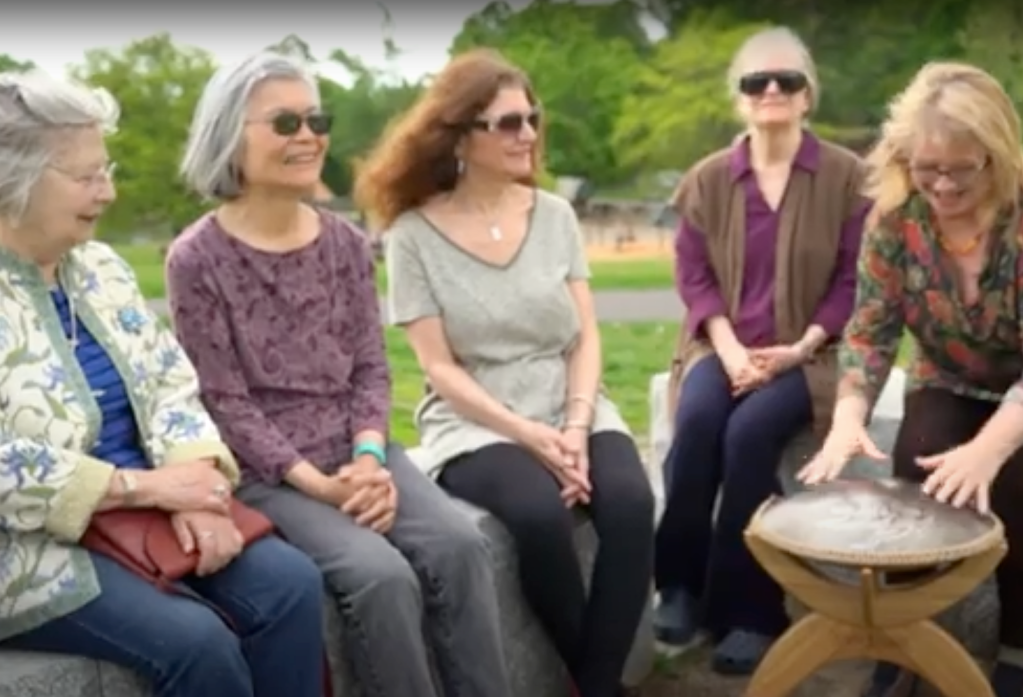
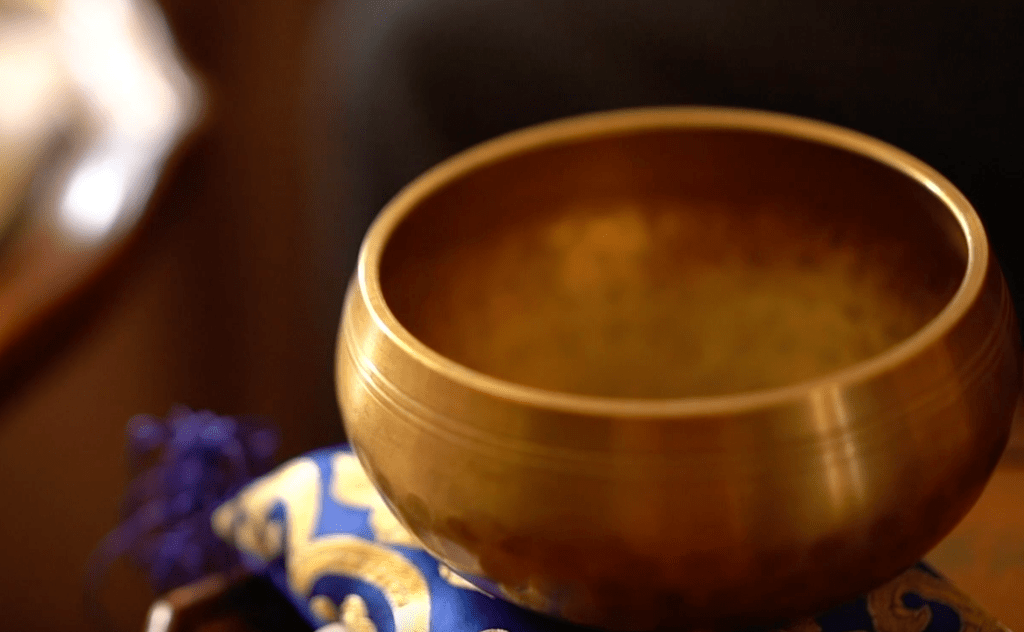
I was asked to start a brief period of silent online meditation by ringing the singing bowl that I keep by my monitor. As I toggled “Original Sound for Musicians” to on, I said I would “invite the bell.”
It turns out, there is a wonderful short video where Thich Nhat Hanh explains this phrase and offers this poem to would be “bell masters”:
“Body speech and mind in perfect oneness
I send my heart along with the sound of the bell
May the hearers awaken from their forgetfulness
And transcend the path of anxiety and sorrow.”
The ringing of a singing bowl can remind us to pay attention in the moment – so we actually come awake to what is happening now – the only time we can really do that.
Before I found that video which puts “invite the bell” in context, I had decided to contemplate that phrase to see where it might take me – In what ways are we like bells? Can bells be thought of as being “alive”? Human actions can certainly “ring out” impacts in all directions. Our screens show us this in almost real time these days. It can seem like too much with so much going on at once – a veritable cacophony.
I was taught to use the word “invite” rather than “direct your attention to” when offering guidance for meditation practice. A non-demanding humble approach provides a gentle welcome that leaves the participants with a sense of choice and agency. But to invite a bell to ring. Does it really have a choice? Perhaps not, but we can bring an attitude of respect and appreciation to the bell for what it provides for us. Modeling that kind general attitude of gratitude and care to others could certainly matter. It can make life meaningful.
It is possible to have an intimate personal relationship with a singing bowl? They can begin to feel something like reliable pets or wise companions that live with you, always waiting and ready to be rung as needed, or for no reason at all. And singing bowls are certainly individuals. They have distinct “personalities.” They come in a wide variety of sizes and shapes. Their voices can be light and clear, or deep and boomy often with wonderful expressive overtones. You can check out some most interesting “characters” here.
A bell does have a way of drawing us in when it sounds – we tend to take notice. I imagined my breathing self merging with the bell’s vibrating substance so we became one shining resonance with no separation. When that began to feel weird, I returned to my embodied memory of the grounded simplicity of listening to a bell at the start of meditation practice. And with that I realized that somehow the idea of “inviting the bell” had begun to make perfect sense.
In early January, an interesting conversation started up in an online forum on holiday decorations in my town, and I noticed that my partner had decided to join in. Based on the reactions, I was not the only one impressed by what he had to say:
“Very recently this discussion of decorative lighting seems to have started turning ugly, and I am not referring to holiday-sweater ugly. I am referring to a hostile tone including some intolerant references to other people’s religious observances.
Let us be very clear: when someone says ‘This town isn’t what it used to be’ he probably doesn’t mean we should give it back to the people who called it Menotomy and were here before Columbus. He probably doesn’t mean we should tear down all the buildings and bring back the farms. And I’m pretty sure he doesn’t mean that, like the Puritans who were here 400 years ago, we should ban Christmas observances as being too ‘pagan’.
So this isn’t about history; it’s about a false nostalgia for something that never happened in the way it is being ‘remembered’.
There were Jews on Columbus’s boats. There were Jews and Muslims here in the Colonies. Jews and Muslims fought in the American Revolution. Jewish worship was supported by Adams, Washington, and Jefferson. Jews and Muslims are full citizens of this country and have been since the founding. The original colonies were populated mostly by Protestant Christians, but they were sects of Protestants who were themselves victims of oppression, and who did not want anyone who held different beliefs telling them how to practice or observe. The compromise enshrined in the US Constitution is that no religion should be legally subordinated to another. In the course of two and a half centuries we have interpreted that to mean also that no person should be forced to pay for another’s religious observance.
By all means, decorate your homes and businesses — if that is what your conscience and your aesthetic taste encourages. White lights, colored lights, ultraviolet lights and DayGlo posters, all good. If you think Town property should be decorated, and you are willing to pay for it, great. I’m all in favor of pushing back the darkness — light bonfires, bang on pots and pans, scare away the dragon eating up the sun. Within the bounds of the noise laws and somewhat good taste, of course — I’m not too big on 8-foot Dancing Santas in front of Town Hall.
But we have a tradition of protecting minorities in this country. Unfettered democracy is two wolves and a sheep voting on what’s for dinner. We do not, and should not, do that.
So don’t ask others to pay for your decorations. Really, that’s all. By all means, volunteer. Donate. Organize. Just do not put it in the Town budget and require others to pay for your holiday. Yesterday was Orthodox Christmas, and I apologize for missing it. I hope it was happy, for everyone.
As that song by the Russian Jewish immigrant says, ‘May your days be merry and bright.’ As that itinerant rabbi from Nazareth taught so many centuries ago, love your neighbor as yourself.
All best wishes”
See what I mean?
Someone added. “So, Arlington, we should honor our freedom and privately pay for our displays of lights, white or any other colors for July 4th, All Hallow’s Day Eve (Halloween), St. Lucia’s Day, Christmas, Hanukkah, Diwali, Lantern Festival, St. Valentine’s Day, St. Patrick’s Day, and more. All good. Shine on. And switch to LED lights, if possible! Save energy!”
Among the brief comments were: “Well said!”, “I love this message”, “Thank you. Beautiful and spot-on to all points.”
One person listed 16 “Christmas” songs and the names of their Jewish composers. Another noted “a government ensuring religious freedom and the separation of ‘church and state’ was a truly novel and incredibly important development in the world’s history.”
And when it comes to what might be considered to be in good taste, I cannot resist adding a comment about a young fan of inflatable holiday decorations that appeared a bit later: “Holiday Inflatables – My 4 year old is obsessed and so sad that they are all going away. I promised him one more neighborhood drive-through this Saturday night, around 5, to look at whatever is left.”
Appreciation is growing for the power of safe natural spaces to help support rapid healing even in cases of severe mental trauma and PTSD. Healing garden spaces are not new. They have a long history with varied, and sometimes elaborate designs. But this pilot program’s three designs each had a most appealing simplicity and clarity while accommodating varying numbers of people as might be appropriate for different stages in the healing process.
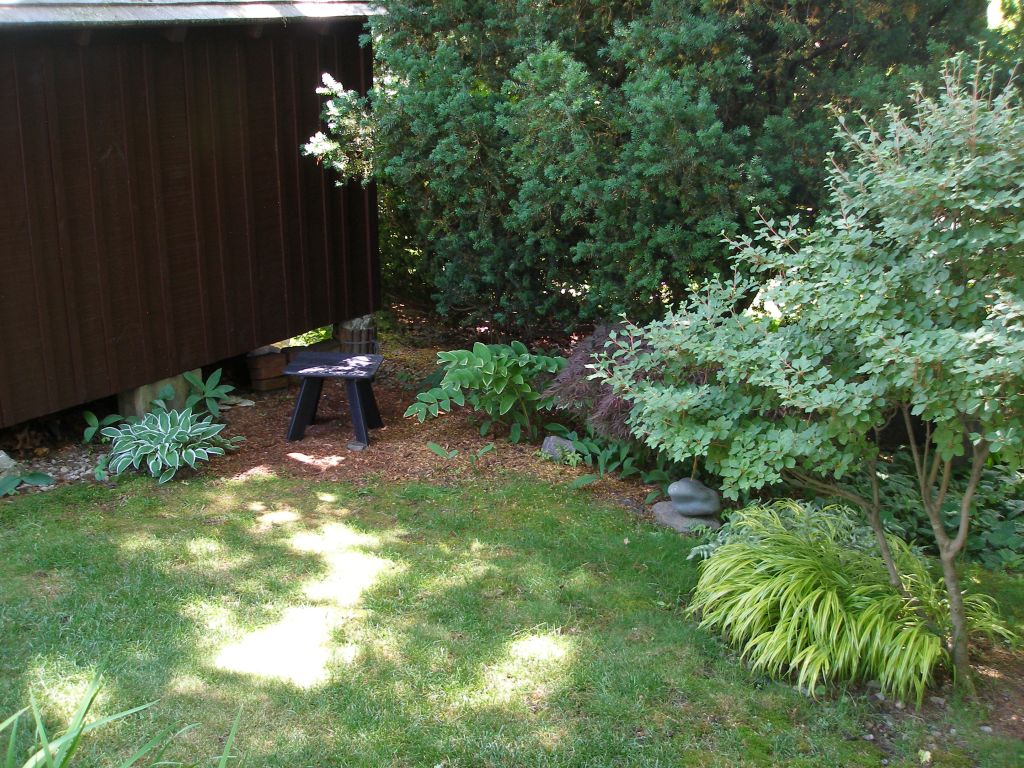
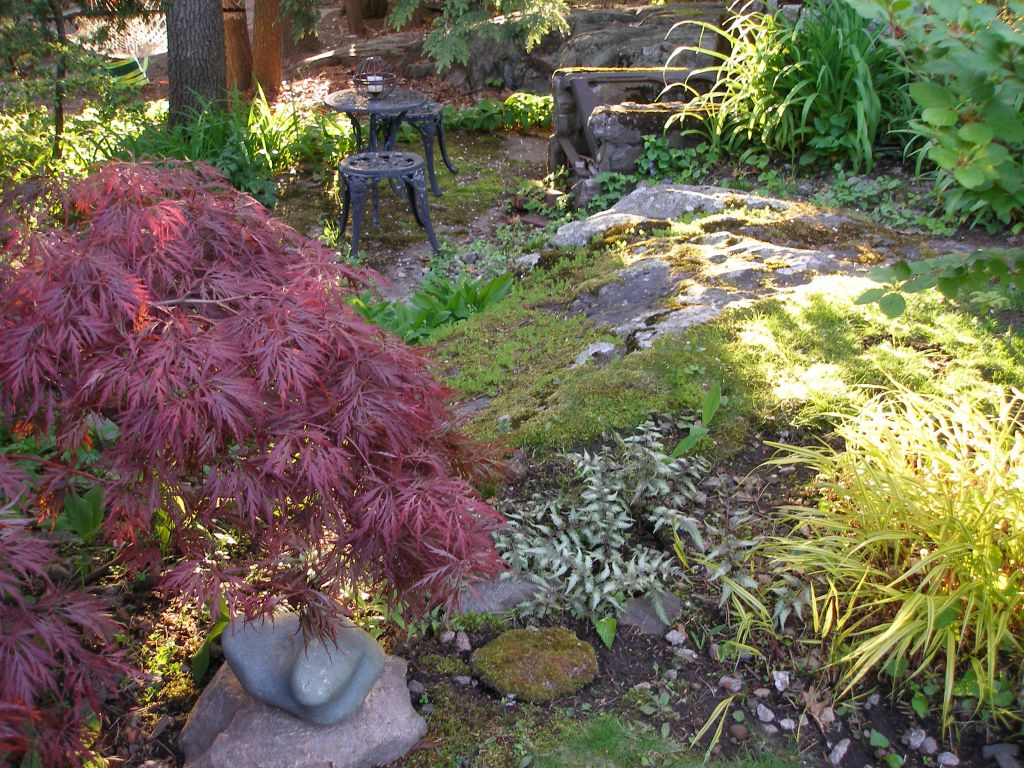
We are so bombarded with vivid news of trauma these days, that creating a variety of options to experience nature alone or with others makes perfect sense to me. In fact, I realized that I had done just that in my own garden:
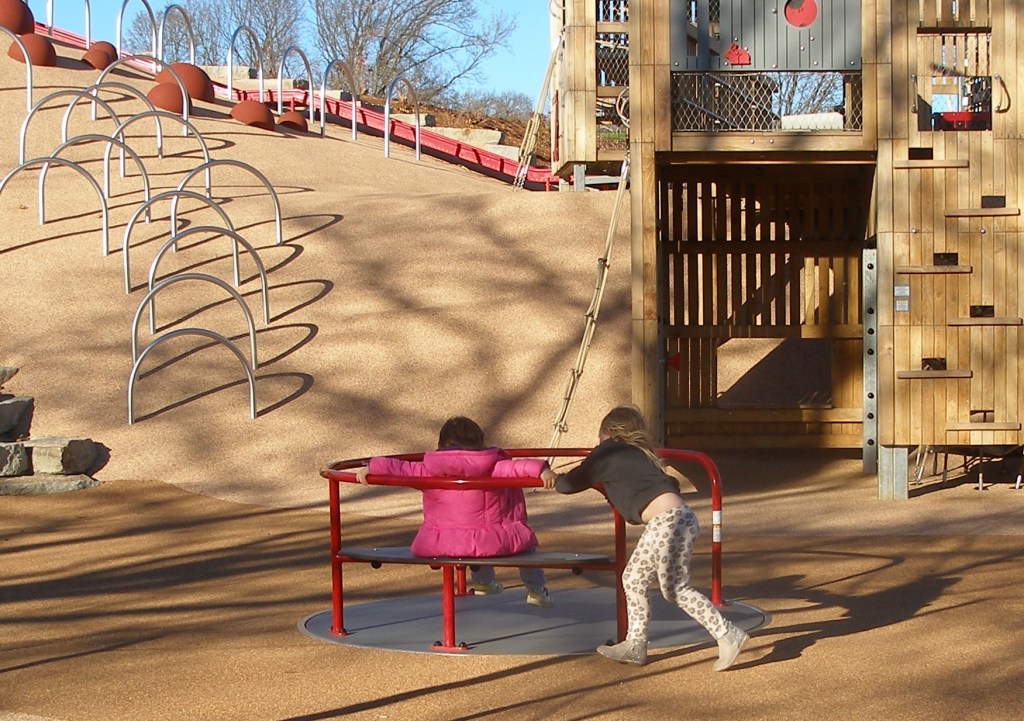
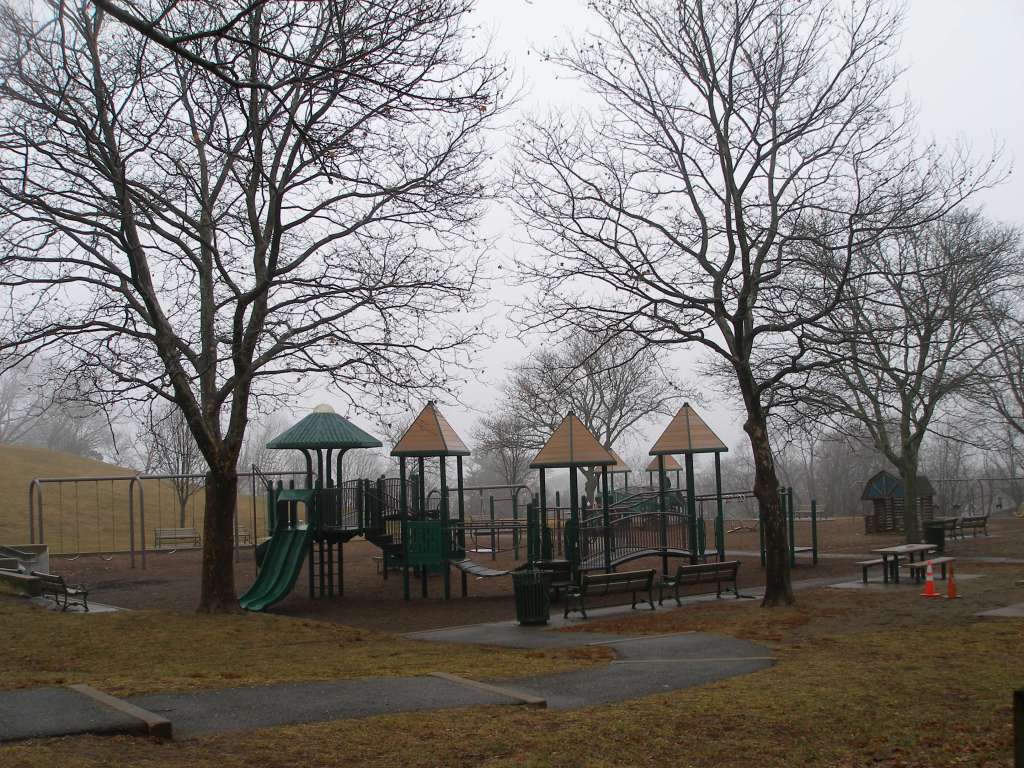
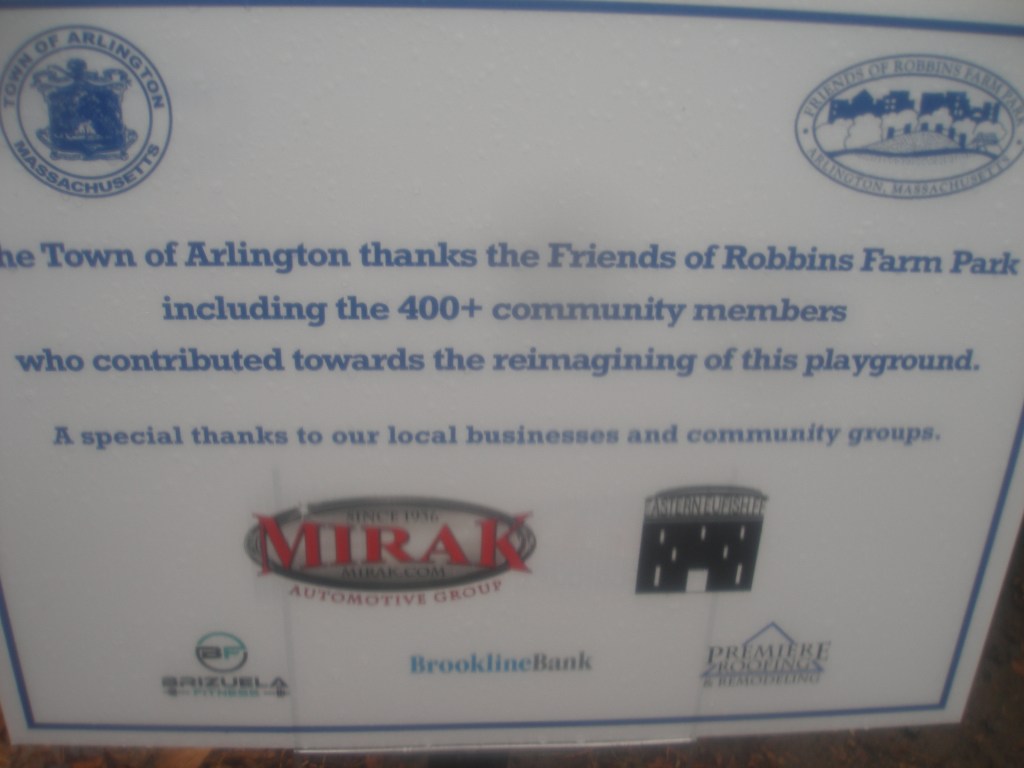
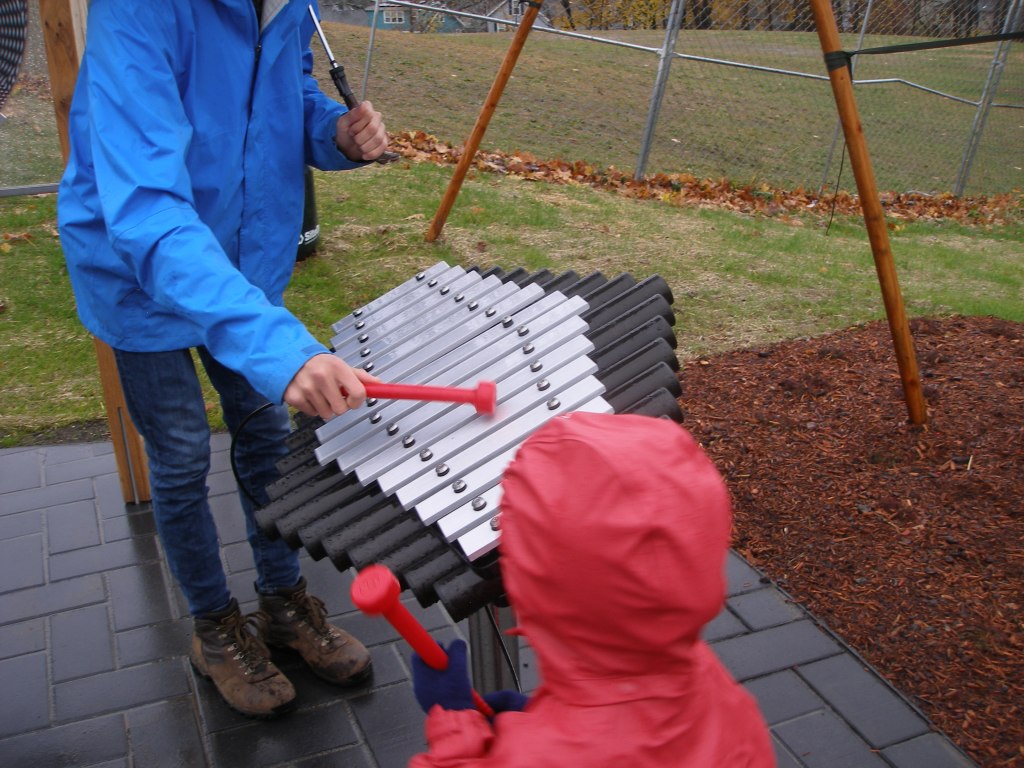
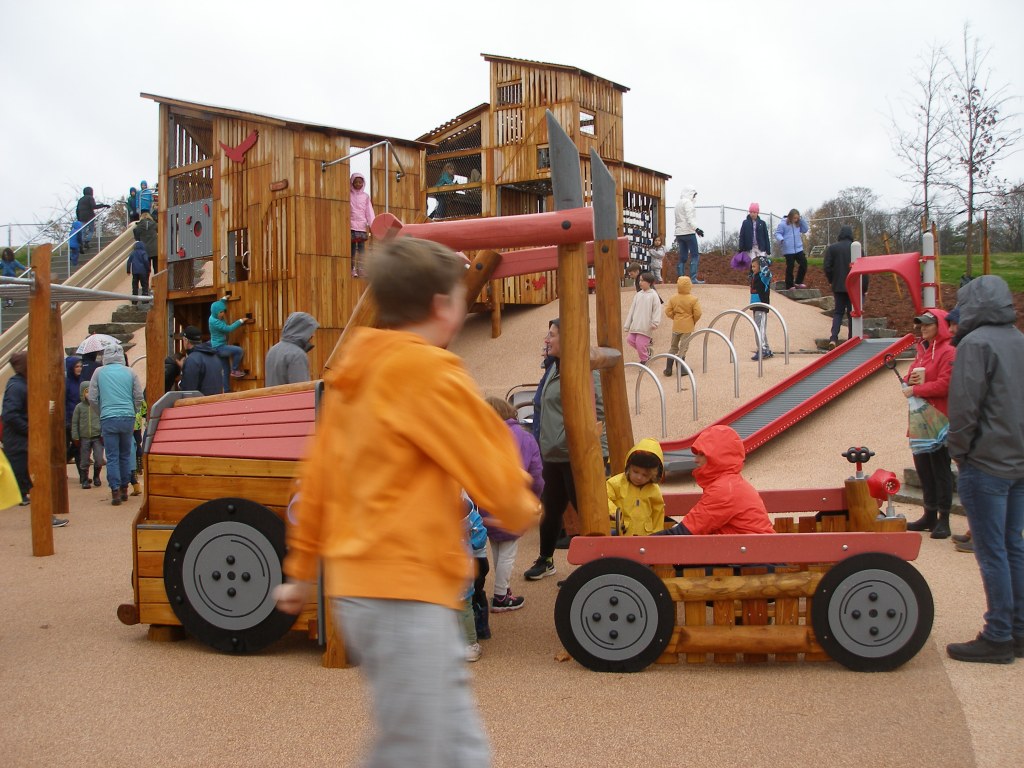
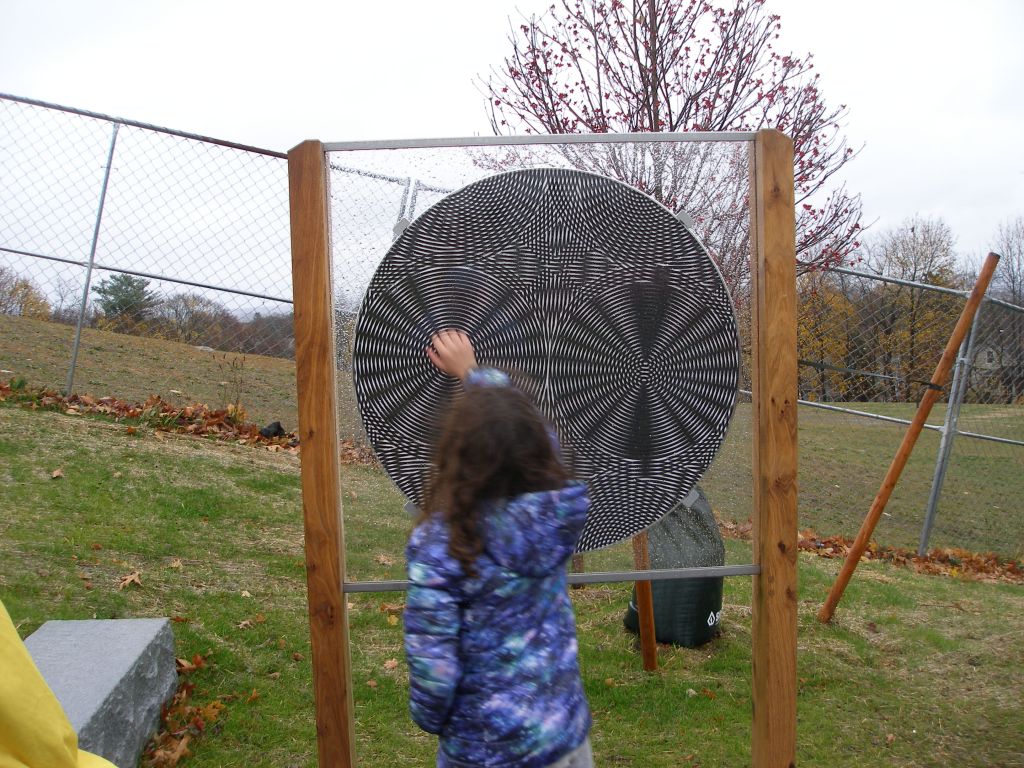
Playgrounds, even lovely ones, can become unsafe with age. When that happened in Arlington, Massachusetts, funding was secured, and a design team met to plan a new playground at Robbins Farm Park that would work even for kids who might not be able to use ordinary playgrounds. In the end, many residents of Arlington contributed. That along with funding from the state, and a number of organizations made it possible for several musical instruments and other fun features to be included.
At the ribbon cutting ceremony, a mother explained that her child had a rare neurological disorder. He could play and communicate in nonverbal ways and clearly has a sense of humor, but there was only one “accessible” playground nearby that would work for him. One day, the mother heard her older boy explaining to the other kids that his younger brother could not walk or talk, but he could play.
When she checked a bit later, she saw the two of them happily playing with the other kids. This was good for her two boys, but it was also good for the other kids, helping them to see that disabilities need not be barriers to play, and hopefully, other forms of interaction as they got older.
In her role as consultant to the project, this mother made use of her intimate understanding of what works for her son to help make the playground truly accessible.
If you are in the area, please come and check our this new Robbins Farm playground on Eastern Avenue, opposite the Brattle elementary school in Arlington Heights, Massachusetts, USA with its multiple tactile and sensory delights.
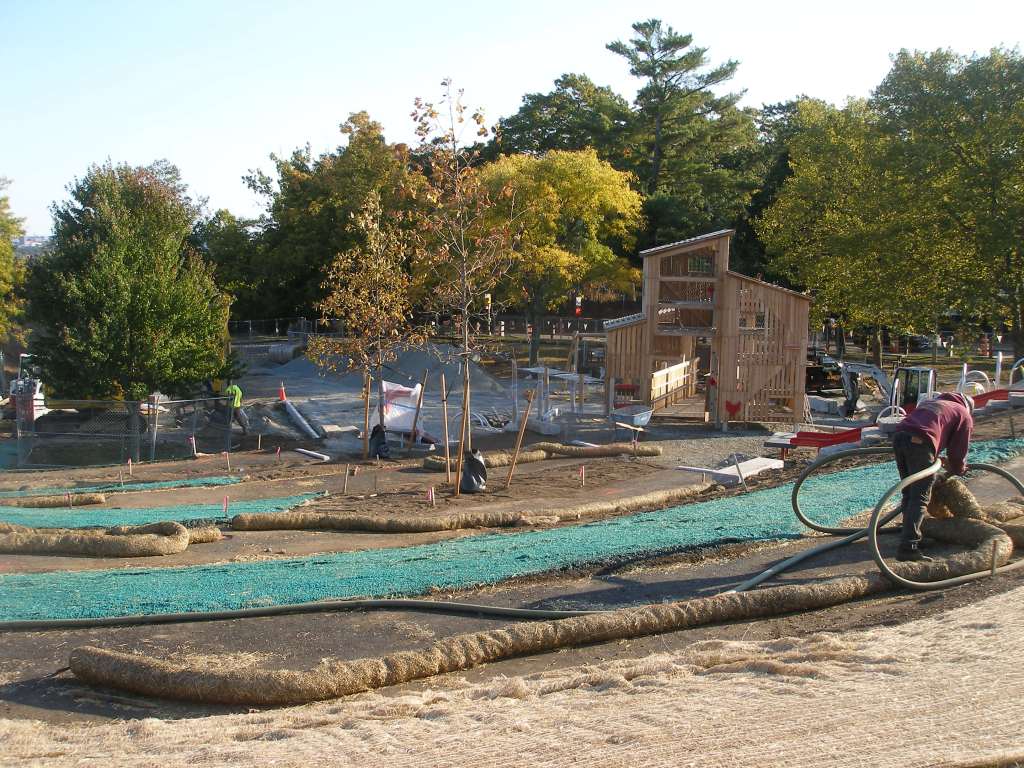
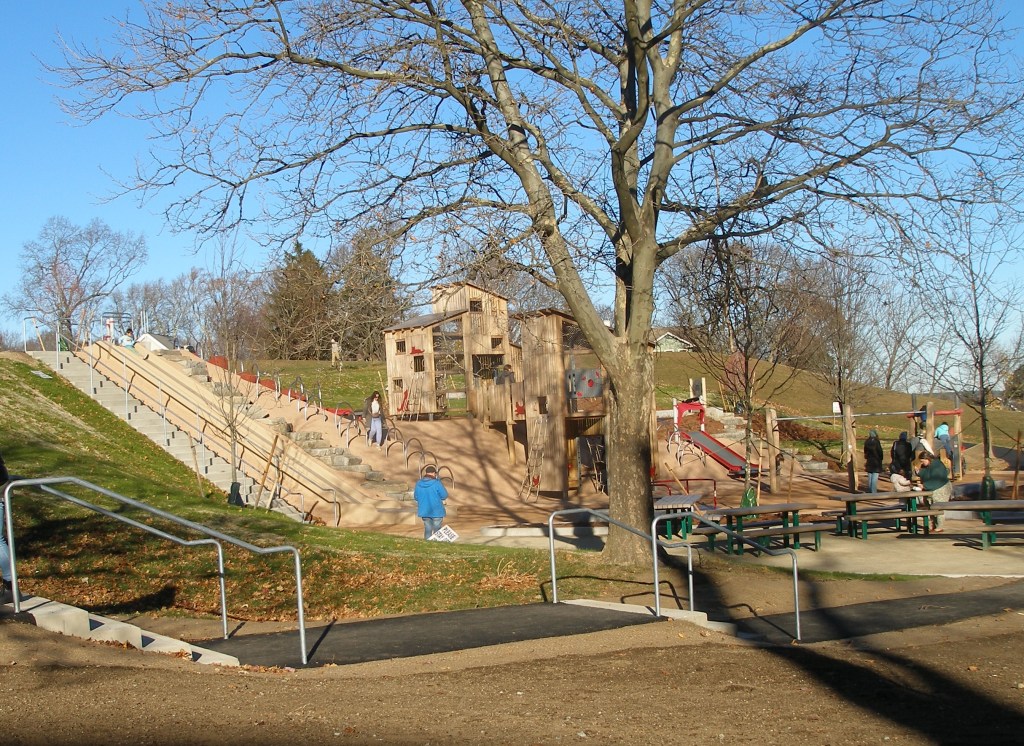
Although lovely to view in the various seasons, the old playground had the swings taken out as they had become unsafe.
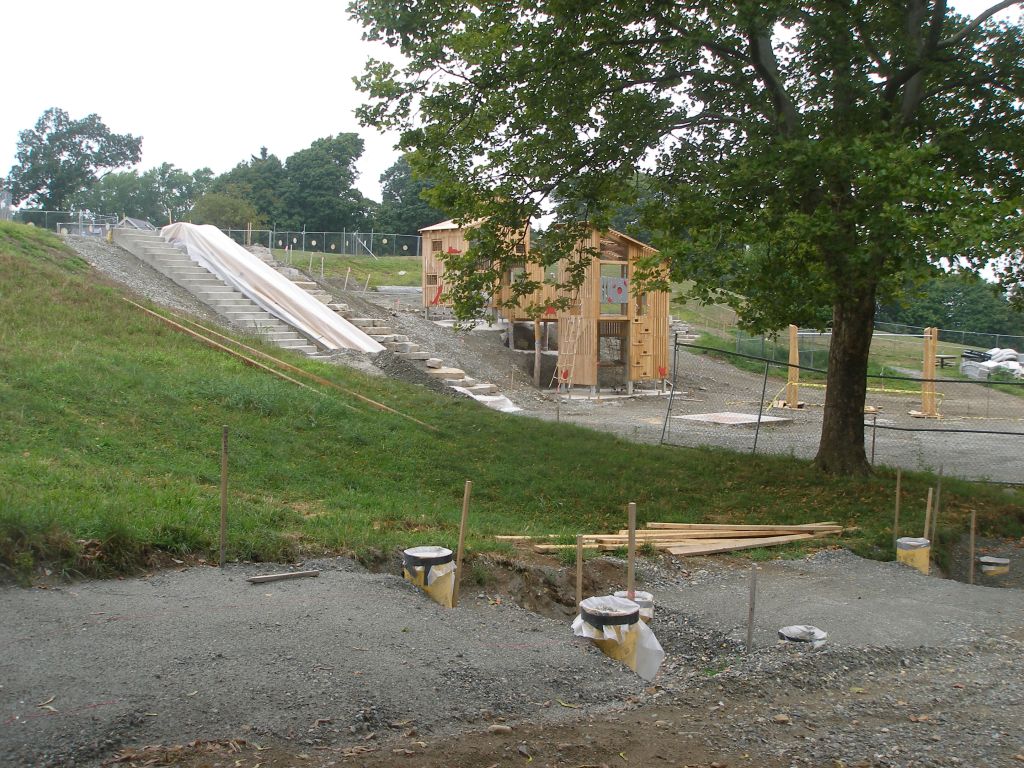
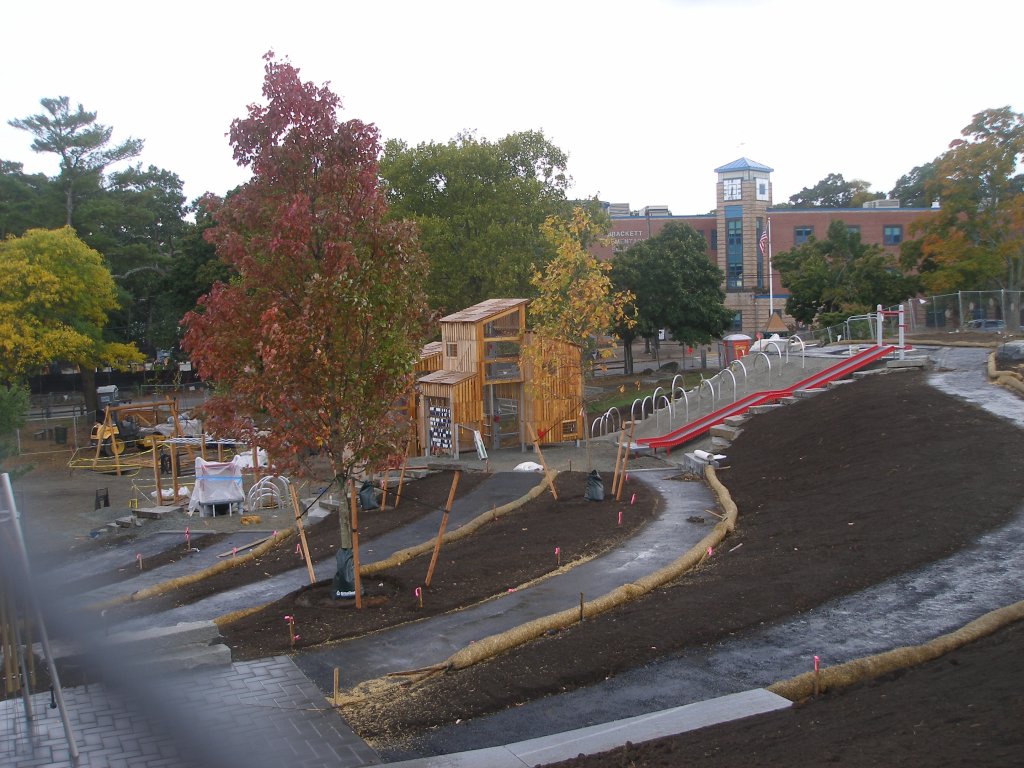
The start of the new playground project involved reshaping the slope where a long slide had been. I was glad they would replace that slide as it was well loved by the kids who used it.
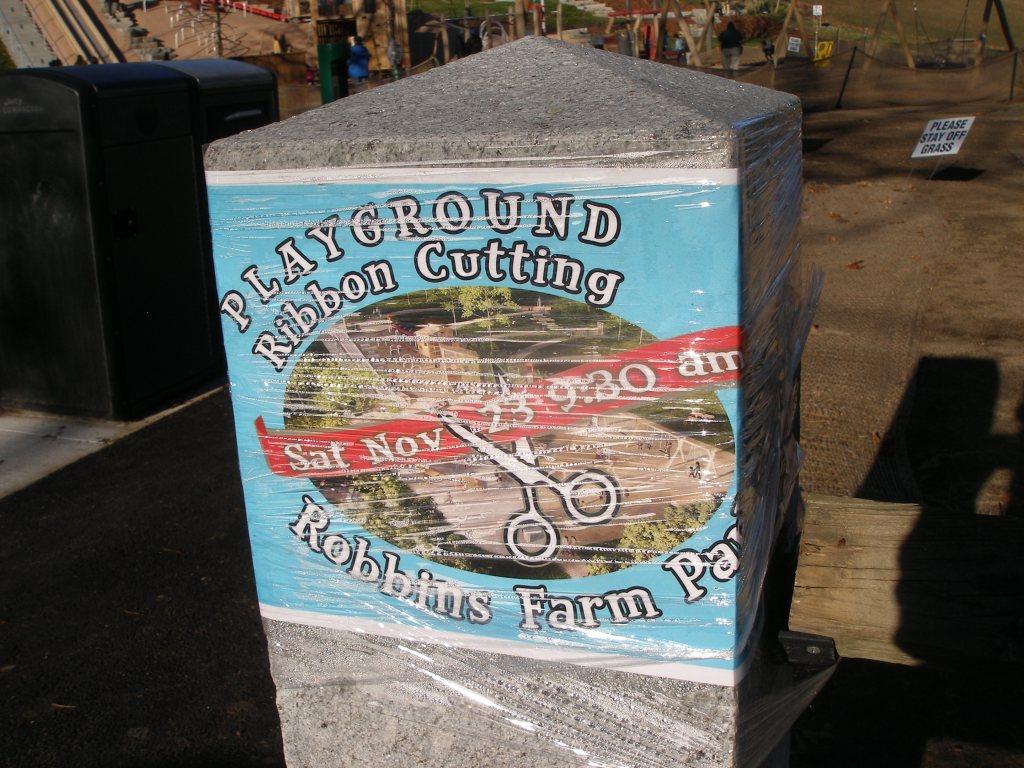
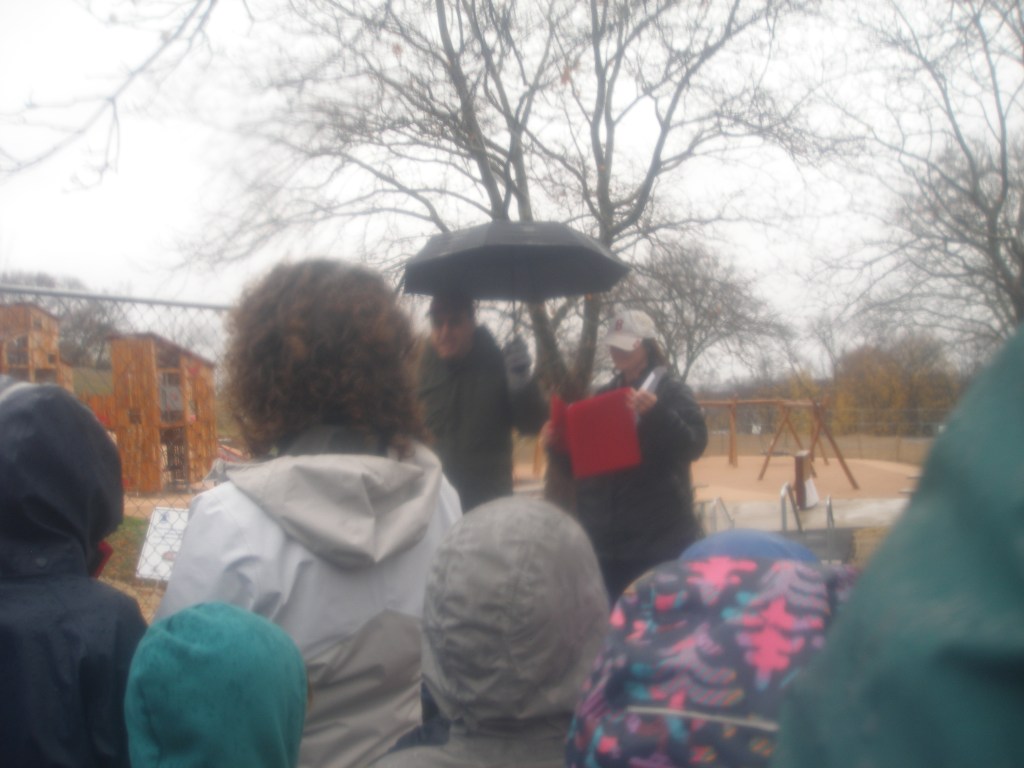
The Ribbon Cutting Ceremony brought out quite a large crowd even though it was raining. The kids chanted “Cut the ribbon. Cut the ribbon,” and there was considerable noise and glee as they scrambled in to explore their new playground.
And a few days later, there were fewer people. It will be interesting to see how it settles in, how the kids use the playground’s various features, and how the new plantings look in the spring.





























 Radiant Refuge