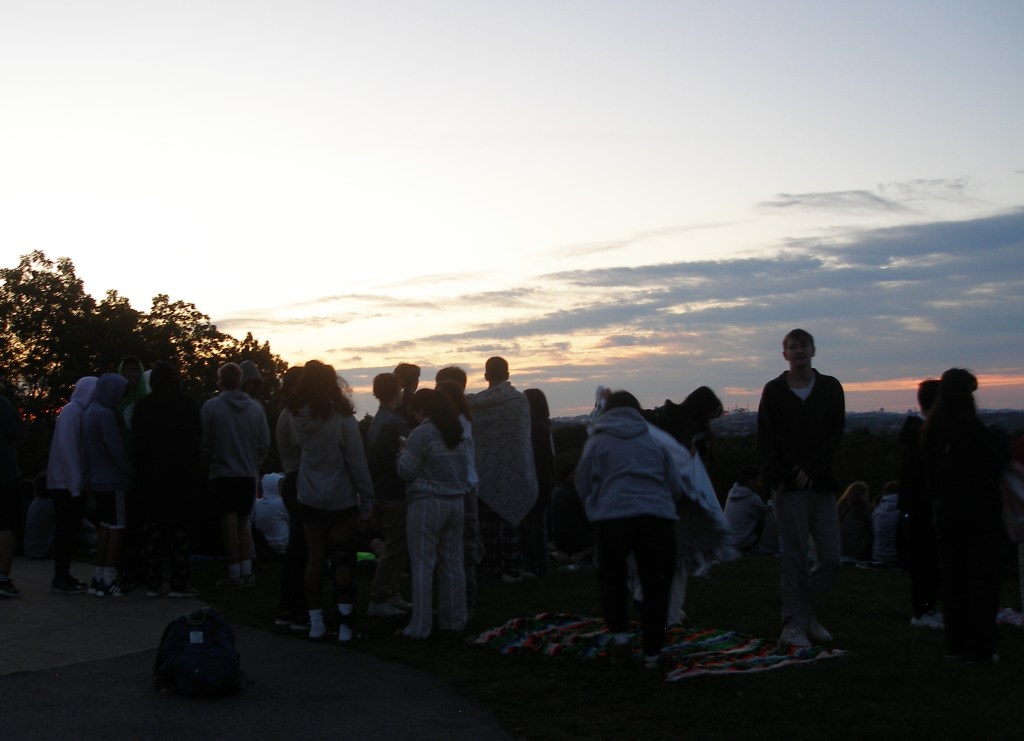
When I went for my walk this morning, there was quite a gathering on the crest of the hill in Robbins Farm Park. The sun had not quite risen and a pink dawn mixed with gray clouds. There could easily be over a hundred of them – one of the largest gatherings I had ever seen in this park.
I asked a young man why they were here, he told me that it was “Senior Sunrise.” Evidently, my town’s high school takes advantage of the opportunity that the park presents for seniors to witness the dawn of a new day over Boston.
I had come out hoping to catch sight of the “super blue moon.” This second full moon of the month is referred to as a “blue moon” because they are relatively rare. In this case, it was also a “supermoon” which occurs when the moon is closest to us in its orbit around earth making the full moon appear a bit larger than usual.
I was lucky to catch it – just visible in a gap between trees to my right:
As the crowd began to disperse, I overheard a young lady say, “The bad classes only got worse, while the good classes got better but I find it hard to concentrate after 45 minutes no matter what class it is. I’m glad that’s over.”
Although I refuse to consider myself superstitious, I was surprised to realize that getting older has only made me hope all the more that the conjunction of a lovely sunrise and a super blue moon might prove particularly auspicious for these young people who were moving on with their lives in particularly challenging times.
The 1971 hit, Woyaya with music by Sol Amarfio and words by Annie Masembe of Uganda which speaks of not knowing where we are going but trusting that we will get there even though the road will be muddy and rough, had me looking for quotes on similar themes. I found quite a variety:
“If you don’t like the road you’re walking, start paving another one.” Dolly Parton.
“The road to enlightenment is long and difficult and you should try not to forget snacks and magazines.” Ann Lamott
“The church is near, but the road is icy. The tavern is far, but I will walk carefully.” Russian Proverb
“No matter how far you go down the wrong road, you can turn back.” Turkish proverb
And, in the logical world of Alice in Wonderland: “‘Would you tell me, please, which way I ought to go from here?’ ‘That depends a good deal on where you want to get to,’ said the Cat. ‘I don’t much care where -‘ said Alice. ‘Then it doesn’t matter which way you go,’ said the Cat. ‘-so long as I get SOMEWHERE,’ Alice added as an explanation. ‘Oh, you’re sure to do that,’ said the Cat ‘if you only walk long enough.'” Lewis Caroll
And this one of unknown attribution: “If you want to go fast, go alone. If you want to go far, go together.” In these days when things are changing so fast that it seems possible to travel far by just standing still, my personal vote would be to not go it alone.
Smiles after a 2019 Christmas Concert Where Everything Came Together (Photo by Betty Poleet)
Joyful attunement is to be expected when choir friends sing music together that they know and love. But, as I learned, it is also possible for strangers who have just spent several days intentionally not speaking with each other.
Toward the end of a 7-day silent retreat I attended, the hundred or so of us in the hall were taught a lovely evening chant. That something out of the ordinary was going on was evident in the sound. The teacher asked us to repeat the chant and it happened again.
As Linn Nagata found in her research on somatic mindfulness, “The ability to resonate or attune to another person somatically can provide a type of communication even when language differences preclude verbal communication (p. 97, Kossak, M. , Attunement in Expressive Arts Therapy).
Perhaps we had been subtly attuning via body language without knowing it, even as we avoided eye contact. Or our kind and wise retreat teachers’ influence and support was enough to get us all on the same wavelength. I could also see how a few talented individuals with unusual musical sensitivity might have acted as catalysts for the effortless attunement that had a great deal of freedom to it – like a flock of birds wheeling out patterns in the evening sky.
That this kind of group-level intuitive heartfelt intelligence is still possible provides me with hope for our troubled world.
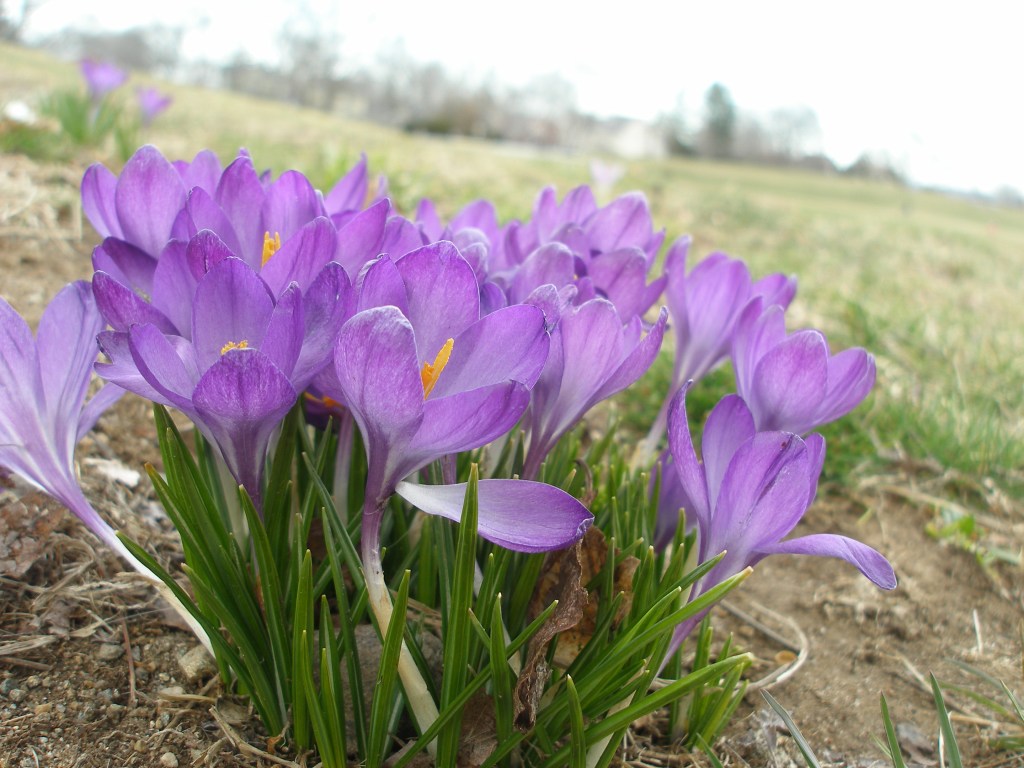
These crocuses planted by volunteers in a nearby park certainly brightened my day.
For a number of decades, we have lived in a world where food and other resources have became increasingly available, but when things in general are going relatively well, we may not realize that we are lacking a critical psychological nutrient for human wellbeing.
Chapter 4 of the World Happiness Report 2023 describes how acts of kindness, particularly when they are unexpected, create warm feelings of happiness in actors, receivers and even in observing bystanders. It goes on to note that happy people are more likely to do acts of kindness, thus spreading happiness even further.
Perhaps some form of the “golden rule” is so universal precisely because we need to be reminded about how much benefit acts of kindness provide. Acts of kindness, especially when unexpected, tend to have a bigger positive impact than we may realize according to “Kindness Goes Farther Than You Think” by Amit Kumar (Scientific American, April, 2023).
Ironically, our human tendency to respond to crises with acts of kindness is contributing to greaterhappiness in our troubled world according to the World Happiness Report.
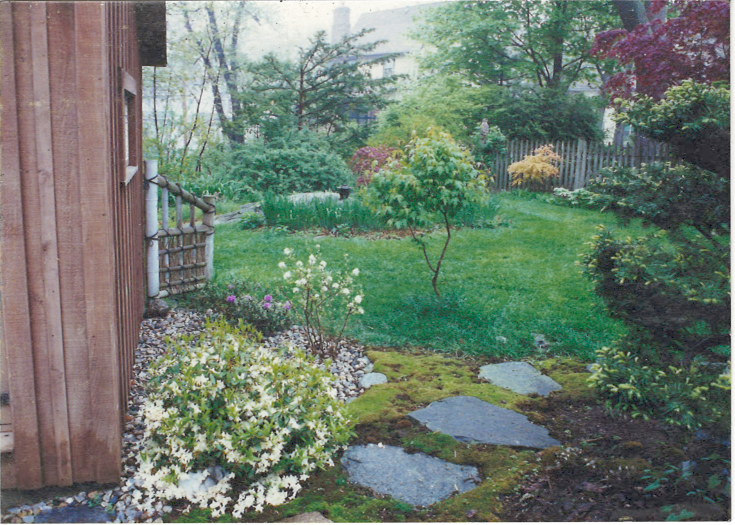
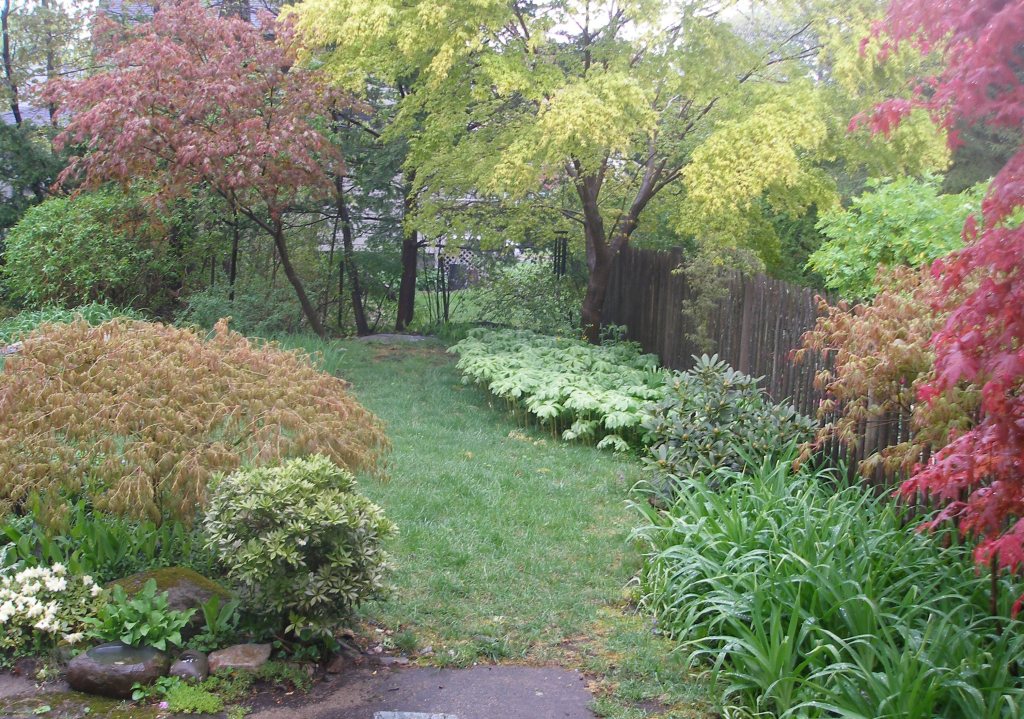
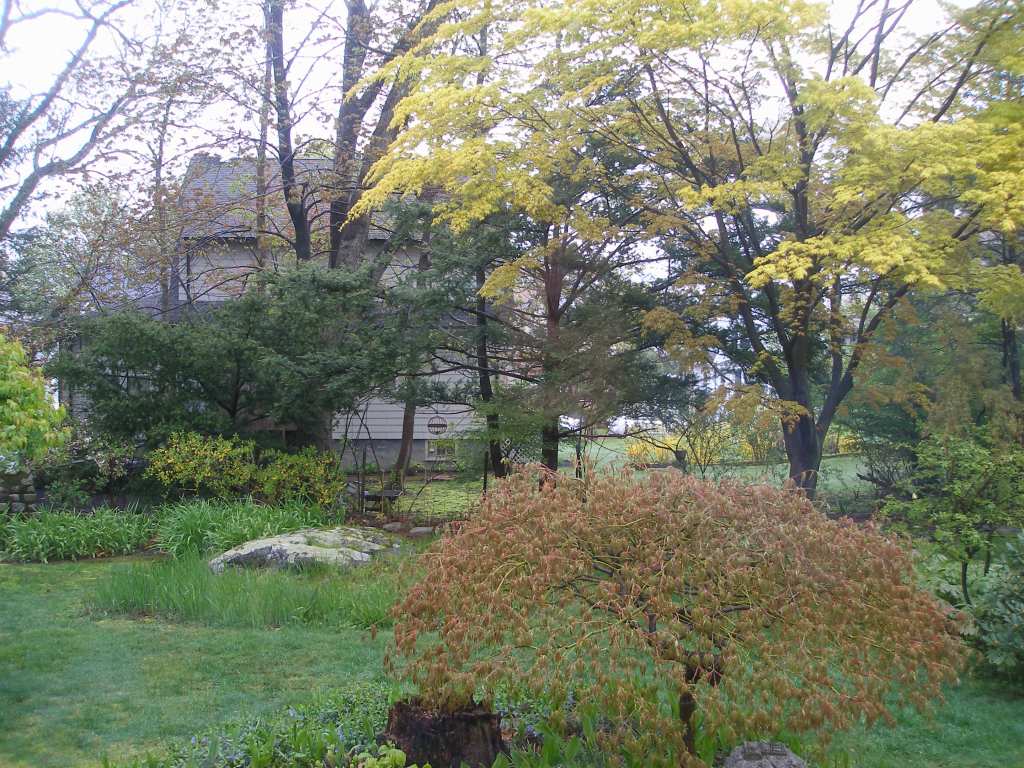
In a photo of my spring garden taken many years ago, the young Katsura maple glows yellow by the fence.
That maple would grow large to anchor the corner opposite the tea hut.
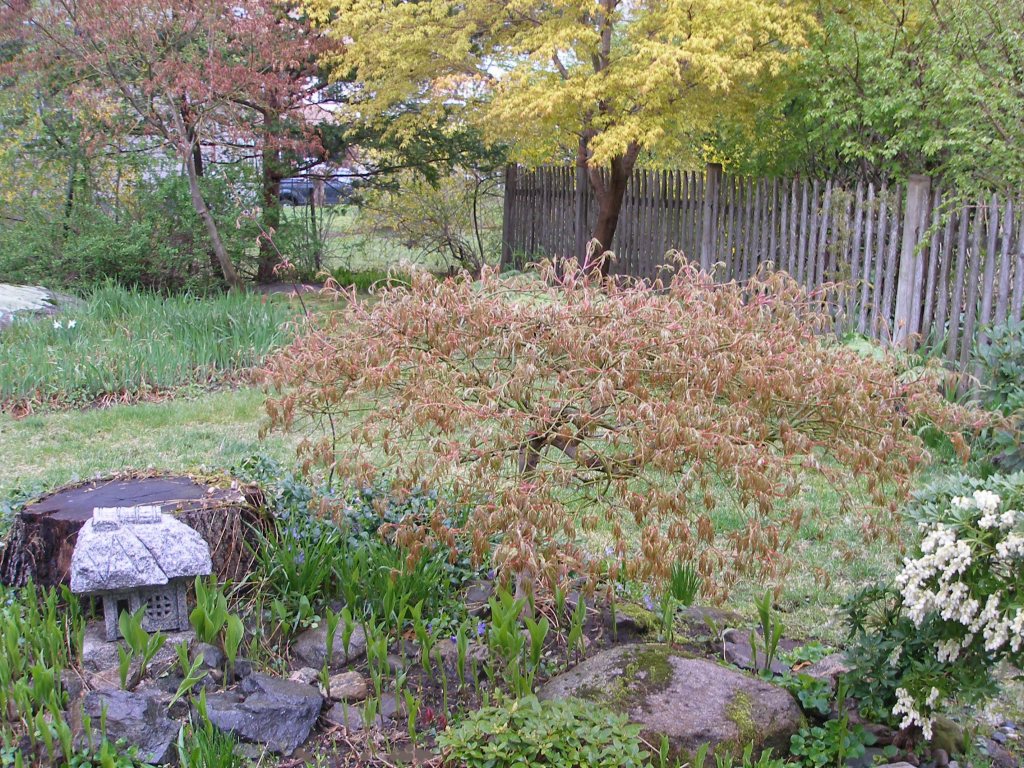
One learns with one’s hands and heart through the daily tending. A change might be required to retain balance and flow in a garden’s design. Some things should be left well enough alone.
Even as weather patterns shift, becoming more extreme and unpredictable, and nature makes changes, the basics should remain pretty much the same. As always, there should be joy in attending and responding not from outside, but from within – as part of the continuing dance of life.
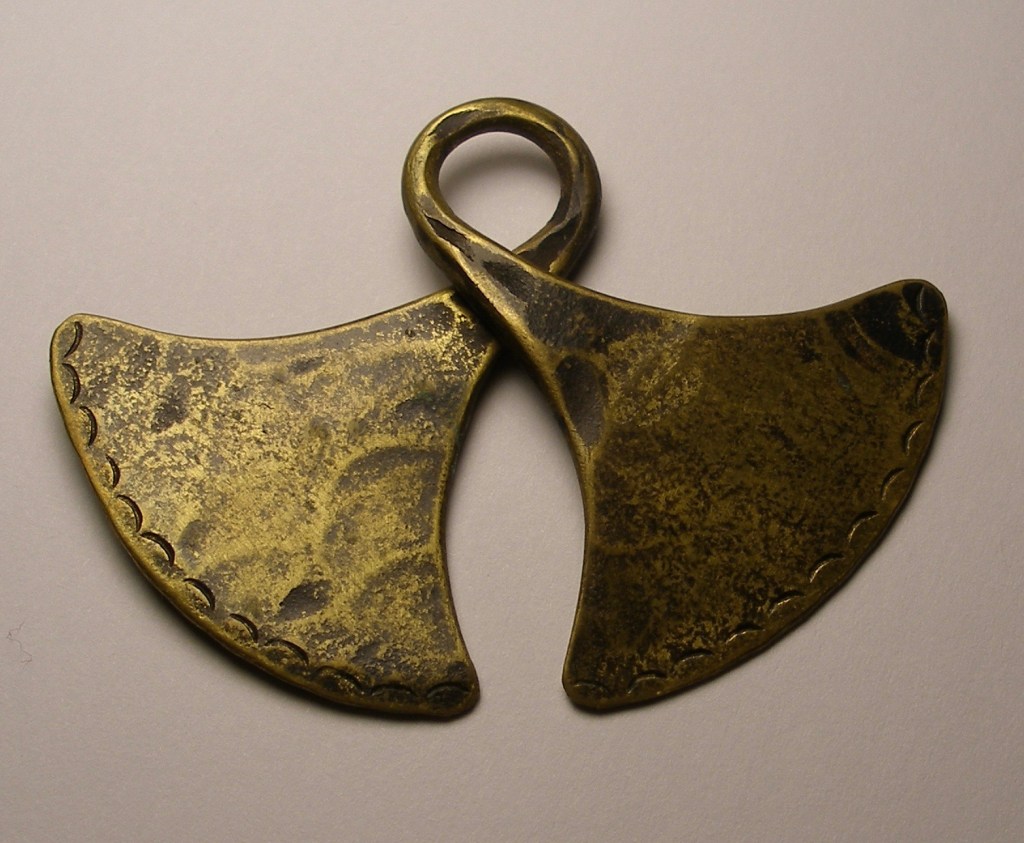
It was the beautiful design that first caught my interest. Online research revealed that this “taka” was made by the Ngadha tribe, who live on the island of Flores, in Indonesia. And although I read various theories, I would not be surprised if only the Ngadha know the taka’s true meaning and uses.
I was also intrigued by the fact that members of the Ngadha think of themselves first as “we” (not “I”) – a bit like how the taka includes two equal parts joined in intimate connection. Placing primacy on a first person plural identity is evidently quite rare among human cultures. That’s a bit surprising given how much we humans have always been dependent on each other for our very survival.
“individual independence is not a coveted state of being; rather being singular plural is the principal mode of existence. In this context, the nua is the central heartland for the spatial and material expression of clan unity, although the emotions of being singular plural transcend time and space….Ngadha practices of interdependence are reflected in the community economy, which privileges Ancestor worship, community cohesion and group distribution of resources above the needs and desires of the individual….Interdependence is a dominant feature of everyday Ngadha life and organization. Ngadha people’s view of their own society involves a sense of self that questions the conceptual separation of self from others. Frequently, people alerted me to the ways in which everyone and everything is connected.”
Intentionally working to form groups that provide a sense of belonging and adopt a “we” perspective (as is true of many religious communities, for example) seems particularly wise in perilous times like our own. At a minimum, that could provide access to a broader range of perspectives as well as to useful instrumental support. I tend to agree with those who argue that social capital can be very valuable even when other resources are not available.
“It really boils down to this: that all life is interrelated. We are all caught in an inescapable network of mutuality, tied together into a single garment of destiny. Whatever affects one directly, affects all indirectly. We are made to live together because of the interrelated structure of reality . . . Before you finish eating breakfast in the morning, you’ve depended on more than half the world. This is the way our universe is structured, this is its interrelated quality. We aren’t going to have peace on Earth until we recognize the basic fact of the interrelated structure of all reality. “
-Dr. Martin Luther King, Jr.1967 Christmas Sermon on Peace
As it turned out “mindful dishwashing” became a “thing” when I was a student in Lesley University’s Mindfulness Studies graduate program. Several of us independently discovered that we liked mindfully doing the dishes and decided that it was quite a viable mindfulness practice. There was something about the warm water and suds as scrubbing restored a squeaky-clean shine. In fact, hand washing dishes at home could be quite soothing. But washing dishes for over 100 people at a silent retreat I attended was another thing entirely. I did not know what I was getting into when I elected “dinner dishwashing” as my volunteer task to keep costs down for those attending the retreat.
Early on the first day those who had elected to do the dishes for one of our meals crowded into a tiny stainless steel bound room that was clearly designed for one purpose. We were shown how to use the hose with hot water mixed with detergent as well as how to refill its reservoir. We watched as the professional dishwasher was taken apart and put back together again, and we learned that it was necessary to wash the silverware three times because of health regulations. We were not allowed to take any notes, and I hoped we had absorbed enough to avoid any major disasters. I considered that those doing this demonstration had considerable experience orienting new recruits. Then I noticed a list of instructions posted on the wall, and we were told we could talk as needed to coordinate our efforts with our dishwashing partner.
We definitely had an opportunity for “careful noting of a greater number of objects” (Goldstein, 2013, p. 147) which can be useful to “stay aware in the midst of sloth and torpor” (Goldstein, 2013, p. 147). The large number of dirty dishes piling up on a counter beside us certainly woke me up fast. There was much laughter as we figuring out how to avoid getting sudsy hose water on ourselves and everywhere else. As we began to keep up with the growing pile of dishes, bowls, cups and silverware, we were also adjusting to each other’s preferred way of doing things.
In the sauna-like steamy atmosphere, the exertion and our playful and sometimes hilarious efforts at coordinating with each other provided a welcome change from alternate sessions of silent sitting and walking. I realized I no longer resented having to miss an after-dinner meditation session.
As we learned by doing, we began to “act and move with awareness, clearly knowing, being embodied rather than distracted” (Goldstein, p. 65). We still laughed often and I learned that was functional – As Funes (2000) writes, “As we use laughter to release emotions, we are able to…focus on the sensory experience of the present and we become able to perceive our environment more fully. We can therefore deal more effectively with new stimuli” (p. 77).
By the third day, we had it down “clearly knowing the purpose of doing an action before doing it, and understanding…it is of benefit to self and others” (Goldstein, 2013, p. 62). In the dining room, one of the cooks struck a bell three times to indicate everything was ready. That was answered by a strike of a triangular gong to invite folks to line up to get dinner. The two of us came up with our own dishwashing completed ritual – solemnly bowing to each other after the last clean dish was put away.
At the end of the retreat, I was asked to write on a slip of paper what I wanted to leave behind. I wrote “Being afraid of being silly.” I wondered what the teachers would make of that. They would not know about the marvelous playful and laughter-filled experience we had while mindfully washing dinner dishes. Still, I realized that not being afraid of being silly at times certainly makes sense. It makes one approachable. It cuts through barriers and takes us back to the open wonder at being alive of childhood. H. H. Dalai Lama’s tendency to tickle people is mentioned in a video made at a Seeds of Compassion presentation in Seattle and the depth of his playful relationship with Demond Tutu was such a joy to witness.
References:
Funes, M. (2000). Laughing matters, Live creatively with laughter. Dublin: Gill & Macmillan.
Goldstein, J. (2013). Mindfulness; A practical guide to awakening. Boulder, CO: Sounds True.
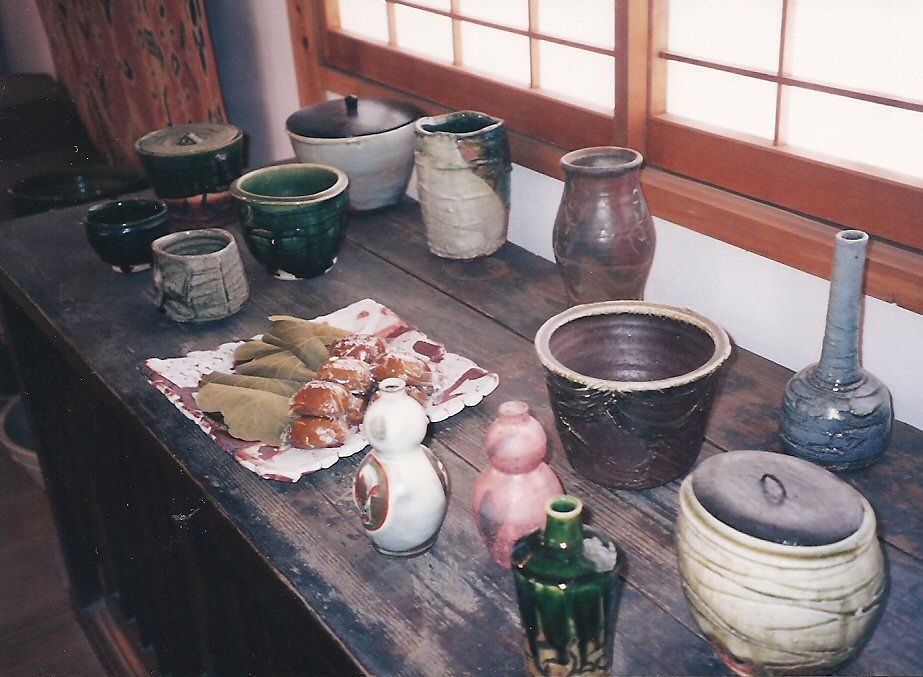
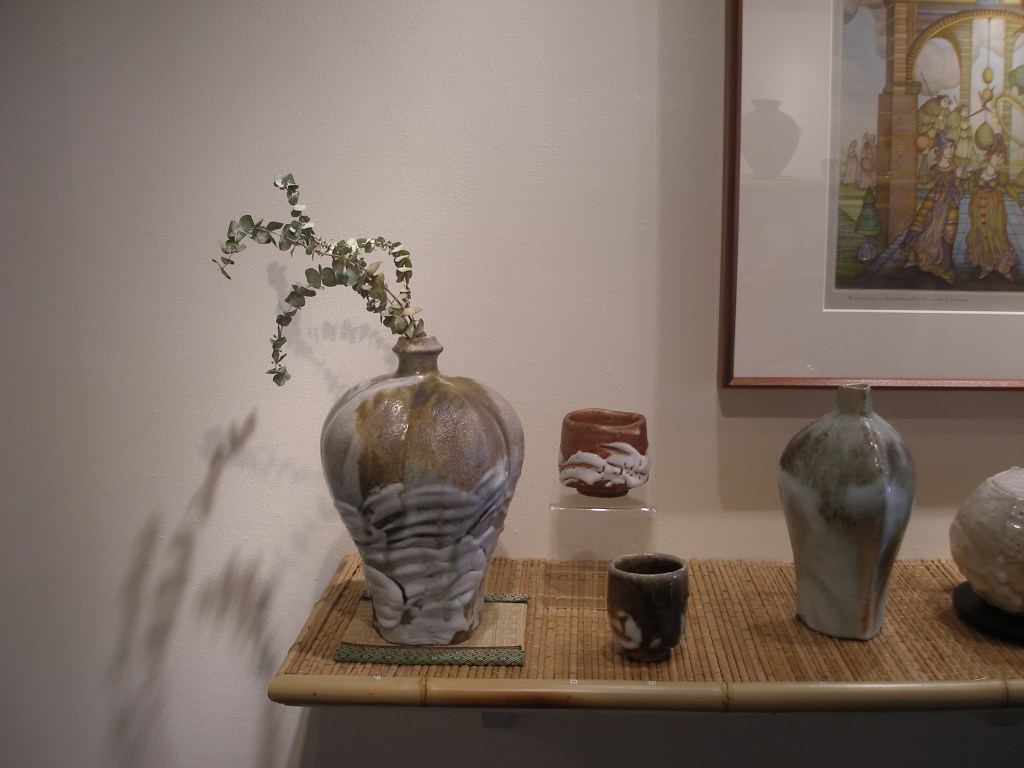
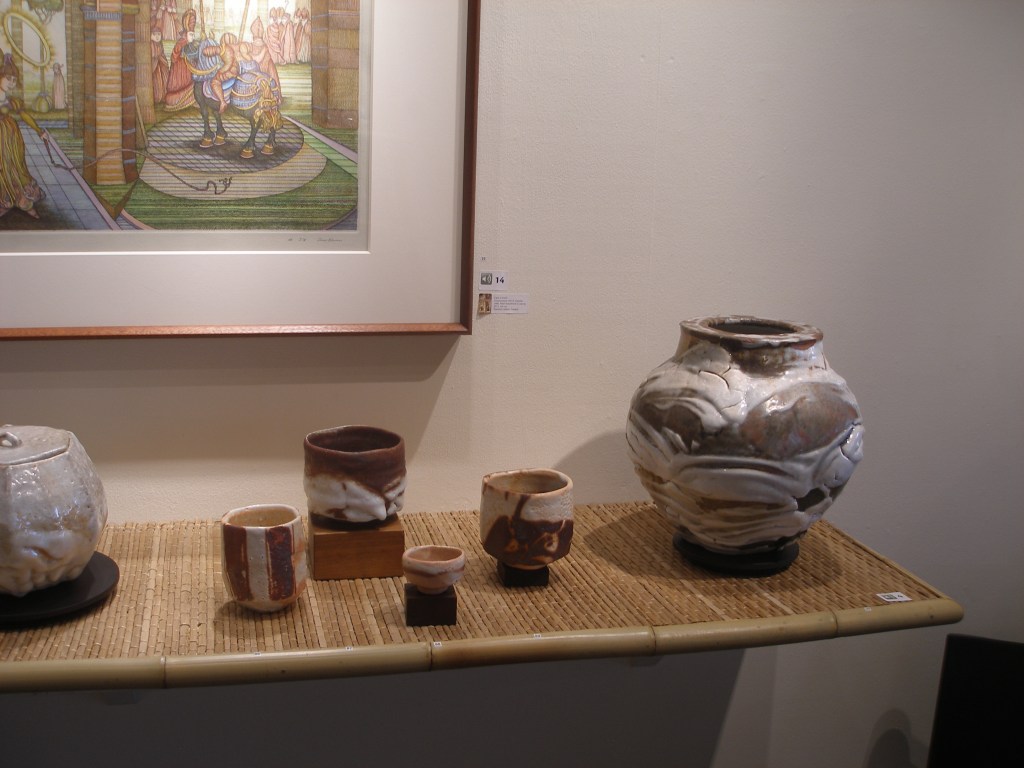
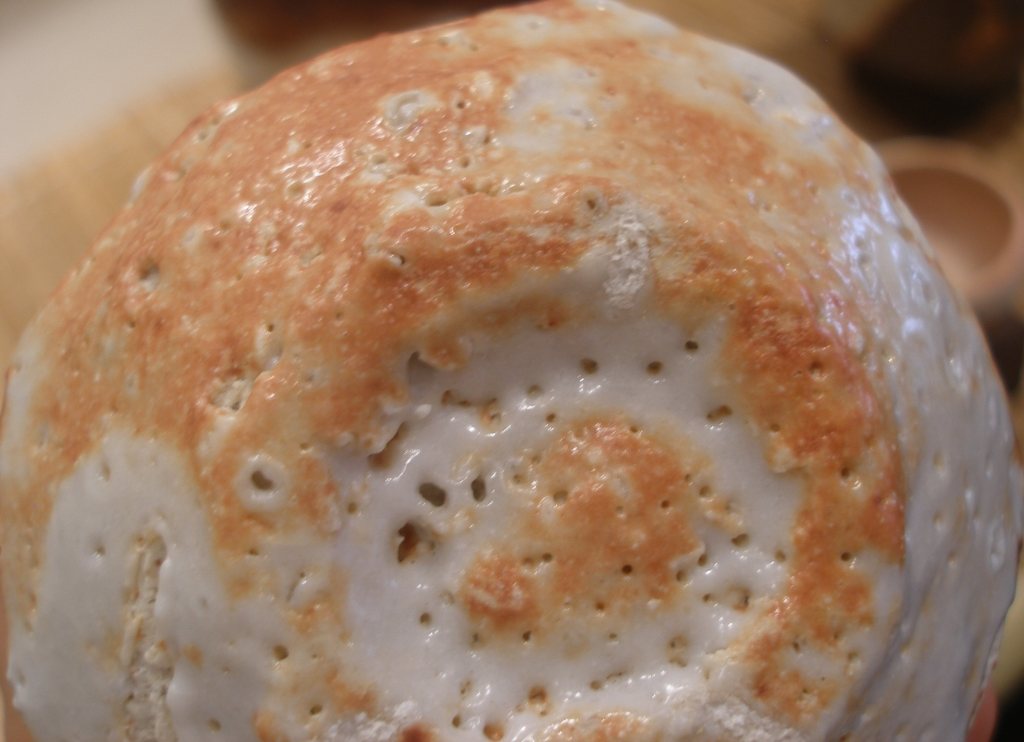
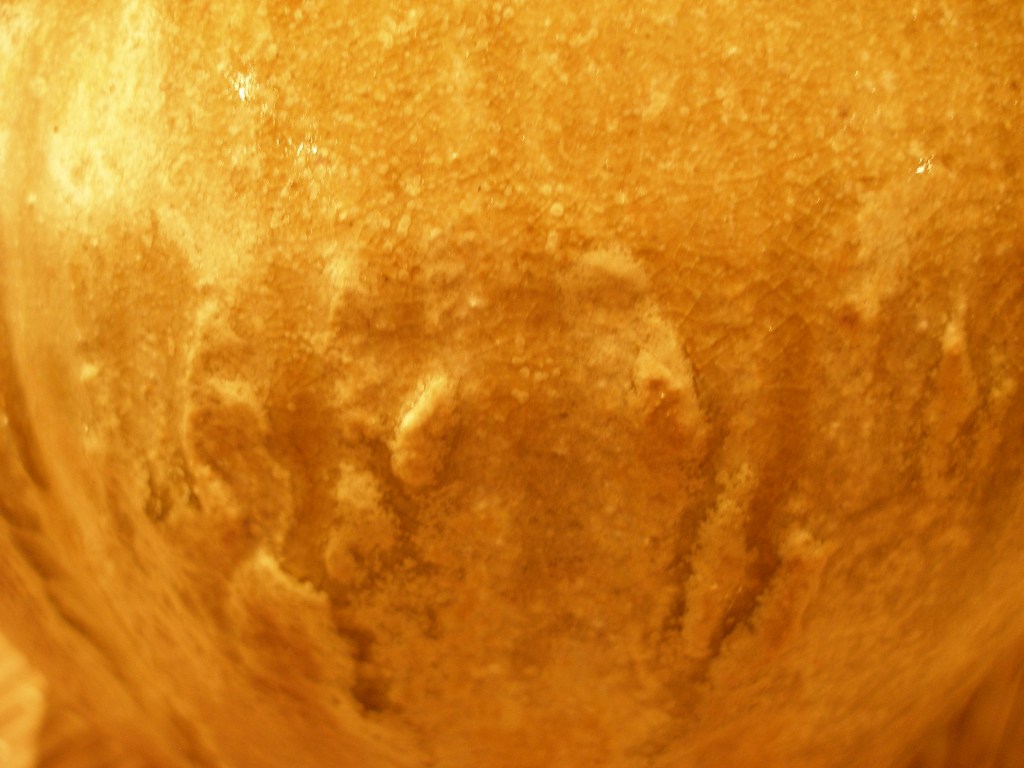
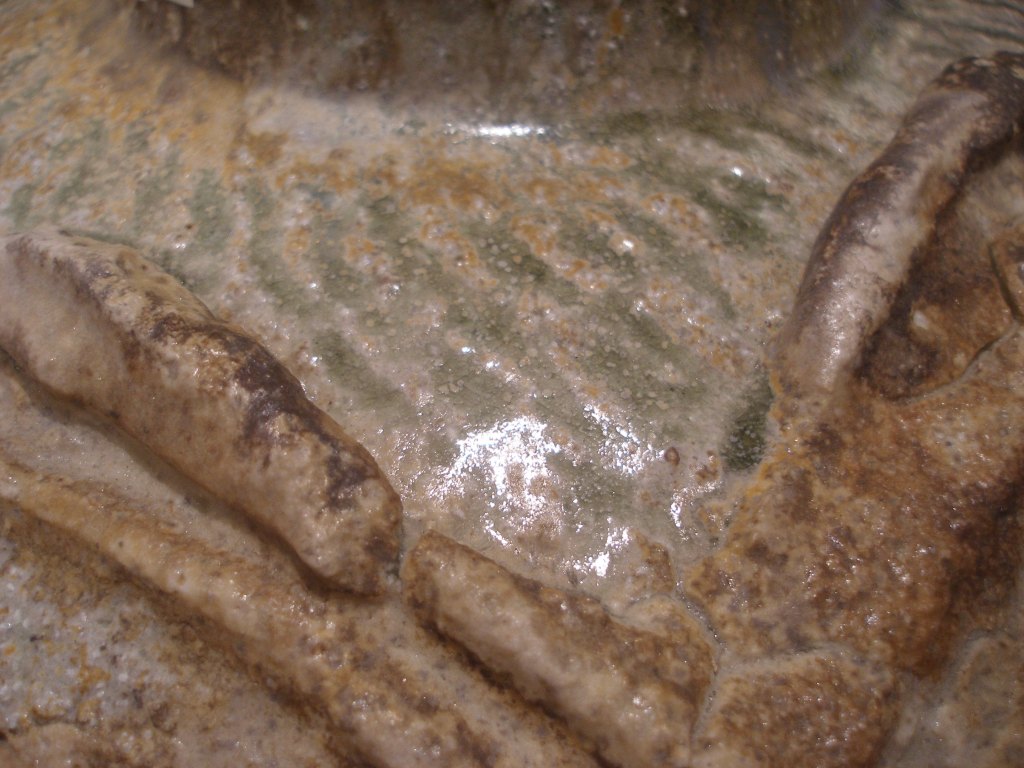
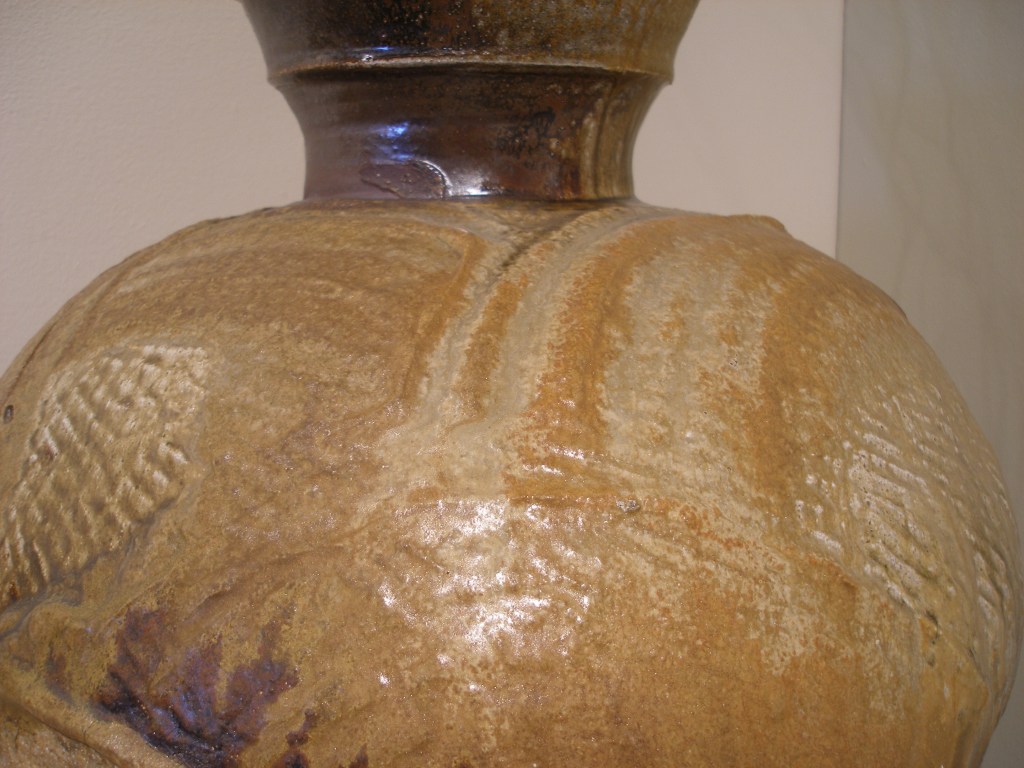
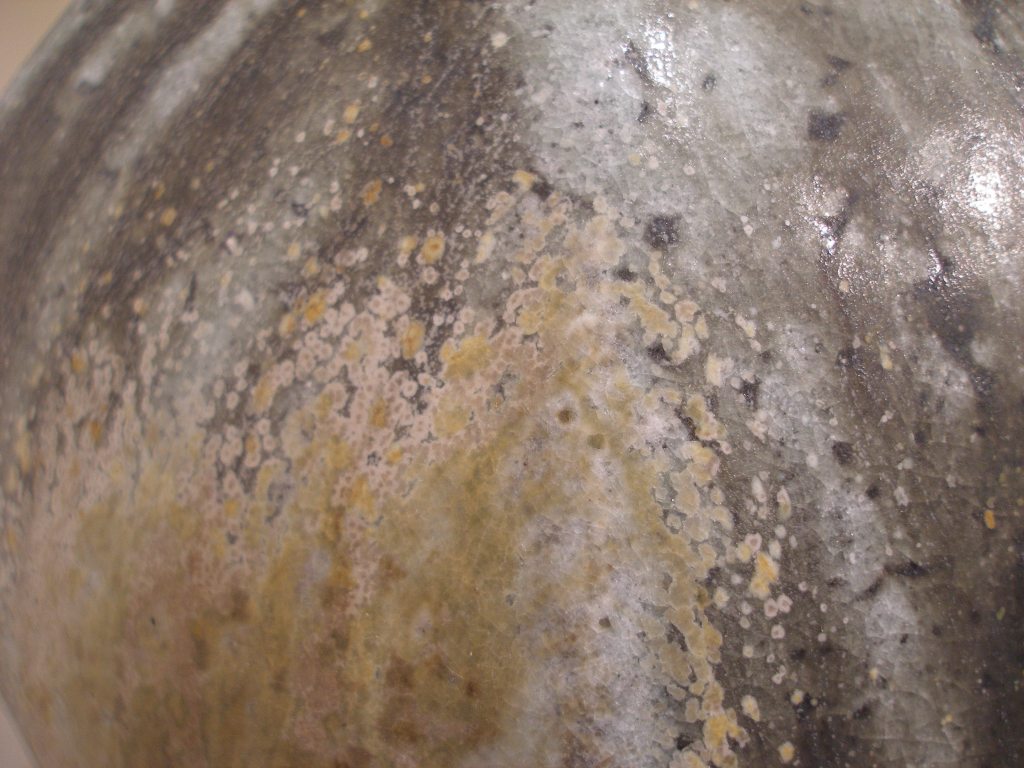
I first met Ken Matsuzaki on a trip to Japan. The first photo is of his pottery on display when I visited in 1997. After I returned, I was delighted to see Ken again, as well as examples of his latest work in Boston at the Pucker Gallery, which continues their long-term relationship with the master potter.
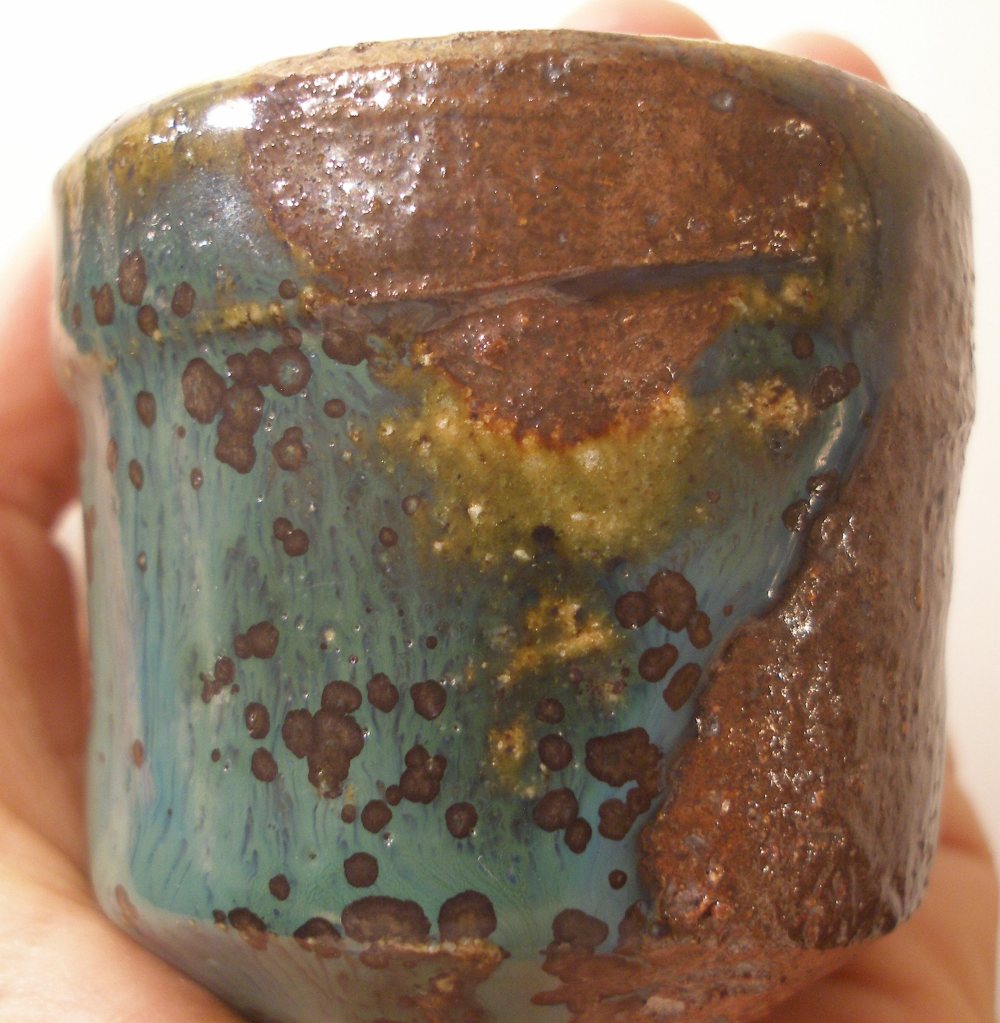
Entranced by the exuberant surfaces of the works on display in 2010, I asked and was granted permission to take closeups. I hope the photos below convey some sense for the joyful adventure of looking closely at their remarkable diversity.
The new tea and dialogue practice I have been working on might be considered a form of servant leadership, a style of leadership that is primarily focused “on the growth and well-being of people.”
The respectful sharing of tea and honest open dialogue is aligned with what Lowder (2009) found in reviewing the literature on servant leadership including: mutual power, collaborative participation, non-judgment, a focus on believing in and empowering people, providing opportunities to learn, and valuing differences. Two particularly notable aspects were “openness to spiritual, emotional, and mental inspiration and revelation” (p. 12), and a focus on “overcoming… fear through creating shared meaning” (p. 13).
I find that holding nurturing safe space for authentic relating makes “aha” moments more possible. Marshall (2016) notes that an intention to improve wellbeing may not lead to action until it is supported by a strong emotional connection, “The aha moment is essentially the sweet spot where the emotional brain and rational brain finally integrate” (Marshall, 2016, p. 65).
Edwards, Elliot, Iszatt-White and Schedlitzki (2015) discuss the potential use of creative techniques like tea & dialogue to support the integration of cognition and emotion that is accessed through the body (Nummenmaa & Glerean & Hari & Hietanen, 2014): “leadership cannot be reduced to an entirely rational process, there has been an increasing interest in emotional and social intelligence in the leadership literature…with arts-based methods and other creative techniques gaining ground…It is argued that these approaches have the potential to connect cognitive and emotional processes” (p. 2).
Fry & Krieger (2009) describe servant leadership, which they rank highly in their model of being-centered leadership as follows: “Servant leadership consists of helping others discover their inner spirit, earning and keeping the trust of others, valuing service over self-interest, and role modeling effective listening…The most effective leadership in this view is not provided by those who seek leadership roles but rather by those who have a compelling vision and desire to serve others first” (Fry & Krieger, 2009, p. 1682).
The embodied awareness of tea & dialogue is particularly useful for leadership that works through supportive relationships. Brendel and Bennett (2016) speak of the benefits of “a practical model of embodied leadership where individuals learn ways to deepen awareness to include both the mind and the body as an interdependent system” (p. 409). They concluded embodied and aware leadership “builds resilience and resourcefulness, and improves relationships in complex environments” (Brendel & Bennett, 2016, p. 409).
References:
Brendel, W. & Bennett, C. (2016). Learning to embody leadership through mindfulness and somatics practice. Advances in Developing Human Resources, 18(3), 409-425. Doi: 10.1177/1523422316646068
Edwards, G., & Elliott, C., & Iszatt-White, M. & Schedlitzki, D. (2015). Using creative techniques in leadership learning and development: An introduction. Advances in Developing HumanResources. 17(3) 279-288, Doi: 10.1177/1523422315586616
Fry, L., & Krieger, M. (2009). Towards a theory of being-centered leadership: Multiple levels of being as context for effective leadership. Human Relations, 62(11), 1667-1696. Doi: 10.1177/0018726709346380
Nummenmaa, L., & Glerean, E., & Hari, R. & Hietanen, J. (2014). Bodily maps of emotion. Proceedings of the National Academy of Sciences of the United States of America.
Marshall, L. (2016, December). The power of the aha! moment. Prevention, p. 62.
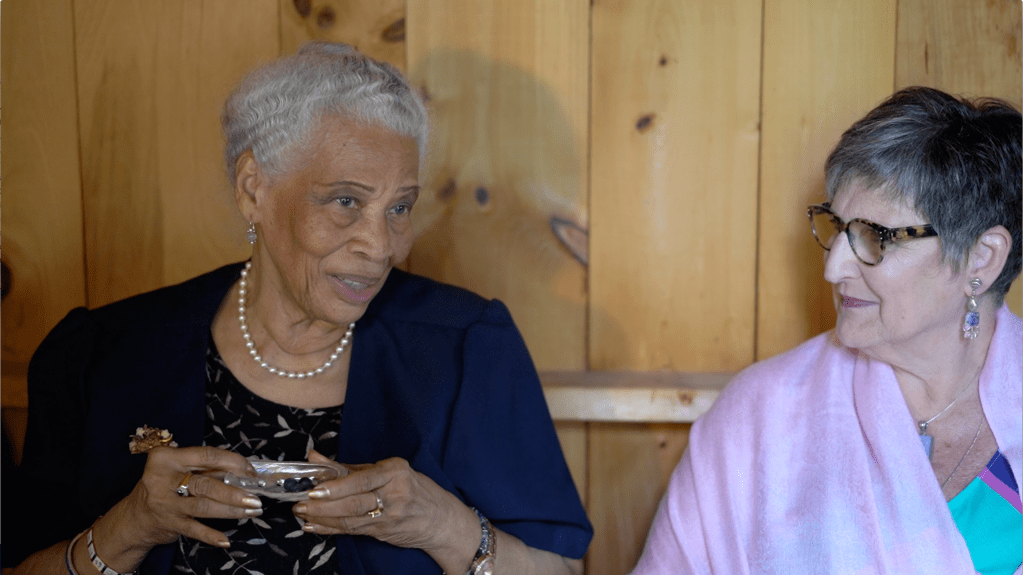
It is clear from our body language when we are really present for each other. Photo by Jeff Klein.
All the Insight Dialogue guidelines are fundamental to establishing the meditative qualities for Insight Dialogue relational practice. Without first Pausing, Relaxing, Opening and Attuning to Emergence, I do not know how it would be possible to Listen Deeply and Speak the Truth. In that spirit, during a recent Insight Dialogue practice that I co-facilitated with my guide and mentor, Jan Surrey (bio below), I paused and directed attention both inward and outward, and then called on all of those guidelines to discern what might want to be spoken in that moment. I heard myself saying that not only people but all of nature listens and speaks and that I always come back to gratitude.
Listening Deeply makes use of the amazing receptive capacity of our sensitive body-heart-minds. We can harness energy and mindfulness to direct attention both outward and inward at the same time. There is deep beauty in opening to the internal and external flow of all that we can sense. That can provide access to wisdom and compassion in that moment, the moment we are alive. Still, I sometimes get lost in my own responses. When that happens, I gently return to mindfulness with kindness and compassion. There is a lot going on at the same time. We take in words and match those with meanings and associations. We take in tones of voice, and changing facial expressions. We participate in the flowing “music” arising between us. Deep listening as meditative practice means allowing oneself to be touched by the unexpected, to open to whatever arises. Awe is possible, so is learning to welcome being influenced.
Speaking the Truth involves listening internally, discerning, and then speaking emerging truth in relation to a specific contemplation. Not stating what we think is true about the topic. Not sharing theoretical, or scientific truth. We use the support of the Insight Dialogue guidelines Pause, Relax, Open, Attune to Emergence, and Listen Deeply in relation to the contemplation. We draw on the whole body-heart-mind in investigating and speaking with an intention to adopt the teachings on wise speech: to speak what is true and not false; to speak what is beneficial and timely – is it appropriate to say that now? We attempt to speak in a way that is gentle, nonviolent and kind, and finally, to speak from compassion with an intention to liberate from suffering. We take care, knowing that speaking like listening, can influence us and others in ways that matter.
Listening and speaker inter are and work together. The wisdom of bringing attentive care to listening and speaking is clear from many Buddhist teachings:
Right View (Anguttara Nikaya): “there are these two conditions for the the arising of right view, Which two? The voice of another and appropriate (or wise) attention.”
The Holy Life(Kalyanamittata): “Admirable friendship, admirable companionship, admirable camaraderie is actually the whole of the holy life.”
Right Speech (Samma Vaca) “One tries to abandon wrong speech & to enter into right speech: This is one’s right effort. One is mindful to abandon wrong speech & to enter & remain in right speech: This is one’s right mindfulness. Thus these three qualities — right view, right effort & right mindfulness & run & circle around right speech.”
When listening deeply and speaking the truth something quite remarkable can happen – a working toward and aligning with what is true now. That creates an opening to release and ease that comes from a place beyond the personal. It is also a means to cultivate wisdom and compassion that bring with them a greater capacity for peace, happiness and wise action. In so many small and large ways, we really do practice Listening Deeply and Speaking the Truth for the benefit of all beings.
Instructions for dyad dialogue practice:
I invite you to Pause, Relax, Open, and Attune to Emergence as you explore how Listening Deeply & Speaking the Truth work together.
S1 – Speaker 1 speaks for 4 minutes while Listener 1 listens. Pause
L1 -Listener 1 reflects for 4 minutes on the process of listening. Pause
The Partners switch roles (Listener 1 becomes Speaker 2)
S2 – Speaker 2 speaks for 4 minutes while Listener 2 listens. Pause
L2 – Listener 2 reflects for 4 minutes on the process of listening. Pause
Open – 4 minutes of open exchange with no formal speaker or listener roles.
Note: At the start of dialogue practice, participants take a minute to introduce themselves and determine who will speak first. At the end, participants thank their partners for the opportunity to practice together.
Contemplations for dialogue practice:
When speaking: What do you notice about how your partner’s practice of listening affects you as you Speak the Truth?
When listening: What did you notice about how your partner’s practice of speaking affected you as you Listened Deeply?
During Open Dialogue: What is it like speaking and listening with formal roles dropped?
It Might Sound Like This:
As Speaker: I notice I am pausing to see what is here. There is anxiety about not knowing what to say. Sensing you watching me, I feel a bit self-conscious. Noticing your smile, I feel myself relax. As I pause and settle, I can sense you are not judging me. That is encouraging.
As Listener: I noticed that you really took your time figuring out what to share. That helped me pause and relax. When you tilted your head, I felt welcome. When your tone of voice softened, that affected how I understood your words. I could feel myself bringing in energy, becoming really interested in what you had to say.
I invite you to draw on the support of all the guidelines and make good use of the Pause before, during, and after speaking.
******************************************
With deep gratitude for all the support and guidance from my Insight Dialogue Teacher, Janet Surrey, who teaches Insight Dialogue retreats worldwide as well as leading a monthly practice group in the Boston area. She serves on the Teachers Council for the Insight Dialogue Community. Starting in 2007, she has been working with Gregory Kramer, founding teacher of Insight Dialogue meditation, a relational meditation practice within the Theravādan Buddhist tradition. She is a practicing clinical psychologist and a founding scholar of the Jean Baker Miller Training Institute at Wellesley College. She is also on the board of the Institute for Meditation and Psychology.