Floating Flower Petals

OLYMPUS DIGITAL CAMERA

Floating flower petals took on special meaning during our video conference to share tea and dialogue on May 23rd, 2018.

At my suggestion, the other two contributed tea flowers:
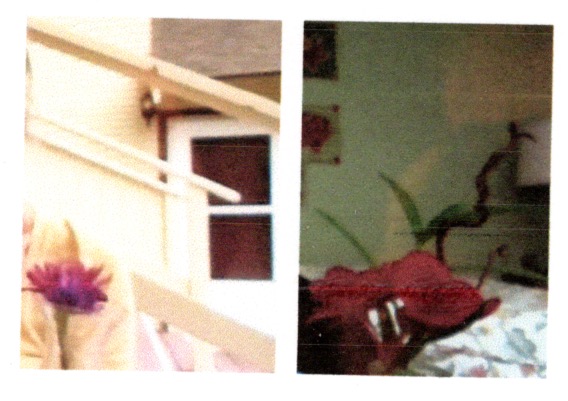
Flowers 052318

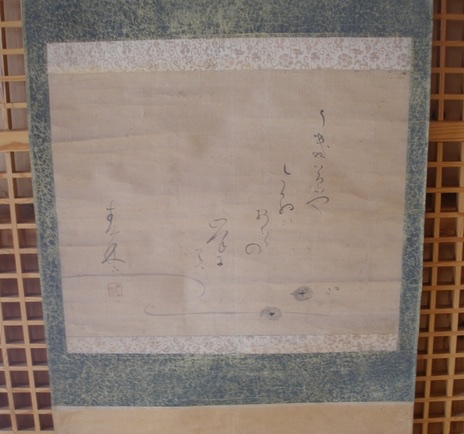
And I hung a tea scroll with an image of floating flower petals within camera range:
OLYMPUS DIGITAL CAMERA

Given we were actually in separate locations, each of us would need to act as both host and guest in preparing tea for ourselves. That is quite possible. It can be important, especially in cultures where taking time to offer oneself both respectful nurturing and gratitude is not given priority. In the context of our virtual meeting, listening for the sound as we poured hot water would connect us in generosity as much as if we were pouring for each other.

Remembering that humans tend to take things in best in sound bites, I paused frequently as I read aloud from William Scott Wilson’s wonderful book on tea scroll sayings, The One Taste of Truth, Zen and the Art of Drinking Tea:

Ichigo ichi’e ‘Each meeting a once-in-a-lifetime event’…is included among the fundamental concepts…because it is the guiding life not only of Tea but of Zen Buddhism and the martial arts as well. Ichigo refers to a person’s life, from birth to death – something never to be repeated – while ichi’e is a coming together or an assembly of people. The world is transient, and it is natural that whomever you meet, you will part from. Every meeting is special and unique, and will never happen again in the same way. Thus, you should put your entire body and spirit into the encounter, whether it be in the tea room, a chance meeting in the street, in martial conflict, or in your own solitary thought. The message extends to everyday behavior: one should pay attention to things and events as though none will ever be repeated. Let happiness as well as sorrow be complete, and experienced with attention and nonattachment” (p. 19-20).

I suggested we focus on the “Pause” guideline from Gregory Kramer’s powerful Insight Dialogue guidelines as the pause brings one home to present moment awareness.

Once they had their tea in hand, I made my tea using traditional Japanese tea ceremony utensils holding them up so they could see:

OLYMPUS DIGITAL CAMERA

I opened the container and placed two scoops of tea powder into the bowl. After pouring in hot water, I whisked the bright green matcha tea into suspension.

As we drank, I spoke of the warmth, the look, and the smell of the tea as well as how the taste is different with each sip. I gratefully acknowledged the energy of the sun captured by the tea leaves, the sustaining waters flowing through the tea plant and through us, and the effort of all those who planted, tended, plucked, dried, processed, packaged and transported the tea. Then there were also others who supported them, the ones who supported those others and so on…

After drinking our tea, we spoke making use of all of the Insight Dialogue guidelines – Pause, Relax, Open, Trust Emergence (since changed to Attune to Emergence), Listen Deeply and Speak the Truth. One of them commented on how rarely we slow down to really pay attention but when we do, we can notice so many sensory details. Another comment was about all the moments involved in the causes and conditions that led up to our being able to share tea. I mentioned how slowly time seemed to be passing.

As we approached the time limit for a meeting with a free Zoom account, I requested that these two experienced Insight Dialogue facilitators send me their comments via email. But they wanted to provide feedback right away and had the time, so we signed out and signed back in again for another meeting. I expressed my deep appreciation for any comments they cared to share.

One of them said that the “relaxed friendliness” stood out the most for her. To me it had a quality like the direct simplicity and freedom of children playing. They told me I had managed to bring in the meditative, relational and wisdom elements of Insight Dialogue. I was glad to receive confirmation that phrases used for the Zen art of Japanese tea ceremony are appropriate.

When I asked what I could improve, one of them told me she had felt the giving as host and the receiving as guest in her body as I spoke about each of us performing both roles as we served ourselves tea. She would have liked a reminder about that before we drank our tea. The other suggested it would be better to invite participants to continue the practice as we moved into dialogue rather than using the words, “commence dialogue.” I can definitely make use of both those improvements for future virtual tea and dialogue sessions.

I was not surprised when one of them spoke about her impression that Japanese tea ceremony is about perfection. I explained that while there are practical reasons for the order of the procedures, the true spirit of Japanese tea ceremony transcends perfection. Its values of harmony, purity, respect and tranquility ideally make it possible for all participants to be truly present forgetting “the dust of the world.” I thought of how sharing tea is used as a focus for convivial interaction in many cultures.

The short video,“A Tea Gathering at San Francisco’s Urasenke Society” explains there is freedom in Japanese tea ceremony’s structure, and the focus on process serves a number of important purposes including bringing participants very close to each other.

As I watched that film again, I noticed that rapidly-fading flowers were mentioned as appropriate for display during tea ceremony. I thought of the petals on the flowers in their vases, and those floating downstream in the image on the scroll we used (see photos above).

We truly connected for a time even as the three of us, like petals ourselves, floated downstream. Sharing tea and dialogue via video conference seemed to work – opening a whole world of interesting possibilities for sharing that way…


“Likes,” “Lurkers,” and Imaginary Friends

OLYMPUS DIGITAL CAMERA

The relationship in the photo above contrasts with audience challenges bloggers face. The diverse and attentive group at that concert was interacting in real time with the musicians.

I suspect that bloggers’ audience issues would be different if the advertising-based business model that underlies so much of what goes on in the internet did not apply. As Noah Kulwin explains in an New York Magazine article published on April 4th, 2018, “The Internet Apologizes for Corrupting our Elections, Violating Our Privacy and Hijacking Our Attention;” “To avoid charging for the internet – while becoming fabulously rich at the same time – Silicon Valley turned to advertising. But to sell ads that target individual users, you need to grow a big audience – and use advancing technology to gather reams of personal data that will enable you to reach them efficiently.”(p. 30)

“Likes” used on social media and blogs provide an incentive for doing the work of attracting an audience to see ads. According to the New York Magazine article Likes were intentionally used to modify behavior and it worked – we all like being liked.

But liking some things implies we like other things less. It also validates the idea of making snap judgments. What about structures that reward exploring, gaining a broader perspective or a deeper understanding? As discussed in the BBC broadcast interview on “How Do We Build a Better Internet,” emoticons are actually cultural engineering as they tell us what responses are appropriate.

In Braving the Wilderness, the Quest for True Belonging and the Courage to Stand Alone, Brene Brown discusses what is at stake in fostering “in crowd” / “out crowd” thinking: “Because so many time-worn systems of power have placed certain people outside the realm of what we see as human, much of our work now is more a matter of ‘rehumanizing’. That starts in the same place dehumanizing starts – with words and images. Today we are edging closer and closer to a world where political and ideological discourse has become an exercise in dehumanization. And social media are the primary platforms for our dehumanizing behavior.” (p. 74)

Another major issue is that bloggers may have little or no information about someone who reads their blogs. I find the idea of “lurkers” unsettling, especially given bloggers tend to use a conversational tone to share what is of personal interest to them.

In my writing, photography and workshop consulting work, when I am successful at connecting with a client around our common interest in a resource for wellbeing, it often leads to lasting friendship. Considering lurkers on this blog as potential friends feels like a natural thing to do and imaginary ideal friendships can be quite rewarding. After all, they do not require the sometimes emotionally demanding work involved with real friends. Researchers have found that close friends actually do have many similarities including how they react to videos so sharing personal information might feel safe.

However, while it might serve advertisers interests, sharing openly with strangers can have a huge cost. Andres Lustigman and Jonathan Ezor discuss some of what can happen without mindfulness of the risks, “Blogging A World Audience, And A World of Potential Problems.”

As media studies expert Nancy Baym explains in Personal Connections in the Digital Age, “most of the questions surrounding personal connections people form and maintain through digital media derive from the sparse social clues that are available to provide further information regarding the context, the meanings of messages, and the identities of the people interacting” (p. 9). Fear may make communication limited or superficial. On the other hand, attempting to bridge the intimacy gap or to enhance popularity by over sharing can lead to serious harm that potentially affects many as we learned with the Facebook scandal.

Because of how search engines work, blogs can attract a community that reinforces and amplifies views held in common (including harmful erroneous ones) in an echo chamber without reality checks. On the other hand, if disagreements arise, comment management can be demanding. Nancy Baym notes in her book referenced above, “The lack of social presence and accountability in a reduced-cues medium is seen by some as a platform for launching attacks.” (p. 66)

I find an amazing contrast between the simple joy and freedom of creating a blog post, and what is actually going on behind the scenes. It is not just about psychological tendencies taken advantage of, or economic business models, or technological innovation, or power to control online tools and data concentrated in the hands of a very small number of companies. There can be cultural, political, social, and other factors because this is about how humans behave given the tools to connect with and track each other.

This is the reality we face in our world today. As Jason Lanier who worked at Atari and Microsoft explains in the New York Magazine article cited earlier, “We wanted everything to be free, because we were hippie socialists. But we also love entrepreneurs, because we loved Steve Jobs. So, you want to be both a socialist and a libertarian at the same time, which is absurd…We disrupted absolutely everything: politics, finance, education, media, family relationships, romantic relationships. We won – we just totally won. But having won – we have no sense of balance or modesty or graciousness.” (p. 29)

We face information overload, complexity, stress, and high demands on increasingly limited attention spans. In Mindful Tech, How to Bring Balance to Our Digital Lives, Professor David Levy suggests we need to stop and think about how we are using our online tools and the effects they are having on us. Do we really want to exacerbate this stress and its power to feed our worst tendencies? In a blog post posted to Net Critique on March 27, 2018 –
“Distraction and its Discontents – Ebbs and Flows in Social Media Sensibility,” Geert Lovink contrasts the sick-making drain of our online compulsions with the relaxed open-ended exploratory conversation that is possible when “sitting next to each other in a café.”

If more and more of our social needs are being “met” online in what are ultimately unsatisfying and dangerous ways, we are at risk of ignoring the genuine resources for wellbeing we have available to us, not least of which are truly trusting and caring relationships. Are we undermining our ability to even recognize all the genuine resources for wellbeing that are there or their potential to make our lives much more fulfilling?

There is a positive side to this situation if we can bring wisdom to what we face. Not knowing our audience as full individuals or how what we put out there online might be used may force us to face ourselves, what we understand to be important, and what the universe is asking of us. The amplification effect of the internet can also show us what we are capable of as a species including what we might choose to ignore to our peril. Somewhere in all that is also the opportunity to reflect on aspects of human thriving worth protecting. Blogs and other forms of online sharing, for all their issues, are bearing witness to the great human adventure as we attempt to find our way.

When Once Is Enough

When I first came across a Morrisonite pendant, I could find very little written about the rare jasper, so I decided to write an article myself. Now photos and articles about the jasper and the site where it was mined are available online.

I bought a digital camera with super-macro capability and sought out opportunities to take photos of its incredibly diverse patterns and colors. Making friends with miners, lapidary artists and rock shop owners in the course of writing that article led to an invitation to visit the mine site, itself.

Of the seven of us on that adventure, two had mined the jasper, three had websites selling it, and one was the grandson of a rock shop owner who had known the discoverer of this spectacular stone. We took two four-wheel drive vehicles so as to have a back-up just in case. It would not do to get stuck in the desert highlands in the middle of nowhere in eastern Oregon.

On the way to the steep canyon side, we passed farms, fruit orchards, wild flowers in clumps, sage brush (nice fragrance), cattle, horses, antelope, a coyote, a hawk flying with a snake in its claws, jack rabbits, and grouse. Despite the relative dryness, the area is very fertile because of ample volcanic ash.

OLYMPUS DIGITAL CAMERA

The final dirt track was intentionally left rough to encourage folks to stay out. We drove very slowly jouncing over large rocks and ruts. Beyond the second switch back on the final approach, it was no longer possible to drive, so we got out and made our way down the steep track contending with loose pebbles and sand.

OLYMPUS DIGITAL CAMERA

While the others hiked down the steep canyon wall to the mine site, I stayed in the top area with a friend who had a bad shoulder. The weather was perfect. It was a very dreamy location to spend an afternoon largely in silence, exploring two abandoned miners’ cabins, watching the light shift on the canyon formations and looking to see if there might still be some Morrisonite left in situ that I could photograph (there was).

OLYMPUS DIGITAL CAMERA

OLYMPUS DIGITAL CAMERA

I only visited the mine site that one time. However, looking at the jasper (raw unpolished specimen below), and my special relationships with those who share my passion for Morrisonite became treasured refuges.

Cropped science fiction rough

As for the mine site itself, sometimes being just once in a magical place can provide nurturance for an entire lifetime.

On the trail at M Mine 62010 This last photo by Linda Stephenson is a favorite of mine.
Voice Lessons

OLYMPUS DIGITAL CAMERA

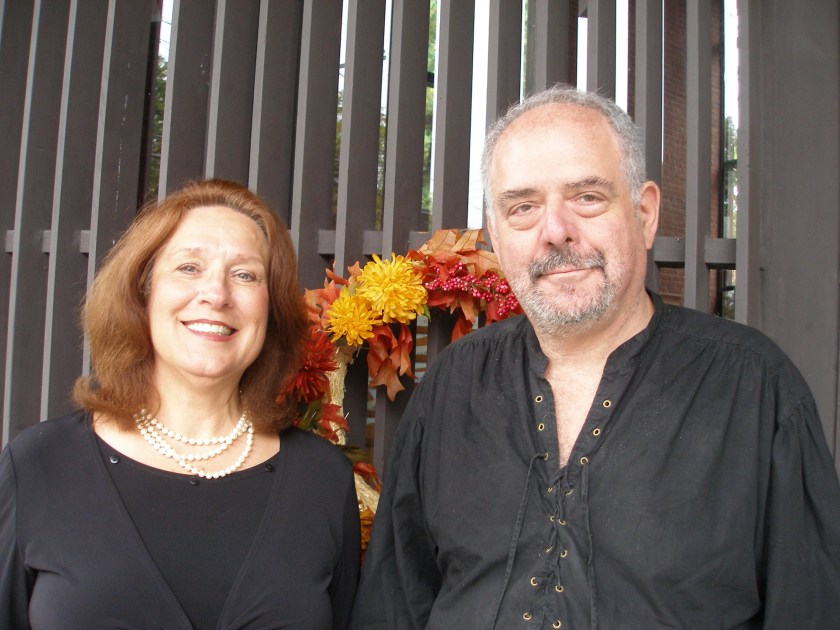
I met Joanna Porackova (left), several years ago when she was rehearsing for a concert. My choir director and talented composer, Jeffrey Brody (right), was accompanying her. The sanctuary where they practiced looked like a large overturned wooden boat with pews lined up under it. Sound bounced all around inside that space and musicians loved performing there.

I sat a few pews back. I was hoping for some feedback on a PR piece I had written for the local newspaper. When Joanna noticed me sitting there, she asked Jeffrey to start over again, so I could hear the piece they were rehearsing from the beginning. Joanna said, “She worked so hard on that article.” I was to learn that kind of thoughtfulness was typical of her. I do not take it for granted. I still feel honored that she did that.

Then the two of them performed just for me. Time stopped. Awe is no stranger to me. But the glorious sound of her voice took me over. They were in perfect accord about what the music should do. I knew at the time, I would never forget that experience.

When I came in early for choir rehearsal, I would sometimes see them in the sanctuary. At times, she was giving voice lessons to one of her students with Jeffrey accompanying. Other times, he would be coaching her on a new opera role, or a solo part in a major classical work. It was obvious they were good friends. An expert on Wagner’s music, Jeffrey  coaches opera singers on Wagnerian roles, including Joanna whose voice is well suited to that music. It was clear they both know the world of opera from the inside out, and enjoy talking about it.

Jeffrey suggested that I take a few voice lessons with Joanna. I did not take him up on the idea. I had been singing in one choir or another most of my life. I loved choral singing, but I knew I was no soloist. However, when a choir friend suggested I join her for the warmup portion of her lessons with Joanna, I could not resist. That is how I started formal voice lessons in a limited kind of way,  with a kind opera singer whose voice awed me.

The vocal warmups we did might look quite peculiar to someone observing us. We would position ourselves some distance apart on the strip of carpet in the center of the sanctuary. We held our heads up while lying on our stomachs in the Cobra position, practicing ever higher scales and coming back down again. We paid attention to filling our lower back with air in the Child Resting position. We ended by singing scales on various vowels while standing on one leg in the King of Dance and Tree positions. Then my friend would work on singing various pieces, and I would watch.

As I learned, early voice lessons are all about letting go of tension that shows up in the voice. Unlearning deeply ingrained habits can take time. Each person’s body, mind and experiences are different. It is the voice teacher’s job to figure out what would be most helpful. The routine she taught was how Joanna’s teacher taught her to do vocal practice. That made sense to me. Yoga is a way to free up energy in the body that works for many people. The sound I made was usually richer and stronger when I was in one of those odd positions, especially the arching ones that opened up the air way.

When I mentioned her kindness, Joanna told me she had intentionally chosen kindness as her way of coping in the world. She even used it during the unnerving auditions that all professional singers endure. To manage her fear, she uses her singing to send healing energy to those who are judging her.

By her kindness, Joanna made herself totally trust worthy.

That kind of trust is useful for voice students since a high degree of exposed openness is involved in singing well with one’s whole heart. Before I started lessons, one of her professional students told me that all of her students love her. I have no doubt of that, even regarding any of her future students who have not met her yet.

My choir friend stopped taking voice lessons, so I began taking them on my own once a month. I explored a bit, discovering haunting Celtic songs that seemed a good match to my vocal quality, and my heritage.

For one of my lessons, Joanna asked if I minded if another person joined us for the warm up. I was happy to accommodate him. I sensed she wanted to help this young man in some way using the healing power of music. After the lesson, I said, “If you were not a professional singer, you could be a healer.” That was when she told me she had spent much of her career as a pediatric nurse.

Someone working in the hospital overheard Joanna singing to one of her young patients and suggested she contact a voice teacher he knew. By the time she had advanced to teaching nursing, her singing career was really taking off. She had a choice to make, and she chose music. She then performed opera roles and solos all around the world as well as appearing in radio programs and in recordings.

She became known for her sense for the inner drama of the music and her wide vocal range. Those of us who know her well, however, would add kindness to her list of outstanding talents. Joanna told me that she still visits shut in senior clients in their homes and sings to and with them.

I stopped taking voice lessons when I became a graduate student in Lesley’s Mindfulness Studies program. I learned about many wonderful mindfulness practices and tried them all. Nonetheless, I consider singing one of my favorite mindfulness practices. I continue to sing with my choir friends. And I keep in touch with Joanna. I still wonder at the fact that I have a famous opera singer as a friend. But why not? She and I have many common interests including music, spirituality and healing.

Although I have not discussed the subject with her in detail, I am sure she would agree that singing is advanced mindfulness practice. While learning a new piece takes thought and voice lessons take effort, with singing itself, there is no time to stop and think about anything. One is aware of one’s breath, the nuances of the music, the words and their pronunciation, and the pitch and the quality of one’s sound, but it all flows. Letting go, over and over again like that is excellent mindfulness practice.

When a group of singers who like each other also like the music they are singing, a very strong communal awareness can arise. This sensitive and dynamic awareness is very much alive in its own right. The audience senses it when it is there in the sound. It is not guaranteed. Everything has to come together. I find singing in the midst of strong communal awareness to be a fundamental bottomed-out joy with freedom to it, a bit like taking flight.

Eventually we were able to find a slot of time when Joanna could join me in the tea hut I had installed in a mossy corner of my yard. I also invited a new friend who practices Tibetan Buddhism sensing that the two of them would like each other. I explained a little about Japanese tea ceremony and poured them bowls of tea in an informal version of the practice. Afterwards, we spoke of many things including the importance of making time to slow down and share like we were doing.

Joanna mentioned that she did not think she had told me she had learned to chant the Heart Sutra from a friend. My new Tibetan Buddhist friend asked if we could hear a bit of it. The three of us were standing in a triangle only three feet away from each other on the tatami mats in my small tea hut as she began. Time stopped.

Her vocal quality was entirely different from that time when I was first transfixed by her voice in the church sanctuary years earlier. There was an unexpected gruffness of tone that only enhanced the spiritual depth as she chanted the words. It was incredibly powerful. It was as if she were channeling an enlightened medieval monk.

It is not unusual for time to slow way down when I am in my tea hut sharing tea. But this was different. She told us there were tears in her eyes as she chanted because she knew that the two of us would understand.

Tea & Dialogue & Generosity

OLYMPUS DIGITAL CAMERA
Photo by Kathleen Fink

The photo above shows Annie Hoffman (left) and Jan Surrey sharing tea during tea and dialogue practice at Art and Soul Yoga in Cambridge, MA on March 25th, 2018. It was one of those events where all the careful planning (see Preparing for Tea & Dialogue) just seemed to work – We kept to the schedule and it flowed better than I had expected.

In a dyad session, the participants poured tea for each other and then drank it followed by insight dialogue where they commented on the truth of that experience. One participant said she enjoyed slowing down to really pay attention to the sensory details. Another appreciated how the flowing waters and energy of the sun captured by the tea plant become part of us – “We are the earth.” After remembering sharing tea in the past, one participant noticed it had hints of the depth and intimacy, the “Come over for 4 O’Clock tea” feeling that she now experienced on a deeper level.

The talk I shared on how both Japanese tea ceremony and Insight Dialogue teach us about generosity is reproduced below:

The powdered tea used for tea ceremony was first brought to Japan from China by a Zen monk. Tea was then planted in monasteries where it was used as medicine and to sustain awareness during meditation. The Japanese warrior class and then the merchants adopted tea and began holding gatherings to share tea and show off their tea utensils. Renowned merchant tea master, Sen no Rikyu with his strongly-held Zen values, shunned attachment to valuable utensils. His descendants, as heads of hereditary Japanese tea schools, continue to protect the standards Rikyu developed for Chado or the way of tea.

Every aspect is designed to support tranquil awareness, starting with a walk along a naturalistic woodland-like path to the quiet tea hut or room. Sharing tea involves all of the senses, and the whole body. Rikyu made clear that those who pursue the way of tea should put their whole heart into what they are doing, while at the same time keeping the tranquil awareness of all in the tea room in mind.

I was taught the flowing motions should be natural, and without artifice which paradoxically takes a great deal of practice, as well as calm awareness. Simple things are given the attention they deserve, and the only goal is to prepare tea and share it together. Like many, I experience time slowing down. Each moment becomes clear like the images in stop time photography.

Despite the formality of the giving and receiving, the warmth and caring generosity feel real because they are. This is life lived fully in the moment and with generosity born of a grateful heart. Tea ceremony has consistently brought me to centering peace over the years as I shared it with many different people. On occasion, I sensed awareness moving to the others present, then out to the tea garden, to all of nature and all that exists. I found my usual tendency to feel less than had no place from that perspective.

When I first encountered Insight Dialogue, Gregory Kramer’s guidelines of Pause, Relax, Open, Listen Deeply, Trust Emergence and Speak the Truth resonated strongly. I sensed immediately that these guidelines were remarkable in their power; nonjudgmental compassion would meet vulnerable disclosure for every participant. A new ease entered my life when I realized I could bring that same energy to any conversation no matter how stressful. The discussion topic also provided a means to gain wisdom. And we were all doing it together in powerful relationship, directly witnessing our fundamental interconnection. As Gregory Kramer describes on page 73 of Insight Dialogue, The Interpersonal Path to Freedom, “Compassion and joy create a virtuous cycle that promotes our finest relational qualities: lovingkindness, compassion, sympathetic joy, and equanimity.”

With Gregory Kramer’s guidelines in place, both speaking, and listening are generous and meaningful gifts. I now understand listening deeply to be one of the most meaningful forms of love. And the energy of that love has a tendency to spread to others who in turn become more open and generous.

Both practices foster tranquil awareness in interaction. It is clear that what is happening is real and that it matters – paying caring attention, acknowledging each other, offering thanks and really seeing how one’s actions affect others are all fundamentally important. Chado provides direct experience of what we are capable of in social interaction under ideal circumstances, while Insight Dialogue provides a way to release hindrances that get in the way of tranquil awareness in real life.

Both tea ceremony and Insight Dialogue show us how much we have to give and receive from each other when we open up and pay caring attention. Having experienced the profound benefits of these two relational practices, I wondered whether it would be possible to bring them together. Sharing tea might be a way to Pause, Relax, and Open before dialogue begins. Thich Nhat Hanh who finds much value in sharing tea notes, “We can communicate in such a way as to solidify the peace and compassion in ourselves and bring joy to others.” (p. 6, The Art of Communicating). Perhaps the peace of tea would help with that.

A tea scroll saying illustrates the kind of egalitarian generosity that comes from a deep grasp of our interconnection. In The One Taste of Truth, Zen and the Art of Drinking Tea, William Scott Wilson explains that scrolls that are used in Zen temples are also hung in tokonoma alcoves during tea ceremony events; “Among the implements of Tea, there is nothing as important as the scroll. For both the guest and the host, it is the scroll that has them grasp the Way of One Mind and absorb themselves in Tea.” What the scroll saying I have in mind says is: “Shaza kissa” (Sit down a moment and have a cup of tea.). Wilson explains, “In this way, you say, ’Have a cup of tea’ to whomever you are with” (p. 63).

This quote refers to a story where regardless of whether a visitor answered yes or no to Chao Chou’s question about whether they had been to the temple before, Chao Chou responded, “Have a cup of tea.” When the head monk of the temple, who had been listening in, asked Chao Chou about the meaning of his behavior, Chao Chou replied, “Head Monk! Have a cup of tea” (Wilson, 2012, p. 62).

This post is an example of using a blog post to share information with participants who met later to engage in tea and dialogue practice.

Lessons from Face-to-Face Advocates

Animals Cows copy

This huddle of cows awaiting a storm reminded me that being face-to-face has benefits for more than just humans. In my investigation of whether (and how) blogging might be a mindful form of communication, I thought it would be a good idea to look into face-to-face interaction.

It occurred to me that Denmark is a country that places a high value on being together face-to-face. As it turned out, what I learned about their culture had some useful lessons for bloggers.

That Danes value face-to-face interaction is evident in their tradition of hygge. Hygge involves leaving troubles and drama behind as friends and family gather to share cozy nonjudgmental “quality time,” often with candles and something good to eat. Everyone contributes to the mutually-supportive atmosphere.

The hygge oath that Jessica Joelle Alexander, an American writer married to a Dane, and Danish psychotherapist, Iben Dissing Sandhal, include in The Danish Way of Parenting; What the Happiest People in the World Know About Raising Confident, Capable Kids includes a reminder to turn off cell phones.

Denmark consistently ranks near the top of the World Happiness Report that includes over 150 countries. The authors of The Danish Way of Parenting believe this is because of Danish child rearing practices that include:

play, authenticity, reframing, empathy, no ultimatums, as well as togetherness & hygge.

I find a number of lessons here for bloggers. For one thing, bloggers might want to consider how their balance of face-to-face versus online time affects their own wellbeing.

Meeting with those who share the blogger’s interests could lead to new friendships, not to mention blog followers. Face-to-face meetings might inspire blog topics and provide a more nuanced understanding of the audience a blogger cares most about reaching.

Approaches from the Danish Way of Parenting can be applied in various ways by bloggers. Here are some ideas that occurred to me:

PLAY: According to Stuart Brown, adults need to play too. Blogs can be playful to varying degrees and inspire play.

REFRAMING: Reframing can be modeled by starting with a narrow concern and then taking a wider and more positive view that puts things in perspective, while perhaps soliciting comments to open the discussion still further.

AUTHENTICITY: There is evidence that blogging in ways that display one’s authentic personality is likely to attract readers who can relate to you. Being authentic also helps bloggers to better understand what is important to them as they observe their own posts over time. However it is good to be quite careful to review potential impacts, as impacts that can matter more than intentions.

EMPATHY: There are many ways to use varied media artfully to demonstrate empathy. Telling stories in words, photographs and video can often help with understanding others’ feelings better. It is also possible to explain in a post how facial expressions and emotions relate.

NO ULTIMATUMS: It is even possible to model no ultimatums. This can be achieved by avoiding absolute judgments, and including alternatives with an intent to inspire exploration rather than dictating what others should think or feel. Open-mindedness and deep listening can also be demonstrated in how comments are handled.

TOGETHERNESS & HYGGE: In keeping with the spirit of hygge, bloggers could intentionally adopt a warm nonjudgmental tone for posts sometimes. That would likely help with the blogger’s own stress. Providing reminders of the warm support that humans are capable of providing each other might work for some bloggers and topics. As you would expect, bloggers share tips on how to create hygge in real life. In these scary times, a little warm coziness in the blogosphere might be welcome.

While applying lessons from Danish parenting practices to blogs might make them more mindful, there is a different kind of beneficial energy to face-to-face interaction (including to a lesser degree communication via video conferencing). Even limited face-to-face interaction with the right person who shares the blogger’s passion could lead to new insight and a more open and aware perspective. Then everything the blogger does might become more mindful.