The Arlington, MA Council on Aging (COA) offers many opportunities for social connection. During my internship there while working on a Masters in Mindfulness Studies at Lesley University, I realized many elders are naturals at mindful connection. With time more precious, perfection and things matter less. What does matter is time spent together. They understand that deep listening and honesty both support the kind of heartfelt aware connection that amplifies wellbeing.
As I learned, many of the 200(!) or so Arlington COA volunteers are elders themselves. When I asked what they were most grateful for, several of them told me it was the opportunity to support others. That kind of wise appreciation is both rare and badly needed. It should not take a natural disaster or realizing there are few years left for us to understand we have the tools to honor each other’s dignity in ways that are mutually supporting.
My experience offering mindful tea and dialogue workshops to elders confirmed my sense that they might be well positioned to create and promote opportunities for the caring connection that is so badly needed in these increasingly lonely times.
During these tea and dialogue sessions, I observed: (1) caring support, (2) appreciation that deep listening powerfully benefits both the speaker and the listener, (3) growing trust and openness, (4) delight in sharing natural objects and stories (5) playful and joyous creativity, and not least (5) satisfaction from being able to support each other in ways that truly matter.
Like compassion, appreciative joy is a natural human capacity. I would expect to feel it in response to a happy bouncing dog, a child’s joy at experiencing the world or when being welcomed into a dear friend’s home.
On the other hand, when many things seem to be going wrong at once, grief can overwhelm me and joy can seem far away. I try to remember the Dalai Lama – certainly no stranger to all kinds of suffering. He repeatedly emphasizes the importance of joy, in how he relates, in his writing and his documentaries. The Daoists speak of the 10,000 sorrows & 10,000 joys – so both, not just sorrows.
I also like to think of Indra’s net where each intersection contains a jewel that reflects every other jewel. That would also include our reflecting our joys to each other.
Keeping the door open to appreciative joy is also a choice in that cultivating it takes effort. Being willing to speak the truth to myself and others, being humble about that, seems critical. That my individualistic, competitive and commercialized culture – not to mention social media – encourages envy, helps me to cut myself some slack.
When I am able to feel genuine appreciative joy, speaking the truth helps me to feel the enlargement, ease, connection and freedom – a taste of liberation from the bonds of self. And joyous connection is possible, maybe even critical, right in the midst of serious suffering. Here is one example:
Someone I don’t really know, who had just lost her mother, wrote on Facebook, ”Tonight I got a chance to chat online with a former next door neighbor when I was a teenager and she was 6 or 7 years old. She has amazing memories of things that happened then, 50+ yrs ago. She remembered many wonderful things that my Mom did with her and her family. She wished that she had a Mom like mine. Wow! Her sharing brought many memories back for me. This wonderful surprise brought me tears and joy. I am extremely grateful for her memories and her sharing. A precious part of my grieving.” I felt glowing warmth in my body-mind that ripened to awe. So honestly and simply told, that story was spreading its blessings well beyond just the two of them.
I find that Insight Dialogue with its sharing of heartfelt truth, provides powerful support for experiencing appreciative joy. The safe, caring space that everyone is holding makes clear we are not alone in our vulnerability. At times, the depth of mutual understanding, and naturally caring response to shared troubles produces a profound joy that seems to be felt at the level of the whole group. With the help of the guidelines Pause, Relax, and Open, an embodied experience of the practice’s rock-solid caring energy helped me to understand why Buddhists speak of spiritual friendship being “All of the Path.”
The power of appreciative joy can also be felt when we unexpectedly find ourselves in a position to help. A Chinese women used her few words of English to let me know she was looking for a local Chinese restaurant. I thought how brave she was to come to a new Country where she did not speak the language. She made clear her gratitude nonverbally. By the time we had walked to what I assumed was her new place of employment, it seemed totally natural to hug each other at the door. The meaning expressing by that hug went well beyond words. There was joy in her feminine strength and bravery that we both understood – in that short time we had become genuine friends.
Speaking the truth about appreciative joy to myself and others seems particularly important in these challenging times. In fact, I have been told it can be critical to many, particularly when few other resources are available. Keeping the door open to appreciative joy makes clear just how much of a relational superpower that kind of shared joy really is, as it points the way to freedom while providing ease, clarity and motivation to work at making our actions more beneficial. May all beings never be separated from the supreme joy that is beyond all sorrow.
You might want to try bringing to mind a time now or in the past when you unexpectedly felt or witnessed appreciative joy. How does that feel now? Are there any new insights that you were not aware of at the time?
I once facilitated a tea and dialogue session for members of a caregivers’ support group that met monthly in my local senior center. Most of them were caring for ailing spouses. It was hard for them to take much time out for themselves, let alone take actual vacations. The social worker facilitating the group agreed that “mini-vacation” would be a good dialogue topic.
From the warm, open way they welcomed me, I suspected they already followed the dialogue guidelines – Pause, Relax, Open, Attune to Emergence, Listen Deeply and Speak the Truth. The facilitator agreed, adding that she encouraged them to speak truthfully about their suffering.
The mini-vacations they shared took place in campgrounds, on the beach and other places they remembered from actual vacations. They spoke about peace and joy and freedom to play. What they described seemed more about being and sharing than doing. It was the very simplicity that made their descriptions so moving – the basic warm human connection.
Dan Siegel, an innovator in the integration of brain science and psychotherapy notes, “Self-compassion and self-acceptance emerge quite seemlessly…from consistent, continuous and caring connections with our caregivers early in life. But they can also emerge from ‘earned secure attachment'” (page 188, Mindsight; The new science of personal transformation). He continues on page 188 explaining that with the opportunity “to feel that we are ‘inside the heart’ of another, the candlelight of love glows within and illuminates our lives.”
These caregivers were taking full advantage of the opportunity to be truly seen and held in that candlelight’s glow. It seemed to me that what they were describing could be appreciated by anyone – the warm sense of belonging with no agenda in a lovely natural spot. There was a peace to what they described but, given their circumstances, it was also quite poignant.
I got the feeling that secure attachment regardless of how it is achieved – whether through early life experience, or though courageous work – might benefit from regular tuneups. And sharing memories or visions of ideal “mini-vacations” seemed not such a bad way to do that kind of maintenance.
We crave the approval of attentive listening and what others have to say when they are revealing their true hearts tends to be inherently interesting. That kind of conversation can have both freshness and depth.
Ideally, we consider before speaking, and then we speak the truth in a way that benefits both speaker and listener. In today’s world of increasing divisiveness, we can easily underestimate how much we have in common and how much we have to gain from listening.
Heartfelt speech is always an exchange of gifts even when the conversation is strictly internal. Pausing for self-compassion when one is triggered by something that is said (including by oneself) allows time to process and release emotions and then return to listening.
When we know we are valued and respected despite our flaws, honest discussion can help us begin to work on what might be getting in our way. While seeing the impact of past conditioning can be painful and take time, changing our perspective and actions is much easier with trusted support.
With enough supportive honest sharing in our lives, we might discover that we ourselves, are the answer to the hole we are seeking to fill. Clark, Fleche, Layard, Powdthavee & Ward, in The Origins of happiness: Evidence and policy implications, VOX DEPR’s Policy Portal, share the results of large surveys they conducted in a number of countries which found that the biggest factors in life satisfaction were not economic but related to “people’s social relationships and their mental and physical health.”
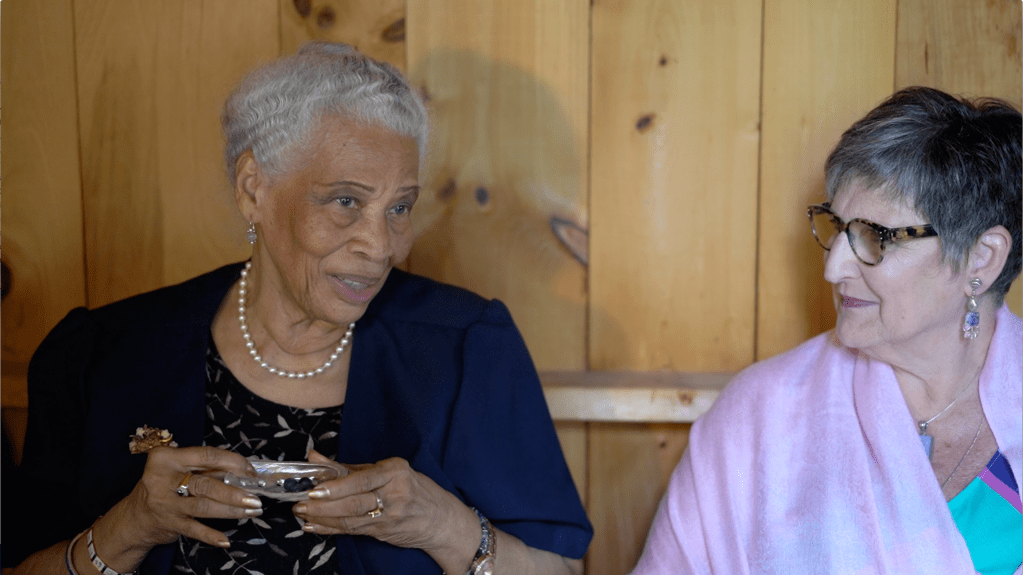
It is clear from our body language when we are really present for each other. Photo by Jeff Klein.
All the Insight Dialogue guidelines are fundamental to establishing the meditative qualities for Insight Dialogue relational practice. Without first Pausing, Relaxing, Opening and Attuning to Emergence, I do not know how it would be possible to Listen Deeply and Speak the Truth. In that spirit, during a recent Insight Dialogue practice that I co-facilitated with my guide and mentor, Jan Surrey (bio below), I paused and directed attention both inward and outward, and then called on all of those guidelines to discern what might want to be spoken in that moment. I heard myself saying that not only people but all of nature listens and speaks and that I always come back to gratitude.
Listening Deeply makes use of the amazing receptive capacity of our sensitive body-heart-minds. We can harness energy and mindfulness to direct attention both outward and inward at the same time. There is deep beauty in opening to the internal and external flow of all that we can sense. That can provide access to wisdom and compassion in that moment, the moment we are alive. Still, I sometimes get lost in my own responses. When that happens, I gently return to mindfulness with kindness and compassion. There is a lot going on at the same time. We take in words and match those with meanings and associations. We take in tones of voice, and changing facial expressions. We participate in the flowing “music” arising between us. Deep listening as meditative practice means allowing oneself to be touched by the unexpected, to open to whatever arises. Awe is possible, so is learning to welcome being influenced.
Speaking the Truth involves listening internally, discerning, and then speaking emerging truth in relation to a specific contemplation. Not stating what we think is true about the topic. Not sharing theoretical, or scientific truth. We use the support of the Insight Dialogue guidelines Pause, Relax, Open, Attune to Emergence, and Listen Deeply in relation to the contemplation. We draw on the whole body-heart-mind in investigating and speaking with an intention to adopt the teachings on wise speech: to speak what is true and not false; to speak what is beneficial and timely – is it appropriate to say that now? We attempt to speak in a way that is gentle, nonviolent and kind, and finally, to speak from compassion with an intention to liberate from suffering. We take care, knowing that speaking like listening, can influence us and others in ways that matter.
Listening and speaker inter are and work together. The wisdom of bringing attentive care to listening and speaking is clear from many Buddhist teachings:
Right View (Anguttara Nikaya): “there are these two conditions for the the arising of right view, Which two? The voice of another and appropriate (or wise) attention.”
The Holy Life(Kalyanamittata): “Admirable friendship, admirable companionship, admirable camaraderie is actually the whole of the holy life.”
Right Speech (Samma Vaca) “One tries to abandon wrong speech & to enter into right speech: This is one’s right effort. One is mindful to abandon wrong speech & to enter & remain in right speech: This is one’s right mindfulness. Thus these three qualities — right view, right effort & right mindfulness & run & circle around right speech.”
When listening deeply and speaking the truth something quite remarkable can happen – a working toward and aligning with what is true now. That creates an opening to release and ease that comes from a place beyond the personal. It is also a means to cultivate wisdom and compassion that bring with them a greater capacity for peace, happiness and wise action. In so many small and large ways, we really do practice Listening Deeply and Speaking the Truth for the benefit of all beings.
Instructions for dyad dialogue practice:
I invite you to Pause, Relax, Open, and Attune to Emergence as you explore how Listening Deeply & Speaking the Truth work together.
S1 – Speaker 1 speaks for 4 minutes while Listener 1 listens. Pause
L1 -Listener 1 reflects for 4 minutes on the process of listening. Pause
The Partners switch roles (Listener 1 becomes Speaker 2)
S2 – Speaker 2 speaks for 4 minutes while Listener 2 listens. Pause
L2 – Listener 2 reflects for 4 minutes on the process of listening. Pause
Open – 4 minutes of open exchange with no formal speaker or listener roles.
Note: At the start of dialogue practice, participants take a minute to introduce themselves and determine who will speak first. At the end, participants thank their partners for the opportunity to practice together.
Contemplations for dialogue practice:
When speaking: What do you notice about how your partner’s practice of listening affects you as you Speak the Truth?
When listening: What did you notice about how your partner’s practice of speaking affected you as you Listened Deeply?
During Open Dialogue: What is it like speaking and listening with formal roles dropped?
It Might Sound Like This:
As Speaker: I notice I am pausing to see what is here. There is anxiety about not knowing what to say. Sensing you watching me, I feel a bit self-conscious. Noticing your smile, I feel myself relax. As I pause and settle, I can sense you are not judging me. That is encouraging.
As Listener: I noticed that you really took your time figuring out what to share. That helped me pause and relax. When you tilted your head, I felt welcome. When your tone of voice softened, that affected how I understood your words. I could feel myself bringing in energy, becoming really interested in what you had to say.
I invite you to draw on the support of all the guidelines and make good use of the Pause before, during, and after speaking.
******************************************
With deep gratitude for all the support and guidance from my Insight Dialogue Teacher, Janet Surrey, who teaches Insight Dialogue retreats worldwide as well as leading a monthly practice group in the Boston area. She serves on the Teachers Council for the Insight Dialogue Community. Starting in 2007, she has been working with Gregory Kramer, founding teacher of Insight Dialogue meditation, a relational meditation practice within the Theravādan Buddhist tradition. She is a practicing clinical psychologist and a founding scholar of the Jean Baker Miller Training Institute at Wellesley College. She is also on the board of the Institute for Meditation and Psychology.
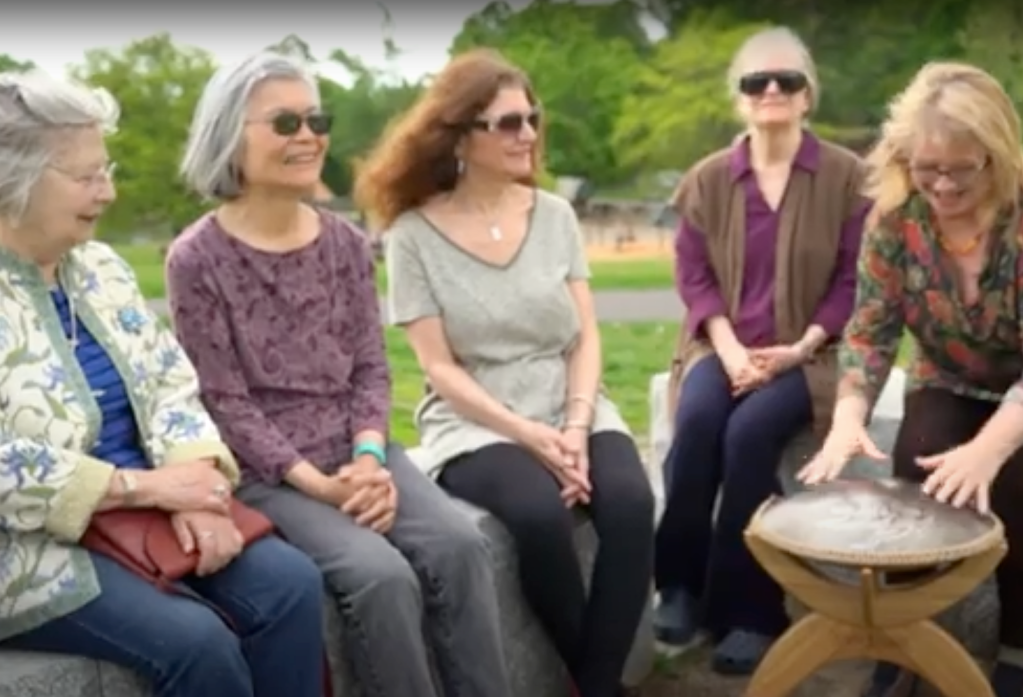
Sharing tea during tea and dialogue practice (photo by Jeff Klein)
Convinced there is great need to create opportunities for authentic connection, I started working on a new mindfulness practice that involves respectfully sharing tea and dialogue. While technology has numerous practical advantages, many of us engage much less in the kind of trusting face-to-face interaction that helps our social species thrive. Loneliness and social isolation, which have been found to be as bad for us as smoking, were on the rise even before the pandemic.
This post explains why I chose to take elements from two very different relational practices to create what I hoped would prove to be an accessible and adaptable new secular “tea and dialogue” practice.
At first glance, Japanese tea ceremony’s largely silent formal sharing of a bowl of tea might seem worlds away from the in-the-moment candid verbal sharing of Insight Dialogue. But both practices provide the safety and support needed to bring sustained attention to social interaction that deeply taps the wellbeing of felt connection. And both can open the door to life-transforming insight.
Japanese tea ceremony is a performance art that takes place in a tranquil setting apart from everyday worries. Water is whisked into a bowl containing a mound of powdered green tea and bowls of tea are shared with a few guests. After much practice, body learning makes it possible to carry out the detailed prescribed procedures with artless ease. Time slows down. Sustained embodied awareness opens one to the deeper beauty that can be found in imperfect objects, in nature, in all those gathered in the tea room, and in each moment. Sharing tea with many different guests over the years always left me feeling centered and at peace regardless of what else was going on in my life. Japanese tea ceremony began to feel like a time capsule of wisdom that was badly needed in these particularly stressful times.
Insight Dialogue is a practice with three elements; meditative awareness, investigation of a topic capable of imparting wisdom, and human relating. Participants form into pairs or small groups and take turns for timed intervals sharing what arises in the moment on the designated contemplation topic. That all listen without commenting creates safety, while the practice’s guidelines – Pause, Relax, Open, Attune to Emergence, Listen Deeply and Speak the Truth – provide powerful support. The subjective impressions that are shared tend to be intrinsically interesting. They are often wise and moving; more like poetry than everyday speech. Being truly heard is rare. Listening carefully is a natural way to encourage others to continue returning that precious favor. After a time, I found myself bringing the same nonjudgmental supportive energy to everyday conversations, even stressful ones, and that transformed my life.
Bringing sustained embodied awareness to authentic sharing amplifies the wellbeing and resilience that generosity and gratitude provide for our species. That compassion is warranted becomes clear (given how much each of us has to contend with), but so are joy and gratitude (given how much we are able to give and receive from each other).
Posts describing variations of the new practice combining elements of Japanese tea ceremony with meditative verbal sharing are available by clicking on the Tea & Dialogue category to the right and scrolling down. Whether with dear friends or with someone new, it is well worth remembering how much we benefit from authentic connection.
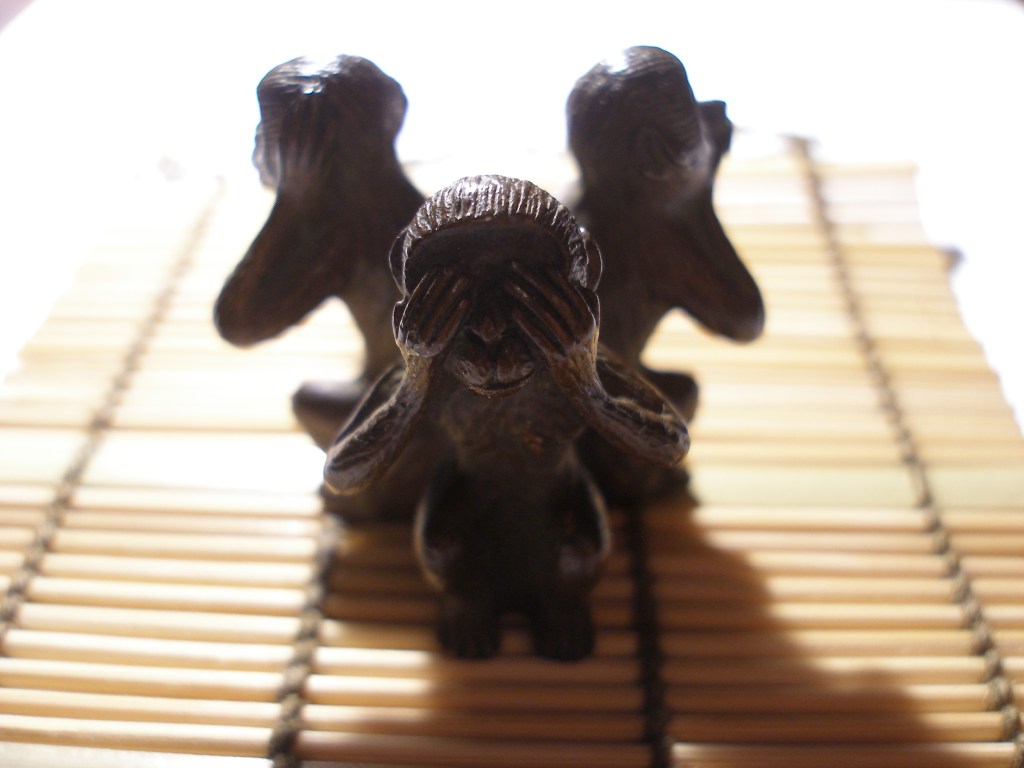
I recently acquired a tiny (4 cm tall) copper “Three Wise Monkeys” statue. Finding a ceramic version confirmed my suspicions that the three monkeys statue was a futaoki (lid rest in Japanese) used to support the kettle lid when hot water is poured into tea bowls. But associations with manmade objects can be complex and change over time. I wanted to learn more.
An article about the symbolism of the three monkeys noted, “During the Warring States period of China, around 475 to 221 BCE, the Analects of Confucius included the proverb of looking not at what’s contrary to being right; listening not to what’s contrary to being right; making no movement which is contrary to being right.”
I was glad to learn from this article that the monkeys were present in Japan at the time tea ceremony was gaining popularity; “By the time of the Tokugawa period, also known as the Edo period, which lasted from 1603 to 1867, the three monkeys were portrayed in Buddhist sculptures. At the Toshogu Shrine in Nikko, Japan, an eight panel sculpture represents the Code of Conduct developed by Confucius. One of the panels is the Three Wise Monkeys, symbolizing the principle of not seeing, not hearing and not saying anything evil…The message is that we should protect ourselves by not letting evil enter our sight, not allowing evil words to enter our hearing, and finally to not speak and engage in evil words and thoughts.”
The meaning ascribed to the three monkeys changed as they spread to new lands; later in Europe, the monkeys provided a reminder of the need to be blind, deaf and dumb in order to live in peace. Now with technology making it possible for fake news to travel faster than real news and the increasingly subtle ways evil doers are finding to manipulate our harmful human mind tendencies, the monkeys’ warning is taking on new poignancy.
They are also used as emojis – the hear no evil monkey to suggest hearing something one did not wish to “hear,” and speak no evil, when a comment seemed inappropriate for the topic under discussion.
I wonder what new associations these three enigmatic little monkeys will acquire in the future? I will smile as I place the little monkeys next to the hot water kettle before guests arrive to share tea in my hut.
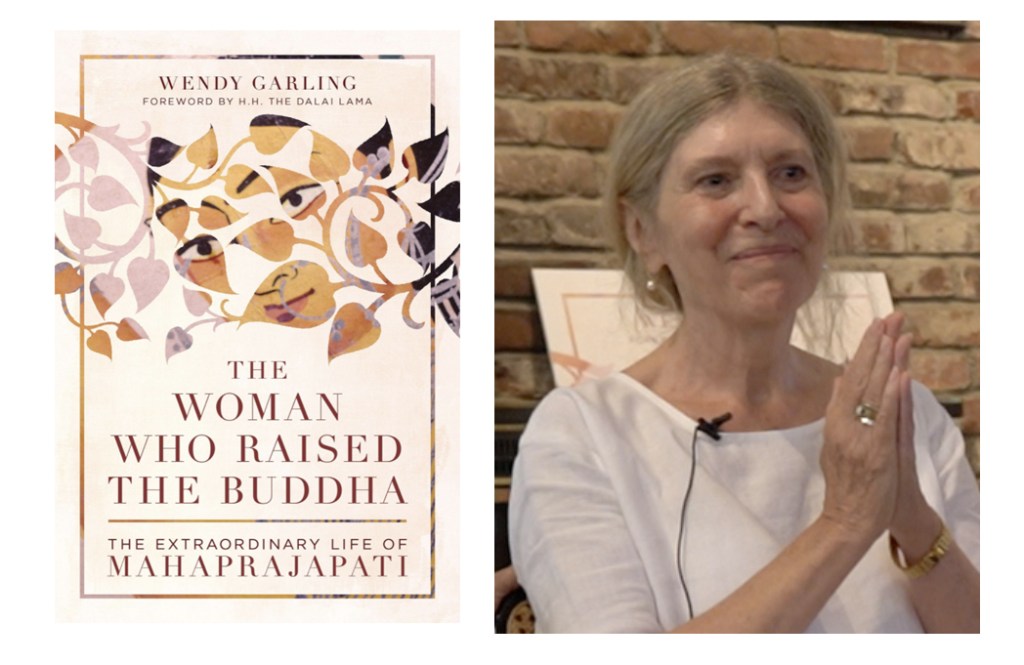
Seven days after his birth, when the Buddha’s mother knew she was dying, she entrusted her precious son to her sister, Mahaprajapati. You might think that raising the Buddha from an infant would be enough to make Mahaprajapati a figure of interest. But, in fact, very little information about her was available until Shambhala published The Woman Who Raised the Buddha; The Extraordinary Life of Mahaprajapati by Wendy Garling (photo by Jeff Klein).
In this short video from a June 27, 2021 celebration of her latest book, Wendy describes some highlights of Mahaprajapati’s influence. An audio recordingof her entire talk describes both the process and the contents of the amazing material that Wendy brings alive for us. Thanks to videographer,Jeff Klein, for both recordings.
Drawing on literature of multiple Buddhist traditions as well as recorded oral stories, Wendy introduces us to a woman who was of considerable importance in the early days of Buddhism. Even though she was the respected Buddha’s “mother,” and Queen of the Sakyas, it took Mahaprajapati’s own nurturing wisdom to overcame barriers so that the Buddha’s teachings reached both women and men (as he intended) right from the beginning.
Mahaprajapati’s effectiveness, despite the cultural values of her day, should be of particular interest to us now, at a time when we must work together to make progress in solving so many critical issues. Perhaps the publication of this book at a time when we are so in need of the transformative power of nurturing wisdom is not a coincidence.
At the party, Buddhist scholar, Charles Hallissey noted that not only does this book make a major contribution with its subject matter, but Wendy also shows us how to approach sacred literature in general. We all must necessarily start from where we are. Wendy models the process of using imagination to explore what might have been true in another culture and time where unanswered questions remain. At the same time, it is appropriate to be very clear about the assumptions one is making. By bringing imagination as well as all of one’s heart and experience to such literature, it can come alive in a meaningful way while making it possible for new insights to evolve over time.
WENDY GARLINGis a writer, mother, gardener, independent scholar, and authorized dharma teacher with a BA from Wellesley College and MA in Sanskrit language and literature from the University of California, Berkeley. She is the author of Stars at Dawn: Forgotten Stories of Women in the Buddha’s Life(2016, Shambhala Publications), and more recently, The Woman Who Raised the Buddha; The Extraordinary Life of Mahaprajapati (2021 Shambhala Publications). For many years Wendy has taught women’s spirituality focusing on Buddhist traditions, while also pursuing original research into women’s stories from ancient Sanskrit and Pali literature.
A Tibetan Buddhist practitioner, Wendy has studied with teachers of different schools and lineages, foremost her refuge lama His Holiness the 16th Karmapa (who gave her the name Karma Dhonden Lhamo), her kind root lama, the late Sera Je Geshe Acharya Thubten Loden, and His Holiness the Dalai Lama whom she first met in India in 1979. Pilgrimage has played an important role in Wendy’s life: in 2007 she journeyed to the sites of women saints in Tibet, and in 2012 and 2018 to sacred sites of the Buddha in India. Her dream is to bring back the stories of Buddhism’s first women, reawaken their voices, and ensure that they are not just remembered, but valorized as integral to the roots of Buddhism. Wendy lives in Concord, Massachusetts and can be reached at wendy.garling@yahoo.com.
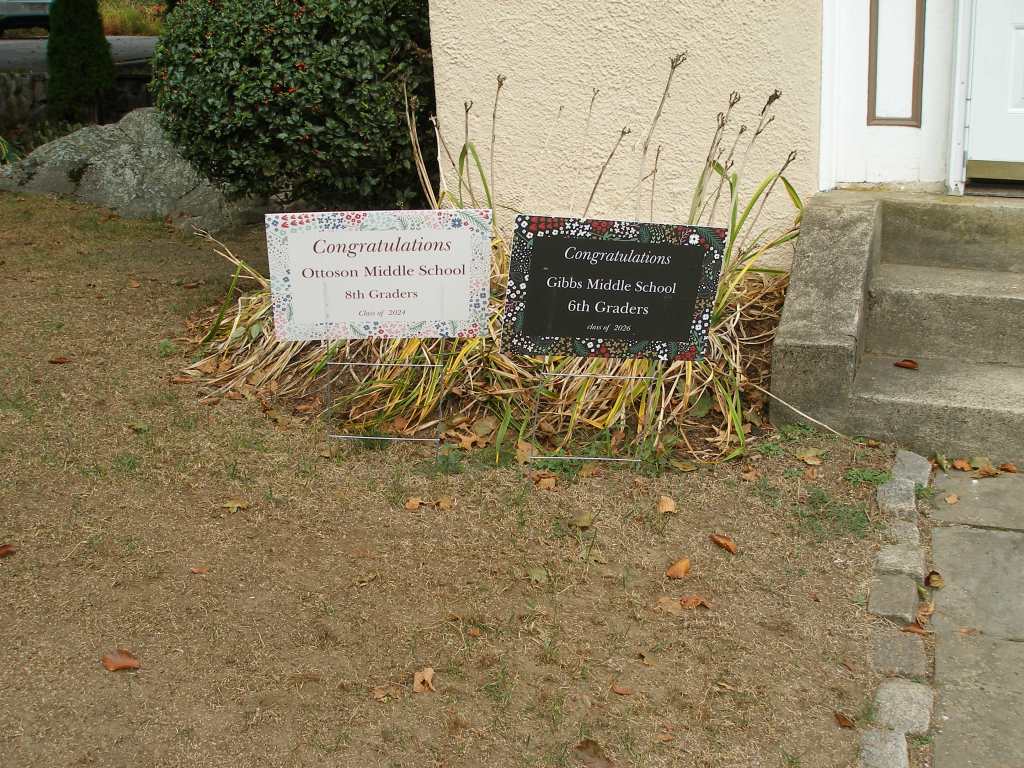
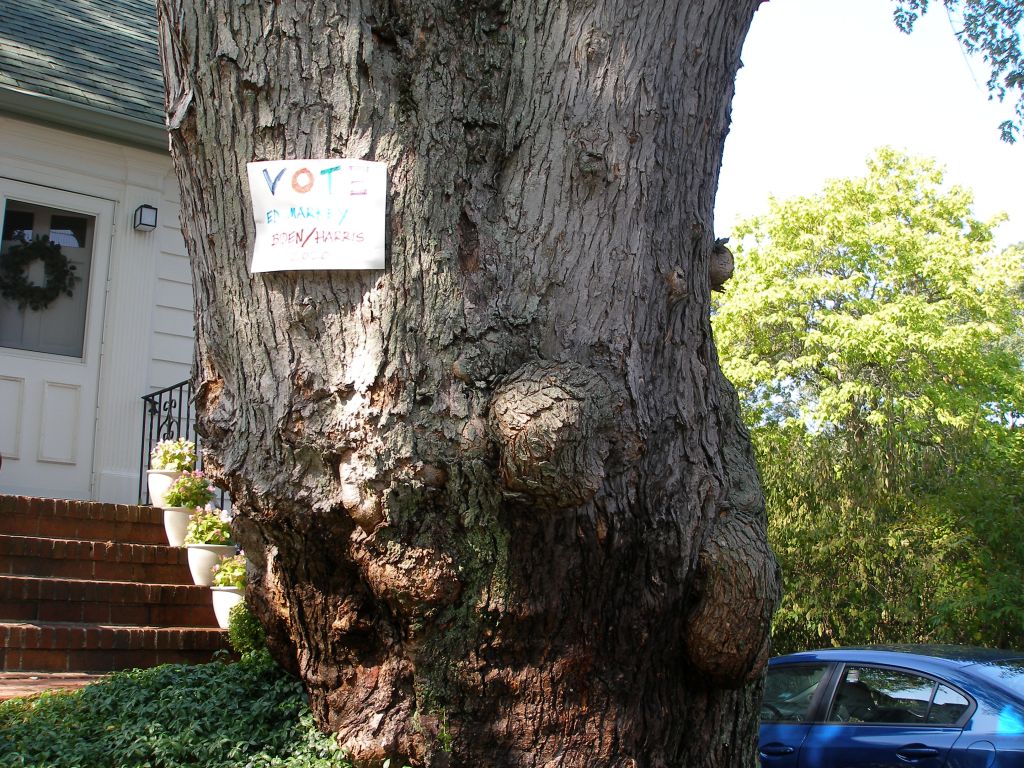
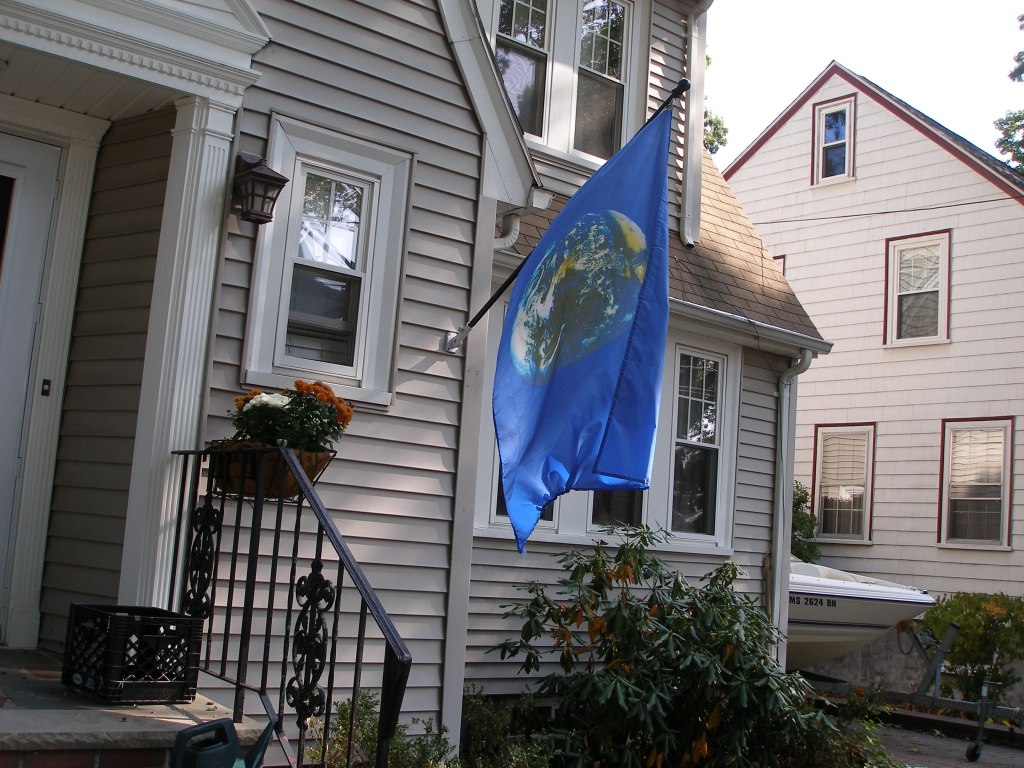
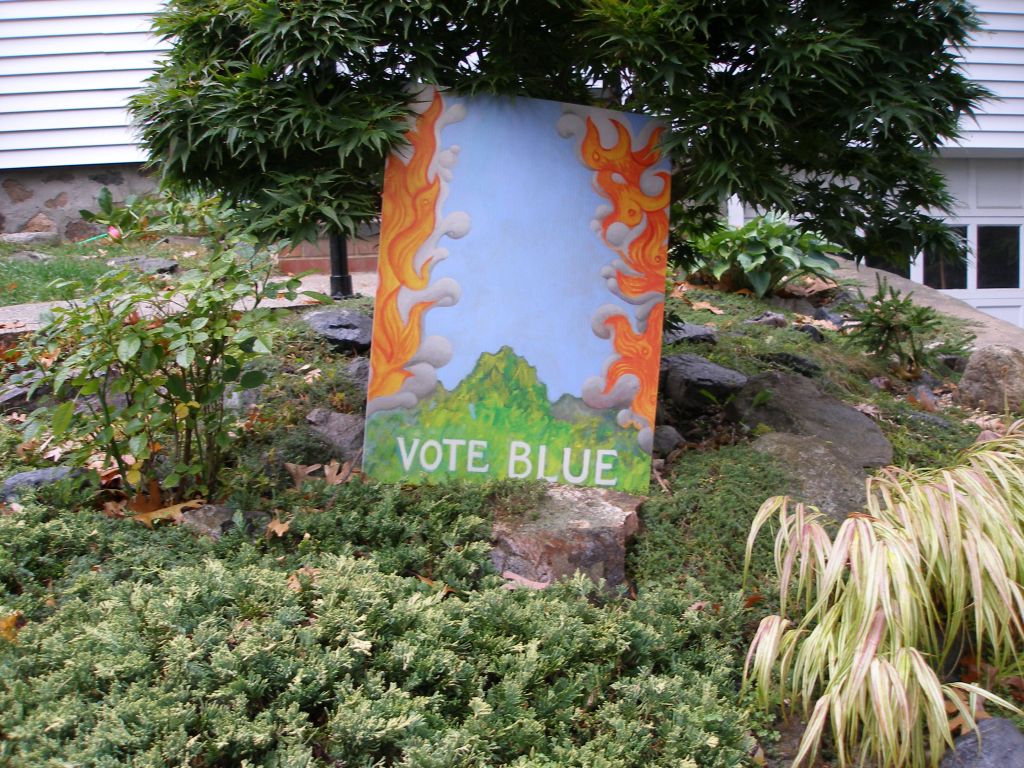
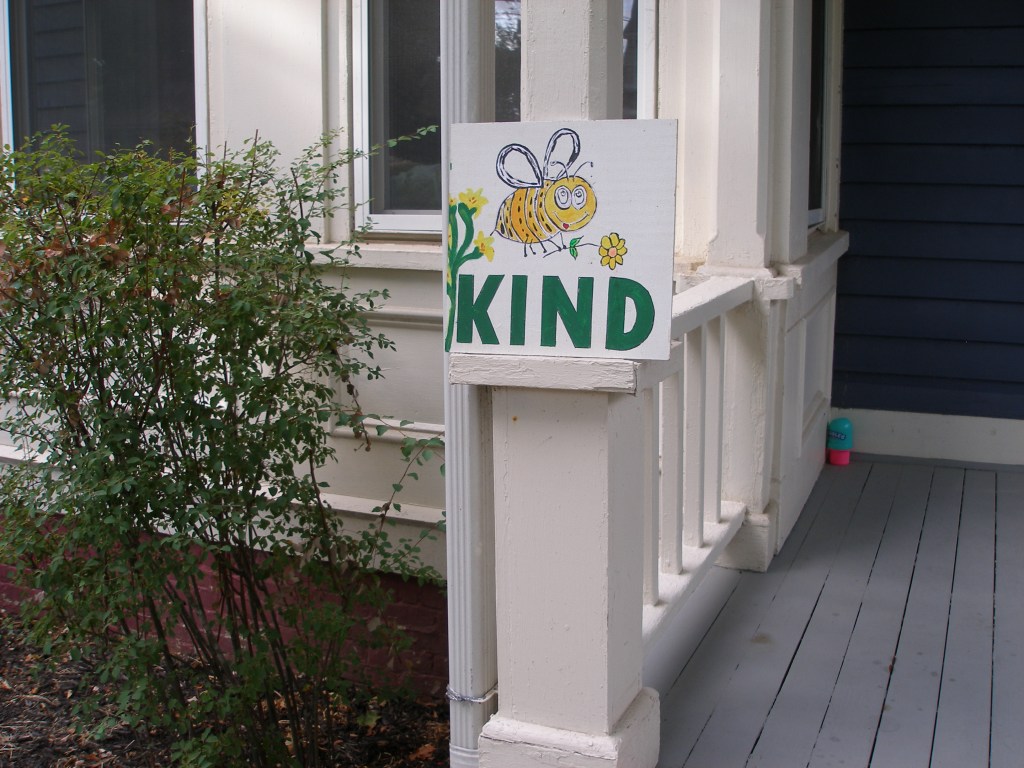
Signs are sprouting up everywhere in my neighborhood near Boston. The presidential election is coming up soon and that would certainly inspire signs. However many serious issues concern us these days. I have never seen so many signs on my morning walks.
This noble and often charming clamoring includes statements of appreciation. It reminds me to never take for granted our precious right to speak what is on our minds. On the other hand, researchers have found some darker implications to what in some cases might be considered virtue signaling.
Most of us have experienced relaxed conversations that just seem to flow, perhaps in a setting where nature is on view like the one in the photo or around the kitchen table. Peace descends and we feel whole and seen.
Often, we are distracted or caught up in immediate concerns. We lose track of that potential to warmly connect and relate. Avoiding cycling on issues that concern us can be difficult enough when we are on our own. Maintaining calm awareness while interacting with others can be particularly challenging.
Insight Dialogue practice provides support to bring tranquil awareness to the interpersonal domain. First one person speaks what is arising in the moment on a designated topic while the other listens silently without commenting and then the roles are reversed. There may be an additional timed period with no separate speaker and no separate listener. Pausing allows time to discern what would be beneficial to say as well as time to deeply take that in and gain new understanding from what is shared.
Insight Dialogue’s guidelines create the safety needed for evolving trust and authentic sharing from the heart: Pause, Relax, Open, Attune to Emergence, Listen Deeply and Speak the Truth. It becomes clear we are all vulnerable and that we also have great power to support each other just by how we listen.
This video of Phyllis Hicks facilitating an Insight Dialogue practice shows this supportive energy. You can see the openness, authenticity and caring connection in the responsive body language of the participants. More of Jeff Klein’s sensitive videography can be seen at his website.
Gregory Kramer developed Insight Dialogue. His website, InsightDialogue.org, includes information on each of the Insight Dialogue guidelines as well as opportunities to experience it for yourself.
The Insight Dialogue guidelines honor dignity; attentive listening meets disclosure for all participants. That makes it easier to truly show up and pay attention to what is said including by oneself. Participants are better able to perceive the preciousness of our sensitivity to each other and learn how to bring greater compassion and creativity to all interaction.
Because of the vulnerable investigation of experience, difficult emotions may arise at times. David Treleaven provides guidance for recognizing and addressing adverse reactions that can arise with any form of mindfulness practice.
In my experience, most of those who try Insight Dialogue appreciate the careful attending that goes well beyond the rushed and distracted quality of much everyday interaction. With practice, I found I could bring that same supportive energy to any conversation, and that brought a whole new ease and joy to my life.













 Radiant Refuge