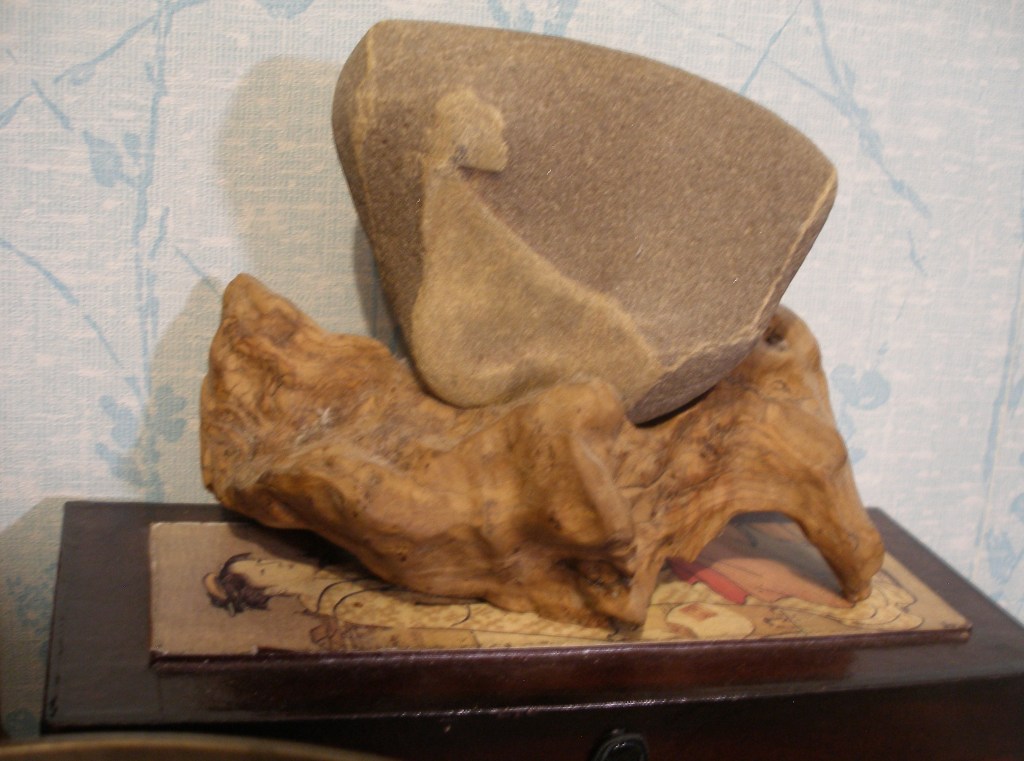
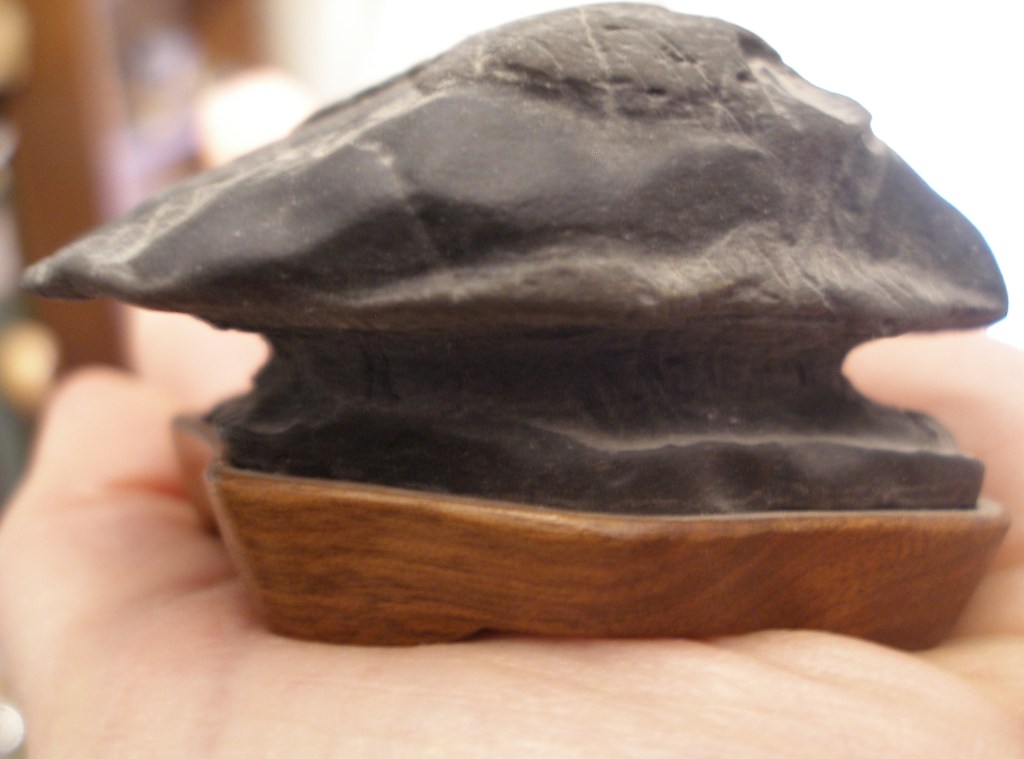
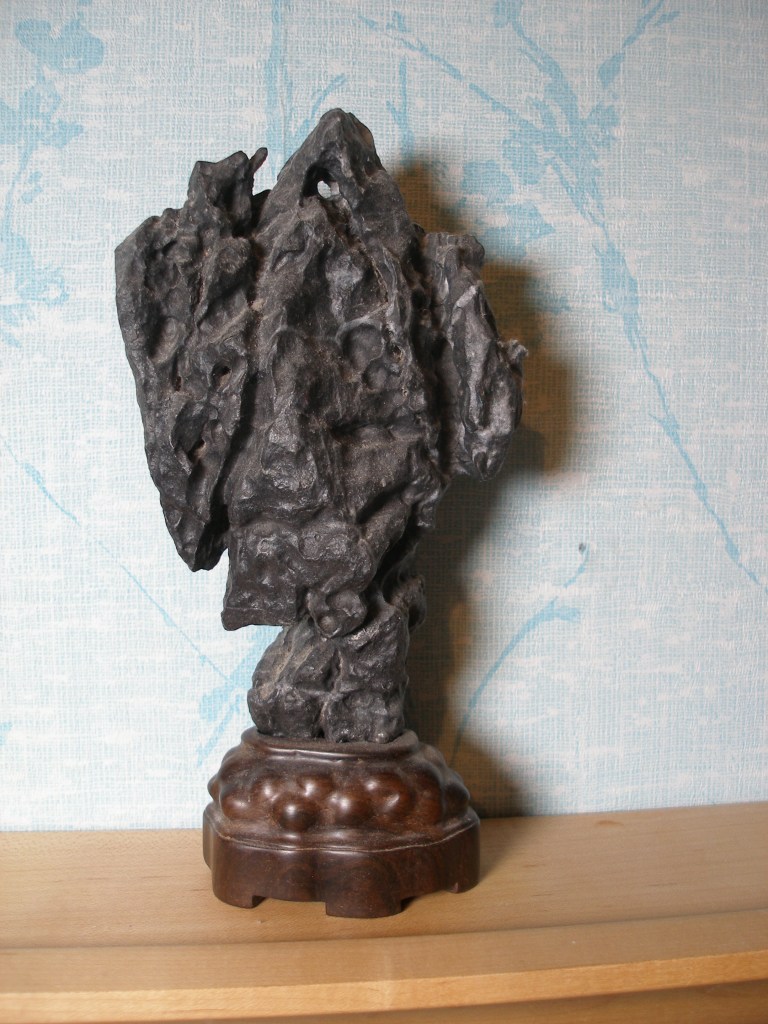
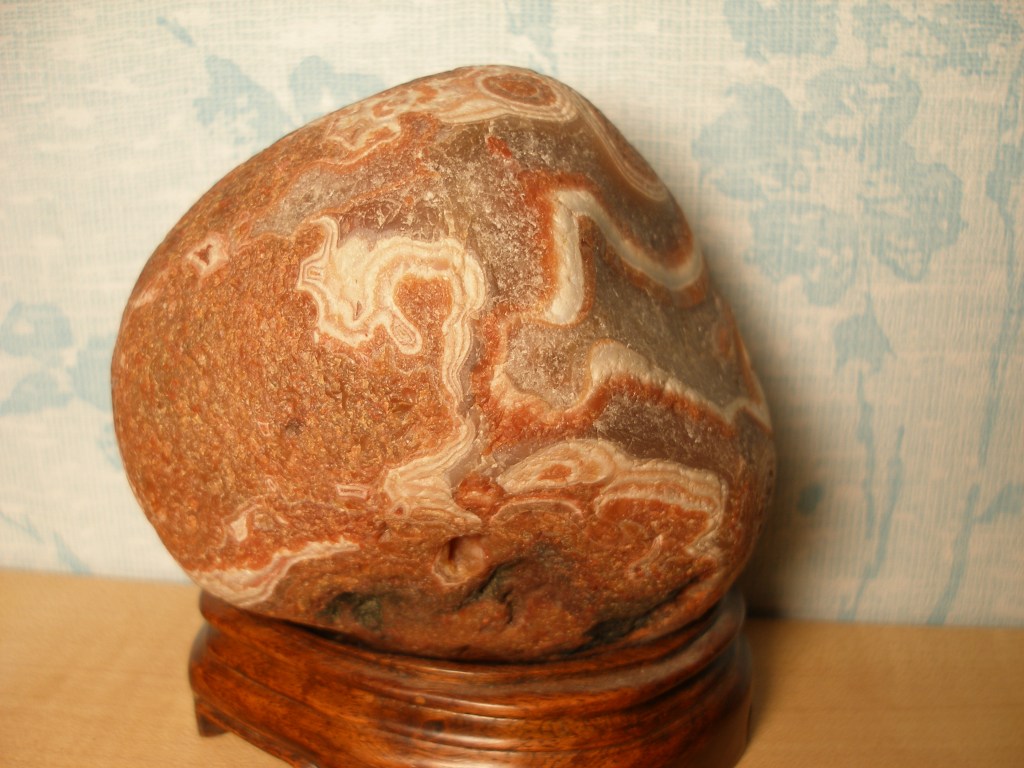
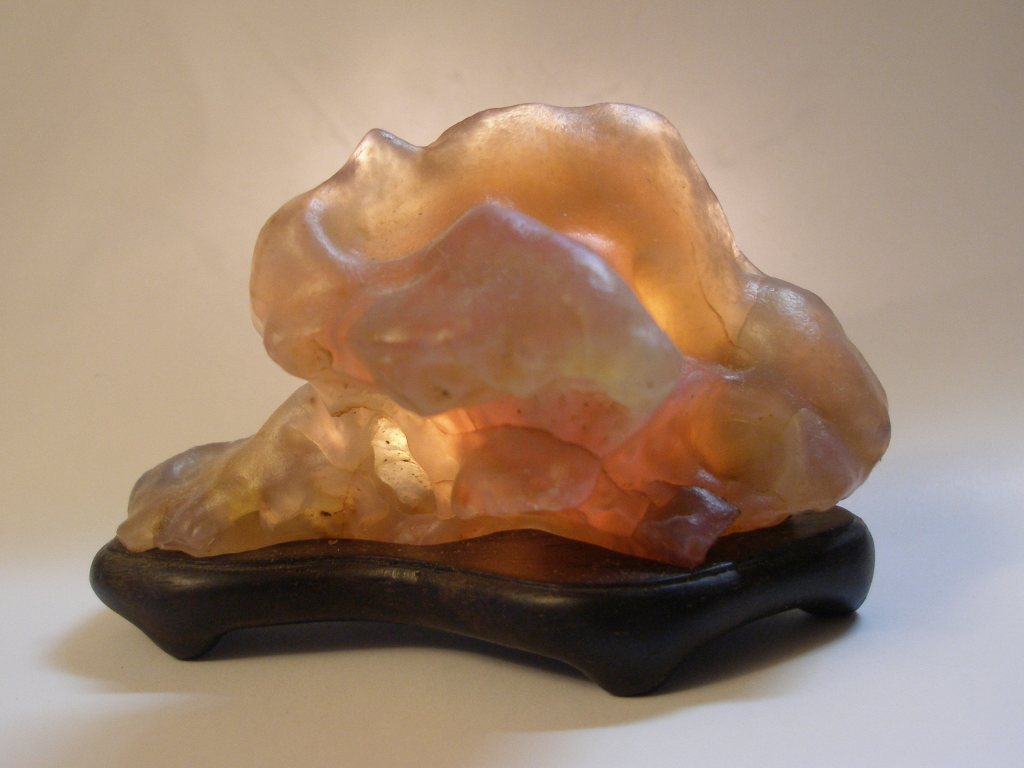
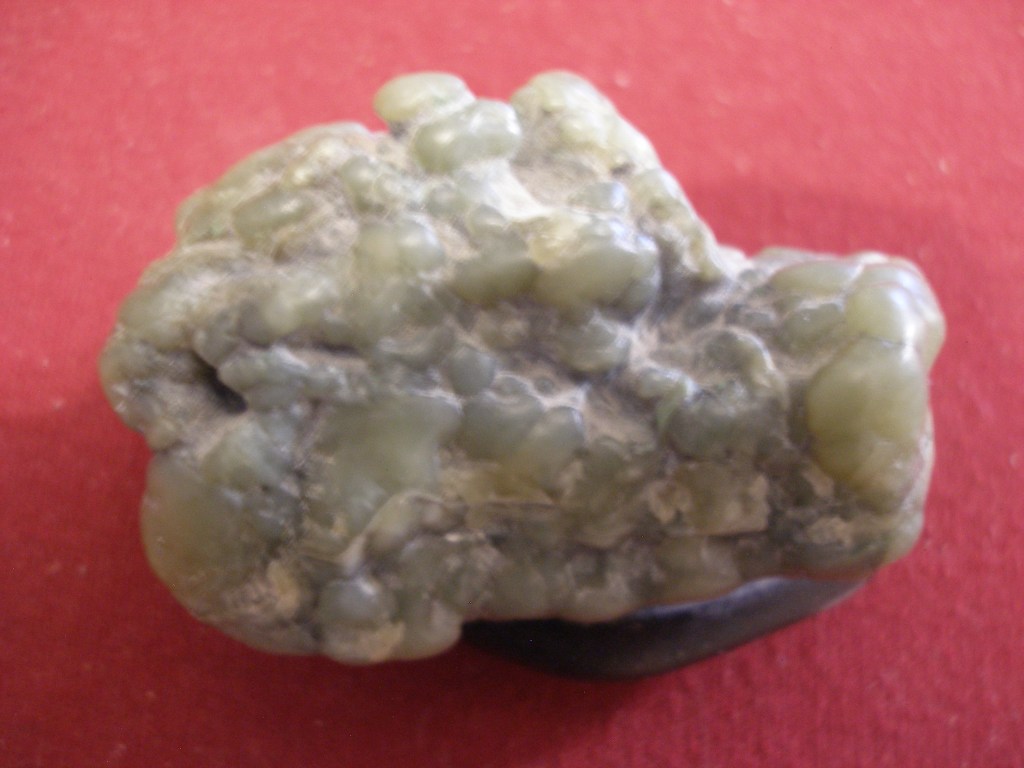
After many years of collecting evocative stones, somehow I managed to acquire an oriental princess, 3 hut stones, a pontificating wizard holding his book of spells, and no less than 4 dragons. The ones on stands are viewing stones. In two cases, I noticed “mythical” images in polished jasper slabs.
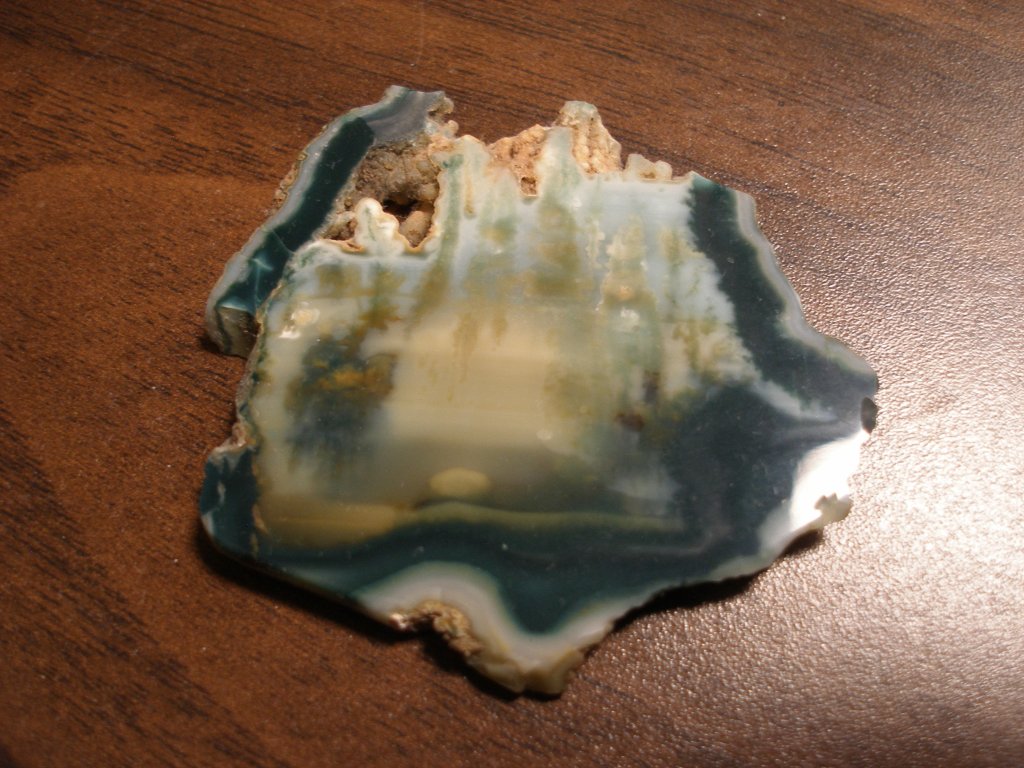
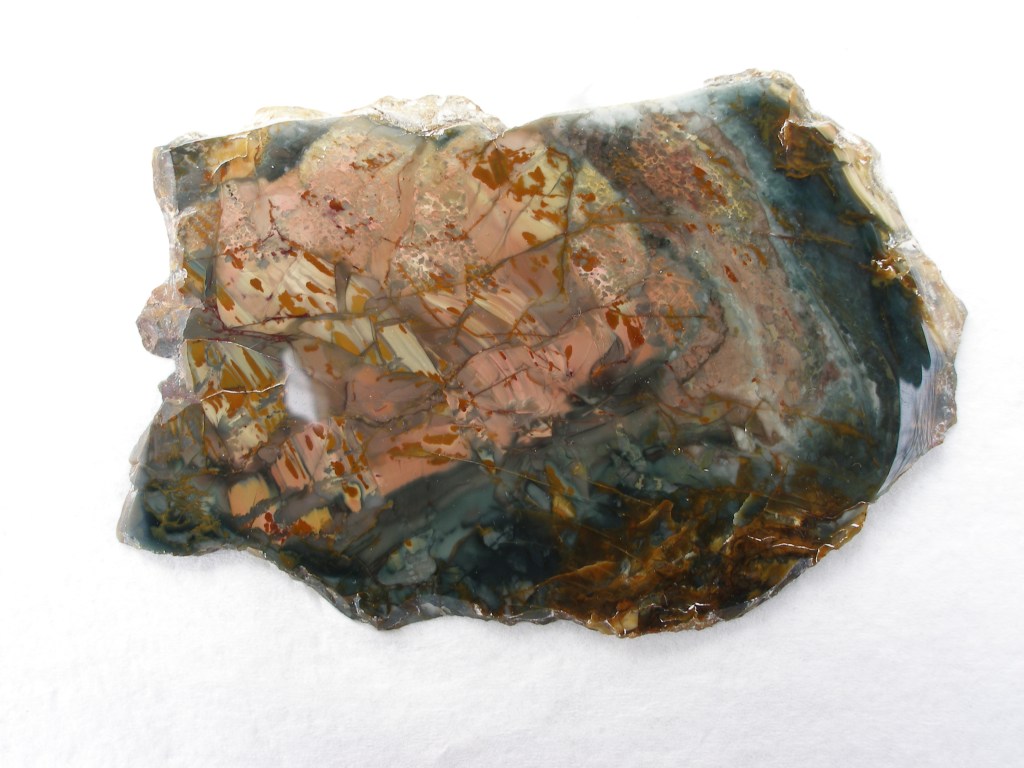
A small Blue Mountain jasper slab has a whole scene – a hut beneath some trees on the lower right and an oval (dragon egg?) by what appears to be a body of water.
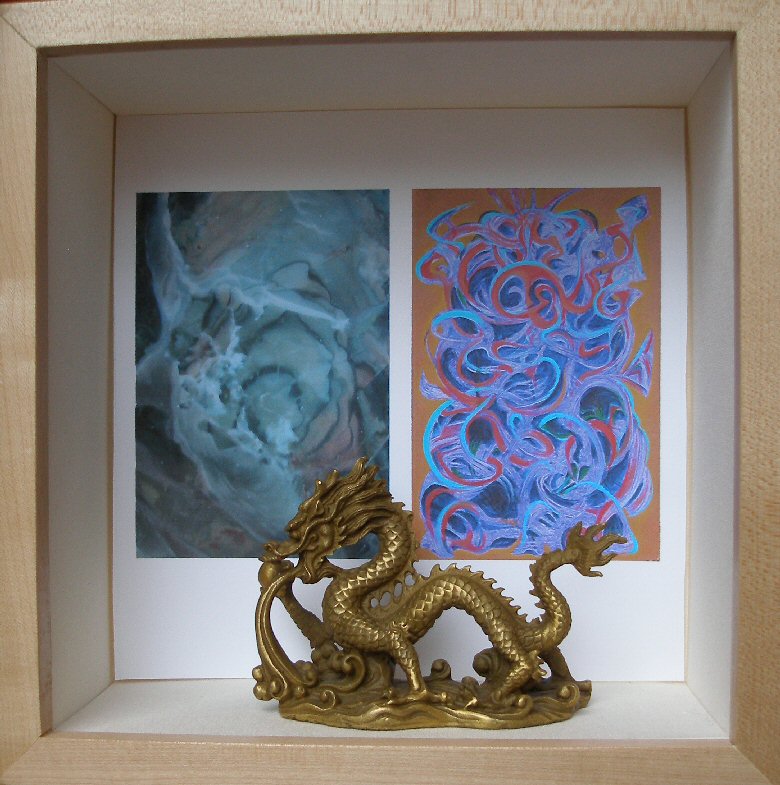
Thom Lane created a painting inspired by the dragon energy he found in a Morrisonite slab. A closeup of the dragon image in the slab and a photo of Thom’s painting were used side by side in a shadow box that I created for an article I wrote on using shadow boxes to tell stories about stones.
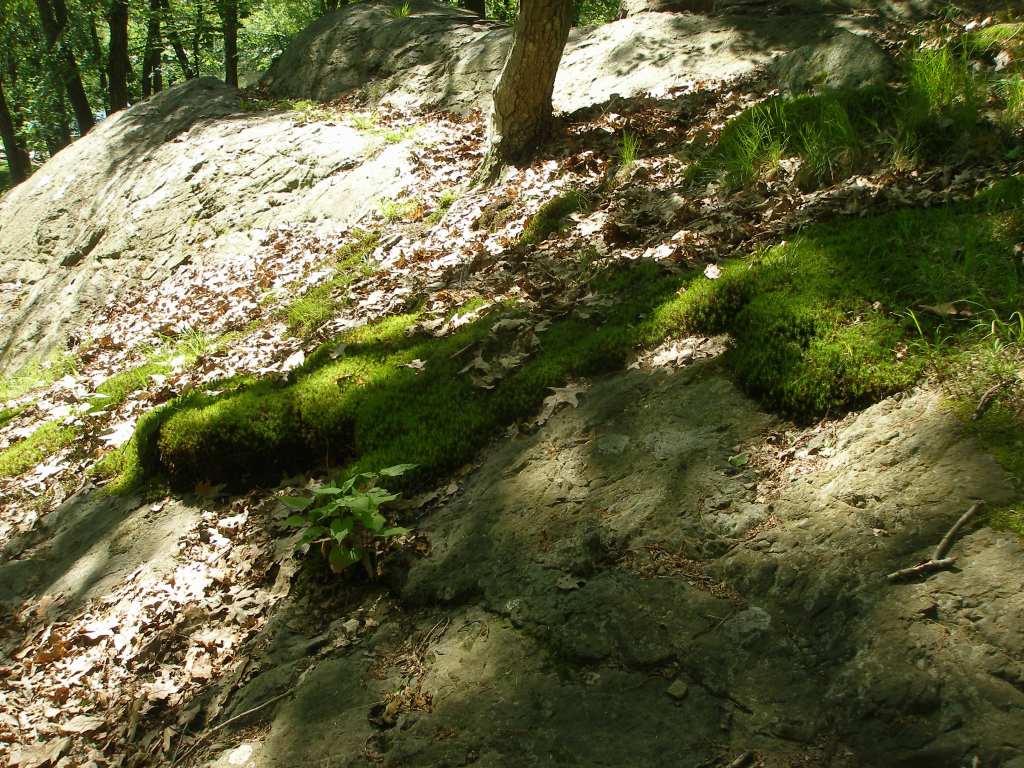
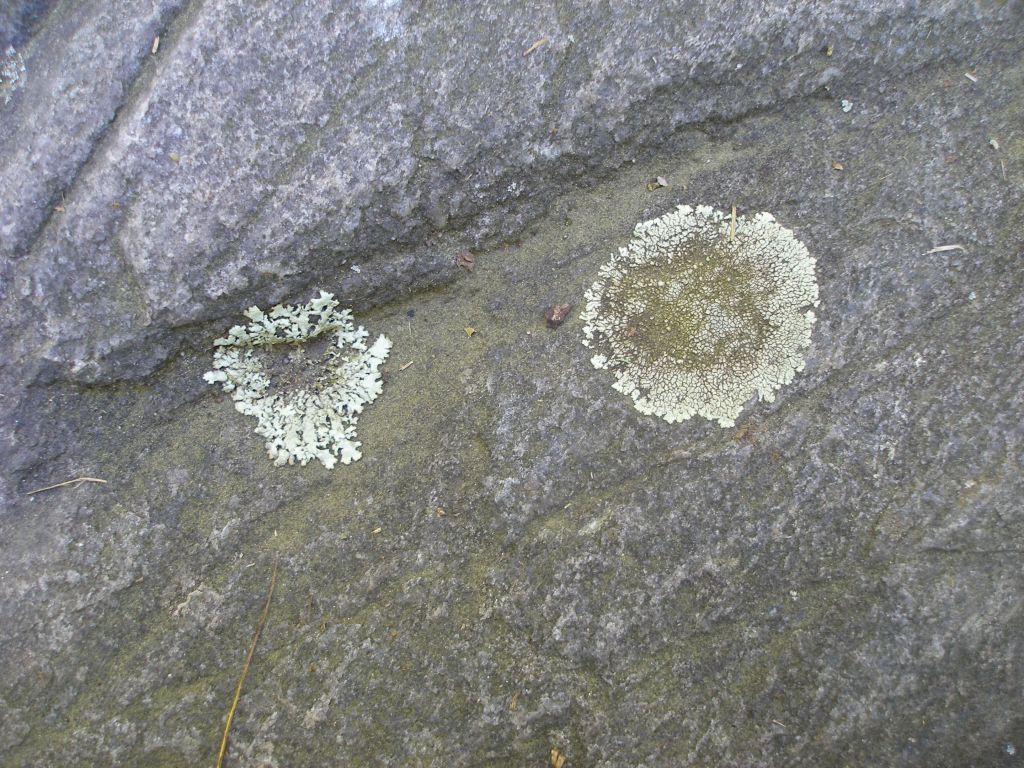
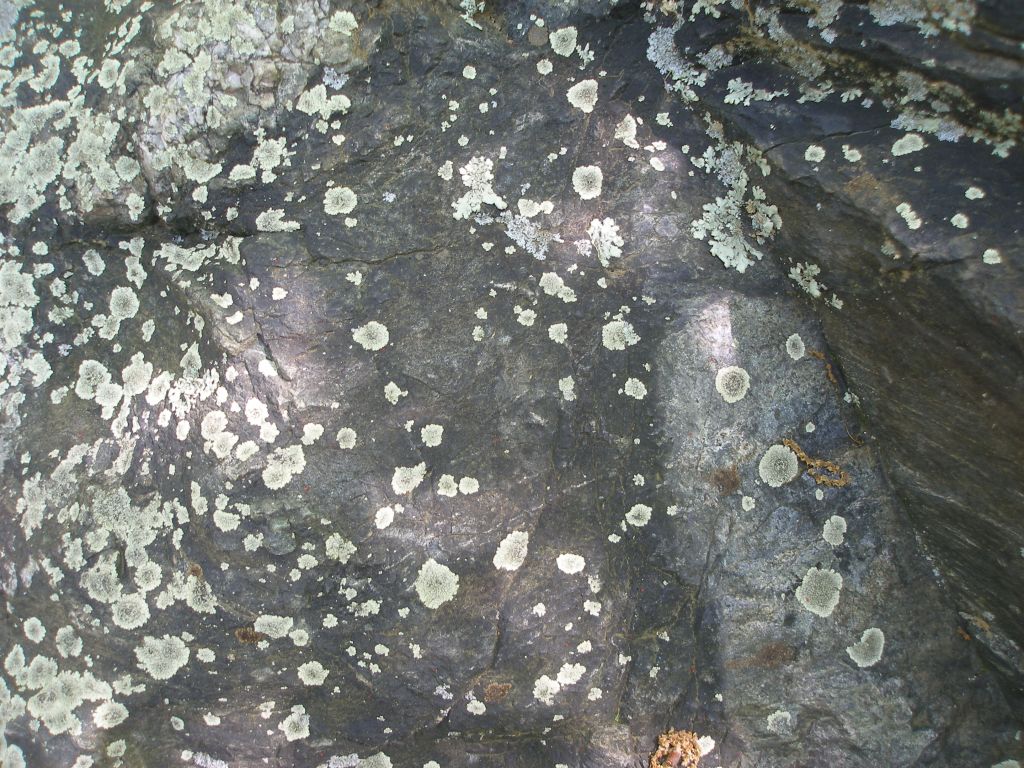
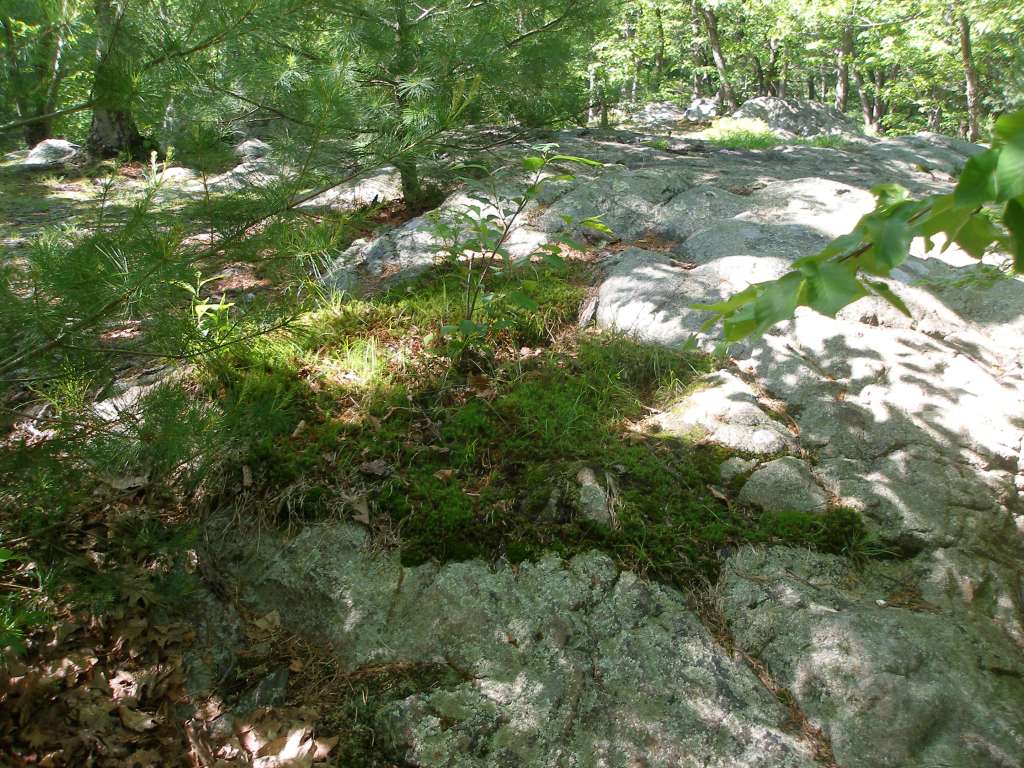
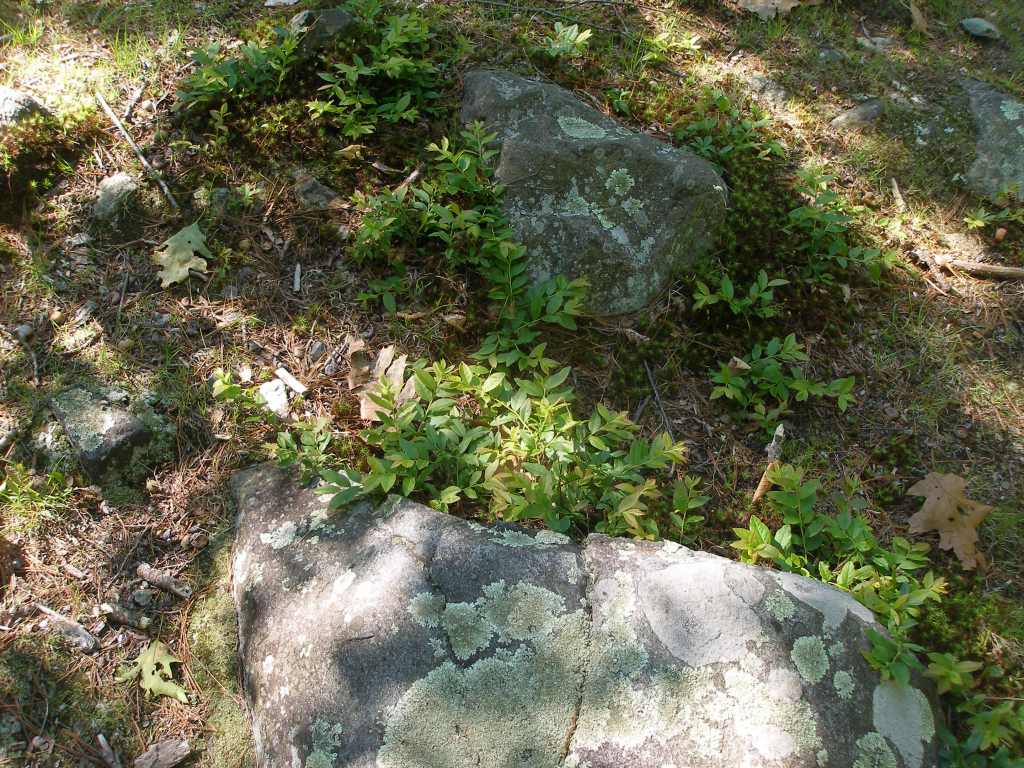
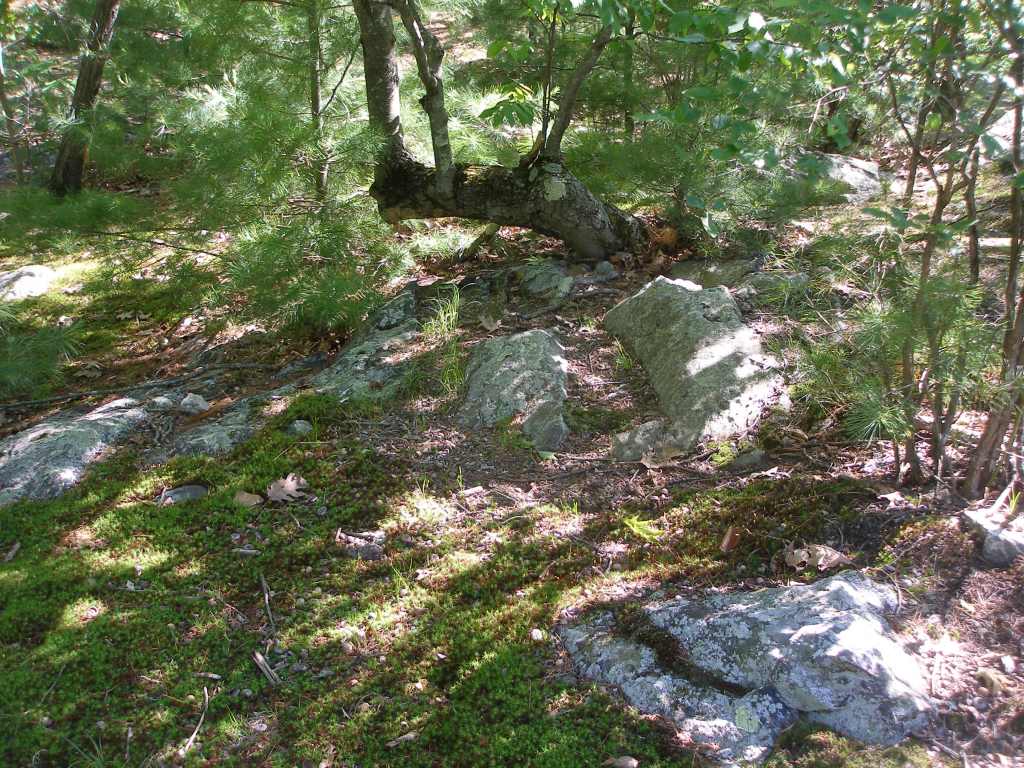
It can happen so slowly we do not pause to notice and tend to take things growing on rocks for granted. Lichens take hold with no need for nourishment. Seeds fall into cracks. Mosses huddle around and move up onto damp places. Blueberries thrive in rocky barrens.
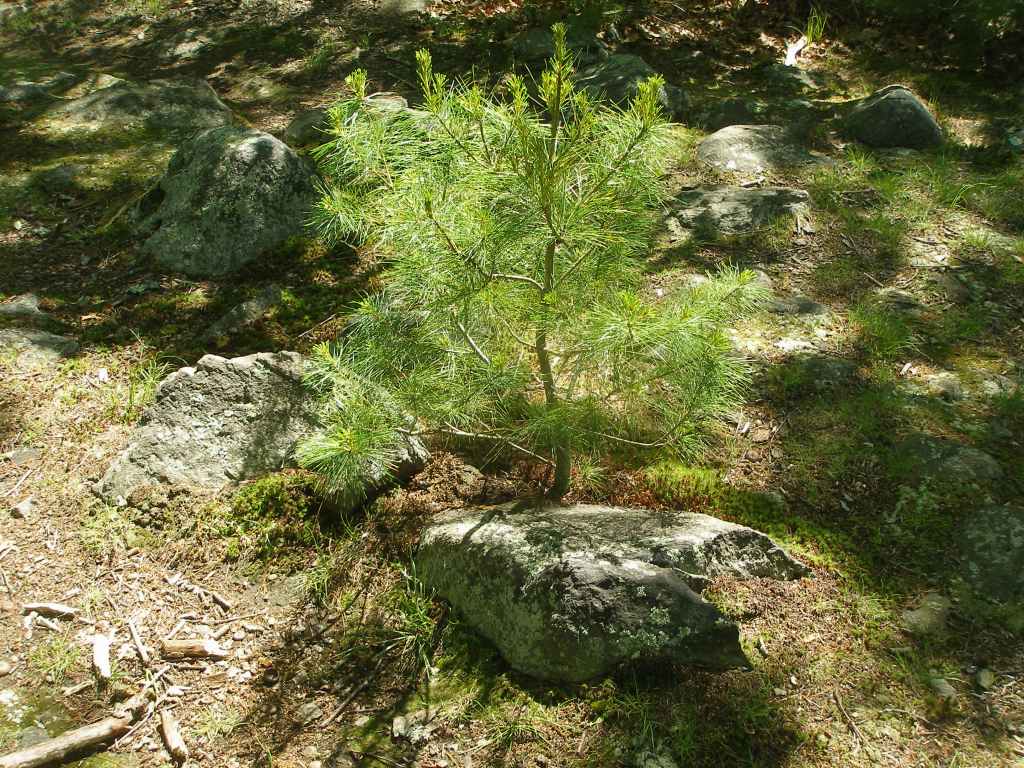
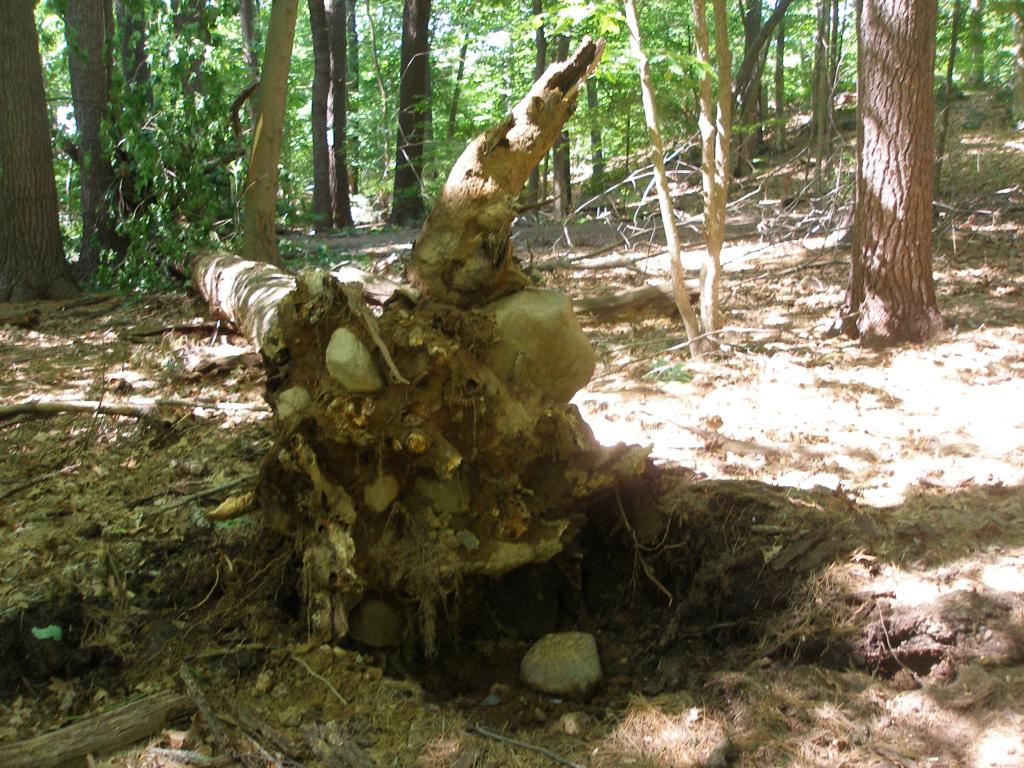
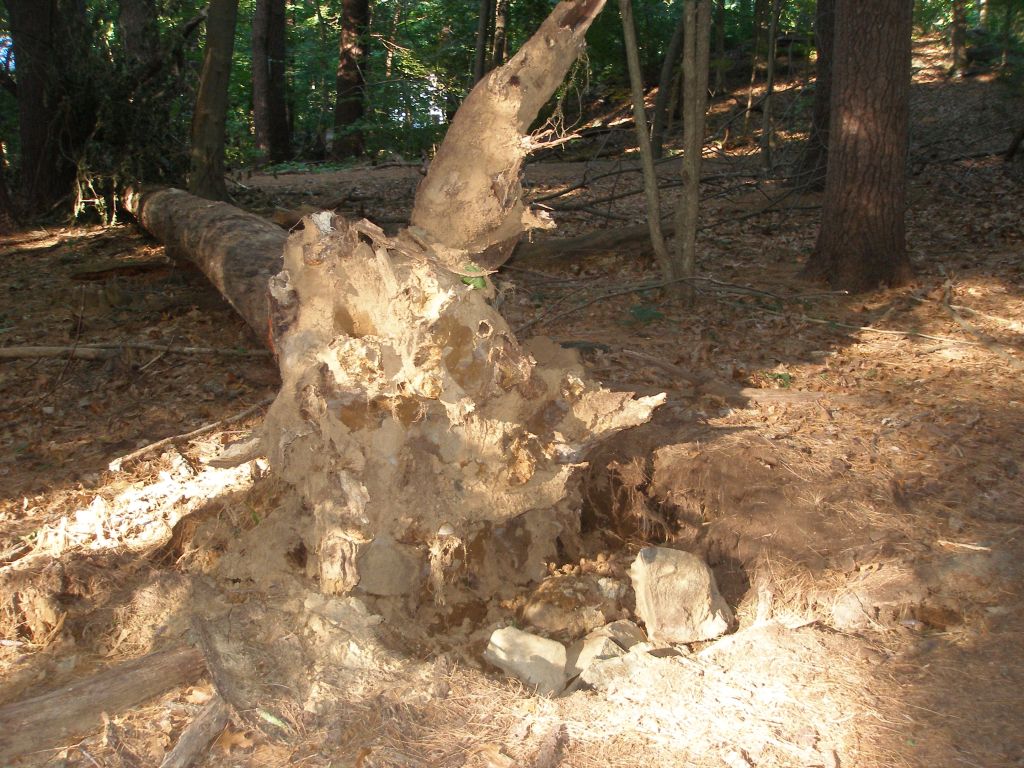
Over time dying biomass builds up in hollows where young trees can take root. And when a storm topples an older tree that managed to grow, its roots may release a number of rocks it once held in intimate embrace.
Rocks have a way of being relatively imperturbable. I like that. Especially in times when it seems impossible to keep up with too much information overload. They just sit there.
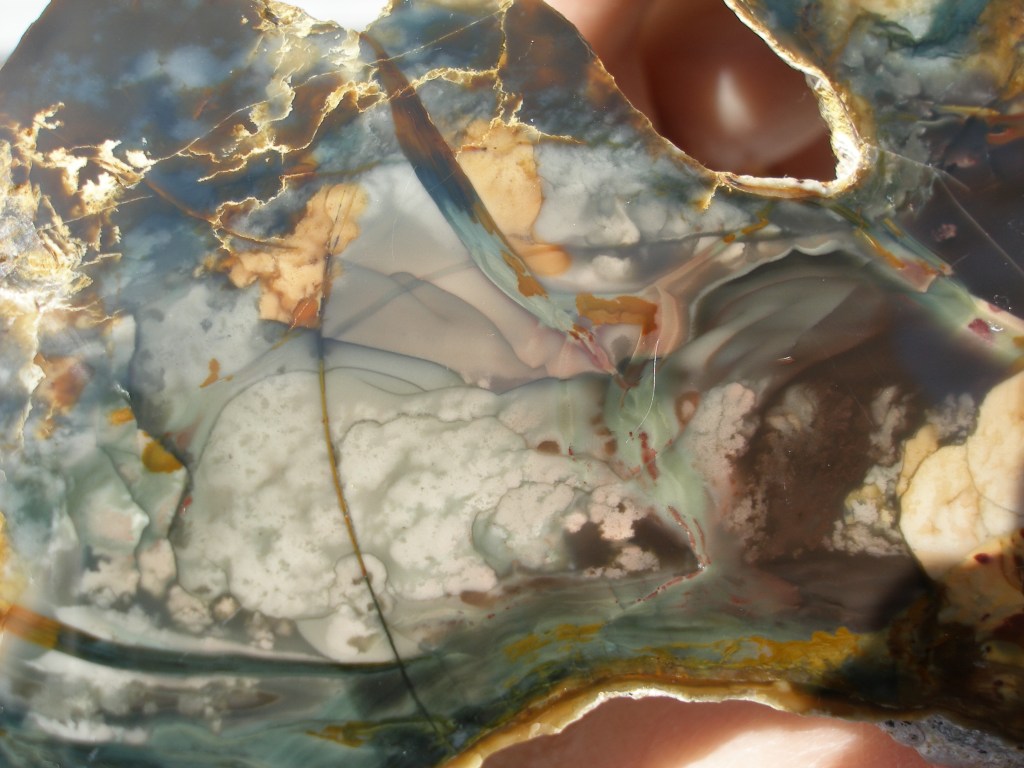
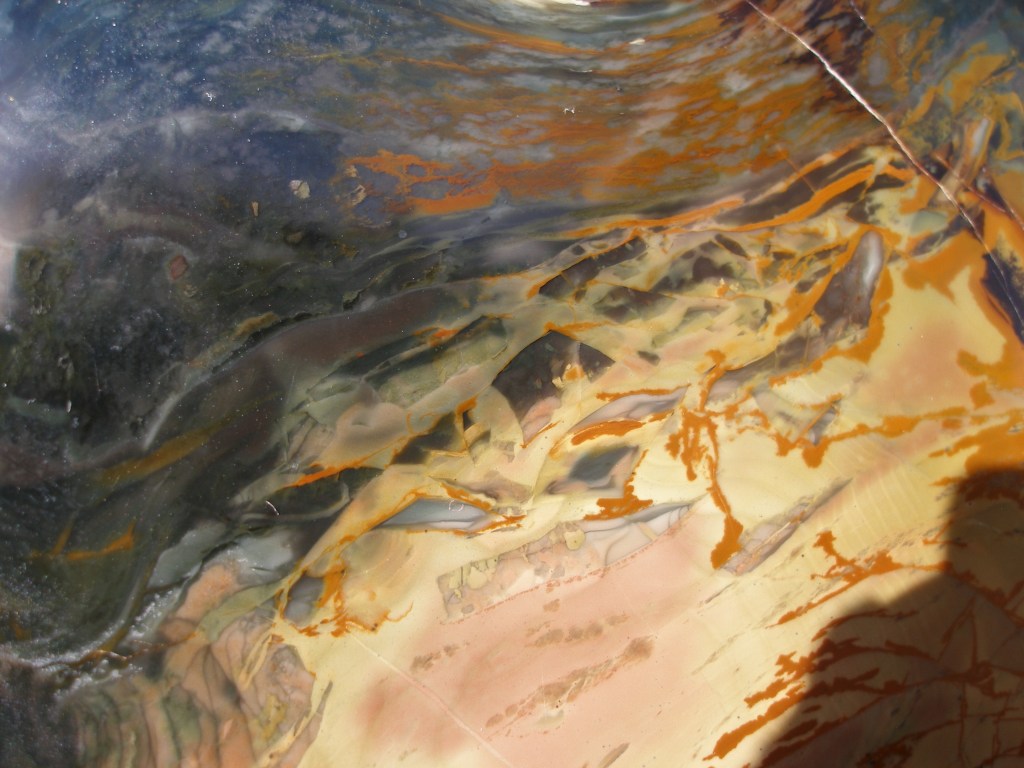
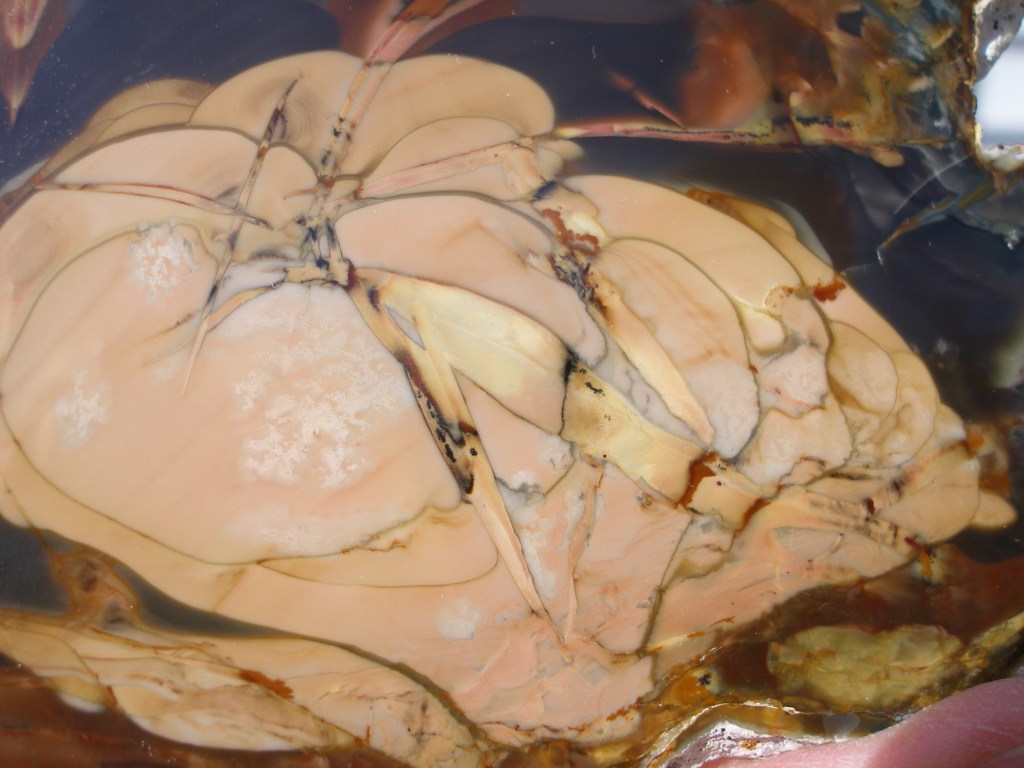
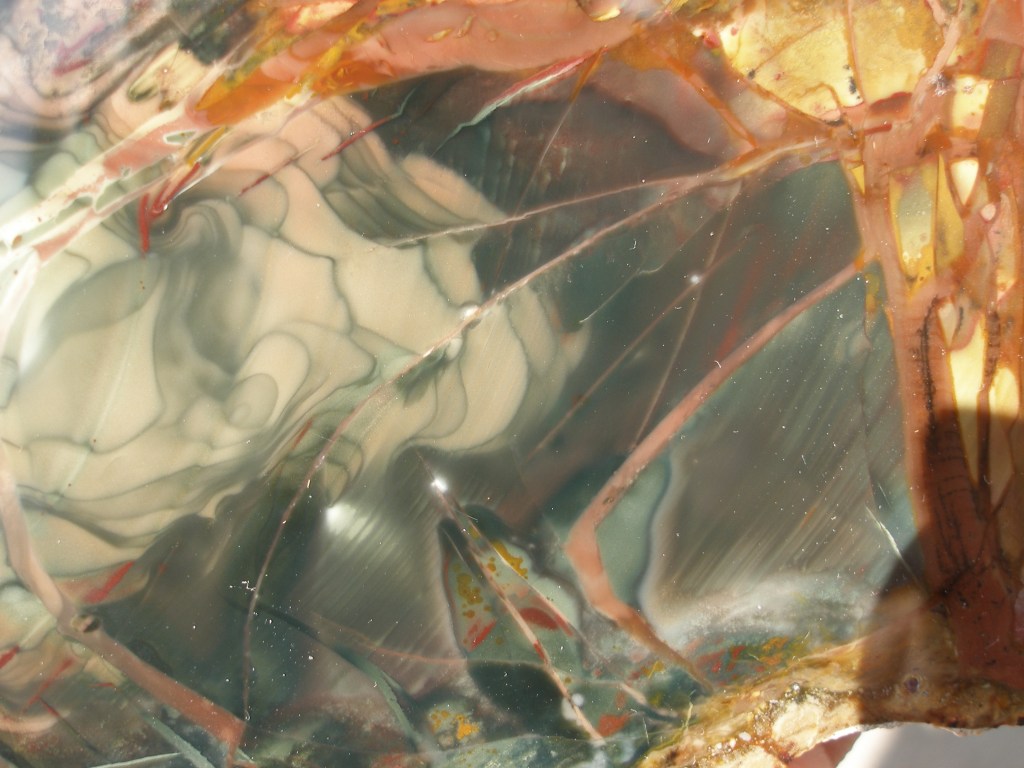
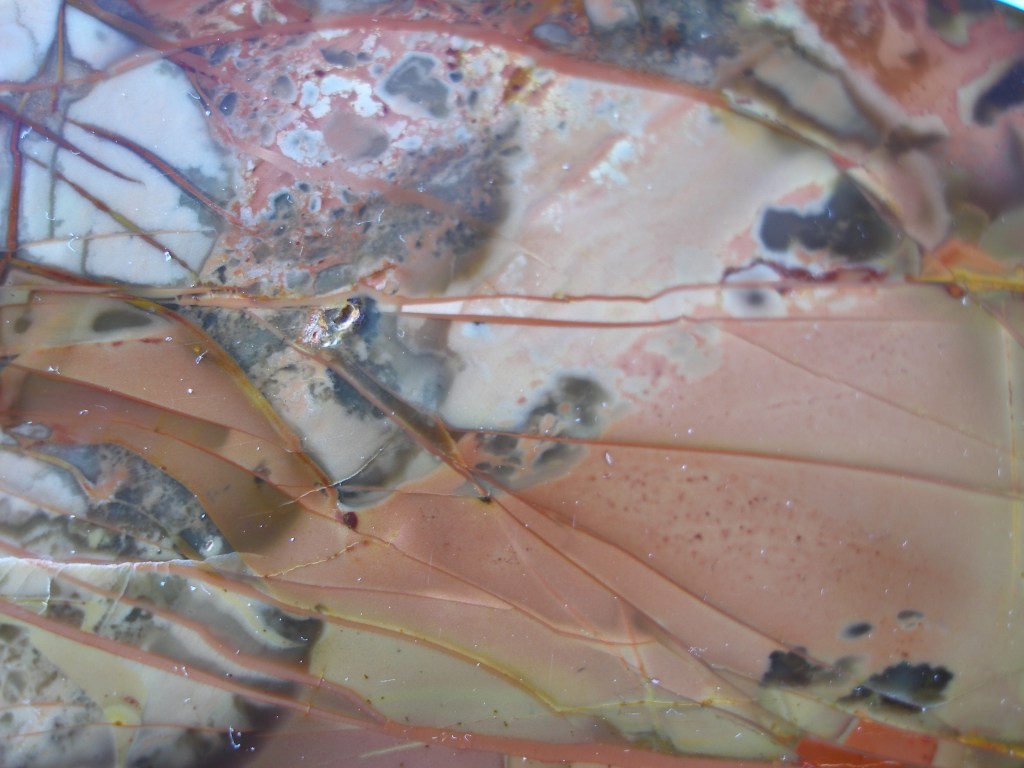
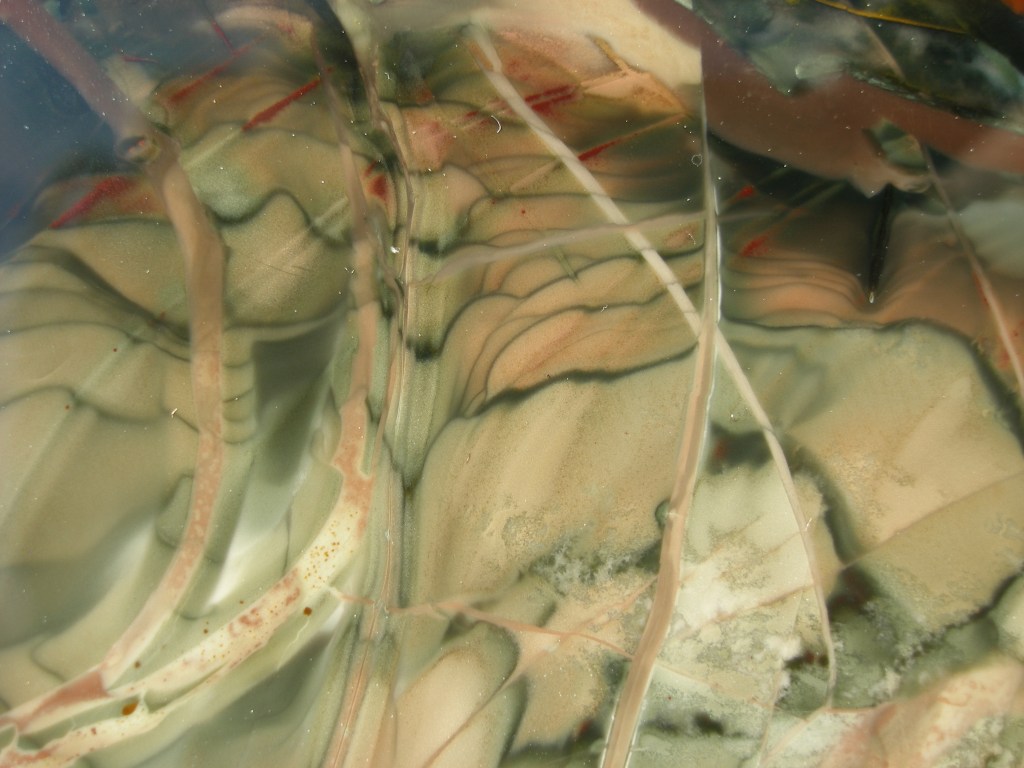
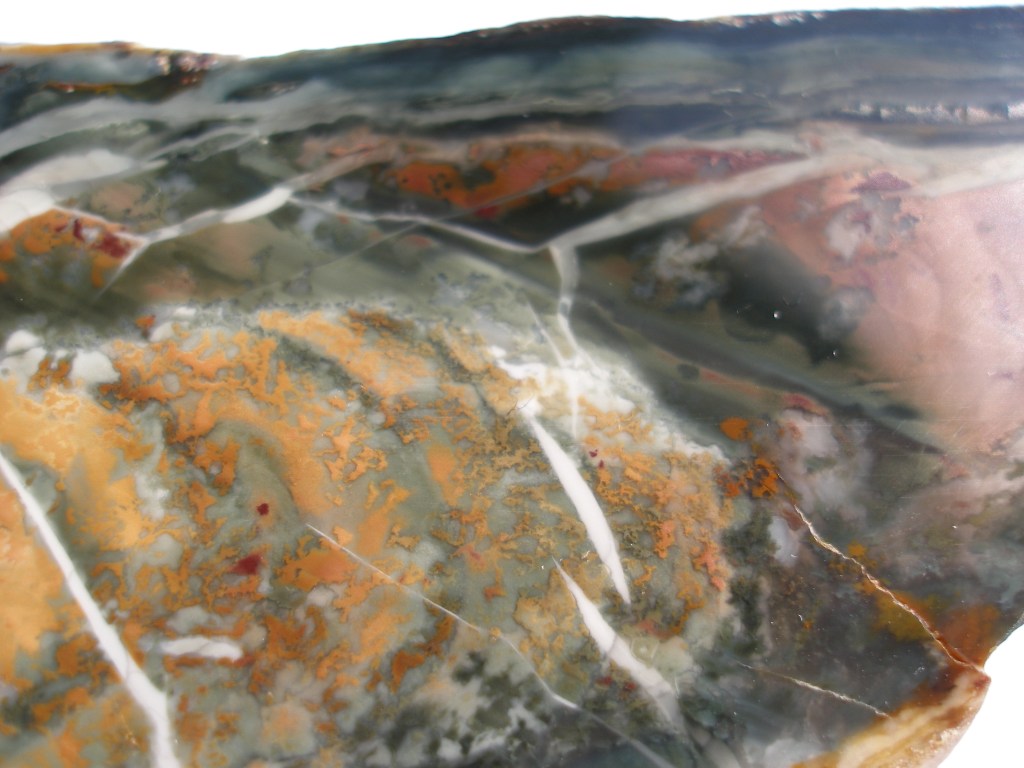
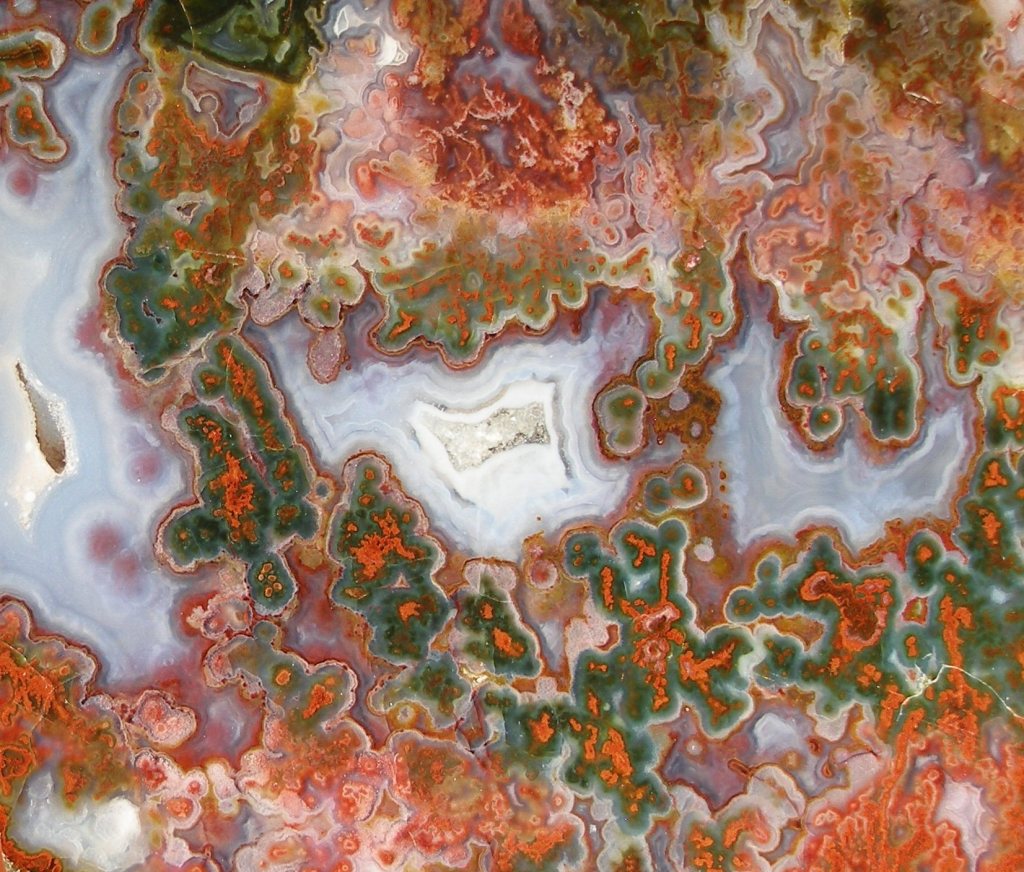
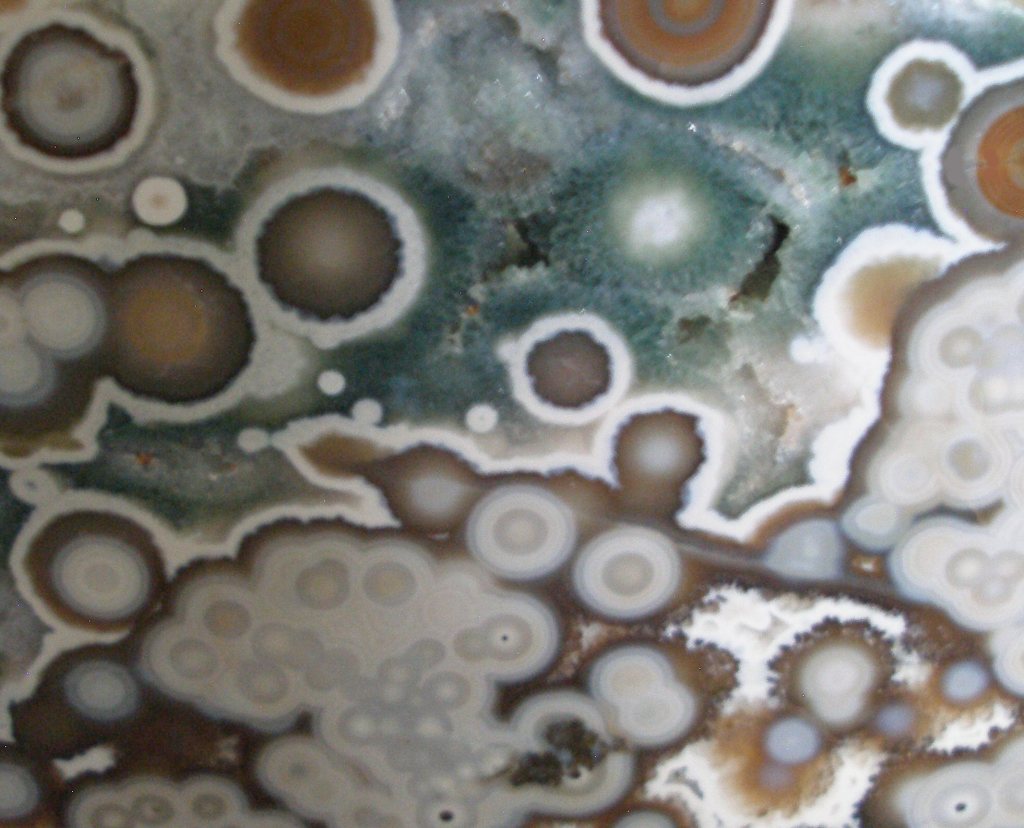
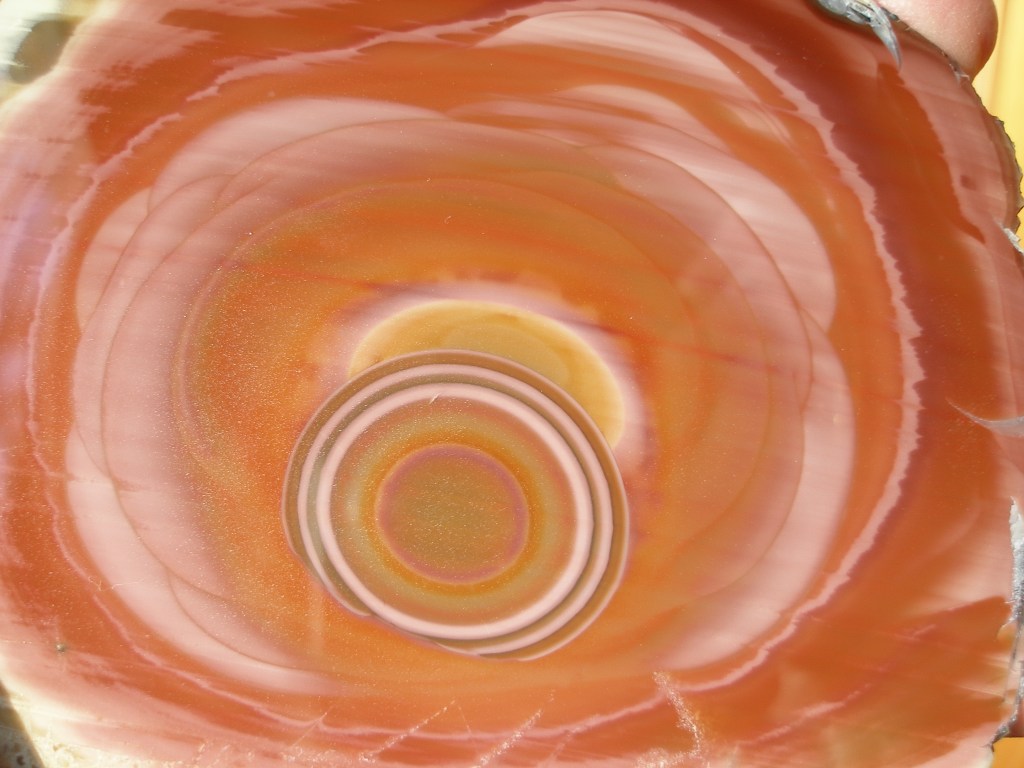
For some reason, they do not seem quite dead though. They strike me as too evocative, too mysterious and too miraculous for that – especially Morrisonite jasper. It contains worlds within worlds; swirling colors, and so many different things happening.
Perhaps it is just me. But why would this jasper show us all this if it were truly dead? Makes no sense.
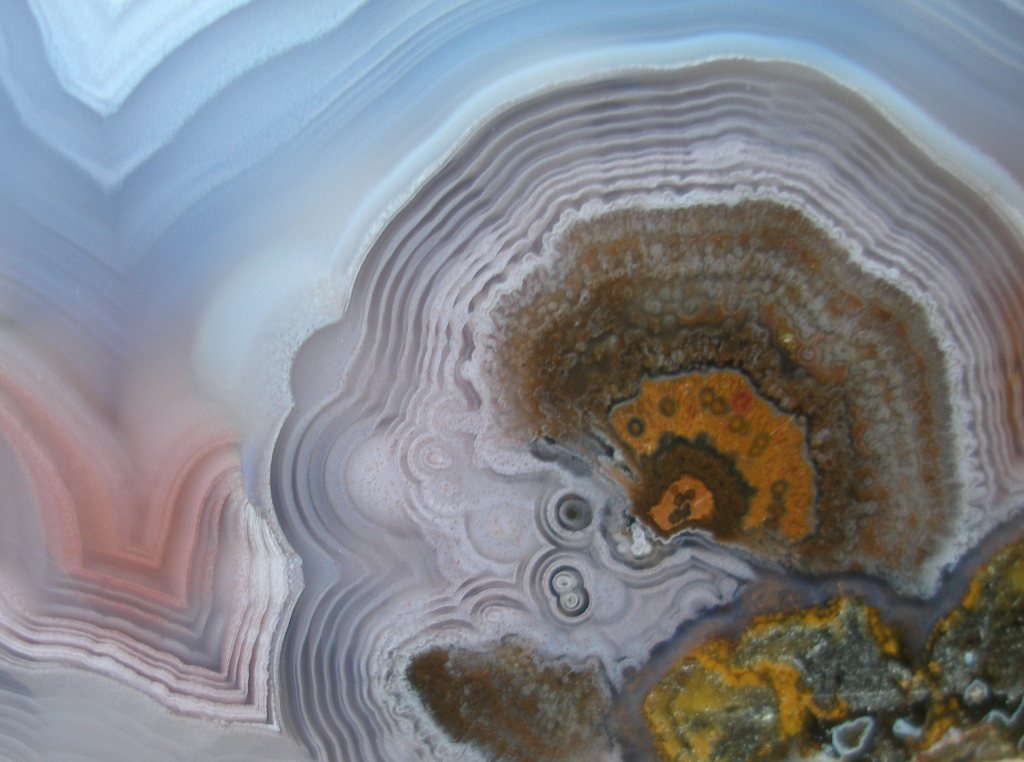
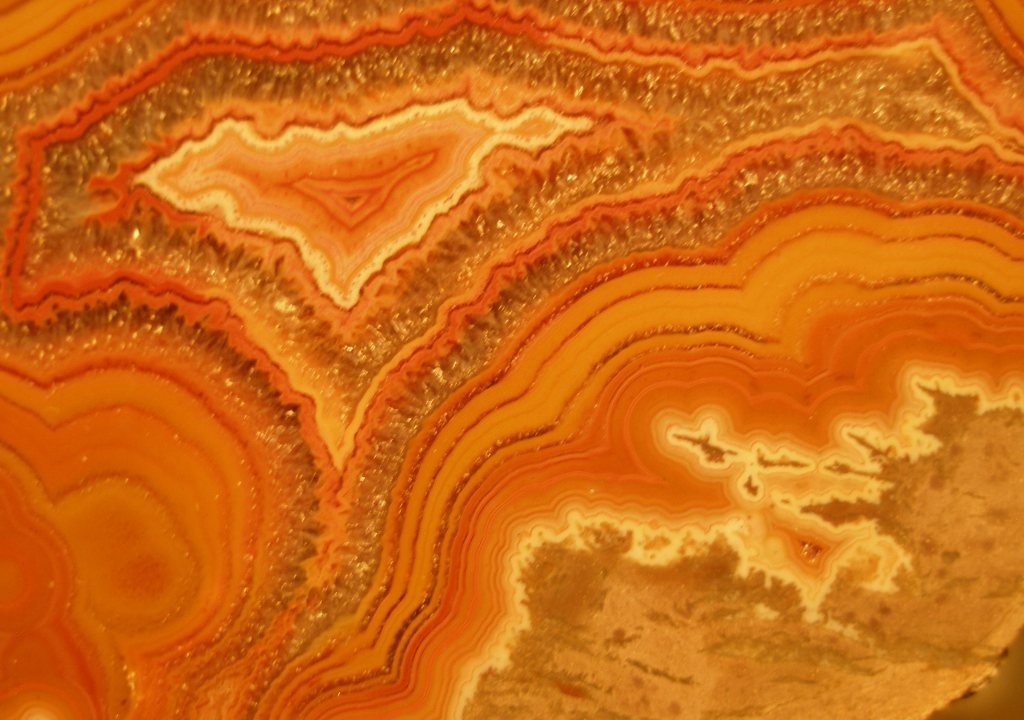
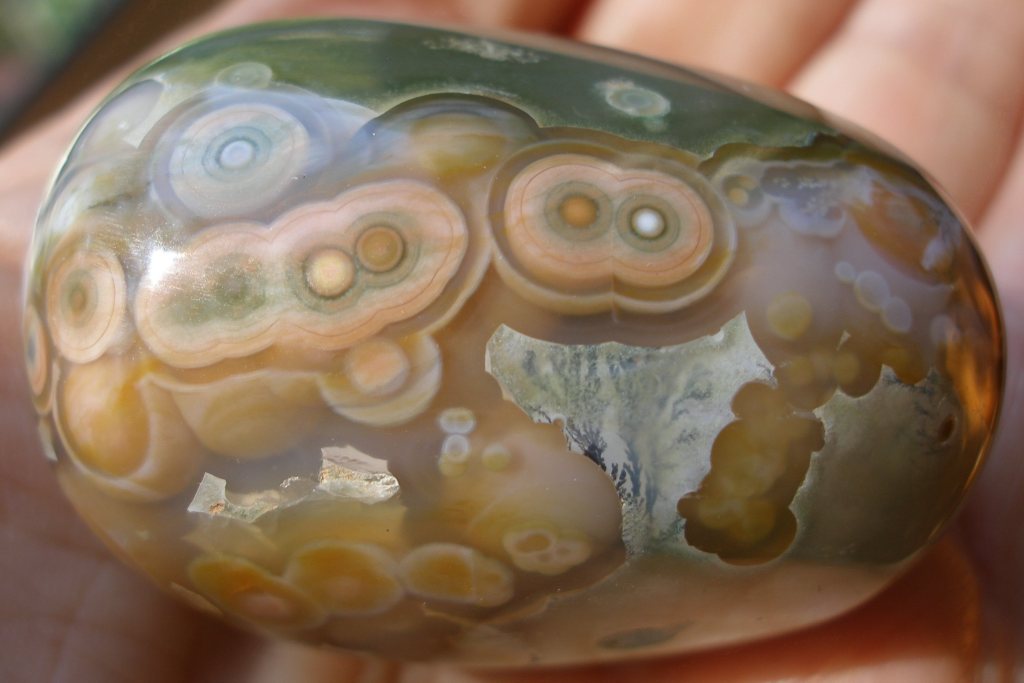
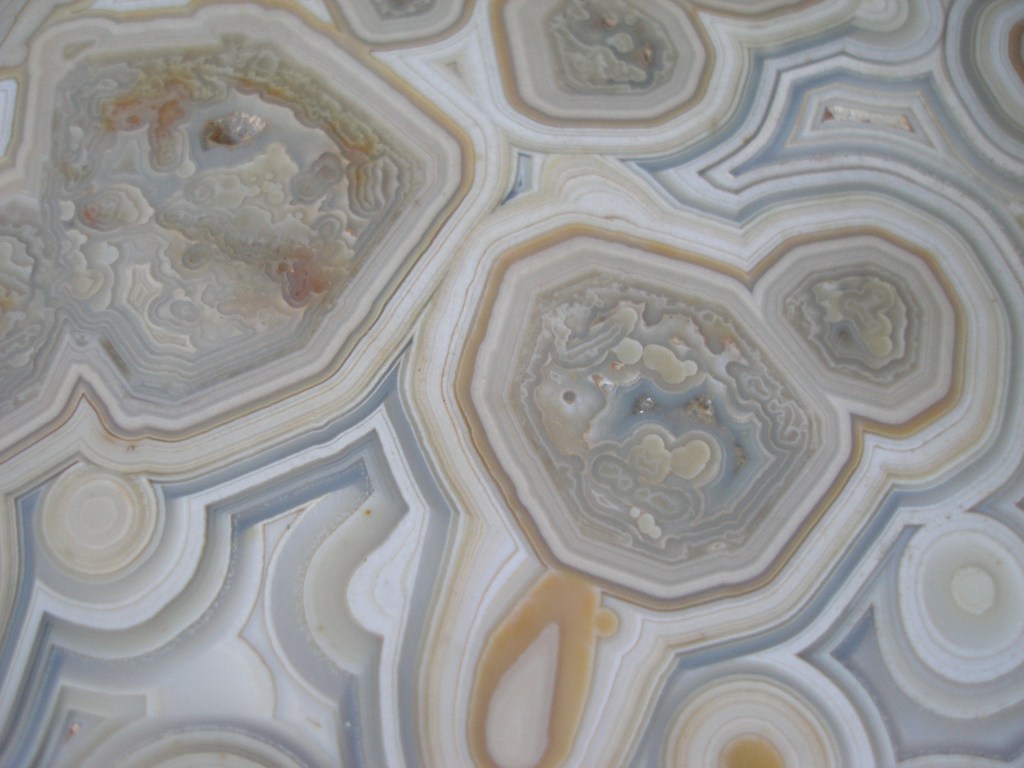
I have always liked all kinds including the ordinary gray rocks that find a home in my garden, but I was not aware of the amazing array of patterns and colors in agates and jaspers until I happened upon photos of them online.
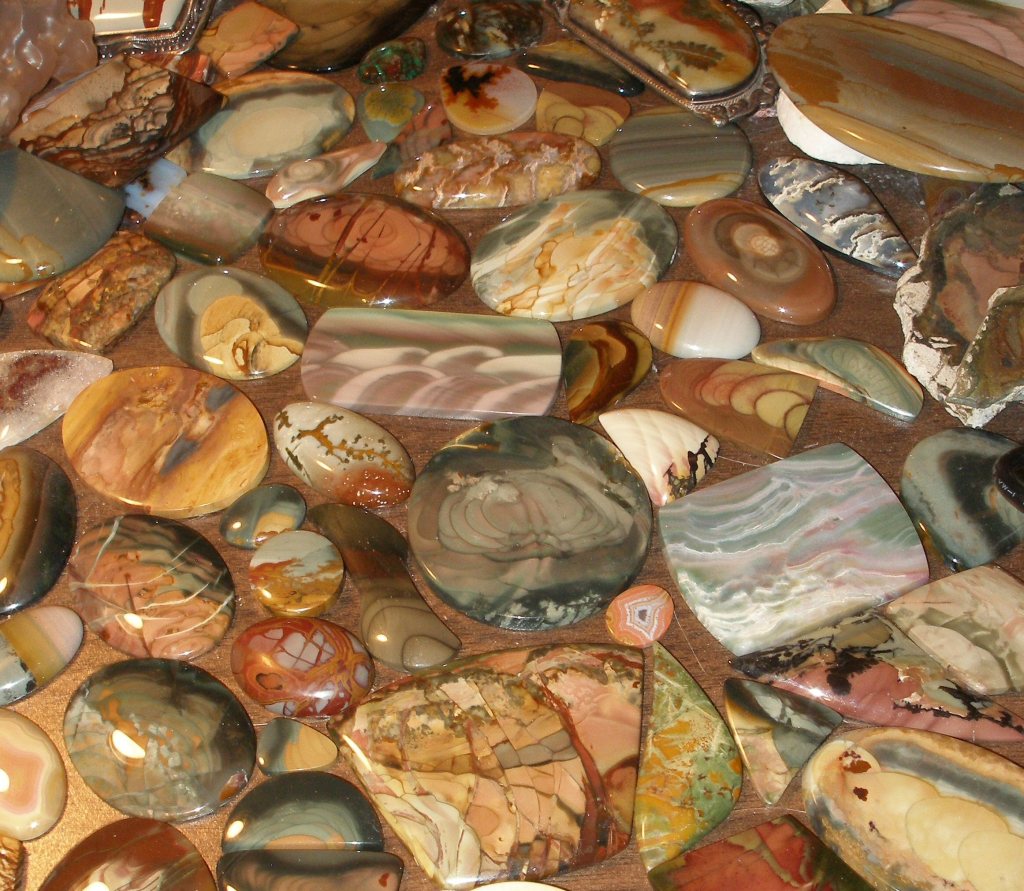
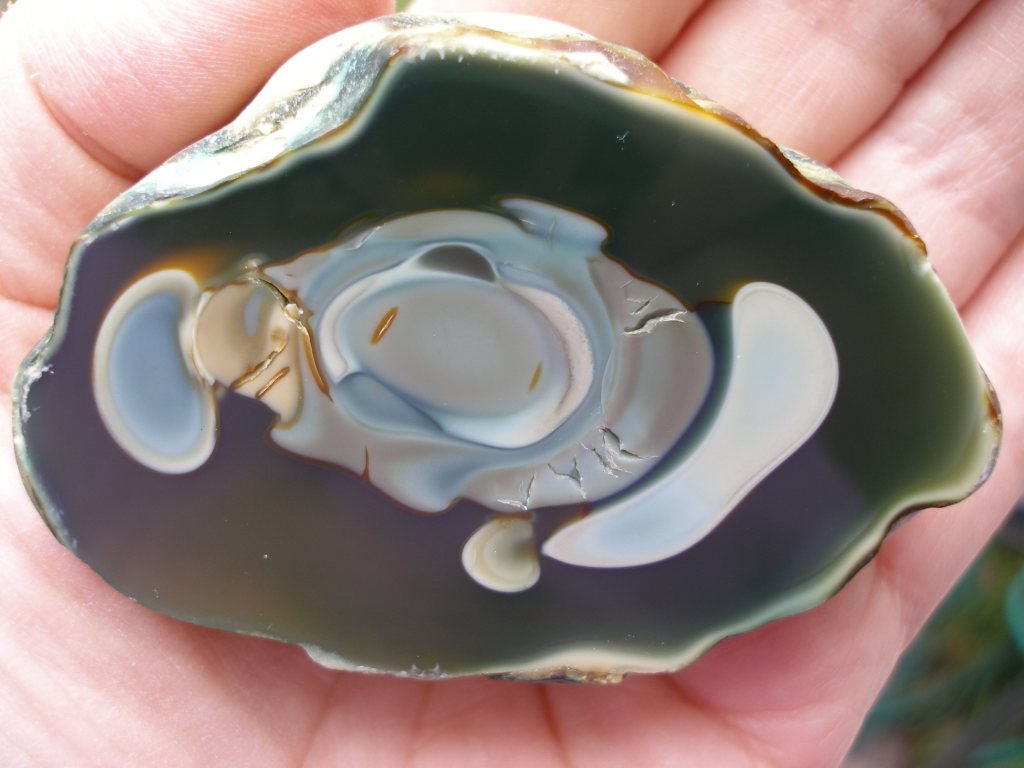
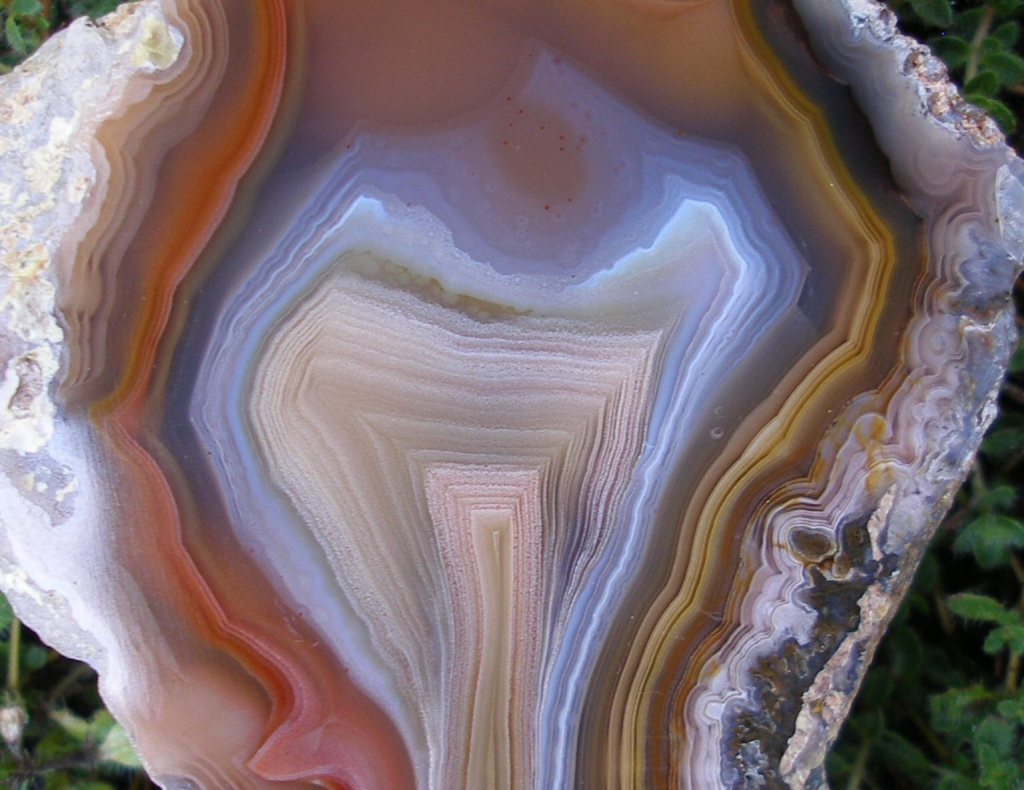
The natural arrangement of colors in individual examples can be quite astounding. Lapidaries make full use of their art’s ability to capture and highlight particularly appealing sections of specimens.
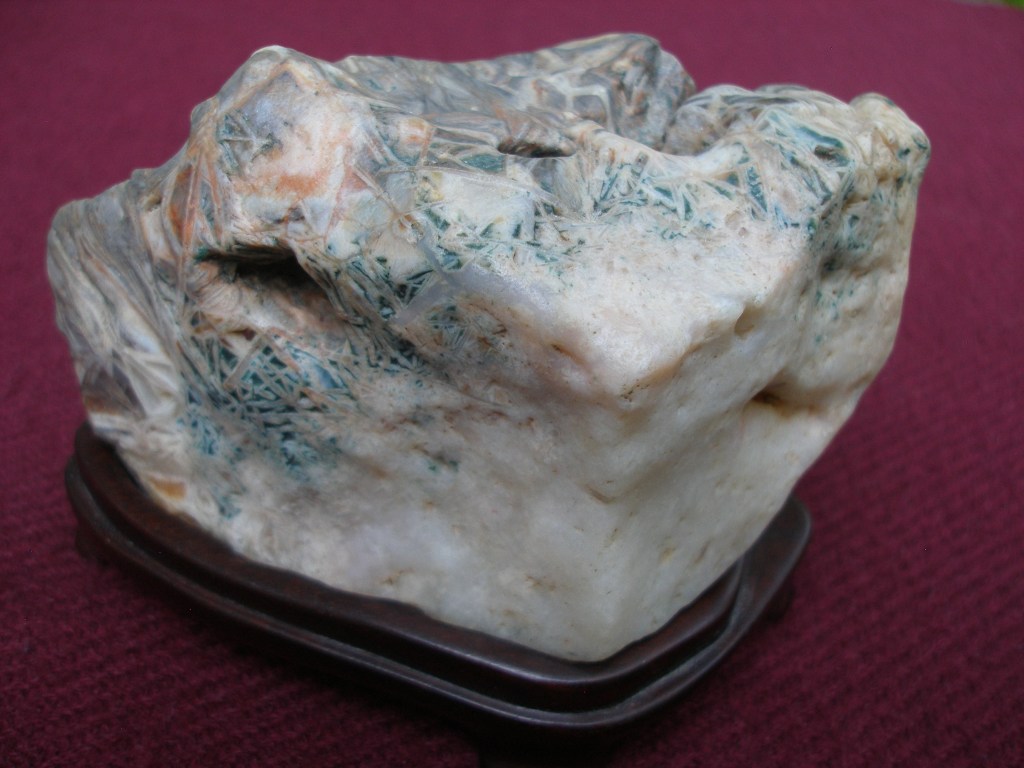
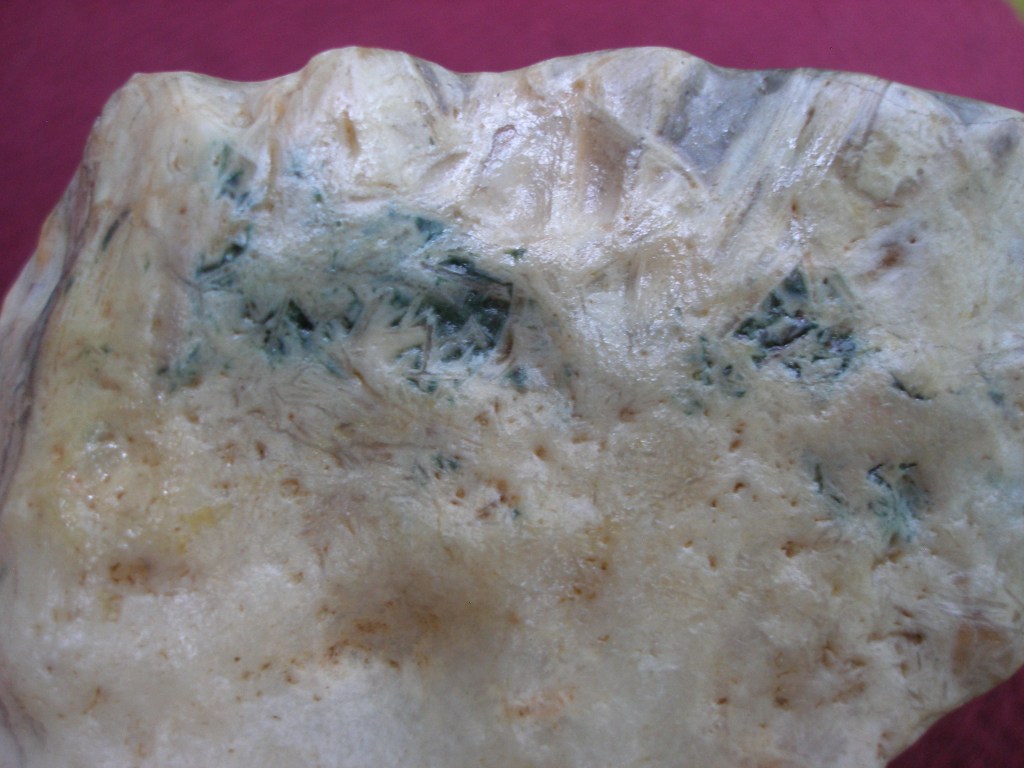
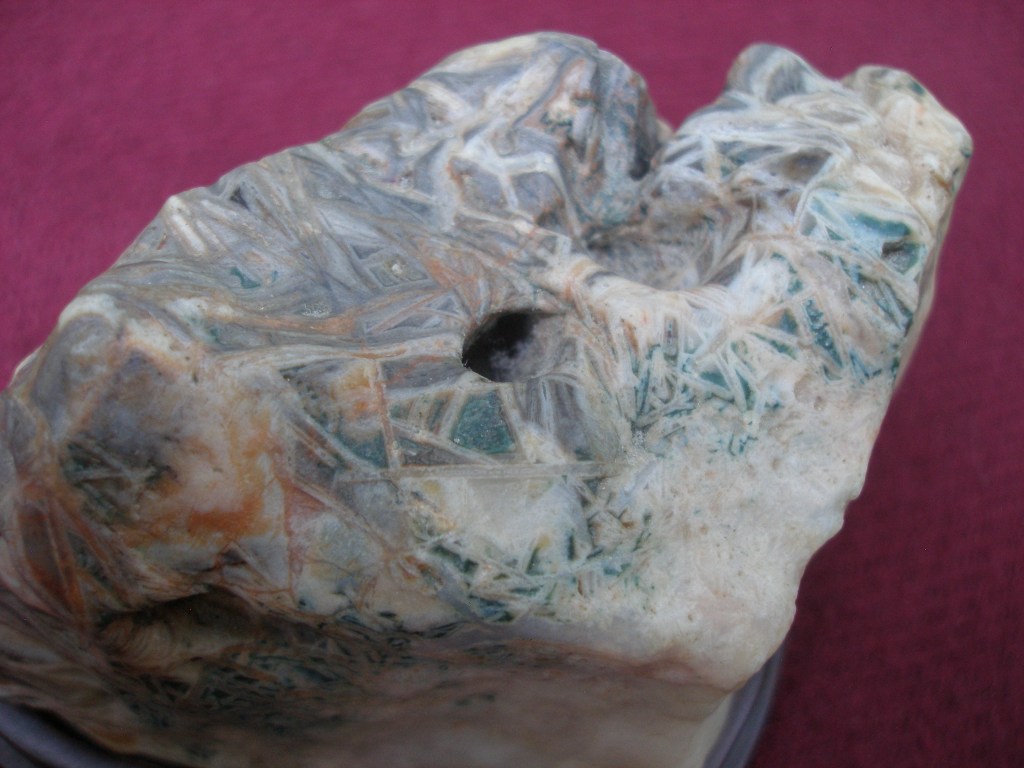
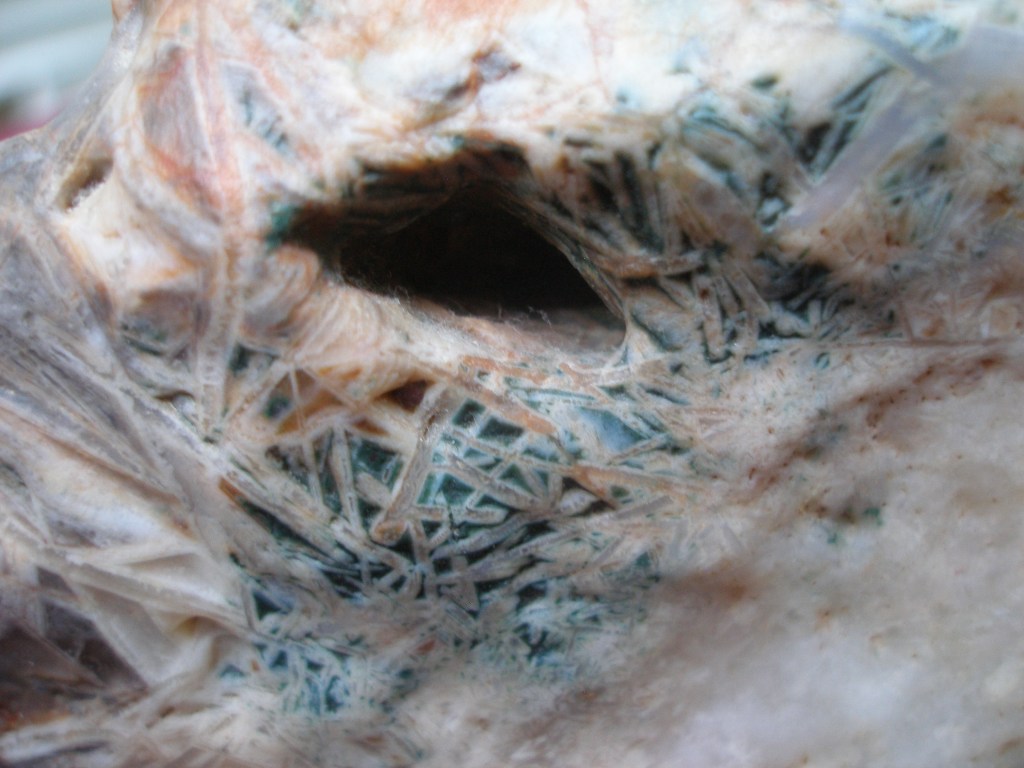
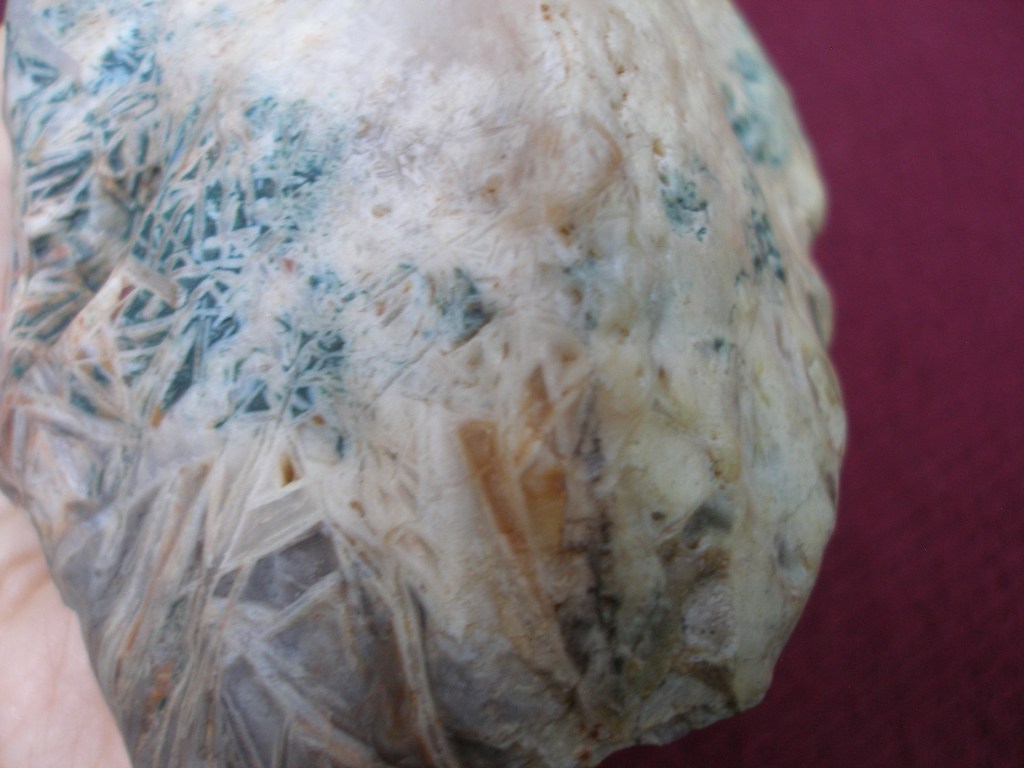
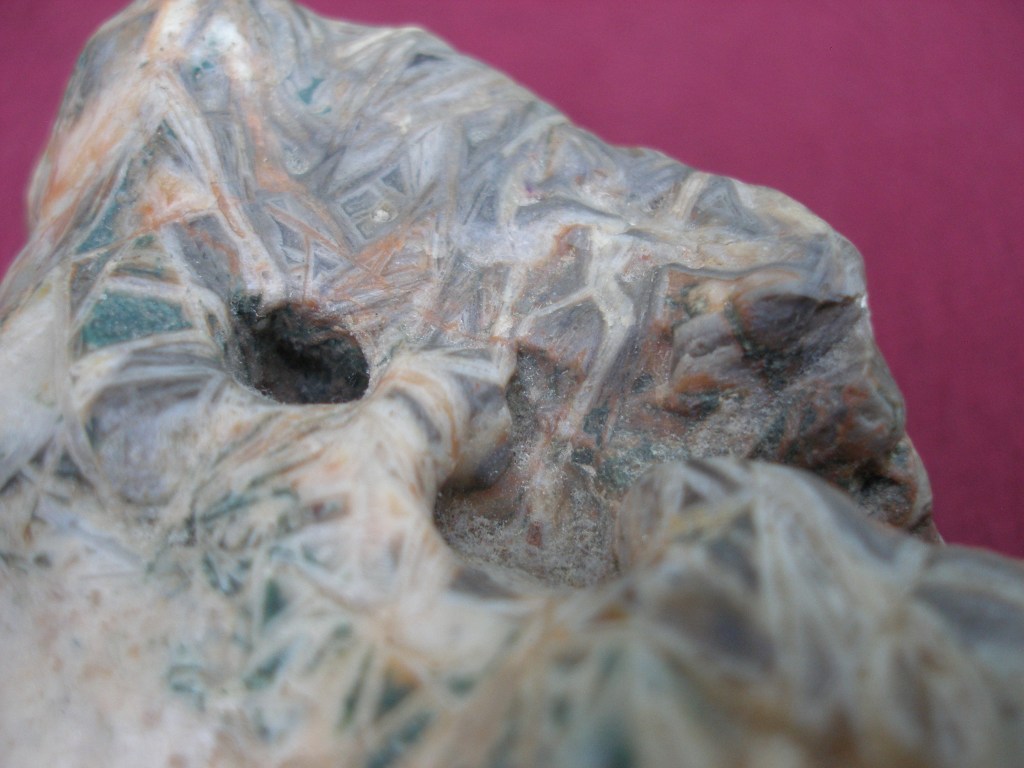
This Gobi Dessert scholar’s rock that always keeps me company as I work at my desktop computer is rather small, just 5″ by 2 1/2″ (13 x 6 mm). In overall shape it resembles a cliff. But it is the colorful pattern of intertwined crystals “growing” out of a white base that really makes it special. This type of microcrystalline quartz is sometimes referred to as “Chopstick lattice agate.” But to me this one looks more like densely tangled grass.
Long-gone crystals must have penetrated the hole where this nodular agate formed. I imagine its softly-shining surface was the result of a long period of weathering in the cold, dry and windy desert conditions.
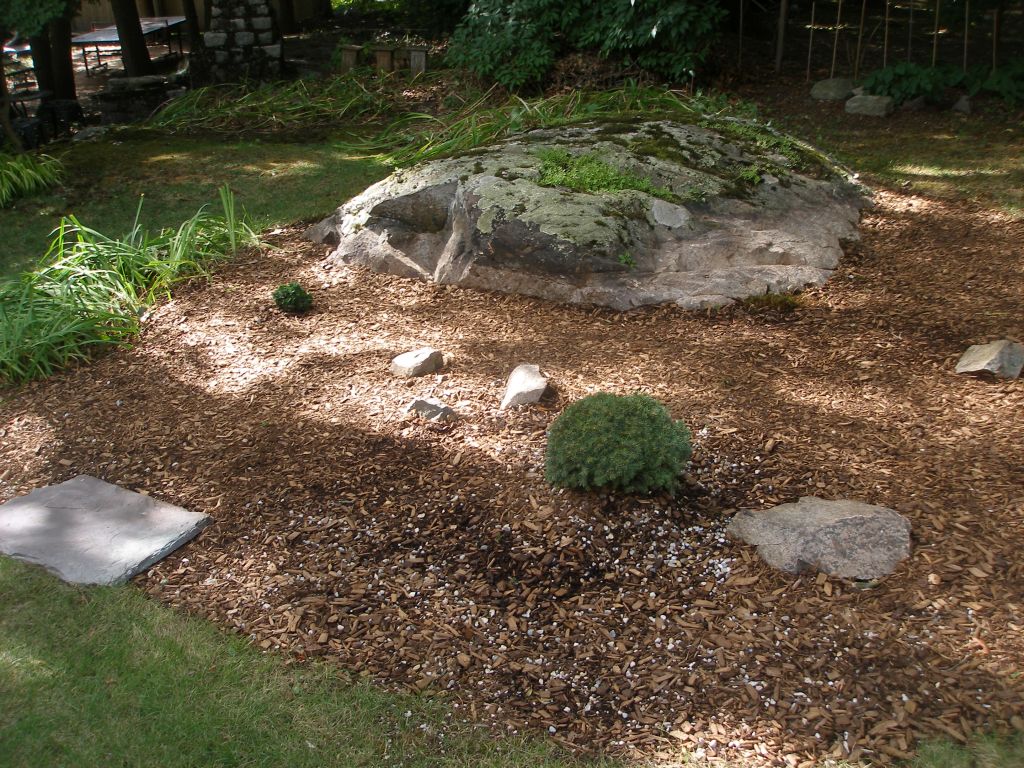
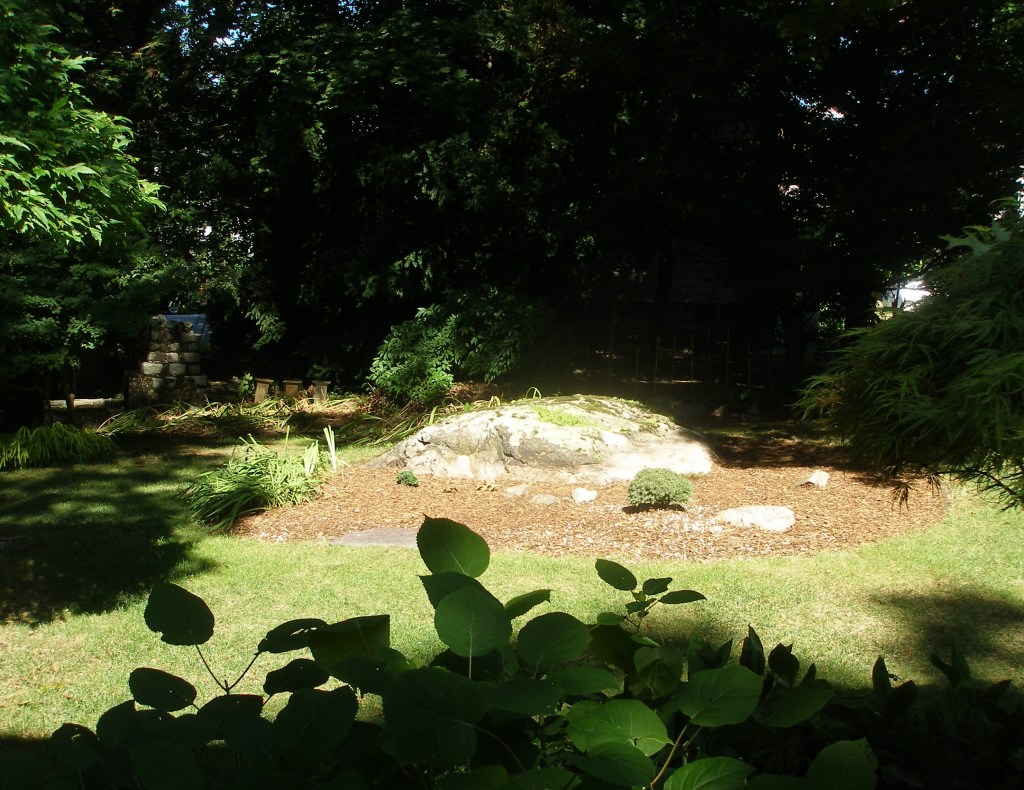
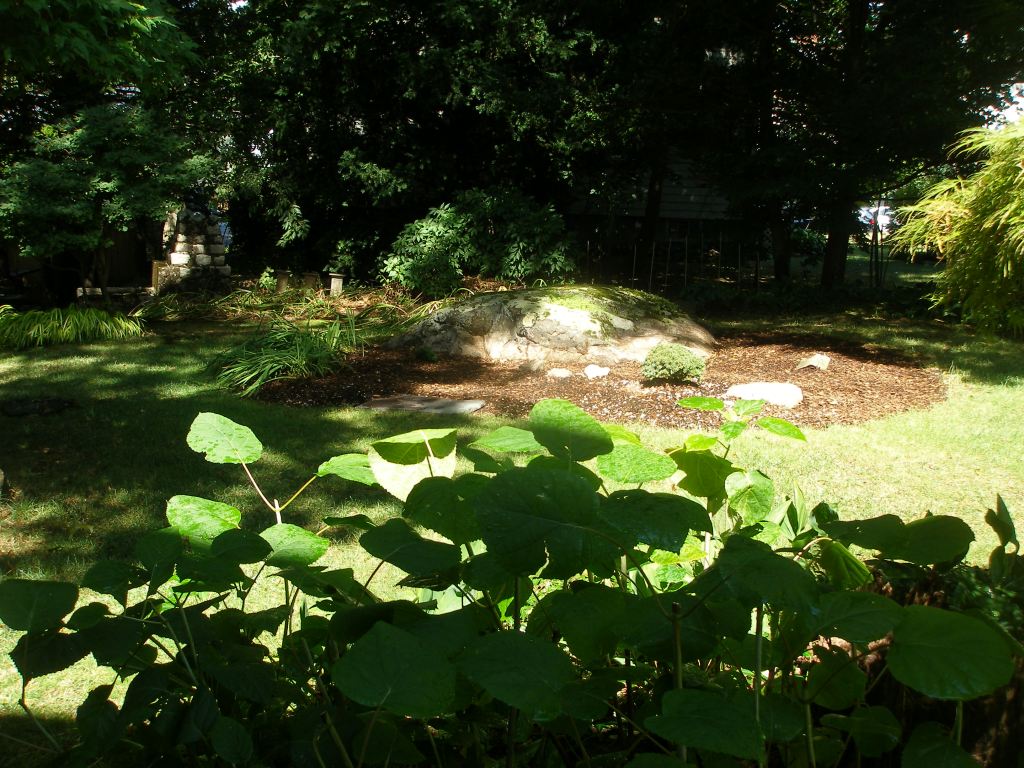
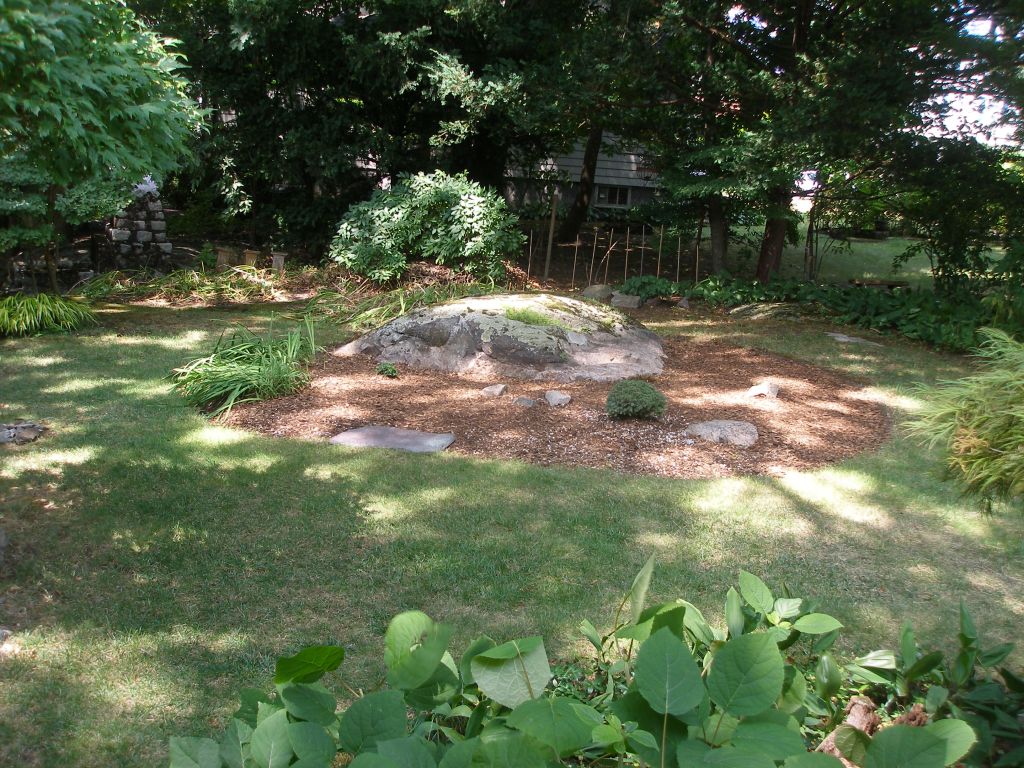
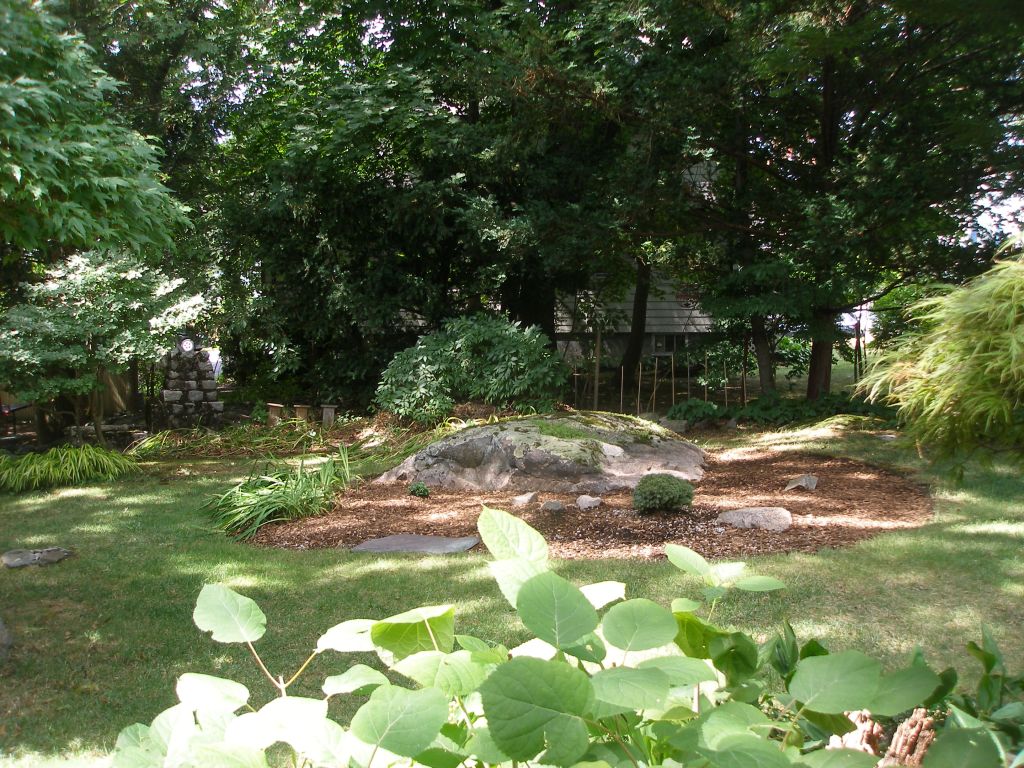
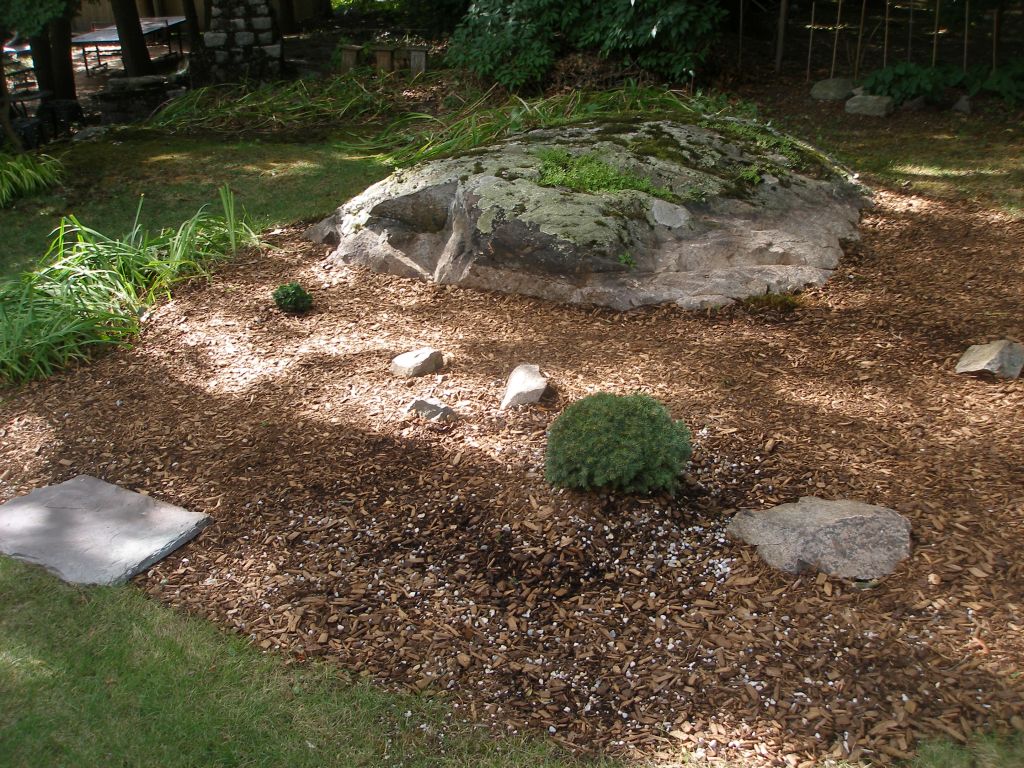
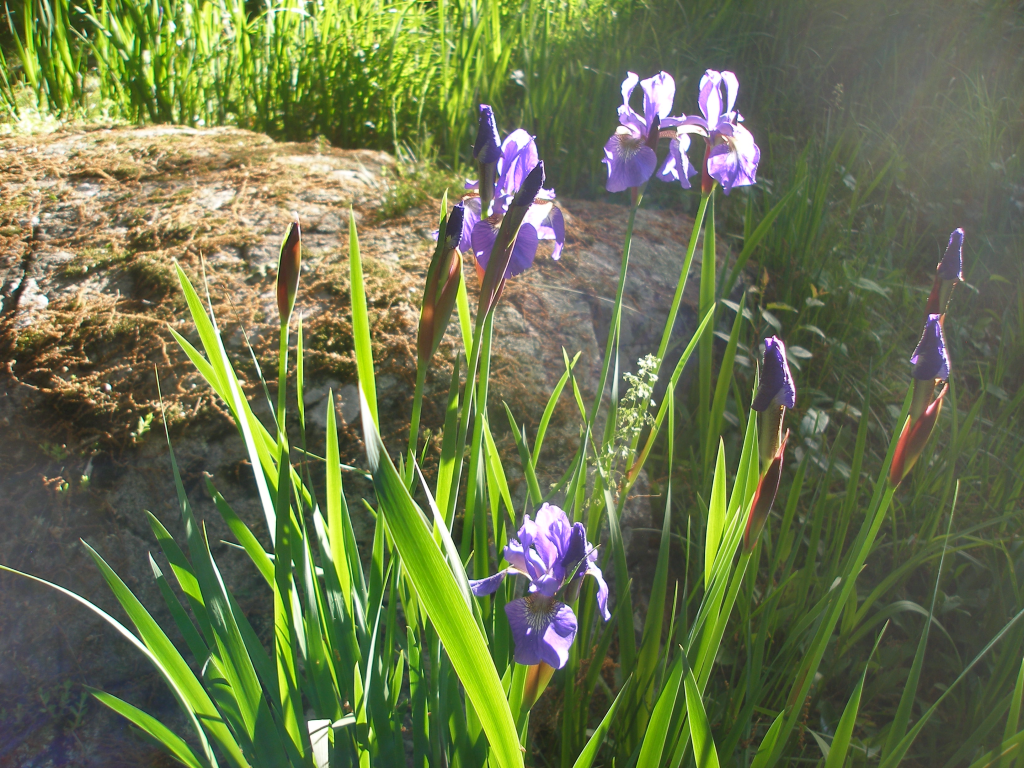
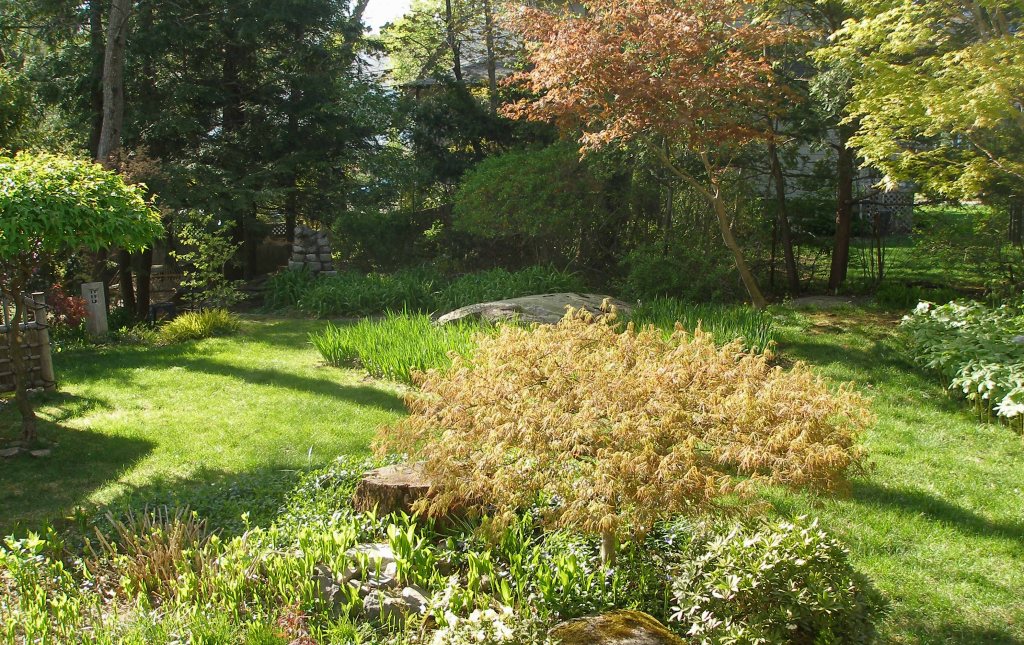
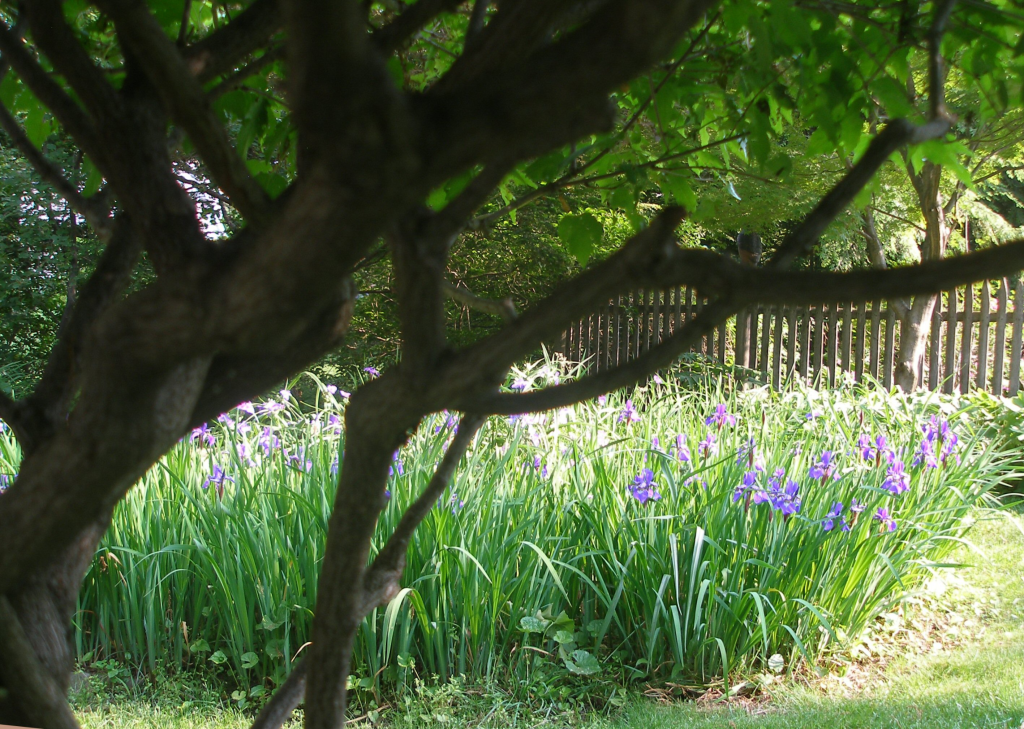
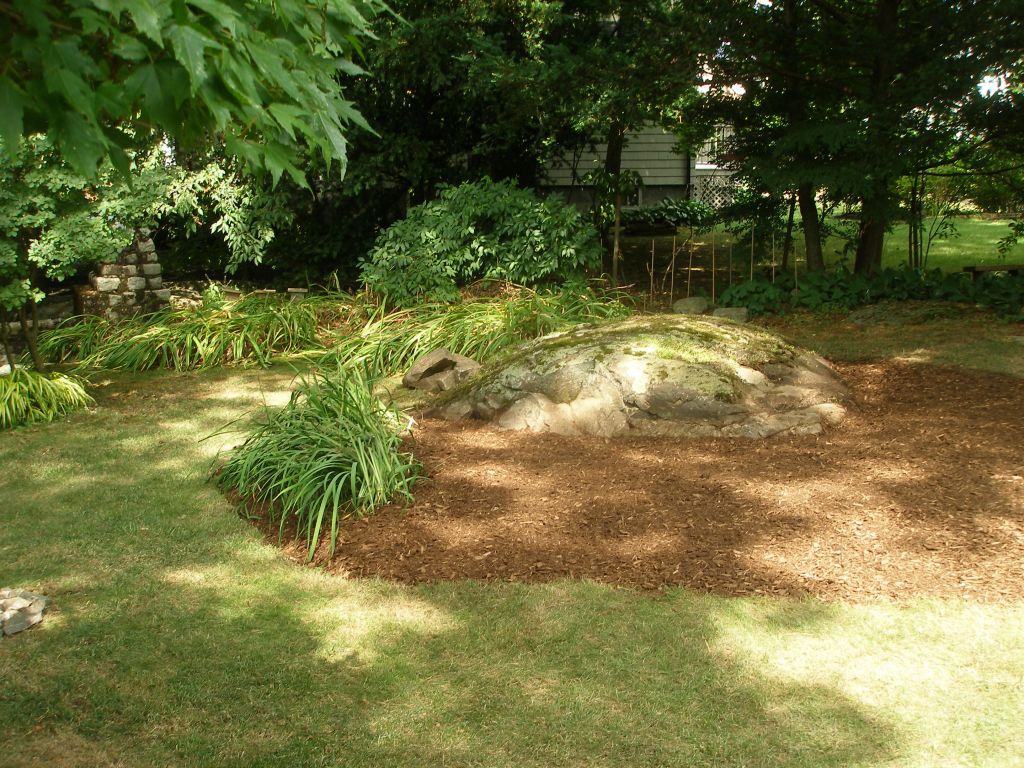
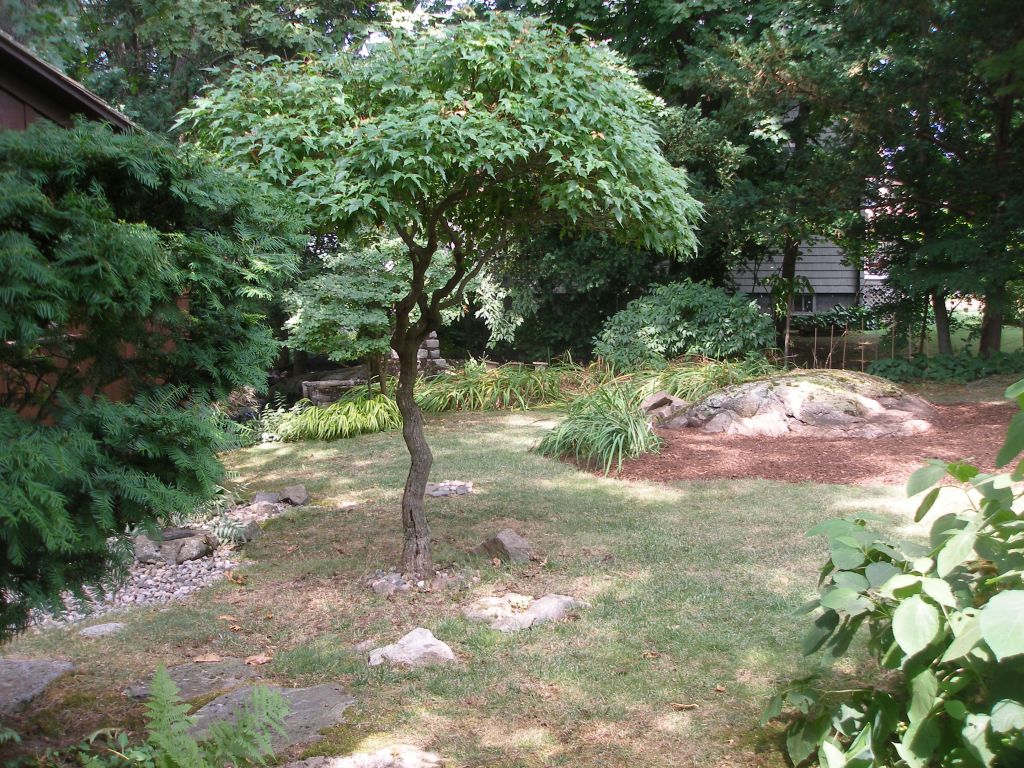
Shadows move across the large granite outcrop in my backyard creating quite interesting effects now that I can see them more clearly. I decided to plant two tiny evergreens where irises once grew. There are some initial signs that they like the spots that I chose for them, but only time will tell.
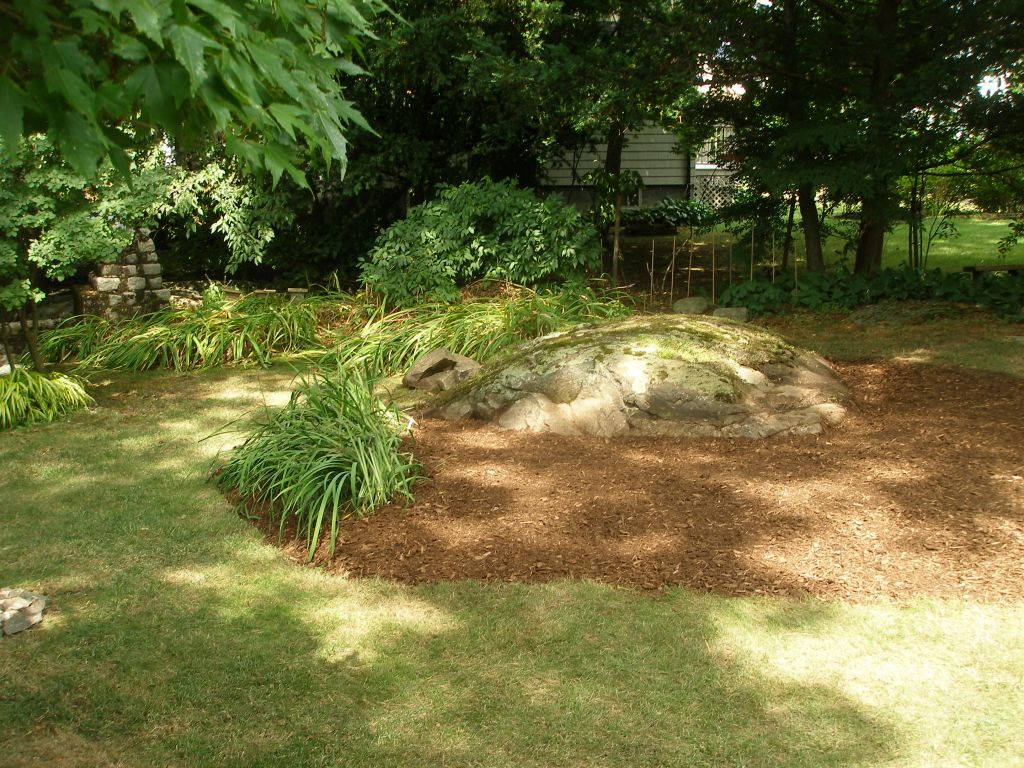
The first photo below was taken around 4 pm. The other photos were taken at intervals starting at 11 in the morning. Unfortunately, still photos cannot show how shadows dance across this scene when a breeze stirs the leaves.
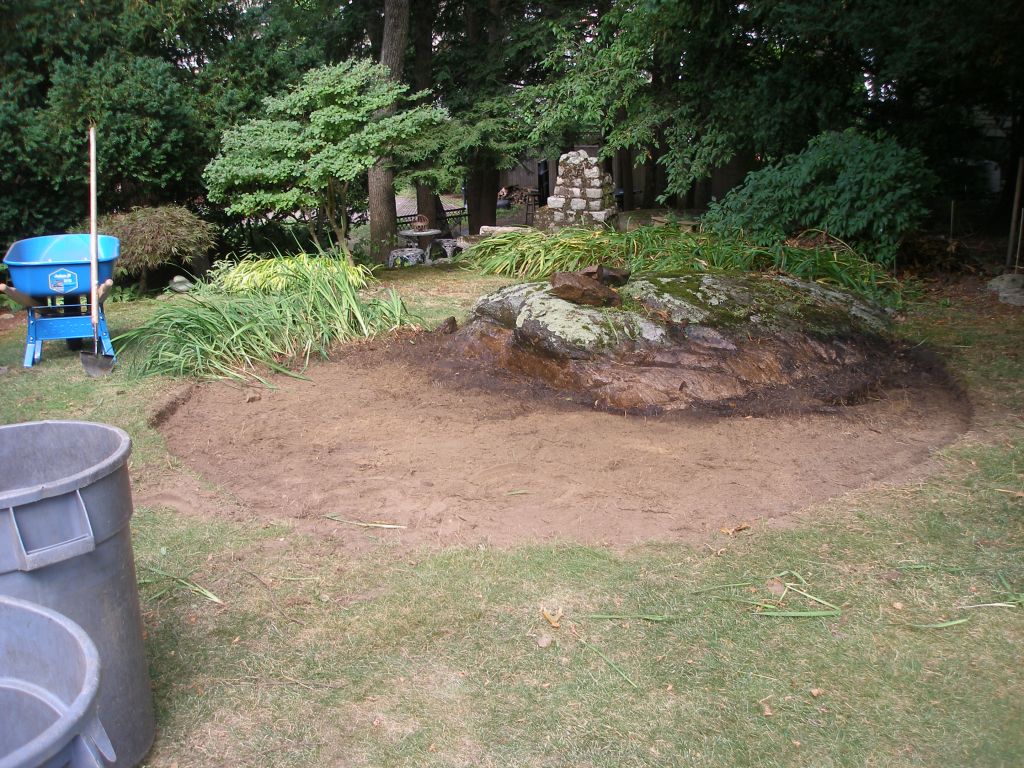
The large granite outcrop in my backyard had seen a lot in its time. Glaciers left grooves in its surface. It had acquired quite a community of moss, lichen and other small plants. Animals and birds had stood on its sturdy back. That a large kitchen bay window overlooked that outcrop had sold me on that house even though it was only the second one we looked at.
My videographer friend, Jeff Klein, asked me “Would I like to have his friend, Japanese garden designer, Kokubun, come see my garden?” I answered, “Of course, I would be honored.” As the three of us shared tea on my patio, Kokubun mentioned the atmosphere and how plants blocked the view of neighbors’ houses, “so you would not know they were there.” It was obvious he shared my love for rocks. He told me that installing a rock the size of the granite outcrop would cost thousands of dollars.
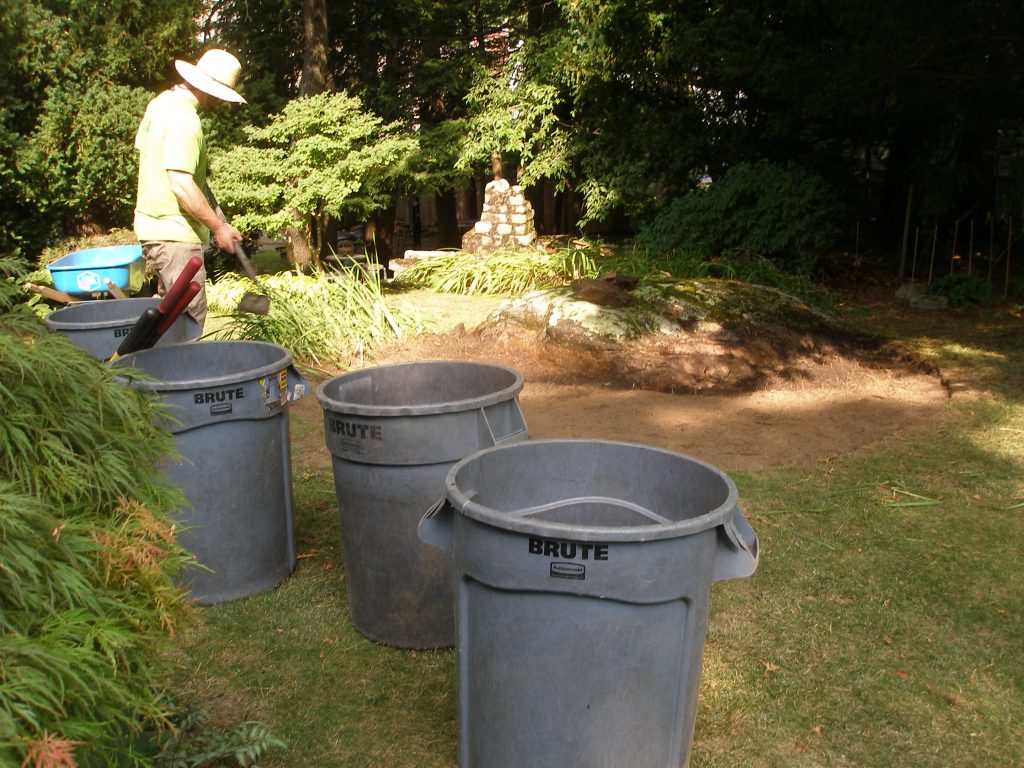
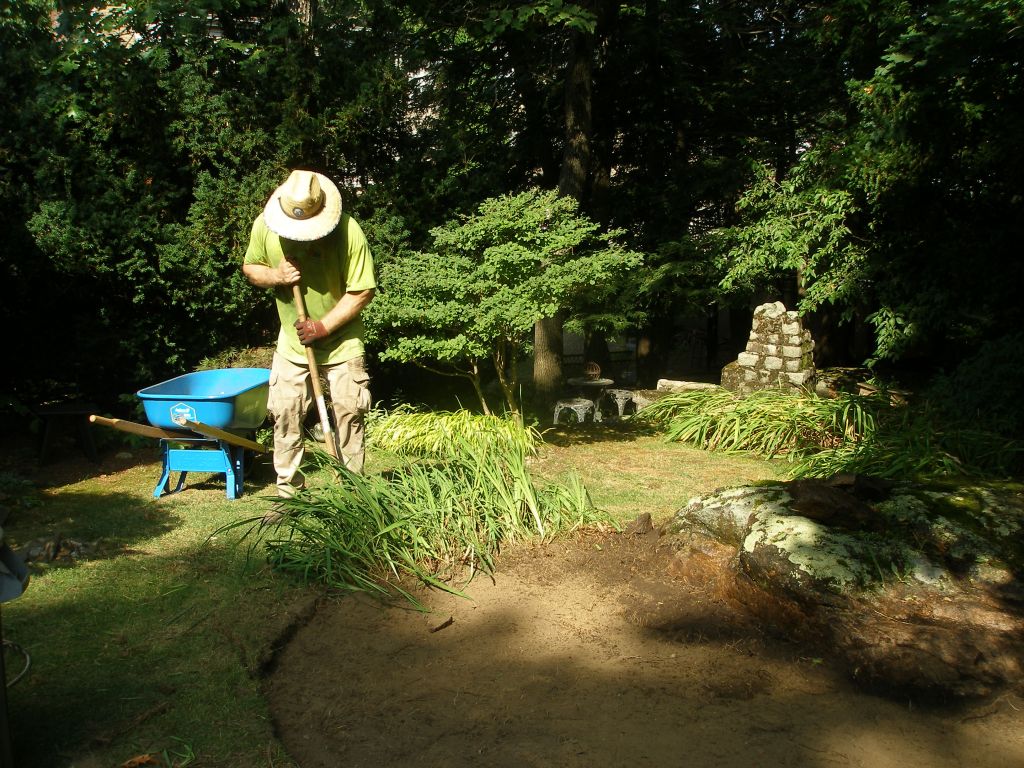
As he was leaving, Kokubun suggested removing the iris so as to make the outcrop more visible. I said, “Perhaps leaving a small patch of iris on the left.” He nodded in agreement. As luck would have it, a recommended local landscaper told me he could came out the following week. Nick Rose and his crew dug down to reveal more of the outcrop for a job that was pure labor with a lot of hand digging. Nick mentioned that the biggest reason to seek out professional help for that job was the need to haul away the rather large quantity of dirt and plant matter that they had removed.
My garden had been stable for quite some time but making the outcrop more visible was such an obvious idea, I am surprised I did not think of it on my own. Removing things has become easier now that I am older. Here was an example of just how much of an improvement that can make.
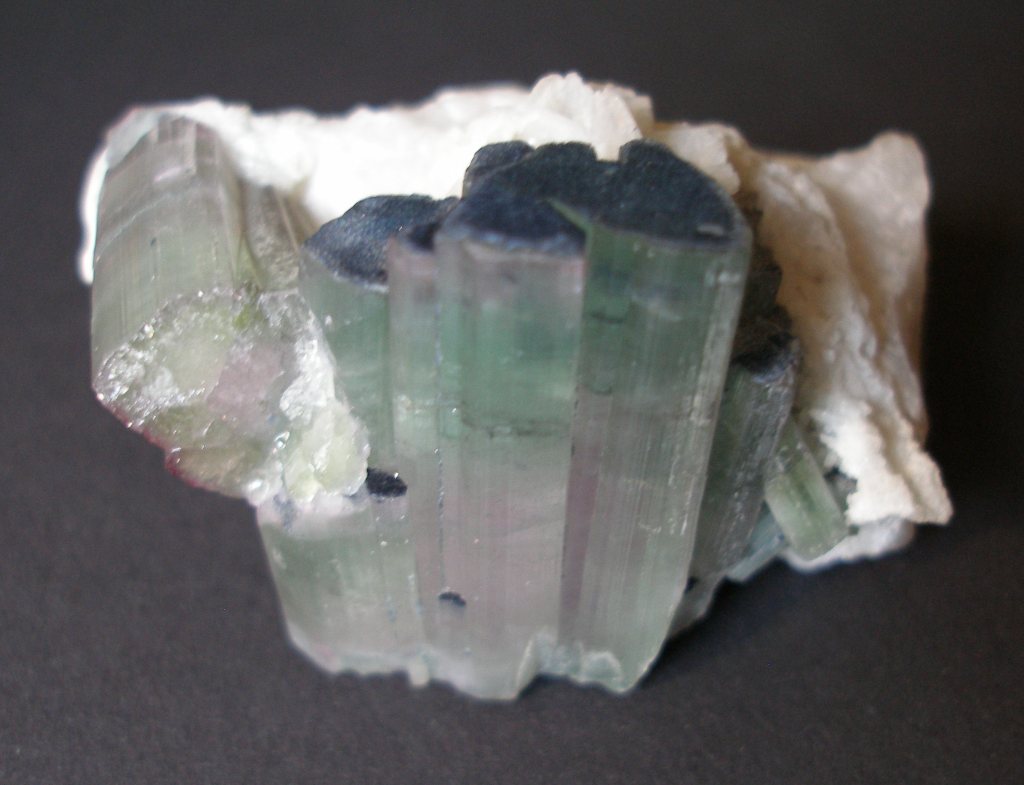
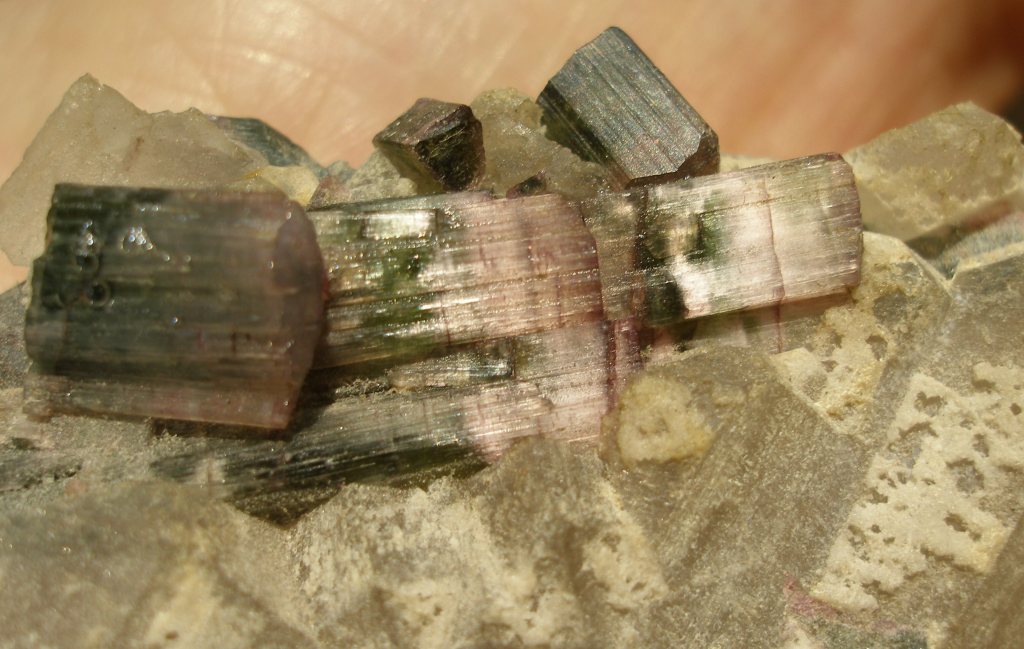
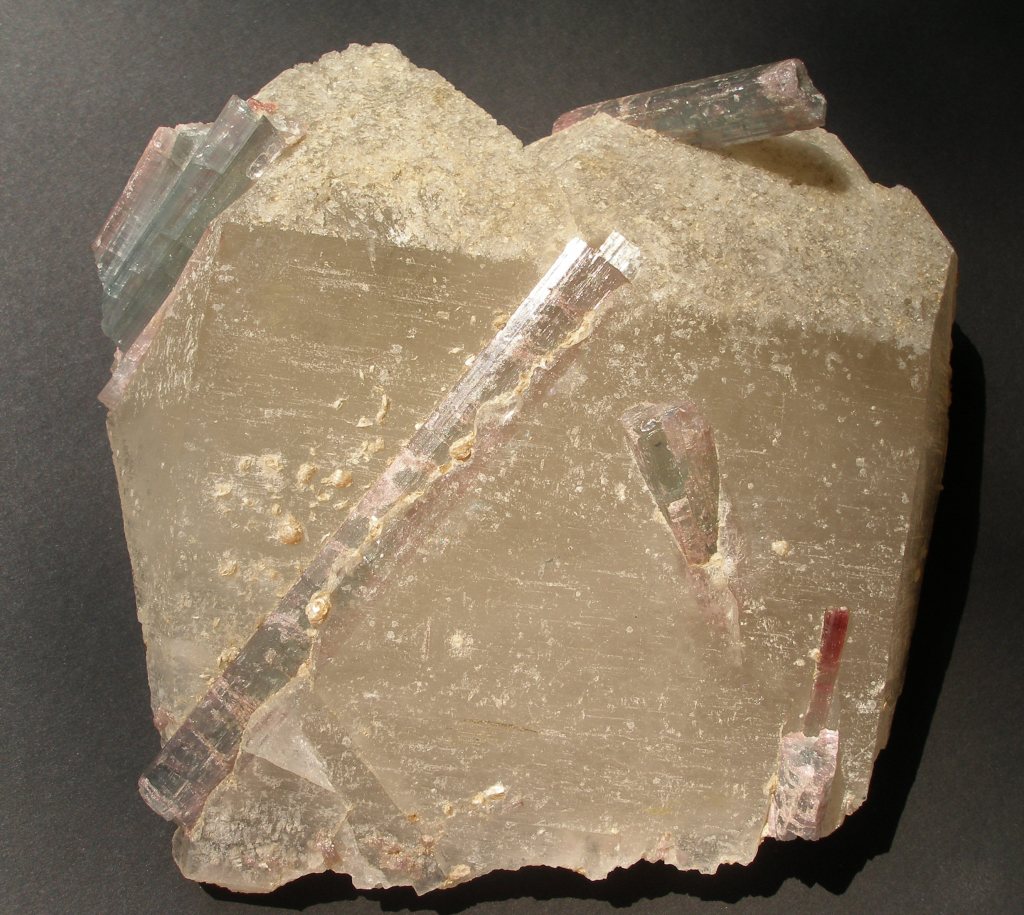
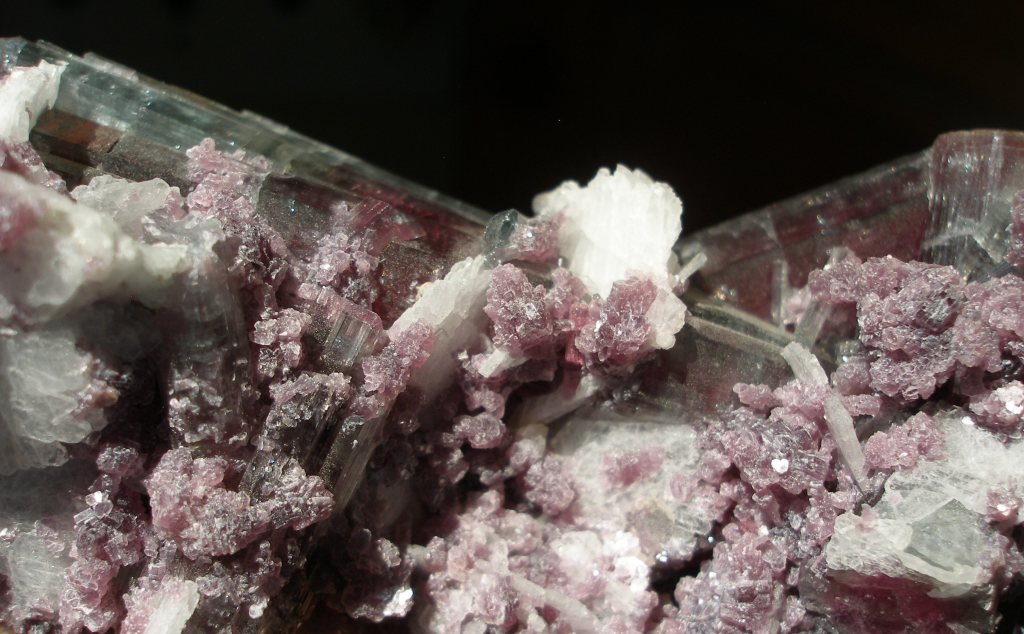
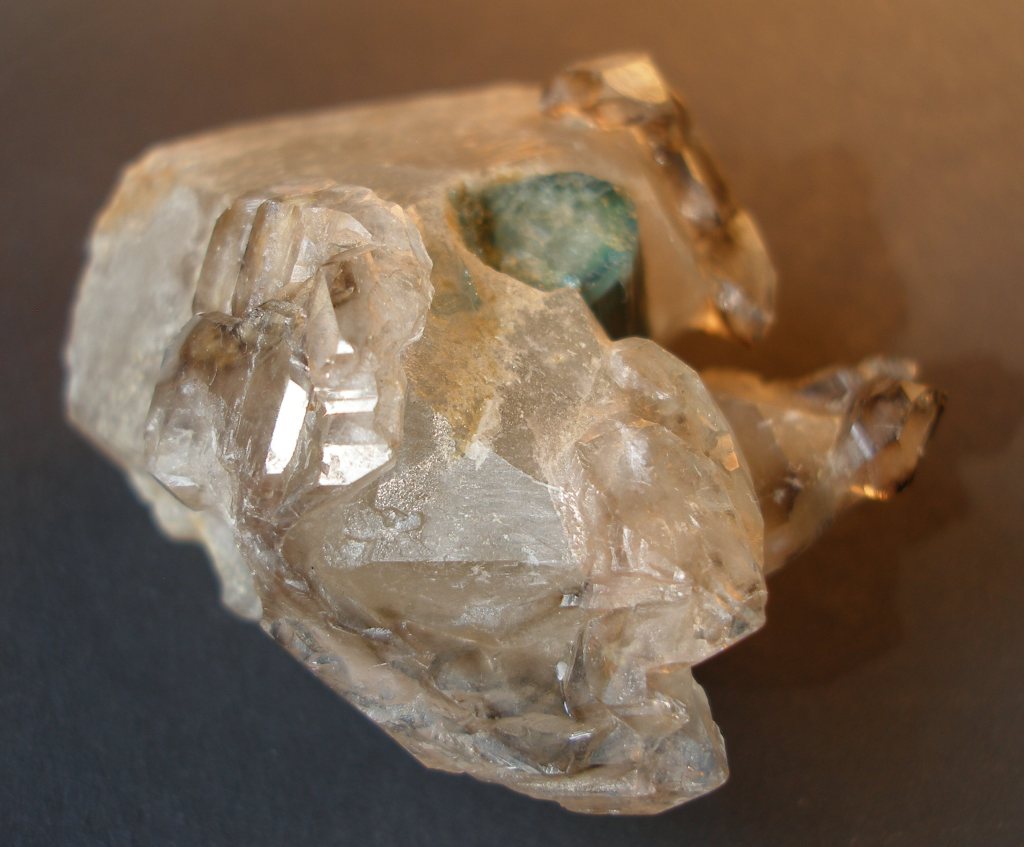
Although many think of tourmaline as individual crystals in pink, green or in the famous water melon tourmaline – a combination of those two, it can often be found embedded in quartz, or in a matrix with other minerals.
The photos below show a variety of examples including a striking cluster with pinkish-lavender lapidolite (and a closer in view of this one), as well as a number with tourmaline crystals embedded in quartz.
Examples may be found from sources around the world, and some of them, especially those with larger crystals, can make remarkably beautiful display specimens. Most of those shown in the photos below are on the smaller side. A prior blog post discussed tourmaline’s remarkable color range.
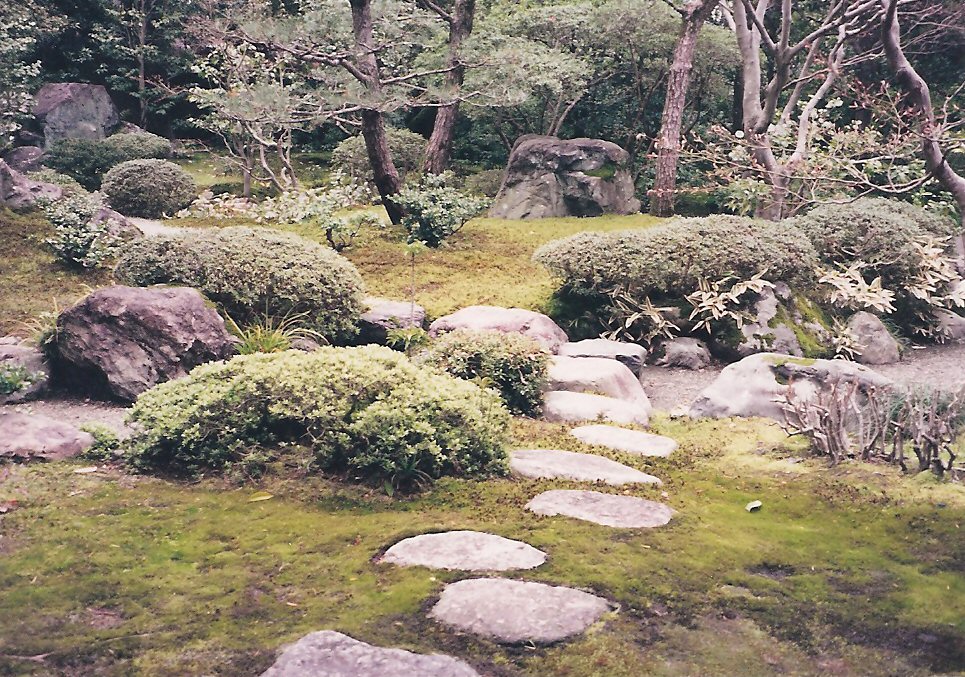
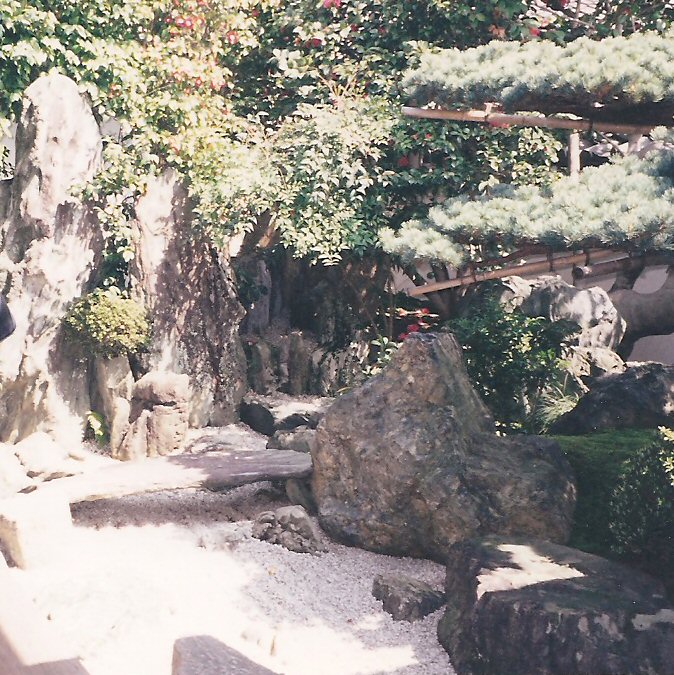
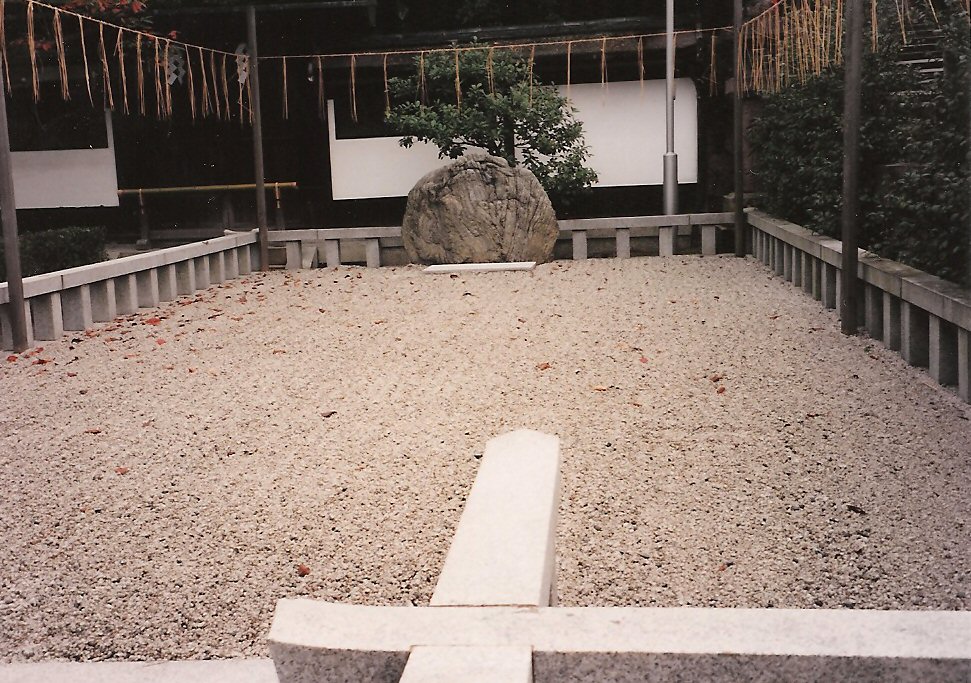
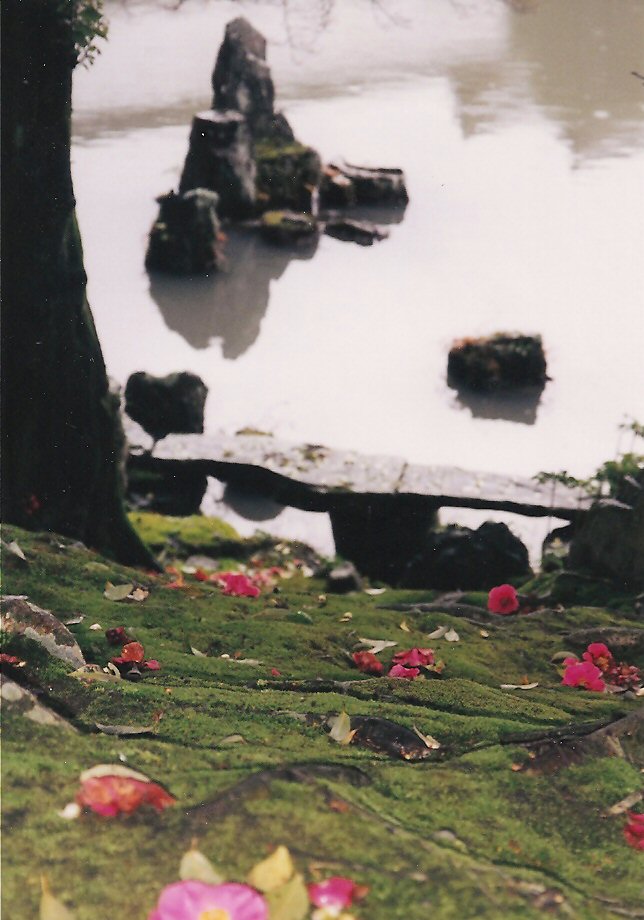
Rocks have long been appreciated in Japan. They appear in gardens and are displayed like sculptures inside as well. They often seem to have a life of their own, even when they are not covered in moss or lichens, and are especially apprecated when they show the effects of weathering.
In these times of dramatic change, that rocks will outlast us – their seeming permanence, has a special appeal. Our human lives are brief. While I know whole continents are moving and splitting apart, to me the larger rocks can feel like ancient timeless guardians and I try to listen when they speak to me.
The odds of finding that particular rock again seemed slim. When I first noticed it in the leaf litter, it looked organic, perhaps a late season fungus, so I took a quick photo and continued on without noting the location.
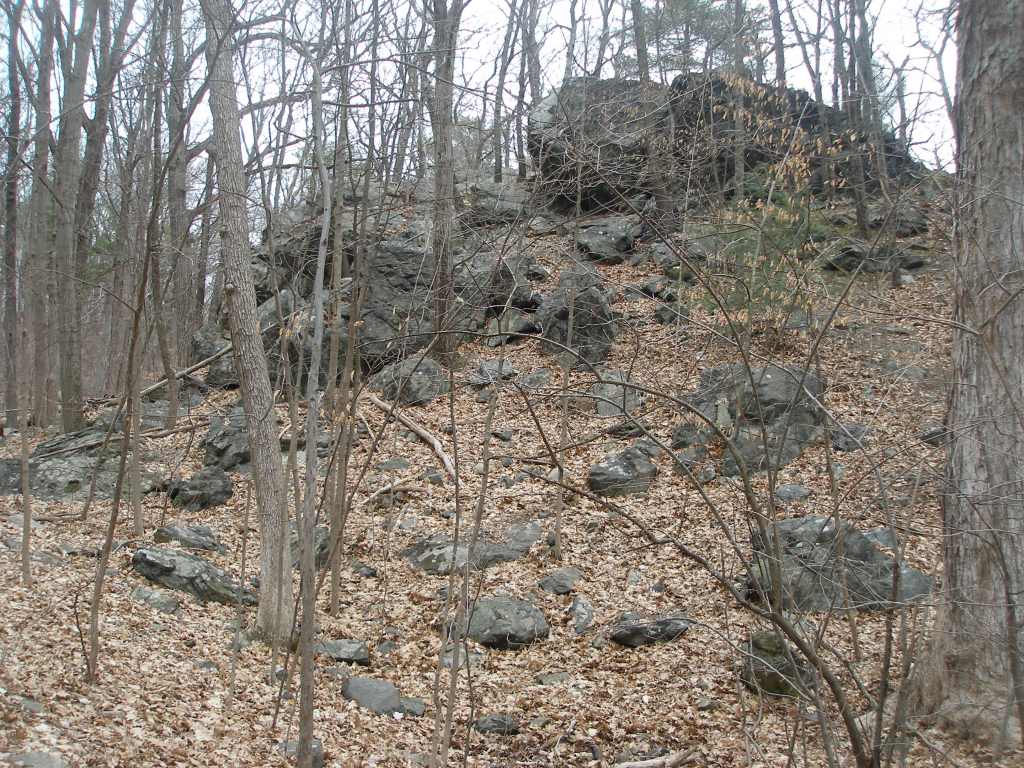
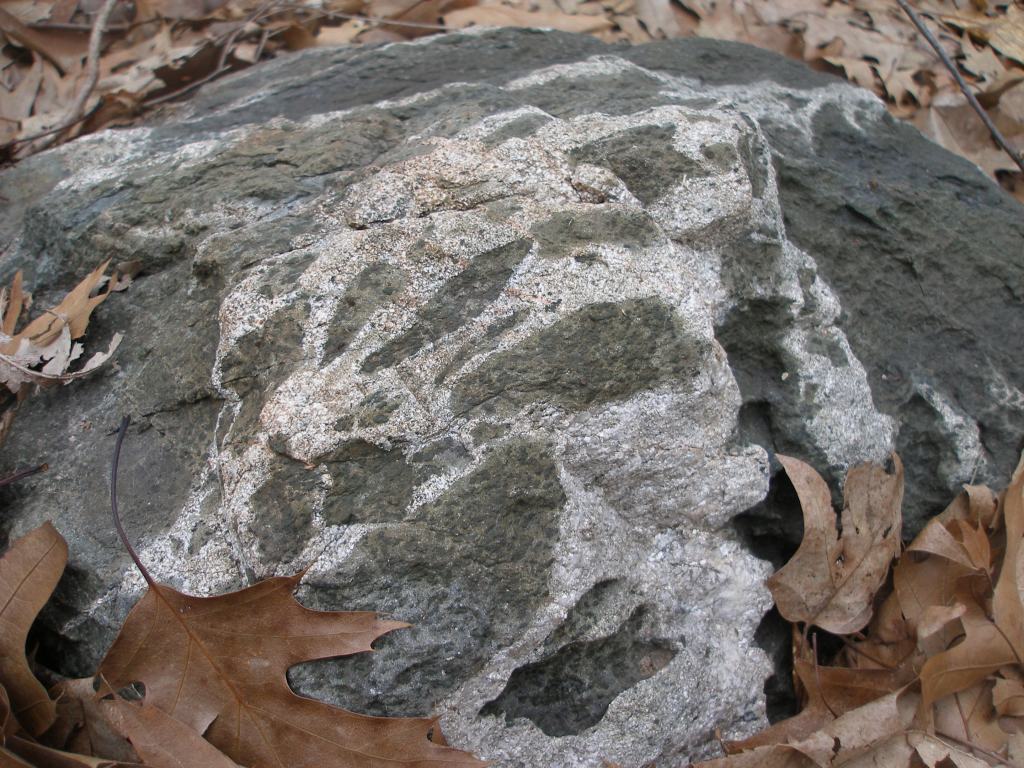
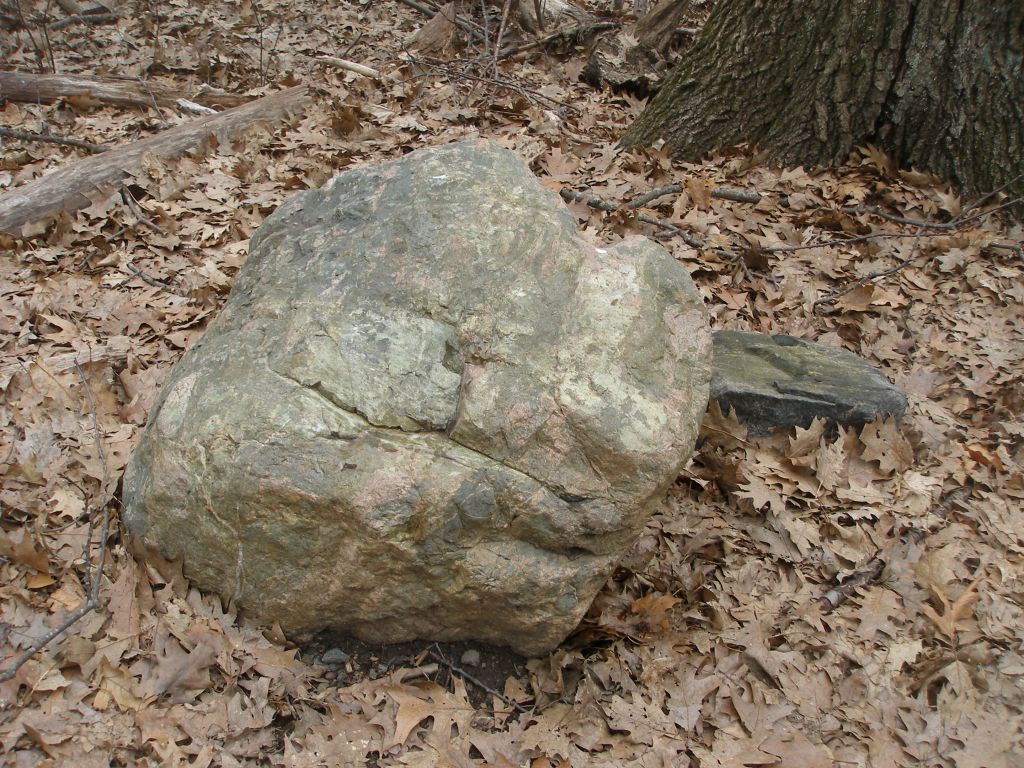
But in reviewing the photos I took on that walk, I realized that this was no fungus. The interesting bubbly texture was glassy, not soft, and clearly part of an agate; I saw suggestions of macro quartz crystals within fortification bands. It was quite unlike the common gray, white veined, or sometimes salmon and green rocks that lie scattered everywhere in Menotomy Rocks Park.
Agates are not normally found in eastern Massachusetts. Perhaps a glacier picked this one up, carrying it some distance from its point of origin.
I would welcome the opportunity to examine the agate from all angles, if I ever come across it again, but it somehow seems fitting for this rare treasure to remain hidden in plain sight among the many rocks of its new woodland home.
















 Radiant Refuge