Gathering for Tea

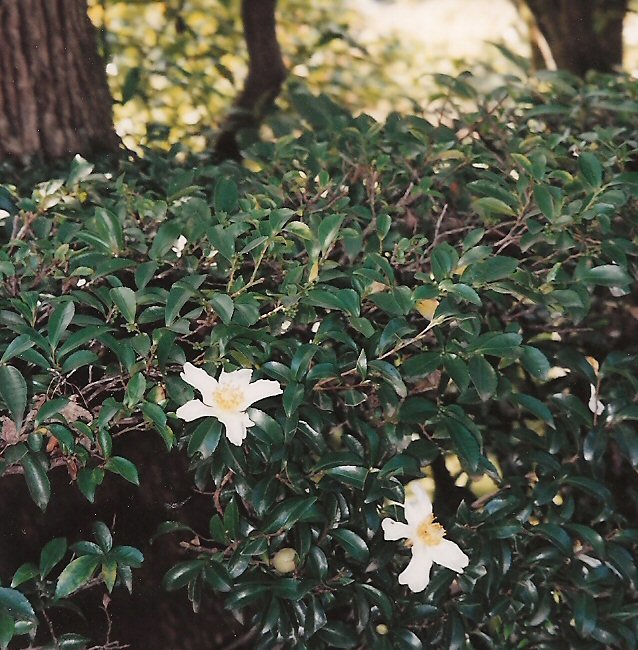
Tea plant

The Camellia sinensis plant is used to make tea all around the world. Perhaps that is not surprising given tea’s many significant health benefits. Research has also found that drinking tea can elevate mood, support focus.

We do not simply drink tea, we create art and rituals around it. And they can be quite stunning. Watch this short slow motion video of portions of a Japanese tea ceremony by videographer Jeffrey Klein.

An elevated mood and greater ability to sustain focus would likely amplify the benefits that connecting provides for our social species. With both tea and social connection supporting wellbeing along with the enhanced creativity that tea makes possible, it is no wonder that sharing tea became a focus for special equipment and gatherings all around the world…

United Kingdom,
Japan,
China,
Taiwan,
Korea,
Senegal,
Vietnam,
Colonial America

And drinking tea quite informally is always an option. But while some of tea’s benefits can be had by drinking it alone at your computer, why not enhance those benefits even further by offering to get tea for others or by inviting others to take a break to share tea with you? It is always tea time somewhere.

Beauty & Imperfection

With its seeming love for the one-of-a-kind and constant change, the natural world can be quite worthy of our detailed inspection. Even an oddly unique, or broken and incomplete natural object can be so beautiful it can take our breath away. So can an ordinary vista or an object that has been eroded by time. There is a story about Sen no Rikyu, a famous Japanese tea ceremony master – he approved the shaking of a few leaves onto the moss after a tea garden was cleaned a bit too perfectly. Leaving a few fallen leaves on the moss points to the wonder and mystery of reality as it really is.

OLYMPUS DIGITAL CAMERA

We care about others’ approval because we need others in order to survive, and that can have us wanting to be perfect. But perfection in the abstract is a rather odd concept when you think about it. Toward what end? According to what standards does it operate, anyway? What matters to one person may not matter at all to another and different cultures value different things.

I have found that people actually love it when we can accept ourselves, imperfections and all, and when we are open about feeling vulnerable at times. Those who can accept their own imperfections tend to have an easier time accepting them in others which can be a great relief given how much we tend to fear being negatively judged.

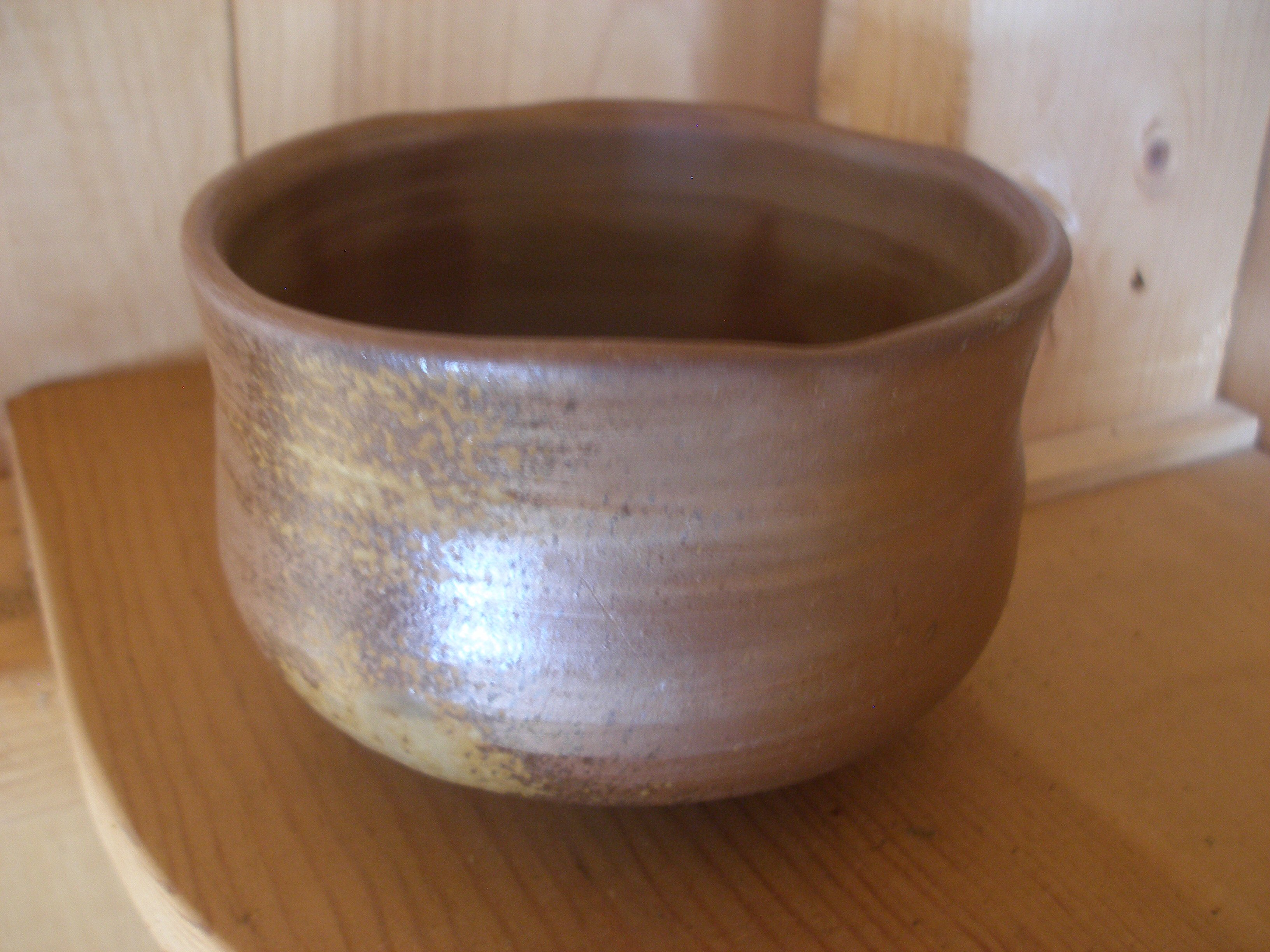
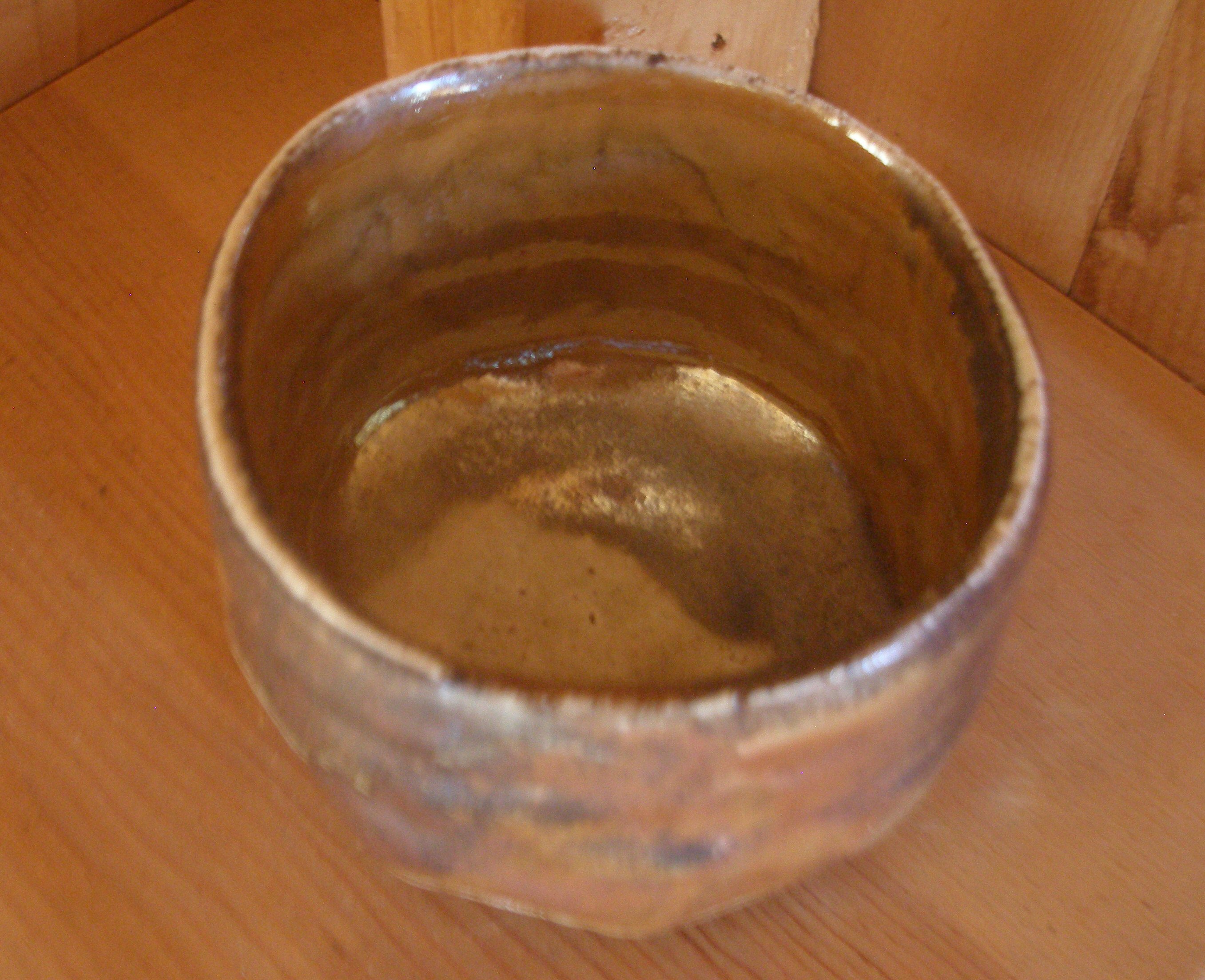
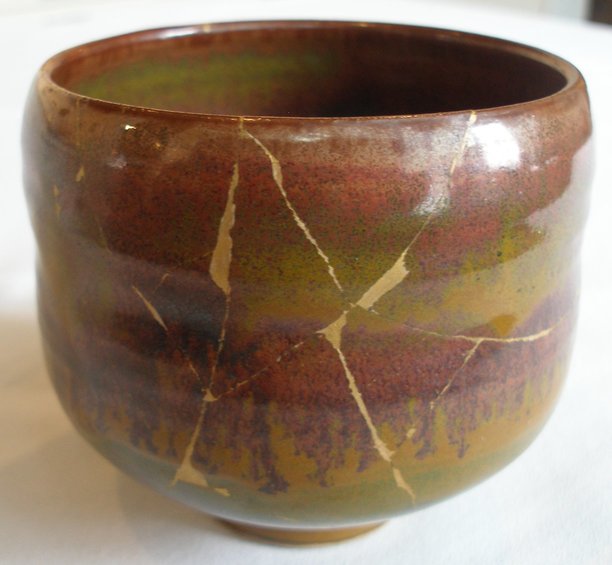
Japanese tea ceremony teaches many lessons through the actions involved in sharing tea while engaging with various objects. Take, for example, the beautiful tactile tea bowl below that was made by my Japanese tea ceremony teacher, Giselle Maya.  While it is misshapen and has imperfections in its glaze that resulted from a collaboration with the kiln fire, irregularities and burnishing from age add depth to its beauty, something that we can learn to appreciate in each other as well as in tea bowls, even mended ones.

OLYMPUS DIGITAL CAMERA

The subtle and hard to define Japanese concept of “wabi sabi” embraces imperfection. It recognizes that since everything is constantly changing, perfection is impossible, except, perhaps, in perfect moments as Beth Kempton notes along with examples in her Wabi Sabi: Japanese Wisdom for a Perfectly Imperfect Life.

I find that looking for a beauty that embraces imperfection can provide great solace. At times we can even catch others and ourselves in the act of being beautiful. And seeing the light shining through that deeper beauty can connect us to all that is.

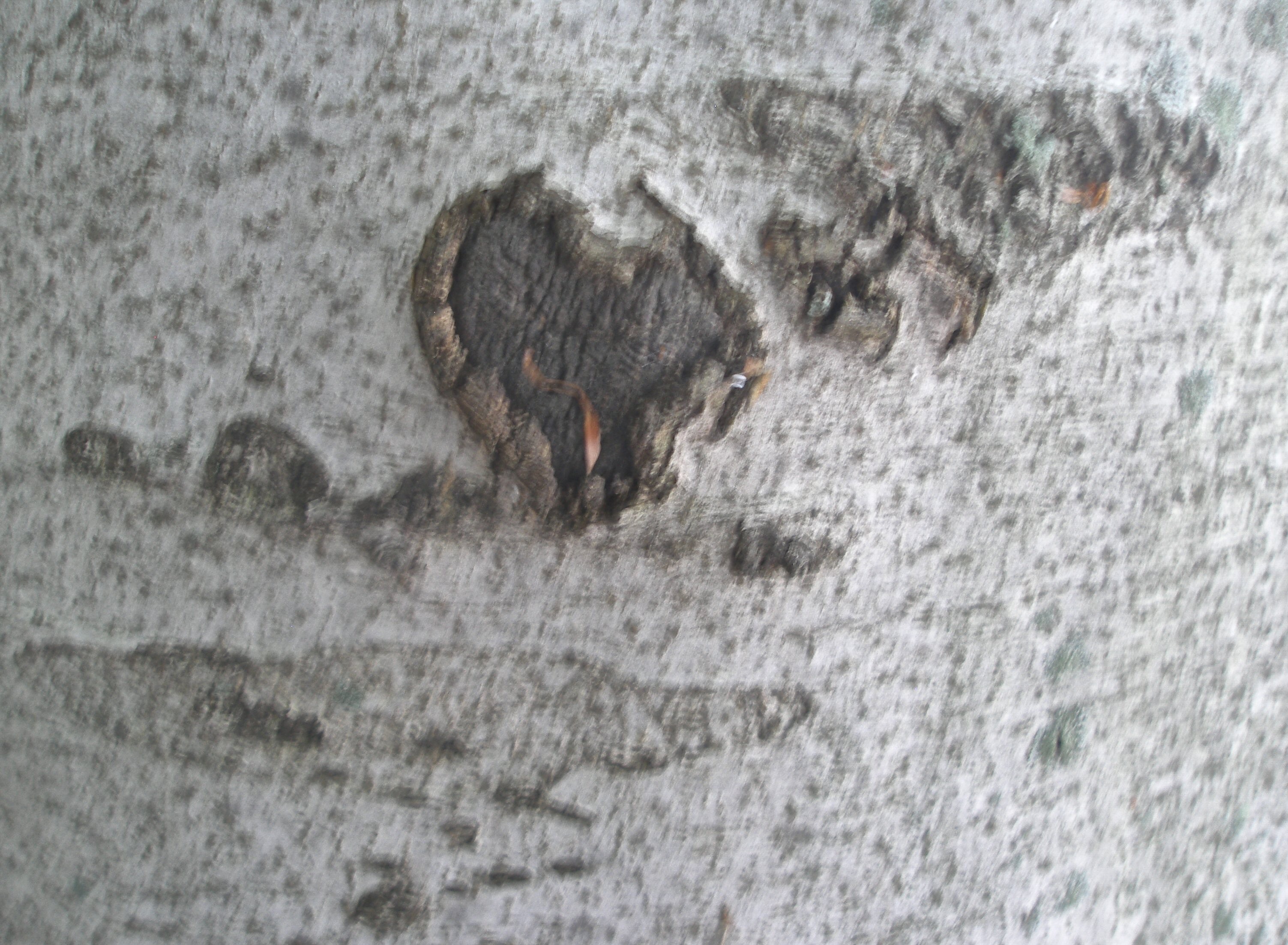
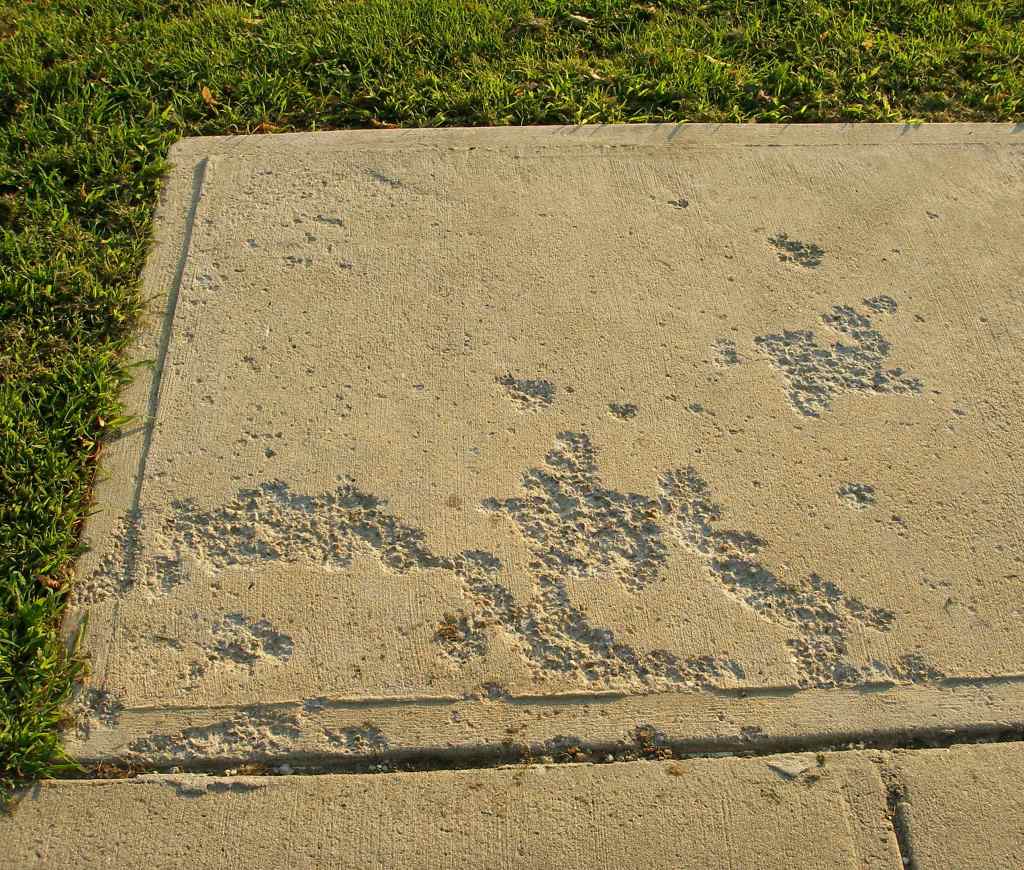
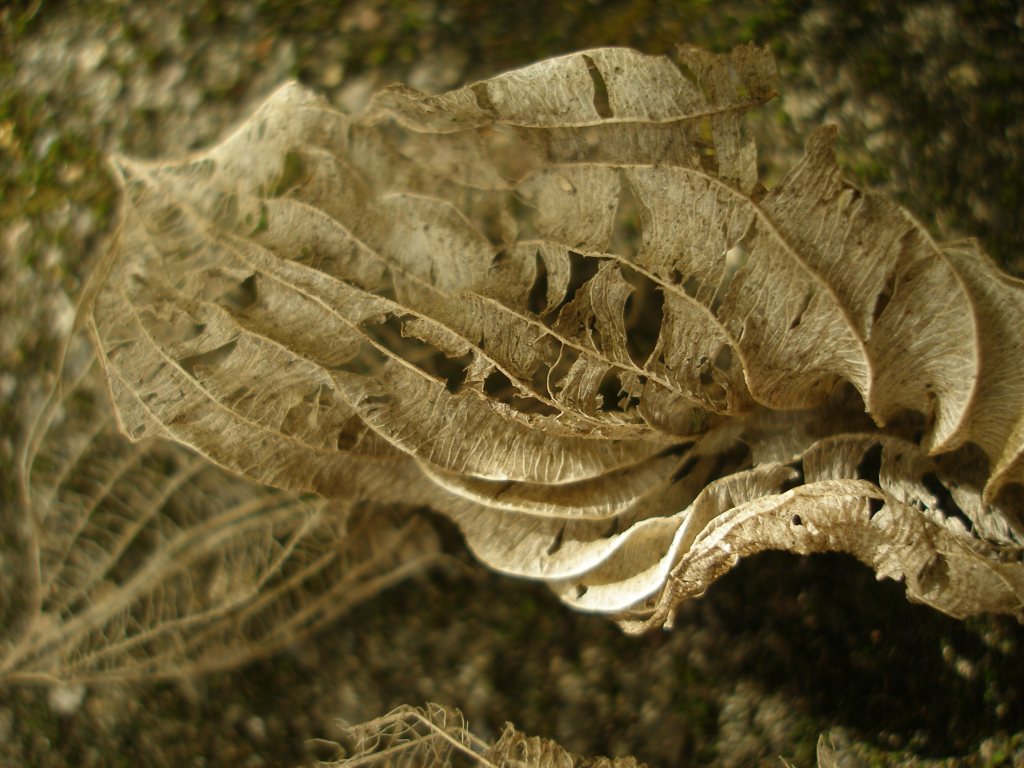
Below are examples of what might be considered imperfect beauty that called out to me. I recommend the wonderful adventure of finding your own examples.

OLYMPUS DIGITAL CAMERA

OLYMPUS DIGITAL CAMERA

OLYMPUS DIGITAL CAMERA

Refuge in a Tea Bowl

Tea bowls are literally full of nature. I think of them as having something in common with valleys or deep hollows. Summer tea bowls are more open so the tea will cool faster, while winter bowls tend to have steep sides. After tasting a bowl of bright pea green matcha tea for the first time, a guest remarked, “It tastes like drinking a meadow.”

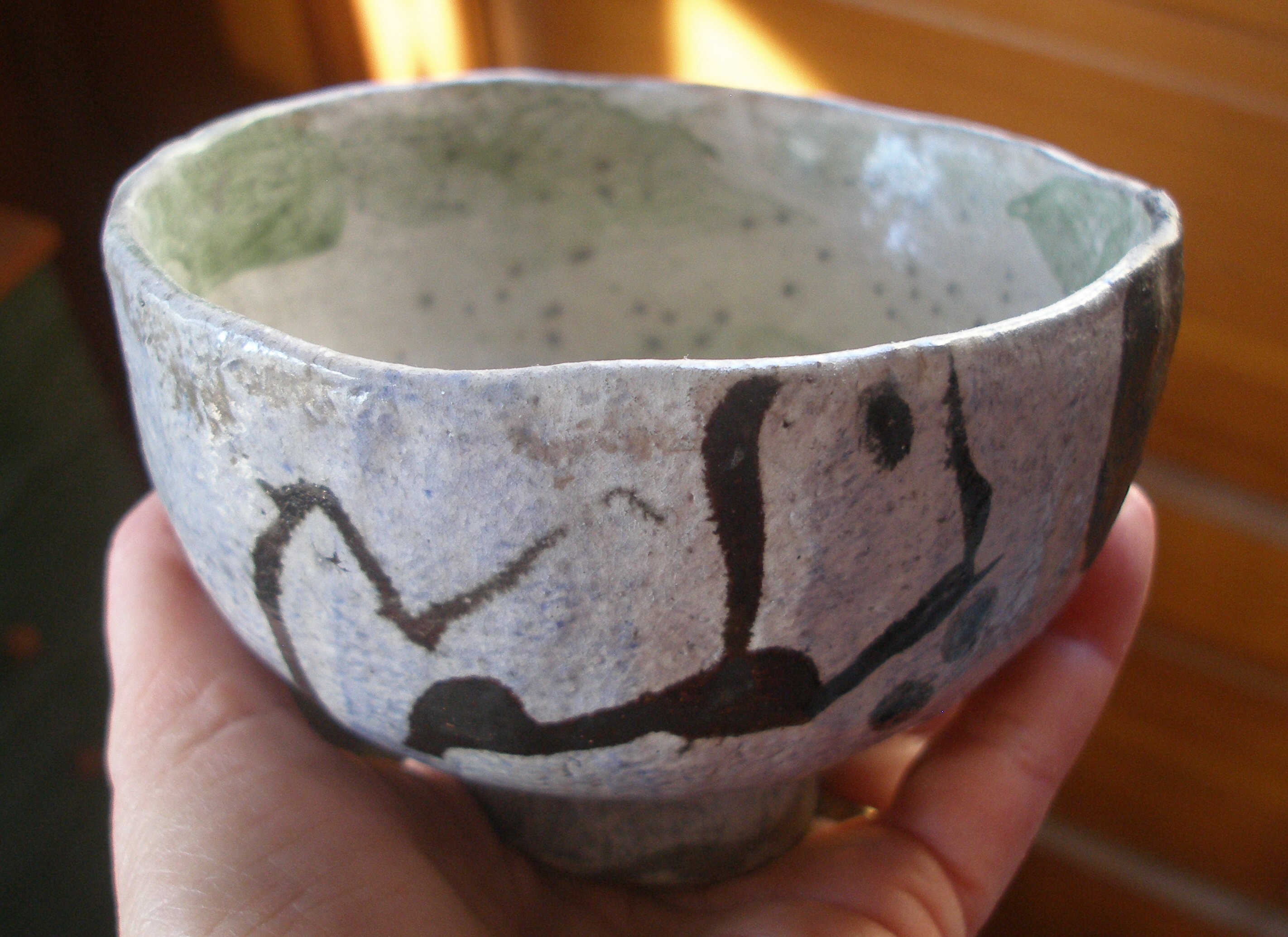
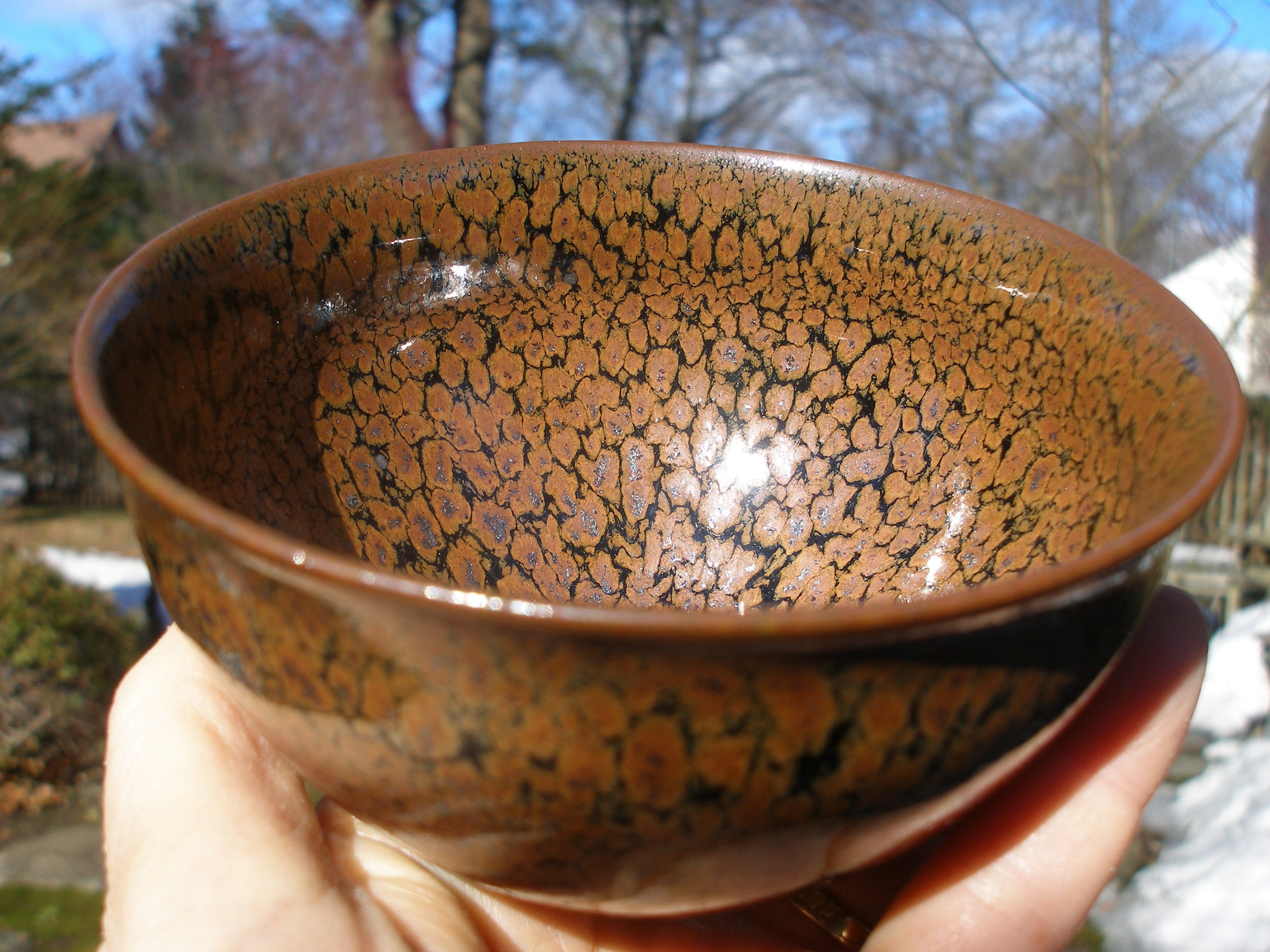
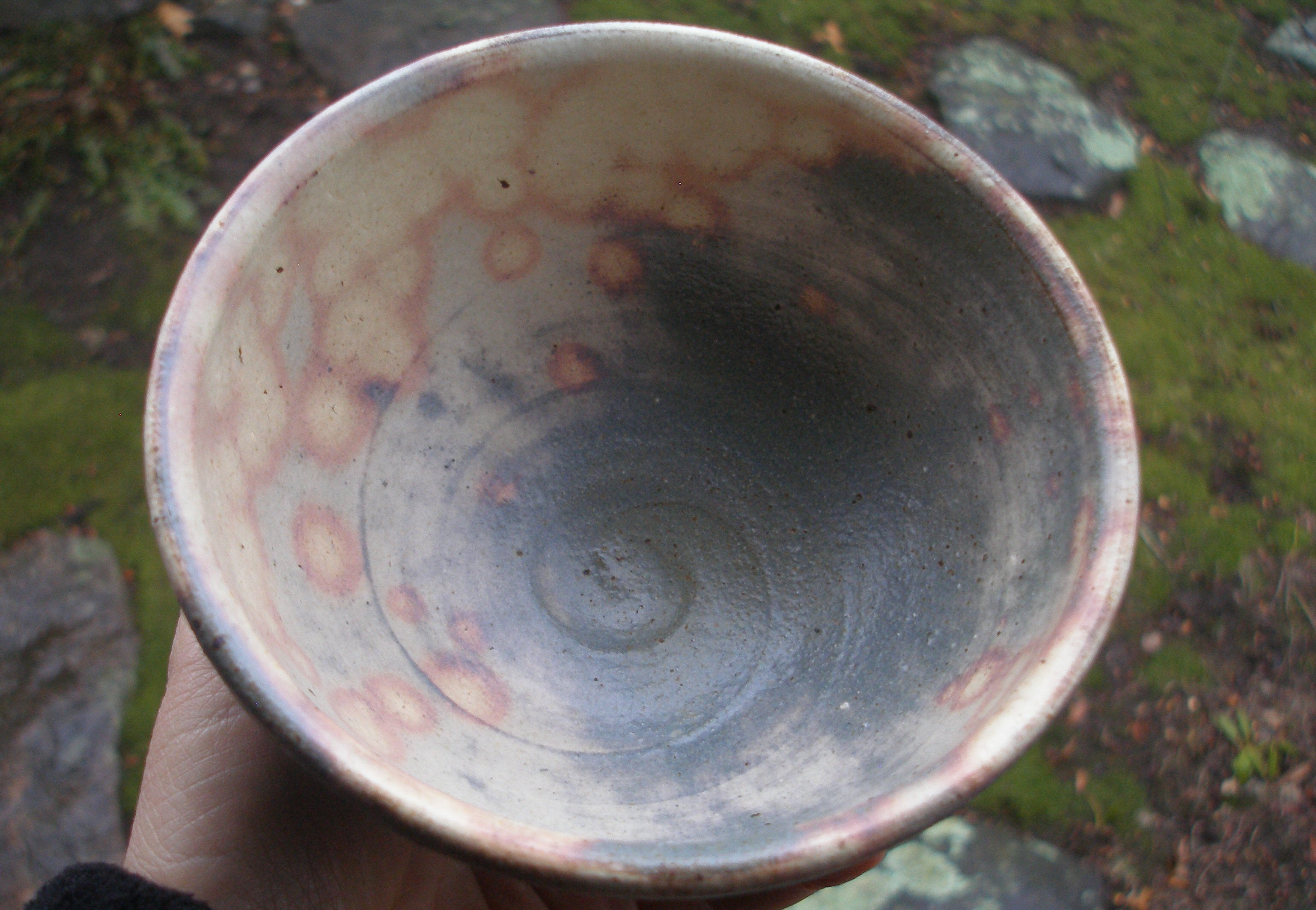
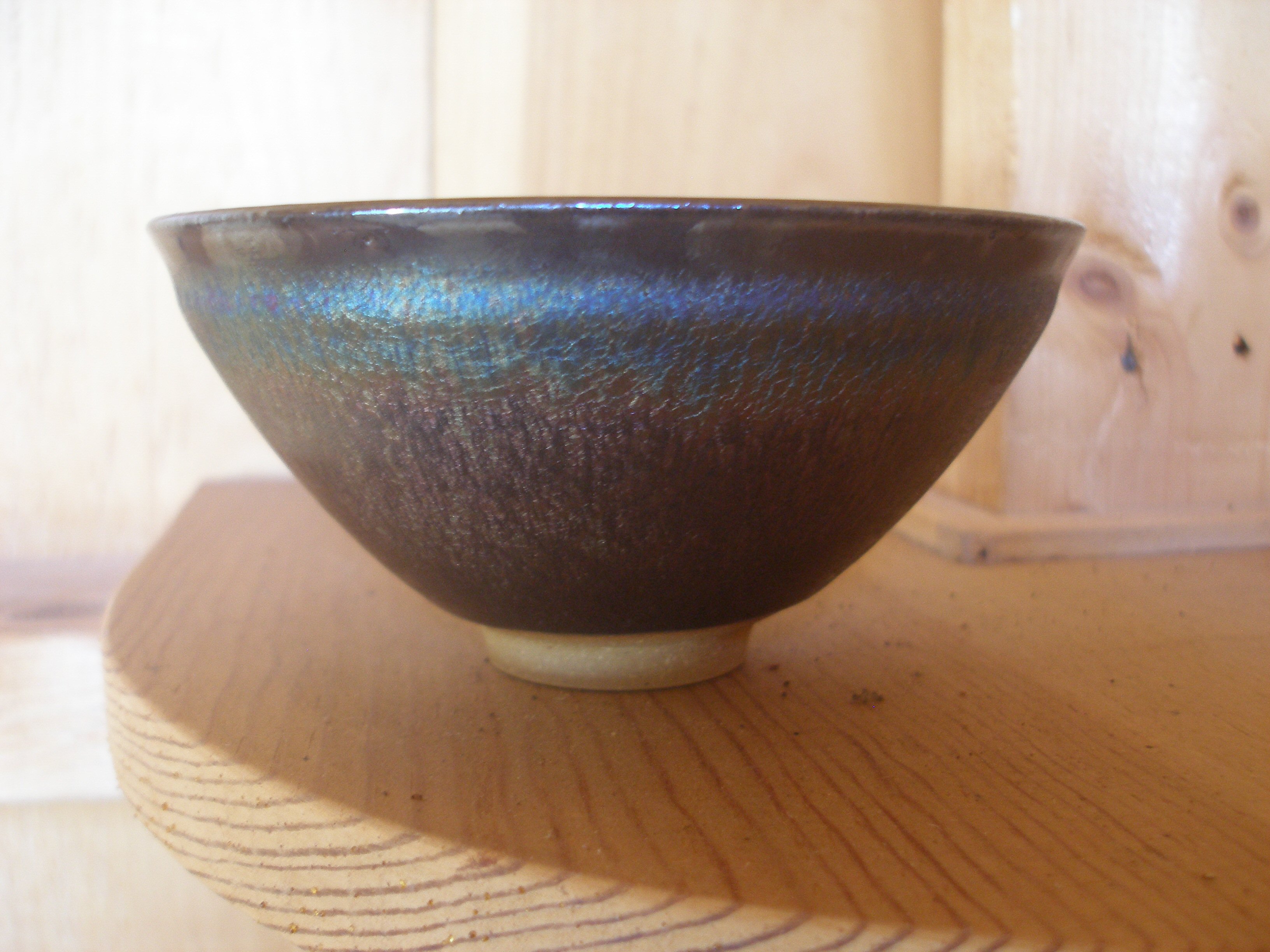
While a potter shapes clay and applies glazes to make a tea bowl, there is always a collaboration with natural forces. Kiln fire and heat will have their say. If I was stuck in an ugly part of a city, drinking tea from a lovely tactile bowl would certainly be an appropriate compensation. Tea bowls come in endless variety. Here are a few examples:

OLYMPUS DIGITAL CAMERA

OLYMPUS DIGITAL CAMERA

OLYMPUS DIGITAL CAMERA

OLYMPUS DIGITAL CAMERA

OLYMPUS DIGITAL CAMERA

OLYMPUS DIGITAL CAMERA

OLYMPUS DIGITAL CAMERA

OLYMPUS DIGITAL CAMERA

OLYMPUS DIGITAL CAMERA

OLYMPUS DIGITAL CAMERA

A Place to Share Tea

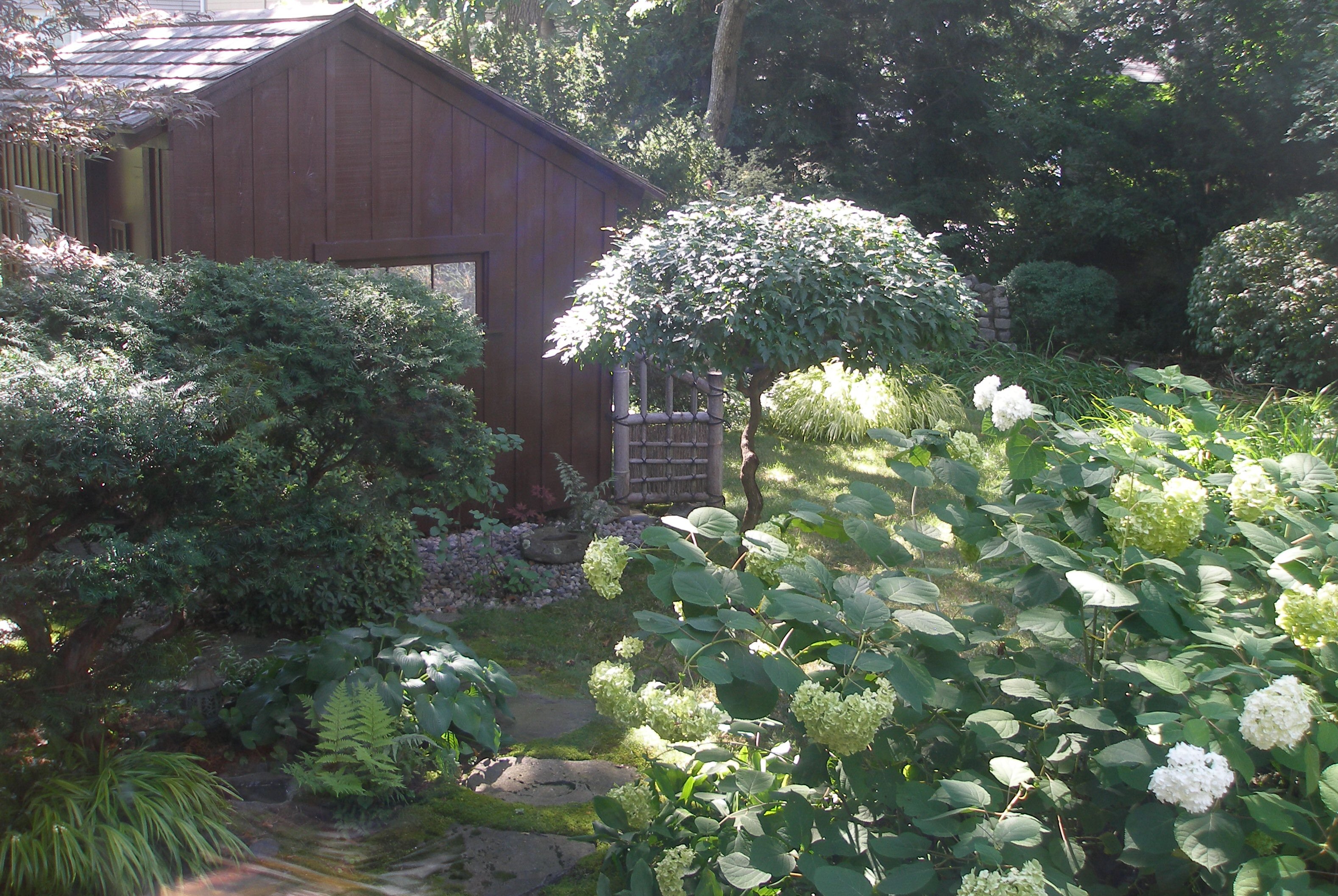
After years of Japanese tea ceremony lessons, I longed for an appropriate uncluttered space of my own in which to practice. Installing a tea garden and hut was such a crazy idea, I knew I should take it seriously. After sharing tea in my hut with many different people, I am glad I acted on that impulse.

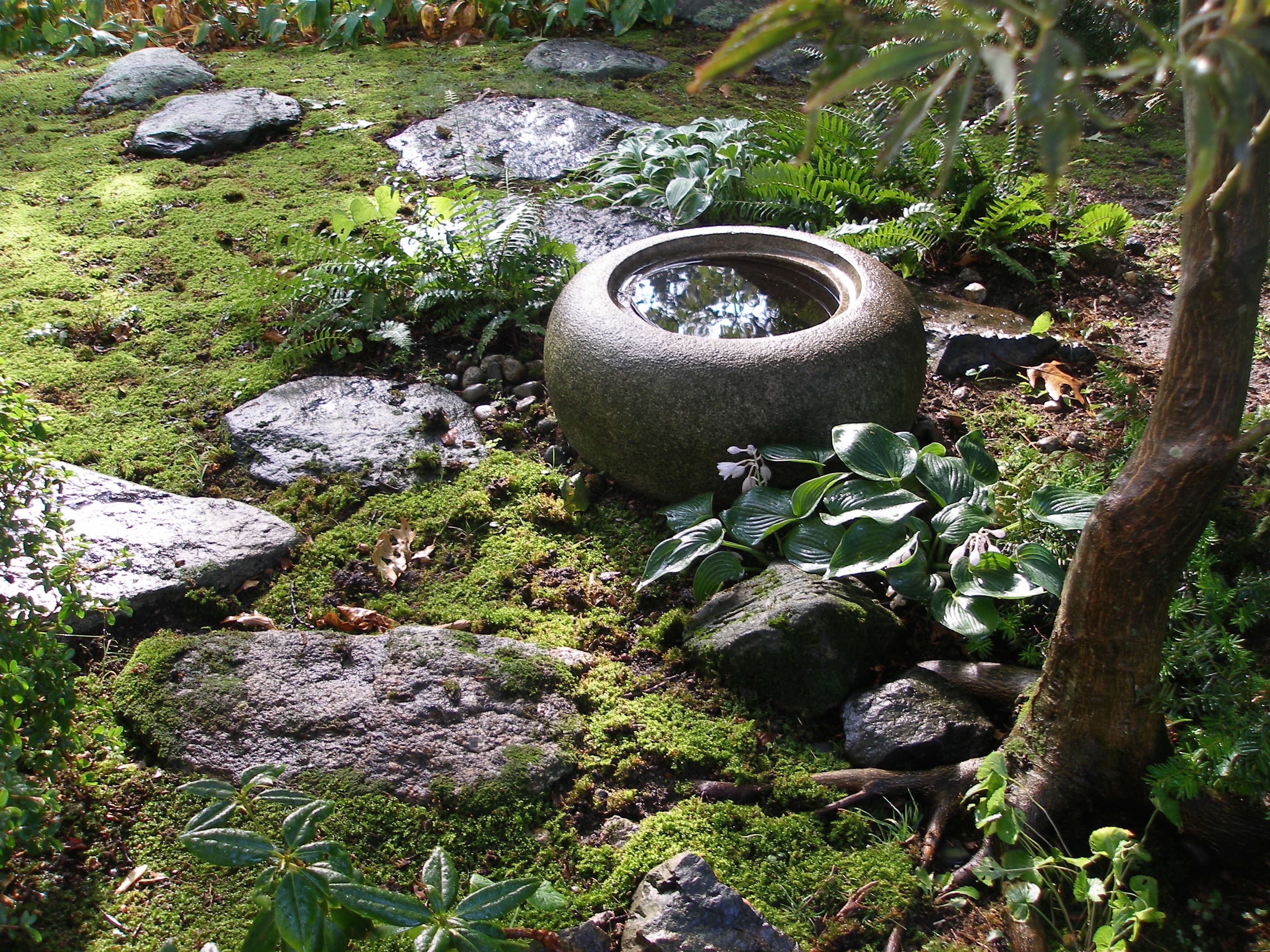
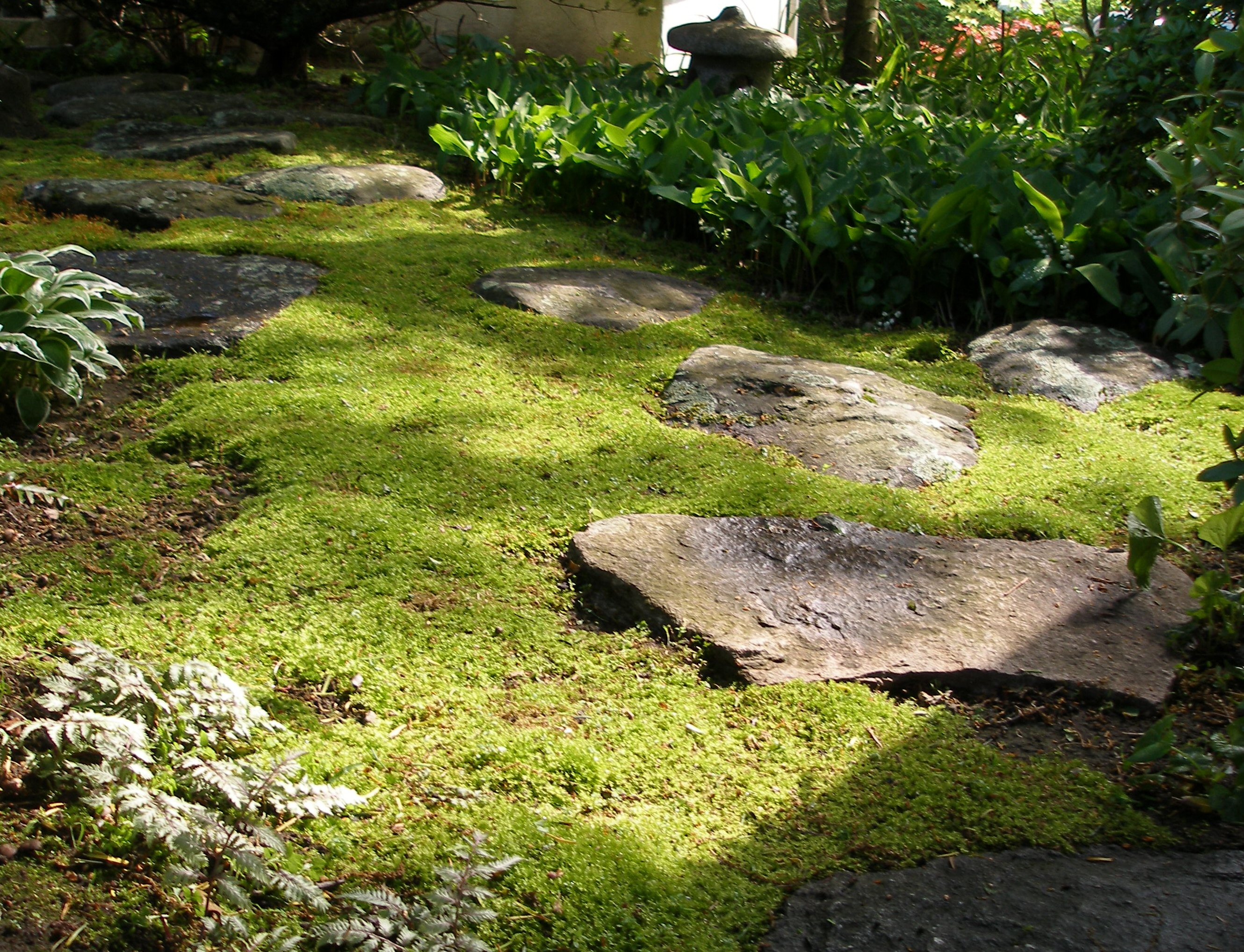
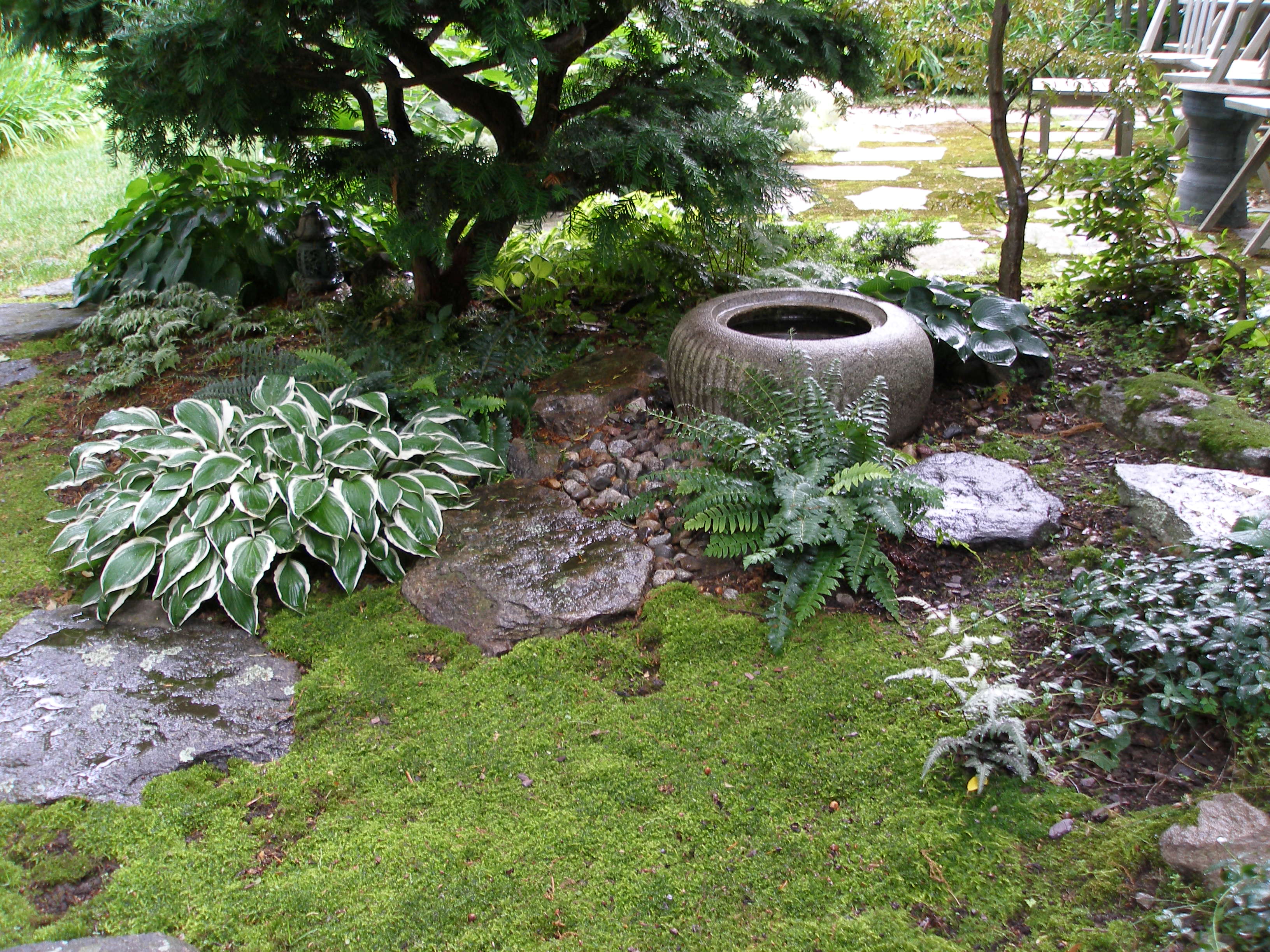
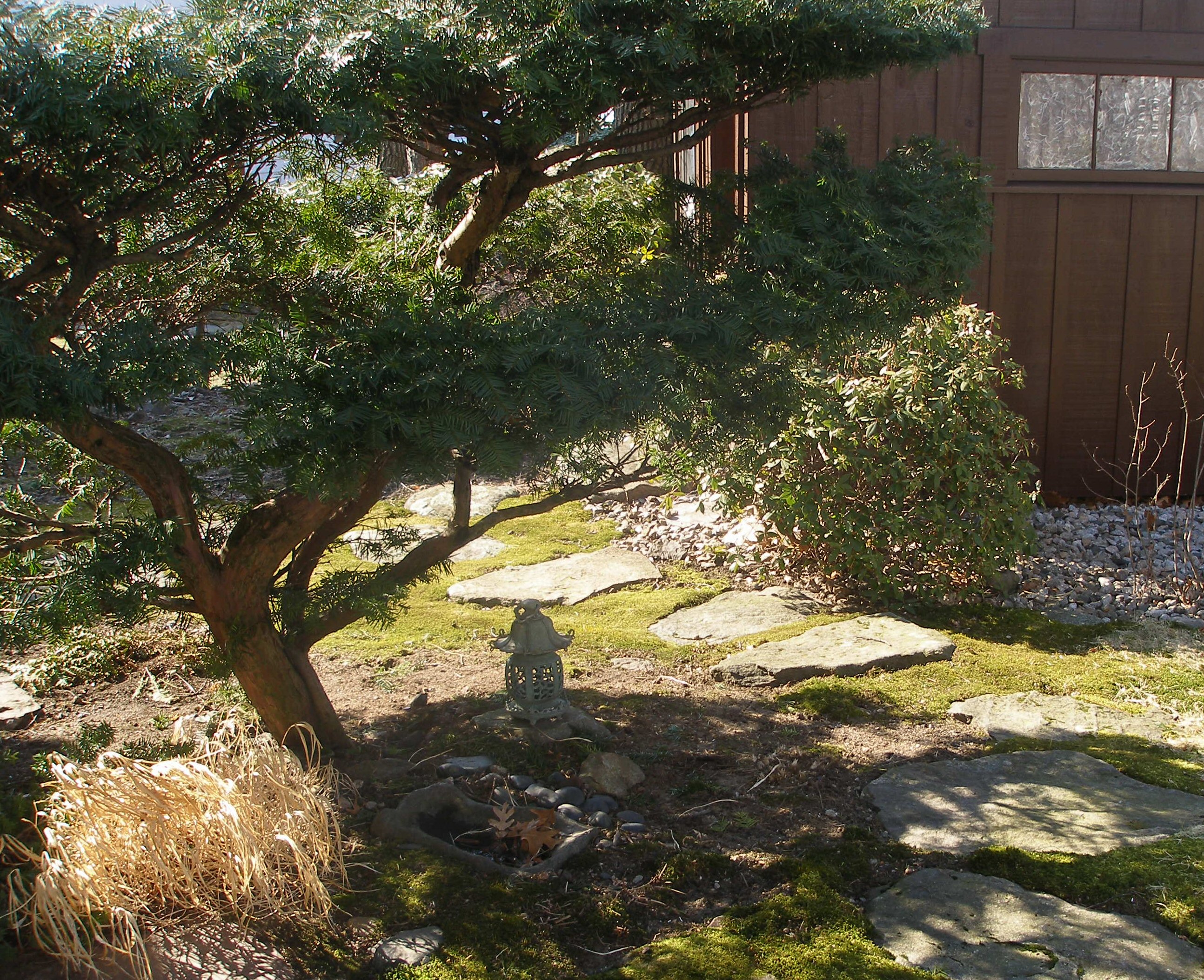
The mossy shade in the area I had in mind already felt like a tea garden. I added stepping stones, a granite lantern and a basin.

OLYMPUS DIGITAL CAMERA

OLYMPUS DIGITAL CAMERA

The hut dimensions allowed for a board with a screen, an acceptable alternative to the more common tokonoma alcove. I requested custom windows to illuminate the preparation area with soft light.

OLYMPUS DIGITAL CAMERA

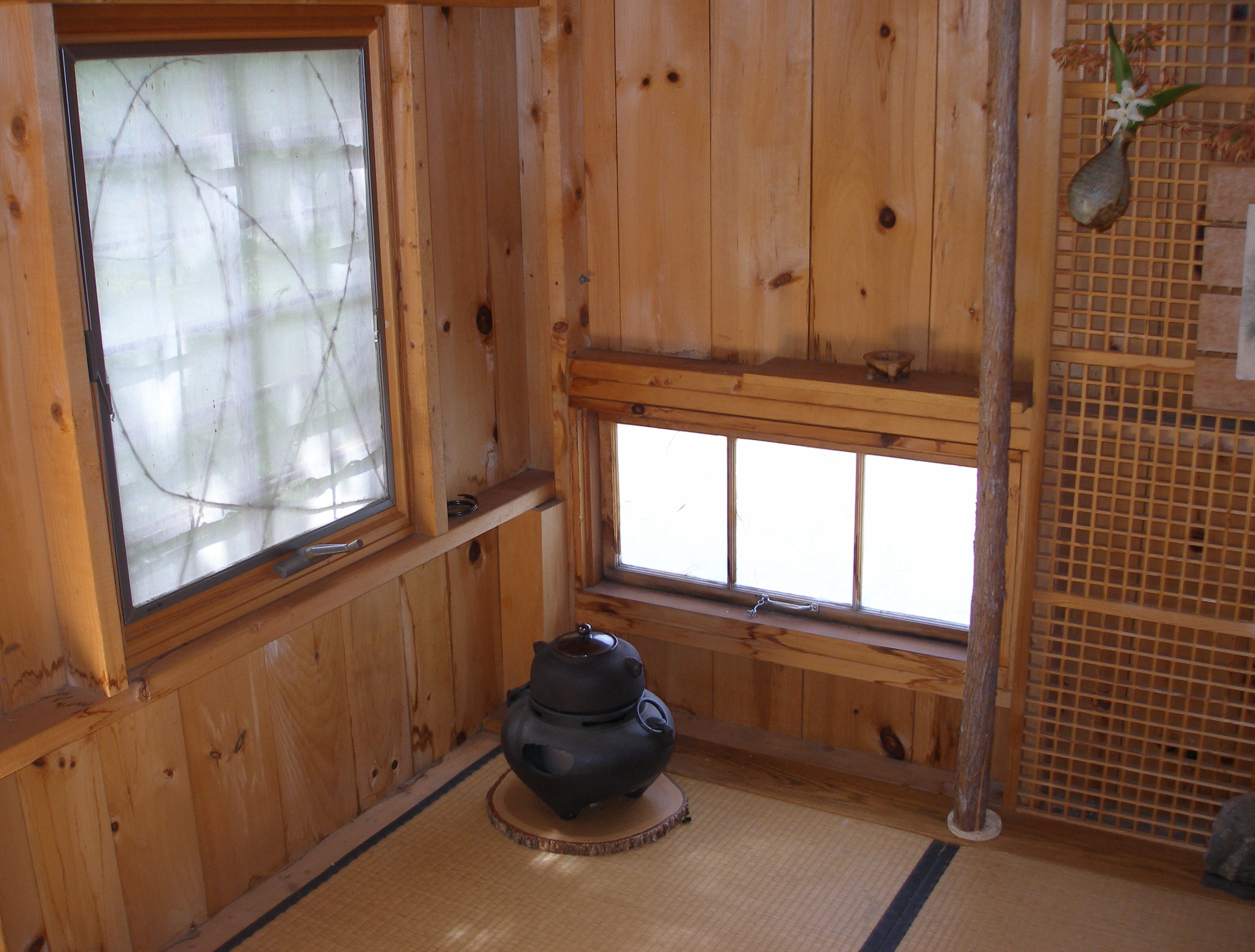
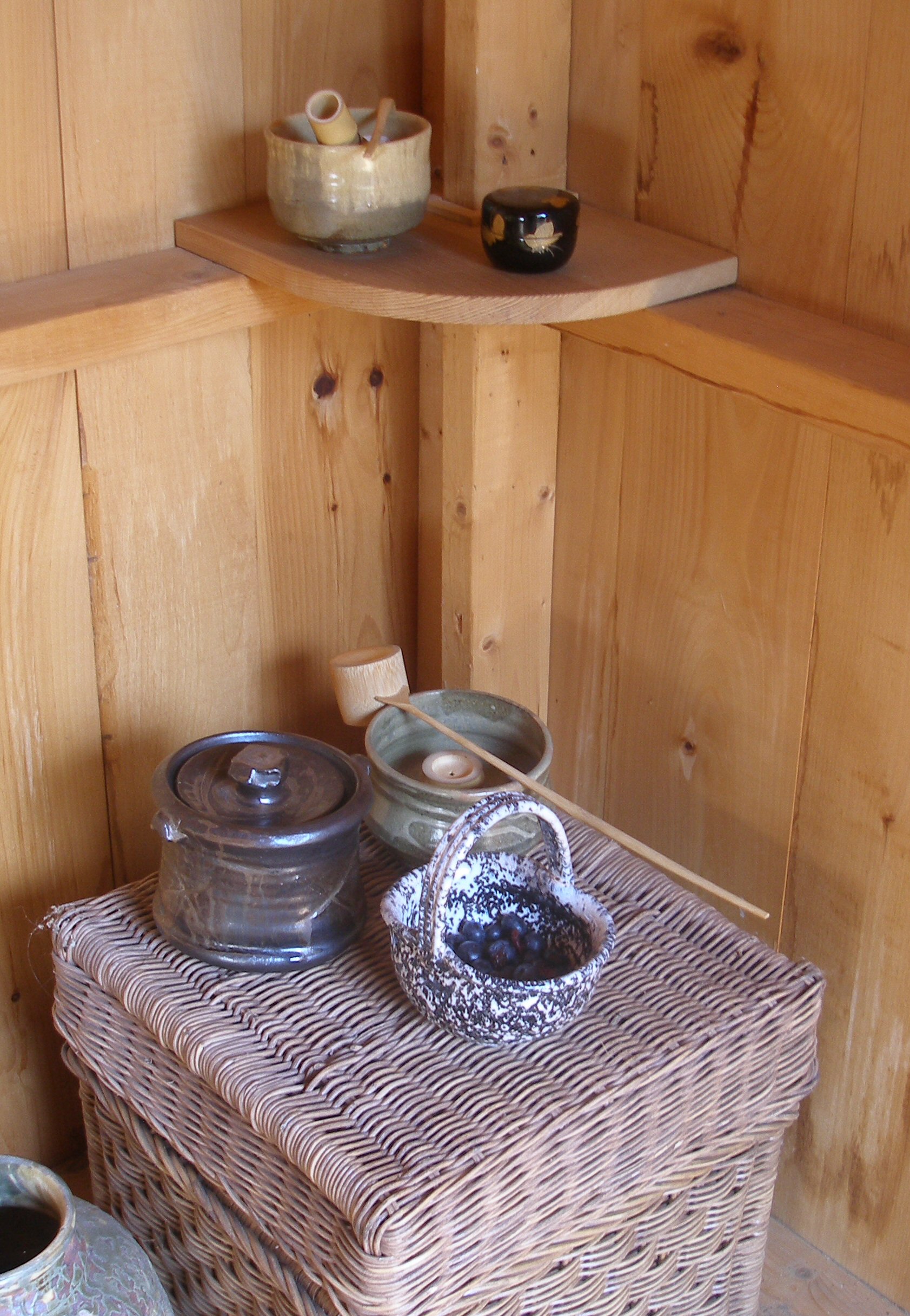
Tea utensils are staged in a corner. A friend made the shelf from a board that once served as a desk.

OLYMPUS DIGITAL CAMERA

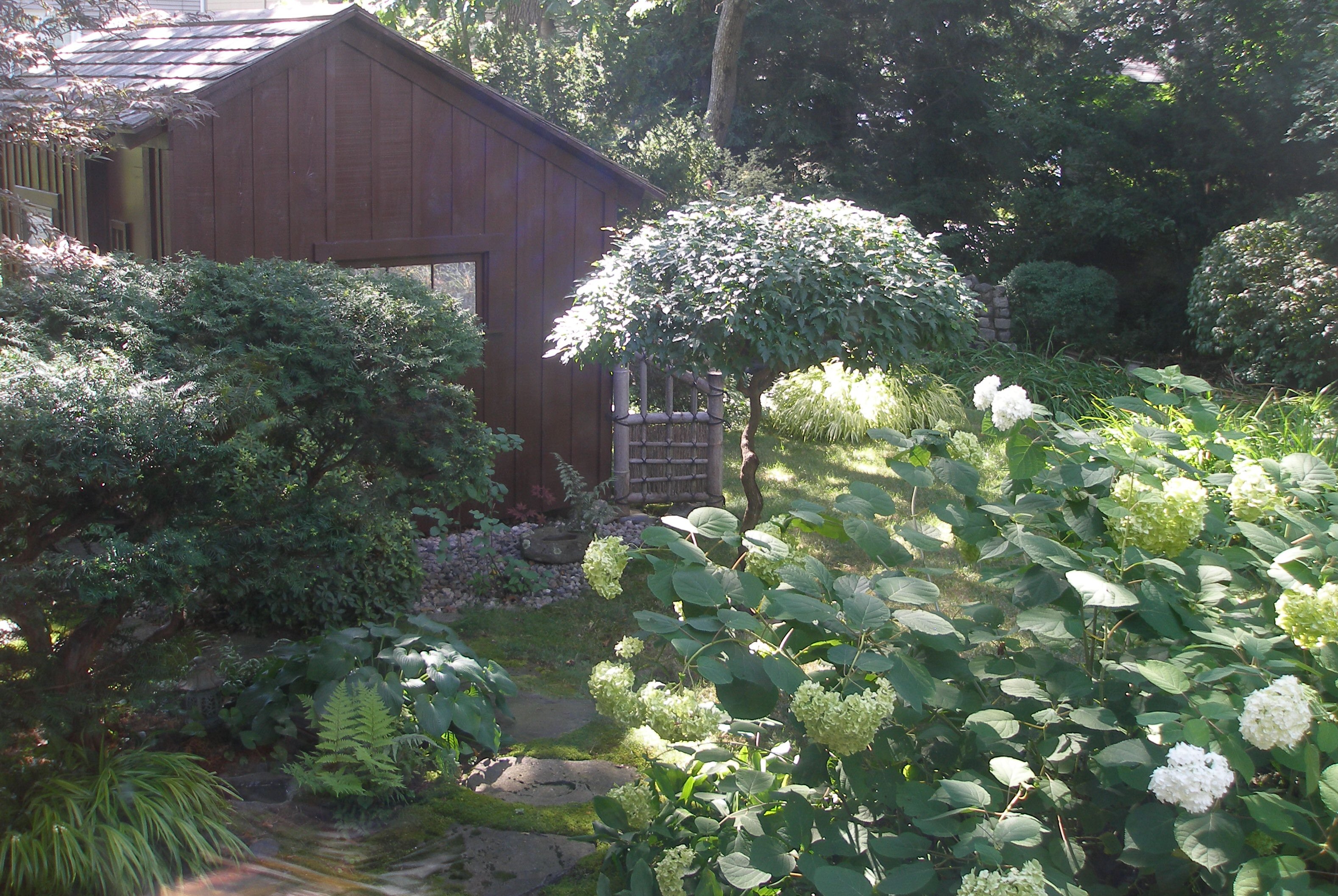
The tea garden and hut are one in my mind. The healing rhythms of nature are much in evidence here. But you do not need a tea hut to connect with nature’s nurturance.

OLYMPUS DIGITAL CAMERA

All you need to do is slow down and pay full attention to enjoying a cup of tea.

Creating Welcome

Bringing in peace as you prepare for a gathering will affect you in ways that cannot help but benefit your guests – Pause, Relax, and Open, Attune to Emergence and Listen Deeply. Then Speak the Truth in creating an environment that conveys warmth and welcome. The Insight Dialogue guidelines work well in so many applications including this one.

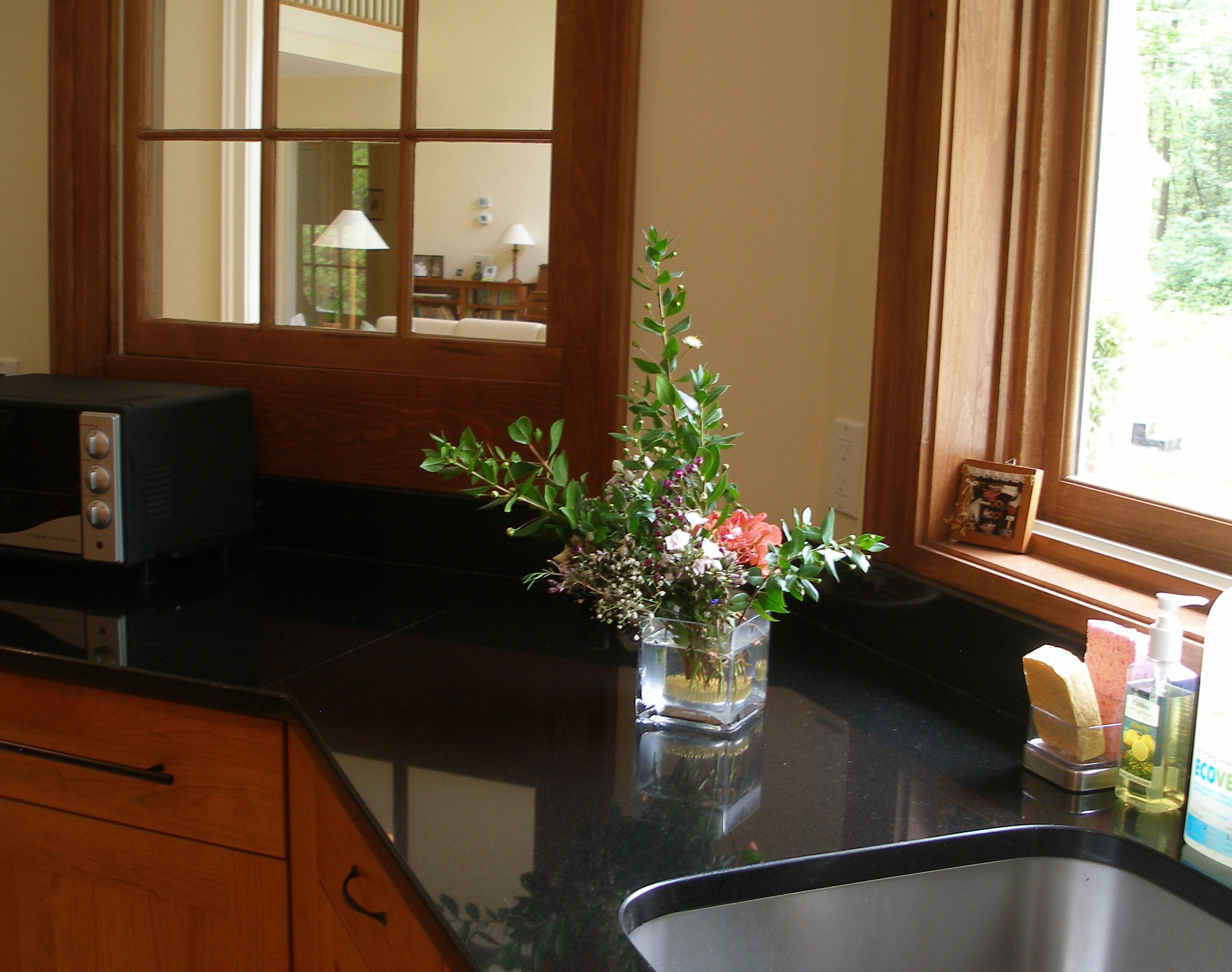
Perhaps you will include a reminder of nature displayed in a place of honor with space around it. Using a light touch, see what happens. Relying on a heart connection without words can open us to wonderful small surprises and an understanding that with a little care, life can be lived more like a work of art.

OLYMPUS DIGITAL CAMERA

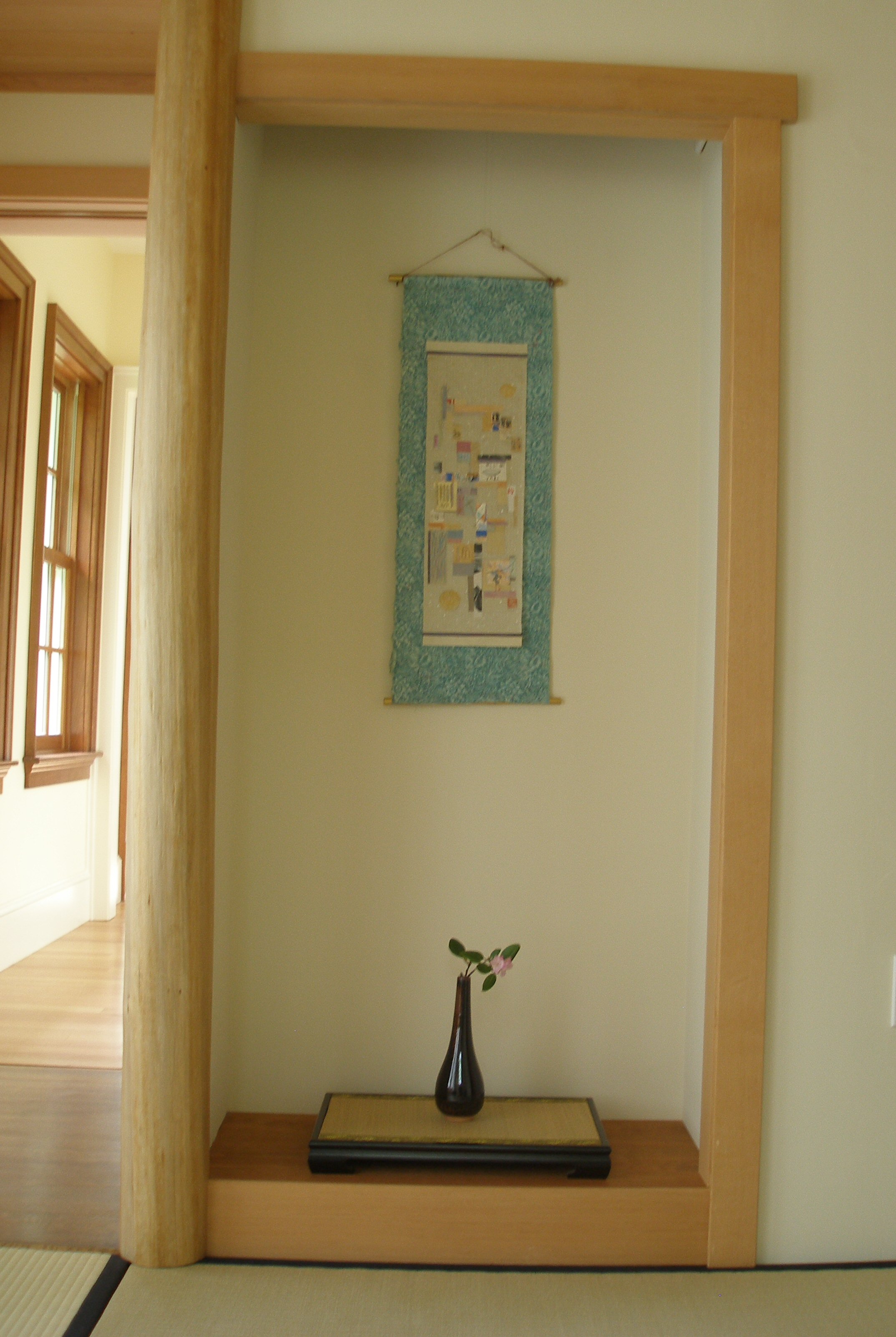
You can bring to it all the sensitivity and freshness used to create a tokonoma alcove arrangement for a tea ceremony. This one includes a collage by my tea ceremony teacher, Giselle Maya:

OLYMPUS DIGITAL CAMERA

You may also wish to keep in mind the Japanese tea ceremony values of harmony, purity, respect and tranquility. While it is important to ensure that what touches food or drink is scrupulously clean and that edibles are pure and safe, purity also dictates that anything not needed be eliminated. Care taken with objects and supplies implies respect for your guests.

Ideally, the result will be supportive of a sense of peace and wellbeing as well as openness. It takes a bit of effort, but this approach to preparing for guests is an important mindfulness practice in its own right.

OLYMPUS DIGITAL CAMERA

Kintsugi: Two Tea Bowls Mended with Loving Care

There are very few practicing the traditional craft of kintsugi (literally gold mended) in Japan, although you can purchase materials online and try it yourself.

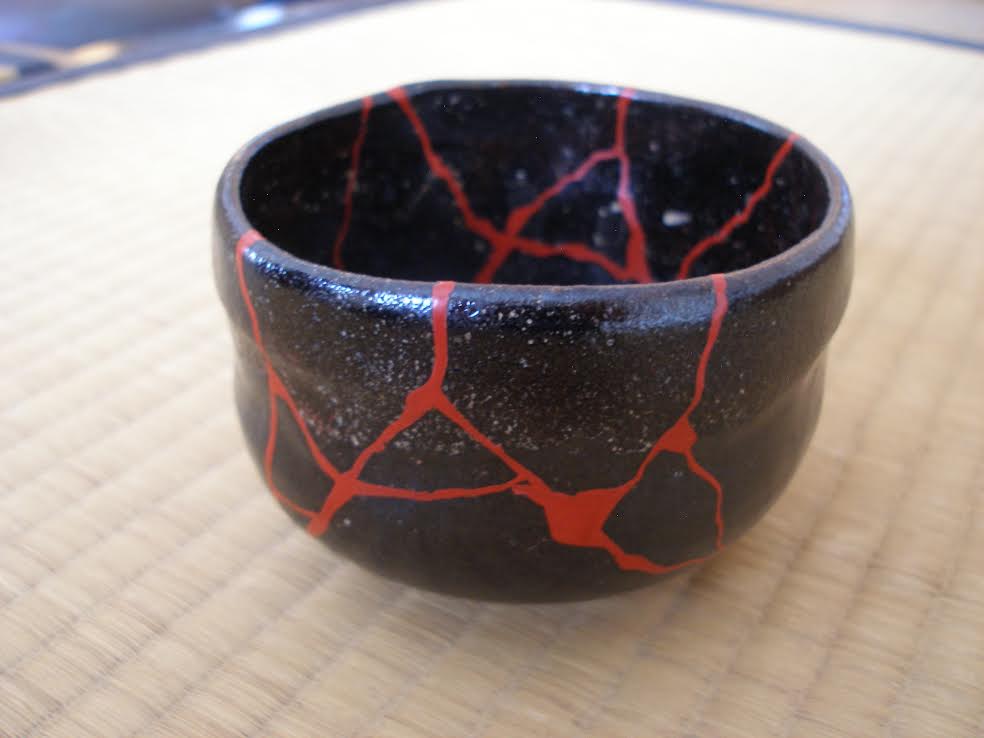
You can also find examples with related concepts such as the illusive wabi sabi, mottainai (regret about waste), and mushin (openness to transience).  This post presents two examples that had great meaning for their owners.

OLYMPUS DIGITAL CAMERA

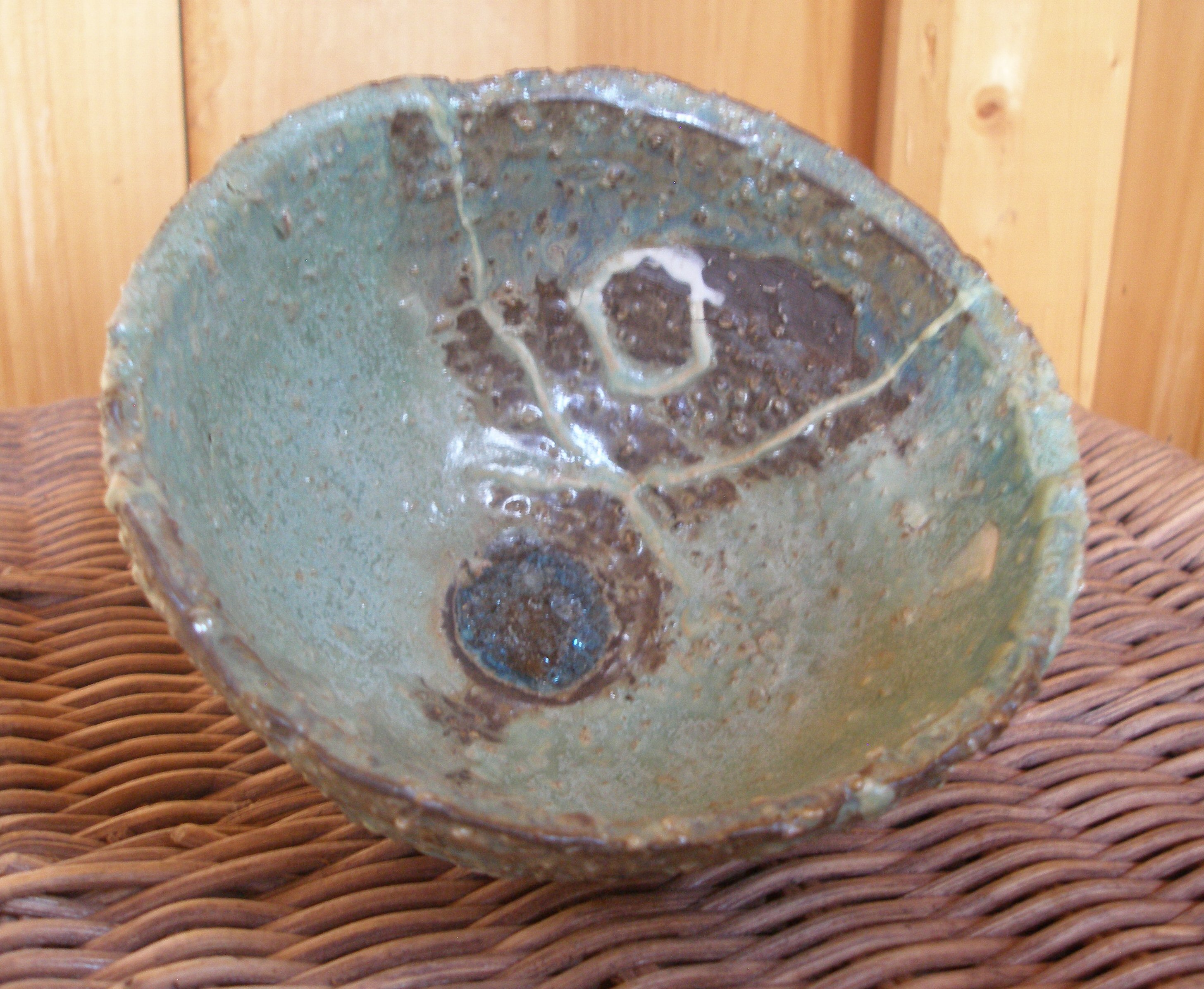
The first example (above) was a favorite “travel” tea bowl of a Japanese tea ceremony enthusiast. When it broke in transit during a trip, he had it mended using a nontraditional color. Kintsugi normally uses gold, silver, or platinum.  The owner treasures all of his memories of that special bowl, including those associated with its latest vibrant transformation.

When I first encountered kintsugi, I realized the process involved collaboration. The person who made the bowl, the forces that broke it, and the person who mended it all contributed something important as the object moved through time.

Of course, there are many good reasons to mend a bowl. But this art goes beyond the practical or sentimental. From tending my tea garden through growth and change and at times dealing with storm damage, I learned the wisdom of honoring the potential of what is here now.

Like everything else, we are subject to constant change. We are by no means immune from shattering.  But we are also gifted with the ability to work with the potential which informs the very heart of beauty right in the midst of transience.

OLYMPUS DIGITAL CAMERA

When this bowl by Brother Thomas broke, its owner considered having it repaired so the mend would be invisible.  In the end, he decided on gold leaf.  When shown the elegant results, Brother Thomas said he liked the bowl better that way. It remains a treasured object in the gallery owner’s personal collection.

Although Audrey Harris was not so pleased with her first attempts at kintsugi, the many important lessons she learned from the process with the help of her teacher were certainly treasures. Kintsugi can also be a most powerful metaphor for human healing as this  moving video makes clear.

Addendum: This post was updated on 3/11/19 to include the video on the meaning of kintsugi for a survivor.

Cleaning My Tea Garden

OLYMPUS DIGITAL CAMERA

Tea garden cleaning is not too serious an enterprise. It is said that young boys and old men are perfect cleaners of tea gardens because they are not too careful. In fact there is a story that Sen no Rikyu, who was a great tea ceremony master and setter of standards, shook a tree to scatter a few leaves into a too-perfectly-cleaned tea garden.

When I am cleaning my tea garden, I often get lost in what I am doing and before I know it, an hour or more has passed. I allow myself the luxury of taking my time. I stop to check if the few remaining weeds in the moss are distracting rather than enhancing and natural looking.

As I work, I notice the pattern of shadows and whether there is a breeze or a light covering of snow on the evergreens. I notice the color of a single fallen leaf. Sometimes I sweep the moss with a broom. I may replace a fallen twig I have removed. I “listen” to the garden and what it tells me should be done.

I water everything carefully, and the moss fills out and deepens in color before my eyes. I scour the rough granite water basin and fill it with pure water. Then I place the delicate bamboo dipper diagonally across the round opening. If it is evening, I light the lanterns not to provide light, but to enhance the growing darkness and to mark the path.

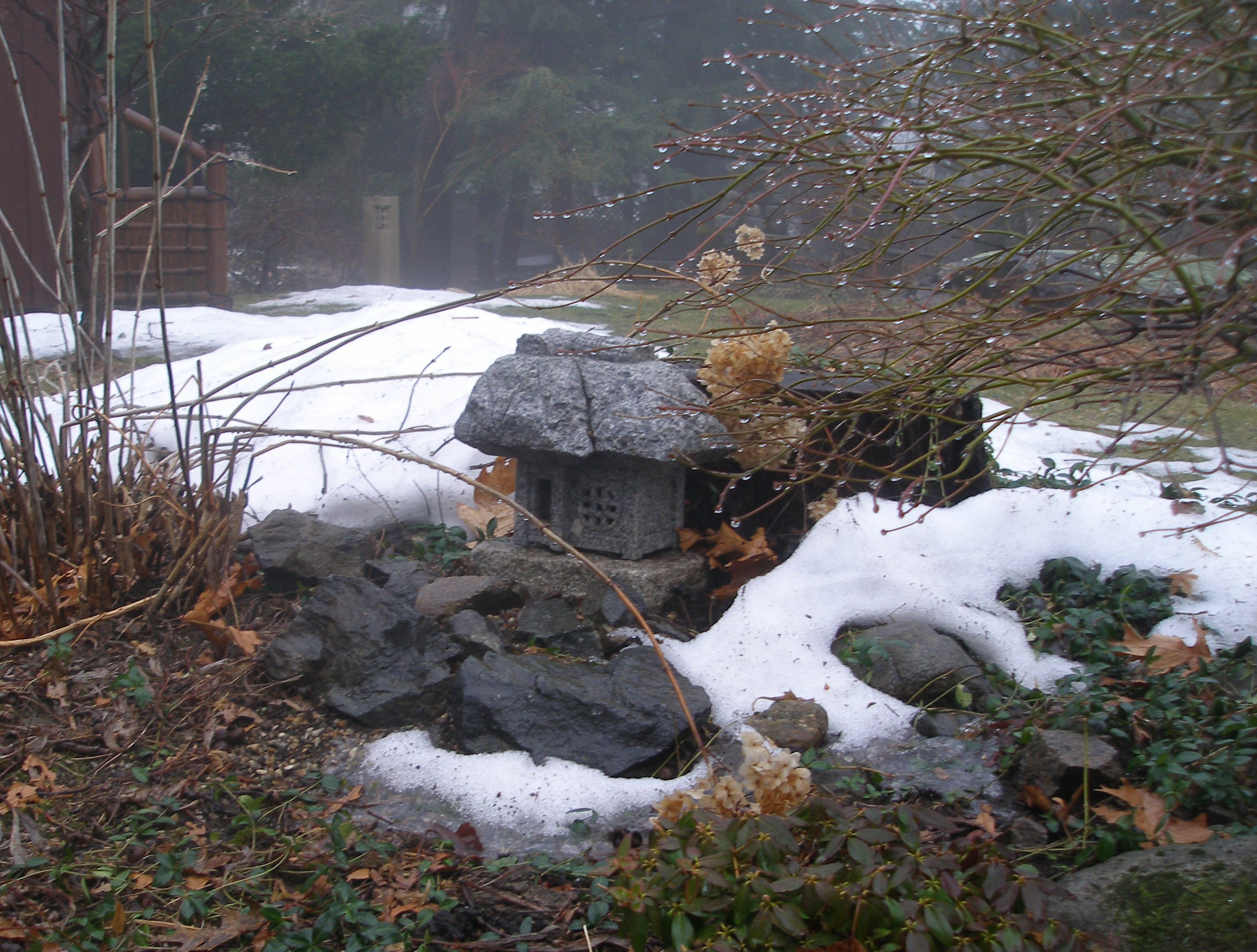
In winter, I carefully clear the stepping stones trying not to disturb the snow around them. This is a beautiful time of year in the garden as the snow mounds on the evergreens and lanterns, and the bare branches of the trees enhance the solitude.

Normally cleaning the garden has the effect of taking me far from the mundane frustrations of life and bringing me to a state of peace, openness and gratitude. There is also the joy of anticipating the remaining tasks yet to be done inside the teahouse. These tasks include selecting the scroll for the tearoom, arranging the flowers, and preparing the tea utensils for the particular occasion.

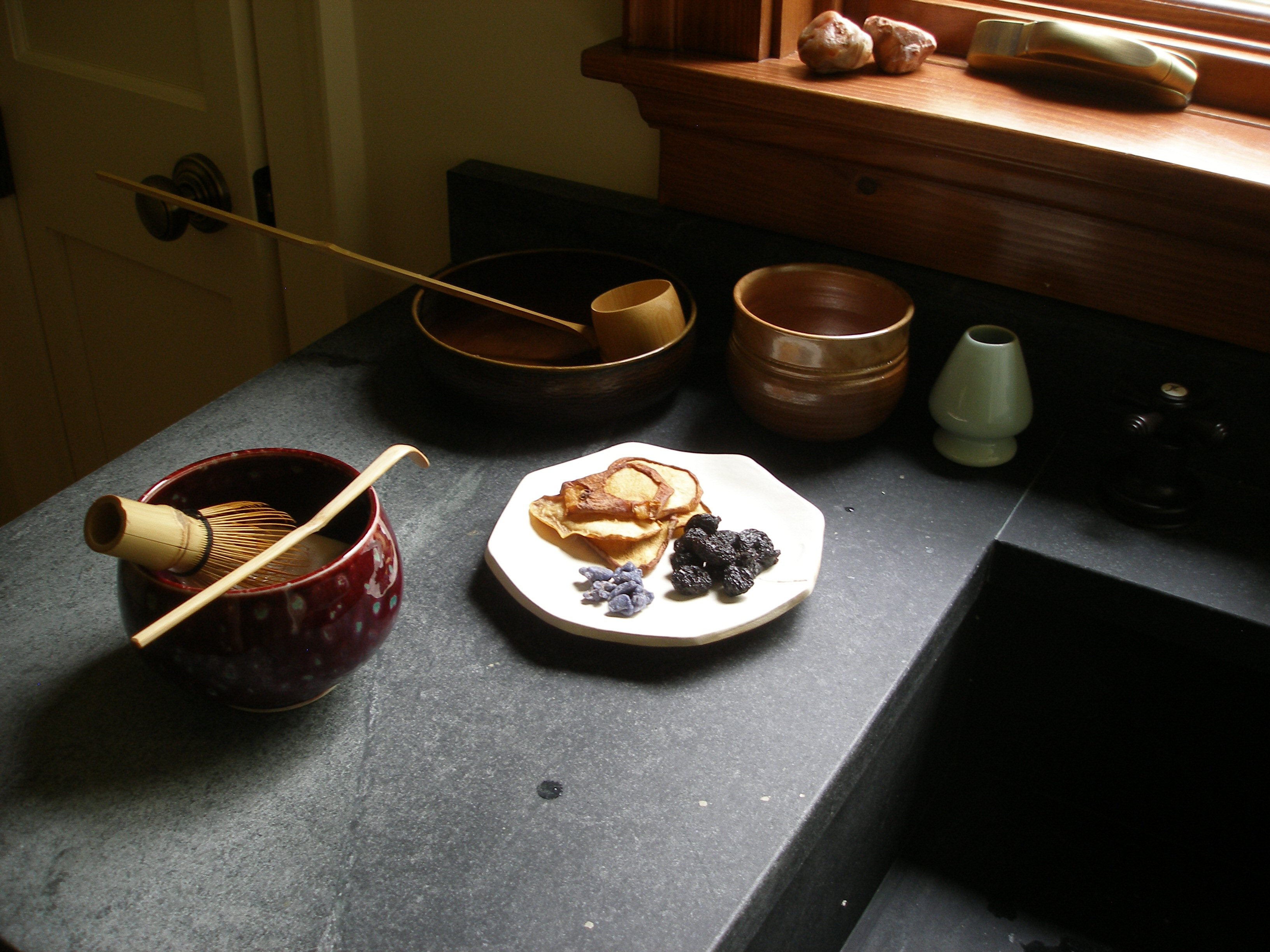
I usually select a scroll that suggests the coming season. One or two simple flowers from my yard are arranged in a basket or mud-colored vase. I place odd numbers of molded sweets or dried fruits in an abalone shell. Sometimes I place them on a wooden plate with a leaf.

Tea bowls, jars and containers, bamboo scoops, pieces of cloth used in cleansing, and a special tea whisk are all selected. My appreciation of the beauty, simplicity and functional rightness of the tea utensils continues to grow over time.

This is just one example of how tea grows deeper in meaning the longer one practices. Many aspects of tea are both simple and profound. Its values, which are only implied indirectly in this article, are particularly true and precious to me.

One of the very last steps in preparing for a tea ceremony is to wet the stepping stones just before guests arrive to create a feeling of freshness and as a sign of respect and greeting.

This article was originally published in the March, April 1999 issue of the Journal of Japanese Gardening.

A Personal Garden Refuge

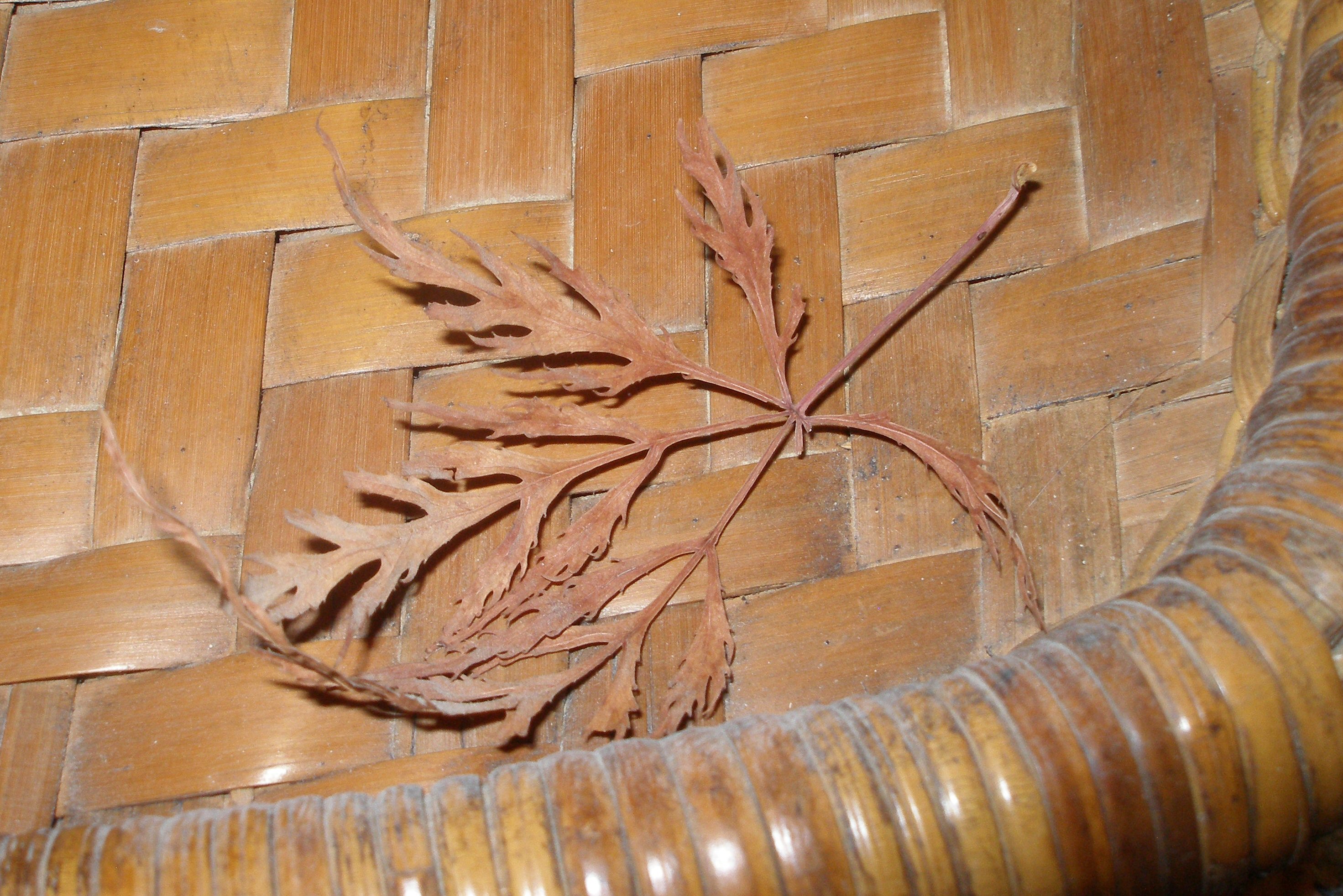
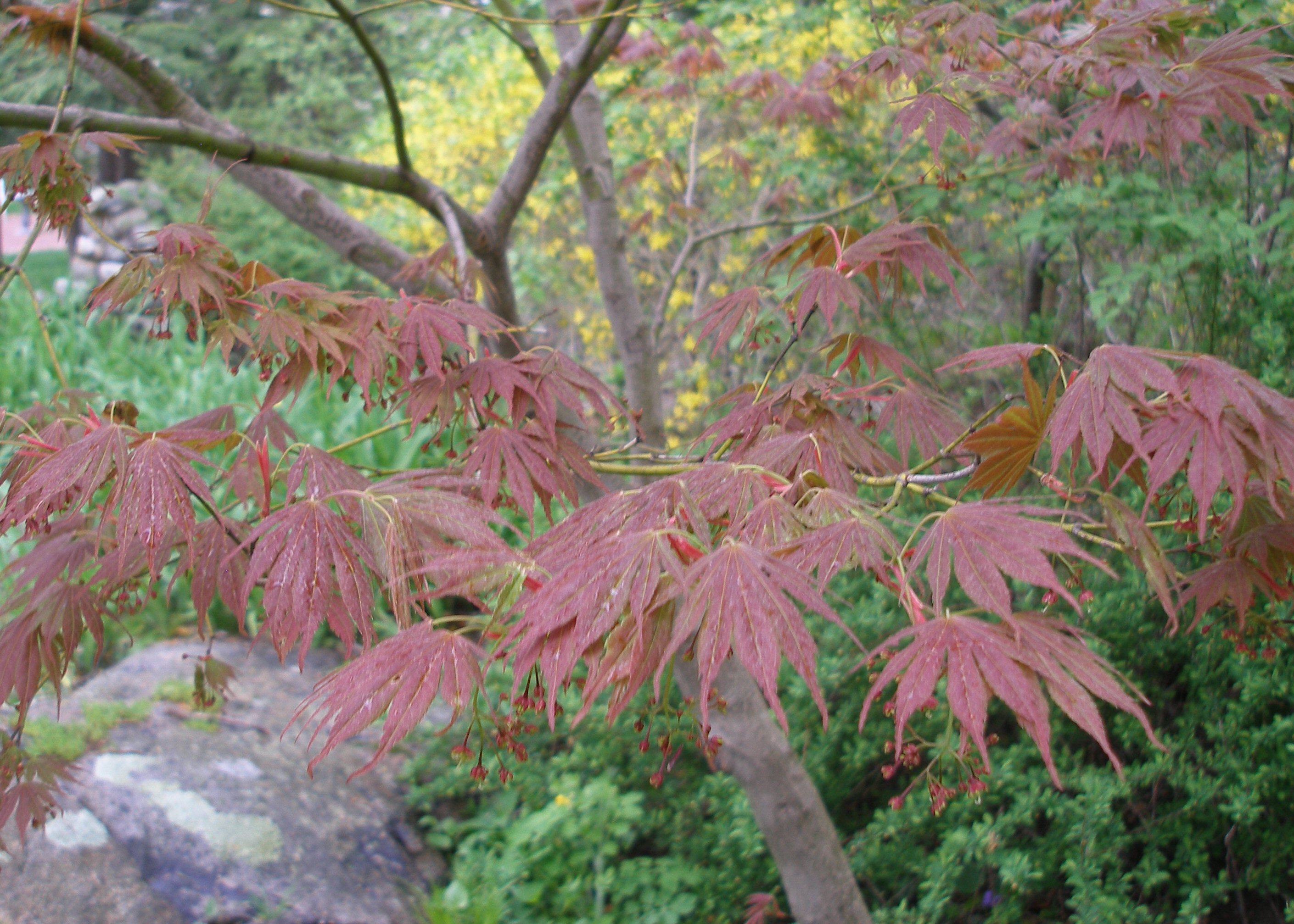
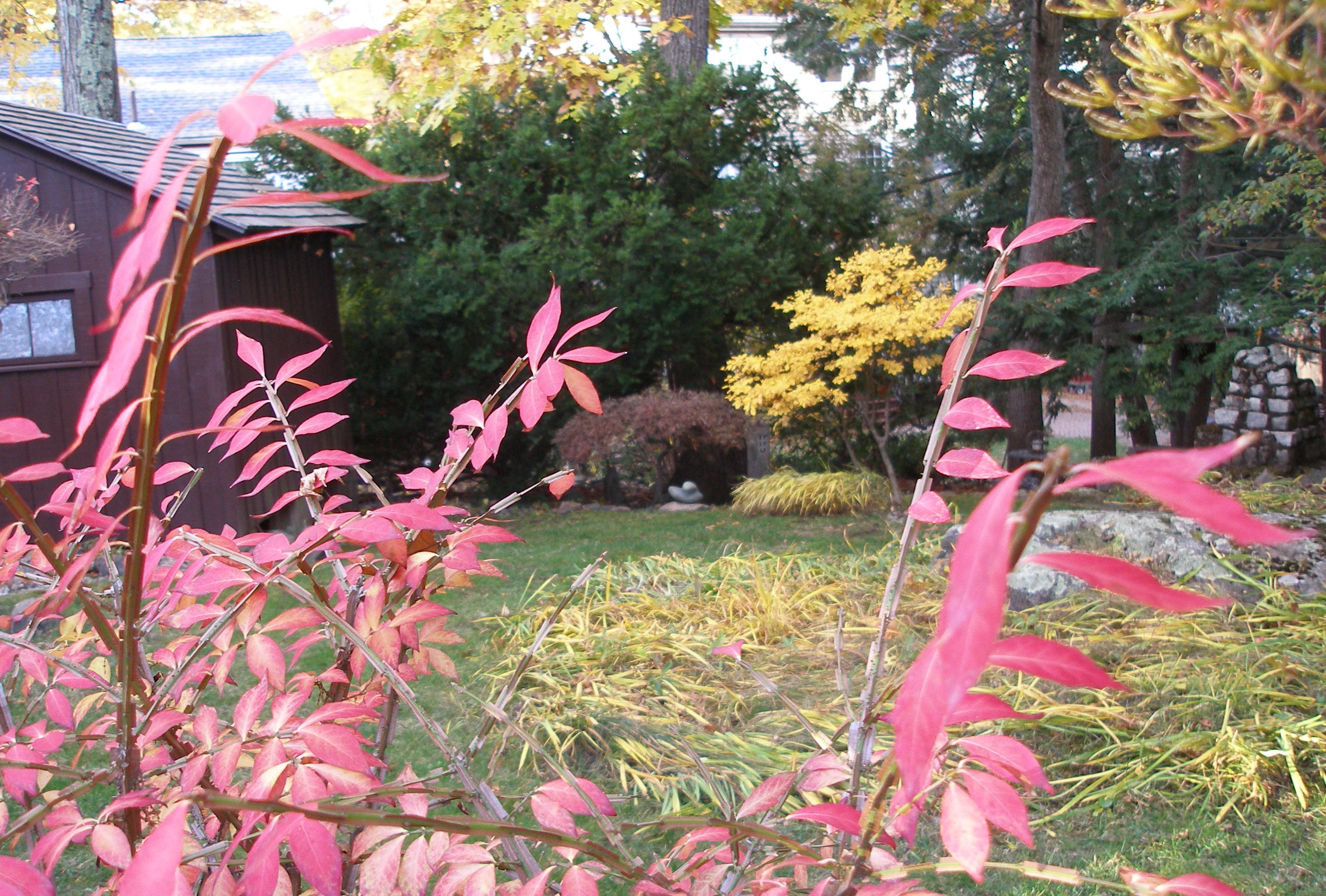
It takes many years to really get to know a garden so that you are in each other’s bones. I encouraged the moss that already liked to grow here. I added stepping stones and a tea hut. I watched for the new maple leaves, and took their portraits in the fall. Children jumped on the stepping stones. Raccoons drank from the water basin. The garden and I bless each other with mutual nurturance even as we continually change. Peace gathered and peace extended.

OLYMPUS DIGITAL CAMERA

OLYMPUS DIGITAL CAMERA

OLYMPUS DIGITAL CAMERA

OLYMPUS DIGITAL CAMERA

An Invitation to Tea

A heightened awareness of what is going on around the tea hut is part of Japanese tea ceremony.  There may be rain drops falling on the roof, rustling leaves, bird song, falling dusk with the crickets starting up, or a cold, bright winter day.

It was chilly that afternoon in February though record high temperatures had kept the snow away. Sun was streaming in through the naked branches of overhead trees and the evergreens seemed to be drinking it in.

OLYMPUS DIGITAL CAMERA

Modern houses block us off from nature. The tea hut does create an interior meditative world, but it is not cut off in the same way and in that sense brings us back to our roots.

Shadows on tatami 021812

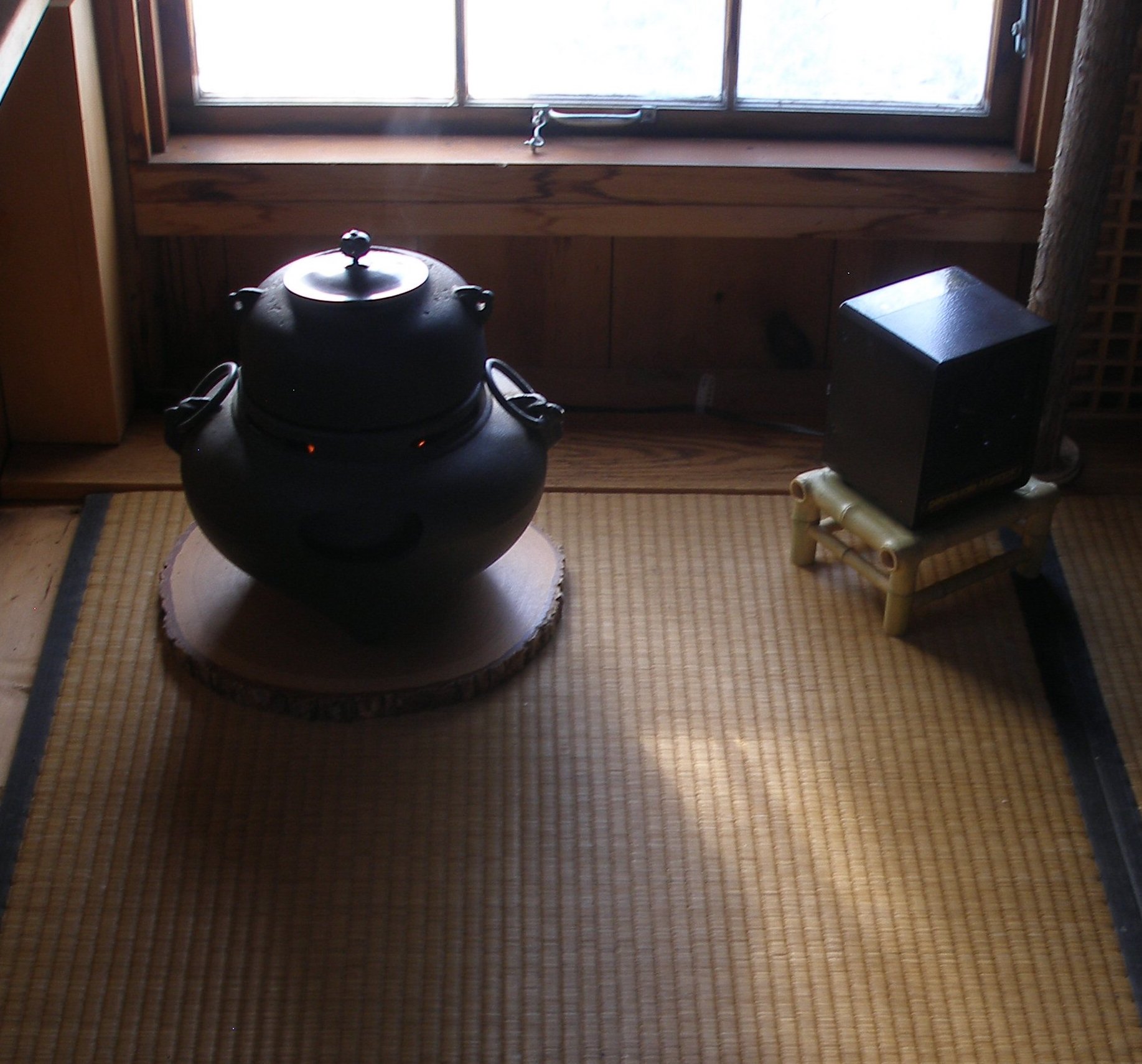
Within the hut, natural light creates a restful mood as do the tatami mats and simple space. The kettle/hibachi waits on the host mat with steam just beginning to rise. I also directed a small space heater toward where guests would sit.

OLYMPUS DIGITAL CAMERA

The light (and therefore the mood), varies by time of day, weather conditions and with the seasons. It also changes constantly during the course of a practice. It was particularly bright and mysterious that afternoon.

Tea provides a place to slow down – to appreciate ordinary things that are not so ordinary. Being awake in the moment also allows for a deep rapport between host and guests.

OLYMPUS DIGITAL CAMERA

I stage the utensils in a corner of my one-room hut. A talented friend cut the clam-shell shelf to my specifications, using a board that once served as a desk. The basket holds a blanket that was useful on this occasion.

Although blueberries are not appropriate for a winter ceremony, I knew that my friend is particularly fond of them, so I made an exception.

OLYMPUS DIGITAL CAMERA

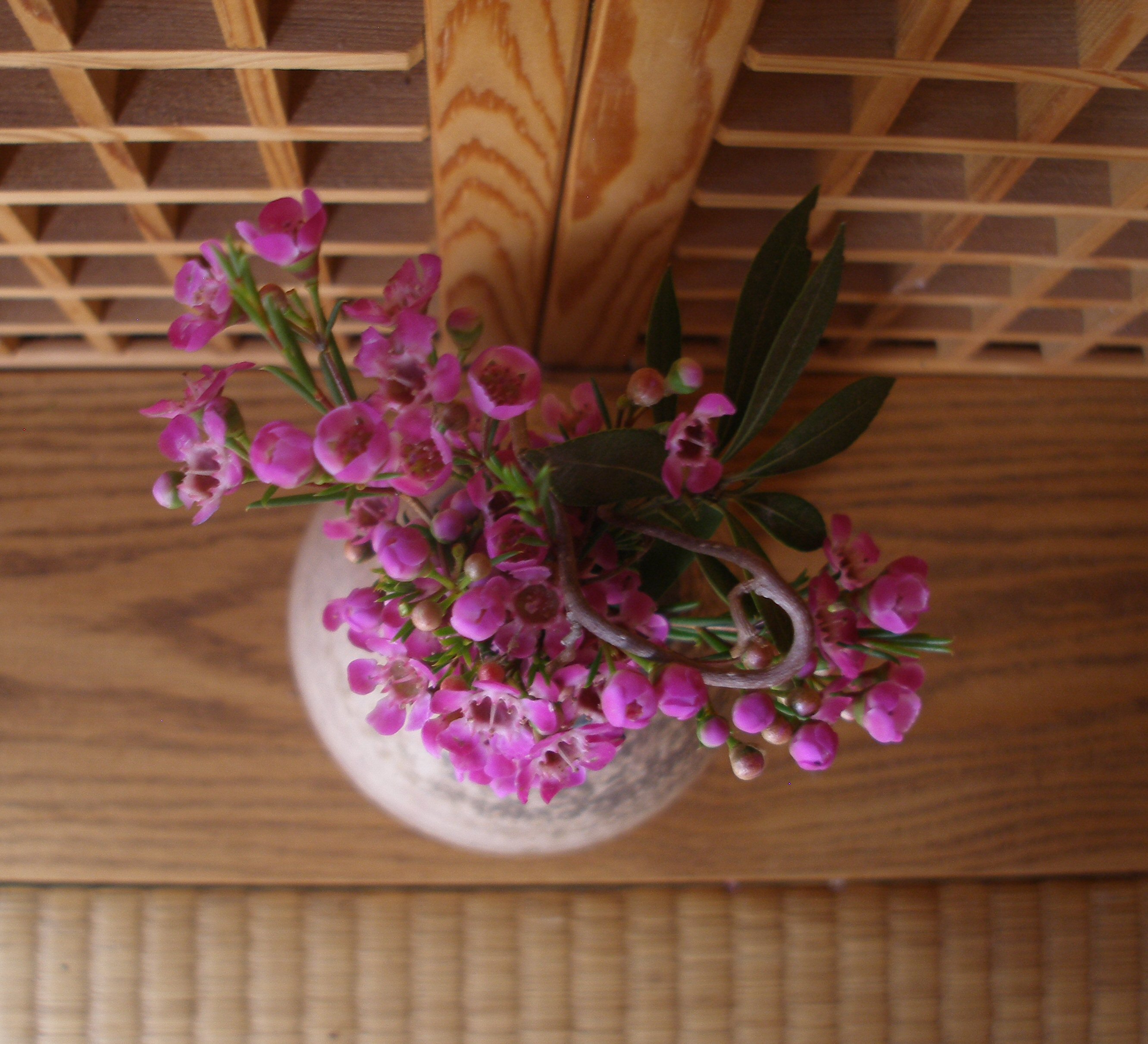
At the beginning of the ceremony, guests come up to look more closely at the scroll and flowers. A guest might look down from above to see this view of the flowers that seem to be bursting with promise of the energy of spring.

OLYMPUS DIGITAL CAMERA

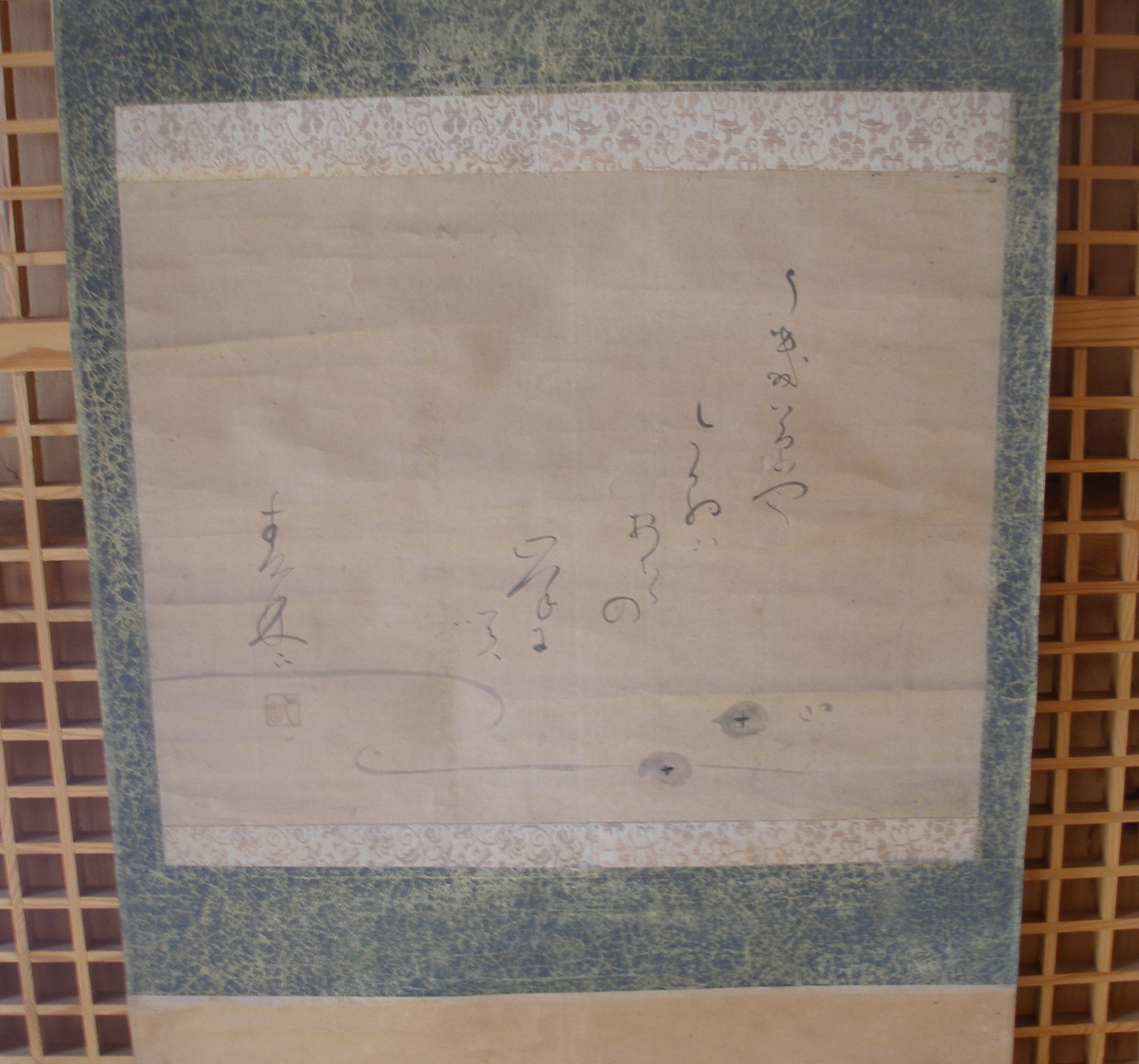
The scroll I selected suggests the coming season as did the crocus that decided to bloom in a protected area of my front yard that day. I was told that this calligraphy is of a type that might have been made for sale by a monk at a Buddhist Temple.

OLYMPUS DIGITAL CAMERA

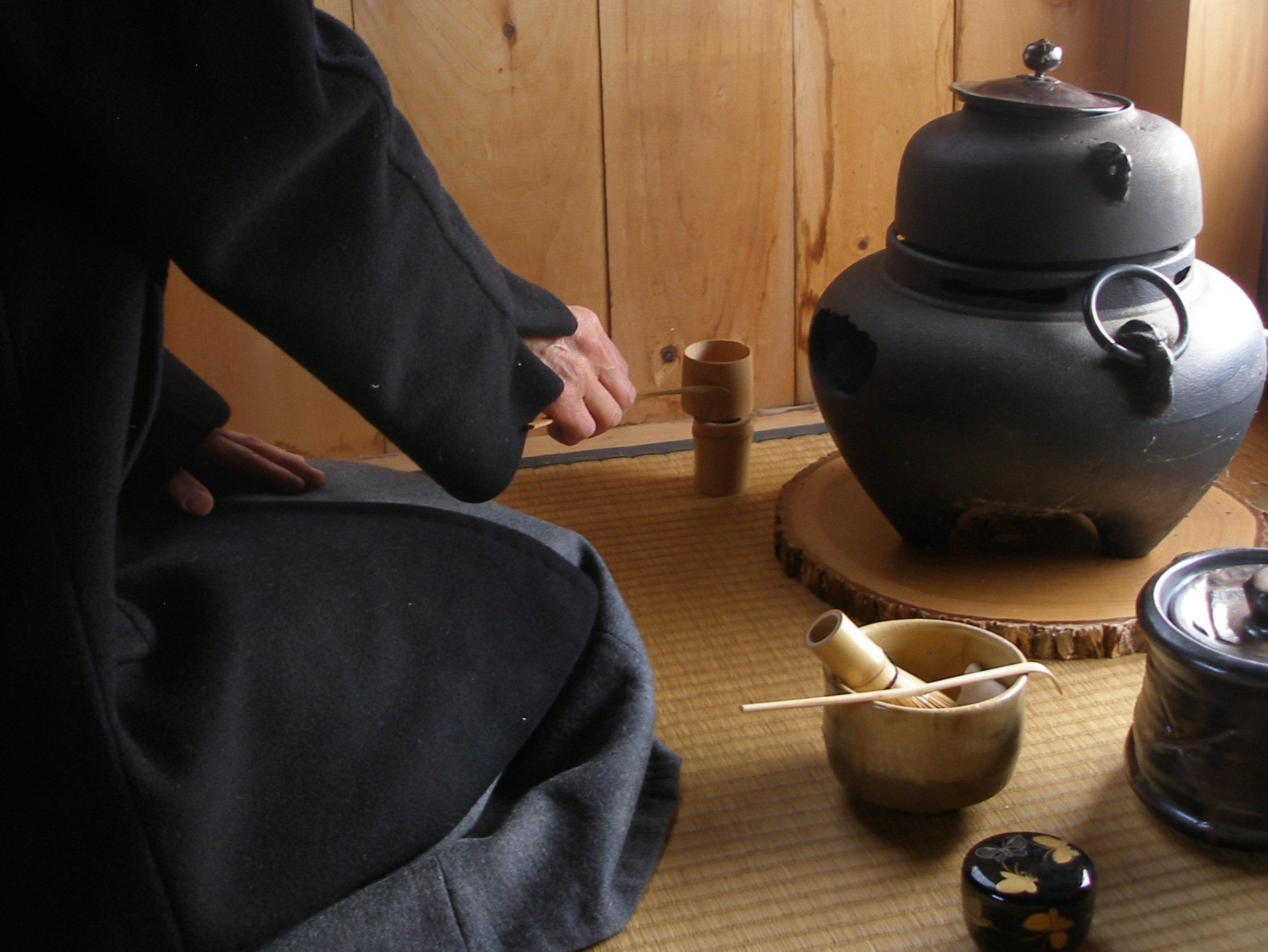
My friend is holding the delicate water scoop. Later the kettle lid will be placed on the rest. Notice the contrasting weights and textures among the various utensils. I was taught that I should lift bamboo utensils as if they were the heavy ones.

OLYMPUS DIGITAL CAMERA

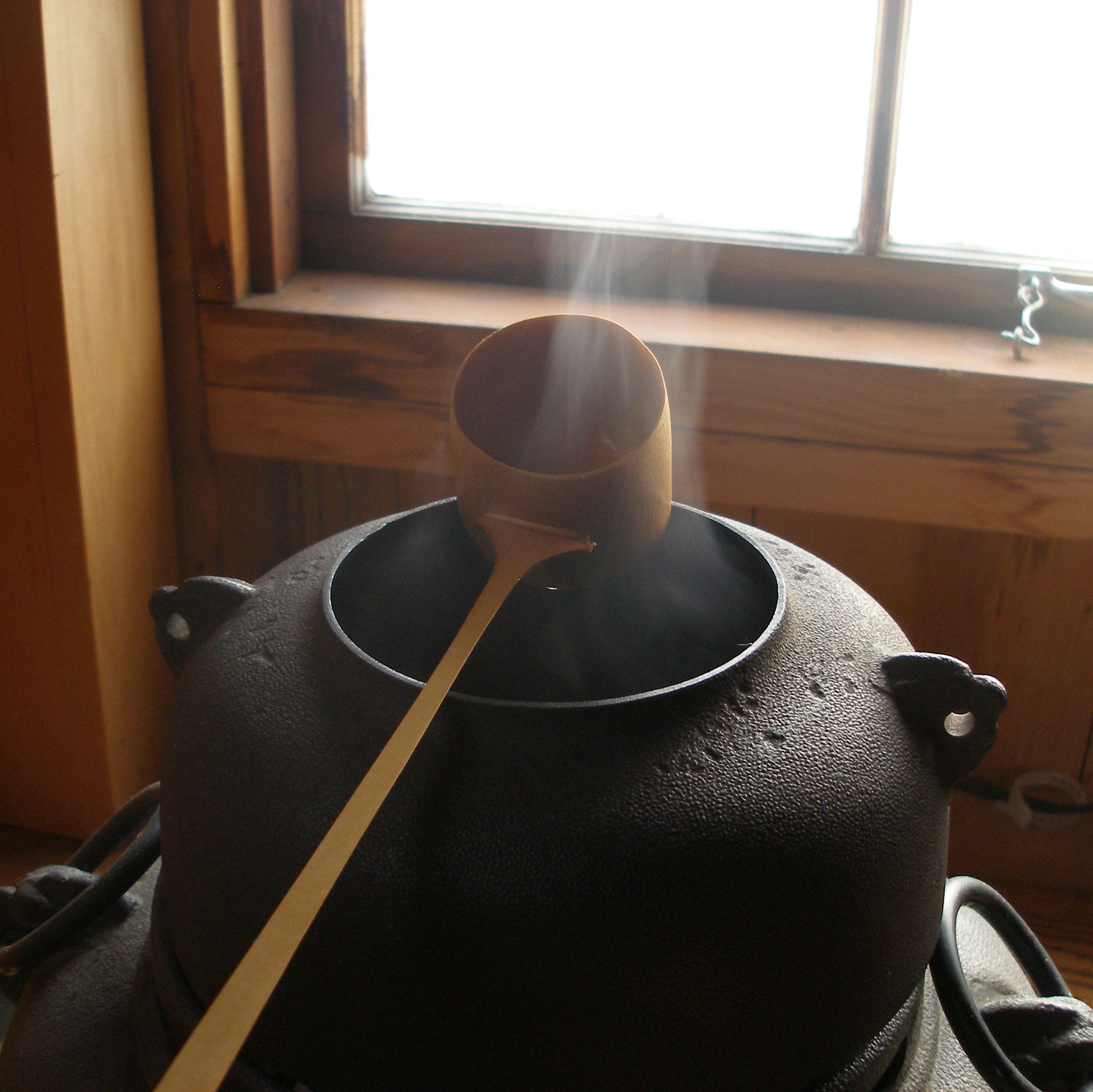
Dense steam rises as the kettle water gets quite hot. The heat is especially welcome on a chilly winter afternoon. A modern summer ice tea variation uses a glass tea bowl.

OLYMPUS DIGITAL CAMERA

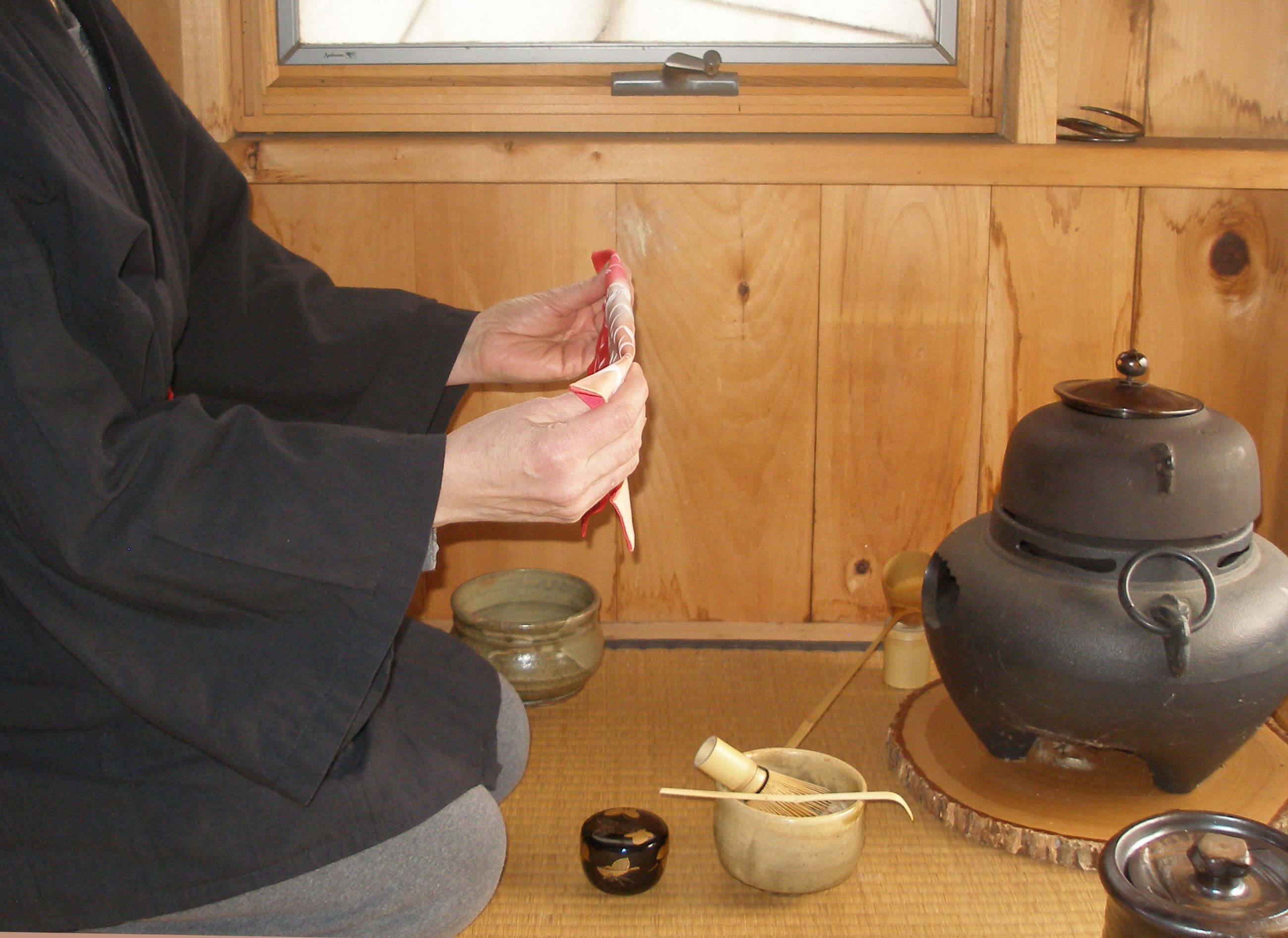
I am using a cloth with a pattern and holding it out before starting to fold it. This is a centering and respectful gesture. The tea container is positioned so it may be easily lifted for purification. The cloth will be refolded before the tea scoop is gently wiped as well.

OLYMPUS DIGITAL CAMERA

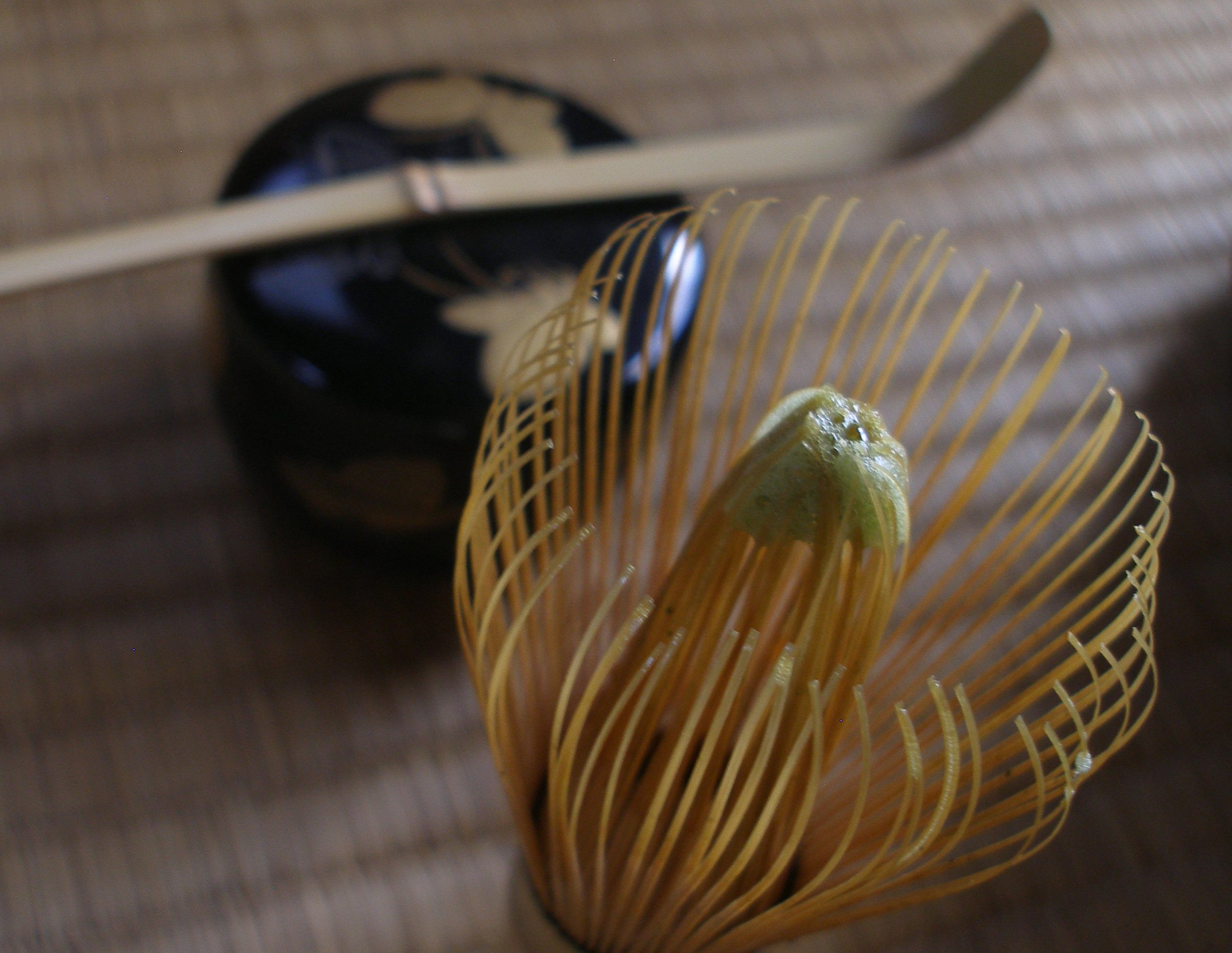
After mixing the tea into the water, the whisk, made from a single piece of bamboo, looks like this. Tea scoops come in many variations in size, and shape. There are also scoops made out of other materials such as ceramic.

While the whisk is often admired for its design, the bamboo tea scoop has understated elegance. After using one for a while, it becomes clear just how perfectly this small utensil fulfills its function.

OLYMPUS DIGITAL CAMERA

You can see a lovely demonstration together with an explanation in this brief video.

Tea & Dialogue & Generosity

OLYMPUS DIGITAL CAMERA
Photo by Kathleen Fink

The photo above shows Annie Hoffman (left) and Jan Surrey sharing tea during tea and dialogue practice at Art and Soul Yoga in Cambridge, MA on March 25th, 2018. It was one of those events where all the careful planning (see Preparing for Tea & Dialogue) just seemed to work – We kept to the schedule and it flowed better than I had expected.

In a dyad session, the participants poured tea for each other and then drank it followed by insight dialogue where they commented on the truth of that experience. One participant said she enjoyed slowing down to really pay attention to the sensory details. Another appreciated how the flowing waters and energy of the sun captured by the tea plant become part of us – “We are the earth.” After remembering sharing tea in the past, one participant noticed it had hints of the depth and intimacy, the “Come over for 4 O’Clock tea” feeling that she now experienced on a deeper level.

The talk I shared on how both Japanese tea ceremony and Insight Dialogue teach us about generosity is reproduced below:

The powdered tea used for tea ceremony was first brought to Japan from China by a Zen monk. Tea was then planted in monasteries where it was used as medicine and to sustain awareness during meditation. The Japanese warrior class and then the merchants adopted tea and began holding gatherings to share tea and show off their tea utensils. Renowned merchant tea master, Sen no Rikyu with his strongly-held Zen values, shunned attachment to valuable utensils. His descendants, as heads of hereditary Japanese tea schools, continue to protect the standards Rikyu developed for Chado or the way of tea.

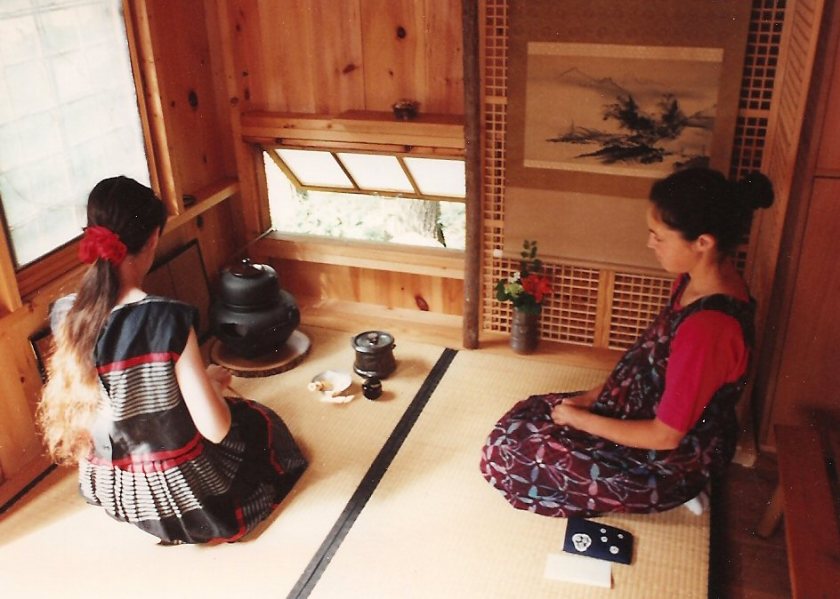
Every aspect is designed to support tranquil awareness, starting with a walk along a naturalistic woodland-like path to the quiet tea hut or room. Sharing tea involves all of the senses, and the whole body. Rikyu made clear that those who pursue the way of tea should put their whole heart into what they are doing, while at the same time keeping the tranquil awareness of all in the tea room in mind.

I was taught the flowing motions should be natural, and without artifice which paradoxically takes a great deal of practice, as well as calm awareness. Simple things are given the attention they deserve, and the only goal is to prepare tea and share it together. Like many, I experience time slowing down. Each moment becomes clear like the images in stop time photography.

Despite the formality of the giving and receiving, the warmth and caring generosity feel real because they are. This is life lived fully in the moment and with generosity born of a grateful heart. Tea ceremony has consistently brought me to centering peace over the years as I shared it with many different people. On occasion, I sensed awareness moving to the others present, then out to the tea garden, to all of nature and all that exists. I found my usual tendency to feel less than had no place from that perspective.

When I first encountered Insight Dialogue, Gregory Kramer’s guidelines of Pause, Relax, Open, Listen Deeply, Trust Emergence and Speak the Truth resonated strongly. I sensed immediately that these guidelines were remarkable in their power; nonjudgmental compassion would meet vulnerable disclosure for every participant. A new ease entered my life when I realized I could bring that same energy to any conversation no matter how stressful. The discussion topic also provided a means to gain wisdom. And we were all doing it together in powerful relationship, directly witnessing our fundamental interconnection. As Gregory Kramer describes on page 73 of Insight Dialogue, The Interpersonal Path to Freedom, “Compassion and joy create a virtuous cycle that promotes our finest relational qualities: lovingkindness, compassion, sympathetic joy, and equanimity.”
With Gregory Kramer’s guidelines in place, both speaking, and listening are generous and meaningful gifts. I now understand listening deeply to be one of the most meaningful forms of love. And the energy of that love has a tendency to spread to others who in turn become more open and generous.

Both practices foster tranquil awareness in interaction. It is clear that what is happening is real and that it matters – paying caring attention, acknowledging each other, offering thanks and really seeing how one’s actions affect others are all fundamentally important. Chado provides direct experience of what we are capable of in social interaction under ideal circumstances, while Insight Dialogue provides a way to release hindrances that get in the way of tranquil awareness in real life.
Both tea ceremony and Insight Dialogue show us how much we have to give and receive from each other when we open up and pay caring attention. Having experienced the profound benefits of these two relational practices, I wondered whether it would be possible to bring them together. Sharing tea might be a way to Pause, Relax, and Open before dialogue begins. Thich Nhat Hanh who finds much value in sharing tea notes, “We can communicate in such a way as to solidify the peace and compassion in ourselves and bring joy to others.” (p. 6, The Art of Communicating). Perhaps the peace of tea would help with that.

A tea scroll saying illustrates the kind of egalitarian generosity that comes from a deep grasp of our interconnection. In The One Taste of Truth, Zen and the Art of Drinking Tea, William Scott Wilson explains that scrolls that are used in Zen temples are also hung in tokonoma alcoves during tea ceremony events; “Among the implements of Tea, there is nothing as important as the scroll. For both the guest and the host, it is the scroll that has them grasp the Way of One Mind and absorb themselves in Tea.” What the scroll saying I have in mind says is: “Shaza kissa” (Sit down a moment and have a cup of tea.). Wilson explains, “In this way, you say, ’Have a cup of tea’ to whomever you are with” (p. 63).

This quote refers to a story where regardless of whether a visitor answered yes or no to Chao Chou’s question about whether they had been to the temple before, Chao Chou responded, “Have a cup of tea.” When the head monk of the temple, who had been listening in, asked Chao Chou about the meaning of his behavior, Chao Chou replied, “Head Monk! Have a cup of tea” (Wilson, 2012, p. 62).

This post is an example of using a blog post to share information with participants who met later to engage in tea and dialogue practice.