Tea & Dialogue & Generosity

OLYMPUS DIGITAL CAMERA
Photo by Kathleen Fink

The photo above shows Annie Hoffman (left) and Jan Surrey sharing tea during tea and dialogue practice at Art and Soul Yoga in Cambridge, MA on March 25th, 2018. It was one of those events where all the careful planning (see Preparing for Tea & Dialogue) just seemed to work – We kept to the schedule and it flowed better than I had expected.

In a dyad session, the participants poured tea for each other and then drank it followed by insight dialogue where they commented on the truth of that experience. One participant said she enjoyed slowing down to really pay attention to the sensory details. Another appreciated how the flowing waters and energy of the sun captured by the tea plant become part of us – “We are the earth.” After remembering sharing tea in the past, one participant noticed it had hints of the depth and intimacy, the “Come over for 4 O’Clock tea” feeling that she now experienced on a deeper level.

The talk I shared on how both Japanese tea ceremony and Insight Dialogue teach us about generosity is reproduced below:

The powdered tea used for tea ceremony was first brought to Japan from China by a Zen monk. Tea was then planted in monasteries where it was used as medicine and to sustain awareness during meditation. The Japanese warrior class and then the merchants adopted tea and began holding gatherings to share tea and show off their tea utensils. Renowned merchant tea master, Sen no Rikyu with his strongly-held Zen values, shunned attachment to valuable utensils. His descendants, as heads of hereditary Japanese tea schools, continue to protect the standards Rikyu developed for Chado or the way of tea.

Every aspect is designed to support tranquil awareness, starting with a walk along a naturalistic woodland-like path to the quiet tea hut or room. Sharing tea involves all of the senses, and the whole body. Rikyu made clear that those who pursue the way of tea should put their whole heart into what they are doing, while at the same time keeping the tranquil awareness of all in the tea room in mind.

I was taught the flowing motions should be natural, and without artifice which paradoxically takes a great deal of practice, as well as calm awareness. Simple things are given the attention they deserve, and the only goal is to prepare tea and share it together. Like many, I experience time slowing down. Each moment becomes clear like the images in stop time photography.

Despite the formality of the giving and receiving, the warmth and caring generosity feel real because they are. This is life lived fully in the moment and with generosity born of a grateful heart. Tea ceremony has consistently brought me to centering peace over the years as I shared it with many different people. On occasion, I sensed awareness moving to the others present, then out to the tea garden, to all of nature and all that exists. I found my usual tendency to feel less than had no place from that perspective.

When I first encountered Insight Dialogue, Gregory Kramer’s guidelines of Pause, Relax, Open, Listen Deeply, Trust Emergence and Speak the Truth resonated strongly. I sensed immediately that these guidelines were remarkable in their power; nonjudgmental compassion would meet vulnerable disclosure for every participant. A new ease entered my life when I realized I could bring that same energy to any conversation no matter how stressful. The discussion topic also provided a means to gain wisdom. And we were all doing it together in powerful relationship, directly witnessing our fundamental interconnection. As Gregory Kramer describes on page 73 of Insight Dialogue, The Interpersonal Path to Freedom, “Compassion and joy create a virtuous cycle that promotes our finest relational qualities: lovingkindness, compassion, sympathetic joy, and equanimity.”

With Gregory Kramer’s guidelines in place, both speaking, and listening are generous and meaningful gifts. I now understand listening deeply to be one of the most meaningful forms of love. And the energy of that love has a tendency to spread to others who in turn become more open and generous.

Both practices foster tranquil awareness in interaction. It is clear that what is happening is real and that it matters – paying caring attention, acknowledging each other, offering thanks and really seeing how one’s actions affect others are all fundamentally important. Chado provides direct experience of what we are capable of in social interaction under ideal circumstances, while Insight Dialogue provides a way to release hindrances that get in the way of tranquil awareness in real life.

Both tea ceremony and Insight Dialogue show us how much we have to give and receive from each other when we open up and pay caring attention. Having experienced the profound benefits of these two relational practices, I wondered whether it would be possible to bring them together. Sharing tea might be a way to Pause, Relax, and Open before dialogue begins. Thich Nhat Hanh who finds much value in sharing tea notes, “We can communicate in such a way as to solidify the peace and compassion in ourselves and bring joy to others.” (p. 6, The Art of Communicating). Perhaps the peace of tea would help with that.

A tea scroll saying illustrates the kind of egalitarian generosity that comes from a deep grasp of our interconnection. In The One Taste of Truth, Zen and the Art of Drinking Tea, William Scott Wilson explains that scrolls that are used in Zen temples are also hung in tokonoma alcoves during tea ceremony events; “Among the implements of Tea, there is nothing as important as the scroll. For both the guest and the host, it is the scroll that has them grasp the Way of One Mind and absorb themselves in Tea.” What the scroll saying I have in mind says is: “Shaza kissa” (Sit down a moment and have a cup of tea.). Wilson explains, “In this way, you say, ’Have a cup of tea’ to whomever you are with” (p. 63).

This quote refers to a story where regardless of whether a visitor answered yes or no to Chao Chou’s question about whether they had been to the temple before, Chao Chou responded, “Have a cup of tea.” When the head monk of the temple, who had been listening in, asked Chao Chou about the meaning of his behavior, Chao Chou replied, “Head Monk! Have a cup of tea” (Wilson, 2012, p. 62).

This post is an example of using a blog post to share information with participants who met later to engage in tea and dialogue practice.

Chanoyu Lore

OLYMPUS DIGITAL CAMERA

When I first began studying the traditional Japanese Tea Ceremony I was interested in its aesthetics. There were subtle delights in abundance from resilient tatami mats underfoot; the soothing sound of water heating in the iron kettle; and the scent of cedar bark incense.

I quickly learned that humility was involved as well. The seemingly effortless movements required much practice to master. We were taught to pay attention to the season, the particular circumstances of the day, and what was happening in the tea garden. There is, for instance, a particular beauty to a day with a hint of snow in the air when the leaves have fallen and a few linger on the moss.

I came across several stories recorded in chanoyu lore where tea masters combined ingenuity with an extreme sensitivity to nature to produce transcendent experiences for their guests. Three of my favorites involve Sen no Rikyu, probably the most famous of tea masters. Rikyu was known for his exquisite taste and sense for the fitness of things. He simplified the tea ceremony while at the same time introducing many innovations. His manner of making tea was said to be totally natural and unaffected so that one could not pick out any one part as being the most beautiful.

In one of the most famous tea stories, Rikyu’s patron, the regent Hideyoshi, had heard about the morning glories that Rikyu planted in his garden that year and wanted to see them. When Hideyoshi arrived in the morning, there was not a single morning glory to be seen anywhere. However, when the guests entered the tea room, a single perfect morning glory was displayed in the tokonoma alcove. Hideyoshi and the other guests found this refreshing. I was taught never to use morning glories during tea practice for this reason.

In another example, Hideyoshi supposedly had a large golden basin filled with water and a single flowering red plum branch placed beside it. How would Rikyu create a suitable flower arrangement using just these two elements? Rikyu approached the tokonoma and lifted up the branch. He then gently stripped the buds and flowers so that they fell into the basin and floated on the water. After that, Rikyu quietly returned to his seat carrying the bare branch. Hideyoshi admired this elegant resolution.

At a dawn tea attended by Rikyu, as the guests took their seats there was no light at all in the tea room, only the sound of the tea kettle boiling. A profound peace prevailed. Just as they were all wondering about the host’s intentions, Rikyu noticed a glow on the shoji behind him and slid open the panel. The moon framed in the opening sent its light to the tokonoma. Just legible there was a scroll with the following poem: When I lift my eyes / To the quarter of the sky / Where the cuckoo cried / There is nothing to be seen / Except the early morning moon (From The Japanese Tea Ceremony by A. L. Sadler, p. 143).

I was lucky to attend a tea practice with something of this magical quality. My sensei had conceived the idea of a fall moon-viewing practice. Each student was given a lit candle in a small glass holder, and we were instructed to walk slowly up the wooded hill behind her house, leaving space between us along the path. I waited so I could see my fellow students winding their way up through the trees at dusk. As I reached the top, the moon was covered by clouds and then briefly appeared as a misty presence. Nature was very close all around us. We conducted the tea ceremony on a felt mat where all the utensils had been arranged in advance. Looking back, it was like walking into a Japanese print. I am sure we will all never forget the beauty and poignancy of that experience.

Although a tea master’s touch is always appreciated at a tea gathering, I have learned that special effects are not needed. The essence of chanoyu is present no matter how simple and quiet the tea practice is. Each is a “one time, one meeting” opportunity and all the wonders of nature and human ingenuity apply.

For more stories from Chanoyu lore, you may wish to read Stories from a Tearoom Window by Shigenori Chikamatsu.

This article originally appeared in the March, April 2010 issue of Sukiya Living, Journal of Japanese Gardening.

The Mood of Tea

OLYMPUS DIGITAL CAMERA

In the tea hut, you can be yourself while at the same time seeking true empathy. At the heart of tea is the expectation that the host will put himself in the place of the guest and the guests will put themselves in the place of the host.

A stroll through the garden to the hut allows the guests to clear their heads and hearts of “the dust of the world.” The host will have arranged things in keeping with the season, the time of day and occasion. For example, to send a friend off on a trip a dawn tea may be conducted, with a scroll featuring a river and tea sweets with a flavor appropriate to the trip.

The scroll, flowers, and carefully selected utensils create a silent song. The wood of the hut, and the fragrant bark incense provide an elegant rustic undertone. Raindrops on the roof, melting snow, or rustling leaves add their essence. The mood is carefully orchestrated down to drops of water on the flower petals.

Such subtle pleasures inspire us to relax and perceive even more. Thus, one becomes increasingly open to the ritual to follow and to intimacy with the others present.

Over many years of practicing, we come to anticipate the meditative mood where breathing slows, time seems abundant, and hearts open to each other. Simple things are given the appreciation they deserve. There is no limit to the ability to expand one’s taste and to grow in humility and respect. Tea is not about ritual for its own sake, and it is not about religion. It is about living and taking the time to share what is truly important.

Once while traveling in Japan, the tour leader asked me to provide an impromptu talk about the tea ceremony as we travelled on a bus to a formal tea demonstration. I thought of my first exposure to chanoyu. I was wrapped up in trying to understand the ritual and could not even glimpse a hint of the meaning of tea. The number of people in the room and the strained environment further removed any possibility of intimacy or harmony.

To explain tea to my group, I decided to try an analogy that conveys my mood when anticipating a tea ceremony practice. I began by reciting Basho’s famous haiku: Old pond / Frog jumps in / Water sound.

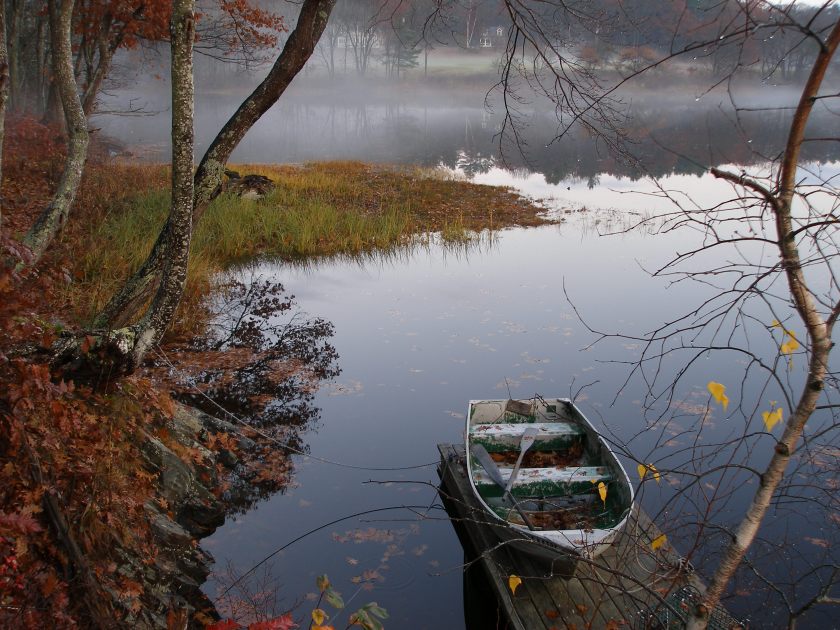
I said, “Put yourself in an old boat drifting on that pond. You are content, almost dozing. You hear the crickets, the wind in the trees, and feel the slight rocking. You watch the ripples. A squirrel comes down an overhanging branch and stares at you and you stare back. You see an old friend unexpectedly on the shore but do not move or call out. Your friend sees you and the squirrel and waits, understanding.”

I told them, “Tea is about the heightened awareness of beauty associated with the transience of all things. The squirrel will leave, your friend will eventually leave, you will die, the pond will dry up, but let’s hope that frog of Basho’s will be around for a while.” I did go on to explain some of what they could expect from the ritual and that it was basically about sharing a bowl of tea with a few friends.

Afterwards, the woman doing the demonstration said that she was surprised that the group was so quiet, that normally she gets a lot of questions and interruptions. This pleased me. Maybe my squirrel analogy helped.

This article originally appeared in the September/October 2002 issue of the Journal of Japanese Gardening (Now Sukiya Living, The Journal of Japanese Gardening).