In Praise of Loving Caretakers, & a Very Special One Named Rosie

In our most troubled world, there is very good reason to remember Mr. Rogers’ wise words, “Look for the Helpers.” We humans can be very destructive, but there are also the helpers. Even though they often do not get the recognition they deserve, caretakers are everywhere, including caretaker animals like bees.

There is no doubt that the caretaker role can be extremely exhausting, and relentless as well as having potential for real and meaningful rewards. Still there can sometimes be toxic aspects and in those cases, limits must be set. It does no good for anyone if the caretaker is seriously undermined by the process.

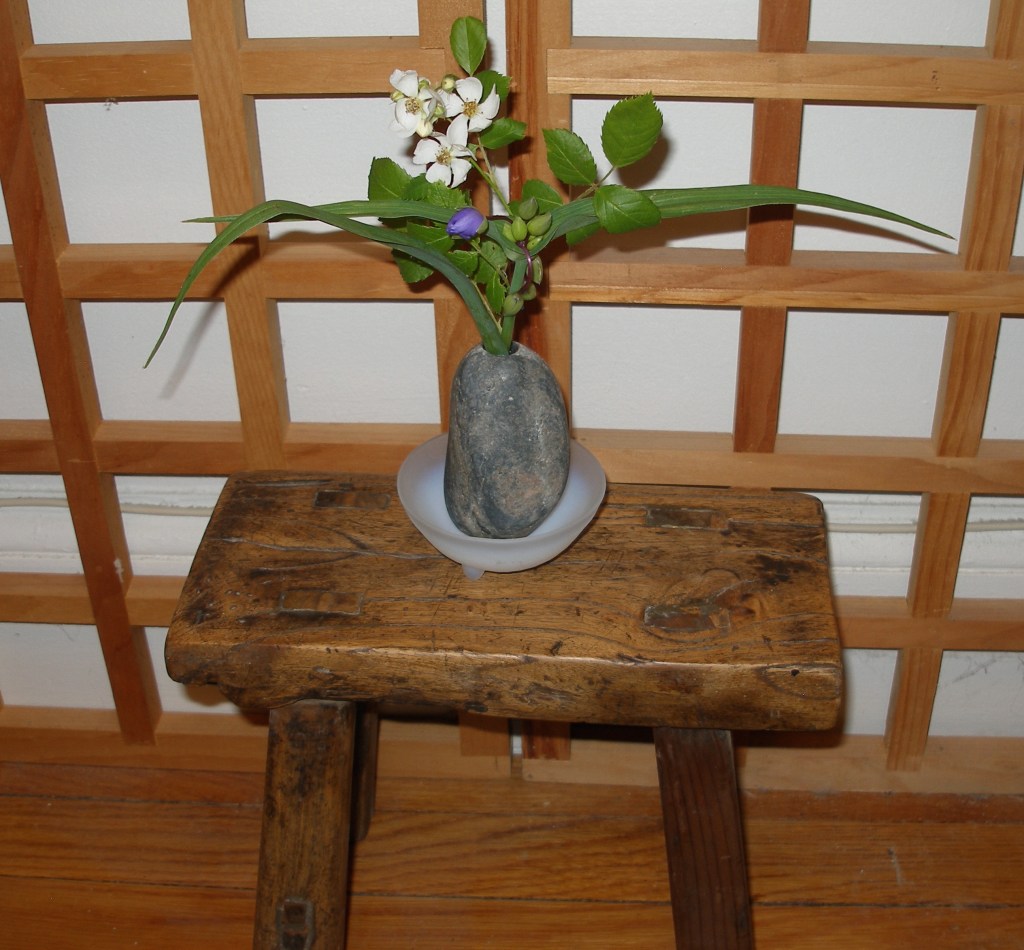
Recently, I needed emergency surgery and went to Mount Auburn Hospital in Cambridge, Massachusetts, USA. There I met an extraordinary caretaker named Rosie – hence the rose above. Her role as Patient Care Assistant, was not highest in the formal hospital hierarchy, but to me she was at the very top.

Rosie is one of those no nonsense, hard-working, get down to business people who move with great vigor as well as knowledgeable authority. Yet when it came to caring for me, she radiated such an air of deep respect. I found myself telling her, “I love you Rosie.” She answered right back, “I love you too.” I said, “I bet you love all of the patients you care for.” She said that was true. I told her I was a member of the Rosie fan club for sure.

I knew there would be others. A nurse told me that Rosie worked incredibly hard and had been at Mount Auburn for 20 years. He added that Rosie was the one who kept that hospital floor “revolving.” Shelly, a CAT scan technician, encouraged me when I told her I was thinking of giving Rosie a gift.

I asked my husband, Mark, to take out my collection of 7 jade bangles, and tie then with a ribbon. They flopped about too much so he put them on a cardboard towel tube, bent in a bit at the ends, and covered the whole with plastic wrap.

I asked Rosie to stop by when Mark came by to visit at one the next day as I had a small gift for her. The bangles were of many colors -black carved with flowers, lavender, dark green, and combinations like the one below.

I apologized for the informal packaging when I gave them to Rosie, but she said the package was beautiful. I told her that Jade is tough, durable, honest, beautiful, and protective. The circle shape can represent enlightenment, or wholeness and to me that has the flavor of love.

I hoped some of them might fit her, but she could hang them up or put them in a bowl. As I spoke, Rose ran one finger along the colorful bangles and indeed touch is an important part of the experience of jade. I told her that the collection was valuable and might provide a bit of financial security as these would keep their value unlike stocks or our crazy economy.

When I was preparting to leave, Rosie said, “Thank you for everything.” I told her that it was such a great pleasure meeting her. It was my great luck to be able to give Rosie a bit of the recognition that she (and so many others) truly deserve. She lives in my heart as I heal both mentally and physically and her inspiration will continue to help me channel and radiate that amazing powerful love that passes all understanding but is really there for us when we need it.

I still love you Rosie, and always will, oh so very much!

Sharing Appreciative Joy

Like compassion, appreciative joy is a natural human capacity. I would expect to feel it in response to a happy bouncing dog, a child’s joy at experiencing the world or when being welcomed into a dear friend’s home.

On the other hand, when many things seem to be going wrong at once, grief can overwhelm me and joy can seem far away. I try to remember the Dalai Lama – certainly no stranger to all kinds of suffering. He repeatedly emphasizes the importance of joy, in how he relates, in his writing and his documentaries. The Daoists speak of the 10,000 sorrows & 10,000 joys – so both, not just sorrows.

I also like to think of Indra’s net where each intersection contains a jewel that reflects every other jewel. That would also include our reflecting our joys to each other.

Keeping the door open to appreciative joy is also a choice in that cultivating it takes effort. Being willing to speak the truth to myself and others, being humble about that, seems critical. That my individualistic, competitive and commercialized culture – not to mention social media – encourages envy, helps me to cut myself some slack.

When I am able to feel genuine appreciative joy, speaking the truth helps me to feel the enlargement, ease, connection and freedom – a taste of liberation from the bonds of self. And joyous connection is possible, maybe even critical, right in the midst of serious suffering. Here is one example:

Someone I don’t really know, who had just lost her mother, wrote on Facebook, ”Tonight I got a chance to chat online with a former next door neighbor when I was a teenager and she was 6 or 7 years old. She has amazing memories of things that happened then, 50+ yrs ago. She remembered many wonderful things that my Mom did with her and her family. She wished that she had a Mom like mine. Wow! Her sharing brought many memories back for me. This wonderful surprise brought me tears and joy. I am extremely grateful for her memories and her sharing. A precious part of my grieving.” I felt glowing warmth in my body-mind that ripened to awe. So honestly and simply told, that story was spreading its blessings well beyond just the two of them.

I find that Insight Dialogue with its sharing of heartfelt truth, provides powerful support for experiencing appreciative joy. The safe, caring space that everyone is holding makes clear we are not alone in our vulnerability. At times, the depth of mutual understanding, and naturally caring response to shared troubles produces a profound joy that seems to be felt at the level of the whole group. With the help of the guidelines Pause, Relax, and Open, an embodied experience of the practice’s rock-solid caring energy helped me to understand why Buddhists speak of spiritual friendship being “All of the Path.”

The power of appreciative joy can also be felt when we unexpectedly find ourselves in a position to help. A Chinese women used her few words of English to let me know she was looking for a local Chinese restaurant. I thought how brave she was to come to a new Country where she did not speak the language. She made clear her gratitude nonverbally. By the time we had walked to what I assumed was her new place of employment, it seemed totally natural to hug each other at the door. The meaning expressing by that hug went well beyond words. There was joy in her feminine strength and bravery that we both understood – in that short time we had become genuine friends.

Speaking the truth about appreciative joy to myself and others seems particularly important in these challenging times. In fact, I have been told it can be critical to many, particularly when few other resources are available. Keeping the door open to appreciative joy makes clear just how much of a relational superpower that kind of shared joy really is, as it points the way to freedom while providing ease, clarity and motivation to work at making our actions more beneficial. May all beings never be separated from the supreme joy that is beyond all sorrow.

You might want to try bringing to mind a time now or in the past when you unexpectedly felt or witnessed appreciative joy. How does that feel now? Are there any new insights that you were not aware of at the time?

On Freedom of Religious Decorations

In early January, an interesting conversation started up in an online forum on holiday decorations in my town, and I noticed that my partner had decided to join in. Based on the reactions, I was not the only one impressed by what he had to say:

“Very recently this discussion of decorative lighting seems to have started turning ugly, and I am not referring to holiday-sweater ugly. I am referring to a hostile tone including some intolerant references to other people’s religious observances.

Let us be very clear: when someone says ‘This town isn’t what it used to be’ he probably doesn’t mean we should give it back to the people who called it Menotomy and were here before Columbus. He probably doesn’t mean we should tear down all the buildings and bring back the farms. And I’m pretty sure he doesn’t mean that, like the Puritans who were here 400 years ago, we should ban Christmas observances as being too ‘pagan’.

So this isn’t about history; it’s about a false nostalgia for something that never happened in the way it is being ‘remembered’.

There were Jews on Columbus’s boats. There were Jews and Muslims here in the Colonies. Jews and Muslims fought in the American Revolution. Jewish worship was supported by Adams, Washington, and Jefferson. Jews and Muslims are full citizens of this country and have been since the founding. The original colonies were populated mostly by Protestant Christians, but they were sects of Protestants who were themselves victims of oppression, and who did not want anyone who held different beliefs telling them how to practice or observe. The compromise enshrined in the US Constitution is that no religion should be legally subordinated to another. In the course of two and a half centuries we have interpreted that to mean also that no person should be forced to pay for another’s religious observance.

By all means, decorate your homes and businesses — if that is what your conscience and your aesthetic taste encourages. White lights, colored lights, ultraviolet lights and DayGlo posters, all good. If you think Town property should be decorated, and you are willing to pay for it, great. I’m all in favor of pushing back the darkness — light bonfires, bang on pots and pans, scare away the dragon eating up the sun. Within the bounds of the noise laws and somewhat good taste, of course — I’m not too big on 8-foot Dancing Santas in front of Town Hall.

But we have a tradition of protecting minorities in this country. Unfettered democracy is two wolves and a sheep voting on what’s for dinner. We do not, and should not, do that.

So don’t ask others to pay for your decorations. Really, that’s all. By all means, volunteer. Donate. Organize. Just do not put it in the Town budget and require others to pay for your holiday. Yesterday was Orthodox Christmas, and I apologize for missing it. I hope it was happy, for everyone.

As that song by the Russian Jewish immigrant says, ‘May your days be merry and bright.’ As that itinerant rabbi from Nazareth taught so many centuries ago, love your neighbor as yourself.

All best wishes”

See what I mean?

Someone added. “So, Arlington, we should honor our freedom and privately pay for our displays of lights, white or any other colors for July 4th, All Hallow’s Day Eve (Halloween), St. Lucia’s Day, Christmas, Hanukkah, Diwali, Lantern Festival, St. Valentine’s Day, St. Patrick’s Day, and more. All good. Shine on. And switch to LED lights, if possible! Save energy!”

Among the brief comments were: “Well said!”, “I love this message”, “Thank you. Beautiful and spot-on to all points.”

One person listed 16 “Christmas” songs and the names of their Jewish composers. Another noted “a government ensuring religious freedom and the separation of ‘church and state’ was a truly novel and incredibly important development in the world’s history.”

And when it comes to what might be considered to be in good taste, I cannot resist adding a comment about a young fan of inflatable holiday decorations that appeared a bit later: “Holiday Inflatables – My 4 year old is obsessed and so sad that they are all going away. I promised him one more neighborhood drive-through this Saturday night, around 5, to look at whatever is left.”

The Logic of Sharing Tea First

Drinking tea creates a pause that invites paying attention with all of our senses. Thich Nhat Hanh (2013) notes drinking tea can “bring you back to your true home. Don’t think. Be here, body and mind united.” (p. 150). By relaxing into it, drinking tea can help us become more open and grounded for whatever follows.

Sharing tea provides an excuse for invoking caring intention and experiencing gratitude, both of which support wellbeing. The fifteenth Grand Master of the Urasenke Japanese tea ceremony school, Sen Genshitsu, states that the host should feel, “’I am so glad I was able to make tea for this person. Now I can die in peace,’ and the guest should also feel, ‘I am so glad I received this tea, now I can die in peace’” (Sen, 2006, p. 14).

Sharing tea is associated with warm conviviality in many countries where it is grown (Heiss & Heiss, 2010). There is often a fresh aliveness as tea supports considerable calm awareness all by itself. Sharing tea can be a form of adult play – something that is engaged in for the pure pleasure of the activity itself. Researcher, Stuart Brown (2009) found play “energizes us and enlivens us. It eases our burdens. It renews our natural sense of optimism and opens us up to new possibilities” (p. 4). Among play’s multiple benefits are development of social judgment through providing a “penalty free rehearsal of the normal give-and-take necessary in social groups” (p. 32). And bringing full awareness to the simple act of sharing tea makes clear just how much meaning and comfort small acts of generosity can add to our lives.

A number of writers stress the benefits of engaging embodied awareness. Rothberg (2006) notes “this kind of practice is particularly valuable in helping mind-oriented cultures such as ours…to cut through the ‘mental cloud’ of repetitive thoughts in which many of us live most of the time” (p. 38). Nancy Mangano Rowe (2003), a faculty mentor at the Institute of Transpersonal Psychology contends, “Our bodies are such vital sources of information and truth. The wisdom that lies within each of us is so vast and helpful to our…spiritual growth.” (p. 165). Researchers Brendel & Bennett (2016), reviewed studies on bodily-engaged mindfulness, and found many benefits including creating the authentic presence necessary for compassion.

Our story-creating minds can deceive us and separate us, while our bodies can help us feel how much we are like others in both our vulnerability and our worth; our basic human dignity, and in our dependence upon each other.

Sharing tea first, can help us come home and ground ourselves in the here and now, before moving on with our day in these increasingly challenging times.

References:

Brendel, W. & Bennet, C. (2016). Learning to Embody Leadership Through Mindfulness and Somatics Practice. Advances in Developing Human Resources 18 (3). pp. 409-425.

Brown, S. (2009). Play, How it Shapes the Brain, Opens the Imagination and Invigorates the Soul. New York, NY: Penguin.

Hicks, D. (2018). Leading with Dignity: How to Create a Culture that Brings out the Best in People. Yale University Press.

Hanh, T. (2013). The Art of Communicating. New York, NY: HarperCollins.

Heiss, M. & Heiss, R. (2010). The Tea Enthusiast’s Handbook. New York, NY: Random House.

Rothberg, D. (2006). The Engaged Spiritual Life; A Buddhist Approach to Transforming Ourselves and the World. Boston, MA: Beacon Press.

Rowe, N. (2003). Listening Through the body. In Brady, M. (ed.) The Wisdom of Listening (pp. 156-166). Boston, MA: Wisdom Publications.

Sen, S. (1979). Tea Life, Tea Mind. New York, NY: John Weatherhill, Inc.

Many Reasons to Slow Down for Tea

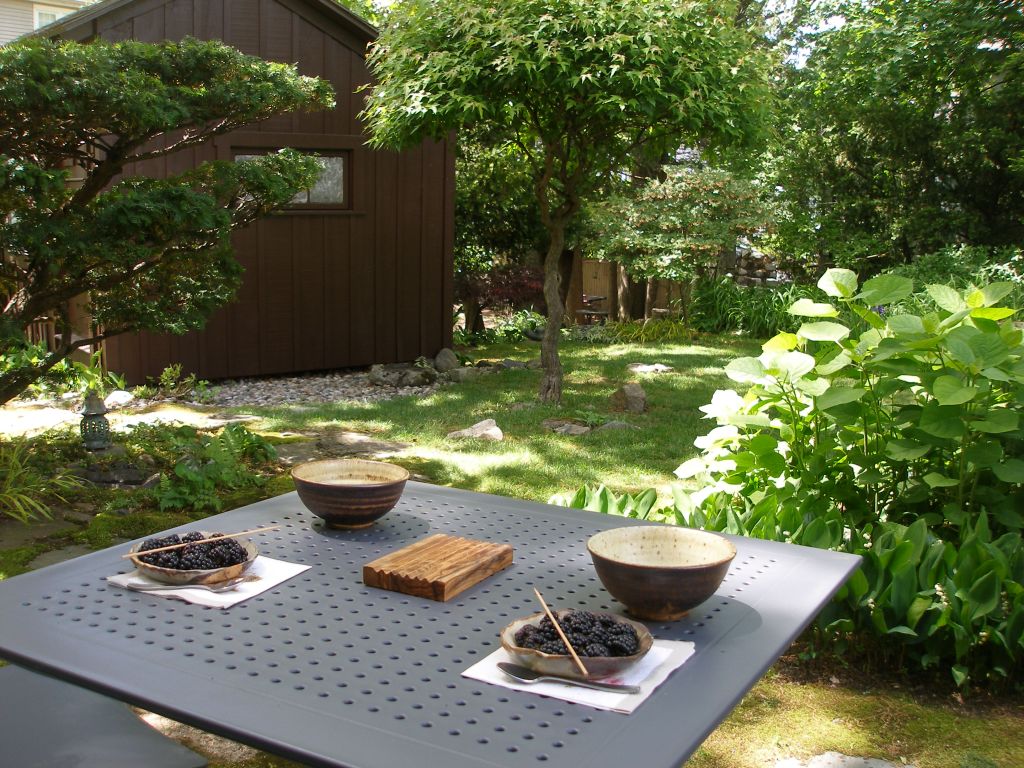
Tea bowls and blackberries awaiting the arrival of a friend.

Although it might seem frivolous, I would argue that slowing down to share tea with no particular agenda is a very good idea. For one thing, as Olendzky notes, “security comes from aligning our attitudes and policies with the behaviors that will bring out the best in others, rather than doing the very things that are sure to provoke or entrench them” (Unlimiting Mind: The Radical Experiential Psychology of Buddhism, page 45). 

Human lives have always been full of challenges. And these days there are good reasons to be afraid. With so much coming at us, it is all too easy to pull back into our shells and feel helpless. 

Sharing tea provides a good excuse to slow down and simply be present with each other. Thich Nhat Hanh includes drinking tea among his practices for compassionate communication to “Bring you back to your true home. Don’t think. Be here, body and mind united.” (The Art of Communicating, 2013, page 150).

As you feel the warm cup, the steam rising, attune to the color and the fragrance of the tea, you are returning to sensing what is here now in real time. With senses more fully engaged, it may be easier to directly sense the not-being-alone-with-this support of simply enjoying tea together.

Humans can certainly cause big trouble. But it is also natural for us to help each other out in times of crisis. While emotional support and practical forms of help are both wonderful, there is also a place for small acts of kindness, like sharing tea. They can add so much grace and meaning to human lives.

Gratitude Practice – Then & Now

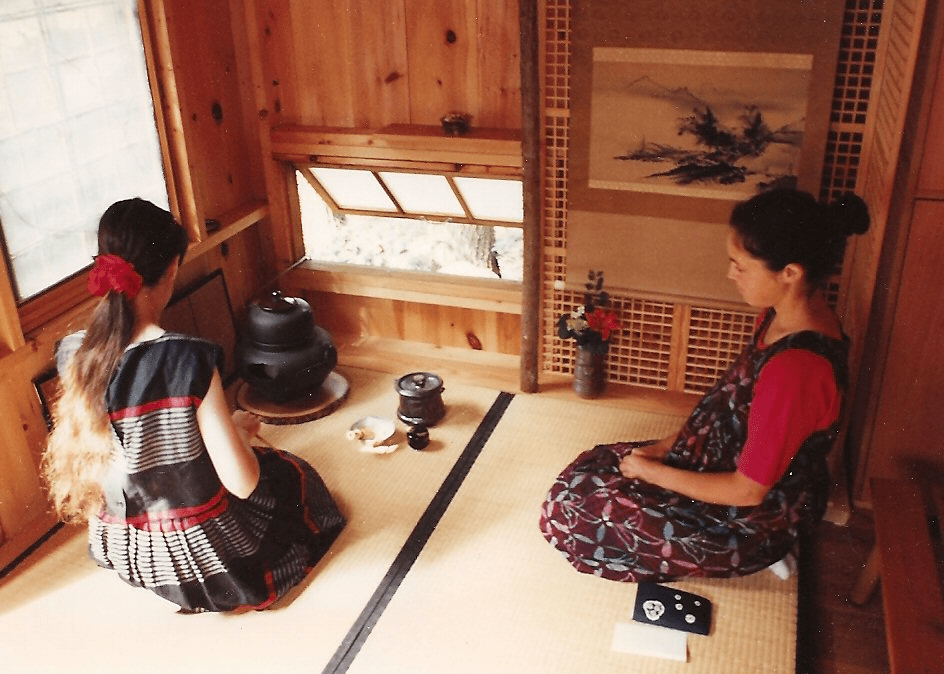
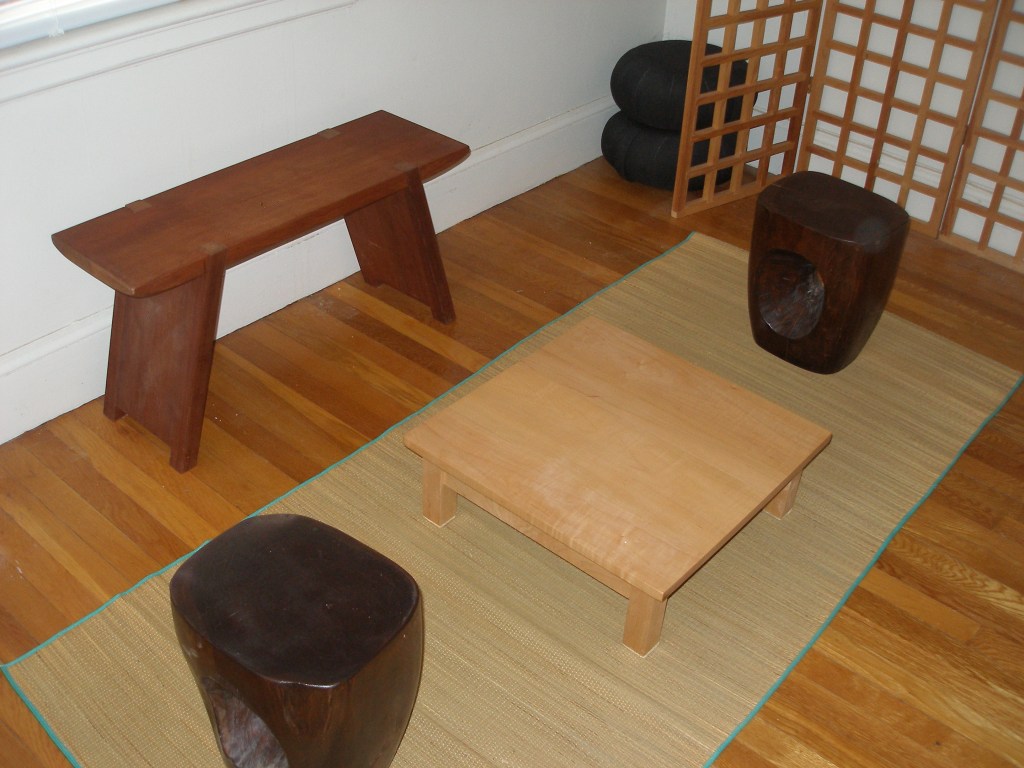
A number of years ago before COVID changed our world forever, I set up a tiny room as a place for meditation and for sharing tea. Each morning, I would go to that room, sit on a stool facing the window at one end and say “Thank you for what is needed when it is needed.” Then I would sit on the other matching stool, face the interior wall and say, “Thank you for the peace and strength that is always available.” I did this every morning for several months.

I realized there was an aspirational quality to all of this.

Joseph Goldberg says In Mindfulness; A practical Guide to Awakening, on page 384, “the consequences or results of an action are conditioned by the moral qualities of both the actor and the recipient of the act.” In this case, I was both actor and recipient and the practice seemed to both drew upon and reinforce my wish to live in ways that encouraged openness and compassion in myself and others.

There was a shift. I began to sense I was in a dialogue with the universe. I took the various forms of support that found me as signs I was on the right track with a project. It was easier to see when I needed to do some hard internal work on what might be getting in the way of my dreams. Just saying “peace and strength” connected me to something much more powerful and larger than myself, and I began to see things from a less narrowly selfish point of view.

Now that the world seems so full of suffering and fear, personal mindfulness practices, like this one, might be even more relevant. And first of all we need to stream ourselves and others all the compassion we can muster, so we can see that there are still opportunities available to take action that can make a positive difference. This can be quite close to home. In times of increasing crisis, simple things like a hug, a listening ear, or remembering to take some quiet time for ourselves can make a world of difference.


Bringing Openness to the Familiar

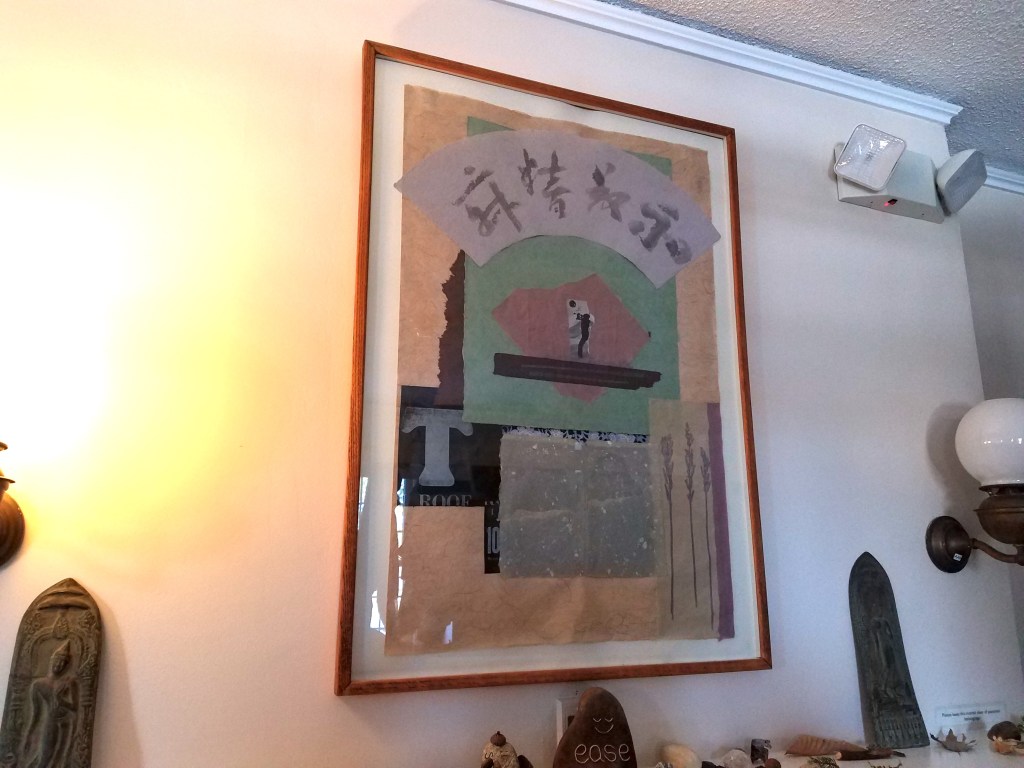
Toward the end of a silent retreat I attended, I saw the picture above hanging in the coatroom of the Insight Meditation Retreat Center in Barre, Massachusetts, USA. My Japanese tea ceremony teacher, Giselle Maya, confirmed my suspicions that she was the artist who had made that collage. She added, “I love that place and all it gave to me, all I learned in many many retreats, dharma talks, and interviews.”

I had just read the wonderful stories about Dipa Ma in Amy Schmidt’s book, Knee Deep in Grace, the Extraordinary Life and Teaching of Dipa Ma. Dipa Ma’s spirit seemed so powerful that it might still be a force actively influencing events long after her death. When I asked if Dipa Ma had been at the Barre Center when Giselle was there, she said, yes and added that “Dipa Ma was a very kind woman.” Perhaps Dipa Ma’s influence was present in the patient and kind way that Giselle taught her students the exacting art of Japanese tea ceremony.

As to my own experience on retreat, I had ample opportunity to explore feelings of familiarity. It became clear to me that while what is familiar may offer comfort, it can also be an illusion. It can be associated with a harmful false story that we take as true. On the other hand, familiarity can be a trailhead to learning something fundamental about what it means to be human. Some forms of familiarity were “just in the air” like the embodied strength of the wise teachers who instructed us, or the spirit of warm connection that was much in evidence as we joined our voices for a morning chant on the last day.

There were also moments of laughter and play during the retreat. Childlike play and silliness can cut though a lot – bringing sympathetic joy right into the middle of the strains of life – transcending familiarity and acting as a source of delight and inspiration. While being on retreat provided ideal conditions to explore my reactions to what I found familiar, I could find no reason to stop exploring this fertile ground in my everyday life.

Walking Down the Road

The 1971 hit, Woyaya with music by Sol Amarfio and words by Annie Masembe of Uganda which speaks of not knowing where we are going but trusting that we will get there even though the road will be muddy and rough, had me looking for quotes on similar themes. I found quite a variety:

“If you don’t like the road you’re walking, start paving another one.” Dolly Parton.

“The road to enlightenment is long and difficult and you should try not to forget snacks and magazines.” Ann Lamott

“The church is near, but the road is icy. The tavern is far, but I will walk carefully.” Russian Proverb

“No matter how far you go down the wrong road, you can turn back.” Turkish proverb

And, in the logical world of Alice in Wonderland: “‘Would you tell me, please, which way I ought to go from here?’ ‘That depends a good deal on where you want to get to,’ said the Cat. ‘I don’t much care where -‘ said Alice. ‘Then it doesn’t matter which way you go,’ said the Cat. ‘-so long as I get SOMEWHERE,’ Alice added as an explanation. ‘Oh, you’re sure to do that,’ said the Cat ‘if you only walk long enough.'” Lewis Caroll

And this one of unknown attribution: “If you want to go fast, go alone. If you want to go far, go together.” In these days when things are changing so fast that it seems possible to travel far by just standing still, my personal vote would be to not go it alone.

Unexpected Acts of Kindness


These crocuses planted by volunteers in a nearby park certainly brightened my day.

For a number of decades, we have lived in a world where food and other resources have became increasingly available, but when things in general are going relatively well, we may not realize that we are lacking a critical psychological nutrient for human wellbeing.

Chapter 4 of the World Happiness Report 2023 describes how acts of kindness, particularly when they are unexpected, create warm feelings of happiness in actors, receivers and even in observing bystanders. It goes on to note that happy people are more likely to do acts of kindness, thus spreading happiness even further.

Perhaps some form of the “golden rule” is so universal precisely because we need to be reminded about how much benefit acts of kindness provide. Acts of kindness, especially when unexpected, tend to have a bigger positive impact than we may realize according to “Kindness Goes Farther Than You Think” by Amit Kumar (Scientific American, April, 2023).

Ironically, our human tendency to respond to crises with acts of kindness is contributing to greater happiness in our troubled world according to the World Happiness Report.

Living from Belonging

It was the beautiful design that first caught my interest. Online research revealed that this “taka” was made by the Ngadha tribe, who live on the island of Flores, in Indonesia. And although I read various theories, I would not be surprised if only the Ngadha know the taka’s true meaning and uses.

I was also intrigued by the fact that members of the Ngadha think of themselves first as “we” (not “I”) – a bit like how the taka includes two equal parts joined in intimate connection. Placing primacy on a first person plural identity is evidently quite rare among human cultures. That’s a bit surprising given how much we humans have always been dependent on each other for our very survival.

Jayne Curnow explains the Ngadha view using these words:

“individual independence is not a coveted state of being; rather being singular plural is the principal mode of existence. In this context, the nua is the central heartland for the spatial and material expression of clan unity, although the emotions of being singular plural transcend time and space….Ngadha practices of interdependence are reflected in the community economy, which privileges Ancestor worship, community cohesion and group distribution of resources above the needs and desires of the individual….Interdependence is a dominant feature of everyday Ngadha life and organization. Ngadha people’s view of their own society involves a sense of self that questions the conceptual separation of self from others. Frequently, people alerted me to the ways in which everyone and everything is connected.”

Now, most of us do not live in tribes. We live with members of our immediate family, or with a roommate. Many live alone. We pay a price for that. Jeffrey Simons and Lane Beckes argued that pro-social behavior that was required by tribal living provided evolutionary advantages. And a sense of belonging, of being deeply known, appreciated and cared about by a larger group has some significant psychological benefits.

Intentionally working to form groups that provide a sense of belonging and adopt a “we” perspective (as is true of many religious communities, for example) seems particularly wise in perilous times like our own. At a minimum, that could provide access to a broader range of perspectives as well as to useful instrumental support. I tend to agree with those who argue that social capital can be very valuable even when other resources are not available.

“It really boils down to this: that all life is interrelated. We are all caught in an inescapable network of mutuality, tied together into a single garment of destiny. Whatever affects one directly, affects all indirectly. We are made to live together because of the interrelated structure of reality . . . Before you finish eating breakfast in the morning, you’ve depended on more than half the world. This is the way our universe is structured, this is its interrelated quality. We aren’t going to have peace on Earth until we recognize the basic fact of the interrelated structure of all reality. “

-Dr. Martin Luther King, Jr.1967 Christmas Sermon on Peace