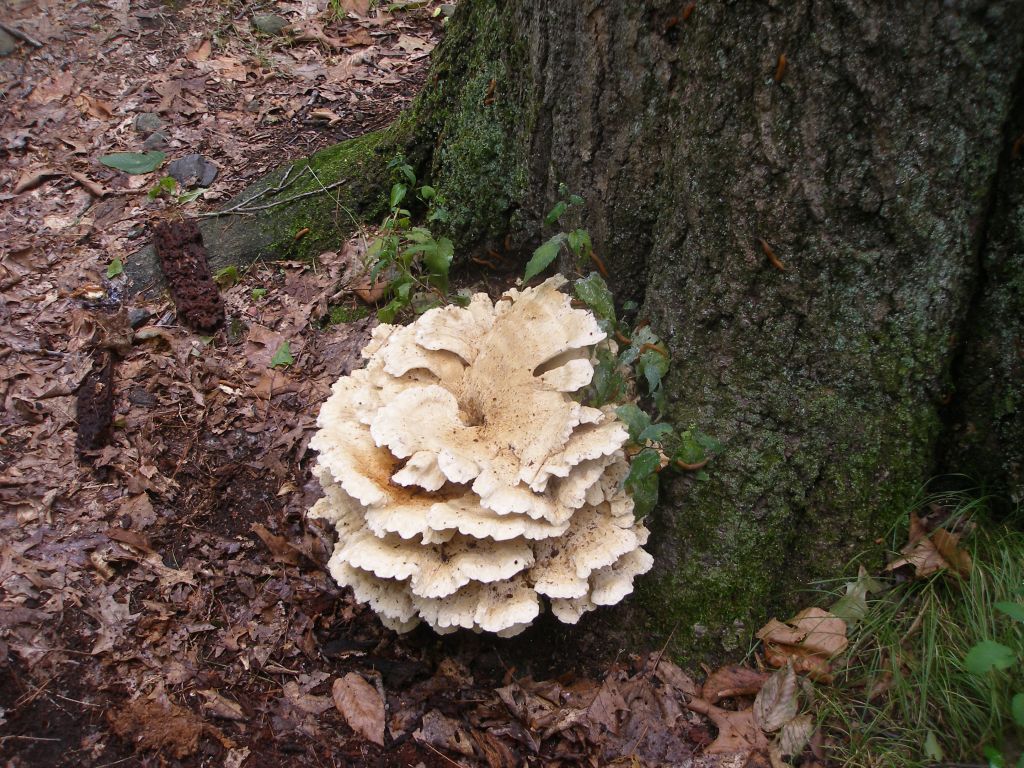
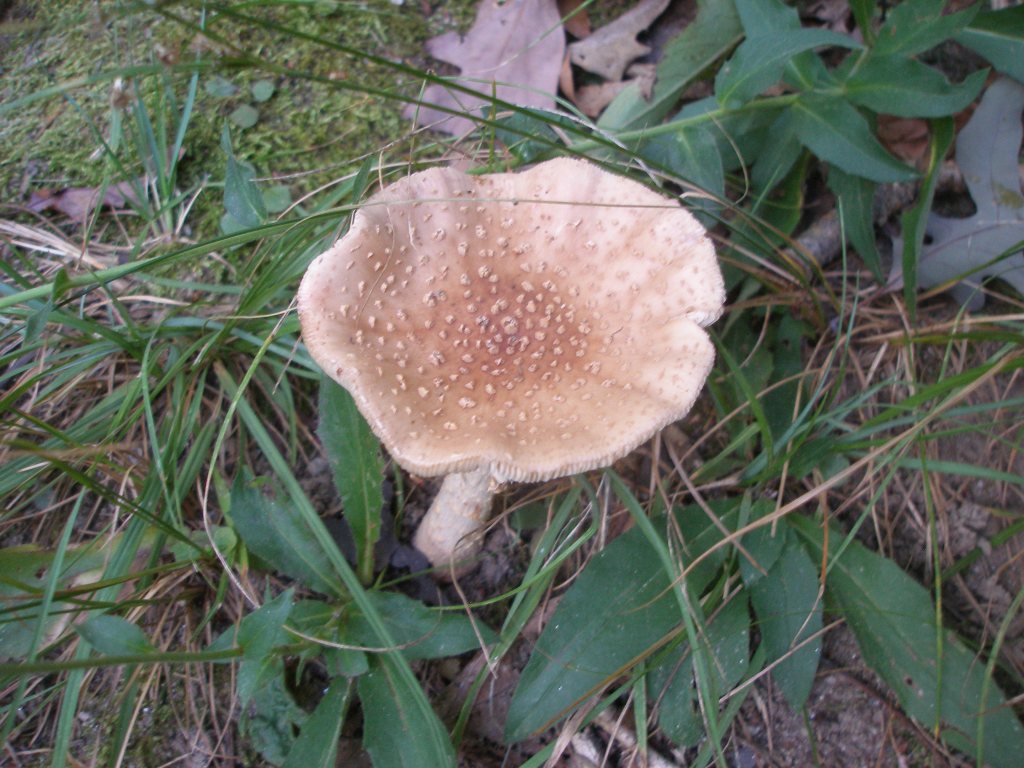
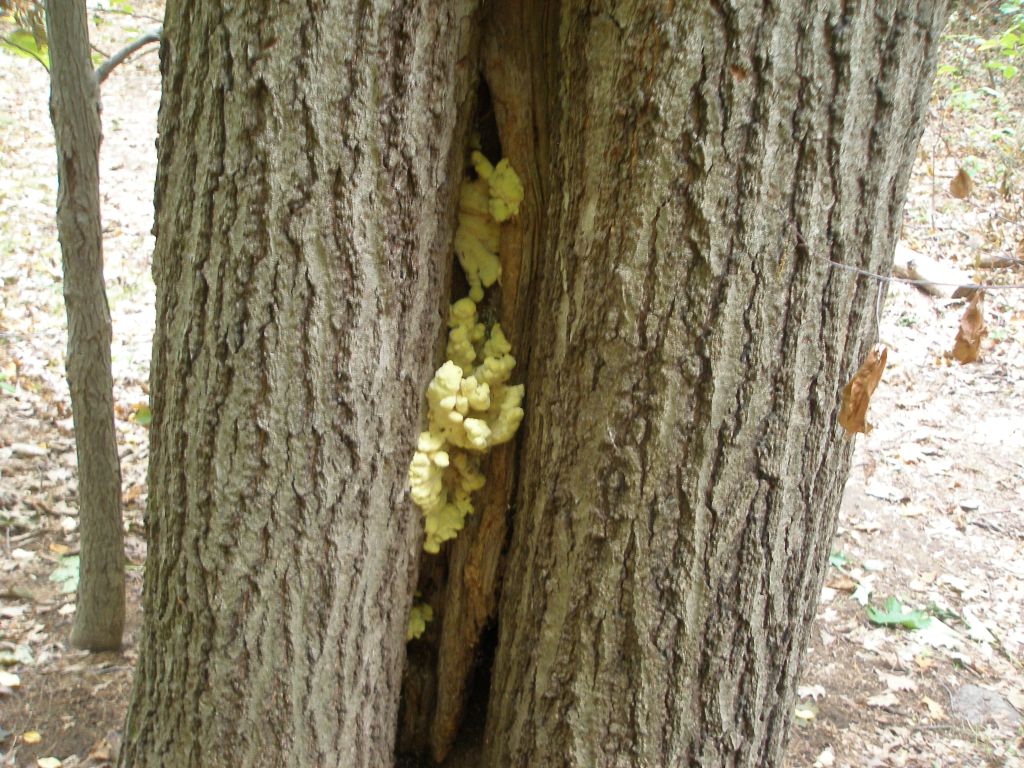
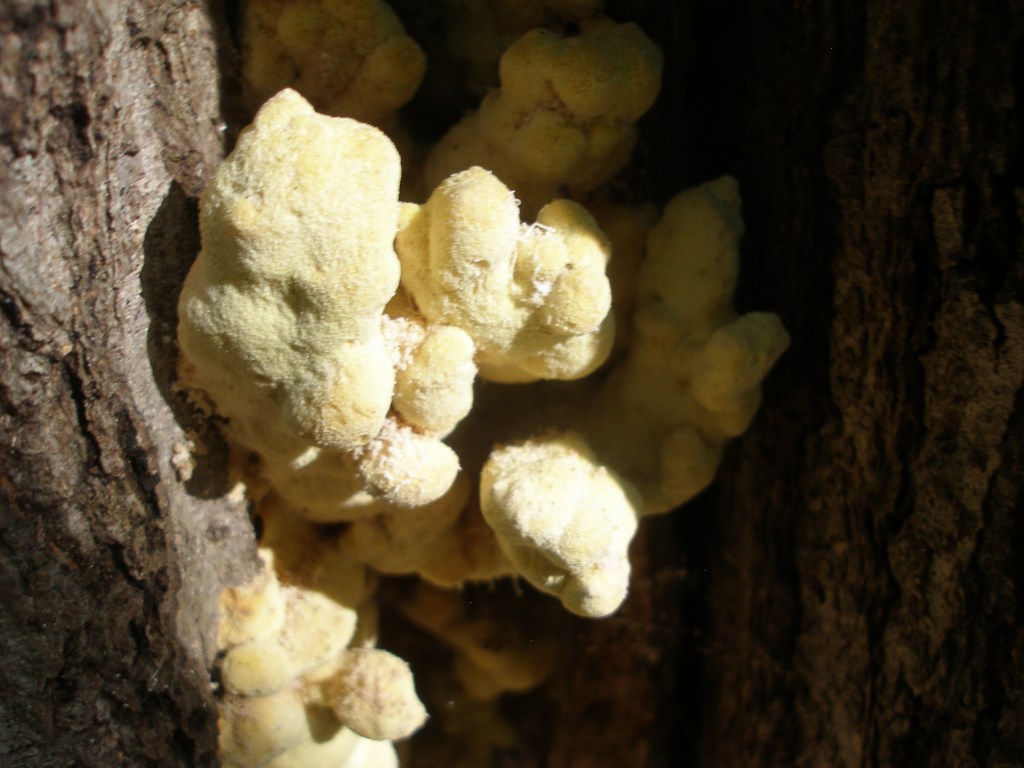
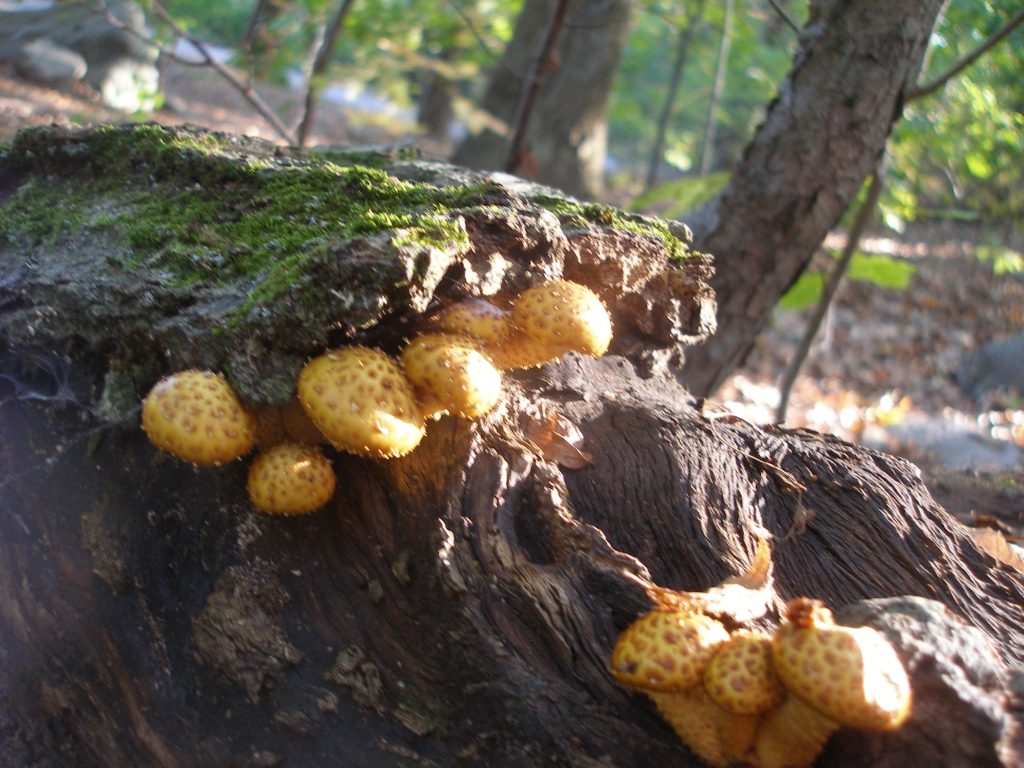
Although areas nearby have gotton considerable rain, where I live in Arlington, Massachusetts, USA, we had a whole month of unrelenting dryness. This year there is nothing like the diverse abundance I saw around this time in 2021. Still there were some notable mushrooms popping up here and there. Evidently Chicken of the Woods and Jack O Lanterns produce fruiting bodies even when it is dry.
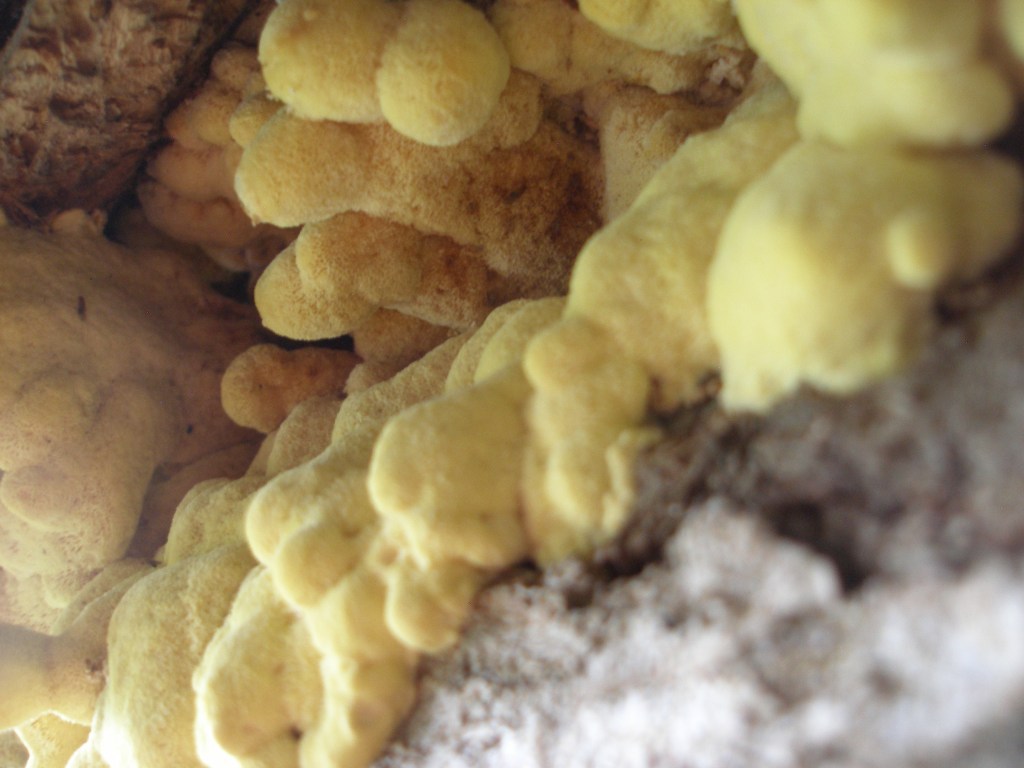
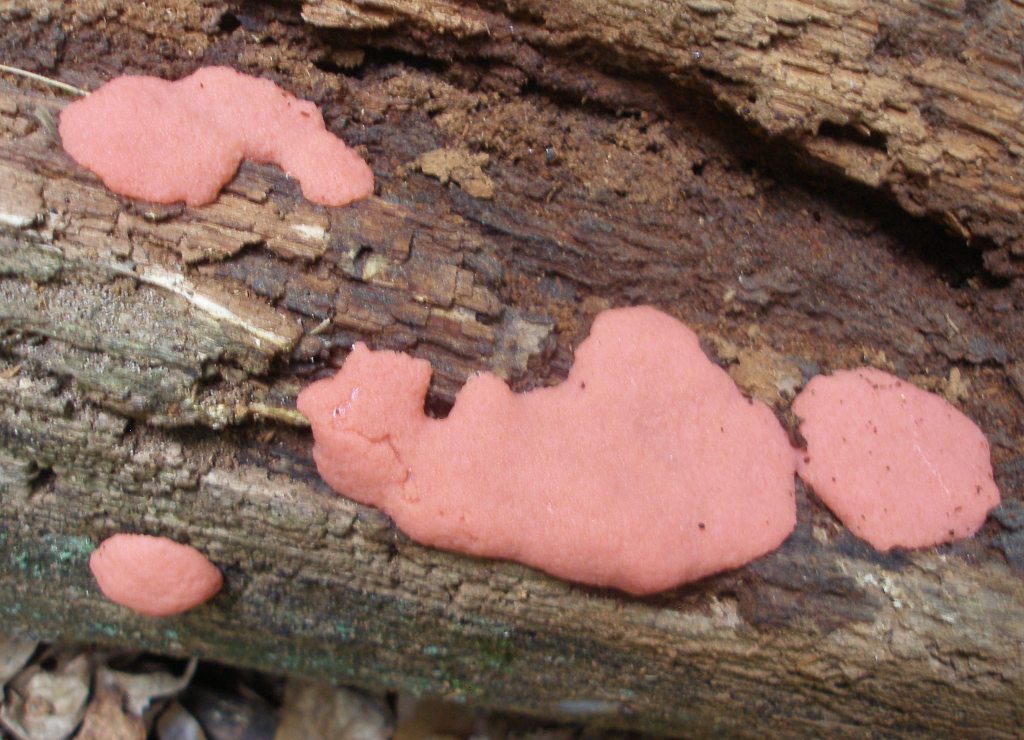
I did come across some interesting slime molds. Those are included as the last photos below.
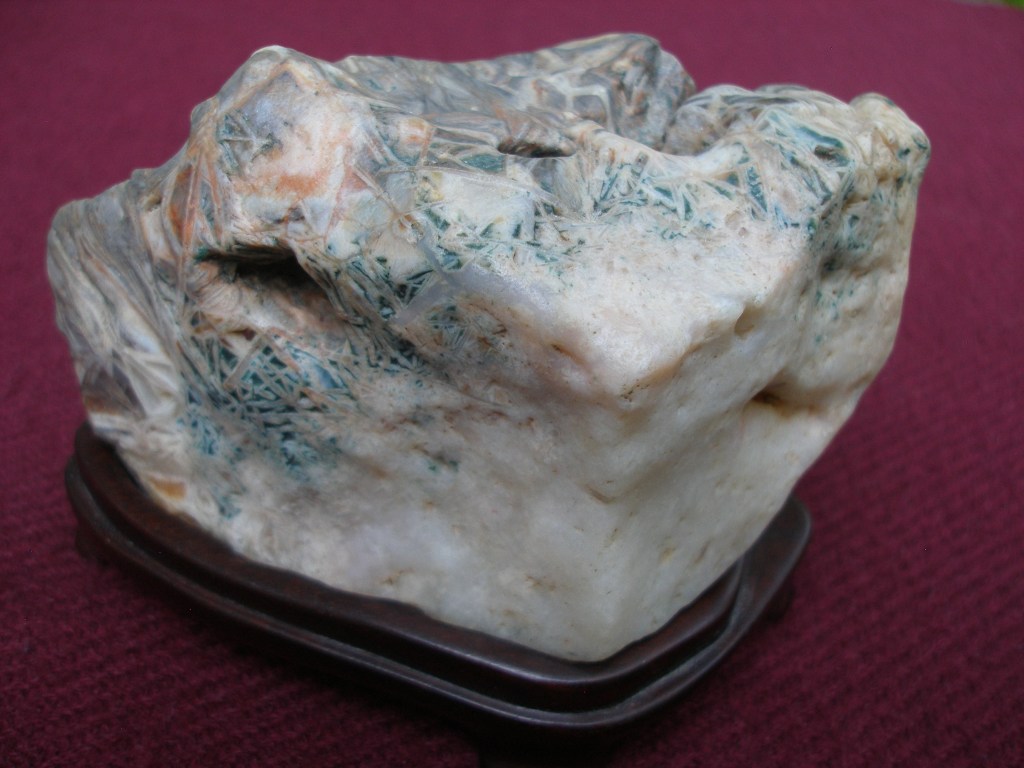
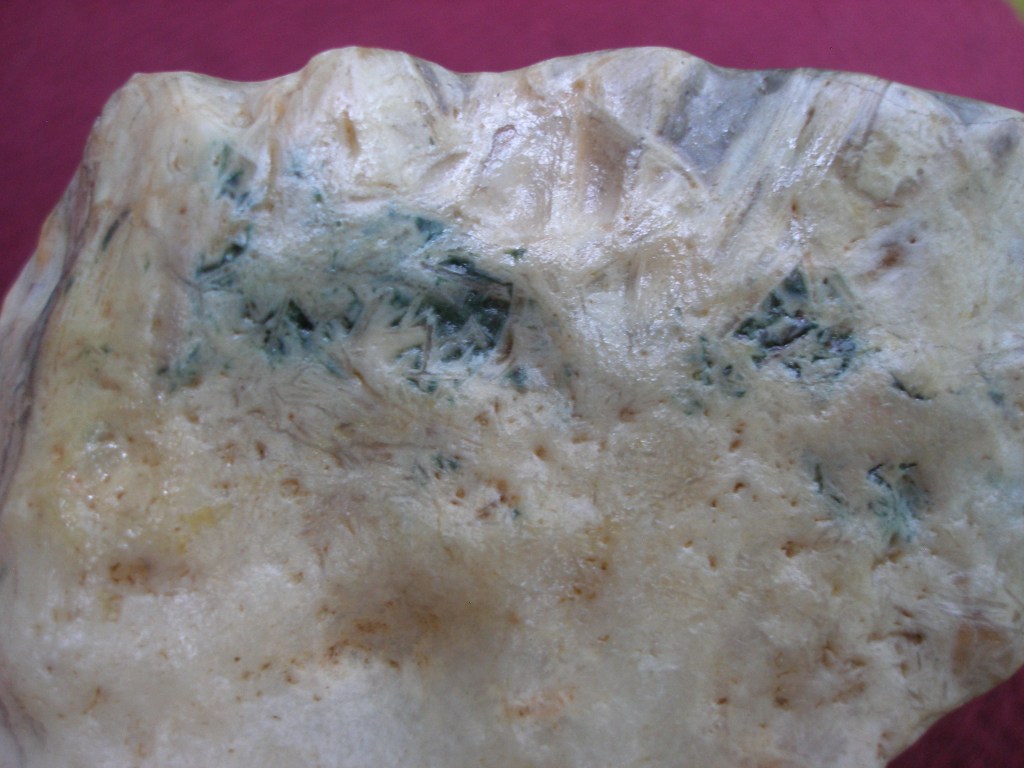
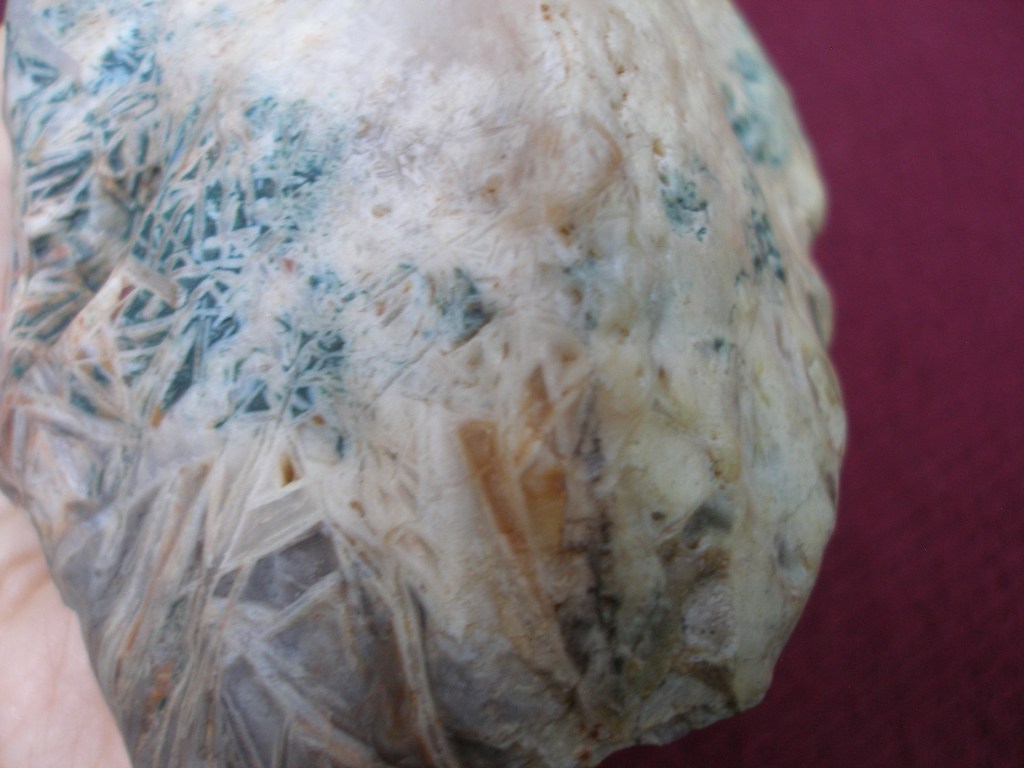
This Gobi Dessert scholar’s rock that always keeps me company as I work at my desktop computer is rather small, just 5″ by 2 1/2″ (13 x 6 mm). In overall shape it resembles a cliff. But it is the colorful pattern of intertwined crystals “growing” out of a white base that really makes it special. This type of microcrystalline quartz is sometimes referred to as “Chopstick lattice agate.” But to me this one looks more like densely tangled grass.
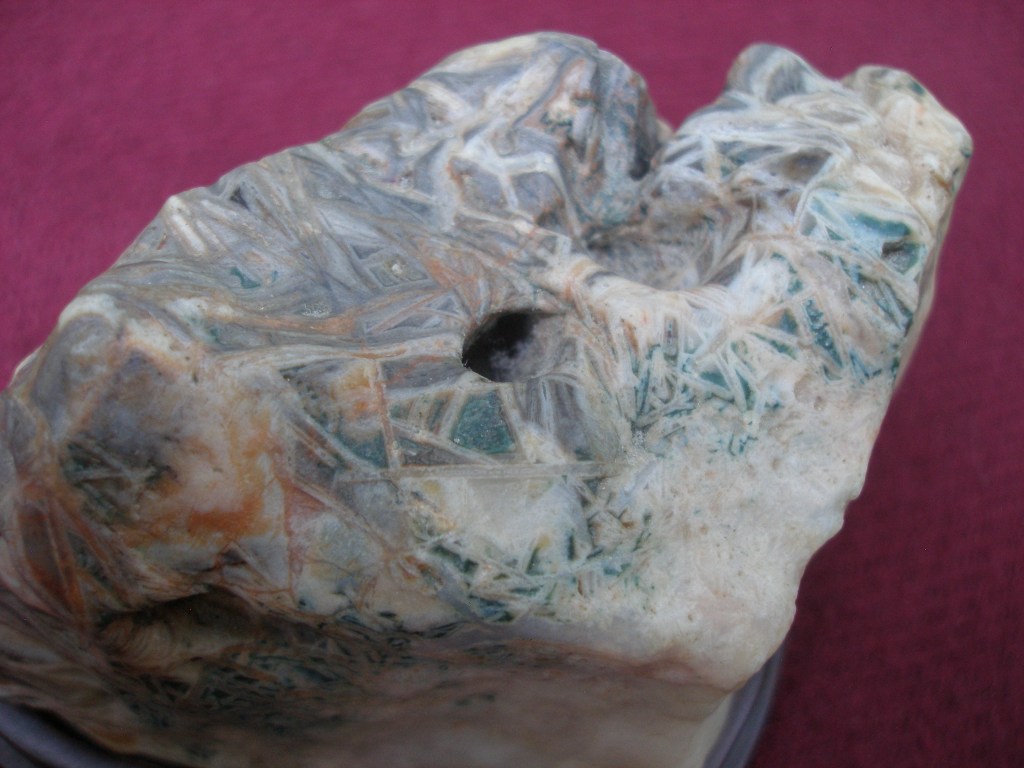
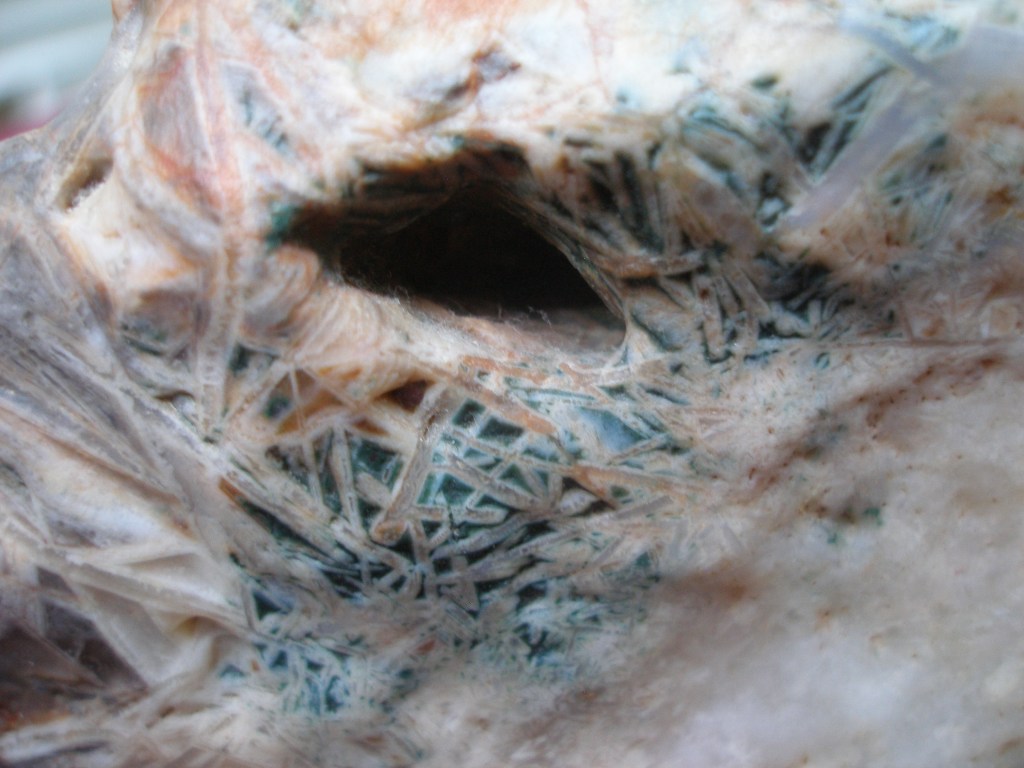
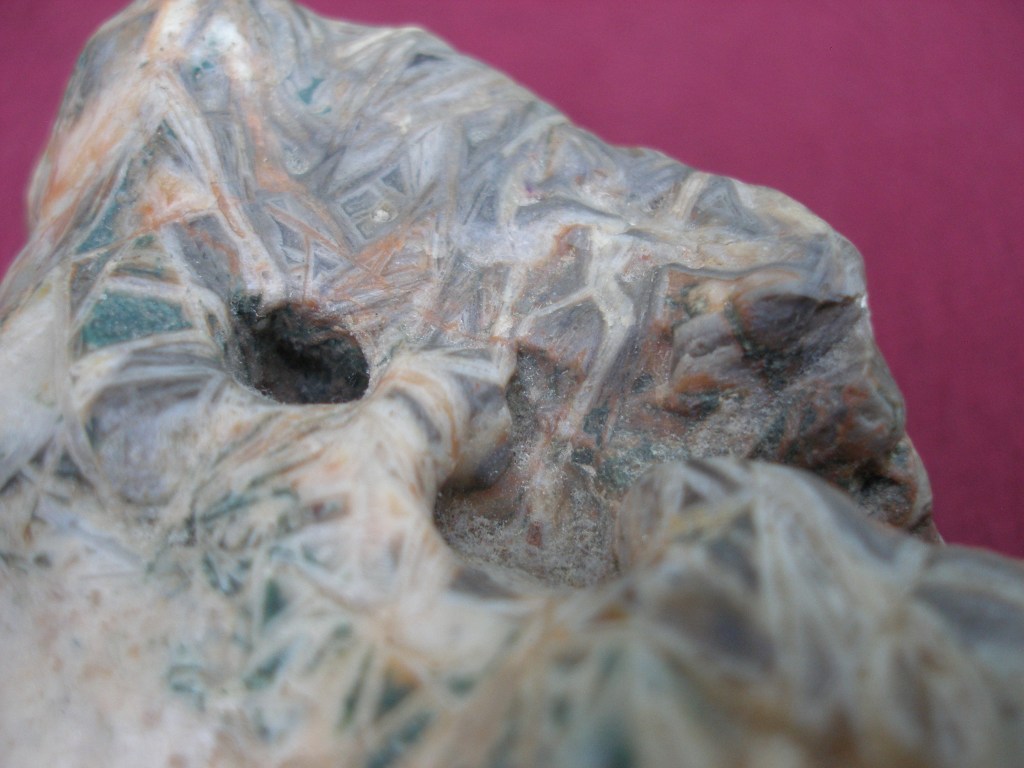
Long-gone crystals must have penetrated the hole where this nodular agate formed. I imagine its softly-shining surface was the result of a long period of weathering in the cold, dry and windy desert conditions.
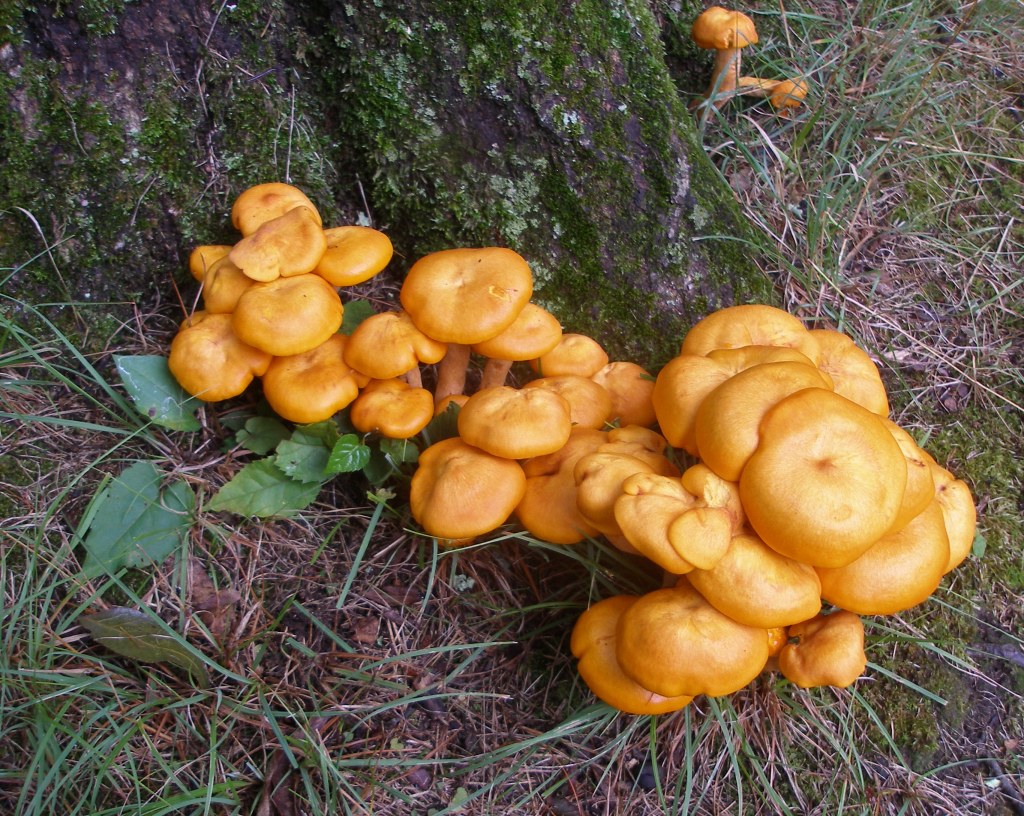
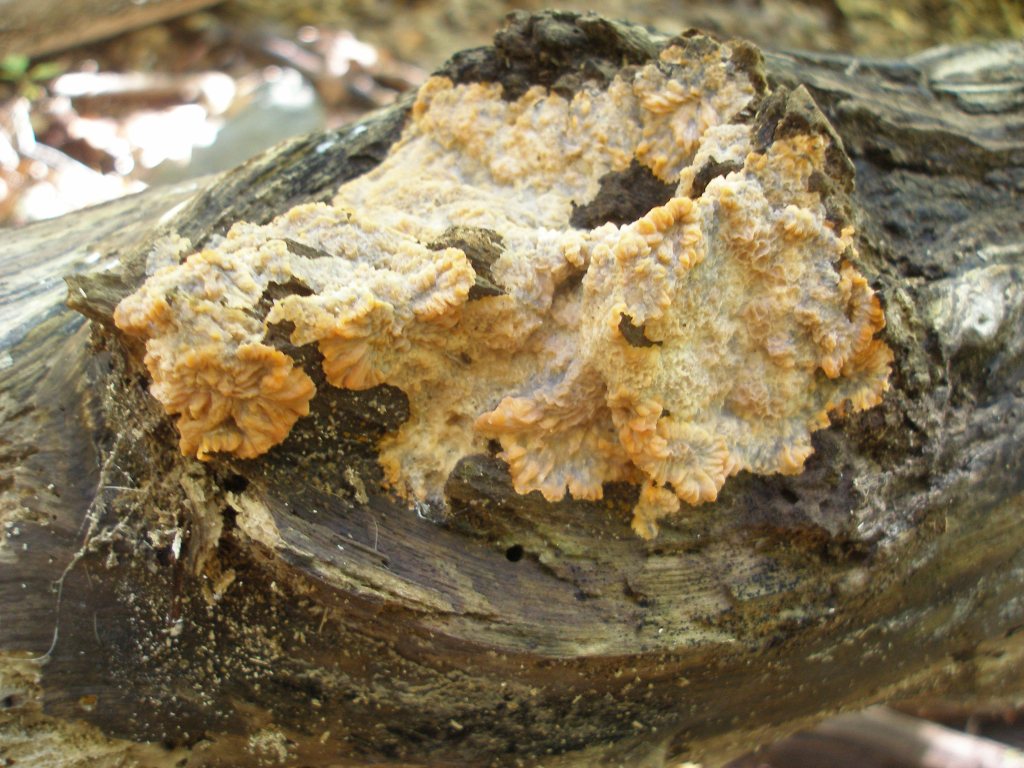
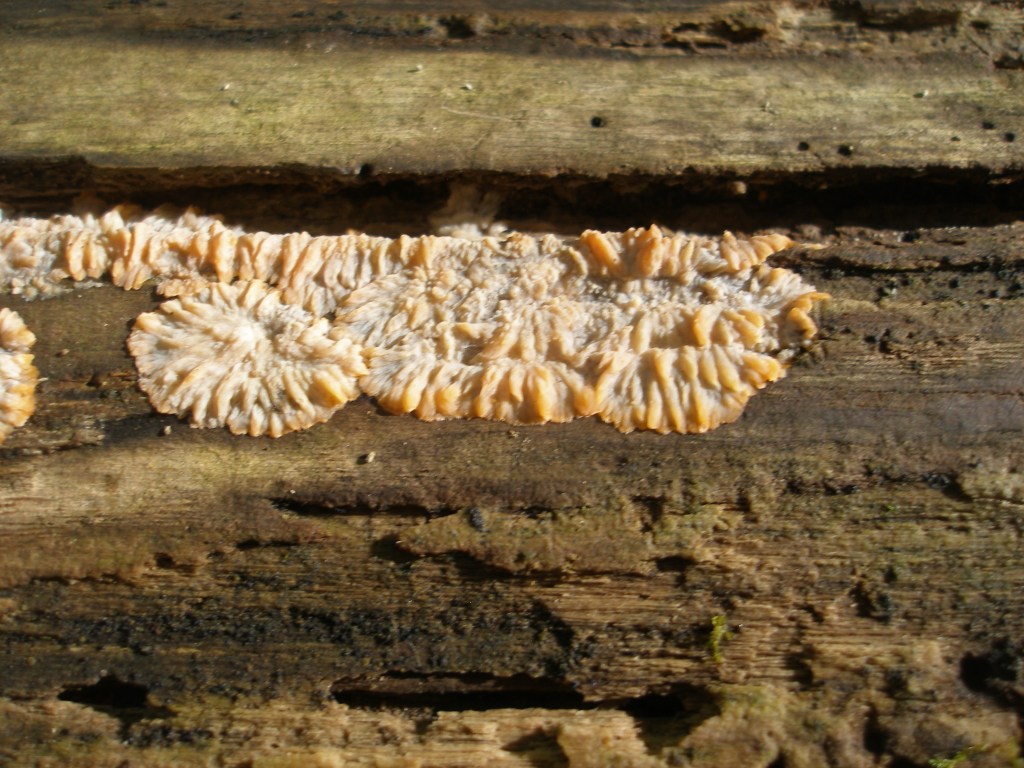
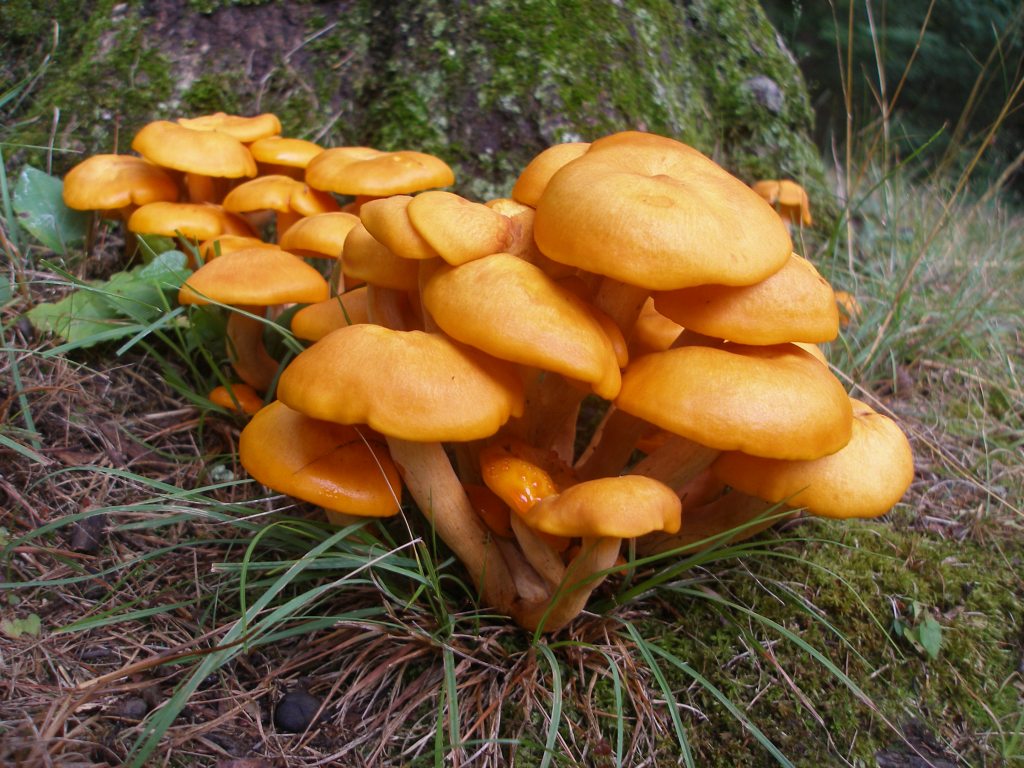
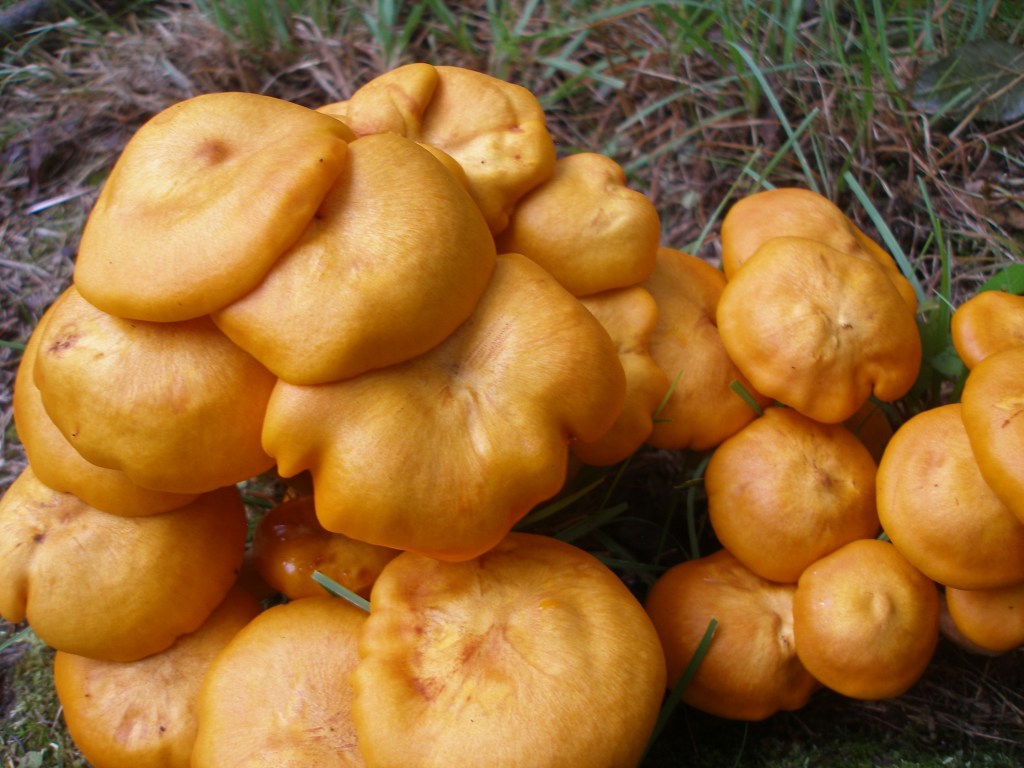
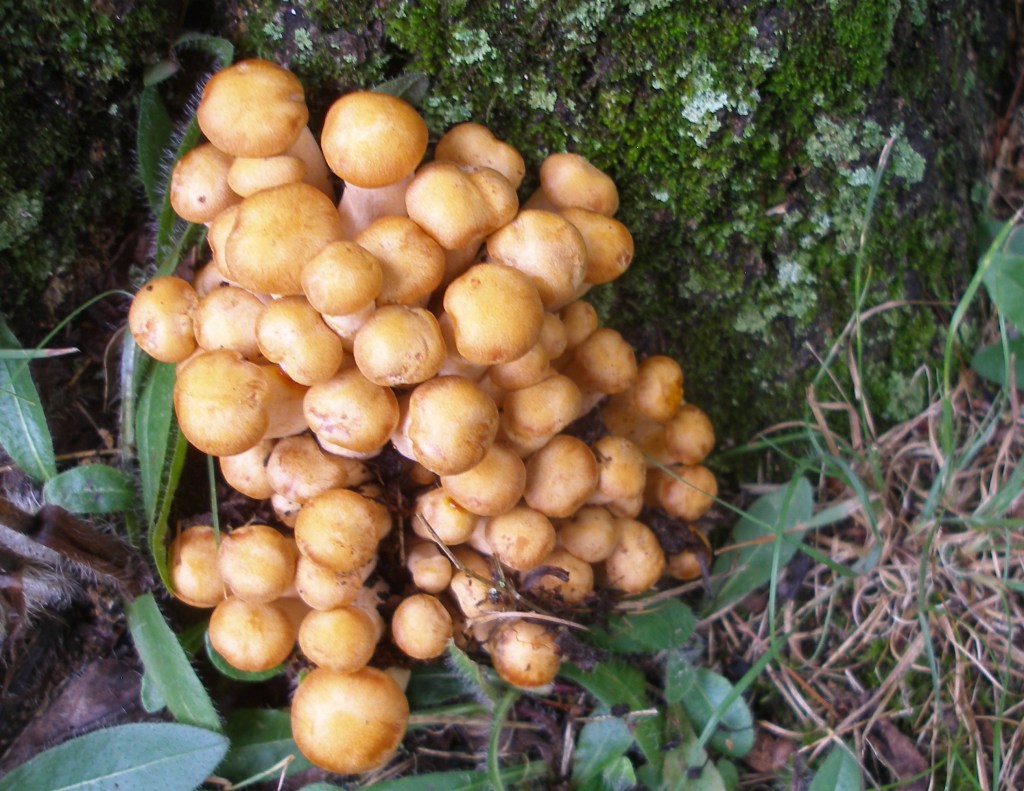
I wasn’t looking for them – too early in the season, but these mushrooms could not be missed. They were orange and not just a quiet subtle orange either.
They looked a bit melted in places like what happens with some kinds of soft cookies when they are baking. Note: Don’t eat these Jack O Lantern mushrooms, they are poisonous.
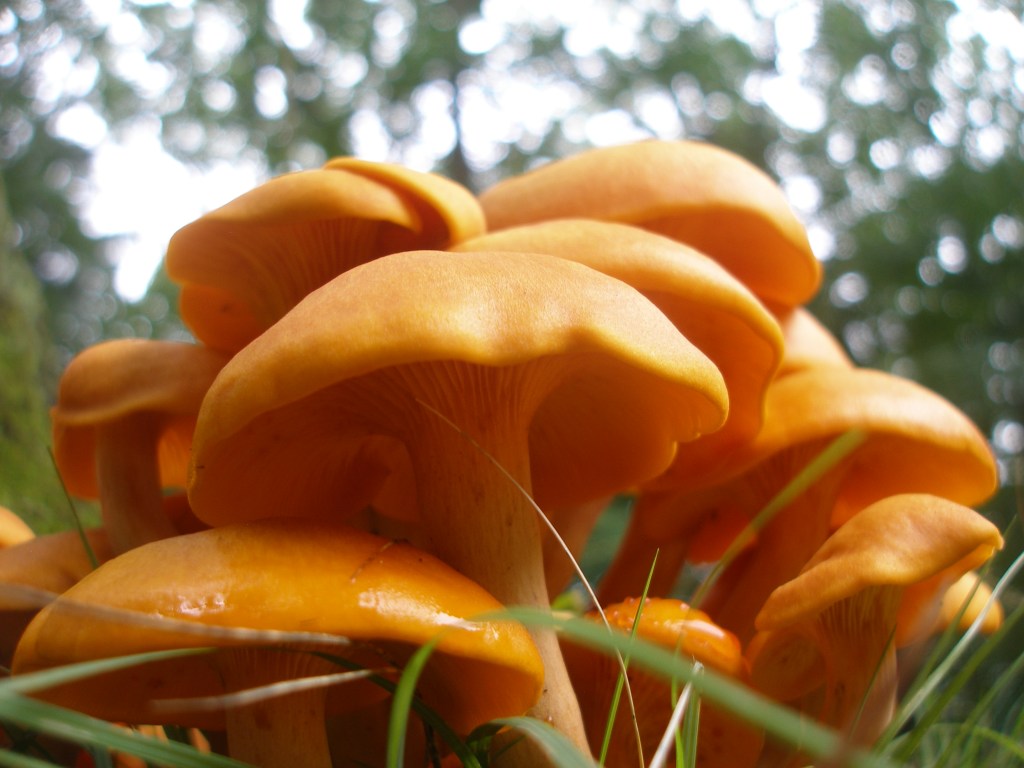
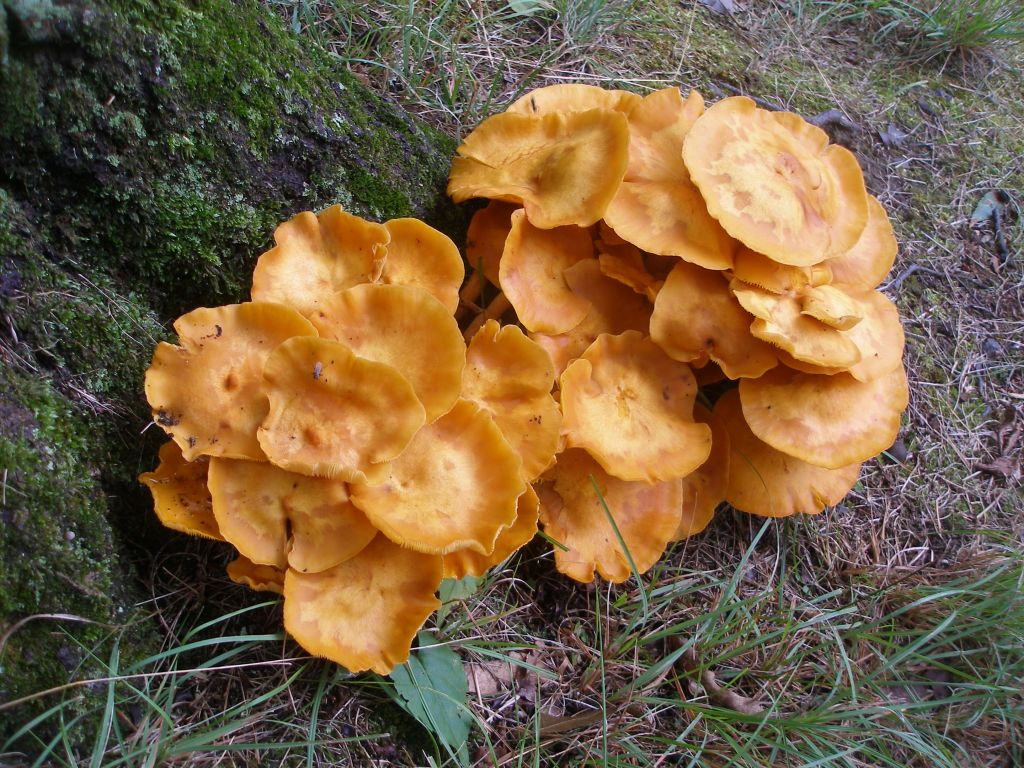
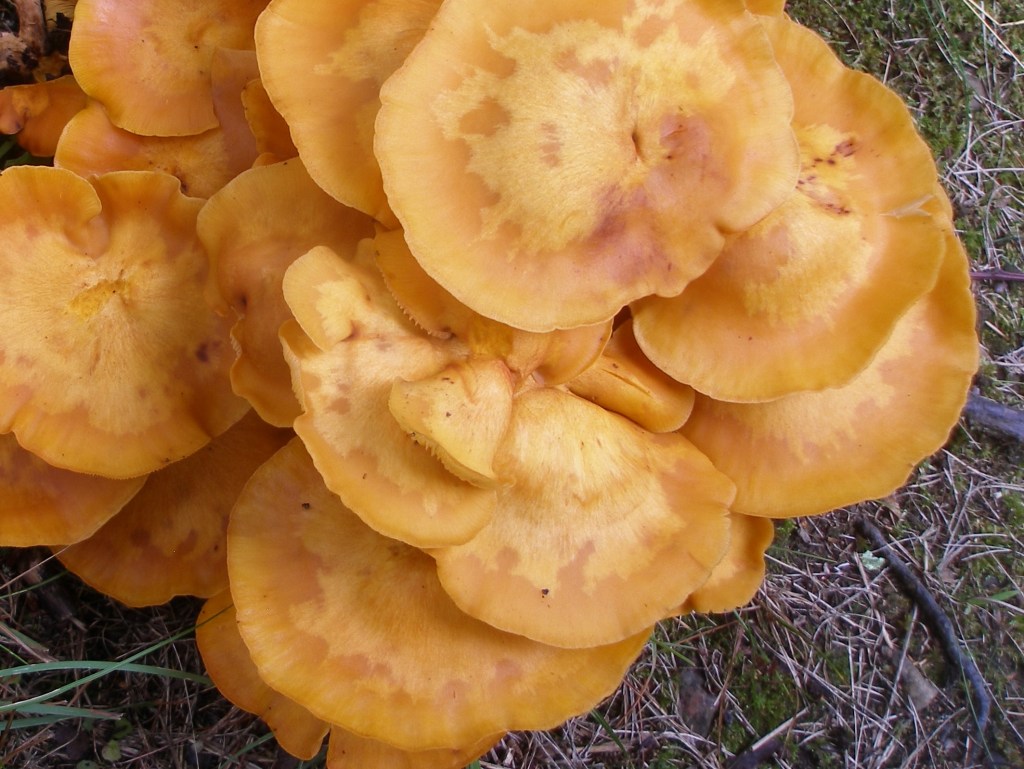
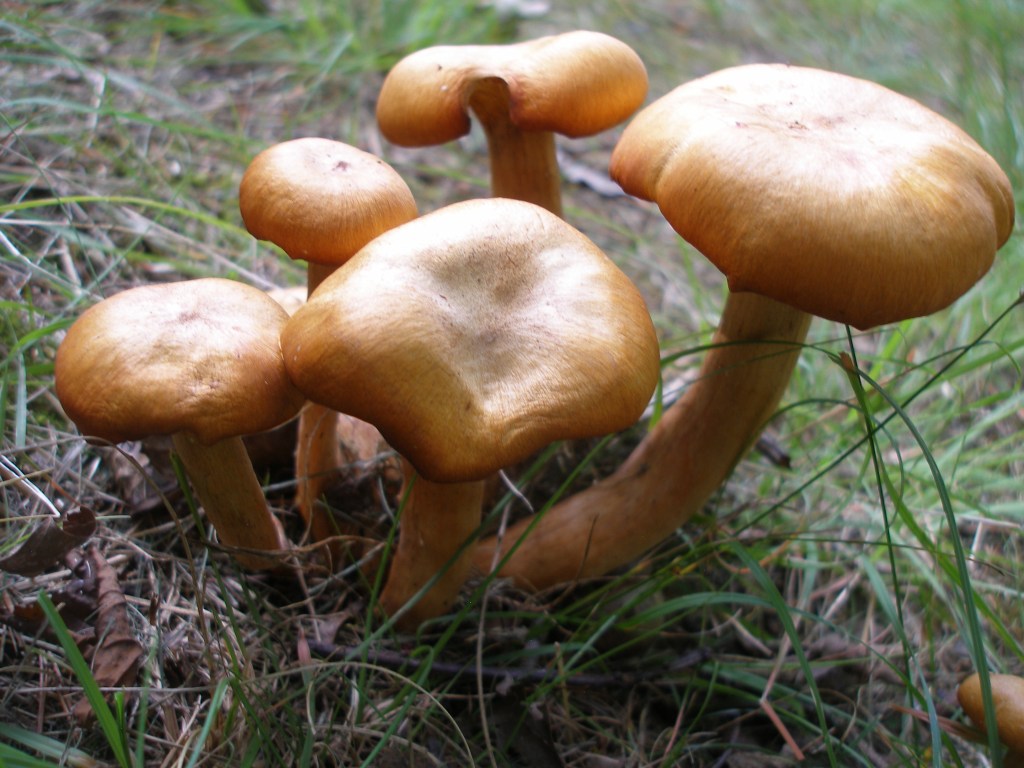
A few days later, the caps had flattened out, and gotten larger with their edges turned up. And additional clumps were growing at the base of the oak.
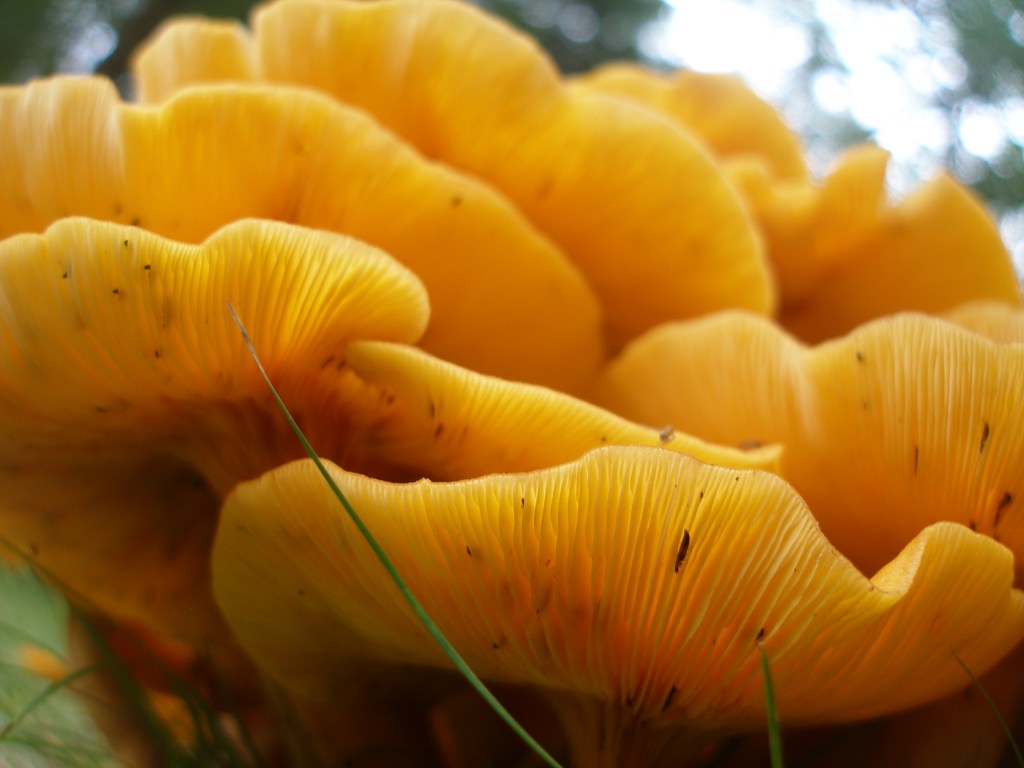
Evidently these mushrooms are a bit bioluminescent. I went out around 5 am to see if I could capture their pale green glow with my small camera, but perhaps there was too much light as the sky was already beginning to brighten.
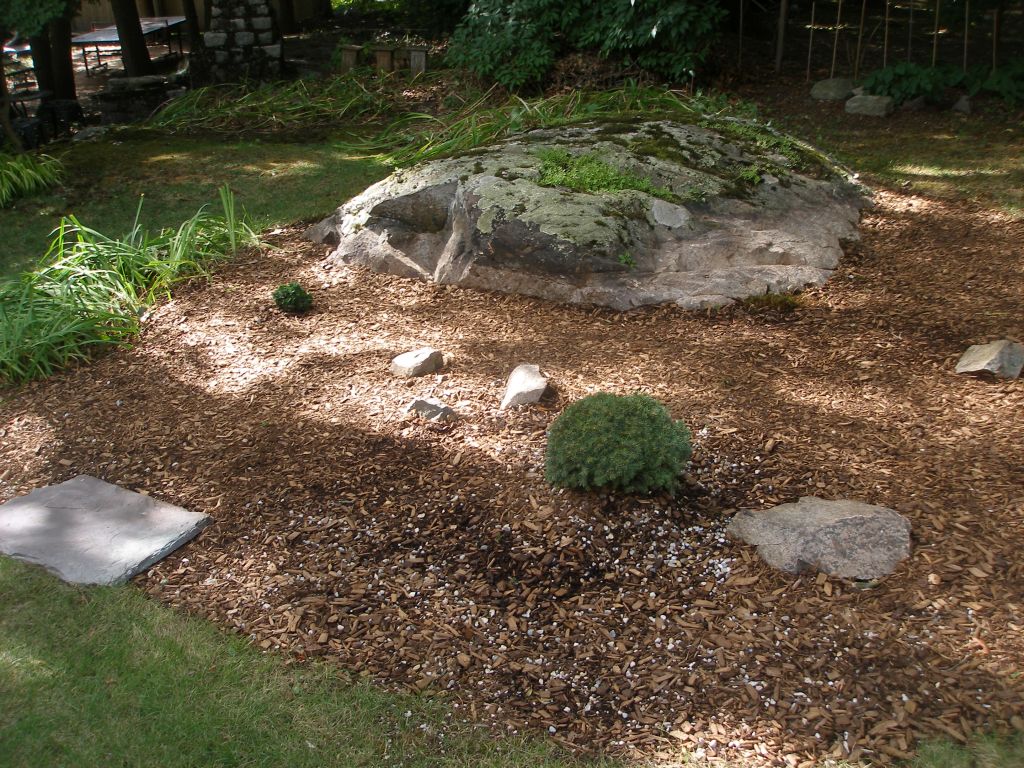
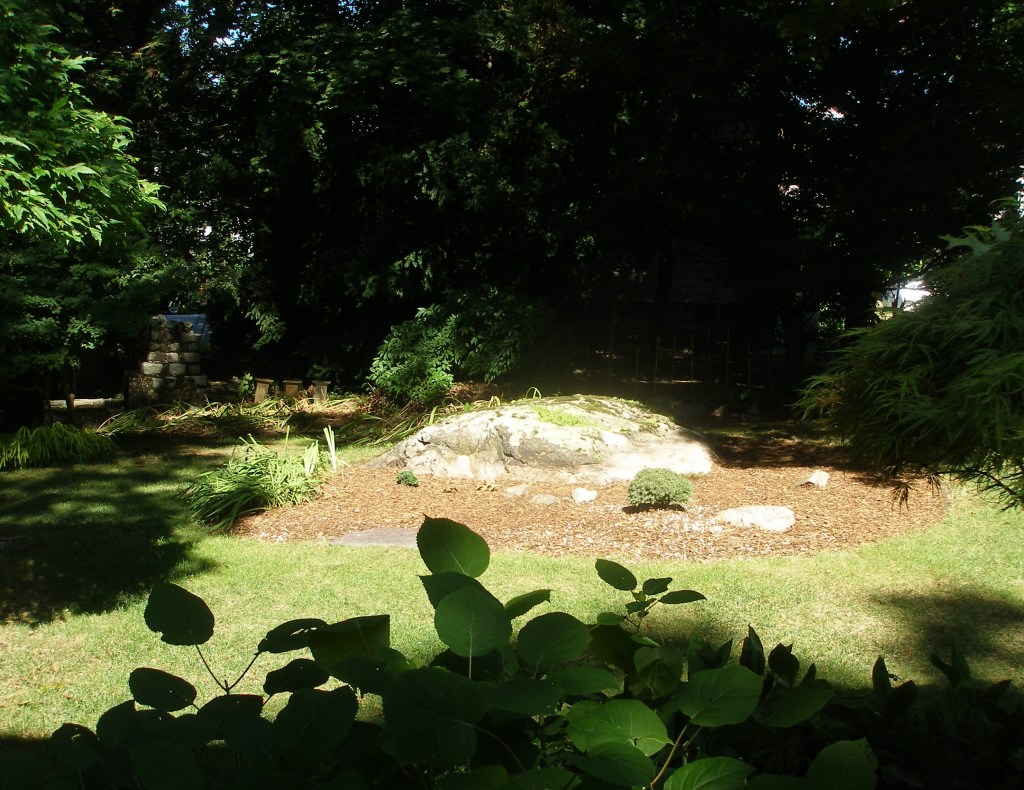
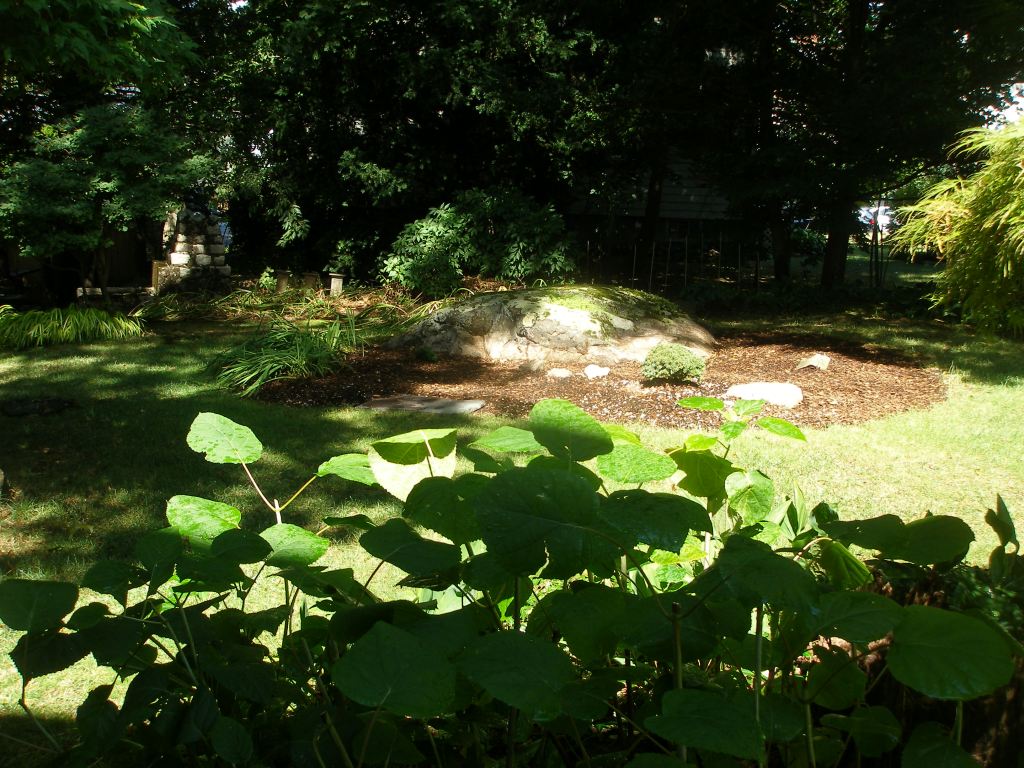
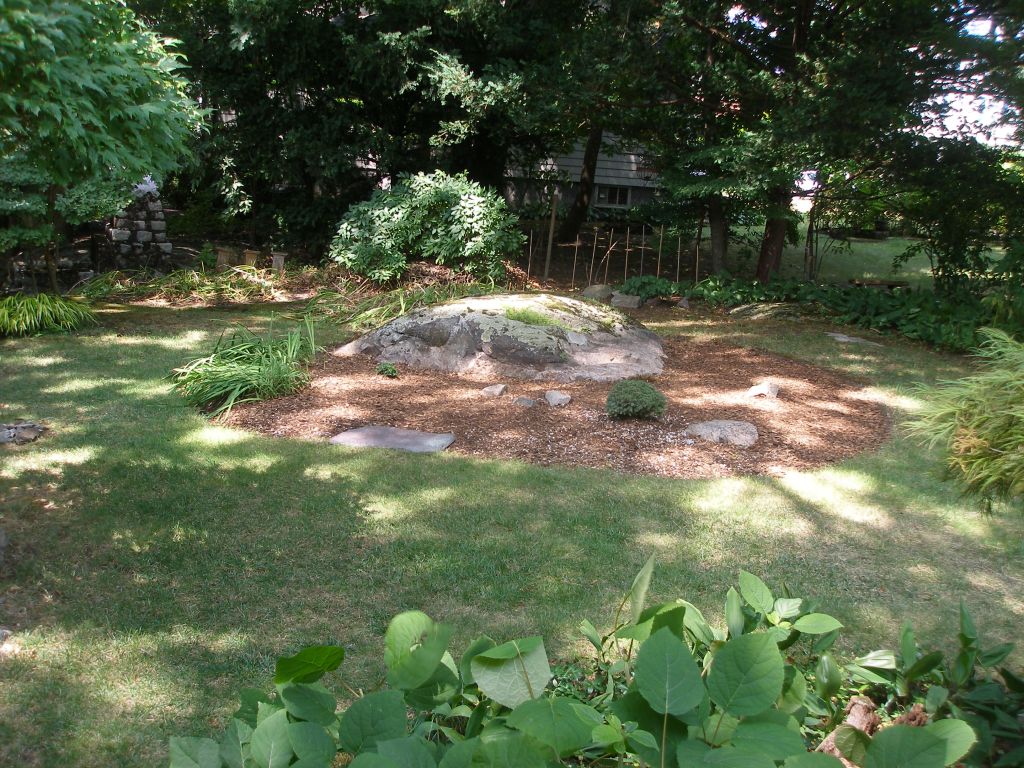
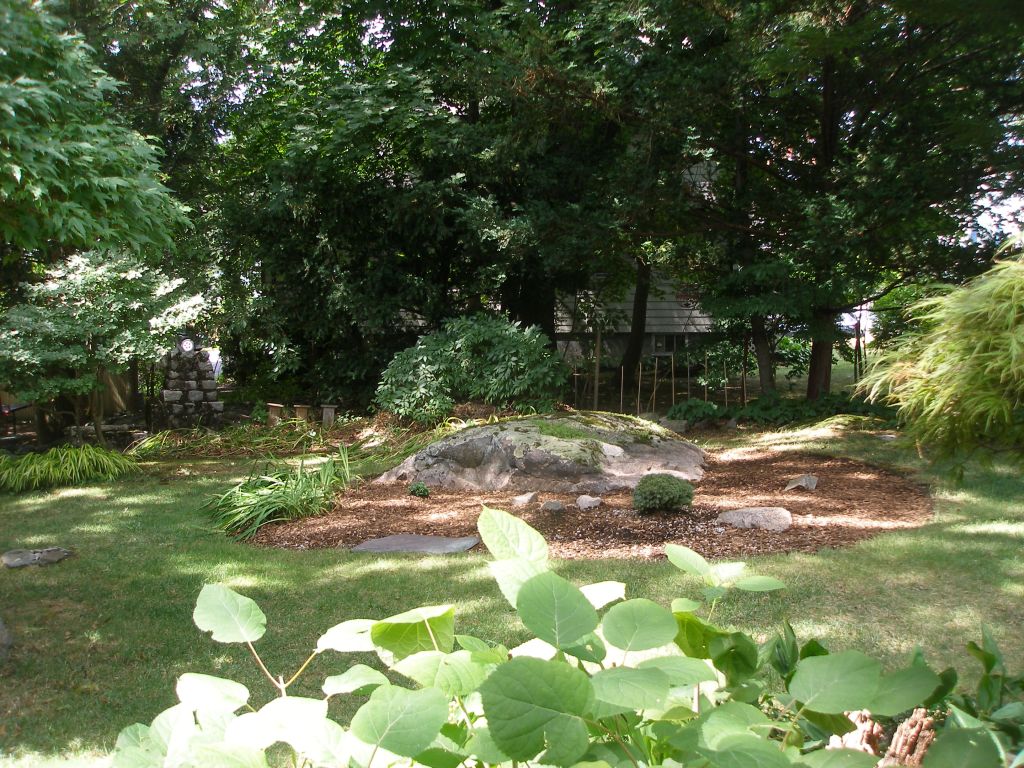
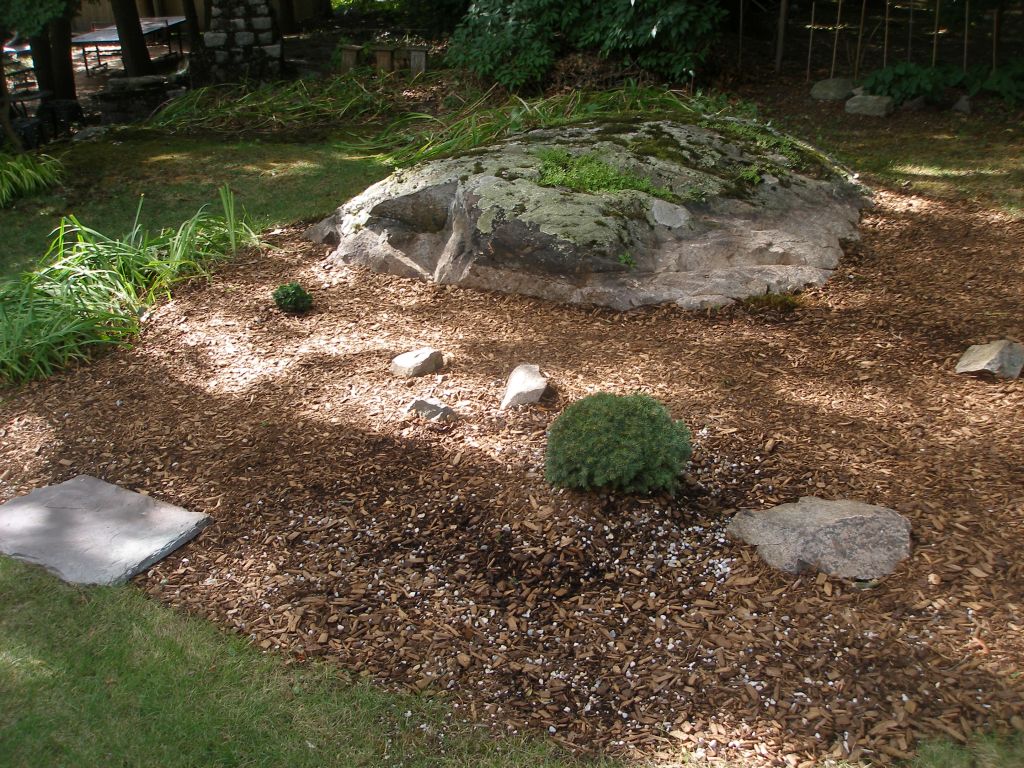
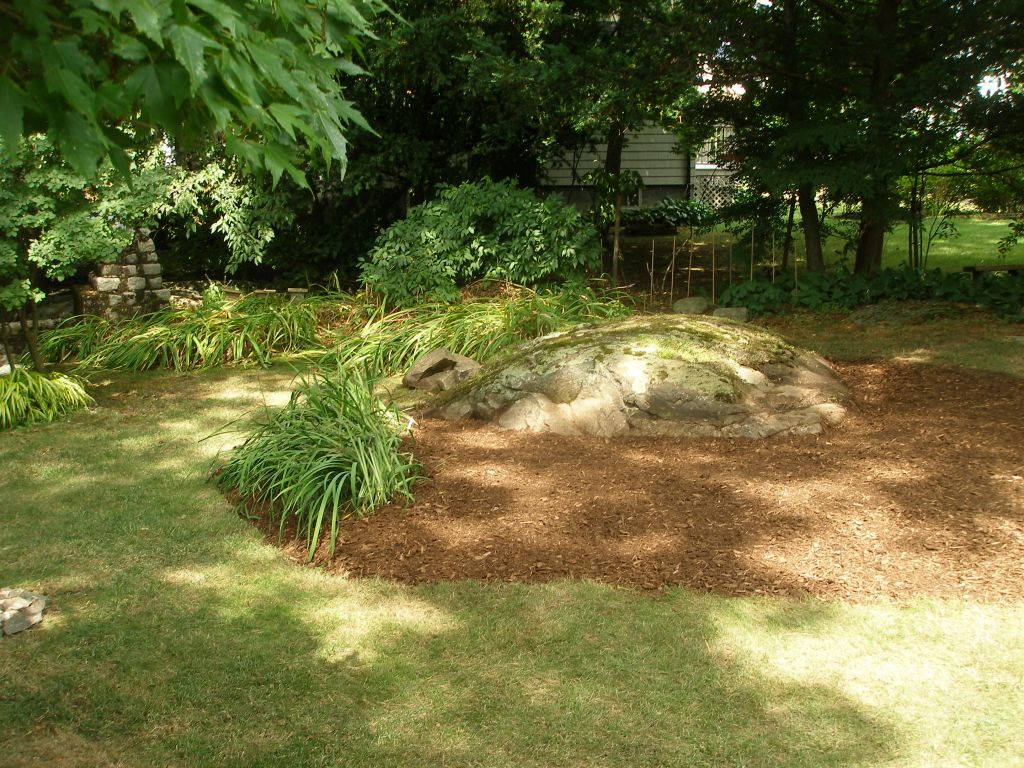
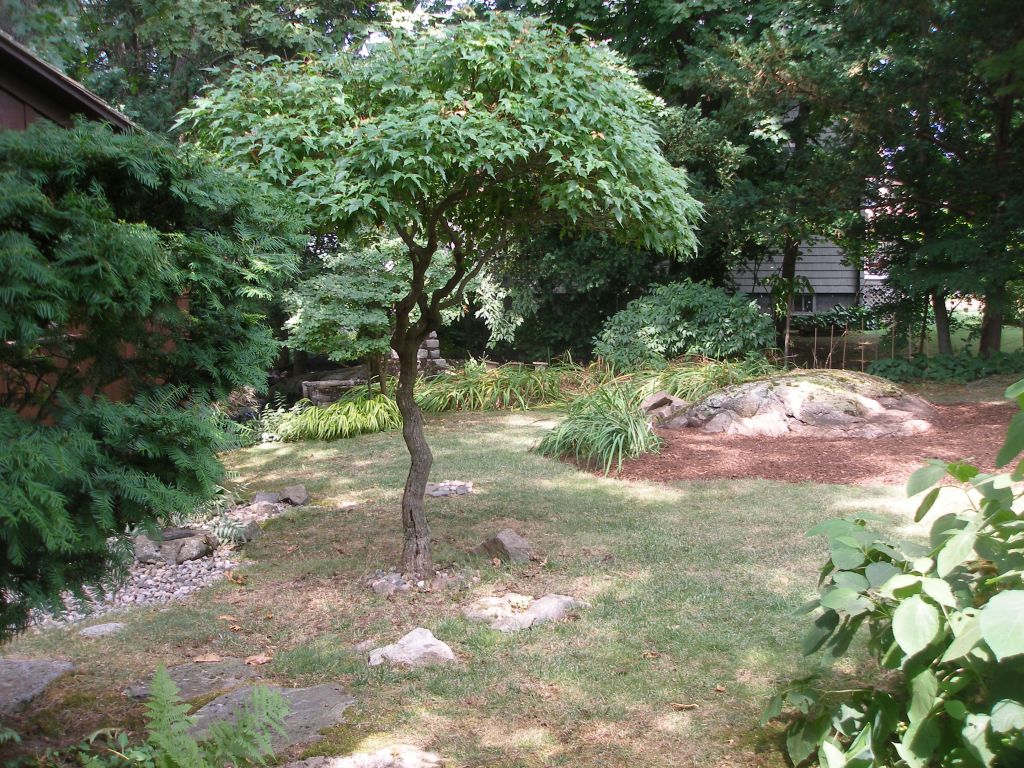
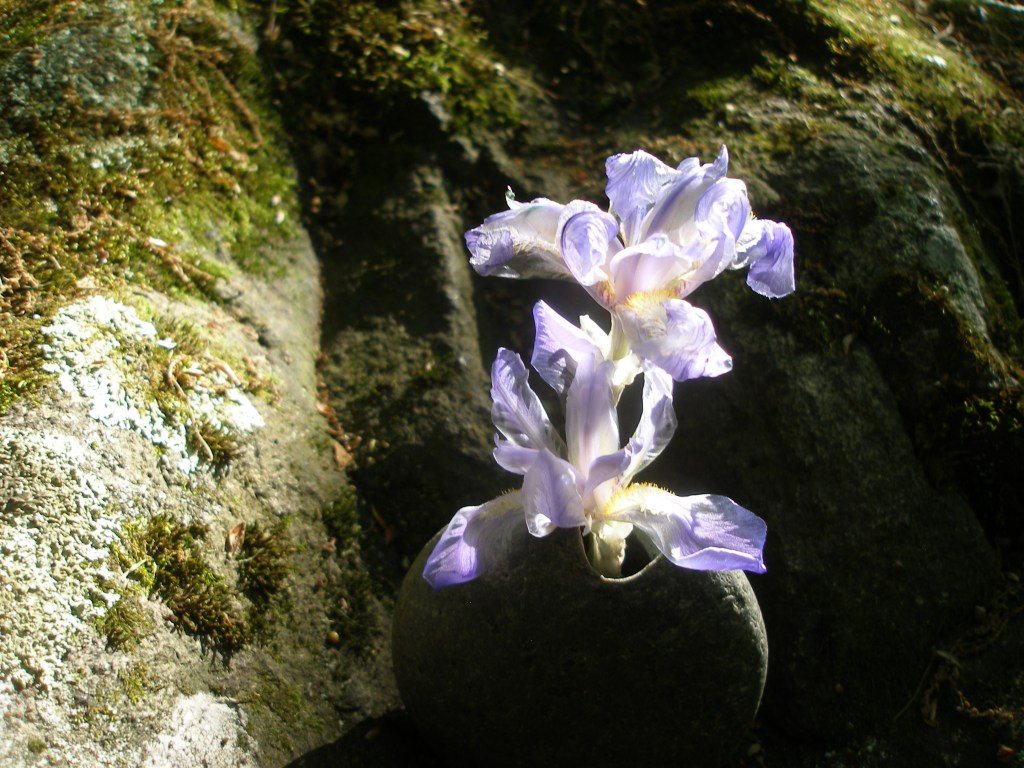
Shadows move across the large granite outcrop in my backyard creating quite interesting effects now that I can see them more clearly. I decided to plant two tiny evergreens where irises once grew. There are some initial signs that they like the spots that I chose for them, but only time will tell.
The first photo below was taken around 4 pm. The other photos were taken at intervals starting at 11 in the morning. Unfortunately, still photos cannot show how shadows dance across this scene when a breeze stirs the leaves.
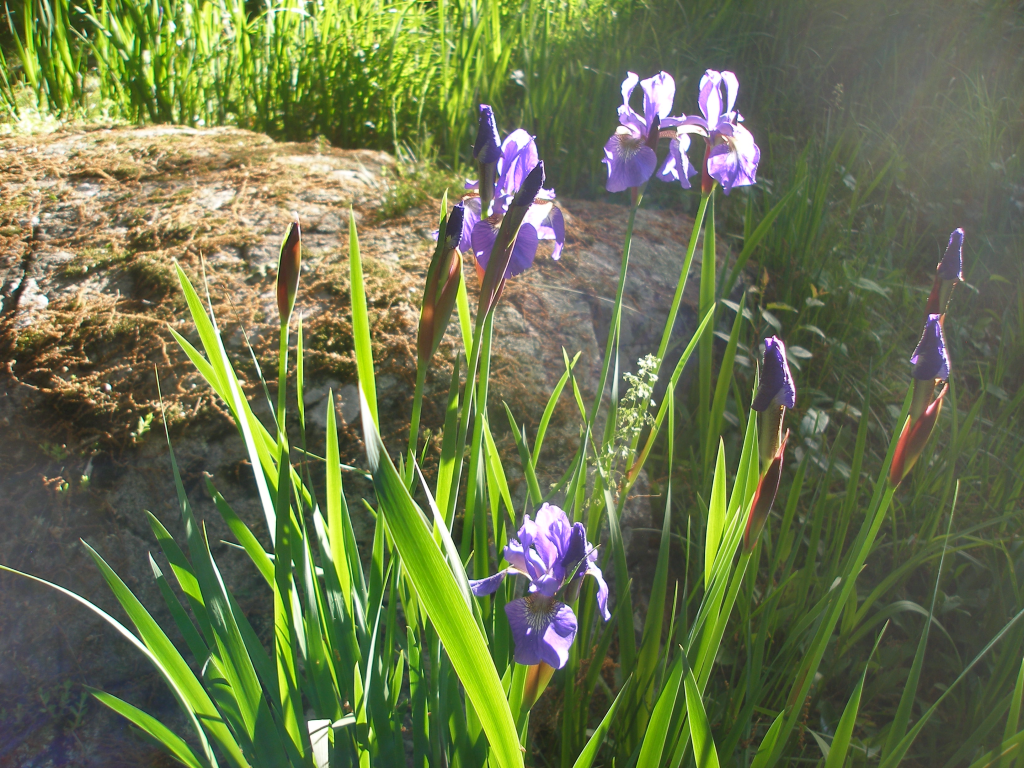
The large granite outcrop in my backyard had seen a lot in its time. Glaciers left grooves in its surface. It had acquired quite a community of moss, lichen and other small plants. Animals and birds had stood on its sturdy back. That a large kitchen bay window overlooked that outcrop had sold me on that house even though it was only the second one we looked at.
My videographer friend, Jeff Klein, asked me “Would I like to have his friend, Japanese garden designer, Kokubun, come see my garden?” I answered, “Of course, I would be honored.” As the three of us shared tea on my patio, Kokubun mentioned the atmosphere and how plants blocked the view of neighbors’ houses, “so you would not know they were there.” It was obvious he shared my love for rocks. He told me that installing a rock the size of the granite outcrop would cost thousands of dollars.
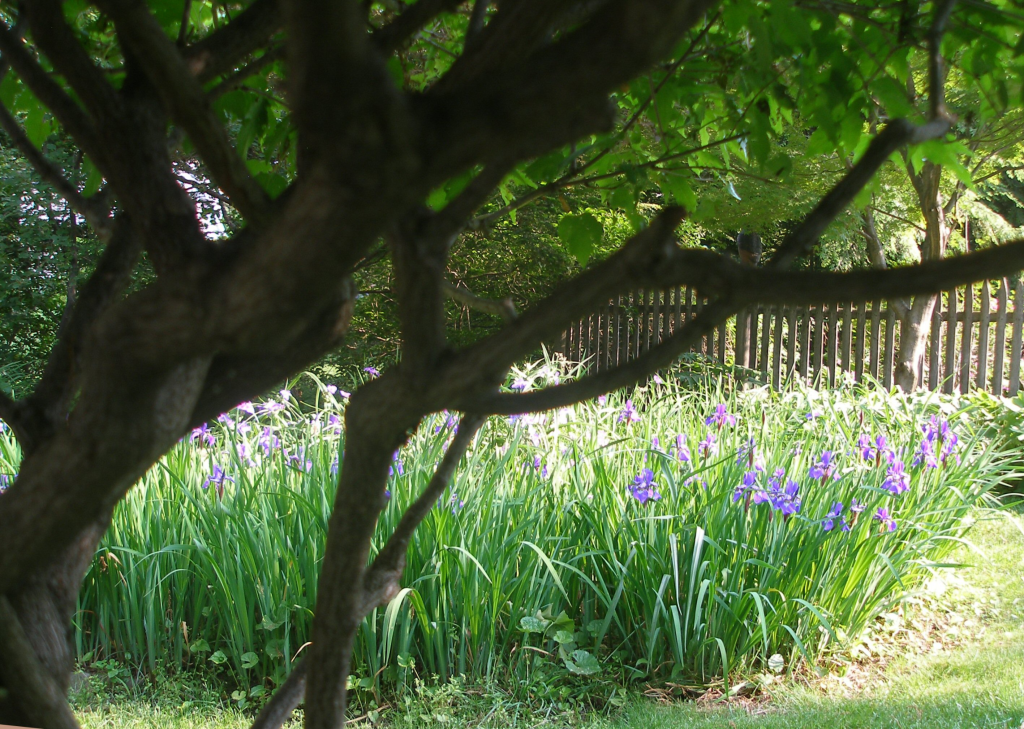
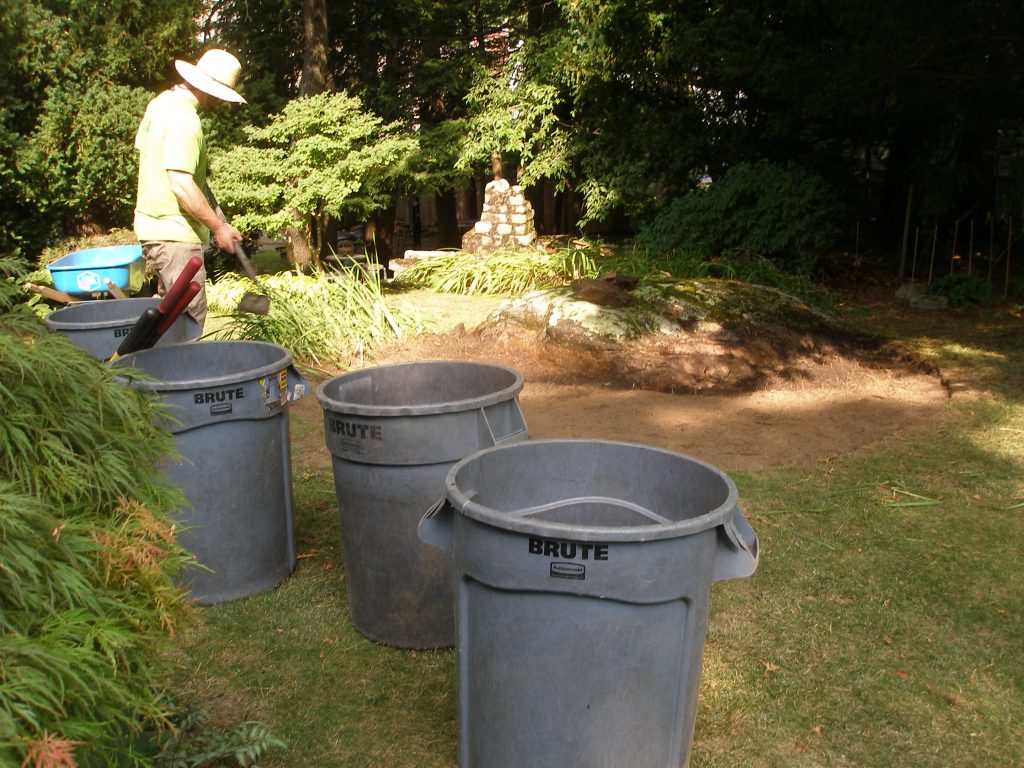
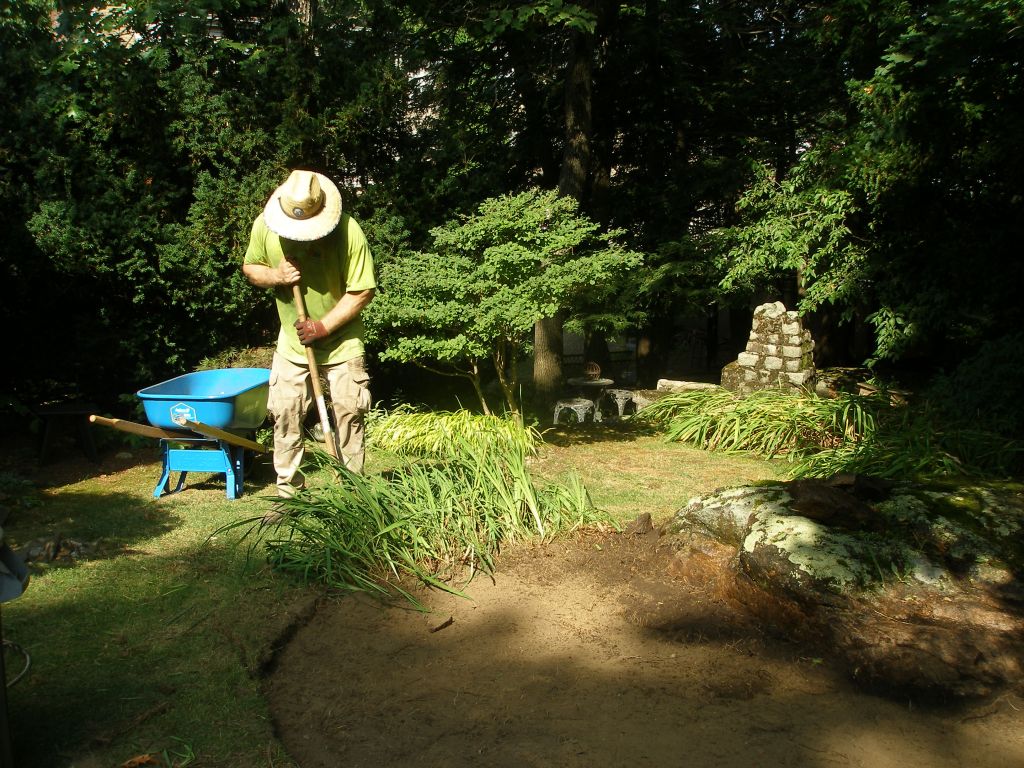
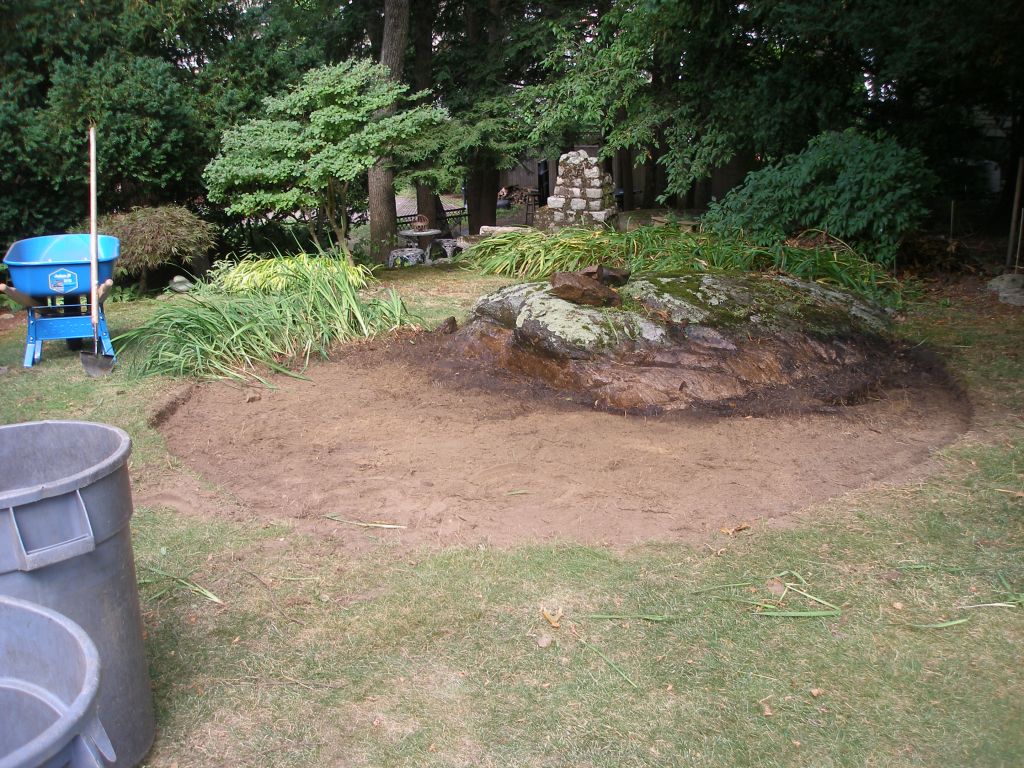
As he was leaving, Kokubun suggested removing the iris so as to make the outcrop more visible. I said, “Perhaps leaving a small patch of iris on the left.” He nodded in agreement. As luck would have it, a recommended local landscaper told me he could came out the following week. Nick Rose and his crew dug down to reveal more of the outcrop for a job that was pure labor with a lot of hand digging. Nick mentioned that the biggest reason to seek out professional help for that job was the need to haul away the rather large quantity of dirt and plant matter that they had removed.
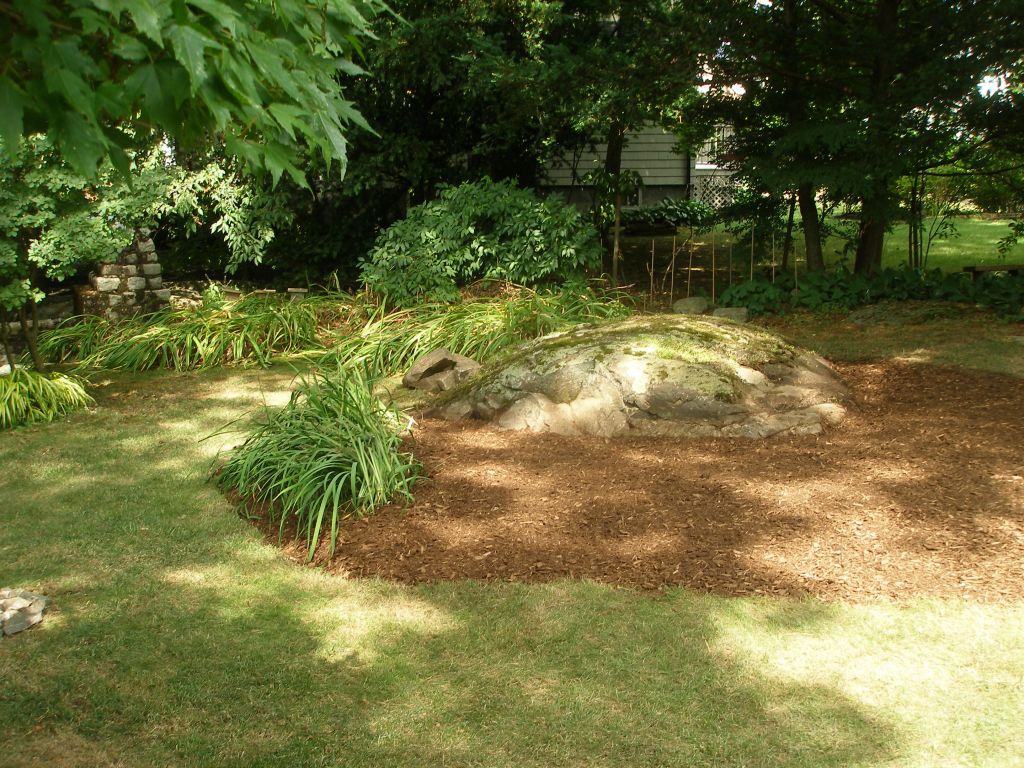
My garden had been stable for quite some time but making the outcrop more visible was such an obvious idea, I am surprised I did not think of it on my own. Removing things has become easier now that I am older. Here was an example of just how much of an improvement that can make.
Drinking tea creates a pause that invites paying attention with all of our senses. Thich Nhat Hanh (2013) notes drinking tea can “bring you back to your true home. Don’t think. Be here, body and mind united.” (p. 150). By relaxing into it, drinking tea can help us become more open and grounded for whatever follows.
Sharing tea provides an excuse for invoking caring intention and experiencing gratitude, both of which support wellbeing. The fifteenth Grand Master of the Urasenke Japanese tea ceremony school, Sen Genshitsu, states that the host should feel, “’I am so glad I was able to make tea for this person. Now I can die in peace,’ and the guest should also feel, ‘I am so glad I received this tea, now I can die in peace’” (Sen, 2006, p. 14).
Sharing tea is associated with warm conviviality in many countries where it is grown (Heiss & Heiss, 2010). There is often a fresh aliveness as tea supports considerable calm awareness all by itself. Sharing tea can be a form of adult play – something that is engaged in for the pure pleasure of the activity itself. Researcher, Stuart Brown (2009) found play “energizes us and enlivens us. It eases our burdens. It renews our natural sense of optimism and opens us up to new possibilities” (p. 4). Among play’s multiple benefits are development of social judgment through providing a “penalty free rehearsal of the normal give-and-take necessary in social groups” (p. 32). And bringing full awareness to the simple act of sharing tea makes clear just how much meaning and comfort small acts of generosity can add to our lives.
A number of writers stress the benefits of engaging embodied awareness. Rothberg (2006) notes “this kind of practice is particularly valuable in helping mind-oriented cultures such as ours…to cut through the ‘mental cloud’ of repetitive thoughts in which many of us live most of the time” (p. 38). Nancy Mangano Rowe (2003), a faculty mentor at the Institute of Transpersonal Psychology contends, “Our bodies are such vital sources of information and truth. The wisdom that lies within each of us is so vast and helpful to our…spiritual growth.” (p. 165). Researchers Brendel & Bennett (2016), reviewed studies on bodily-engaged mindfulness, and found many benefits including creating the authentic presence necessary for compassion.
Our story-creating minds can deceive us and separate us, while our bodies can help us feel how much we are like others in both our vulnerability and our worth; our basic human dignity, and in our dependence upon each other.
Sharing tea first, can help us come home and ground ourselves in the here and now, before moving on with our day in these increasingly challenging times.
References:
Brendel, W. & Bennet, C. (2016). Learning to Embody Leadership Through Mindfulness and Somatics Practice. Advances in Developing Human Resources 18 (3). pp. 409-425.
Brown, S. (2009). Play, How it Shapes the Brain, Opens the Imagination and Invigorates theSoul. New York, NY: Penguin.
Hicks, D. (2018). Leading withDignity: How to Create a Culture that Brings out the Best inPeople. Yale University Press.
Hanh, T. (2013). The Art of Communicating. New York, NY: HarperCollins.
Heiss, M. & Heiss, R. (2010). The Tea Enthusiast’s Handbook. New York, NY: Random House.
Rothberg, D. (2006). The Engaged Spiritual Life; A Buddhist Approach to TransformingOurselves and the World. Boston, MA: Beacon Press.
Rowe, N. (2003). Listening Through the body. In Brady, M. (ed.) The Wisdom of Listening (pp. 156-166). Boston, MA: Wisdom Publications.
Sen, S. (1979). Tea Life, Tea Mind. New York, NY: John Weatherhill, Inc.
A recent encounter with a turtle had me thinking about the fact that many humans walk around with our own invisible protective armor. It is not uncommon for us to pull back rather than risk revealing feelings that might be unacceptable to others or ourselves. And we sometimes carry around quite burdensome assumptions and identities in our efforts to stay safe. My actual encounters with turtles were quite a different story.
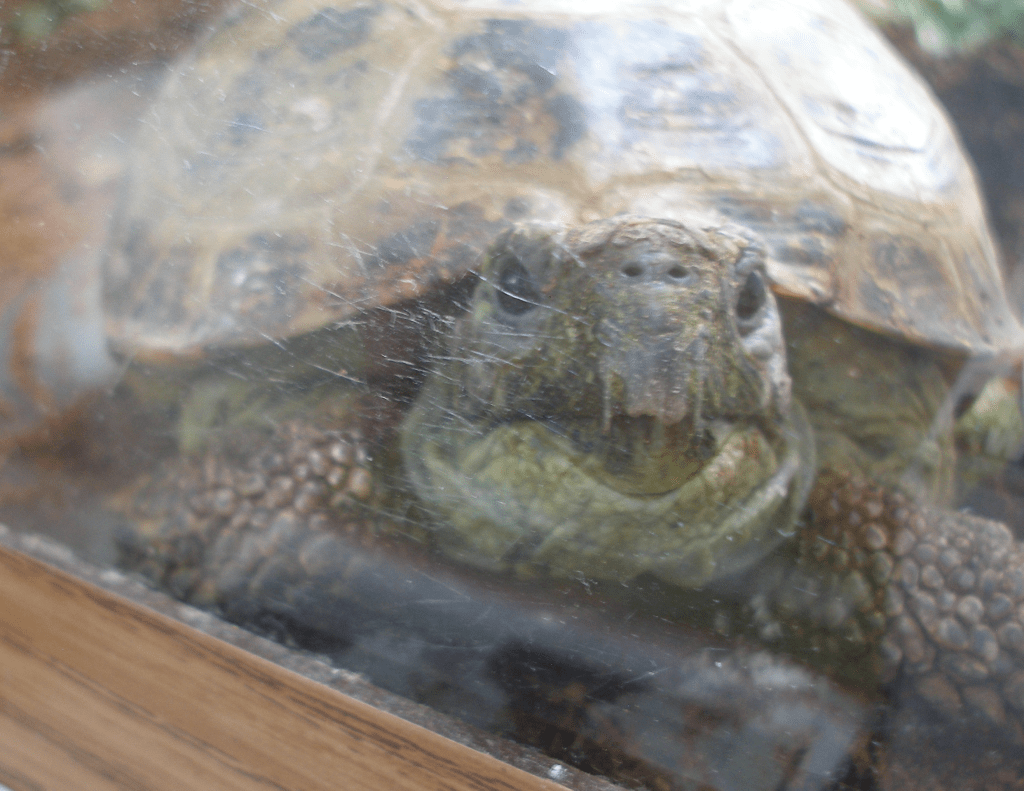
The first photo below shows a Russian Tortoise I met at a friend’s house. This venerable fellow seemed as curious about me as I was about him. He would surely have great stories to tell, and he seemed very happy in his luxurious and large terrarium home.
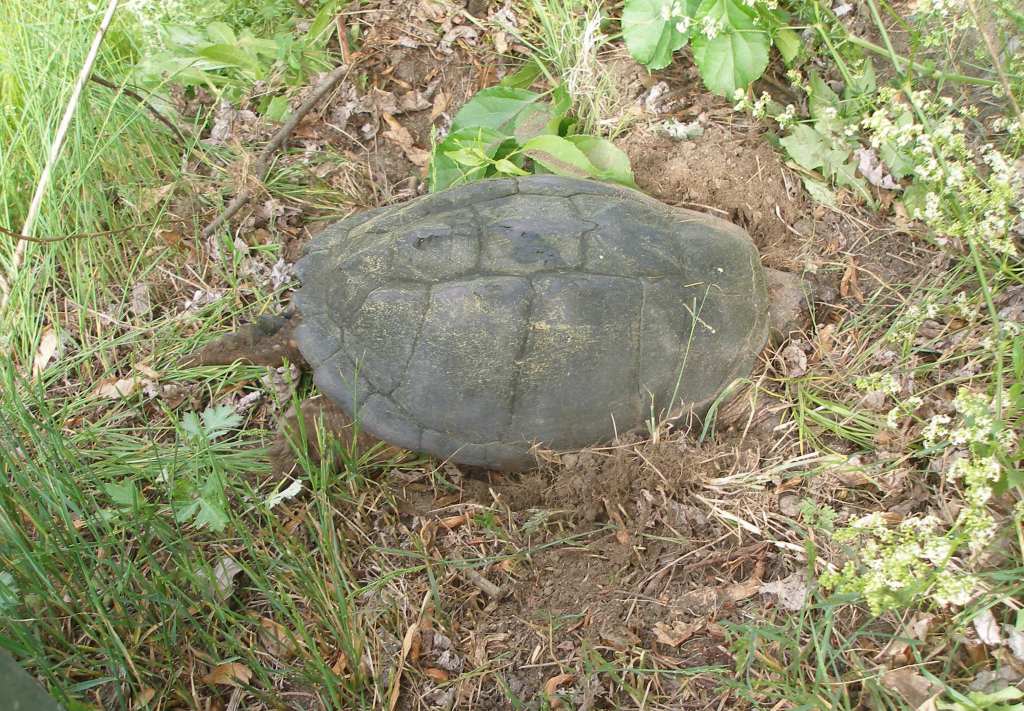
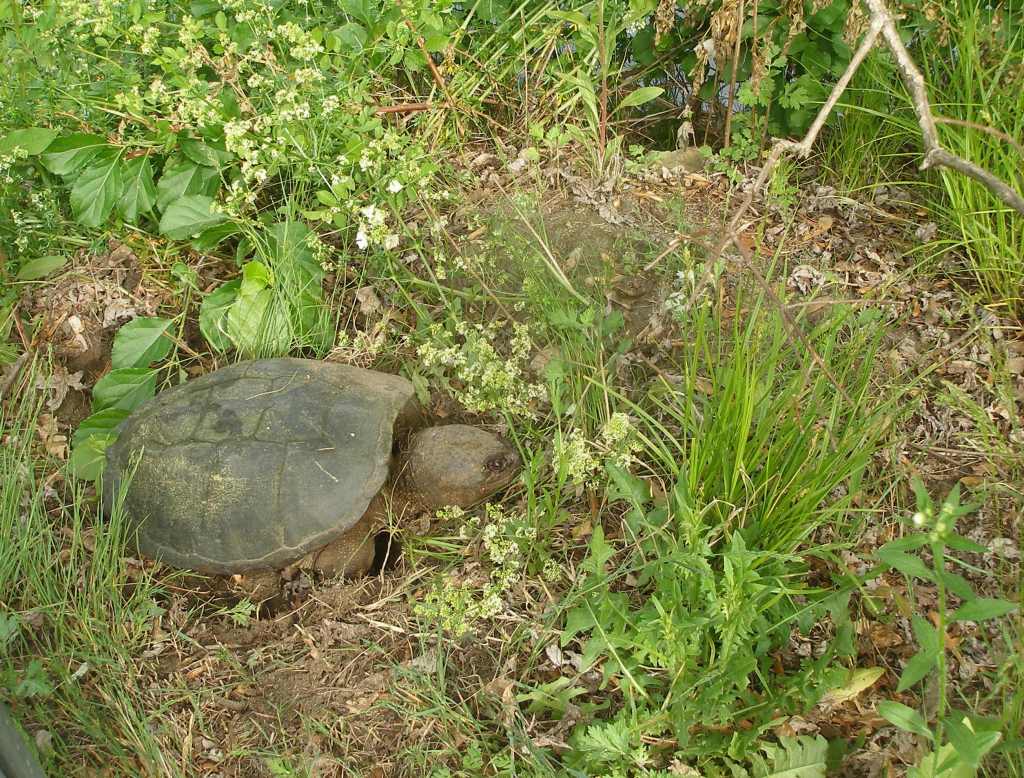
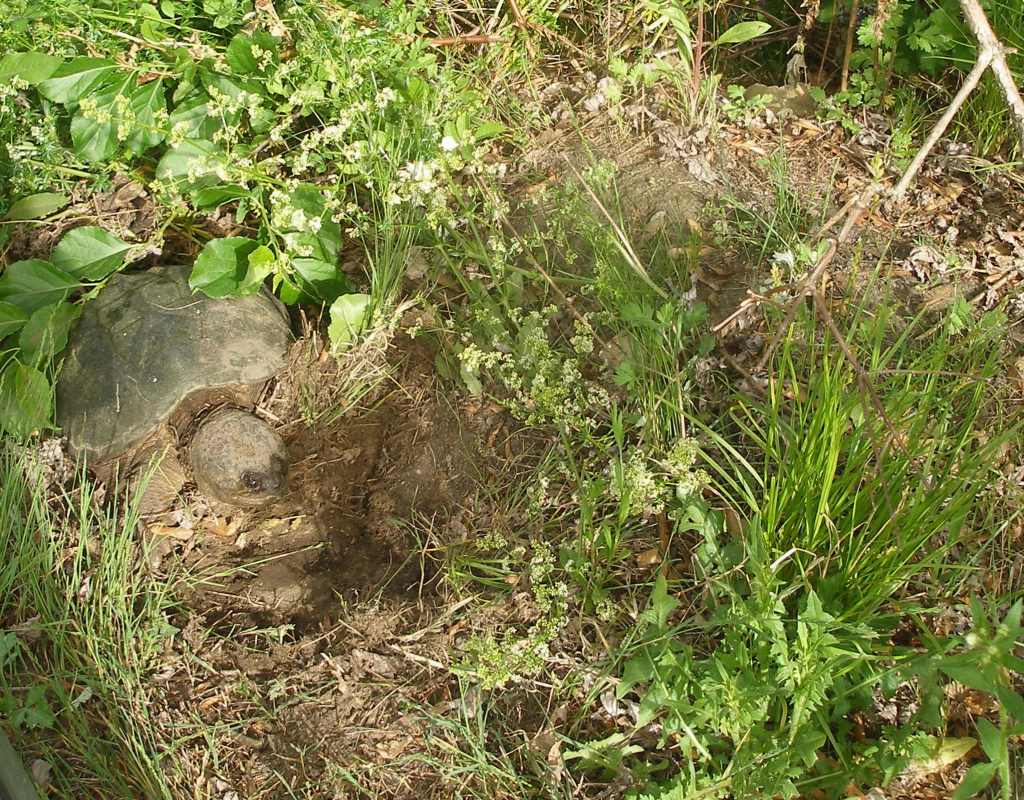
More recently, I came across a snapping turtle who seemed to be digging a nest for her eggs by the pond in Menotomy Rocks Park, Arlington, Massachusetts, USA. There were a number of people circling with their eager dog charges. I felt protective. I spoke to the turtle telling her that I was a friend and wished her well. She paused her insistent digging and looked up at me. It felt like a moment of genuine connection.
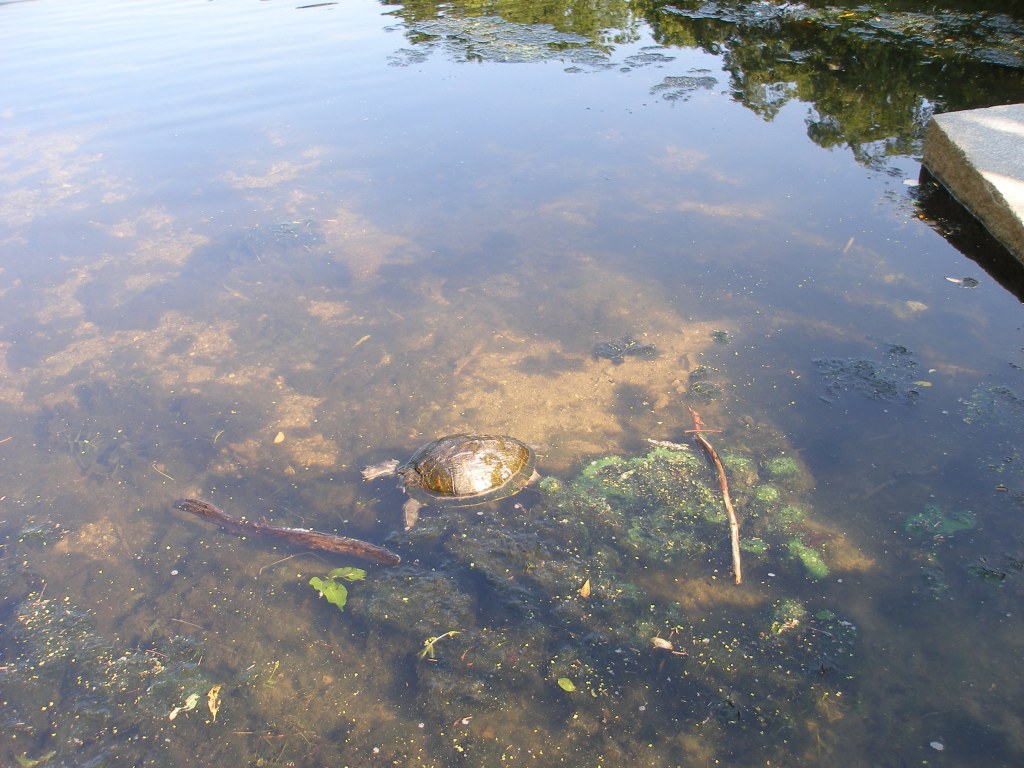
A few years ago, someone pointed out a dead turtle floating in the pond. I shared the photo of that turle with some experts and one suggested that it was a rare northern red bellied cooter. As requested, I sent in a report with the date, location and photo to those tracking rare species sitings in my state, and they told me it was actually a red-eared slider which is considered invasive and is not native to Massachusetts.
It is clear to me that I am not the only one who feels increasing awe and wonder at how much we can relate to, feel with and even communicate with other species but it is also quite sad that this growing awareness is happening at a time when so many species, including our own, are at risk.
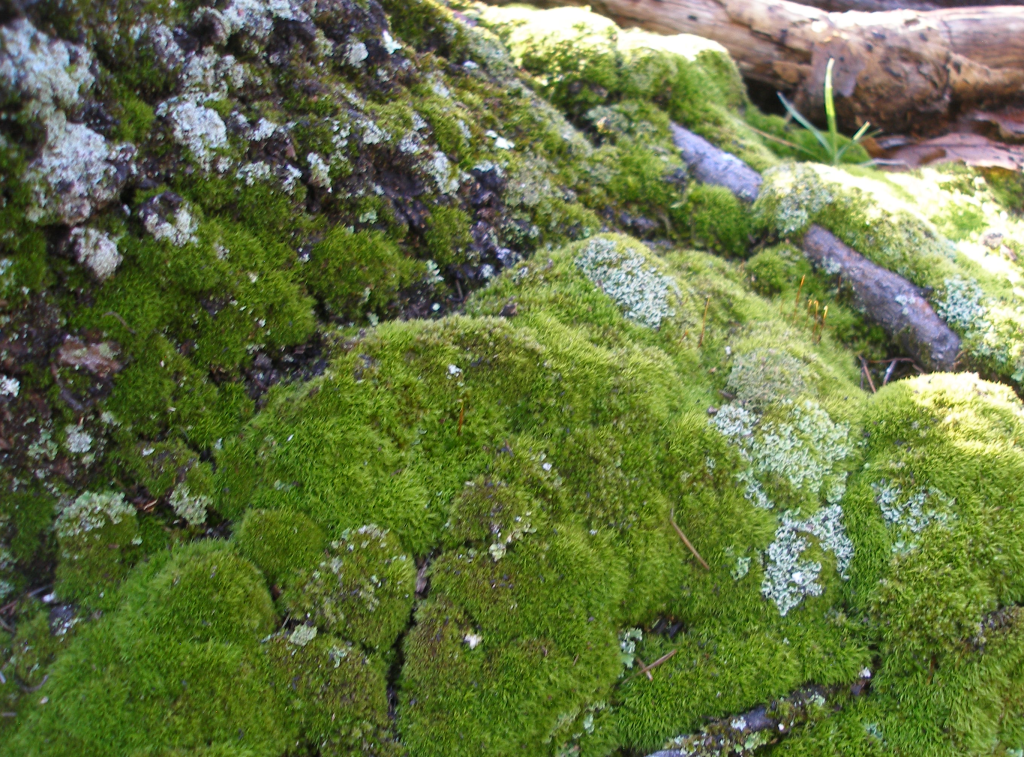
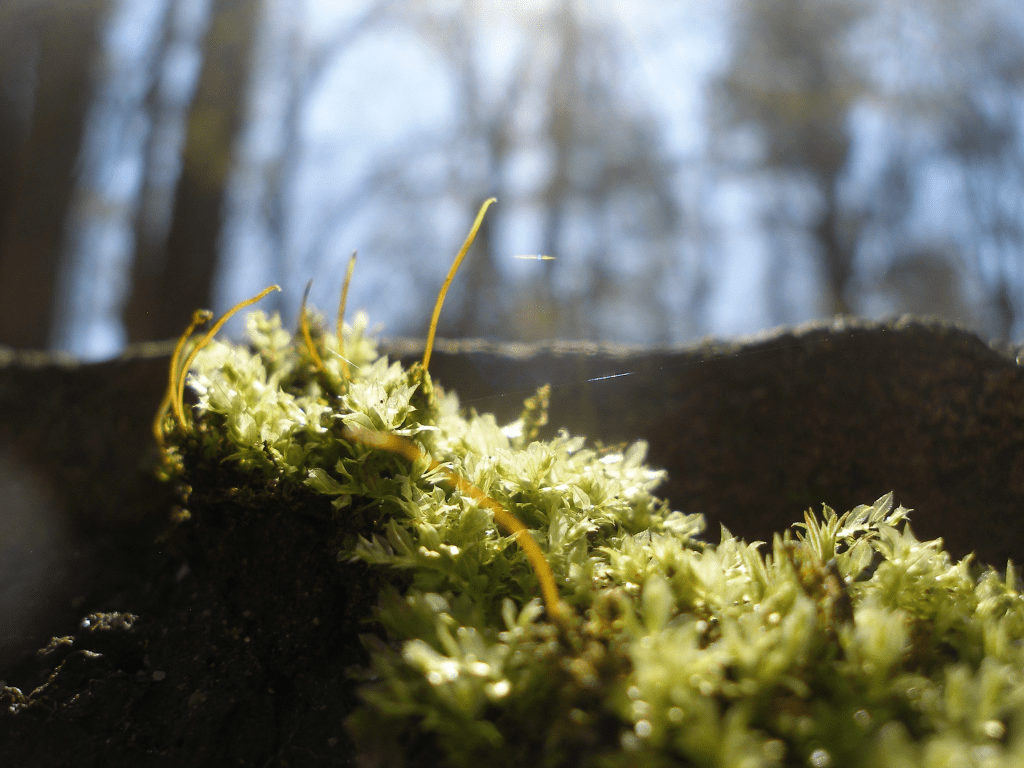
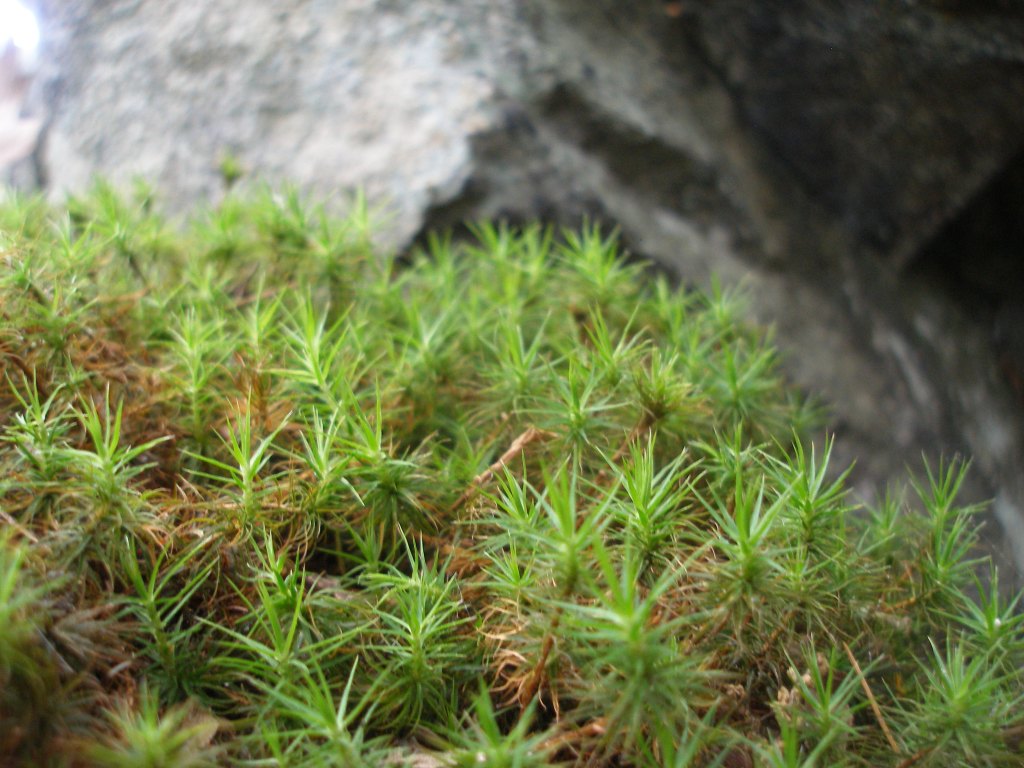
I love how these tiny plants create a soft carpet in shady places, but sometimes in sun as well. It seems natural to want to reach down and pet them. They also can help us achieve relaxed moods as in this dreamy video created by Jeffrey Klein. The Andante section of a recording of J. S. Bach’s Sonata #5 played by Jeffrey Brody on piano and Andrea Hart on flute (and used with their permission) is a perfect complement to the moss images.
Mosses are often used in Japanese gardens for good reason, and it is a delight to come across them growing wild in a natural setting.
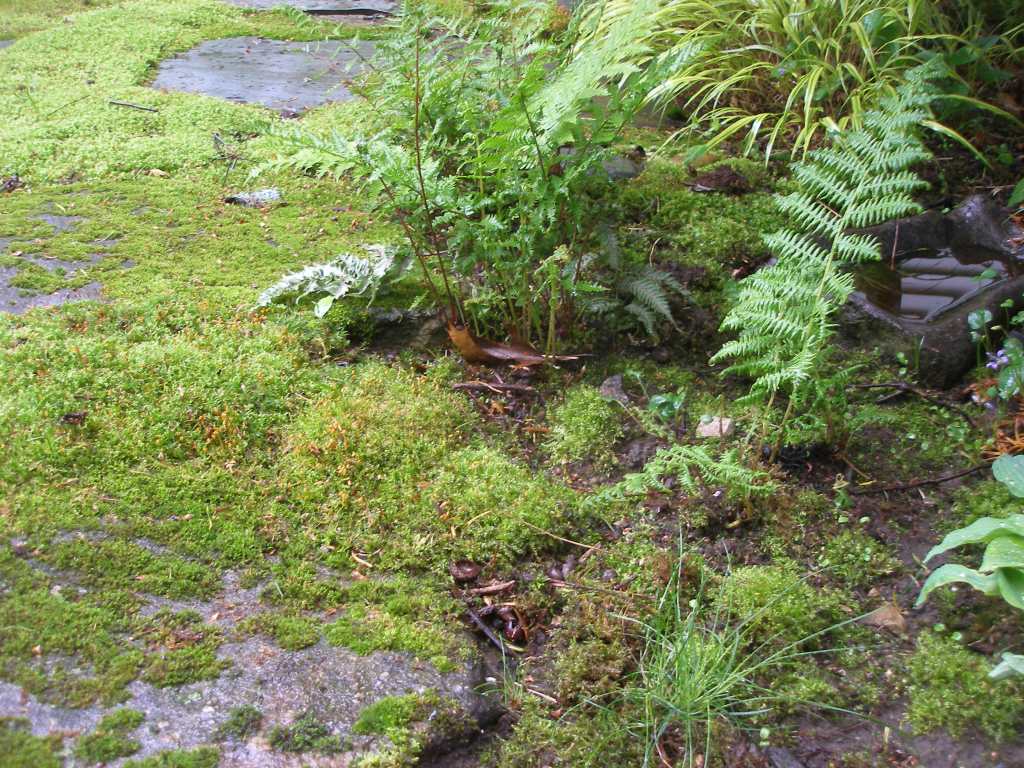
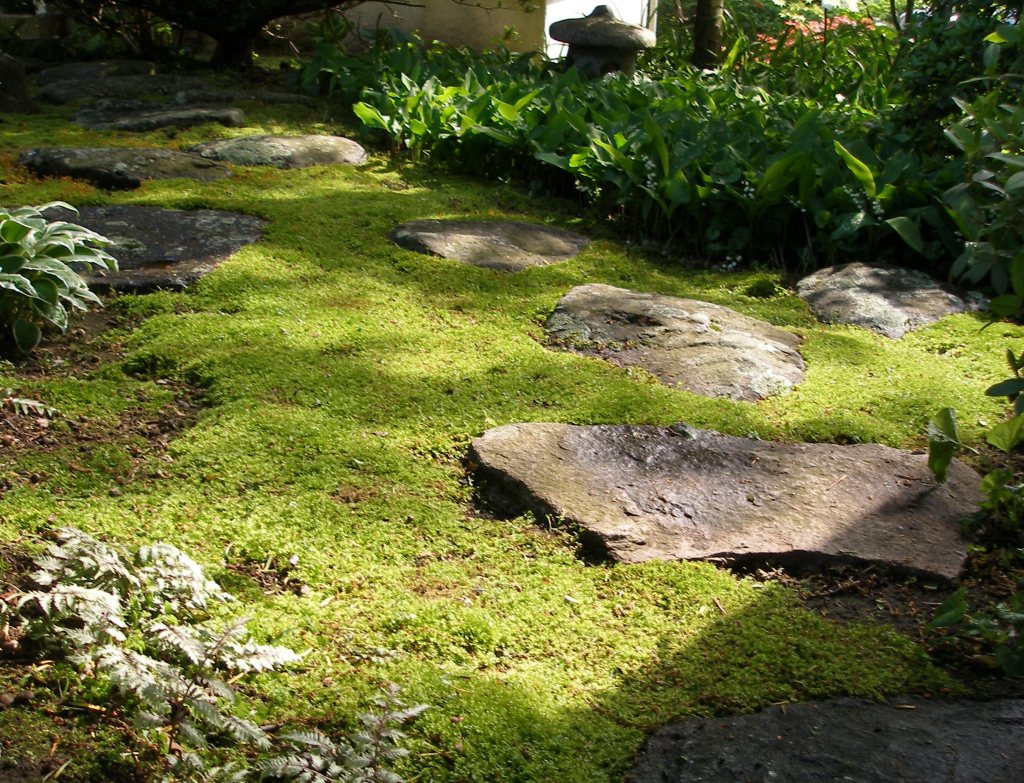
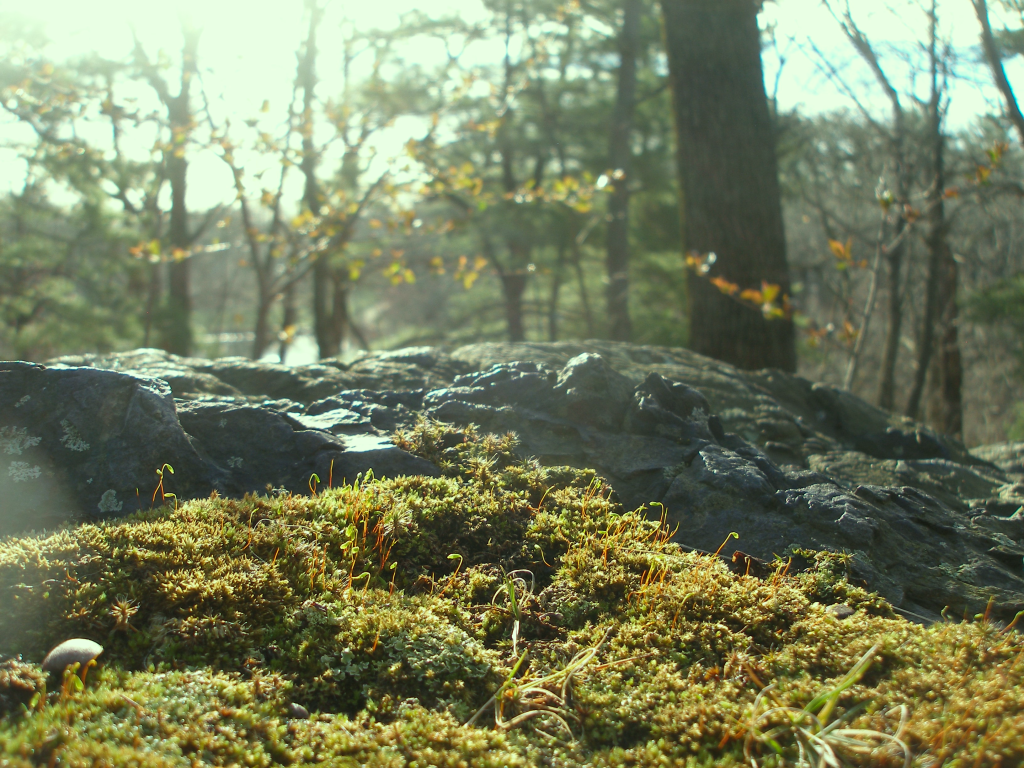
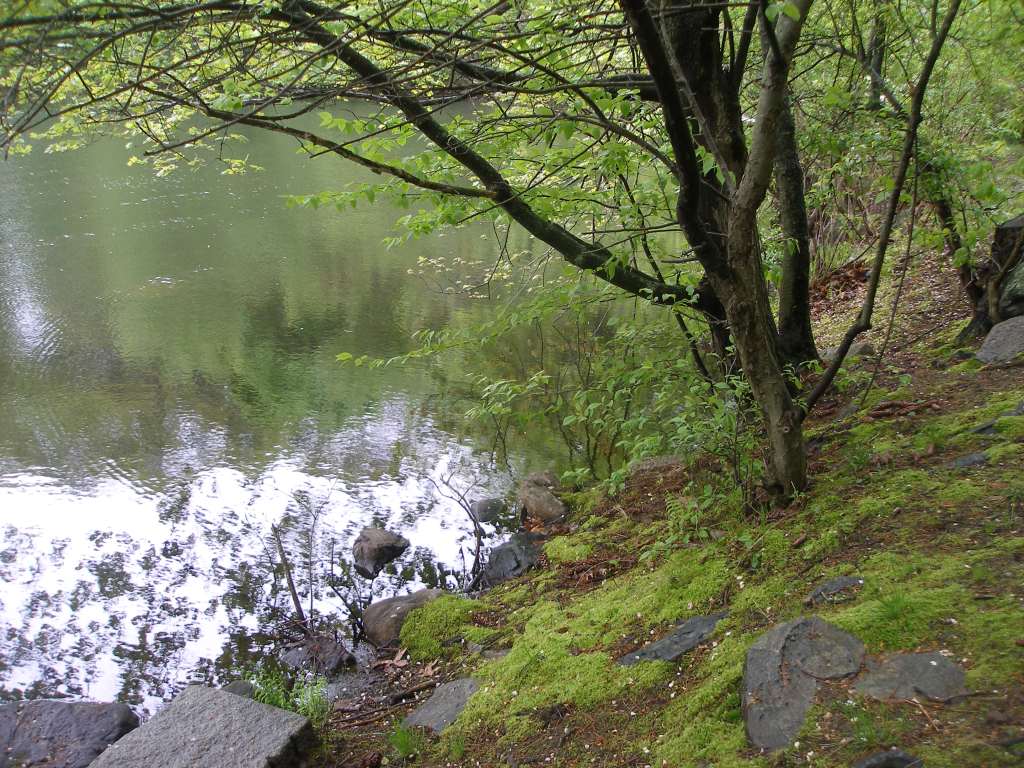
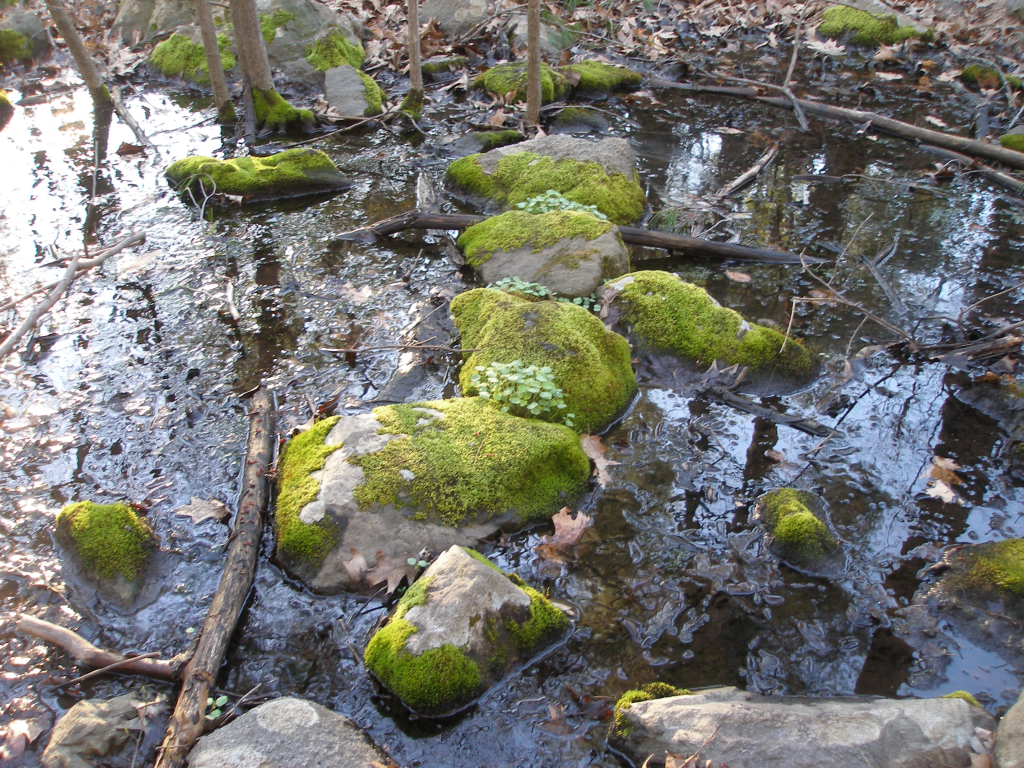
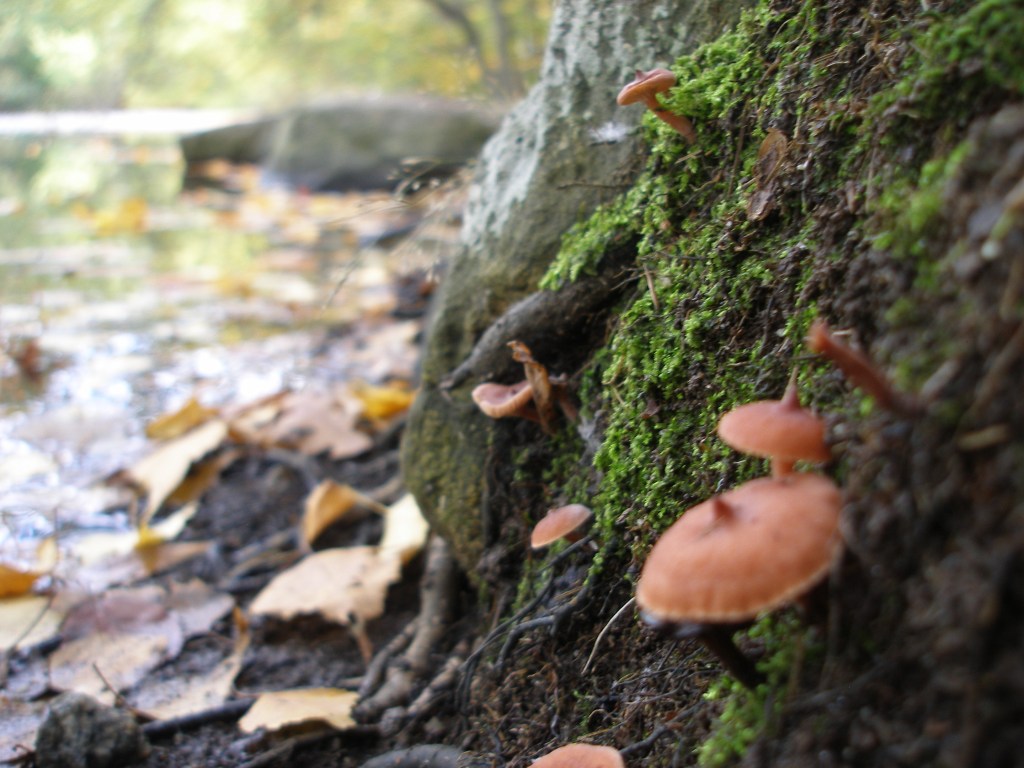
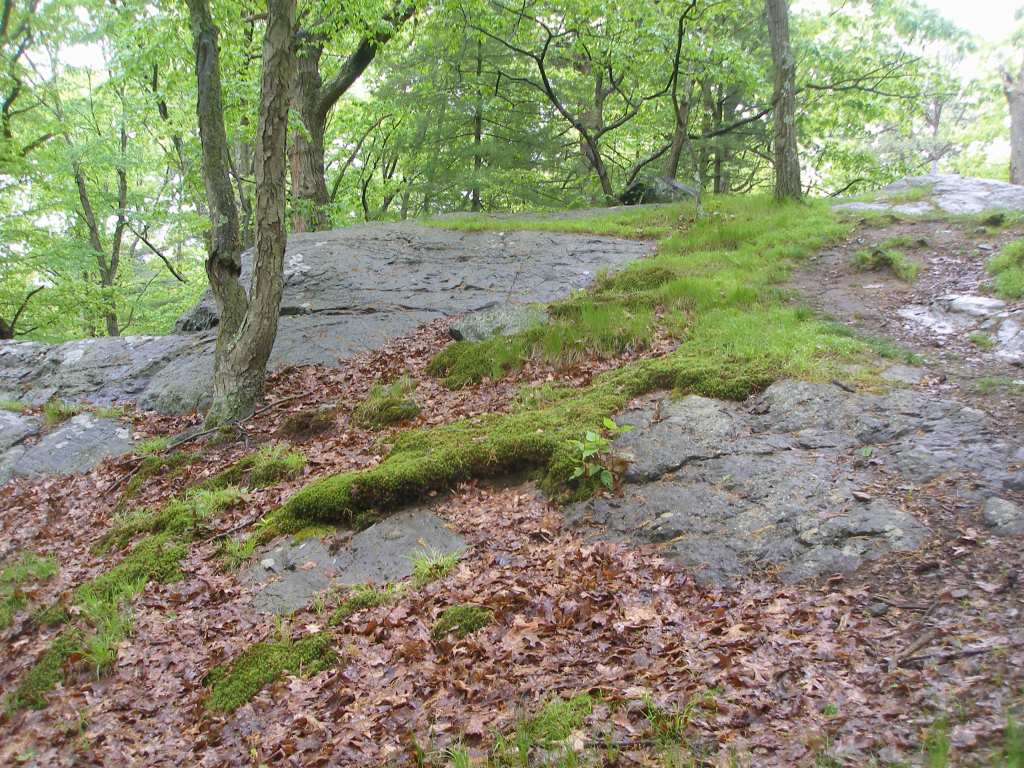
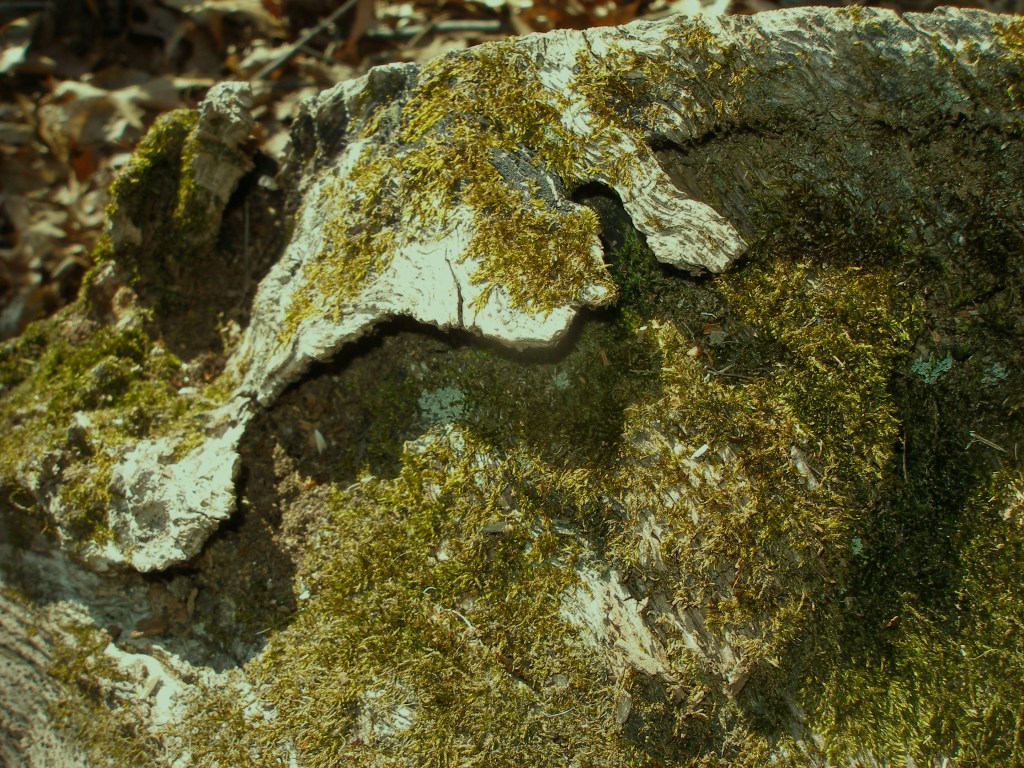
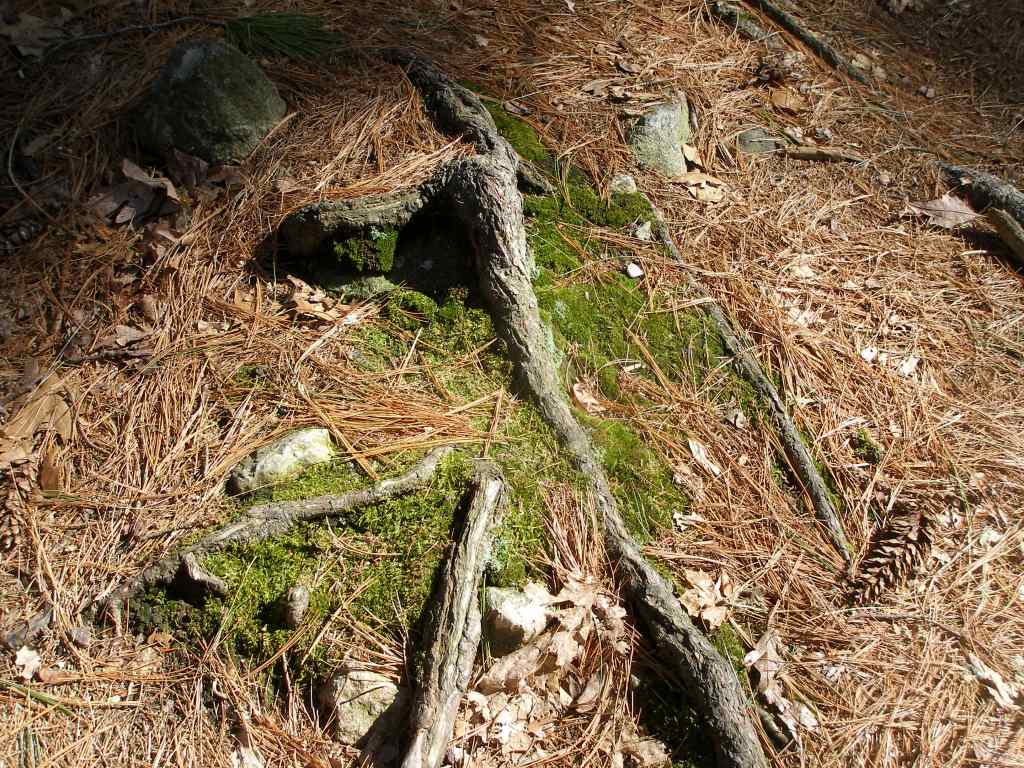
With all the rain lately, moss has been happily spreading in my garden. I was delighted when the tiny plants decided to form a soft green carpet where guests gather on my patio before sharing tea. In Menotomy Rocks Park, moss adorns the forest floor, the bases of living trees, fallen logs and even high up on rocky outcrops. Photos of moss in both settings are included below.
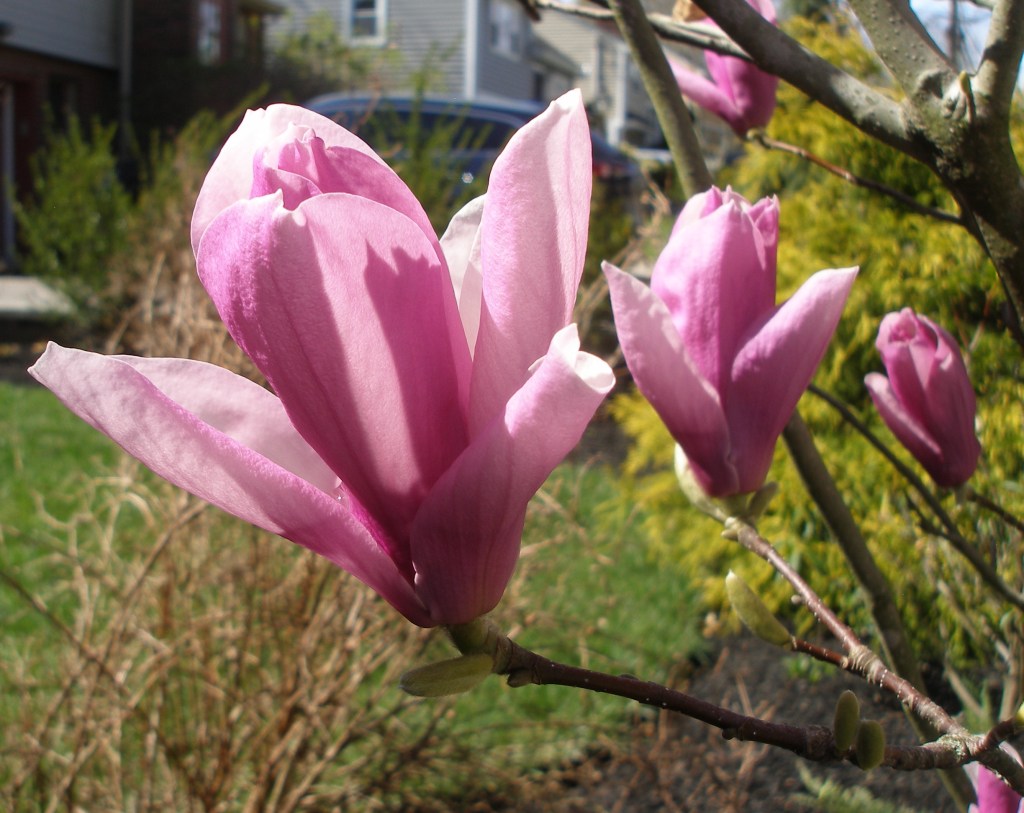
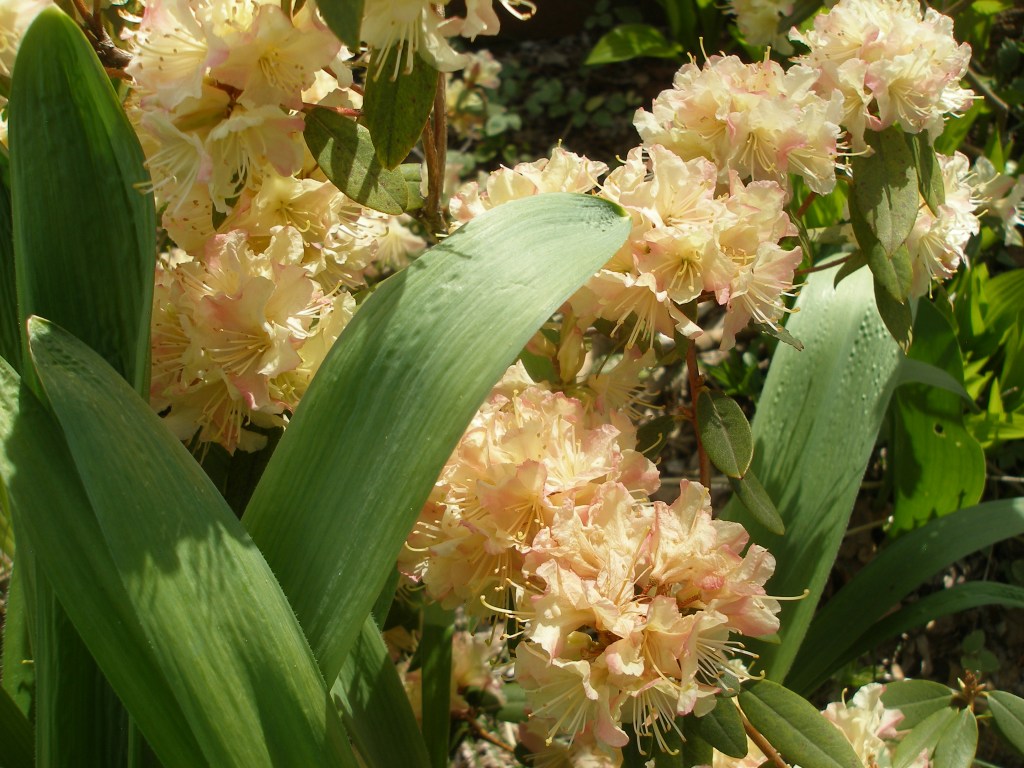
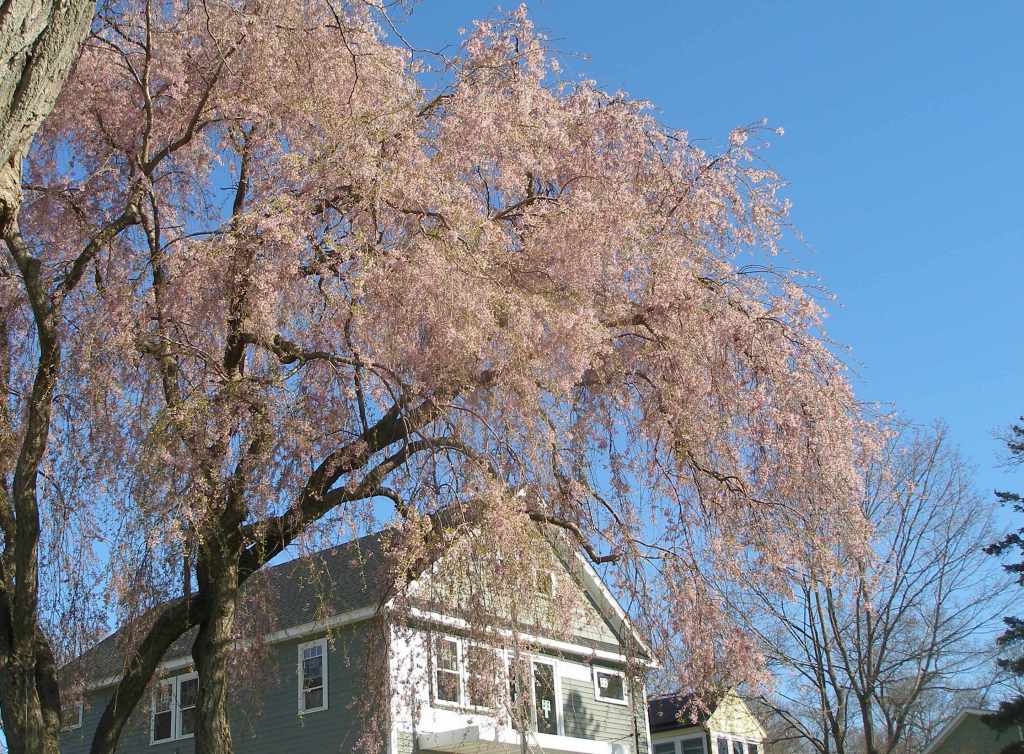
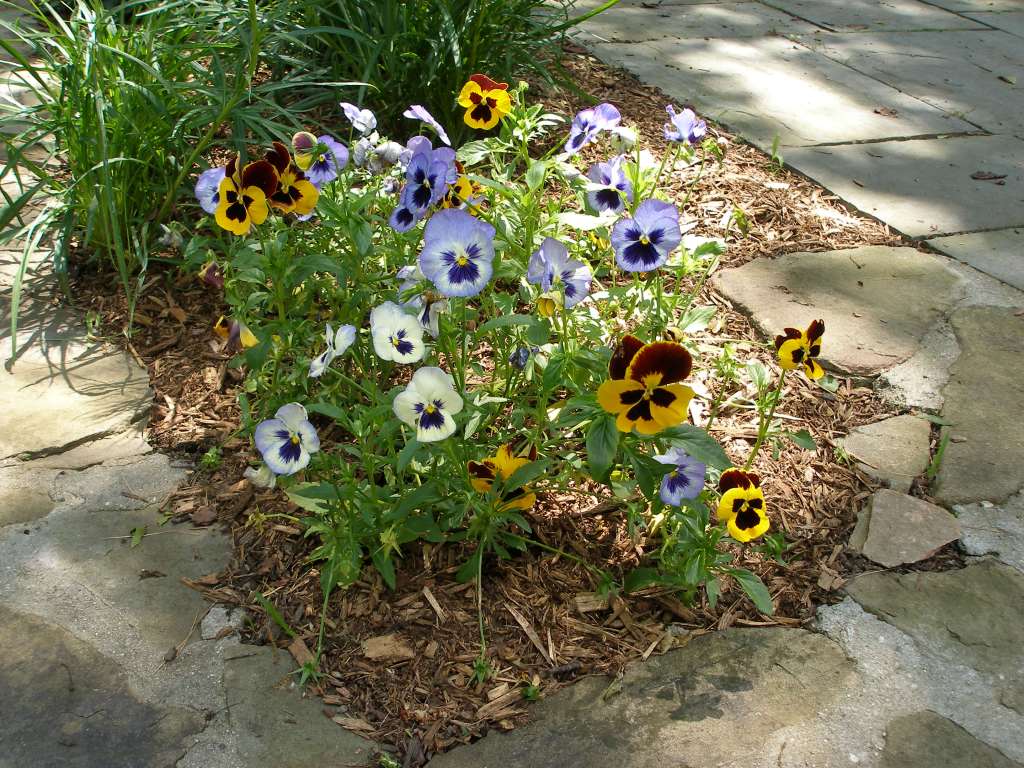
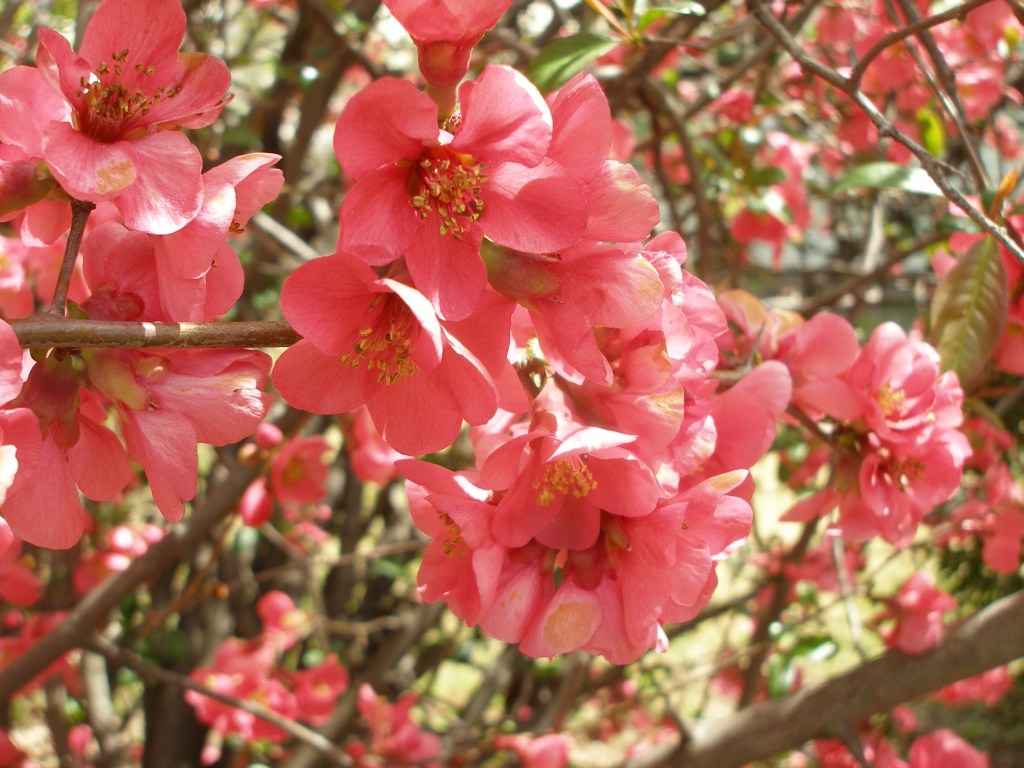
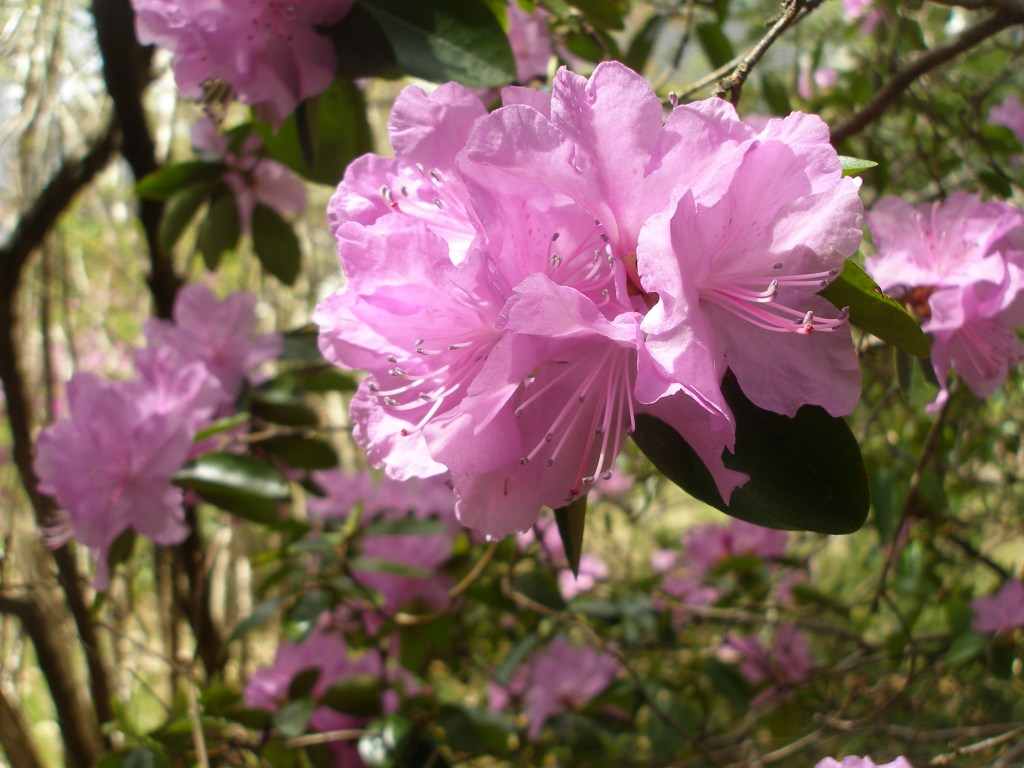
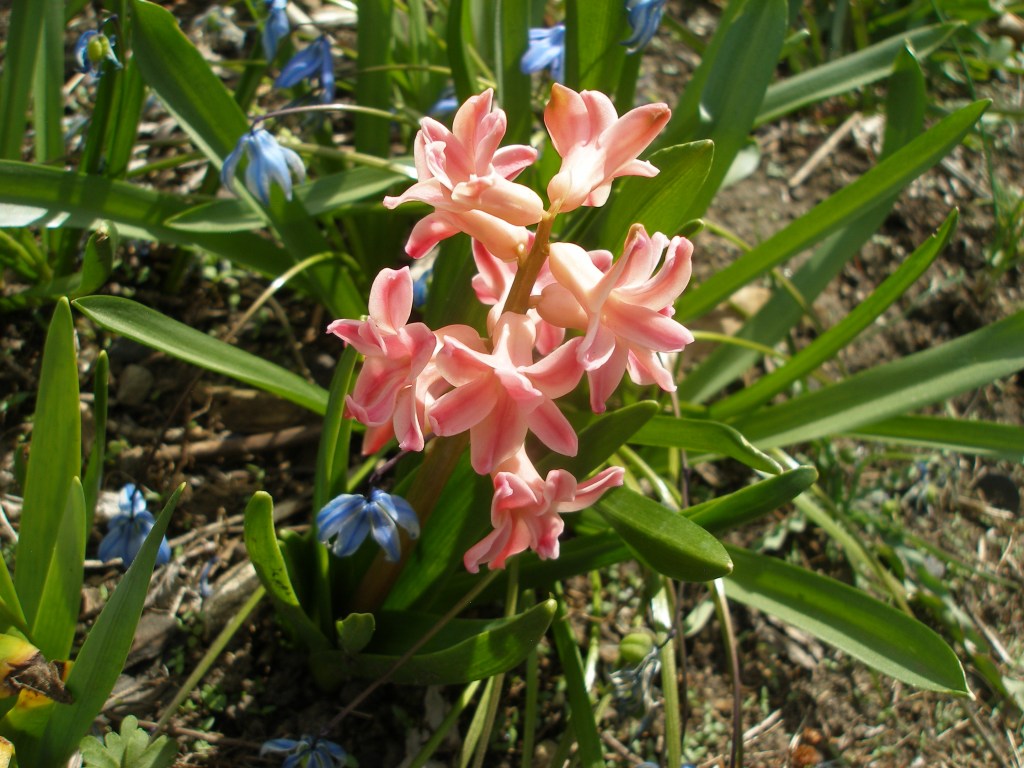
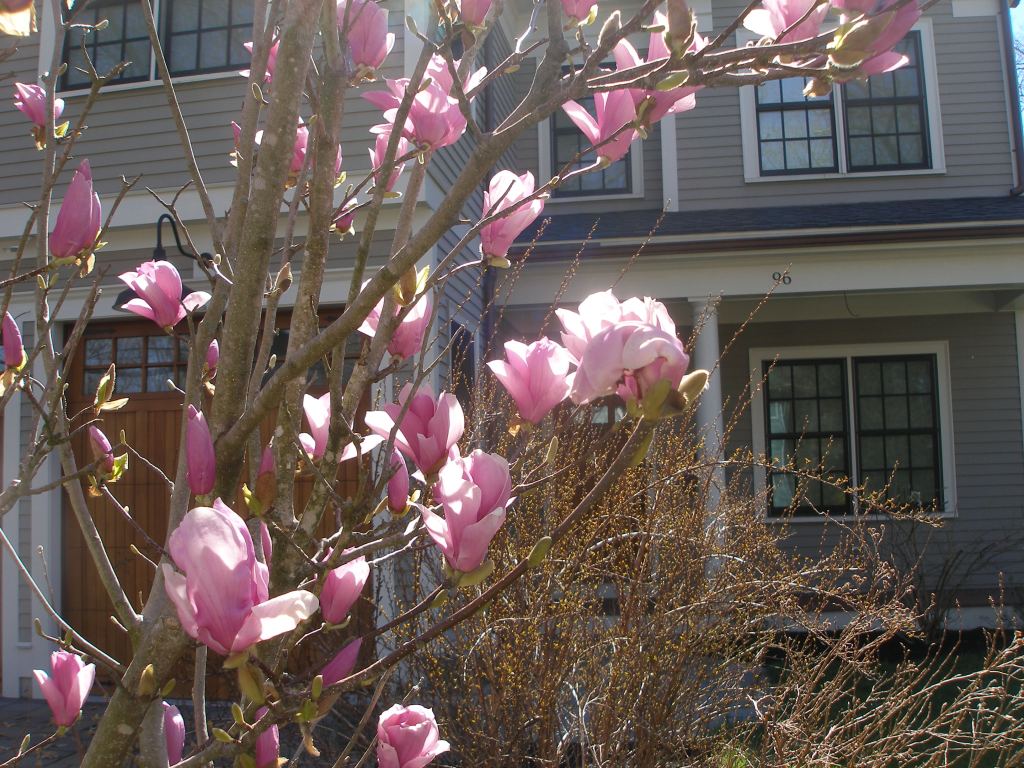
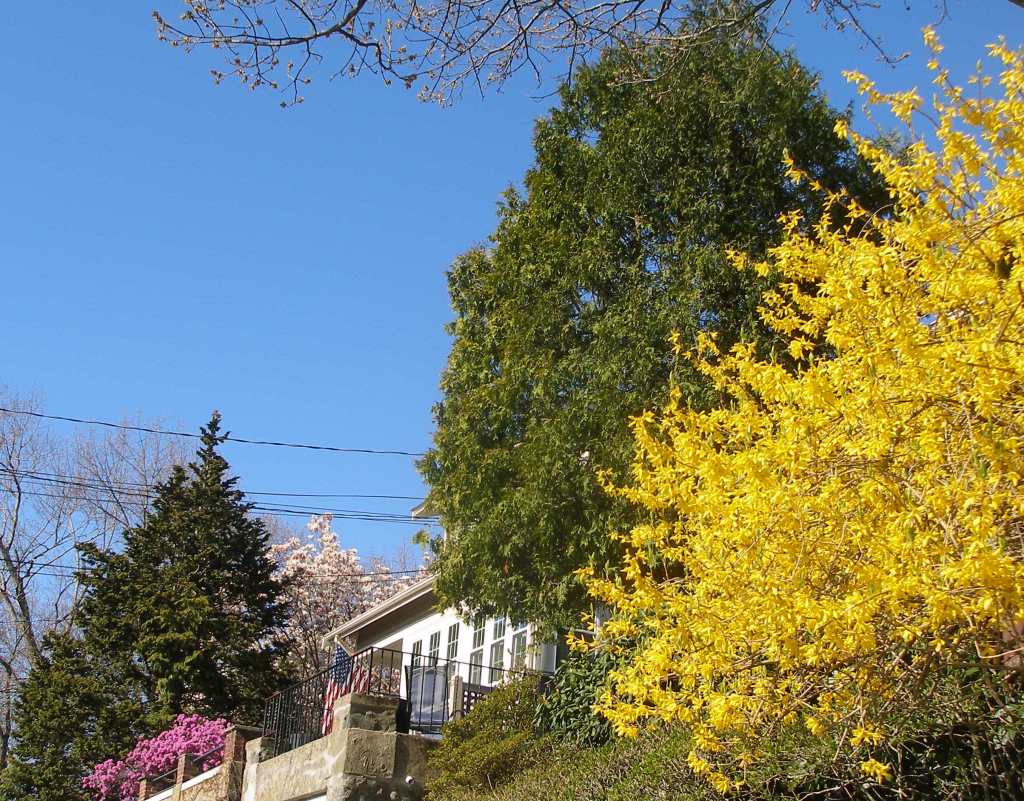
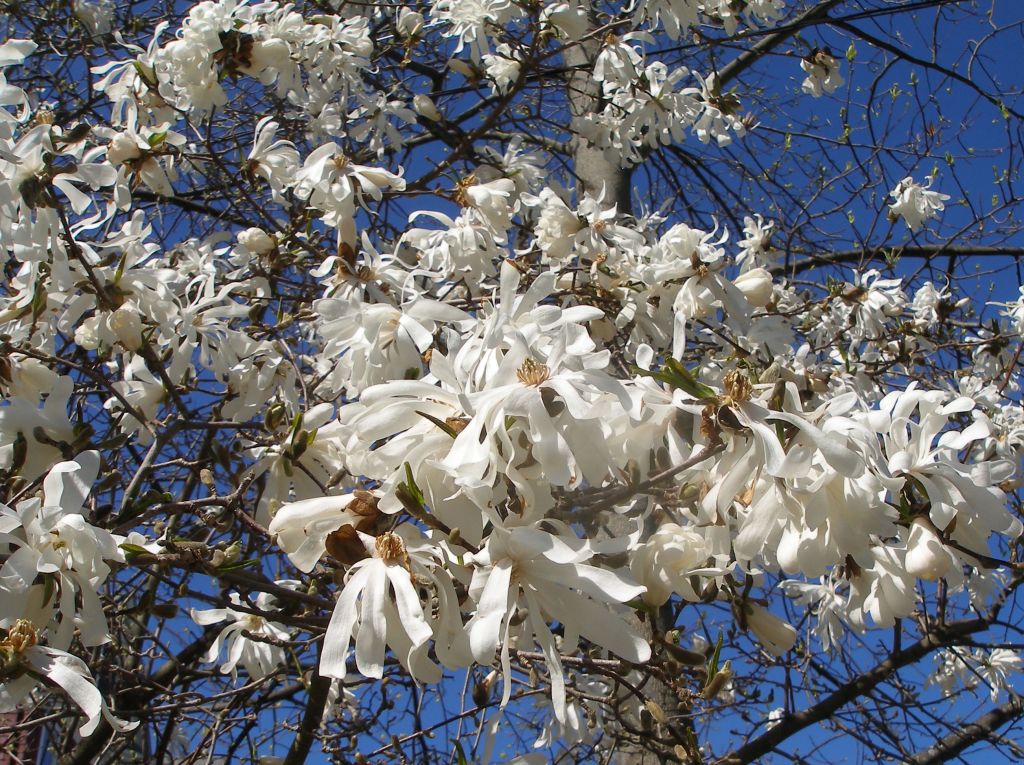
After a cold rainy March followed by warm sunny days in April, everything seems to be bursting into bloom all at once.
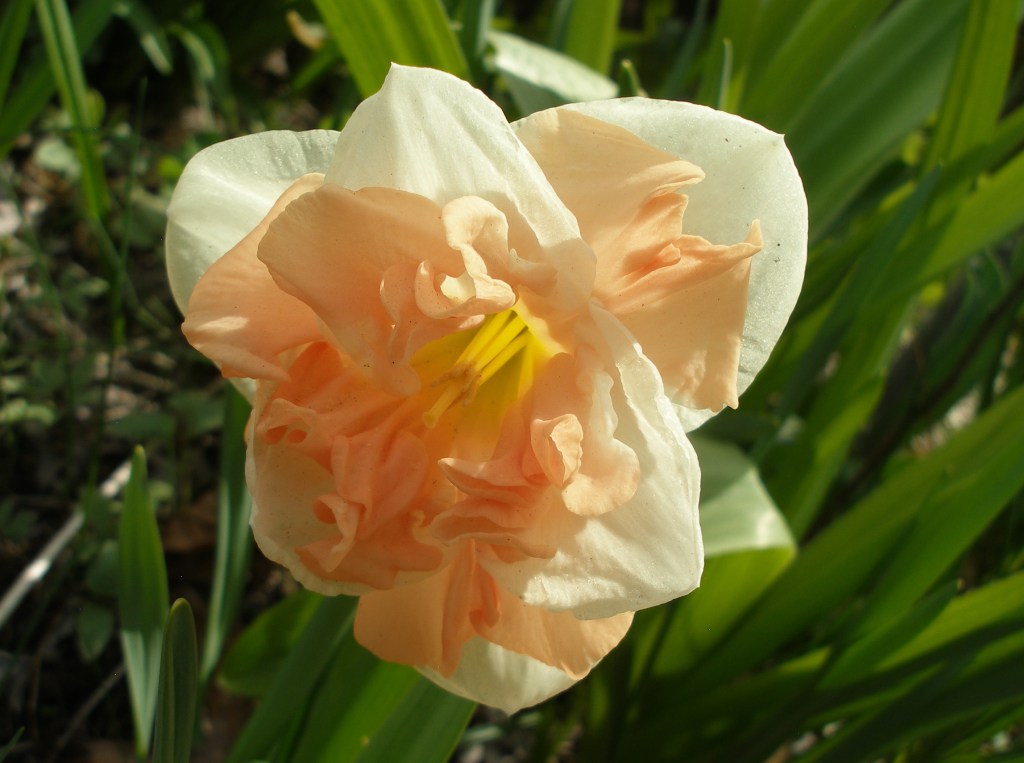
When I was growing up in Pennsylvania, spring was more leisurely with dancing daffodils holding their own beneath pink dogwoods on the slope by our house. But near Boston, the progression usually starts more slowly with just the neon yellow of Forsythias. Not this year. Let’s hope all this glory lasts for a while.
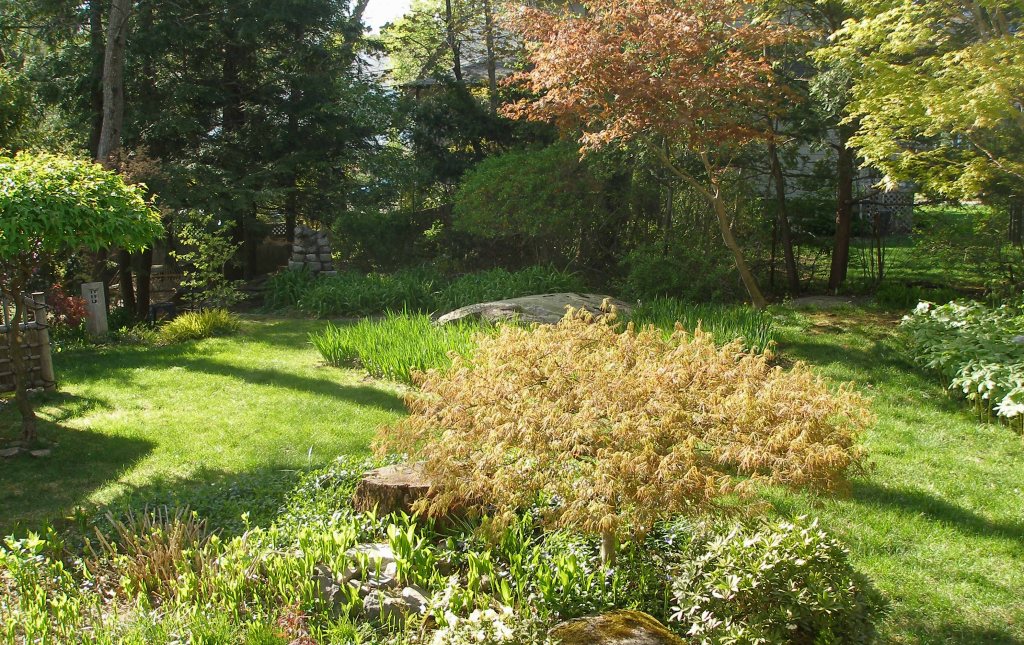
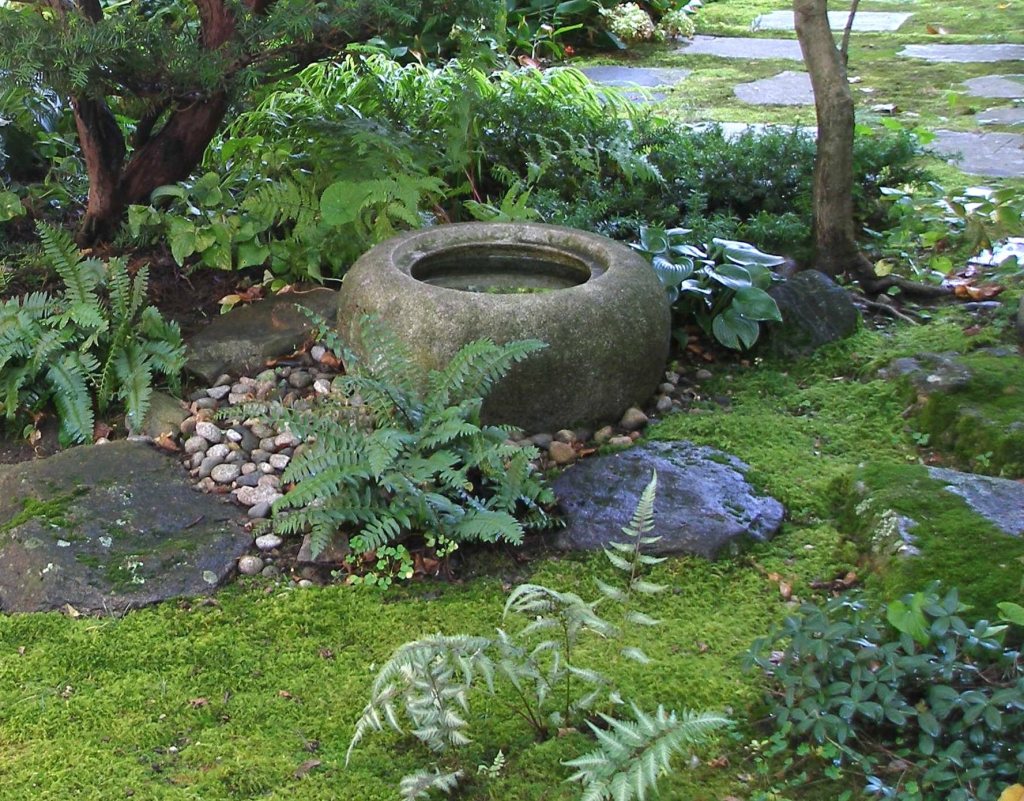
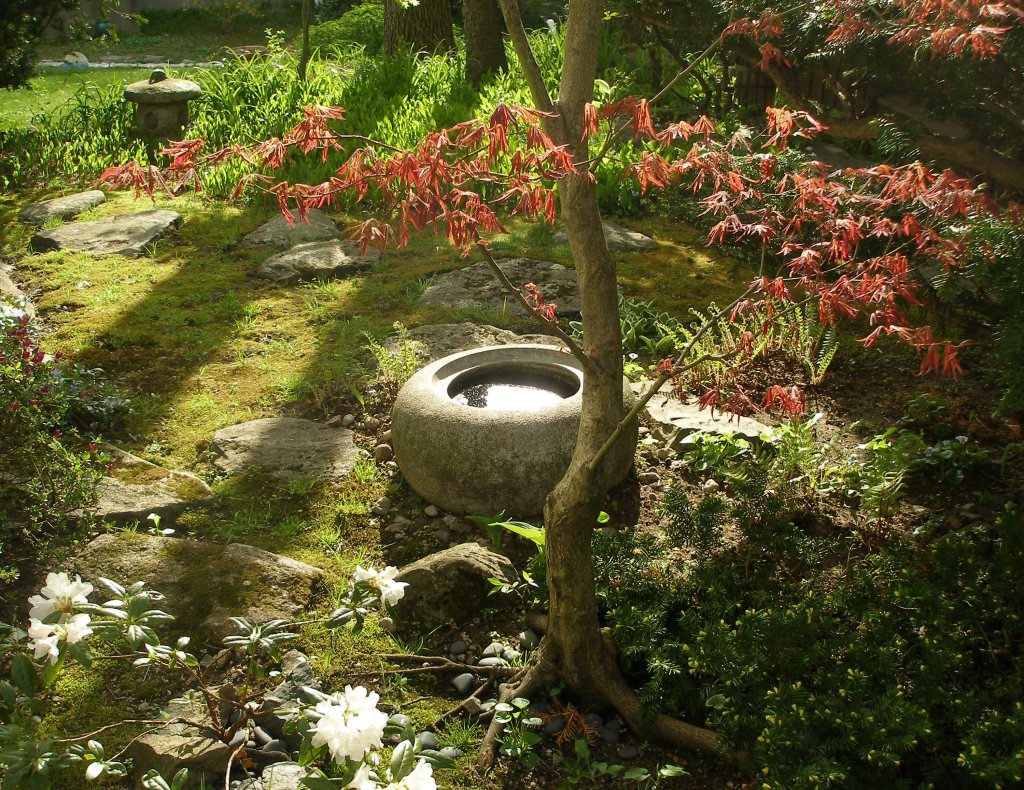
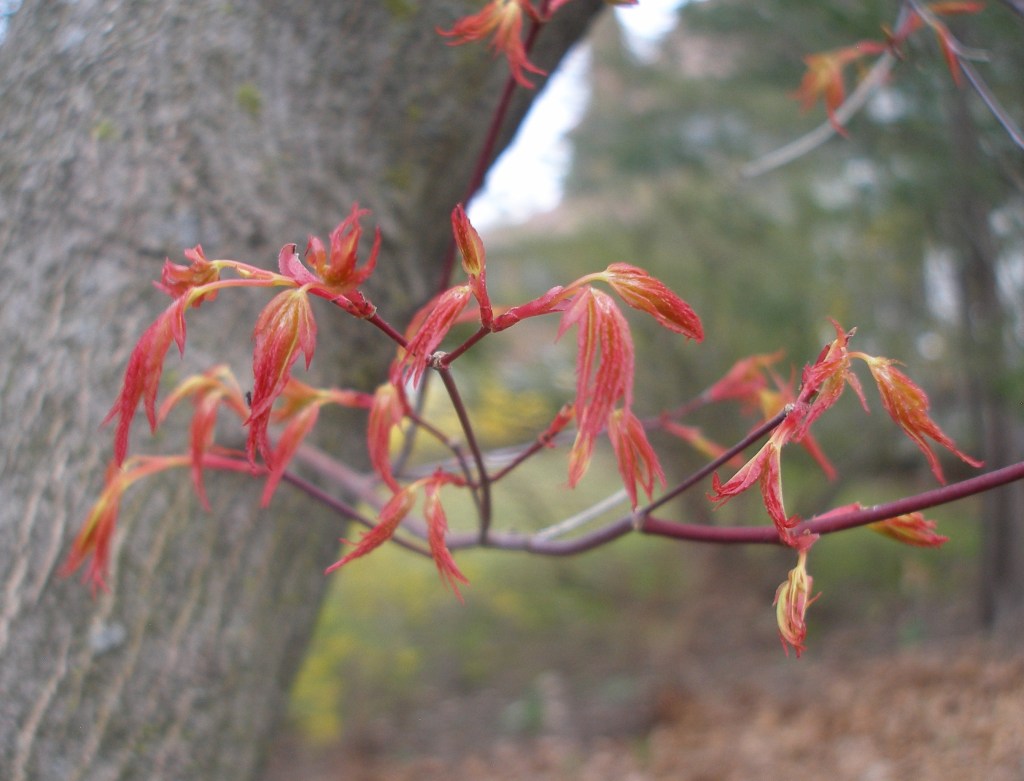
It was mid-April when we joined via Zoom for virtual forest-bathing. It would begin to get dark by the end of the session, so I decided to stay close to home and wander in my Japanese-style garden. After paying attention to all of our senses outdoors we went off to walk on our own with a suggestion that we pay attention to color.
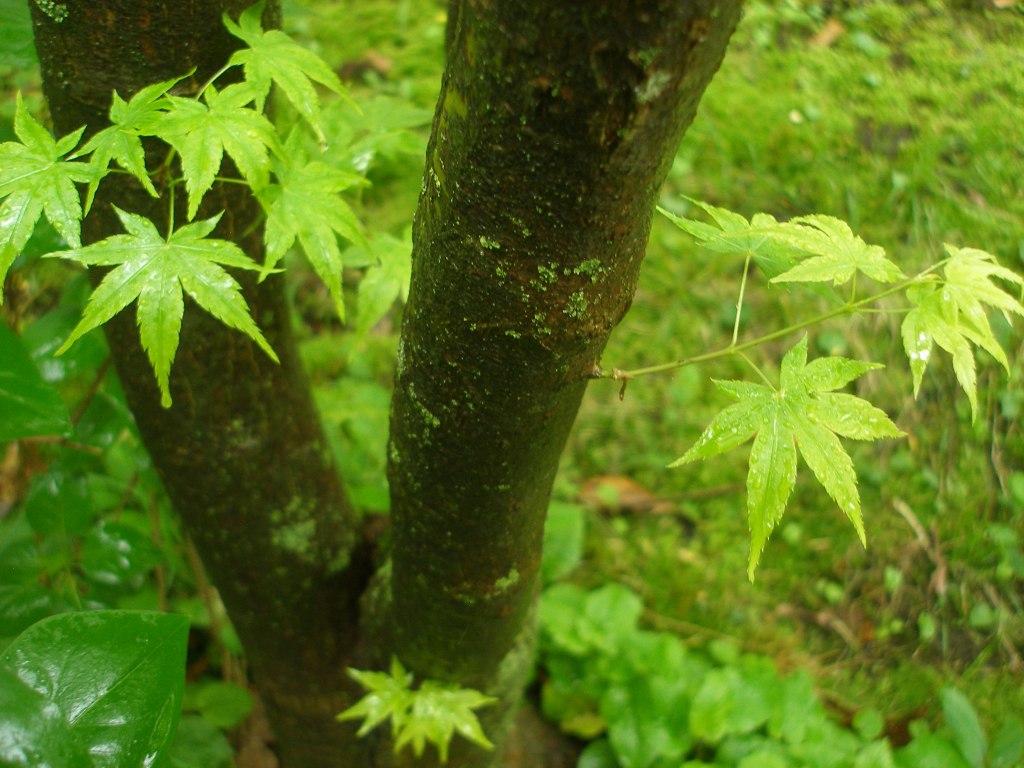
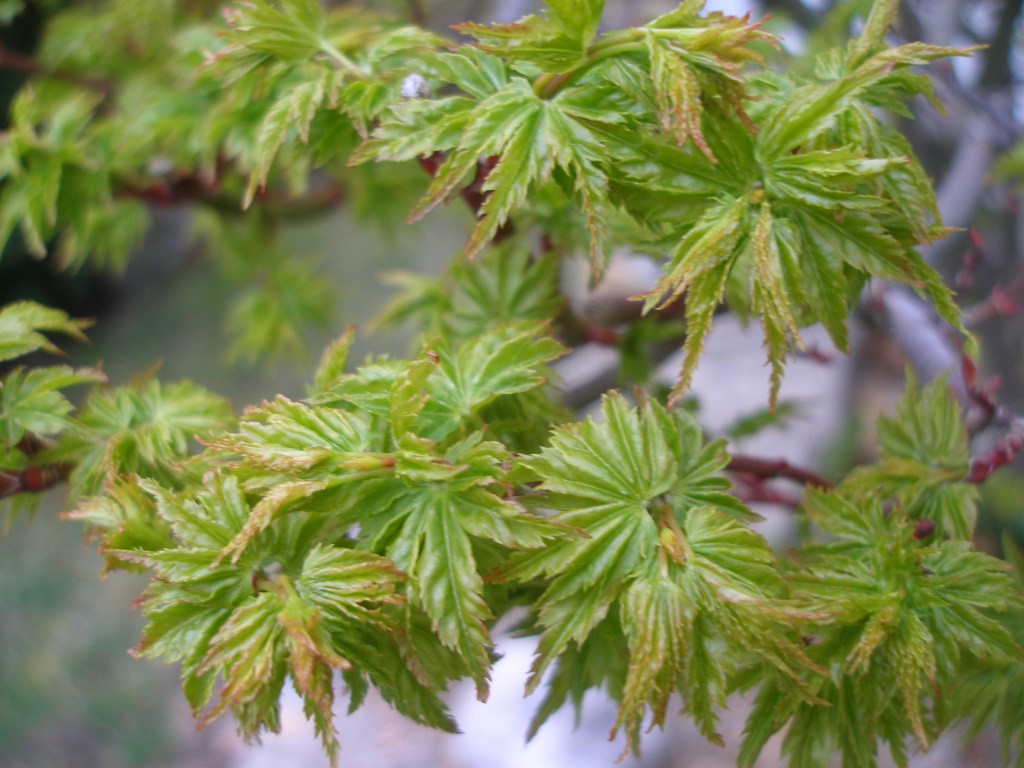
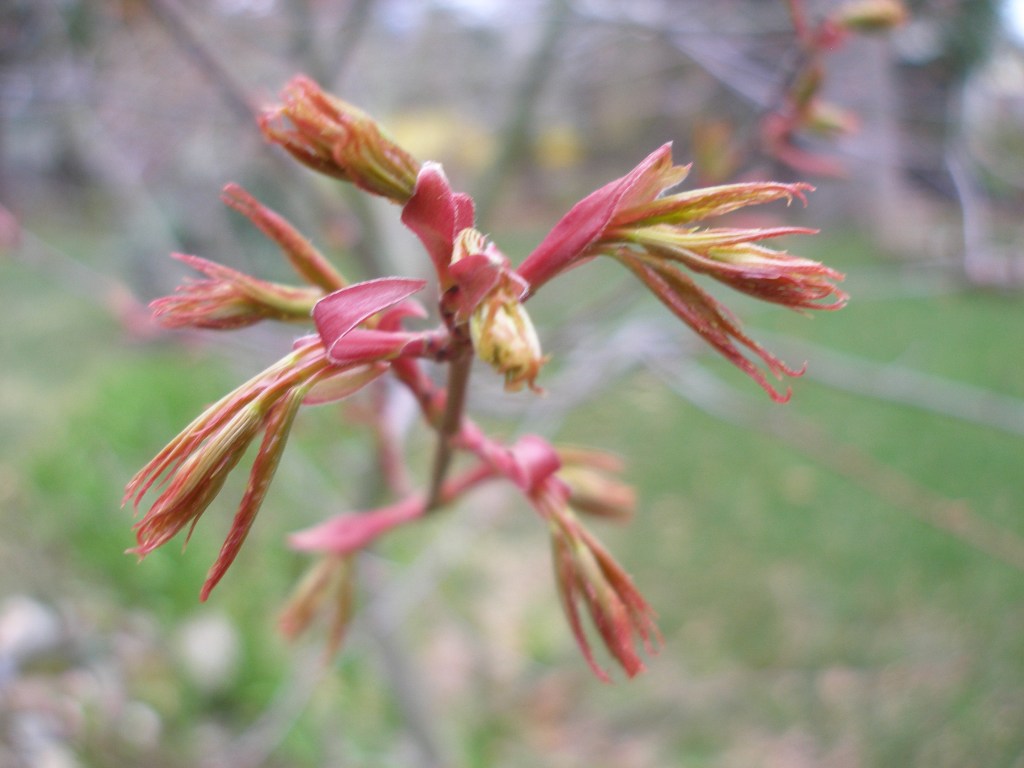
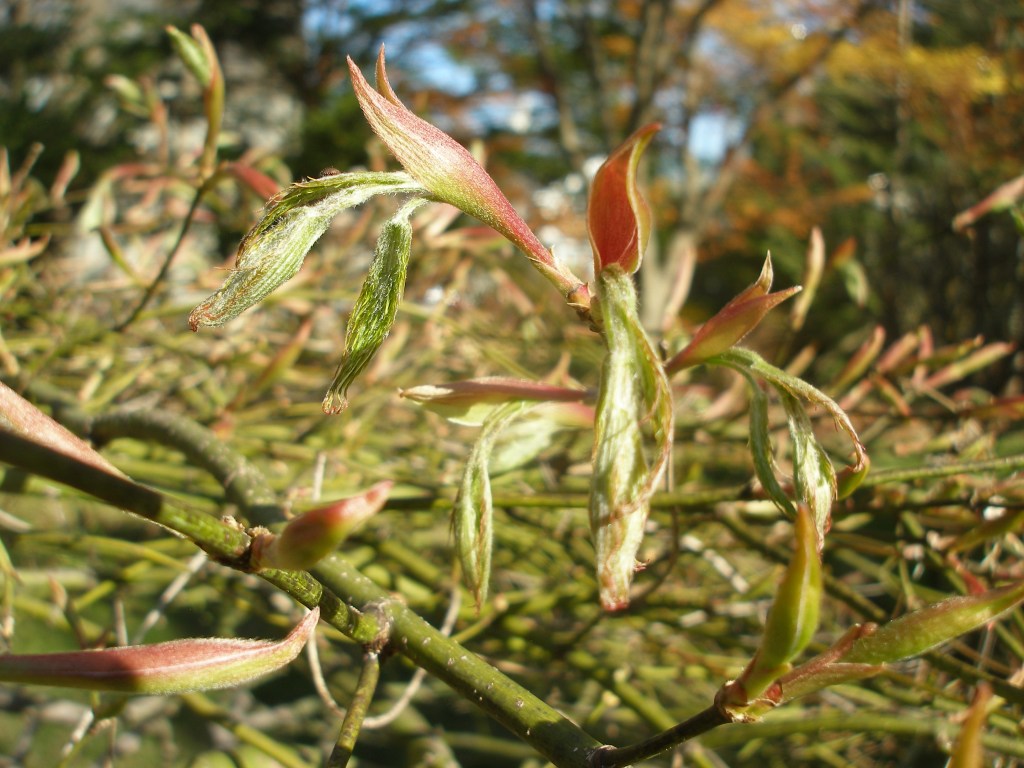
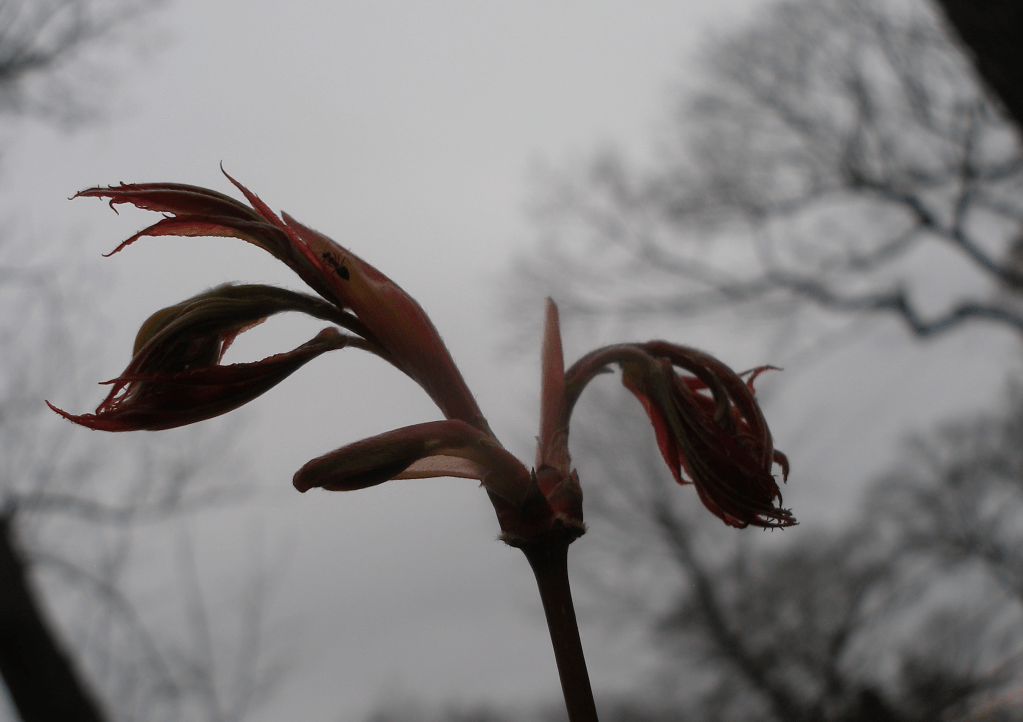
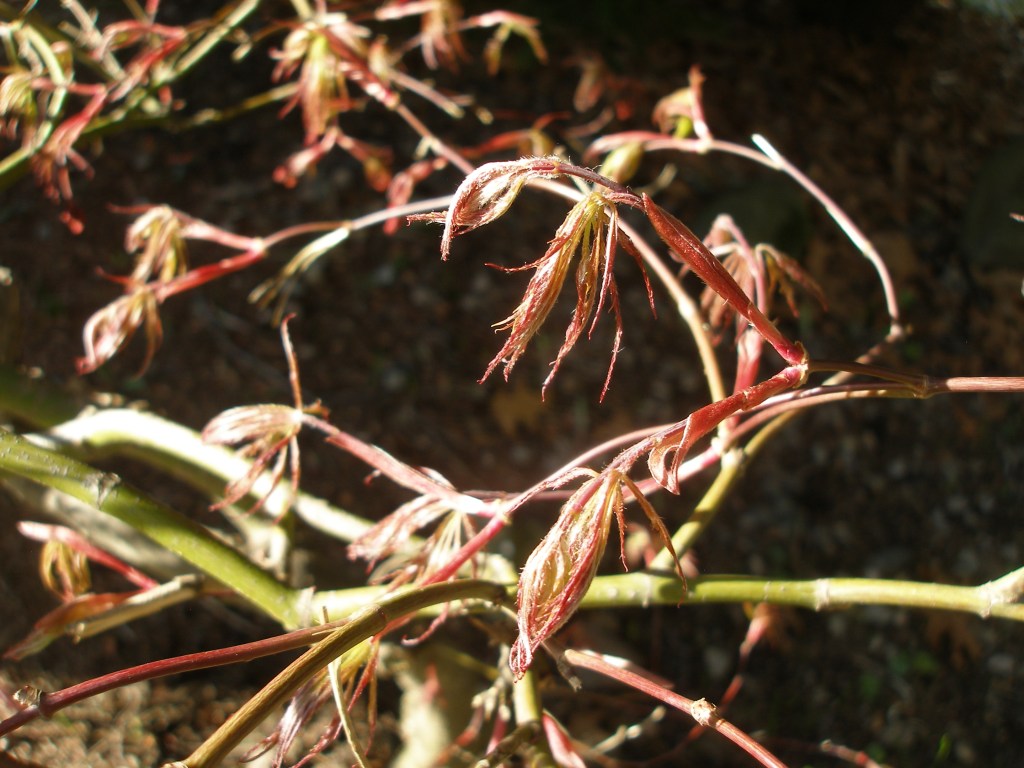
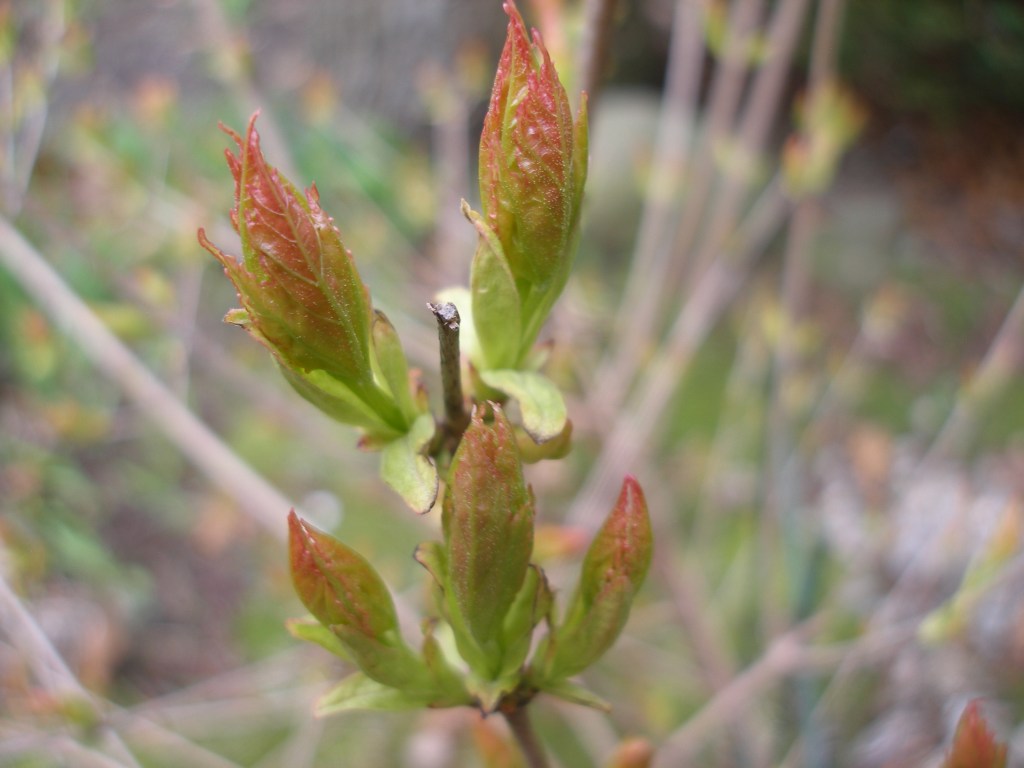
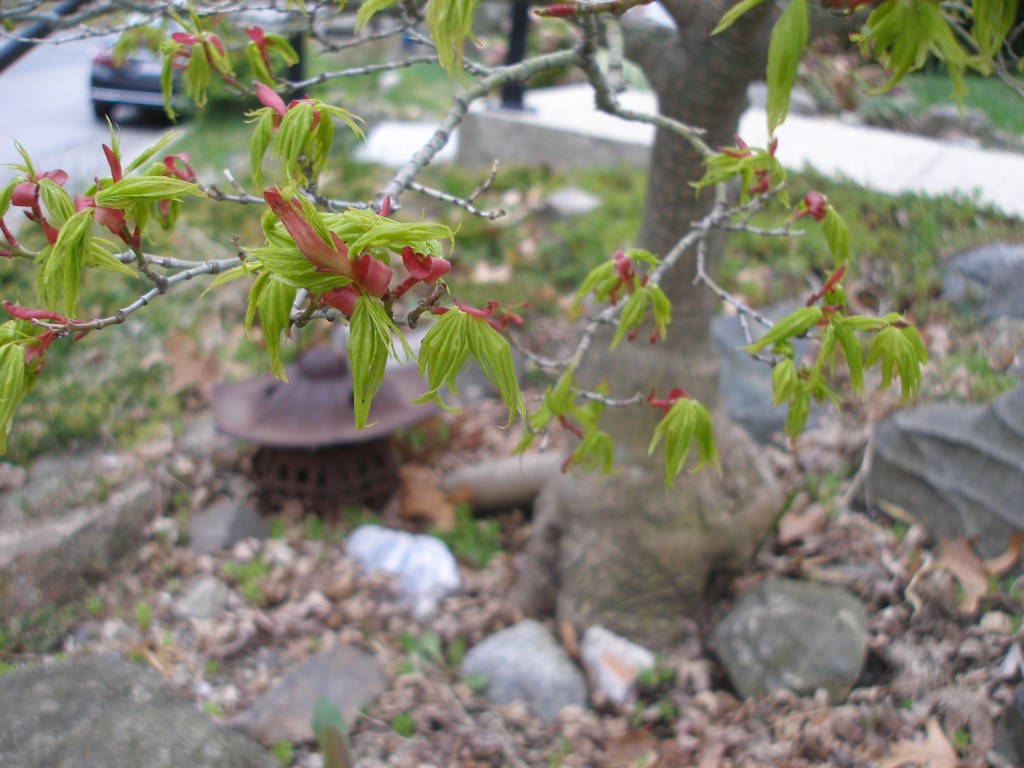
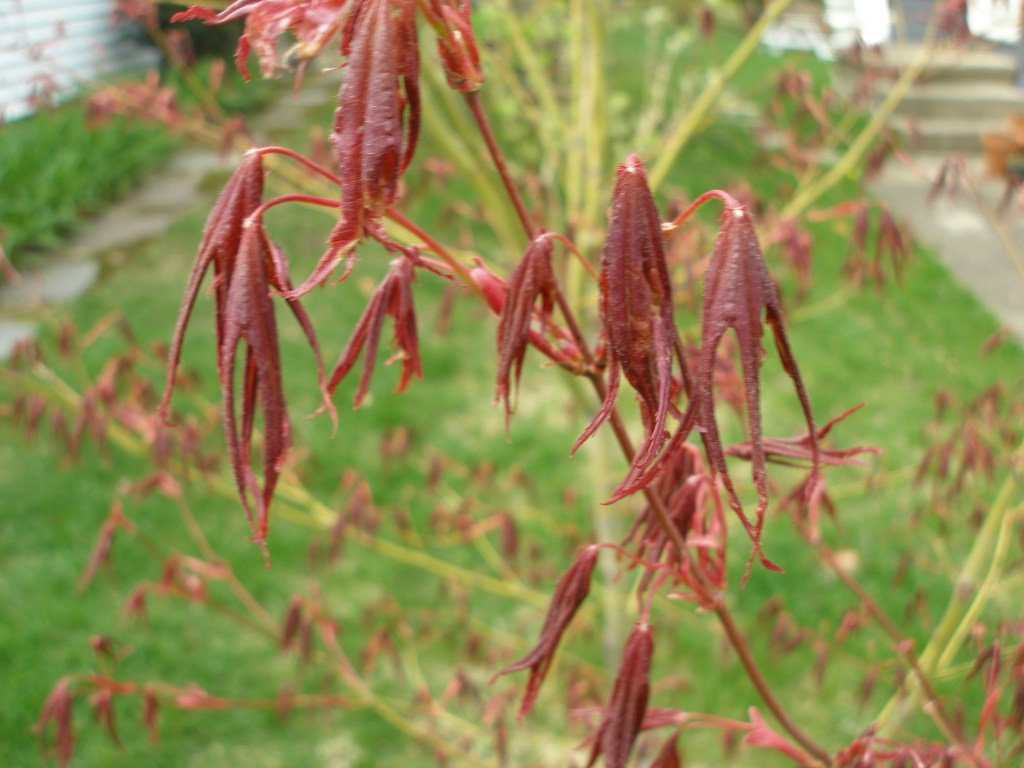
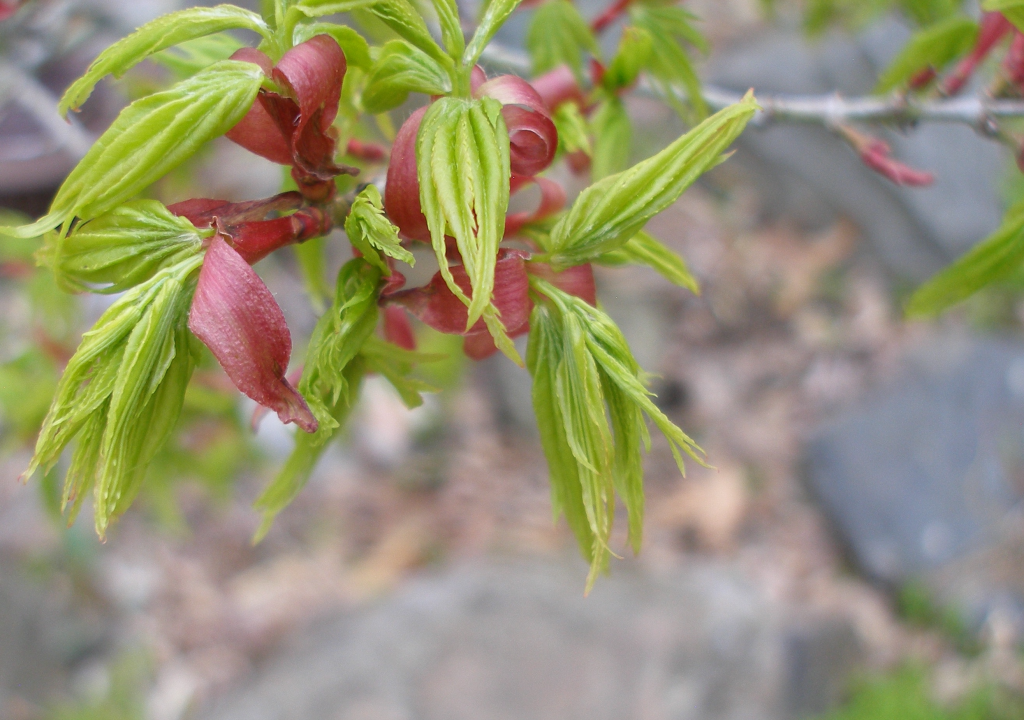
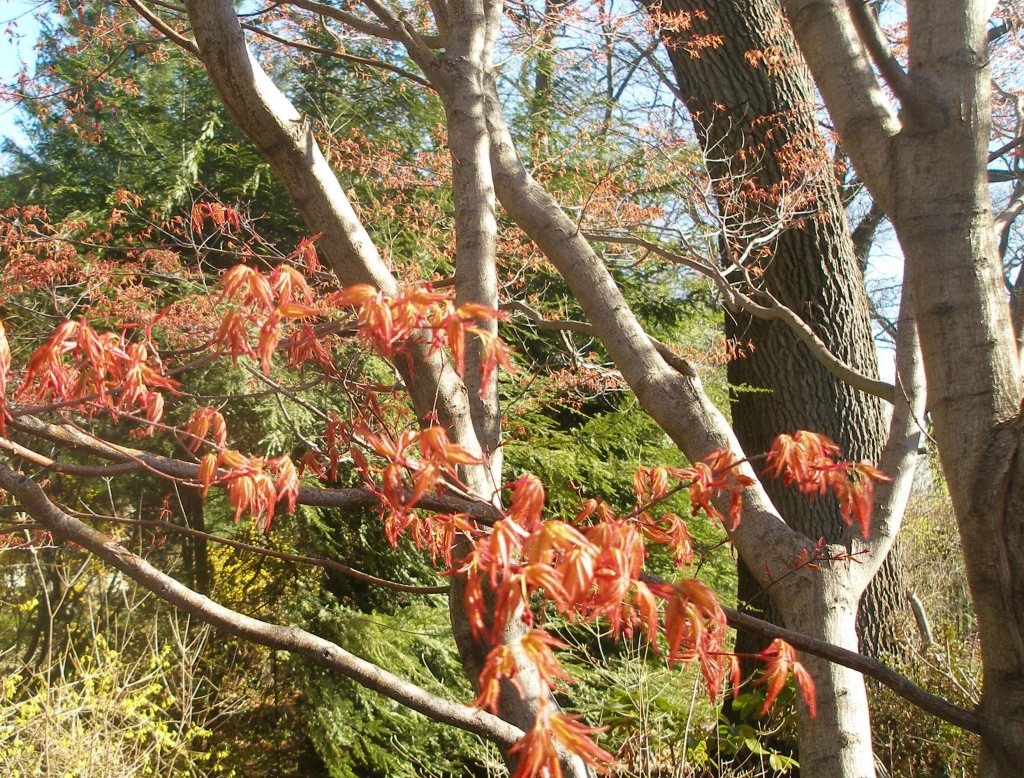
I decided to look for the new Japanese maple leaves. I noticed even tiny buds could be both pink and green. Not only were the new leaves quite colorful, but the way they unfolded, swelled and stretched out or hung limply was most worthy of closeup inspection. I added a few photos taken in prior years to include a wider range of these tiny new leaves’ fragile-tough grace.


















 Radiant Refuge