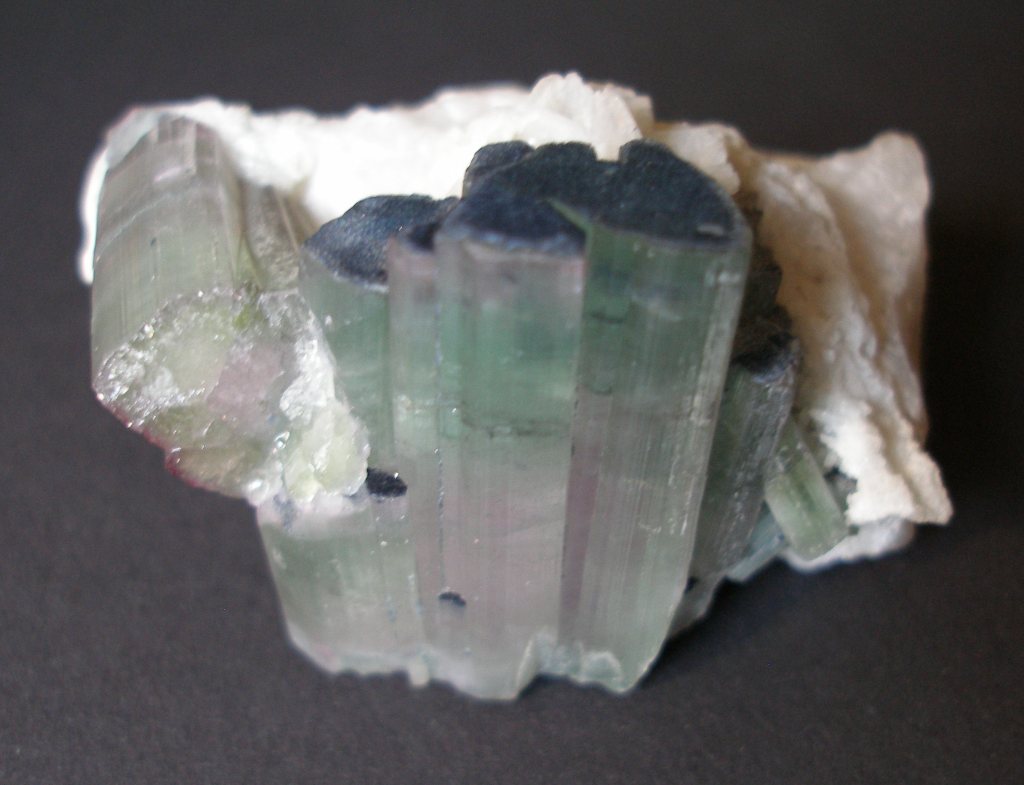
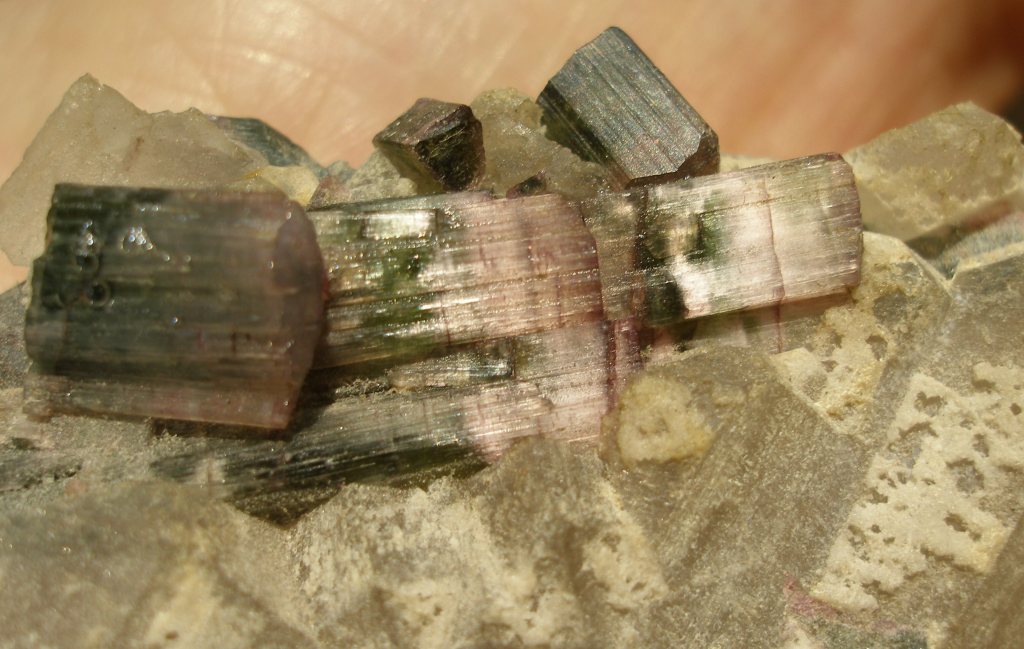
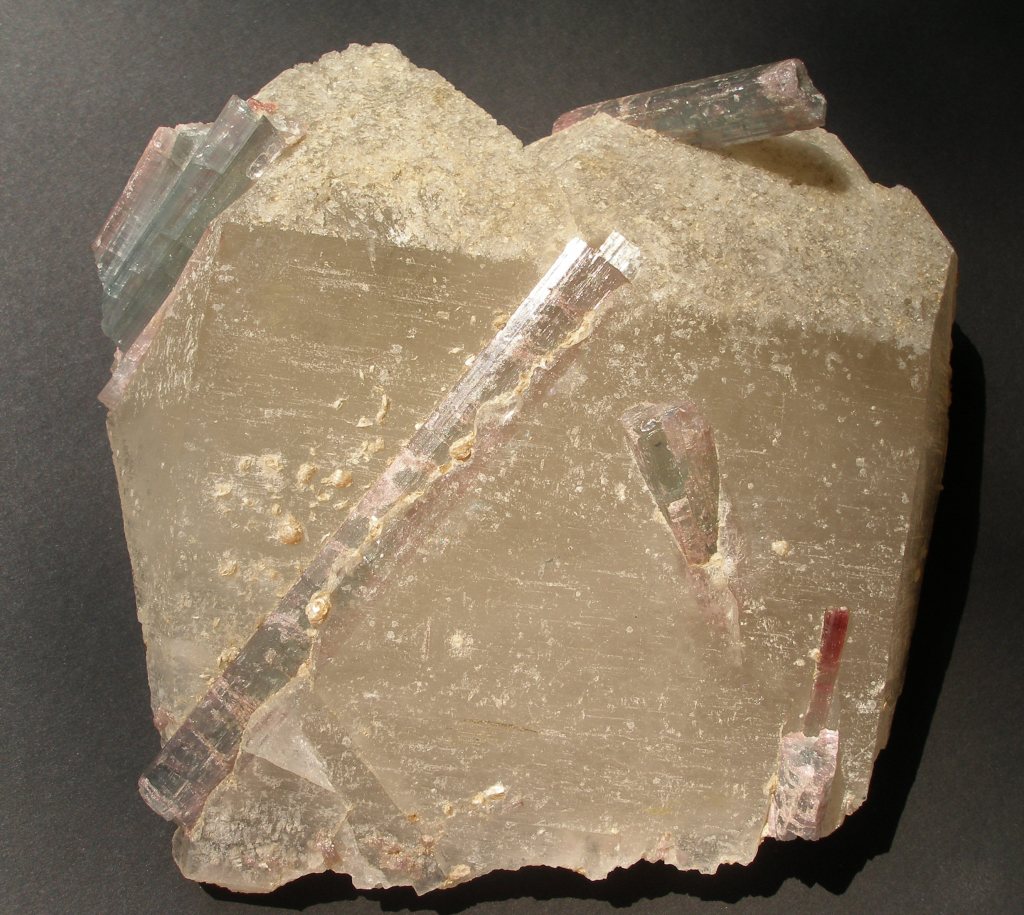
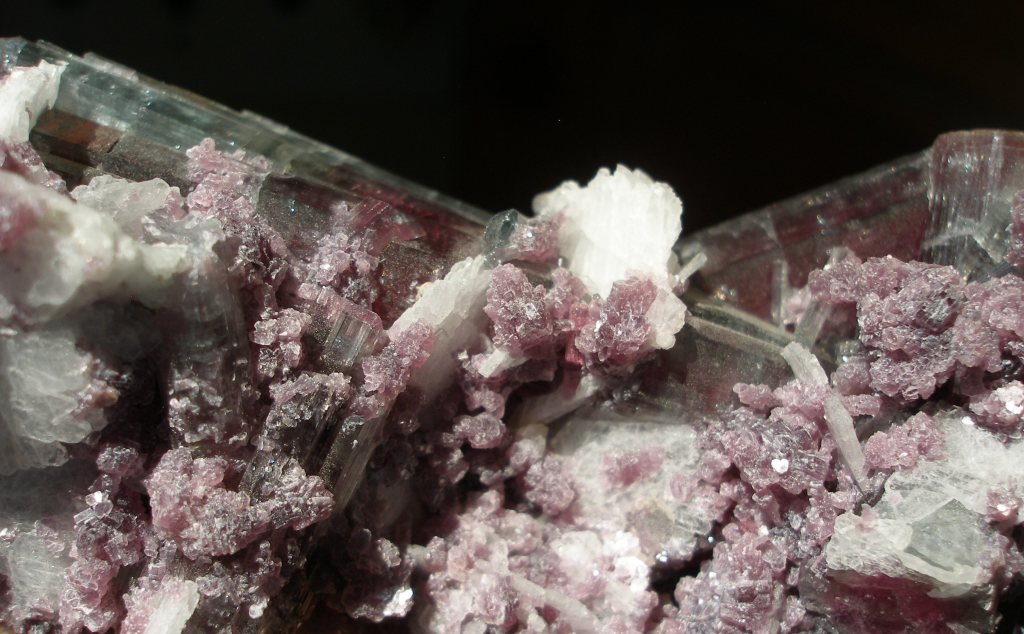
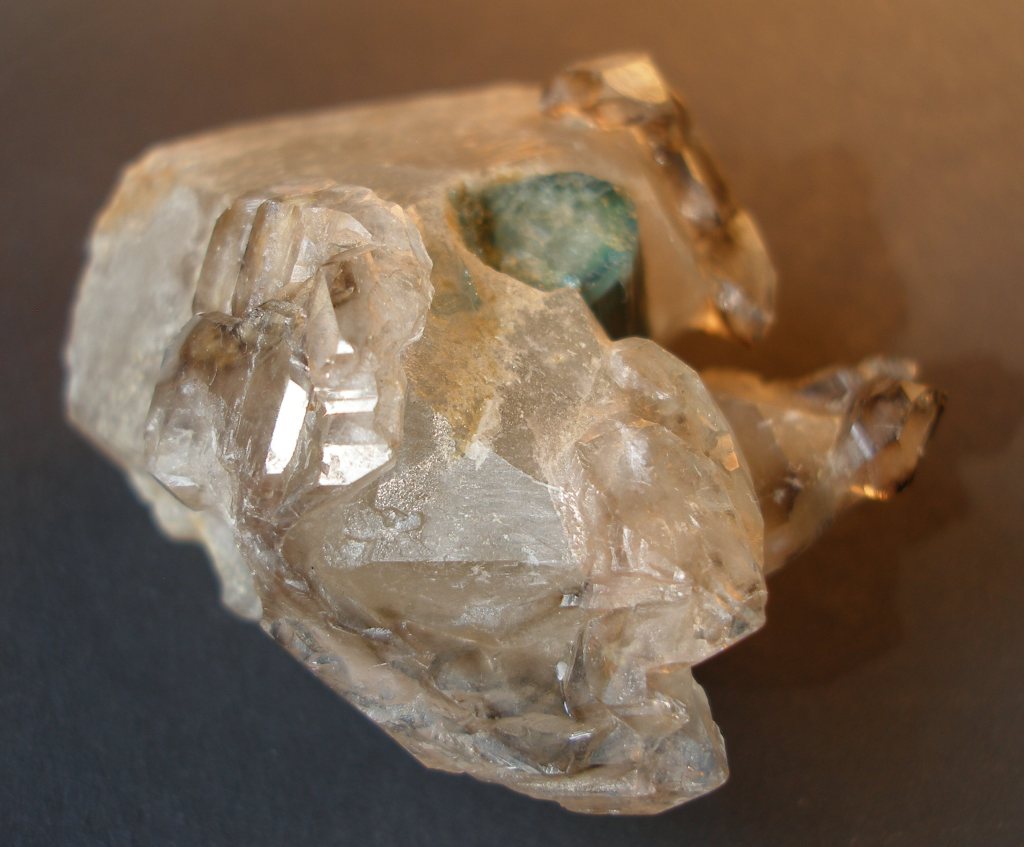
Although many think of tourmaline as individual crystals in pink, green or in the famous water melon tourmaline – a combination of those two, it can often be found embedded in quartz, or in a matrix with other minerals.
The photos below show a variety of examples including a striking cluster with pinkish-lavender lapidolite (and a closer in view of this one), as well as a number with tourmaline crystals embedded in quartz.
Examples may be found from sources around the world, and some of them, especially those with larger crystals, can make remarkably beautiful display specimens. Most of those shown in the photos below are on the smaller side. A prior blog post discussed tourmaline’s remarkable color range.
We crave the approval of attentive listening and what others have to say when they are revealing their true hearts tends to be inherently interesting. That kind of conversation can have both freshness and depth.
Ideally, we consider before speaking, and then we speak the truth in a way that benefits both speaker and listener. In today’s world of increasing divisiveness, we can easily underestimate how much we have in common and how much we have to gain from listening.
Heartfelt speech is always an exchange of gifts even when the conversation is strictly internal. Pausing for self-compassion when one is triggered by something that is said (including by oneself) allows time to process and release emotions and then return to listening.
When we know we are valued and respected despite our flaws, honest discussion can help us begin to work on what might be getting in our way. While seeing the impact of past conditioning can be painful and take time, changing our perspective and actions is much easier with trusted support.
With enough supportive honest sharing in our lives, we might discover that we ourselves, are the answer to the hole we are seeking to fill. Clark, Fleche, Layard, Powdthavee & Ward, in The Origins of happiness: Evidence and policy implications, VOX DEPR’s Policy Portal, share the results of large surveys they conducted in a number of countries which found that the biggest factors in life satisfaction were not economic but related to “people’s social relationships and their mental and physical health.”
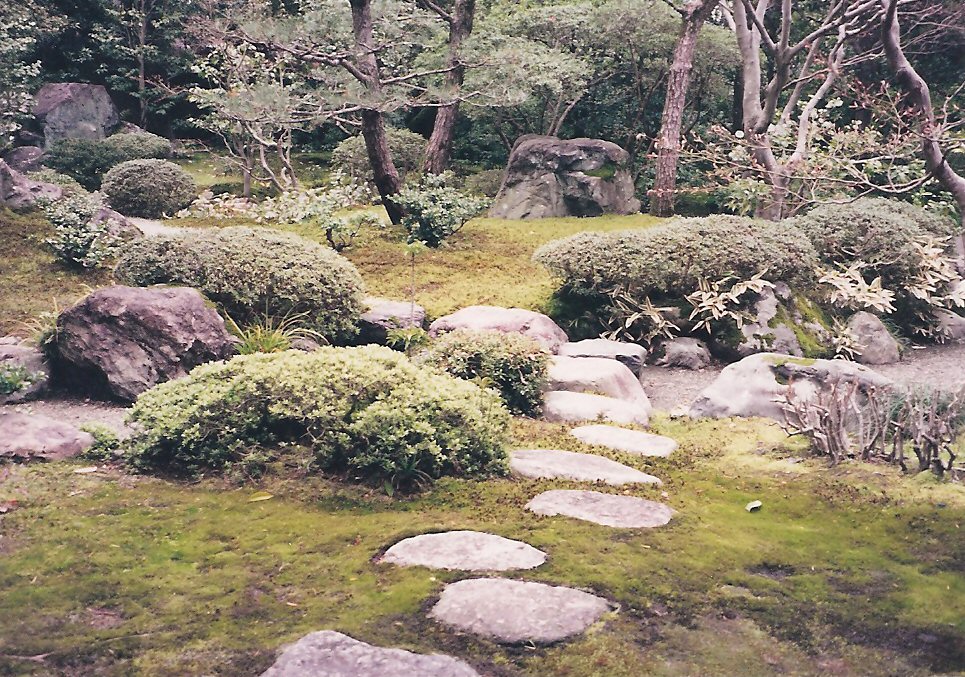
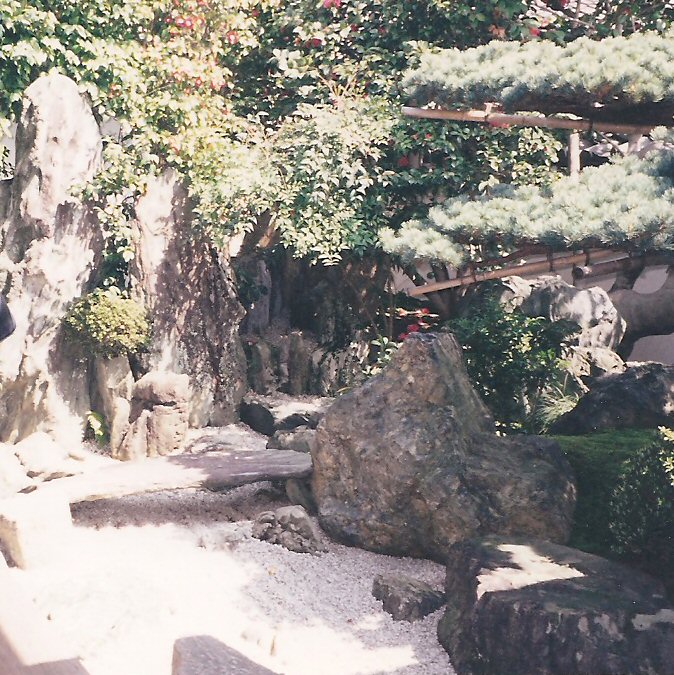
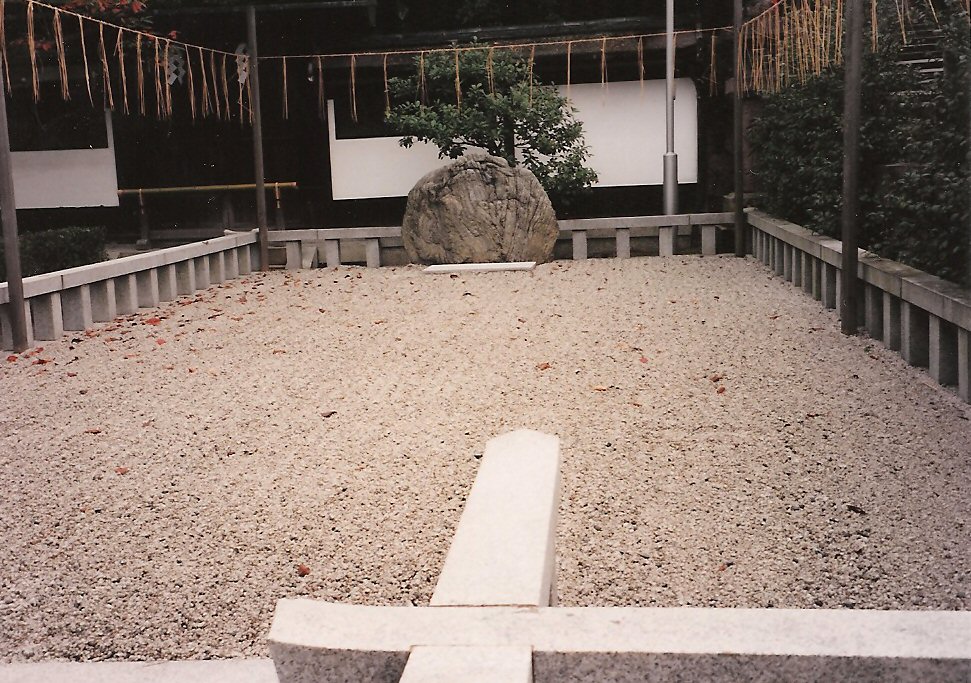
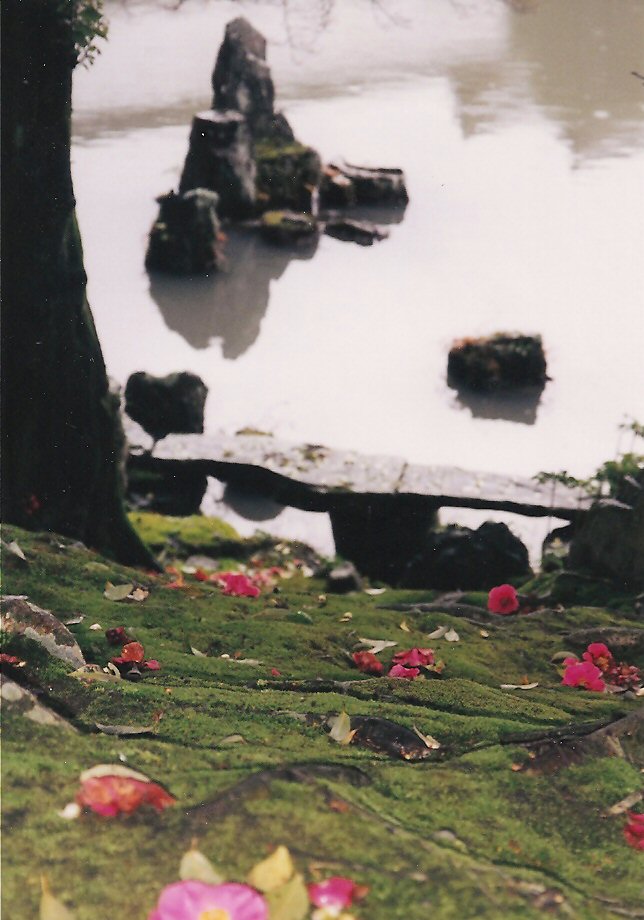
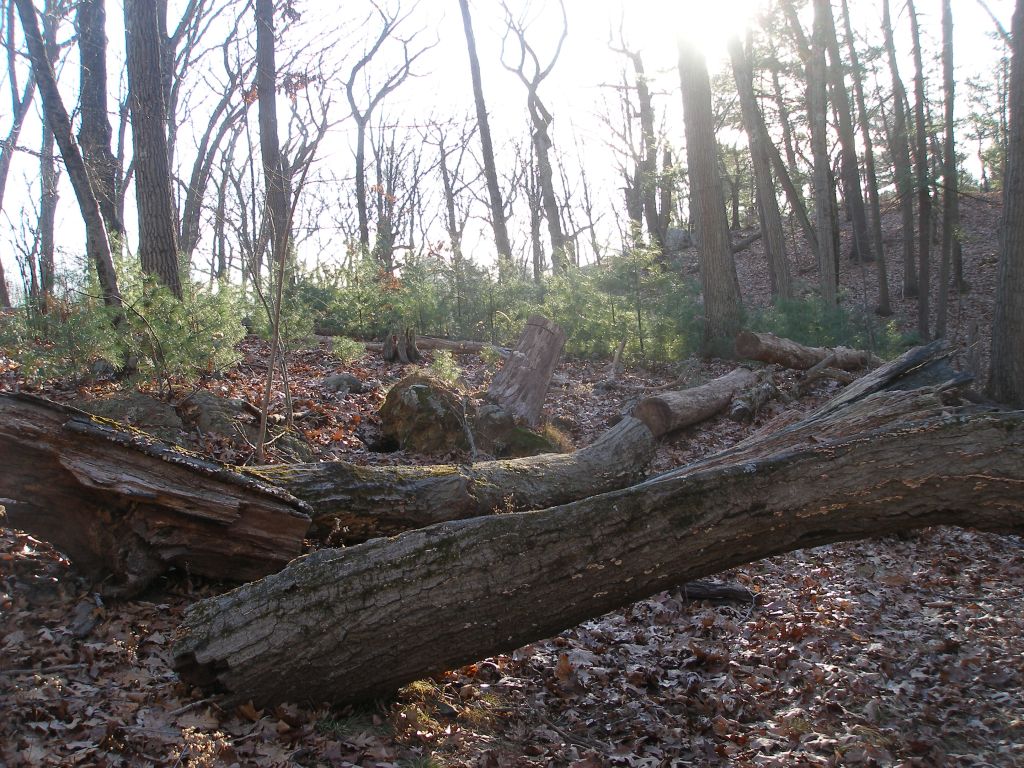
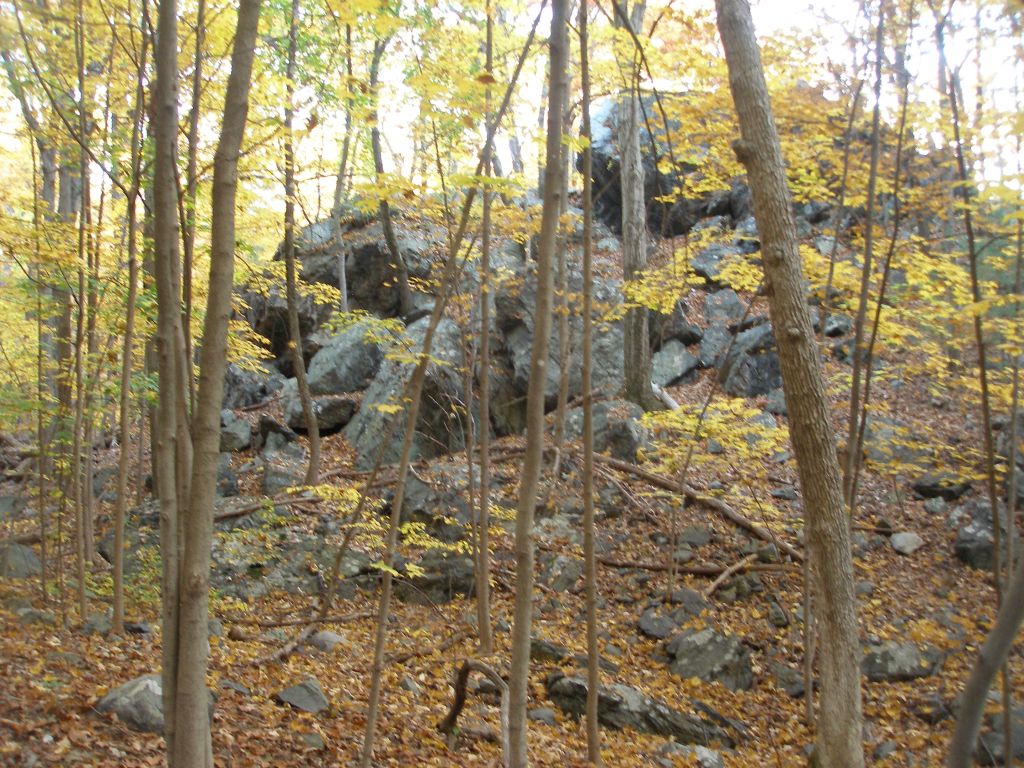
Rocks have long been appreciated in Japan. They appear in gardens and are displayed like sculptures inside as well. They often seem to have a life of their own, even when they are not covered in moss or lichens, and are especially apprecated when they show the effects of weathering.
In these times of dramatic change, that rocks will outlast us – their seeming permanence, has a special appeal. Our human lives are brief. While I know whole continents are moving and splitting apart, to me the larger rocks can feel like ancient timeless guardians and I try to listen when they speak to me.
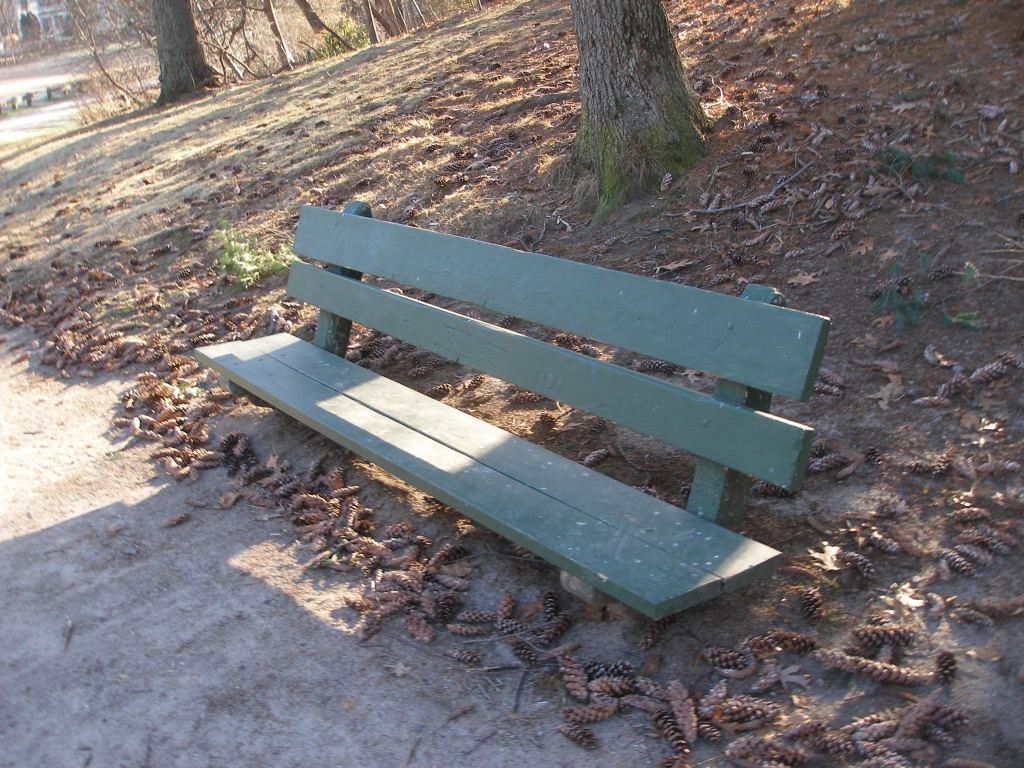
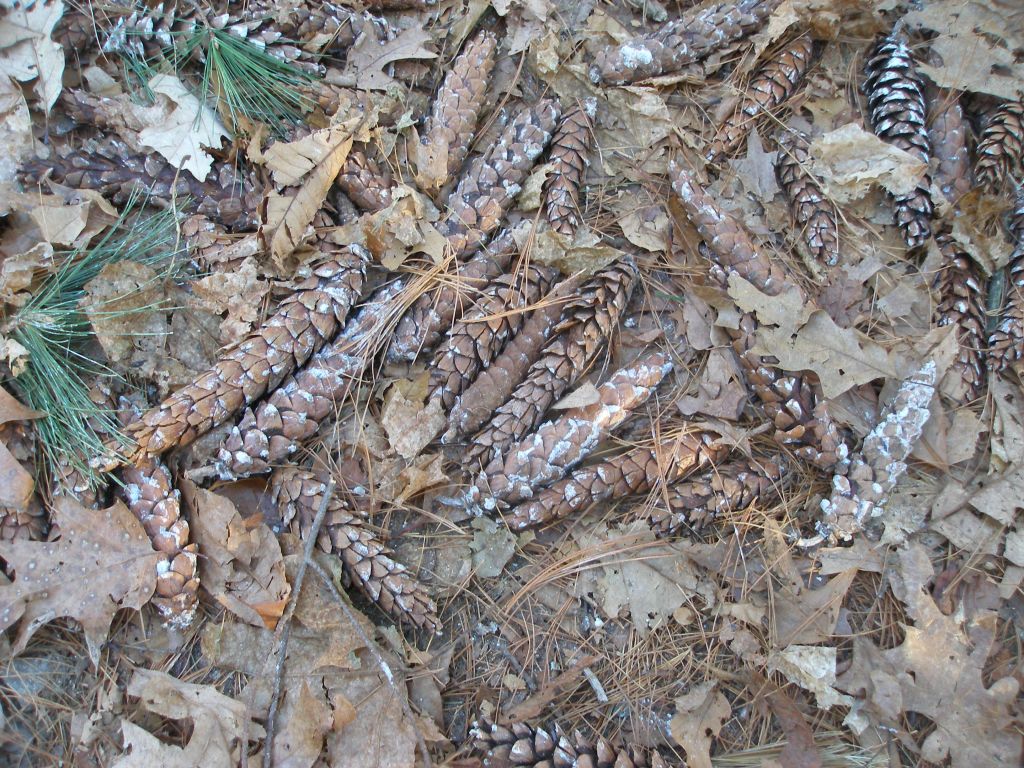
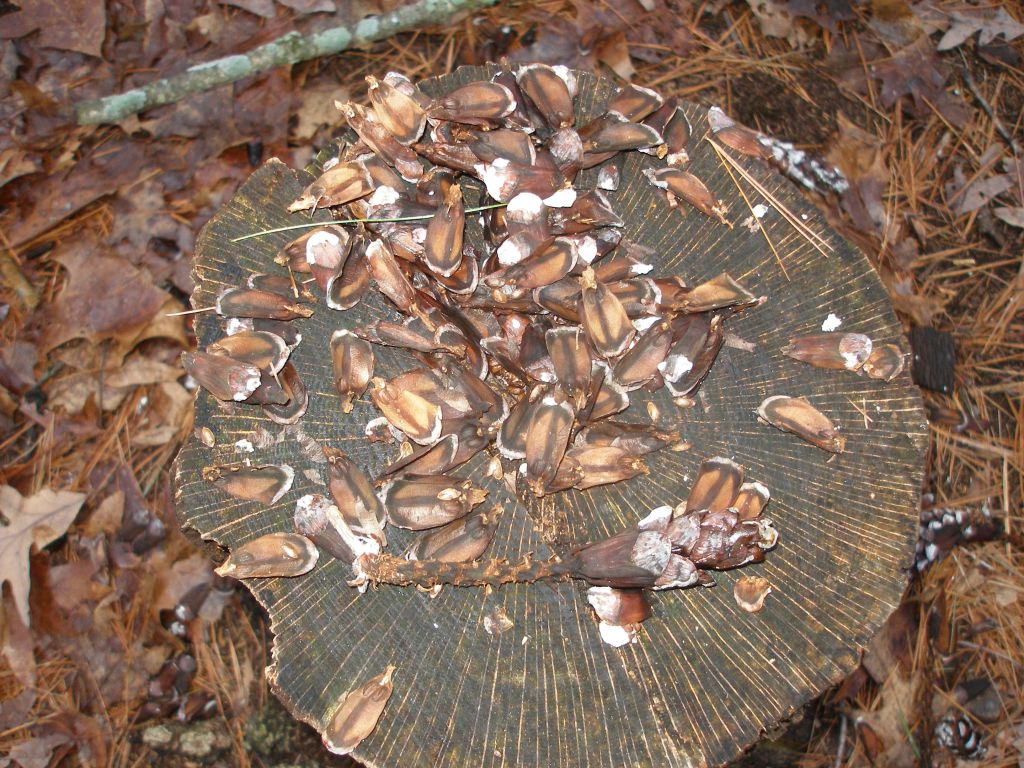
According to Menotomy Rocks Park, A Centennial History by Don Mattheisen, White Pines were planted after a devastating gypsy and brown moth invasion in 1902. It was hoped that the needles would not interest these hungry pests. In any case, no such massive invasion of destructive moths recurred then or now.
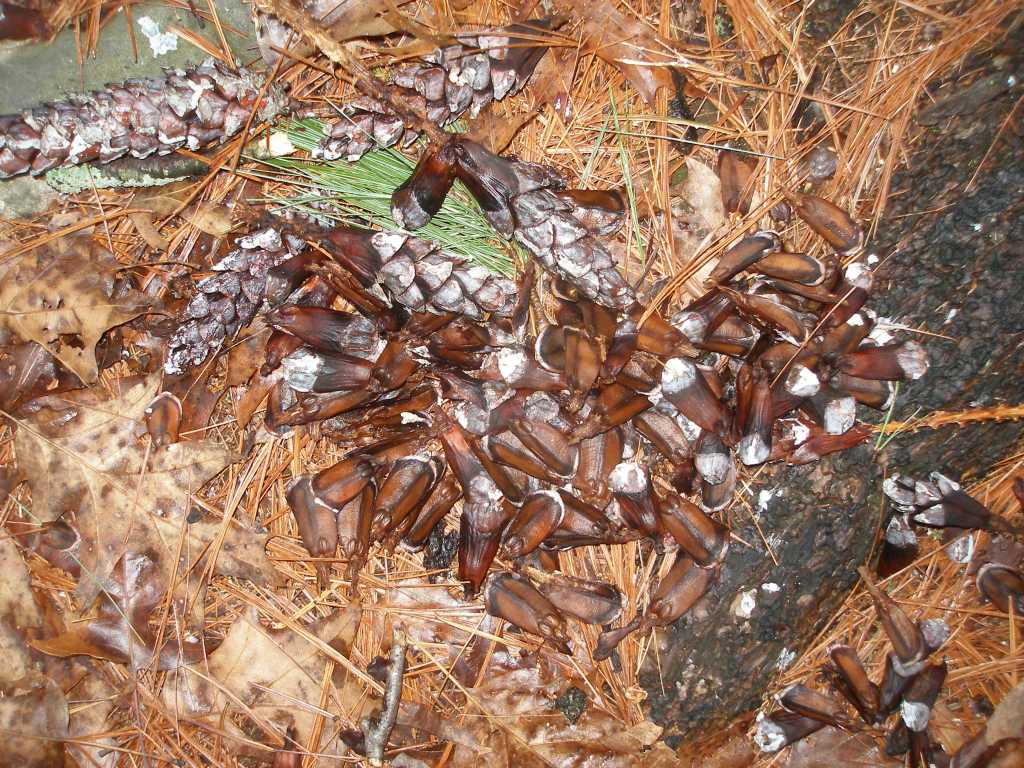
As to the unusual abundance of pinecones, recent high winds might have played a role in bringing them down, but could not explain why there were so many on the trees in the first place. Perhaps the White Pines planted in the 1900’s were approaching the end of their natural lives and providing for the perpetuation of their species. Or newly abundant rains the last few years had created favorable conditions for baby trees. Squirrels seem to be going after the seeds already.
There are places in the Park where many young evergreens all seem to be about the same height. I will keep an eye out for more patches of young trees springing up, especially where sunlight reaches the forest floor.
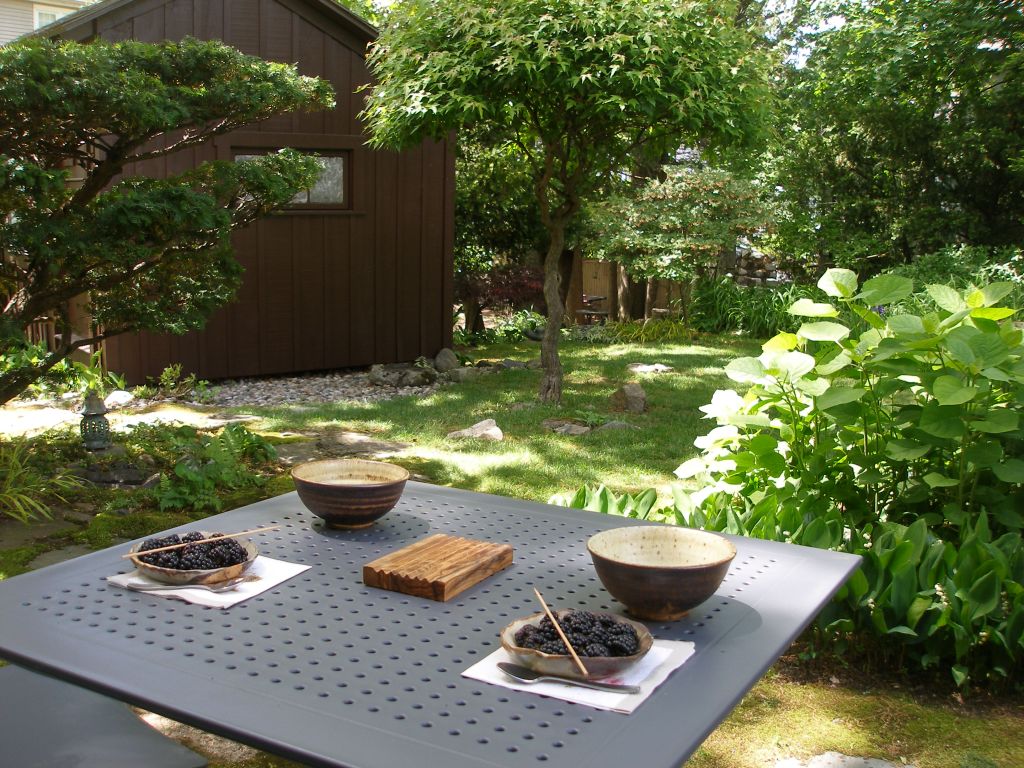
Tea bowls and blackberries awaiting the arrival of a friend.
Although it might seem frivolous, I would argue that slowing down to share tea with no particular agenda is a very good idea. For one thing, as Olendzky notes, “security comes from aligning our attitudes and policies with the behaviors that will bring out the best in others, rather than doing the very things that are sure to provoke or entrench them” (Unlimiting Mind: The Radical Experiential Psychology of Buddhism, page 45).
Human lives have always been full of challenges. And these days there are good reasons to be afraid. With so much coming at us, it is all too easy to pull back into our shells and feel helpless.
Sharing tea provides a good excuse to slow down and simply be present with each other. Thich Nhat Hanh includes drinking tea among his practices for compassionate communication to “Bring you back to your true home. Don’t think. Be here, body and mind united.” (The Art of Communicating, 2013, page 150).
As you feel the warm cup, the steam rising, attune to the color and the fragrance of the tea, you are returning to sensing what is here now in real time. With senses more fully engaged, it may be easier to directly sense the not-being-alone-with-this support of simply enjoying tea together.
Humans can certainly cause big trouble. But it is also natural for us to help each other out in times of crisis. While emotional support and practical forms of help are both wonderful, there is also a place for small acts of kindness, like sharing tea. They can add so much grace and meaning to human lives.
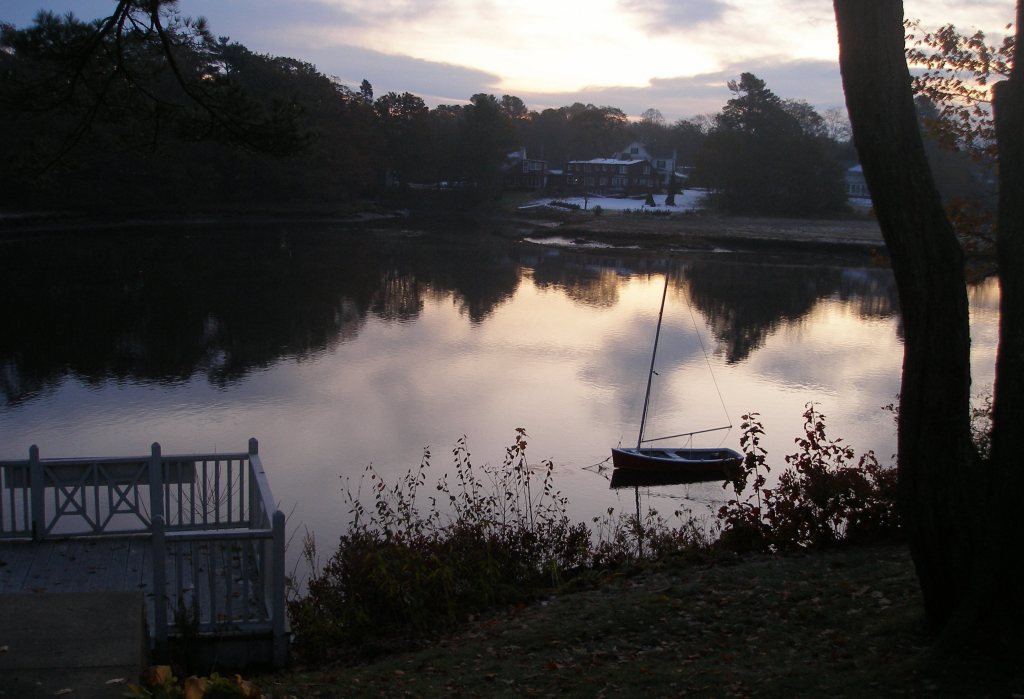
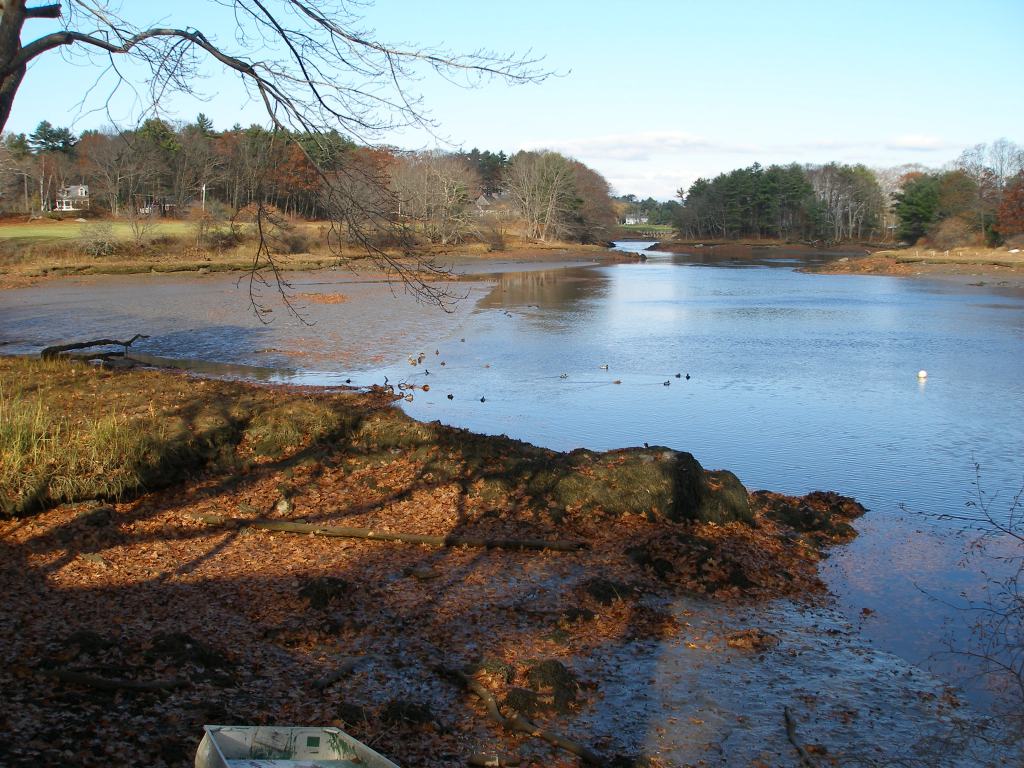
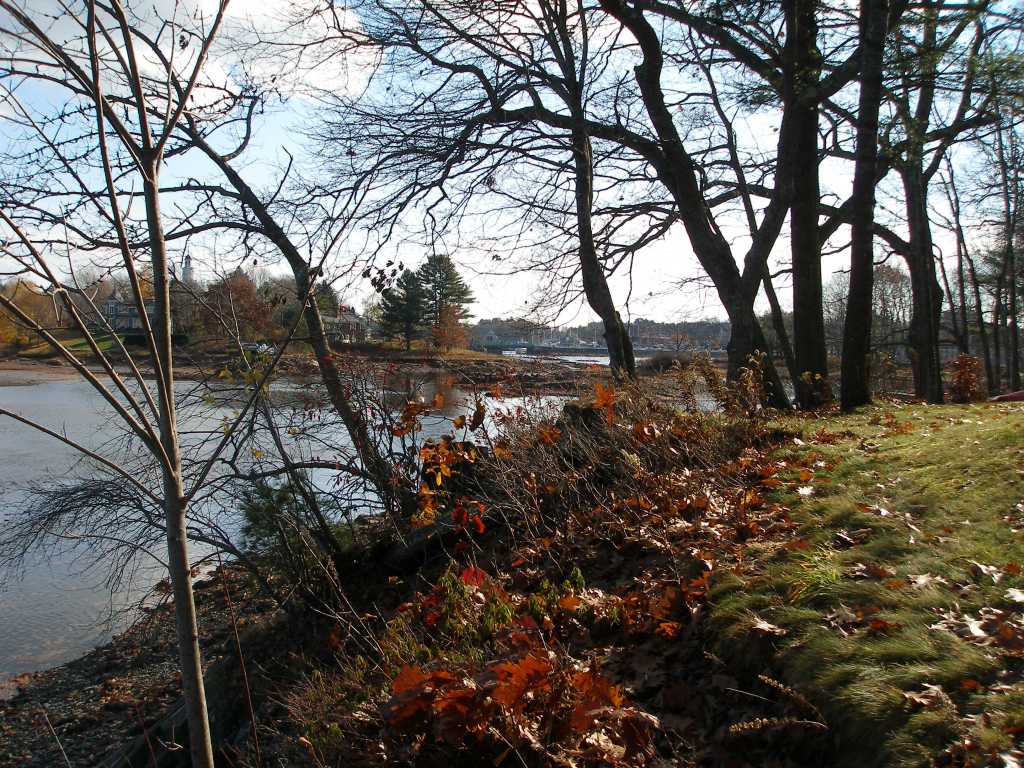
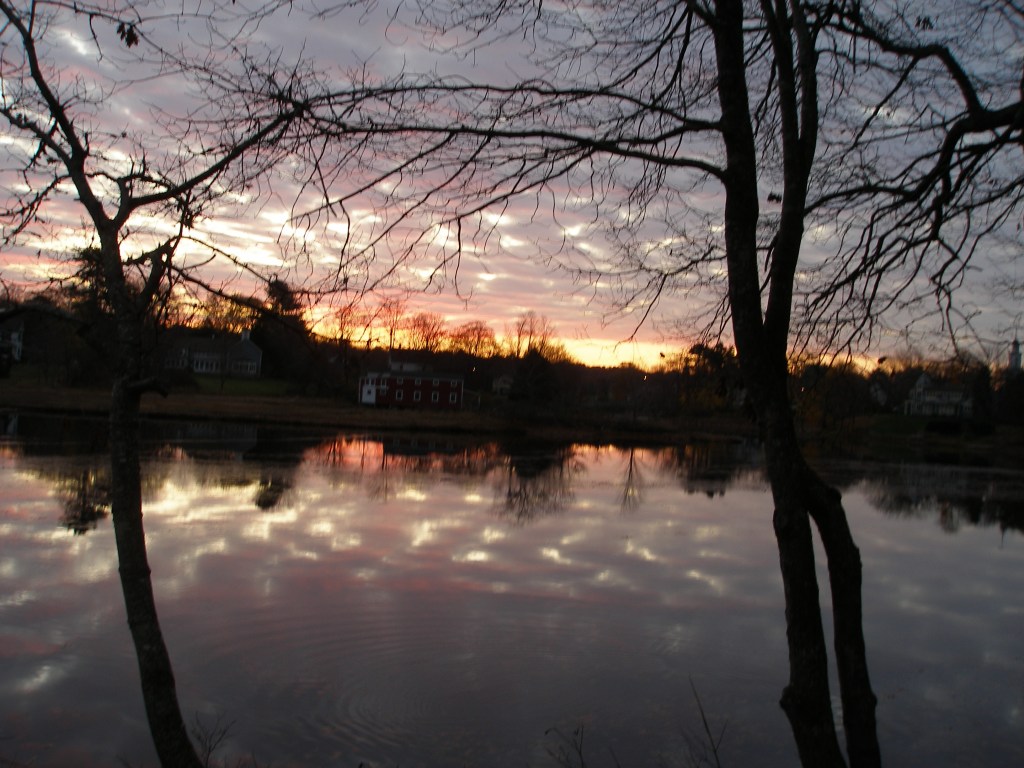
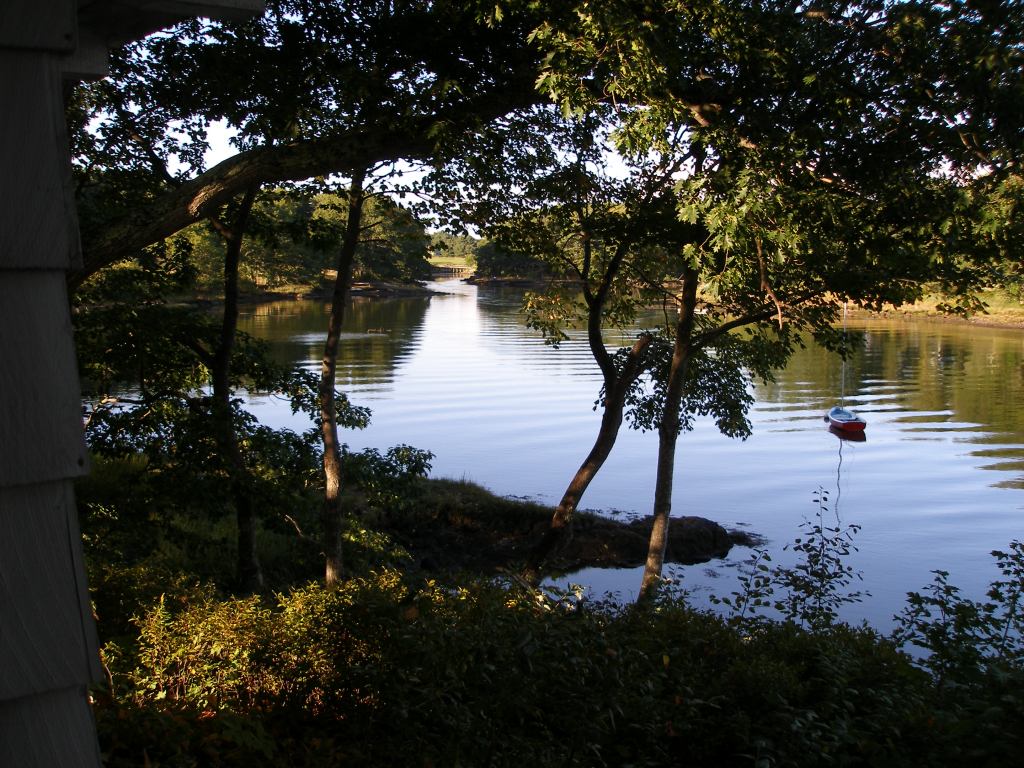
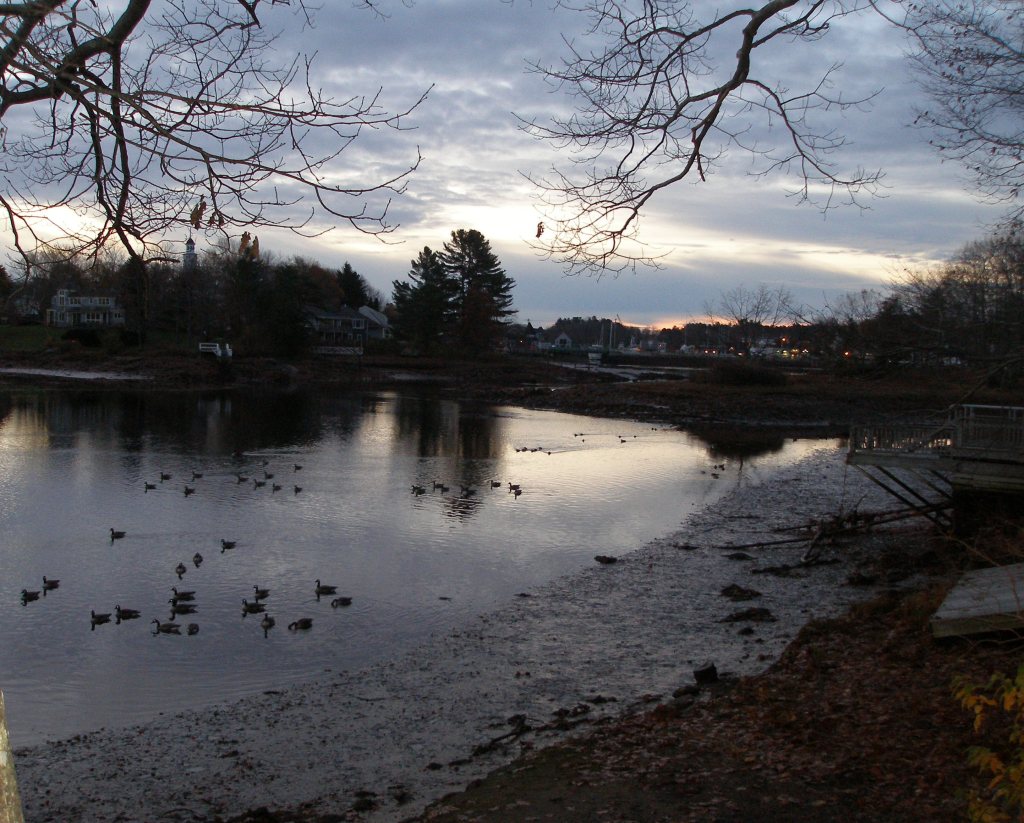
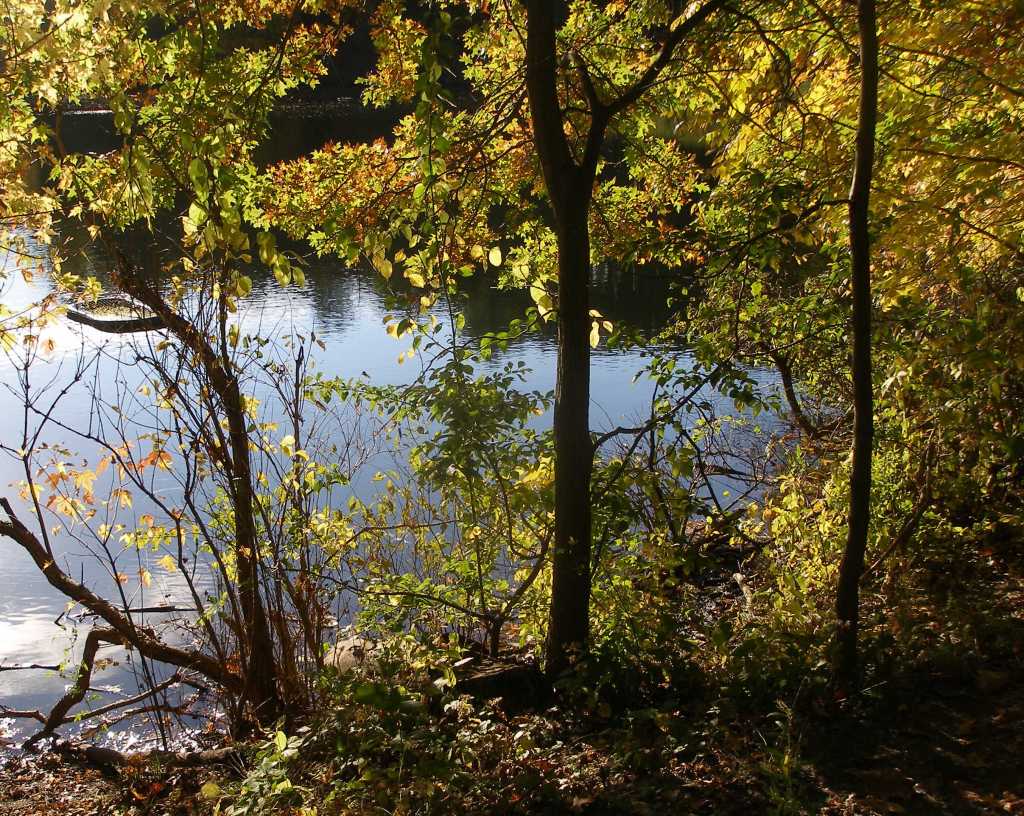
There is something about rivers and their many moods. Perhaps it has to do how the weather affects everything or how they flow. Some, as in this case, seem to breathe with the tides inviting me to slow down and pay attention.
The photos below were taken over a number of years when I visited an Inn that was right on the Kennebunk River, In Maine, USA. Once I saw a seal stick its head out. Ducks often gathered in the early morning. Mostly I just let go into all that was before me, allowing all that radiance to seep in.
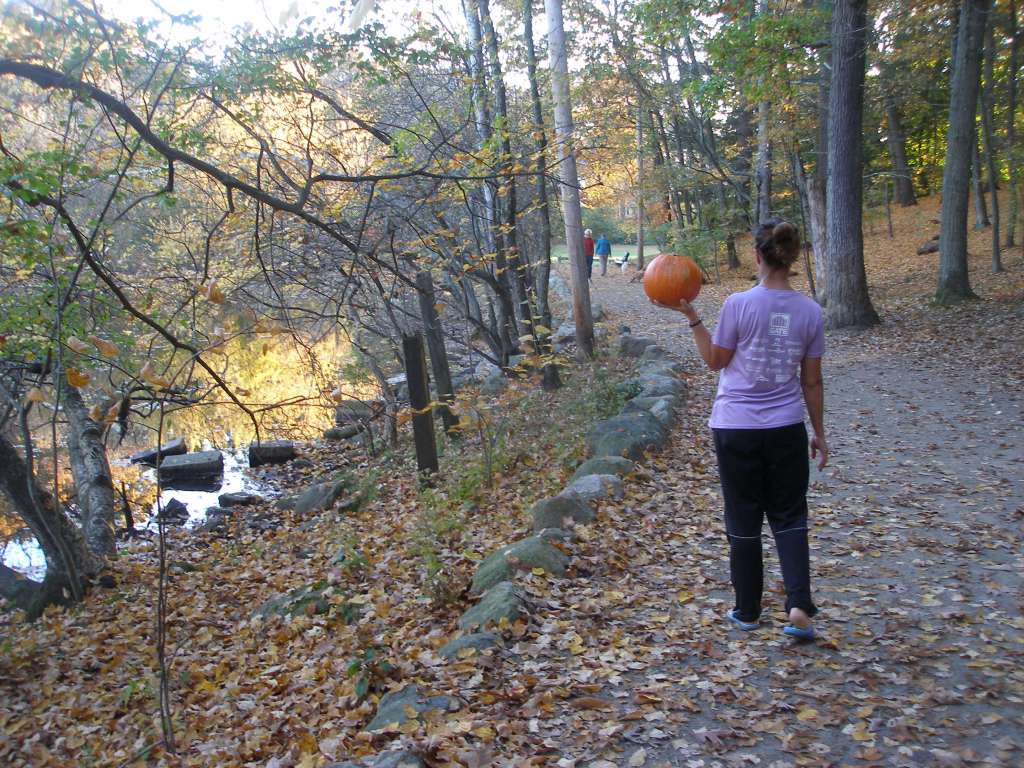
I was walking around Hills Pond yesterday and came across a woman holding a small pumpkin up in one hand. I asked her if she would mind stopping so I could get a photo of the lovely image. She told me she was bringing that pumpkin to mark the spot where Scouts would be leaving 75 other pumpkins for the “Spooky Walk” that evening.
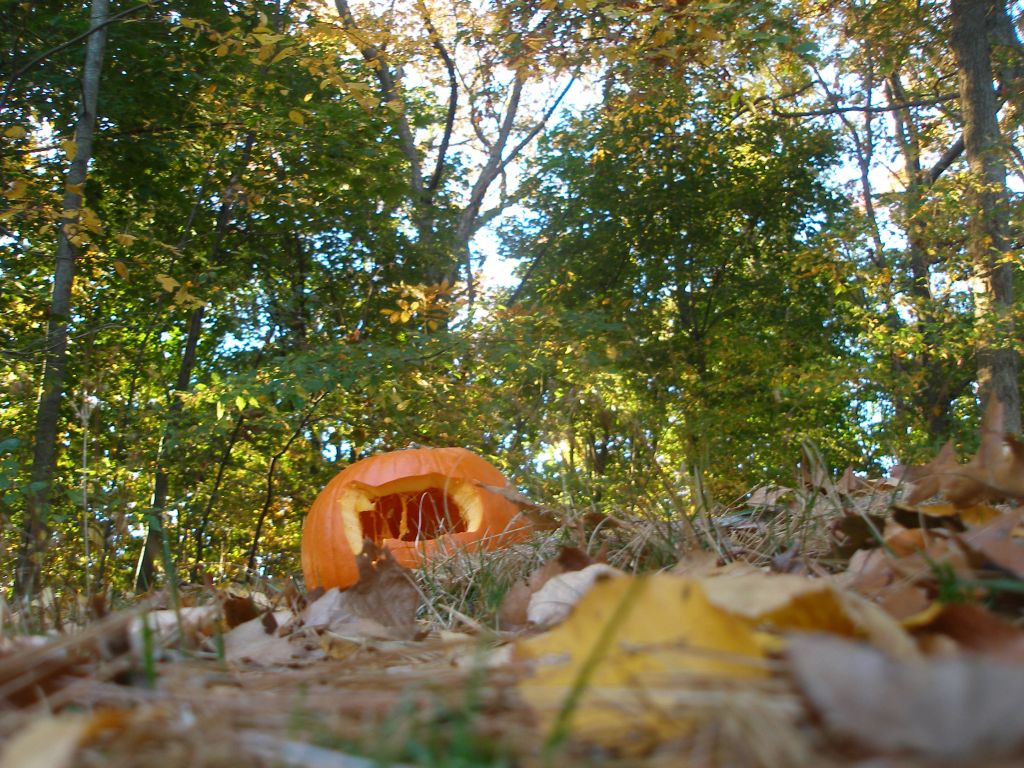
Sure enough, I noticed her pumpkin sitting on a hill as I continued around the pond and decided to return in the hopes of getting a few good photos. A full moon should help even though it would be getting quite dark by the time of the event. I had seen people setting up for the Spooky Walk in a previous year and it looked like it could be quite interesting.
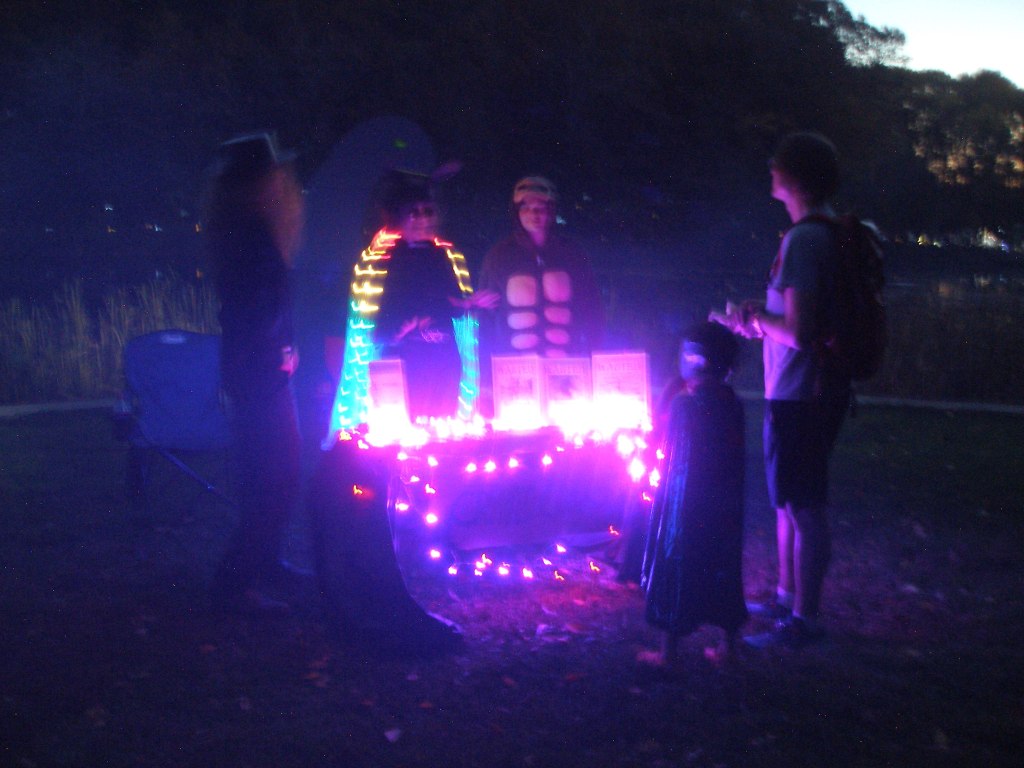
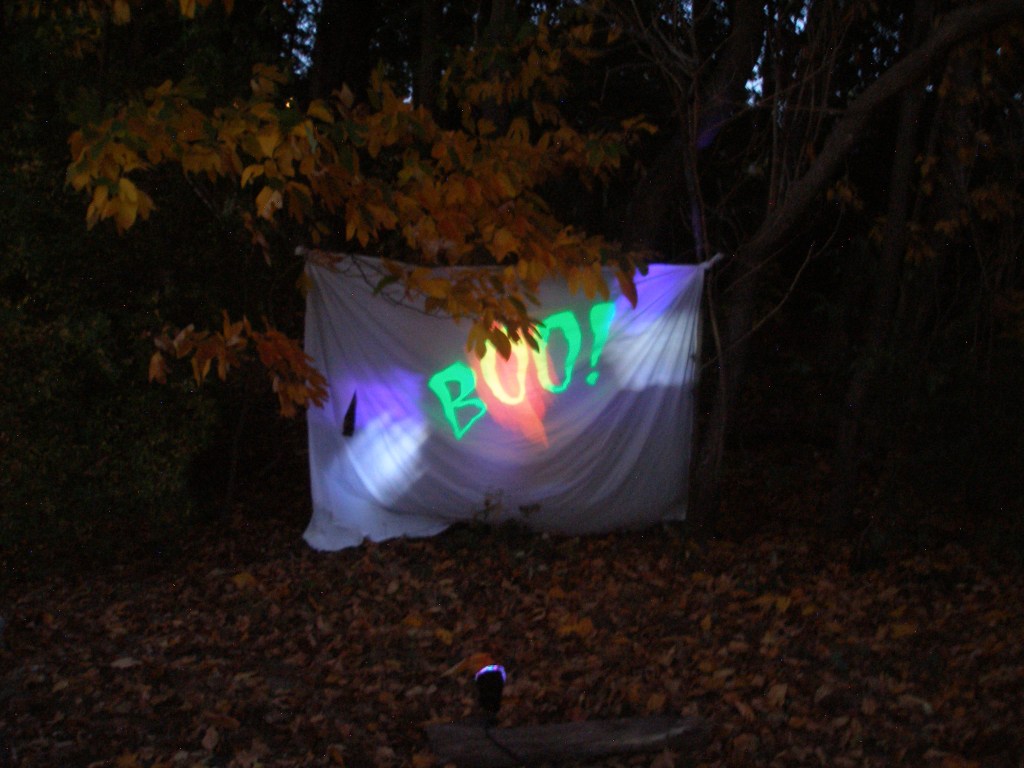
As she had told me would be the case, that “starter” pumpkin had been joined by many others – a back row spelled out “S P O O K Y.” Hopefully, the photos below will give you some idea of the highly creative nature of this home spun event.
As I walked back along the path through the deep woods I was glad that I had remembered to bring a flashlight. By that time, quite a few other points of light were coming toward me along the path. I could hear parents reassuring their children that the pond where the event takes place was quite nearby.
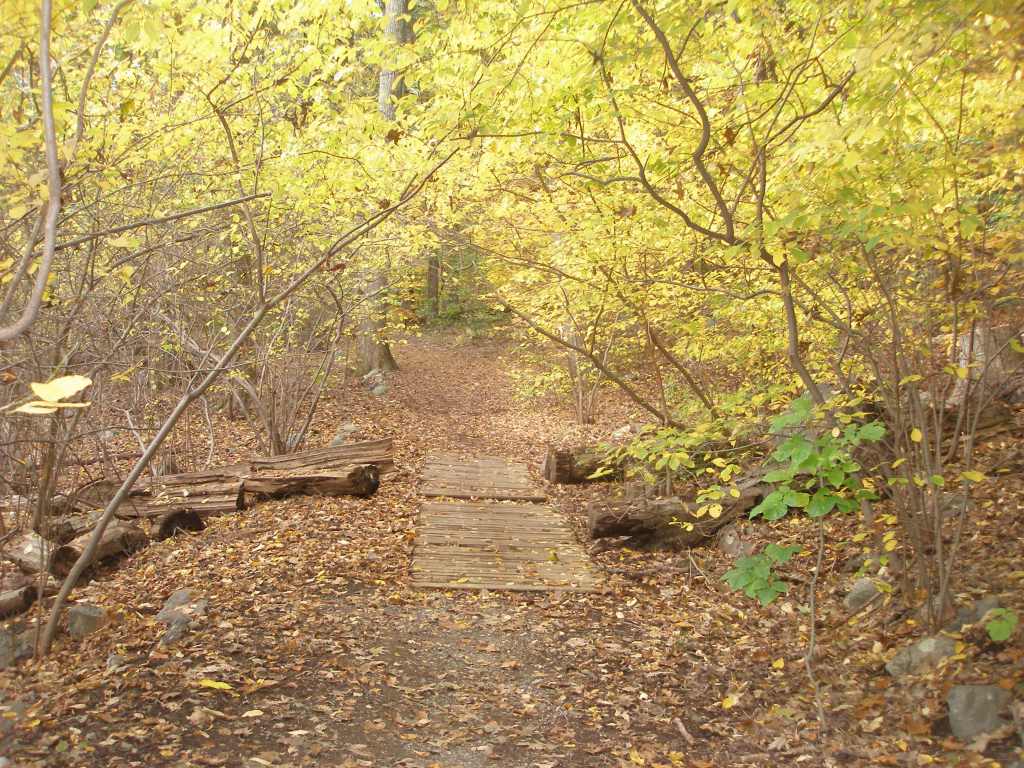
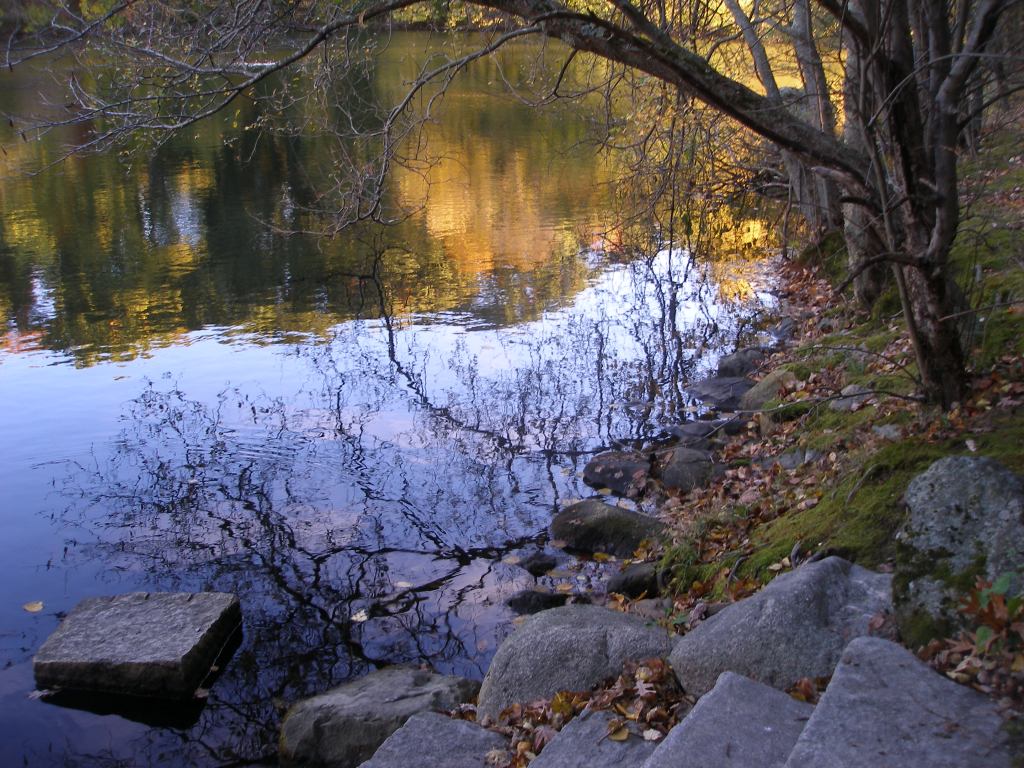
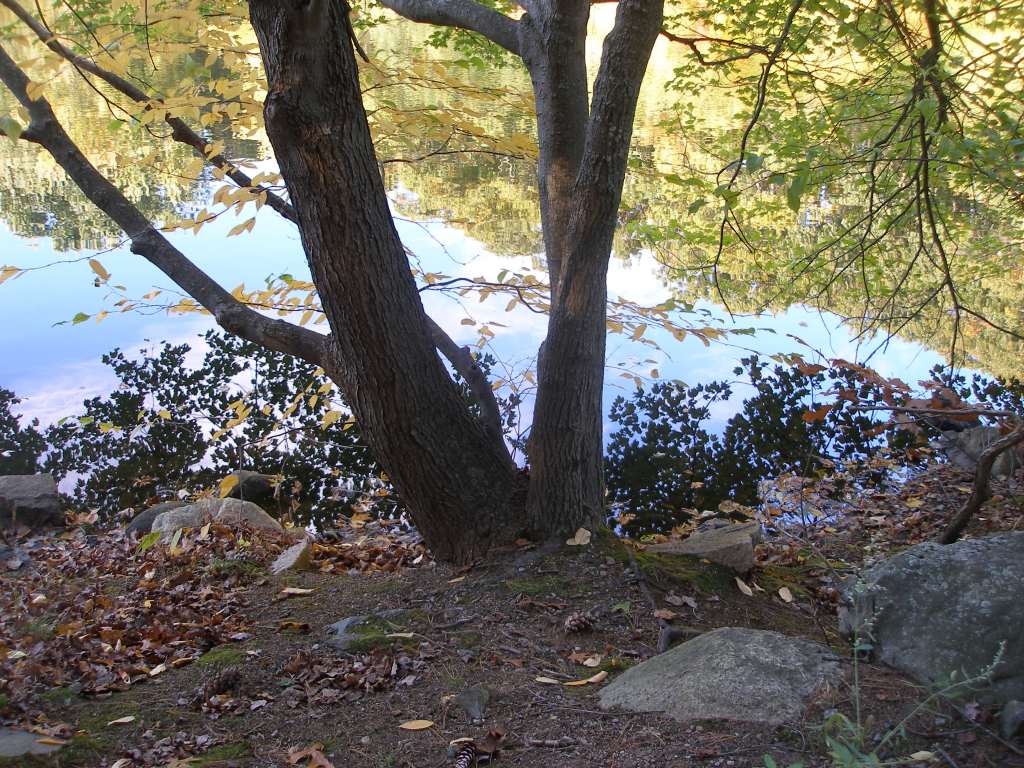
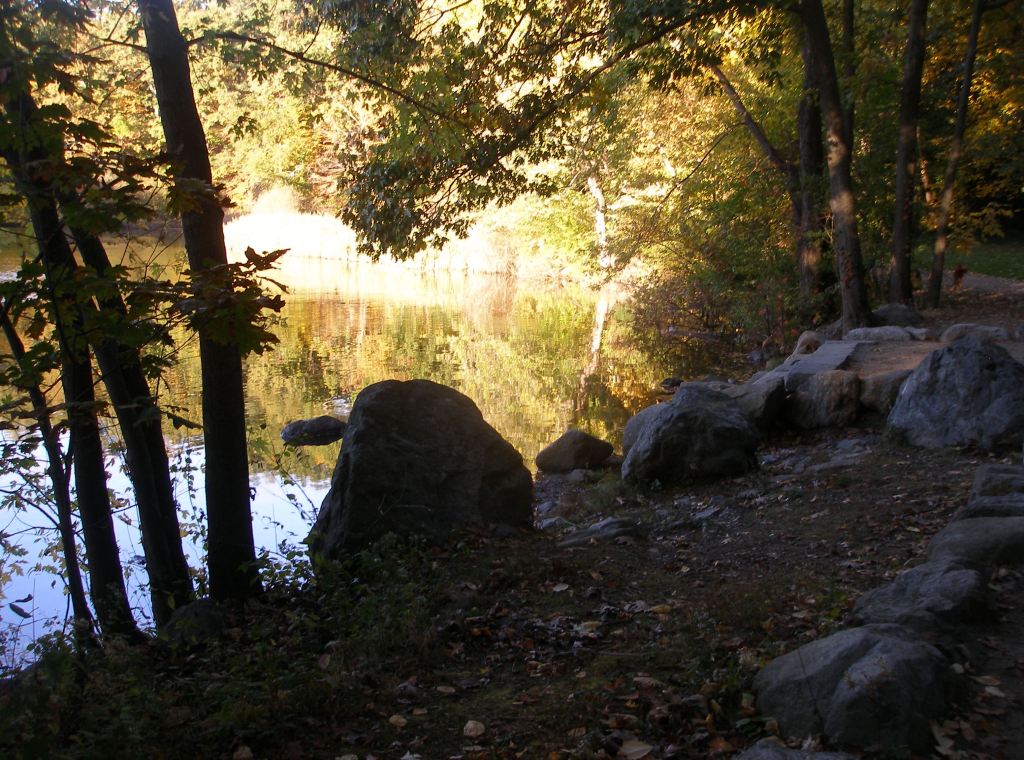
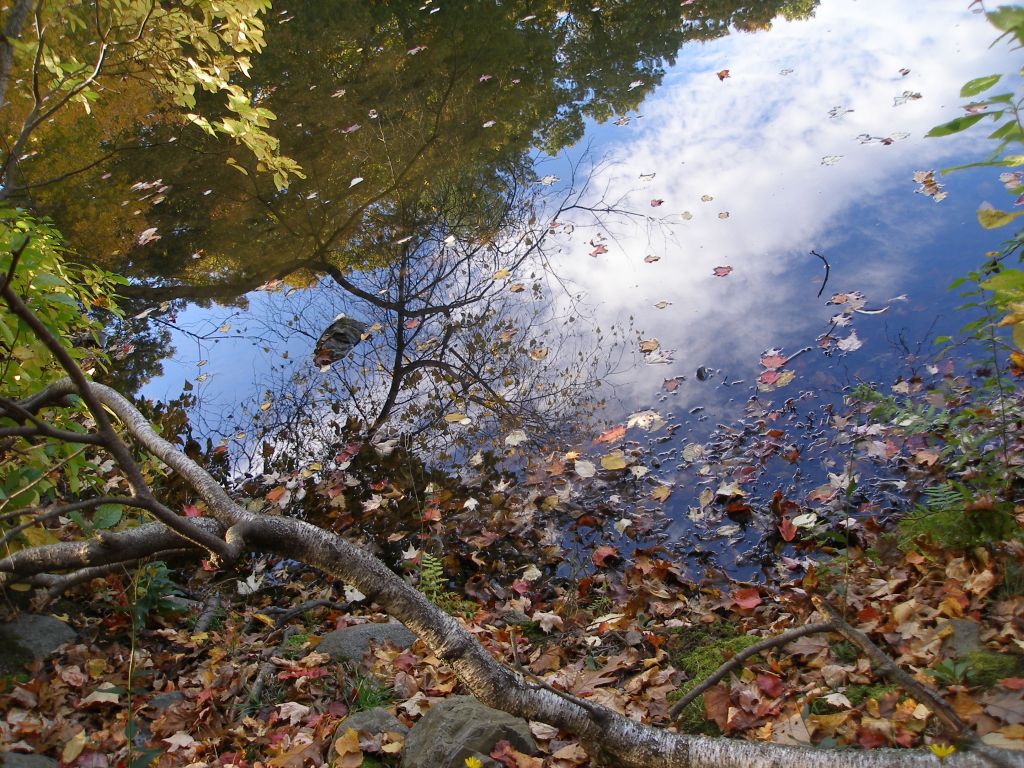
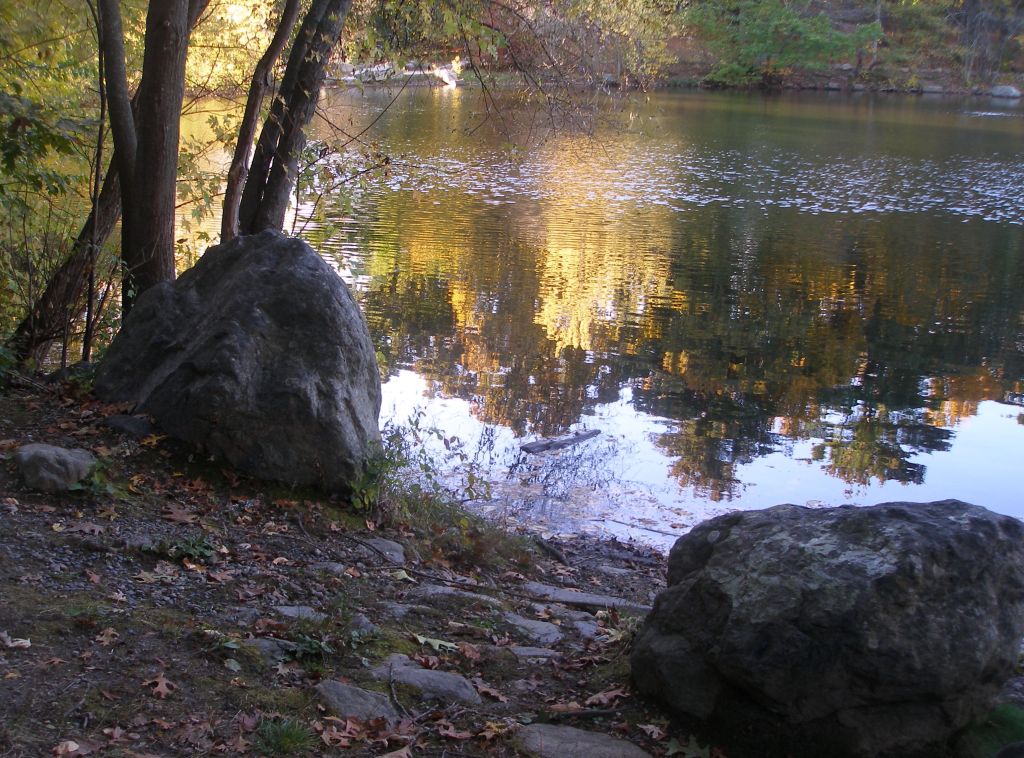
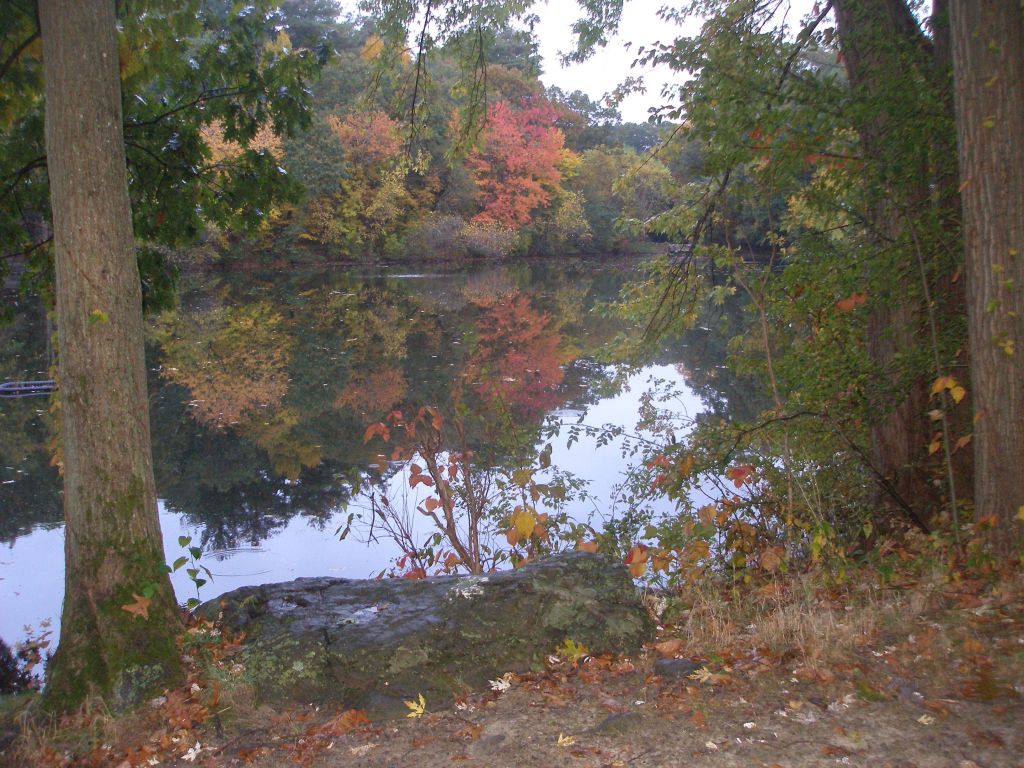
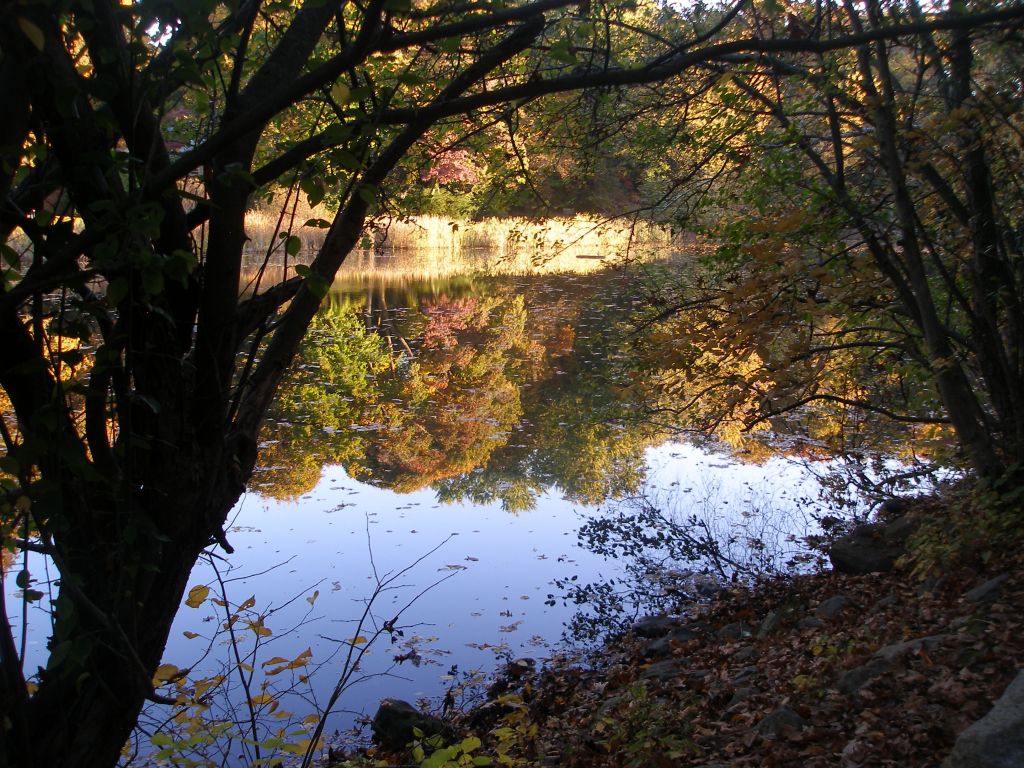
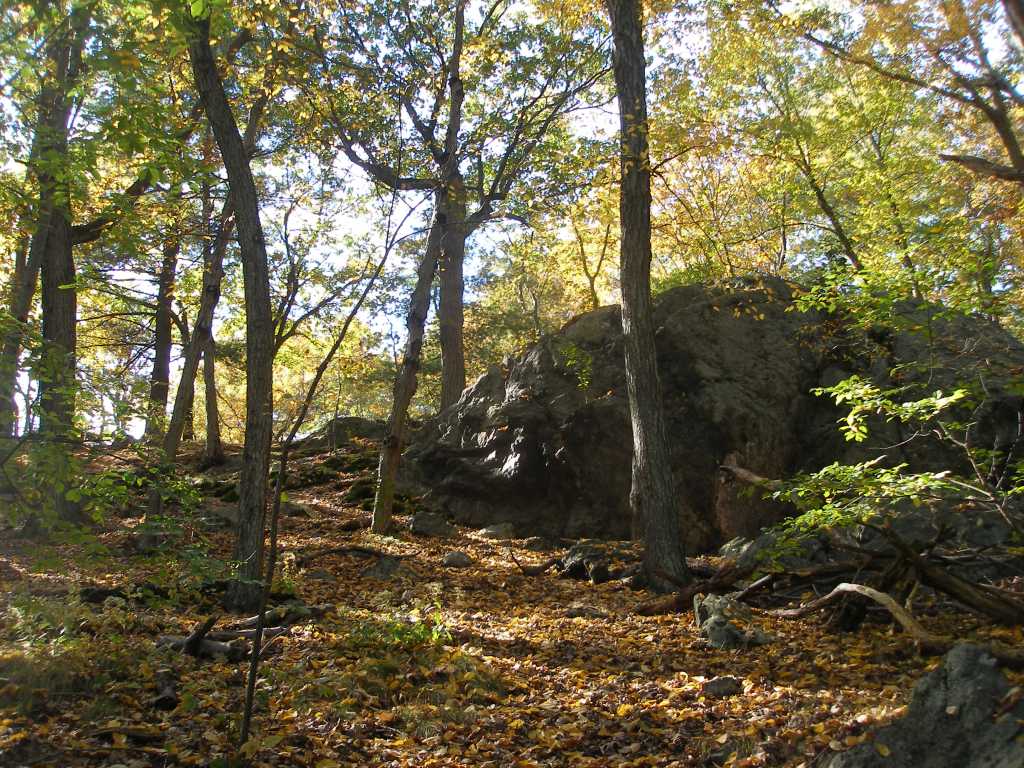
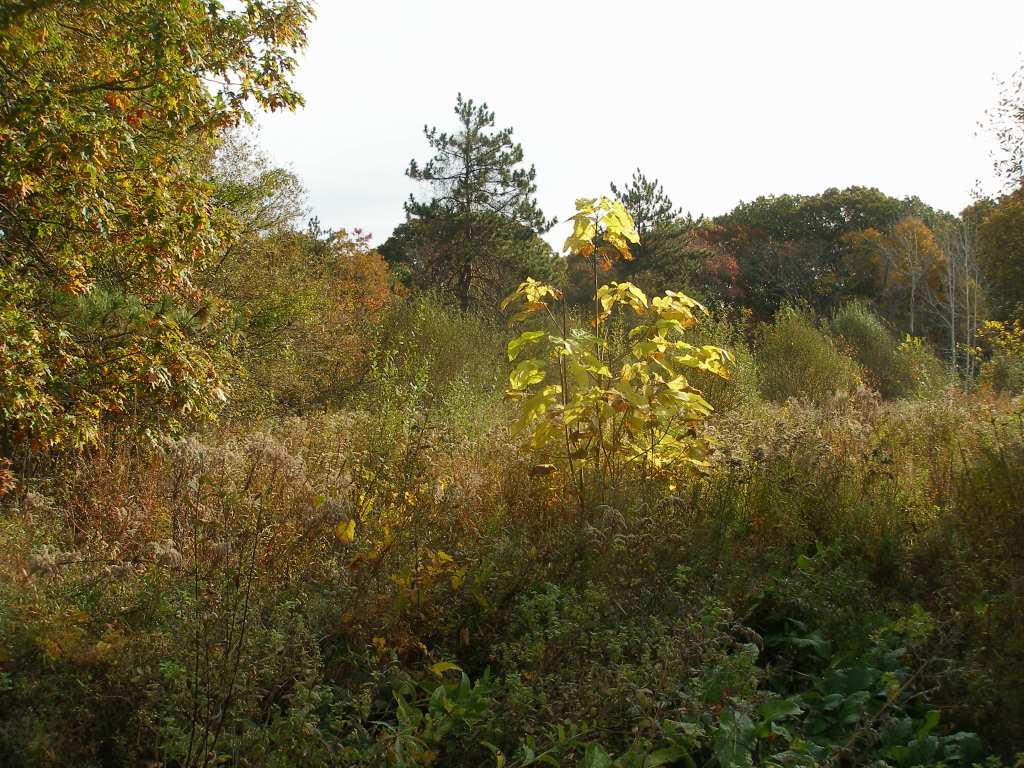
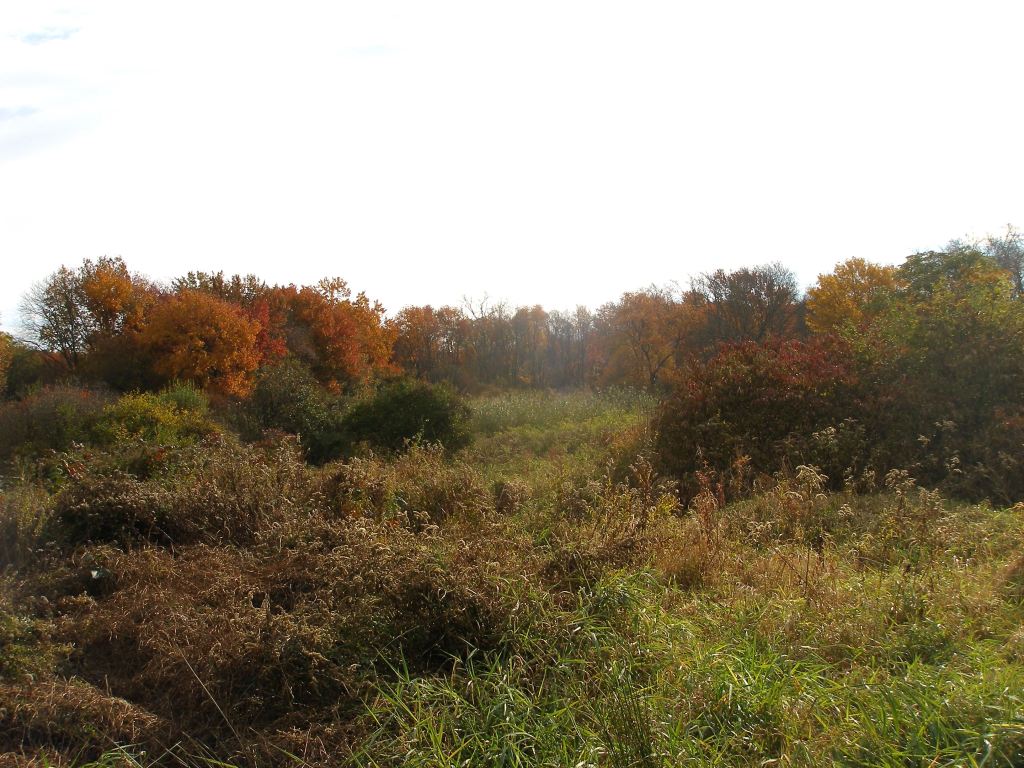
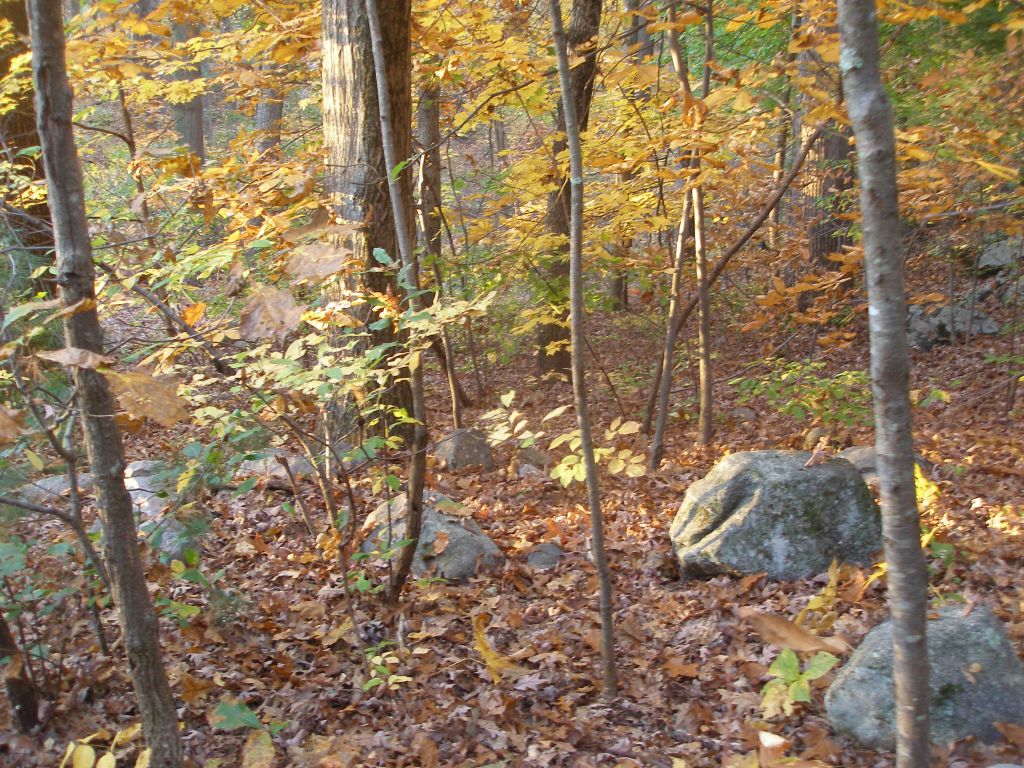
I have noticed that the colors this fall have been a bit different. While there are fewer trees or plants with deep purples and bright reds, there is a richness. It does not feel like something is missing. More like under the surface a dreamy depth has been added. And it is all so welcoming – like you could curl up and take a nap in the soft colors’ warm embrace.
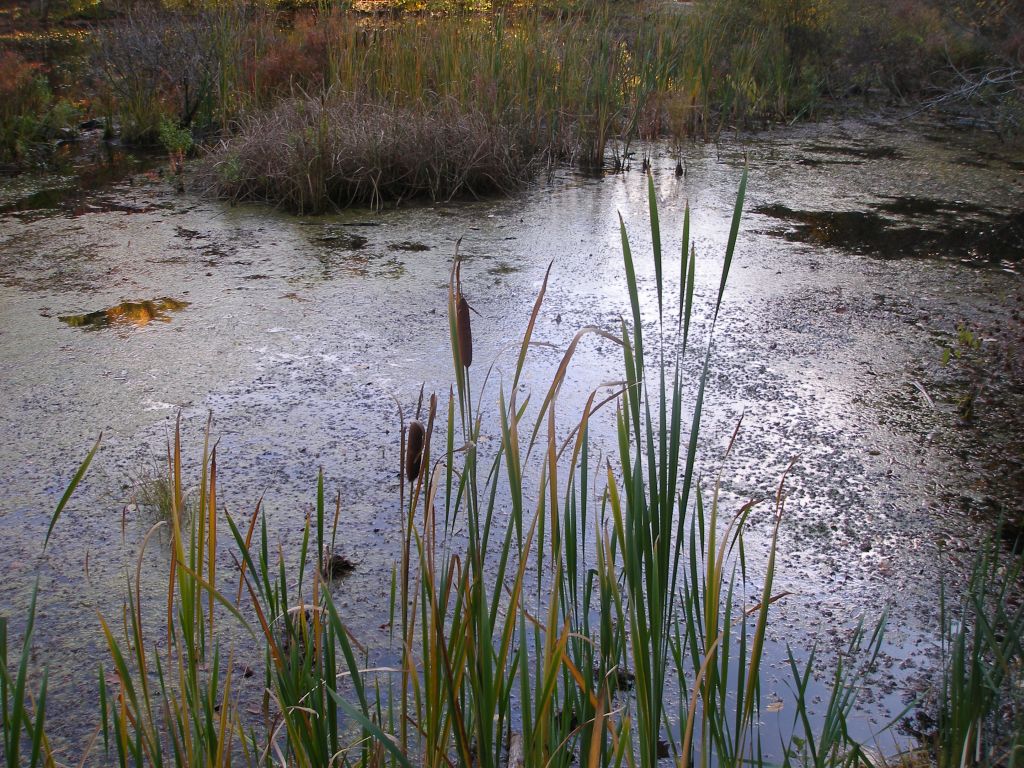
These images were taken in the last few days at Menotomy Rocks Park in Arlington, Massachusetts USA with its paths, woods, pond and outcrops, as well as in nearby Lexington. Besides woods, Lexington’s Dunbar Meadow conservation area has truly spectacular wetlands and meadows.
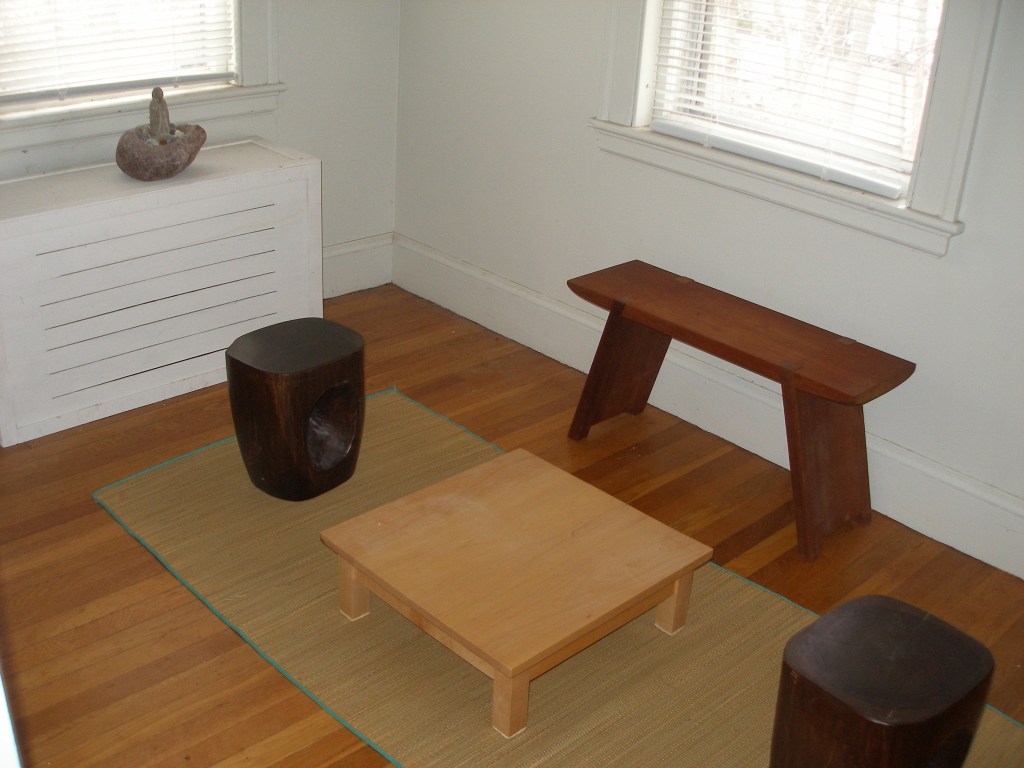
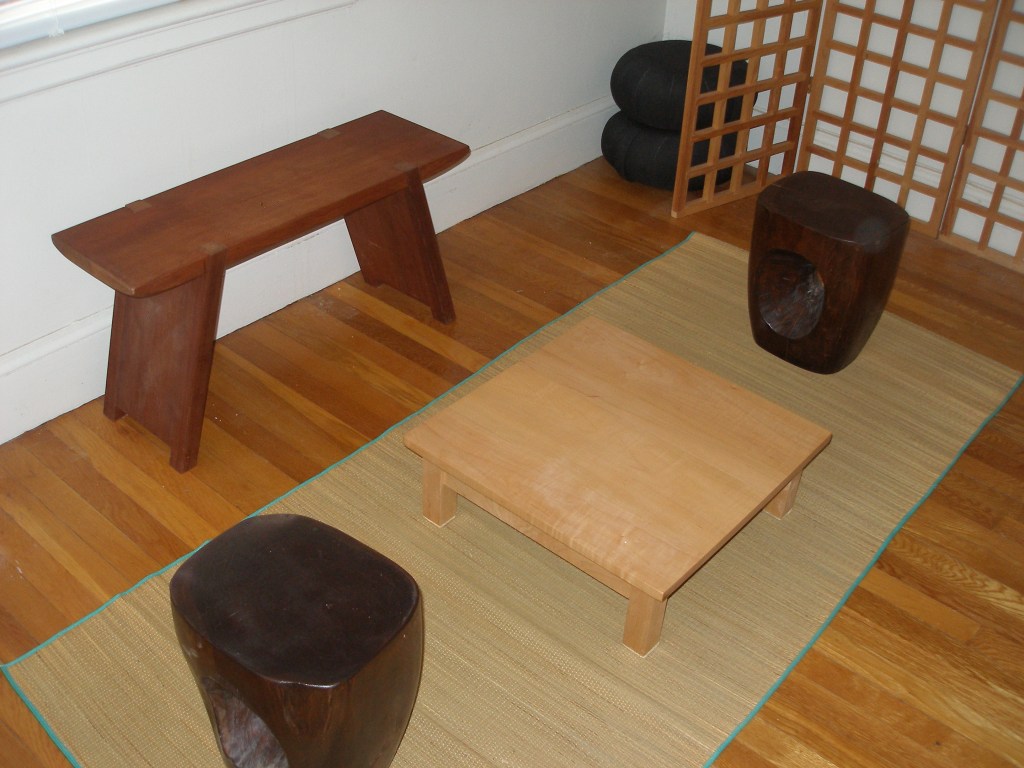
A number of years ago before COVID changed our world forever, I set up a tiny room as a place for meditation and for sharing tea. Each morning, I would go to that room, sit on a stool facing the window at one end and say “Thank you for what is needed when it is needed.” Then I would sit on the other matching stool, face the interior wall and say, “Thank you for the peace and strength that is always available.” I did this every morning for several months.
I realized there was an aspirational quality to all of this.
Joseph Goldberg says In Mindfulness; A practical Guide to Awakening, on page 384, “the consequences or results of an action are conditioned by the moral qualities of both the actor and the recipient of the act.” In this case, I was both actor and recipient and the practice seemed to both drew upon and reinforce my wish to live in ways that encouraged openness and compassion in myself and others.
There was a shift. I began to sense I was in a dialogue with the universe. I took the various forms of support that found me as signs I was on the right track with a project. It was easier to see when I needed to do some hard internal work on what might be getting in the way of my dreams. Just saying “peace and strength” connected me to something much more powerful and larger than myself, and I began to see things from a less narrowly selfish point of view.
Now that the world seems so full of suffering and fear, personal mindfulness practices, like this one, might be even more relevant. And first of all we need to stream ourselves and others all the compassion we can muster, so we can see that there are still opportunities available to take action that can make a positive difference. This can be quite close to home. In times of increasing crisis, simple things like a hug, a listening ear, or remembering to take some quiet time for ourselves can make a world of difference.
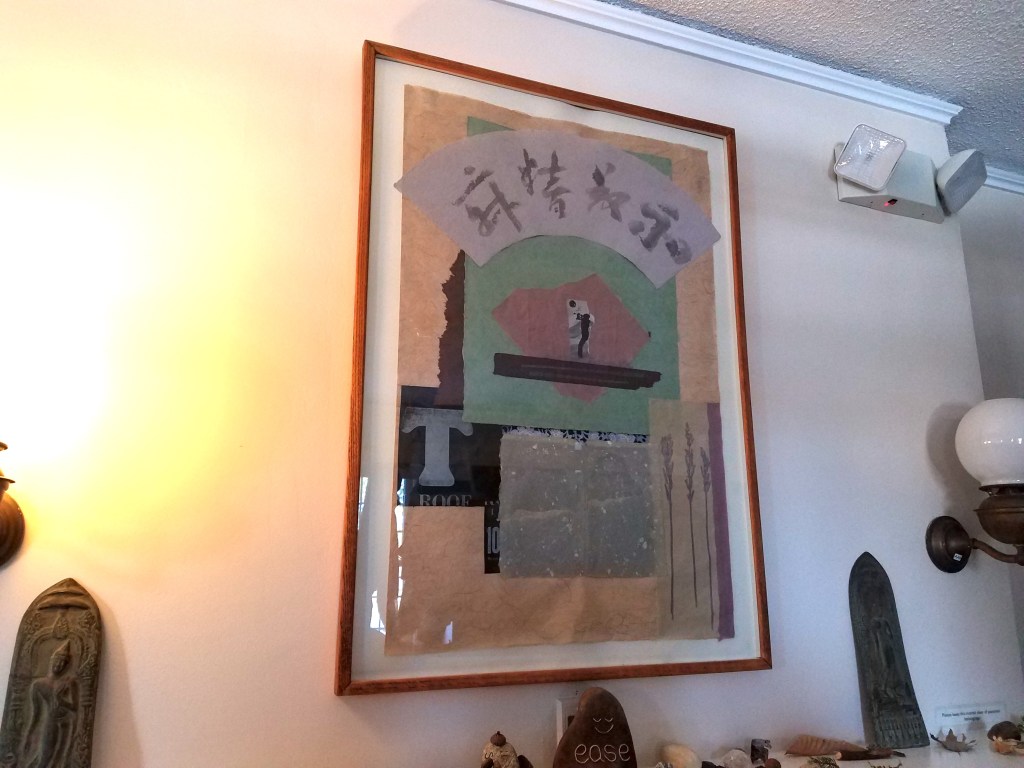
Toward the end of a silent retreat I attended, I saw the picture above hanging in the coatroom of the Insight Meditation Retreat Center in Barre, Massachusetts, USA. My Japanese tea ceremony teacher, Giselle Maya, confirmed my suspicions that she was the artist who had made that collage. She added, “I love that place and all it gave to me, all I learned in many many retreats, dharma talks, and interviews.”
I had just read the wonderful stories about Dipa Ma in Amy Schmidt’s book, Knee Deep in Grace, the Extraordinary Life and Teaching of Dipa Ma. Dipa Ma’s spirit seemed so powerful that it might still be a force actively influencing events long after her death. When I asked if Dipa Ma had been at the Barre Center when Giselle was there, she said, yes and added that “Dipa Ma was a very kind woman.” Perhaps Dipa Ma’s influence was present in the patient and kind way that Giselle taught her students the exacting art of Japanese tea ceremony.
As to my own experience on retreat, I had ample opportunity to explore feelings of familiarity. It became clear to me that while what is familiar may offer comfort, it can also be an illusion. It can be associated with a harmful false story that we take as true. On the other hand, familiarity can be a trailhead to learning something fundamental about what it means to be human. Some forms of familiarity were “just in the air” like the embodied strength of the wise teachers who instructed us, or the spirit of warm connection that was much in evidence as we joined our voices for a morning chant on the last day.
There were also moments of laughter and play during the retreat. Childlike play and silliness can cut though a lot – bringing sympathetic joy right into the middle of the strains of life – transcending familiarity and acting as a source of delight and inspiration. While being on retreat provided ideal conditions to explore my reactions to what I found familiar, I could find no reason to stop exploring this fertile ground in my everyday life.



























 Radiant Refuge