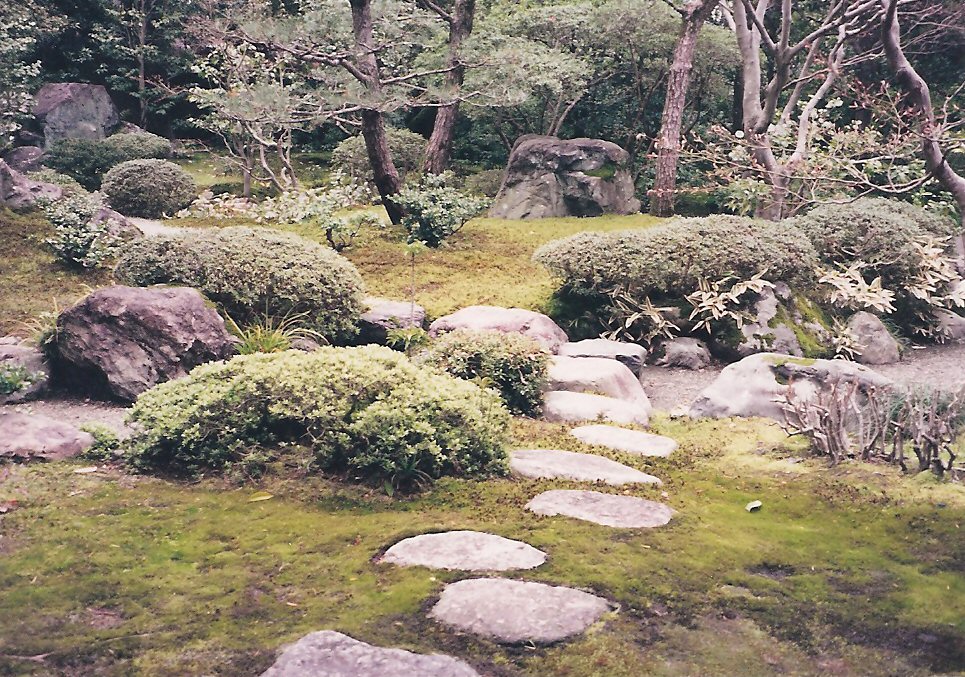
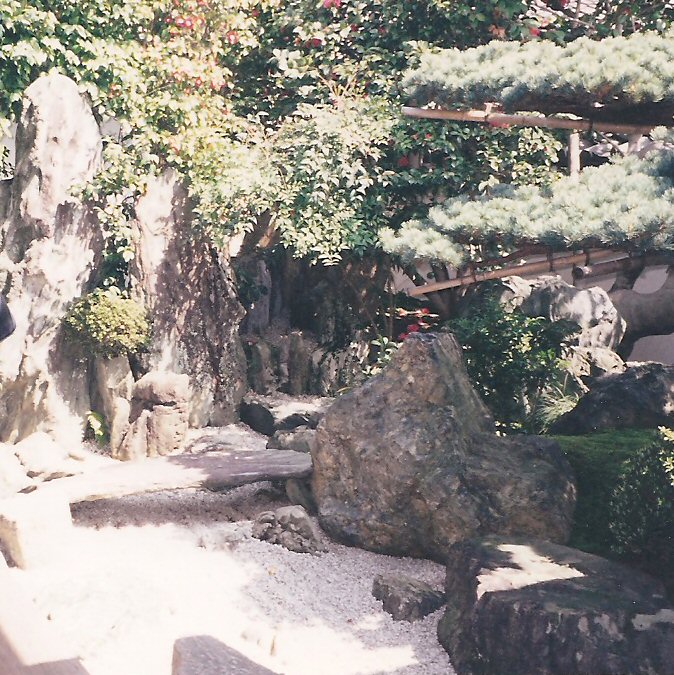
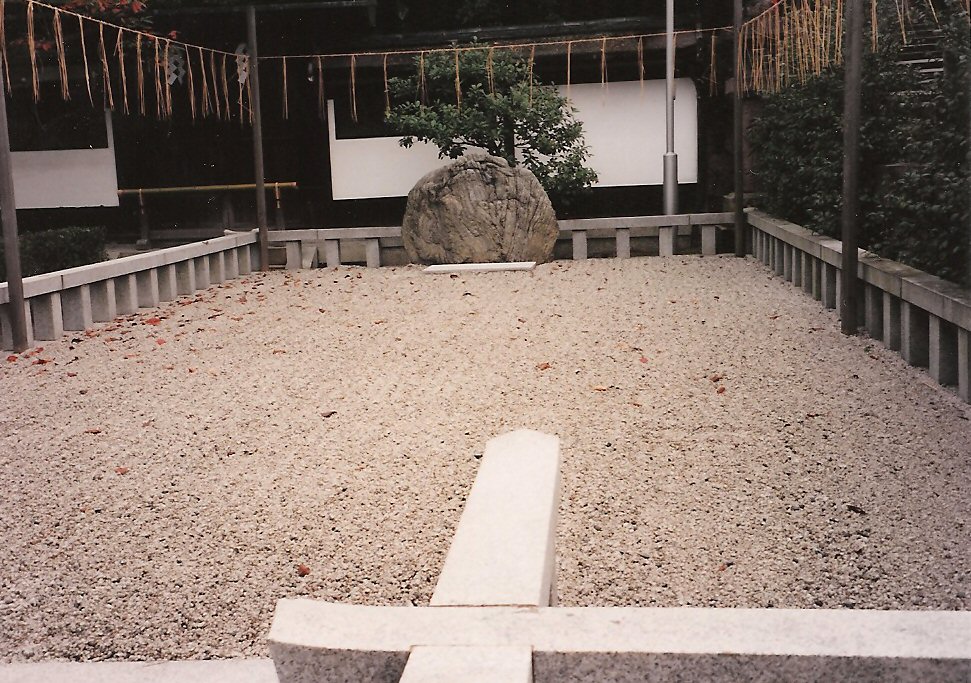
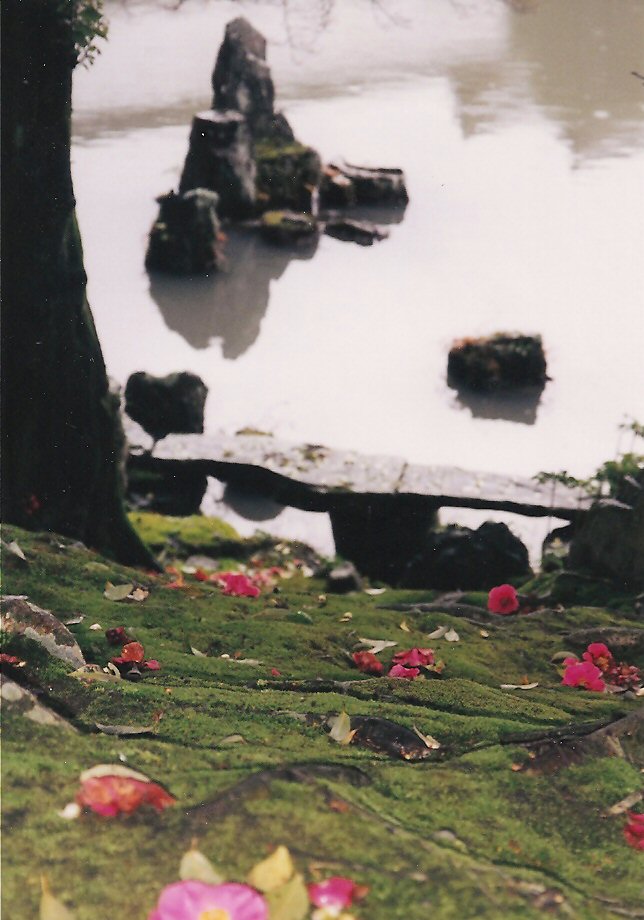
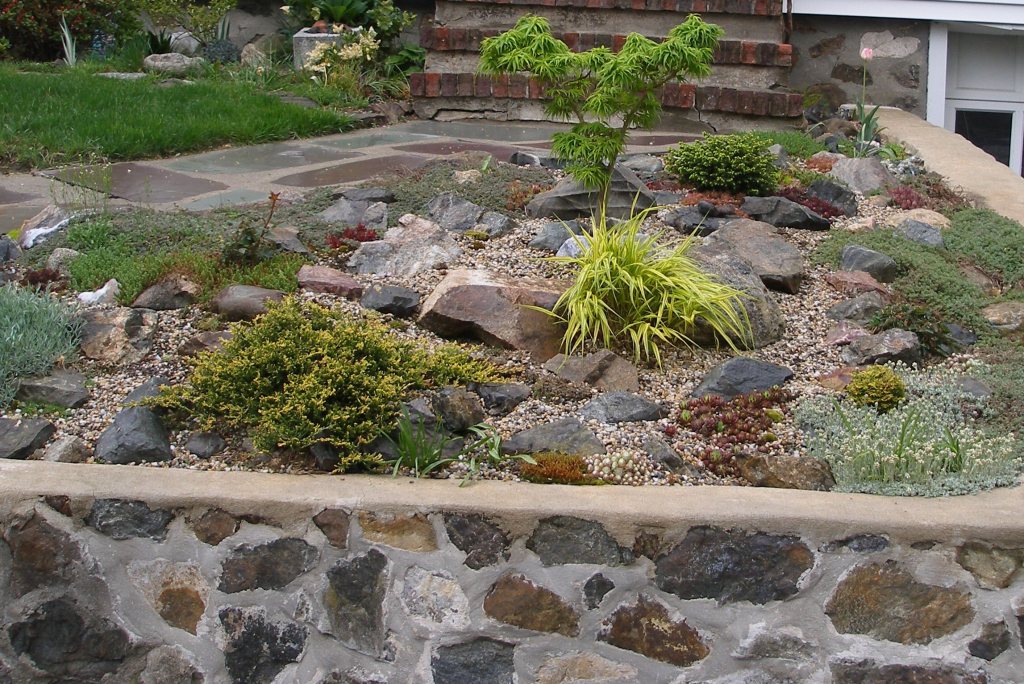
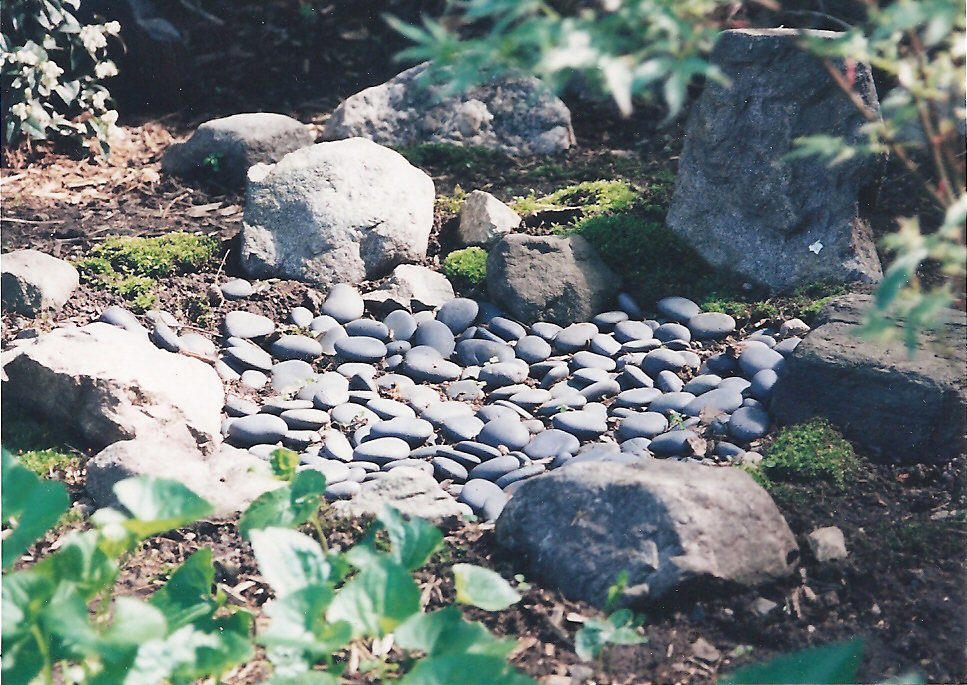
Rocks have long been appreciated in Japan. They appear in gardens and are displayed like sculptures inside as well. They often seem to have a life of their own, even when they are not covered in moss or lichens, and are especially apprecated when they show the effects of weathering.
In these times of dramatic change, that rocks will outlast us – their seeming permanence, has a special appeal. Our human lives are brief. While I know whole continents are moving and splitting apart, to me the larger rocks can feel like ancient timeless guardians and I try to listen when they speak to me.
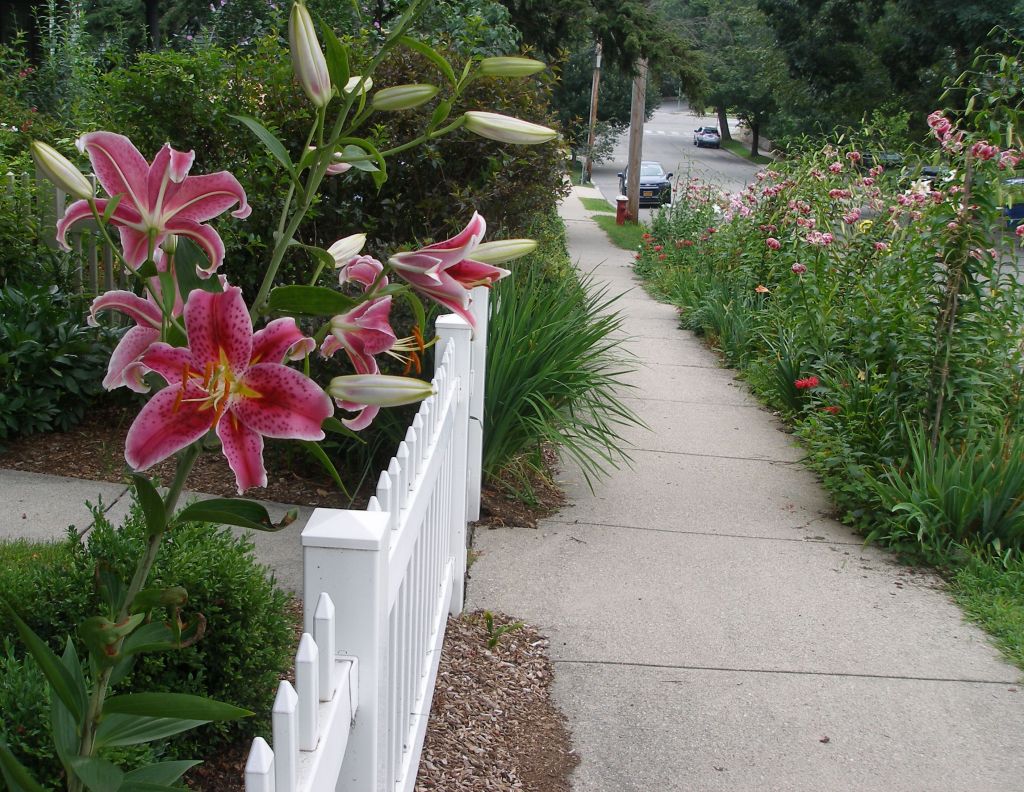
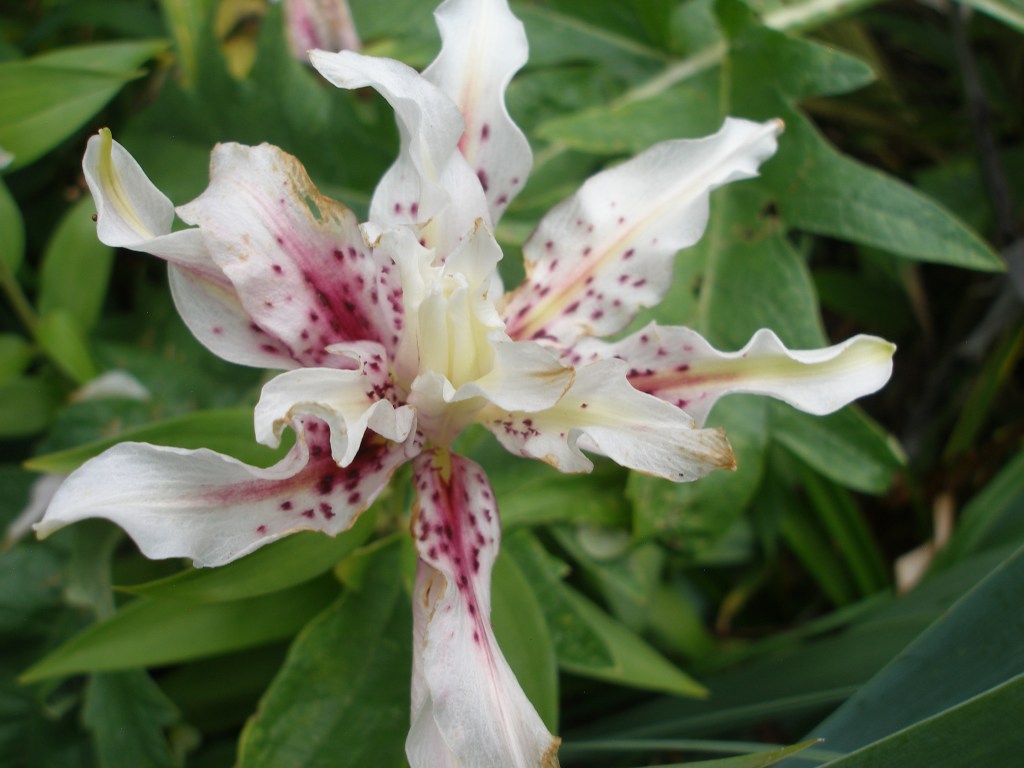
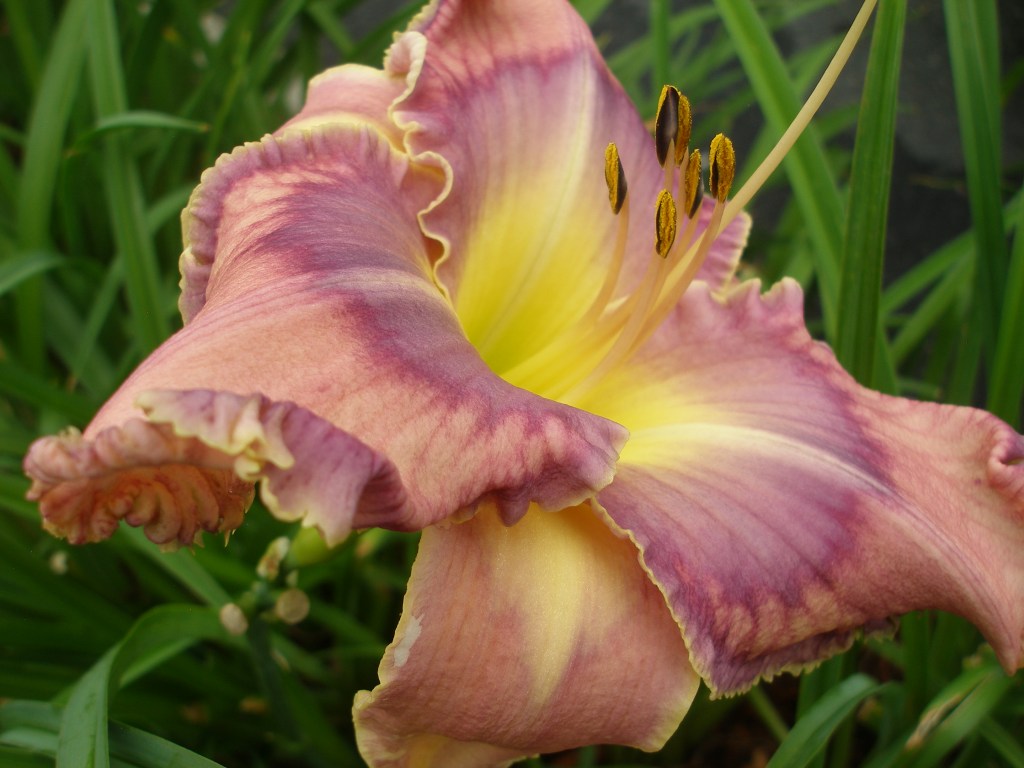
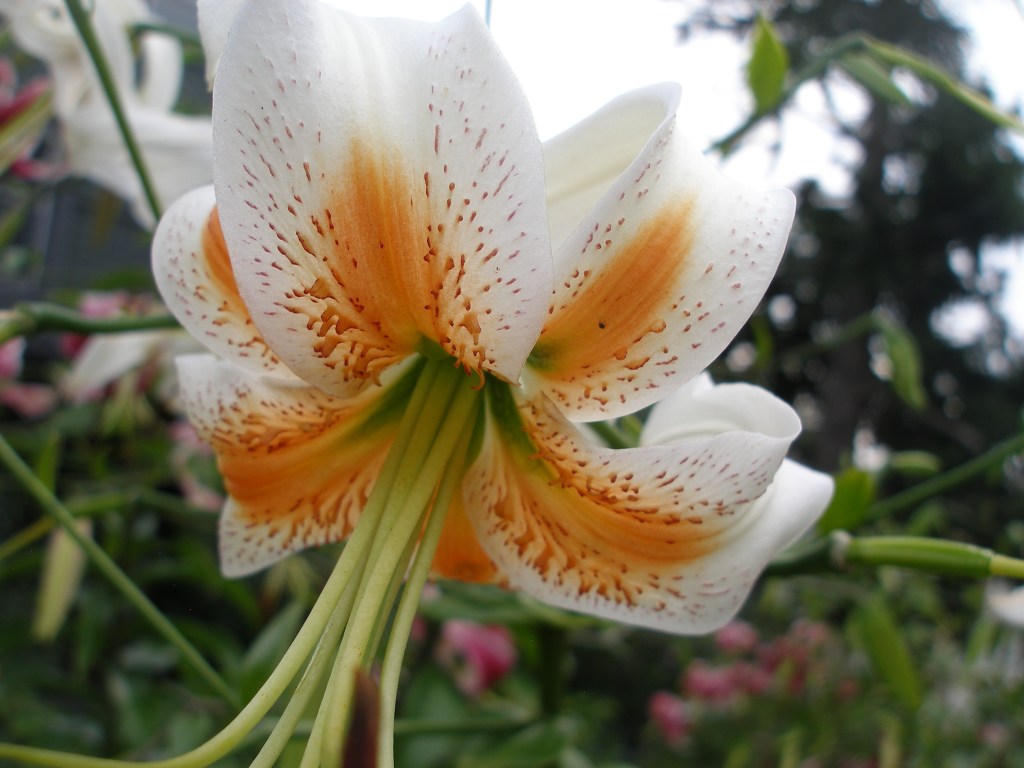
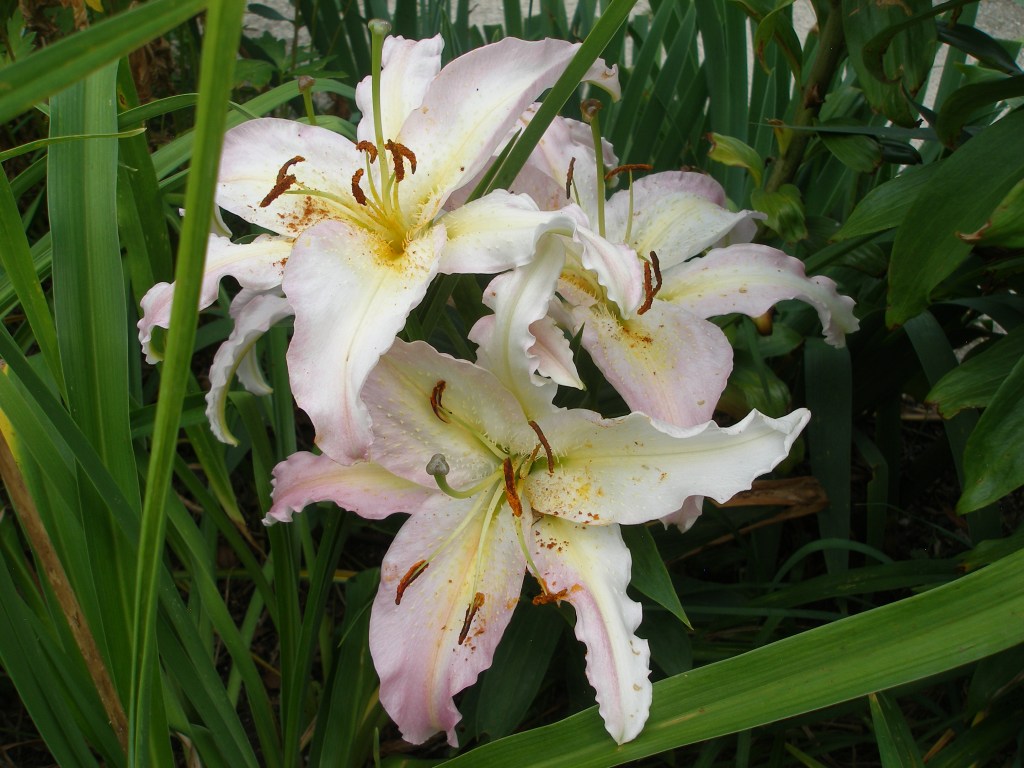
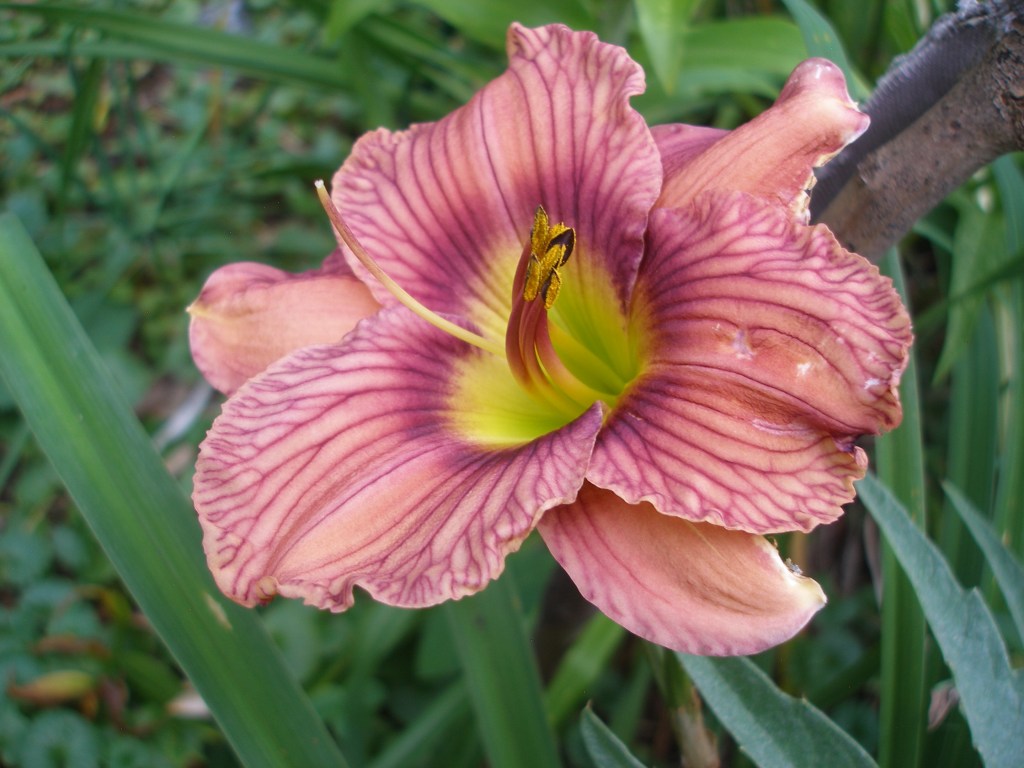
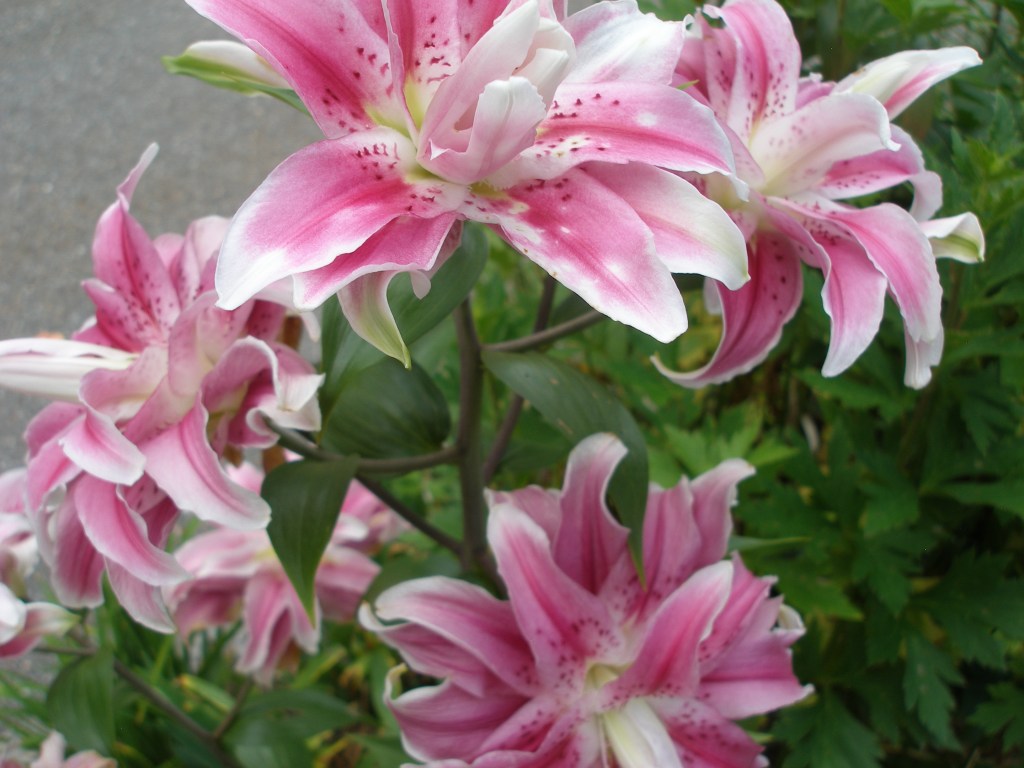
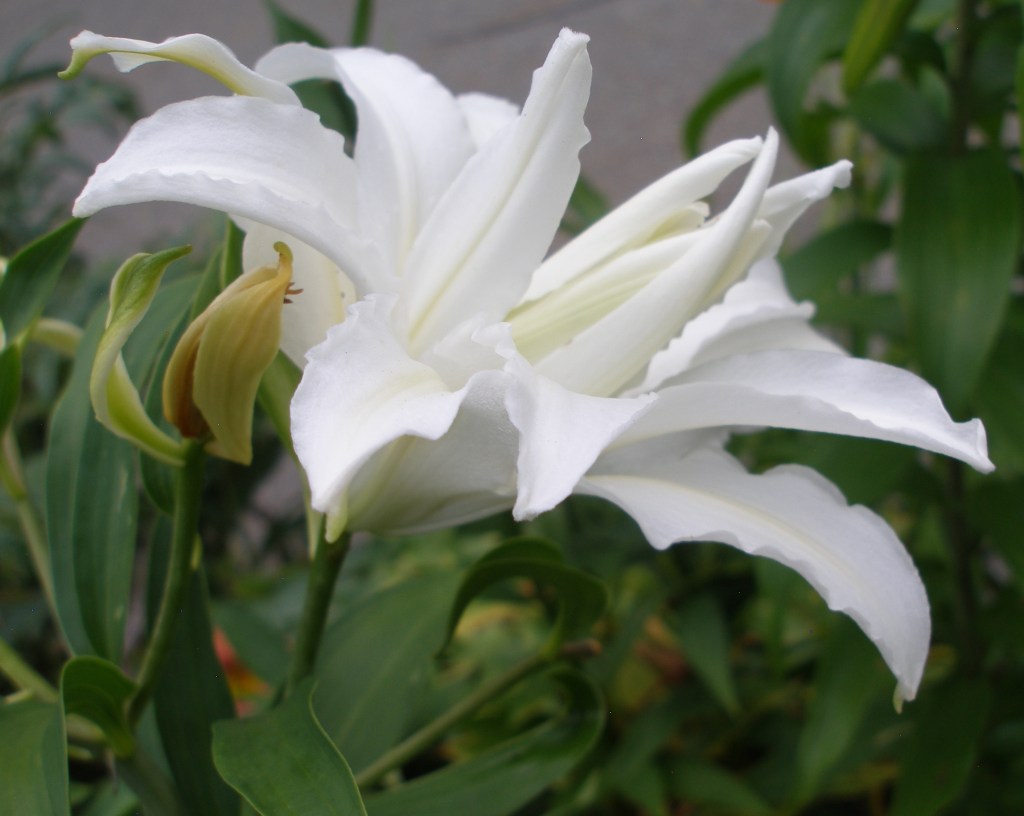
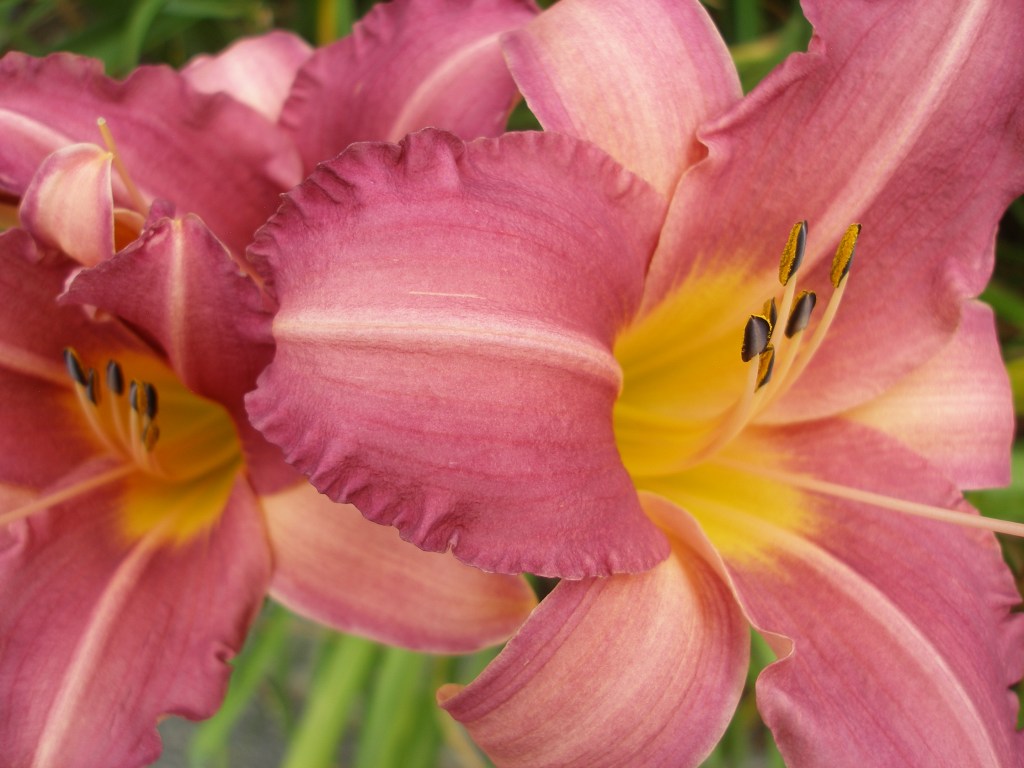
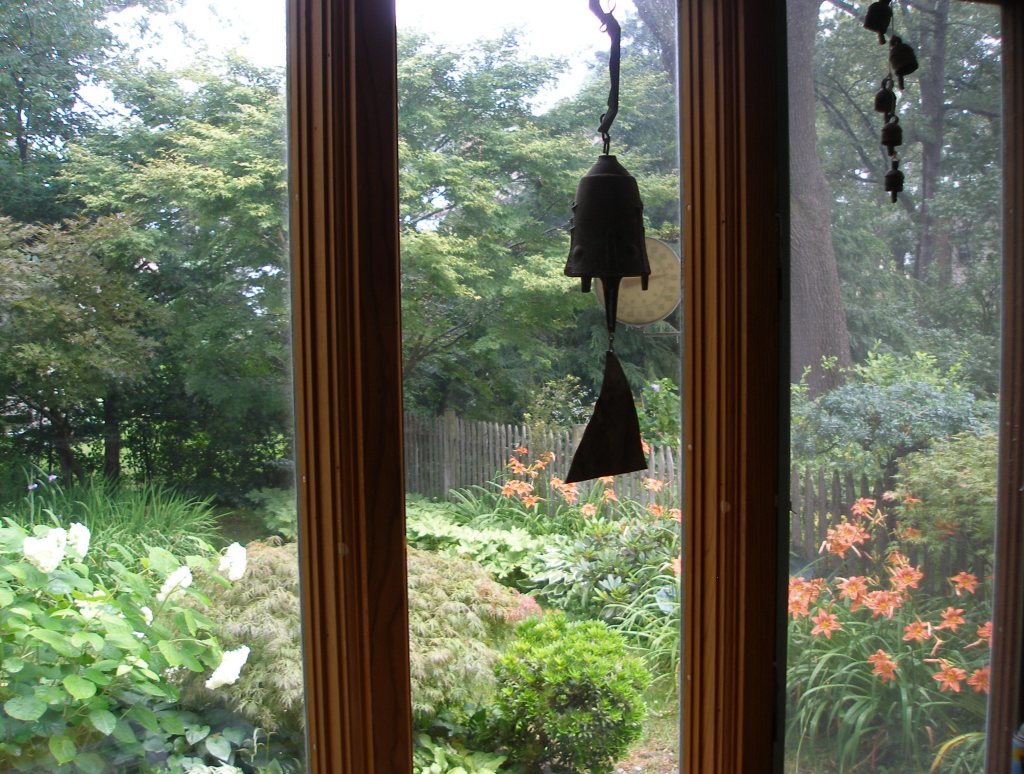
At first, I thought it might be the unusually warm days and all the rain, but lilies, especially the common orange day lilies (not true lilies) that were brought by early European settlers, had long graced my town. Perhaps it was just that specific gardeners had planted lilies where I could not help but notice their joyful spirit.
A woman told me that she was the gardener who had planted all the different lilies in the “hellstrip” by the sidewalk. She told me that she did not own the land where they were planted. I said I was sure the town would not mind, especially as she had carefully added stakes to keep the riot of color and form from flopping out into the street.
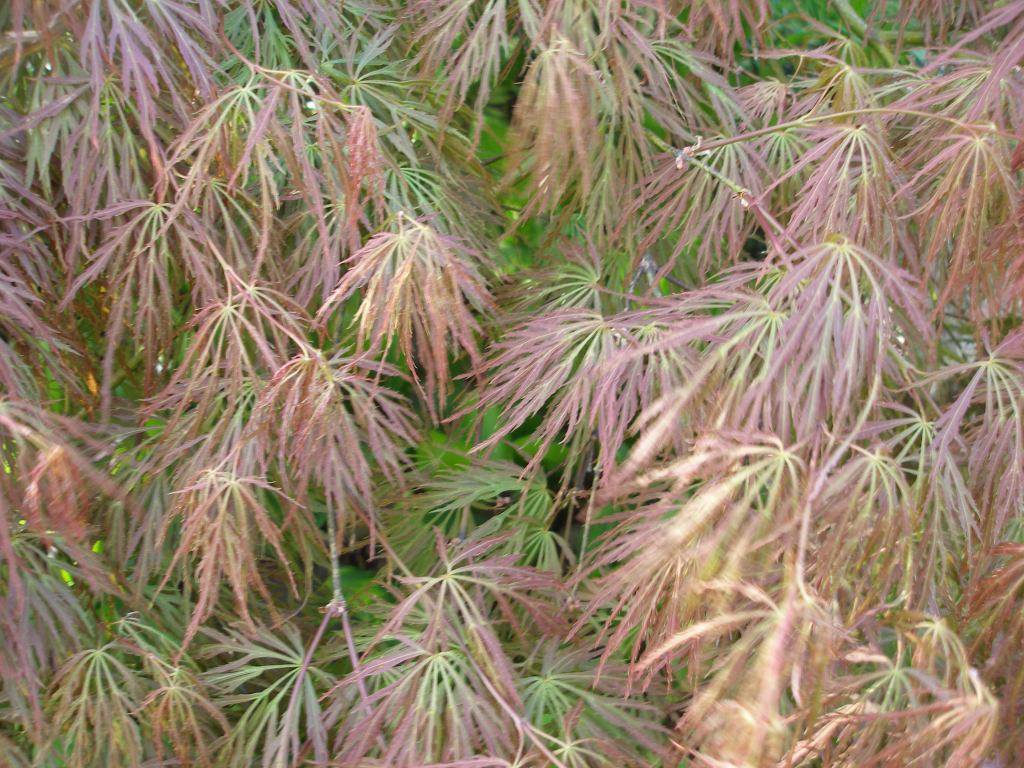
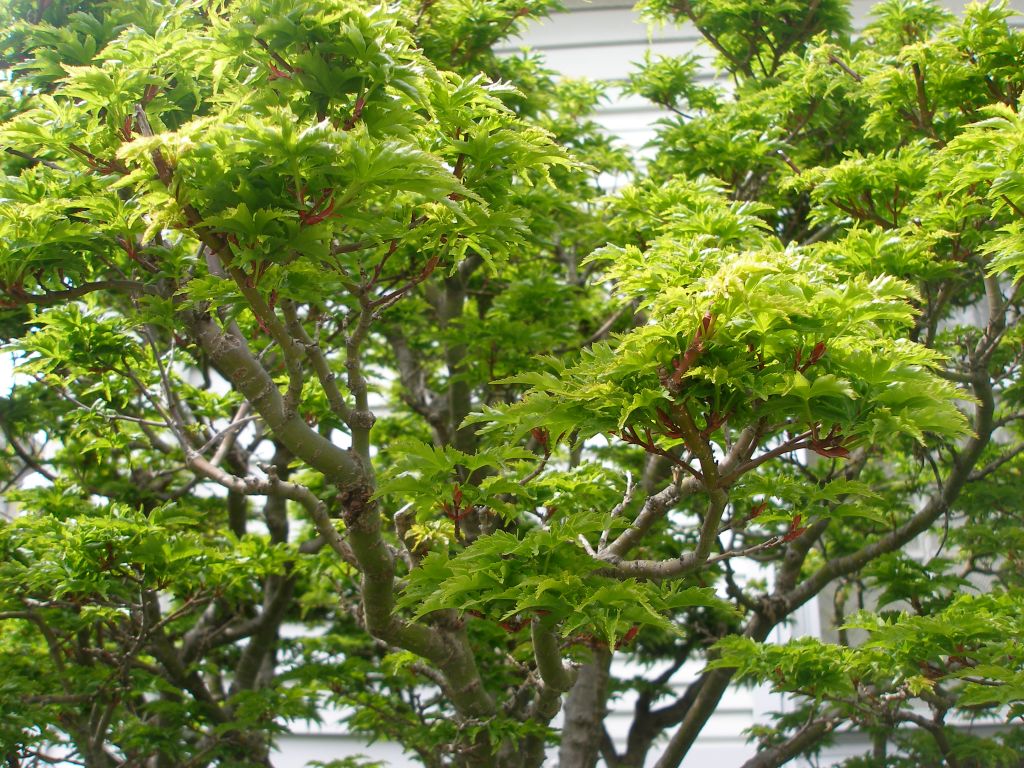
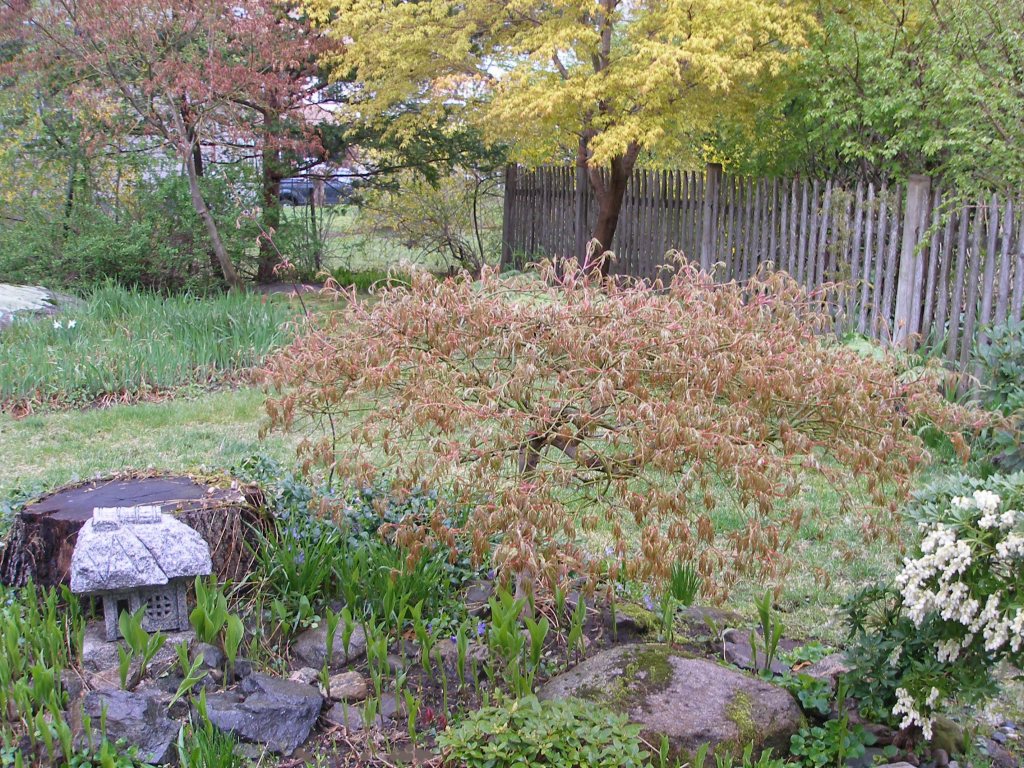
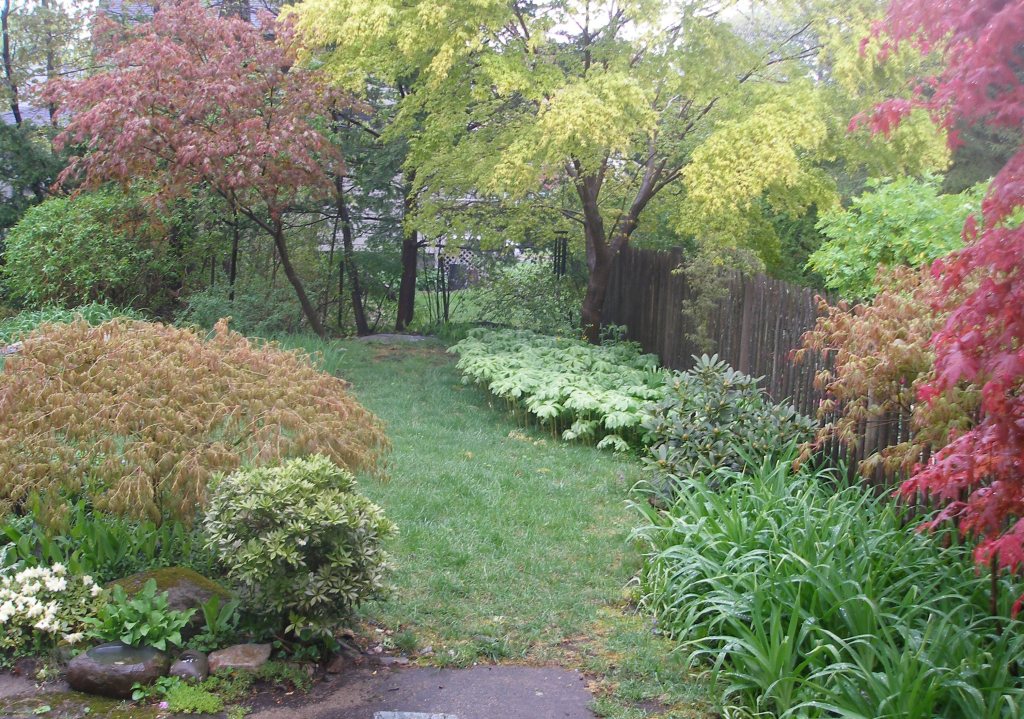
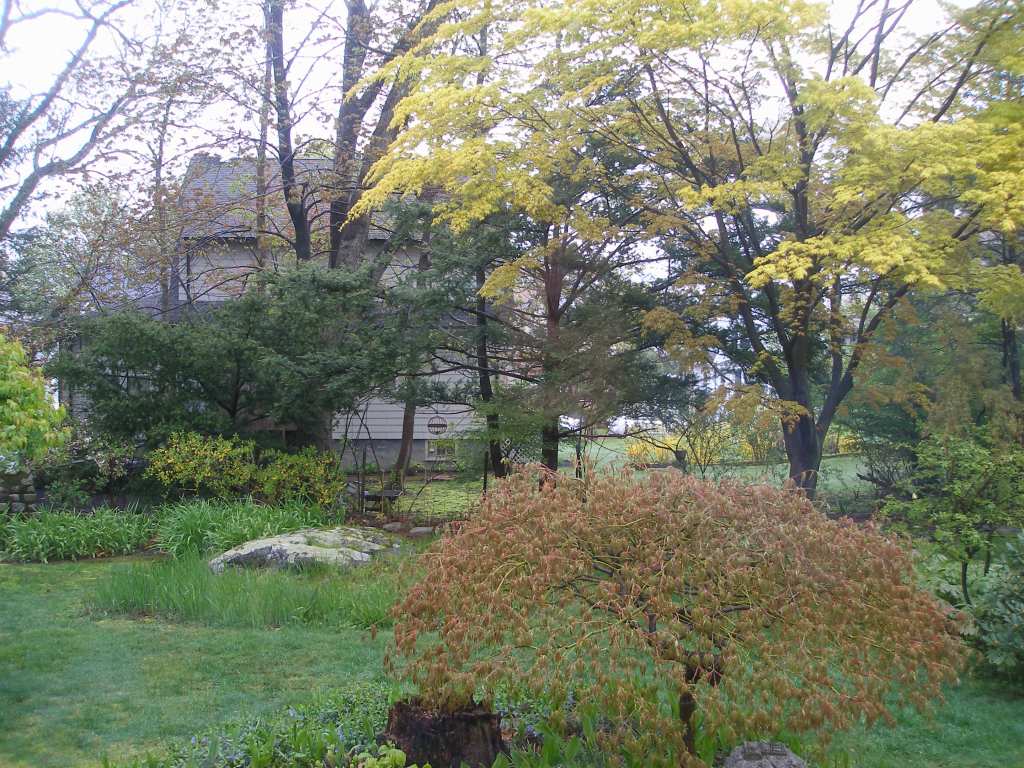
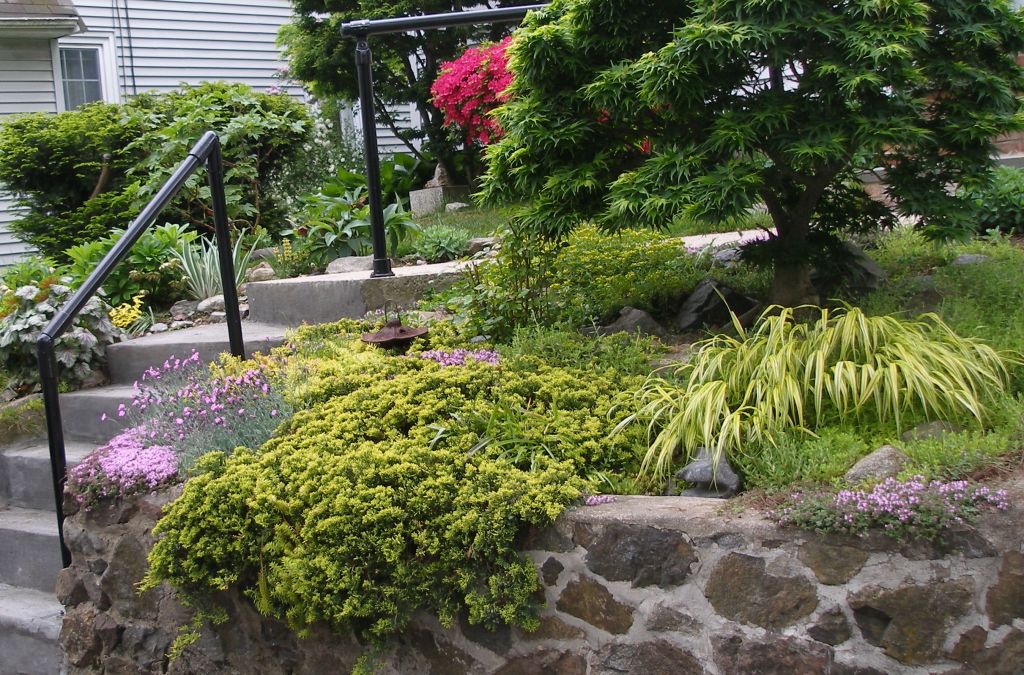
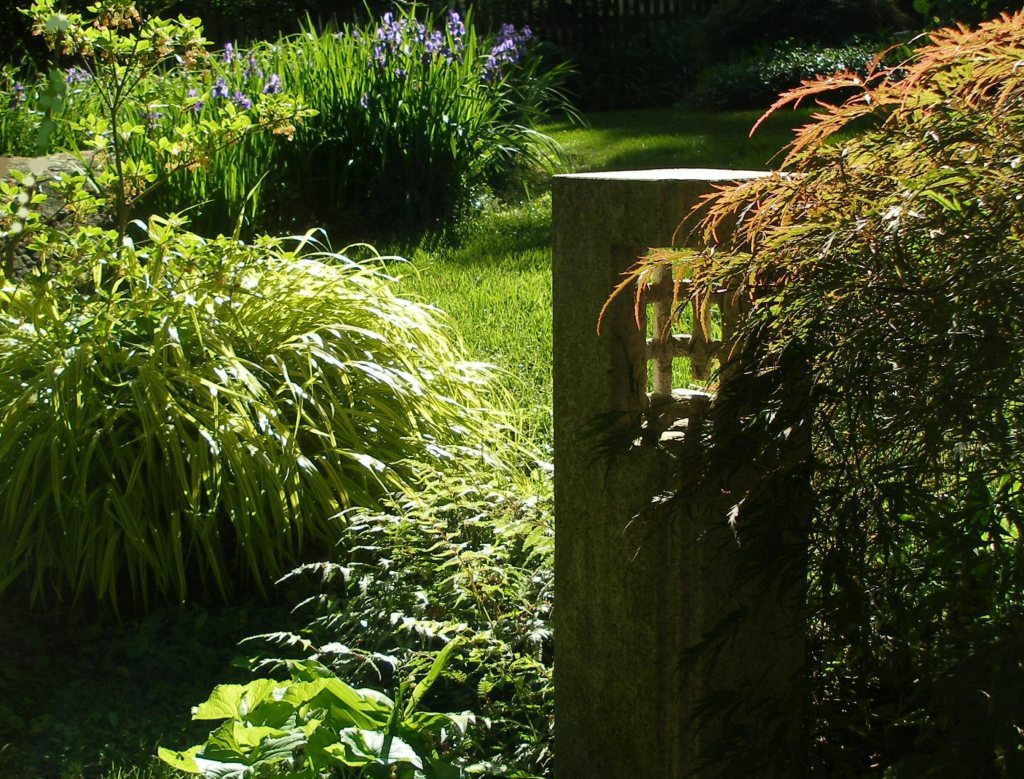
Japanese maple trees can have brighter colors in spring than in the fall with interesting transformations as tender new leaves unfurl or flatten their accordion pleats.
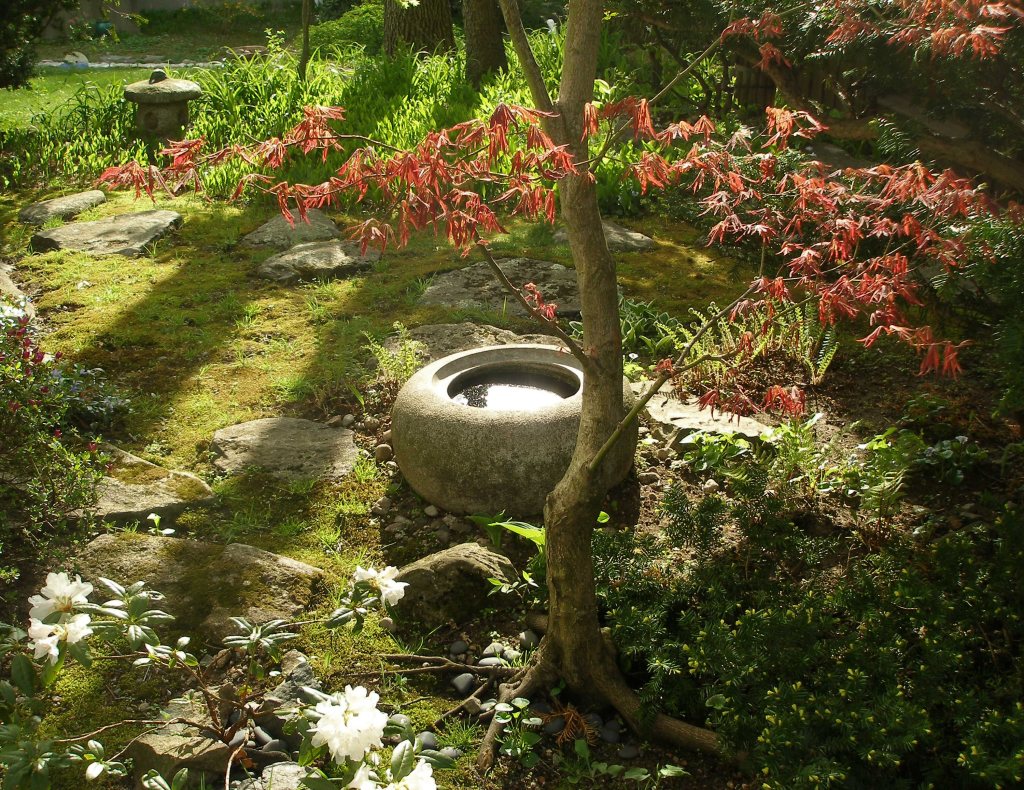
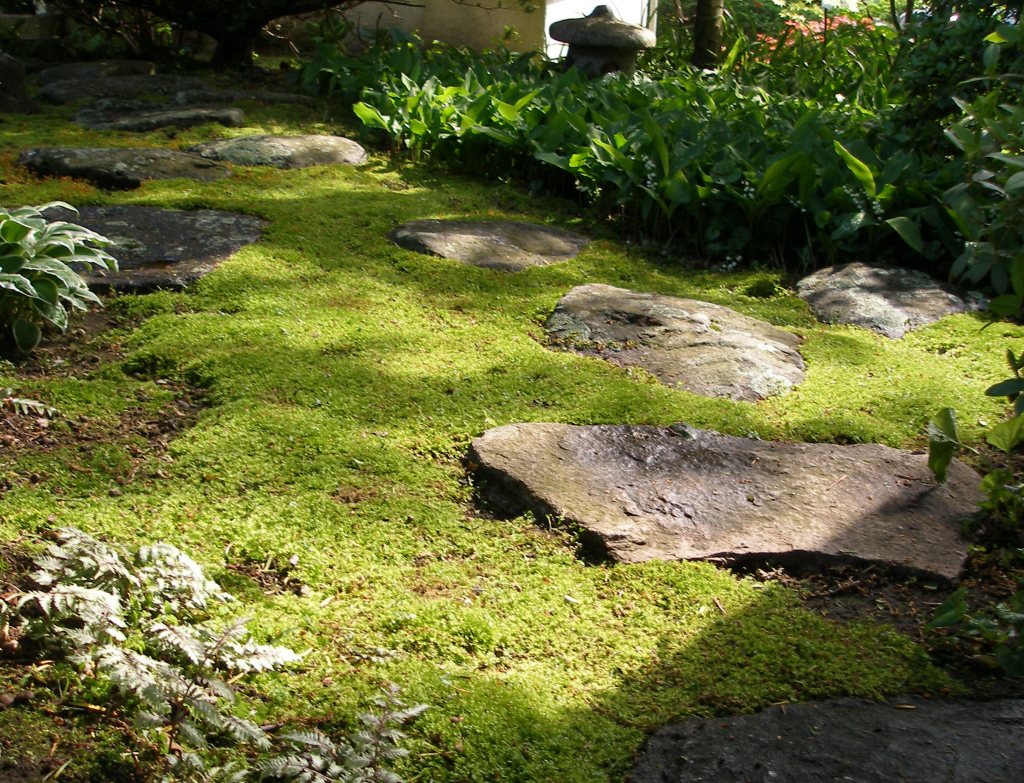
Like many Japanese gardens, my garden’s design keeps flowery distractions to a minimum so as to better appreciate the radiant moss, and in this season, the new maple leaves that bring me such joy.
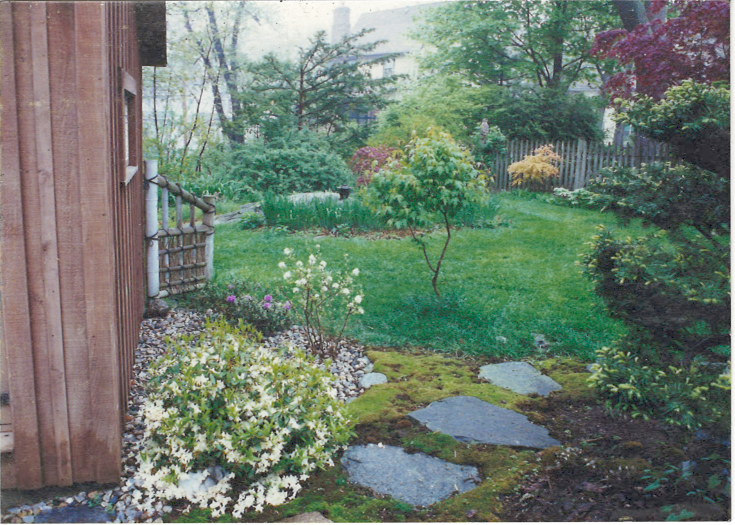
In a photo of my spring garden taken many years ago, the young Katsura maple glows yellow by the fence.
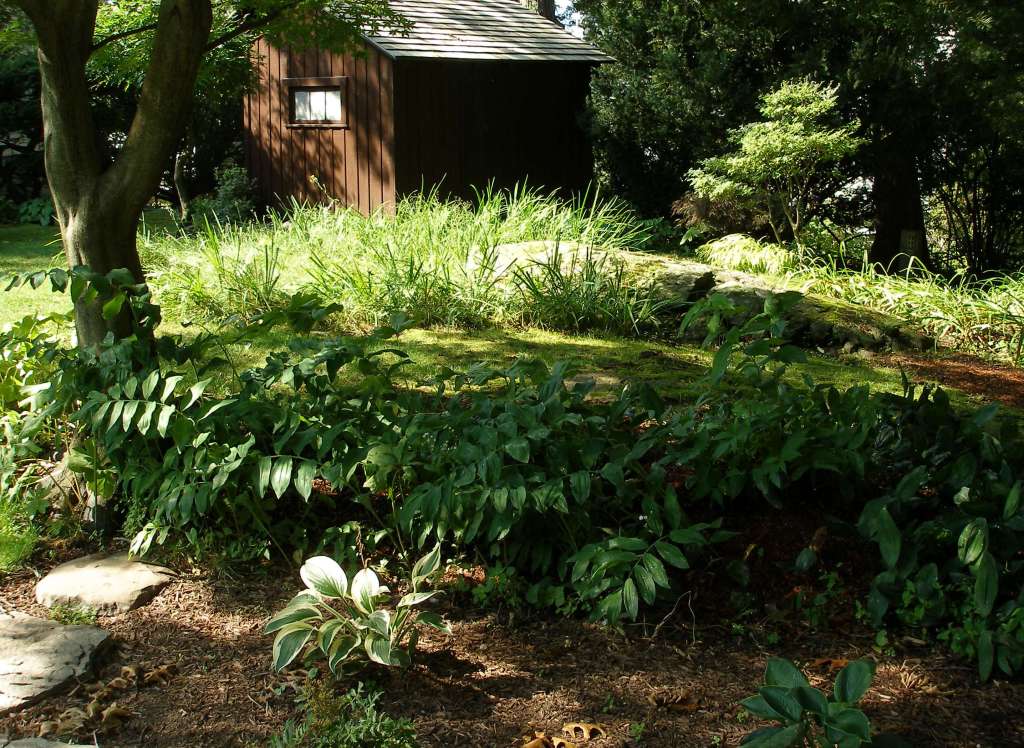
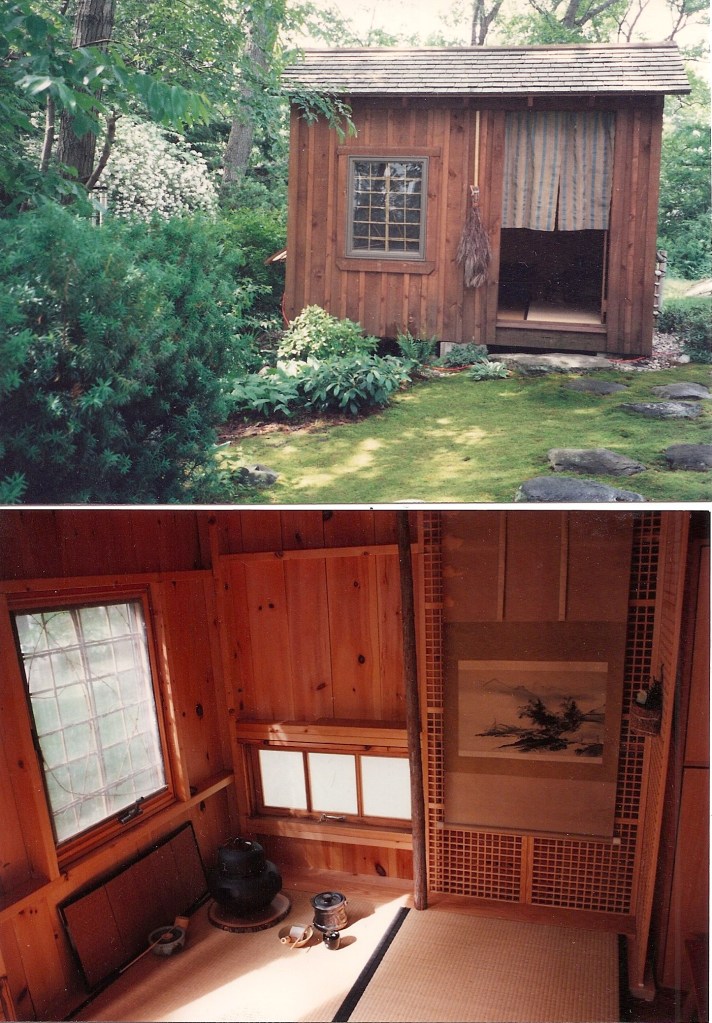
That maple would grow large to anchor the corner opposite the tea hut.
One learns with one’s hands and heart through the daily tending. A change might be required to retain balance and flow in a garden’s design. Some things should be left well enough alone.
Even as weather patterns shift, becoming more extreme and unpredictable, and nature makes changes, the basics should remain pretty much the same. As always, there should be joy in attending and responding not from outside, but from within – as part of the continuing dance of life.
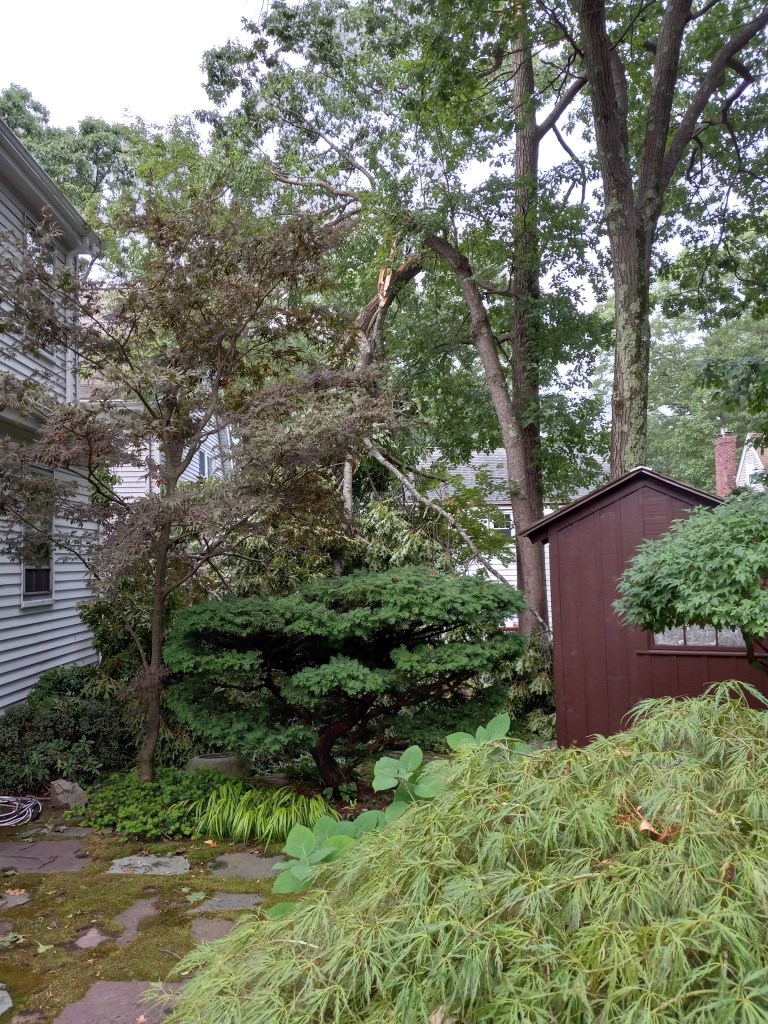
I was working in my upstairs office when I heard a loud cracking sound. Large branches passed by my window on their way down followed by a thump. Top sections of two large trees had landed in my tea garden.
A tree company came out early the next morning with what they called a “spider.” This bright red machine seemed perfectly designed to do minimal damage to my neighbor’s yard as it raised a man up to cut sections that were secured with ropes and carefully lowered to the ground. The logs were then taken to a chipper, and the chips loaded into a truck to be hauled away.
After all of the noise, drama, and removal of a great deal of biomass, there was surprisingly little damage – just an easily-fixed bent corner gutter. The crushed ground cover would recover. So would the moss with a bit more water while it got used to having more light in the afternoon.
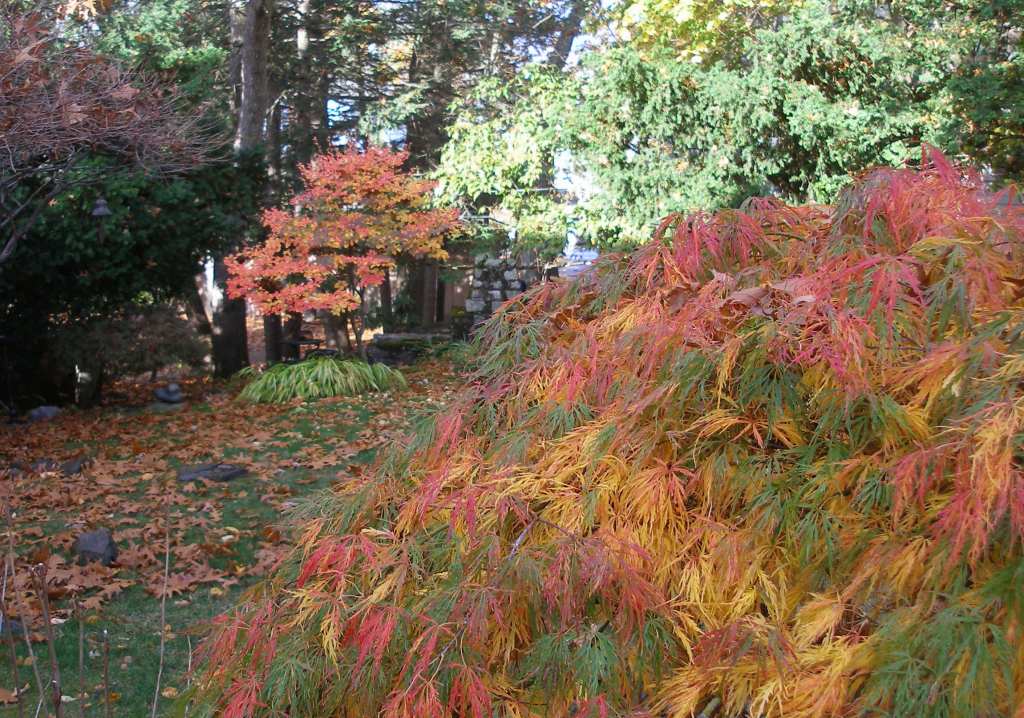
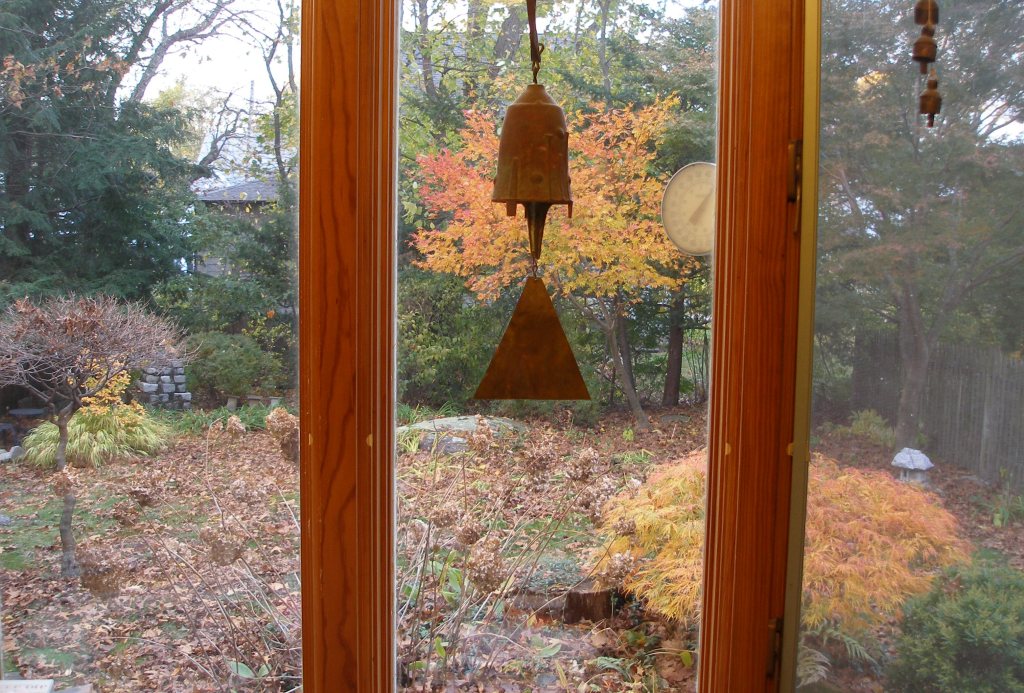
The fall colors were brighter in my garden after that. In fact, two plants put on a spectacular show as if to say, it’s about time someone noticed that we like more sun.
The Japanese tea garden or roji may appear to be a natural woodland path, but it is actually a designed transition to the tranquil world of Japanese tea ceremony. Tea gardens induce a spirit of openness with the tea ceremony values of harmony, respect, purity and tranquility expressed in nature’s asymmetrical design.
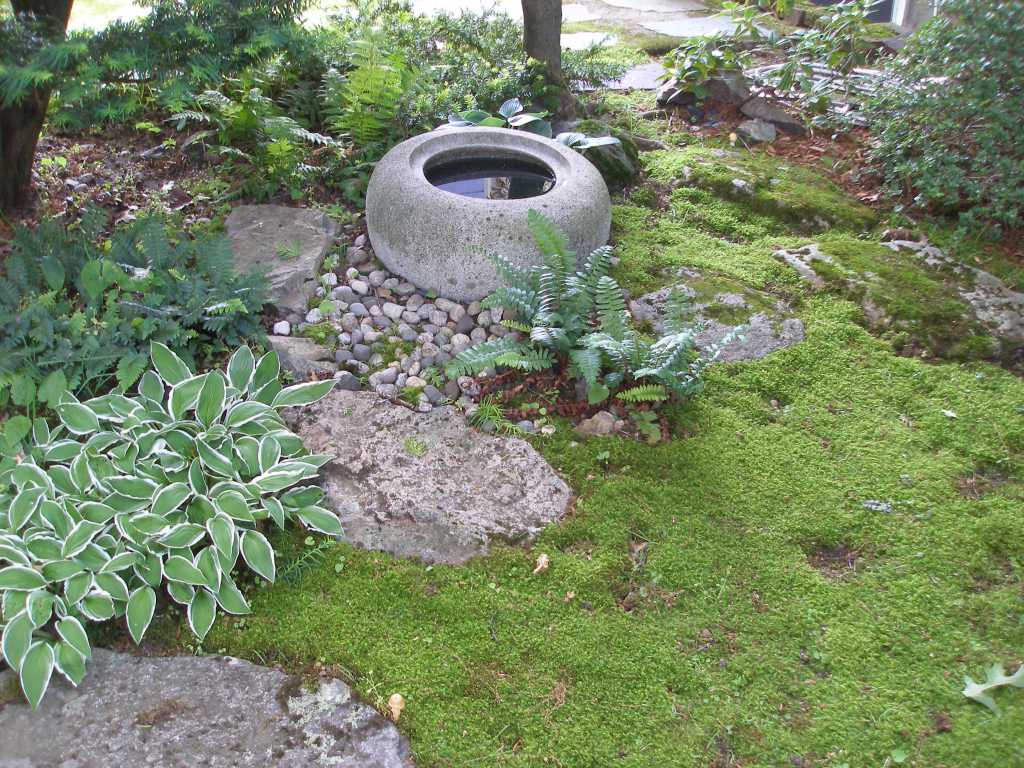
To tend even a very small tea garden is to place oneself into nature’s rhythms. As I water the moss, it puffs up and turns a deeper green.
Once, after I cleaned and filled the water basin and sprinkled water on the stepping stones as a sign of welcome, the cicadas began their evening song, as if they too, wanted to welcome my guests.
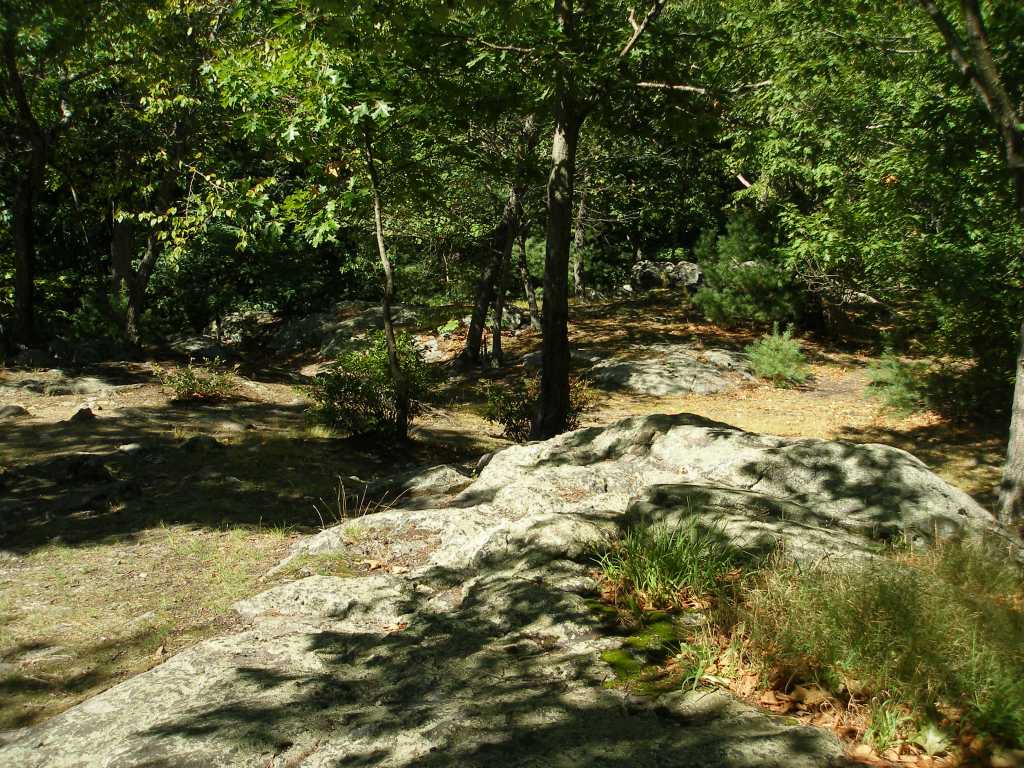
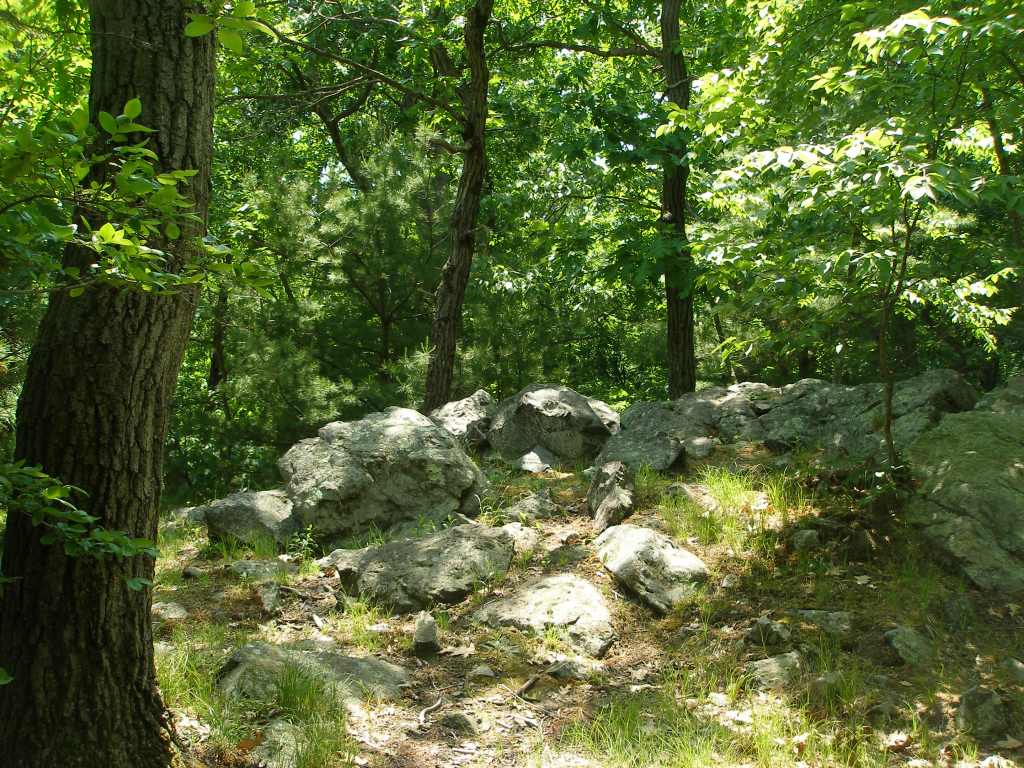
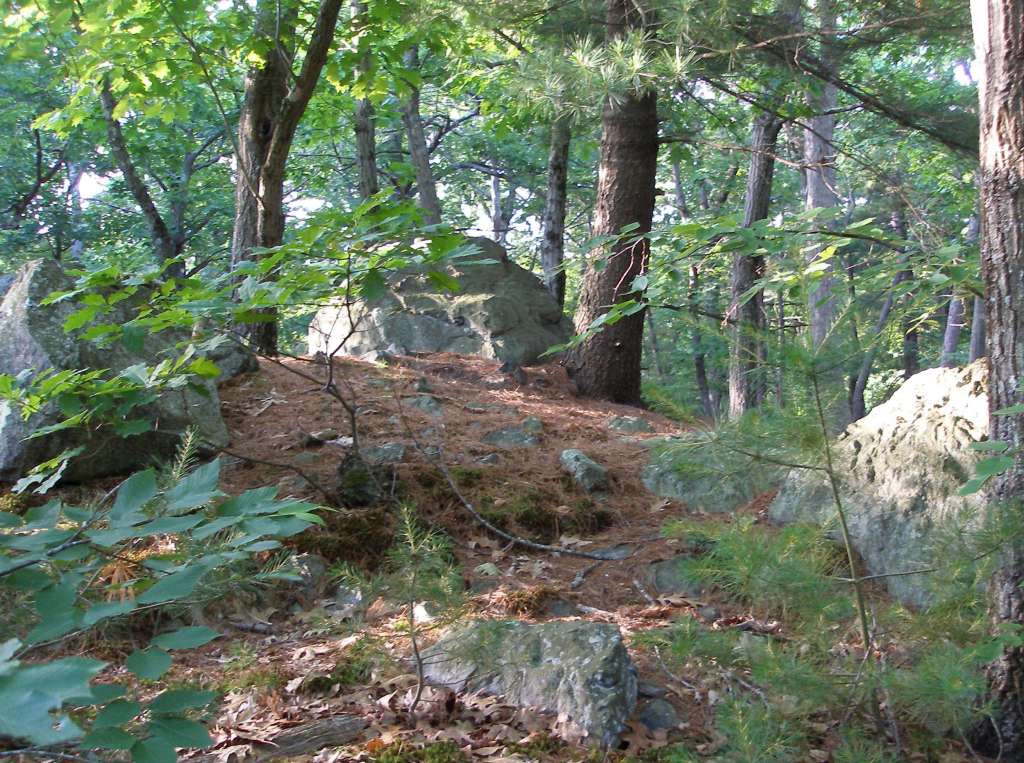
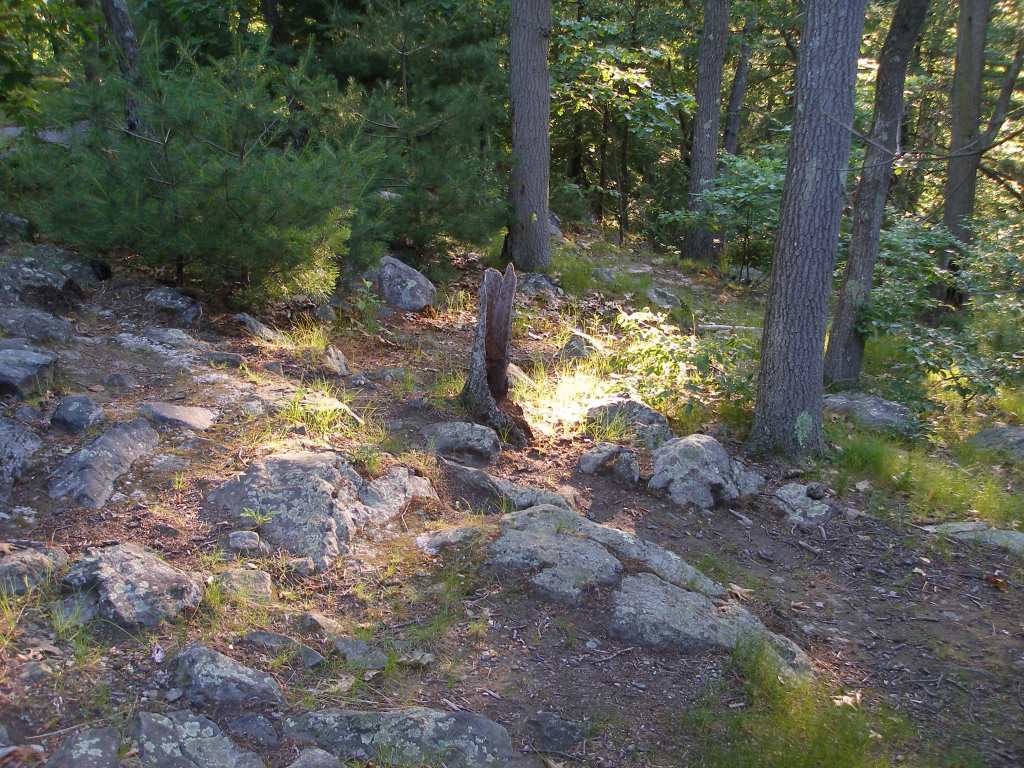
Arlington Heights, Massachusetts, USA where I live, like Boulder Colorado, and a number of other places, has rocks in all sizes. In fact, a major reason I bought the house where I live is because the turtle-shaped top of a large glacier-scraped granite outcrop was visible through the kitchen window.
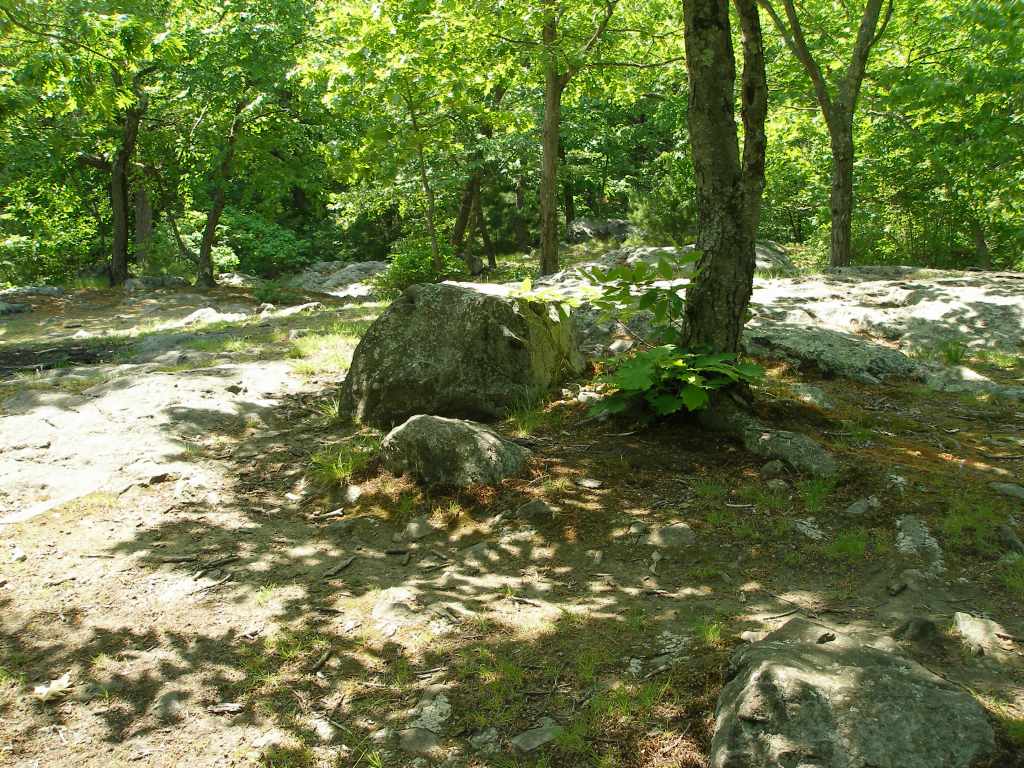
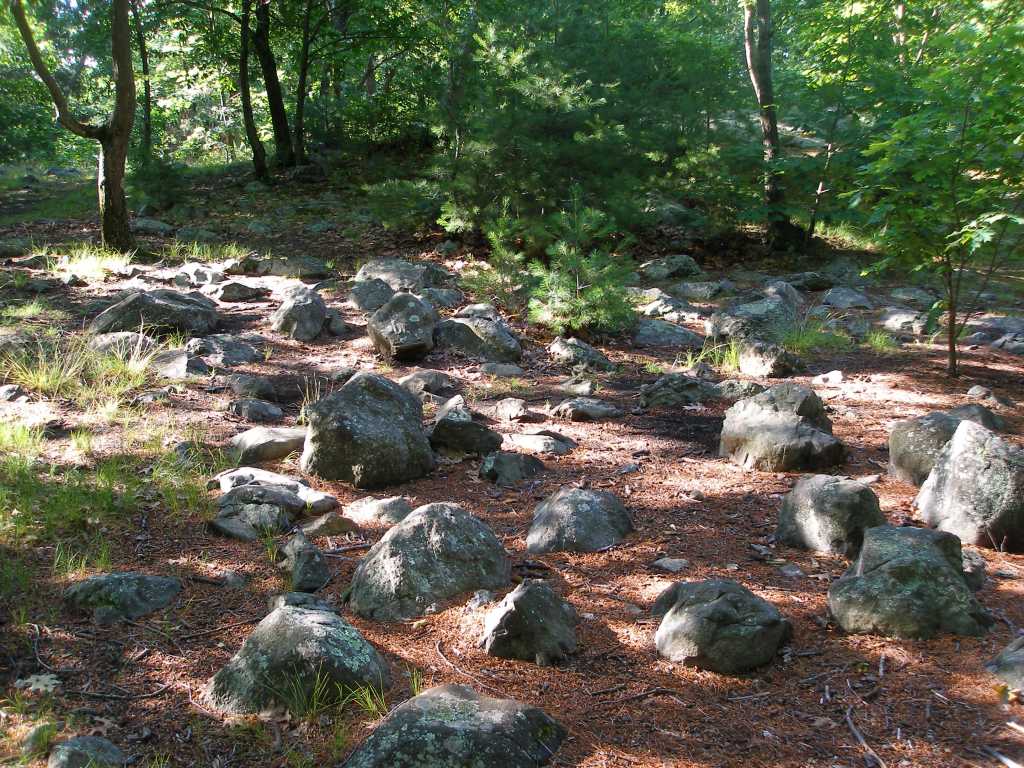
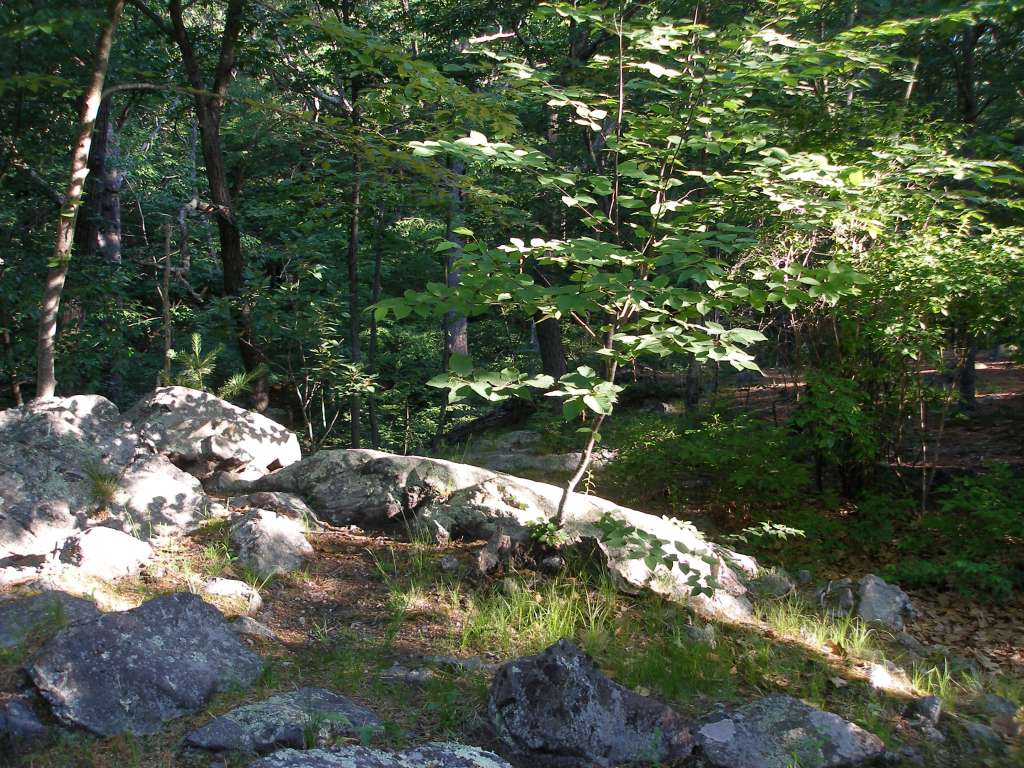
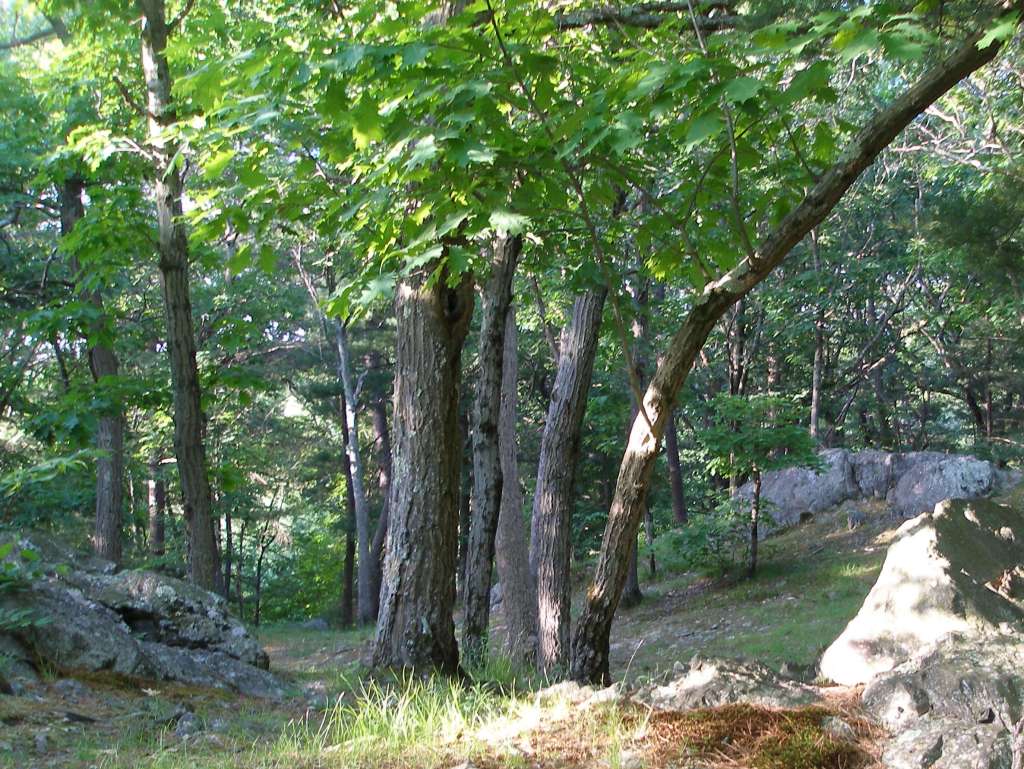
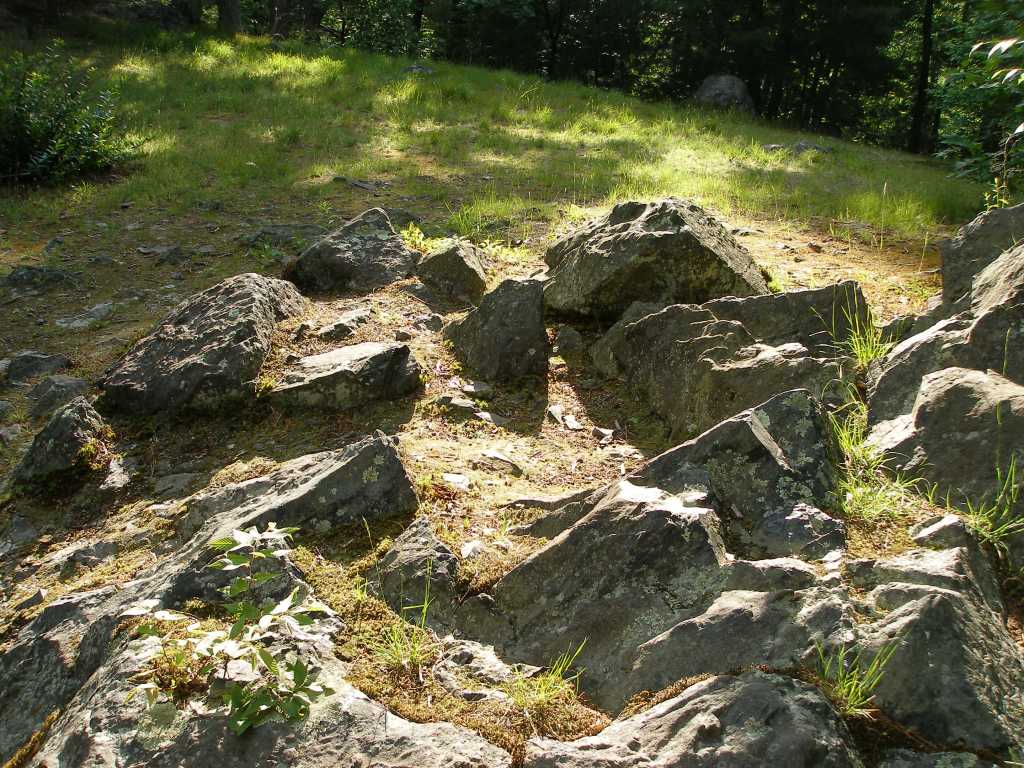
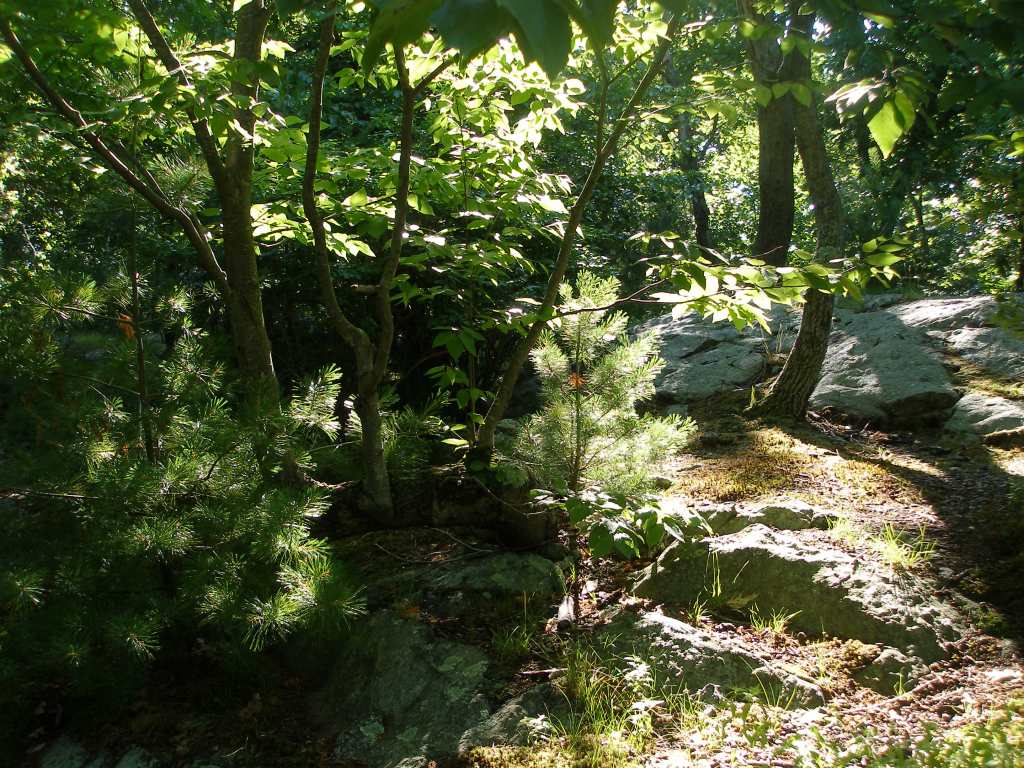
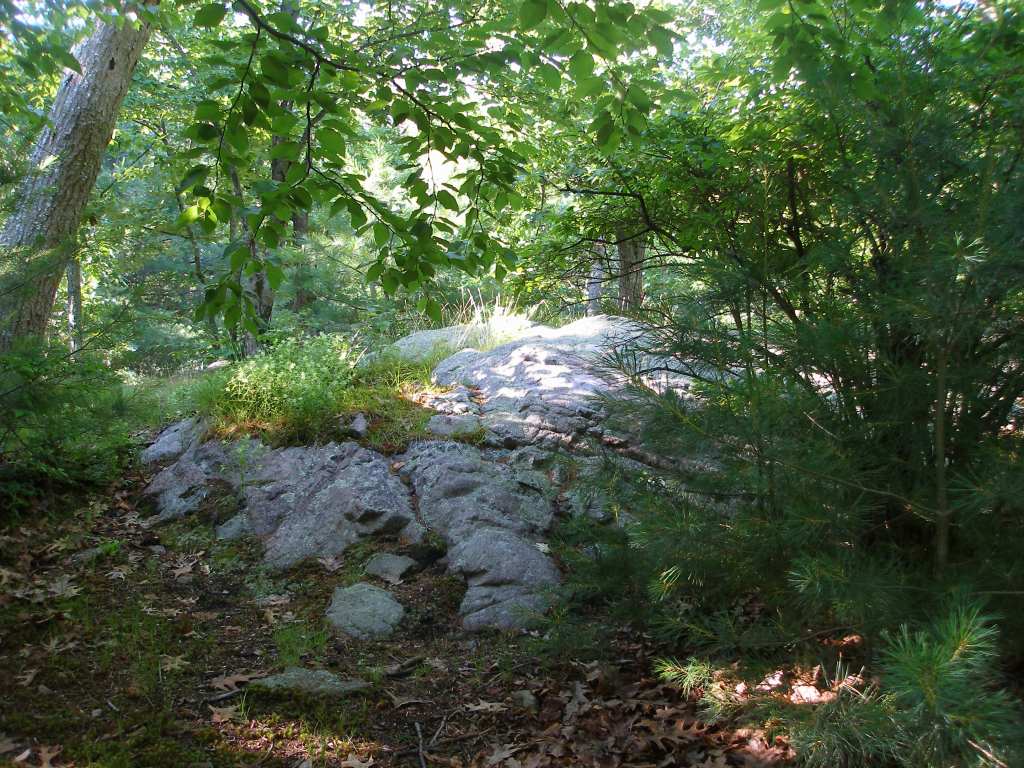
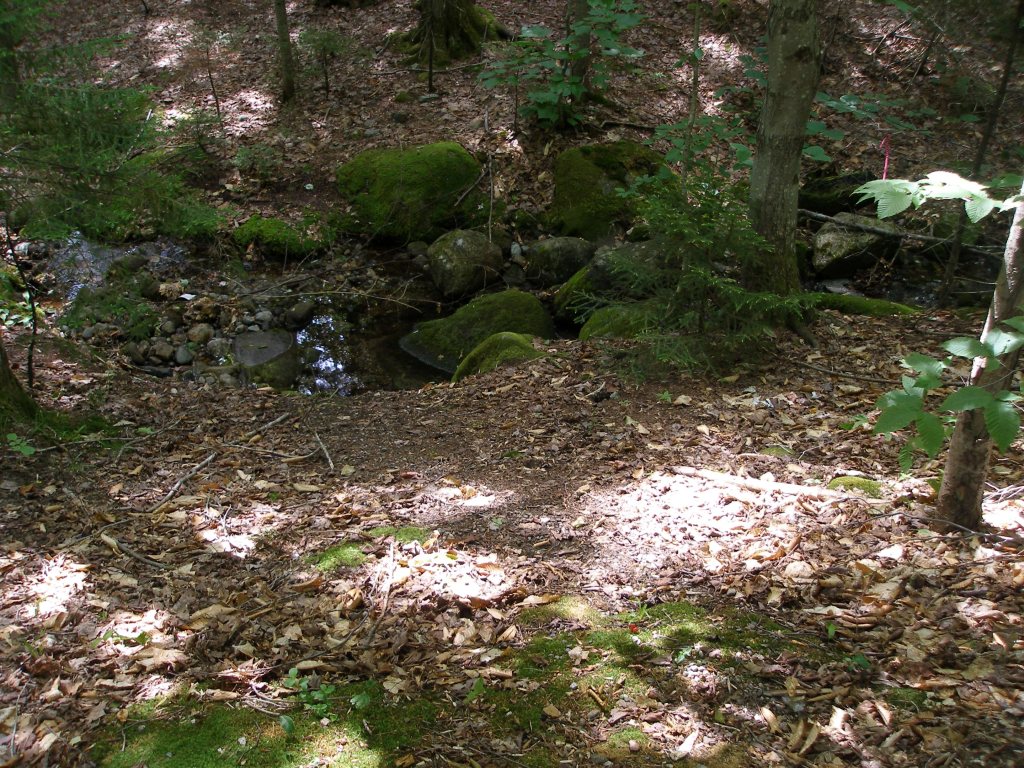
Once I found the courage to climb to the top of an outcrop in Menotomy Rocks Park, looking down I could see Hill’s pond through the trees. The contours of this secluded high up spot, with blueberry bushes and natural rock arrangements scattered here and there made it feel quite magical.
Any number of these rock arrangements could be the highlight of a Japanese garden, or for that matter, arranged in a bowl of sand for indoor viewing.
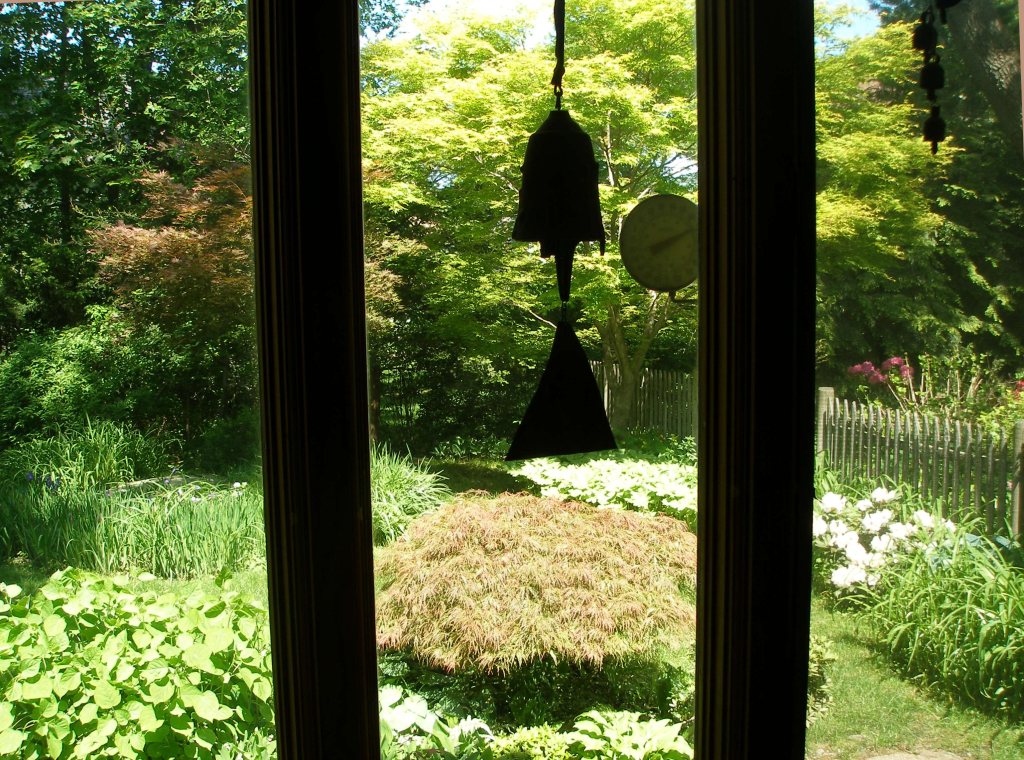
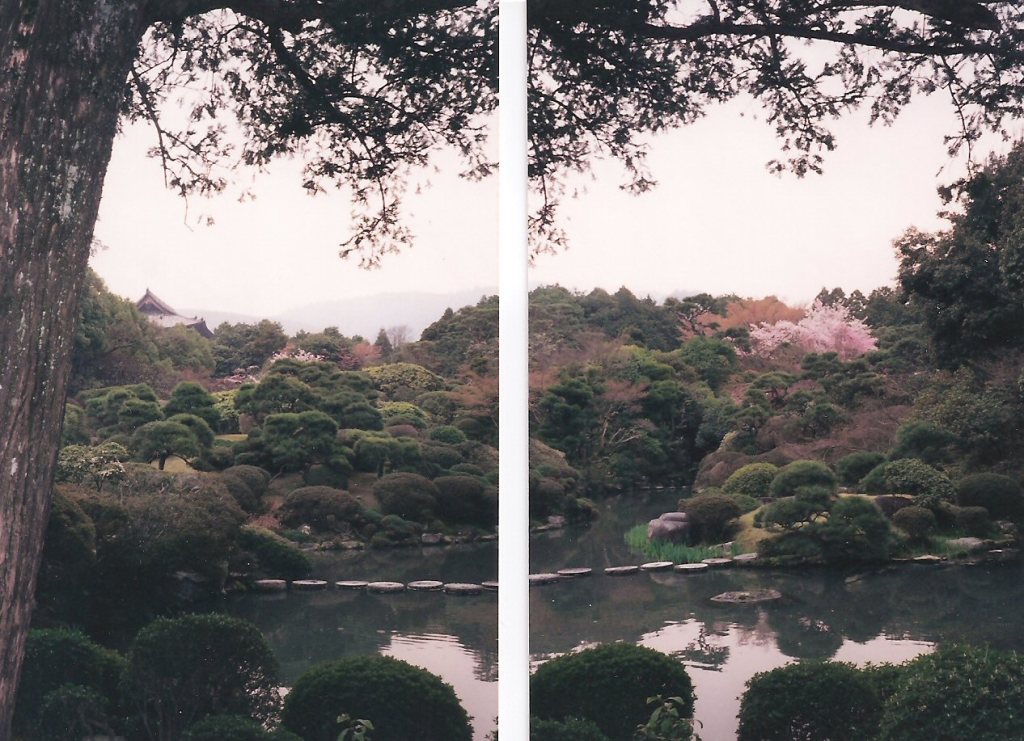
When my Japanese tea ceremony teacher, Giselle Maya, told me that the poetic word for 2022 is “window,” I thought it might be time to revisit “Dream Window” by Peter Grilli. He had metaphorical reasons to choose that title for his poetic film about Japanese gardens. But it is also true that gardens are often viewed through actual windows – Such sight lines are an important consideration in garden design. What do you see through the windows where you live?
Whether another building, a field, undisturbed nature, an empty lot, busy sidewalk or a garden, looking through windows can bring out the poetry of this world. A limited view somehow makes the ever-changing wholeness “out there” easier to relate to.
In discussing Japanese tea ceremony’a Zen flavor, it is appropriate to first consider its special setting that creates a space apart. Tea room and garden maintenance are ongoing. For each tea gathering, the host selects and arranges the scroll, flowers, and utensils keeping the season, particular occasion, and guests in mind. Thus, meditation in action begins well before guests arrive.
The tea room and garden bring a mountain cottage retreat atmosphere into a town or city setting. For all the care that goes into a tea hut’s construction, they are lightly built and are all the more intimate for that acceptance of impermanence. Soft natural lighting creates a tranquil mood. There is little to distract beyond naturally arranged flowers and a scroll.
Tea gardens are designed to evoke the essence of purified nature, and often resemble a mossy path in an idealized wood. This path-garden is called roji (literally dewy ground or path in Japanese). A Buddhist interpretation relates to ‘awara‘ or disclosure, not just disclosing the garden to the eye, but disclosure of everything within and without to the heart/mind/body. Before guests approach the tea hut along the path, the host will clean it and water the stepping stones as a sign of welcome. To do that properly, it is necessary to first cleanse oneself of what disturbs and sullies the mind and heart.
Tea garden design begins with opening to what is here. It is a process of emptying the mind and listening to the site and the context in order to allow the design and its aesthetic qualities to grow from the place rather than being applied to it. The garden and the person who tends it are always getting to know each other through a process of action and response that goes both ways. As the relationship deepens, maintenance is not so much imposed from outside but takes place from within that relationship by attuning to what needs doing.
Students of the way of tea learn by observing and copying their teacher, and by being patiently (although sometimes strictly) coached in what is essentially a form of direct transmission. When I first started taking tea lessons, I learned how to walk on tatami mats. I had to master the many sub-procedures of a relatively simple way of preparing tea. A great many steps must all flow together in a natural and unobtrusive way before a student can claim competence. There are many different ways of preparing tea or temae to learn, and all the utensils require special handling. Tea stories make clear that patient practice and goodwill are more important than achieving perfection.
Thus, tea ceremony provides many opportunities to experience beginner’s mind while learning how to retain a sharp embodied focus on what is going on here and now. The way of tea might appear gentle as compared with working on unsolvable riddles under the stern guidance of a Zen master. But because there is so much to learn with body, mind and spirit, serious students of Japanese tea ceremony may find themselves facing the strong doubt, strong faith and strong determination that are said to be requisites for dedicated Zen practice.
In time, applying firm resolution in a context of openness and mutual support can lead to consummate freedom and ease. That a selfless commitment to discipline is required to achieve that flow is one of the many paradoxes of this art (and of life). Learning the formal procedures with total-hearted commitment provides access to deeper levels of perception and being that in turn influence how one performs the art so one returns to where one started very much alive, in touch, and in the moment simply enjoying sharing a bowl of tea with a few others.
Just seeing a demonstration does not reveal the relational quality of this art. Students are taught to always keep the guests’ tranquility top of mind when preparing a bowl of tea. The flowing generosity and gratitude becomes one and communal awareness arises as guests’ actively support the host’s intent for sharing the beauty of the particular occasion and of each unique moment.
Training to become a garden designer in Japan may involve apprenticeship to a master designer and years of traveling to view beautiful natural and manmade landscapes. Few of us desire (or can afford) to spend years doing that, but there are many ways we can train ourselves. For those in the Western world who wish to create their own Japanese gardens, it is possible to design a self-study program using ideas from the Japanese training process. Here are some ideas which helped me train my own eyes in Japanese aesthetics.
Visit places of natural beauty: An early goal might be to simply observe nature in a totally open way. With practice, it becomes possible to understand what it is about a specific scene that produces a particular response. I visit places of natural beauty regularly and particularly value a park within walking distance which teaches me about local conditions. If I have a strong emotional response, I take a picture to assist me in determining why.
Look Inward: Aspects of places which had special meaning to me as a child can be incorporated in a garden design. In my case, I have a special love for mossy woodsy places based on camping trips. The Inward Garden. by Julie Moir Messervy, provides excellent guidance in this process.
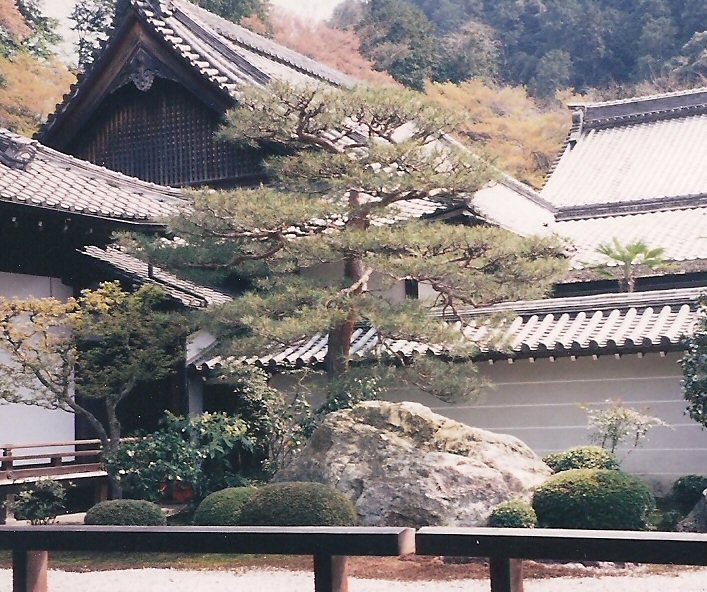
Experience Japanese gardens: Viewing Japanese gardens teaches how limited elements can be used to suggest various places, moods and subtle natural relationships like the curve of a river bank. If possible develop a relationship with a Japanese garden within traveling distance and visit it at different times of day, in different weather conditions, and in all seasons. Of course, an actual trip to Japan would be wonderful.
Learn to sketch: I have found it very useful to make sketches of natural settings and of Japanese gardens. Sketching nature requires me to focus on the essential elements in a scene, and it also helps me focus on the most important details.
Study design principles: Many books as well as this Journal* describe principles which apply to Japanese gardens. The academic study of design principles won’t replace the experience of working under a master designer, but it is valuable nonetheless. As to learning from books, I have found it easier to relate to the more intimate and modest courtyard gardens and residential garden designs for practical ideas, but I also value the many spectacular images of larger Japanese gardens for all the various ways they teach me about beauty.
Learn by doing: The garden in your own yard can serve as a laboratory and teacher, and it can be a reflection of your own personal development. In the early stages, rocks and plants moved around a lot until ‘they found their homes.’ Once I had a clear idea of the topography of my garden and the effects I cared about achieving, I found that scale and composition were paramount.
Keep a garden album: An album with photographs, drawings and notes provides me with a record of how the garden has changed over time, and how it looks in different seasons. It is satisfying to see what has changed, and improved as a result of my efforts.
*This article was originally published in the November/December, 1998 issue of the Journal of Japanese Gardening, which has since been renamed Sukiya Living; The Journal of Japanese Gardening.























 Radiant Refuge