Mushrooms & Slime mold: Fall 2025

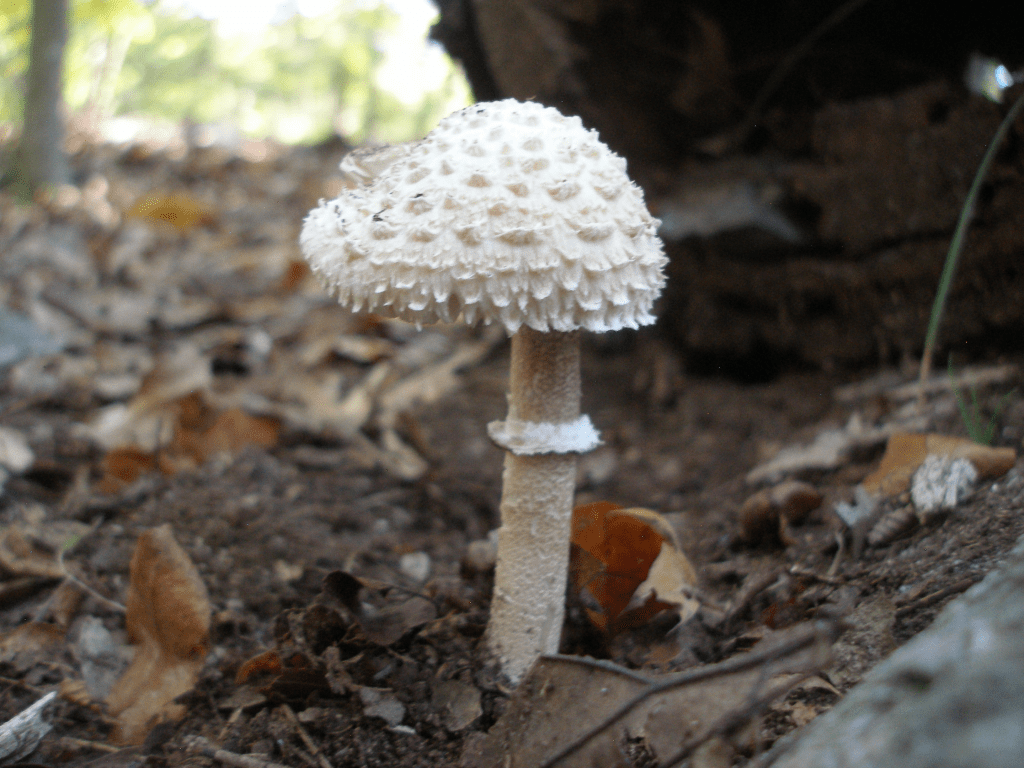
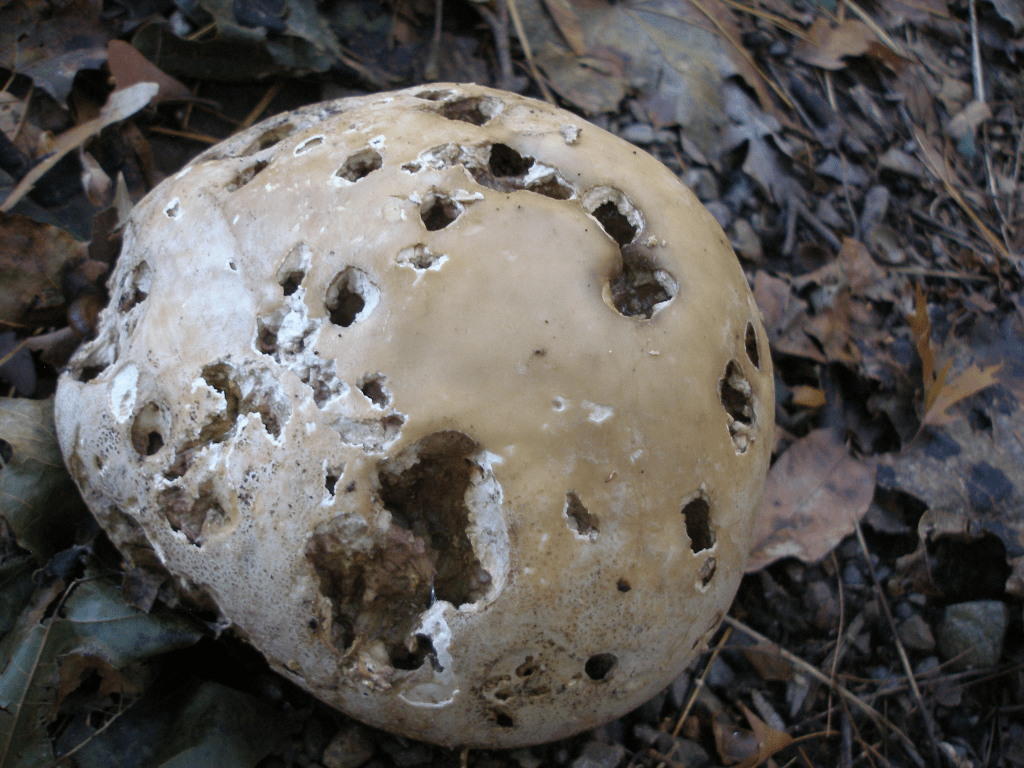
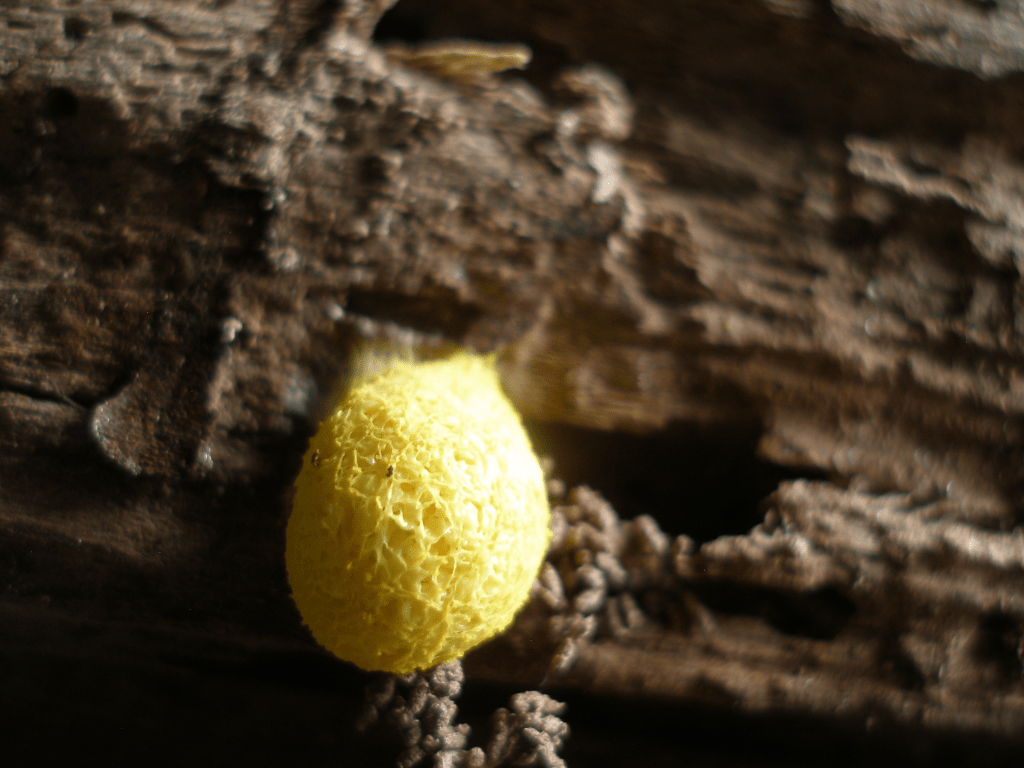
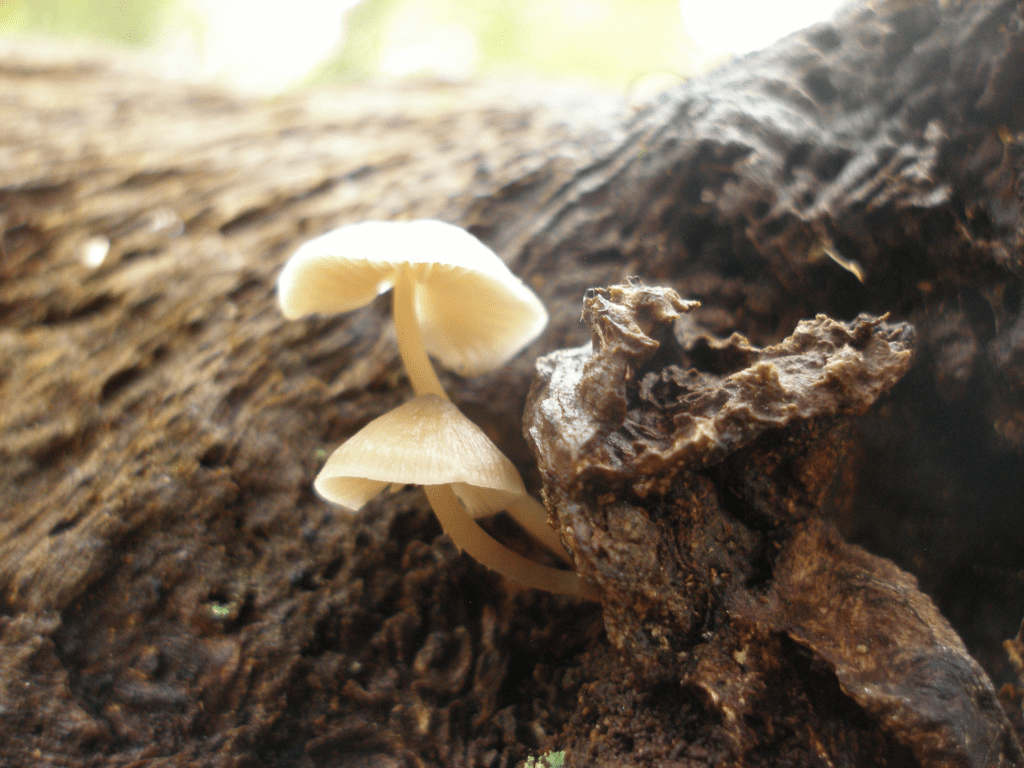
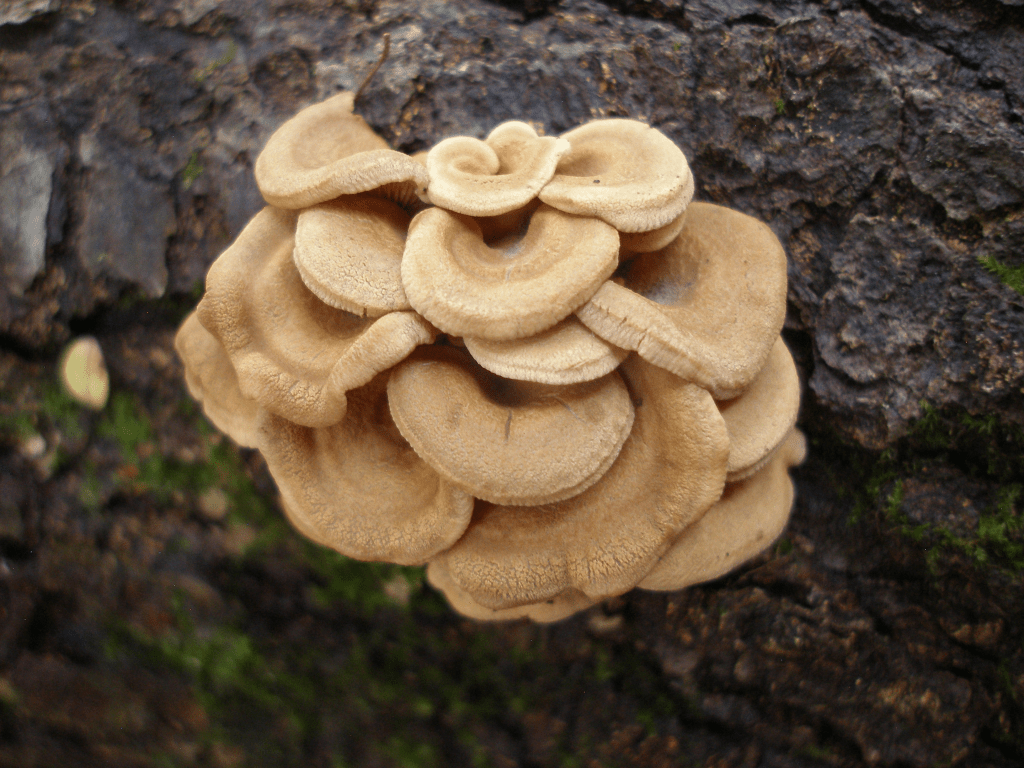
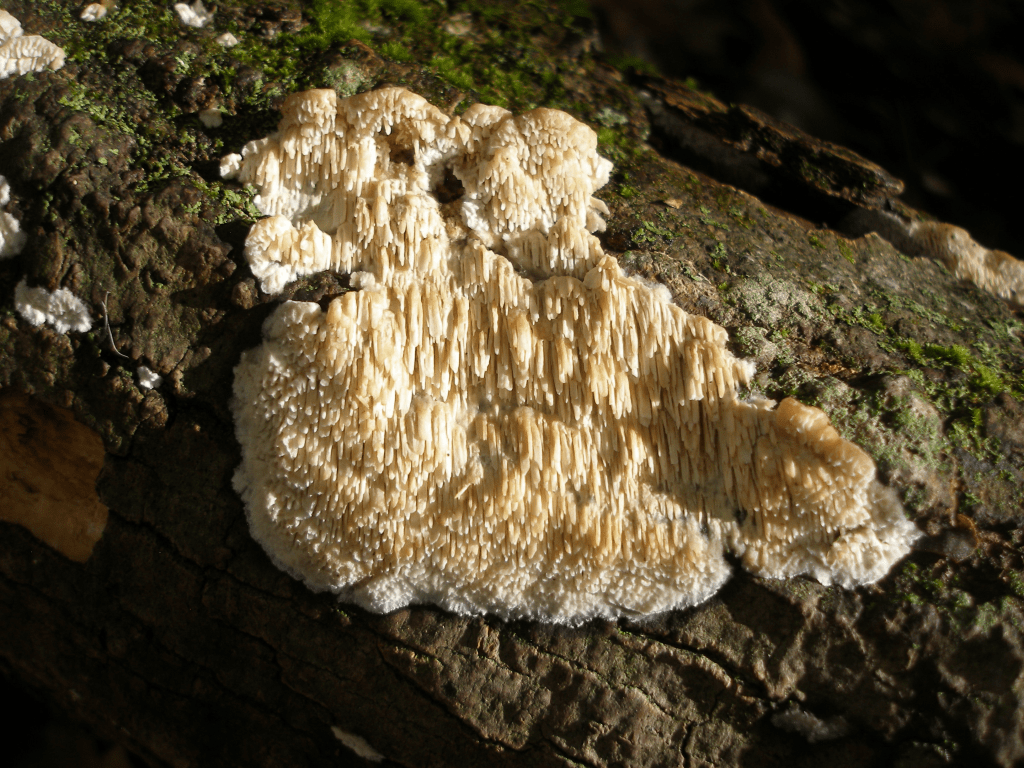
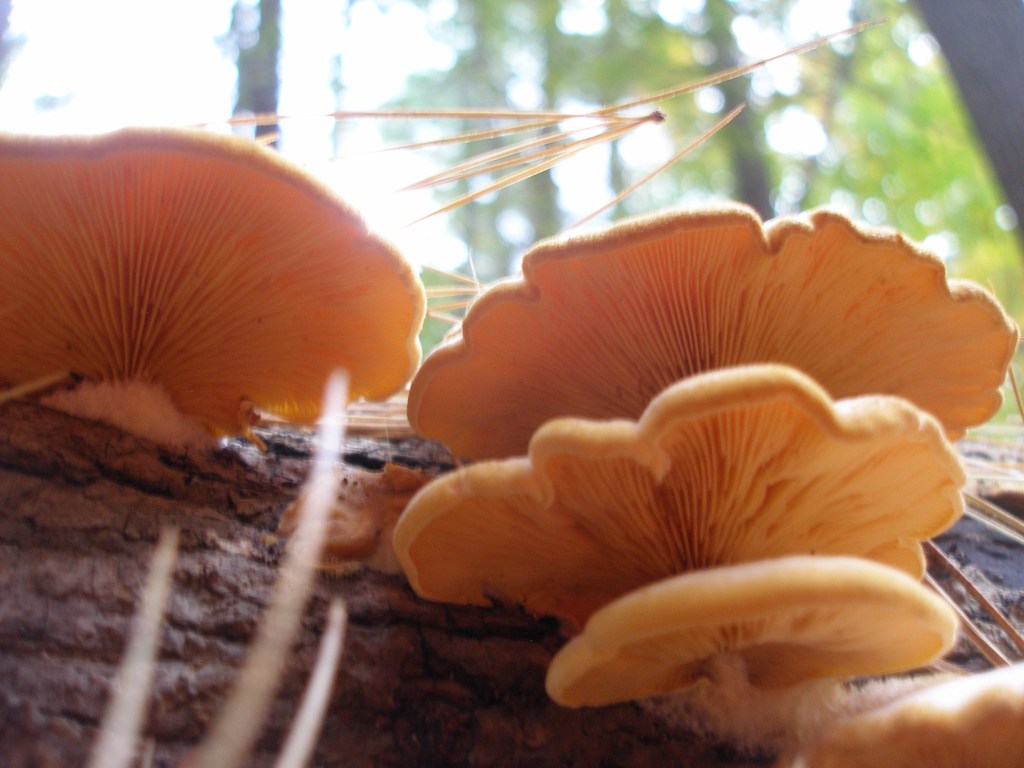
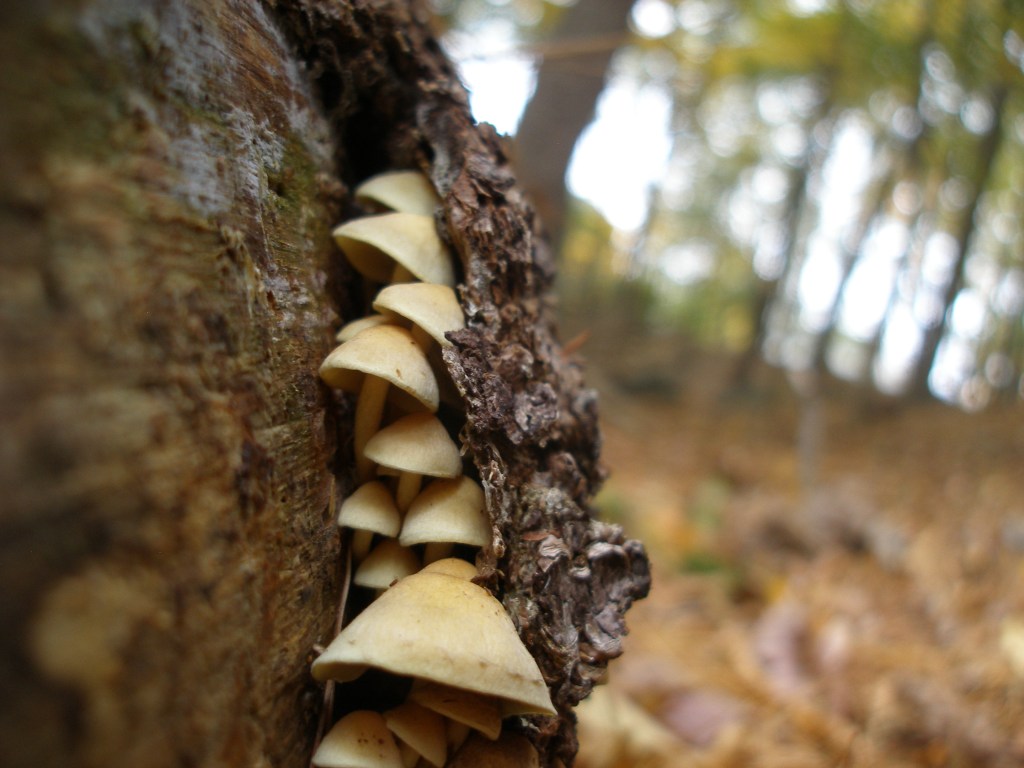
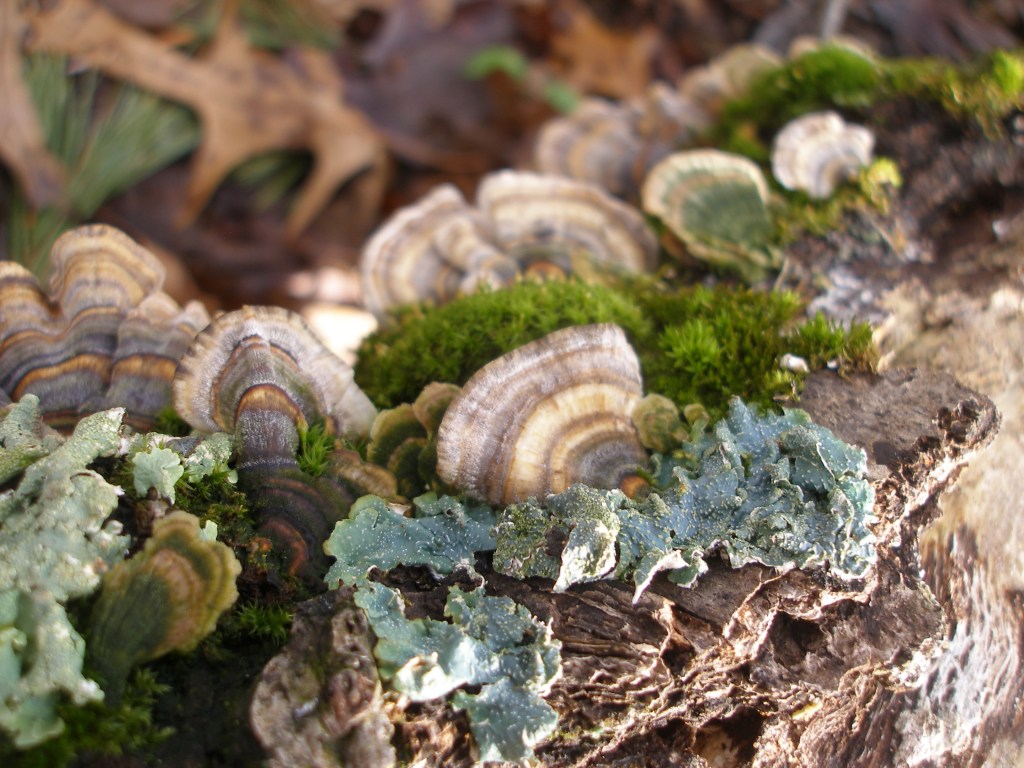
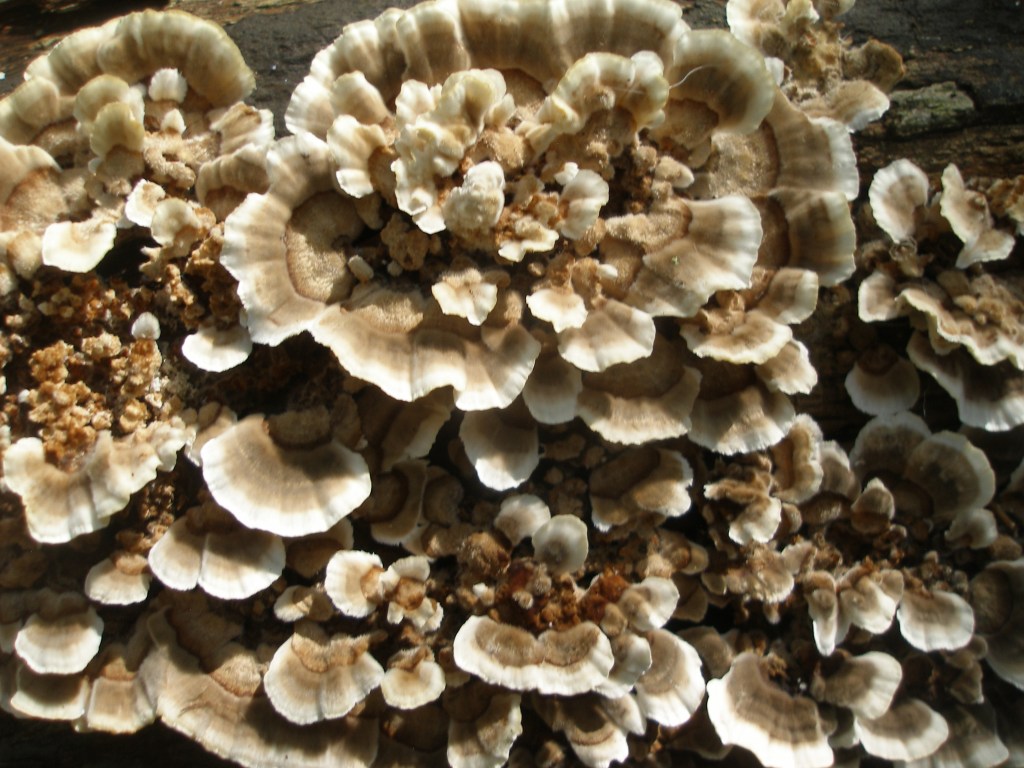
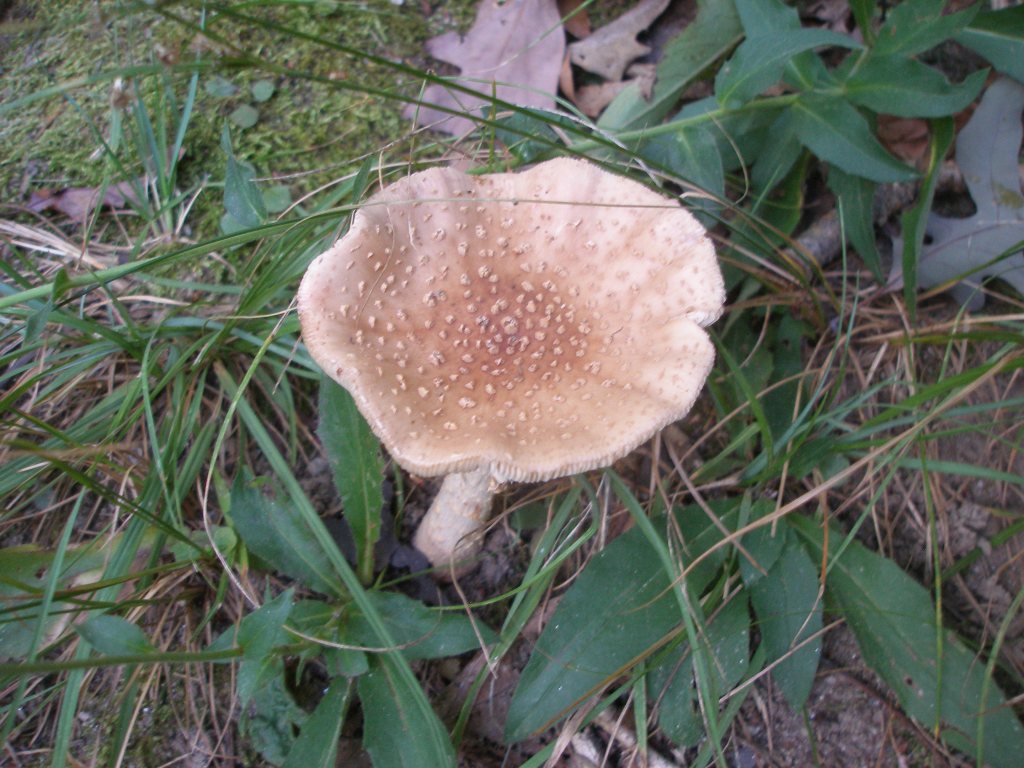
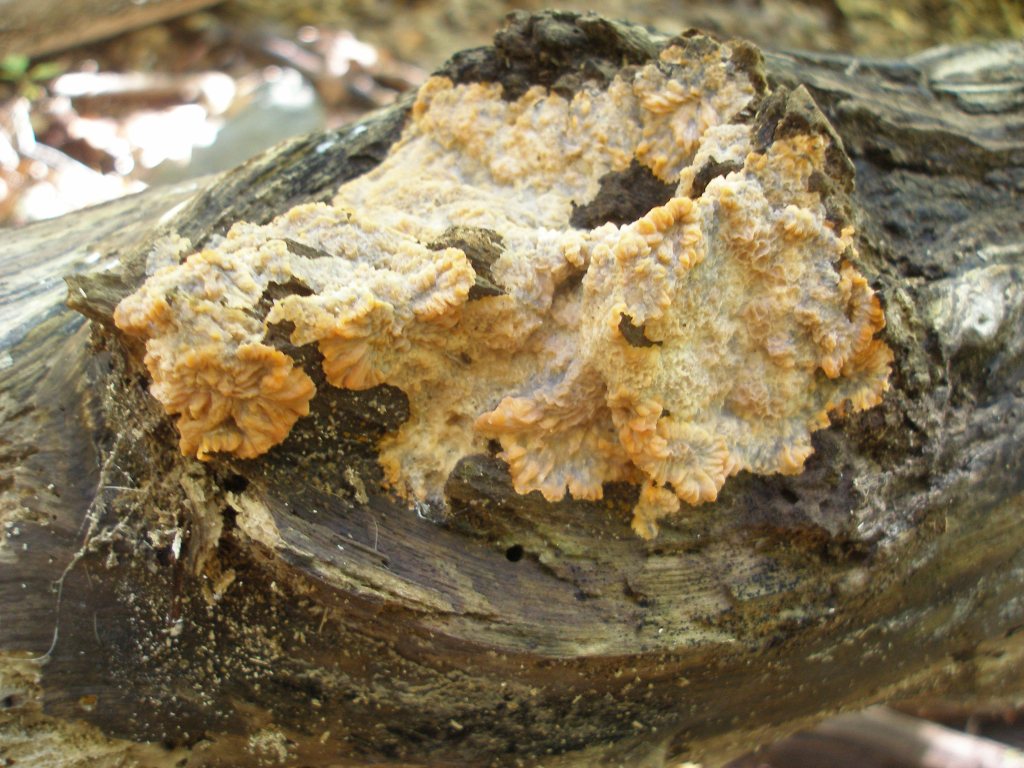
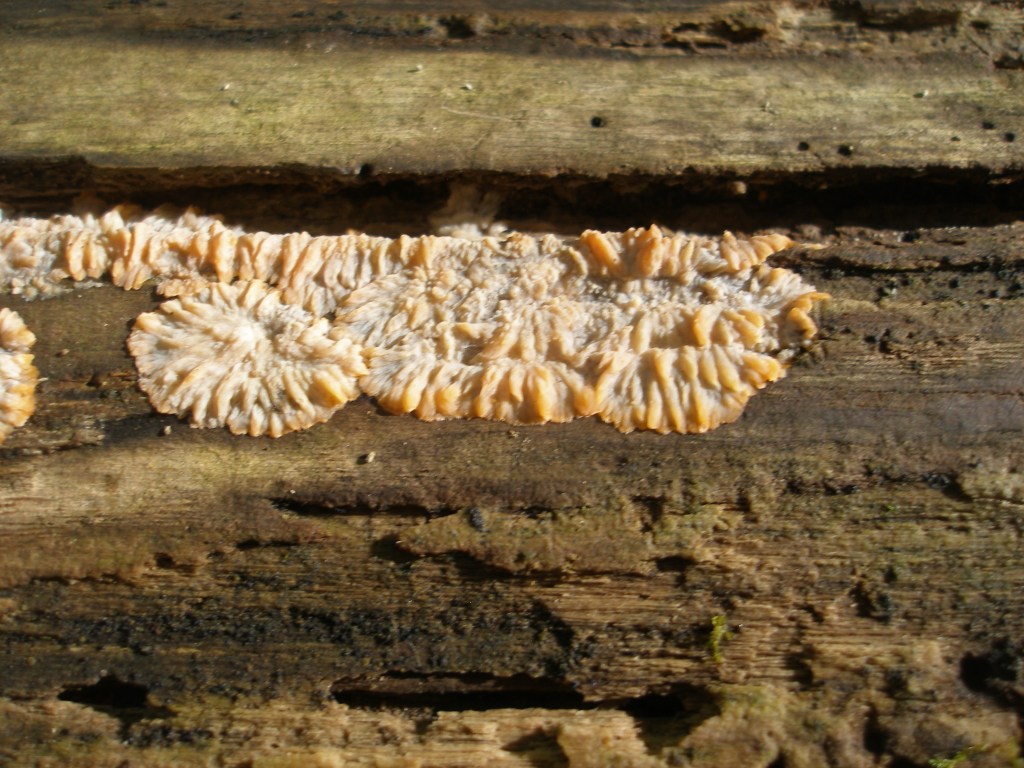
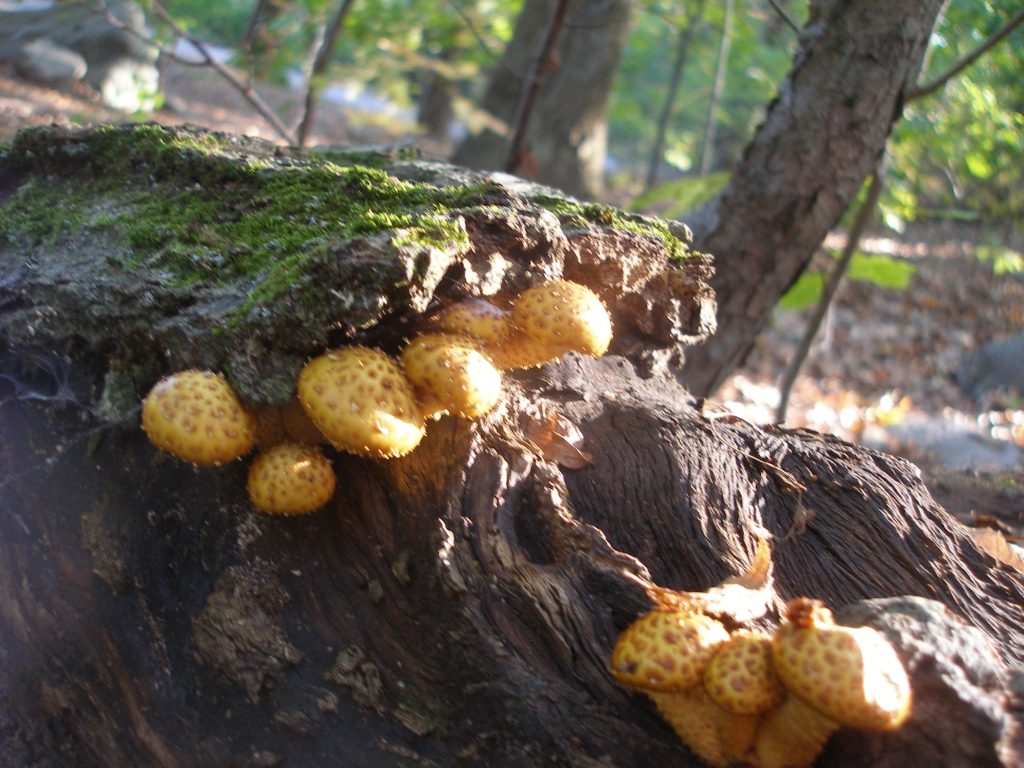
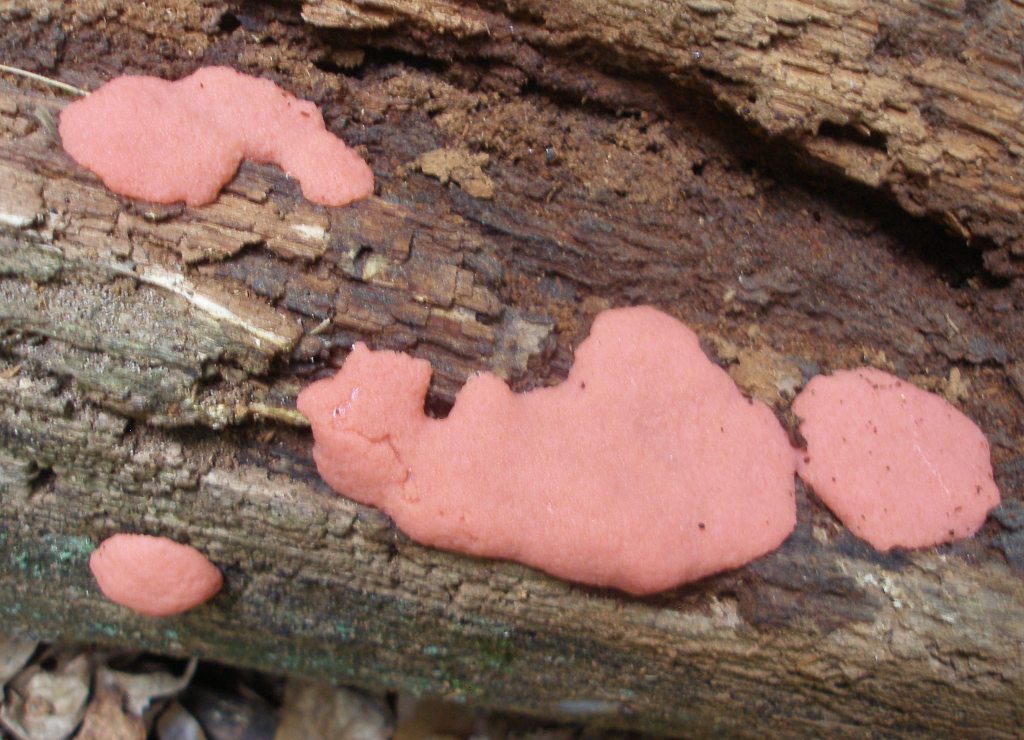
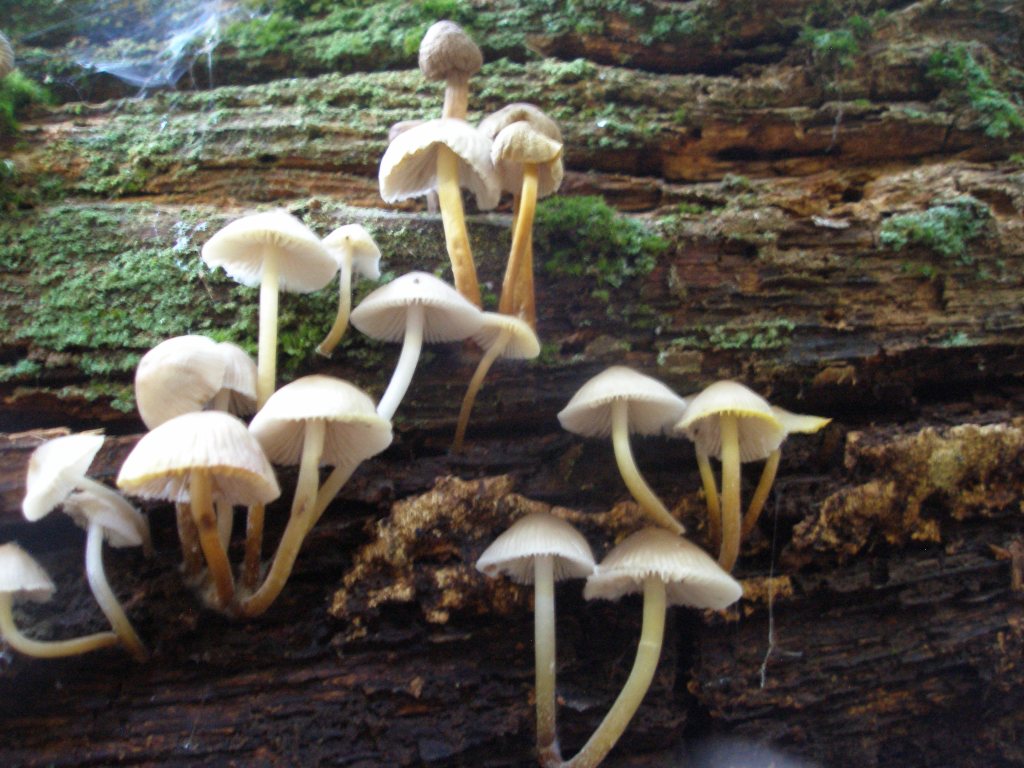
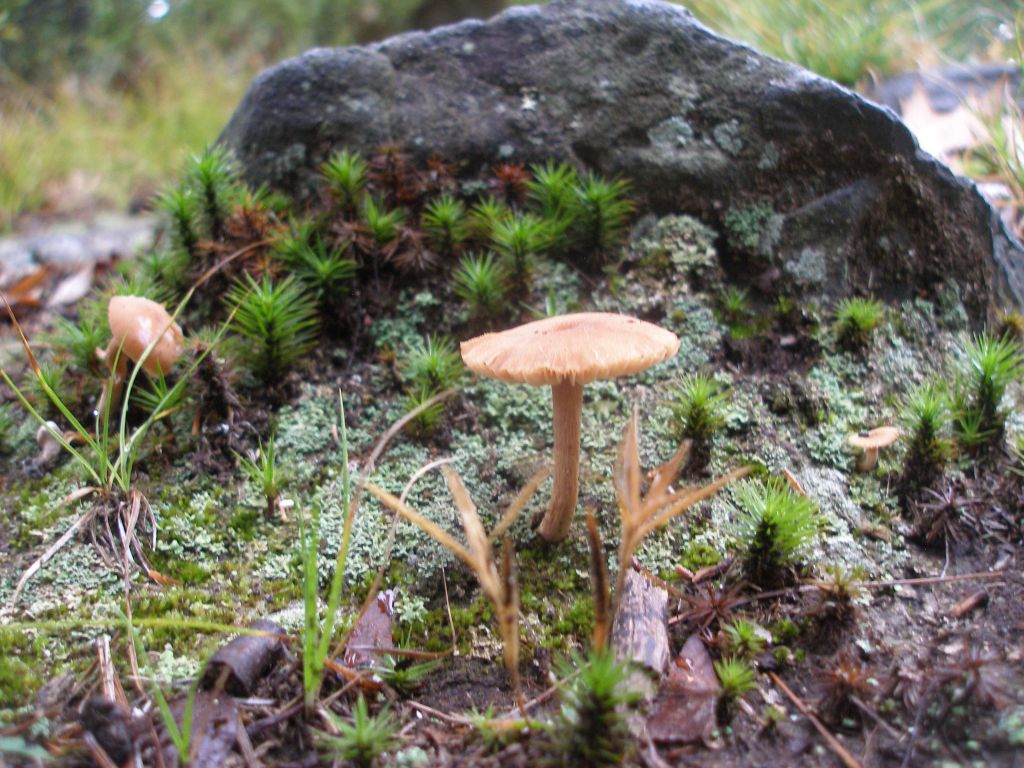
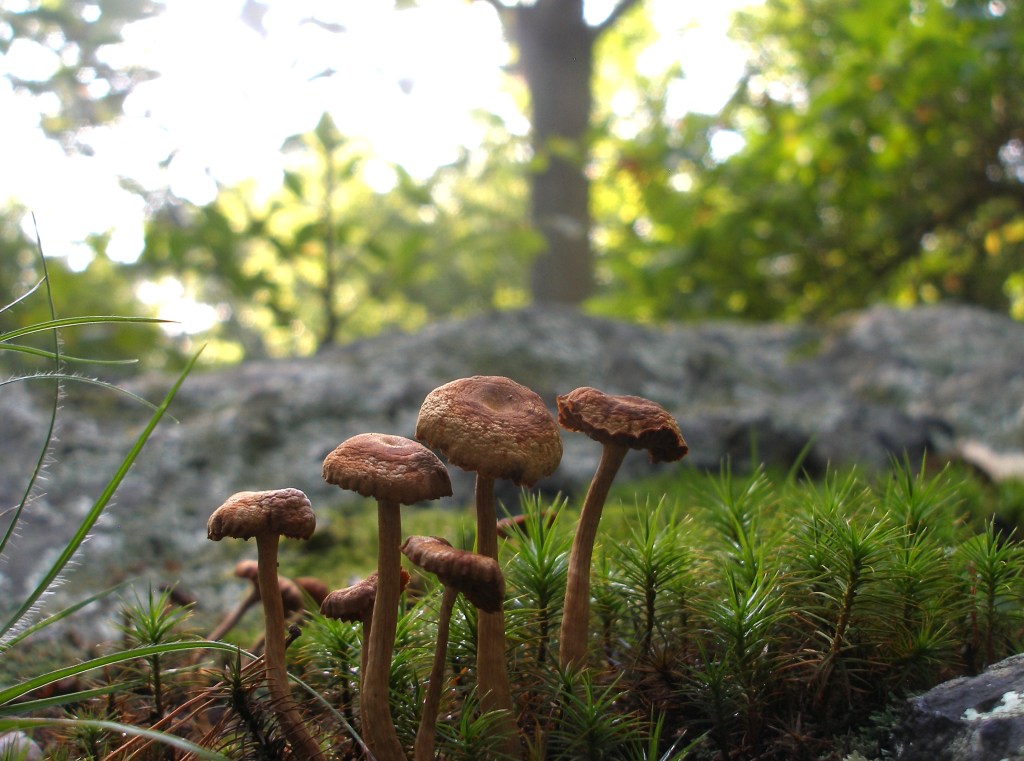
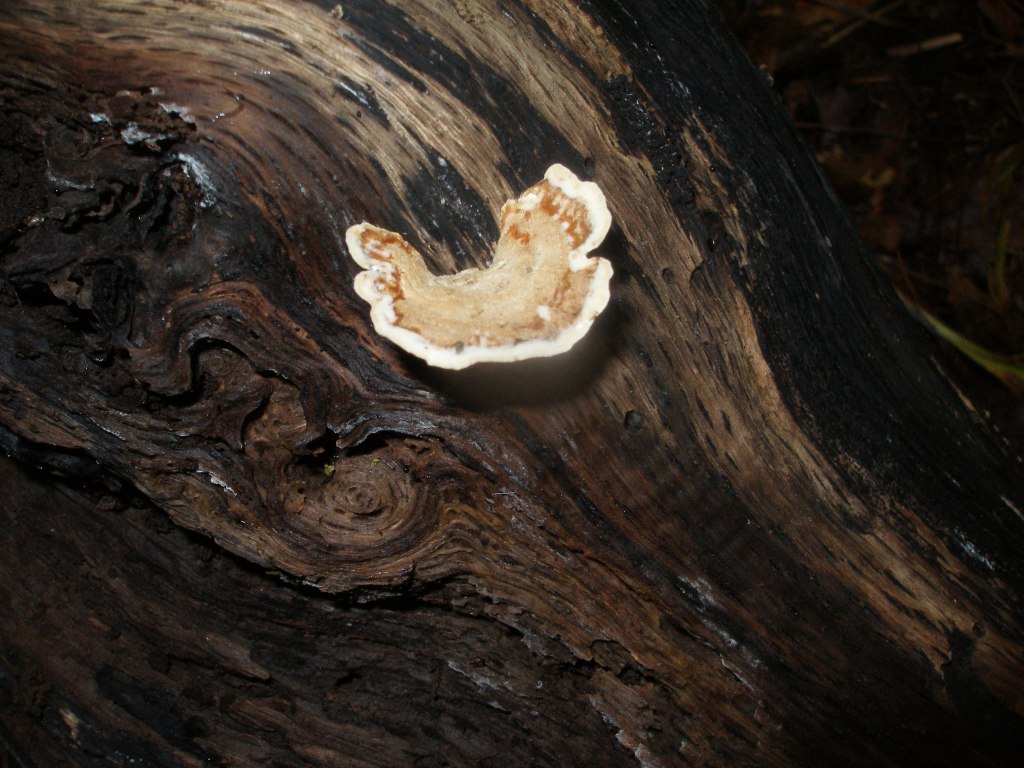
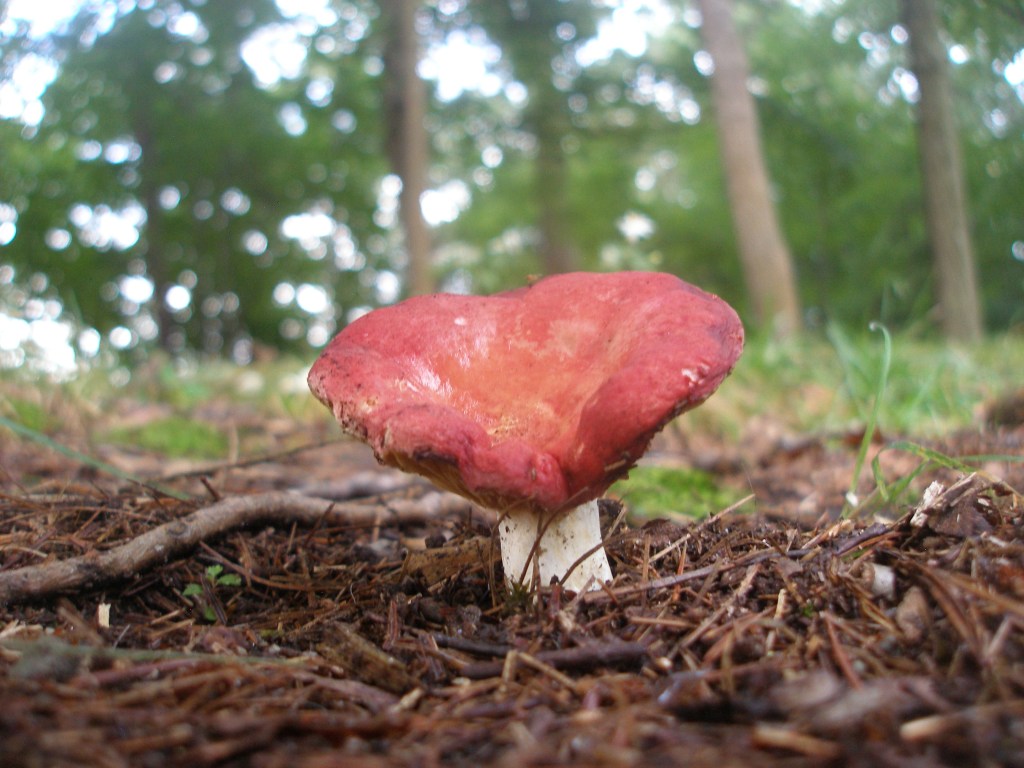
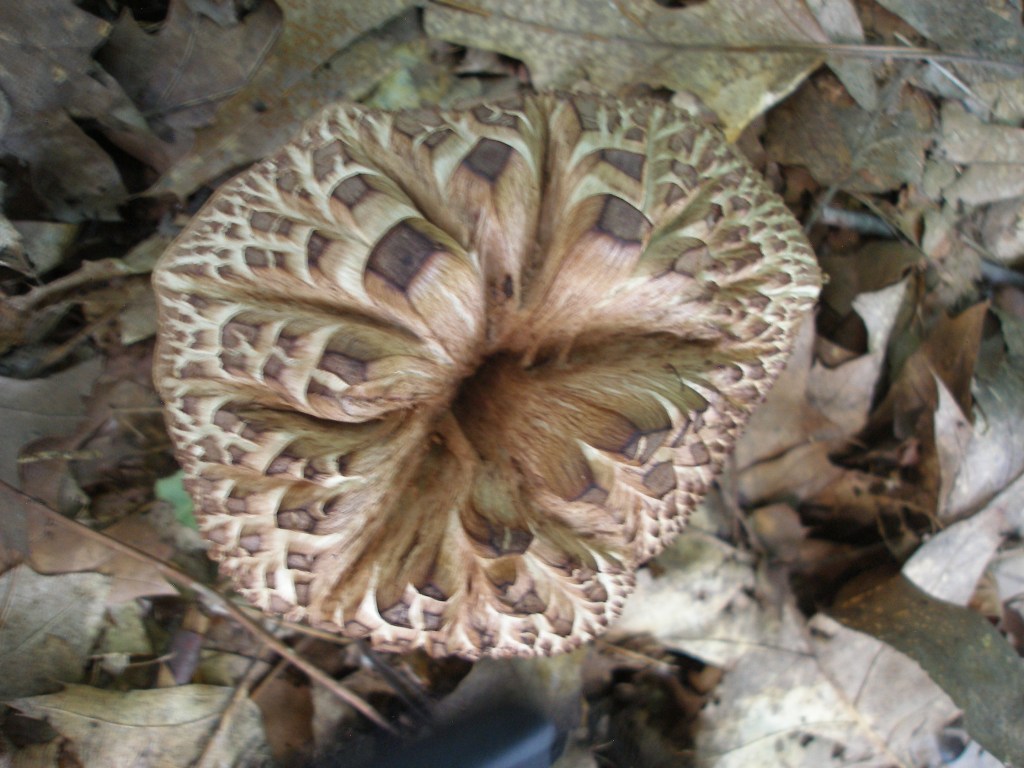
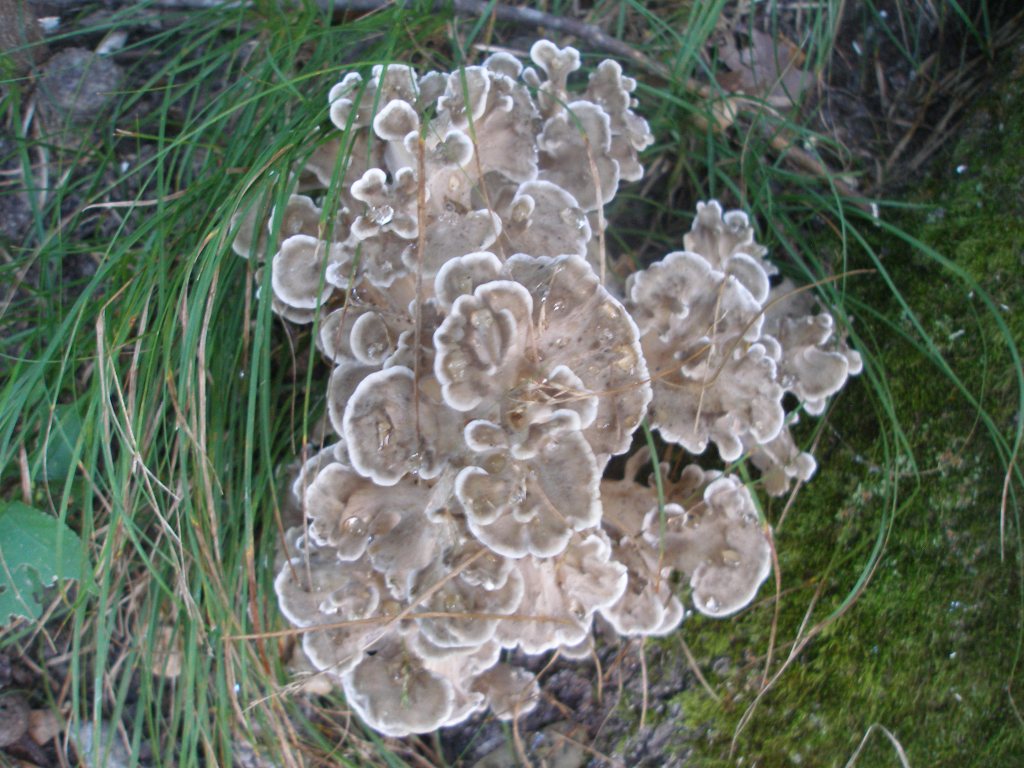
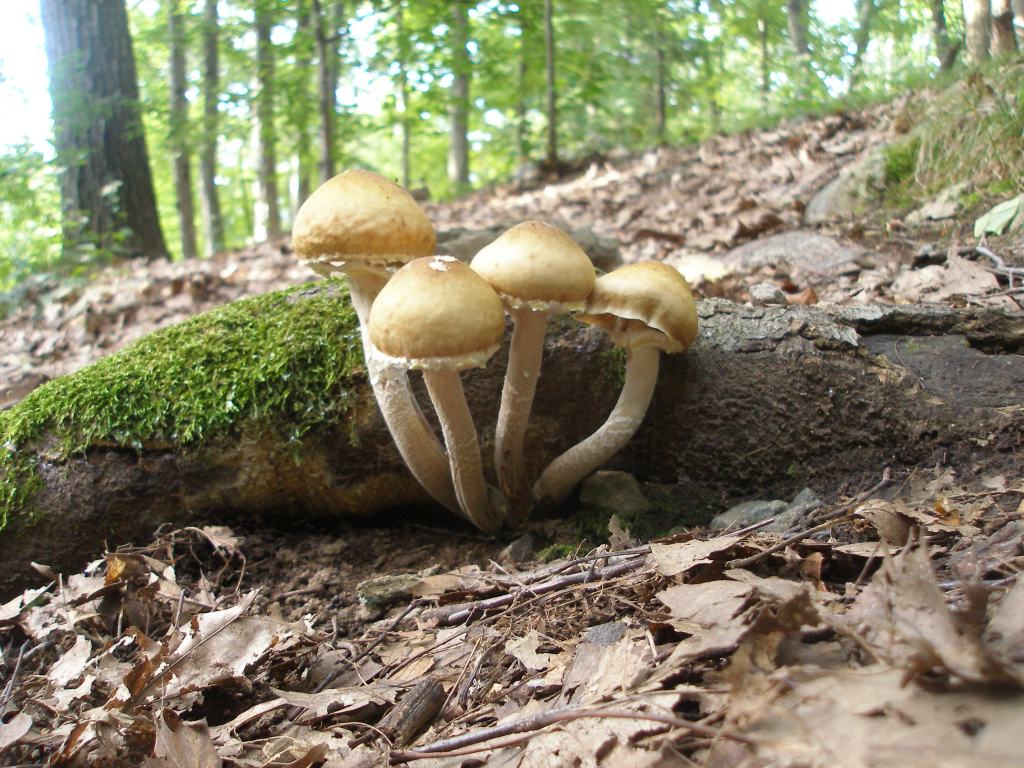
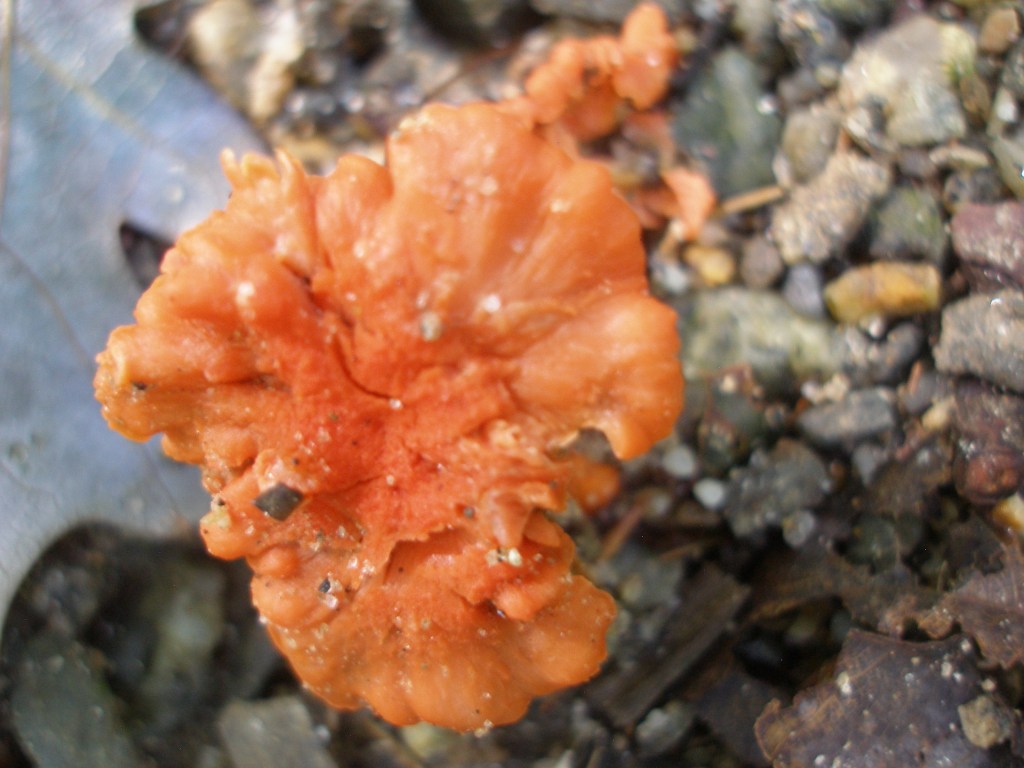
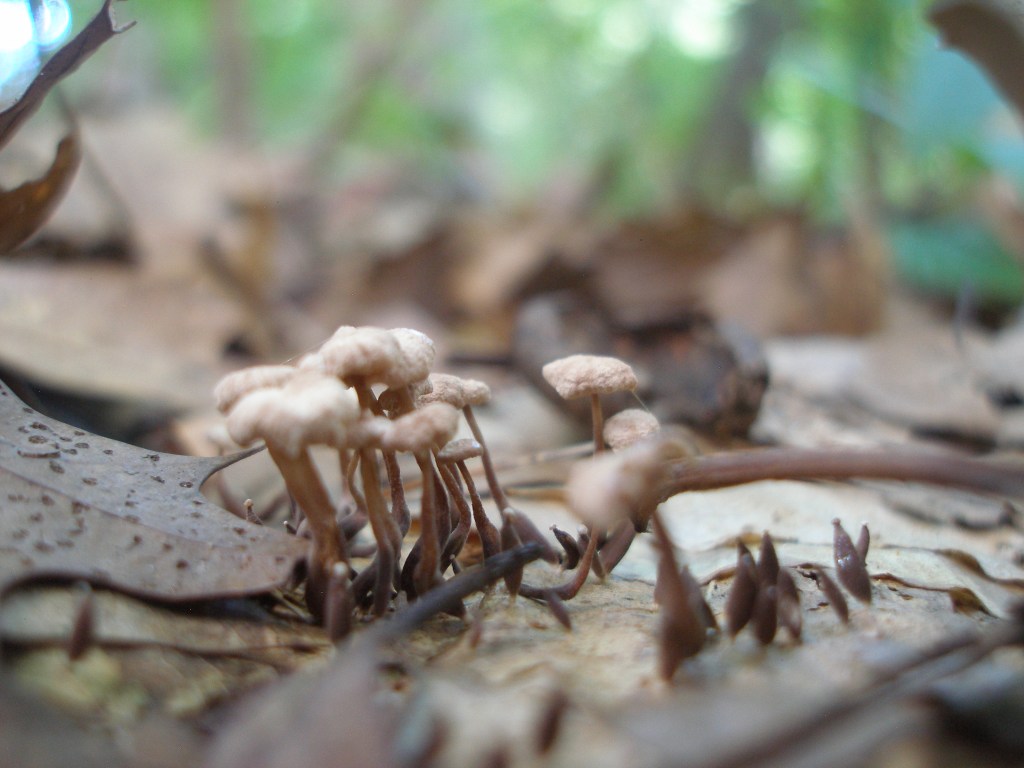
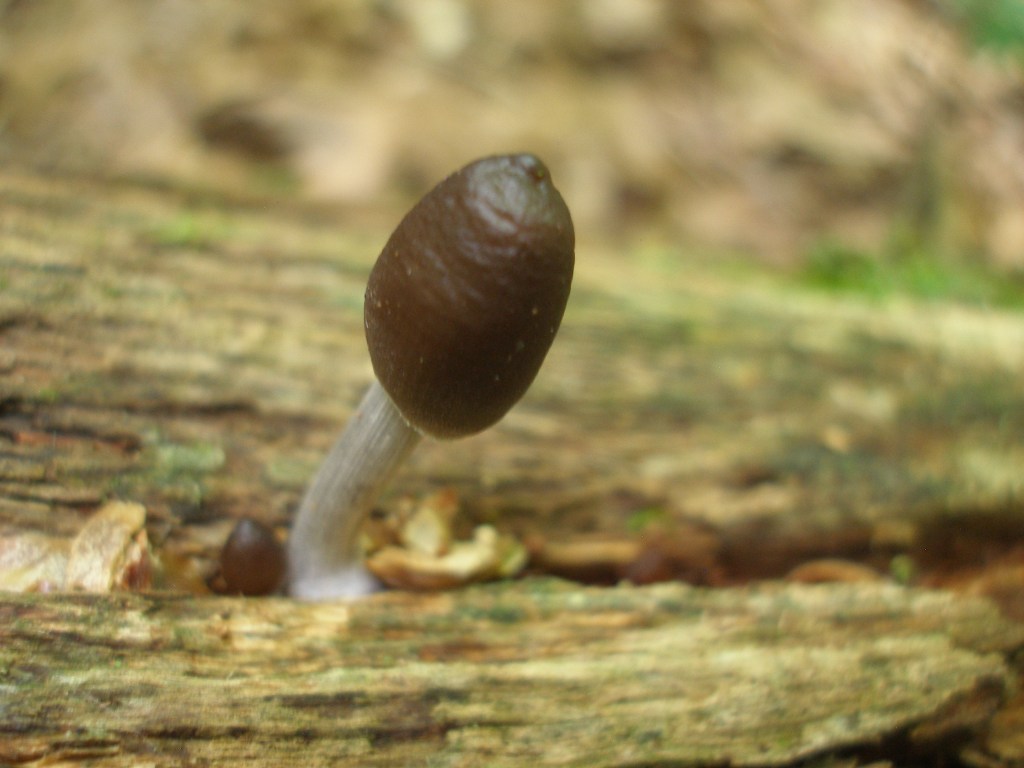
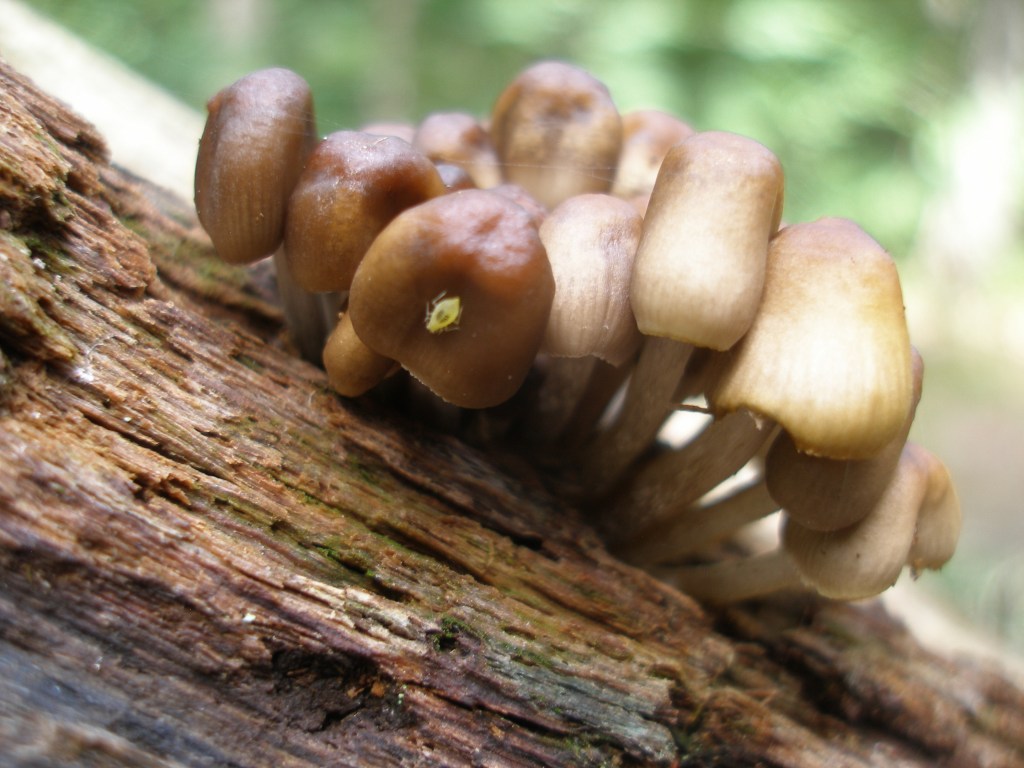
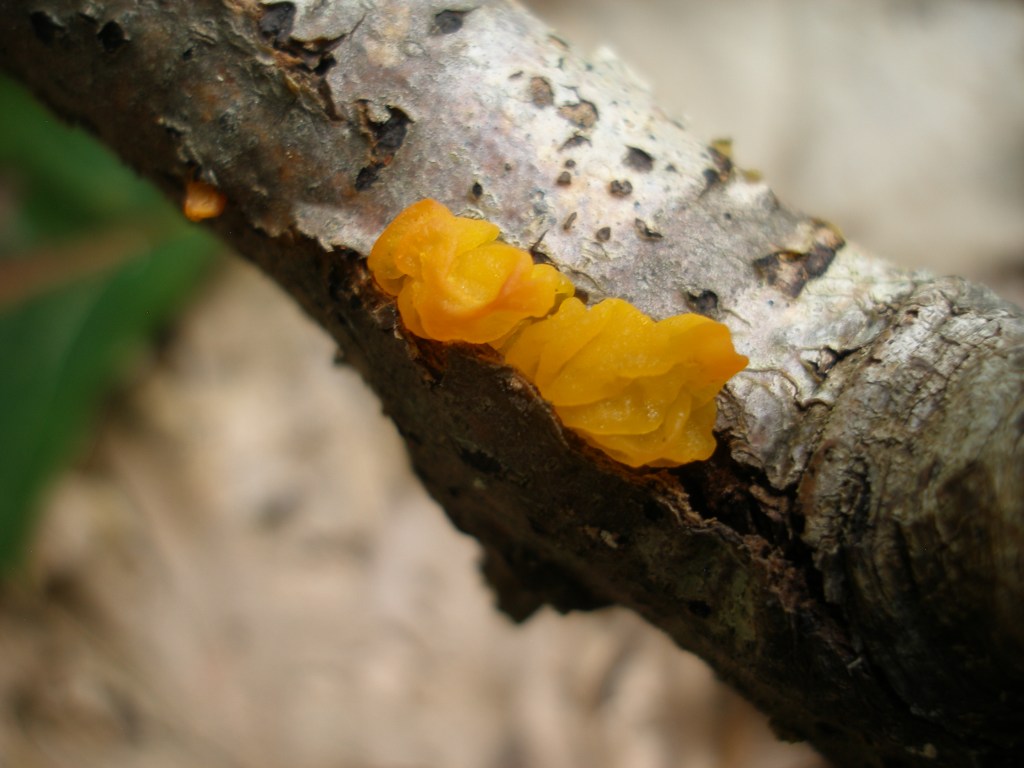
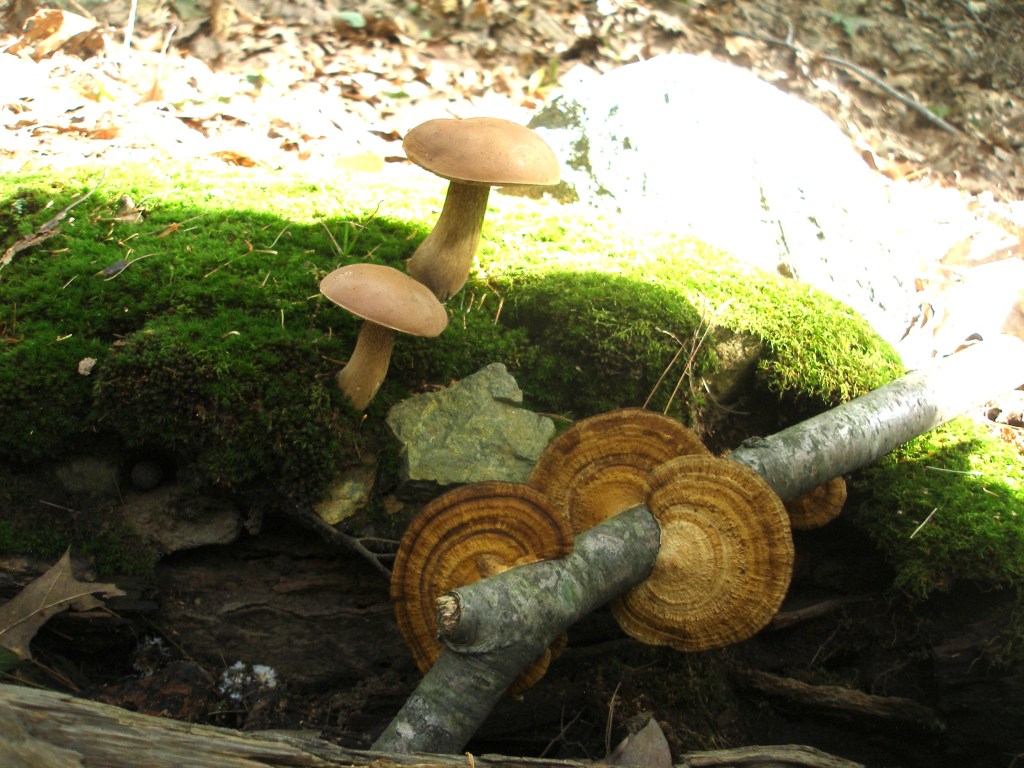
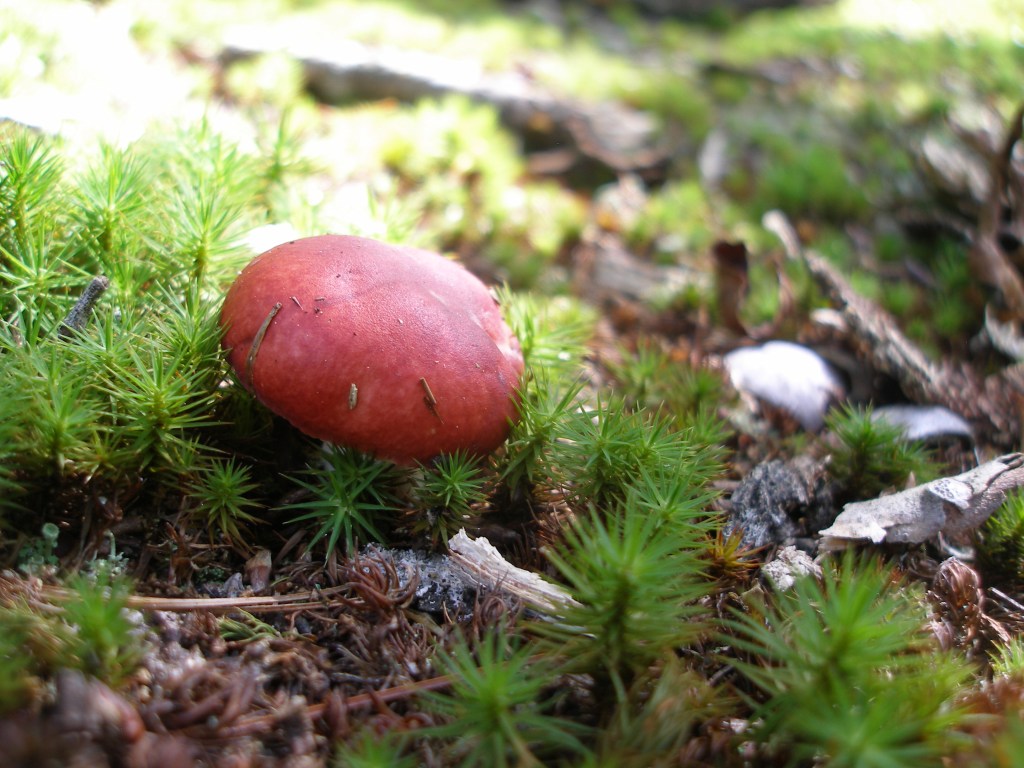
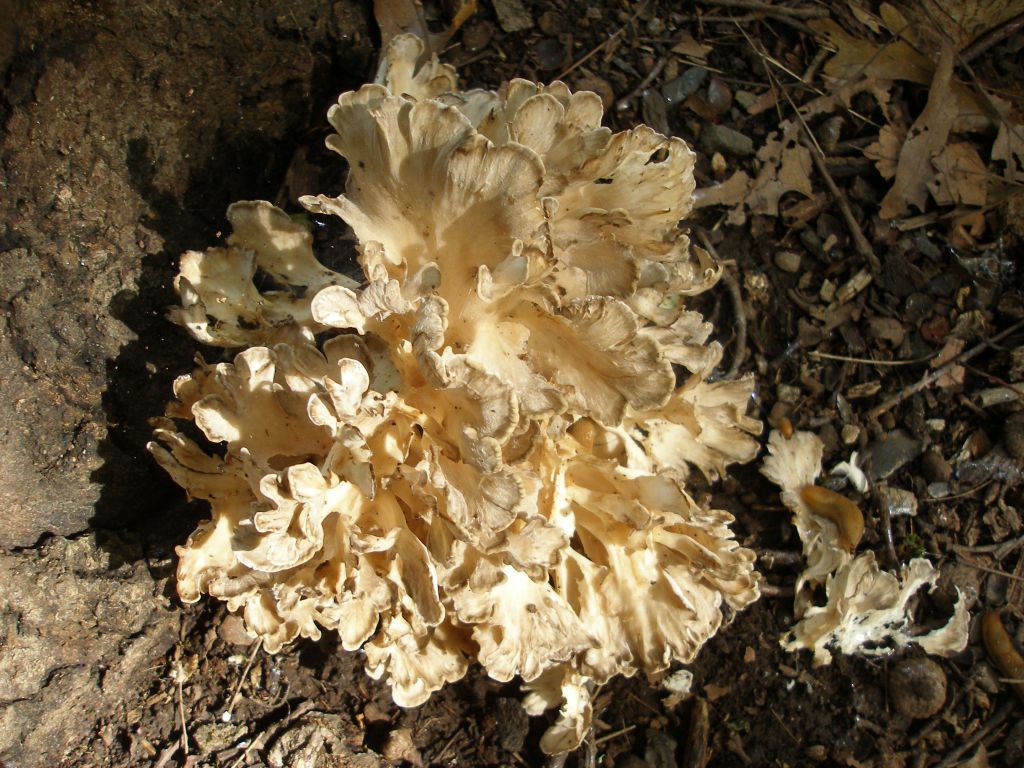
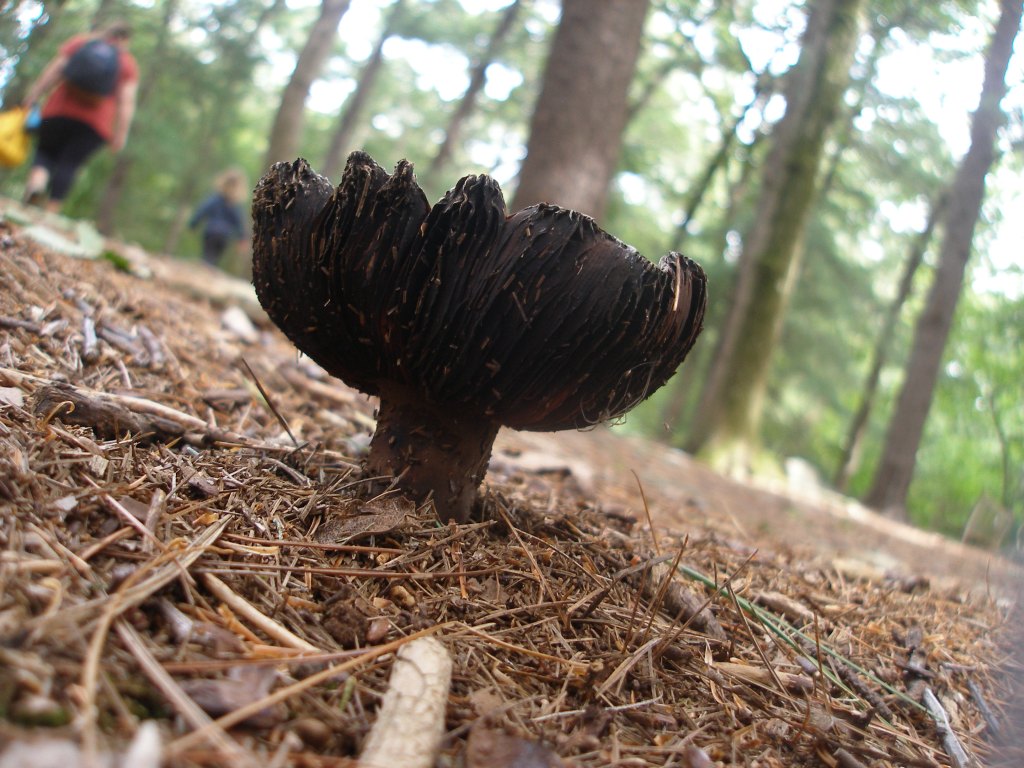
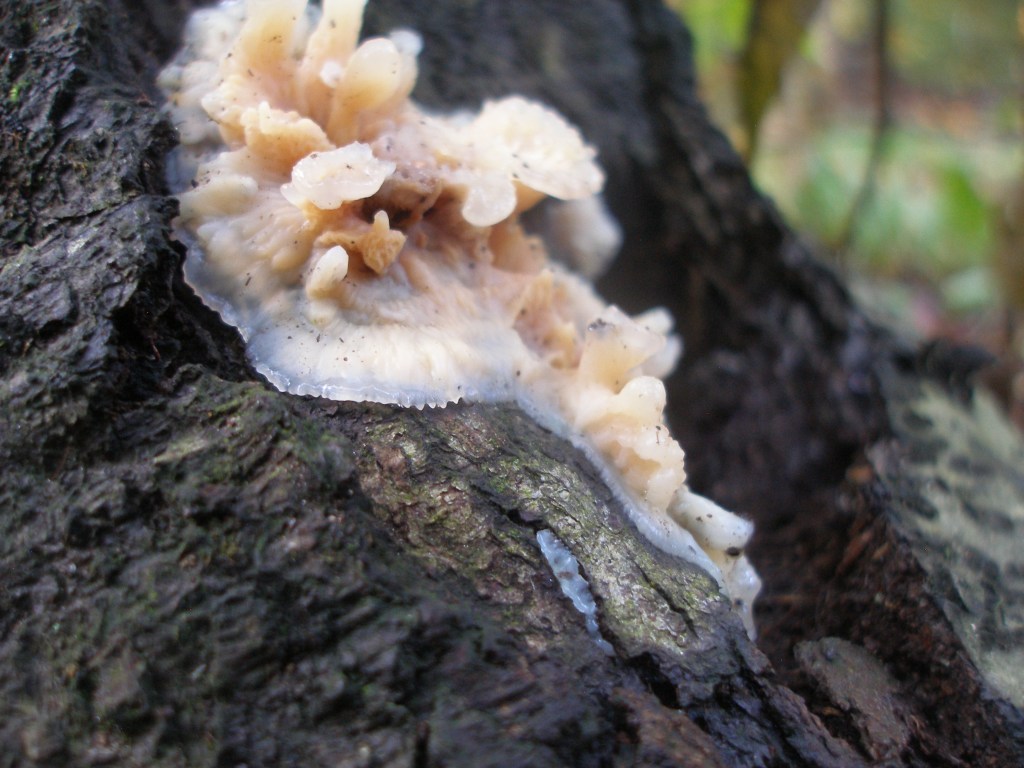
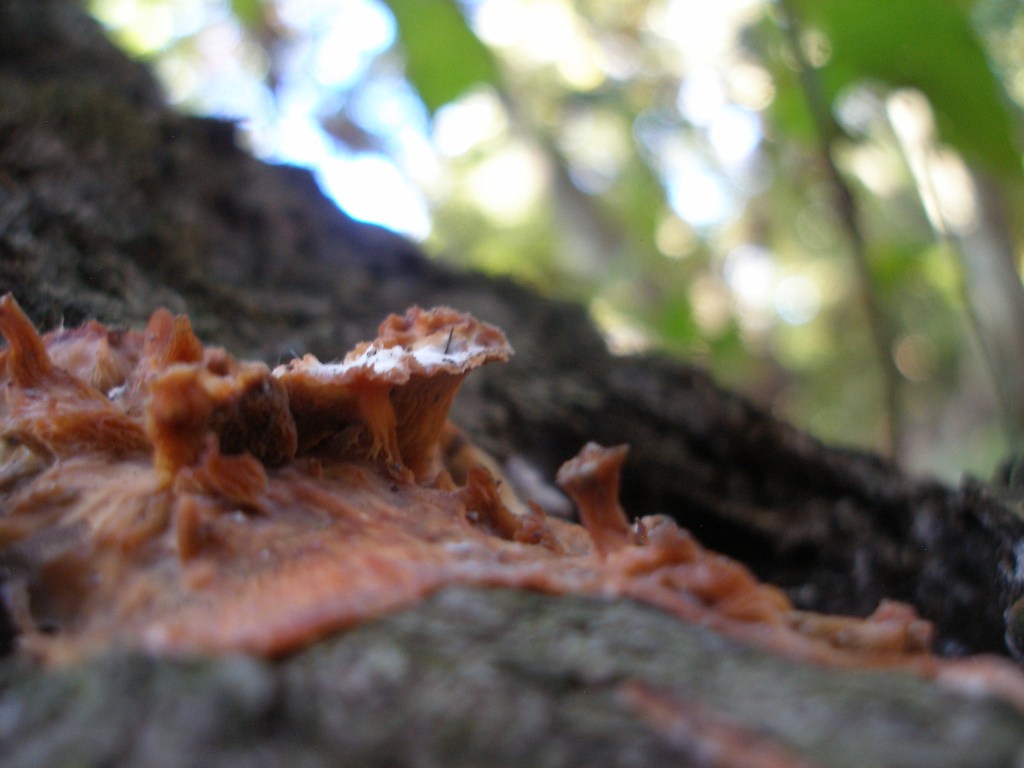
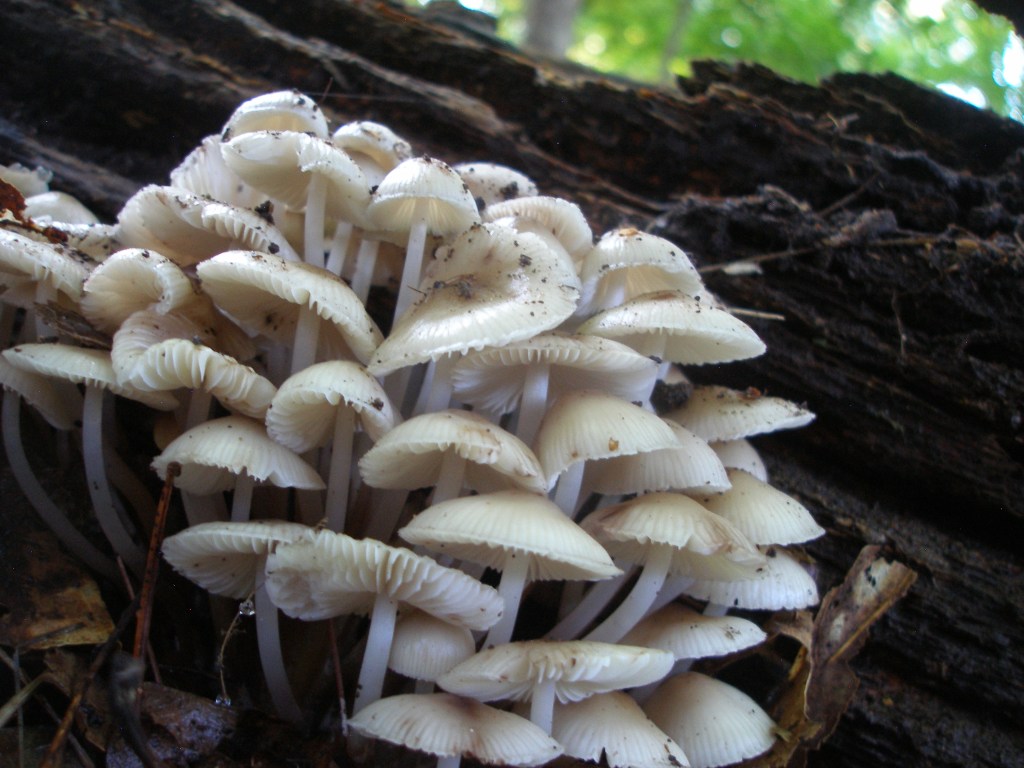
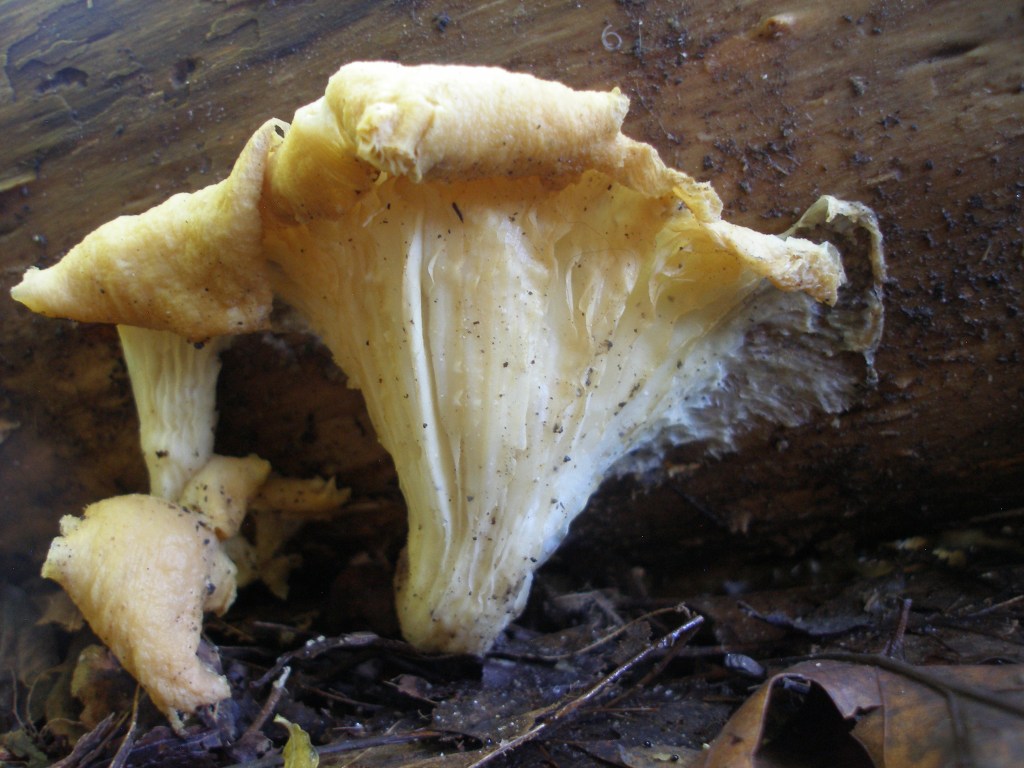
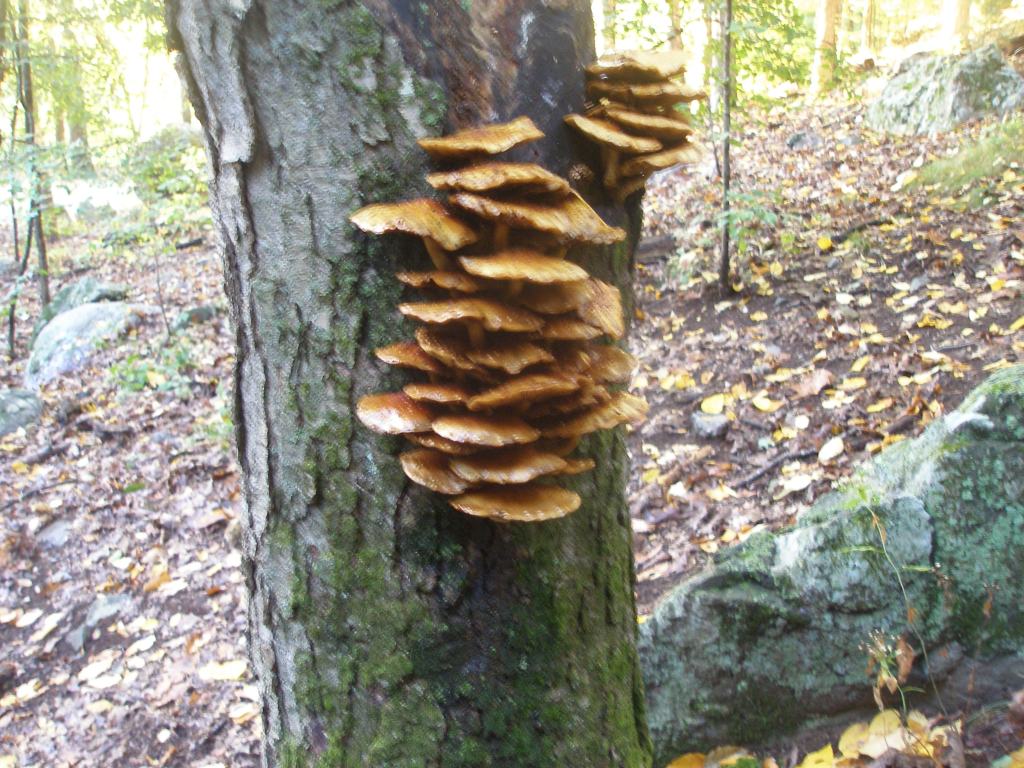
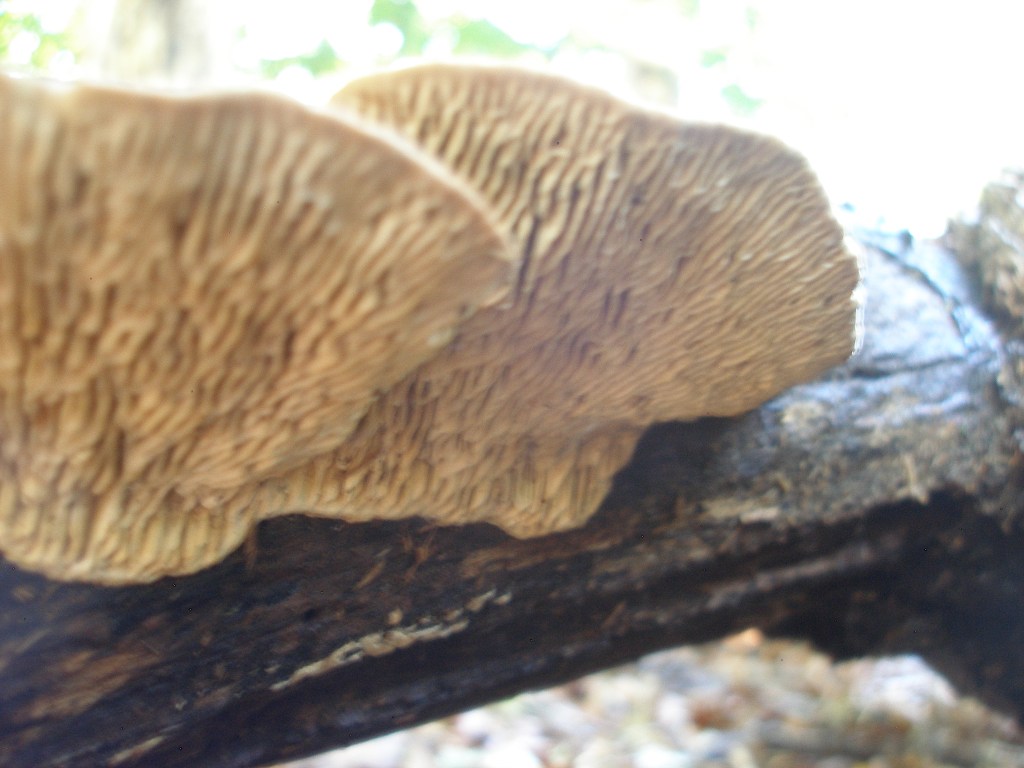
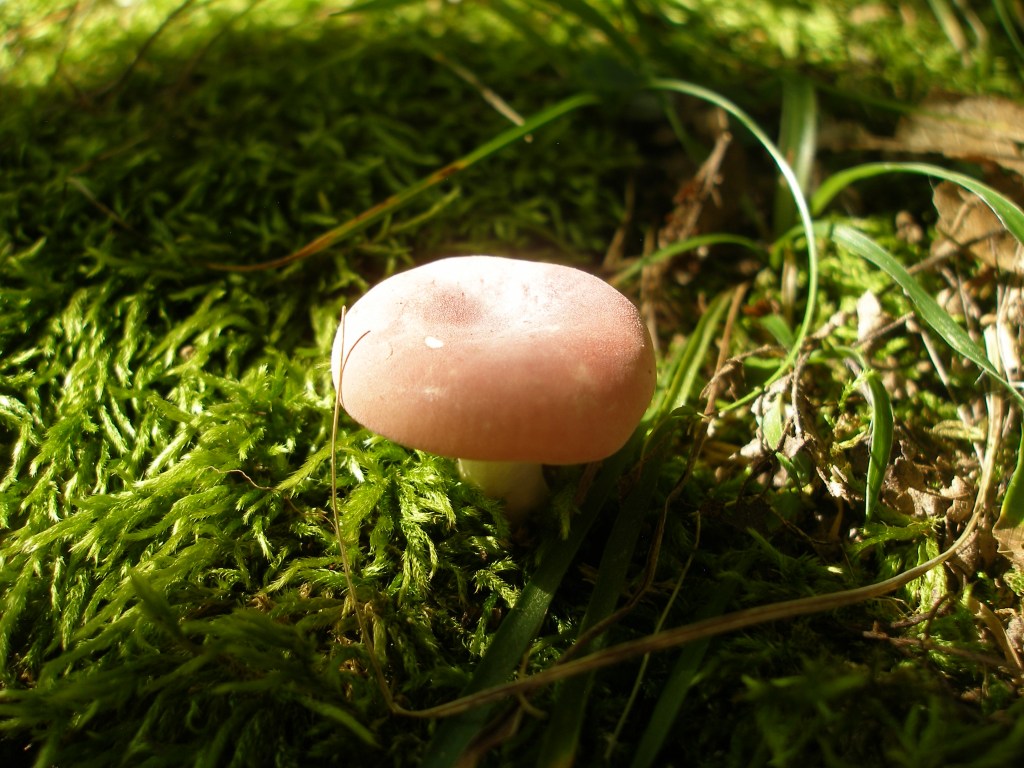
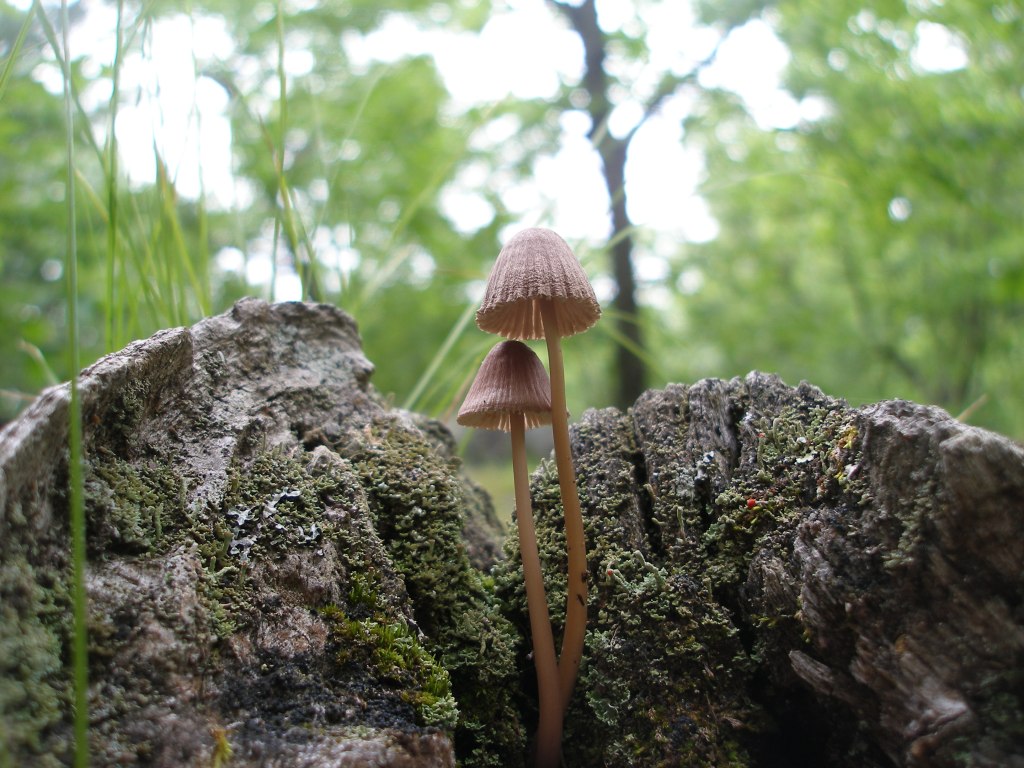
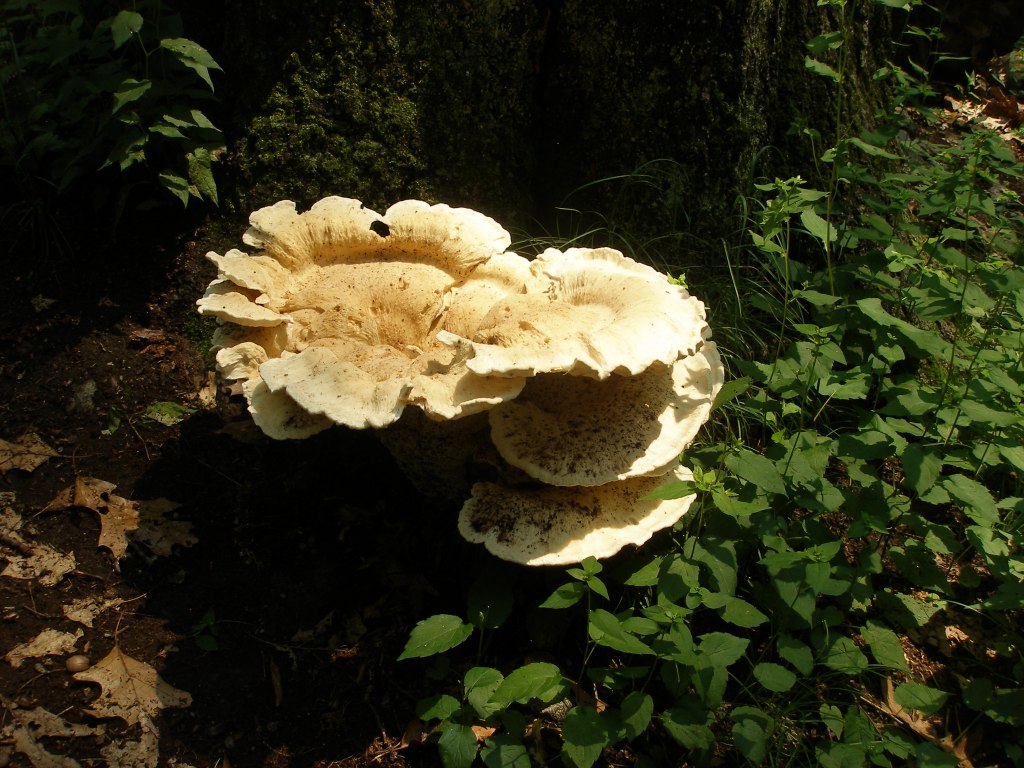
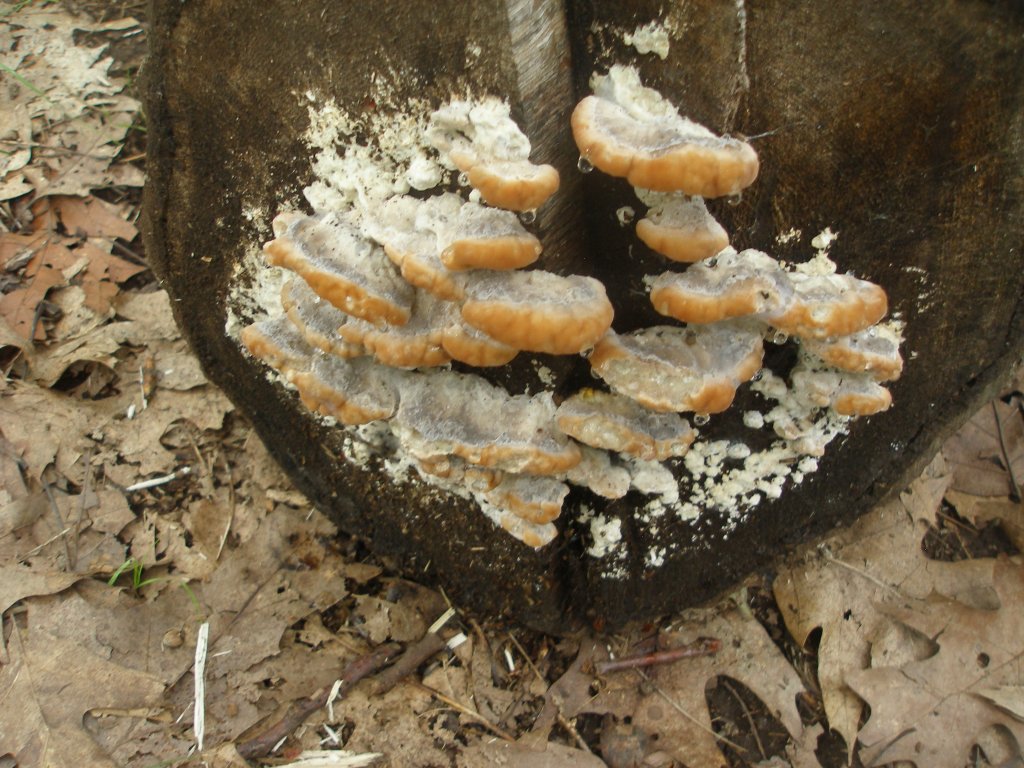
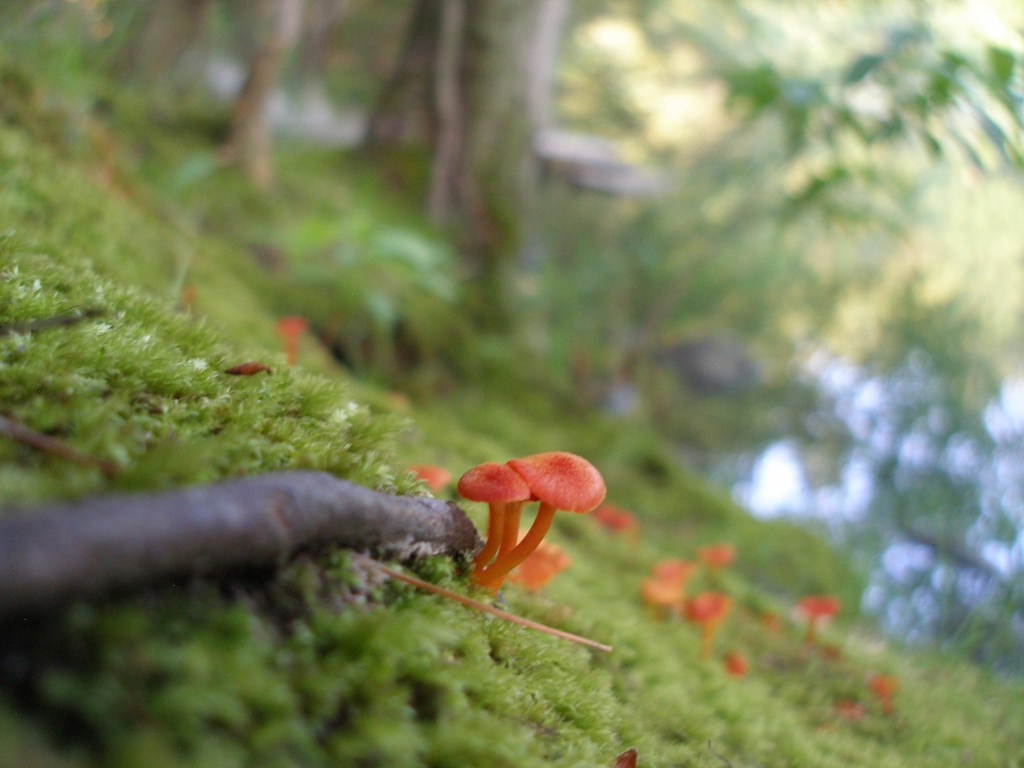
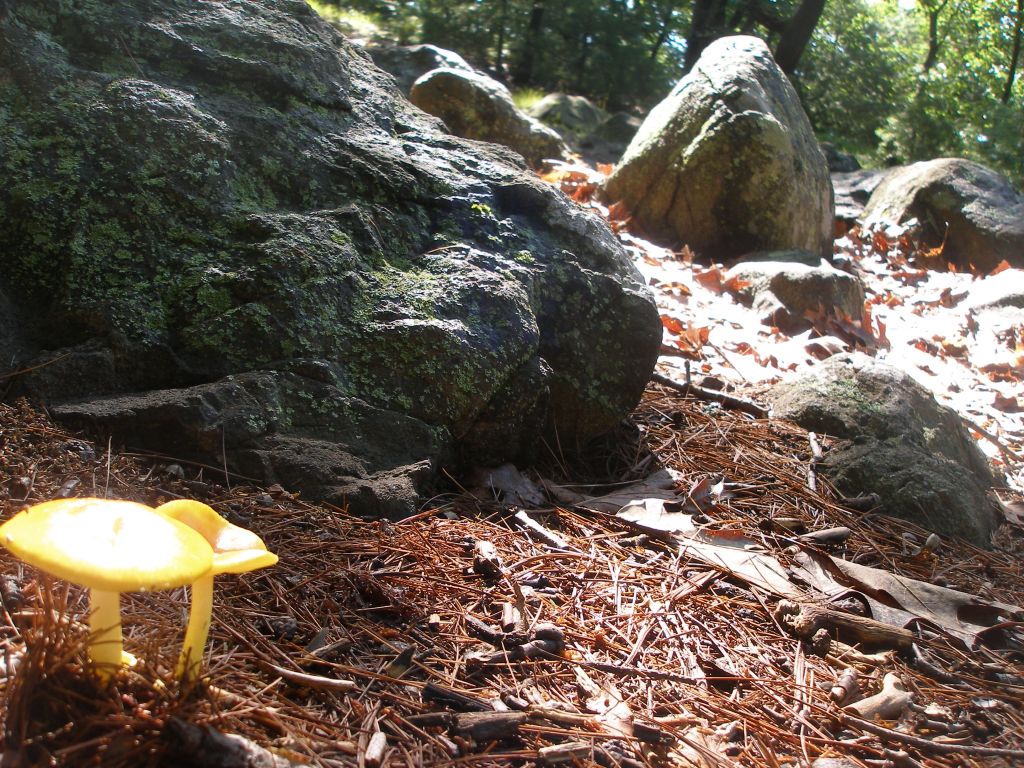
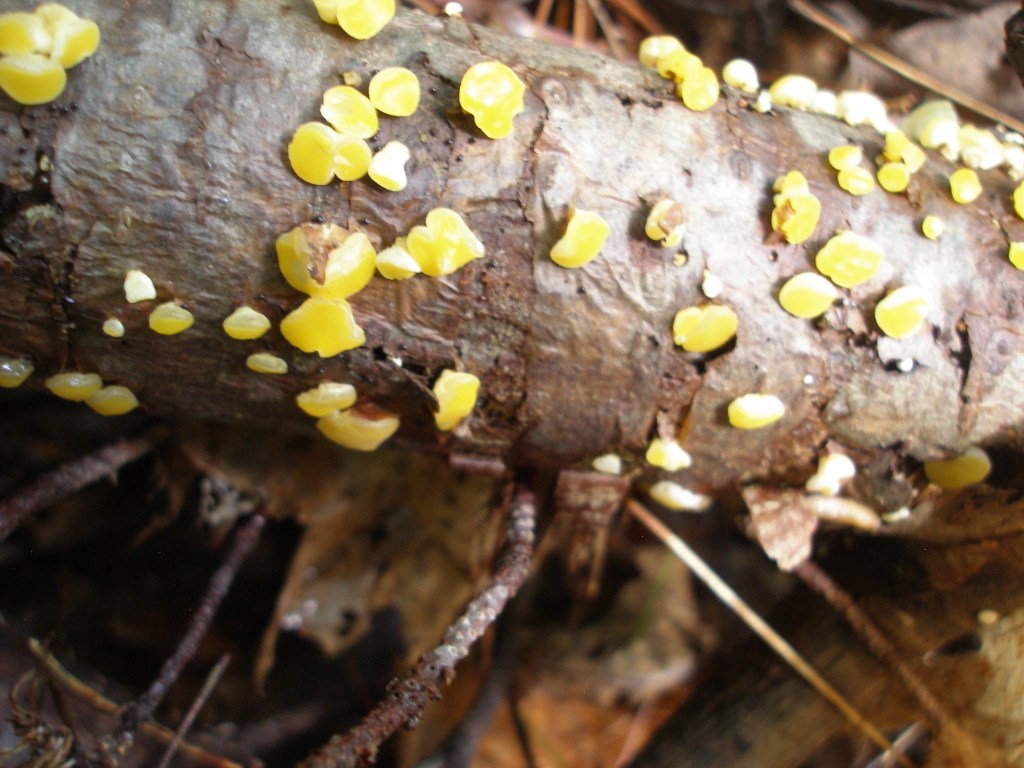
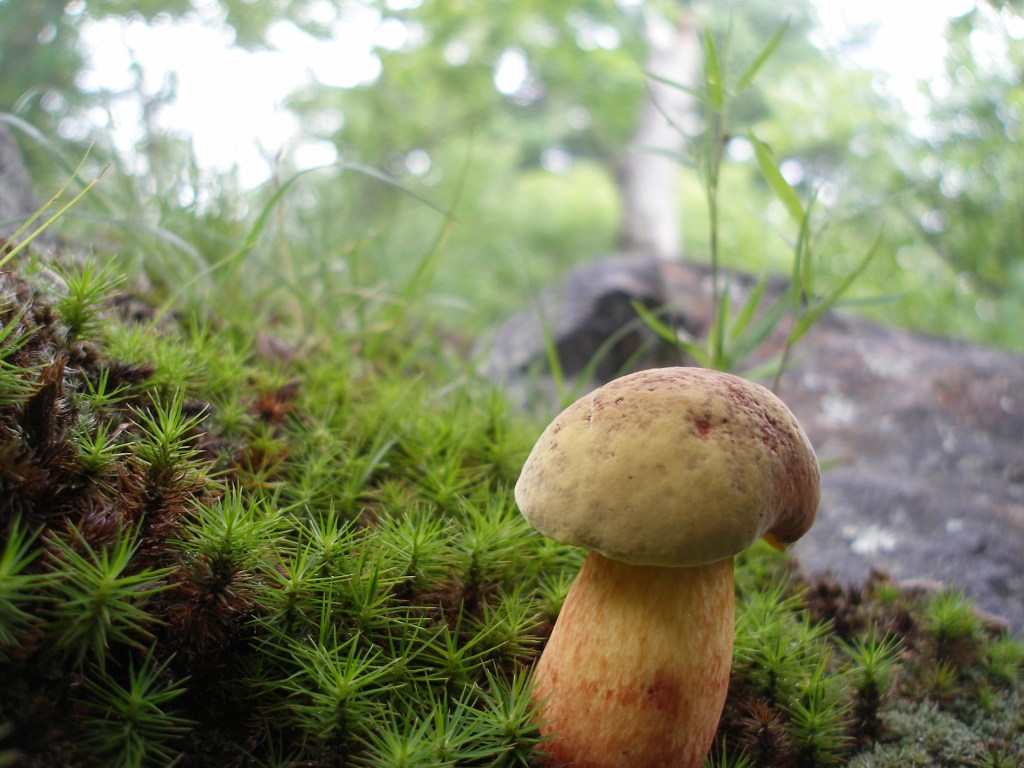
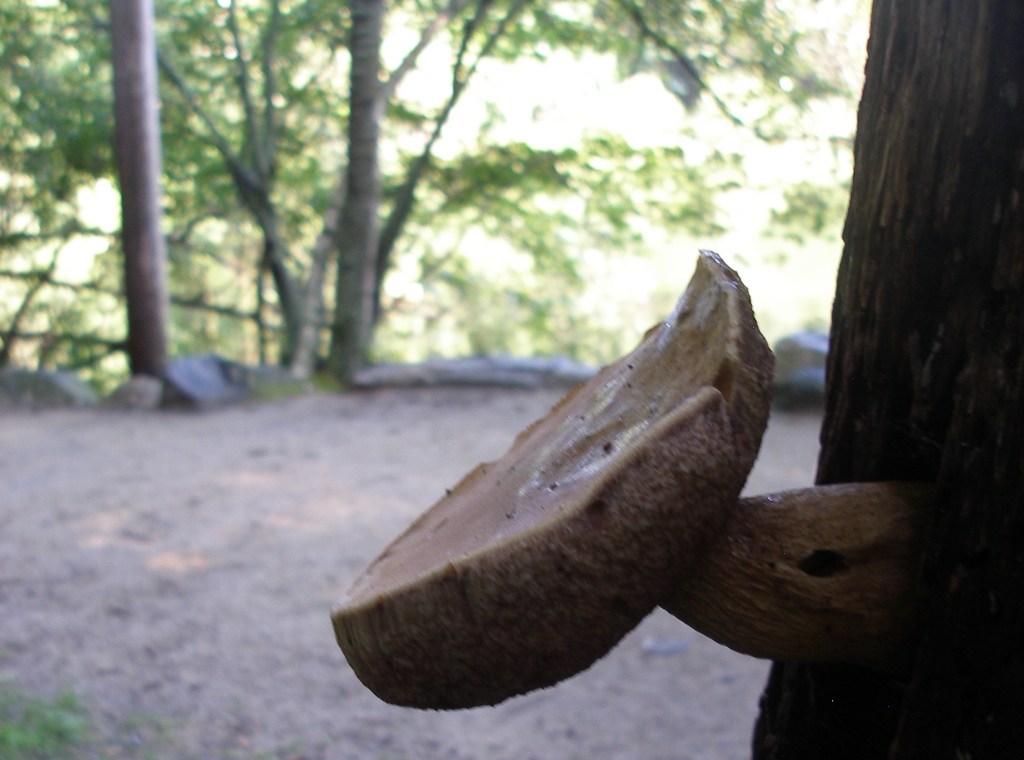
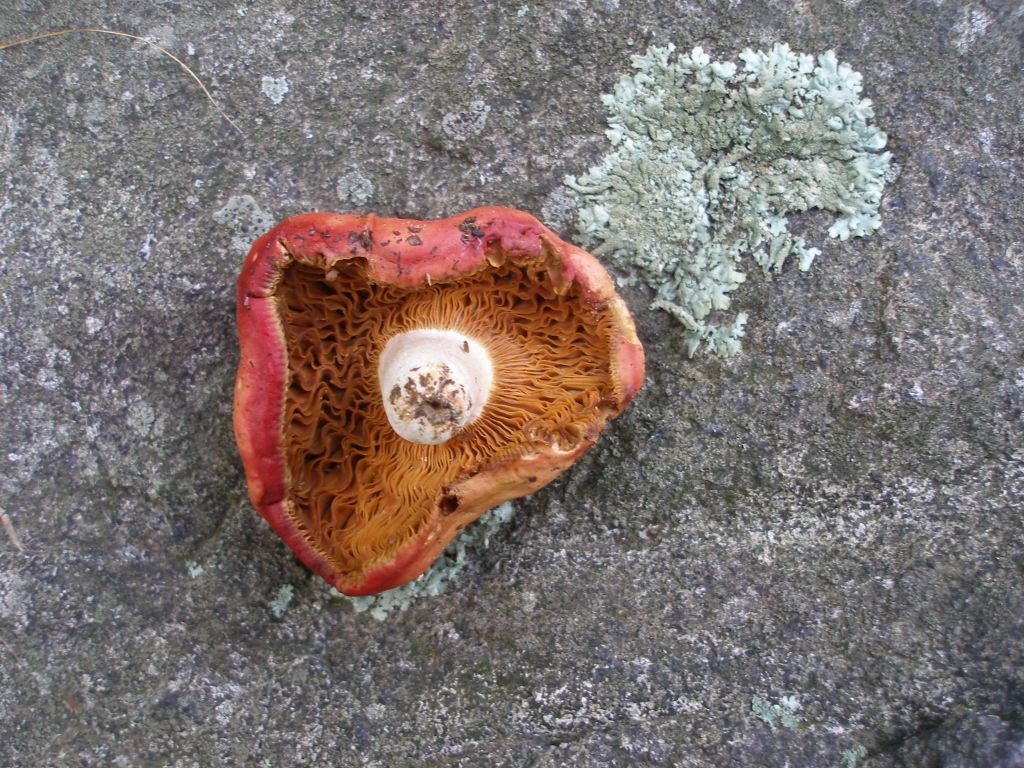
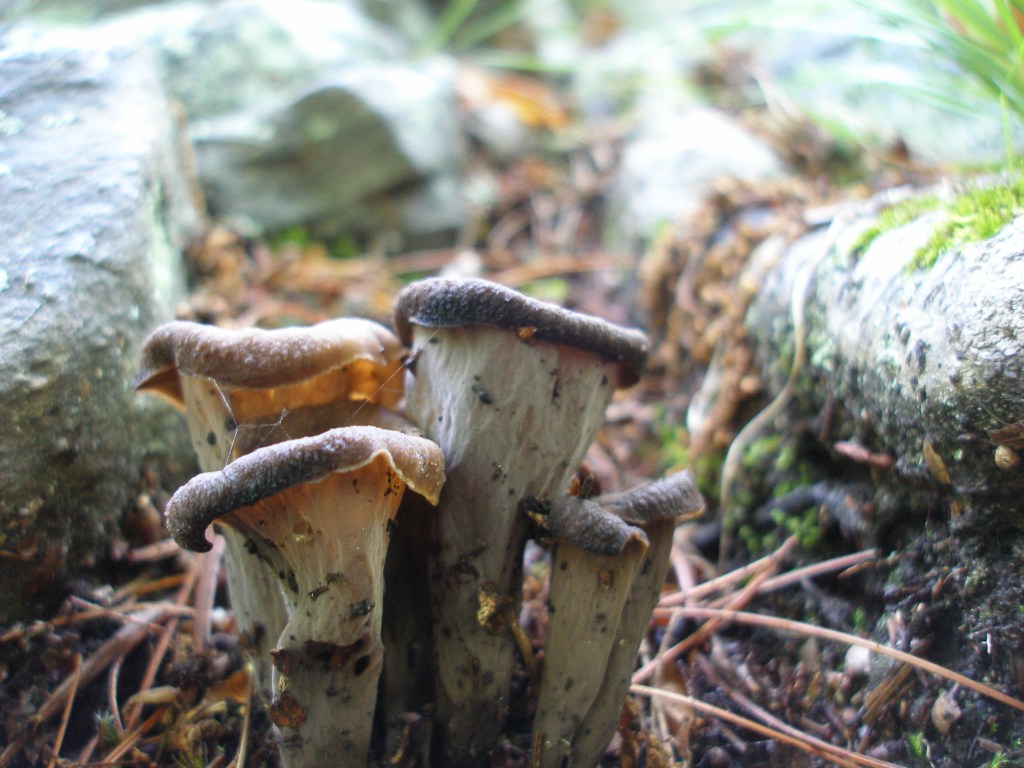
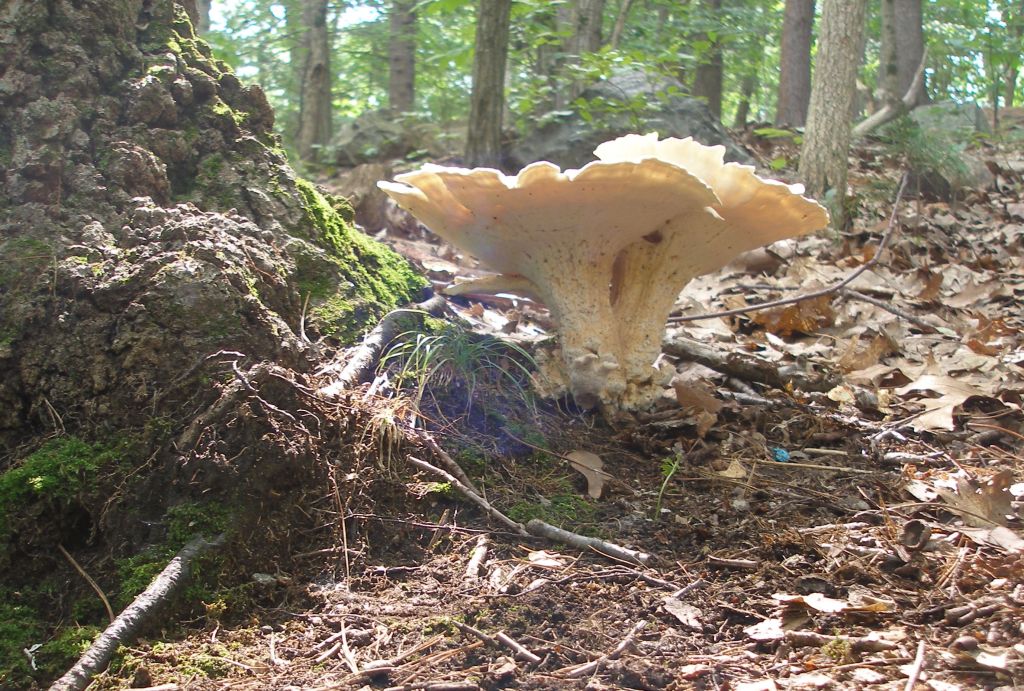
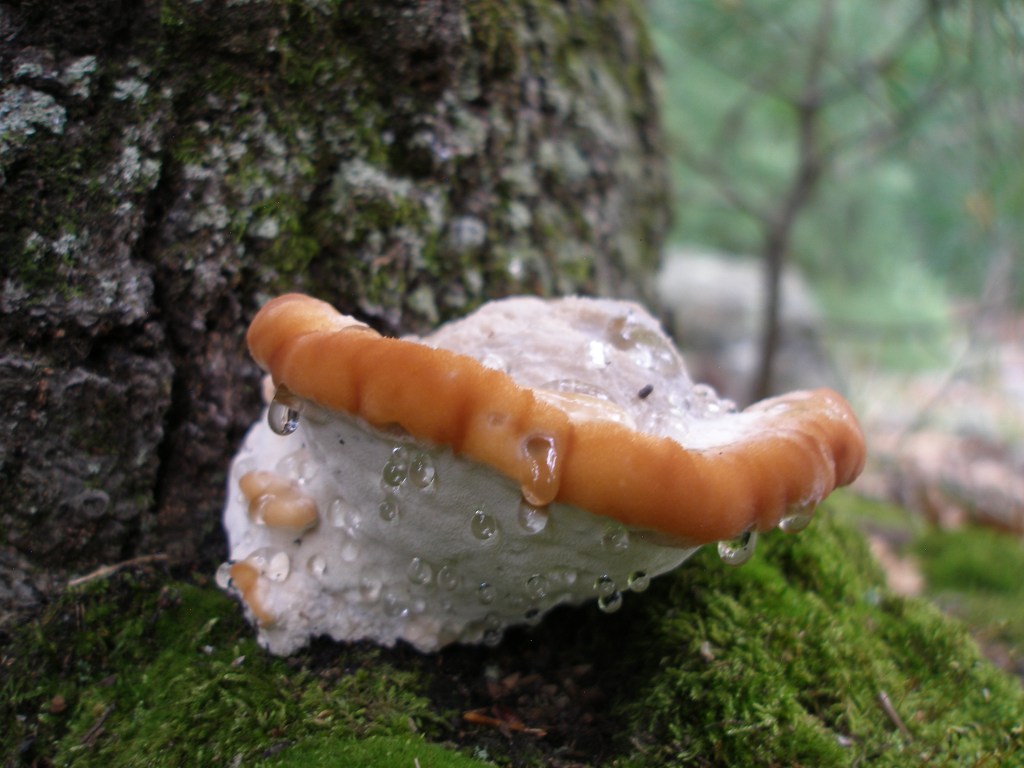
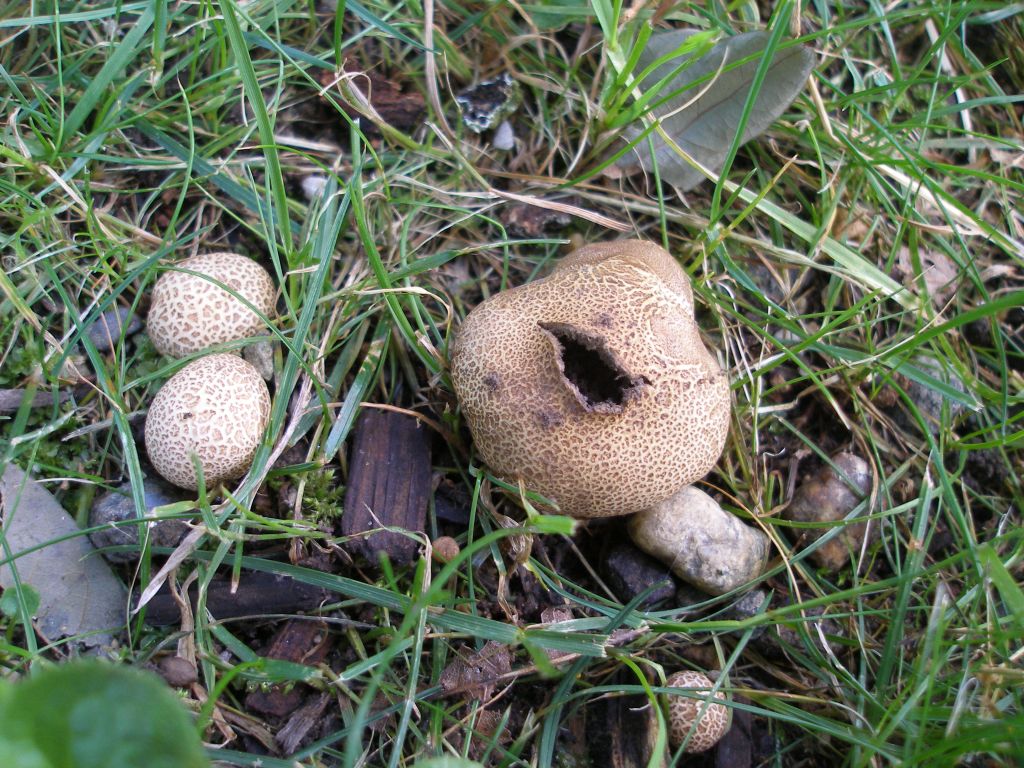
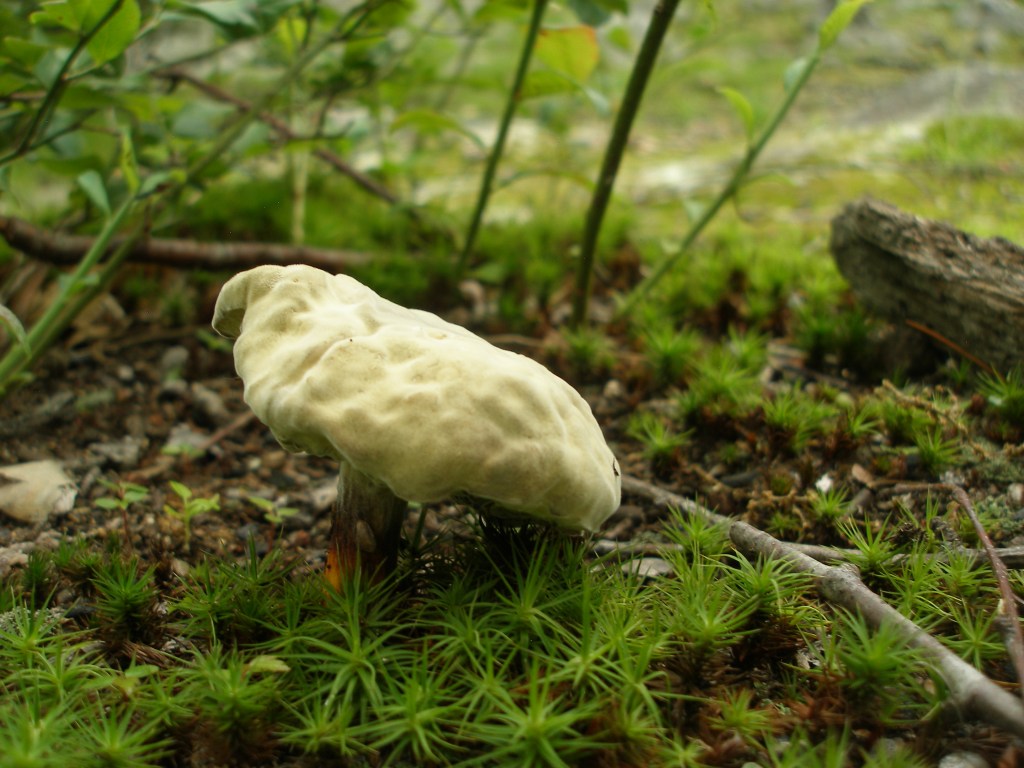
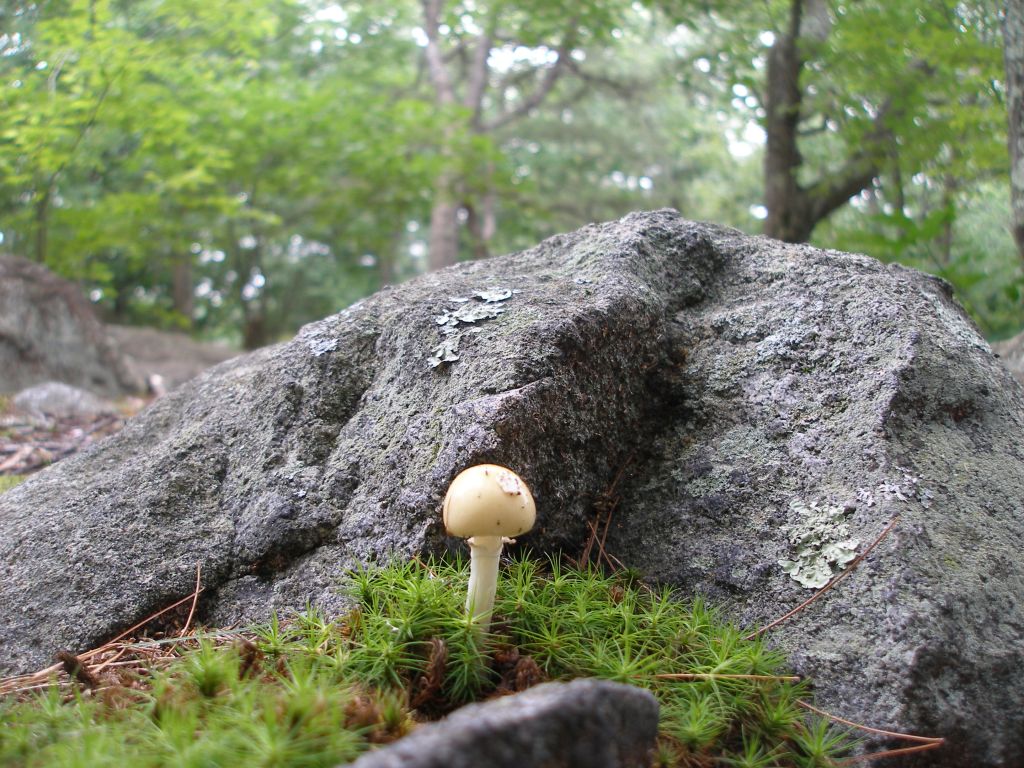
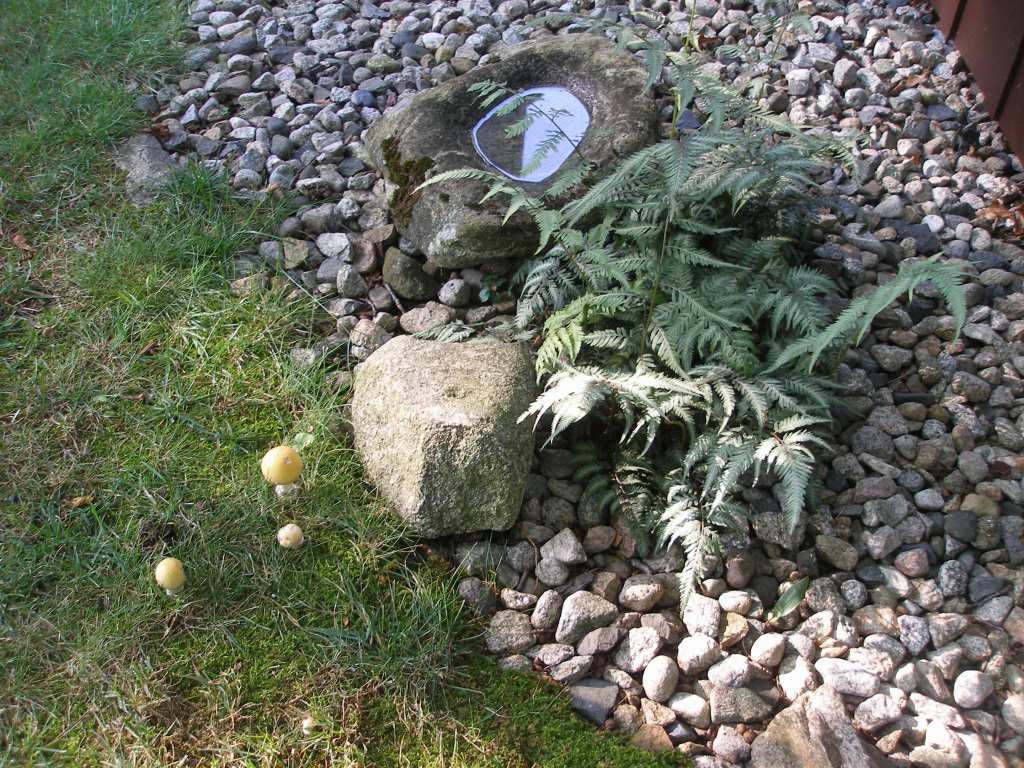
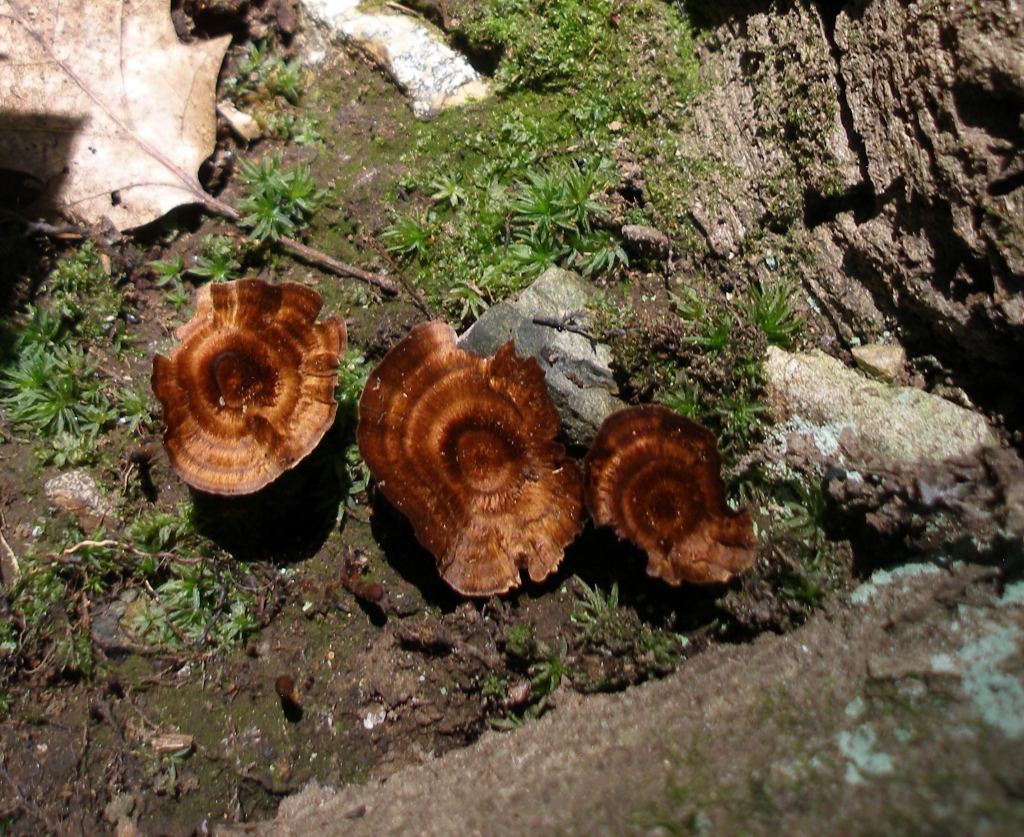
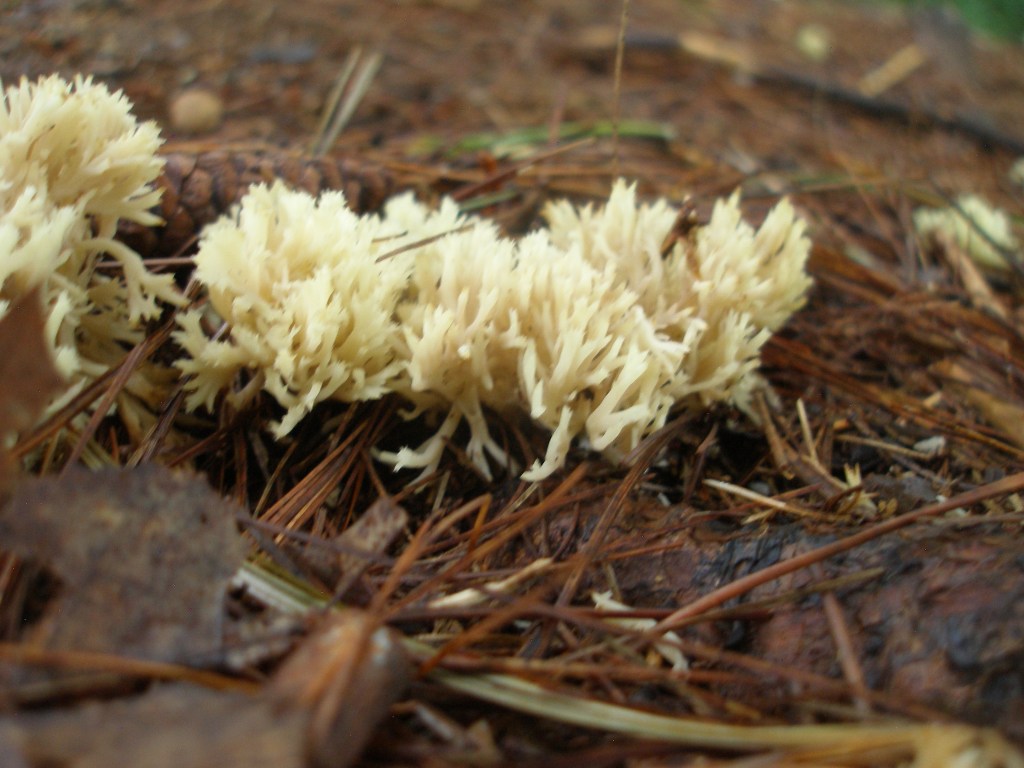
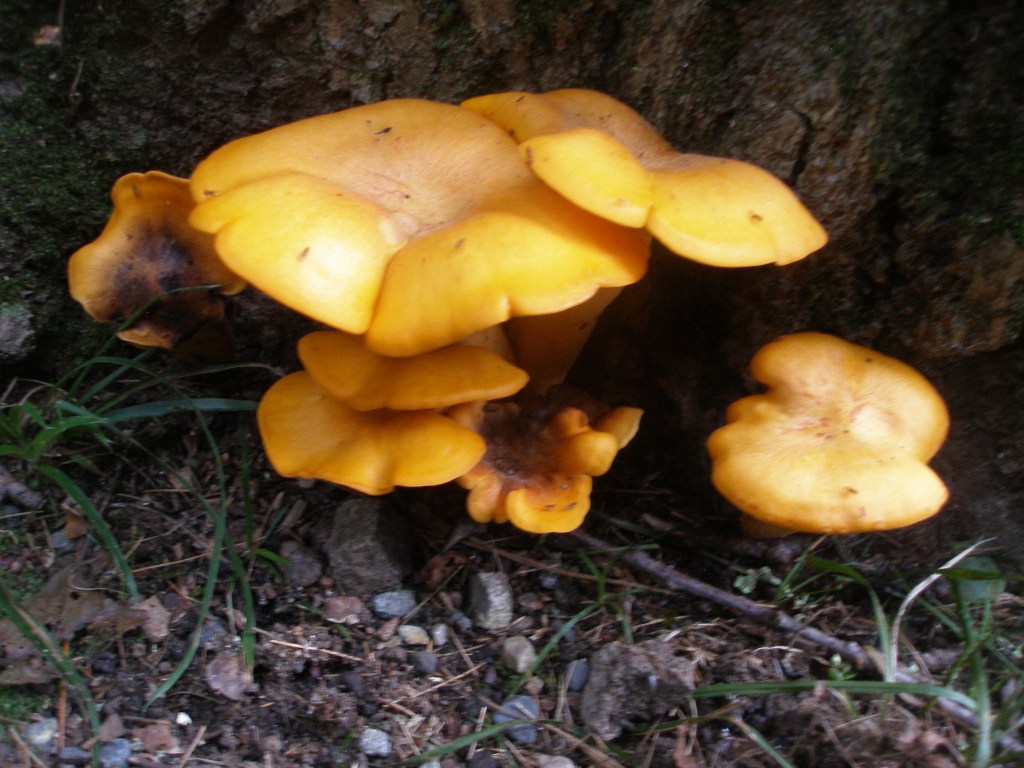
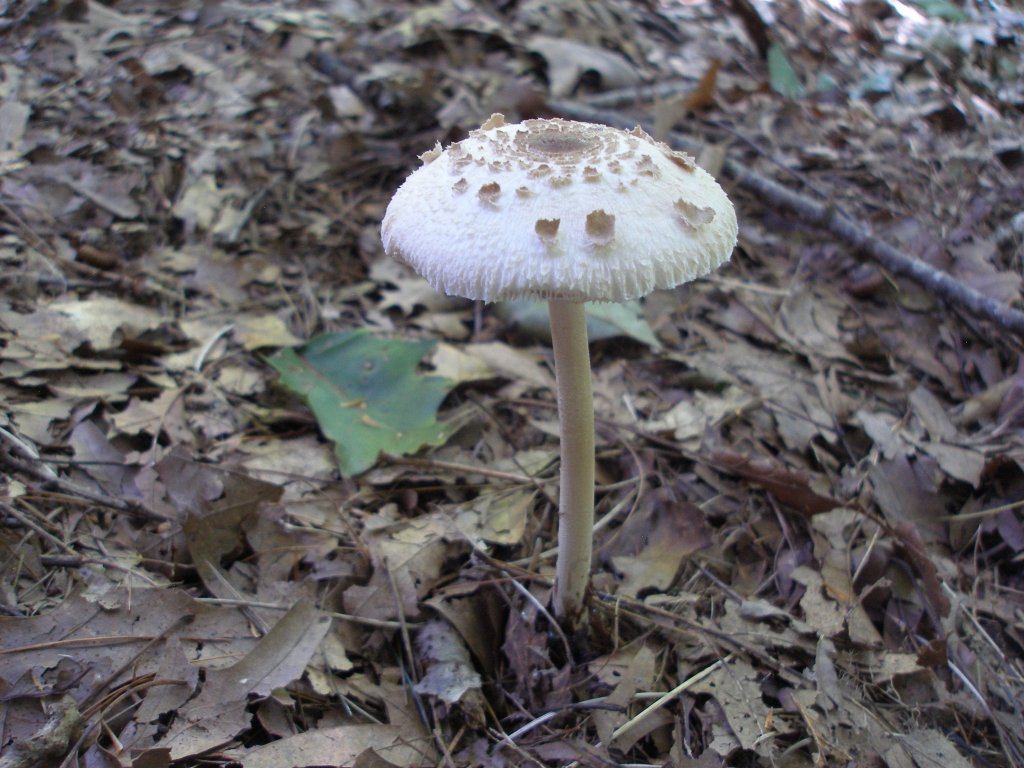
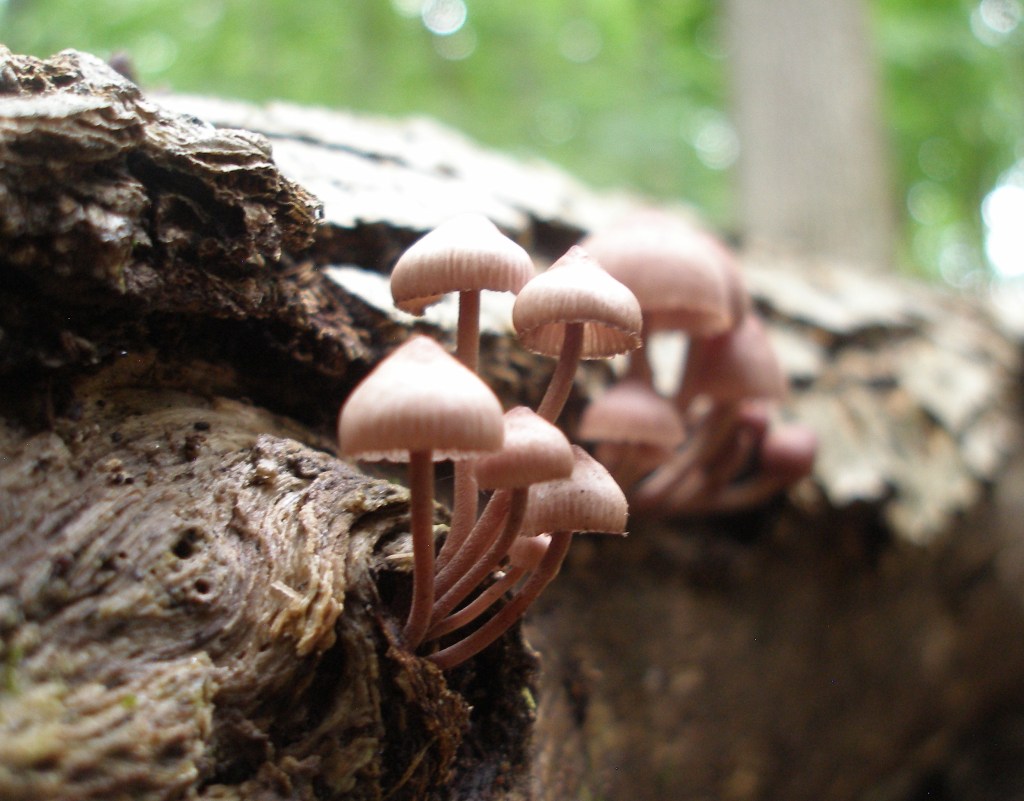
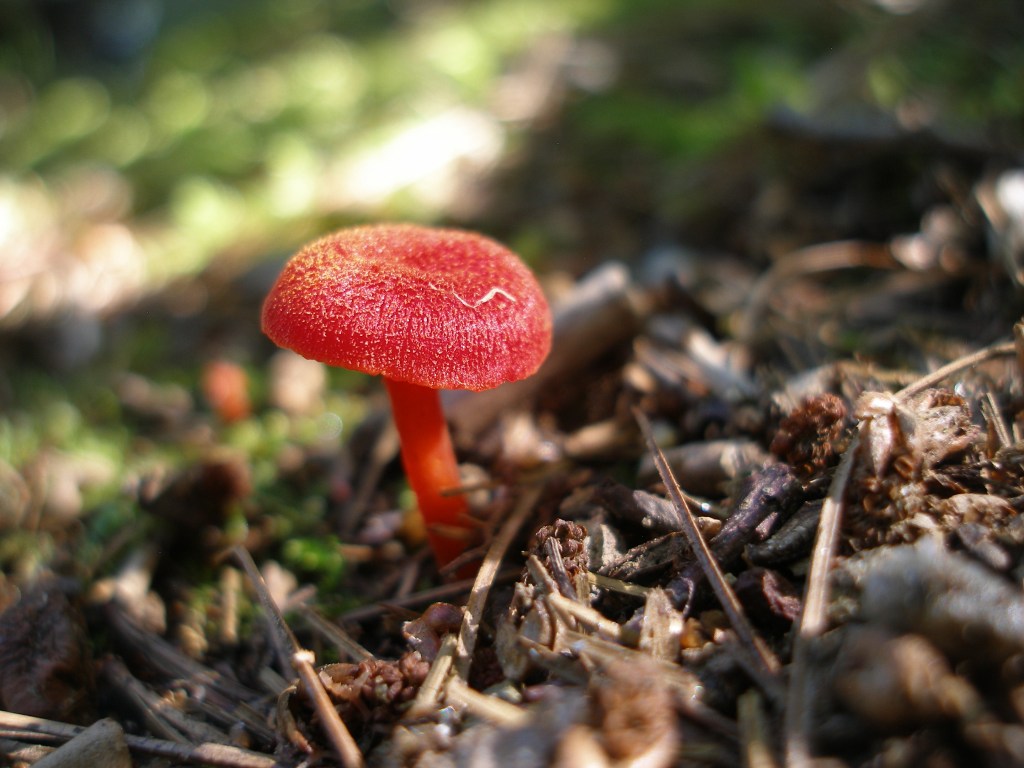
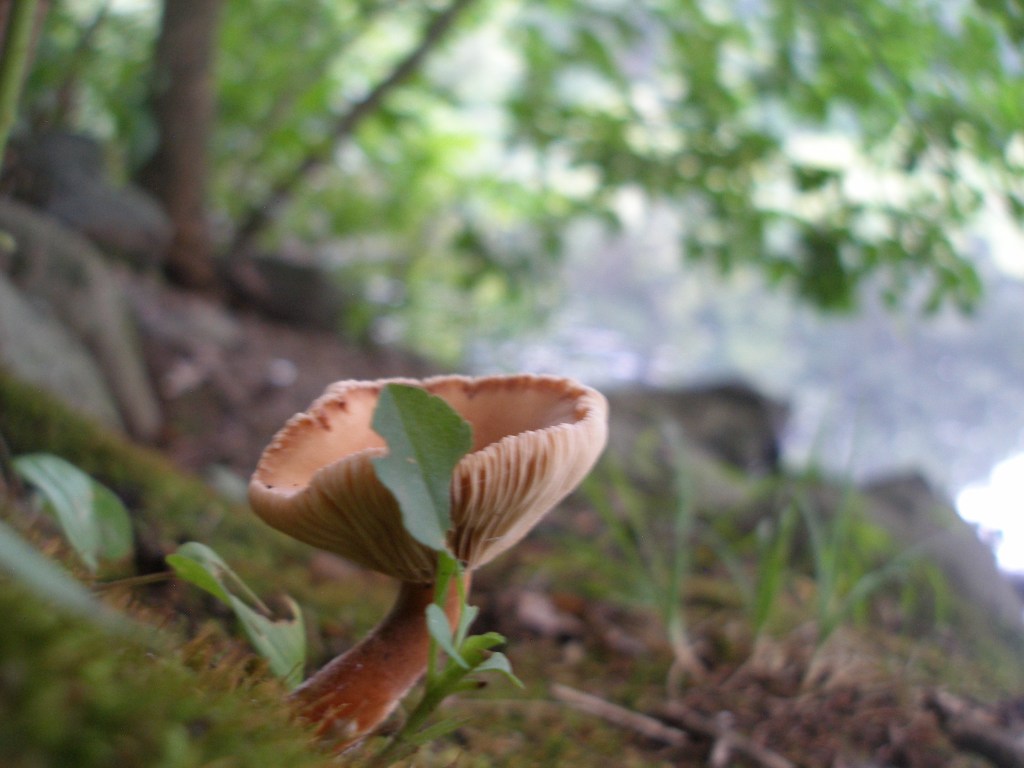
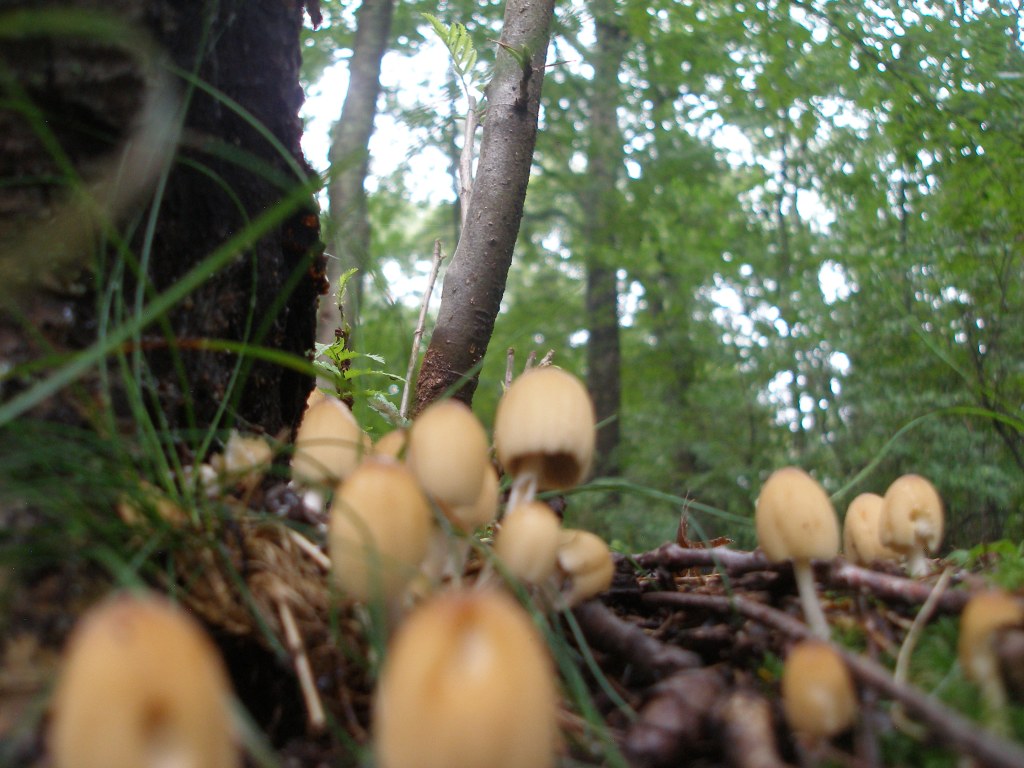
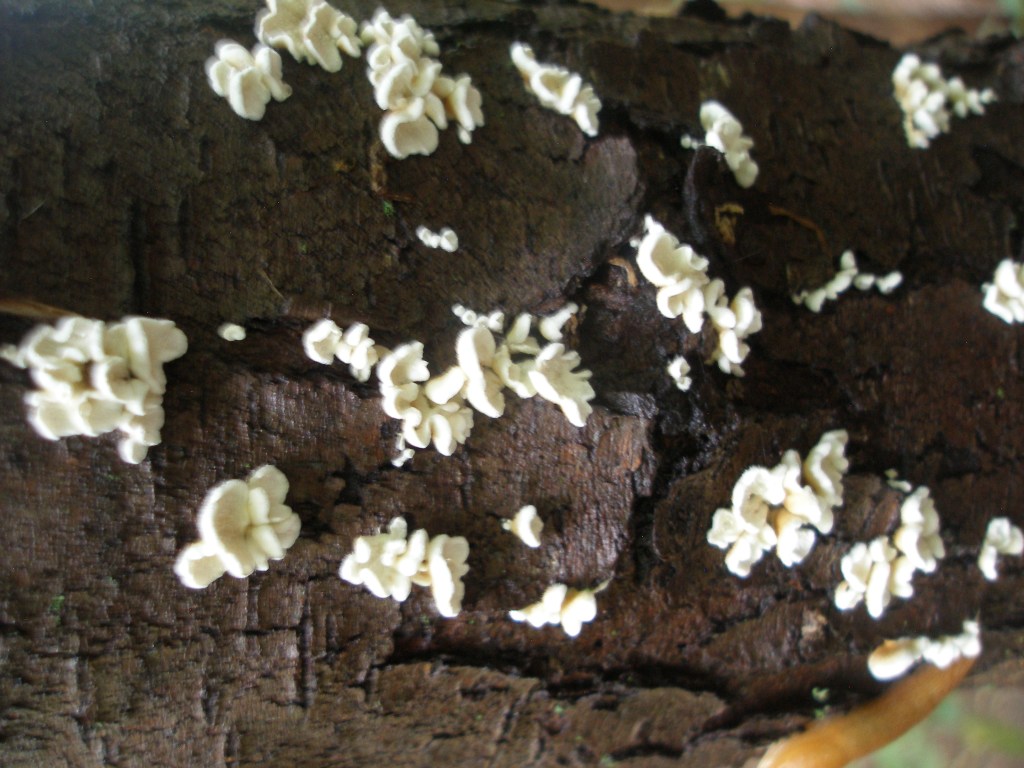
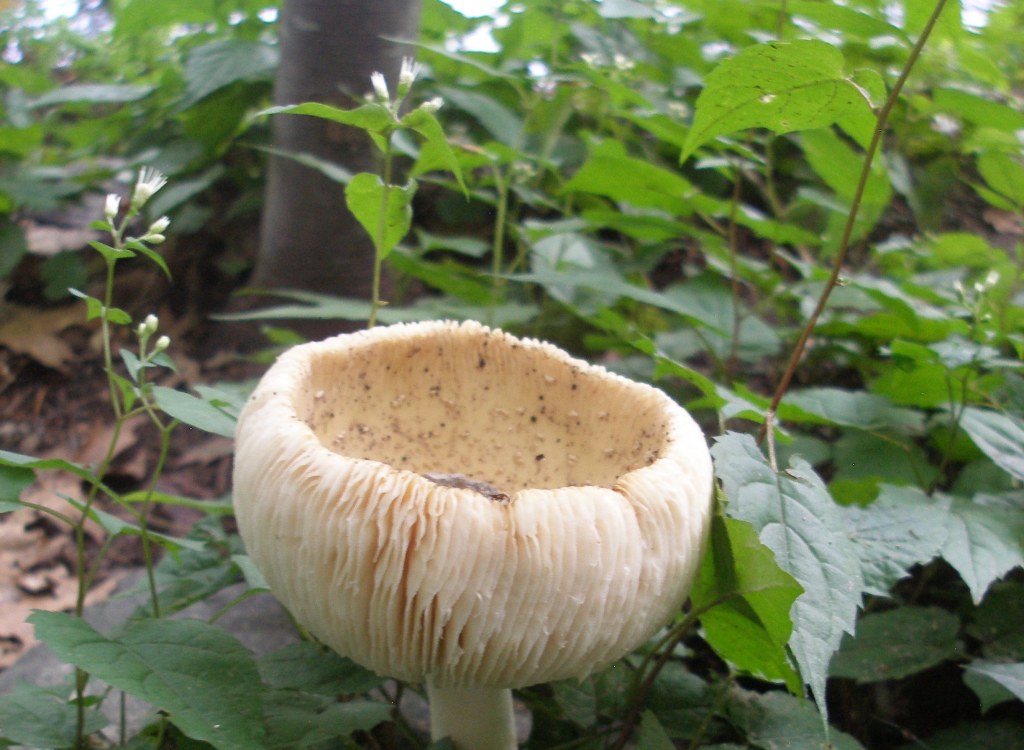
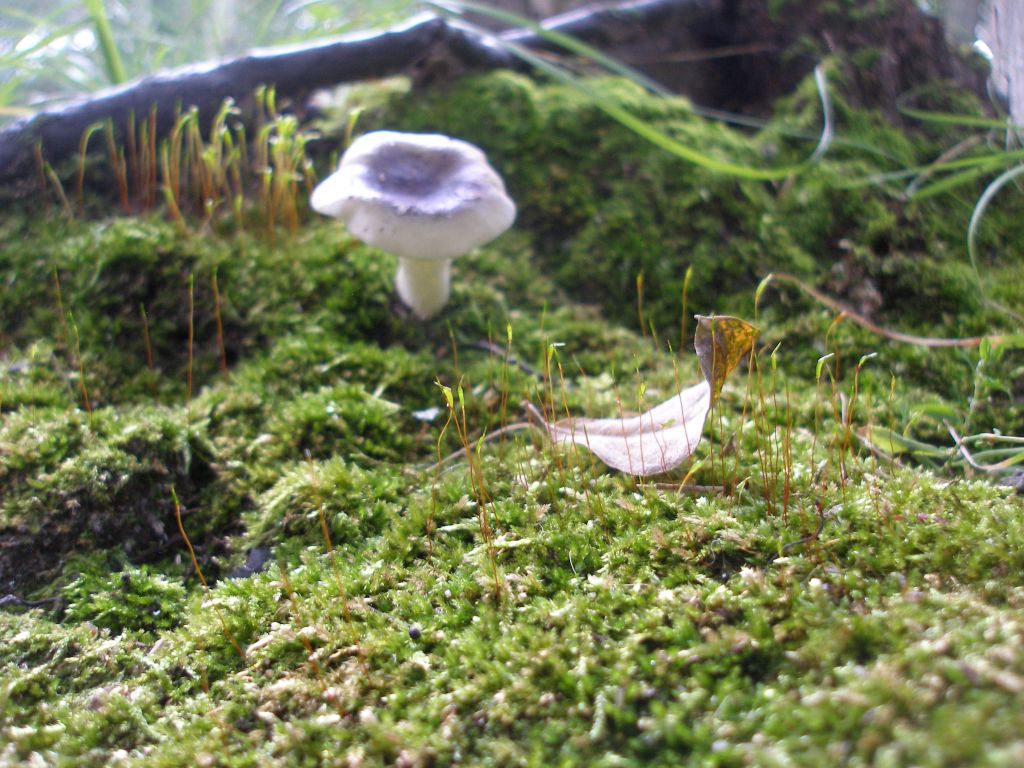
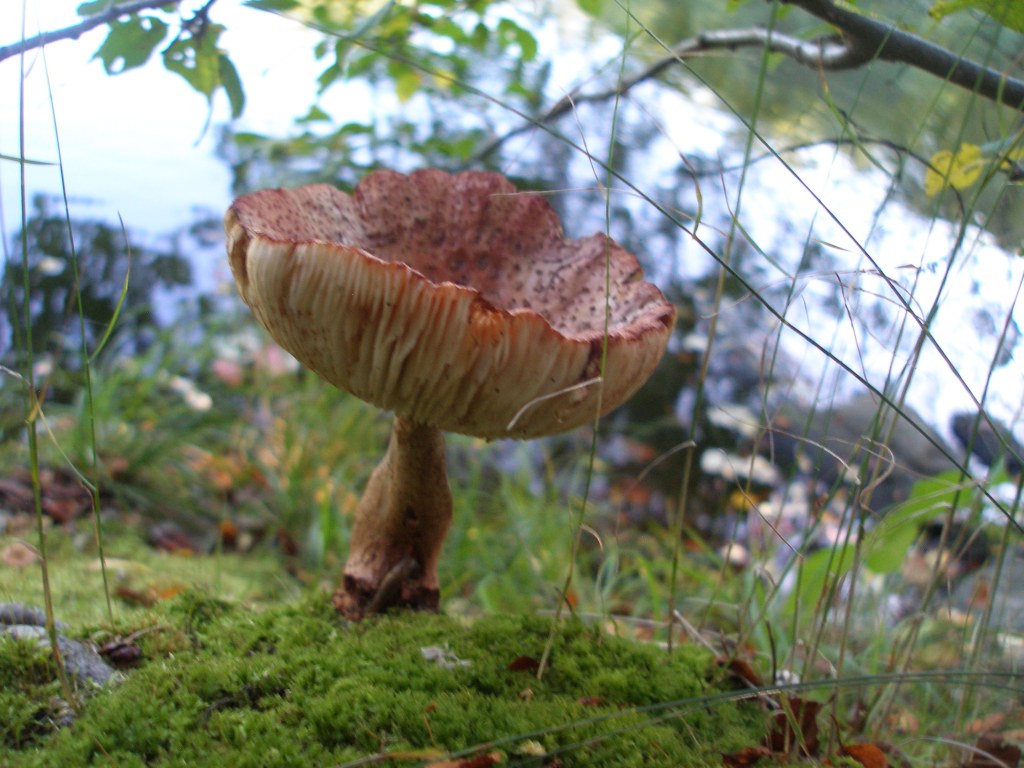
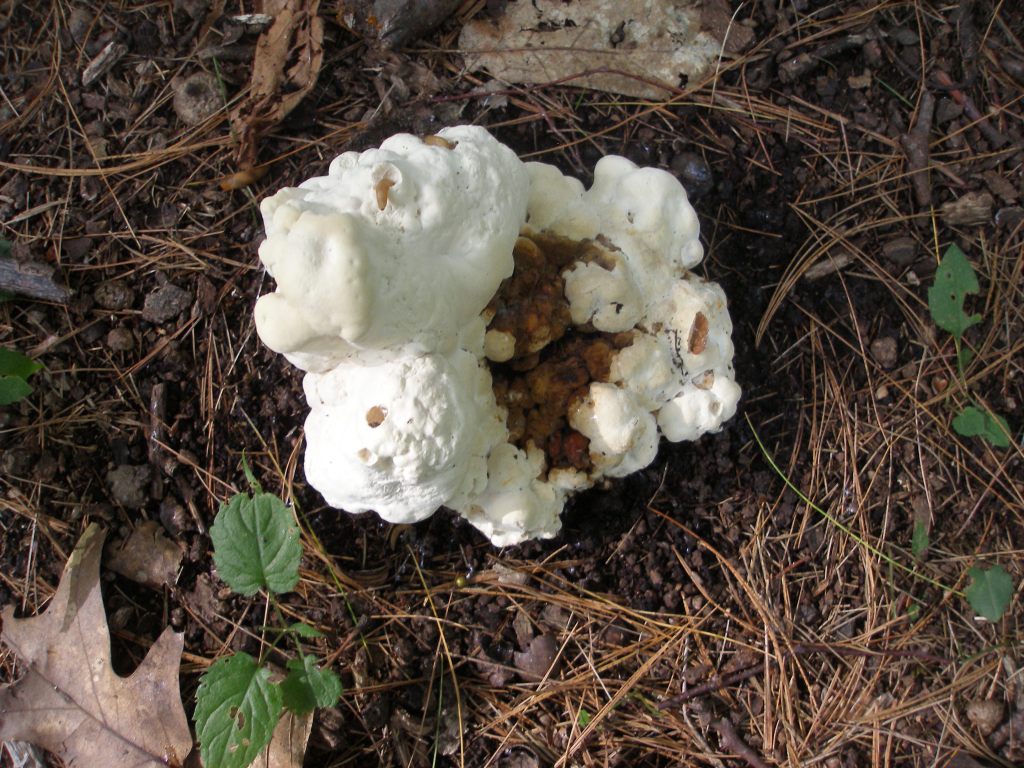
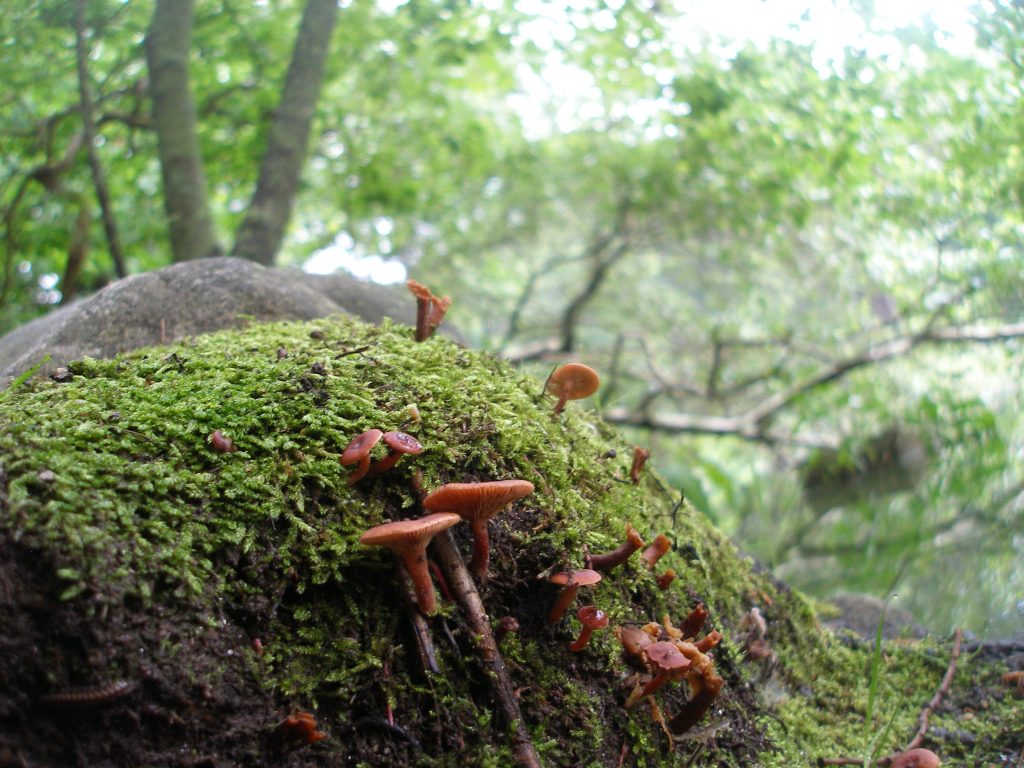
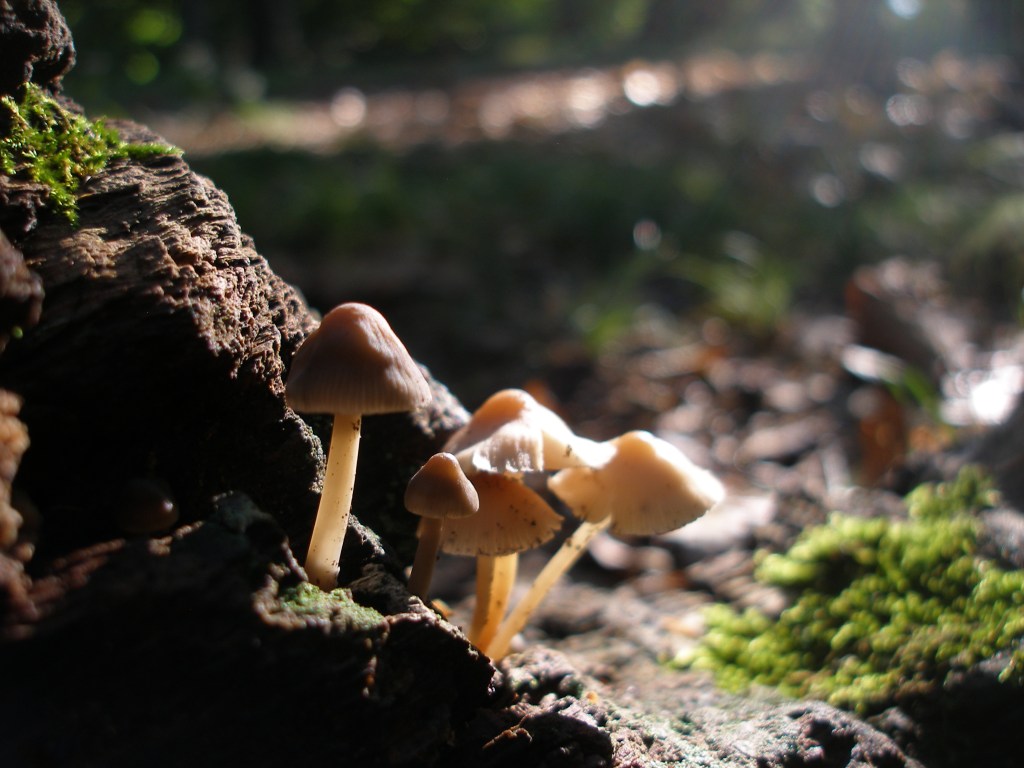
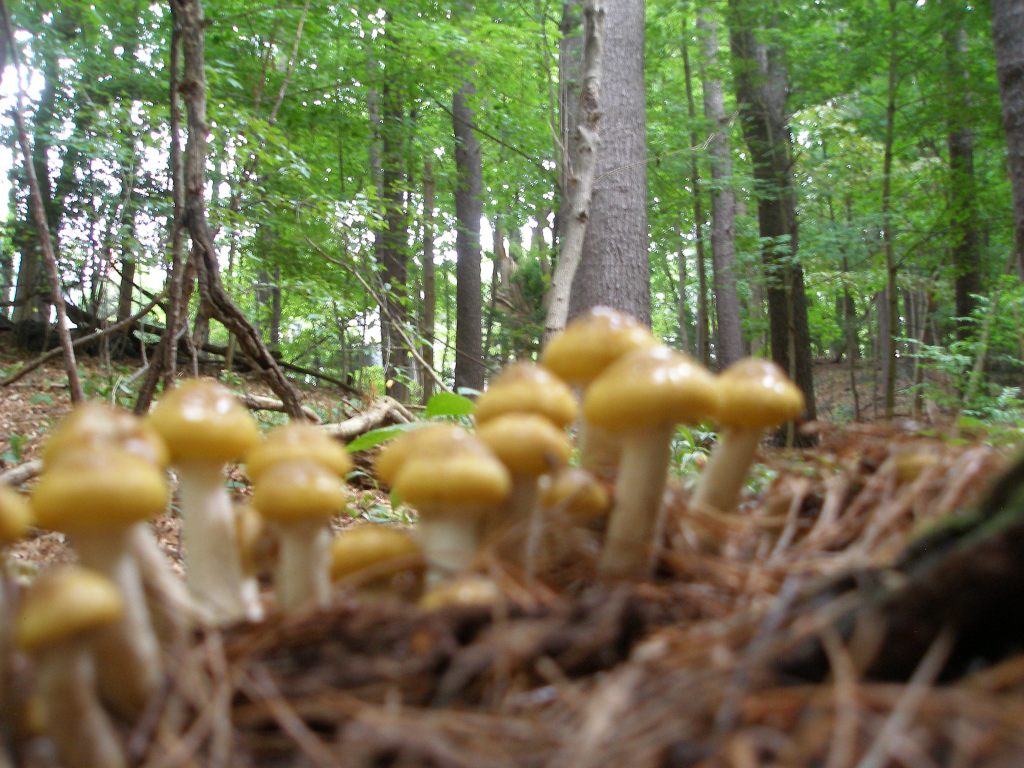
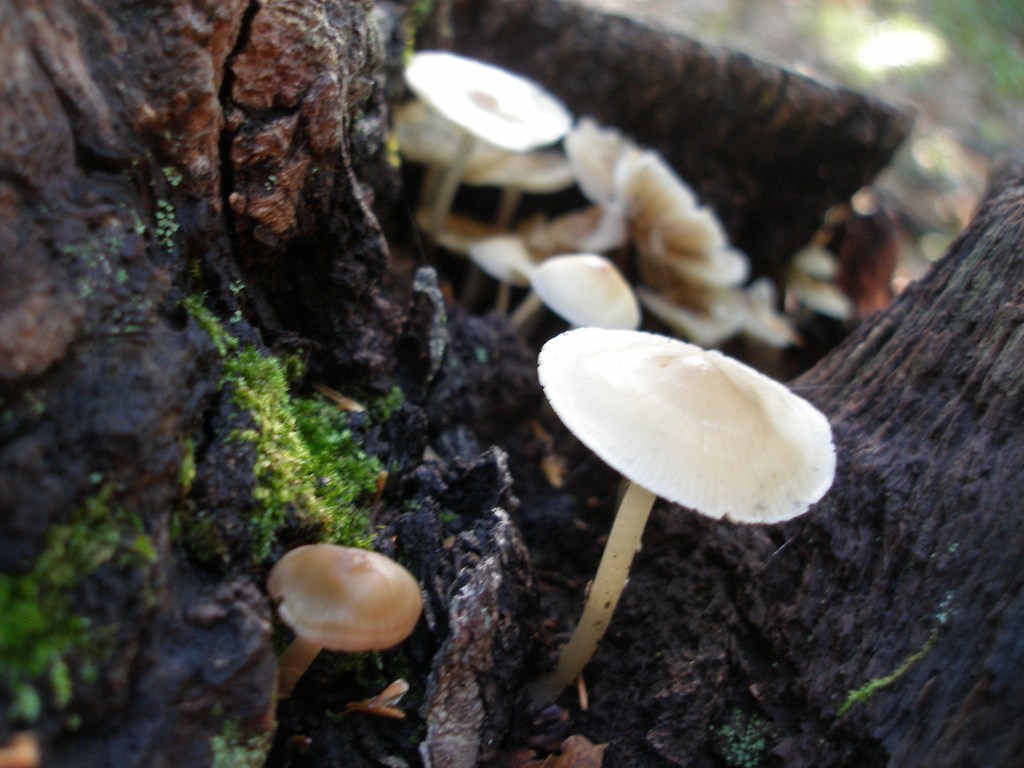
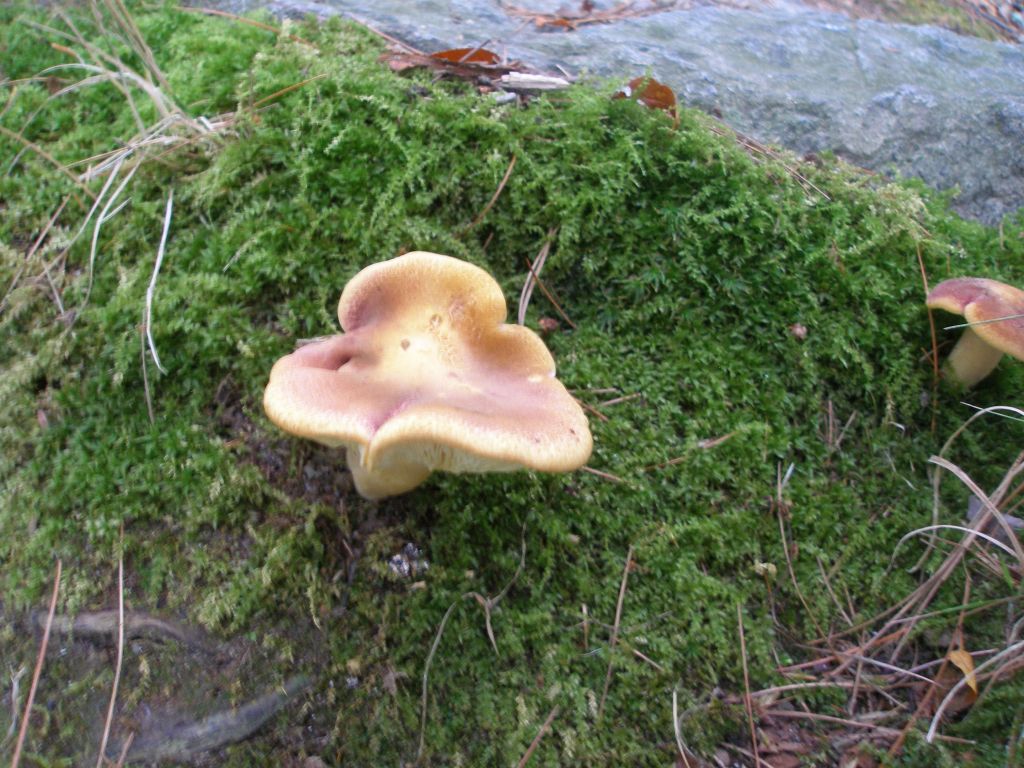
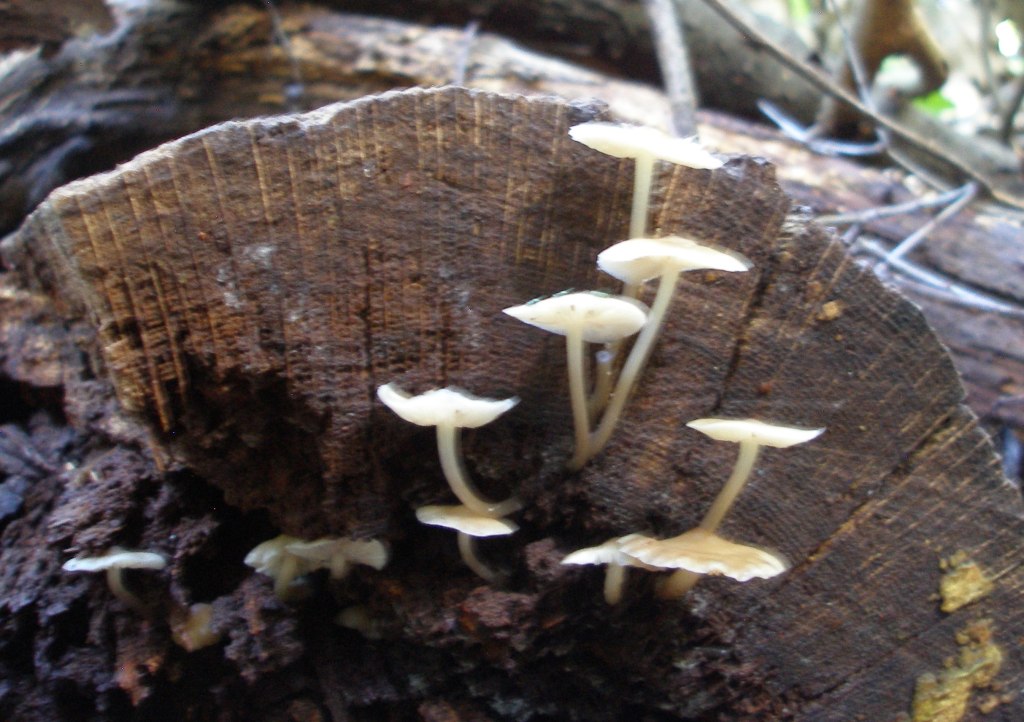
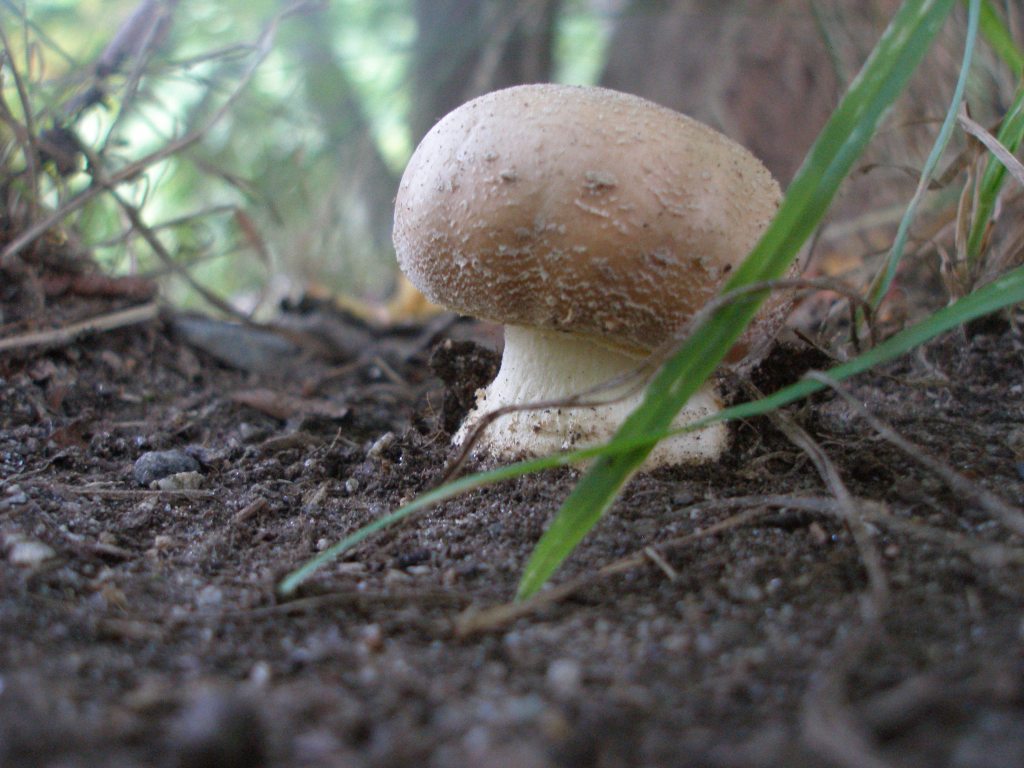
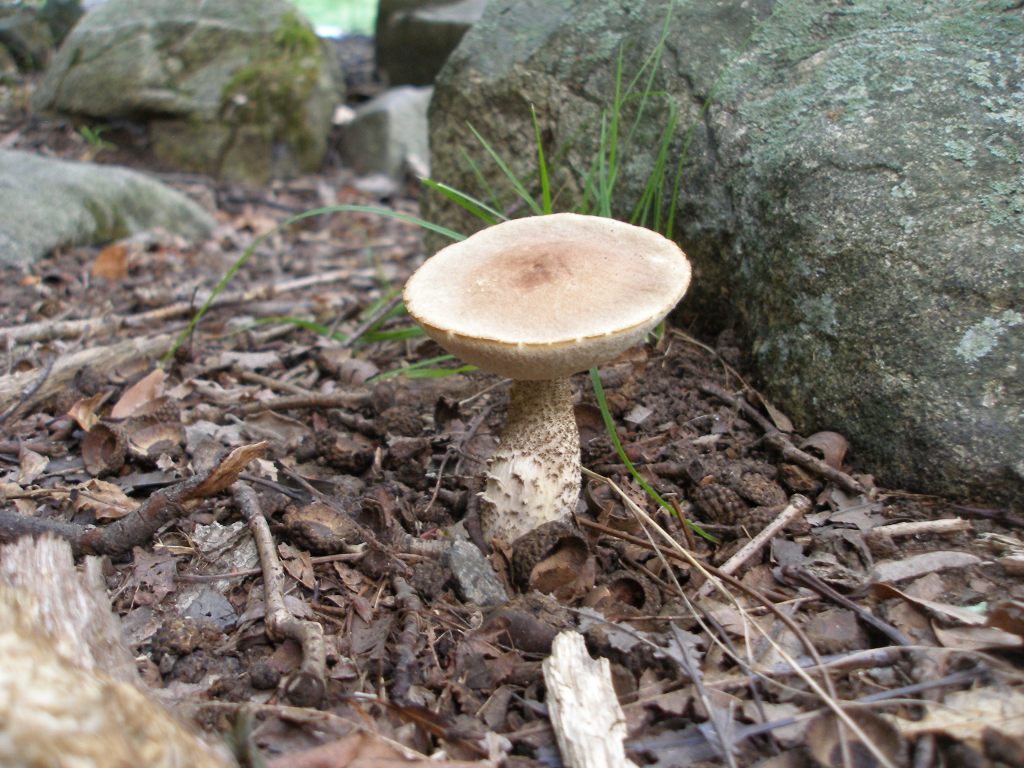
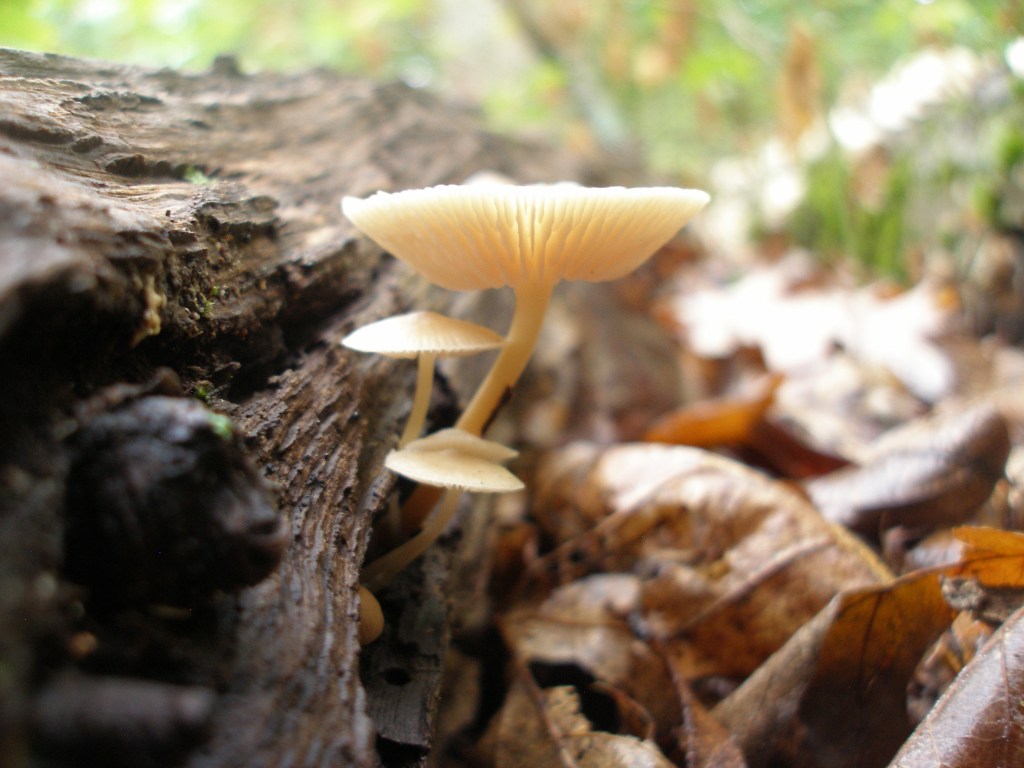
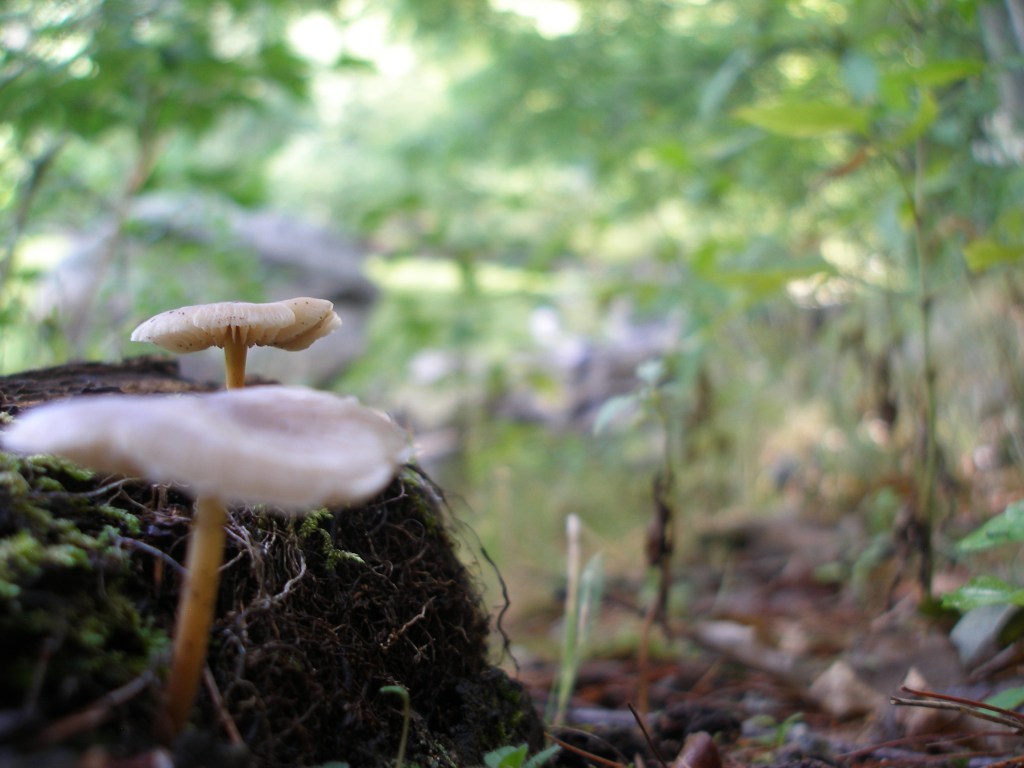
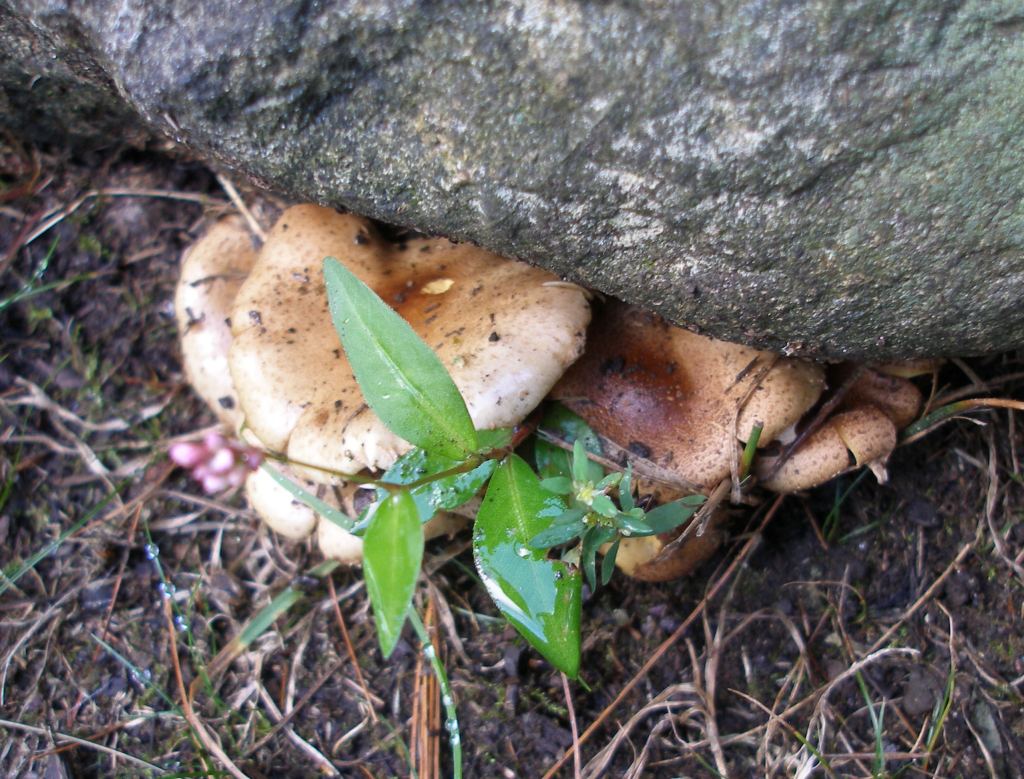
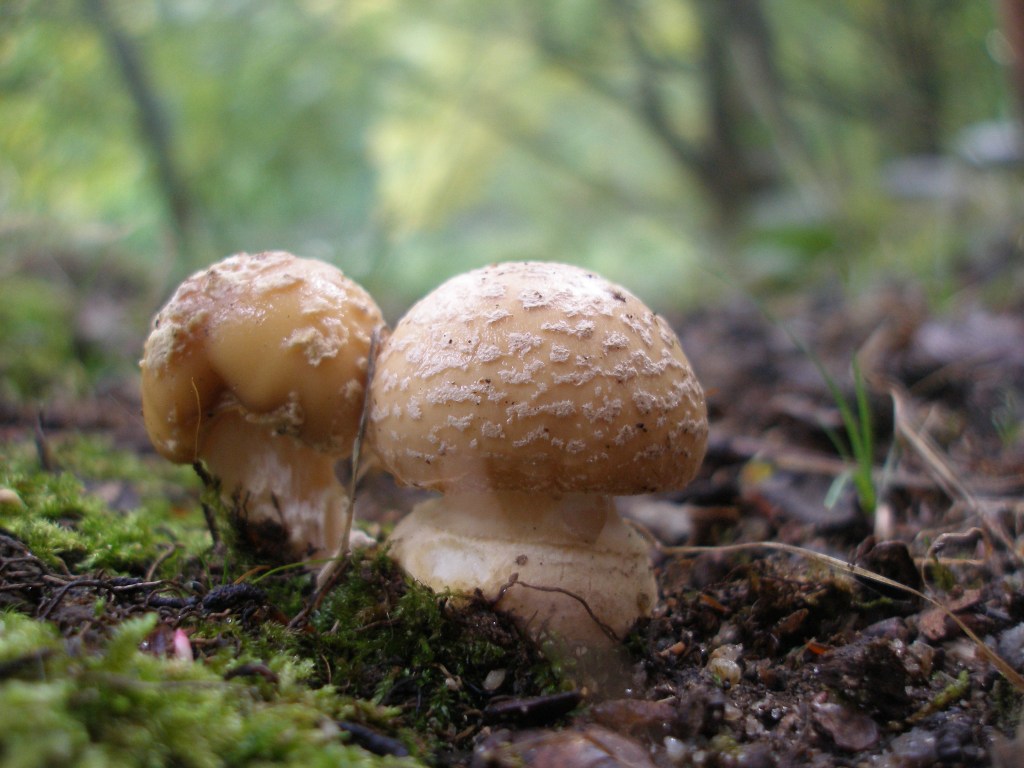
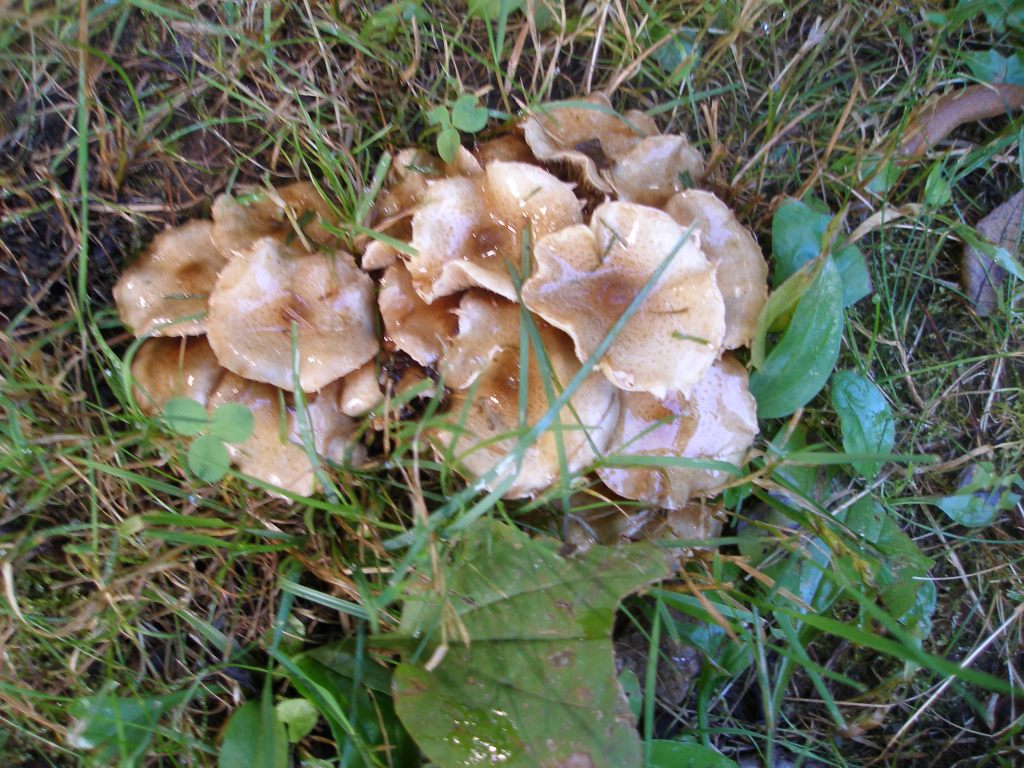
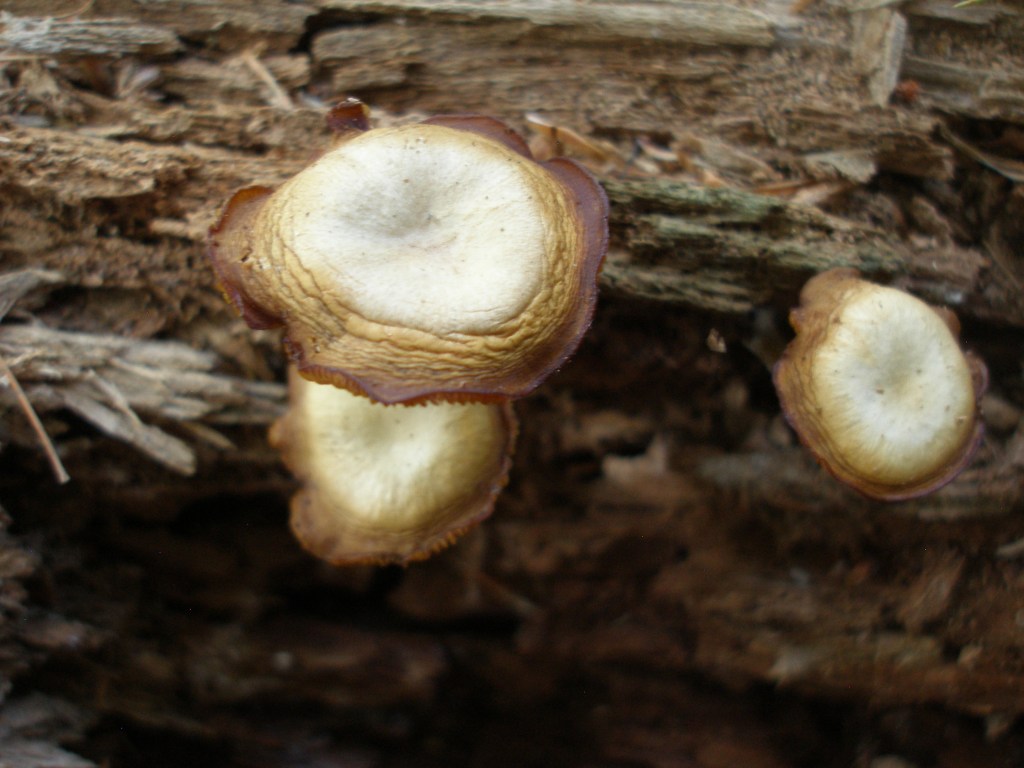
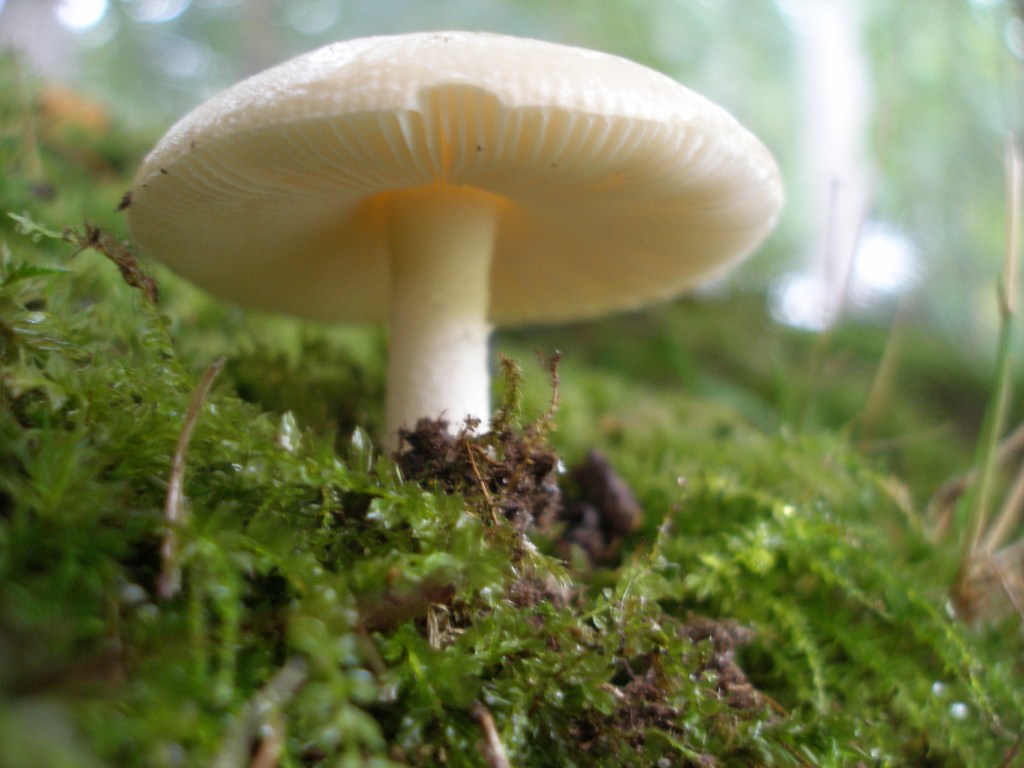
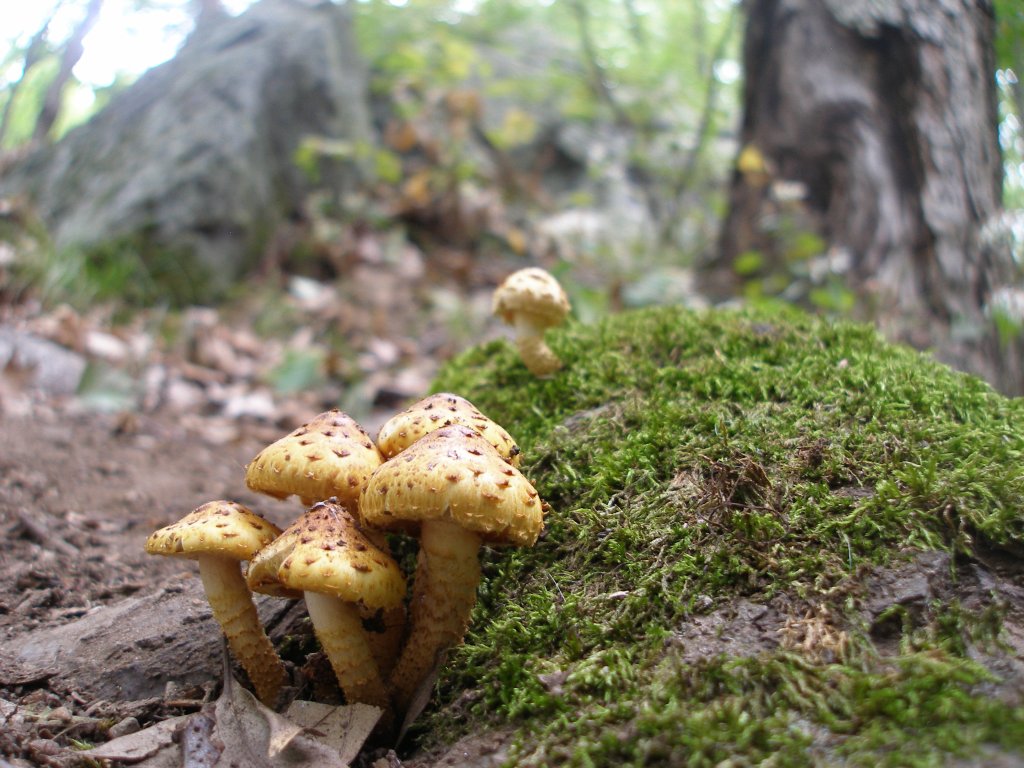
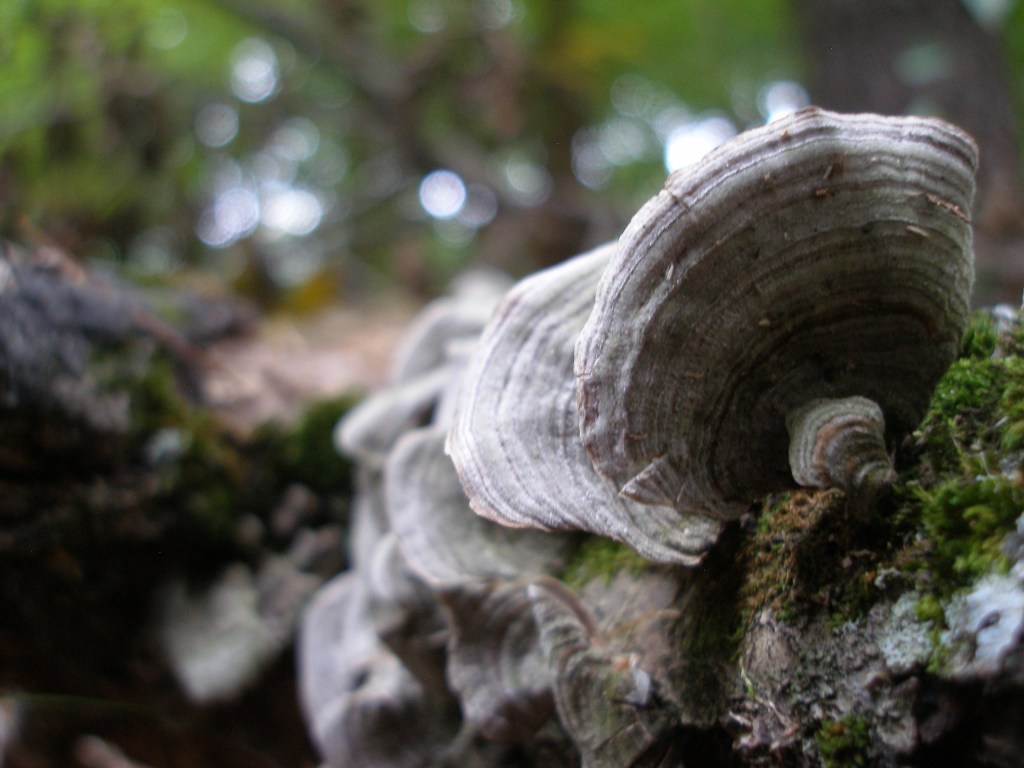
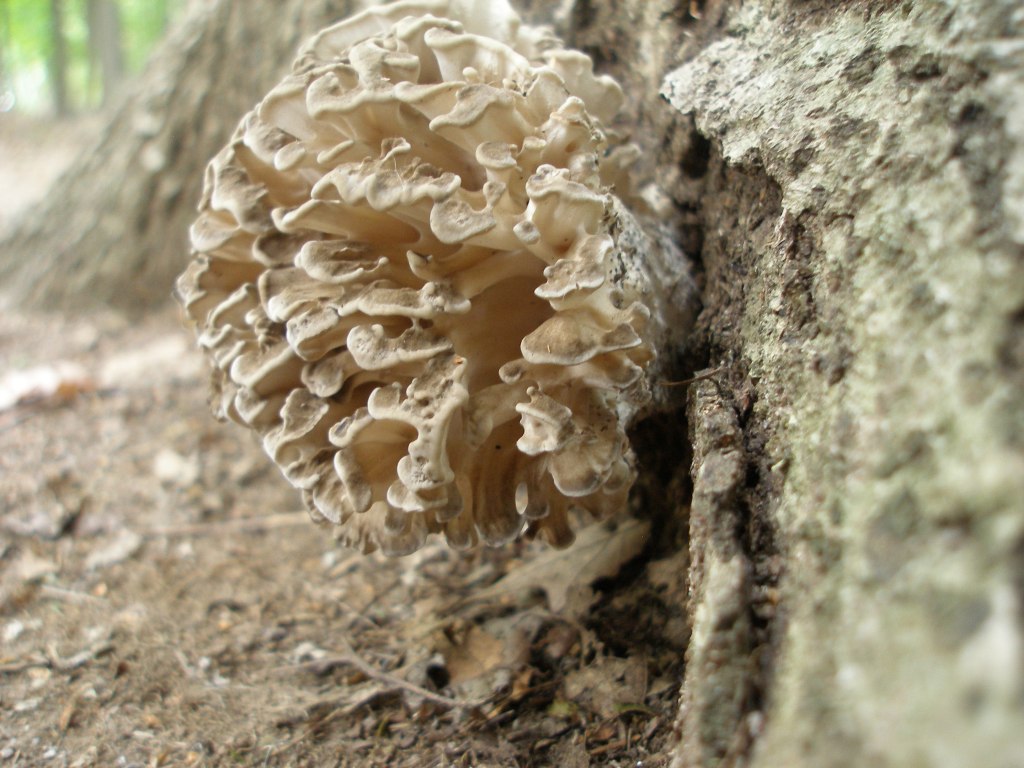
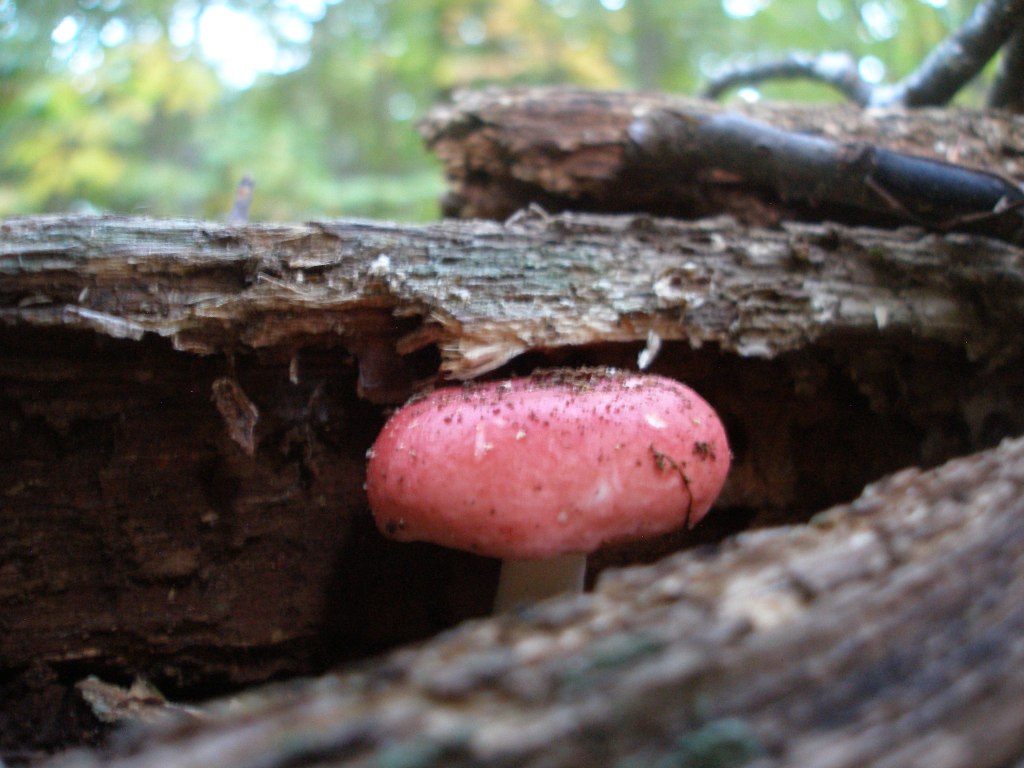
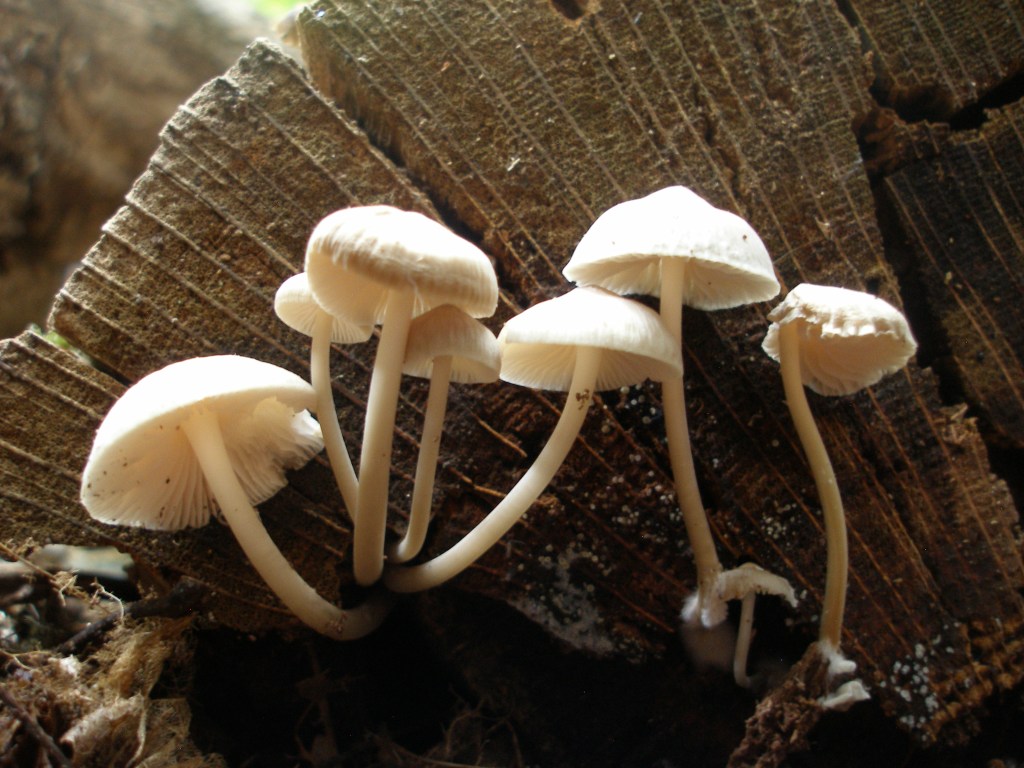
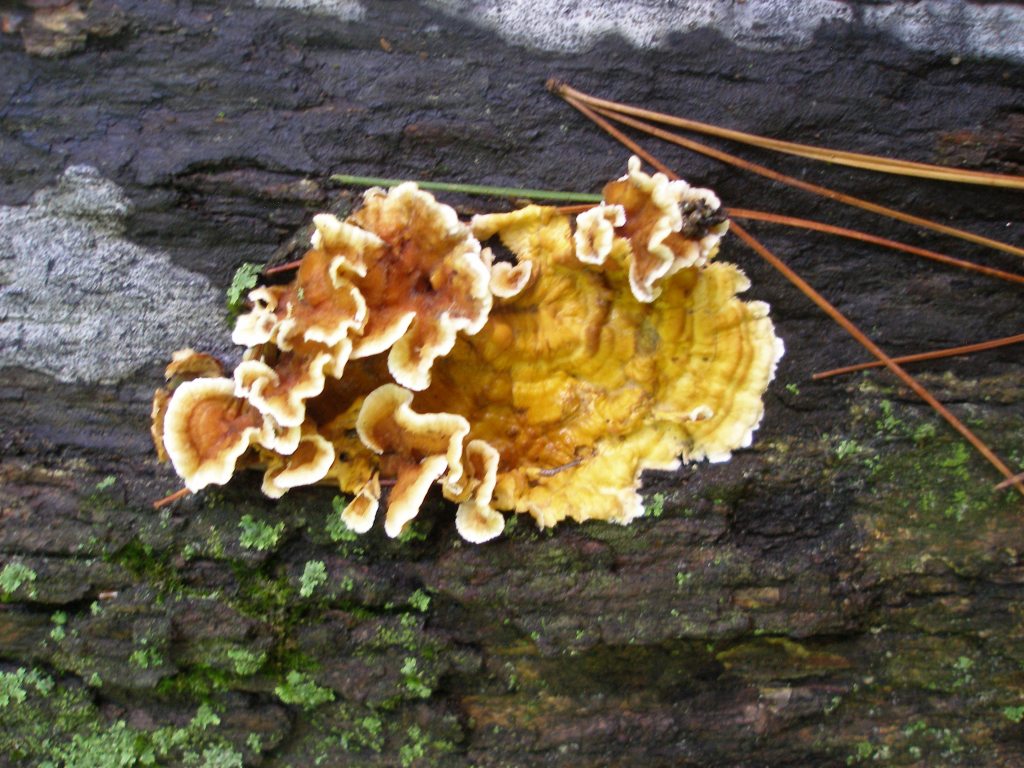
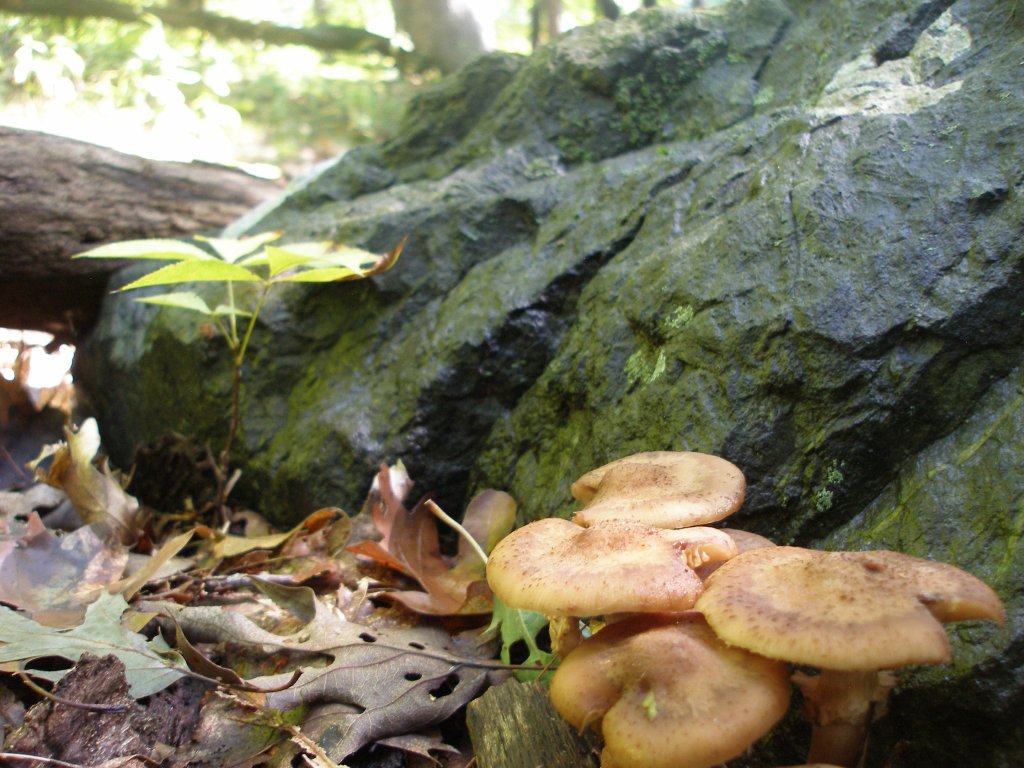
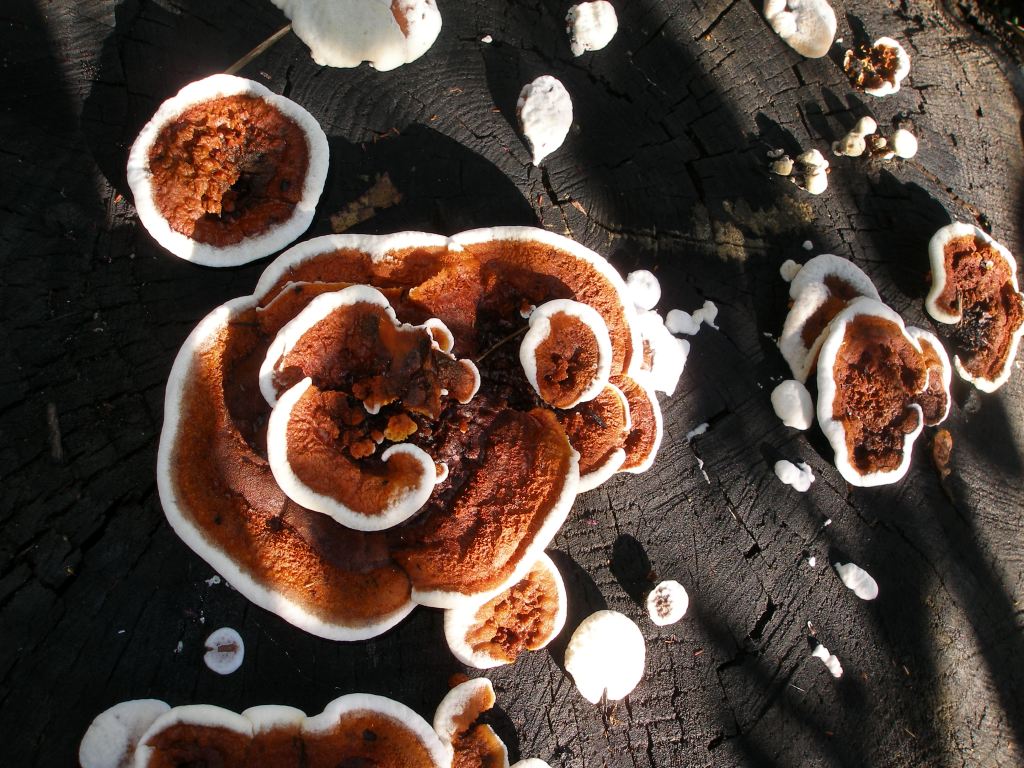
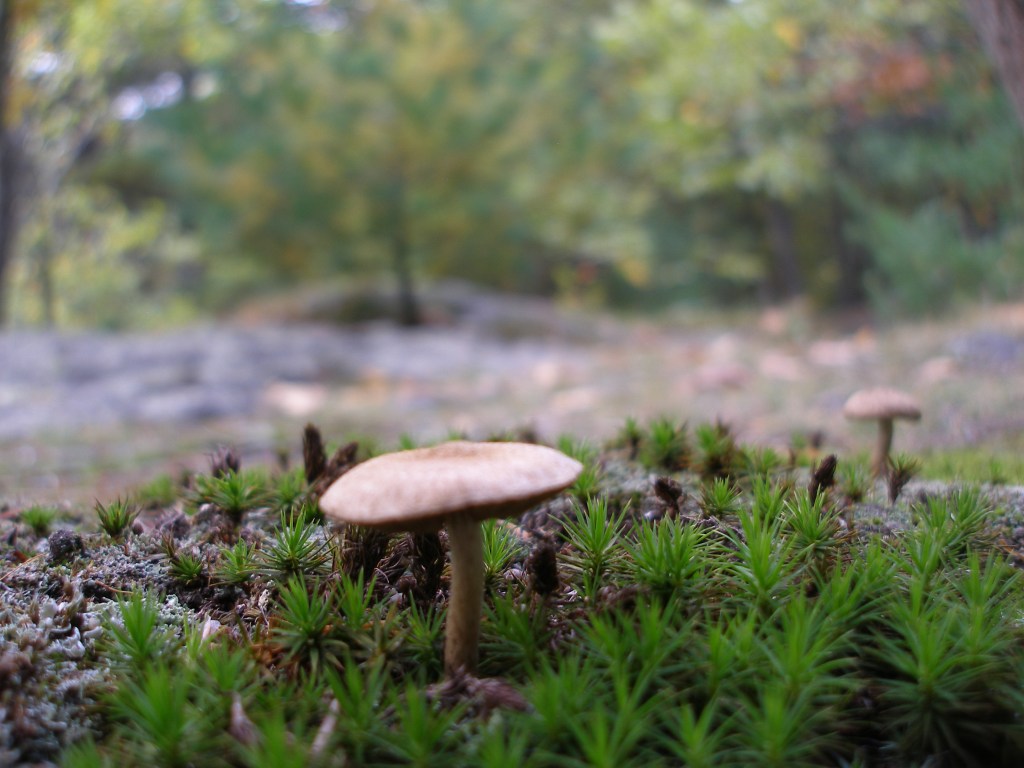
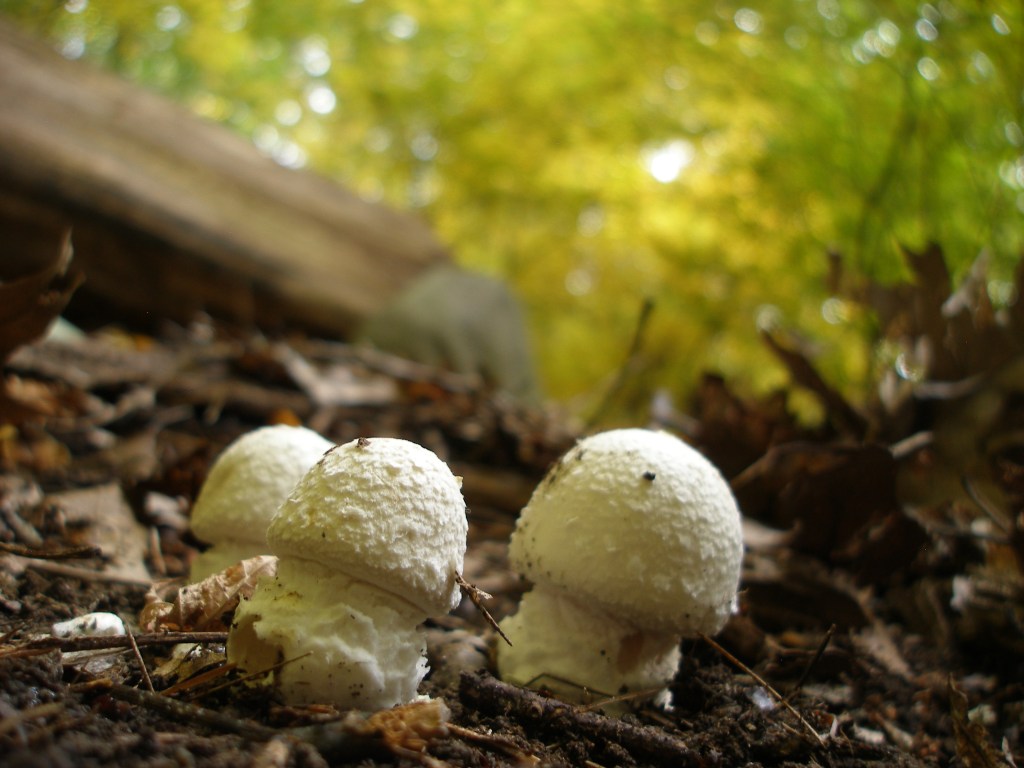
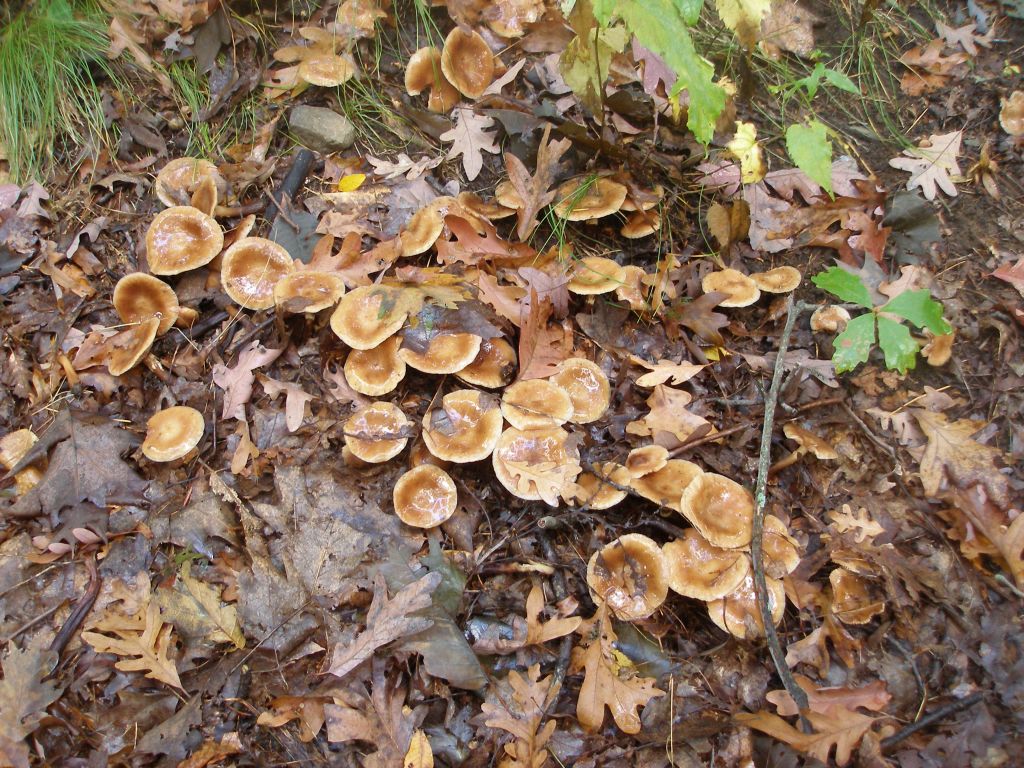
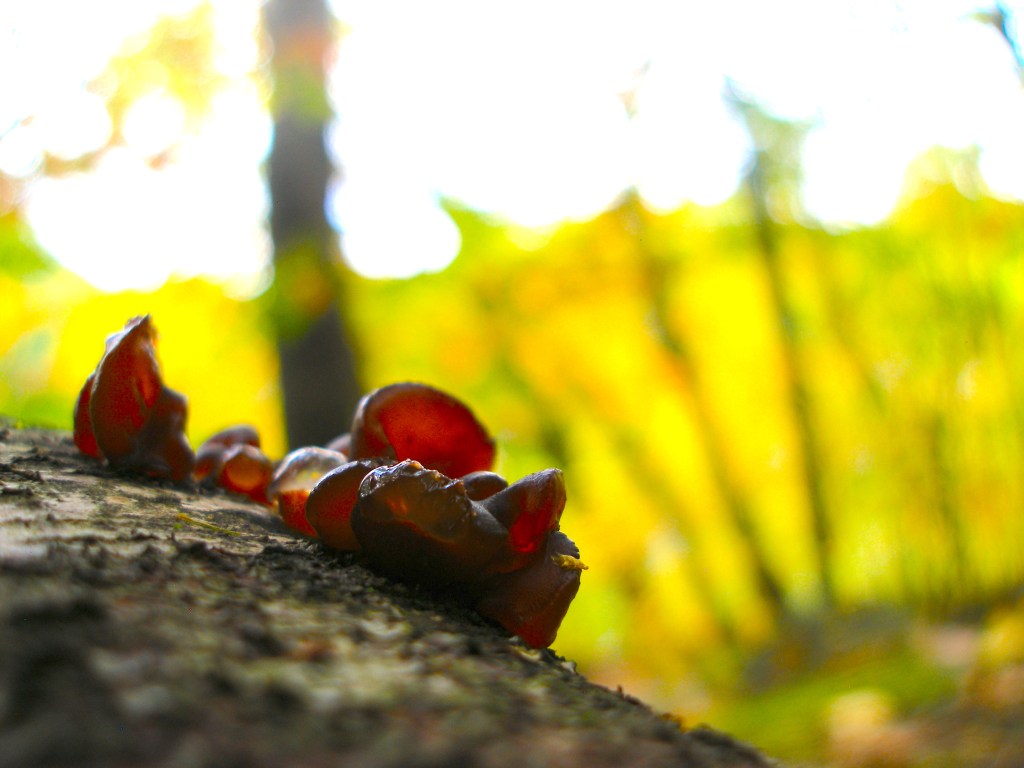
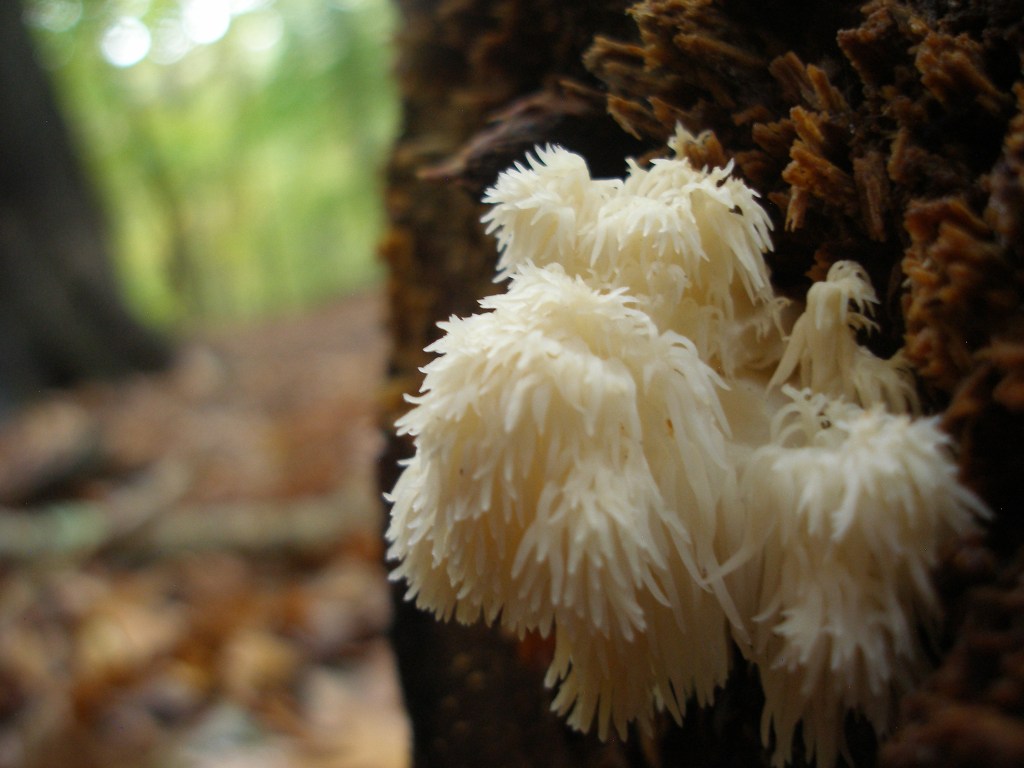
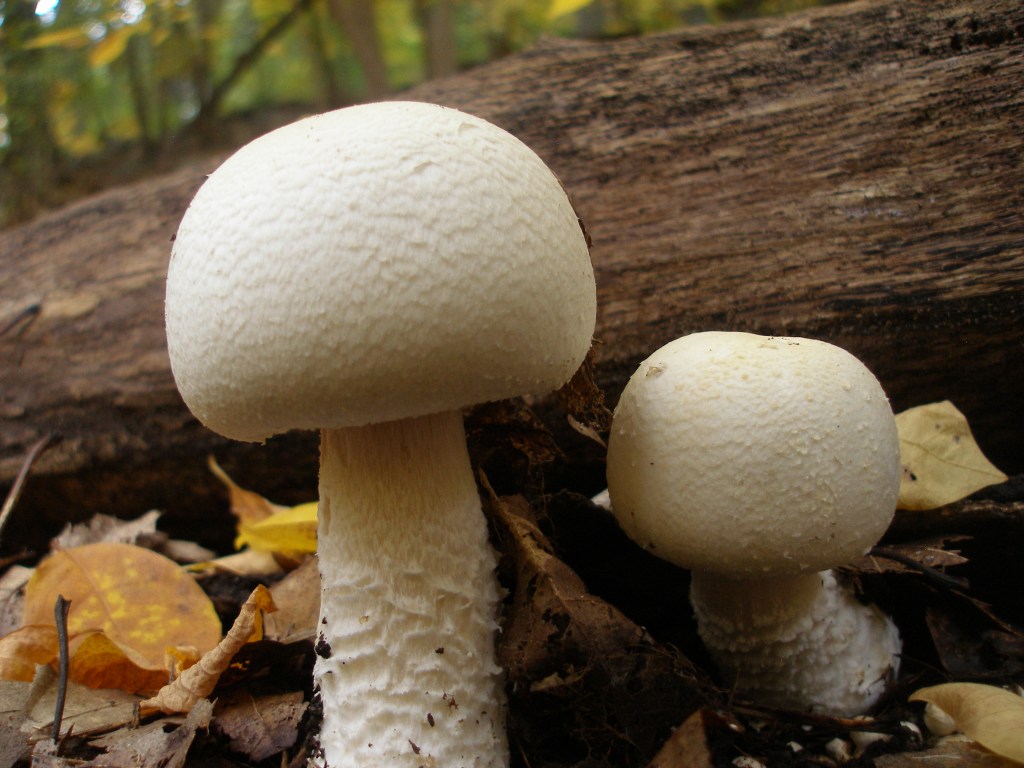
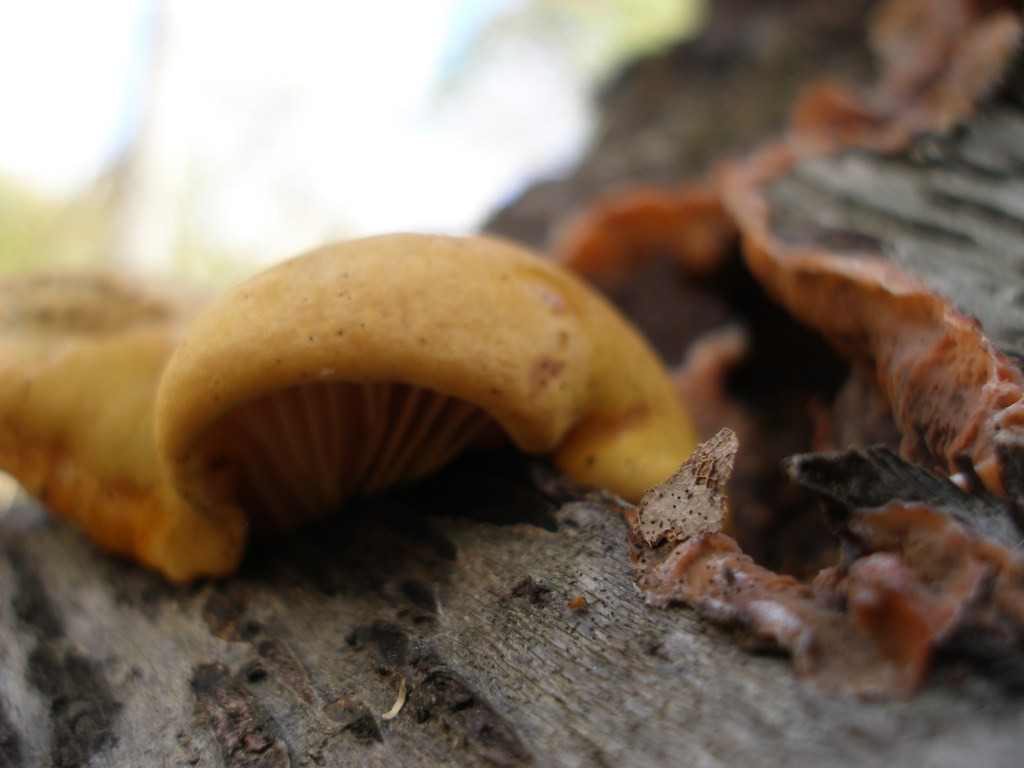
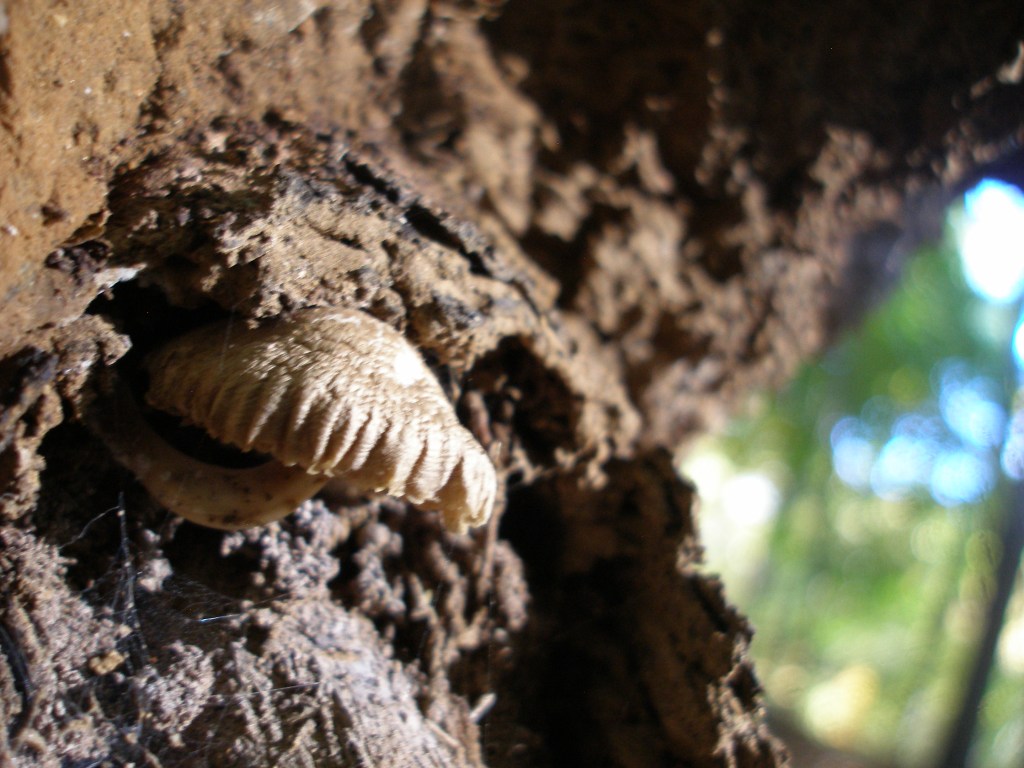
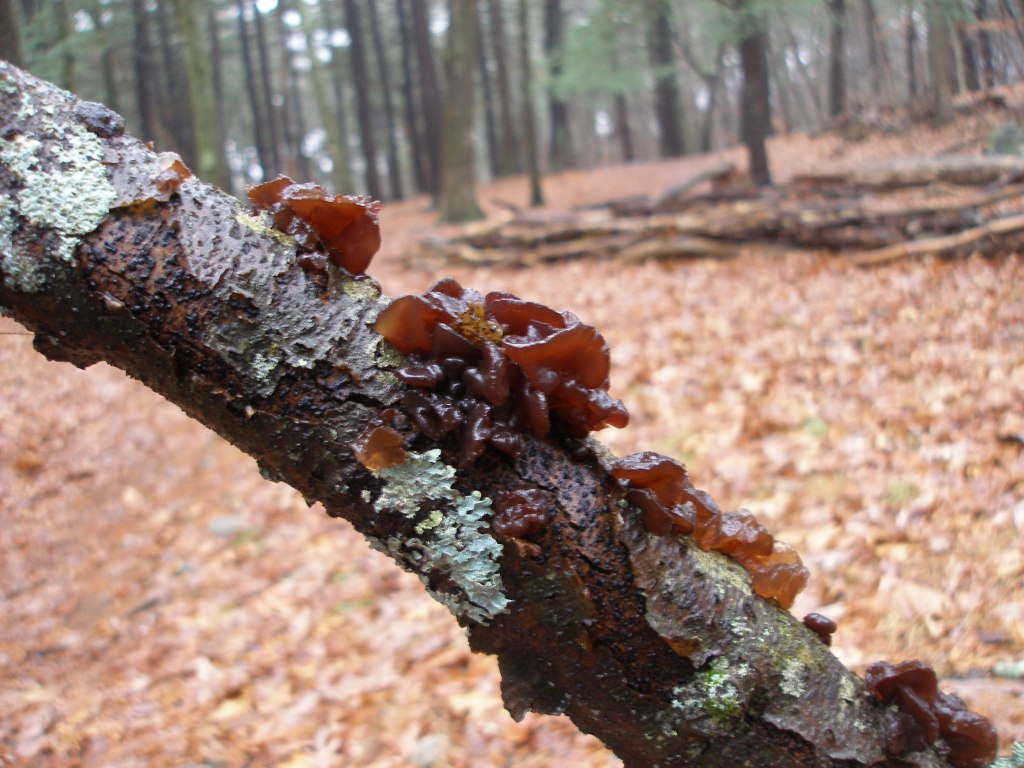
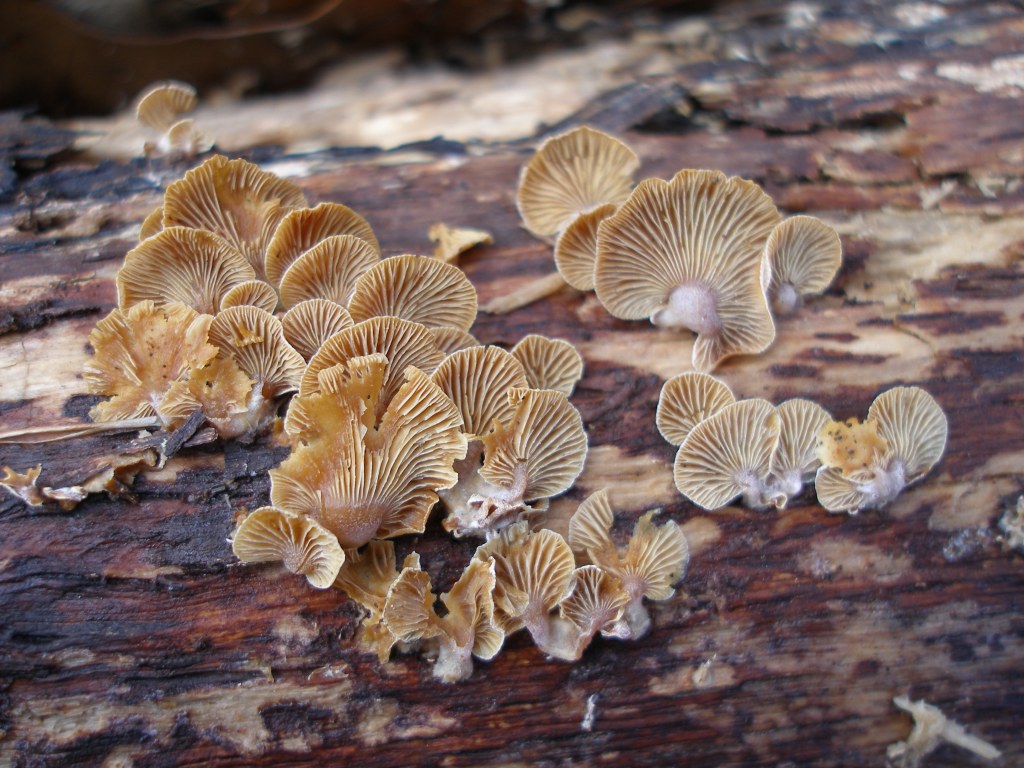
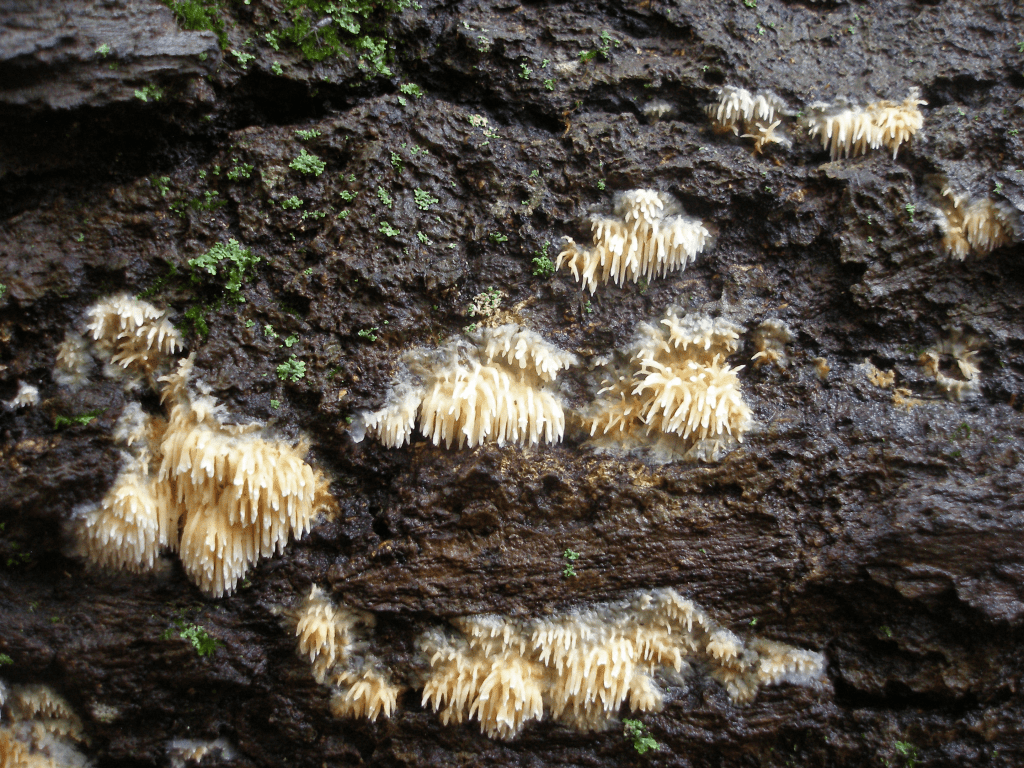
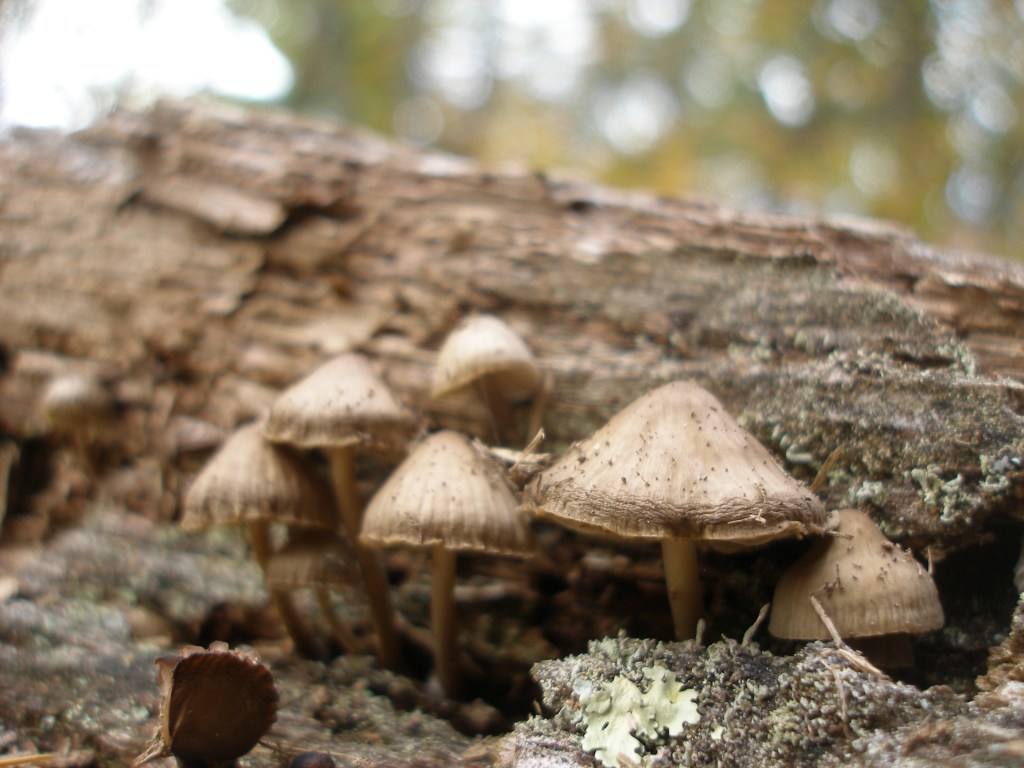
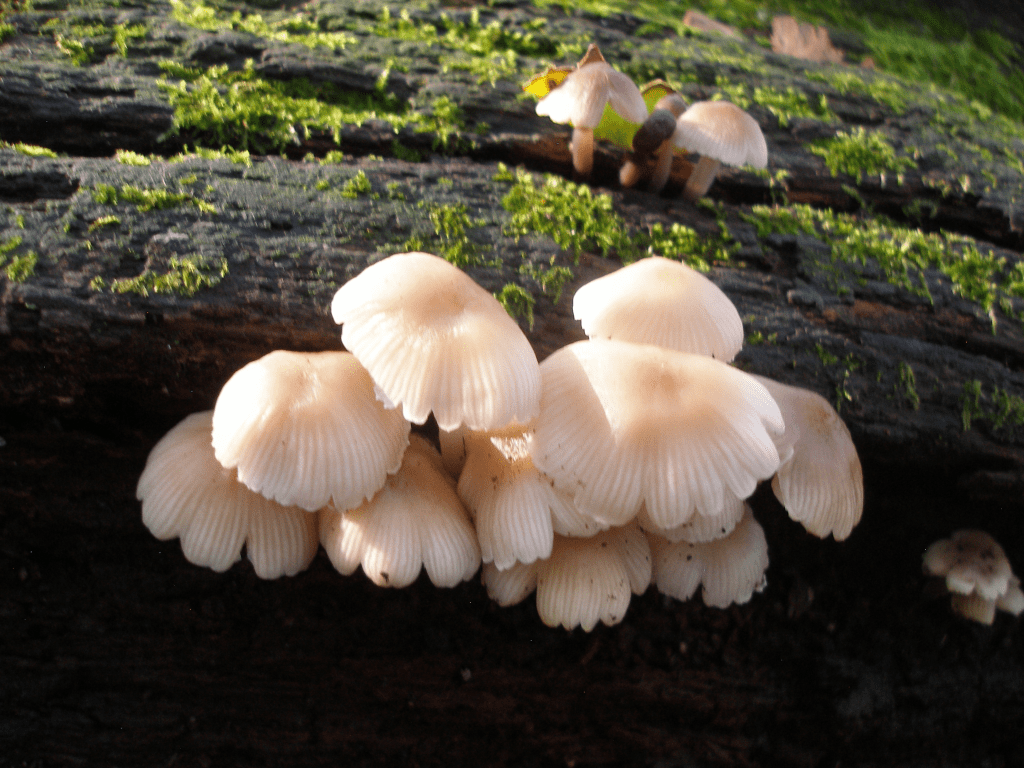
It has been a disappointing mushroom season -bland really, compared to the mushrooms in 2021. Still there were some interesting shaggy characters, crimped edges, jellies and a slime mold or two.

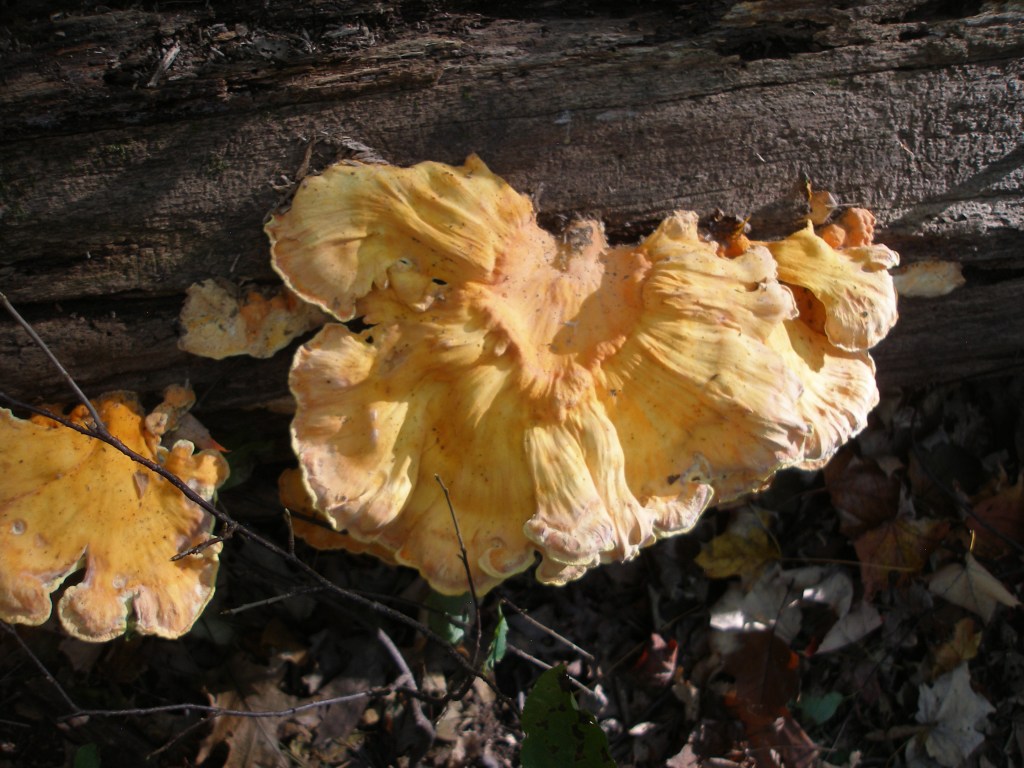
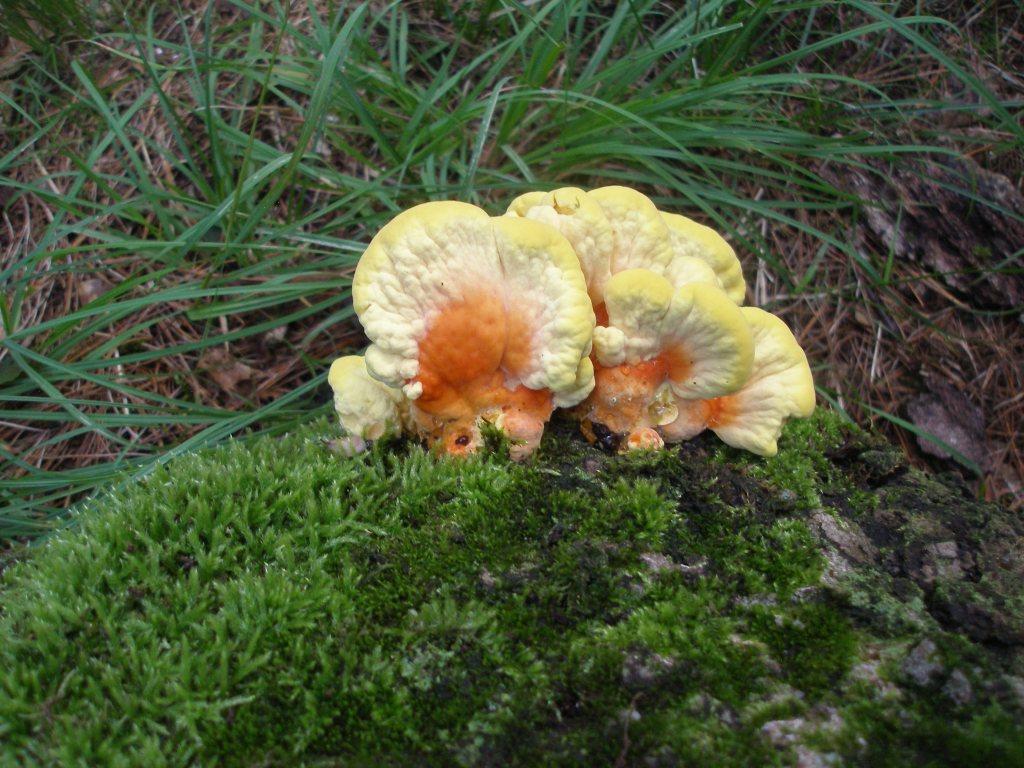
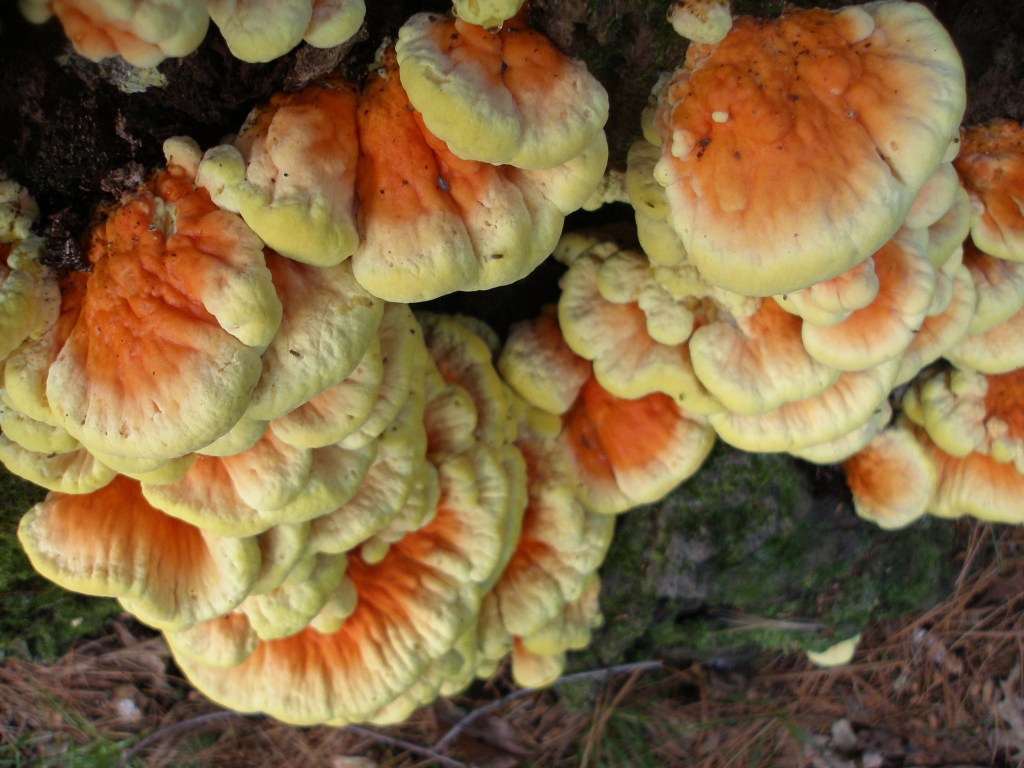
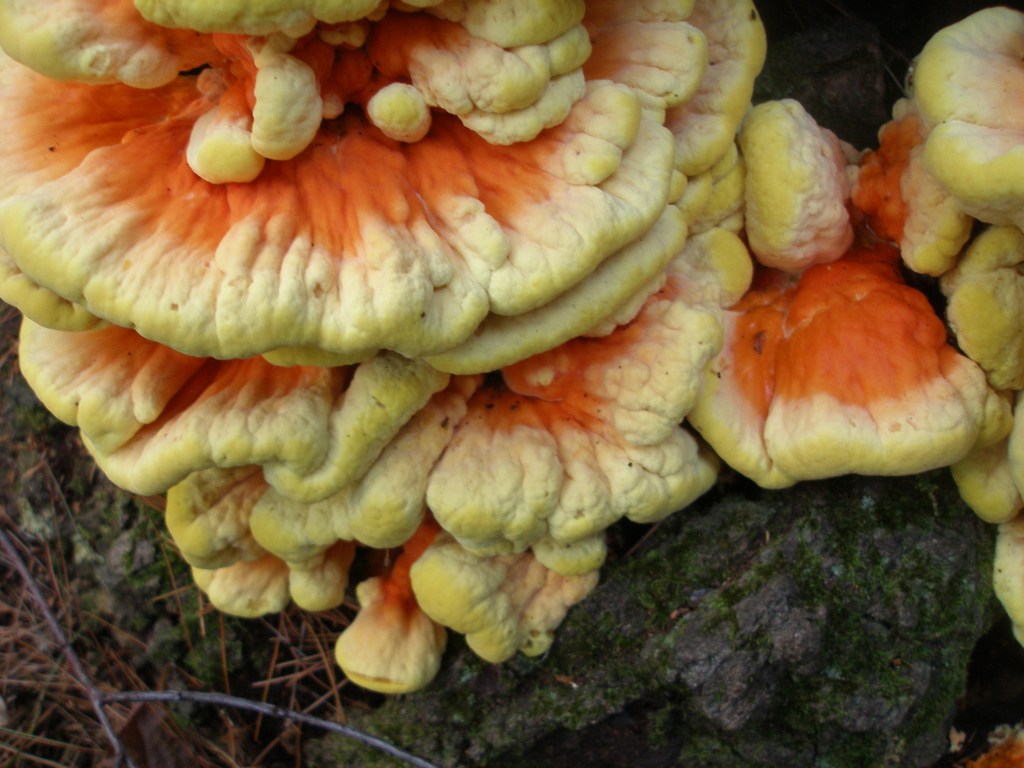
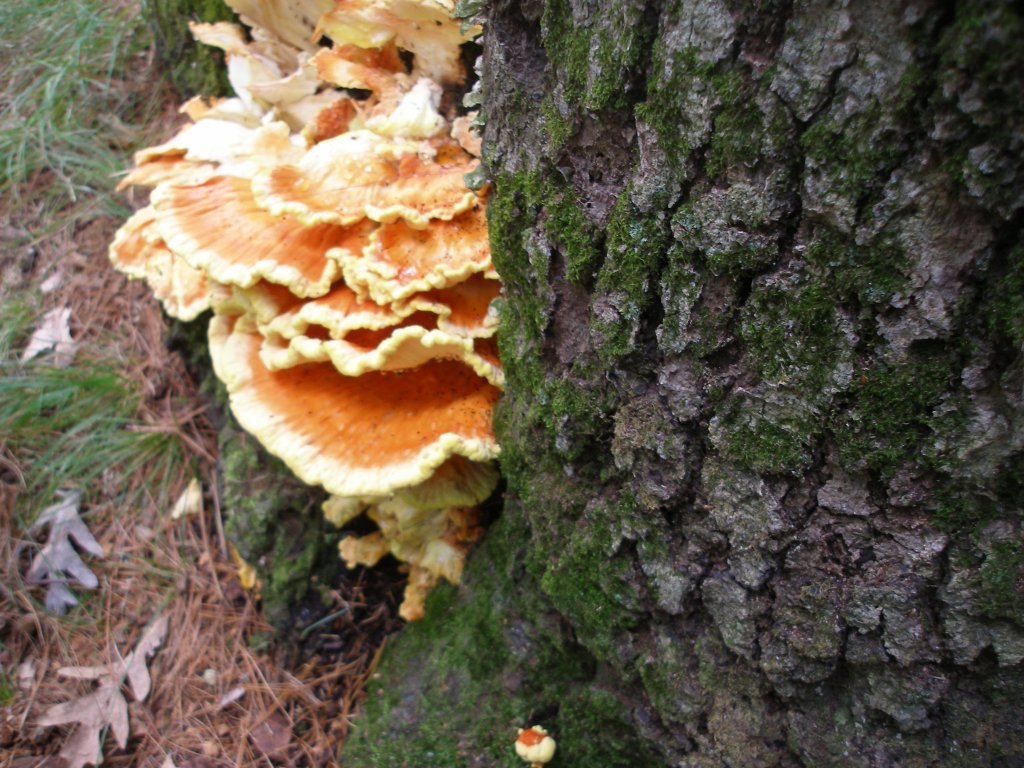
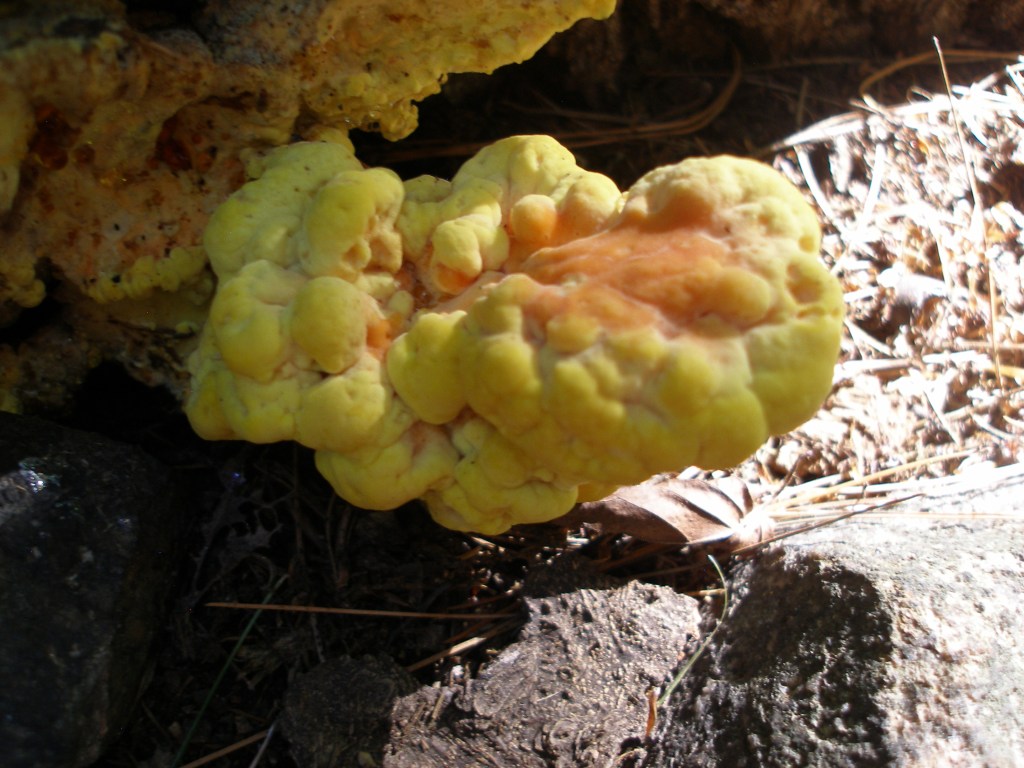
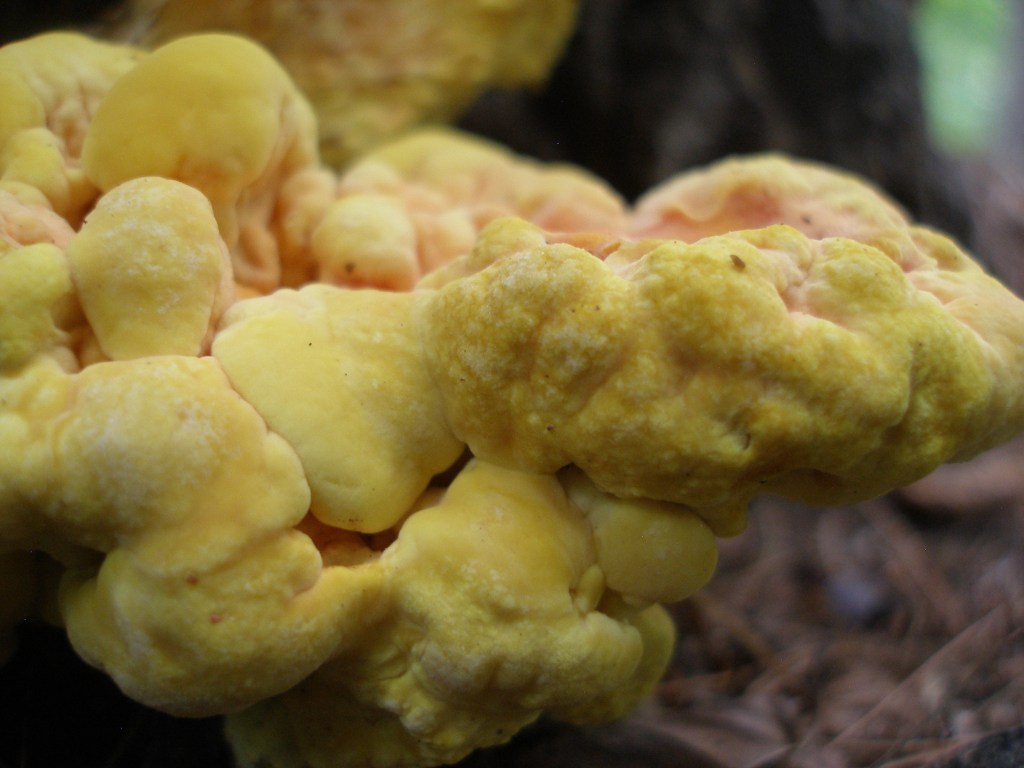
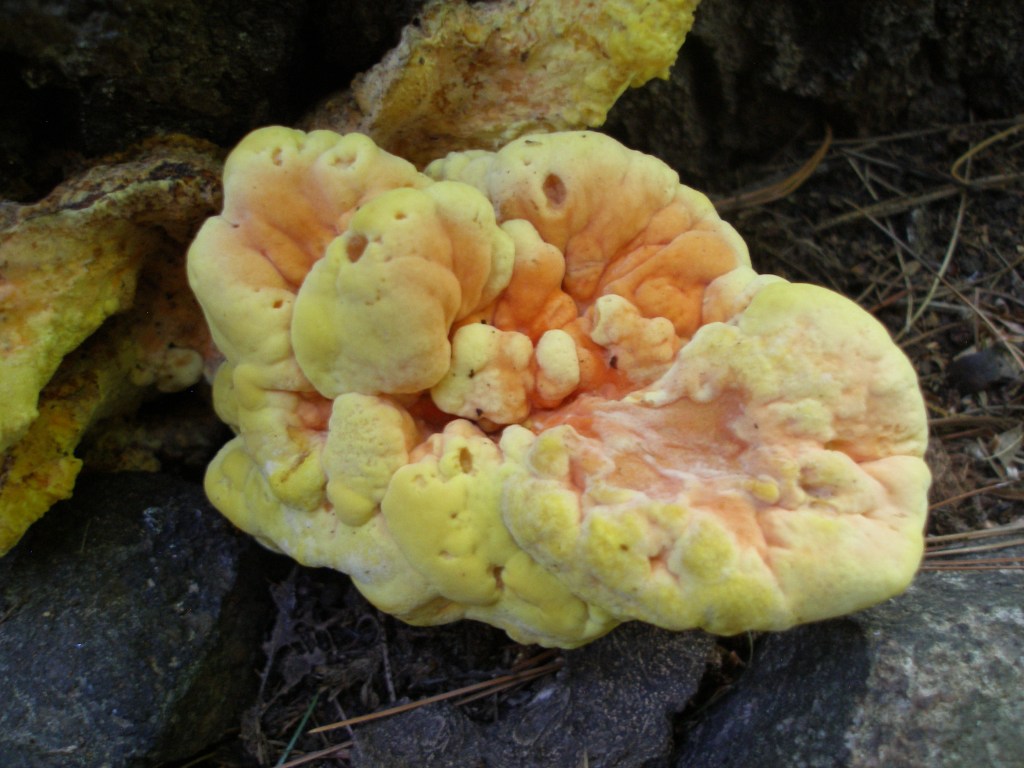
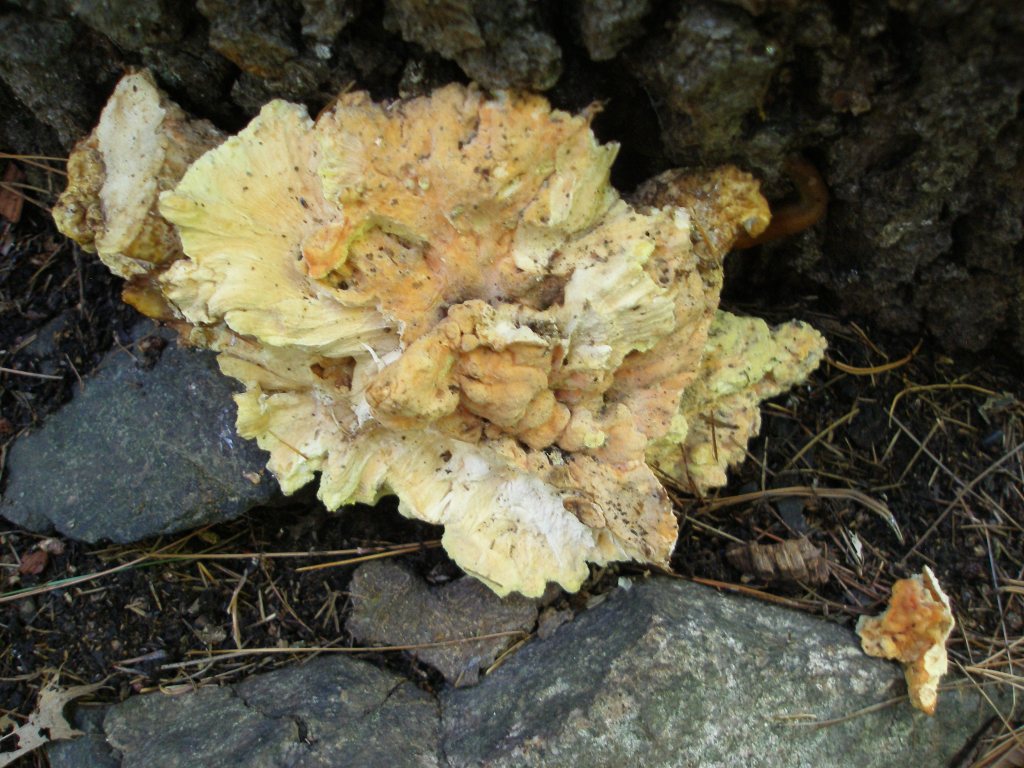
I saw none of the bright orange and yellow Chicken of the Woods mushrooms that were so abundant in the last few years despite the dryness. I missed them and hope they were just taking a break.

Late Season Mushroom Bonanza

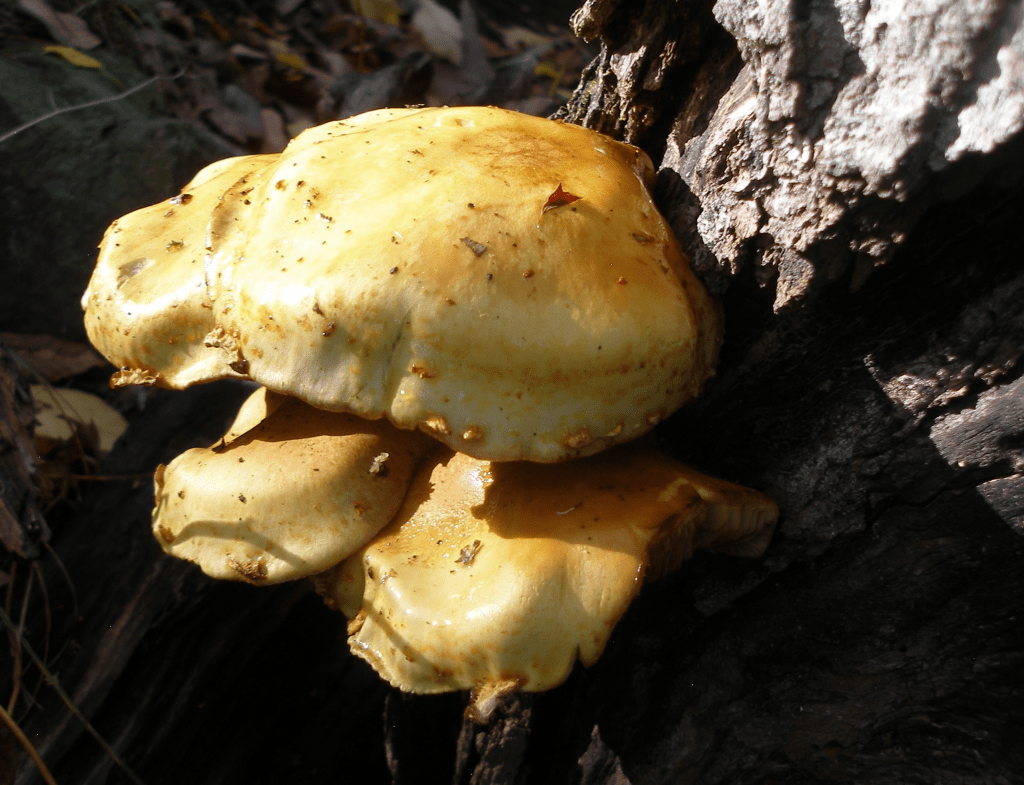
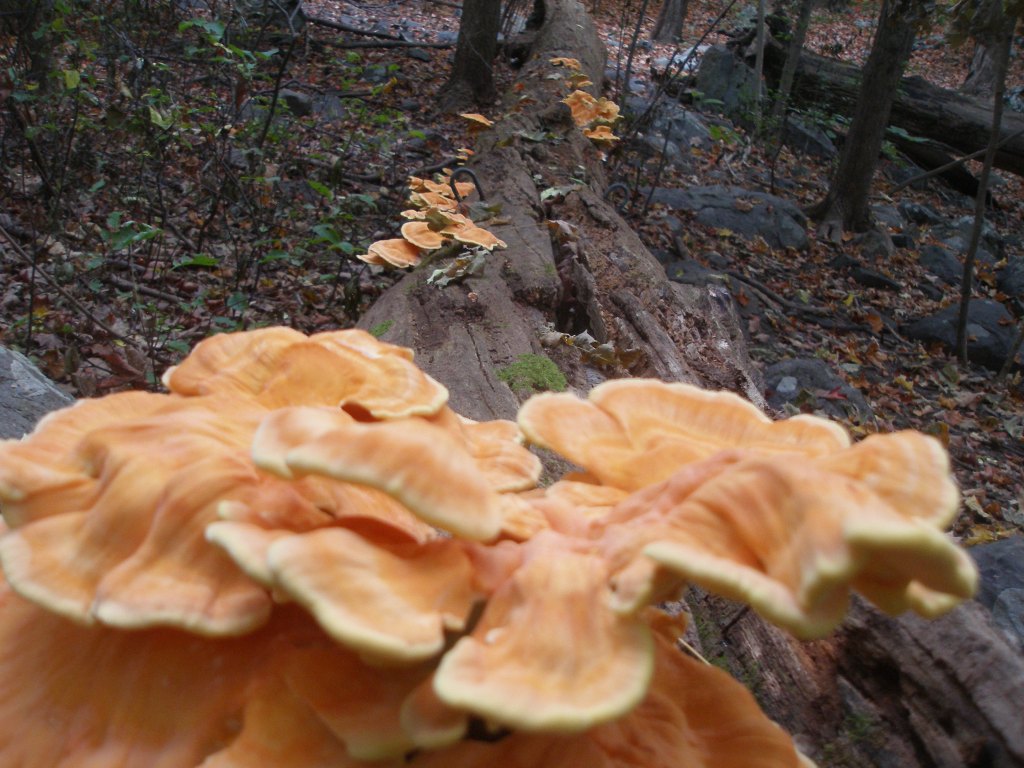
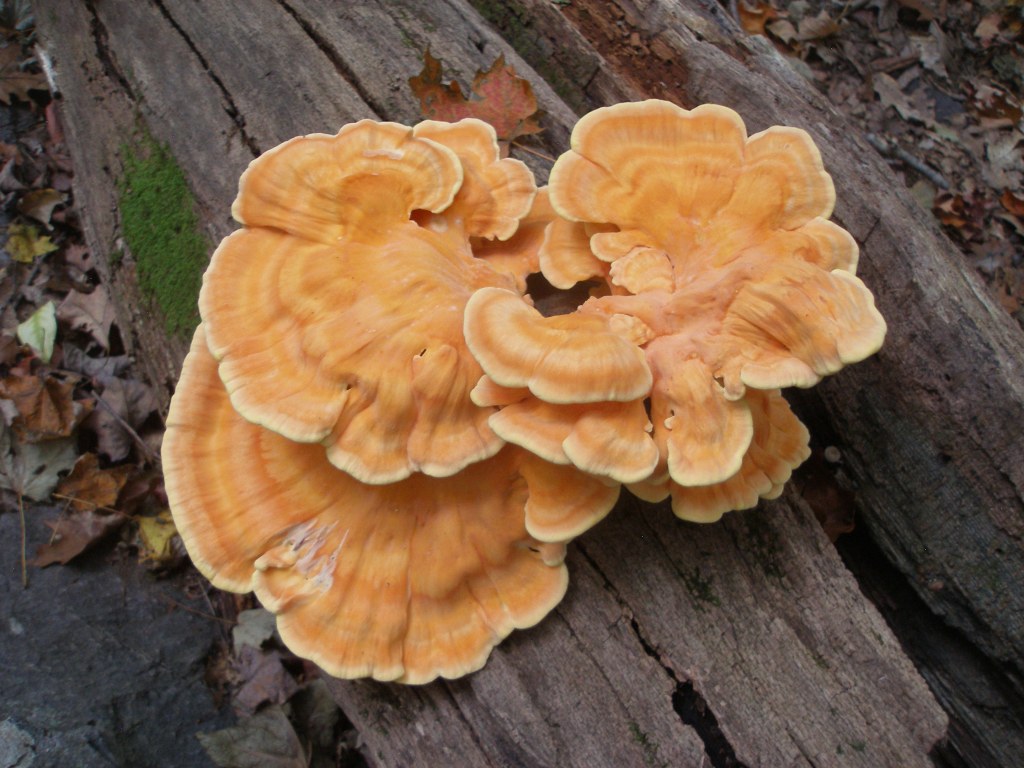
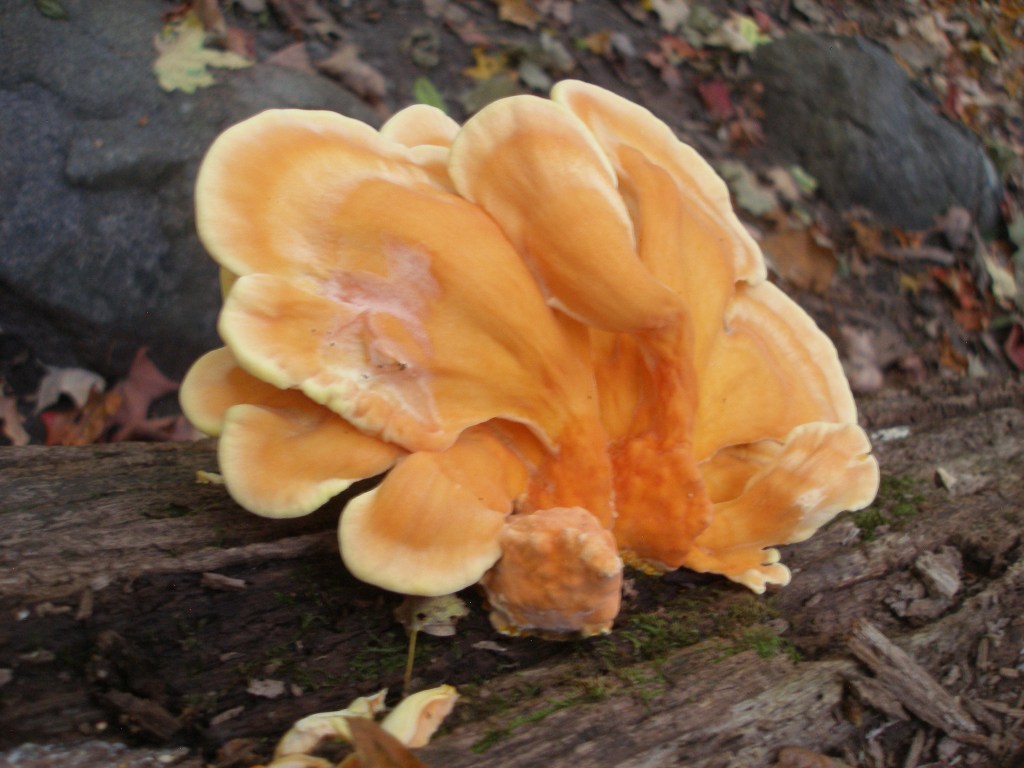
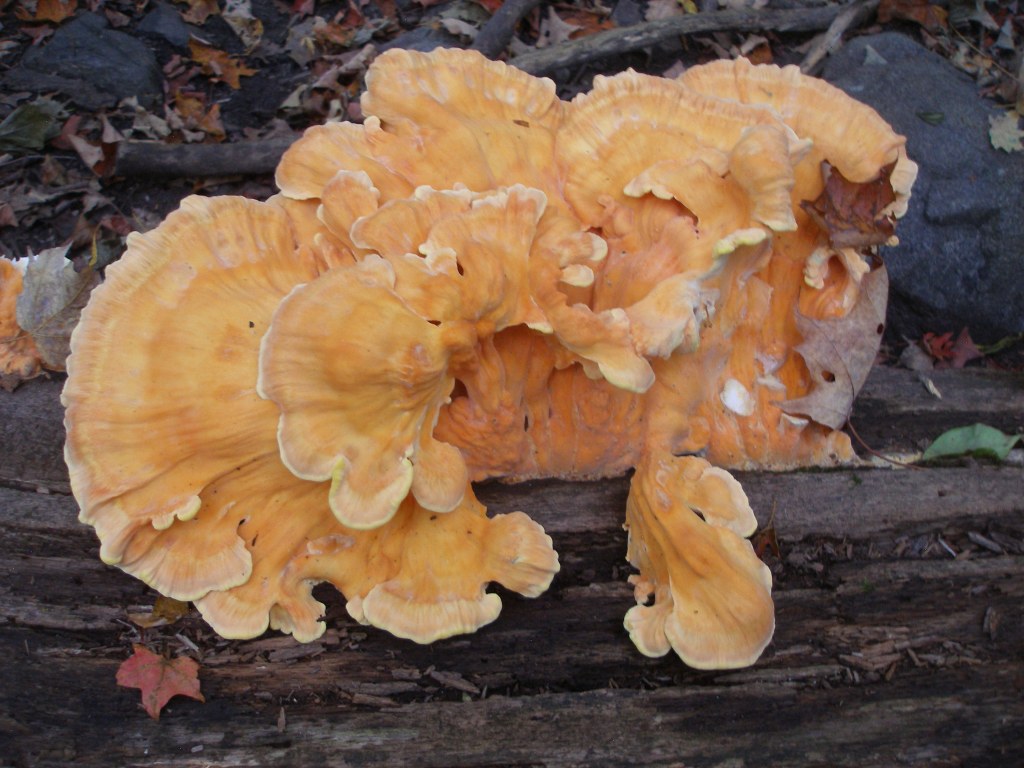
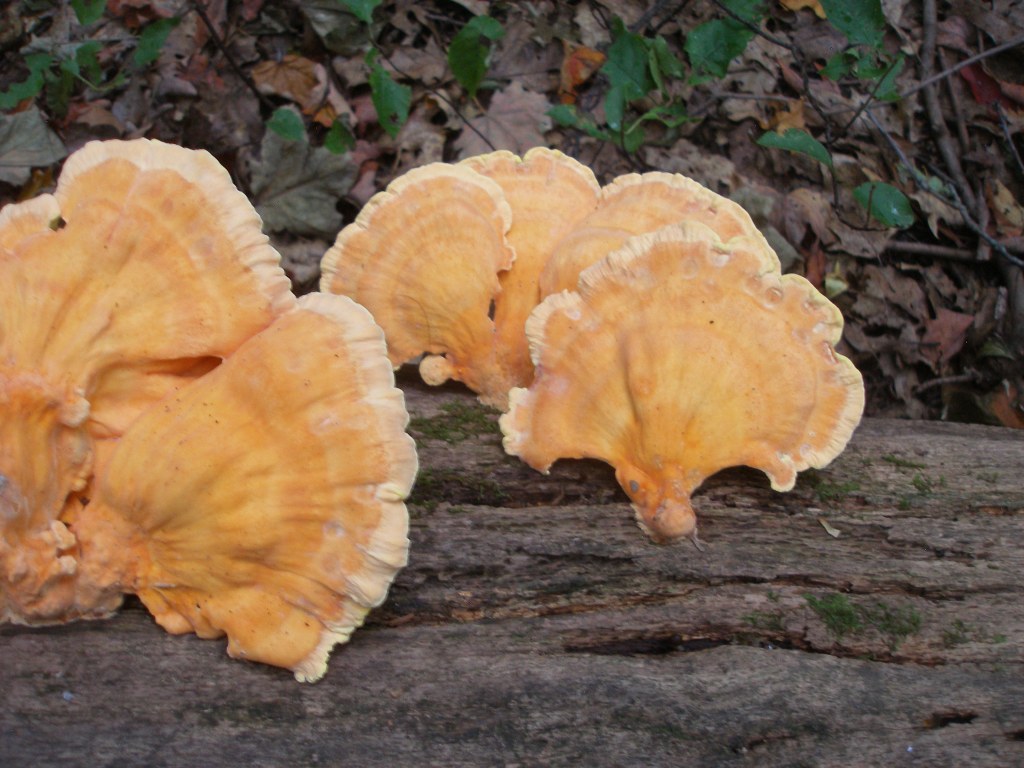
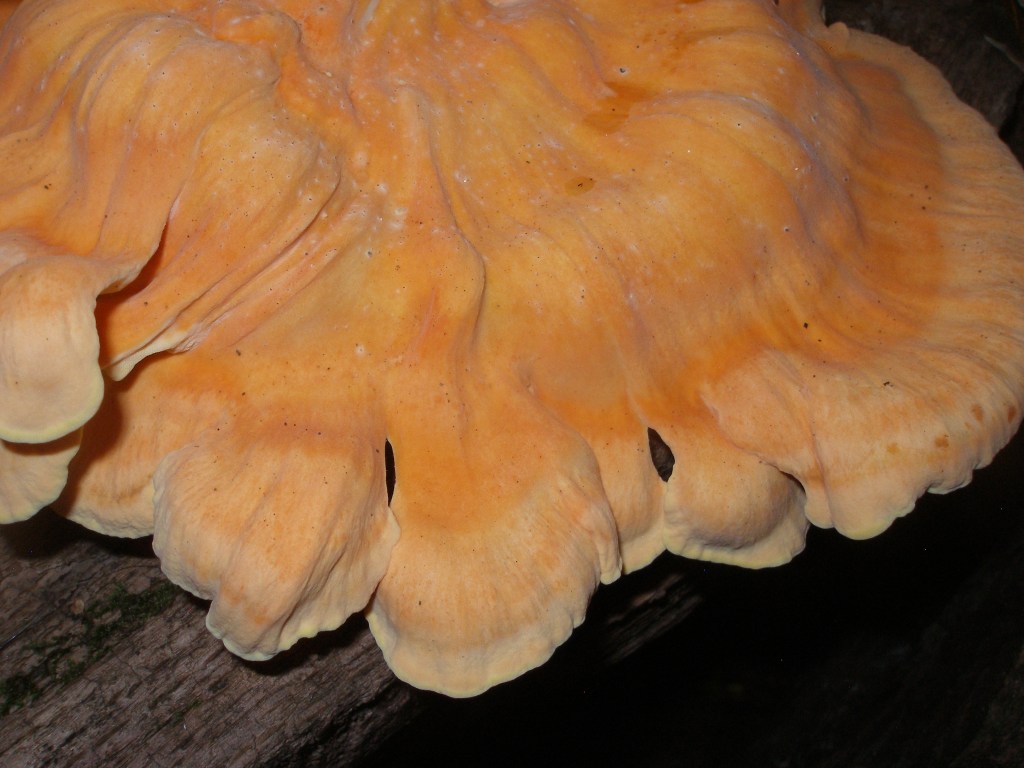
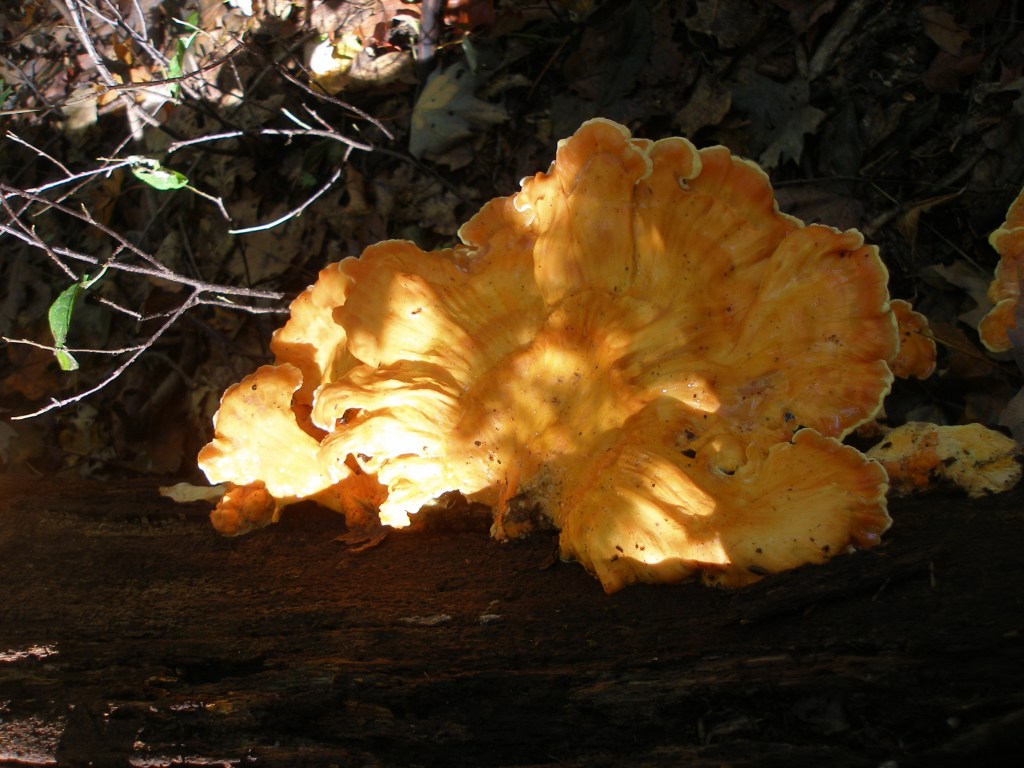
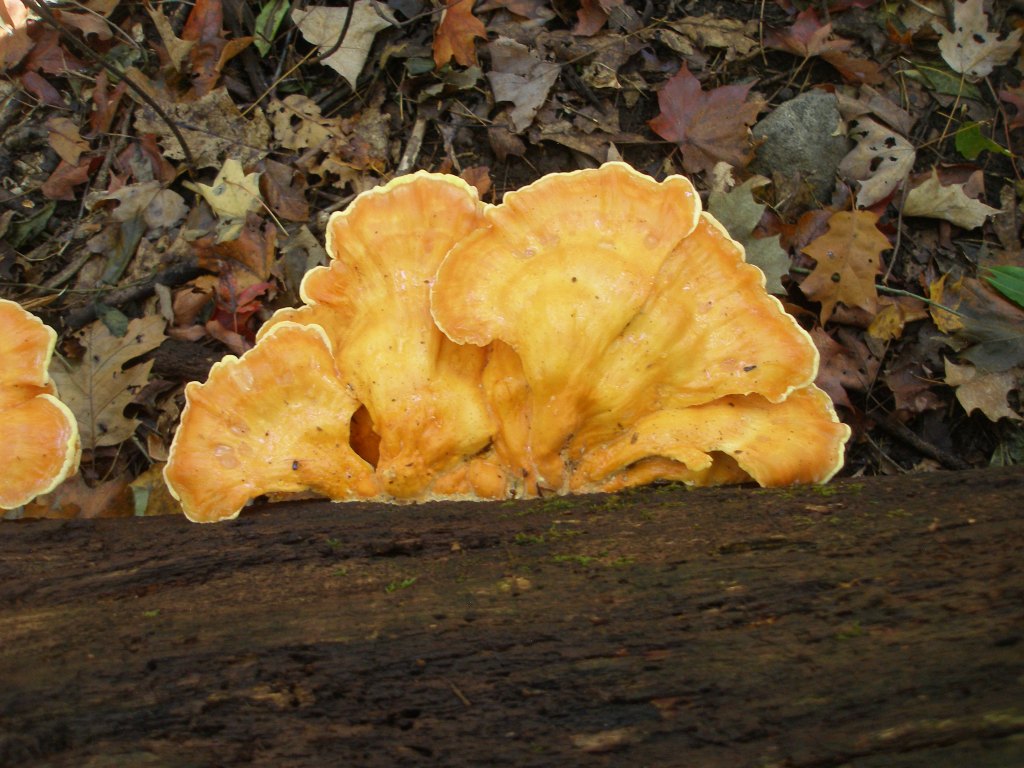
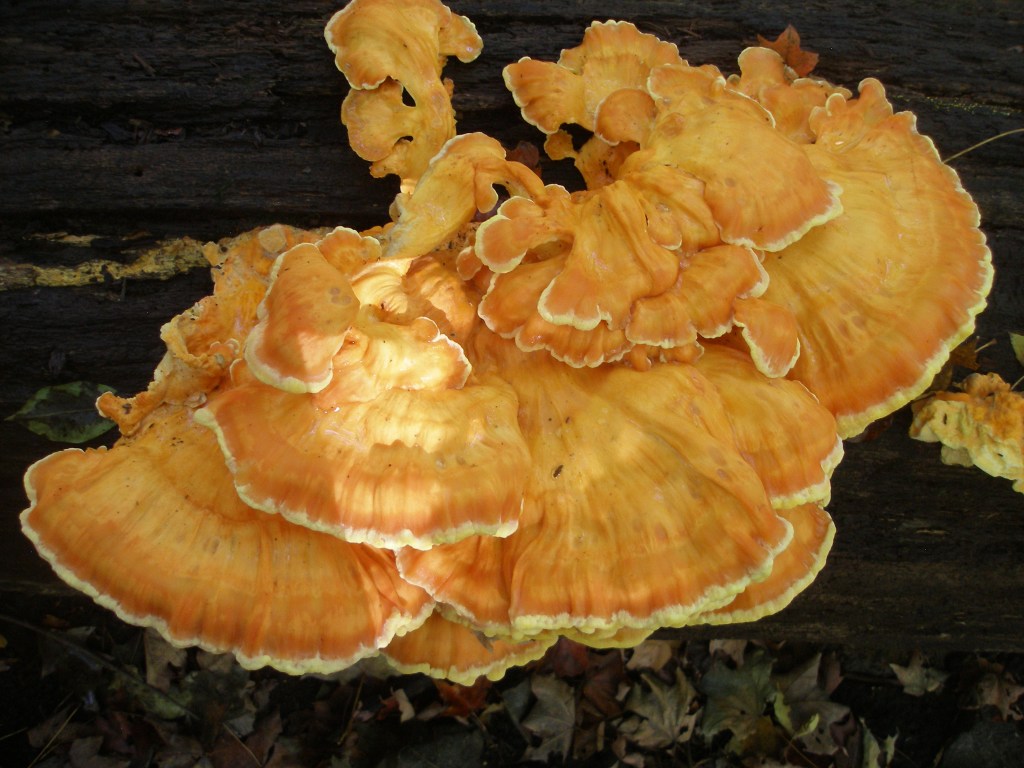
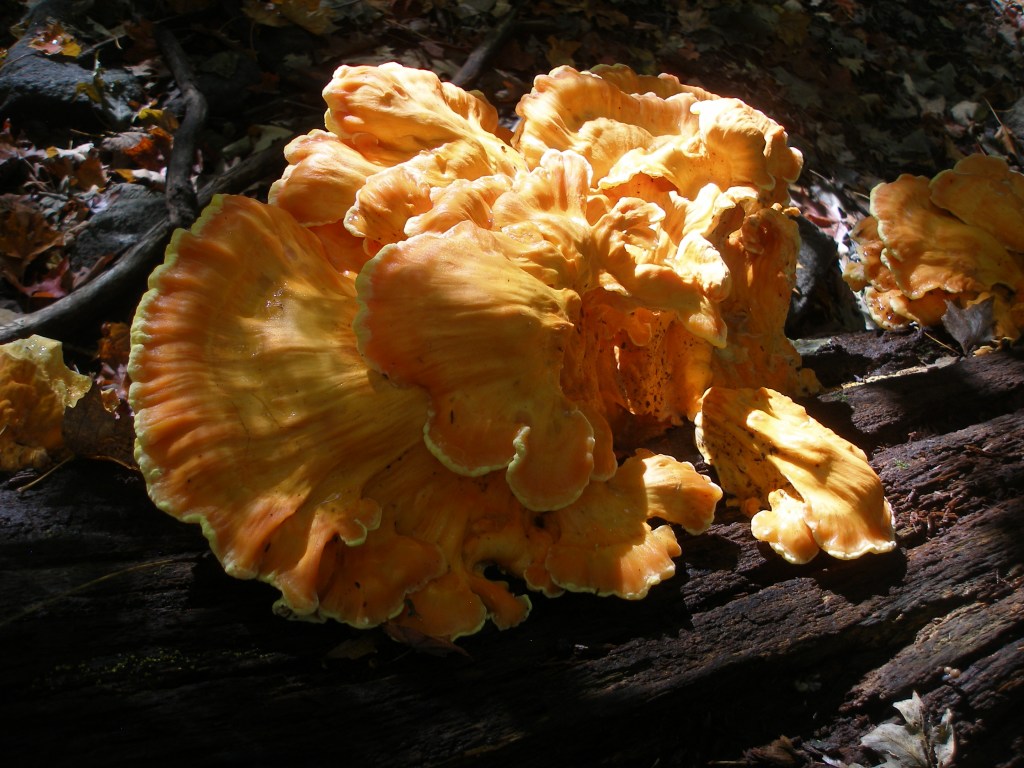
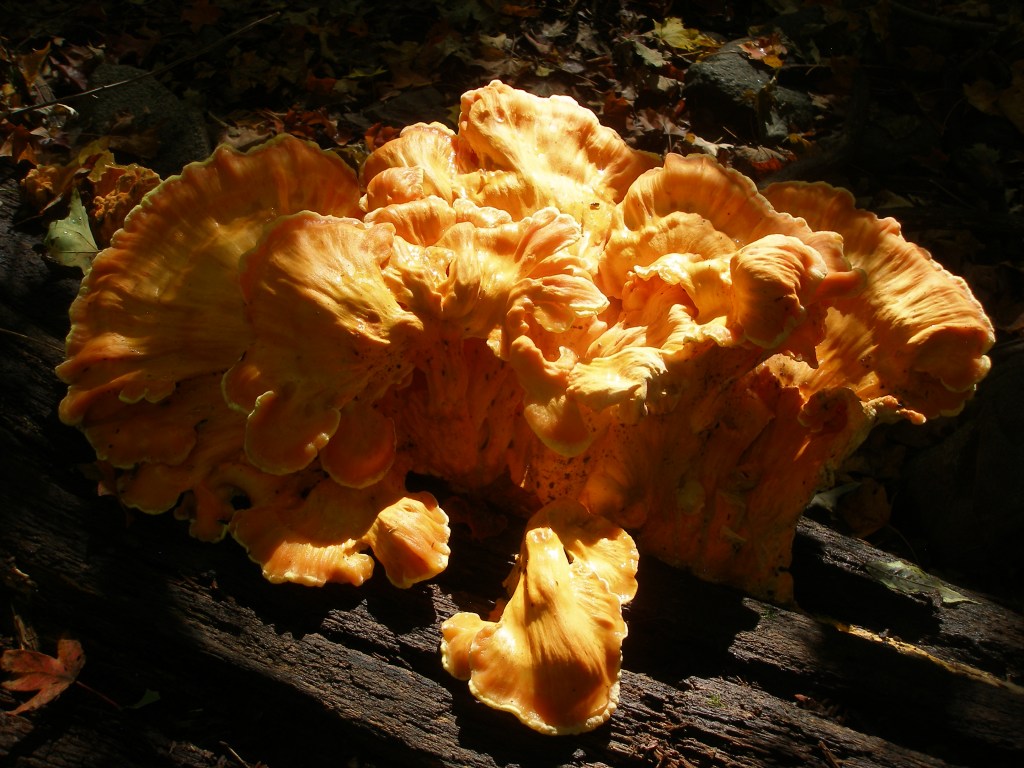
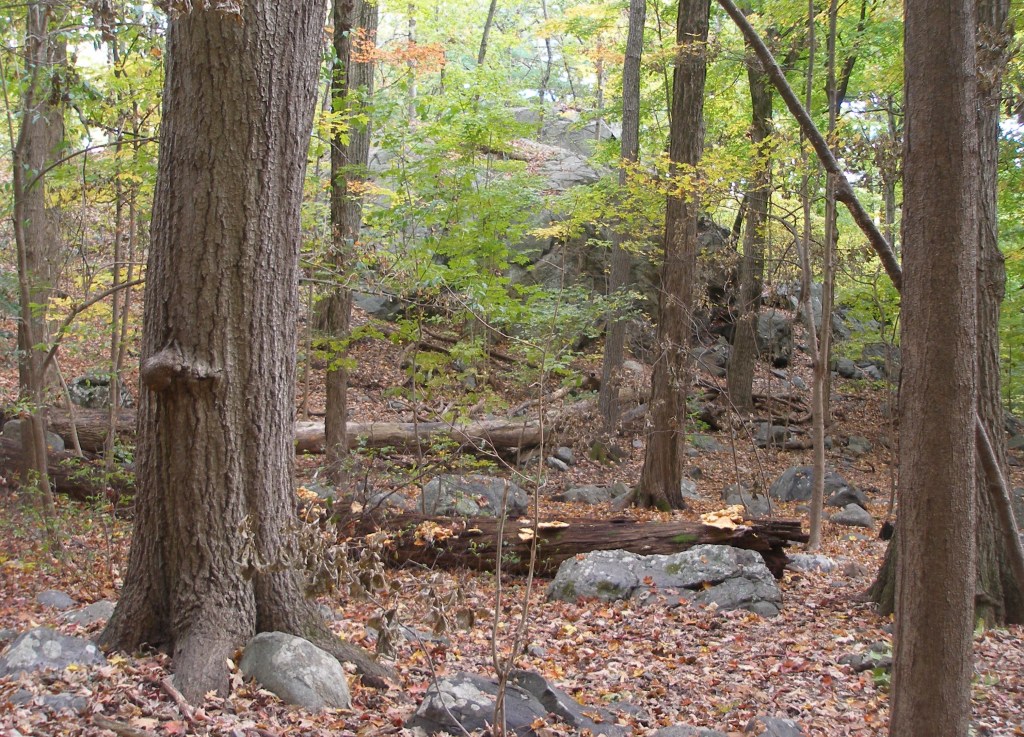
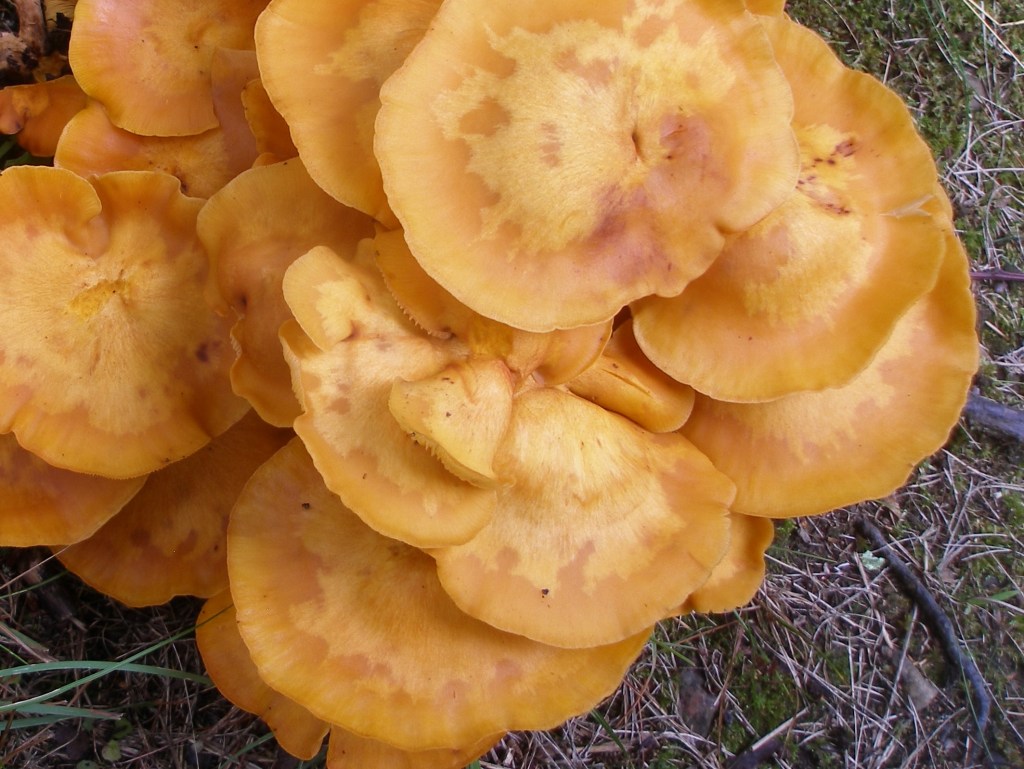
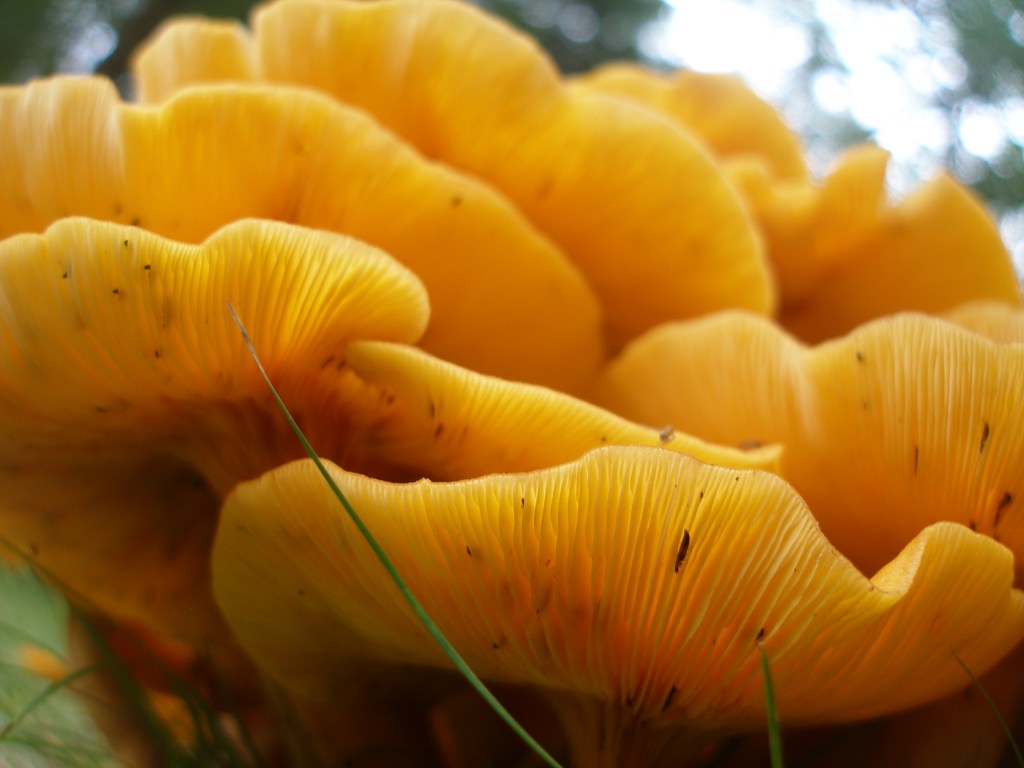
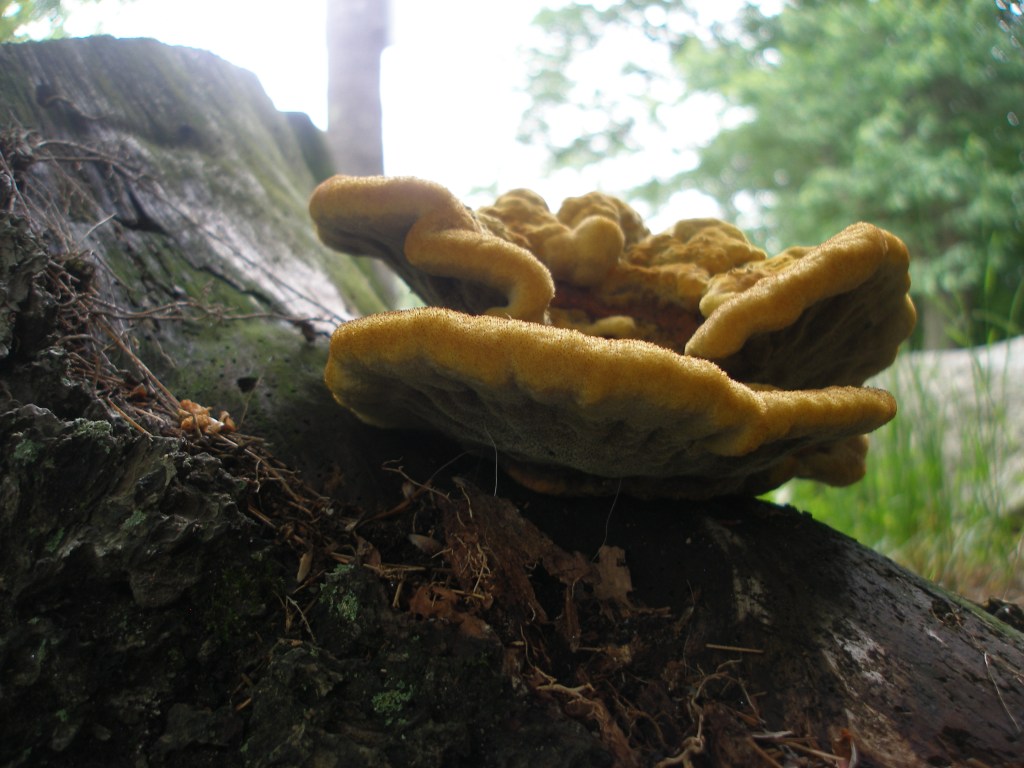
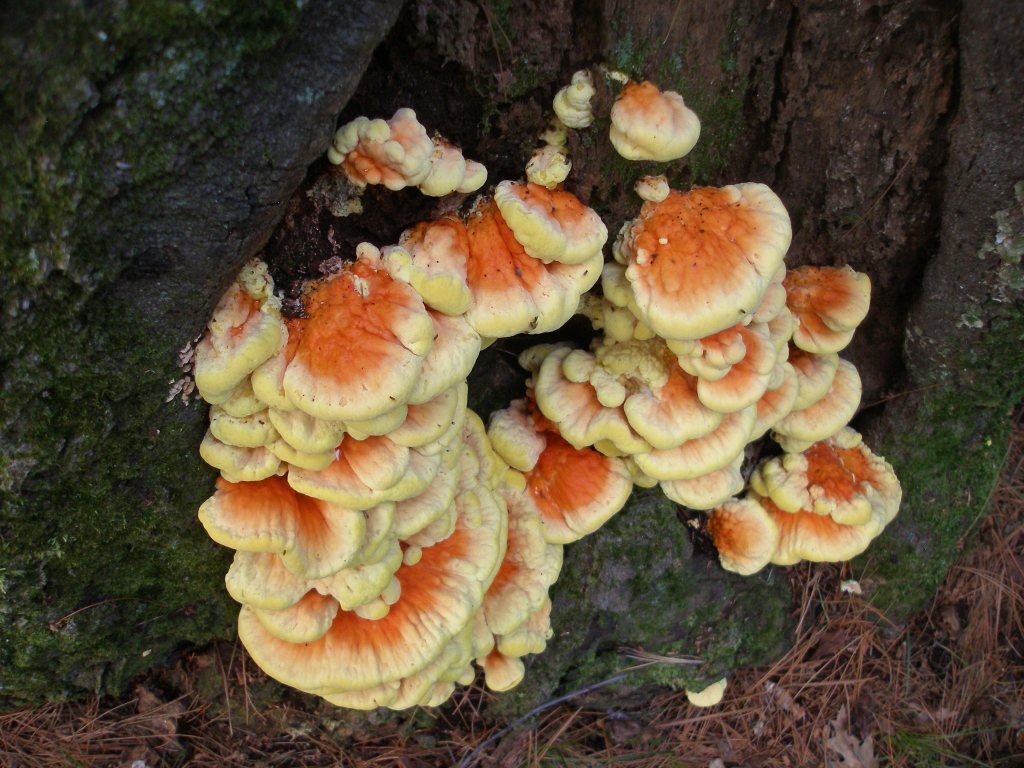
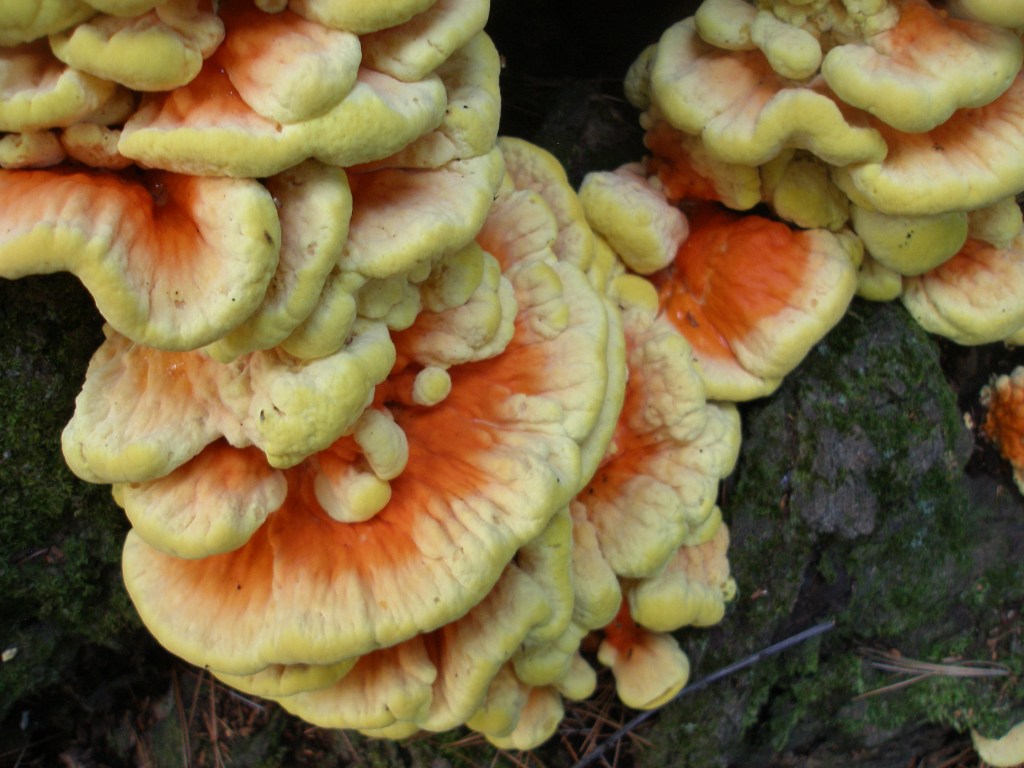
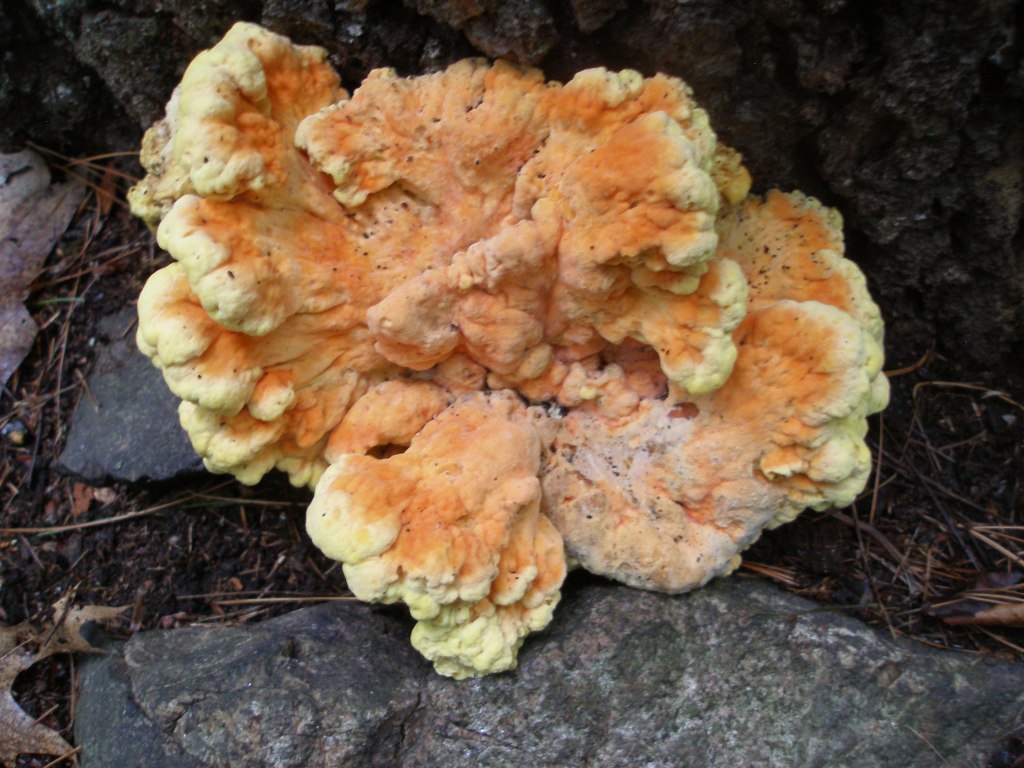
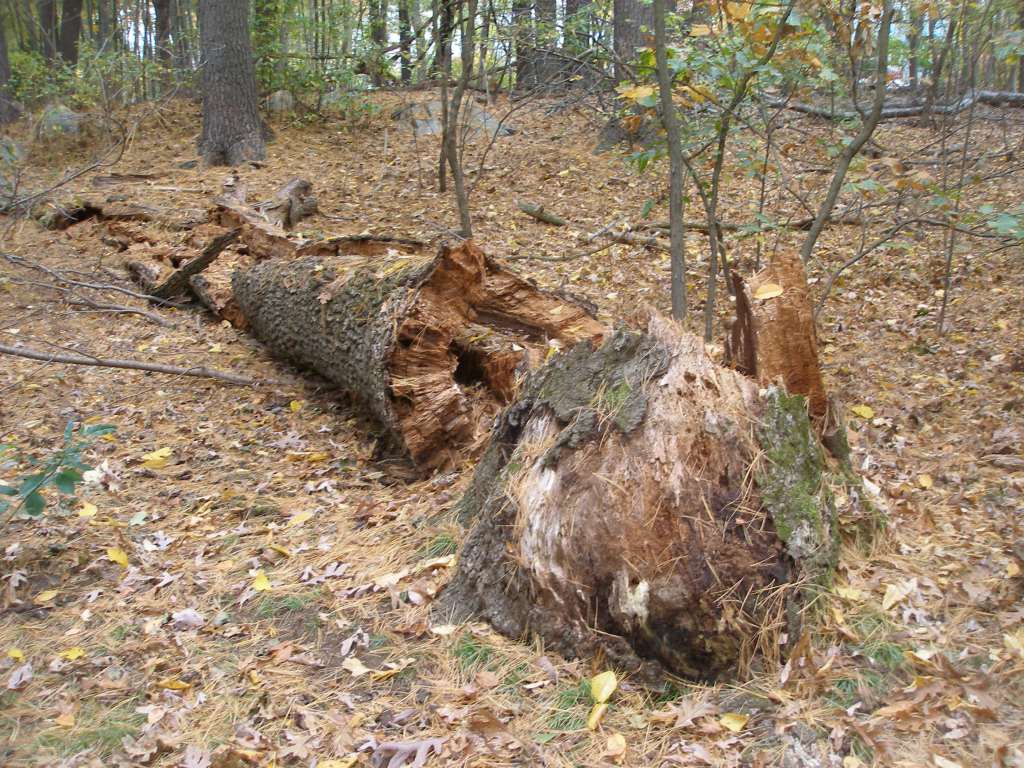
Walking along the path toward the pond in Menotomy Rocks Park, ArIington, Massachusetts, USA. I caught a glimpse of orange patches. Coming closer I saw Chicken of the woods mushrooms trooping down a fallen trunk.

There were maple leaves on the ground in that area, with none of the expected oak. Perhaps the nutritious sap of a sugar maple was supporting such an abundant display.
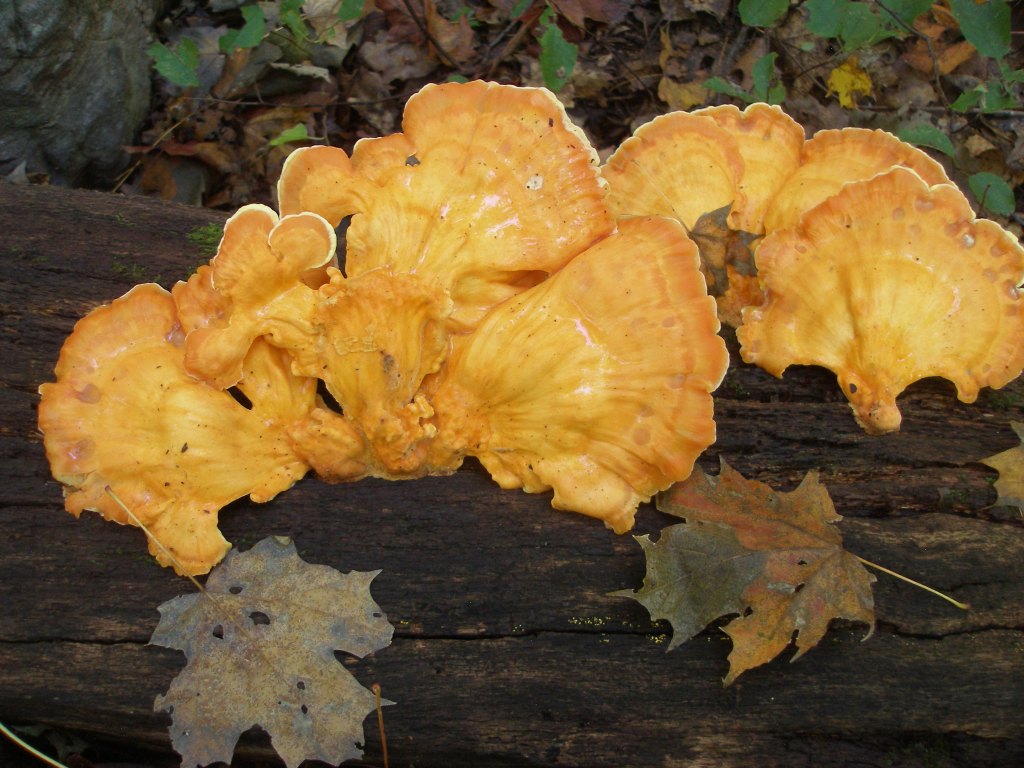
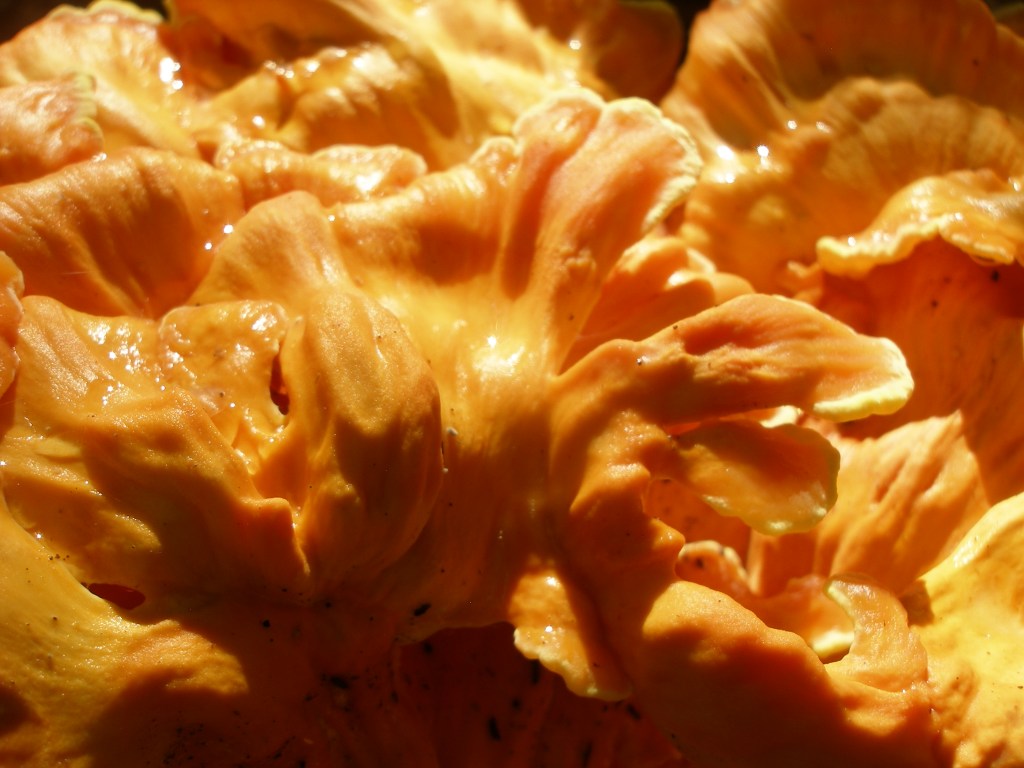
Over several days, I returned to view this spectacle in different lights as the shapes changed and the colors began to fade.


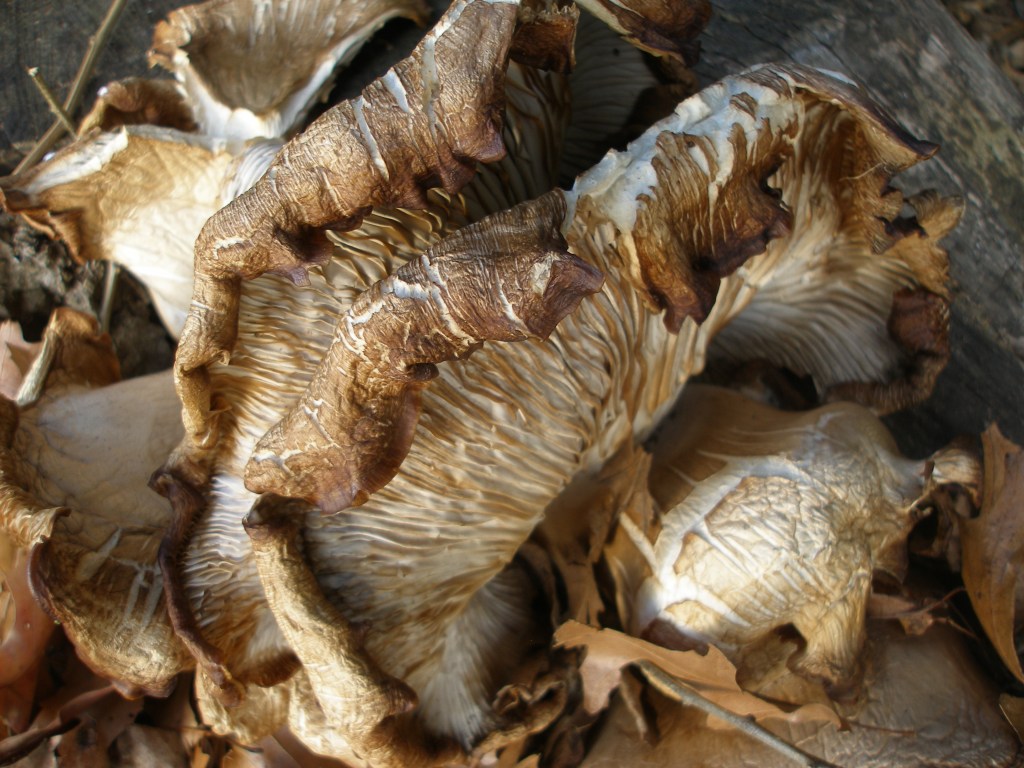
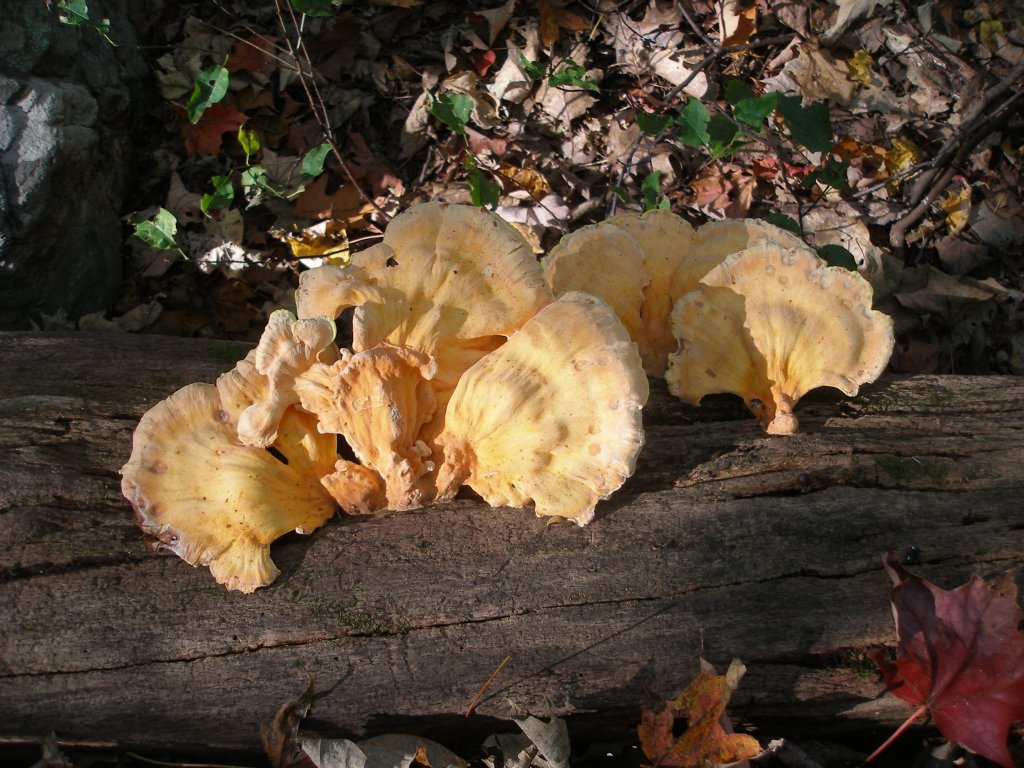
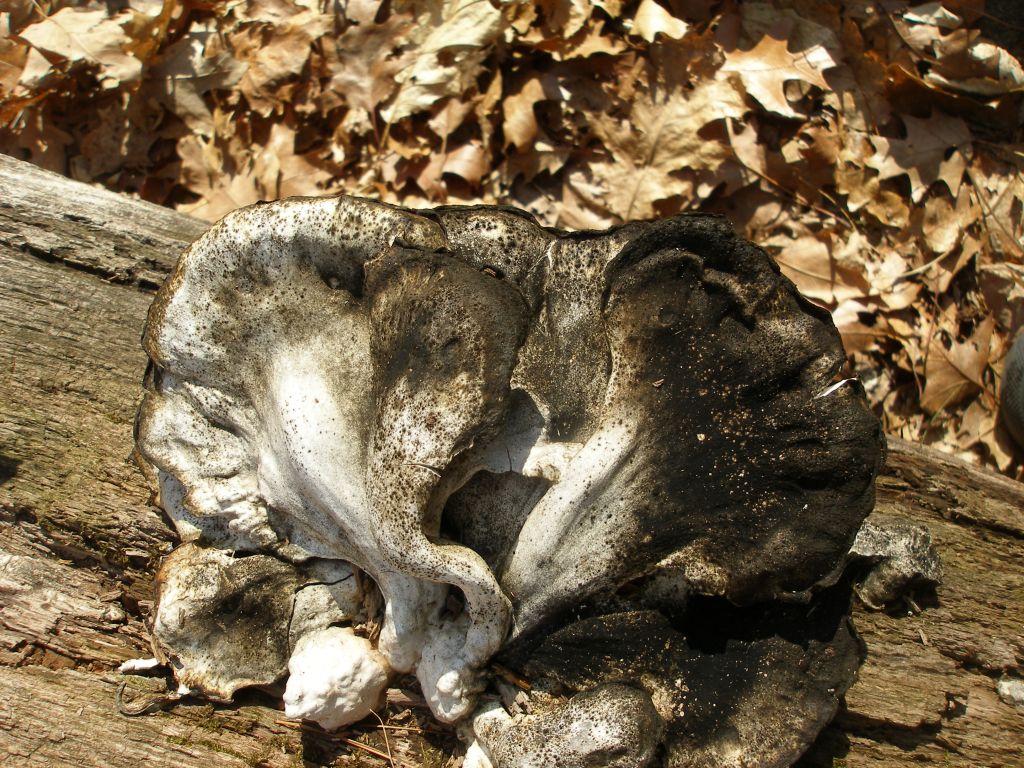
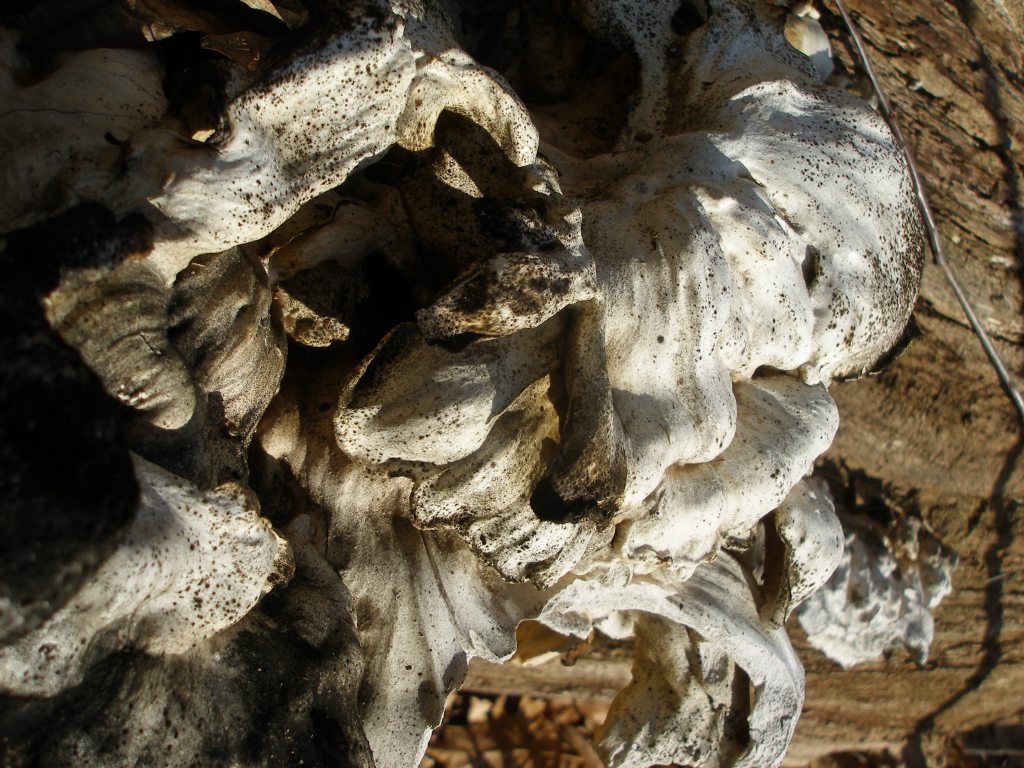
And here is how some of them looked after a dry winter:

Mushrooms: Fall 2024

Although areas nearby have gotton considerable rain, where I live in Arlington, Massachusetts, USA, we had a whole month of unrelenting dryness. This year there is nothing like the diverse abundance I saw around this time in 2021. Still there were some notable mushrooms popping up here and there. Evidently Chicken of the Woods and Jack O Lanterns produce fruiting bodies even when it is dry.

I did come across some interesting slime molds. Those are included as the last photos below.

O


Jack O Lantern Mushrooms

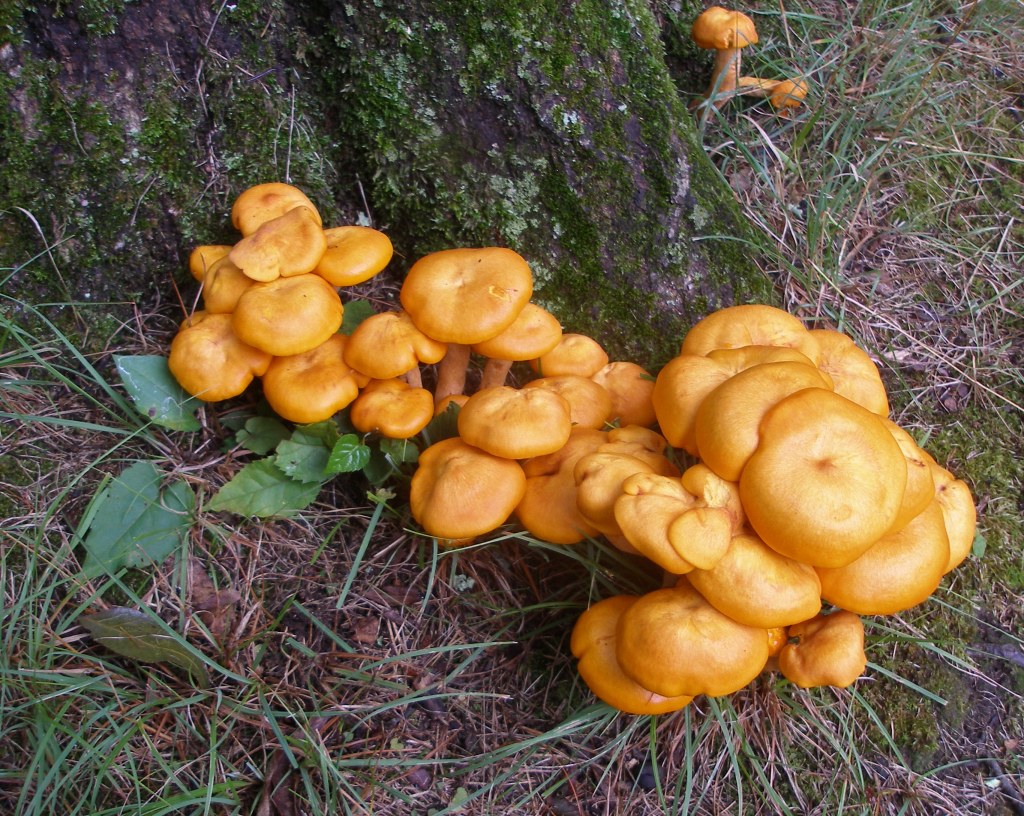
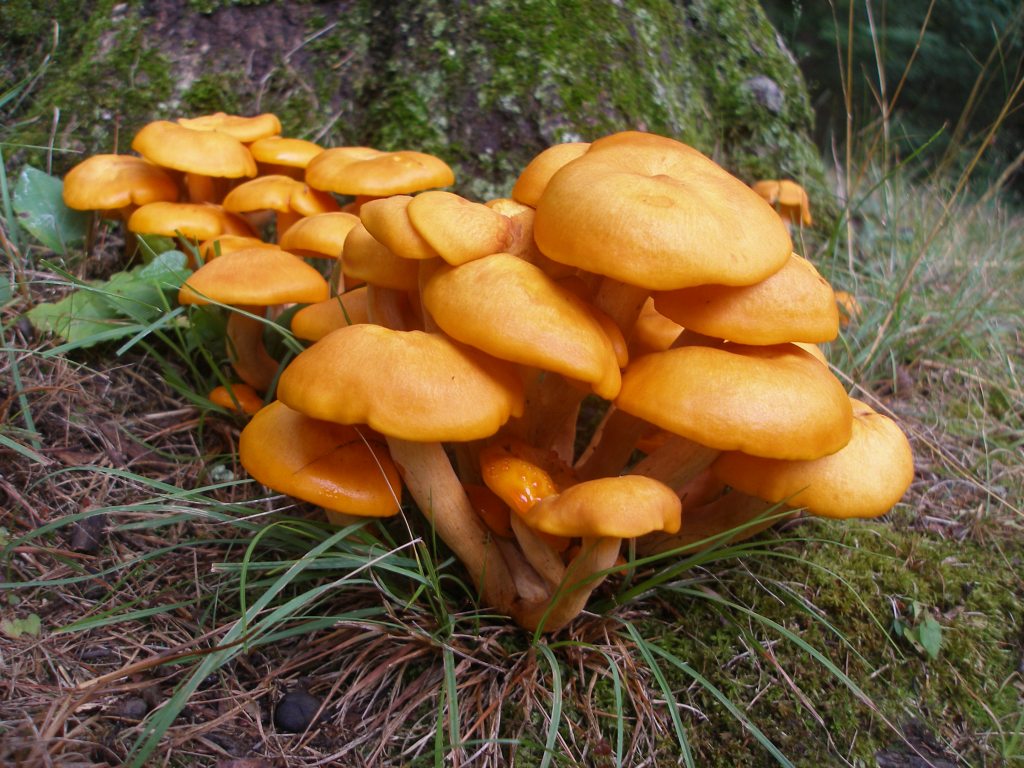
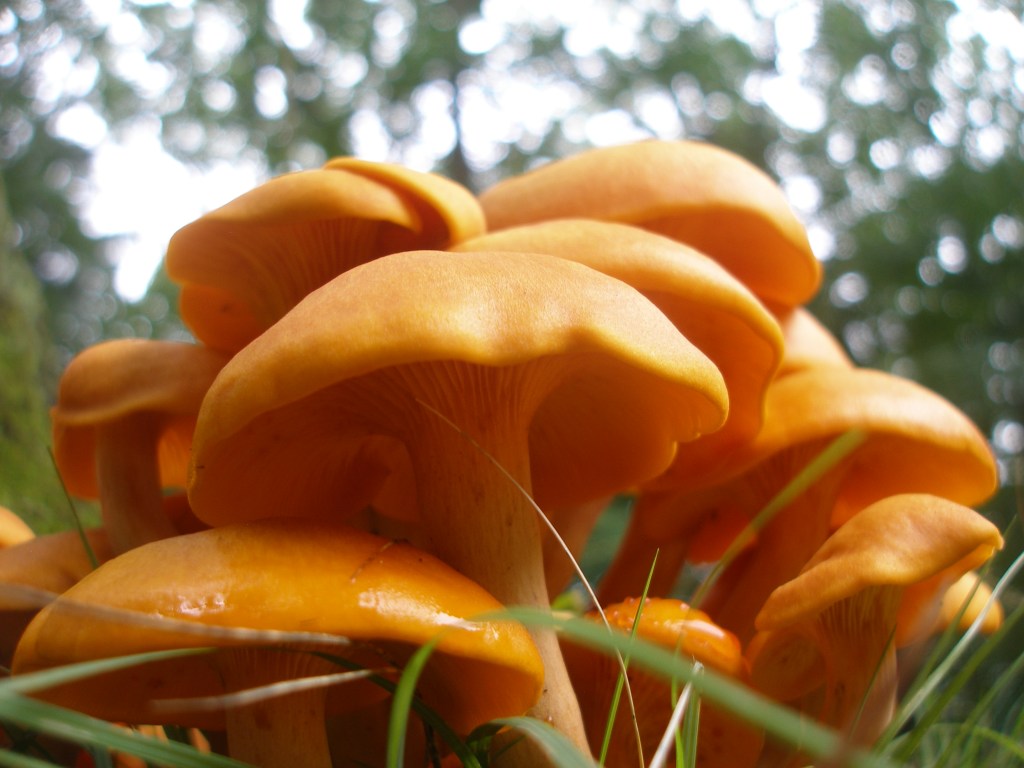
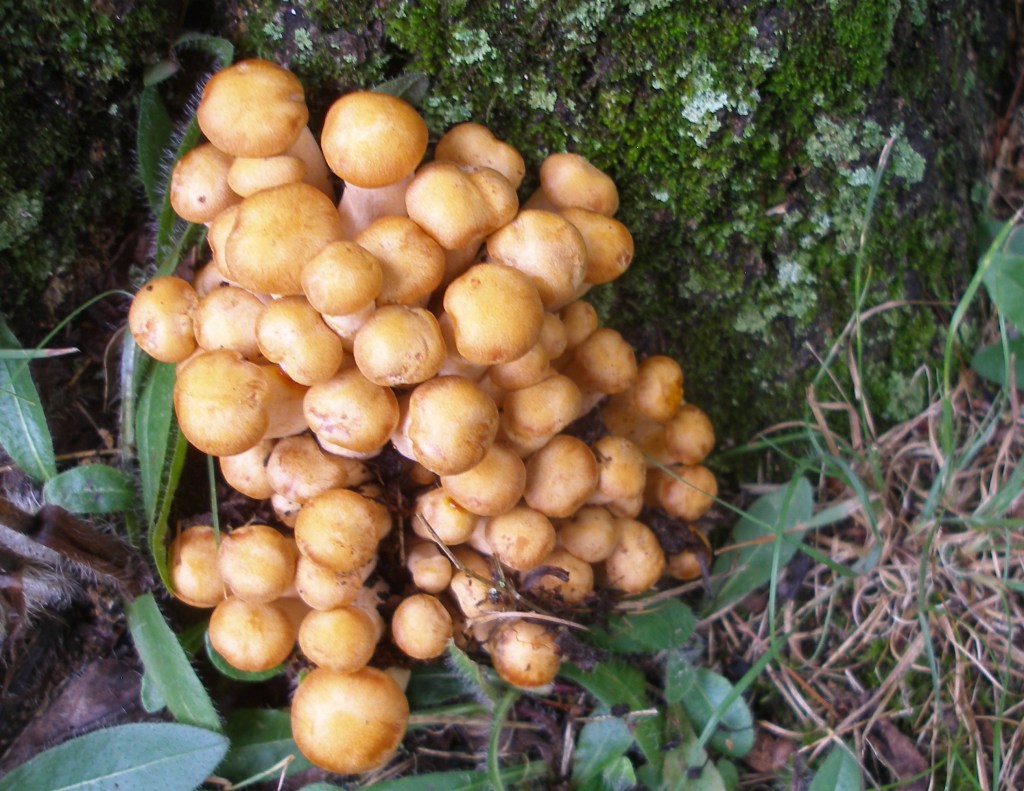
I wasn’t looking for them – too early in the season, but these mushrooms could not be missed. They were orange and not just a quiet subtle orange either.

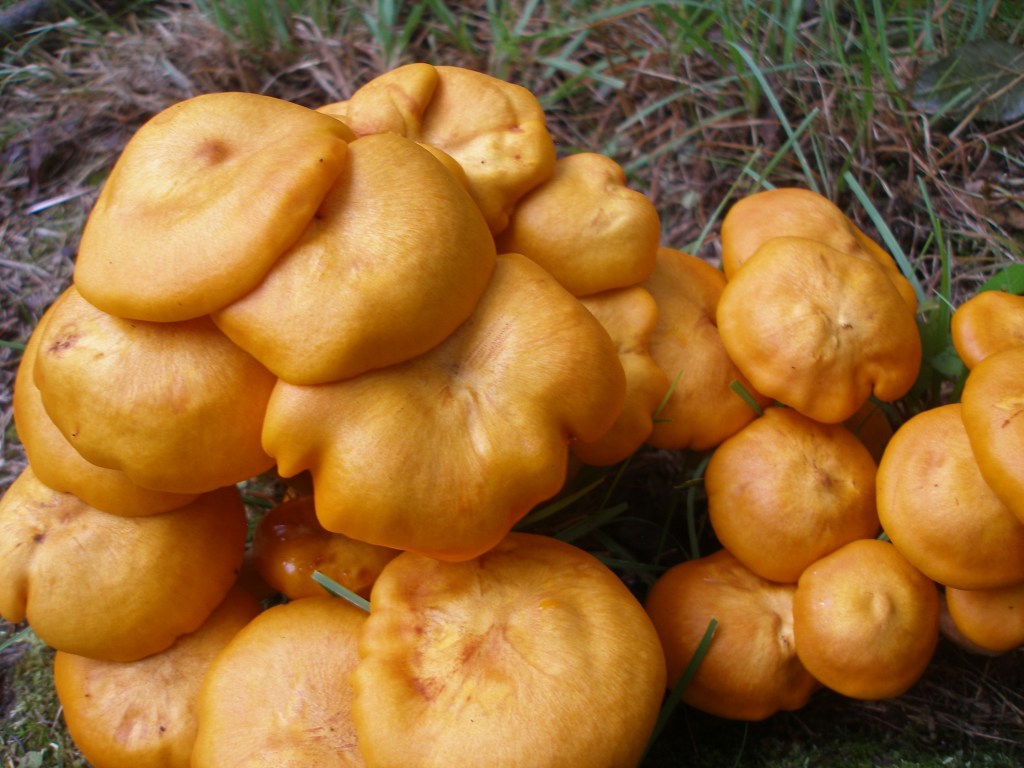
They looked a bit melted in places like what happens with some kinds of soft cookies when they are baking. Note: Don’t eat these Jack O Lantern mushrooms, they are poisonous.

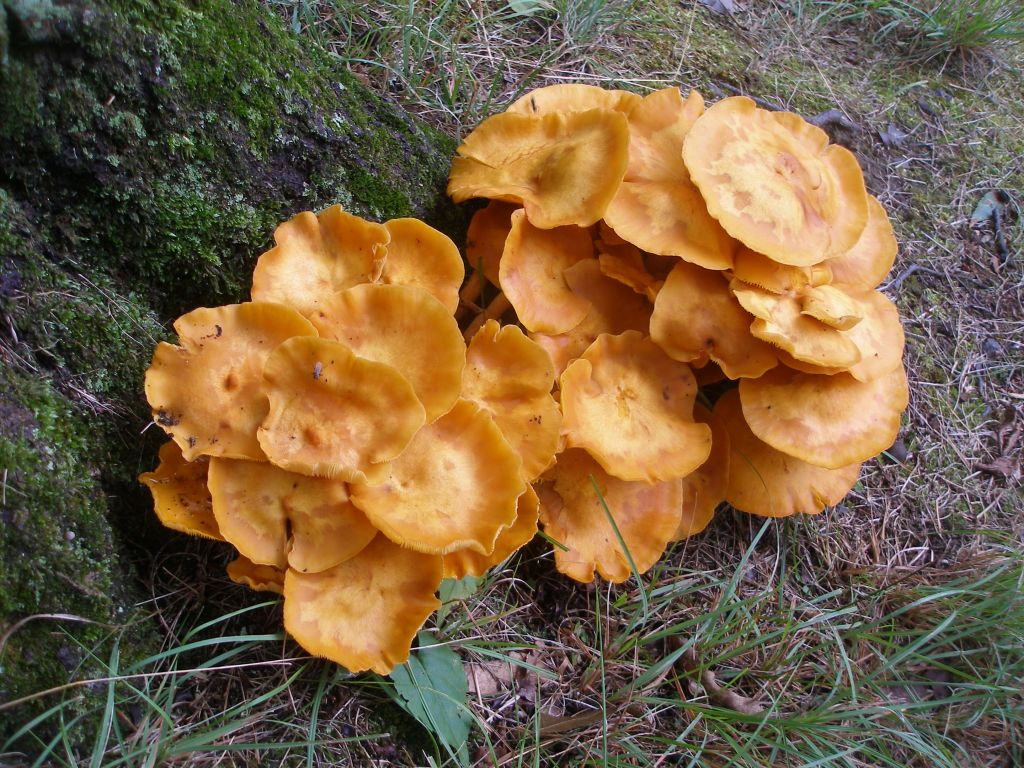
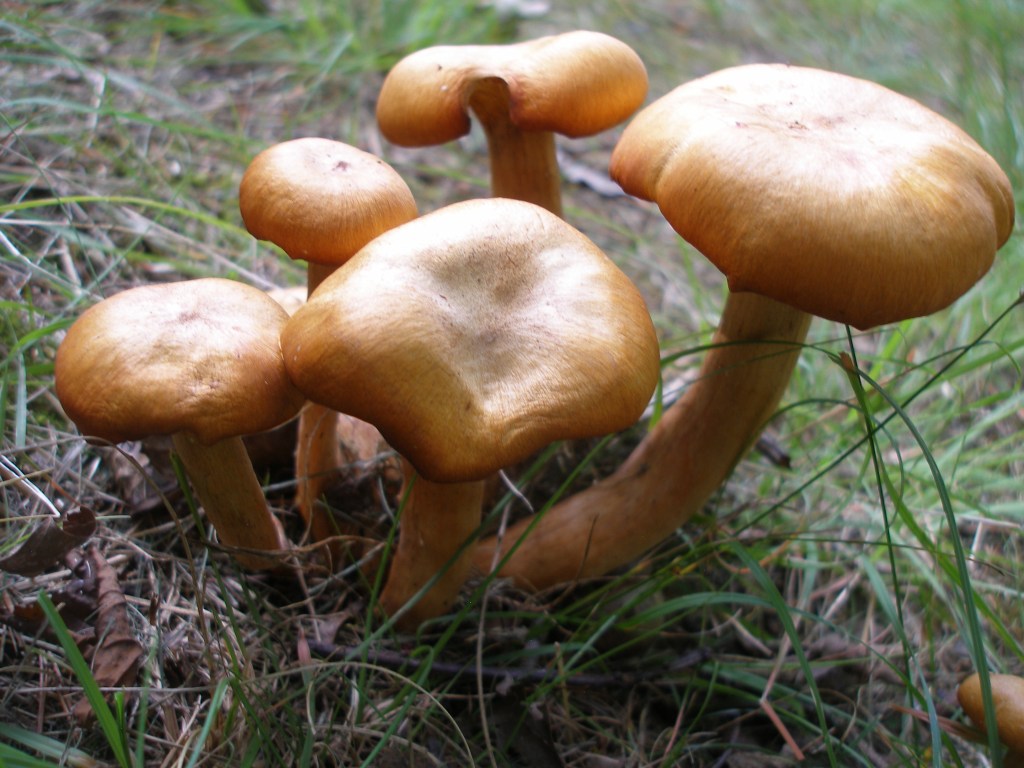
A few days later, the caps had flattened out, and gotten larger with their edges turned up. And additional clumps were growing at the base of the oak.
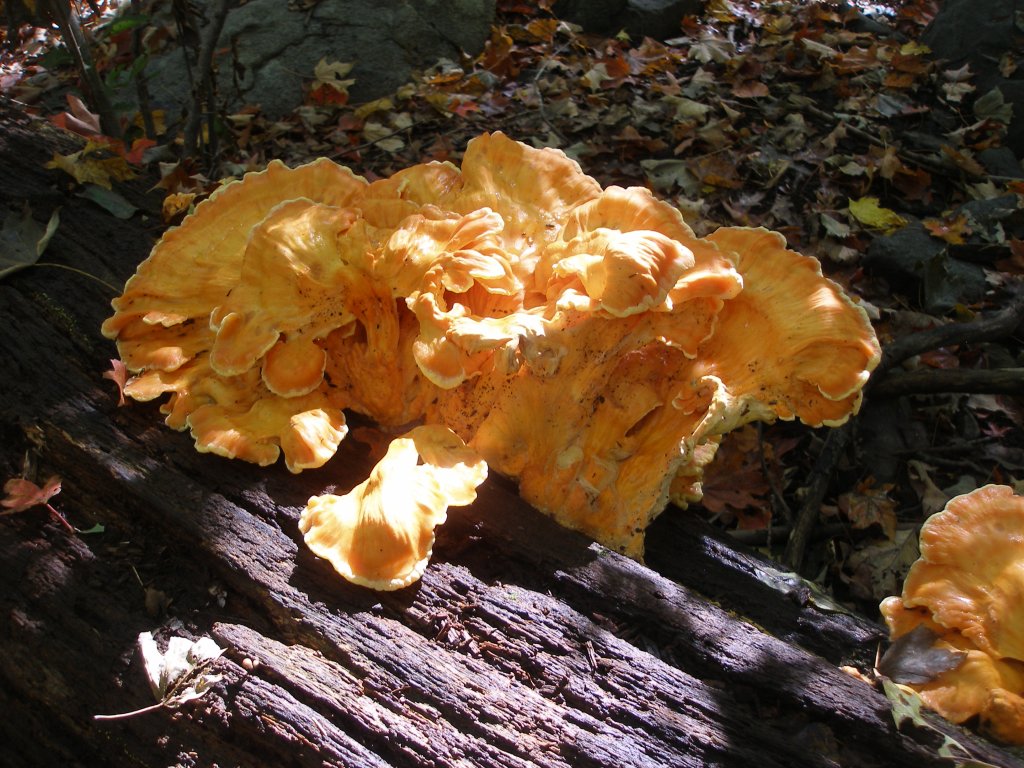
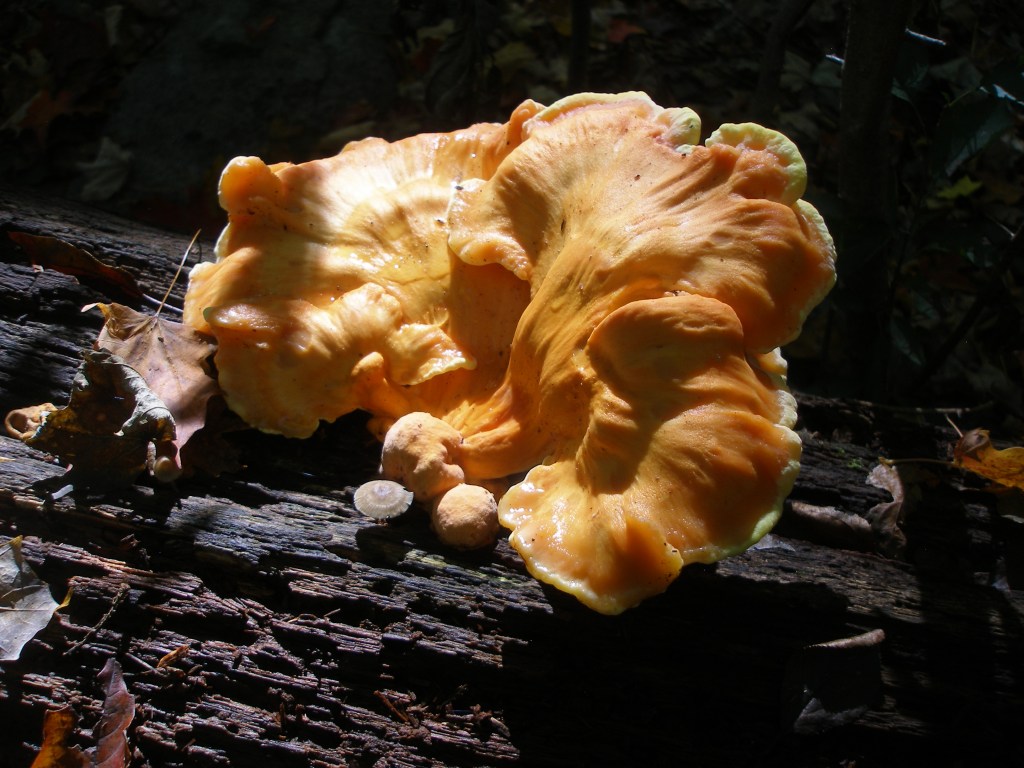
Evidently these mushrooms are a bit bioluminescent. I went out around 5 am to see if I could capture their pale green glow with my small camera, but perhaps there was too much light as the sky was already beginning to brighten.


Mushrooms: Fall 2023

I expected this fall’s crop of mushrooms would be different from last season’s given our highly changeable conditions these days.

Fungi, slime molds and lichens can tell when conditions are right to produce fruiting bodies and disperse spores. That window of opportunity appeared to come quite early in spring and summer this year. But interesting examples are still popping up. If I manage to capture worthy portraits of their splendid forms, I will add them below.


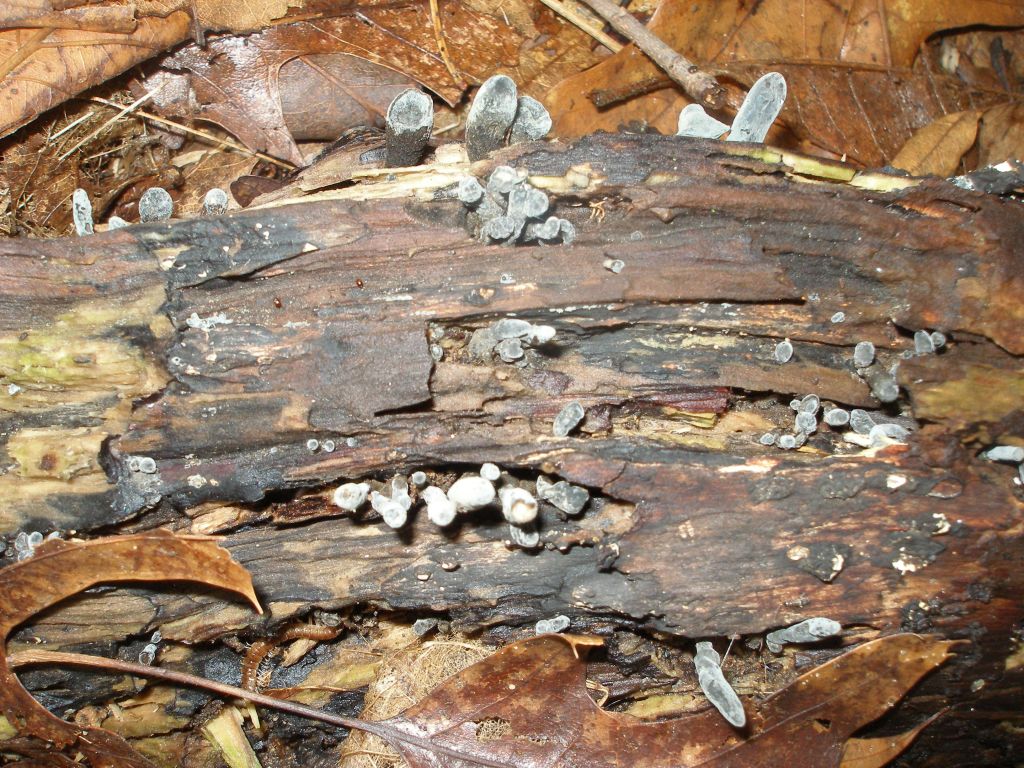
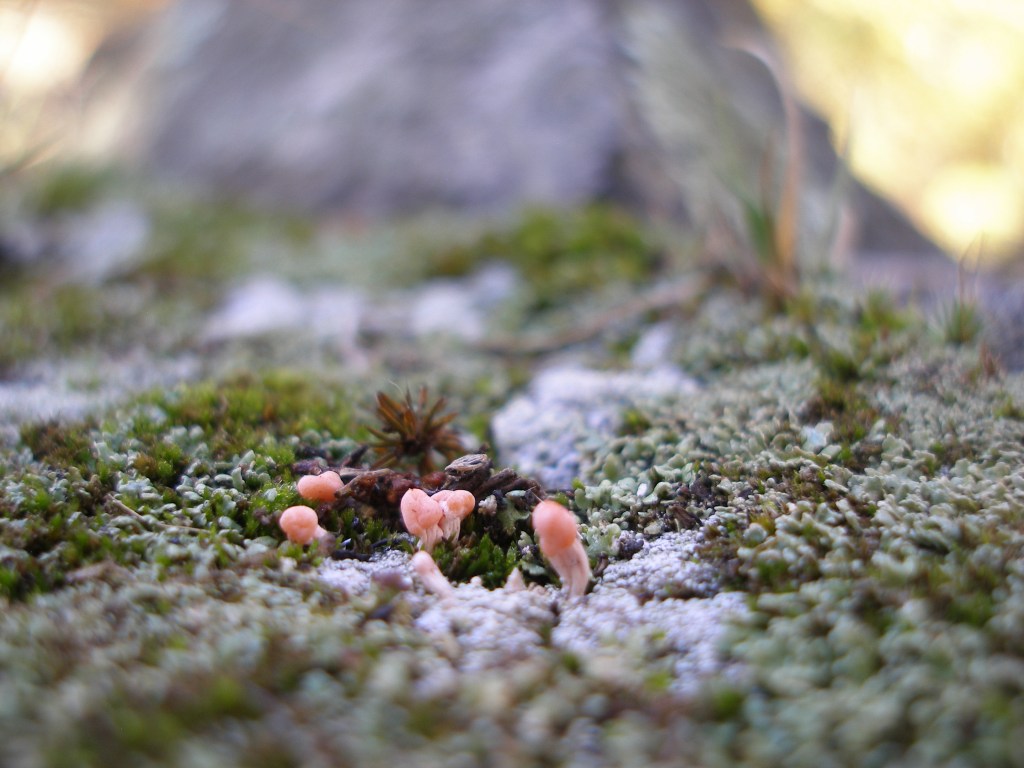
The tiny fruiting bodies above are those of lichen – not mushrooms


Spring & Summer Finds in 2023

Once again it has been an unusually rainy spring and summer with mushrooms in mossy spots in the woods as well as in our yards and even cracks in sidewalks.

Now that I have been paying more careful attention for a couple of years, I am finding examples that you might not normally think of as mushrooms, as well as slime molds with their fruiting bodies deposited where the wind can help with propagation.


Changeable Woodland Treasure

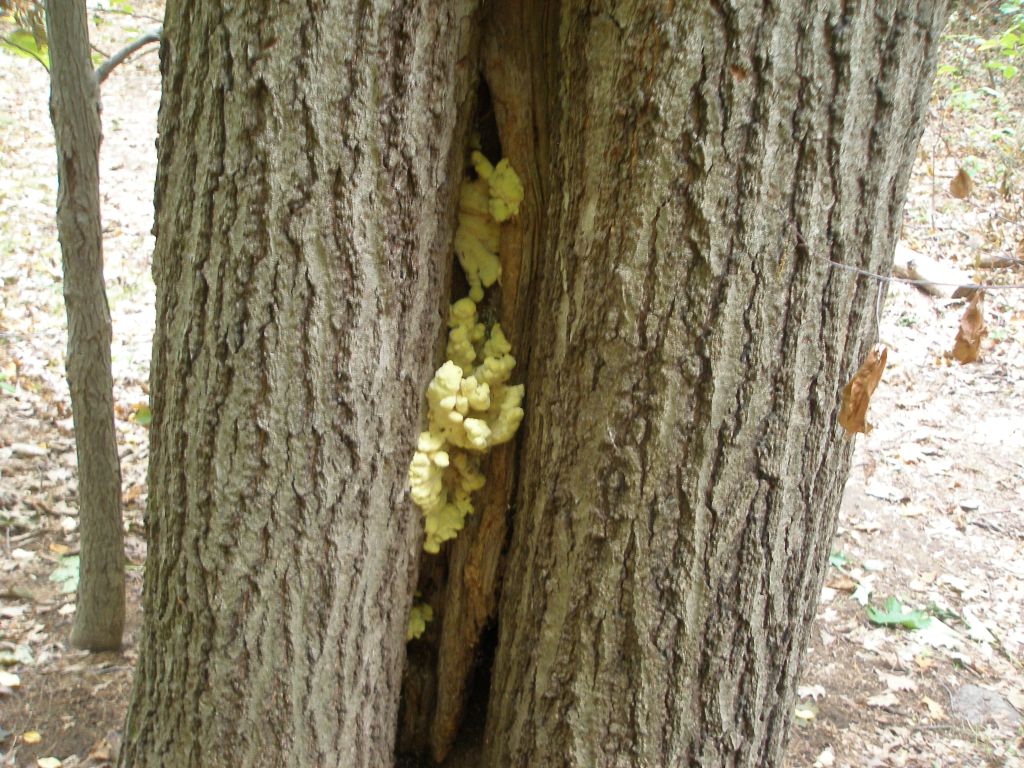
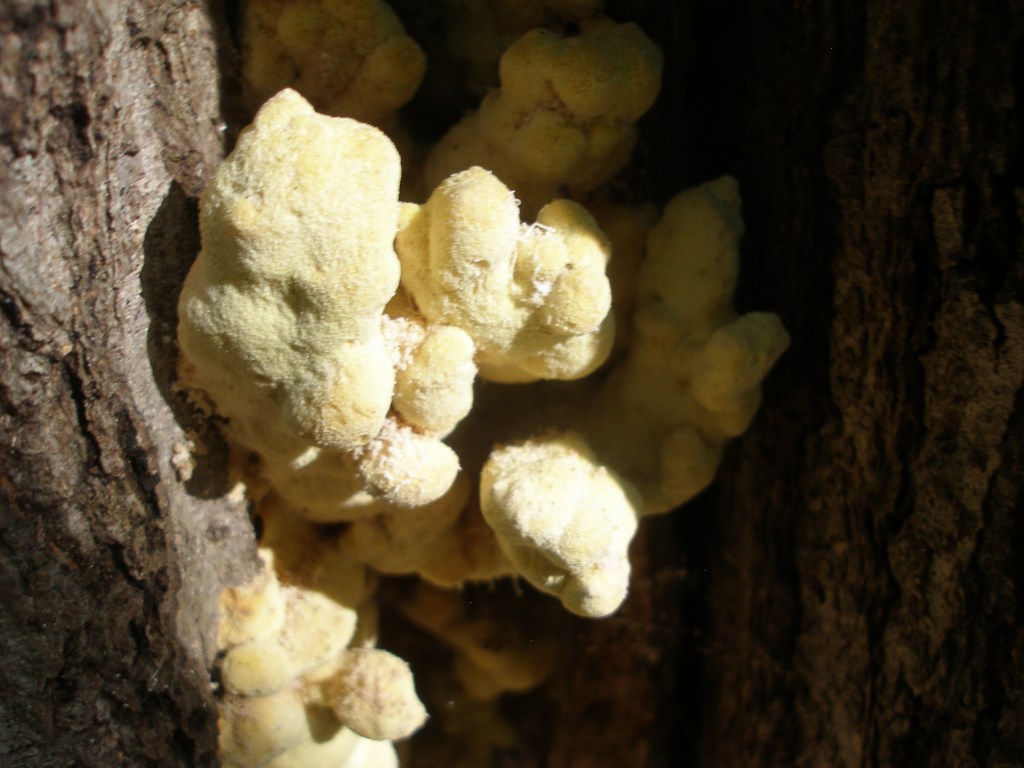
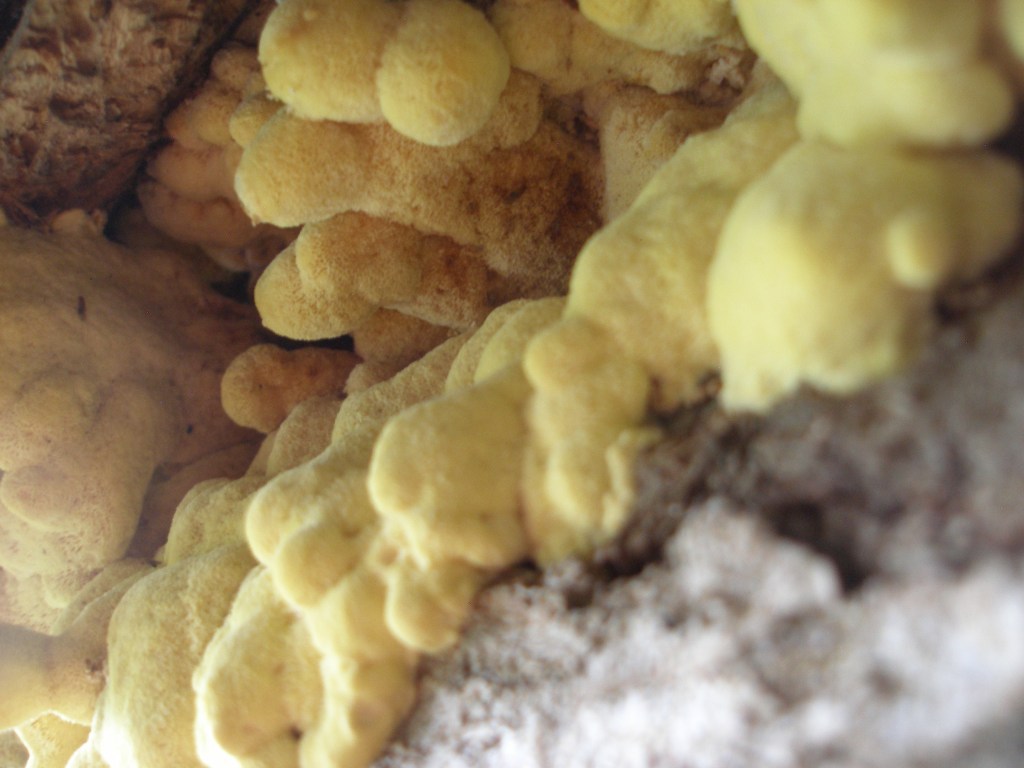
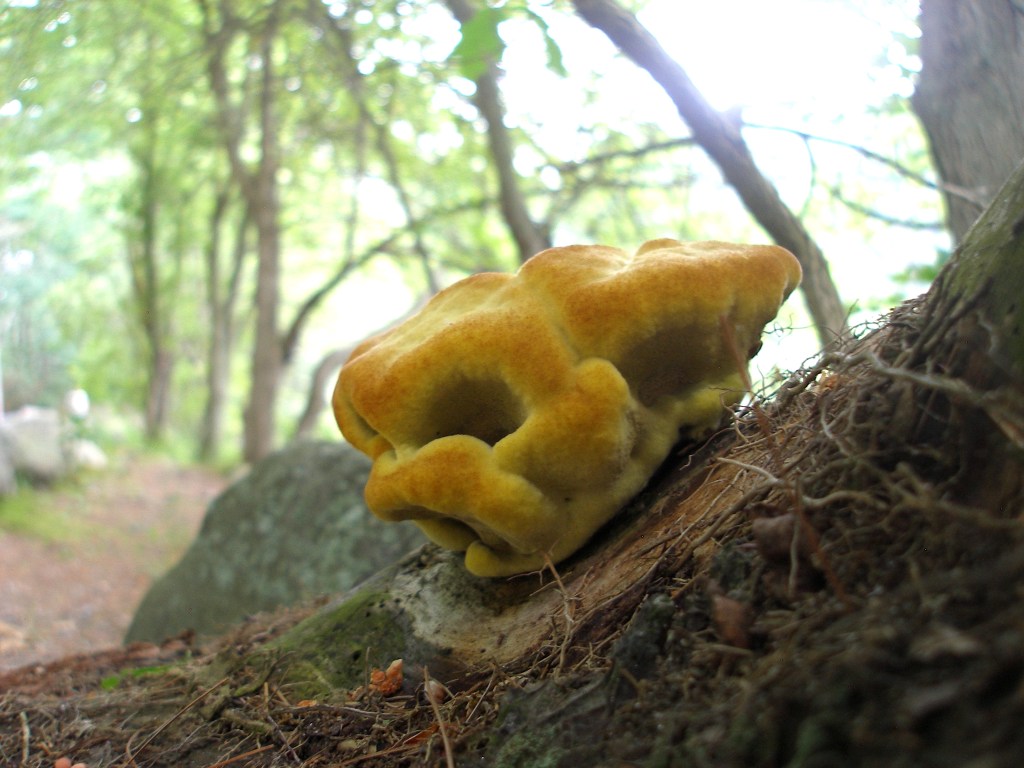
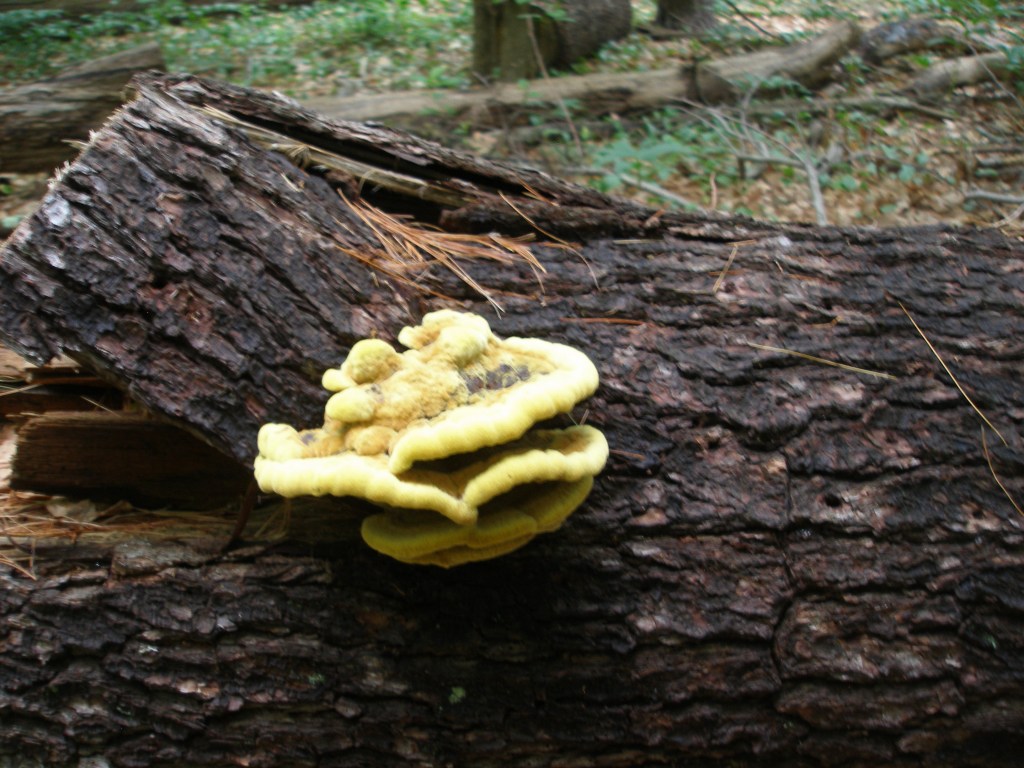
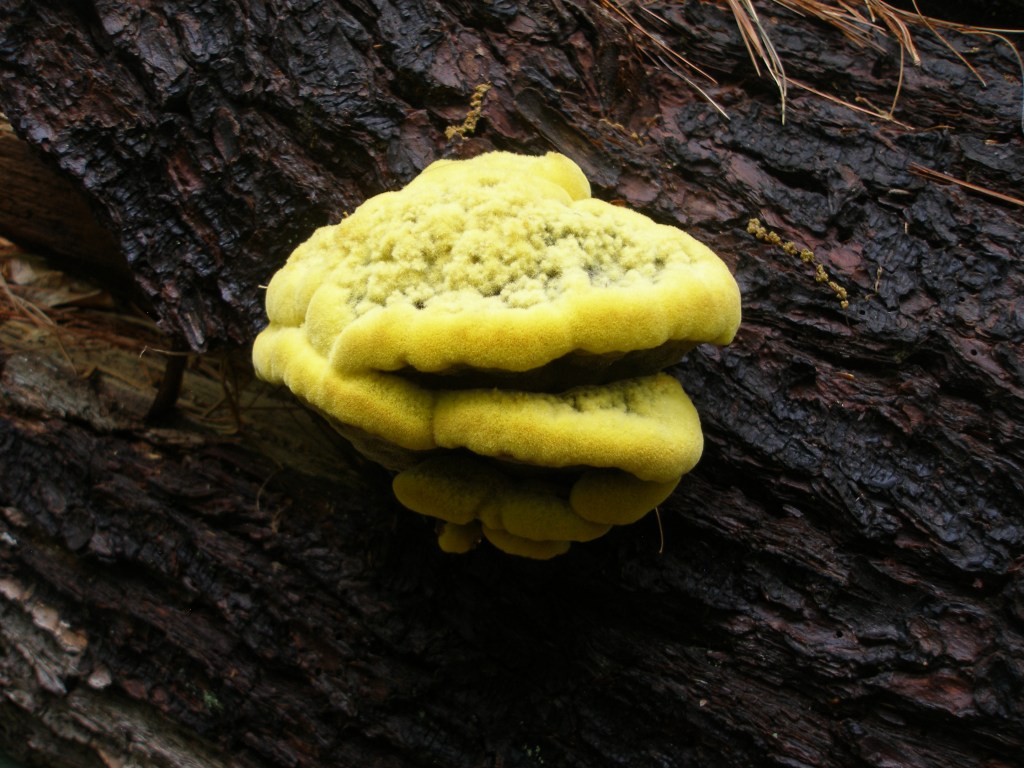
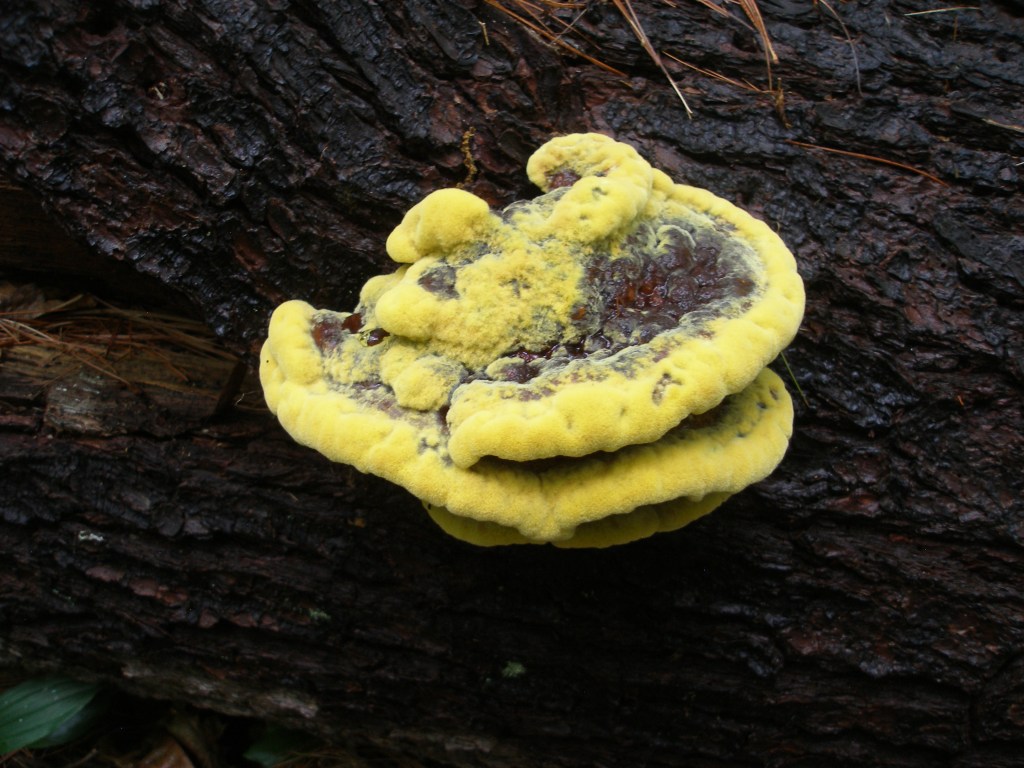
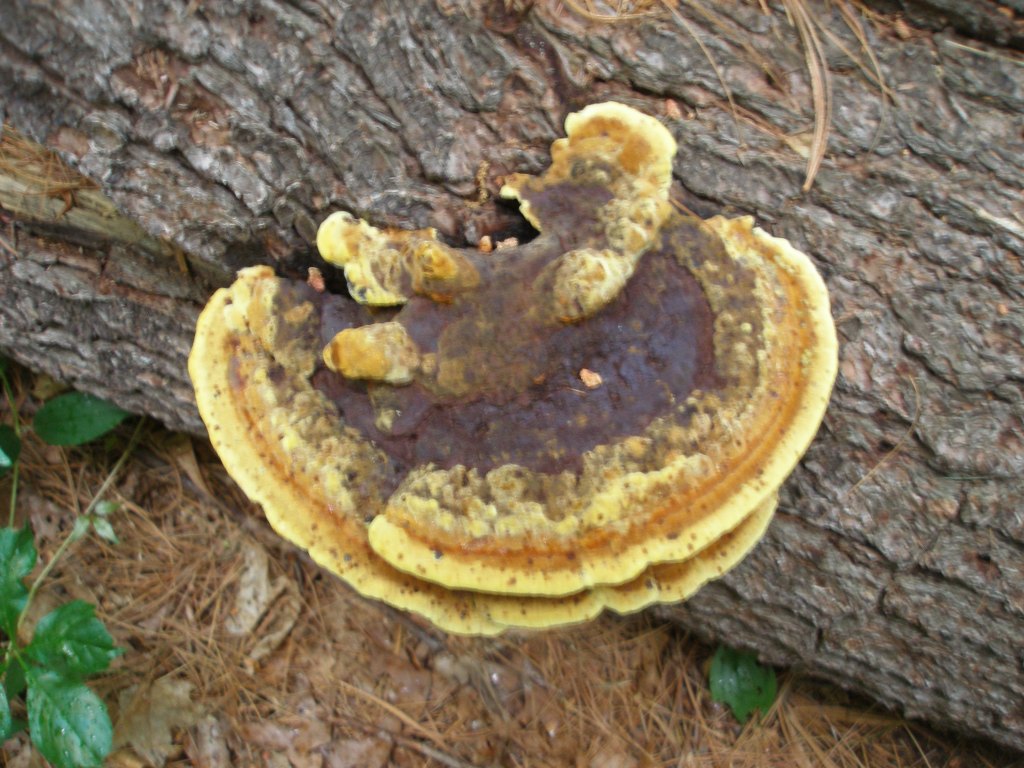
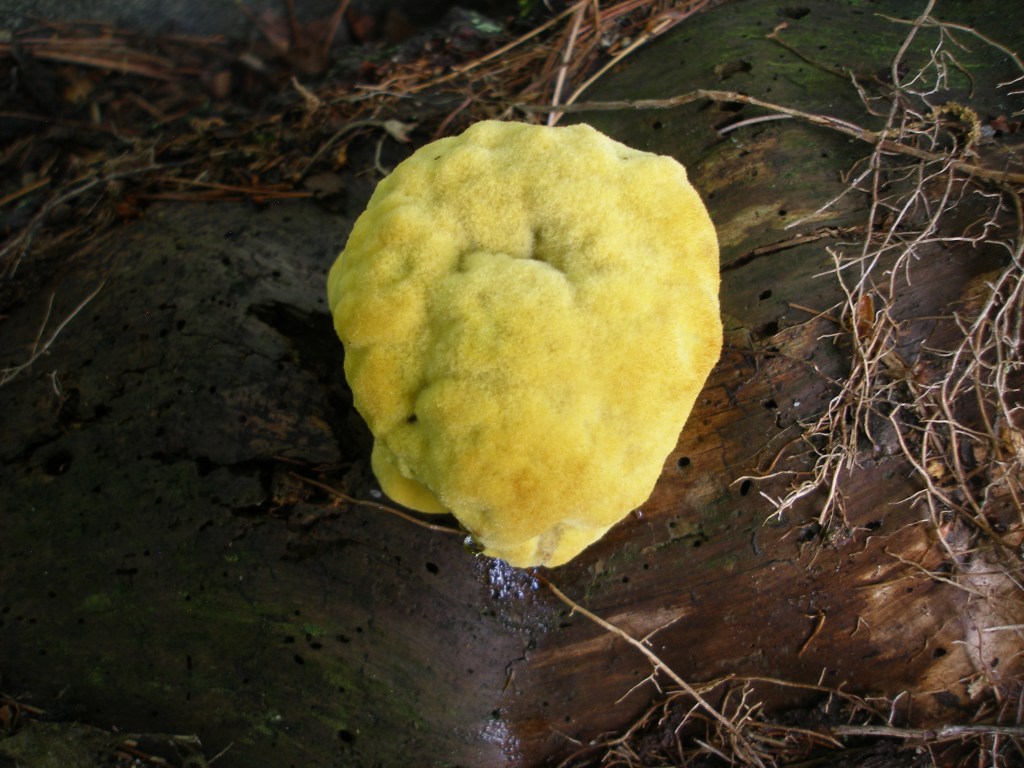
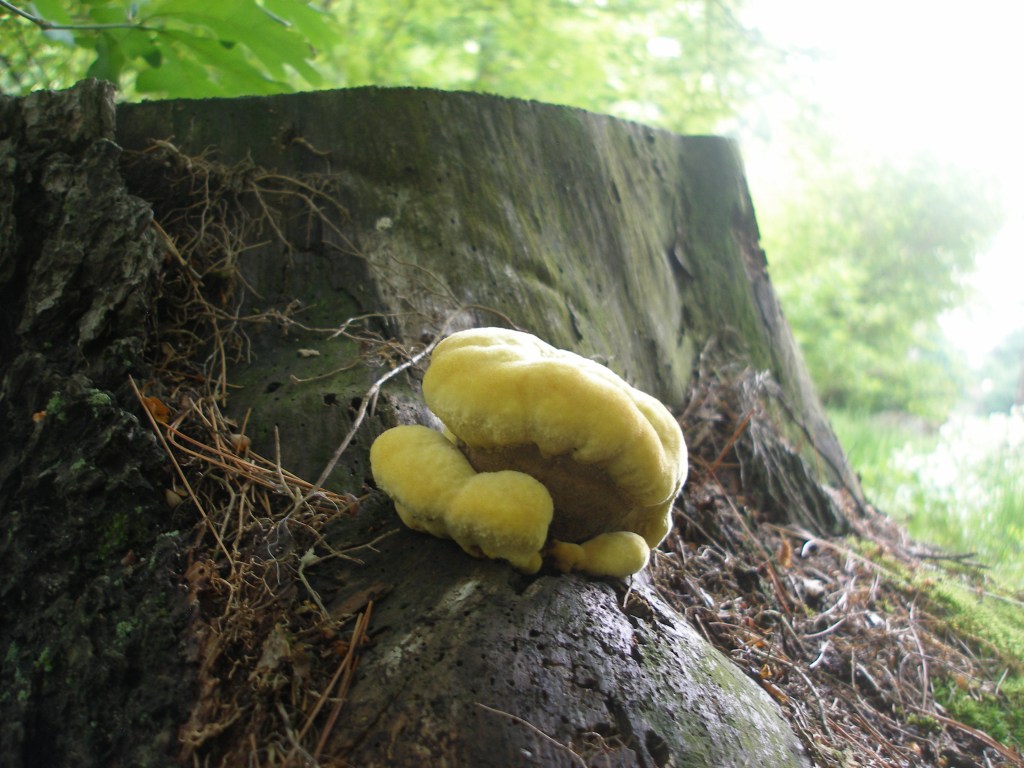
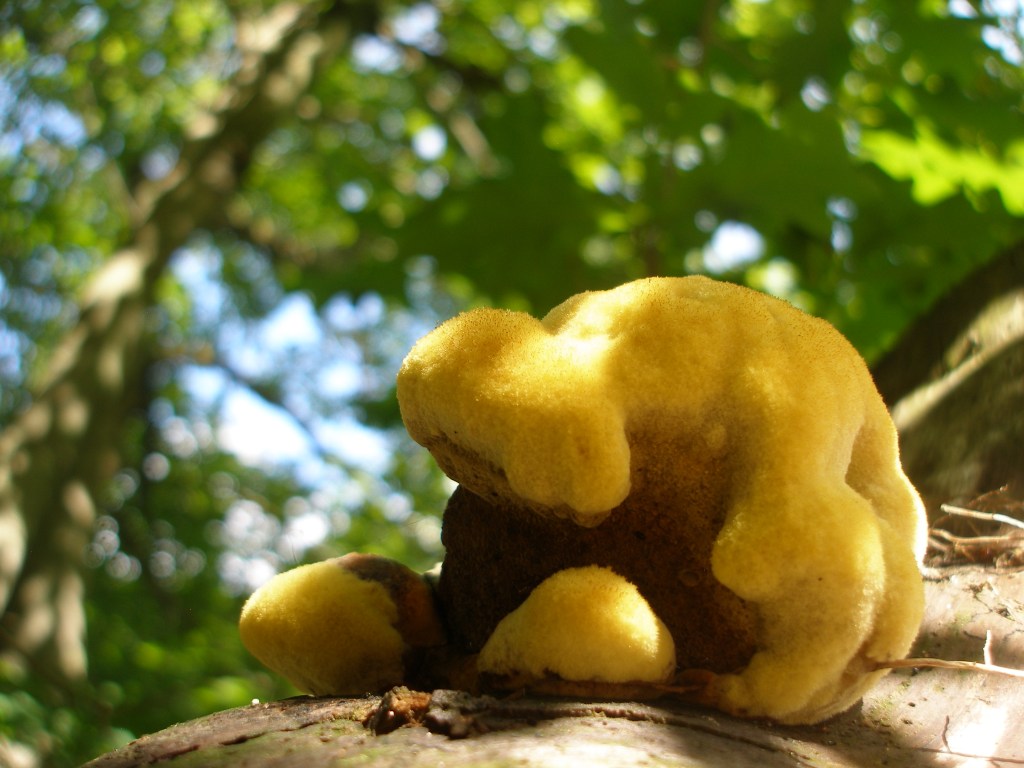
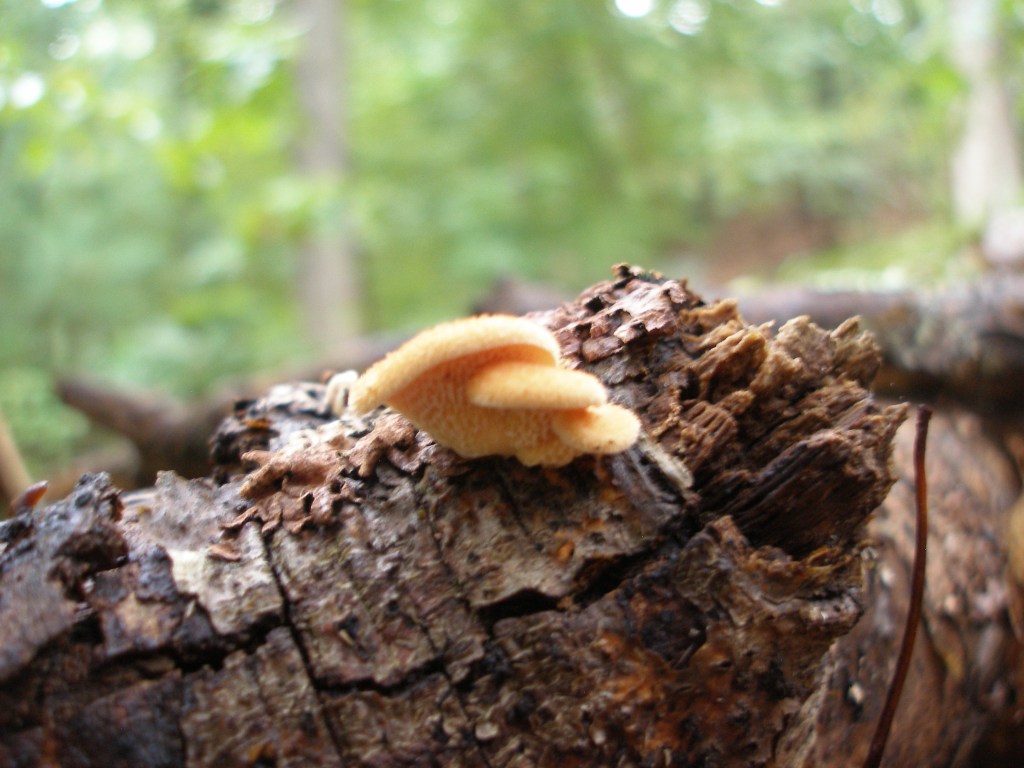
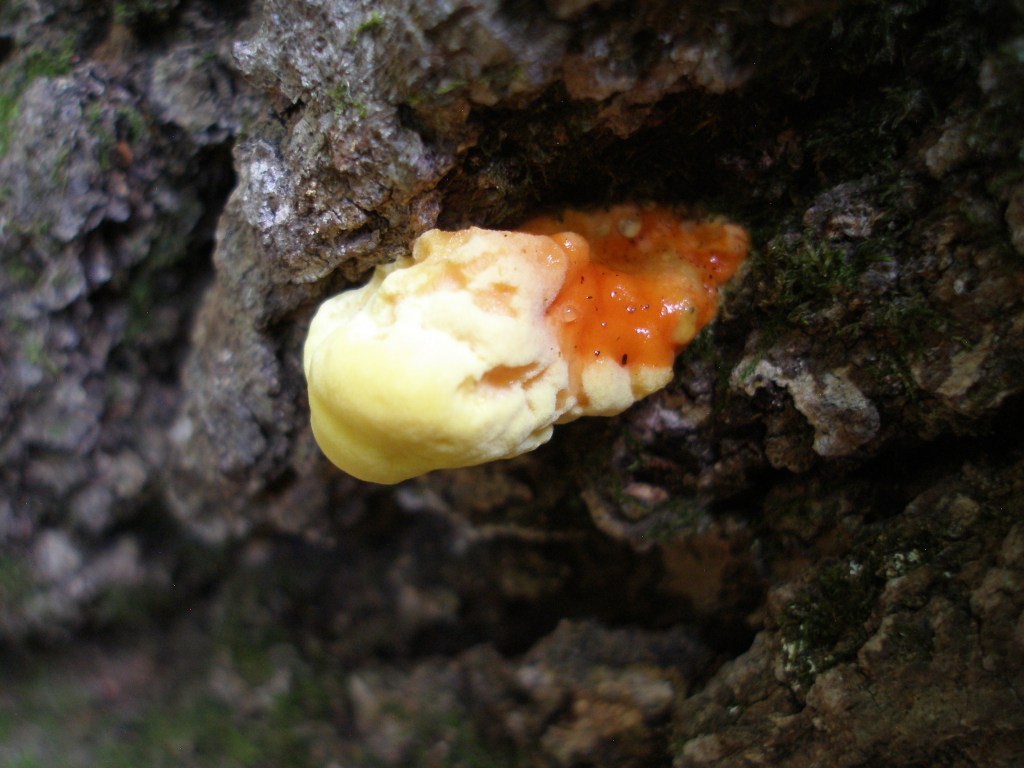
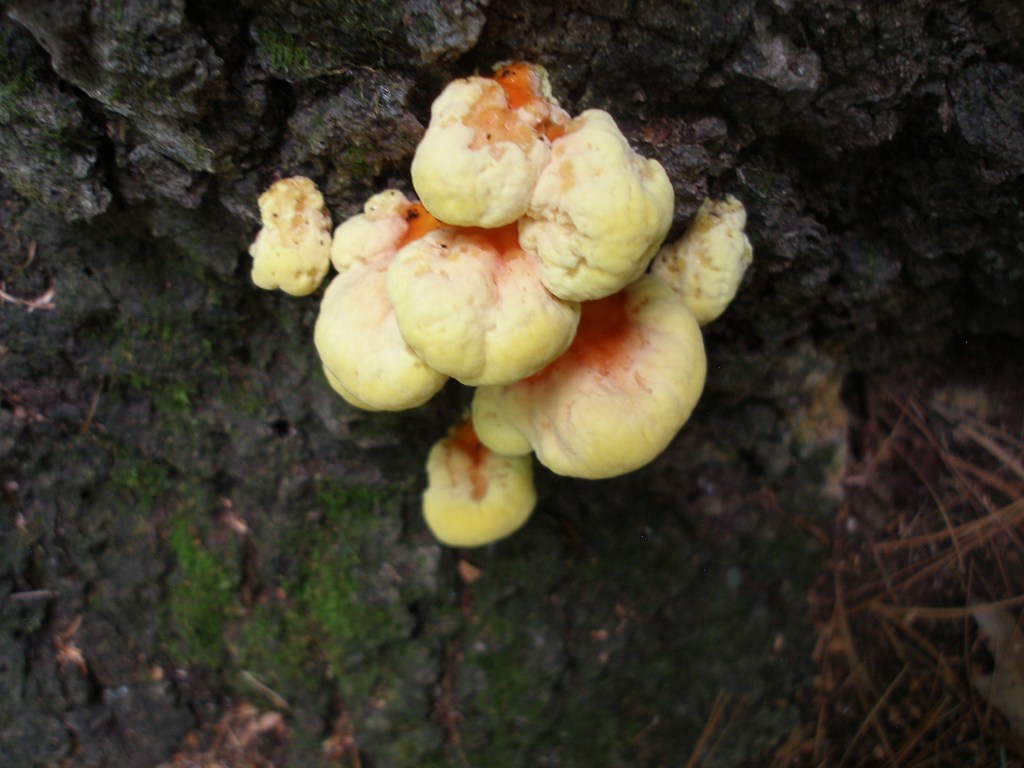
Wasn’t it a bit early for mushrooms? I had never seen such a fuzzy yellow growth. Perhaps it was something else. When I posted a photo online, I learned it might be a young dyer’s polypore. Evidently, the timing of all kinds of things is more variable these days.

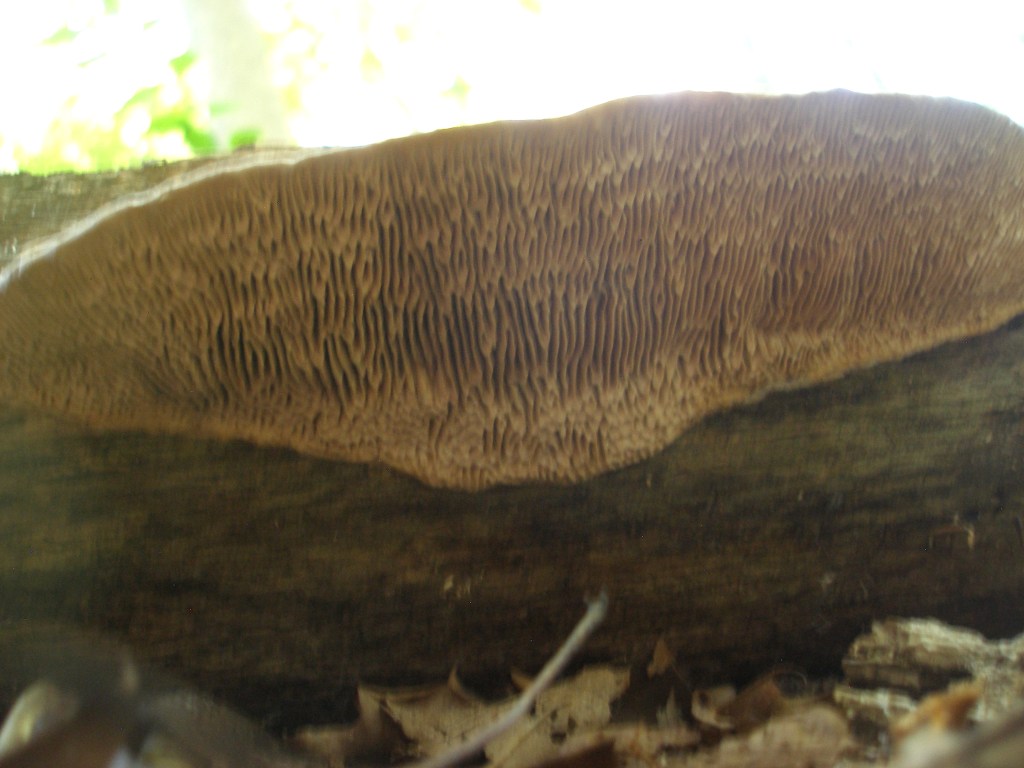
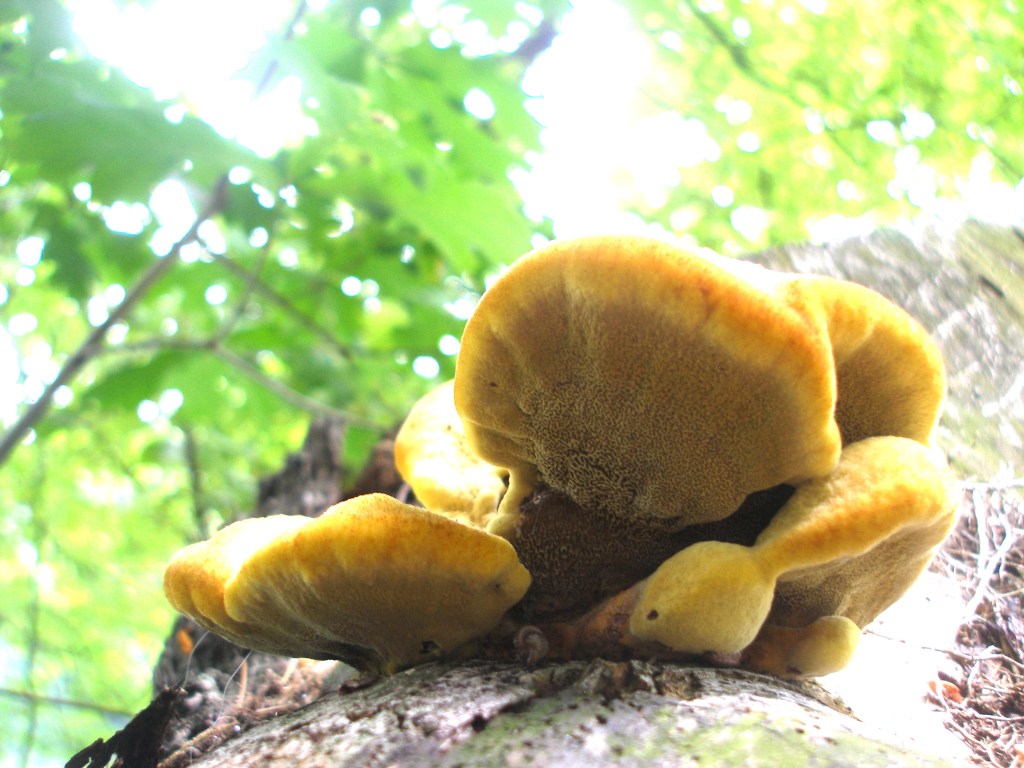
I found two. They both started out as fuzzy yellow lumps and kept changing. Dyer’s polypore seemed correct as there were certainly pores rather than the usual gills on the undersides.

I learned dyer’s polypores can be used to stain fibers a number of different colors – yellows, various shades of browns and even greens – depending on the type of fiber and how it is pretreated. This video shows it being used to dye wool lovely shades of yellow.

The first two photos below show the two I found mid-way through their cycle and the remaining photos show the changes that each went through closer in.


Young one – quite yellow and quite fuzzy

Beginning to turn brown

Expanding and flattening out

Changing colors around the edge

Getting harder with light edge

After rain

Another young one

Seen from the side

A few days older

Turning colors and flattening out

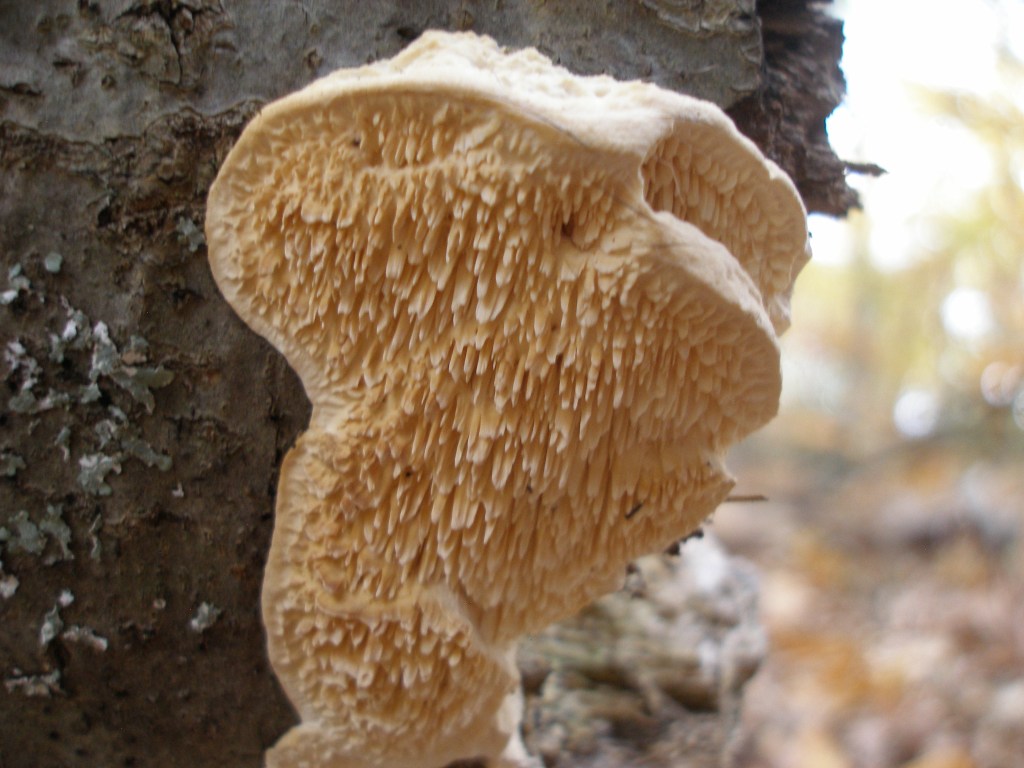
Seen from underneath

After rain

Several days later

Getting harder and drying out

Mushrooms & Lichens After Drought

Last summer it rained nearly every day followed by a rather spectacular crop of mushrooms popping up in Menotomy Rocks Park.

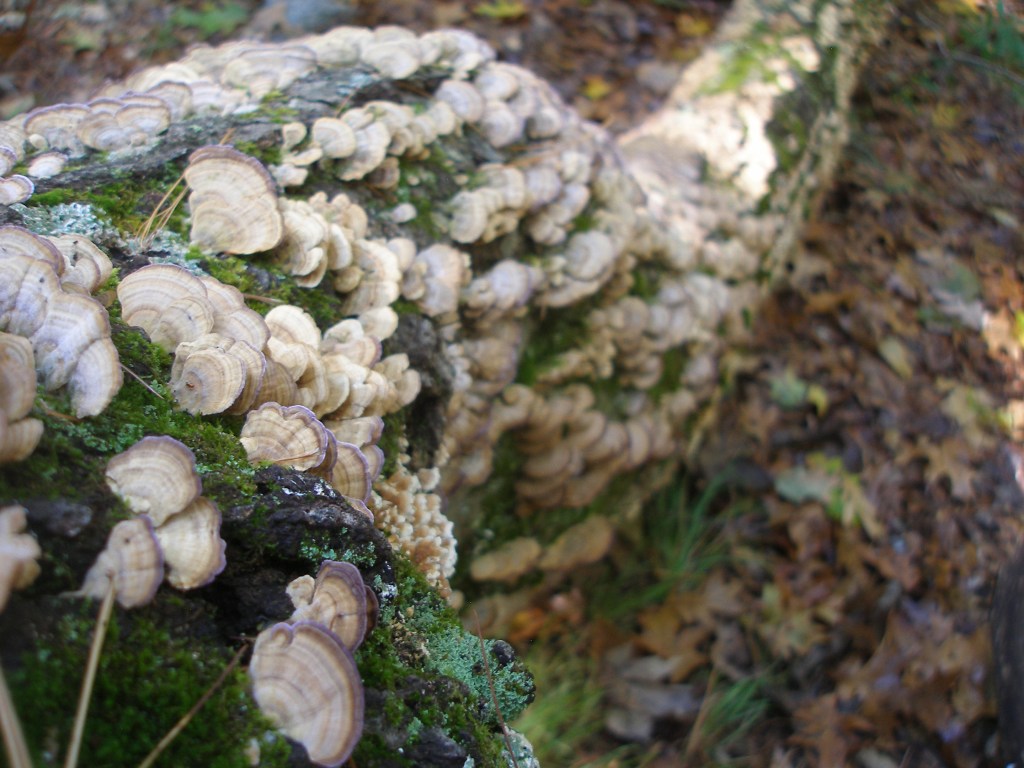
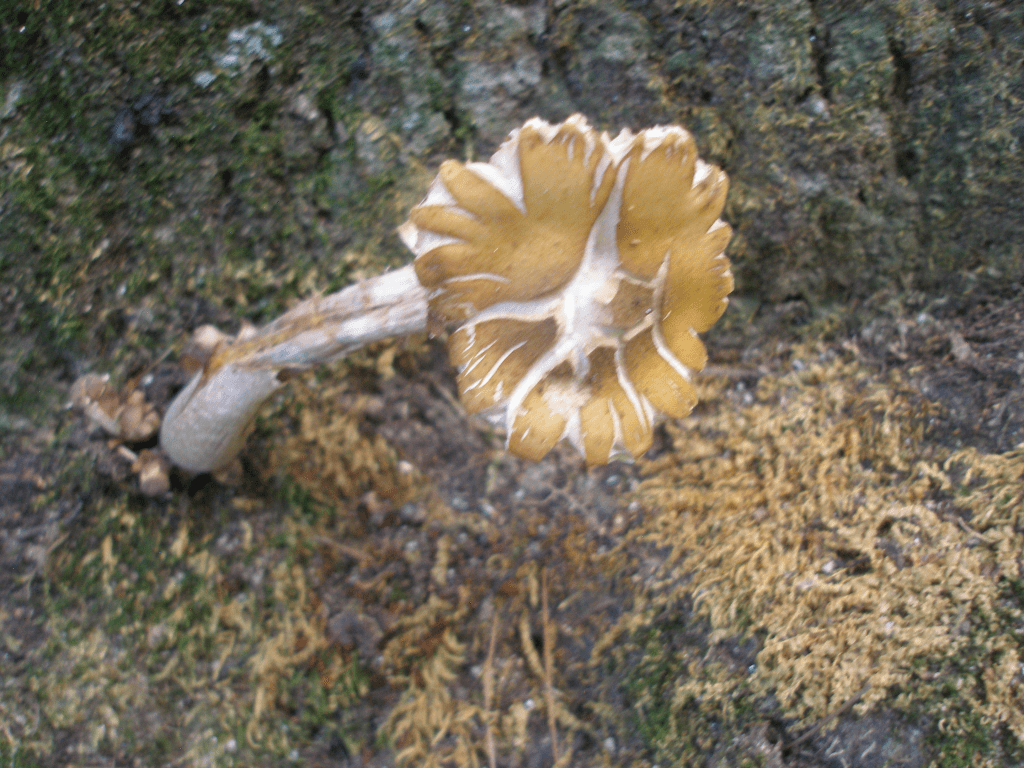
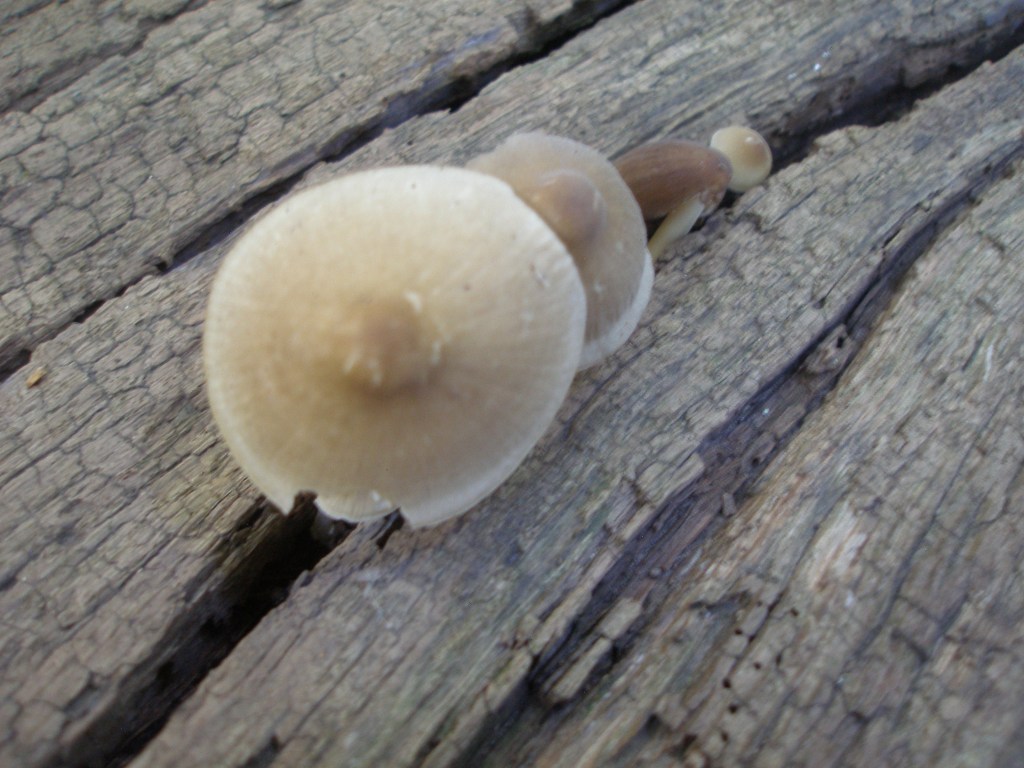
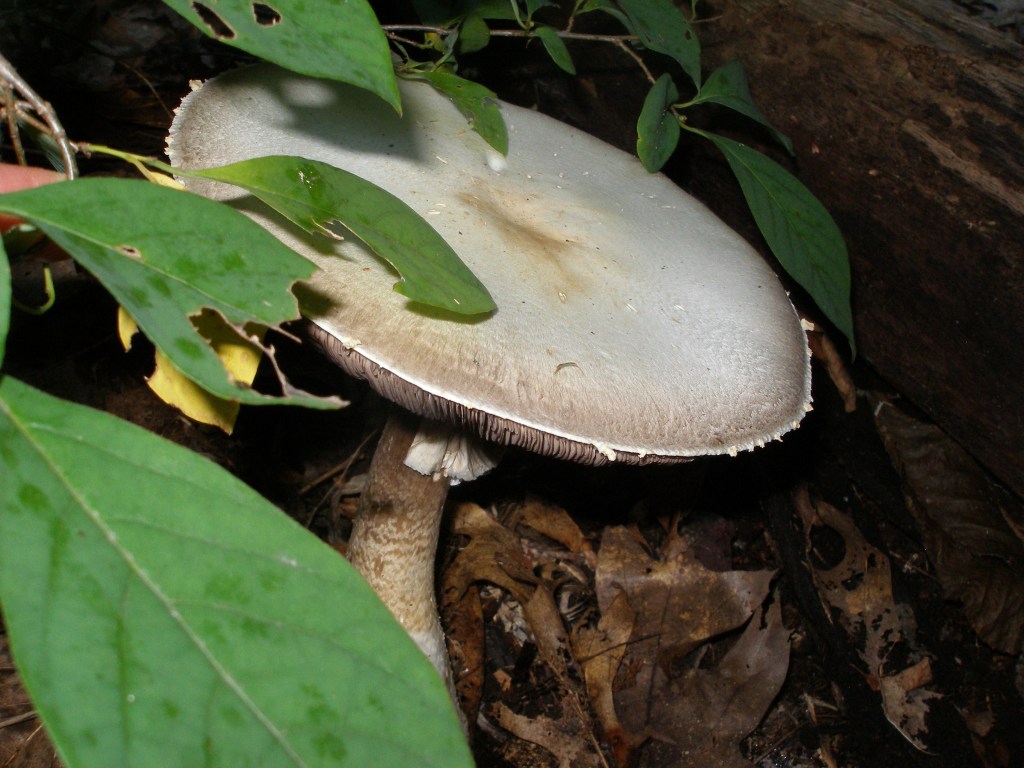
This year the rains have started again after a prolonged draught. I came across yellow and orange Chicken of the woods brackets where I found them last year as this video suggests I might. And there were a few other interesting fungi, mostly in shades of white, tan and brown. As the season is not yet over, I will add additional examples below.


Chicken of the Woods: A Remarkable Mushroom

I am told that besides tasting rather like lemony chicken with a great deal of protein, chicken of the woods also has many health benefits. Although hard to miss and relatively easy to identify, as with all mushrooms growing in the wild, it is best to seek expert guidance on which are safe to eat and to prepare them carefully. Certain people are allergic to chicken of the woods and other mushrooms, so care is needed when eating them for the first time.

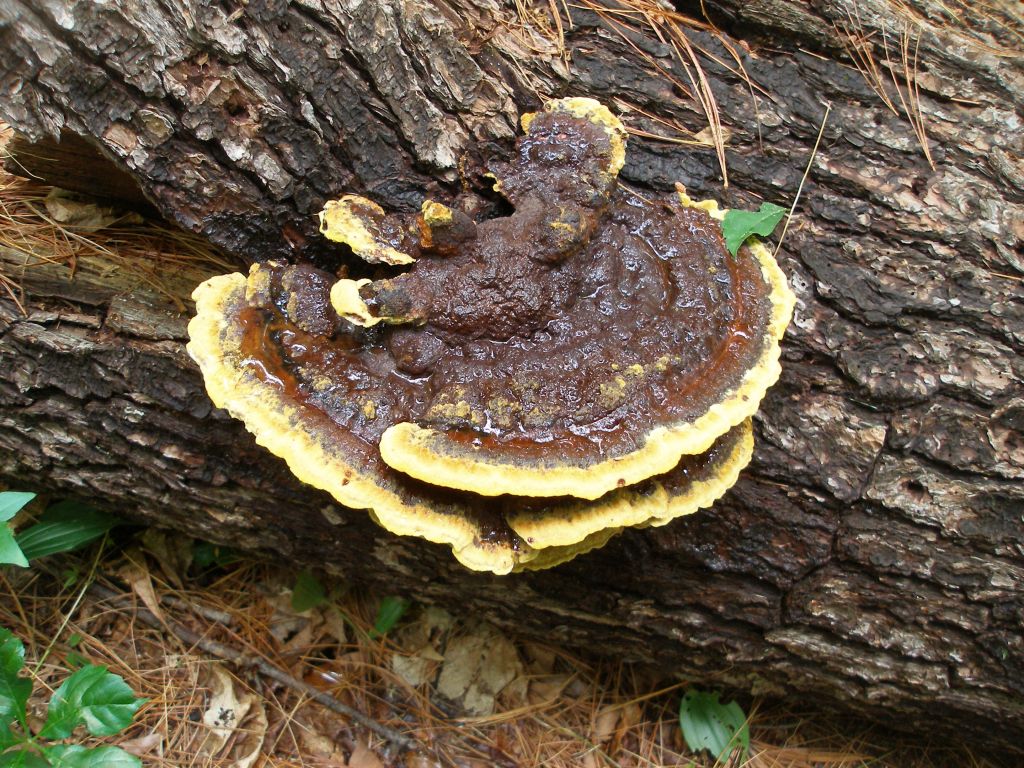
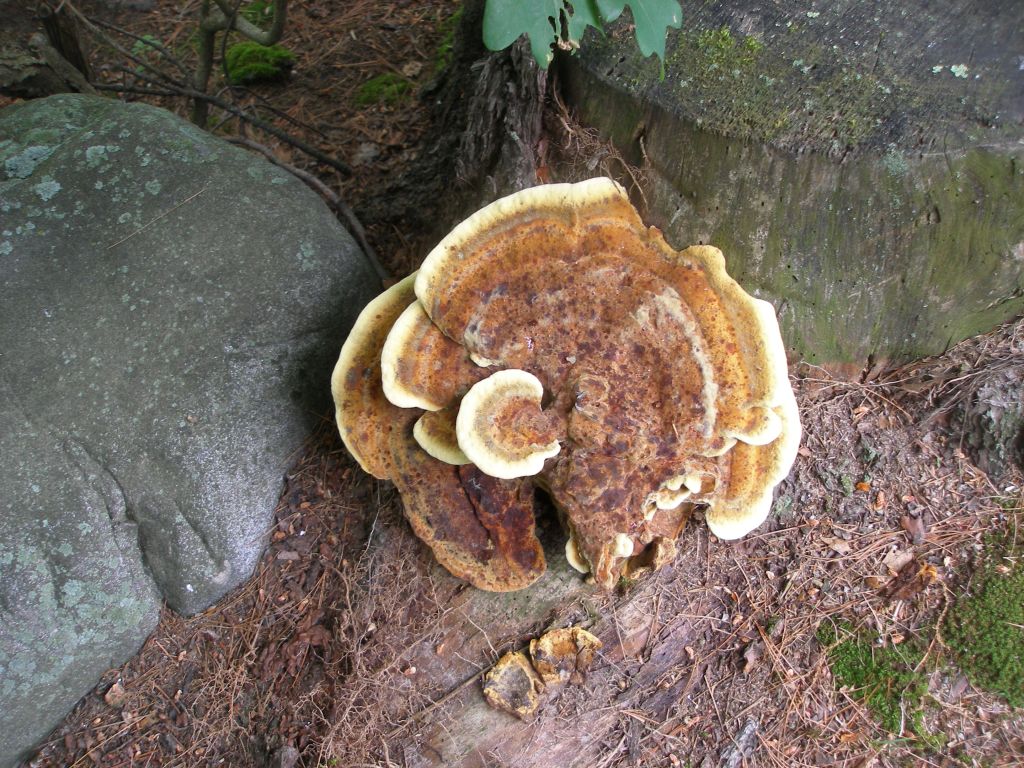
With so little rain last summer, I did not expect an abundance of amazing mushrooms like last fall. I was lucky to come across this colorful cluster the day before it was taken by eager foragers.


The central protrusion below evolved before someone cut it and it dried out.


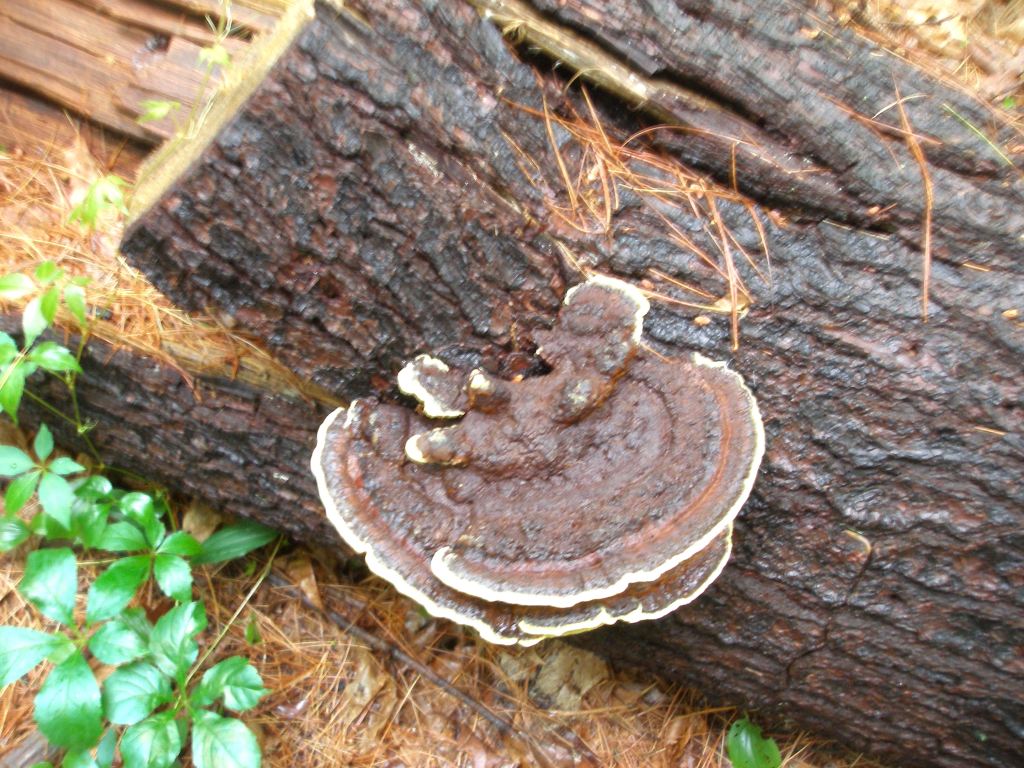
And finally, the now fallen tree that this fungus had been feeding on as in appeared in October 2025:

A Bumper Crop of Edible Mushrooms

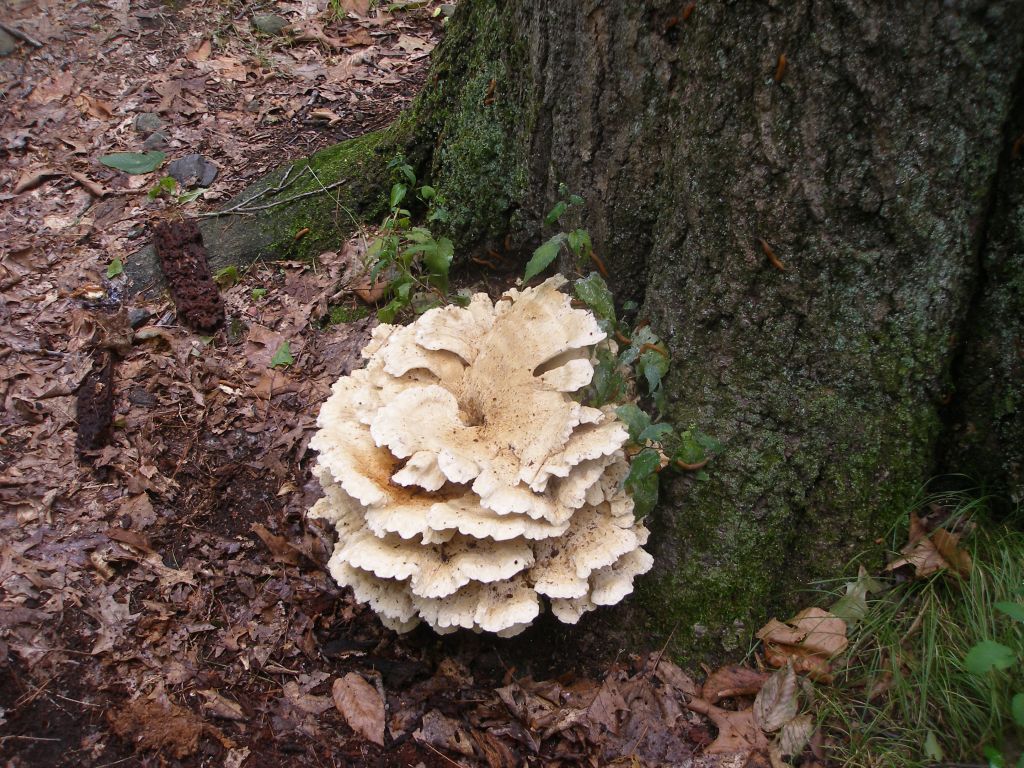
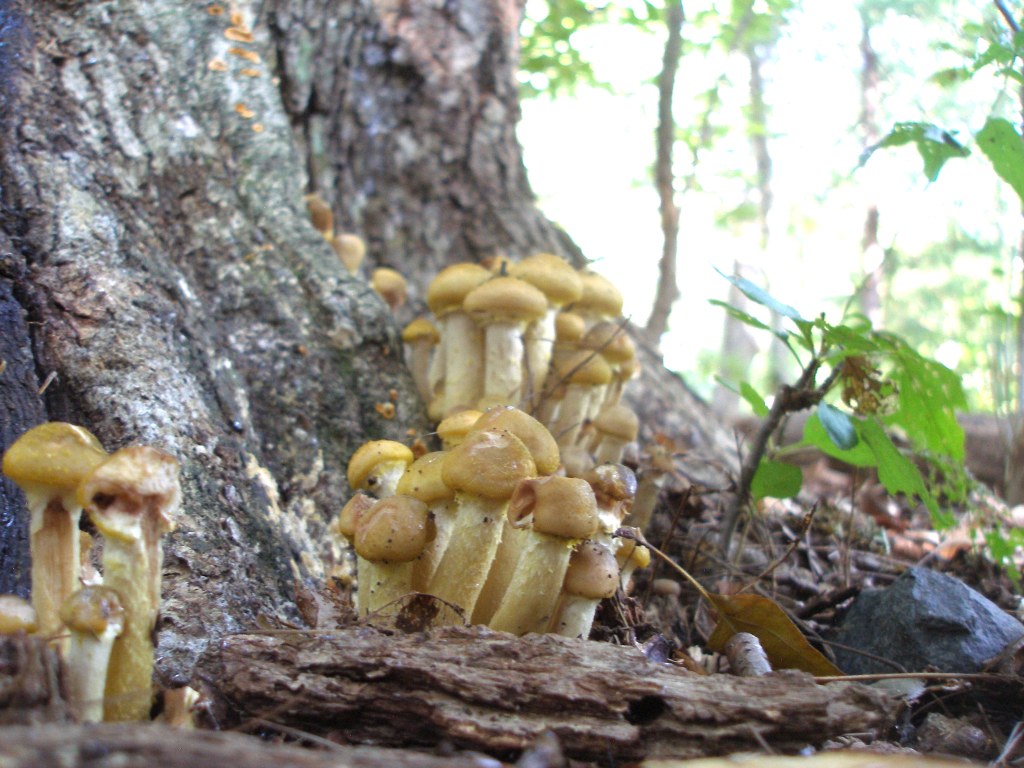
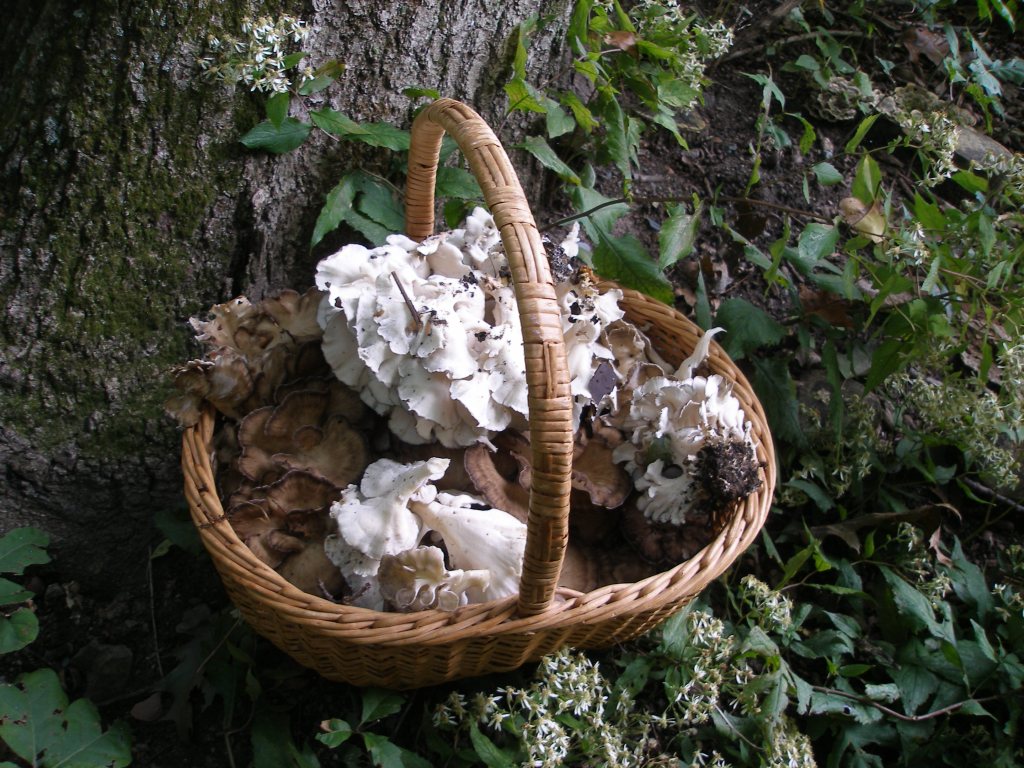
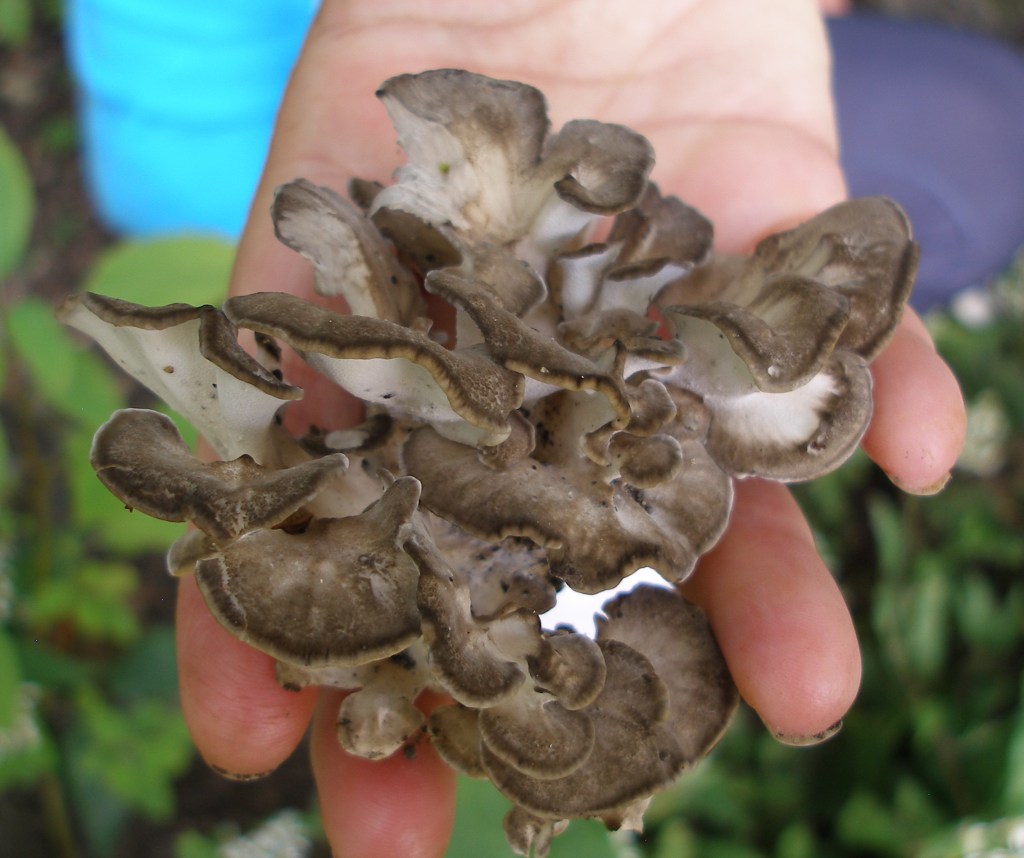
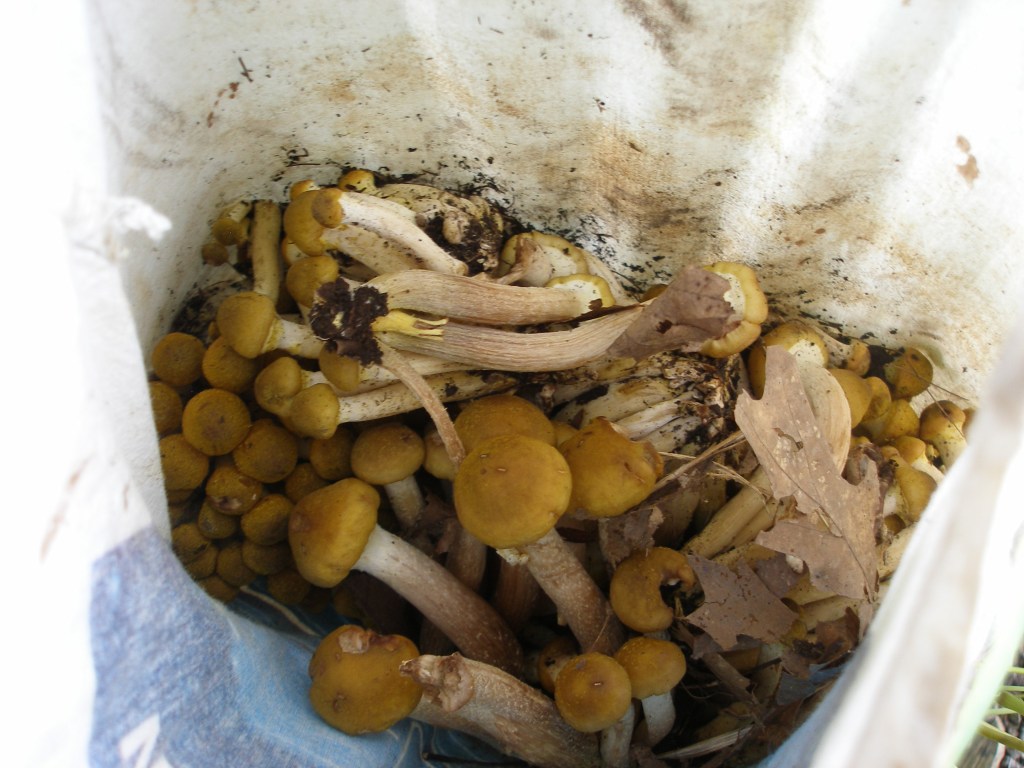
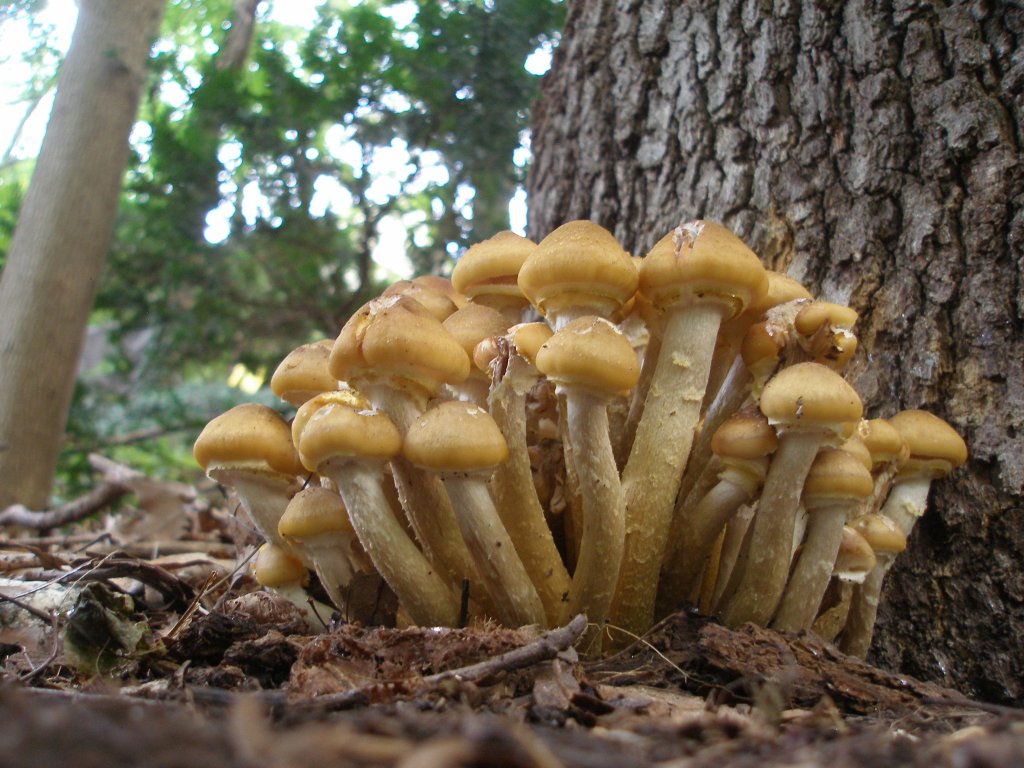
Recently, I came across two people carrying a basket of hen of the woods and a bag full of honey mushrooms. While the number of edible mushrooms each person can gather is limited in Europe, no such limit applies In the United States and these two had gathered so many, they told me they would need to give some away. While books and online resources like this one can be useful, the best way to learn which fungi are safe to eat is to go out with a local expert. 

Their value has long been recognized including in works of art. The jade pendant shown in the last photo below bears witness to the reverence accorded to fungi by the Chinese, who use them in their traditional medicine.  The Maya carved fascinating mushroom stones, and fungi with psychotropic properties have important cultural significance for certain tribes. 

Scientists have verified that fungi can support the health of forests and survive fire. They have been used to control insect pests and to clean up plastic and organic waste. No doubt we will discover more about their many benefits and possible uses for fungi as we learn more about them.