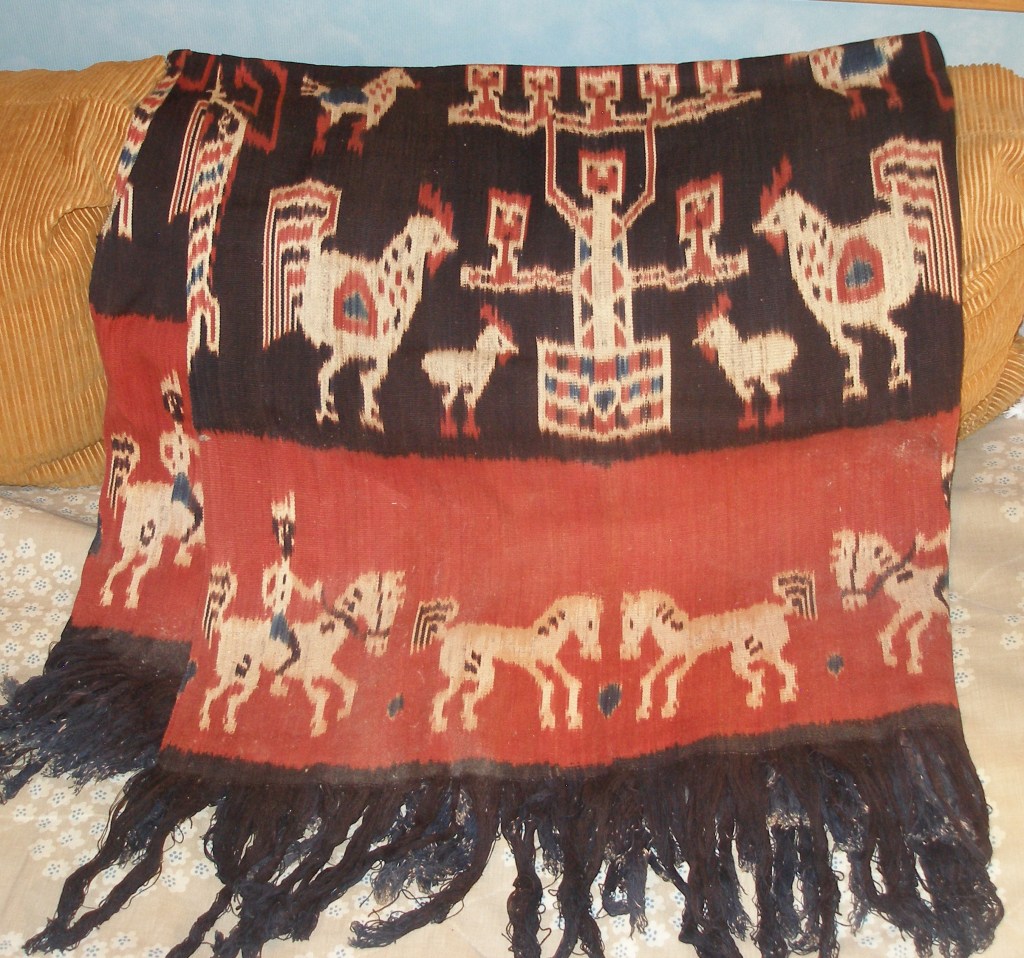
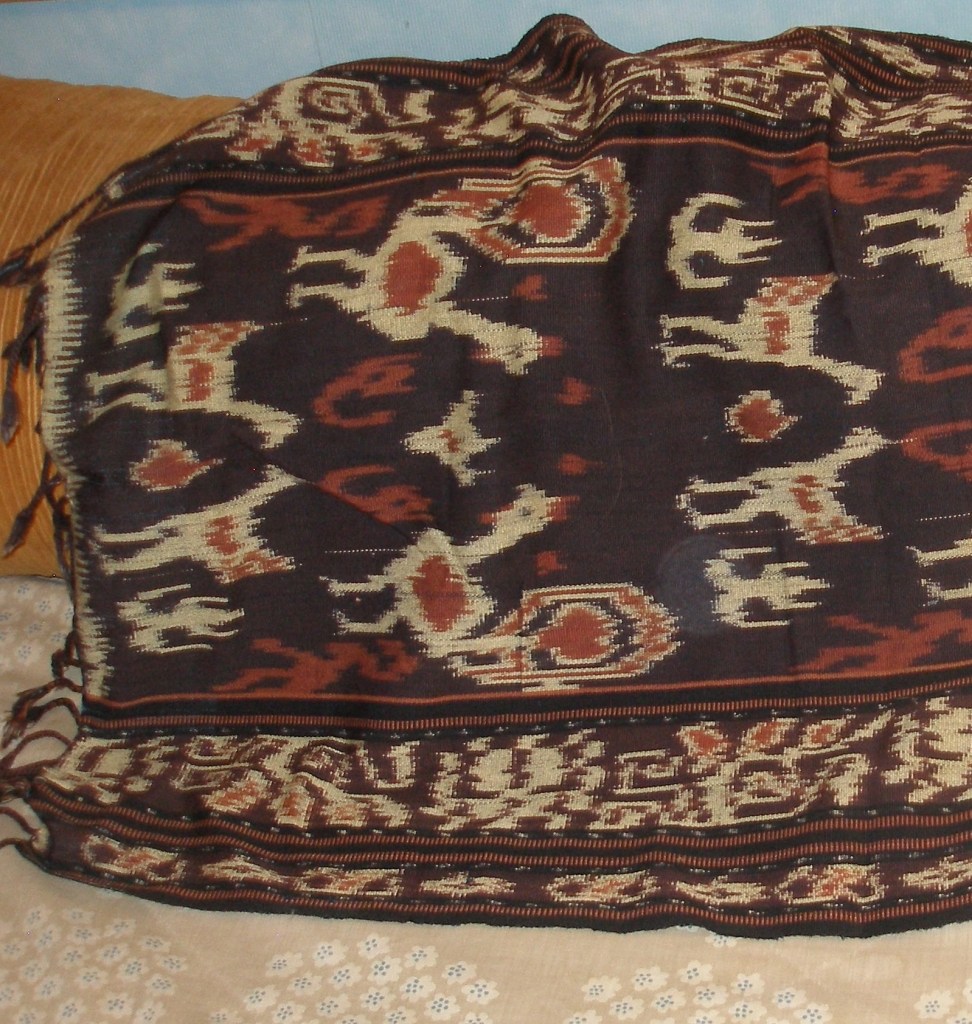
Indonesian ikat weavings have always had multiple uses. They are worn as sarongs and wraps as part of everyday clothing. They express and preserve cultural identity with outstanding examples playing an important role in various rites of passage such as marriage and funerals. In hard times, these valued and appreciated weavings can mean survival as they can be sold or traded for food and other critical supplies.
The patterns are produced by wrapping sections of (usually cotton) threads so that they resist a particular dye that is applied to the rest of the (usually warp) thread. With traditional dyes, the multiple dippings and dryings needed to achieve the desired shade can be quite time consuming. Modern dyes can make that process considerably faster while extending the range of possible colors.
Once all of the desired colors are dyed into the thread, ensuring precision in the complex designs calls for a great deal of attention to detail and sometimes subtle adjustments during the weaving process. In fact, quality hand-made ikat calls for a great deal of care during all stages of the sometimes years it takes to complete one. For that reason, I was not surprised to learn that in Indonesia, Ikat is generally considered the domain of women.
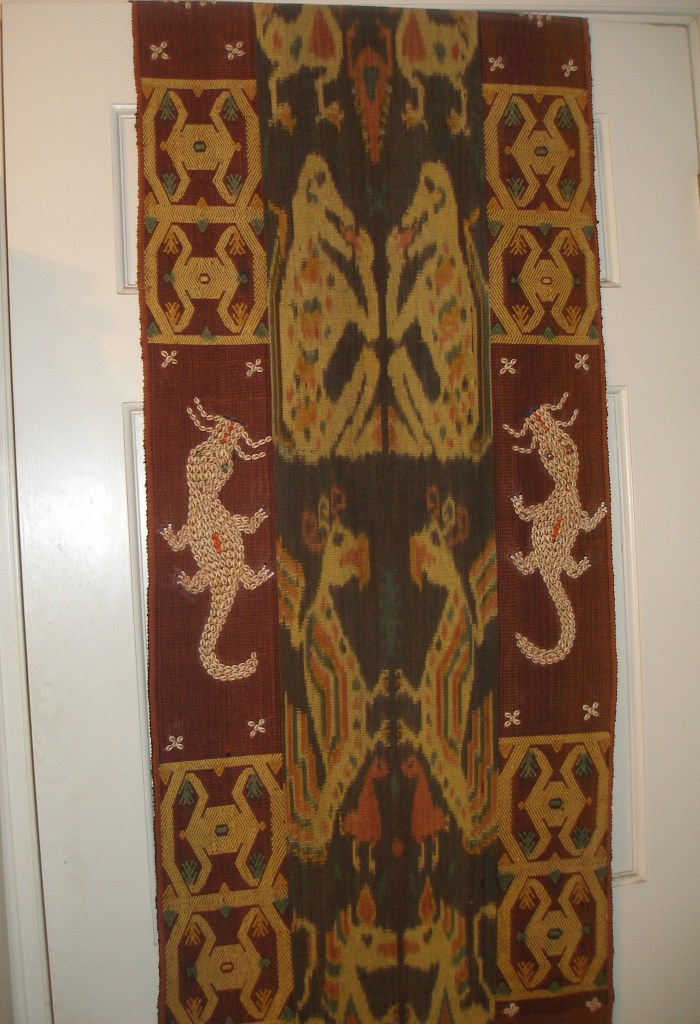
I decided to hang a particularly colorful modern example over the door to my office. This one combines a dark central ikat section with many different fanciful animals and two red outer sections with sewn-on cowry shell designs.
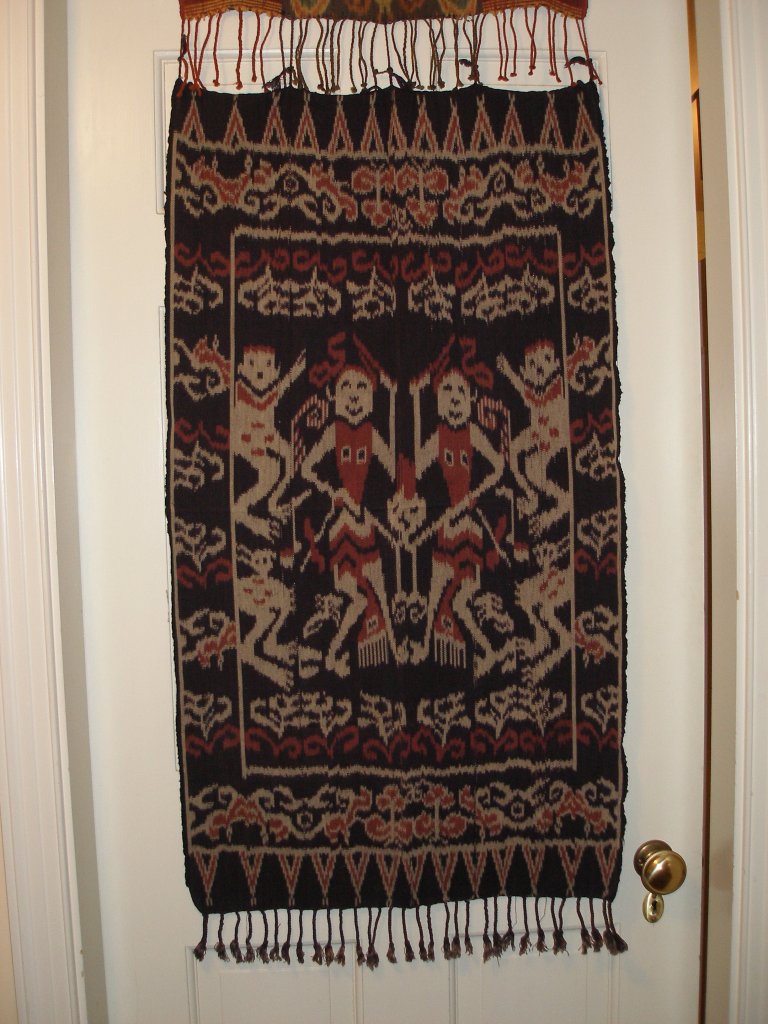
The last image shows an indigo-dyed Ikat hanging up in my tea hut in place of a scroll. Its Christian symbols are not a problem for its use during Japanese tea ceremony practice. In fact, Christian foreigners were among early adopters of Japanese tea ceremony and there are examples of a variety of early tea ceremony utensils including tea bowls that incorporate Christian symbols.





 Radiant Refuge